

A B7H3-targeting antibody–drug conjugate in advanced solid tumors: a phase 1/1b trial
Open accessThe DOI matches its Crossref record; 34 of the 34 references it cites were found in a registry or an index.
Abstract
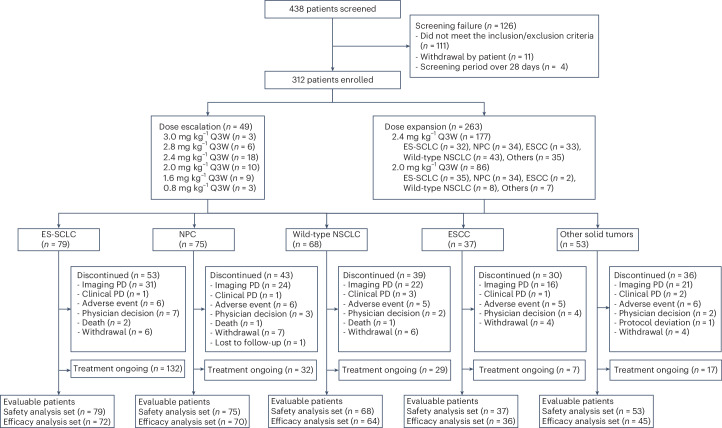
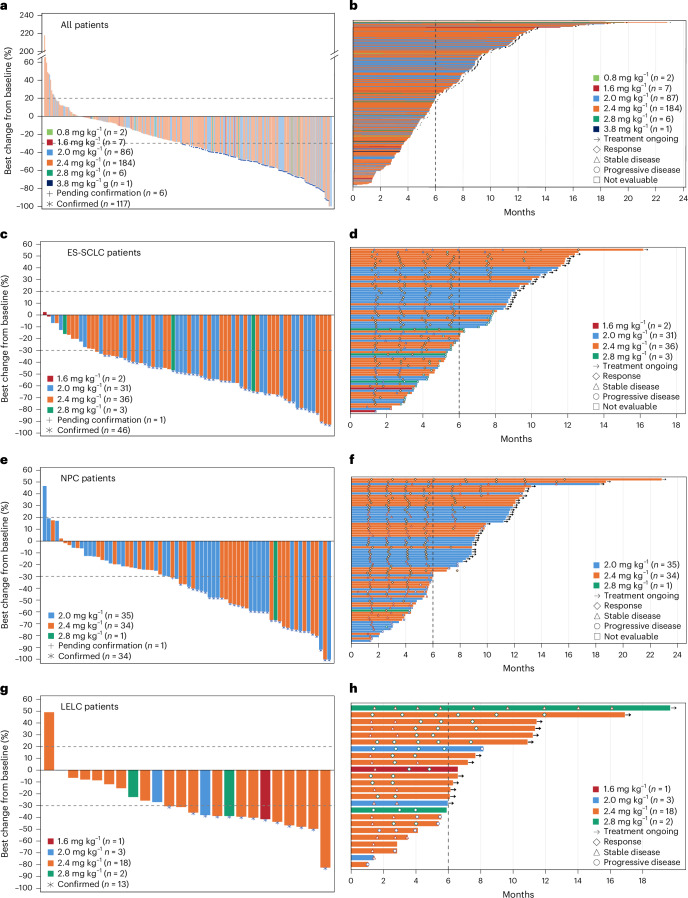
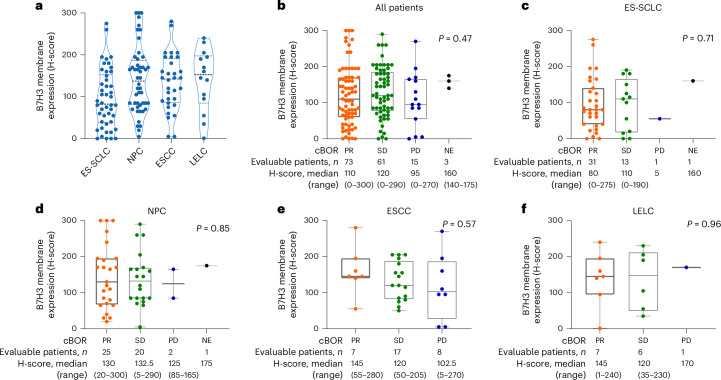
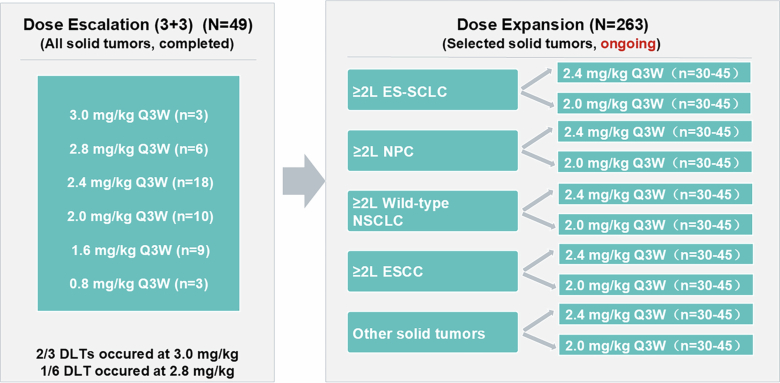
Antibody–drug conjugates (ADCs) have emerged as a transformative modality in the treatment of solid tumors. YL201, a novel B7H3-targeting ADC, leverages a tumor microenvironment activable linker-payload platform, coupled with a novel topoisomerase 1 inhibitor via a protease-cleavable linker. Here we report the findings from a large-scale, global, multicenter, phase 1 trial evaluating the safety, pharmacokinetics and preliminary efficacy of YL201 in patients with advanced solid tumors refractory to standard therapies. The trial included a dose-escalation part (phase 1) and a dose-expansion part (phase 1b). A total of 312 patients were enrolled across multiple tumor types, including extensive-stage small cell lung cancer (ES-SCLC), nasopharyngeal carcinoma (NPC), non-small cell lung cancer, esophageal squamous cell carcinoma and other solid tumors. The maximum tolerated dose was determined to be 2.8 mg kg−1, and the recommended expansion dose was selected as 2.0 mg kg−1 and 2.4 mg kg−1 every 3 weeks. The most common grade 3 or higher treatment-related adverse events included neutropenia (31.7%), leukopenia (29.5%) and anemia (25.0%). Only 4 cases of interstitial lung disease (1.3%) and 1 case of infusion reactions (0.3%) were observed. Encouraging anti-tumor activity was observed, particularly in patients with ES-SCLC (objective response rate (ORR), 63.9%), NPC (ORR, 48.6%), lung adenocarcinoma (ORR, 28.6%) and lymphoepithelioma-like carcinoma (ORR, 54.2%). No significant correlation between B7H3 membrane expression and the ORR was found. YL201 demonstrated an acceptable safety profile and a promising efficacy in heavily pretreated patients with advanced solid tumors, particularly in those with ES-SCLC, NPC or lymphoepithelioma-like carcinoma. Phase 3 clinical trials for patients with SCLC and NPC have already been initiated. ClinicalTrials.gov identifiers: NCT05434234 and NCT06057922 . In a large-scale, international, multicenter, phase 1/1b trial, treatment of patients with advanced solid tumors with the B7H3-targeting antibody–drug conjugate YL201 was safe and showed preliminary clinical efficacy.
Overview
The claims and statistics of this paper haven’t been checked yet.
Free: it reads the open-access text and checks the first 5 claims that cite a source we can check. Create a free account to check every claim.
Integrity signals
Registry
Cites
Statistics
Figures
Verification
Claims the paper makes
The claims and statistics of this paper haven’t been checked yet.
Free: it reads the open-access text and checks the first 5 claims that cite a source we can check. Create a free account to check every claim.
Claims other papers make about this one
Each is checked against this paper’s own text: does it say what the citing paper says it does?
The source backs part of the claim, not all of it — or backs it for a different population, condition or comparison.
In the citing paper
“Preliminary data from a phase I trial evaluating YL201 in 312 patients with advanced solid tumors, including 2 with prostate cancer, demonstrated overall promising antitumor activity: across all the tumor types, YL201 had a 40.8% objective response rate and 83.6% disease control rate100.”
From The evolving landscape of antibody-drug conjugates (ADCs) for treatment of prostate cancer (2025) · cites this paper as [100]
Experimental — accuracy not yet measuredThe source backs part of the claim, not all of it — or backs it for a different population, condition or comparison.
In the citing paper
“Despite the frequency, TRAEs for YL201 were similar to those of other B7H3 ADCs, and YL201 had a manageable safety profile95,100,101.”
From The evolving landscape of antibody-drug conjugates (ADCs) for treatment of prostate cancer (2025) · cites this paper as [100]
Experimental — accuracy not yet measuredThe cited source says what the claim attributes to it.
In the citing paper
“YL201 contains a highly hydrophilic protease-cleavable linker-TOPI inhibitor payload (TMALIN®) with increased stability in the circulation and payload release in both the extracellular tumor environment and intracellular lysosomal compartment100.”
From The evolving landscape of antibody-drug conjugates (ADCs) for treatment of prostate cancer (2025) · cites this paper as [100]
The cited source says what the claim attributes to it.
In the citing paper
“However, 97.1% of patients experienced TRAEs, most commonly hematological toxicities such as leukopenia (66.3%), anemia (64.7%), and neutropenia (61.5%); 36.2% of patients also experienced treatment interruptions while 5.4% discontinued treatment due to TRAEs (NCT05434234)100.”
From The evolving landscape of antibody-drug conjugates (ADCs) for treatment of prostate cancer (2025) · cites this paper as [100]
Self-check
Percentages, sums and reported differences re-computed from the paper’s own numbers.
The self-check needs the paper’s full text.
Citations
Cites
Trastuzumab deruxtecan in previously treated HER2-positive breast cancer
Modi, S., Saura, C., Yamashita, T., Park, Y. H., Kim, S.-B., Tamura, K., Andre, F., Iwata, H., Ito, Y., Tsurutani, J., et al. (2020) · New England Journal of Medicine · doi:10.1056/nejmoa1914510 · Cited by 2,006 · cited 3×
“For example, trastuzumab deruxtecan has been approved for breast cancer, stomach cancer and lung cancer, but the approved doses are different 31–33 .”
Self-citationTarlatamab for Patients with Previously Treated Small-Cell Lung Cancer
Ahn, M.-J., Cho, B. C., Felip, E., Korantzis, I., Ohashi, K., Majem, M., Juan-Vidal, O., Handzhiev, S., Izumi, H., Lee, J.-S., et al. (2023) · New England Journal of Medicine · doi:10.1056/nejmoa2307980 · Cited by 716 · cited 1×
“The observed efficacy of YL201 in patients with ES-SCLC is particularly noteworthy, with an ORR of 63.9%, which is superior to the response rates reported for standard second-line treatments such as lurbinectedin, tarlatamab and topotecan, where the ORRs typically range from 21.9% to 40% 24–26 .”
InfluentialTrigo, J., Subbiah, V., Besse, B., Moreno, V., López, R., Sala, M. A., Peters, S., Ponce, S., Fernández, C., Alfaro, V., et al. (2020) · The Lancet Oncology · doi:10.1016/s1470-2045(20)30068-1 · Cited by 486
Hsu, C., Lee, S.-H., Ejadi, S., Even, C., Cohen, R. B., Le Tourneau, C., Mehnert, J. M., Algazi, A., van Brummelen, E. M. J., Saraf, S., et al. (2017) · Journal of Clinical Oncology · doi:10.1200/jco.2017.73.3675 · Cited by 464 · cited 1×
“The established standard treatments, including docetaxel or PD-1 inhibitors for immune checkpoint inhibitor (ICI)-naive/treated recurrent or metastatic NPC, exhibit ORRs ranging from 23.5% to 36.7% 27,28 .”
InfluentialEckardt, J. R., von Pawel, J., Pujol, J.-L., Papai, Z., Quoix, E., Ardizzoni, A., Poulin, R., Preston, A. J., Dane, G., & Ross, G. (2007) · Journal of Clinical Oncology · doi:10.1200/jco.2006.08.3998 · Cited by 393 · cited 1×
“The observed efficacy of YL201 in patients with ES-SCLC is particularly noteworthy, with an ORR of 63.9%, which is superior to the response rates reported for standard second-line treatments such as lurbinectedin, tarlatamab and topotecan, where the ORRs typically range from 21.9% to 40% 24–26 .”
InfluentialGoto, K., Goto, Y., Kubo, T., Ninomiya, K., Kim, S.-W., Planchard, D., Ahn, M.-J., Smit, E. F., de Langen, A. J., Pérol, M., et al. (2023) · Journal of Clinical Oncology · doi:10.1200/jco.23.01361 · Cited by 328 · cited 3×
“For example, trastuzumab deruxtecan has been approved for breast cancer, stomach cancer and lung cancer, but the approved doses are different 31–33 .”
Van Cutsem, E., di Bartolomeo, M., Smyth, E., Chau, I., Park, H., Siena, S., Lonardi, S., Wainberg, Z. A., Ajani, J., Chao, J., et al. (2023) · The Lancet Oncology · doi:10.1016/s1470-2045(23)00215-2 · Cited by 265 · cited 1×
“In gastric cancer, the approved dose is 6.4 mg kg −1 due to the controllable adverse events 32 .”
InfluentialNew frontiers in immune checkpoint B7-H3 (CD276) research and drug development
Getu, A. A., Tigabu, A., Zhou, M., Lu, J., Fodstad, Ø., & Tan, M. (2023) · Molecular Cancer · doi:10.1186/s12943-023-01751-9 · Cited by 243
Carvajal-Hausdorf, D., Altan, M., Velcheti, V., Gettinger, S. N., Herbst, R. S., Rimm, D. L., & Schalper, K. A. (2019) · Journal for ImmunoTherapy of Cancer · doi:10.1186/s40425-019-0540-1 · Cited by 209
Immune checkpoint of B7-H3 in cancer: from immunology to clinical immunotherapy
Zhao, B., Li, H., Xia, Y., Wang, Y., Wang, Y., Shi, Y., Xing, H., Qu, T., Wang, Y., & Ma, W. (2022) · Journal of Hematology & Oncology · doi:10.1186/s13045-022-01364-7 · Cited by 205
Cited by
Items 101–122 of 122
Antibody-Drug Conjugates in the Treatment of Esophageal Cancer
Wu, D., Chen, W., Zhao, Q., Zhu, W., & Xu, J. (2026) · Current Treatment Options in Oncology · doi:10.1007/s11864-026-01411-2
“Preclinical studies demonstrated potent antitumor activity in esophageal cancer xenograft models, providing the rationale for clinical investigation [ 64].”
Lou, J., & Lyu, Y. (2026) · Journal of Hematology & Oncology · doi:10.1186/s13045-026-01843-1
“…1/1b trial of YL201, a B7-H3-targeting ADC with a novel topoisomerase I inhibitor, enrolled 312 patients across various solid tumors and established a maximum tolerated dose, with early signs of efficacy observed in extensive-stage small cell lung cancer (ES-SCLC) and nasopharyngeal carcinoma [79].”
Antibody therapeutics: A new era for EGFR-mutant NSCLC treatment
Chen, X., Liang, J., Zhu, J., Huang, X., Hu, Y., Lin, Z., & Zhan, C. (2026) · Biochimica et Biophysica Acta (BBA) - Reviews on Cancer · doi:10.1016/j.bbcan.2026.189709 · Cited by 2
Cai, W., Dai, S., Chen, Y., Cheng, C., & Chen, L. (2026) · Biochimica et Biophysica Acta (BBA) - Reviews on Cancer · doi:10.1016/j.bbcan.2026.189712 · Cited by 1
Wen, Y., Xu, Y., Du, Y., Zhan, Y., & Fan, S. (2026) · Molecular Biomedicine · doi:10.1186/s43556-026-00590-6
“B7-H3 represents another emerging ADC target in NPC. YL201, a B7-H3-targeted ADC, showed encouraging activity in a phase I/Ib study of advanced solid tumors, with an objective response rate of 48.6% among patients with NPC [233].”
InfluentialAntibody–drug conjugates in gastric cancer: from targeted cytotoxicity to immune modulation
Su, H., Yang, C., & Ge, J. (2026) · Frontiers in Immunology · doi:10.3389/fimmu.2026.1928576
Clinical breakthroughs of B7-H3-targeted antibody-drug conjugates in solid tumors
Huang, R., Zhou, L., & Chen, H. (2026) · The Innovation Oncology · doi:10.59717/j.xinn-oncol.2026.100034
Antibody-drug conjugates in breast cancer: redefining targeted therapy
Guo, C., & Ellisen, L. W. (2026) · Journal of Clinical Investigation · doi:10.1172/jci207630
Personalisierte Arzneimitteltherapie des metastasierten Lungenkarzinoms
Stilianakis, S., Ruge, L., Scharpenseel, H., Verheyen, M., & Wolf, J. (2026) · Die Innere Medizin · doi:10.1007/s00108-026-02150-0
Molecular mechanisms and therapeutic strategies of immunotherapy resistance in esophageal cancer
Pang, Y., Jiang, P., Liu, K., Suo, X., 张殿宝, Xu, Y., Ge, Y., 富奇志, & Gao, S. (2026) · Frontiers in Immunology · doi:10.3389/fimmu.2026.1973515
“Antibody-drug conjugates (ADCs) that target immune resis-tance-related markers, when combined with immunotherapy, have emerged as a promising avenue in recent years.”
InfluentialChen, X., Li, S., & Li, H. (2026) · Frontiers in Immunology · doi:10.3389/fimmu.2026.1929911
Tarone, L., Merighi, I. F., Tirtei, E., Giacobino, D., Morello, E. M., Cavallo, F., & Riccardo, F. (2026) · Cancers · doi:10.3390/cancers18193239
“Several B7-H3-targeting ADCs, including ifinatamab deruxtecan (I-DXd) [75,76], HS-20093, YL201 [77,78], and MHB088C [79], and vobramitamab duocarmazine, have shown encouraging activity across B7-H3-positive solid tumors.”
A modular framework for antibody–drug conjugate biomarkers
Liu, J., Ruan, D.-Y., McNamee, N., Reddel, R. R., Wu, H., Meng, Q., Xu, R., Subbiah, V., Rimm, D. L., & Pistilli, B. (2026) · Nature Reviews Clinical Oncology · doi:10.1038/s41571-026-01213-3 · Cited by 2
Self-citationAdvances in engineering immune proteins as therapeutics
Johnson, K., Yu, X., Gehrke, S. A., & Spangler, J. B. (2026) · Current Opinion in Biomedical Engineering · doi:10.1016/j.cobme.2026.100685
Zhao, Y., Ma, X., Liu, X., & Yan, L. (2026) · Cancer Chemotherapy and Pharmacology · doi:10.1007/s00280-026-04964-z · Cited by 1
Self-citationEmerging landscape of antibody–drug conjugates in lung cancer: a clinical review
Pickett, H., Arias-Romero, J., Fricke, J., Mambetsariev, I., Chen, N., Bruno, D. S., Lee, M., Amini, A., Malhotra, J. D., & Salgia, R. (2026) · Trends in cancer · doi:10.1016/j.trecan.2026.09.002
Taş, N., Yüceer, R. O., Koç, T., Sönmez, Y., & Doğan, H. (2026) · Journal of Clinical Medicine · doi:10.3390/jcm15207998
Liu, H., Guo, Y., & Xue, H. (2026) · Current Oncology Reports · doi:10.1007/s11912-026-01844-w
“However, the YL201 phase 1/1b trial reported a 1.3% ILD incidence [ 59], and IBI343 showed no ILD events in gastric cancer [54 ], suggesting that payload and linker chemistry, rather than target selection, may be the primary determinants of the ILD risk profile.”
InfluentialChang, X., Jiang, L., Zhang, L., Ren, T., Fan, C., & Li, P. (2026) · PeerJ · doi:10.7717/peerj.21835
Self-citationNeuer Konjugat-Antikörper Tambotatug Pelitecan tritt gegen Topotecan an
Gillissen, A. (2026) · Pneumo News · doi:10.1007/s15033-026-4377-2
“In einer Phase-I/Ib-Studie zeigte die Substanz vielversprechende antitumorale Aktivität bei fortgeschrittenen soliden Tumoren [10].”
The evolving landscape of DLL3-directed Therapeutics in small cell lung cancer
Tieu, V. T., Arter, Z., & Nagasaka, M. (2026) · Cancer Treatment Reviews · doi:10.1016/j.ctrv.2026.103234
Sun, Y., Zhao, X., Zhang, J., Song, Q., Cheng, M., Chen, Y., Liu, Y., Hou, W., Fu, W., Zhang, X., et al. (2026) · Frontiers in Immunology · doi:10.3389/fimmu.2026.1999309
Self-citation
Metadata
- Authors
- Ma, Y., Yang, Y., Huang, Y., Fang, W., Xue, J., Meng, X., Fan, Y., Fu, S., Wu, L., Zheng, Y., Liu, J., Liu, Z., Zhuang, W., Rosen, S., Qu, S., Li, B., Li, M., Zhao, Y., Yang, S., Ji, Y., Sommerhalder, D., Luo, S., Yang, K., Li, J., Lv, D., Zhang, P., Zhao, Y., Hong, S., Zhang, Y., Zhao, S., Chin, S., Zhang, X., Lian, W., Cai, J., Xue, T., Zhang, L., & Zhao, H.
- Affiliations
- Sun Yat-sen University Cancer Center (CN)
- Shandong Tumor Hospital (CN)
- Zhejiang Cancer Hospital (CN)
- The University of Texas MD Anderson Cancer Center (US)
- Hunan Cancer Hospital (CN)
- First Affiliated Hospital Zhejiang University (CN)
- Fujian Provincial Cancer Hospital (CN)
- Hematology Oncology Associates (US)
- Guangxi Medical University (CN)
- Guilin Medical University (CN)
- First Affiliated Hospital of Zhengzhou University (CN)
- Henan Cancer Hospital (CN)
- First Affiliated Hospital of Xinxiang Medical University (CN)
- Wuhan Union Hospital (CN)
- Jiangxi Provincial Cancer Hospital (CN)
- Sichuan Cancer Hospital (CN)
- MediLink Therapeutics (Suzhou) Co., Ltd. (China) (CN)
- Corresponding author
- Xue, Tongtong
- Zhang, Li
- Zhao, Hongyun
- ORCID
- Ma, Yuxiang
- Yang, Yunpeng
- Huang, Yan
- Meng, Xiangjiao
- Fan, Yun
- Fu, Siqing
- Wu, Lin
- Zheng, Yulong
- Liu, Zhihua
- Li, Bihui
- Li, Mingjun
- Zhao, Yanqiu
- Ji, Yinghua
- Sommerhalder, David
- Luo, Suxia
- Yang, Kunyu
- Li, Jingao
- Lv, Dongqing
- Zhang, Peng
- Zhao, Yuanyuan
- Hong, Shaodong
- Zhang, Yang
- Zhao, Shen
- Lian, Wei
- Xue, Tongtong
- Zhang, Li
- Zhao, Hongyun
- Venue
- Nature Medicine
- Published
- 2025-03-13
- Volume
- 31
- Issue
- 6
- Pages
- 1949-1957
- ISSN
- 1078-8956 (ISSN-L)
- 1546-170X
- PMC
- PMC12176648
- OpenAlex
- W4408413512
- Cited by
- 122
- References
- 34
- Citations by year
- 2026: 92 · 2025: 30
- FWCI
- 70.29
- Type
- journal article
- Language
- en
- Open access
- hybrid
- doi.org
- Licence
- cc-by-nc-nd
- creativecommons.org/licenses/by-nc-nd/4.0 (tdm)
- creativecommons.org/licenses/by-nc-nd/4.0 (vor)
- Locations
- Nature Medicine (publishedVersion, cc-by-nc-nd)
- PubMed Central (publishedVersion, cc-by-nc-nd)
- PubMed (publishedVersion)
- Funders
- National Natural Science Foundation of China (82473346, 82272789)
- Guangzhou Science &Technology Project
- Topics
- Life Sciences › Immunology and Microbiology › Immunology › Monoclonal and Polyclonal Antibodies Research
- Health Sciences › Medicine › Oncology › Cancer Immunotherapy and Biomarkers
- Health Sciences › Medicine › Pulmonary and Respiratory Medicine › Lung Cancer Treatments and Mutations
- Keywords
- antibody-drug conjugates, B7-H3, topoisomerase I inhibitor, protease-cleavable linker, extensive-stage small cell lung cancer, nasopharyngeal carcinoma, lymphoepithelioma-like carcinoma, non-small cell lung cancer, esophageal squamous cell carcinoma, maximum tolerated dose, objective response rate, refractory solid tumors
- MeSH terms
- Nasopharyngeal Carcinoma, Adult, Aged, Aged, 80 and over, Carcinoma, Non-Small-Cell Lung, Female, Humans, Lung Neoplasms, Male, Middle Aged, Neoplasms, Immunoconjugates, Maximum Tolerated Dose, B7 Antigens
About these checks
Registry, retraction, Cites and statistics results are computed, not judged, with one exception: a printed reference that no index lists is read once by a model before it counts as a citation error. Claims are extracted by a model and kept only when their quote appears verbatim in the text; each cited source is then checked, with a model’s help, for whether it says what the claim relies on. Those verdicts can be wrong — read the claim’s quote and the cited source before relying on one.
Statistics and arithmetic are recomputed, not judged.
Confidence bands are shown only for fields calibrated on our annotated test set. None is calibrated yet, so no band is shown.
What counts as a claim ›How we measure confidence ›How we check this ›
Are you an author, or do you see a problem with this page? Request a review
Data sources
Bibliographic data: Semantic Scholar, OpenAlex, Crossref.
Contains information from the Semantic Scholar Academic Graph Datasets, made available under the ODC Attribution License (ODC-BY 1.0).
Semantic Scholar’s data is described in: Kinney, R., et al. (2023). The Semantic Scholar Open Data Platform. arXiv:2301.10140.
