

A systematic review and meta-analysis of the efficacy and safety of pharmacological treatments for obesity in adults
Open accessPublished version of a preprint
The DOI matches its Crossref record; 90 of the 90 references it cites were found in a registry or an index; 26 of the 49 sources its claims cite were checked for support.
Abstract
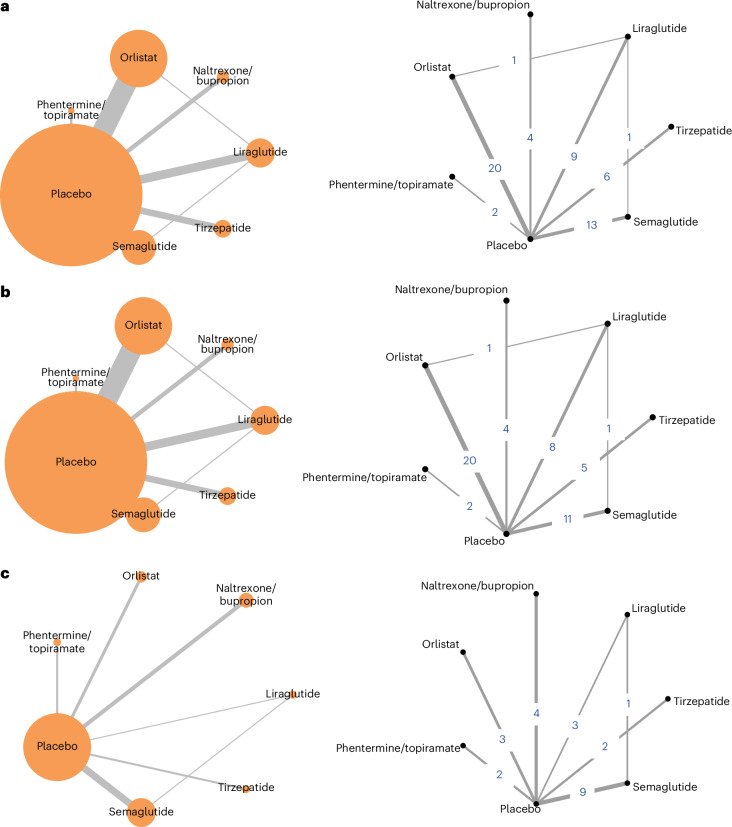
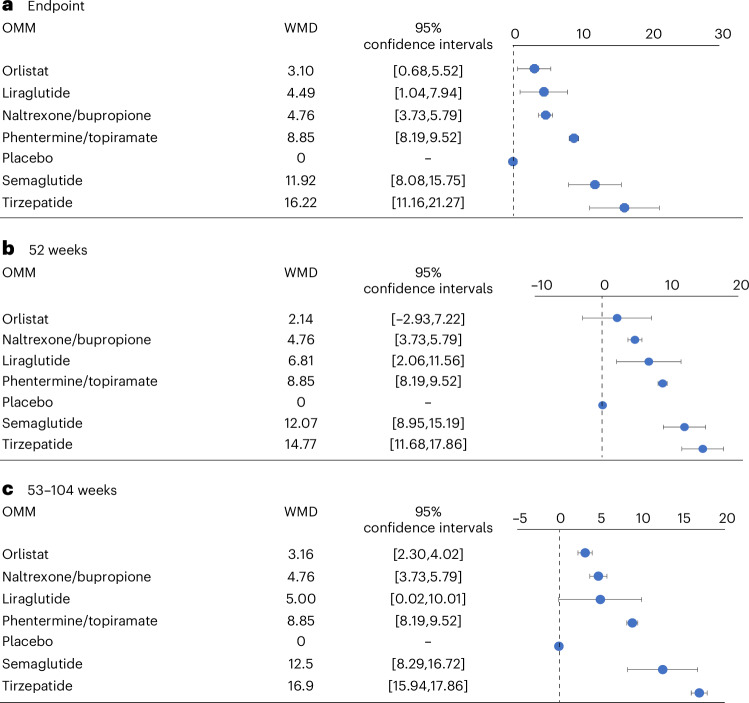
This systematic review and network meta-analysis evaluated the efficacy and safety of obesity management medications (OMMs) in terms of reducing body weight and impact on obesity-related complications. Here a Medline and Embase search was performed up to 31 January 2025 for randomized controlled trials comparing OMMs versus placebo/active comparators in adults. Primary endpoint was percentage of total body weight loss (TBWL%) at the end of the study. Secondary endpoints were TBWL% at 1, 2 and ≥3 years, lipid profile, blood pressure, hemoglobin A1c, fasting plasma glucose, mental health, serious adverse events, quality of life, cardiovascular morbidity and mortality, remission of obesity-related complications and all-cause mortality. Fifty-six clinical trials were identified-orlistat (22), semaglutide (14), liraglutide (11), tirzepatide (6), naltrexone/bupropion (5) and phentermine/topiramate (2)-enrolling 60,307 patients (32,598 OMM and 27,709 placebo). All OMMs showed a significantly greater TBWL% versus placebo (P < 0.0001), more than 10% for semaglutide and tirzepatide. Both tirzepatide and semaglutide showed normoglycemia restoration, remission of type 2 diabetes and reduction in hospitalization due to heart failure. Semaglutide was effective in reducing major adverse cardiovascular events and reducing pain in knee osteoarthritis. Tirzepatide was effective in remission of obstructive sleep apnea syndrome and metabolic dysfunction-associated steatohepatitis. These results support the need to individualize the selection of OMMs.
Overview
CoChat Summary
## TL;DR
This systematic review and network meta-analysis of 56 RCTs (60,307 adults) found that all included obesity medications produced greater total body weight loss than placebo, with semaglutide and tirzepatide generally showing the largest effects. Beyond weight loss, some agents showed complication-specific benefits, including semaglutide for MACE and knee osteoarthritis pain, and tirzepatide for obstructive sleep apnea and MASH.
## Key findings
- Across 56 RCTs / 60 comparisons enrolling 60,307 patients, all obesity management medications (OMMs) had significantly greater TBWL% than placebo at the endpoint (55 comparisons; no evidence of inconsistency, H = 1.51).
- Only semaglutide and tirzepatide achieved estimated TBWL% greater than 10% at the endpoint; at 52 weeks, all treatments except orlistat were significantly better than placebo, and only semaglutide and tirzepatide reached at least 10% TBWL.
- In the full analysis, only tirzepatide was associated with a greater proportion of patients achieving at least 25% TBWL (odds ratio 33.8 [18.4–61.9], P < 0.001).
- Complication-specific benefits included: semaglutide lowering MACE risk and all-cause mortality, tirzepatide reducing HHF, semaglutide and tirzepatide improving glycemic outcomes in prediabetes/T2D, semaglutide improving knee osteoarthritis outcomes, and tirzepatide improving OSAS and MASH outcomes.
## Methods
- Systematic review and network meta-analysis reported under PRISMA; Medline and Embase were searched up to 31 January 2025.
- Included placebo-controlled or active-controlled RCTs in adults (≥18 years) with obesity (BMI ≥ 30 kg m−2) or overweight (BMI > 25 kg m−2), with treatment duration of at least 48 weeks, evaluating orlistat, phentermine plus topiramate, naltrexone plus bupropion, liraglutide, semaglutide, or tirzepatide.
- Primary endpoint was TBWL% at the end of the trial; analyses used random-effects models, network meta-analysis for outcomes with at least 10 RCTs, traditional meta-analyses or descriptive synthesis for sparser outcomes, plus risk-of-bias assessment and GRADE.
## Limitations
- The paper states that heterogeneity in study populations (baseline BMI, age, obesity-related complications) may influence treatment effects, and that limited data were available for people with BMI ≥ 40 kg m−2, the elderly, adolescents, and people with overweight.
- Most trials were placebo-controlled, limiting head-to-head comparisons, and differing lifestyle intervention intensity in placebo groups may have affected comparative results.
- Many trials lacked comprehensive reporting for key outcomes, and data on weight maintenance, metabolic effects, and serious adverse events beyond 2 years were scarce.
- The paper also notes potential inconsistency in the NMA and limited subgroup reporting; additionally, the evidence base was restricted to RCTs and did not include lifestyle or bariatric surgery studies (evident from the text).
Model-written summary. Check it against the paper before relying on it.
Integrity signals
Registry
Cites
Statistics
Figures
Verification
Claims the paper makes
14 Valid · 8 Not valid · 15 Not checked · 80 Own results and interpretations
Some cited sources support this claim and some don’t — read each source’s verdict below.
In the paper
“However, some studies were designed for other purposes17,18,30,41–44—for example, prevention of CVD or T2D.”
§ A systematic review and meta-analysis of the efficacy and safety of pharmacological treatments for obesity in adults > Discussion
What the sources say
- Supportedcites [17] Lincoff, A. M. et al. Semaglutide and cardiovascular outcomes in obesity without diabetes. N. Engl. J. Med. 389, 2221–2232 (2023). 37952131 source
The Methods describe cardiovascular events as the trial’s primary endpoint. The Discussion states that the trial was conducted to test whether semaglutide would reduce cardiovascular risk in people with overweight or obesity and preexisting cardiovascular disease but no diabetes. This supports the cited paper as an example of a study designed for CVD prevention, specifically secondary prevention; it does not need to support the separate T2D example. (LLM, conf=0.92)
- Partly supportedcites [18] Nissen, S. E. et al. Effect of naltrexone-bupropion on major adverse cardiovascular events in overweight and obese patients with cardiovascular risk factors: a randomized clinical trial. JAMA 315, 990–1004 (2016). 26954408 sourceExperimental — accuracy not yet measured
The Study Design section (page unavailable) confirms that this was a cardiovascular outcomes trial, supporting its identification as a study designed for a purpose other than weight-loss efficacy. But the paper describes its objective as assessing whether naltrexone-bupropion increased cardiovascular events, not preventing CVD or T2D; participants with T2D were eligible. (LLM, conf=0.84)
- Not checked — no full text of the sourcecites [30] Swinburn, B. A. et al. Effect of orlistat on cardiovascular disease risk in obese adults. Diabetes Obes. Metab. 7, 254–262 (2005). 15811142 source
- Not checked — no full text of the sourcecites [41] Loomba, R. et al. Tirzepatide for metabolic dysfunction-associated steatohepatitis with liver fibrosis. N. Engl. J. Med. 391, 299–310 (2024). 38856224 source
- Disputedcites [42] Loomba, R. et al. Semaglutide 2·4 mg once weekly in patients with non-alcoholic steatohepatitis-related cirrhosis: a randomised, placebo-controlled phase 2 trial. Lancet Gastroenterol. Hepatol. 8, 511–522 (2023). 36934740 PMC10792518 sourceExperimental — accuracy not yet measured
The Methods > Outcomes section identifies improvement in liver fibrosis without worsening of NASH as this trial’s primary endpoint. This study was designed to assess NASH-related cirrhosis, not prevention of CVD or T2D. Our copy provides no page number for the passage. (LLM, conf=0.86)
Checked by a reasoning model — may be wrong.
- Disputedcites [43] Malhotra, A. et al. Tirzepatide for the treatment of obstructive sleep apnea and obesity. N. Engl. J. Med. 391, 1193–1205 (2024). 38912654 PMC11598664 sourceExperimental — accuracy not yet measured
The Trial Design section says the SURMOUNT-OSA trials were designed to evaluate tirzepatide in adults with obstructive sleep apnea and obesity, with change in the apnea–hypopnea index as the primary end point (End Points and Assessments). The Discussion explicitly says their design and duration do not support assessment of long-term cardiovascular outcomes. Thus, this paper does not describe trials designed to prevent CVD or T2D. (LLM, conf=0.90)
Checked by a reasoning model — may be wrong.
- Not checked — no full text of the sourcecites [44] Packer, M. et al. Tirzepatide for heart failure with preserved ejection fraction and obesity. N. Engl. J. Med. 392, 427–437 (2025). 39555826 source
plain- Asserted: passes — The authors put it forward as true.
- Checkable: passes — It can be checked against evidence.
- Load-bearing: passes — The paper’s conclusions depend on it.
- Based: passes — The paper gives a reason why it holds.
- Supported
Some cited sources support this claim and some don’t — read each source’s verdict below.
In the paper
“Notably, there were no concerns regarding suicide risk or major depressive events across the included trials55,56.”
§ A systematic review and meta-analysis of the efficacy and safety of pharmacological treatments for obesity in adults > Discussion
What the sources say
- Partly supportedcites [55] Pierret, A. C. S. et al. Glucagon-like peptide 1 receptor agonists and mental health: a systematic review and meta-analysis. JAMA Psychiatry82, 643–653 (2025). PMC12079569 40366681 sourceExperimental — accuracy not yet measured
The Results and Conclusions passage (page not provided) reports no significant increase in pooled psychiatric adverse events or worsening depressive symptoms with GLP1-RA treatment versus placebo. It does not separately establish the absence of suicide risk or major depressive events across every included trial; searches for suicide and major depressive events returned no more specific passage. (LLM, conf=0.83)
- Disputedcites [56] Schoretsanitis, G., Weiler, S., Barbui, C., Raschi, E. & Gastaldon, C. Disproportionality analysis from World Health Organization data on semaglutide, liraglutide, and suicidality. JAMA Netw. Open 7, e2423385 (2024). 39163046 PMC11337067 sourceExperimental — accuracy not yet measured
The Discussion (page not available) says pooled liraglutide trials identified a potential risk of suicidal ideation, with reports in 0.27% of liraglutide participants versus 0.10% of placebo participants. That contradicts the claim that there were no suicide-risk concerns across the trials. The paper does not establish the claim about major depressive events. (LLM, conf=0.88)
Checked by a reasoning model — may be wrong.
plain- Asserted: passes — The authors put it forward as true.
- Checkable: passes — It can be checked against evidence.
- Load-bearing: passes — The paper’s conclusions depend on it.
- Based: passes — The paper gives a reason why it holds.
- Partly supported
The cited sources support only part of this claim — read each source’s verdict below.
In the paper
“However, its mid-term and long-term effects as well as adherence data are limited4,5.”
§ A systematic review and meta-analysis of the efficacy and safety of pharmacological treatments for obesity in adults > Main
What the sources say
- Not checked — no full text of the sourcecites [4] Wadden, T. A. et al. Weight maintenance and additional weight loss with liraglutide after low-calorie-diet-induced weight loss: the SCALE Maintenance randomized study. Int. J. Obes. (Lond.) 37, 1443–1451 (2013). 23812094 source
- Partly supportedcites [5] Wadden, T. A. et al. Four-year weight losses in the Look AHEAD study: factors associated with long-term success. Obes. (Silver Spring) 19, 1987–1998 (2011). PMC3183129 21779086 sourceExperimental — accuracy not yet measured
The Discussion (page unavailable) says follow-up beyond four years was needed to determine whether the observed improvements would reduce cardiovascular morbidity and mortality, supporting a narrow limitation on long-term effects. But it reports four-year weight-loss effects, and Methods > Measures (page unavailable) describes adherence measurements across the four years. The paper does not establish the broader claim that mid-term effects or adherence data are limited. (LLM, conf=0.73)
plain- Asserted: passes — The authors put it forward as true.
- Checkable: passes — It can be checked against evidence.
- Load-bearing: passes — The paper’s conclusions depend on it.
- Based: passes — The paper gives a reason why it holds.
The cited sources that could be checked couldn’t confirm or dispute this claim.
In the paper
“However, the availability of head-to-head comparisons between different OMMs in randomized controlled trials (RCTs) is still limited19, which makes assessment of differences in efficacy and safety across available molecules challenging.”
§ A systematic review and meta-analysis of the efficacy and safety of pharmacological treatments for obesity in adults > Main
What the sources say
- Could not verifycites [19] Astrup, A. et al. Safety, tolerability and sustained weight loss over 2 years with the once-daily human GLP-1 analog, liraglutide. Int. J. Obes. (Lond.) 36, 843–854 (2012). 21844879 PMC3374073 sourceExperimental — accuracy not yet measured
The Materials and methods (Statistical analysis; page unavailable) describe this trial’s direct comparison of liraglutide with orlistat. Neither that passage nor the searched Discussion passages assess whether head-to-head RCTs of obesity medications are generally limited. (LLM, conf=0.76)
plain- Asserted: passes — The authors put it forward as true.
- Checkable: passes — It can be checked against evidence.
- Load-bearing: passes — The paper’s conclusions depend on it.
- Based: passes — The paper gives a reason why it holds.
- Could not verify
The sources with a verdict support this claim; the rest weren’t checked yet, have no full text we could read, or their verdicts aren’t rated yet.
In the paper
“Evidence from the SCALE Obesity and Prediabetes trial31, the SURMOUNT-4 trial with tirzepatide33 and the STEP-1 extension trial33 and STEP-10 (ref. 35) with semaglutide has clearly shown significant weight regain after discontinuation of treatment.”
§ A systematic review and meta-analysis of the efficacy and safety of pharmacological treatments for obesity in adults > Discussion
What the sources say
- Not checked — no full text of the sourcecites [31] le Roux, C. W. et al. 3 years of liraglutide versus placebo for type 2 diabetes risk reduction and weight management in individuals with prediabetes: a randomised, double-blind trial. Lancet 389, 1399–1409 (2017). 28237263 source
- Supportedcites [33] Aronne, L. J. et al. Continued treatment with tirzepatide for maintenance of weight reduction in adults with obesity: the SURMOUNT-4 randomized clinical trial. JAMA 331, 38–48 (2024). 38078870 PMC10714284 source
The Results report that participants who switched from tirzepatide to placebo in SURMOUNT-4 regained a mean 14.0% of body weight over 52 weeks, while those continuing treatment lost a further 5.5% (P < .001). The Discussion also describes substantial weight regain after cessation of pharmacotherapy. This source directly supports the SURMOUNT-4 portion of the multi-study sentence. (LLM, conf=0.94)
- Not checked — no full text of the sourcecites [35] McGowan, B. M. et al. Efficacy and safety of once-weekly semaglutide 2·4 mg versus placebo in people with obesity and prediabetes (STEP 10): a randomised, double-blind, placebo-controlled, multicentre phase 3 trial. Lancet Diabetes Endocrinol. 12, 631–642 (2024). 39089293 source
boostedstates a cause- Asserted: passes — The authors put it forward as true.
- Checkable: passes — It can be checked against evidence.
- Load-bearing: passes — The paper’s conclusions depend on it.
- Based: passes — The paper gives a reason why it holds.
51 more claims · 3 with their cited sources checked
Create a free account to see all 117 claims and to verify the 5 references still open.
- It may state two separate claims as one. 50
- Probably not a substantial claim. 17
Claims other papers make about this one
Each is checked against this paper’s own text: does it say what the citing paper says it does?
The cited source says what the claim attributes to it.
In the citing paper
“This weight loss is comparable with the weight loss effect of naltrexone/bupropione [40].”
From One‐Year Weight Loss Following a Remote Culinary Medicine Program: A Bi‐Center Randomized Controlled Trial (2026) · cites this paper as [40]
The check wasn’t confident either way, so it gives no verdict — never disputed.
In the citing paper
“Together, these studies reinforce the gradient identified in our review, with GI AEs being most pronounced with incretin-based pharmacotherapies, moderate with lipase inhibitors, and mild with non-incretin and natural agents.”
From Gastrointestinal Adverse Effects of Anti-Obesity Medications in Non-Diabetic Adults: A Systematic Review (2025) · cites this paper as [26]
Experimental — accuracy not yet measuredThe check wasn’t confident either way, so it gives no verdict — never disputed.
In the citing paper
“McGown et al. noted that GI intolerance is most characteristic of lipase inhibitors such as orlistat, whereas combination agents, including phentermine/topiramate and naltrexone/bupropion, are generally associated with milder GI or oral symptoms such as constipation and dry mouth [26].”
From Gastrointestinal Adverse Effects of Anti-Obesity Medications in Non-Diabetic Adults: A Systematic Review (2025) · cites this paper as [26]
Experimental — accuracy not yet measuredThe check wasn’t confident either way, so it gives no verdict — never disputed.
In the citing paper
“Both reviews highlight the limited safety evidence for natural or lipase-modulating products such as silibinin [26,27].”
From Gastrointestinal Adverse Effects of Anti-Obesity Medications in Non-Diabetic Adults: A Systematic Review (2025) · cites this paper as [26]
Experimental — accuracy not yet measuredIn the citing paper
“McGown et al. observed that higher-efficacy incretin agents showed proportionally greater GI tolerance, mirroring our results [26].”
From Gastrointestinal Adverse Effects of Anti-Obesity Medications in Non-Diabetic Adults: A Systematic Review (2025) · cites this paper as [26]
Citations
Cites
The Cochrane Collaboration's tool for assessing risk of bias in randomised trials
Higgins, J. P. T., Altman, D. G., Gotzsche, P. C., Juni, P., Moher, D., Oxman, A. D., Savovic, J., Schulz, K. F., Weeks, L., Sterne, J. A. C., et al. (2011) · BMJ · doi:10.1136/bmj.d5928 · Cited by 33,817
Dermyshi, E., Wang, Y., Yan, C., Hong, W., Qiu, G., Gong, X., & Zhang, T. (2017) · Neonatology · doi:10.1159/000454668 · Cited by 24,451
Once-Weekly Semaglutide in Adults with Overweight or Obesity
Wilding, J. P. H., Batterham, R. L., Calanna, S., Davies, M., Van Gaal, L. F., Lingvay, I., McGowan, B. M., Rosenstock, J., Tran, M. T. D., Wadden, T. A., et al. (2021) · New England Journal of Medicine · doi:10.1056/nejmoa2032183 · Cited by 5,205 · cited 2×
“Two studies on semaglutide 38,39 did not report any information about dispersion measurements and, therefore, were not included in any formal analyses.”
Self-citationTirzepatide Once Weekly for the Treatment of Obesity
Jastreboff, A. M., Aronne, L. J., Ahmad, N. N., Wharton, S., Connery, L., Alves, B., Kiyosue, A., Zhang, S., Liu, B., Bunck, M. C., et al. (2022) · New England Journal of Medicine · doi:10.1056/nejmoa2206038 · Cited by 3,838
Semaglutide and Cardiovascular Outcomes in Obesity without Diabetes
Lincoff, A. M., Brown-Frandsen, K., Colhoun, H. M., Deanfield, J., Emerson, S. S., Esbjerg, S., Hardt-Lindberg, S., Hovingh, G. K., Kahn, S. E., Kushner, R. F., et al. (2023) · New England Journal of Medicine · doi:10.1056/nejmoa2307563 · Cited by 3,236
Tacke, F., Horn, P., Wai-Sun Wong, V., Ratziu, V., Bugianesi, E., Francque, S., Zelber-Sagi, S., Valenti, L., Roden, M., Schick, F., et al. (2024) · Journal of Hepatology · doi:10.1016/j.jhep.2024.04.031 · Cited by 2,210
Self-citationFuller, N. R., Colagiuri, S., Schofield, D., Olson, A. D., Shrestha, R., Holzapfel, C., Wolfenstetter, S. B., Holle, R., Ahern, A. L., Hauner, H., et al. (2013) · International Journal of Obesity · doi:10.1038/ijo.2012.139 · Cited by 2,117
Lean, M. E., Leslie, W. S., Barnes, A. C., Brosnahan, N., Thom, G., McCombie, L., Peters, C., Zhyzhneuskaya, S., Al-Mrabeh, A., Hollingsworth, K. G., et al. (2018) · The Lancet · doi:10.1016/s0140-6736(17)33102-1 · Cited by 2,095
XENical in the Prevention of Diabetes in Obese Subjects (XENDOS) Study
Torgerson, J. S., Hauptman, J., Boldrin, M. N., & Sjöström, L. (2004) · Diabetes Care · doi:10.2337/diacare.27.1.155 · Cited by 1,915 · cited 2×
“2c and Supplementary Table 8), 105– 156 weeks ( n = 3, one trial each for liraglutide 31 , orlistat 32 and sema-glutide 17 reporting a placebo-subtracted TBWL of 4.2%, 3.0% and 8.7%, respectively) and more than 156 weeks (one trial with orlistat 32 reporting a 3% TBWL compared to placebo and one…”
InfluentialSemaglutide in Patients with Heart Failure with Preserved Ejection Fraction and Obesity
Kosiborod, M. N., Abildstrøm, S. Z., Borlaug, B. A., Butler, J., Rasmussen, S., Davies, M., Hovingh, G. K., Kitzman, D. W., Lindegaard, M. L., Møller, D. V., et al. (2023) · New England Journal of Medicine · doi:10.1056/nejmoa2306963 · Cited by 1,669
Cited by
McGowan, B., Ciudin, A., Baker, J. L., Busetto, L., Dicker, D., Frühbeck, G., Goossens, G. H., Monami, M., Sbraccia, P., Martinez-Tellez, B., et al. (2025) · Nature Medicine · doi:10.1038/s41591-025-03765-w · Cited by 75
Self-citationObesity in China: current progress and future prospects
Pan, X., Fang, Z.-Z., Zhang, L., & Pan, A. (2025) · The Lancet Diabetes & Endocrinology · doi:10.1016/s2213-8587(25)00357-2 · Cited by 24
Takrori, E., Peshin, S., & Singal, S. (2025) · Medicina · doi:10.3390/medicina61111987 · Cited by 13
Ciudin, A., Baker, J. L., Belančić, A., Busetto, L., Diker, D., Fábryová, Ľ., Frühbeck, G., Goossens, G. H., Gordon, J., Monami, M., et al. (2026) · Nature Medicine · doi:10.1038/s41591-026-04397-4 · Cited by 26
Self-citationØstergaard, S. (2025) · Expert Opinion on Drug Discovery · doi:10.1080/17460441.2025.2601113 · Cited by 16
Cardiovascular disease and depression: a bidirectional relationship and its clinical implications
Wu, J., Tian, Z., Qi, Z., Liu, X., & Yu, P. (2026) · Frontiers in Psychiatry · doi:10.3389/fpsyt.2025.1675680 · Cited by 16
Pharmacologic treatment of obesity in adults: Standards of care in overweight and obesity
C, K. A. C. M. V. R. L. J. K. A. G. A. A. A. B. B. (2025) · BMJ Open Diabetes Research & Care · doi:10.1136/bmjdrc-2025-005729 · Cited by 37
Koufakis, T., Kokkinos, A. D., & le Roux, C. W. (2026) · Diabetes Obesity and Metabolism · doi:10.1111/dom.70723 · Cited by 9
Increasing Obesity Rates Worldwide from 1976 to 2016: The Obesity Epidemic
Keller, K., Schmitt, V. H., Hahad, O., Espinola–Klein, C., & Hobohm, L. (2026) · Journal of Clinical Medicine · doi:10.3390/jcm15010394 · Cited by 12
Pharmacologic Treatment of Obesity in Adults: Standards of Care in Overweight and Obesity
Gudzune, K. A., Apovian, C. M., Aroda, V. R., Aronne, L. J., Balapattabi, K., Bennett, A. K., ChallaSivaKanaka, S., ElSayed, N. A., Fitch, A., Fitzpatrick, S. L., et al. (2026) · Diabetes Obesity and Cardiometabolic CARE · doi:10.2337/doci25-0008 · Cited by 27
Nong, K., Shi, Q., Xie, X., Wang, Y., Agarwal, A., Guyatt, G. H., Zhang, H., Gao, Y., Khunti, K., le Roux, C. W., et al. (2026) · BMJ · doi:10.1136/bmj-2026-372161 · Cited by 21
Monami, M., Belluzzi, A., Buscemi, S., Busetto, L., Cohen, R., Luca, M. D., Galli, A., Mannucci, E., Petry, T. B. Z., Ragghianti, B., et al. (2026) · Diabetes Obesity and Metabolism · doi:10.1111/dom.70617 · Cited by 10
Self-citationMurugadoss, K., Varma, G., Venkatakrishnan, A., et al. (2026) · medRxiv · doi:10.64898/2026.01.26.26344839 · Cited by 5
Diagnosis and Management of Overlap Syndrome (COPD-OSA): Evidence, Challenges and Prospects
Wei, X., Zhang, X., Wang, S., Tong, X., Wu, C., Hu, S., & Shi, L. (2026) · Nature and Science of Sleep · doi:10.2147/nss.s560579 · Cited by 5
High prevalence of fatty pancreas disease in type 2 diabetes mellitus: a meta-analysis
Ahmad, S., Sul, H. H., Danpanichkul, P., & SOUZA, M. M. X. D. (2026) · Diabetes Research and Clinical Practice · doi:10.1016/j.diabres.2026.113149 · Cited by 7
Rangraze, I. R., El-Tanani, M. E.-T., Janež, A., Maggio, V., Rabbani, S. A., Jensterle, M., Munda, A., Abbas, E. E., Ali, H. S., Farooqi, M. R., et al. (2026) · Diabetes Therapy · doi:10.1007/s13300-026-01868-2 · Cited by 5
Zambrano-Villacres, R., Campuzano-Donoso, M., Reytor-González, C., Rossetti, G., Cobellis, L., Cobellis, F., Pilone, V., Simancas‐Racines, D., & Schiavo, L. (2026) · Nutrients · doi:10.3390/nu18111751 · Cited by 9
Murugadoss, K., Varma, G., Venkatakrishnan, A., Gibson, M. C., & Soundararajan, V. (2026) · Biology Methods and Protocols · doi:10.1093/biomethods/bpag020 · Cited by 11
Polak, R., Budd, M. A., Finkelstein, A., Goldsmith, R., Goldstein, R., Gray, B. E., Keshet, R., & Tirosh, A. (2026) · Obesity · doi:10.1002/oby.70193 · Cited by 3
“This weight loss is comparable with the weight loss effect of naltrexone/bupropione [40].”
(2026) · doi:10.1007/s13668-026-00777-x · Cited by 10
Sul, H. H., Ahmad, S., Danpanichkul, P., Mantovani, A., de Souza, M. H. G., & Petrov, M. S. (2026) · Current Obesity Reports · doi:10.1007/s13679-026-00718-3 · Cited by 6
Ahmed, I. S., Tapponi, S. L., Manaa, H. M., Soltani, A., Hussein, E. S., Parvaresh, F. A., & Hussain, Z. (2026) · Journal of Obesity · doi:10.1155/jobe/6556057 · Cited by 5
Managing hypertension and cardiovascular risk in resource-limited settings
Gupta, R. (2026) · Current Opinion in Nephrology & Hypertension · doi:10.1097/mnh.0000000000001161 · Cited by 2
Koç, D. Ö., Sarbay, İ., Başpınar, M. M., Mangal, L., Arda, B. E., & Sipahi, H. (2026) · Pharmaceuticals · doi:10.3390/ph19091325 · Cited by 1
Ciudin, A., Baker, J. L., Belančić, A., Busetto, L., Diker, D., Fábryová, Ľ., Frühbeck, G., Goossens, G. H., Gordon, J., Monami, M., et al. (2026) · medRxiv · doi:10.64898/2026.04.19.26351196 · Cited by 1
Self-citationWan, K., Dai, Z.-H., Lei, E., Wong, P.-S., Wang, Y.-Y., Yu, A. P., Lin, F., Huang, Y., Duncan, W. C., Chan, K. Y., et al. (2026) · The Lancet Obstetrics Gynaecology & Women s Health · doi:10.1016/s3050-5038(25)00219-5 · Cited by 2
Zhou, F., Li, X., Jiang, J., & Zhang, L. L. (2025) · Materials Today Bio · doi:10.1016/j.mtbio.2025.102756 · Cited by 6
Antiobesity Interventions in Living Organ Donor Candidates: Ethical and Policy Considerations
Abbasi, A. B., Zambeli-Ljepović, A., Stock, P. G., Kimberly, L., & Orandi, B. J. (2026) · Transplantation · doi:10.1097/tp.0000000000005719 · Cited by 1
Le, Y., Yang, J., Wu, Q., Li, F., Fu, W., 肖文华, 王海宁, Hong, T., & Wei, R. (2026) · Metabolism Open · doi:10.1016/j.metop.2026.100453 · Cited by 2
Amadi, P. U., Osuoha, J. O., Amadi, J. A., Efiong, E. E., Odika, P. C., Ekweogu, C. E., Ejiofor, C. C., Gill, G. S., Jarad, S., Amadi, C. W., et al. (2026) · Biomedicine & Pharmacotherapy · doi:10.1016/j.biopha.2026.119070 · Cited by 1
Liu, X., Xiong, B., Yang, R., Wang, H., & Liu, Y. (2026) · Endocrine Connections · doi:10.1530/ec-26-0280 · Cited by 1
Lisco, G., Tullio, A. D., Disoteo, O., Dicorato, P., Tortora, A., Geronimo, V. D., & Triggiani, V. (2026) · Reviews in Endocrine and Metabolic Disorders · doi:10.1007/s11154-026-10033-w · Cited by 1
Prevalence of Obesity Medications in the Military Health System: An Update from 2022
Corrado, R., Meier, M., Banaag, A. L., Neuman, T. J., & Koehlmoos, T. P. (2026) · Military Medicine · doi:10.1093/milmed/usag142 · Cited by 2
Barazzoni, R., Buscemi, S., Busetto, L., Sbraccia, P., Bo, S., Cereda, E., Chianelli, M., Chiappetta, S., Grave, R. D., Caro, W. D., et al. (2026) · Eating and Weight Disorders - Studies on Anorexia Bulimia and Obesity · doi:10.1007/s40519-026-01813-z · Cited by 4
Self-citationNisoli, E., Carruba, M. O., & Valerio, A. (2026) · International Journal of Obesity · doi:10.1038/s41366-026-02083-6 · Cited by 1
Nicoletti, C. F., Lara, F. V.-O. D., & Martinez, J. A. (2026) · Obesity Medicine · doi:10.1016/j.obmed.2026.100690 · Cited by 2
Cui, B., He, J., & Yao, H. (2026) · Obesity Surgery · doi:10.1007/s11695-026-08580-x · Cited by 2
Gracioto, P. G. A., de Oliveira, J. C. M., & Oliveira, C. R. (2026) · Research Society and Development · doi:10.33448/rsd-v15i7.51444
He, W., Yi-di, S., Wang, X., He, S.-Y., Tao, X., Yuan, S.-X., Zhou, L., & Long, E.-W. (2026) · Frontiers in Pharmacology · doi:10.3389/fphar.2026.1889594
Pérez‐Pevida, B., Santana, M. S., Arriola, C. L., Maldonado, A., Clérigo, B., Ruiz, C., Higueruela, C., Ballesteros-Pomar, M. D., Lesmes, I. B., & Rodríguez, M. M. (2026) · Clinical Nutrition ESPEN · doi:10.1016/j.clnesp.2026.105005 · Cited by 1
Glp-1 receptor agonists in obesity: Current evidence and clinical outcomes
Vidal, J. (2026) · Advances in pharmacology · doi:10.1016/bs.apha.2026.08.009
Phenotypic and genomic frameworks for precision pharmacotherapy in obesity: a narrative review
López-Delgado, D. S., Reyes-Zermeño, M. G., Lemus, E. D. S., Acosta-Celis, C. G., Kantún-Marín, M. A., Gomez-Lujan, M., Fallaza-Moya, K., Muñoz-Chuquilín, O., Levano, S. E. T., Gutierrez-Chavez, G., et al. (2026) · Frontiers in Medicine · doi:10.3389/fmed.2026.1803474 · Cited by 2
Li, M. (2026) · Frontiers in Cardiovascular Medicine · doi:10.3389/fcvm.2026.1926629
Belančić, A., & Jelaković, B. (2026) · Journal of International Medical Research · doi:10.1177/03000605261458168
Physiology and therapeutic insights of incretins in 2026: An update
Hirlemann, M., Phan, A., Carette, C., Beyec, J. L., Ledoux, S., & Gall, M. L. (2026) · Cahiers de Nutrition et de Diététique · doi:10.1016/j.cnd.2026.08.106
Albaugh, V. L., Navas, H. J. G., Ross, R. C., Corpodean, F., Kachmar, M., Danos, D., Heymsfield, S. B., Katzmarzyk, P. T., Cook, M. W., & Schauer, P. R. (2026) · Obesity · doi:10.1002/oby.70289 · Cited by 1
Nutrient-Stimulated Hormone-Based Therapies: Transforming Obesity Management
Kwak, K. H., & Jung, C. H. (2025) · Endocrinology and Metabolism · doi:10.3803/enm.2025.2803 · Cited by 1
The American Society of Metabolic and Bariatric Surgery 2022-2024 procedural volume assessment
Northup, C. J., Albaugh, V. L., Clapp, B. L., Hollenbeak, C. S., Peterson, R. M., Morton, J. M., Samuels, J. M., Varban, O. A., & Kindel, T. L. (2026) · Surgery for Obesity and Related Diseases · doi:10.1016/j.soard.2026.09.018
The leptin fragment Lep116-130 attenuates hedonic consumption and sucrose-seeking in mice
Ramírez-Romero, R., Jiménez, Y., Kerr, B., Dinamarca‐Villarroel, L., Robles, A. I., Llanos, P., Montaña, P., Cortés, V., Perez‐Leighton, C. E., & Baudrand, R. F. (2026) · Frontiers in Pharmacology · doi:10.3389/fphar.2026.1748508
Wu, J., Lei, Y., Sa, R., Zhong, Y., & Lu, Y. J. (2026) · Frontiers in Pharmacology · doi:10.3389/fphar.2026.1856307 · Cited by 2
Alshamrani, S., Alqasem, F., Alkhamis, D., & Almulhem, M. (2026) · Frontiers in Public Health · doi:10.3389/fpubh.2026.1918350 · Cited by 1
Mehetre, K. N., & Dawane, J. S. (2026) · Frontiers in Endocrinology · doi:10.3389/fendo.2026.1933913
Majanović, S. K., Belančić, A., Gkrinia, E. M. M., Božek, T., Štimac, I., & Ciudin, A. (2026) · Best Practice & Research Clinical Gastroenterology · doi:10.1016/j.bpg.2026.102141
Goc, A., Sumera, W., & Niedzwiecki, A. (2026) · Nutrients · doi:10.3390/nu18132111
Chen, D., Ma, B., Sun, H., Zhang, J., Gong, L., Wang, W., Liu, Z., Zha, H., Du, S., Chen, M., et al. (2026) · BMJ Medicine · doi:10.1136/bmjmed-2026-003026 · Cited by 1
Busetto, L., Contreras, C. O., Christensen, M. H., Garvey, T., Horn, D. B., McGowan, B. M., Miller, C. P., Schnecke, V., & le Roux, C. W. (2026) · Diabetes Obesity and Metabolism · doi:10.1111/dom.71134
Self-citationФармаконагляд при цукровому діабеті 2 типу: оцінка співвідношення ризик–користь лікарських засобів
Bondariev, Y. (2026) · Likarska sprava · doi:10.31640/ls-2026-2-16
Hepatic steatosis: A pandemic disease causing serious secondary diseases
Canbay, A., Figge, A., Patsalis, P., Baars, T., Özcürümez, M. K., & Götze, O. (2026) · Deutsches Ärzteblatt international · doi:10.3238/arztebl.m2026.0074
OBESIDADE E ESTRATÉGIAS DE EMAGRECIMENTO: O USO DE MEDICAMENTOS E EMAGRECEDORES
dos Reis, J., de Arruda, G. G. D. S., Saucedo, J. F. L., da Silva, J. P. A., de Lima, L. G., & Martinez, L. D. N. (2026) · Revista Foco · doi:10.54751/revistafoco.v19n8-004
Brandenburg, V. (2026) · Nephrologie aktuell · doi:10.1055/a-2748-5190
EndoBridge 2025: pearls and highlights
Yıldız, B. O., Armenti, M., Brandi, M. L., Carey, J., Carling, T., Ciudin, A., Dhatariya, K., Fountas, A., Frühbeck, G., Goulis, D. G., et al. (2026) · HORMONES · doi:10.1007/s42000-026-00804-0 · Cited by 1
Self-citationSchipper, R. M., Heusschen, L., Schepers, L., Verstraete, F. F., Hazebroek, E., Kampman, E., & Berendsen, A. A. M. (2026) · BMJ Open · doi:10.1136/bmjopen-2026-119119
Mihălțan, F.-D., Borcea, C.-I., & Constantin, A. A. (2026) · Life · doi:10.3390/life16050802
Is mandatory lifestyle intervention before pharmacological obesity management needed?
Viola, L. F., Campinos, C., Trujilho, F. R., & Valério, C. M. (2026) · Metabologia · doi:10.1007/s44357-026-00012-8
Mohaghegh, N., Balajam, N. Z., Kraemer, N., Marx, T., Sawant, S., Digholkar, G., O’Raw, A. D., Shen, X., Kang, H., Pearson, R. M., et al. (2026) · Acta Biomaterialia · doi:10.1016/j.actbio.2026.09.007
Strengthening the metabolic alliance: exercise as an essential partner of obesity pharmacotherapy
Ruiz, J. R., Ciudin, A., & Butragueño, J. (2026) · Nature Reviews Endocrinology · doi:10.1038/s41574-026-01276-3
Self-citationBack to the Future: From Bariatric Surgery to Pharmacotherapy in Obesity Management
Akbaş, F. (2026) · Istanbul Medical Journal · doi:10.4274/imj.galenos.2026.280426
Pereira, N. R. M., Ishikura, I. A., Tufik, S., & Hachul, H. (2026) · Maturitas · doi:10.1016/j.maturitas.2026.109129
Ming, Q., & Li, Z. (2026) · Frontiers in Nutrition · doi:10.3389/fnut.2026.1914155
Theocharidou, E., Arvanitakis, K., Koufakis, T., Tsochatzis, E. A., Francque, S., & Germanidis, G. S. (2026) · Drugs · doi:10.1007/s40265-026-02362-6 · Cited by 1
An emerging role for eosinophils as pro-angiogenic drivers of adipose tissue beiging
Valentini, T. J., Spek, A. C., & Quinlan, K. G. R. (2026) · Clinical Science · doi:10.1042/cs20250051
Yang, R. J., Dong, M., Wu, J., 王丽娟, Liu, Y., Cong, M., & Liang, J. (2026) · Journal of Microbiology and Biotechnology · doi:10.4014/jmb.2512.12028 · Cited by 1
Belančić, A. (2026) · Obesity Medicine · doi:10.1016/j.obmed.2026.100707
Park, E.-O., An, M.-R., Jung, S.-J., Park, B., Chae, S., & Lee, S. (2026) · Journal of Functional Foods · doi:10.1016/j.jff.2026.107477
Tan, A. S. H., Saafan, T. S. M., Ashoush, F., & Mahawar, K. K. (2026) · World Journal of Clinical Cases · doi:10.12998/wjcc.121701
Resistant and Refractory Obesity: The Complexity of Anti-Obesity Therapy Failure
Nicze, M., Borówka, M., Dec, A., Bułdak, Ł., Bołdys, A., & Okopień, B. (2026) · International Journal of Molecular Sciences · doi:10.3390/ijms27062539 · Cited by 7
Ciudin, A., & McGowan, B. M. (2026) · Nature Medicine · doi:10.1038/s41591-025-04131-6
Self-citationA clinical viewpoint on the EASO grade-based pharmacological algorithm for obesity management
Ciudin, A., Martínez‐Téllez, B., & McGowan, B. M. (2025) · Obesity and Endocrinology · doi:10.1093/obendo/wjaf010
Self-citationMonami, M., Bertoli, S., Ciudin, A., McGowan, B. M., & Mannucci, E. (2026) · Diabetes Obesity and Metabolism · doi:10.1111/dom.70956 · Cited by 1
Self-citationMonami, M., Ragghianti, B., & Mannucci, E. (2026) · Diabetes Obesity and Metabolism · doi:10.1111/dom.71046
Self-citationTerrell, K. A., Lage, M. J., Valentine, W. J., Paik, J. S., & Boye, K. S. (2026) · Advances in Therapy · doi:10.1007/s12325-026-03753-7
Vafeidou, K., Koufakis, T., Stavropoulos, K., Zarfeiadou, M., Doumas, M. N., & Patoulias, D. (2026) · Expert Review of Endocrinology & Metabolism · doi:10.1080/17446651.2026.2634086
Li, L., & Hao, Y. (2026) · Frontiers in Pharmacology · doi:10.3389/fphar.2026.1944242 · Cited by 2
Dietary Interventions for Hypertriglyceridemia
Kirkpatrick, C. F., Petersen, K. S., Kris-Etherton, P. M., & Maki, K. C. (2026) · Current Atherosclerosis Reports · doi:10.1007/s11883-026-01444-w
Alharbi, A. S., Alshammari, A. R., Guzu, A. H., & Kofi, M. A. (2026) · Journal of Diabetes Mellitus · doi:10.4236/jdm.2026.161003
Yang, L., He, X., Wang, S., Li, T., Huang, W., & Feng, Q. (2026) · The Journal of Sexual Medicine · doi:10.1093/jsxmed/qdag272
Xiao-yu, Z., Wu, Q., Lu, H.-L., Xie, J.-J., Zhang, Y., Xu, Y., Guo, M., & Teng, F. (2026) · Diabetology & Metabolic Syndrome · doi:10.1186/s13098-026-02163-7 · Cited by 2
Anti‐obesity medications and incident ocular outcomes: A systematic review and network meta‐analysis
Jian, L., Zhang, K., He, W., Ke, Y., Lü, Y., & Zhu, X. (2026) · View · doi:10.1002/viw2.70204
Management of Smoking Cessation in Patients With Type 2 Diabetes
Singh‐Franco, D., Rivera, K. A., Levin, A., & Singh, S. (2026) · The Journal for Nurse Practitioners · doi:10.1016/j.nurpra.2026.105772
Hjelmesaeth, J. S., Bhat, S., Garvey, W. T., Kolnes, K. J., Linge, J., Lingvay, I., Rasmussen, N. K., Rosenstock, J., & Wharton, S. (2026) · Diabetes Obesity and Metabolism · doi:10.1111/dom.71323 · Cited by 5
Guglielmi, V., Musumeci, G., Galeone, C., Mariani, P., Baratta, R., Bellini, R., Cameli, M., Castaldini, N., Cesaro, A., Cosentino, N., et al. (2026) · Journal of Endocrinological Investigation · doi:10.1007/s40618-026-03010-2
Self-citation
Metadata
- Authors
- McGowan, B., Ciudin, A., Baker, J. L., Busetto, L., Dicker, D., Frühbeck, G., Goossens, G. H., Monami, M., Sbraccia, P., Martinez-Tellez, B., Woodward, E., & Yumuk, V.
- Affiliations
- Universitat Autònoma de Barcelona (ES)
- University of Padua (IT)
- Maastricht University Medical Centre (NL)
- University of Rome Tor Vergata (IT)
- Istanbul University-Cerrahpaşa (TR)
- Corresponding author
- McGowan, Barbara
- ORCID
- Venue
- Nature Medicine
- Published
- 2025-10
- Volume
- 31
- Issue
- 10
- Pages
- 3317-3329
- ISSN
- 1078-8956 (ISSN-L)
- 1546-170X
- PMC
- PMC12532627
- OpenAlex
- W4414747615
- Semantic Scholar
- 3e9f46f302331466483e0bb21b8e156467aa8fc6
- Cited by
- 100
- References
- 75
- Citations by year
- 2026: 91 · 2025: 9
- FWCI
- 13.42
- Type
- journal article
- Language
- en
- Open access
- hybrid
- doi.org
- Licence
- cc-by-nc-nd
- creativecommons.org/licenses/by-nc-nd/4.0 (tdm)
- creativecommons.org/licenses/by-nc-nd/4.0 (vor, 1 d)
- Locations
- Nature Medicine (publishedVersion, cc-by-nc-nd)
- Research Square (acceptedVersion, cc-by)
- Europe PMC (PubMed Central) (publishedVersion, cc-by-nc-nd)
- PubMed (publishedVersion)
- Research Publications (Maastricht University) (publishedVersion, cc-by-nc-nd)
- Cineca Institutional Research Information System (Tor Vergata University) (submittedVersion, cc-by-nc-nd)
- Dipòsit Digital de Documents de la UAB (Universitat Autònoma de Barcelona) (submittedVersion, cc-by-nc-nd)
- Padua Research Archive (University of Padova) (submittedVersion, cc-by-nc-nd)
- Funders
- Bristol-Myers Squibb
- Eli Lilly and Company
- Regeneron Pharmaceuticals
- European Foundation for the Study of Diabetes
- Novo Nordisk
- Topics
- Health Sciences › Medicine › Pharmacology (medical) › Pharmacology and Obesity Treatment
- Health Sciences › Medicine › Surgery › Bariatric Surgery and Outcomes
- Health Sciences › Medicine › Endocrinology, Diabetes and Metabolism › Diabetes Treatment and Management
- Keywords
- anti-obesity drugs, obesity treatment, weight loss, orlistat, semaglutide, liraglutide, tirzepatide, naltrexone/bupropion, phentermine/topiramate, type 2 diabetes remission, cardiovascular events, heart failure hospitalization, obstructive sleep apnea, nonalcoholic steatohepatitis, adverse events, lipid profile, glycemic control
- MeSH terms
- Liraglutide, Semaglutide, Adult, Glucagon-Like Peptides, Humans, Obesity, Quality of Life, Weight Loss, Randomized Controlled Trials as Topic, Treatment Outcome, Anti-Obesity Agents, Glucagon-Like Peptide 1
About these checks
Registry, retraction, Cites and statistics results are computed, not judged, with one exception: a printed reference that no index lists is read once by a model before it counts as a citation error. Claims are extracted by a model and kept only when their quote appears verbatim in the text; each cited source is then checked, with a model’s help, for whether it says what the claim relies on. Those verdicts can be wrong — read the claim’s quote and the cited source before relying on one.
The claim verdicts this report counts are experimental: their accuracy is not yet measured.
A language model drew the claims from the paper on 2026-10-10, under version 3 of the claim definition (model deepseek-v4.1-flash, prompt extract-v3).
A second model labelled each claim on 2026-10-10 (model jev-1.13-20260917, definition revision gold-guideline-v0.2).
Cited sources are checked with a language model’s help (gpt-6-sol).
Statistics and arithmetic are recomputed, not judged.
Confidence bands are shown only for fields calibrated on our annotated test set. None is calibrated yet, so no band is shown.
What counts as a claim ›How we measure confidence ›How we check this ›
Are you an author, or do you see a problem with this page? Request a review
Data sources
Bibliographic data: Semantic Scholar, OpenAlex, Crossref.
Contains information from the Semantic Scholar Academic Graph Datasets, made available under the ODC Attribution License (ODC-BY 1.0).
Semantic Scholar’s data is described in: Kinney, R., et al. (2023). The Semantic Scholar Open Data Platform. arXiv:2301.10140.
