

A systematic review and meta-analysis of the efficacy and safety of pharmacological treatments for obesity in adults
Open accessPublished version of a preprint
The DOI matches its Crossref record; 90 of the 90 references it cites were found in a registry or an index; 26 of the 49 sources its claims cite were checked for support.
Abstract
This systematic review and network meta-analysis evaluated the efficacy and safety of obesity management medications (OMMs) in terms of reducing body weight and impact on obesity-related complications. Here a Medline and Embase search was performed up to 31 January 2025 for randomized controlled trials comparing OMMs versus placebo/active comparators in adults. Primary endpoint was percentage of total body weight loss (TBWL%) at the end of the study. Secondary endpoints were TBWL% at 1, 2 and ≥3 years, lipid profile, blood pressure, hemoglobin A1c, fasting plasma glucose, mental health, serious adverse events, quality of life, cardiovascular morbidity and mortality, remission of obesity-related complications and all-cause mortality. Fifty-six clinical trials were identified-orlistat (22), semaglutide (14), liraglutide (11), tirzepatide (6), naltrexone/bupropion (5) and phentermine/topiramate (2)-enrolling 60,307 patients (32,598 OMM and 27,709 placebo). All OMMs showed a significantly greater TBWL% versus placebo (P < 0.0001), more than 10% for semaglutide and tirzepatide. Both tirzepatide and semaglutide showed normoglycemia restoration, remission of type 2 diabetes and reduction in hospitalization due to heart failure. Semaglutide was effective in reducing major adverse cardiovascular events and reducing pain in knee osteoarthritis. Tirzepatide was effective in remission of obstructive sleep apnea syndrome and metabolic dysfunction-associated steatohepatitis. These results support the need to individualize the selection of OMMs.
Overview
CoChat Summary
## TL;DR
This systematic review and network meta-analysis of 56 RCTs (60,307 adults) found that all included obesity medications produced greater total body weight loss than placebo, with semaglutide and tirzepatide generally showing the largest effects. Beyond weight loss, some agents showed complication-specific benefits, including semaglutide for MACE and knee osteoarthritis pain, and tirzepatide for obstructive sleep apnea and MASH.
## Key findings
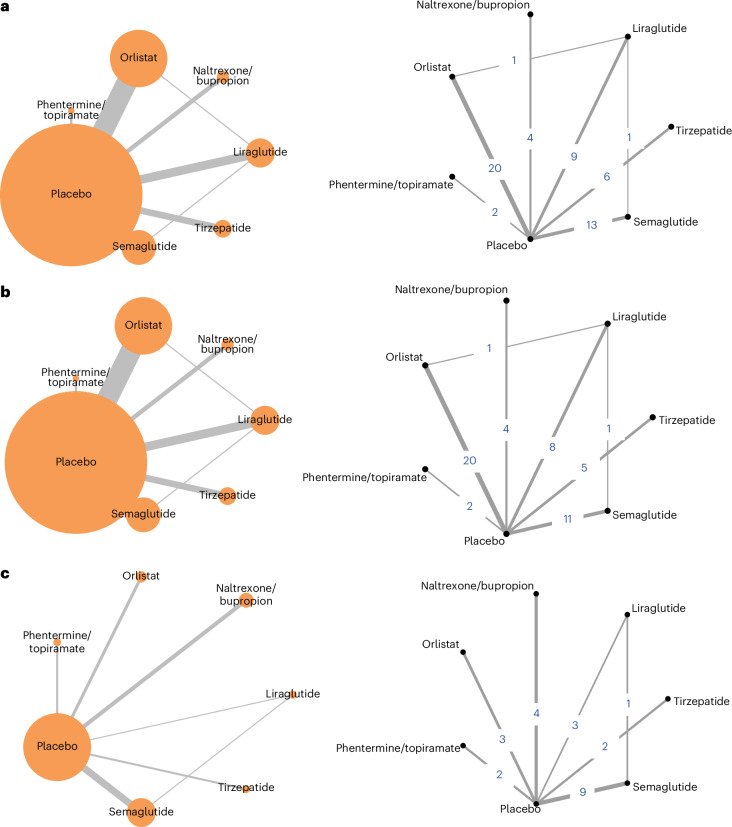
- Across 56 RCTs / 60 comparisons enrolling 60,307 patients, all obesity management medications (OMMs) had significantly greater TBWL% than placebo at the endpoint (55 comparisons; no evidence of inconsistency, H = 1.51).
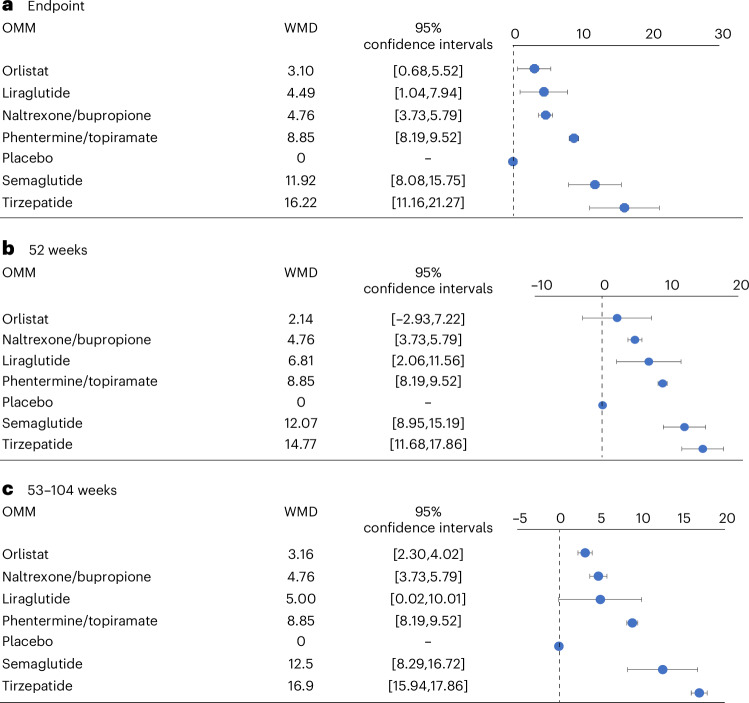
- Only semaglutide and tirzepatide achieved estimated TBWL% greater than 10% at the endpoint; at 52 weeks, all treatments except orlistat were significantly better than placebo, and only semaglutide and tirzepatide reached at least 10% TBWL.
- In the full analysis, only tirzepatide was associated with a greater proportion of patients achieving at least 25% TBWL (odds ratio 33.8 [18.4–61.9], P < 0.001).
- Complication-specific benefits included: semaglutide lowering MACE risk and all-cause mortality, tirzepatide reducing HHF, semaglutide and tirzepatide improving glycemic outcomes in prediabetes/T2D, semaglutide improving knee osteoarthritis outcomes, and tirzepatide improving OSAS and MASH outcomes.
## Methods
- Systematic review and network meta-analysis reported under PRISMA; Medline and Embase were searched up to 31 January 2025.
- Included placebo-controlled or active-controlled RCTs in adults (≥18 years) with obesity (BMI ≥ 30 kg m−2) or overweight (BMI > 25 kg m−2), with treatment duration of at least 48 weeks, evaluating orlistat, phentermine plus topiramate, naltrexone plus bupropion, liraglutide, semaglutide, or tirzepatide.
- Primary endpoint was TBWL% at the end of the trial; analyses used random-effects models, network meta-analysis for outcomes with at least 10 RCTs, traditional meta-analyses or descriptive synthesis for sparser outcomes, plus risk-of-bias assessment and GRADE.
## Limitations
- The paper states that heterogeneity in study populations (baseline BMI, age, obesity-related complications) may influence treatment effects, and that limited data were available for people with BMI ≥ 40 kg m−2, the elderly, adolescents, and people with overweight.
- Most trials were placebo-controlled, limiting head-to-head comparisons, and differing lifestyle intervention intensity in placebo groups may have affected comparative results.
- Many trials lacked comprehensive reporting for key outcomes, and data on weight maintenance, metabolic effects, and serious adverse events beyond 2 years were scarce.
- The paper also notes potential inconsistency in the NMA and limited subgroup reporting; additionally, the evidence base was restricted to RCTs and did not include lifestyle or bariatric surgery studies (evident from the text).
Model-written summary. Check it against the paper before relying on it.
Integrity signals
Registry
Cites
Statistics
Figures
Verification
Claims the paper makes
14 Valid · 8 Not valid · 15 Not checked · 80 Own results and interpretations
Some cited sources support this claim and some don’t — read each source’s verdict below.
In the paper
“However, some studies were designed for other purposes17,18,30,41–44—for example, prevention of CVD or T2D.”
§ A systematic review and meta-analysis of the efficacy and safety of pharmacological treatments for obesity in adults > Discussion
What the sources say
- Supportedcites [17] Lincoff, A. M. et al. Semaglutide and cardiovascular outcomes in obesity without diabetes. N. Engl. J. Med. 389, 2221–2232 (2023). 37952131 source
The Methods describe cardiovascular events as the trial’s primary endpoint. The Discussion states that the trial was conducted to test whether semaglutide would reduce cardiovascular risk in people with overweight or obesity and preexisting cardiovascular disease but no diabetes. This supports the cited paper as an example of a study designed for CVD prevention, specifically secondary prevention; it does not need to support the separate T2D example. (LLM, conf=0.92)
- Partly supportedcites [18] Nissen, S. E. et al. Effect of naltrexone-bupropion on major adverse cardiovascular events in overweight and obese patients with cardiovascular risk factors: a randomized clinical trial. JAMA 315, 990–1004 (2016). 26954408 sourceExperimental — accuracy not yet measured
The Study Design section (page unavailable) confirms that this was a cardiovascular outcomes trial, supporting its identification as a study designed for a purpose other than weight-loss efficacy. But the paper describes its objective as assessing whether naltrexone-bupropion increased cardiovascular events, not preventing CVD or T2D; participants with T2D were eligible. (LLM, conf=0.84)
- Not checked — no full text of the sourcecites [30] Swinburn, B. A. et al. Effect of orlistat on cardiovascular disease risk in obese adults. Diabetes Obes. Metab. 7, 254–262 (2005). 15811142 source
- Not checked — no full text of the sourcecites [41] Loomba, R. et al. Tirzepatide for metabolic dysfunction-associated steatohepatitis with liver fibrosis. N. Engl. J. Med. 391, 299–310 (2024). 38856224 source
- Disputedcites [42] Loomba, R. et al. Semaglutide 2·4 mg once weekly in patients with non-alcoholic steatohepatitis-related cirrhosis: a randomised, placebo-controlled phase 2 trial. Lancet Gastroenterol. Hepatol. 8, 511–522 (2023). 36934740 PMC10792518 sourceExperimental — accuracy not yet measured
The Methods > Outcomes section identifies improvement in liver fibrosis without worsening of NASH as this trial’s primary endpoint. This study was designed to assess NASH-related cirrhosis, not prevention of CVD or T2D. Our copy provides no page number for the passage. (LLM, conf=0.86)
Checked by a reasoning model — may be wrong.
- Disputedcites [43] Malhotra, A. et al. Tirzepatide for the treatment of obstructive sleep apnea and obesity. N. Engl. J. Med. 391, 1193–1205 (2024). 38912654 PMC11598664 sourceExperimental — accuracy not yet measured
The Trial Design section says the SURMOUNT-OSA trials were designed to evaluate tirzepatide in adults with obstructive sleep apnea and obesity, with change in the apnea–hypopnea index as the primary end point (End Points and Assessments). The Discussion explicitly says their design and duration do not support assessment of long-term cardiovascular outcomes. Thus, this paper does not describe trials designed to prevent CVD or T2D. (LLM, conf=0.90)
Checked by a reasoning model — may be wrong.
- Not checked — no full text of the sourcecites [44] Packer, M. et al. Tirzepatide for heart failure with preserved ejection fraction and obesity. N. Engl. J. Med. 392, 427–437 (2025). 39555826 source
plain- Asserted: passes — The authors put it forward as true.
- Checkable: passes — It can be checked against evidence.
- Load-bearing: passes — The paper’s conclusions depend on it.
- Based: passes — The paper gives a reason why it holds.
- Supported
Some cited sources support this claim and some don’t — read each source’s verdict below.
In the paper
“Notably, there were no concerns regarding suicide risk or major depressive events across the included trials55,56.”
§ A systematic review and meta-analysis of the efficacy and safety of pharmacological treatments for obesity in adults > Discussion
What the sources say
- Partly supportedcites [55] Pierret, A. C. S. et al. Glucagon-like peptide 1 receptor agonists and mental health: a systematic review and meta-analysis. JAMA Psychiatry82, 643–653 (2025). PMC12079569 40366681 sourceExperimental — accuracy not yet measured
The Results and Conclusions passage (page not provided) reports no significant increase in pooled psychiatric adverse events or worsening depressive symptoms with GLP1-RA treatment versus placebo. It does not separately establish the absence of suicide risk or major depressive events across every included trial; searches for suicide and major depressive events returned no more specific passage. (LLM, conf=0.83)
- Disputedcites [56] Schoretsanitis, G., Weiler, S., Barbui, C., Raschi, E. & Gastaldon, C. Disproportionality analysis from World Health Organization data on semaglutide, liraglutide, and suicidality. JAMA Netw. Open 7, e2423385 (2024). 39163046 PMC11337067 sourceExperimental — accuracy not yet measured
The Discussion (page not available) says pooled liraglutide trials identified a potential risk of suicidal ideation, with reports in 0.27% of liraglutide participants versus 0.10% of placebo participants. That contradicts the claim that there were no suicide-risk concerns across the trials. The paper does not establish the claim about major depressive events. (LLM, conf=0.88)
Checked by a reasoning model — may be wrong.
plain- Asserted: passes — The authors put it forward as true.
- Checkable: passes — It can be checked against evidence.
- Load-bearing: passes — The paper’s conclusions depend on it.
- Based: passes — The paper gives a reason why it holds.
- Partly supported
The cited sources support only part of this claim — read each source’s verdict below.
In the paper
“However, its mid-term and long-term effects as well as adherence data are limited4,5.”
§ A systematic review and meta-analysis of the efficacy and safety of pharmacological treatments for obesity in adults > Main
What the sources say
- Not checked — no full text of the sourcecites [4] Wadden, T. A. et al. Weight maintenance and additional weight loss with liraglutide after low-calorie-diet-induced weight loss: the SCALE Maintenance randomized study. Int. J. Obes. (Lond.) 37, 1443–1451 (2013). 23812094 source
- Partly supportedcites [5] Wadden, T. A. et al. Four-year weight losses in the Look AHEAD study: factors associated with long-term success. Obes. (Silver Spring) 19, 1987–1998 (2011). PMC3183129 21779086 sourceExperimental — accuracy not yet measured
The Discussion (page unavailable) says follow-up beyond four years was needed to determine whether the observed improvements would reduce cardiovascular morbidity and mortality, supporting a narrow limitation on long-term effects. But it reports four-year weight-loss effects, and Methods > Measures (page unavailable) describes adherence measurements across the four years. The paper does not establish the broader claim that mid-term effects or adherence data are limited. (LLM, conf=0.73)
plain- Asserted: passes — The authors put it forward as true.
- Checkable: passes — It can be checked against evidence.
- Load-bearing: passes — The paper’s conclusions depend on it.
- Based: passes — The paper gives a reason why it holds.
The cited sources that could be checked couldn’t confirm or dispute this claim.
In the paper
“However, the availability of head-to-head comparisons between different OMMs in randomized controlled trials (RCTs) is still limited19, which makes assessment of differences in efficacy and safety across available molecules challenging.”
§ A systematic review and meta-analysis of the efficacy and safety of pharmacological treatments for obesity in adults > Main
What the sources say
- Could not verifycites [19] Astrup, A. et al. Safety, tolerability and sustained weight loss over 2 years with the once-daily human GLP-1 analog, liraglutide. Int. J. Obes. (Lond.) 36, 843–854 (2012). 21844879 PMC3374073 sourceExperimental — accuracy not yet measured
The Materials and methods (Statistical analysis; page unavailable) describe this trial’s direct comparison of liraglutide with orlistat. Neither that passage nor the searched Discussion passages assess whether head-to-head RCTs of obesity medications are generally limited. (LLM, conf=0.76)
plain- Asserted: passes — The authors put it forward as true.
- Checkable: passes — It can be checked against evidence.
- Load-bearing: passes — The paper’s conclusions depend on it.
- Based: passes — The paper gives a reason why it holds.
- Could not verify
The sources with a verdict support this claim; the rest weren’t checked yet, have no full text we could read, or their verdicts aren’t rated yet.
In the paper
“Evidence from the SCALE Obesity and Prediabetes trial31, the SURMOUNT-4 trial with tirzepatide33 and the STEP-1 extension trial33 and STEP-10 (ref. 35) with semaglutide has clearly shown significant weight regain after discontinuation of treatment.”
§ A systematic review and meta-analysis of the efficacy and safety of pharmacological treatments for obesity in adults > Discussion
What the sources say
- Not checked — no full text of the sourcecites [31] le Roux, C. W. et al. 3 years of liraglutide versus placebo for type 2 diabetes risk reduction and weight management in individuals with prediabetes: a randomised, double-blind trial. Lancet 389, 1399–1409 (2017). 28237263 source
- Supportedcites [33] Aronne, L. J. et al. Continued treatment with tirzepatide for maintenance of weight reduction in adults with obesity: the SURMOUNT-4 randomized clinical trial. JAMA 331, 38–48 (2024). 38078870 PMC10714284 source
The Results report that participants who switched from tirzepatide to placebo in SURMOUNT-4 regained a mean 14.0% of body weight over 52 weeks, while those continuing treatment lost a further 5.5% (P < .001). The Discussion also describes substantial weight regain after cessation of pharmacotherapy. This source directly supports the SURMOUNT-4 portion of the multi-study sentence. (LLM, conf=0.94)
- Not checked — no full text of the sourcecites [35] McGowan, B. M. et al. Efficacy and safety of once-weekly semaglutide 2·4 mg versus placebo in people with obesity and prediabetes (STEP 10): a randomised, double-blind, placebo-controlled, multicentre phase 3 trial. Lancet Diabetes Endocrinol. 12, 631–642 (2024). 39089293 source
boostedstates a cause- Asserted: passes — The authors put it forward as true.
- Checkable: passes — It can be checked against evidence.
- Load-bearing: passes — The paper’s conclusions depend on it.
- Based: passes — The paper gives a reason why it holds.
51 more claims · 3 with their cited sources checked
Create a free account to see all 117 claims and to verify the 5 references still open.
- It may state two separate claims as one. 50
- Probably not a substantial claim. 17
Claims other papers make about this one
Each is checked against this paper’s own text: does it say what the citing paper says it does?
The cited source says what the claim attributes to it.
In the citing paper
“This weight loss is comparable with the weight loss effect of naltrexone/bupropione [40].”
From One‐Year Weight Loss Following a Remote Culinary Medicine Program: A Bi‐Center Randomized Controlled Trial (2026) · cites this paper as [40]
The check wasn’t confident either way, so it gives no verdict — never disputed.
In the citing paper
“Together, these studies reinforce the gradient identified in our review, with GI AEs being most pronounced with incretin-based pharmacotherapies, moderate with lipase inhibitors, and mild with non-incretin and natural agents.”
From Gastrointestinal Adverse Effects of Anti-Obesity Medications in Non-Diabetic Adults: A Systematic Review (2025) · cites this paper as [26]
Experimental — accuracy not yet measuredThe check wasn’t confident either way, so it gives no verdict — never disputed.
In the citing paper
“McGown et al. noted that GI intolerance is most characteristic of lipase inhibitors such as orlistat, whereas combination agents, including phentermine/topiramate and naltrexone/bupropion, are generally associated with milder GI or oral symptoms such as constipation and dry mouth [26].”
From Gastrointestinal Adverse Effects of Anti-Obesity Medications in Non-Diabetic Adults: A Systematic Review (2025) · cites this paper as [26]
Experimental — accuracy not yet measuredThe check wasn’t confident either way, so it gives no verdict — never disputed.
In the citing paper
“Both reviews highlight the limited safety evidence for natural or lipase-modulating products such as silibinin [26,27].”
From Gastrointestinal Adverse Effects of Anti-Obesity Medications in Non-Diabetic Adults: A Systematic Review (2025) · cites this paper as [26]
Experimental — accuracy not yet measuredIn the citing paper
“McGown et al. observed that higher-efficacy incretin agents showed proportionally greater GI tolerance, mirroring our results [26].”
From Gastrointestinal Adverse Effects of Anti-Obesity Medications in Non-Diabetic Adults: A Systematic Review (2025) · cites this paper as [26]
Citations
Cites
The Cochrane Collaboration's tool for assessing risk of bias in randomised trials
Higgins, J. P. T., Altman, D. G., Gotzsche, P. C., Juni, P., Moher, D., Oxman, A. D., Savovic, J., Schulz, K. F., Weeks, L., Sterne, J. A. C., et al. (2011) · BMJ · doi:10.1136/bmj.d5928 · Cited by 33,817
Dermyshi, E., Wang, Y., Yan, C., Hong, W., Qiu, G., Gong, X., & Zhang, T. (2017) · Neonatology · doi:10.1159/000454668 · Cited by 24,451
Once-Weekly Semaglutide in Adults with Overweight or Obesity
Wilding, J. P. H., Batterham, R. L., Calanna, S., Davies, M., Van Gaal, L. F., Lingvay, I., McGowan, B. M., Rosenstock, J., Tran, M. T. D., Wadden, T. A., et al. (2021) · New England Journal of Medicine · doi:10.1056/nejmoa2032183 · Cited by 5,205 · cited 2×
“Two studies on semaglutide 38,39 did not report any information about dispersion measurements and, therefore, were not included in any formal analyses.”
Self-citationTirzepatide Once Weekly for the Treatment of Obesity
Jastreboff, A. M., Aronne, L. J., Ahmad, N. N., Wharton, S., Connery, L., Alves, B., Kiyosue, A., Zhang, S., Liu, B., Bunck, M. C., et al. (2022) · New England Journal of Medicine · doi:10.1056/nejmoa2206038 · Cited by 3,838
Semaglutide and Cardiovascular Outcomes in Obesity without Diabetes
Lincoff, A. M., Brown-Frandsen, K., Colhoun, H. M., Deanfield, J., Emerson, S. S., Esbjerg, S., Hardt-Lindberg, S., Hovingh, G. K., Kahn, S. E., Kushner, R. F., et al. (2023) · New England Journal of Medicine · doi:10.1056/nejmoa2307563 · Cited by 3,236
Tacke, F., Horn, P., Wai-Sun Wong, V., Ratziu, V., Bugianesi, E., Francque, S., Zelber-Sagi, S., Valenti, L., Roden, M., Schick, F., et al. (2024) · Journal of Hepatology · doi:10.1016/j.jhep.2024.04.031 · Cited by 2,210
Self-citationFuller, N. R., Colagiuri, S., Schofield, D., Olson, A. D., Shrestha, R., Holzapfel, C., Wolfenstetter, S. B., Holle, R., Ahern, A. L., Hauner, H., et al. (2013) · International Journal of Obesity · doi:10.1038/ijo.2012.139 · Cited by 2,117
Lean, M. E., Leslie, W. S., Barnes, A. C., Brosnahan, N., Thom, G., McCombie, L., Peters, C., Zhyzhneuskaya, S., Al-Mrabeh, A., Hollingsworth, K. G., et al. (2018) · The Lancet · doi:10.1016/s0140-6736(17)33102-1 · Cited by 2,095
XENical in the Prevention of Diabetes in Obese Subjects (XENDOS) Study
Torgerson, J. S., Hauptman, J., Boldrin, M. N., & Sjöström, L. (2004) · Diabetes Care · doi:10.2337/diacare.27.1.155 · Cited by 1,915 · cited 2×
“2c and Supplementary Table 8), 105– 156 weeks ( n = 3, one trial each for liraglutide 31 , orlistat 32 and sema-glutide 17 reporting a placebo-subtracted TBWL of 4.2%, 3.0% and 8.7%, respectively) and more than 156 weeks (one trial with orlistat 32 reporting a 3% TBWL compared to placebo and one…”
InfluentialSemaglutide in Patients with Heart Failure with Preserved Ejection Fraction and Obesity
Kosiborod, M. N., Abildstrøm, S. Z., Borlaug, B. A., Butler, J., Rasmussen, S., Davies, M., Hovingh, G. K., Kitzman, D. W., Lindegaard, M. L., Møller, D. V., et al. (2023) · New England Journal of Medicine · doi:10.1056/nejmoa2306963 · Cited by 1,669
Davies, M., Færch, L., Jeppesen, O. K., Pakseresht, A., Pedersen, S. D., Perreault, L., Rosenstock, J., Shimomura, I., Viljoen, A., Wadden, T. A., et al. (2021) · The Lancet · doi:10.1016/s0140-6736(21)00213-0 · Cited by 1,419
Davies, M. J., Bergenstal, R., Bode, B., Kushner, R. F., Lewin, A., Skjøth, T. V., Andreasen, A. H., Jensen, C. B., DeFronzo, R. A., & for the NN8022-1922 Study Group (2015) · JAMA · doi:10.1001/jama.2015.9676 · Cited by 1,198
Wilding, J. P. H., Batterham, R. L., Davies, M., Van Gaal, L. F., Kandler, K., Konakli, K., Lingvay, I., McGowan, B. M., Oral, T. K., Rosenstock, J., et al. (2022) · Diabetes, Obesity and Metabolism · doi:10.1111/dom.14725 · Cited by 1,128
Self-citationPhase 3 Trial of Semaglutide in Metabolic Dysfunction–Associated Steatohepatitis
Sanyal, A. J., Newsome, P. N., Kliers, I., Østergaard, L. H., Long, M. T., Kjær, M. S., Cali, A. M. G., Bugianesi, E., Rinella, M. E., Roden, M., et al. (2025) · New England Journal of Medicine · doi:10.1056/nejmoa2413258 · Cited by 1,115 · cited 1×
“After 31 January 2025 (deadline for our trials retrieval process), a further trial on semaglutide reported significant improvement of MASH and liver fibrosis 57 ; this trial will, therefore, be considered in the next update of the present systemic review and meta-analysis.”
Anti-obesity drug discovery: advances and challenges
Müller, T. D., Blüher, M., Tschöp, M. H., & DiMarchi, R. D. (2022) · Nature Reviews Drug Discovery · doi:10.1038/s41573-021-00337-8 · Cited by 1,021 · cited 2×
“Consistent with previous literature, OMMs inducing weight loss also improved blood pressure, with the notable exception of naltrexone plus bupropion, which was associated with an increase in systolic blood pressure 48 .”
Tirzepatide for Heart Failure with Preserved Ejection Fraction and Obesity
Packer, M., Zile, M. R., Kramer, C. M., Baum, S. J., Litwin, S. E., Menon, V., Ge, J., Weerakkody, G. J., Ou, Y., Bunck, M. C., et al. (2025) · New England Journal of Medicine · doi:10.1056/nejmoa2410027 · Cited by 1,009 · cited 3×
“Three trials (two with semaglutide 45,46 and one with tirzepa-tide 44 ) included patients with previously diagnosed heart failure; thus, individual study results are presented.”
Tirzepatide for metabolic dysfunction-associated steatohepatitis with liver fibrosis
Loomba, R., Hartman, M. L., Lawitz, E. J., Vuppalanchi, R., Boursier, J., Bugianesi, E., Yoneda, M., Behling, C., Cummings, O. W., Tang, Y., et al. (2024) · New England Journal of Medicine · doi:10.1056/nejmoa2401943 · Cited by 1,005
Rubino, D. M., Greenway, F. L., Khalid, U., O’Neil, P. M., Rosenstock, J., Sørrig, R., Wadden, T. A., Wizert, A., Garvey, W. T., STEP 8 Investigators, et al. (2022) · JAMA · doi:10.1001/jama.2021.23619 · Cited by 995 · cited 3×
“All RCTs were placebo-controlled studies, except for two trials that reported multiple comparisons (that is, liraglutide versus either placebo or orlistat 19 and semaglutide versus either liraglutide or placebo 26 ); therefore, the overall number of available comparisons was 60.”
InfluentialTirzepatide for the Treatment of Obstructive Sleep Apnea and Obesity
Malhotra, A., Grunstein, R. R., Fietze, I., Weaver, T. E., Redline, S., Azarbarzin, A., Sands, S. A., Schwab, R. J., Dunn, J. P., Chakladar, S., et al. (2024) · New England Journal of Medicine · doi:10.1056/nejmoa2404881 · Cited by 871
Aronne, L. J., Sattar, N., Horn, D. B., Bays, H. E., Wharton, S., Lin, W.-Y., Ahmad, N. N., Zhang, S., Liao, R., Bunck, M. C., et al. (2024) · JAMA · doi:10.1001/jama.2023.24945 · Cited by 860
le Roux, C. W., Astrup, A., Fujioka, K., Greenway, F., Lau, D. C. W., Van Gaal, L., Ortiz, R. V., Wilding, J. P. H., Skjøth, T. V., Manning, L. S., et al. (2017) · The Lancet · doi:10.1016/s0140-6736(17)30069-7 · Cited by 850 · cited 6×
“31)) and improvement of KOA (improvement in pain/physical functioning items of any validated scale assessing QoL in patients with KOA). h. Reduction in HHF, considering only studies in which these events were formally adjudicated i.”
InfluentialSelf-citationon behalf of the NN8022-1923 Investigators, Wadden, T. A., Hollander, P., Klein, S., Niswender, K., Woo, V, Hale, P. M., & Aronne, L. (2013) · International Journal of Obesity · doi:10.1038/ijo.2013.120 · Cited by 842
GRADE guidelines: 12. Preparing Summary of Findings tables—binary outcomes
Guyatt, G. H., Oxman, A. D., Santesso, N., Helfand, M., Vist, G., Kunz, R., Brozek, J., Norris, S., Meerpohl, J., Djulbegovic, B., et al. (2013) · Journal of Clinical Epidemiology · doi:10.1016/j.jclinepi.2012.01.012 · Cited by 836
Garvey, W. T., Frias, J. P., Jastreboff, A. M., le Roux, C. W., Sattar, N., Aizenberg, D., Mao, H., Zhang, S., Ahmad, N. N., Bunck, M. C., et al. (2023) · The Lancet · doi:10.1016/s0140-6736(23)01200-x · Cited by 792
Semaglutide in Patients with Obesity-Related Heart Failure and Type 2 Diabetes
Kosiborod, M. N., Petrie, M. C., Borlaug, B. A., Butler, J., Davies, M. J., Hovingh, G. K., Kitzman, D. W., Møller, D. V., Treppendahl, M. B., Verma, S., et al. (2024) · New England Journal of Medicine · doi:10.1056/nejmoa2313917 · Cited by 758
on behalf of the NN8022-1807 Investigators, Astrup, A., Carraro, R., Finer, N., Harper, A., Kunesova, M., Lean, M. E. J., Niskanen, L., Rasmussen, M. F., Rissanen, A., et al. (2012) · International Journal of Obesity · doi:10.1038/ijo.2011.158 · Cited by 757 · cited 5×
“Only two head-to-head comparisons 19,26 between different OMMs were identified (that is, liraglutide versus orlistat and semaglutide versus liraglutide), showing a greater efficacy for Article https://doi.org/10.1038/s41591-025-03978-z significantly lower reduction in total fat-free mass 41 ;…”
InfluentialContemporary medical, device, and surgical therapies for obesity in adults
Perdomo, C. M., Cohen, R. V., Sumithran, P., Clément, K., & Frühbeck, G. (2023) · The Lancet · doi:10.1016/s0140-6736(22)02403-5 · Cited by 738 · cited 1×
“Recent advances in understanding of the biology of obesity have led to the development of novel medications, providing healthcare professionals with a broader range of therapeutic options 16 .”
Self-citationHollander, P. A., Elbein, S. C., Hirsch, I. B., Kelley, D., McGill, J., Taylor, T., Weiss, S. R., Crockett, S. E., Kaplan, R. A., Comstock, J., et al. (1998) · Diabetes Care · doi:10.2337/diacare.21.8.1288 · Cited by 654
Fidler, M. C., Sanchez, M., Raether, B., Weissman, N. J., Smith, S. R., Shanahan, W. R., & Anderson, C. M. (2011) · The Journal of Clinical Endocrinology & Metabolism · doi:10.1210/jc.2011-1256 · Cited by 561
Healthy Weight Loss Maintenance with Exercise, Liraglutide, or Both Combined
Lundgren, J. R., Janus, C., Jensen, S. B. K., Juhl, C. R., Olsen, L. M., Christensen, R. M., Svane, M. S., Bandholm, T., Bojsen-Møller, K. N., Blond, M. B., et al. (2021) · New England Journal of Medicine · doi:10.1056/nejmoa2028198 · Cited by 536
Loomba, R., Abdelmalek, M. F., Armstrong, M. J., Jara, M., Kjær, M. S., Krarup, N., Lawitz, E., Ratziu, V., Sanyal, A. J., Schattenberg, J. M., et al. (2023) · The Lancet Gastroenterology & Hepatology · doi:10.1016/s2468-1253(23)00068-7 · Cited by 533
Nauck, M. A., & Meier, J. J. (2016) · The Lancet Diabetes & Endocrinology · doi:10.1016/s2213-8587(15)00482-9 · Cited by 503 · cited 1×
“A reduction in incretin effect in participants with T2D could contribute to the observed findings 49 .”
A new framework for the diagnosis, staging and management of obesity in adults
Busetto, L., Dicker, D., Frühbeck, G., Halford, J. C. G., Sbraccia, P., Yumuk, V., & Goossens, G. H. (2024) · Nature Medicine · doi:10.1038/s41591-024-03095-3 · Cited by 501
Self-citationHollander, P., Gupta, A. K., Plodkowski, R., Greenway, F., Bays, H., Burns, C., Klassen, P., Fujioka, K., & for the COR-Diabetes Study Group (2013) · Diabetes Care · doi:10.2337/dc13-0234 · Cited by 501
Four-year weight losses in the Look AHEAD study: factors associated with long-term success
Wadden, T. A., Neiberg, R. H., Wing, R. R., Clark, J. M., Delahanty, L. M., Hill, J. O., Krakoff, J., Otto, A., Ryan, D. H., Vitolins, M. Z., et al. (2011) · Obesity · doi:10.1038/oby.2011.230 · Cited by 465 · cited 1×
“However, its mid-term and long-term effects as well as adherence data are limited 4,5 .”
Di Lorenzo, N., Antoniou, S. A., Batterham, R. L., Busetto, L., Godoroja, D., Iossa, A., Carrano, F. M., Agresta, F., Alarçon, I., Azran, C., et al. (2020) · Surgical Endoscopy · doi:10.1007/s00464-020-07555-y · Cited by 465
Self-citationTirzepatide for Obesity Treatment and Diabetes Prevention
Jastreboff, A. M., le Roux, C. W., Stefanski, A., Aronne, L. J., Halpern, B., Wharton, S., Wilding, J. P. H., Perreault, L., Zhang, S., Battula, R., et al. (2025) · New England Journal of Medicine · doi:10.1056/nejmoa2410819 · Cited by 462
Once-Weekly Semaglutide in Persons with Obesity and Knee Osteoarthritis
Bliddal, H., Bays, H., Czernichow, S., Uddén Hemmingsson, J., Hjelmesæth, J., Hoffmann Morville, T., Koroleva, A., Skov Neergaard, J., Vélez Sánchez, P., Wharton, S., et al. (2024) · New England Journal of Medicine · doi:10.1056/nejmoa2403664 · Cited by 440 · cited 1×
“Semaglutide 47 and liraglutide 27 were assessed in patients with obesity and knee osteoarthritis (KOA).”
Lingvay, I., Cohen, R. V., Roux, C. W. L., & Sumithran, P. (2024) · The Lancet · doi:10.1016/s0140-6736(24)01210-8 · Cited by 433
(1989) · PubMed · Cited by 419
Nauck, M. A., & D‘Alessio, D. A. (2022) · Cardiovascular Diabetology · doi:10.1186/s12933-022-01604-7 · Cited by 407
Rodriguez, P. J., Zhang, V., Gratzl, S., Do, D., Goodwin Cartwright, B., Baker, C., Gluckman, T. J., Stucky, N., & Emanuel, E. J. (2025) · JAMA Network Open · doi:10.1001/jamanetworkopen.2024.57349 · Cited by 374
Eating behavior and stress: a pathway to obesity
Sominsky, L., & Spencer, S. J. (2014) · Frontiers in Psychology · doi:10.3389/fpsyg.2014.00434 · Cited by 354
Kadowaki, T., Isendahl, J., Khalid, U., Lee, S. Y., Nishida, T., Ogawa, W., Tobe, K., Yamauchi, T., & Lim, S. (2022) · The Lancet Diabetes & Endocrinology · doi:10.1016/s2213-8587(22)00008-0 · Cited by 330 · cited 2×
“Two studies on semaglutide 38,39 did not report any information about dispersion measurements and, therefore, were not included in any formal analyses.”
The energy balance model of obesity: beyond calories in, calories out
Hall, K. D., Farooqi, I. S., Friedman, J. M., Klein, S., Loos, R. J., Mangelsdorf, D. J., O’Rahilly, S., Ravussin, E., Redman, L. M., Ryan, D. H., et al. (2022) · The American Journal of Clinical Nutrition · doi:10.1093/ajcn/nqac031 · Cited by 315
Kelley, D. E., Bray, G. A., Pi-Sunyer, F. X., Klein, S., Hill, J., Miles, J., & Hollander, P. (2002) · Diabetes Care · doi:10.2337/diacare.25.6.1033 · Cited by 314
Frühbeck, G., Busetto, L., Dicker, D., Yumuk, V., Goossens, G. H., Hebebrand, J., Halford, J. G. C., Farpour-Lambert, N. J., Blaak, E. E., Woodward, E., et al. (2019) · Obesity Facts · doi:10.1159/000497124 · Cited by 311 · cited 1×
“Obesity is an adiposity-based chronic disease driven by biological mechanisms, resulting in dysregulation and/or excess accumulation of adipose tissue 6 .”
Self-citationEffect of orlistat in overweight and obese patients with type 2 diabetes treated with metformin
Miles, J. M., Leiter, L., Hollander, P., Wadden, T., Anderson, J. W., Doyle, M., Foreyt, J., Aronne, L., & Klein, S. (2002) · Diabetes Care · doi:10.2337/diacare.25.7.1123 · Cited by 286
Long-Term Outcomes of Medical Management vs Bariatric Surgery in Type 2 Diabetes
Courcoulas, A. P., Patti, M. E., Hu, B., Arterburn, D. E., Simonson, D. C., Gourash, W. F., Jakicic, J. M., Vernon, A. H., Beck, G. J., Schauer, P. R., et al. (2024) · JAMA · doi:10.1001/jama.2024.0318 · Cited by 284 · cited 1×
“MBS can achieve sustained long-term remission of T2D 62 , although remission rates decrease significantly over time.”
Nissen, S. E., Wolski, K. E., Prcela, L., Wadden, T., Buse, J. B., Bakris, G., Perez, A., & Smith, S. R. (2016) · JAMA · doi:10.1001/jama.2016.1558 · Cited by 273 · cited 5×
“Only two trials, one with semaglutide 17 and one with naltrexone plus bupropion 18 , were designed to explore the effects on cardiovascular safety in patients with obesity.”
InfluentialHeise, T., Mari, A., DeVries, J. H., Urva, S., Li, J., Pratt, E. J., Coskun, T., Thomas, M. K., Mather, K. J., Haupt, A., et al. (2022) · The Lancet Diabetes & Endocrinology · doi:10.1016/s2213-8587(22)00085-7 · Cited by 268
Frühbeck, G., Toplak, H., Woodward, E., Yumuk, V., Maislos, M., Oppert, J.-M., & for the Executive Committee of the European Association for the Study of Obesity (2013) · Obesity Facts · doi:10.1159/000350627 · Cited by 264
Self-citationHerrera, B. M., & Lindgren, C. M. (2010) · Current Diabetes Reports · doi:10.1007/s11892-010-0153-z · Cited by 255
Garvey, W. T., Birkenfeld, A. L., Dicker, D., Mingrone, G., Pedersen, S. D., Satylganova, A., Skovgaard, D., Sugimoto, D., Jensen, C., & Mosenzon, O. (2020) · Diabetes Care · doi:10.2337/dc19-1745 · Cited by 186
Economic costs of obesity: a systematic review
Nagi, M. A., Ahmed, H., Rezq, M. A. A., Sangroongruangsri, S., Chaikledkaew, U., Almalki, Z. S., & Thavorncharoensap, M. (2023) · International Journal of Obesity · doi:10.1038/s41366-023-01398-y · Cited by 177
McGowan, B. M., Bruun, J. M., Capehorn, M., Pedersen, S. D., Pietiläinen, K. H., Muniraju, H. A. K., Quiroga, M., Varbo, A., & Lau, D. C. W. (2024) · The Lancet Diabetes & Endocrinology · doi:10.1016/s2213-8587(24)00182-7 · Cited by 176 · cited 4×
“Two studies (one with liraglutide 31 and one with semaglu-tide 35 ) were specifically designed for patients affected by overweight/ obesity and prediabetes, and two more studies (one with orlistat 32 and one with tirzepatide 36 ) reported a longer-term analysis on a subgroup of patients with…”
InfluentialSelf-citationEffect of Weight Loss with Reduction of Intra-Abdominal Fat on Lipid Metabolism in Older Men
Purnell, J. Q. (2000) · Journal of Clinical Endocrinology & Metabolism · doi:10.1210/jc.85.3.977 · Cited by 161 · cited 1×
“Most OMMs induced a reduction in triglycerides, which appeared to be greater with OMMs producing a greater weight loss, as expected 53 .”
Shi, Q., Wang, Y., Hao, Q., Vandvik, P. O., Guyatt, G., Li, J., Chen, Z., Xu, S., Shen, Y., Ge, L., et al. (2024) · The Lancet · doi:10.1016/s0140-6736(24)00351-9 · Cited by 155
Richelsen, B., Tonstad, S., Rössner, S., Toubro, S., Niskanen, L., Madsbad, S., Mustajoki, P., & Rissanen, A. (2007) · Diabetes Care · doi:10.2337/dc06-0210 · Cited by 149
Gudbergsen, H., Overgaard, A., Henriksen, M., Wæhrens, E. E., Bliddal, H., Christensen, R., Nielsen, S. M., Boesen, M., Knop, F. K., Astrup, A., et al. (2021) · The American Journal of Clinical Nutrition · doi:10.1093/ajcn/nqaa328 · Cited by 131
Statistical Models and Methods for Network Meta-Analysis
Madden, L. V., Piepho, H.-P., & Paul, P. A. (2016) · Phytopathology® · doi:10.1094/phyto-12-15-0342-rvw · Cited by 118
Glucagon-Like Peptide 1 Receptor Agonists and Mental Health: A Systematic Review and Meta-Analysis
Pierret, A. C. S., Mizuno, Y., Saunders, P., Lim, E., De Giorgi, R., Howes, O. D., McCutcheon, R. A., McGowan, B., Sen Gupta, P., Smith, D., et al. (2025) · JAMA Psychiatry · doi:10.1001/jamapsychiatry.2025.0679 · Cited by 116 · cited 2×
“Notably, there were no concerns regarding suicide risk or major depressive events across the included trials 55,56 .”
Self-citationOrlistat Inhibits Dietary Cholesterol Absorption
Mittendorfer, B., Ostlund, R. E., Patterson, B. W., & Klein, S. (2001) · Obesity Research · doi:10.1038/oby.2001.79 · Cited by 114 · cited 1×
“This aligns with its known mechanism of action, which involves the inhibition of intestinal fat absorption, leading to a reduction in serum lipid levels 52 .”
Silverii, G. A., Monami, M., Gallo, M., Ragni, A., Prattichizzo, F., Renzelli, V., Ceriello, A., & Mannucci, E. (2024) · Diabetes Obesity and Metabolism · doi:10.1111/dom.15382 · Cited by 113
Self-citationBerne, C., & the Orlistat Swedish Type 2 diabetes Study Group (2005) · Diabetic Medicine · doi:10.1111/j.1464-5491.2004.01474.x · Cited by 112
Schoretsanitis, G., Weiler, S., Barbui, C., Raschi, E., & Gastaldon, C. (2024) · JAMA Network Open · doi:10.1001/jamanetworkopen.2024.23385 · Cited by 107 · cited 2×
“Notably, there were no concerns regarding suicide risk or major depressive events across the included trials 55,56 .”
Weight reduction and the impact on apnea-hypopnea index: A systematic meta-analysis
Malhotra, A., Heilmann, C. R., Banerjee, K. K., Dunn, J. P., Bunck, M. C. M., & Bednařík, J. (2024) · Sleep Medicine · doi:10.1016/j.sleep.2024.06.014 · Cited by 105
Sandforth, A., von Schwartzenberg, R. J., Arreola, E. V., Hanson, R. L., Sancar, G., Katzenstein, S., Lange, K., Preißl, H., Dreher, S. I., Weigert, C., et al. (2023) · The Lancet Diabetes & Endocrinology · doi:10.1016/s2213-8587(23)00235-8 · Cited by 100
Gersing, A. S., Schwaiger, B. J., Nevitt, M. C., Joseph, G. B., Chanchek, N., Guimarães, J. B., Wamba, J. M., Facchetti, L., McCulloch, C. E., & Link, T. M. (2017) · Radiology · doi:10.1148/radiol.2017161005 · Cited by 99
Khera, R., Pandey, A., Chandar, A. K., Murad, M. H., Prokop, L. J., Neeland, I. J., Berry, J. D., Camilleri, M., & Singh, S. (2018) · Gastroenterology · doi:10.1053/j.gastro.2017.12.024 · Cited by 90
Regulatory challenges for new drugs to treat obesity and comorbid metabolic disorders
Heal, D. J., Gosden, J., & Smith, S. L. (2009) · British Journal of Clinical Pharmacology · doi:10.1111/j.1365-2125.2009.03549.x · Cited by 86
Effect of orlistat on cardiovascular disease risk in obese adults
Swinburn, B. A., Carey, D., Hills, A. P., Hooper, M., Marks, S., Proietto, J., Strauss, B. J., Sullivan, D., Welborn, T. A., & Caterson, I. D. (2005) · Diabetes, Obesity and Metabolism · doi:10.1111/j.1463-1326.2004.00467.x · Cited by 81 · cited 4×
“Table 1 reports results for metabolic parameters ( n = 25, 33, 30, 36 and 33 RCTs for hemoglobin A1c (HbA1c), fasting plasma glucose (FPG), total and high-density lipoprotein (HDL) cholesterol and triglycerides, respectively) and blood pressure ( n = 36 and 30 RCTs for systolic and diastolic blood…”
InfluentialKarhunen, L. J., Franssila-Kallunki, A., Rissanen, P., Valve, R., Kolehmainen, M., Rissanen, A., & Uusitupa, M. I. J. (2000) · International Journal of Obesity · doi:10.1038/sj.ijo.0801443 · Cited by 78
Longitudinal Analysis of Obesity Drug Use and Public Awareness
Berning, P., Adhikari, R., Schroer, A. E., Jelwan, Y. A., Razavi, A. C., Blaha, M. J., & Dzaye, O. (2025) · JAMA Network Open · doi:10.1001/jamanetworkopen.2024.57232 · Cited by 78
(2016) · PubMed Central · Cited by 77
Predictors of weight loss and reversal of comorbidities in malabsorptive bariatric surgery
Mora, M. E. V., Simeoni, B., Gagliardi, L., Scarfone, A., Nanni, G., Castagneto, M., Manco, M., Mingrone, G., & Ferrannini, E. (2005) · American Journal of Clinical Nutrition · doi:10.1093/ajcn/81.6.1292 · Cited by 73
Liu, L., Li, Z., Ye, W., Peng, P., Wang, Y., Wan, L., Li, J., Zhang, M., Wang, Y., Liu, R., et al. (2025) · eClinicalMedicine · doi:10.1016/j.eclinm.2024.103020 · Cited by 62 · cited 3×
“Several NMAs 20–23 and a traditional meta-analysis 24 on different therapeutic options for overweight and obesity were published in the last few years, but they did not include more recently available OMMs, such as tirzepatide 20–22 , or they included medications not approved for the treatment of…”
Derosa, G., Cicero, A. F. G., D’Angelo, A., Fogari, E., & Maffioli, P. (2012) · Journal of Clinical Pharmacy and Therapeutics · doi:10.1111/j.1365-2710.2011.01280.x · Cited by 53
Mental Health Implications of Weight Loss Medications: A Narrative Review
Harding, S. (2024) · The Journal for Nurse Practitioners · doi:10.1016/j.nurpra.2024.105207 · Cited by 44
Mentias, A., Desai, M. Y., Aminian, A., Patel, K. V., Keshvani, N., Verma, S., Cho, L., Jacob, M., Alvarez, P., Lincoff, A. M., et al. (2024) · Circulation: Heart Failure · doi:10.1161/circheartfailure.122.010453 · Cited by 40
Jeon, E., Lee, K. Y., & Kim, K.-K. (2023) · Journal of Obesity & Metabolic Syndrome · doi:10.7570/jomes23032 · Cited by 39 · cited 1×
“Current guidelines recommend that, particularly for high-risk people with severe obesity or obesity-related complications, lifestyle programs can be combined with OMMs or metabolic bariatric surgery (MBS) 10–13 , with recent evidence suggesting that these interventions can be risk stratified 14,15 .”
Roser, P., Bajaj, S. S., & Stanford, F. C. (2022) · International Journal of Obesity · doi:10.1038/s41366-022-01176-2 · Cited by 34
De Luca, M., Zese, M., Silverii, G. A., Ragghianti, B., Bandini, G., Forestieri, P., Zappa, M. A., Navarra, G., Foschi, D., Musella, M., et al. (2023) · Obesity Surgery · doi:10.1007/s11695-023-06909-4 · Cited by 28 · cited 1×
“Several NMAs 20–23 and a traditional meta-analysis 24 on different therapeutic options for overweight and obesity were published in the last few years, but they did not include more recently available OMMs, such as tirzepatide 20–22 , or they included medications not approved for the treatment of…”
Self-citationIannone, A., Natale, P., Palmer, S. C., Nicolucci, A., Rendina, M., Giorgino, F., Laviola, L., Di Leo, A., & Strippoli, G. F. M. (2023) · Diabetes, Obesity and Metabolism · doi:10.1111/dom.15138 · Cited by 27
Luca, M. D., Zese, M., Bandini, G., Zappa, M. A., Bardi, U., Carbonelli, M. G., Carrano, F. M., Casella, G., Chianelli, M., Chiappetta, S., et al. (2024) · Updates in Surgery · doi:10.1007/s13304-024-01996-z · Cited by 23
Self-citationSubphenotype-Dependent Benefits of Bariatric Surgery for Individuals at Risk for Type 2 Diabetes
Sandforth, L., Raverdy, V., Sandforth, A., Bauvin, P., Chatelain, E., Verkindt, H., Mingrone, G., Guidone, C., Verrastro, O., Zhou, K., et al. (2025) · Diabetes Care · doi:10.2337/dc25-0160 · Cited by 17
Luca, M. D., Belluzzi, A., Salminen, P. T. P., Bueter, M., Pujol‐Rafols, J., Sakran, N., Stier, C. K., Taşkın, H. E., Chiappetta, S., Carrano, F. M., et al. (2024) · Journal of Clinical Medicine · doi:10.3390/jcm13175106 · Cited by 17
Self-citationMcGowan, B., Ciudin, A., Baker, J. L., Busetto, L., Dicker, D., Frühbeck, G., Goossens, G. H., Monami, M., Ragghianti, B., Sbraccia, P., et al. (2025) · Obesity Facts · doi:10.1159/000546855 · Cited by 9
Self-citationSignificance of prediabetes as a nosological entity
Stepanek, L., Horakova, D., Nakladalova, M., Cibickova, L., Karasek, D., & Zadrazil, J. (2018) · Biomedical Papers · doi:10.5507/bp.2018.057 · Cited by 7
Mental Health Implications of Weight Loss Medications: A Narrative ReviewPreprint
Harding, S. (2024) · SSRN Electronic Journal · doi:10.2139/ssrn.4896008 · Cited by 1
Cited by
McGowan, B., Ciudin, A., Baker, J. L., Busetto, L., Dicker, D., Frühbeck, G., Goossens, G. H., Monami, M., Sbraccia, P., Martinez-Tellez, B., et al. (2025) · Nature Medicine · doi:10.1038/s41591-025-03765-w · Cited by 75
Self-citationObesity in China: current progress and future prospects
Pan, X., Fang, Z.-Z., Zhang, L., & Pan, A. (2025) · The Lancet Diabetes & Endocrinology · doi:10.1016/s2213-8587(25)00357-2 · Cited by 24
Takrori, E., Peshin, S., & Singal, S. (2025) · Medicina · doi:10.3390/medicina61111987 · Cited by 13
Ciudin, A., Baker, J. L., Belančić, A., Busetto, L., Diker, D., Fábryová, Ľ., Frühbeck, G., Goossens, G. H., Gordon, J., Monami, M., et al. (2026) · Nature Medicine · doi:10.1038/s41591-026-04397-4 · Cited by 26
Self-citationØstergaard, S. (2025) · Expert Opinion on Drug Discovery · doi:10.1080/17460441.2025.2601113 · Cited by 16
Metadata
- Authors
- McGowan, B., Ciudin, A., Baker, J. L., Busetto, L., Dicker, D., Frühbeck, G., Goossens, G. H., Monami, M., Sbraccia, P., Martinez-Tellez, B., Woodward, E., & Yumuk, V.
- Affiliations
- Universitat Autònoma de Barcelona (ES)
- University of Padua (IT)
- Maastricht University Medical Centre (NL)
- University of Rome Tor Vergata (IT)
- Istanbul University-Cerrahpaşa (TR)
- Corresponding author
- McGowan, Barbara
- ORCID
- Venue
- Nature Medicine
- Published
- 2025-10
- Volume
- 31
- Issue
- 10
- Pages
- 3317-3329
- ISSN
- 1078-8956 (ISSN-L)
- 1546-170X
- PMC
- PMC12532627
- OpenAlex
- W4414747615
- Cited by
- 100
- References
- 75
- Citations by year
- 2026: 91 · 2025: 9
- FWCI
- 13.42
- Type
- journal article
- Language
- en
- Open access
- hybrid
- doi.org
- Licence
- cc-by-nc-nd
- creativecommons.org/licenses/by-nc-nd/4.0 (tdm)
- creativecommons.org/licenses/by-nc-nd/4.0 (vor, 1 d)
- Locations
- Nature Medicine (publishedVersion, cc-by-nc-nd)
- Research Square (acceptedVersion, cc-by)
- Europe PMC (PubMed Central) (publishedVersion, cc-by-nc-nd)
- PubMed (publishedVersion)
- Research Publications (Maastricht University) (publishedVersion, cc-by-nc-nd)
- Cineca Institutional Research Information System (Tor Vergata University) (submittedVersion, cc-by-nc-nd)
- Dipòsit Digital de Documents de la UAB (Universitat Autònoma de Barcelona) (submittedVersion, cc-by-nc-nd)
- Padua Research Archive (University of Padova) (submittedVersion, cc-by-nc-nd)
- Funders
- Bristol-Myers Squibb
- Eli Lilly and Company
- Regeneron Pharmaceuticals
- European Foundation for the Study of Diabetes
- Novo Nordisk
- Topics
- Health Sciences › Medicine › Pharmacology (medical) › Pharmacology and Obesity Treatment
- Health Sciences › Medicine › Surgery › Bariatric Surgery and Outcomes
- Health Sciences › Medicine › Endocrinology, Diabetes and Metabolism › Diabetes Treatment and Management
- Keywords
- anti-obesity drugs, obesity treatment, weight loss, orlistat, semaglutide, liraglutide, tirzepatide, naltrexone/bupropion, phentermine/topiramate, type 2 diabetes remission, cardiovascular events, heart failure hospitalization, obstructive sleep apnea, nonalcoholic steatohepatitis, adverse events, lipid profile, glycemic control
- MeSH terms
- Liraglutide, Semaglutide, Adult, Glucagon-Like Peptides, Humans, Obesity, Quality of Life, Weight Loss, Randomized Controlled Trials as Topic, Treatment Outcome, Anti-Obesity Agents, Glucagon-Like Peptide 1
About these checks
Registry, retraction, Cites and statistics results are computed, not judged, with one exception: a printed reference that no index lists is read once by a model before it counts as a citation error. Claims are extracted by a model and kept only when their quote appears verbatim in the text; each cited source is then checked, with a model’s help, for whether it says what the claim relies on. Those verdicts can be wrong — read the claim’s quote and the cited source before relying on one.
The claim verdicts this report counts are experimental: their accuracy is not yet measured.
A language model drew the claims from the paper on 2026-10-10, under version 3 of the claim definition (model deepseek-v4.1-flash, prompt extract-v3).
A second model labelled each claim on 2026-10-10 (model jev-1.13-20260917, definition revision gold-guideline-v0.2).
Cited sources are checked with a language model’s help (gpt-6-sol).
Statistics and arithmetic are recomputed, not judged.
Confidence bands are shown only for fields calibrated on our annotated test set. None is calibrated yet, so no band is shown.
What counts as a claim ›How we measure confidence ›How we check this ›
Are you an author, or do you see a problem with this page? Request a review
Data sources
Bibliographic data: Semantic Scholar, OpenAlex, Crossref.
Contains information from the Semantic Scholar Academic Graph Datasets, made available under the ODC Attribution License (ODC-BY 1.0).
Semantic Scholar’s data is described in: Kinney, R., et al. (2023). The Semantic Scholar Open Data Platform. arXiv:2301.10140.
