

Serotonin regulation of behavior via large-scale neuromodulation of serotonin receptor networks
Open accessPublished version of a preprint
The DOI matches its Crossref record; 94 of the 94 references it cites were found in a registry or an index.
Abstract
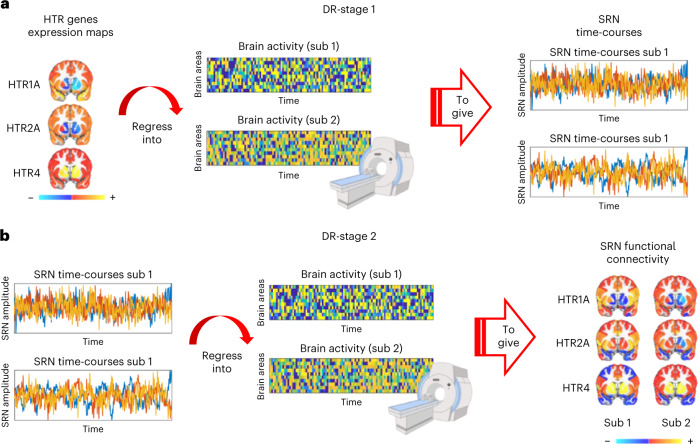
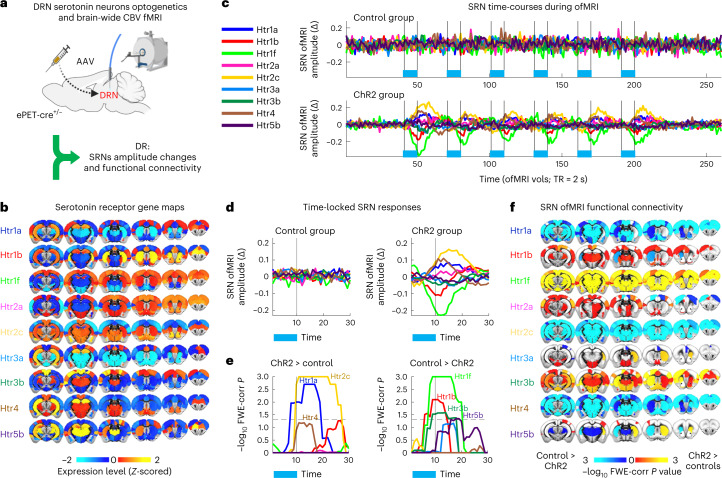
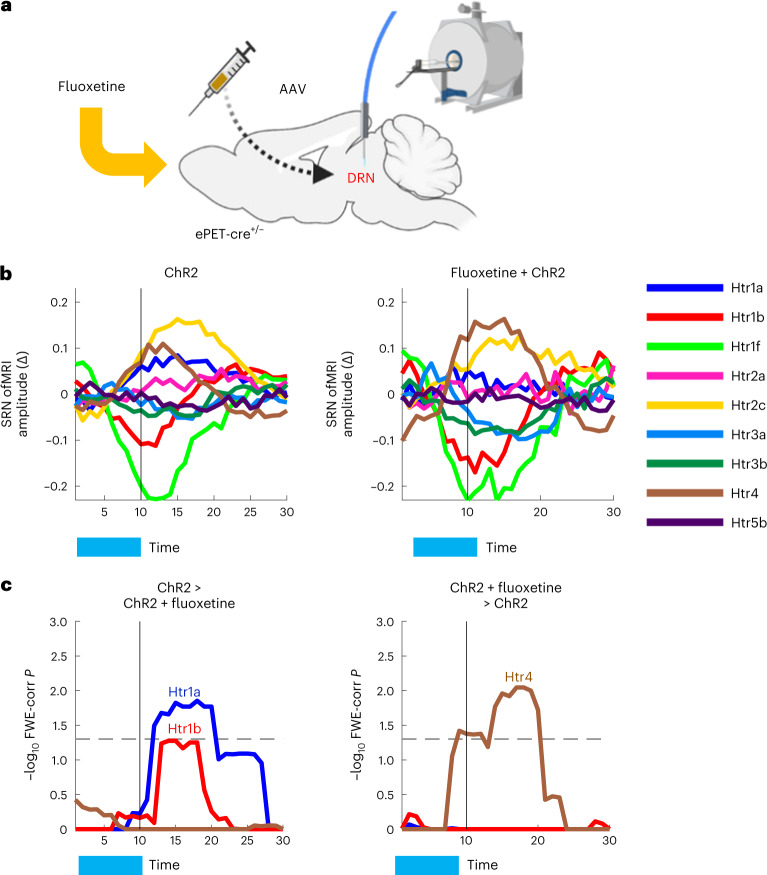
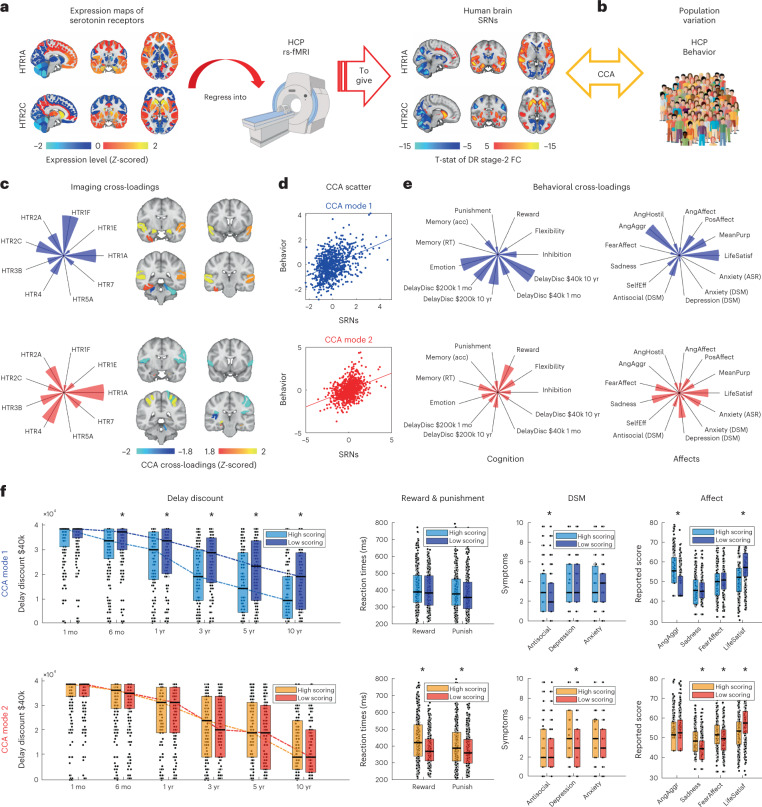
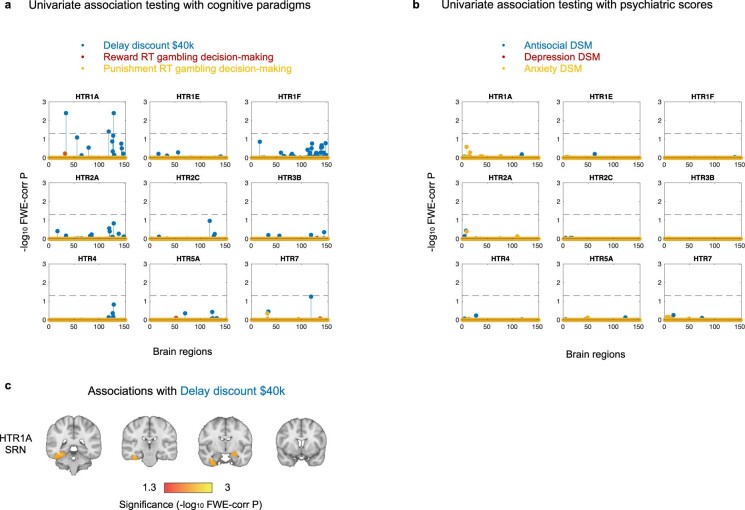
Although we understand how serotonin receptors function at the single-cell level, what role different serotonin receptors play in regulating brain-wide activity and, in turn, human behavior, remains unknown. Here, we developed transcriptomic–neuroimaging mapping to characterize brain-wide functional signatures associated with specific serotonin receptors: serotonin receptor networks (SRNs). Probing SRNs with optogenetics–functional magnetic resonance imaging (MRI) and pharmacology in mice, we show that activation of dorsal raphe serotonin neurons differentially modulates the amplitude and functional connectivity of different SRNs, showing that receptors’ spatial distributions can confer specificity not only at the local, but also at the brain-wide, network level. In humans, using resting-state functional MRI, SRNs replicate established divisions of serotonin effects on impulsivity and negative biases. These results provide compelling evidence that heterogeneous brain-wide distributions of different serotonin receptor types may underpin behaviorally distinct modes of serotonin regulation. This suggests that serotonin neurons may regulate multiple aspects of human behavior via modulation of large-scale receptor networks.
Overview
The claims and statistics of this paper haven’t been checked yet.
Free: it reads the open-access text and checks the first 5 claims that cite a source we can check. Create a free account to check every claim.
Integrity signals
Registry
Cites
Statistics
Figures
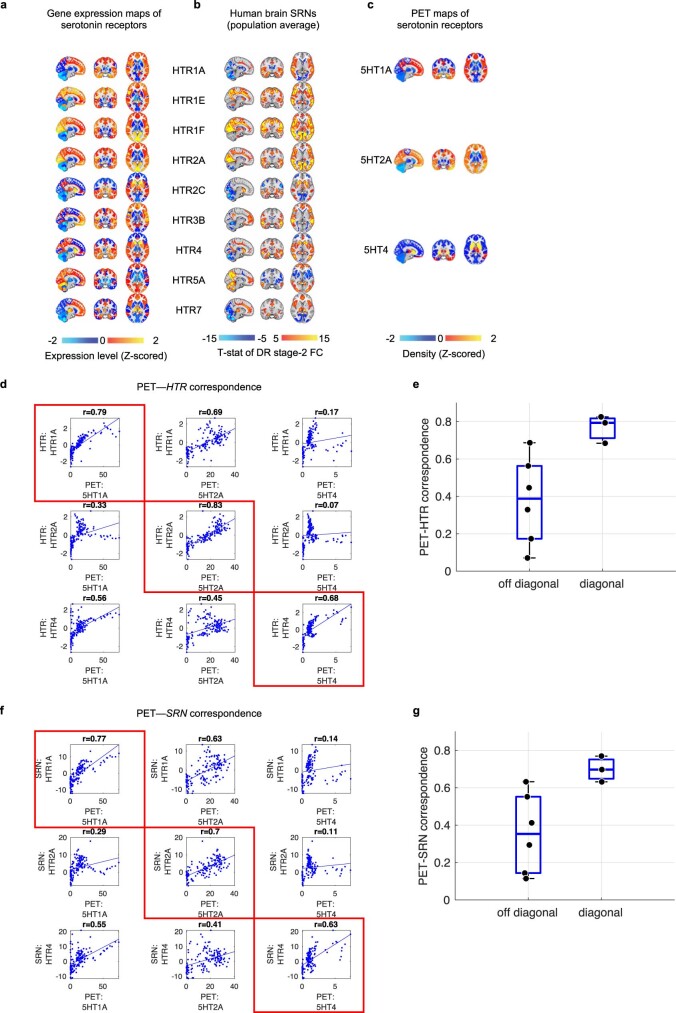
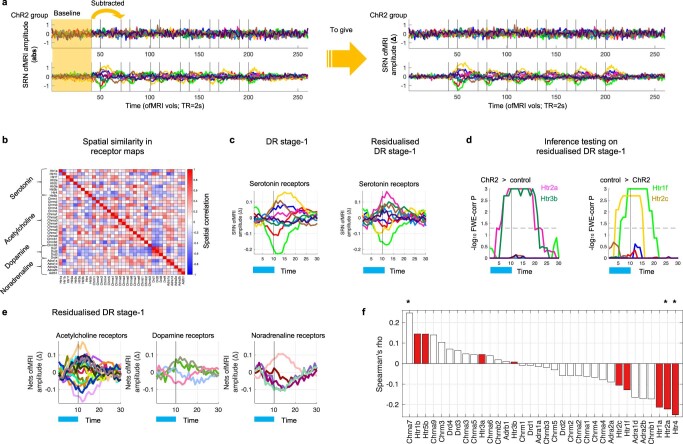
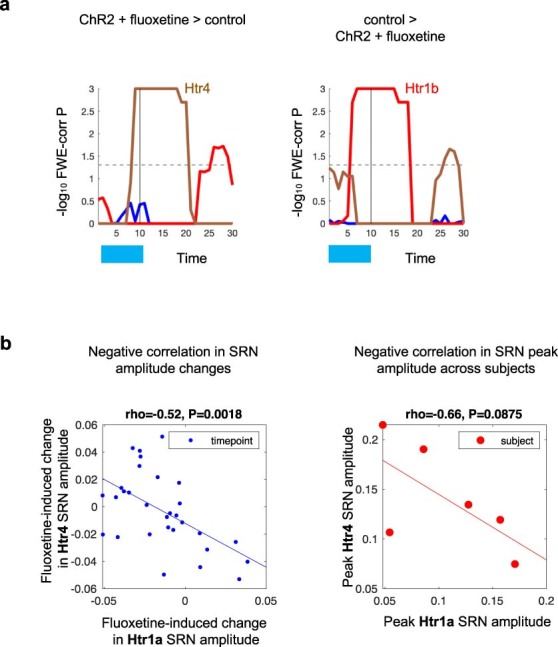
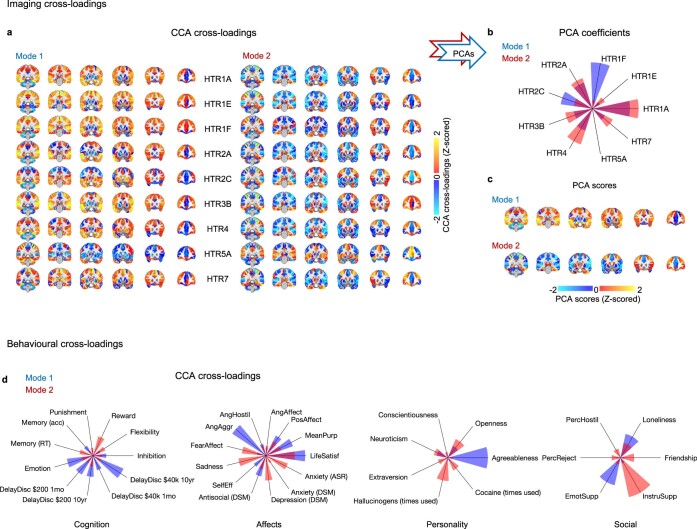
Verification
Claims the paper makes
The claims and statistics of this paper haven’t been checked yet.
Free: it reads the open-access text and checks the first 5 claims that cite a source we can check. Create a free account to check every claim.
Claims other papers make about this one
Each is checked against this paper’s own text: does it say what the citing paper says it does?
In the citing paper
“Serotonin plays an important modulatory role in the brain, including regulation of mood, sleep, cognition, and behaviour, and in the early development of the central nervous system [3, 4].”
From Effects of escitalopram on synaptic density in the healthy human brain: a randomized controlled trial (2023) · cites this paper as [4]
Self-check
Percentages, sums and reported differences re-computed from the paper’s own numbers.
The self-check needs the paper’s full text.
Citations
Cites
Tzourio-Mazoyer, N., Landeau, B., Papathanassiou, D., Crivello, F., Etard, O., Delcroix, N., Mazoyer, B., & Joliot, M. (2002) · NeuroImage · doi:10.1006/nimg.2001.0978 · Cited by 16,319
Genome-wide atlas of gene expression in the adult mouse brain
Lein, E. S., Hawrylycz, M. J., Ao, N., Ayres, M., Bensinger, A., Bernard, A., Boe, A. F., Boguski, M. S., Brockway, K. S., Byrnes, E. J., et al. (2007) · Nature · doi:10.1038/nature05453 · Cited by 5,572
The minimal preprocessing pipelines for the Human Connectome Project
Glasser, M. F., Sotiropoulos, S. N., Wilson, J. A., Coalson, T. S., Fischl, B., Andersson, J. L., Xu, J., Jbabdi, S., Webster, M., Polimeni, J. R., et al. (2013) · NeuroImage · doi:10.1016/j.neuroimage.2013.04.127 · Cited by 5,253
A review of central 5-HT receptors and their function
Barnes, N. M., & Sharp, T. (1999) · Neuropharmacology · doi:10.1016/s0028-3908(99)00010-6 · Cited by 3,161
An anatomically comprehensive atlas of the adult human brain transcriptome
Hawrylycz, M. J., Lein, E. S., Guillozet-Bongaarts, A. L., Shen, E. H., Ng, L., Miller, J. A., van de Lagemaat, L. N., Smith, K. A., Ebbert, A., Riley, Z. L., et al. (2012) · Nature · doi:10.1038/nature11405 · Cited by 3,083
The Human Connectome Project: A data acquisition perspective
Van Essen, D. C., Ugurbil, K., Auerbach, E., Barch, D., Behrens, T. E. J., Bucholz, R., Chang, A., Chen, L., Corbetta, M., Curtiss, S. W., et al. (2012) · NeuroImage · doi:10.1016/j.neuroimage.2012.02.018 · Cited by 2,680
Function in the human connectome: task-fMRI and individual differences in behavior
Barch, D. M., Burgess, G. C., Harms, M. P., Petersen, S. E., Schlaggar, B. L., Corbetta, M., Glasser, M. F., Curtiss, S., Dixit, S., Feldt, C., et al. (2013) · NeuroImage · doi:10.1016/j.neuroimage.2013.05.033 · Cited by 1,529
Self-citationResting-state fMRI in the human connectome project
Smith, S. M., Beckmann, C. F., Andersson, J., Auerbach, E. J., Bijsterbosch, J., Douaud, G., Duff, E., Feinberg, D. A., Griffanti, L., Harms, M. P., et al. (2013) · NeuroImage · doi:10.1016/j.neuroimage.2013.05.039 · Cited by 1,502
Linnoila, M., Virkkunen, M., Scheinin, M., Nuutila, A., Rimon, R., & Goodwin, F. K. (1983) · Life Sciences · doi:10.1016/0024-3205(83)90344-2 · Cited by 1,308
Griffanti, L., Salimi-Khorshidi, G., Beckmann, C. F., Auerbach, E. J., Douaud, G., Sexton, C. E., Zsoldos, E., Ebmeier, K. P., Filippini, N., Mackay, C. E., et al. (2014) · NeuroImage · doi:10.1016/j.neuroimage.2014.03.034 · Cited by 1,262
Research works printed but not linked: 1
- Muller, C. P. & Jacobs, B. Handbook of the Behavioral Neurobiology of Serotonin (Academic Press, 2009).
Cited by
Neural heterogeneity controls computations in spiking neural networks
Gast, R., Solla, S. A., & Kennedy, A. (2024) · Proceedings of the National Academy of Sciences · doi:10.1073/pnas.2311885121 · Cited by 125
Functional neuroimaging as a catalyst for integrated neuroscience
Finn, E. S., Poldrack, R. A., & Shine, J. M. (2023) · Nature · doi:10.1038/s41586-023-06670-9 · Cited by 111
“Optogenetic fMRI techniques have also been combined with gene-expression maps to shed light onto how neuromodulators may regulate aspects of human behaviour via large-scale receptor networks 48 .”
Serotonin transporter inhibits antitumor immunity through regulating the intratumoral serotonin axis
Li, B., Elsten-Brown, J., Li, M., Zhu, E., Li, Z., Chen, Y., Kang, E., Ma, F., Chiang, J., Li, Y.-R., et al. (2025) · Cell · doi:10.1016/j.cell.2025.04.032 · Cited by 105
“72 We found that only the HTR4 gene was consistently expressed in activated CD8 T cells across different donors (Figure S6A), and this gene was also upregulated by antigen stimulation (Figure 6B).”
Dissecting the functional organization of the C. elegans serotonergic system at whole-brain scale
Dag, U., Nwabudike, I., Kang, D., Gomes, M. A., Kim, J. S., Atanas, A. A., Bueno, E., Estrem, C., Pugliese, S. M., Wang, Z., et al. (2023) · Cell · doi:10.1016/j.cell.2023.04.023 · Cited by 99
Lawn, T., Howard, M. A., Turkheimer, F., Mišić, B., Deco, G., Martins, D., & Dipasquale, O. (2023) · Neuroscience & Biobehavioral Reviews · doi:10.1016/j.neubiorev.2023.105193 · Cited by 71
“…to enrich fMRI data with the molecular information provided by PET and SPECT imaging (Cercignani et al., 2021; Dipasquale et al., 2020, 2019; Lawn et al., 2023, 2022; Daniel Martins et al., 2022a,2022b; Wong et al., 2022), as well as gene expression data from the AHBA (Salvan et al., 2022).”
Johansen, A., Armand, S., Plavén-Sigray, P., Nasser, A., Ozenne, B., Petersen, I. N., Keller, S. H., Madsen, J., Beliveau, V., Møller, K., et al. (2023) · Molecular Psychiatry · doi:10.1038/s41380-023-02285-8 · Cited by 53
“Serotonin plays an important modulatory role in the brain, including regulation of mood, sleep, cognition, and behaviour, and in the early development of the central nervous system [3, 4].”
Escitalopram increases synaptic density in the human brain over weeks: A randomized controlled trial
(2023) · doi:10.21203/rs.3.rs-2989150/v1 · Cited by 53
Gut-brain axis in the pathogenesis of sepsis-associated encephalopathy
Wang, X., Wen, X., Yuan, S., & Zhang, J. (2024) · Neurobiology of Disease · doi:10.1016/j.nbd.2024.106499 · Cited by 47
“In the CNS, 5-HT plays a role in regulating X. Wang et al. emotions, behavior, sleep, and other physiological functions (Berger et al., 2009; Monti, 2011; Salvan et al., 2023).”
BackgroundOptogenetic activation of dorsal raphe serotonin neurons induces brain-wide activation
Hamada, H. T., Abe, Y., Takata, N., Taira, M., Tanaka, K. F., & Doya, K. (2024) · Nature Communications · doi:10.1038/s41467-024-48489-6 · Cited by 50
“After stereotaxic surgery, mice underwent habituation training [75], MRI experiments, and a reward delay task in turn.”
MethodMlambo, R., Liu, J., Wang, Q., Tan, S., & Chen, C. (2023) · Pharmaceuticals · doi:10.3390/ph16040603 · Cited by 39
Chen, M., Wang, C., Lin, Y., Chen, Y., Xie, W., Huang, X., Zhang, F., Fu, C., Zhuang, K., Zou, T., et al. (2024) · Translational Neurodegeneration · doi:10.1186/s40035-024-00425-w · Cited by 34
Hippocampal connectivity patterns echo macroscale cortical evolution in the primate brain
Eichert, N., DeKraker, J., Howard, A. F. D., Huszár, I. N., Zhu, S., Sallet, J., Miller, K. L., Mars, R. B., Jbabdi, S., & Bernhardt, B. C. (2024) · Nature Communications · doi:10.1038/s41467-024-49823-8 · Cited by 35
The potential of psychedelics for the treatment of Alzheimer's disease and related dementias
Winkelman, M., Szabó, A., & Frecska, E. (2023) · European Neuropsychopharmacology · doi:10.1016/j.euroneuro.2023.07.003 · Cited by 36
Wiesman, A. I., Castanheira, J. D. S., Fon, E. A., Baillet, S., & Quebec Parkinson Network (2024) · Annals of Neurology · doi:10.1002/ana.26871 · Cited by 31
“79,80 Cognitive and somatomotor cortical systems interact extensively in the healthy brain, 81 – 85 and breakdowns of these cognitive – somatomotor interactions in PD are related to worsened performance on motor tests and higher risk of debilitating falls.”
BackgroundMechanisms and clinical implications of gut-brain interactions
Lorsch, Z. S., & Liddle, R. A. (2026) · Journal of Clinical Investigation · doi:10.1172/jci196346 · Cited by 21
“While EECs can secrete hormones to affect digestive function in nearby organs (29), receptors for several gut hormones also exist in the CNS, including those for serotonin (30), cholecystokinin (CCK) (31), secretin (32), ghrelin (33), peptide YY (PYY) (34), and GLP-1 (35).”
Impact of distinct neurotransmitter release modes on neuronal signaling
Zhang, K. J., Monteggia, L. M., & Kavalali, E. T. (2025) · Molecular Psychiatry · doi:10.1038/s41380-025-03373-7 · Cited by 21
“To date, at least 14 distinct receptor subtypes have been identi fi ed, which are grouped into seven families (5HT 1 through 5-HT 7 ) [231].”
Wegiel, J., Chadman, K. K., London, E., Wısnıewskı, T., & Węgiel, J. (2024) · Autism Research · doi:10.1002/aur.3123 · Cited by 20
“Salvan et al., 2023 Thedifference between patients responding with improvement after treatment with SSRIs and not improving is interpreted using functional imaging.”
Feng, Y.-Y., Bromberg-Martin, E. S., & Monosov, I. E. (2024) · Cell Reports · doi:10.1016/j.celrep.2024.114341 · Cited by 21
Zhang, H., Hasegawa, Y., Suzuki, M., Zhang, T., Leitner, D. R., Jackson, R. P., & Waldor, M. K. (2024) · Nature Communications · doi:10.1038/s41467-024-53545-2 · Cited by 20
Transcriptomic mapping of the 5-HT receptor landscape
Filippo, R. D., & Schmitz, D. (2024) · Patterns · doi:10.1016/j.patter.2024.101048 · Cited by 17
Synthetic surprise as the foundation of the psychedelic experience
Filippo, R. D., & Schmitz, D. (2024) · Neuroscience & Biobehavioral Reviews · doi:10.1016/j.neubiorev.2024.105538 · Cited by 19
Sun, C., Liu, X., Zhuo, H., He, X., Ge, Z., Zhang, Y., Li, Z., & Xiong, Q. (2024) · Journal of Hazardous Materials · doi:10.1016/j.jhazmat.2024.136793 · Cited by 17
Context-dependent serotonin signaling links dietary quality to foraging decisions
Feng, L., Marquina-Solis, J., Yue, L., Harnagel, A., Greenfeld, Y., & Bargmann, C. I. (2025) · Nature Communications · doi:10.1038/s41467-025-65491-8 · Cited by 15
Yin, T., Zhao, Y., Zhang, J., Xiao, X., Huang, Y., Ke, B., & Huang, Z. (2025) · ACS Sensors · doi:10.1021/acssensors.5c01153 · Cited by 14
Neurotransmitters in Neural Circuits and Neurological Diseases
Gholami, A., & Mortezaee, K. (2025) · ACS Chemical Neuroscience · doi:10.1021/acschemneuro.5c00426 · Cited by 12
K.S.V., A. B. G., Verma, A. K., Shreha, S. A., Sinha, S. S., Boyina, R., & Kosanam, S. (2026) · Psychiatry Research · doi:10.1016/j.psychres.2026.117120 · Cited by 12
Fu, Y., & Cheng, H. W. (2024) · Biomolecules · doi:10.3390/biom14081017 · Cited by 10
“In addition, several 5-HT receptors (5-HTRs), such as 5-HT1A, 5-HT1B, 5-HT2A, 5-HT2B, and 5-HT3, are present in the neurons of the brain areas implicated in aggression control, such as the hypothalamus, hippocampus, and amygdala complex [47,48].”
BackgroundHuang, L., Wang, Y., Sun, X., Deng, K., Li, X., Xie, Y., Guo, H., Zhao, P., & Fei, J. (2025) · Talanta · doi:10.1016/j.talanta.2025.127774 · Cited by 9
Experience-dependent serotonergic signaling in glia regulates targeted synapse elimination
Miller, V. K., & Broadie, K. S. (2024) · PLoS Biology · doi:10.1371/journal.pbio.3002822 · Cited by 10
Gao, L., Wei, P., Xu, W., & Xia, X. (2025) · International Journal of Biological Macromolecules · doi:10.1016/j.ijbiomac.2025.149052 · Cited by 8
TransBrain: a computational framework for translating brain-wide phenotypes between humans and mice
Huang, S., Zhang, T., Dong, C., Shi, Y., Peng, Y., Liu, X., Li, K., Cheng, L., Wang, Q., He, Y., et al. (2025) · Nature Methods · doi:10.1038/s41592-025-02961-3 · Cited by 11
Dopamine alters functional gradients in Parkinson’s disease
Orlando, I. F., Tan, J. B., Taylor, N. L., Medel, V., Wainstein, G., Lewis, S. J. G., Shine, J. M., & O’Callaghan, C. (2025) · Imaging Neuroscience · doi:10.1162/imag_a_00564 · Cited by 10
“…of neuromodulation at the cellular level has outpaced our understanding of how neuromodulators regulate brain-wide activity ( Roffman et al., 2016; Salvan et al., 2023), and, in turn, how they influence complex behaviours in health ( O’Callaghan, Walpola, et al., 2021; Shine, Breakspear, et al.,…”
Garisetti, V., Dhanabalan, A. K., & Gayathri, D. (2024) · International Journal of Biological Macromolecules · doi:10.1016/j.ijbiomac.2024.130528 · Cited by 7
Complementary roles of serotonin and dopamine in model-based learning
Taira, M., & Sharpe, M. J. (2024) · Current Opinion in Behavioral Sciences · doi:10.1016/j.cobeha.2024.101464 · Cited by 7
A study on the effects of metacinnabar (β-HgS) on weight and appetite recovery in stressed mice
Qiao, Y., Chen, H., Guo, J., Zhang, X., Liang, X., Wei, L., Wang, Q., Bi, H., & Gao, T. (2024) · Journal of Ethnopharmacology · doi:10.1016/j.jep.2024.118663 · Cited by 8
Porcher, C., Rivera, C., Medina, I., & Koric, L. (2025) · Frontiers in Pharmacology · doi:10.3389/fphar.2025.1675799 · Cited by 5
Koolschijn, R. S., Polner, B., Hoomans, J. M., Cools, R., Vassena, E., & den Ouden, H. E. M. (2024) · Current Opinion in Behavioral Sciences · doi:10.1016/j.cobeha.2024.101453 · Cited by 5
Validating molecular target-enriched fMRI for disentangling drug effects on dopamine
van den Bosch, R., & Cools, R. (2026) · Imaging Neuroscience · doi:10.1162/imag.a.1139 · Cited by 6
“…the gap between the micro-scale drug action on molecular targets and the macro-scale drug effects on brain network dynamics, using fMRI analyses informed by the spatial distributions of the molecular targets of interest ( Dipasquale et al., 2019; Lawn, Howard, et al., 2023; Salvan et al., 2023).”
Inhibition of SERT and NMDAR synergistically confers rapid antidepressant effects of ketamine
Luo, H., Chen, M., Ning, Y., Ren, L., Lu, Y., Sun, J., Zhu, X., Ran, M., Guo, J., Lu, C., et al. (2025) · National Science Review · doi:10.1093/nsr/nwaf367 · Cited by 5
The Serotonergic System and Its Role in Thermoregulation
Negoita, A., Amuzescu, B. P., Mihailescu, D. F., & Bordea, C. (2025) · Physiologia · doi:10.3390/physiologia5040037 · Cited by 4
“A similar optogenetic-fMRI study in mice revealed differential modulation of serotonin receptor network connectivity upon activation of serotonin release in the DRN; these responses could be modulated by administration of the SSRI fluoxetine [43].”
Cai, A., Yang, J., Guo, H., Dong, S., Zhao, T., Zhou, W., Hou, M., Zheng, J., Liu, J., Tang, Y., et al. (2025) · Molecular Psychiatry · doi:10.1038/s41380-025-03326-0 · Cited by 4
“Similarly, serotonergic projections from the raphe nuclei and dopaminergic signaling contribute to the regulation of mood and salience attribution [30], both of which in fl uence DMN engagement and its interplay with cognitive and sensory networks [11, 34].”
Dong, J., Al‐Issa, M., Feeney, J. S., Shelp, G. V., Poole, E. M., & Cho, C. E. (2025) · Molecular Nutrition & Food Research · doi:10.1002/mnfr.70044 · Cited by 5
“Other subtypes of 5-HTR and downstream components thus should be considered as modulators of complex behavior [44].”
Yang, Y. T., Leguizamón, C. R. R., Sheykhzade, M., Zhu, Y., & Kohlmeier, K. A. (2025) · Neuropharmacology · doi:10.1016/j.neuropharm.2025.110457 · Cited by 4
The protective effect of DMT against neurodegeneration
Frecska, E., Kovacs, A. I., & Szabó, A. (2025) · International review of neurobiology · doi:10.1016/bs.irn.2025.04.010 · Cited by 4
Patients with episodic migraine without aura have an increased rate of delayed discounting
Wang, L., Dai, C., Gao, M., Geng, Z., Hu, P., Wu, X., & Wang, K. (2024) · Brain and Behavior · doi:10.1002/brb3.3367 · Cited by 4
“Fibers of 5-HT-ergic neurons are distributed in the hypothalamus andlimbicsystemofthecentralandplayanimportantroleinimpulsive decision/delay discounting (Bacque-Cazenave et al., 2020; Pommer et al., 2021; Salvan et al., 2023).”
BackgroundMapping serotonergic dynamics using drug-modulated molecular connectivity in rats
Ionescu, T. M., Amend, M., Hafiz, R., Maurer, A., Biswal, B. B., Wehrl, H. F., & Herfert, K. (2025) · eLife · doi:10.7554/elife.97864 · Cited by 4
Microbiome and Metabolic Immune Mechanisms in Sepsis-Associated Encephalopathy
Nan, Z. (2025) · Journal of Intensive Care Medicine · doi:10.1177/08850666251385540 · Cited by 3
Reconfiguration of brain-wide neural activity after early life adversity
Uselman, T. W., Jacobs, R. E., & Bearer, E. L. (2025) · Proceedings of the National Academy of Sciences · doi:10.1073/pnas.2506140122 · Cited by 3
Zhang, H., Zhu, F., Song, T., Ju, Y., 杨丛忠, Zhang, T., Du, J., Shi, L. S., Yue, Q., Wei, H., et al. (2025) · ACS Applied Materials & Interfaces · doi:10.1021/acsami.5c20971 · Cited by 5
Girish, B. S., Nikitha, B. S., Roopa, K., Meghana, C. S., & Srinivasan, R. (2024) · Medicine in Drug Discovery · doi:10.1016/j.medidd.2024.100197 · Cited by 4
Miller, V. K., & Broadie, K. S. (2025) · PLoS Biology · doi:10.1371/journal.pbio.3003524 · Cited by 3
“In neurons, the 5-HT 2A receptor is known to drive formation of serotonergic circuits via autoregulation [17,24], both during brain development and in adult learning/memory cascades [88,89].”
Das, A., Begum, K., Ahmed, R., Akhtar, S., Neog, T., Sarma, A., Chakraborty, A., & Banu, S. (2025) · Phytochemistry Reviews · doi:10.1007/s11101-025-10117-6 · Cited by 5
“In short, agarwood exerts anxiolytic, antidepressant, and calming effects by regulating neurotransmitter levels and modulating HPA axis and stress hormone biosynthesis, thereby contributing to overall mental well-being (Salvan et al. 2022).”
Yao, Y., Cui, C., Shi, Y., Lei, J., Li, T., Li, M., Peng, X., Yang, X., Ren, K., Yang, J., et al. (2025) · Neuropsychopharmacology · doi:10.1038/s41386-025-02080-9 · Cited by 3
“The DRN 5-HT neurons, with their extensive network of projections, are crucial for brain functions such as emotion regulation and reward-related behavior [40, 41].”
Li, C., Zhao, X., Jiang, K., Kang, H., Liu, S., Jiang, L., Bai, B., Cui, H., Zhang, Z., Dong, M., et al. (2026) · Advanced Materials · doi:10.1002/adma.202521427 · Cited by 2
“The widespread distribution of 5-HT receptors (5-HTRs) makes systemic adverse effects difficult to avoid [22], and a narrow therapeutic window renders clinical benefit highly dosedependent,therebyconstrainingthetranslationalportability of clinically established serotonergic pharmacotherapies, such…”
Yun, J. M., Kim, Y. B., Choi, M. J., & Kang, S. J. (2026) · Materials Horizons · doi:10.1039/d5mh02224j · Cited by 2
Saednia, S., Emami, S., Moslehi, M., & Hosseinimehr, S. J. (2024) · European Journal of Medicinal Chemistry · doi:10.1016/j.ejmech.2024.116349 · Cited by 2
Towards molecular selectivity in pharmacoimaging: Comment on van den Bosch and Cools
Lawn, T., & Mehta, M. A. (2026) · Imaging Neuroscience · doi:10.1162/imag.a.1175 · Cited by 2
Hu, J., Cao, J., Lin, J., & Xu, L. (2024) · Nanomaterials · doi:10.3390/nano14060519 · Cited by 1
Saraiva, L. C., Sato, J. R., Sebenius, I., Džinalija, N., del Río-Torné, C., Godinho, F. L. F., Lopes, A. C., Fernandez, T. V., Lima, M. O., Ramos, V. R., et al. (2026) · Nature Communications · doi:10.1038/s41467-026-74153-2 · Cited by 2
“To quantify this, we calculated Pearson correlations between case-control brain maps and transcriptomic latent variables, as well as between individual gene expression maps and case-control latent variables; these correlations are referred to as cross-loadings 45 .”
Exploration of circulating metabolites in infants with abusive head trauma
Maret, E., Sajic, T., Wiskott, K., Gludic, S. L., Gilardi, F., Daali, Y., Fracasso, T., & Thomas, A. (2025) · Current Research in Neurobiology · doi:10.1016/j.crneur.2025.100154 · Cited by 1
Koç, D., Nørgaard, M., Ganz, M., Muetzel, R. L., Marroun, H. E., Tiemeier, H. W., & Frøkjær, V. G. (2025) · NeuroImage Clinical · doi:10.1016/j.nicl.2025.103851 · Cited by 1
“These findings underscore serotonin ’ s central role in neurodevelopment and suggest that dysregulated 5-HT signaling may contribute to a wide spectrum of psychiatric conditions (Carhart-Harris and Nutt, 2017; Lucki, 1998; Salvan et al., 2023; Yohn et al., 2017).”
Manjarrez‐Gutiérrez, G., Fernández-Cruz, M. C., Murata, C., & Neri-Gómez, T. (2025) · Archives of Medical Research · doi:10.1016/j.arcmed.2025.103259 · Cited by 1
A multi-dimensional transfer learning framework for studying reward-guided behaviors across species
Liu, Y. M., Turnbull, A. G., Adeli, E., Zhao, G., Wang, K. H., & Lin, F. V. (2025) · Nature Mental Health · doi:10.1038/s44220-025-00547-8 · Cited by 1
“…of translational precision psychiatry by leveraging well-controlled animal models to probe specific neurobiological mechanisms, such as dopaminergic 146 , serotonergic 147 or stress-related 148 circuits, which can be immediately mapped onto human phenotypes through shared behavioral domains 149 .”
Bonfim, L. T., Amorim, C. K. N., de Oliveira, E. H. C., & Ferreira, W. A. S. (2025) · Discover Toxicology · doi:10.1007/s44339-025-00032-y · Cited by 1
“For example, calcium influx through AMPA receptors can enhance the downstream effects of serotonin receptors coupled to calcium-dependent pathways, such as the 5-hydroxytryptamine receptor 2A (5-HT2A) [84, 85].”
Ji, Y., Wang, Y., & Wu, X. (2026) · CNS Neuroscience & Therapeutics · doi:10.1002/cns.70678 · Cited by 2
“This pattern may reflect serotonin's bidirectional role in regulating interregional communication, cortical synchrony, and cognitive flexibility [75, 76].”
Causal links between serotonin dynamics and cued fear learning: evidence from experimental studies
Badripour, A., & Kim, T. (2026) · Frontiers in Computational Neuroscience · doi:10.3389/fncom.2026.1750926 · Cited by 1
Yi, Z. (2026) · Food Science & Nutrition · doi:10.1002/fsn3.71819 · Cited by 1
Raphe nuclei in cognition: A network-level framework for behavioral-state control
Khalighinejad, N., & Rushworth, M. F. S. (2026) · Neuron · doi:10.1016/j.neuron.2026.09.013 · Cited by 1
Neuropharmacology in the Molecular Epoch
Kiran, N. S., Yashaswini, C., & Prajapati, B. G. (2025) · Wiley eBooks · doi:10.1002/9781394242474.ch2 · Cited by 1
The neuroreceptors and transporters underlying spontaneous brain activity
Nakuci, J., & Bansal, K. (2025) · Communications Biology · doi:10.1038/s42003-025-08492-z · Cited by 2
“A Nature Portfolio journal https://doi.org/10.1038/s42003-025-08492-z The neuroreceptors and transporters underlying spontaneous brain activity”
InfluentialChronic pain is linked to a resting-state neural archetype that optimizes learning from punishmentsPreprint
Scarlatti, F., Dormegny-Jeanjean, L. C., Schefzik, R., Banaschewski, T., Bokde, A. L. W., Brühl, R., Desrivières, S., Garavan, H., Gowland, P. A., Grigis, A., et al. (2025) · bioRxiv (Cold Spring Harbor Laboratory) · doi:10.1101/2025.07.11.664303 · Cited by 1
“For instance, the serotoninergic system modulates the DMN in complex ways, as shown by studies that pharmacologically targeted serotonin receptors and transporters 30–32 .”
ADHD Symptoms and Cannabis Use: The Role of Cannabinoid Receptor 1 and Neural Response InhibitionPreprint
Aloumanis, J., Chen, S., Allen, J. M., Yu, C.-C., Nixon, S. J., & Elton, A. (2026) · medRxiv · doi:10.64898/2026.06.24.26356461 · Cited by 1
Au/BiOBr-ZnIn2S4 Based Photoelectrochemical Sensor for Ultrasensitive Detection of Serotonin
郭, 旭. (2023) · Advances in Analytical Chemistry · doi:10.12677/aac.2023.133036
Author Response: Mapping Serotonergic Dynamics using Drug-Modulated Molecular Connectivity
Ionescu, T. M., Amend, M., Hafiz, R., Maurer, A., Biswal, B., Wehrl, H. F., & Herfert, K. (2024) · eLife · doi:10.7554/elife.97864.1.sa3
eLife Assessment: Mapping Serotonergic Dynamics using Drug-Modulated Molecular Connectivity
Lerch, J. P. (2024) · eLife · doi:10.7554/elife.97864.1.sa2
Self-citationMapping Serotonergic Dynamics using Drug-Modulated Molecular ConnectivityPreprint
Ionescu, T. M., Amend, M., Hafiz, R., Maurer, A., Biswal, B., Wehrl, H. F., & Herfert, K. (2024) · eLife · doi:10.7554/elife.97864.1
Shoal size as a key variable in fish behavioral ecotoxicology: an example using sertraline
Shuraiqi, A. A., & Barry, M. J. (2024) · Ecotoxicology · doi:10.1007/s10646-024-02826-z
Gatis, M. C. D. Q., Valênça, M. M., Neto, H. F. D. S., de Souza, H. L. F., & do Lago, C. A. P. (2024) · Journal of Oral and Maxillofacial Surgery · doi:10.1016/j.joms.2024.12.004
Mapping Serotonergic Dynamics using Drug-Modulated Molecular ConnectivityPreprint
Ionescu, T. M., Amend, M., Hafiz, R., Maurer, A., Biswal, B. B., Wehrl, H. F., & Herfert, K. (2025) · eLife · doi:10.7554/elife.97864.2
Author response: Mapping serotonergic dynamics using drug-modulated molecular connectivity in rats
Ionescu, T. M., Amend, M., Hafiz, R., Maurer, A., Biswal, B. B., Wehrl, H. F., & Herfert, K. (2025) · eLife · doi:10.7554/elife.97864.3.sa3
Discussions on Neuroscience of Decision-Making
Hou, Y. (2025) · Psychomachina · doi:10.59388/pm00357
Toward Behavioral Stability with Psychotropic Medication
Cox, A. D., & Valdovinos, M. G. (2025) · Autism and child psychopathology series · doi:10.1007/978-3-031-88594-5_13 · Cited by 1
Antipsychotic activity of benzimidazole derivative RU-31 in rat models of psychosis
Kalitin, K. Y., & Mukha, O. Y. (2025) · Сибирский журнал клинической и экспериментальной медицины · doi:10.29001/2073-8552-2025-40-2-133-141
Negoita, A., Amuzescu, B. P., Mihailescu, D. F., Banciu, D. D., & Banciu, A. (2025) · Neuroscience Letters · doi:10.1016/j.neulet.2025.138448
Barzan, R. (2023) · Dokumentenrepositorium der RUB (Ruhr University Bochum) · doi:10.13154/294-9957
Polygenic modulations of decoy and compromise effects by dopaminergic and serotonergic systems
Xiao, Y., Yang, M., Huang, Y., Li, H., Zhao, N., Qiao, C., & Gong, P. (2026) · Behavioural Brain Research · doi:10.1016/j.bbr.2026.116072
Wang, L., Liu, C., Gan, X., Kendrick, K. M., Zhao, W. G. W., Montag, C., Xu, T., & Becker, B. (2026) · Psychopharmacology · doi:10.1007/s00213-026-07029-4
“Synthesized from amino acid tryptophan in the raphe nuclei (Salvan et al. 2023), serotonin (5-HT) exerts a profound influence on affective processes via its dense projections to a core limbic-prefrontal network, including the amygdala, hippocampus, and frontal cortex (Etkin et al. 2015; Liu et al.…”
McLeod, A., Rullmann, M., Hinderberger, P., Böttcher, Y., Müller, I., Hankir, M. K., Becker, G., Blüher, M., Regenthal, R., Hilbert, A., et al. (2026) · Neuroscience · doi:10.1016/j.neuroscience.2026.03.008
Tully, J., & Hind, E. (2026) · Aggression and Violent Behavior · doi:10.1016/j.avb.2026.102144
Kwak, Y., Cabrera, J. M. R., Vettleson-Trutza, S. A., Scheitler, K. M., Karanovic, U., Oesterle, T., Blaha, C. D., Oh, Y., Shin, H., Jang, D. P., et al. (2026) · Bioelectrochemistry · doi:10.1016/j.bioelechem.2026.109280
Role of 5-HT and BDNF in Premature Ejaculation With Anxiety or Depression
Wei, Y., Ning, B., Wang, S., Chen, W., Zhang, L., Chen, C., Qiu, J., & Hong, Z. (2026) · Journal of Integrative Neuroscience · doi:10.31083/jin45471
Dually Acting Ligands Targeting Serotonin Receptors: Implications in CNS Disorders
Trybała, W., Grychowska, K., Malikowska‐Racia, N., Nikiforuk, A., Popik, P., & Zajdel, P. (2026) · Journal of Medicinal Chemistry · doi:10.1021/acs.jmedchem.5c03094
Enhancing Small Molecule Sensing With Aptameric Functionalized Nano Devices
Nguyen, T. T.-H., Nguyen, C. H., Trịnh, Q. T., Huynh, M. A., Ho, K. V., Pham, D. C., Dao, D., Ingebrandt, S., Jamali, S. S., Vu, X. T., et al. (2026) · Advanced Materials Technologies · doi:10.1002/admt.71006
“Abnormal serotonin levels have been associated with various neurological and psychiatric disorders, including depression and anxiety, while excessive levels may lead to serotonin syndrome, Figure 1A [ 3, 4 ].”
Fruyt, N. D., Chudinova, A., Thapliyal, S., Geens, E., Roy, C., Vandewyer, E., Damme, S. V., Mergan, L., & Beets, I. (2026) · Genetics · doi:10.1093/genetics/iyag188
Effects of SSRI’s on Catastrophising and Resilience Aspects of Clinical Anxiety
Foxglove, M. G. (2026) · Otago University Research Archive (University of Otago) · doi:10.82348/our-archive.00304
Chang, W., Kwak, A. S., Han, S. H., Song, D., Yoo, H., & Lee, J. H. (2026) · Pharmaceutics · doi:10.3390/pharmaceutics18080969
“In parallel, serotonergic neuromodulation through agents such as fenfluramine and LP352 may influence large-scale circuit excitability and oscillatory synchronization through modulation of distributed neuromodulatory systems [74,75].”
Mu, X., Yan, J., Zheng, Y., Jiang, X., Weng, N., Lin, Y., Sha, W., & Chen, Y. (2026) · Behavioural Brain Research · doi:10.1016/j.bbr.2026.116415 · Cited by 1
Metadata
- Authors
- Salvan, P., Fonseca, M., Winkler, A. M., Beauchamp, A., Lerch, J. P., & Johansen-Berg, H.
- Affiliations
- University of Oxford (GB)
- National Institutes of Health (US)
- University of Toronto (CA)
- Corresponding author
- Salvan, Piergiorgio
- ORCID
- Venue
- Nature Neuroscience
- Published
- 2022-12-15
- Volume
- 26
- Issue
- 1
- Pages
- 53-63
- ISSN
- 1097-6256 (ISSN-L)
- 1546-1726
- PMC
- PMC9829536
- OpenAlex
- W4311664787
- Semantic Scholar
- eabe5c14f559f8d726a217b7b447c7e4ba79a70e
- Cited by
- 101
- References
- 88
- Citations by year
- 2026: 24 · 2025: 36 · 2024: 30 · 2023: 10 · 2022: 1
- FWCI
- 8.51
- Type
- journal article
- Language
- en
- Open access
- hybrid
- doi.org
- Licence
- cc-by
- creativecommons.org/licenses/by/4.0 (tdm)
- creativecommons.org/licenses/by/4.0 (vor)
- Locations
- Nature Neuroscience (publishedVersion, cc-by)
- Research Square (acceptedVersion, cc-by)
- PubMed Central (publishedVersion, cc-by)
- PubMed (publishedVersion)
- ScholarWorks @ UTRGV (The University of Texas Rio Grande Valley) (submittedVersion, cc-by)
- Funders
- Wellcome Trust (203139/Z/16/Z, 110027/Z/15/Z)
- U.S. Department of Health & Human Services | National Institutes of Health (ZIA-MH002781, ZIA-MH002782)
- Topics
- Life Sciences › Neuroscience › Cellular and Molecular Neuroscience › Neurotransmitter Receptor Influence on Behavior
- Life Sciences › Neuroscience › Cellular and Molecular Neuroscience › Neuroscience and Neuropharmacology Research
- Life Sciences › Neuroscience › Cognitive Neuroscience › Neural and Behavioral Psychology Studies
- Keywords
- serotonin receptors, dorsal raphe nucleus, neuromodulation, impulsivity, negative bias, resting-state functional connectivity
- MeSH terms
- Animals, Humans, Magnetic Resonance Imaging, Receptors, Serotonin, Serotonin, Mice, Neuroimaging, Dorsal Raphe Nucleus
About these checks
Registry, retraction, Cites and statistics results are computed, not judged, with one exception: a printed reference that no index lists is read once by a model before it counts as a citation error. Claims are extracted by a model and kept only when their quote appears verbatim in the text; each cited source is then checked, with a model’s help, for whether it says what the claim relies on. Those verdicts can be wrong — read the claim’s quote and the cited source before relying on one.
Statistics and arithmetic are recomputed, not judged.
Confidence bands are shown only for fields calibrated on our annotated test set. None is calibrated yet, so no band is shown.
What counts as a claim ›How we measure confidence ›How we check this ›
Are you an author, or do you see a problem with this page? Request a review
Data sources
Bibliographic data: Semantic Scholar, OpenAlex, Crossref.
Contains information from the Semantic Scholar Academic Graph Datasets, made available under the ODC Attribution License (ODC-BY 1.0).
Semantic Scholar’s data is described in: Kinney, R., et al. (2023). The Semantic Scholar Open Data Platform. arXiv:2301.10140.
