

Basal ganglia-spinal cord pathway that commands locomotor gait asymmetries in mice
Open accessThe DOI matches its Crossref record; 84 of the 84 references it cites were found in a registry or an index.
Abstract
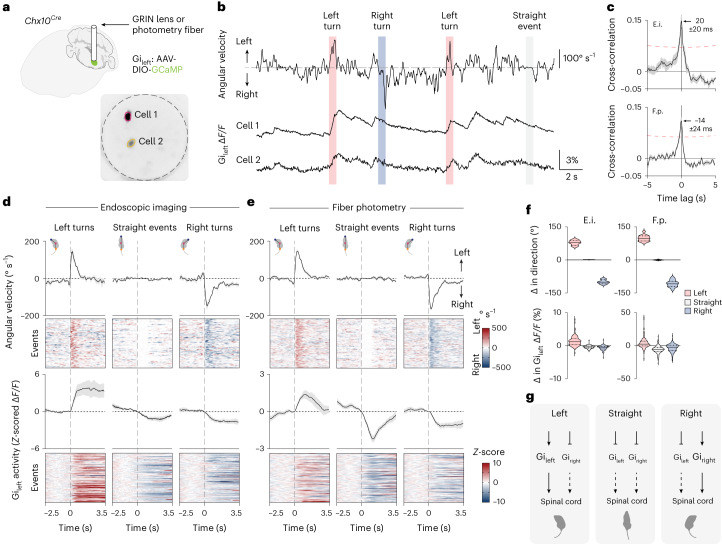
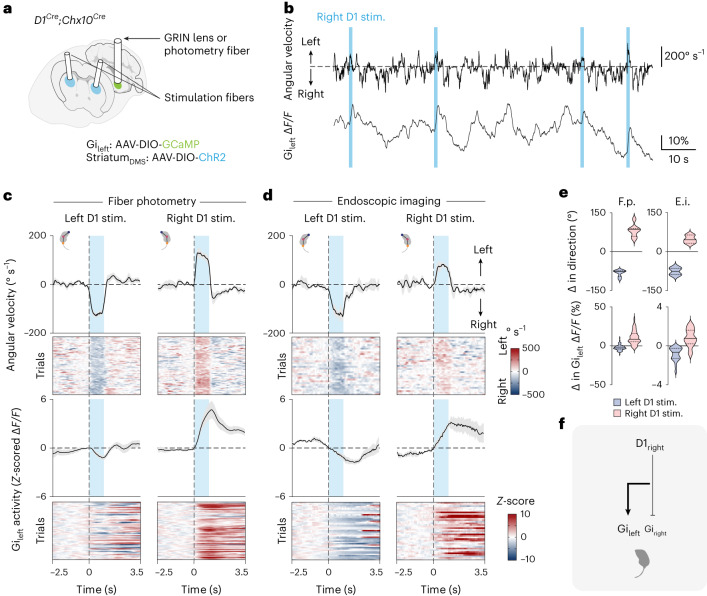
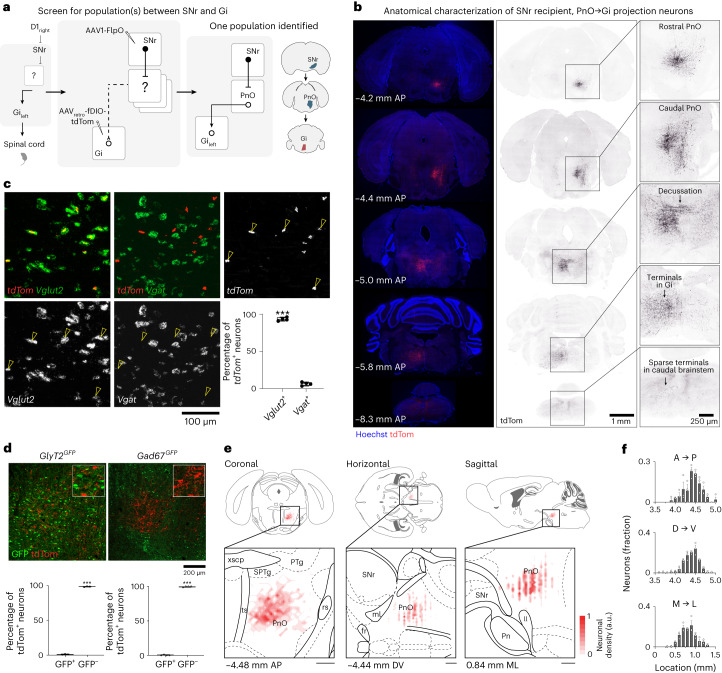
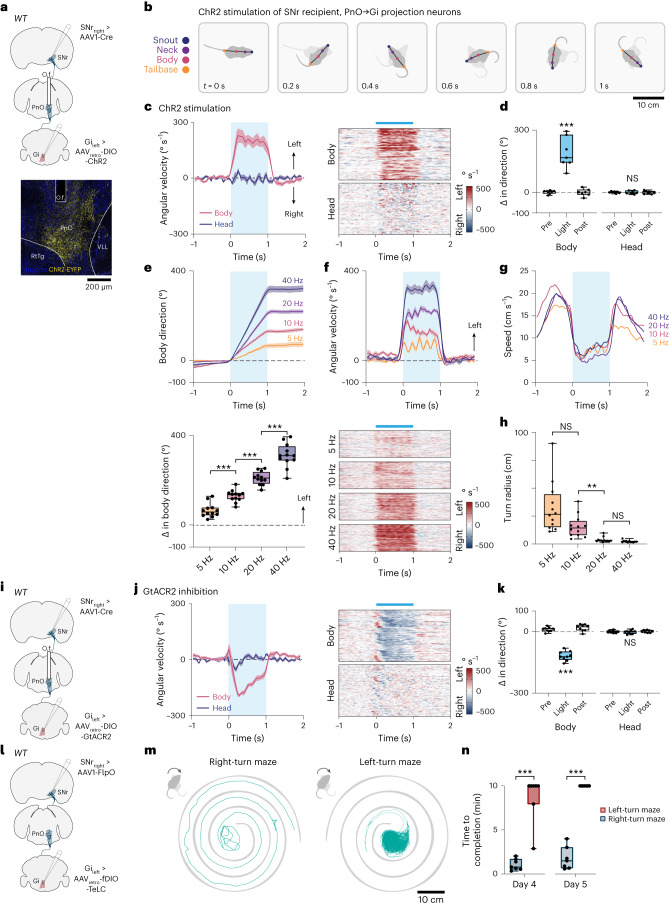
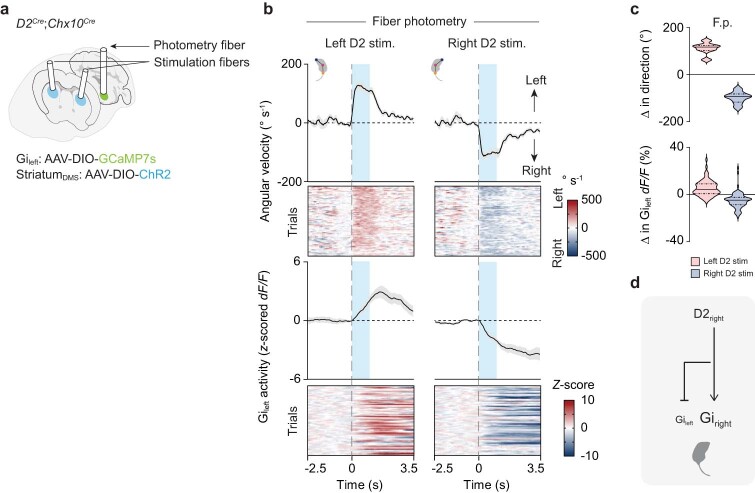
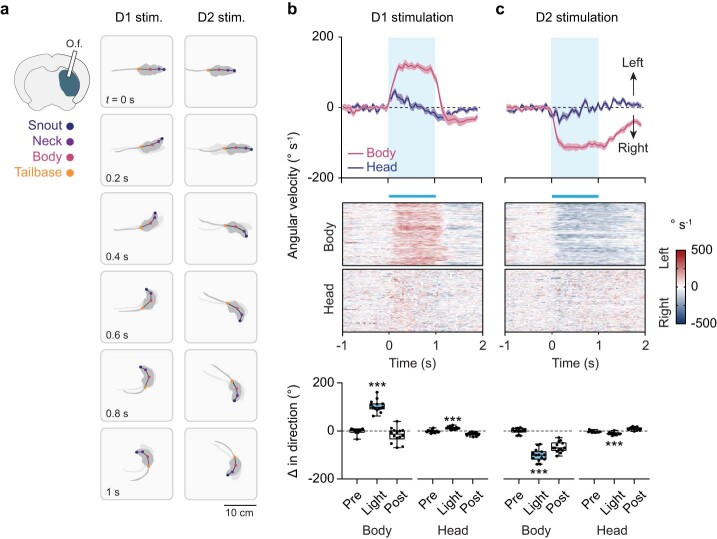
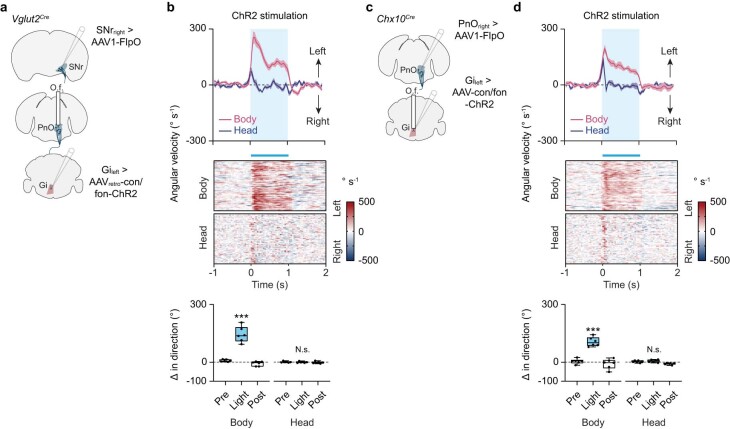
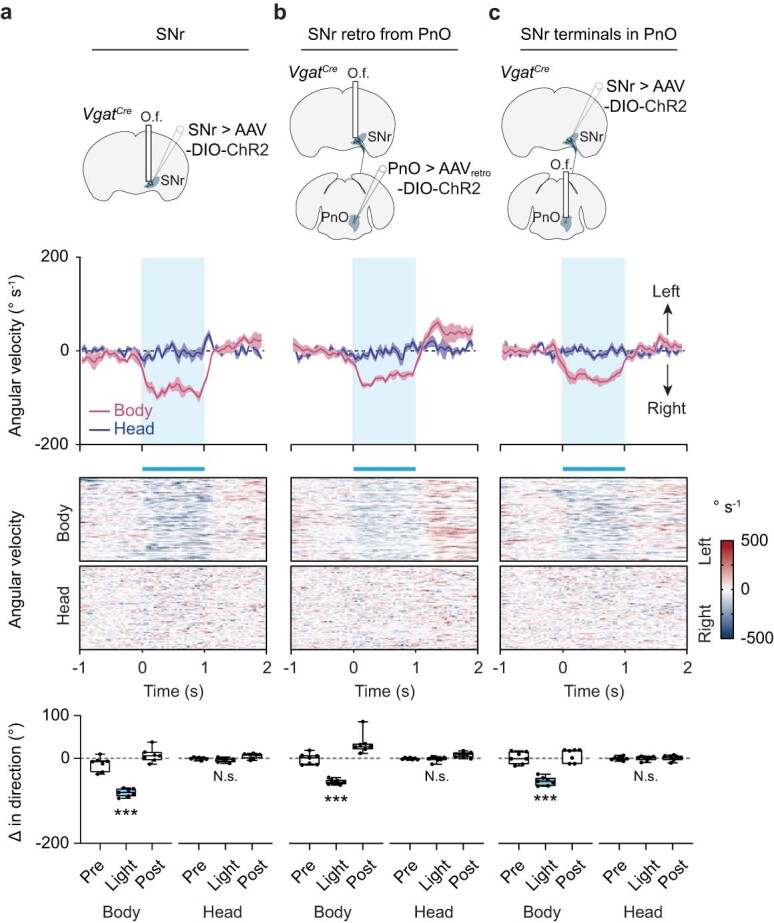
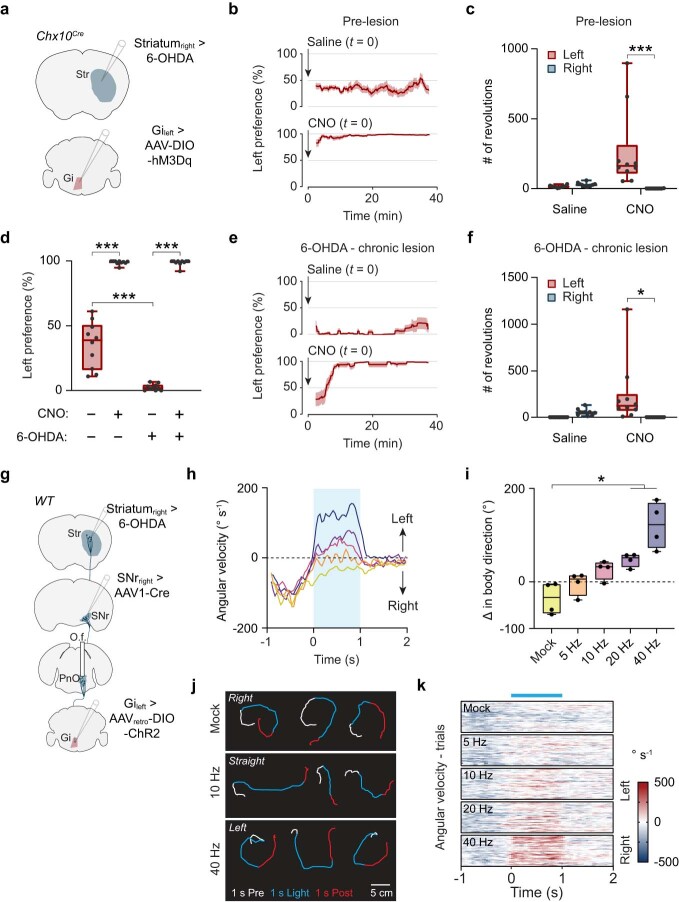
The basal ganglia are essential for executing motor actions. How the basal ganglia engage spinal motor networks has remained elusive. Medullary Chx10 gigantocellular (Gi) neurons are required for turning gait programs, suggesting that turning gaits organized by the basal ganglia are executed via this descending pathway. Performing deep brainstem recordings of Chx10 Gi Ca 2+ activity in adult mice, we show that striatal projection neurons initiate turning gaits via a dominant crossed pathway to Chx10 Gi neurons on the contralateral side. Using intersectional viral tracing and cell-type-specific modulation, we uncover the principal basal ganglia–spinal cord pathway for locomotor asymmetries in mice: basal ganglia → pontine reticular nucleus, oral part (PnO) → Chx10 Gi → spinal cord. Modulating the restricted PnO → Chx10 Gi pathway restores turning competence upon striatal damage, suggesting that dysfunction of this pathway may contribute to debilitating turning deficits observed in Parkinson’s disease. Our results reveal the stratified circuit architecture underlying a critical motor program.
Overview
The claims and statistics of this paper haven’t been checked yet.
Free: it reads the open-access text and checks the first 5 claims that cite a source we can check. Create a free account to check every claim.
Integrity signals
Registry
Cites
Statistics
Figures
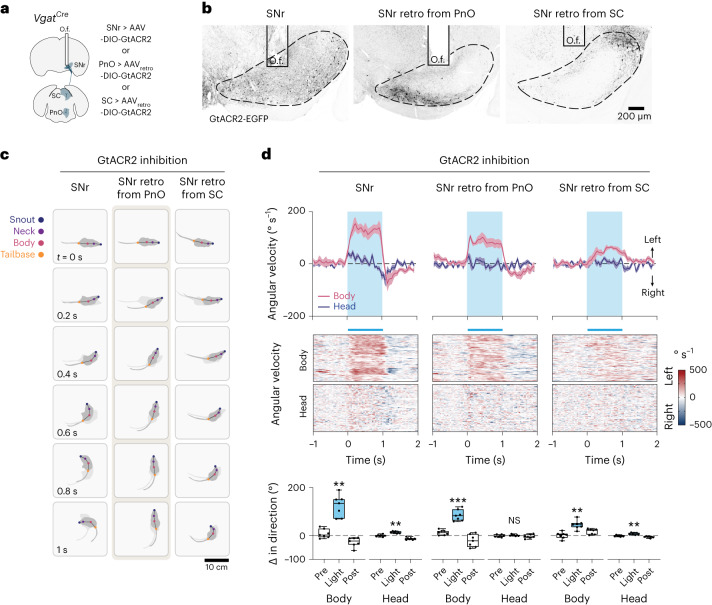
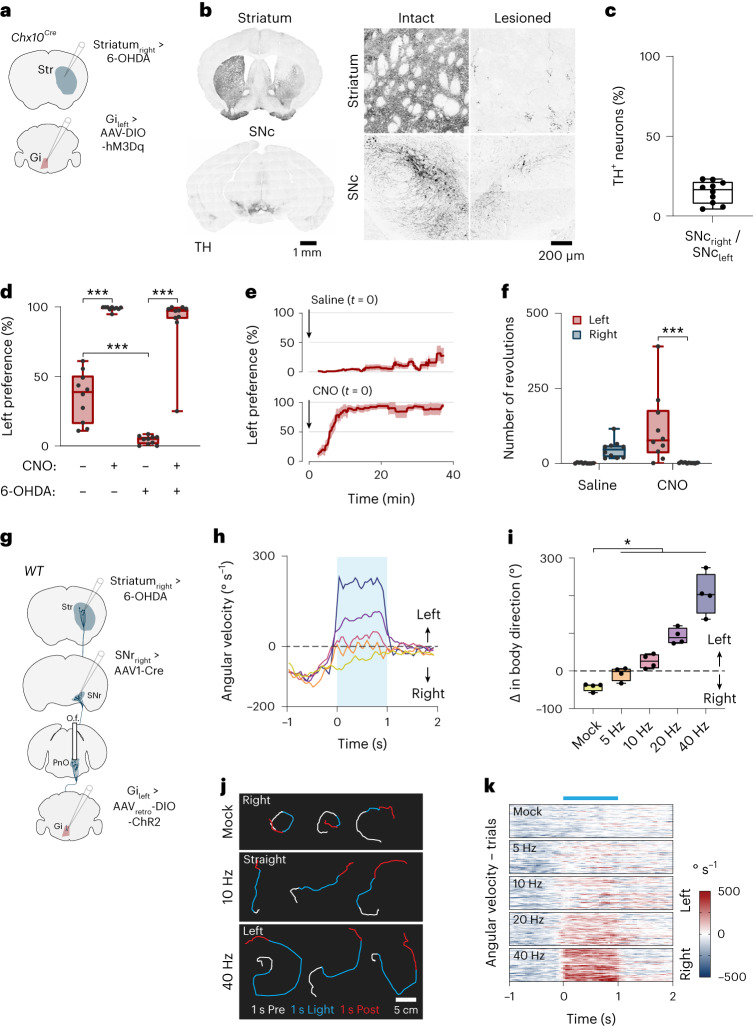
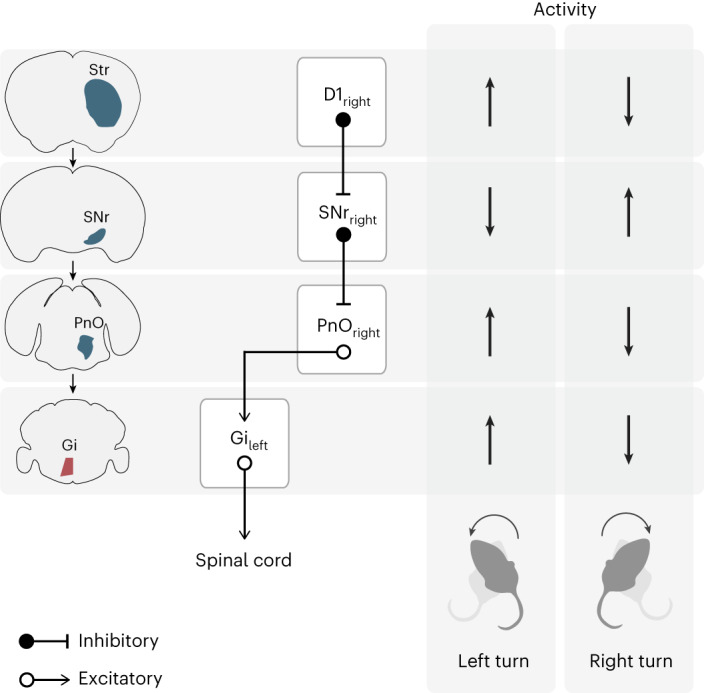
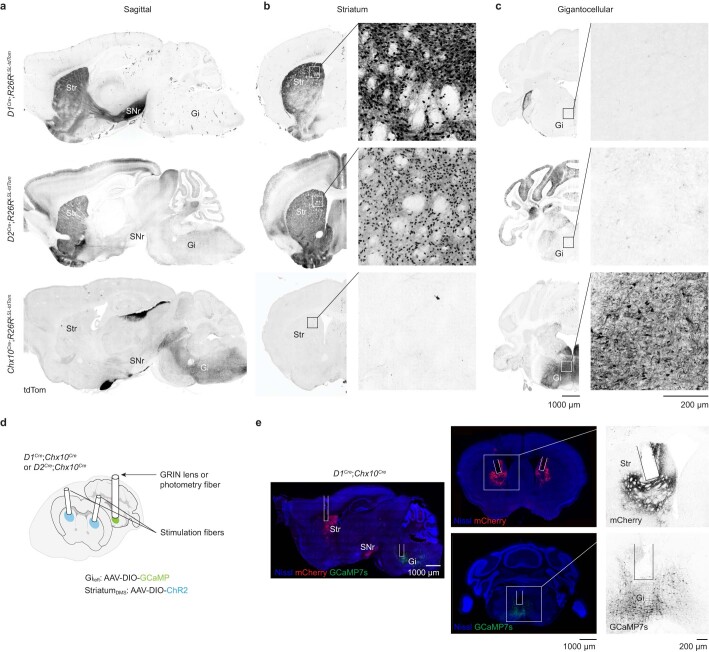
Verification
Claims the paper makes
The claims and statistics of this paper haven’t been checked yet.
Free: it reads the open-access text and checks the first 5 claims that cite a source we can check. Create a free account to check every claim.
Claims other papers make about this one
Each is checked against this paper’s own text: does it say what the citing paper says it does?
The source backs part of the claim, not all of it — or backs it for a different population, condition or comparison.
In the citing paper
“Chx10 Gi cells are active during ipsiversive turns73, and unilateral activation reduces stride length on the ipsilateral side of the body, resulting in an ipsiversive turn with a transient decrease in forward velocity20,74”
From Fine-grained descending control of steering in walking Drosophila (2024) · cites this paper as [73]
Experimental — accuracy not yet measuredIn the citing paper
“These brainstem descending neurons respond to perturbations of striatal neurons (Cregg et al., 2024)”
From Neural circuit mechanisms for steering control in walking Drosophila (2025) · cites this paper as Cregg et al., 2024
Self-check
Percentages, sums and reported differences re-computed from the paper’s own numbers.
The self-check needs the paper’s full text.
Citations
Cites
NIH Image to ImageJ: 25 years of image analysis
Schneider, C. A., Rasband, W. S., & Eliceiri, K. W. (2012) · Nature Methods · doi:10.1038/nmeth.2089 · Cited by 64,638 · cited 2×
“3c was carried out in ImageJ 77 using the ROI 1-Click Tools plugin.”
MethodA robust and high-throughput Cre reporting and characterization system for the whole mouse brain
Madisen, L., Zwingman, T. A., Sunkin, S. M., Oh, S. W., Zariwala, H. A., Gu, H., Ng, L. L., Palmiter, R. D., Hawrylycz, M. J., Jones, A. R., et al. (2010) · Nature Neuroscience · doi:10.1038/nn.2467 · Cited by 6,907
Genome-wide atlas of gene expression in the adult mouse brain
Lein, E. S., Hawrylycz, M. J., Ao, N., Ayres, M., Bensinger, A., Bernard, A., Boe, A. F., Boguski, M. S., Brockway, K. S., Byrnes, E. J., et al. (2007) · Nature · doi:10.1038/nature05453 · Cited by 5,572
DeepLabCut: markerless pose estimation of user-defined body parts with deep learning
Mathis, A., Mamidanna, P., Cury, K. M., Abe, T., Murthy, V. N., Mathis, M. W., & Bethge, M. (2018) · Nature Neuroscience · doi:10.1038/s41593-018-0209-y · Cited by 5,187 · cited 1×
“Behavioral tracking was performed offline using DeepLabCut (https:// github.com/DeepLabCut/) 74,75 .”
MethodRegulation of parkinsonian motor behaviours by optogenetic control of basal ganglia circuitry
Kravitz, A. V., Freeze, B. S., Parker, P. R. L., Kay, K., Thwin, M. T., Deisseroth, K., & Kreitzer, A. C. (2010) · Nature · doi:10.1038/nature09159 · Cited by 1,885 · cited 4×
“A classic model of basal ganglia control over motor actions holds that opponent pathways, the striatal direct and indirect pathways, enable bidirectional control over downstream motor programs 19,39,54 .”
BackgroundResultInfluentialUsing DeepLabCut for 3D markerless pose estimation across species and behaviors
Nath, T., Mathis, A., Chen, A. C., Patel, A., Bethge, M., & Mathis, M. W. (2019) · Nature Protocols · doi:10.1038/s41596-019-0176-0 · Cited by 1,505 · cited 1×
“Behavioral tracking was performed offline using DeepLabCut (https:// github.com/DeepLabCut/) 74,75 .”
Method6-hydroxy-dopamine induced degeneration of central monoamine neurons
Ungerstedt, U. (1968) · European Journal of Pharmacology · doi:10.1016/0014-2999(68)90164-7 · Cited by 1,460 · cited 2×
“From the first experiments using 6-OHDA to mimic dopamine loss after Parkinson’s disease 50,51 , it is well established that unilateral striatal dopamine depletion causes turning towards the lesioned side 51 .”
MethodFunctional Repression of cAMP Response Element in 6-Hydroxydopamine-treated Neuronal Cells
Chalovich, E. M., Zhu, J.-H., Caltagarone, J., Bowser, R., & Chu, C. T. (2006) · Journal of Biological Chemistry · doi:10.1074/jbc.m602632200 · Cited by 1,371
Role of the Basal Ganglia in the Control of Purposive Saccadic Eye Movements
Hikosaka, O., Takikawa, Y., & Kawagoe, R. (2000) · Physiological Reviews · doi:10.1152/physrev.2000.80.3.953 · Cited by 1,302
Tamamaki, N., Yanagawa, Y., Tomioka, R., Miyazaki, J., Obata, K., & Kaneko, T. (2003) · Journal of Comparative Neurology · doi:10.1002/cne.10905 · Cited by 1,277
Research works printed but not linked: 1
- Paxinos, G. & Franklin, K. B. J. Paxinos and Franklin’s the Mouse Brain in Stereotaxic Coordinates, 2nd edn (Academic Press, 2001).
Cited by
Neural circuit mechanisms for steering control in walking Drosophila
Rayshubskiy, A., Holtz, S. L., Bates, A. S., Vanderbeck, Q. X., Capdevila, L. S., Rockwell, V., & Wilson, R. I. (2020) · doi:10.1101/2020.04.04.024703 · Cited by 64
“These brainstem descending neurons respond to perturbations of striatal neurons (Cregg et al., 2024), but we still do not fully understand how brain dynamics generate locomotor dynamics, in part because of the anatomical complexity of the mammalian brain, and the challenges involved in obtaining…”
Fine-grained descending control of steering in walking Drosophila
Yang, H. H., Brezovec, B. E., Serratosa Capdevila, L., Vanderbeck, Q. X., Adachi, A., Mann, R. S., & Wilson, R. I. (2024) · Cell · doi:10.1016/j.cell.2024.08.033 · Cited by 55
Fine-grained descending control of steering in walking Drosophila
Yang, H. H., Brezovec, L. E., Serratosa Capdevila, L., Vanderbeck, Q. X., Adachi, A., Mann, R. S., & Wilson, R. I. (2023) · doi:10.1101/2023.10.15.562426 · Cited by 55
Neural circuit mechanisms for steering control in walking Drosophila
Rayshubskiy, A., Holtz, S. L., Bates, A. S., Vanderbeck, Q. X., Serratosa Capdevila, L., Rockwell, V., & Wilson, R. (2025) · eLife · doi:10.7554/elife.102230 · Cited by 27
Feng (2024) · doi:10.1101/2024.06.27.601106 · Cited by 18
The diversity and plasticity of descending motor pathways rewired after stroke and trauma in rodents
Inoue, T., & Ueno, M. (2025) · Frontiers in Neural Circuits · doi:10.3389/fncir.2025.1566562 · Cited by 19
Tello, A. J., van der Zouwen, C. I., Dejas, L., Duque‐Yate, J., Boutin, J., Medina-Ortiz, K., Suresh, J. S., Swiegers, J., Sarret, P., & Ryczko, D. (2024) · Cell Reports · doi:10.1016/j.celrep.2024.114187 · Cited by 18
Neural circuit mechanisms for steering control in walking Drosophila
Rayshubskiy, A., Holtz, S. L., Bates, A. S., Vanderbeck, Q. X., Capdevila, L. S., Rockwell, V., & Wilson, R. I. (2025) · eLife · doi:10.7554/elife.102230.3 · Cited by 14
A hypothalamus–brainstem circuit governs the prioritization of safety over essential needs
Krauth, N., Sach, L. K., Sitzia, G., Clemmensen, C., & Kiehn, O. (2025) · Nature Neuroscience · doi:10.1038/s41593-025-01975-6 · Cited by 14
“No statistical methods were used to predetermine sample sizes, but our sample sizes are similar to those reported in previous publications 21,42 .”
Self-citationStructural insights into the activation of TMEM175 by small molecule
Zhu, X., Ping, M., Liu, H., Yu, T., Jiang, Z., Liu, Z., Li, C., Hou, X., Chu, Q., Li, S., et al. (2025) · Neuron · doi:10.1016/j.neuron.2025.07.029 · Cited by 15
Complementary contributions of dorsal and ventral striatum to cost-benefit vigor adaptationsPreprint
Morvan, T., Timmel, Z., Eloy, C., & Robbe, D. (2024) · bioRxiv (Cold Spring Harbor Laboratory) · doi:10.1101/2024.05.31.596850 · Cited by 11
From avoidance to new action: the multifaceted role of the striatal indirect pathway
Lee, J., & Sabatini, B. L. (2025) · Nature reviews. Neuroscience · doi:10.1038/s41583-025-00925-2 · Cited by 10
“Many studies have shown that unilateral activation of either dSPNs or iSPNs in the dorsal striatum causes rotational behaviour 6,11,39,42,99,100 .”
Supraspinal commands have a modular organization that is behavioral context specific
Lau, J. Y. N., Fitzgerald, J. E., & Bianco, I. H. (2025) · Current Biology · doi:10.1016/j.cub.2025.07.066 · Cited by 10
“10,11,83 While asymmetric activity was greatest during large amplitude turns, at least some asymmetry was apparent across locomotor space, including for minimally lateralized forward swims.”
Redefining the central pattern generator for vertebrate locomotion
Manira, A. E. (2026) · Nature reviews. Neuroscience · doi:10.1038/s41583-026-01029-1 · Cited by 12
Theologidis, V., Ferreira, S. A., Jensen, N. M., Moreira, D. G., Ahlgreen, O. A., Hansen, M. W., Rosenberg, E. D., Richner, M., Faress, I., Gram, H., et al. (2025) · Acta Neuropathologica Communications · doi:10.1186/s40478-025-01948-7 · Cited by 8
A cortico-subcortical loop for motor control via the pontine reticular formation
Bősz, E., Plattner, V. M., Bíró, L., Kóta, K., Diana, M. A., & Acsády, L. (2025) · Cell Reports · doi:10.1016/j.celrep.2025.115230 · Cited by 7
“10 These data demonstrate how the output of the cortex-thalamus-BG loop can have direct behavioral consequences via modulating the activity of the brainstem motor centers.”
InfluentialSeparate brainstem circuits for fast steering and slow exploratory turns
Xu, L., Zhu, B., Zhu, Z., Tao, X., Zhang, T., Manira, A. E., & Song, J. (2025) · Nature Communications · doi:10.1038/s41467-025-58621-9 · Cited by 8
“The activity of these neurons is in turn regulated by the basal ganglia through a speci fi c pathwayvia a pontine nucleus, oral part (PnO) 25 .”
Motor cortex directly excites the substantia nigra pars reticulata, the basal ganglia output nucleus
Thompson, W. S., Wekwejt, P., Grillner, S. E., & Silberberg, G. (2026) · Nature Communications · doi:10.1038/s41467-026-74569-w · Cited by 8
“The medialSNrhasbeenimplicatedinassociativefunctionsandbehavioral statetransitions,whileneuronsalongtheventralborderof the nucleus are critical for locomotor control 19,84 .”
Cortical sculpting of a rhythmic motor programPreprint
Kirk, E. A., Cai, K., & Sauerbrei, B. (2025) · bioRxiv (Cold Spring Harbor Laboratory) · doi:10.1101/2025.06.20.660772 · Cited by 7
Neural circuit mechanisms for steering control in walking Drosophila
Rayshubskiy, A., Holtz, S. L., Bates, A., Vanderbeck, Q. X., Capdevila, L. S., & Wilson, R. I. (2024) · doi:10.7554/elife.102230.1 · Cited by 5
Control of walking direction by descending and dopaminergic neurons in Drosophila
Liessem, S., Dahlhoff, S., Iqbal, F. M., Palacios-Muñoz, A., Cascino-Milani, F., Volk, H., Erginkaya, M., Diniz, A. M., Gorostiza, E. A., Büschges, A., et al. (2026) · Current Biology · doi:10.1016/j.cub.2026.06.045 · Cited by 5
Re-examining the pathobiological basis of gait dysfunction in Parkinson’s disease
Cho, N., Kalia, L. V., & Kalia, S. K. (2025) · Trends in Neurosciences · doi:10.1016/j.tins.2025.01.002 · Cited by 6
Personalized auditory cues improve gait in patients with early Parkinson's disease
Li, X., Wang, S., Wang, K., Wang, W., Tuo, H., Long, Y., Tan, X., & Sun, W. (2025) · Frontiers in Neurology · doi:10.3389/fneur.2025.1561880 · Cited by 6
“In the early-stage of PD, symptoms are typically unilateral, corresponding to asymmetric neuropathology of the basal ganglia (29, 30), meaning that the limbs are not affected symmetrically.”
From thought to action: The organization of spinal projecting neurons
Winter, C. C., Wang, K. H., & He, Z. (2025) · Cell Reports · doi:10.1016/j.celrep.2025.116153 · Cited by 4
“40 In general, reflexive and rhythmic movements are primarily managed by neurons in the spinal cord and brainstem.”
Cifuentes, L. V., Díaz-Hernández, E., Granato, M. M., Tu, W., Choi, K., & Fuccillo, M. V. (2025) · bioRxiv (Cold Spring Harbor Laboratory) · doi:10.1101/2025.03.14.643367 · Cited by 4
“While these studies arise from multiple sub-regions of SNr, optogenetic manipulations of medial SNr have been shown to increase gait asymmetries 51,52 .”
Ji, C., Zhang, Y., Lin, Z., Zhao, Z., Jiao, Z., Zheng, Z. V., Shi, X., Wang, X., Li, Z., Shuisheng, Y., et al. (2025) · Nature Communications · doi:10.1038/s41467-025-67133-5 · Cited by 4
Red Nucleus Excitatory Neurons Initiate Directional Motor Movement in Mice
He, C., Qi, G., He, X., Shao, W., Ma, C., Wang, Z., Wang, H., Tan, Y., Li, Y., Xie, Y., et al. (2025) · Biomedicines · doi:10.3390/biomedicines13081943 · Cited by 2
Shi, Y., Zhao, T., Peng, L., Wang, P., Huang, X., Xu, F., Tan, Y., Peng, S., Xiong, T., Bai, Y., et al. (2025) · International Journal of Surgery · doi:10.1097/js9.0000000000004347 · Cited by 2
Leveraging Fiber Photometry to Decipher Neural Circuits Underlying Anxiety in Mice
Abdennebi, S. R., Touihri, N. E. H., Corruble, E., David, D. J. P., & Mendez‐David, I. (2025) · Fundamental and Clinical Pharmacology · doi:10.1111/fcp.70043 · Cited by 2
Aristieta, A., Parker, J. E., Cundiff, M. D., Fuchs, T., Lim, B. K., Rubin, J. E., & Gittis, A. H. (2024) · bioRxiv (Cold Spring Harbor Laboratory) · doi:10.1101/2024.12.09.627637 · Cited by 2
Neural circuit mechanisms for steering control in walking DrosophilaPreprint
Rayshubskiy, A., Holtz, S. L., Bates, A. S., Vanderbeck, Q. X., Capdevila, L. S., Rockwell, V., & Wilson, R. I. (2025) · eLife · doi:10.7554/elife.102230.2 · Cited by 2
A dedicated brain circuit controls forward walking in DrosophilaPreprint
Dallmann, C. J., Iqbal, F. M., Liebscher, S., Erginkaya, M., Liessem, S., Sauer, E., Soyka, H., Cascino-Milani, F., Goldammer, J., Ito, K., et al. (2026) · bioRxiv (Cold Spring Harbor Laboratory) · doi:10.64898/2026.01.04.697356 · Cited by 3
Neuromodulation for gait disorders
Balachandar, A., Sorrento, G. U., Moraud, E. M., Bonizzato, M., & Fasano, A. A. (2026) · Nature Reviews Bioengineering · doi:10.1038/s44222-026-00431-9 · Cited by 2
“In animal models, striatal projections to the MLR via the SNr in the direct pathway 34 are essential for initiating walking and turning 35 .”
Speed-dependent turning strategies in quadrupedal locomotion: insights from computational modeling
Molkov, Y. I., Mohammed, M. A. Y., Stell, T., Harralson, A., Jeter, R., & Rybak, I. A. (2026) · Frontiers in Bioengineering and Biotechnology · doi:10.3389/fbioe.2026.1787167 · Cited by 2
“This is broadly consistent with recent mouse studies showing that directional control is associated with locomotor gait asymmetries and limb-based turning mechanisms (Cregg et al., 2024).”
Opponent ventrolateral striatal circuits regulate behavioral flexibility and rigidity
Gonzales, B. J., Shalom, I., Lipton, D. M., Turm, H., Noble, J., Festuccia, M., Groysman, M., & Citri, A. (2026) · Current Biology · doi:10.1016/j.cub.2026.08.068 · Cited by 1
Magnetoelectric nanodiscs diminish motor deficits in a model of Parkinson's diseasePreprint
Kim, Y. J., Comite, A. D., Paniagua, E. V., Selvaraji, S., Frey, E. J., Mondal, R., Biglari, N., Leomi, R., Seethapathi, N., & Anikeeva, P. (2025) · bioRxiv (Cold Spring Harbor Laboratory) · doi:10.1101/2025.06.04.657885 · Cited by 2
Dong, L., Luan, M.-Y., Qi, Y., Tian, C., & Zheng, Y. (2024) · Biochemical and Biophysical Research Communications · doi:10.1016/j.bbrc.2024.150487 · Cited by 1
Temporal and Spatial Dynamics of Motor Dysfunction in Preclinical Parkinson’s Disease and Aging
Nair, N., Hey, G. E., Becsey, A., Kari, T., Becsey, X., Root, J., & Vedam‐Mai, V. (2025) · Journal of Psychiatry and Brain Science · doi:10.20900/jpbs.20250009
“Although behavioral assessments have been performed in several murine models of PD, the M83 +/− mouse model has been relatively understudied in the context of gait [15-18].”
Zhu, W., Sobue, A., Tanaka, R., Hada, K., Ibi, D., Liu, Y., Matsuzaki, T., Nagai, T., Nabeshima, T., Kaibuchi, K., et al. (2025) · Behavioural Brain Research · doi:10.1016/j.bbr.2025.115832
A VTA-pontine GABA pathway biases locomotor direction via local and distal inhibitionPreprint
González‐Cabrera, C., Kayumova, R., Guatteo, E., Berretta, N., Mercuri, N. B., Montero, T. D., Vila, M., Henny, P., & Prigge, M. (2026) · bioRxiv (Cold Spring Harbor Laboratory) · doi:10.64898/2026.02.17.706301
Dopaminergic regulation of basal ganglia synaptic transmission
Molinari, M. (2026) · doi:10.69622/30801566
Nieckarz, Z., Szczepaniec, K., Lasko, P., & Zoladz, J. A. (2026) · Journal of Experimental Biology · doi:10.1242/jeb.251780
Steiner, L., Darie, R., Lindsay, A., Tseng, H.-A., van Welie, I., & Han, X. (2026) · bioRxiv (Cold Spring Harbor Laboratory) · doi:10.64898/2026.03.17.712325
“1 ), rather than reduced ipsilateral forelimb length as observed by Cregg et. al 81 .”
InfluentialLi, X., Wang, W., Wang, K., Tuo, H., Ma, X., Tan, X., Sun, W. G., Tian, F., & Ma, X. (2026) · CHI Conference on Human Factors in Computing Systems · doi:10.1145/3772318.3791182
“Early-stage PD patients typically present with unilateral onset, corresponding to asymmetric neuropathology in the basal ganglia [22, 57].”
Animal Models of Freezing of Gait
Coletta, S., & Papa, S. M. (2026) · European Journal of Neuroscience · doi:10.1111/ejn.70537
Path integration in complex number space
Craddock, P., Miossec, Y., & Bouchekioua, Y. (2026) · Proceedings of the National Academy of Sciences · doi:10.1073/pnas.2603690123
“We note that Chx10 neurons have been characterized in mice (10, 11); the present framework predicts that functionally equivalent bilateral circuits should be identifiable in navigating insects.”
Mimicking animal behavior: Implementing reinforcement learning strategies on a wireless robot
Pereira, F. B. (2025) · Portuguese National Funding Agency for Science, Research and Technology (RCAAP Project by FCT)
Viellard, J., Brochoire, L., Janusz, M., Dedek, C., Aby, F., Bouali‐Benazzouz, R., Wang, F., Gosselin, B. J., Prescott, S. A., Benazzouz, A., et al. (2026) · bioRxiv (Cold Spring Harbor Laboratory) · doi:10.64898/2026.08.19.745481
“It relays sensory inputs to supraspinal regions 1–3 while integrating descending signals to regulate sensory transmission 4–6 and initiate motor outputs 7 .”
Abstract Representation of Movement Parameters in Basal Ganglia Output
Báez-Cordero, A. S., Ortega-Romero, D. I., Pérez-Díaz, C. I., & Rueda‐Orozco, P. E. (2026) · Advanced Science · doi:10.1002/advs.77621
“Activating these subpopulations produces differential behavioral patterns, such as direction-specific turns, licking, grooming, or reaching [ 27–30 ].”
Lateralized foraging induces asymmetric corticostriatal plasticity in mice
Amroune, K., Schaffhauser, M., Morvan, T., Bureau, I., & Robbe, D. (2026) · Progress in Neurobiology · doi:10.1016/j.pneurobio.2026.102955 · Cited by 1
A brainstem module for backward locomotion reveals direction-selective premotor circuits
Liu, Z., Lu, L., Di, R., Cui, Y., Liu, Y., Ren, Q., Dai, R., Wu, W., Wang, R., & Luo, M. (2026) · Neuron · doi:10.1016/j.neuron.2026.09.027
Glutamatergic Neurons in caudal Pontine Reticular Nucleus (PRNc) Mediate Backward Locomotion in micePreprint
Seo, M. B., Huang, J. J., Zhang, G., Voong, K., Tao, H. W., & Zhang, L. I. (2026) · bioRxiv (Cold Spring Harbor Laboratory) · doi:10.64898/2026.10.22.761180
“…control such as the gigantocellular reticular nucleus (GRN), magnocellular reticular nucleus (MARN) and intermediate reticular nucleus (IRN) 3,17,30 , as well as midbrain centers implicated in defensive responses including the periaqueductal gray (PAG), superior colliculus (SC), and…”
Metadata
- Authors
- Cregg, J. M., Sidhu, S. K., Leiras, R., & Kiehn, O.
- Affiliations
- University of Copenhagen (DK)
- Corresponding author
- Cregg, Jared M.
- Kiehn, Ole
- Venue
- Nature Neuroscience
- Published
- 2024-02-12
- Volume
- 27
- Issue
- 4
- Pages
- 716-727
- ISSN
- 1097-6256 (ISSN-L)
- 1546-1726
- PMC
- PMC11001584
- OpenAlex
- W4391752708
- Cited by
- 48
- References
- 80
- Citations by year
- 2026: 15 · 2025: 23 · 2024: 9
- FWCI
- 11.42
- Type
- journal article
- Language
- en
- Open access
- hybrid
- doi.org
- Licence
- cc-by
- creativecommons.org/licenses/by/4.0 (tdm)
- creativecommons.org/licenses/by/4.0 (vor)
- Locations
- Nature Neuroscience (publishedVersion, cc-by)
- PubMed Central (publishedVersion, cc-by)
- PubMed (publishedVersion)
- Research at the University of Copenhagen (University of Copenhagen) (publishedVersion, cc-by)
- Funders
- Lundbeckfonden (R276-2018-183, R345-2020-1769, R347-2020-2393)
- Novo Nordisk Fonden (NNF15OC0014186)
- Det Frie Forskningsråd (9039-00034B)
- Danish Society for Neuroscience-Lundbeck Foundation Scholarstipend Neuroscience Academy Denmark
- Topics
- Life Sciences › Neuroscience › Cognitive Neuroscience › Motor Control and Adaptation
- Health Sciences › Medicine › Clinical Neurology › Deep Brain Stimulation and Movement Disorders
- Life Sciences › Neuroscience › Cellular and Molecular Neuroscience › Neuroscience and Neuropharmacology Research
- Keywords
- basal ganglia, spinal cord, turning gait, Chx10, striatal projection neurons, descending motor pathways, Parkinson's disease, mice
- MeSH terms
- Animals, Basal Ganglia, Brain Stem, Gait, Neurons, Spinal Cord, Mice
About these checks
Registry, retraction, Cites and statistics results are computed, not judged, with one exception: a printed reference that no index lists is read once by a model before it counts as a citation error. Claims are extracted by a model and kept only when their quote appears verbatim in the text; each cited source is then checked, with a model’s help, for whether it says what the claim relies on. Those verdicts can be wrong — read the claim’s quote and the cited source before relying on one.
Statistics and arithmetic are recomputed, not judged.
Confidence bands are shown only for fields calibrated on our annotated test set. None is calibrated yet, so no band is shown.
What counts as a claim ›How we measure confidence ›How we check this ›
Are you an author, or do you see a problem with this page? Request a review
Data sources
Bibliographic data: Semantic Scholar, OpenAlex, Crossref.
Contains information from the Semantic Scholar Academic Graph Datasets, made available under the ODC Attribution License (ODC-BY 1.0).
Semantic Scholar’s data is described in: Kinney, R., et al. (2023). The Semantic Scholar Open Data Platform. arXiv:2301.10140.
