

TYK2 regulates tau levels, phosphorylation and aggregation in a tauopathy mouse model
Open accessThe DOI matches its Crossref record; 69 of the 70 references it cites were found in a registry or an index; none of the 65 sources its claims cite is checked for support yet.
Abstract
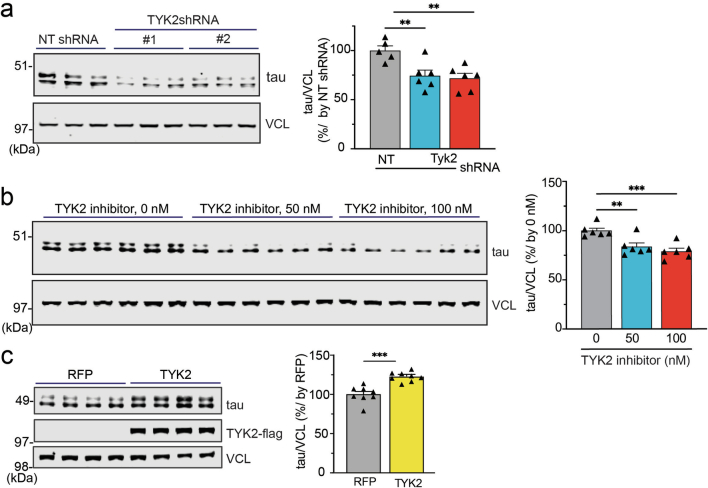
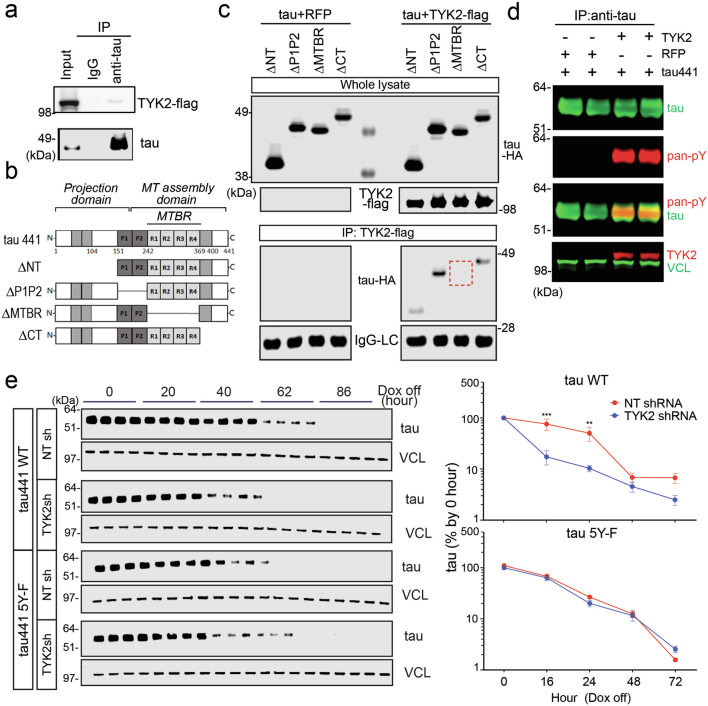
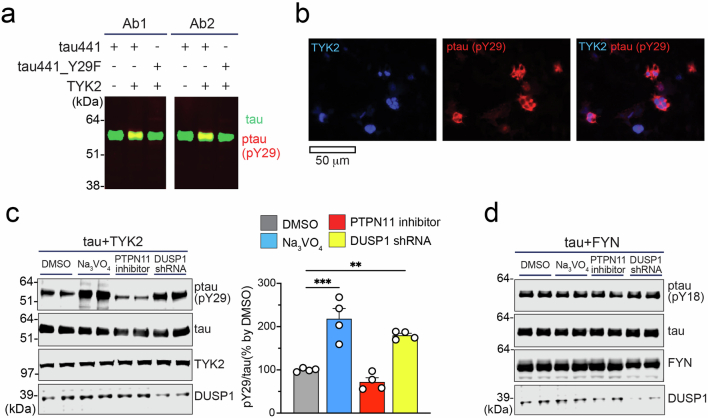
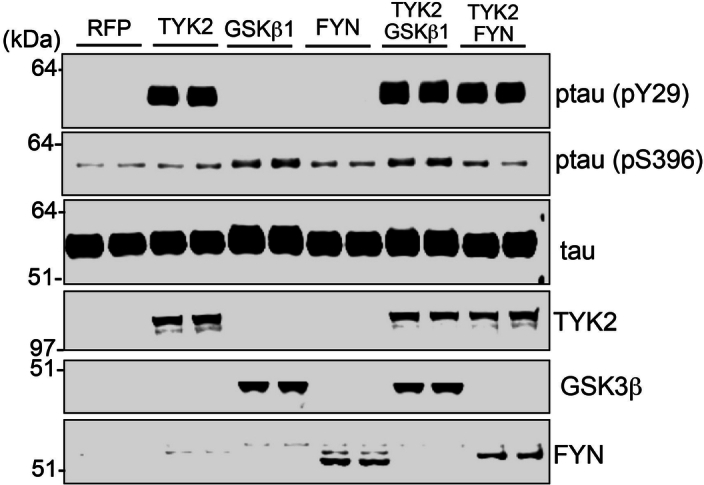
Alzheimer’s disease is one of at least 26 diseases characterized by tau-positive accumulation in neurons, glia or both. However, it is still unclear what modifications cause soluble tau to transform into insoluble aggregates. We previously performed genetic screens that identified tyrosine kinase 2 (TYK2) as a candidate regulator of tau levels. Here we verified this finding and found that TYK2 phosphorylates tau at tyrosine 29 (Tyr29) leading to its stabilization and promoting its aggregation in human cells. We discovered that TYK2-mediated Tyr29 phosphorylation interferes with autophagic clearance of tau. We also show that TYK2-mediated phosphorylation of Tyr29 facilitates pathological tau accumulation in P301S tau-transgenic mice. Furthermore, knockdown of Tyk2 reduced total tau and pathogenic tau levels and rescued gliosis in a tauopathy mouse model. Collectively, these data suggest that partial inhibition of TYK2 could thus be a strategy to reduce tau levels and toxicity.
Overview
CoChat Summary
TL;DR
TYK2 phosphorylates tau at Tyr29, stabilizing it by interfering with autophagic clearance and promoting aggregation of P301S tau in cells and mice. Partial Tyk2 knockdown reduces total and pathological tau and gliosis in tauopathy mouse models, suggesting TYK2 inhibition as a potential strategy.
Key findings
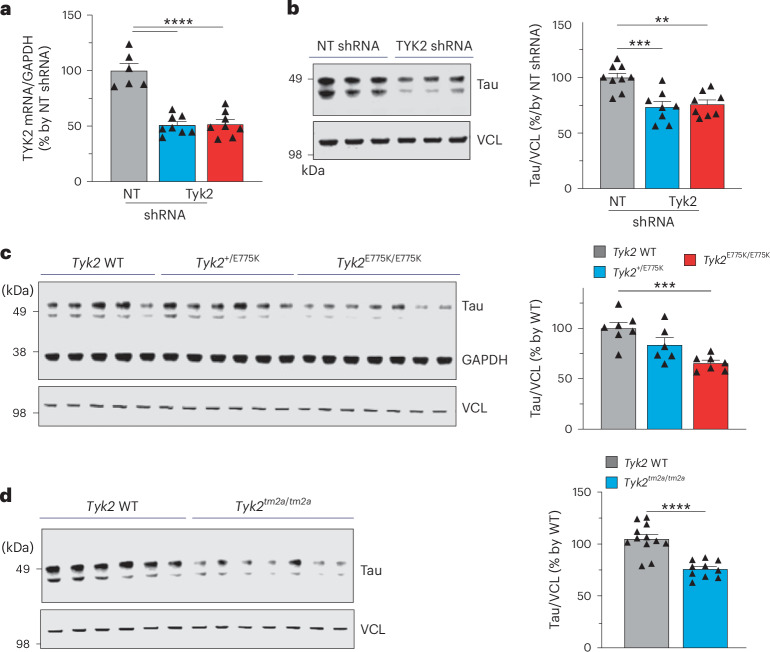
- TYK2 phosphorylates tau at Tyr29; Tyk2 knockdown reduced endogenous tau by ~25% in mouse brain and suppressed Tyk2 mRNA to ≤40–50% of WT, while Tyk2E775K/E775K and Cre-dependent Tyk2 knockout also reduced tau.
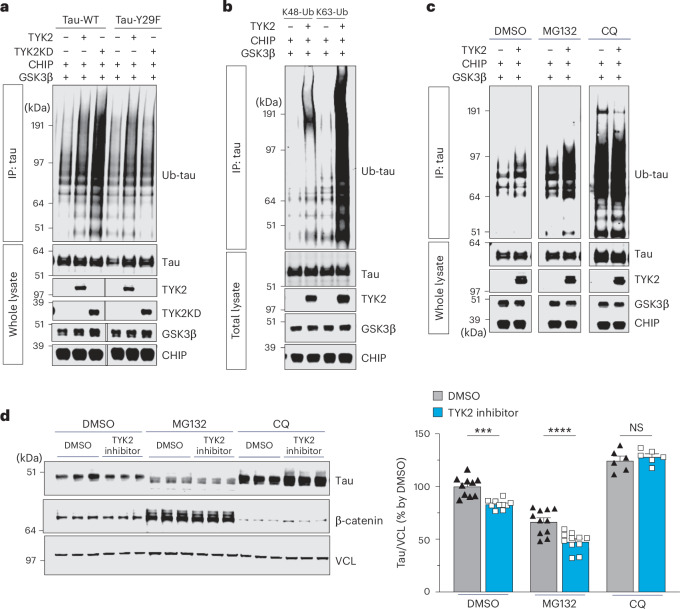
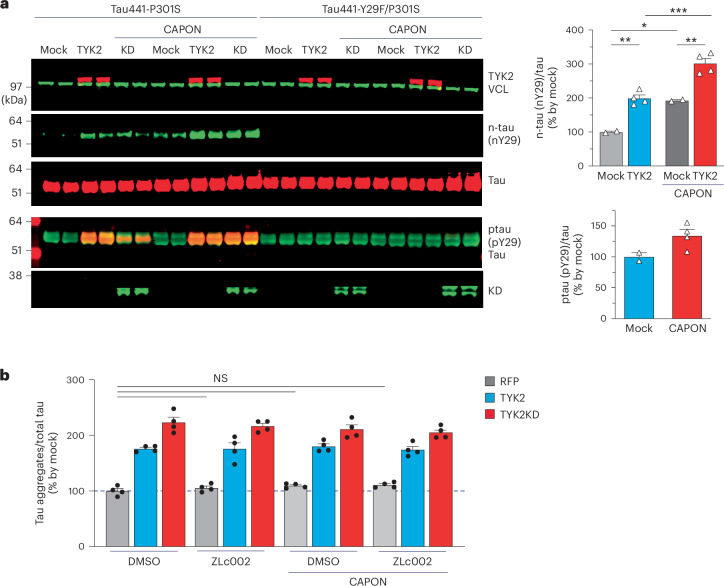
- TYK2-mediated Tyr29 phosphorylation stabilized tau by inhibiting autophagy-dependent degradation and increased K63-linked ubiquitinated tau; autophagy inhibitor CQ, but not proteasome inhibitor MG132, abolished the tau reduction by TYK2 inhibitor (P(DMSO–DMSO vs DMSO–TYK2 inhibitor) = 0.0003; P(CQ–DMSO vs CQ–TYK2 inhibitor) > 0.9999).
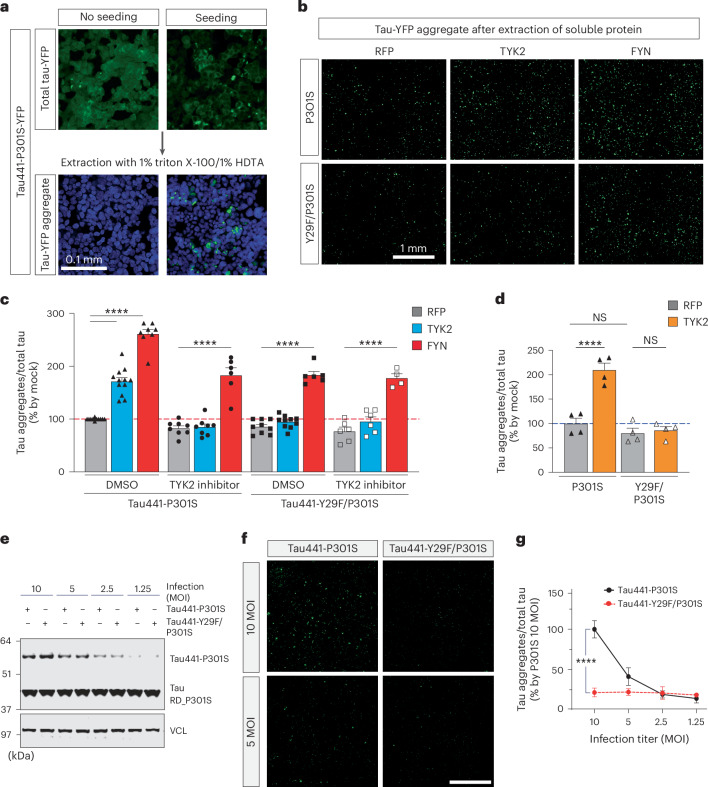
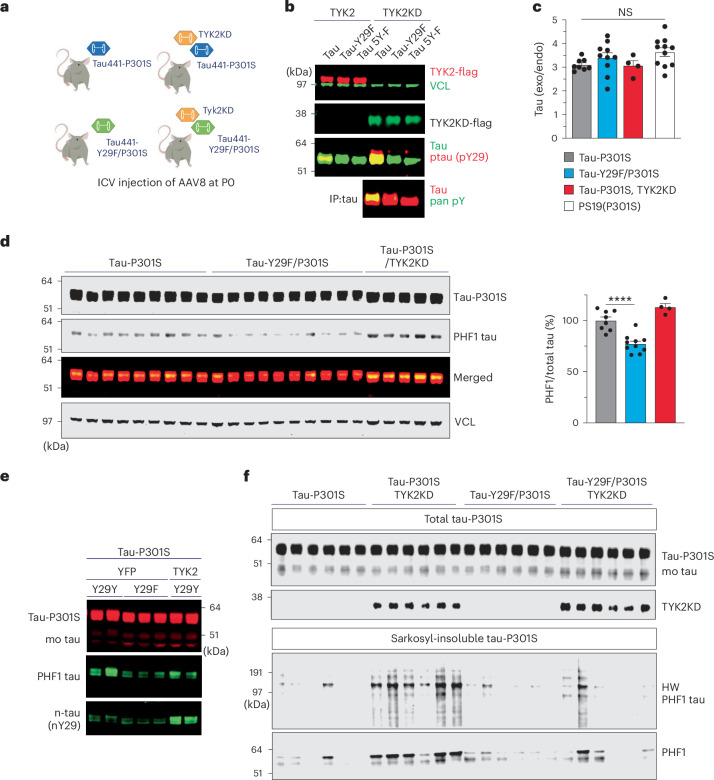
- TYK2 promoted aggregation of tau441-P301S but not tau441-Y29F/P301S in human cells; deucravacitinib abolished the TYK2 effect. In P301S tau-transgenic mice, TYK2KD increased sarkosyl-insoluble P301S tau but not Y29F/P301S tau.
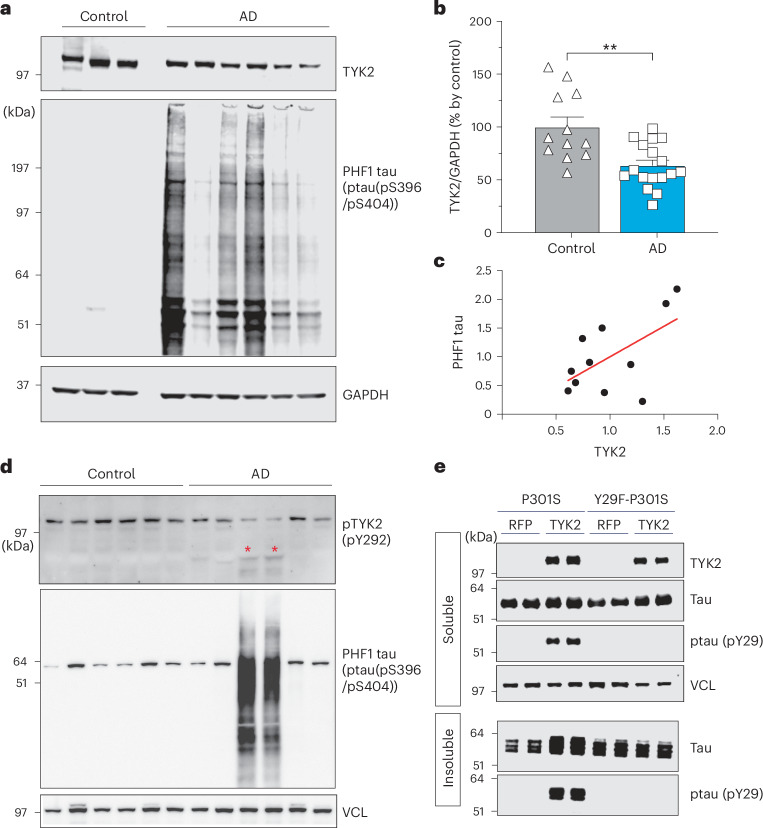
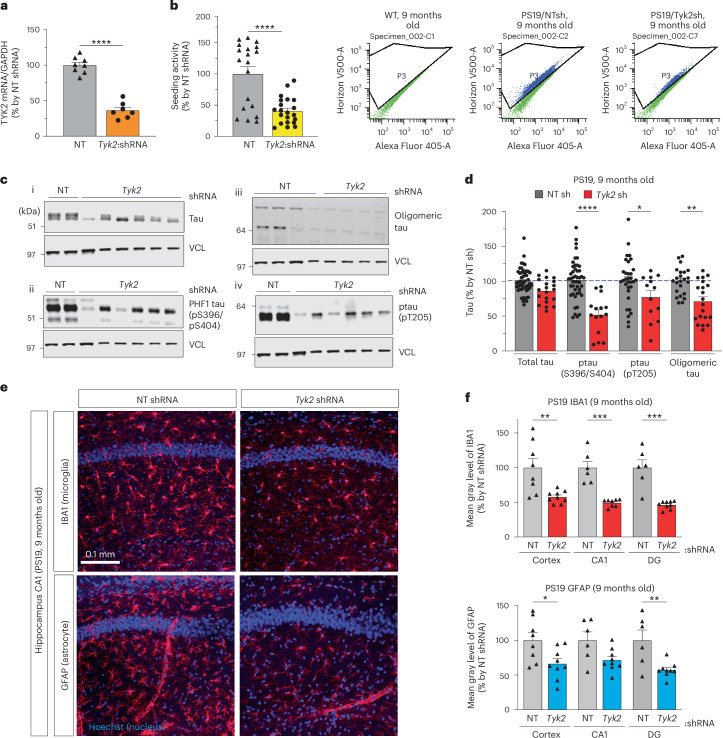
- In 9-month-old PS19 mice, Tyk2 knockdown (~60% reduction) lowered total tau (P = 0.0049), pTau pS396/S404 (P < 0.0001), oligomeric tau (P = 0.0001), pT205 (P = 0.0147), and reduced IBA1/GFAP gliosis. Human AD brains had lower TYK2 than controls (n = 12 control, n = 17 AD, P = 0.0011), with a trend toward positive TYK2–PHF1 correlation (slope = 1.06, P = 0.06, R² = 0.34).
Methods
- Cell and biochemical assays used human neuroblastoma BE(2)-C and SH-SY5Y cells, HEK293T cells, Neuro2A cells, and mouse primary cortical neurons; lentiviral/AAV shRNA or ORF expression; tau mutants (Y29F, 5Y-F, P301S); TYK2 inhibitor deucravacitinib; immunoprecipitation, immunoblotting, in vitro kinase, ubiquitination, turnover, and tau aggregation/FRET biosensor assays.
- Mouse models included CFW/FVB mice, PS19 P301S tau-transgenic mice, Tyk2E775K mice, and Tyk2tm2a/tm2a mice; P0 intracerebroventricular AAV8 delivery of Tyk2 shRNA or tau441-P301S/Y29F ± TYK2KD; tissues collected at 3 weeks, 1–2 months, or 9 months for brain biochemistry, GFAP/IBA1 immunofluorescence, and tau seeding.
- Human postmortem middle temporal cortex from AD (n = 17) and control (n = 12) participants was analyzed by immunoblotting for TYK2, pTYK2 Y292, and PHF1 tau. Statistics used GraphPad Prism 9 with t tests and one-/two-way ANOVA plus Bonferroni, Dunnett, Tukey, or Sidak post hoc tests; data shown as mean ± s.e.m.; analyses were blinded.
Limitations
- Stated by the paper: nitration may require in vivo conditions to affect tau pathology propagation; too little aggregation of P301S tau without TYK2KD at 2 months prevented comparison between P301S and Y29F/P301S tau; safety of TYK2 inhibition is uncertain because Tyk2 knockout mice show mild immunodeficiency and humans with two loss-of-function alleles develop immunodeficiency 35, though heterozygous parents are healthy.
- Stated by the paper: no statistical methods were used to predetermine sample sizes; for scatter dot plots, normality was assumed but not formally tested; animal experiments used the full cohort, so traditional randomization was not applicable.
- Evident from the text: the human AD TYK2–PHF1 correlation was only a trend (P = 0.06) in a small sample (12 controls, 17 AD); CAPON-mediated nitration did not affect tau aggregation in vitro; and no behavioral or cognitive outcomes are reported in this paper.
Model-written summary. Check it against the paper before relying on it.
Integrity signals
Registry
Cites
Statistics
Figures
Verification
Claims the paper makes
0 Valid · 0 Not valid · 35 Not checked · 65 Own results and interpretations
A result the paper reports from its own data — it cites no other source for it, so there is none to check. The quote shows it is in the paper.
In the paper
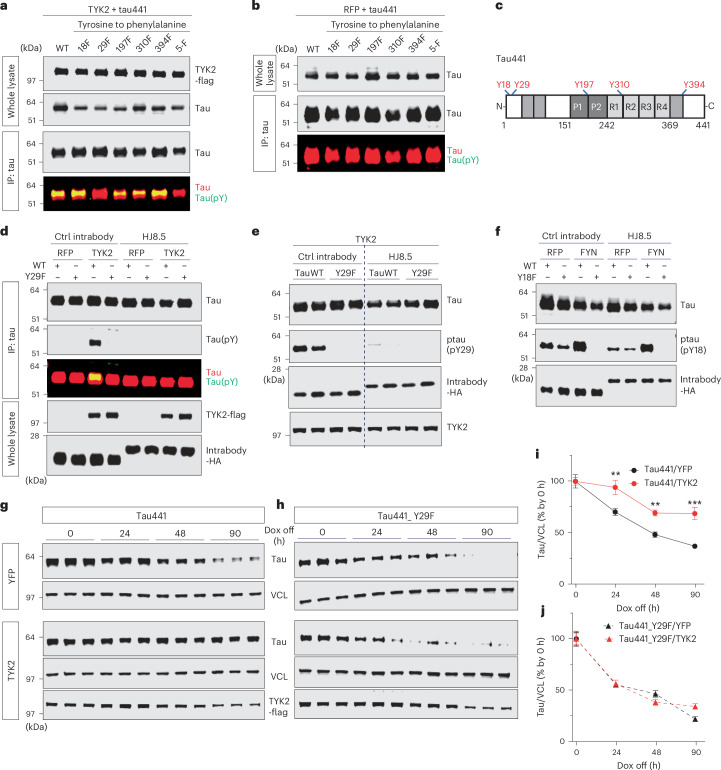
“TYK2 phosphorylates tau at tyrosine 29 (Tyr29) leading to its stabilization and promoting its aggregation in human cells.”
- Also stated in: § TYK2 stabilizes tau protein through Tyr29 phosphorylation · plain
“Here we found that TYK2 expression stabilized the tau441 protein (Fig. 2g,i) but had no effect on tau441-Y29F (Fig. 2h,j).”
- Also stated in: § TYK2 stabilizes tau protein through Tyr29 phosphorylation · boosted
“These data strongly suggest that TYK2-mediated Tyr29 phosphorylation stabilizes tau.”
§ TYK2 regulates tau levels, phosphorylation and aggregation in a tauopathy mouse model > Abstract
boostedstates a cause- Asserted: passes — The authors put it forward as true.
- Checkable: passes — It can be checked against evidence.
- Load-bearing: passes — The paper’s conclusions depend on it.
- Based: passes — The paper gives a reason why it holds.
- Also stated in: § TYK2 stabilizes tau protein through Tyr29 phosphorylation · plain
A result the paper reports from its own data — it cites no other source for it, so there is none to check. The quote shows it is in the paper.
In the paper
“TYK2 phosphorylates tau at tyrosine 29 (Tyr29) leading to its stabilization and promoting its aggregation in human cells.”
- Also stated in: § TYK2 stabilizes tau protein through Tyr29 phosphorylation · plain
“TYK2 phosphorylated all tau variants except for tau containing a Y29F mutation (Fig. 2a–c).”
- Also stated in: § TYK2 stabilizes tau protein through Tyr29 phosphorylation · plain
“Masking this Tyr29 residue with the HJ8.5 intrabody almost completely blocked tau phosphorylation by TYK2 (Fig. 2d).”
§ TYK2 regulates tau levels, phosphorylation and aggregation in a tauopathy mouse model > Abstract
plainstates a cause- Asserted: passes — The authors put it forward as true.
- Checkable: passes — It can be checked against evidence.
- Load-bearing: passes — The paper’s conclusions depend on it.
- Based: passes — The paper gives a reason why it holds.
- Also stated in: § TYK2 stabilizes tau protein through Tyr29 phosphorylation · plain
A result the paper reports from its own data — it cites no other source for it, so there is none to check. The quote shows it is in the paper.
In the paper
“Furthermore, knockdown of Tyk2 reduced total tau and pathogenic tau levels and rescued gliosis in a tauopathy mouse model.”
- Also stated in: § Knockdown of Tyk2 alleviates tau pathologies in a tauopathy mouse model · plain
“At 9 months of age, PS19/Tyk2 knockdown mice had markedly lower levels of total tau and pathological forms of tau (pT205, pS396/S404 residues and oligomeric tau; Fig. 8c,d).”
§ TYK2 regulates tau levels, phosphorylation and aggregation in a tauopathy mouse model > Abstract
plainstates a cause- Asserted: passes — The authors put it forward as true.
- Checkable: passes — It can be checked against evidence.
- Load-bearing: passes — The paper’s conclusions depend on it.
- Based: passes — The paper gives a reason why it holds.
- Also stated in: § Knockdown of Tyk2 alleviates tau pathologies in a tauopathy mouse model · plain
A result the paper reports from its own data — it cites no other source for it, so there is none to check. The quote shows it is in the paper.
In the paper
“Furthermore, knockdown of Tyk2 reduced total tau and pathogenic tau levels and rescued gliosis in a tauopathy mouse model.”
- Also stated in: § Knockdown of Tyk2 alleviates tau pathologies in a tauopathy mouse model · hedged
“PS19 mice with Tyk2 knockdown also had much less microgliosis and astrogliosis than PS19 control mice, as indicated by reduced ionized calcium‐binding adaptor molecule 1 (IBA1) and glial fibrillary acidic protein (GFAP) staining, respectively, in the cortex, the CA1 area of the hippocampus and the dentate gyrus (DG) (Fig. 8e,f).”
§ TYK2 regulates tau levels, phosphorylation and aggregation in a tauopathy mouse model > Abstract
plainstates a cause- Asserted: passes — The authors put it forward as true.
- Checkable: passes — It can be checked against evidence.
- Load-bearing: passes — The paper’s conclusions depend on it.
- Based: passes — The paper gives a reason why it holds.
- Also stated in: § Knockdown of Tyk2 alleviates tau pathologies in a tauopathy mouse model · hedged
A result the paper reports from its own data — it cites no other source for it, so there is none to check. The quote shows it is in the paper.
In the paper
“TYK2 phosphorylates tau at tyrosine 29 (Tyr29) leading to its stabilization and promoting its aggregation in human cells.”
- Also stated in: § TYK2 promotes tau aggregation in human cells · plain
“In this cellular assay, TYK2 expression increased tau aggregation, but this increase was ablated by either a TYK2 inhibitor (deucravacitinib) or the Y29F mutation.”
- Also stated in: § TYK2 promotes tau aggregation in human cells · plain
“TYK2 accelerated the formation of detergent-resistant tau aggregates with P301S cells but not with Y29F/P301S tau (Fig. 5d).”
§ TYK2 regulates tau levels, phosphorylation and aggregation in a tauopathy mouse model > Abstract
plainstates a cause- Asserted: passes — The authors put it forward as true.
- Checkable: passes — It can be checked against evidence.
- Load-bearing: passes — The paper’s conclusions depend on it.
- Based: passes — The paper gives a reason why it holds.
- Also stated in: § TYK2 promotes tau aggregation in human cells · plain
45 more claims
Create a free account to see all 100 claims and to verify the 65 references still open.
- It may state two separate claims as one. 31
- Probably not a substantial claim. 29
Claims other papers make about this one
Each is checked against this paper’s own text: does it say what the citing paper says it does?
In the citing paper
“Interestingly, a recent study established a link between TYK2 and the stabilization of tau and subsequent NFT formation, which also establishes TYK2 inhibition as a promising therapeutic approach in tau-mediated pathology72.”
From TYK2 mediates neuroinflammation in Alzheimer’s disease brains with TDP-43 pathology (2026) · cites this paper as [72]
In the citing paper
“Our findings are consistent with previous studies (including our own23) linking TYK2 to AD69–72.”
From TYK2 mediates neuroinflammation in Alzheimer’s disease brains with TDP-43 pathology (2026) · cites this paper as [72]
Self-check
Percentages, sums and reported differences re-computed from the paper’s own numbers.
Each contradiction between two passages listed here was confirmed by an independent check.
Rated minor: it would not touch a result — a value no result rests on, a p-value that stays on the same side of the significance level, or a conflict that is clerical, resolved elsewhere in the paper, or outside its own findings.
In the paper
§ TYK2 regulates tau levels, phosphorylation and aggregation in a tauopathy mouse model > Discussion
“Collectively, our findings and the Holtzman lab’s previous work demonstrate that TYK2 is critical to prevent tau aggregation.”
§ TYK2 regulates tau levels, phosphorylation and aggregation in a tauopathy mouse model > Results > TYK2 promotes tau aggregation in human cells
“Together, these data demonstrate that tau phosphorylation at Tyr29 by TYK2 stabilizes tau and facilitates proteopathic tau aggregation in human cells.”
Rated minor: it would not touch a result — a value no result rests on, a p-value that stays on the same side of the significance level, or a conflict that is clerical, resolved elsewhere in the paper, or outside its own findings.
In the paper
§ TYK2 regulates tau levels, phosphorylation and aggregation in a tauopathy mouse model > Results > TYK2 stabilizes tau protein through Tyr29 phosphorylation
“We then treated the cells with doxycycline (DOX; 100 nM) for 24 h to induce tau expression.”
§ TYK2 regulates tau levels, phosphorylation and aggregation in a tauopathy mouse model > Methods > Method details
“At DIV10, neurons were treated with DOX at a concentration of 50 nM to initiate transgene expression for 24 h.”
Rated minor: it would not touch a result — a value no result rests on, a p-value that stays on the same side of the significance level, or a conflict that is clerical, resolved elsewhere in the paper, or outside its own findings.
In the paper
§ TYK2 regulates tau levels, phosphorylation and aggregation in a tauopathy mouse model > Results > TYK2-mediated Tyr29 phosphorylation leads to the accumulation of pathological tau species in P301S tau-transgenic mice
“brain tissue was collected for biochemistry at 1 month (d) or 2 months (e and f) after birth.”
§ TYK2 regulates tau levels, phosphorylation and aggregation in a tauopathy mouse model > Results > TYK2-mediated Tyr29 phosphorylation leads to the accumulation of pathological tau species in P301S tau-transgenic mice
“e, Representative IB image of total tau, a PHF1 tau and nitrate tau at Tyr29 from mouse brains 1 month after birth (three independent repeats).”
Rated minor: it would not touch a result — a value no result rests on, a p-value that stays on the same side of the significance level, or a conflict that is clerical, resolved elsewhere in the paper, or outside its own findings.
In the paper
§ TYK2 regulates tau levels, phosphorylation and aggregation in a tauopathy mouse model > Methods > Method details
“For tau441 WT containing mutation (Y18F, Y29F, Y197F, Y310F or/and Y397F), tau441-P301S or tau441-Y29F/P301S, two split DNA fragments were amplified”
§ TYK2 regulates tau levels, phosphorylation and aggregation in a tauopathy mouse model > Results > TYK2 phosphorylates and stabilizes tau in a phosphorylation-dependent manner
“we replaced all five tyrosines (Y18, Y29, Y197, Y310 and Y394) with phenylalanine”
Rated minor: it would not touch a result — a value no result rests on, a p-value that stays on the same side of the significance level, or a conflict that is clerical, resolved elsewhere in the paper, or outside its own findings.
In the paper
§ TYK2 regulates tau levels, phosphorylation and aggregation in a tauopathy mouse model > Results > TYK2 regulates tau concentrations in cells and mouse brains
“c, IB image and quantification of endogenous tau protein in the brain from mice containing heterozygous or homozygous mutant Tyk2 E775K, or WT littermates at 1 month old”
§ TYK2 regulates tau levels, phosphorylation and aggregation in a tauopathy mouse model > Results > TYK2 regulates tau concentrations in cells and mouse brains
“P(WT versus Tyk2_E2775K/+) = 0.0853, P(WT versus Tyk2_E2775K/E2775K) = 0.0004”
Citations
Cites
Synapse Loss and Microglial Activation Precede Tangles in a P301S Tauopathy Mouse Model
Yoshiyama, Y., Higuchi, M., Zhang, B., Huang, S.-M., Iwata, N., Saido, T. C., Maeda, J., Suhara, T., Trojanowski, J. Q., & Lee, V. M.-Y. (2007) · Neuron · doi:10.1016/j.neuron.2007.01.010 · Cited by 2,208
Swatek, K. N., & Komander, D. (2016) · Cell Research · doi:10.1038/cr.2016.39 · Cited by 2,081
Reducing Endogenous Tau Ameliorates Amyloid ß-Induced Deficits in an Alzheimer's Disease Mouse Model
Roberson, E. D., Scearce-Levie, K., Palop, J. J., Yan, F., Cheng, I. H., Wu, T., Gerstein, H., Yu, G.-Q., & Mucke, L. (2007) · Science · doi:10.1126/science.1141736 · Cited by 1,892
Synergy between amyloid-β and tau in Alzheimer’s disease
Busche, M. A., & Hyman, B. T. (2020) · Nature Neuroscience · doi:10.1038/s41593-020-0687-6 · Cited by 1,242
Self-citationHanger, D. P., Hughes, K., Woodgett, J. R., Brion, J.-P., & Anderton, B. H. (1992) · Neuroscience Letters · doi:10.1016/0304-3940(92)90774-2 · Cited by 737
An Optimized microRNA Backbone for Effective Single-Copy RNAi
Fellmann, C., Hoffmann, T., Sridhar, V., Hopfgartner, B., Muhar, M., Roth, M., Lai, D. Y., Barbosa, I. A. M., Kwon, J. S., Guan, Y., et al. (2013) · Cell Reports · doi:10.1016/j.celrep.2013.11.020 · Cited by 719
Minegishi, Y., Saito, M., Morio, T., Watanabe, K., Agematsu, K., Tsuchiya, S., Takada, H., Hara, T., Kawamura, N., Ariga, T., et al. (2006) · Immunity · doi:10.1016/j.immuni.2006.09.009 · Cited by 702
Proteopathic tau seeding predicts tauopathy in vivo
Holmes, B. B., Furman, J. L., Mahan, T. E., Yamasaki, T. R., Mirbaha, H., Eades, W. C., Belaygorod, L., Cairns, N. J., Holtzman, D. M., & Diamond, M. I. (2014) · Proceedings of the National Academy of Sciences · doi:10.1073/pnas.1411649111 · Cited by 696
Self-citationTau PTM Profiles Identify Patient Heterogeneity and Stages of Alzheimer’s Disease
Wesseling, H., Mair, W., Kumar, M., Schlaffner, C. N., Tang, S., Beerepoot, P., Fatou, B., Guise, A. J., Cheng, L., Takeda, S., et al. (2020) · Cell · doi:10.1016/j.cell.2020.10.029 · Cited by 688
Self-citationTau protein kinases: Involvement in Alzheimer's disease
Martin, L., Latypova, X., Wilson, C. M., Magnaudeix, A., Perrin, M.-L., Yardin, C., & Terro, F. (2013) · Ageing Research Reviews · doi:10.1016/j.arr.2012.06.003 · Cited by 631
Cited by
Böken, D., Wu, Y., Zhang, Z., & Klenerman, D. (2025) · ChemBioChem · doi:10.1002/cbic.202400877 · Cited by 13
Li, K., Liu, Y., Gong, J., Li, J., Zhao, M., Hong, C., Zhang, Y., He, M., Zhu, Z., Chen, Z., et al. (2025) · Fluids and Barriers of the CNS · doi:10.1186/s12987-025-00651-y · Cited by 12
Tang, F., Wei, J., Wong, M.-L., & Lei, P. (2025) · Genomic psychiatry : · doi:10.61373/gp025i.0122 · Cited by 11
TYK2 mediates neuroinflammation in Alzheimer’s disease brains with TDP-43 pathology
König, L. E., Rodriguez, S., Hug, C., Daneshvari, S., Chung, A., Appleman, M., Tsai, M., Bradshaw, G. A., Sahin, A., Song, Y., et al. (2026) · Nature Communications · doi:10.1038/s41467-026-70243-3 · Cited by 9
Lei, H., Chen, X., Ruan, L., Liu, X., Ye, F., 李珂静, Cheng, W., Yu, B., Li, Q., & Di, C. (2025) · Ageing Research Reviews · doi:10.1016/j.arr.2025.102927 · Cited by 8
Review of Promising Off-Label Use of Deucravacitinib
Mima, Y., Yamamoto, M., & Iozumi, K. (2025) · International Journal of Molecular Sciences · doi:10.3390/ijms26199447 · Cited by 7
Lui, M., Salamone, S., Pollastro, F., Mazzon, E., & Artimagnella, O. (2025) · International Journal of Molecular Sciences · doi:10.3390/ijms26073113 · Cited by 7
Hydrogen sulfide in the brain as a silent neuroprotector in Alzheimer’s disease
Layal, H., Rajbongshi, J., Kumar, R., Pandey, S., Mishra, R., & Yadav, P. K. (2025) · Neuroscience · doi:10.1016/j.neuroscience.2025.08.057 · Cited by 6
Post-translational modifications as a regulatory code for tau function in health and disease
Nordbeck, A. J., Sharma, B., Garcia, C. A., & Tseng, J. (2026) · Frontiers in Dementia · doi:10.3389/frdem.2026.1834737 · Cited by 4
Deciphering the role of TYK2 in tau phosphorylation and pathology
Fröhlich, A., & Bowles, K. R. (2025) · Trends in Neurosciences · doi:10.1016/j.tins.2025.01.004 · Cited by 3
Prussian Blue Nanozyme Disrupts the Self‐Reinforcing Loop of Tauopathy via Triple‐Action Mechanism
Wu, F., Huang, J., Wang, J., Wu, R., Zhang, H., Jin, C., Chen, C., Zhou, R., Cen, P., Tian, L., et al. (2026) · Advanced Healthcare Materials · doi:10.1002/adhm.202505286 · Cited by 3
DYRK1A and Parkinson’s disease, facts and hypotheses
Meijer, L., Lindberg, M. F., Hogrel, G., & Khor, B. (2026) · Neurobiology of Disease · doi:10.1016/j.nbd.2026.107379 · Cited by 3
Komoto, Y., Takahagi, W., Ohshiro, T., Nishihata, S., Fujishima, K., & Taniguchi, M. (2026) · Nanoscale · doi:10.1039/d6nr00687f · Cited by 3
Sensory deficiencies correlate with tau protein and dementia
Ávila‐Villanueva, M., Hernández, F., Ávila, J., Plascencia‐Villa, G., & Perry, G. (2026) · Frontiers in Neuroscience · doi:10.3389/fnins.2026.1754329 · Cited by 2
SORLA up-regulation suppresses pathological effects in aged tauopathy mouse brain
Huang, H., Shi, C. H., Yang, W., Piña-Crespo, J. C., Bhatnagar, J., Curatolo, J., Murad, R., Shah, P., Campos, A., Houser, A., et al. (2026) · Science Advances · doi:10.1126/sciadv.aed6825 · Cited by 1
“Sarkosyl extraction was performed as previously described ( 116 ).”
Wei, H., Wang, B., Yang, J., & Liao, L. (2026) · Frontiers in Bioscience-Landmark · doi:10.31083/fbl45499 · Cited by 1
Platelets in Neurodegenerative Diseases
Canobbio, I., Torti, M., & Guidetti, G. F. (2025) · Springer eBooks · doi:10.1007/978-3-031-96352-0_25 · Cited by 1
Xue, Z. (2025) · Theoretical and Natural Science · doi:10.54254/2753-8818/2025.au26064 · Cited by 1
Reprogramming Fibrosis: How Protein PTMs Reshape the IPF Proteome
Li, Y. M., Kong, W., Zhang, H., Wei, X., Yi, J., Wang, M., Jin, S., & Yu, D. N. (2025) · Genes · doi:10.3390/genes16111392 · Cited by 1
Domene-Serrano, I., Santa‐María, I., Hernández, F., & Ávila, J. (2026) · PubMed · doi:10.14670/hh-18-961 · Cited by 1
Vaidya, B., Li, Y., Kim, Y. D., Osterman, C., Revelli, J., & Zoghbi, H. Y. (2026) · bioRxiv (Cold Spring Harbor Laboratory) · doi:10.64898/2026.05.18.726024
Self-citationKuhn, F. R., Klaassen, R. V., Koopmans, F., Koolman, T. S. Z., SMIT, A. B., & Spijker, S. (2026) · Cells · doi:10.3390/cells15080736
Grinberg, L., Sirhan, W., Kurtz, M., Assa, M., Malka, A., Perez, S., Katina, C., Levin, Y., & Piran, R. (2026) · Experimental & Molecular Medicine · doi:10.1038/s12276-026-01826-9
Chinnathambi, S., & Murugan, G. V. (2026) · International review of neurobiology · doi:10.1016/bs.irn.2026.07.002
Probing Allosteric Kinase Modulators as Next Game-Changers in Fighting Neurodegeneration
Roggiolani, E., Rosini, M., Minarini, A., & Basagni, F. (2026) · Journal of Medicinal Chemistry · doi:10.1021/acs.jmedchem.5c03783
Perioperative neurocognitive disorders: Risk factors, mechanisms, and interventional strategies
Shi, Z., & Shen, Y. (2025) · Brain medicine : · doi:10.61373/bm025p.0131
Kim, J., Tadros, B., Vaidya, B., Liang, Y. H. W., Jung, S. Y., Deng, X., Xu, J., & Zoghbi, H. Y. (2026) · bioRxiv (Cold Spring Harbor Laboratory) · doi:10.64898/2026.06.26.734369
Self-citationDetecting Discontinuities in the Topology of Alzheimers gene Co-expressionPreprint
Samadzelkava, A. (2025) · arXiv · doi:10.48550/arxiv.2511.18238
Chen, J.-H., & Tsai, T. (2026) · Dermatology and Therapy · doi:10.1007/s13555-026-01761-7
Foley, J. F. (2024) · Science Signaling · doi:10.1126/scisignal.adu6085
Barranco, C. (2024) · Nature reviews. Neuroscience · doi:10.1038/s41583-024-00890-2
Nanotechnology Meets Brain Diseases: Emerging Therapeutic Strategies for Drug Delivery
Tao, N., Wang, J., Qian, S., Zhao, S., Wang, L., Ouyang, J., Dawe, G. S., Shi, B., Xu, M. L., & Tao, W. (2026) · Chemical Reviews · doi:10.1021/acs.chemrev.6c00392
Metadata
- Authors
- Kim, J., Tadros, B., Liang, Y. H., Kim, Y., Lasagna-Reeves, C., Sonn, J. Y., Chung, D.-E. C., Hyman, B., Holtzman, D. M., & Zoghbi, H. Y.
- Affiliations
- Baylor College of Medicine (US)
- Harvard University (US)
- Washington University in St. Louis (US)
- Howard Hughes Medical Institute (US)
- Corresponding author
- Zoghbi, Huda Yahya
- ORCID
- Venue
- Nature Neuroscience
- Published
- 2024-11-11
- Volume
- 27
- Issue
- 12
- Pages
- 2417-2429
- ISSN
- 1097-6256 (ISSN-L)
- 1546-1726
- PMC
- PMC11614740
- OpenAlex
- W4404224704
- Cited by
- 32
- References
- 69
- Citations by year
- 2026: 17 · 2025: 13 · 2024: 2
- FWCI
- 3.74
- Type
- journal article
- Language
- en
- Open access
- hybrid
- doi.org
- Licence
- cc-by
- creativecommons.org/licenses/by/4.0 (tdm)
- creativecommons.org/licenses/by/4.0 (vor)
- Locations
- Nature Neuroscience (publishedVersion, cc-by)
- PubMed Central (publishedVersion, cc-by)
- PubMed (publishedVersion)
- IUScholarWorks (Indiana University) (submittedVersion, cc-by)
- Digital Commons-TMC (Texas Medical Center) (submittedVersion)
- Digital Commons@Becker (Washington University School of Medicine) (submittedVersion, cc-by)
- Funders
- JPB Foundation (N/A)
- Howard Hughes Medical Institute
- U.S. Department of Health & Human Services | NIH | National Institute of Neurological Disorders and Stroke (1R01NS119280)
- Topics
- Life Sciences › Neuroscience › Cellular and Molecular Neuroscience › Alzheimer's disease research and treatments
- Life Sciences › Neuroscience › Neurology › Neuroinflammation and Neurodegeneration Mechanisms
- Health Sciences › Medicine › Psychiatry and Mental health › Dementia and Cognitive Impairment Research
- Keywords
- TYK2, tau phosphorylation, tau aggregation, tauopathy, Alzheimer's disease, autophagy, P301S tau transgenic mice, gliosis, kinase inhibition
- MeSH terms
- Animals, Disease Models, Animal, Humans, Mice, Transgenic, Phosphorylation, tau Proteins, Tauopathies, Mice, TYK2 Kinase, Protein Aggregation, Pathological
About these checks
Registry, retraction, Cites and statistics results are computed, not judged, with one exception: a printed reference that no index lists is read once by a model before it counts as a citation error. Claims are extracted by a model and kept only when their quote appears verbatim in the text; each cited source is then checked, with a model’s help, for whether it says what the claim relies on. Those verdicts can be wrong — read the claim’s quote and the cited source before relying on one.
A language model drew the claims from the paper on 2026-11-26, under version 3 of the claim definition (model deepseek-v4.1-flash, prompt extract-v3).
A second model labelled each claim on 2026-11-26 (model jev-1.13-20260917, definition revision gold-guideline-v0.2).
Statistics and arithmetic are recomputed, not judged.
Confidence bands are shown only for fields calibrated on our annotated test set. None is calibrated yet, so no band is shown.
What counts as a claim ›How we measure confidence ›How we check this ›
Are you an author, or do you see a problem with this page? Request a review
Data sources
Bibliographic data: Semantic Scholar, OpenAlex, Crossref.
Contains information from the Semantic Scholar Academic Graph Datasets, made available under the ODC Attribution License (ODC-BY 1.0).
Semantic Scholar’s data is described in: Kinney, R., et al. (2023). The Semantic Scholar Open Data Platform. arXiv:2301.10140.
