

PIC, a paediatric-specific intensive care database
Open accessThe DOI matches its Crossref record; 25 of the 25 references it cites were found in a registry or an index.
Abstract
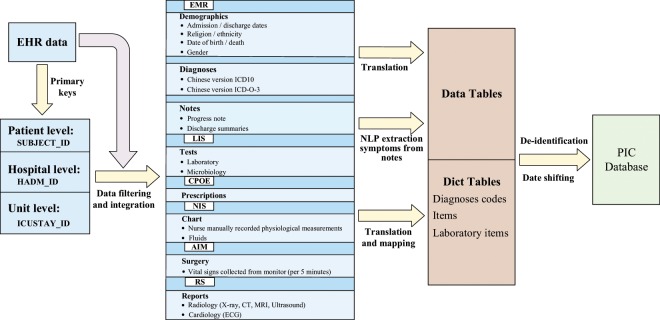
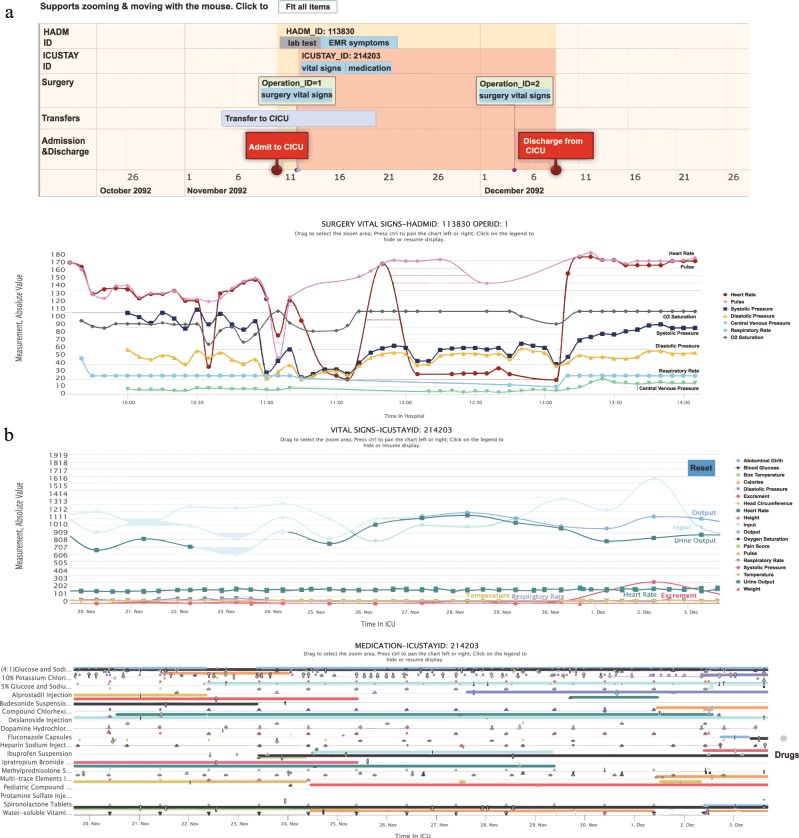
PIC (Paediatric Intensive Care) is a large paediatric-specific, single-centre, bilingual database comprising information relating to children admitted to critical care units at a large children’s hospital in China. The database is deidentified and includes vital sign measurements, medications, laboratory measurements, fluid balance, diagnostic codes, length of hospital stays, survival data, and more. The data are publicly available after registration, which includes completion of a training course on research with human subjects and signing of a data use agreement mandating responsible handling of the data and adherence to the principle of collaborative research. Although the PIC can be considered an extension of the widely used MIMIC (Medical Information Mart for Intensive Care) database in the field of paediatric critical care, it has many unique characteristics and can support database-based academic and industrial applications such as machine learning algorithms, clinical decision support tools, quality improvement initiatives, and international data sharing.
Overview
The claims and statistics of this paper haven’t been checked yet.
Free: it reads the open-access text and checks the first 5 claims that cite a source we can check. Create a free account to check every claim.
Integrity signals
Registry
Cites
Statistics
Figures

Verification
Claims the paper makes
The claims and statistics of this paper haven’t been checked yet.
Free: it reads the open-access text and checks the first 5 claims that cite a source we can check. Create a free account to check every claim.
Claims other papers make about this one
Each is checked against this paper’s own text: does it say what the citing paper says it does?
The cited source says what the claim attributes to it.
In the citing paper
“The Pediatric Intensive Care (PIC) database is sourced from The Children’s Hospital at Zhejiang University School of Medicine with 12,881 patients and 13,941 ICU stays admitted from 2010–20188.”
From MIMIC-IV, a freely accessible electronic health record dataset (2023) · cites this paper as [8]
Self-check
Percentages, sums and reported differences re-computed from the paper’s own numbers.
The self-check needs the paper’s full text.
Citations
Cites
MIMIC-III, a freely accessible critical care database
Johnson, A. E. W., Pollard, T. J., Shen, L., Lehman, L.-W. H., Feng, M., Ghassemi, M., Moody, B., Szolovits, P., Anthony Celi, L., & Mark, R. G. (2016) · Scientific Data · doi:10.1038/sdata.2016.35 · Cited by 8,141
1,500 scientists lift the lid on reproducibility
Baker, M. (2016) · Nature · doi:10.1038/533452a · Cited by 4,209
Pollard, T. J., Johnson, A. E. W., Raffa, J. D., Celi, L. A., Mark, R. G., & Badawi, O. (2018) · Scientific Data · doi:10.1038/sdata.2018.178 · Cited by 1,993
The Inevitable Application of Big Data to Health Care
Murdoch, T. B., & Detsky, A. S. (2013) · JAMA · doi:10.1001/jama.2013.393 · Cited by 1,664
Policy: NIH plans to enhance reproducibility
Collins, F. S., & Tabak, L. A. (2014) · Nature · doi:10.1038/505612a · Cited by 1,247
Saeed, M., Villarroel, M., Reisner, A. T., Clifford, G., Lehman, L.-W., Moody, G., Heldt, T., Kyaw, T. H., Moody, B., & Mark, R. G. (2011) · Critical Care Medicine · doi:10.1097/ccm.0b013e31820a92c6 · Cited by 1,162
An interpretable machine learning model for accurate prediction of sepsis in the ICU
Nemati, S., Holder, A., Razmi, F., Stanley, M. D., Clifford, G. D., & Buchman, T. G. (2018) · Critical Care Medicine · doi:10.1097/ccm.0000000000002936 · Cited by 832
Best Practices for Scientific Computing
Wilson, G., Aruliah, D. A., Brown, C. T., Chue Hong, N. P., Davis, M., Guy, R. T., Haddock, S. H. D., Huff, K. D., Mitchell, I. M., Plumbley, M. D., et al. (2014) · PLoS Biology · doi:10.1371/journal.pbio.1001745 · Cited by 723
Ethical challenges of big data in public health
Vayena, E., Salathé, M., Madoff, L. C., & Brownstein, J. S. (2015) · PLOS Computational Biology · doi:10.1371/journal.pcbi.1003904 · Cited by 268
Secondary Analysis of Electronic Health Records
Data, M. C. (2016) · OAPEN (The OAPEN Foundation) · doi:10.1007/978-3-319-43742-2 · Cited by 246
Research works printed but not linked: 1
- Li, H.-M., Li, Y., Duan, H.-L. & Lv, X.-D. Term extraction and negation detection method in Chinese clinical document. Chinese J. Biomed. Eng. 27, 716–721 (2008).
Cited by
MIMIC-IV, a freely accessible electronic health record dataset
Johnson, A. E. W., Bulgarelli, L., Shen, L., Gayles, A., Shammout, A., Horng, S., Pollard, T. J., Hao, S., Moody, B., Gow, B., et al. (2023) · Scientific Data · doi:10.1038/s41597-022-01899-x · Cited by 3,401
“The Pediatric Intensive Care (PIC) database is sourced from The Children’s Hospital at Zhejiang University School of Medicine with 12,881 patients and 13,941 ICU stays admitted from 2010–2018 8 .”
MethodData mining in clinical big data: the frequently used databases, steps, and methodological models
Wu, W.-T., Li, Y.-J., Feng, A.-Z., Li, L., Huang, T., Xu, A.-D., & Lyu, J. (2021) · Military Medical Research · doi:10.1186/s40779-021-00338-z · Cited by 505
Development and Validation of the Phoenix Criteria for Pediatric Sepsis and Septic Shock
Sanchez-Pinto, L. N., Bennett, T. D., DeWitt, P. E., Russell, S., Rebull, M. N., Martin, B., Akech, S., Albers, D. J., Alpern, E. R., Balamuth, F., et al. (2024) · JAMA · doi:10.1001/jama.2024.0196 · Cited by 241
Explainable AI for clinical and remote health applications: A survey on tabular and time series data
Di Martino, F., & Delmastro, F. (2023) · Artificial Intelligence Review · doi:10.1007/s10462-022-10304-3 · Cited by 216
Agricultural breadbaskets shift poleward given adaptive farmer behavior under climate change
Franke, J., Müller, C., Minoli, S., Elliott, J. W., Folberth, C., Gardner, C., Hank, T., Izaurralde, R. C., Jägermeyr, J., Jones, C. D., et al. (2021) · Global Change Biology · doi:10.1111/gcb.15868 · Cited by 80
Metadata
- Authors
- Zeng, X., Yu, G., Lu, Y., Tan, L., Wu, X., Shi, S., Duan, H., Shu, Q., & Li, H.
- Affiliations
- Children's Hospital of Zhejiang University (CN)
- Zhejiang University (CN)
- Corresponding author
- Shu, Qiang
- Li, Haomin
- Venue
- Scientific Data
- Published
- 2020-01-13
- Volume
- 7
- Issue
- 1
- Pages
- 14-14
- ISSN
- 2052-4463 (ISSN-L)
- PMC
- PMC6957490
- OpenAlex
- W2999034209
- Cited by
- 138
- References
- 25
- Citations by year
- 2026: 23 · 2025: 33 · 2024: 27 · 2023: 13 · 2022: 21 · 2021: 18 · 2020: 3
- Type
- data paper
- Language
- en
- Open access
- gold
- doi.org
- Licence
- cc-by
- creativecommons.org/licenses/by/4.0 (tdm)
- creativecommons.org/licenses/by/4.0 (vor)
- Locations
- Scientific Data (publishedVersion, cc-by)
- Europe PMC (PubMed Central) (publishedVersion, cc-by)
- PubMed Central (publishedVersion, cc-by)
- PubMed (publishedVersion)
- DOAJ (DOAJ: Directory of Open Access Journals) (submittedVersion)
- Funders
- National Natural Science Foundation of China (81871456)
- Chinese Ministry of Science and Technology | Department of S and T for Social Development (2016YFC0901905)
- Topics
- Physical Sciences › Computer Science › Artificial Intelligence › Machine Learning in Healthcare
- Health Sciences › Medicine › Critical Care and Intensive Care Medicine › Sepsis Diagnosis and Treatment
- Health Sciences › Health Professions › Health Information Management › Electronic Health Records Systems
- Keywords
- pediatric intensive care, children's hospitals, vital signs, medication, laboratory measurements, fluid balance, length of hospital stay, survival, mimics, clinical decision support, quality improvement, international data sharing
- MeSH terms
- Machine Learning, Algorithms, Child, China, Critical Care, Humans, Intensive Care Units, Pediatrics, Databases, Factual, Decision Support Systems, Clinical, Information Dissemination
About these checks
Registry, retraction, Cites and statistics results are computed, not judged, with one exception: a printed reference that no index lists is read once by a model before it counts as a citation error. Claims are extracted by a model and kept only when their quote appears verbatim in the text; each cited source is then checked, with a model’s help, for whether it says what the claim relies on. Those verdicts can be wrong — read the claim’s quote and the cited source before relying on one.
Statistics and arithmetic are recomputed, not judged.
Confidence bands are shown only for fields calibrated on our annotated test set. None is calibrated yet, so no band is shown.
What counts as a claim ›How we measure confidence ›How we check this ›
Are you an author, or do you see a problem with this page? Request a review
How to cite
Cite CoChat for the checks on this page, and the paper for its own findings.
- This page
- CoChat. (2026). Citation check: PIC, a paediatric-specific intensive care database. https://app.cochat.ai/papers/10.1038/s41597-020-0355-4
- The paper
- Zeng, X., Yu, G., Lu, Y., Tan, L., Wu, X., Shi, S., Duan, H., Shu, Q., & Li, H. (2020). PIC, a paediatric-specific intensive care database. Scientific Data. https://doi.org/10.1038/s41597-020-0355-4
Data sources
Bibliographic data: Semantic Scholar, OpenAlex, Crossref.
Contains information from the Semantic Scholar Academic Graph Datasets, made available under the ODC Attribution License (ODC-BY 1.0).
Semantic Scholar’s data is described in: Kinney, R., et al. (2023). The Semantic Scholar Open Data Platform. arXiv:2301.10140.
