

The DOI matches its Crossref record; 36 of the 41 references it cites were found in a registry or an index.
A multi-modal open dataset for mental-disorder analysis
Open accessAbstract
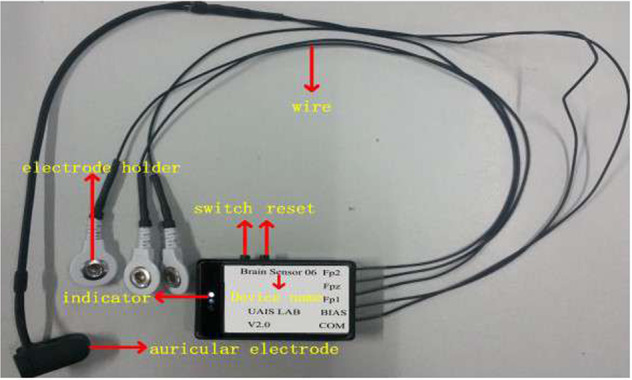
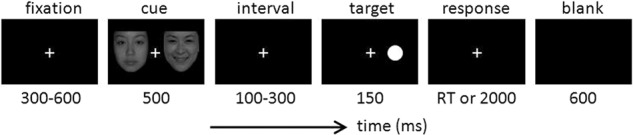
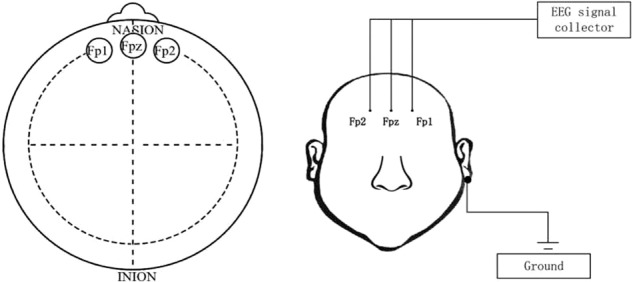
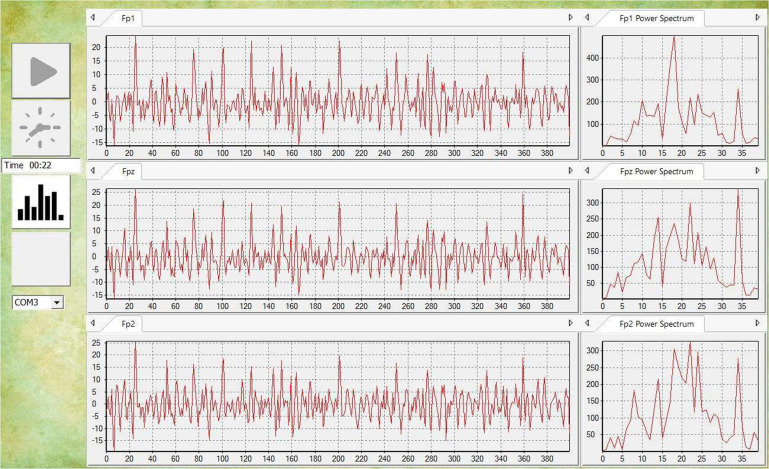
According to the WHO, the number of mental disorder patients, especially depression patients, has overgrown and become a leading contributor to the global burden of disease. With the rising of tools such as artificial intelligence, using physiological data to explore new possible physiological indicators of mental disorder and creating new applications for mental disorder diagnosis has become a new research hot topic. We present a multi-modal open dataset for mental-disorder analysis. The dataset includes EEG and recordings of spoken language data from clinically depressed patients and matching normal controls, who were carefully diagnosed and selected by professional psychiatrists in hospitals. The EEG dataset includes data collected using a traditional 128-electrodes mounted elastic cap and a wearable 3-electrode EEG collector for pervasive computing applications. The 128-electrodes EEG signals of 53 participants were recorded as both in resting state and while doing the Dot probe tasks; the 3-electrode EEG signals of 55 participants were recorded in resting-state; the audio data of 52 participants were recorded during interviewing, reading, and picture description.
Overview
The claims and statistics of this paper haven’t been checked yet.
Run the check — free, no account needed. It reads the open-access text and checks the sources it cites.
Integrity signals
Registry
Cites
Statistics
Figures
Verification
Claims the paper makes
The claims and statistics of this paper haven’t been checked yet.
Run the check — free, no account needed. It reads the open-access text and checks the sources it cites.
Claims other papers make about this one
Each is checked against this paper’s own text: does it say what the citing paper says it does?
The source backs part of the claim, not all of it — or backs it for a different population, condition or comparison.
In the citing paper
“It comprises speech data and ECG data.”
From A Comprehensive Review on Synergy of Multi-Modal Data and AI Technologies in Medical Diagnosis (2024) · cites this paper as [34]
Experimental — accuracy not yet measuredIn the citing paper
“The Multi-modal Open Dataset for Mental Disorder Analysis (MODMA) [34] is a multi-modal dataset tailored for mental disorders, featuring both clinically depressed patients and individuals from the normal population.”
From A Comprehensive Review on Synergy of Multi-Modal Data and AI Technologies in Medical Diagnosis (2024) · cites this paper as [34]
Self-check
Percentages, sums and reported differences re-computed from the paper’s own numbers.
The self-check needs the paper’s full text.
Citations
Cites
Hamilton, M. (1960) · Journal of Neurology, Neurosurgery & Psychiatry · doi:10.1136/jnnp.23.1.56 · Cited by 32,817
(1998) · The Journal of Clinical Psychiatry · Cited by 19,139
Journal of Clinical Psychiatry
(2018) · Journal of Clinical Psychiatry · doi:10.5505/kpd · Cited by 13,703
(1998) · PubMed · Cited by 10,216
Spitzer, R. L. (1999) · JAMA · doi:10.1001/jama.282.18.1737 · Cited by 9,802
Vos, T., Allen, C., Arora, M., Barber, R. M., Bhutta, Z. A., Brown, A., Carter, A., Casey, D. C., Charlson, F. J., Chen, A. Z., et al. (2016) · The Lancet · doi:10.1016/s0140-6736(16)31678-6 · Cited by 7,253
Ostwald, P. F. (1960) · American Journal of Psychotherapy · doi:10.1176/appi.psychotherapy.1960.14.4.817 · Cited by 1,422
Mental health: a world of depression
Smith, K. (2014) · Nature · doi:10.1038/515180a · Cited by 1,148
Automated EEG-based screening of depression using deep convolutional neural network
Acharya, U. R., Oh, S. L., Hagiwara, Y., Tan, J. H., Adeli, H., & Subha, D. P. (2018) · Computer Methods and Programs in Biomedicine · doi:10.1016/j.cmpb.2018.04.012 · Cited by 650
American Psychiatric Association Diagnostic and Statistical Manual of Mental Disorders (DSM-IV)
(2012) · SpringerReference · doi:10.1007/springerreference_179660 · Cited by 527
Research works printed but not linked: 5
- Sun. S, et al. A study of resting-state EEG biomarkers for depression recognition. preprint at https://arxiv.fenshishang.com/abs/2002.11039 (2020).
- Liu, Z., Wang, D., Zhang, L. & Hu, B. A Novel Decision Tree for Depression Recognition in Speech. preprint at https://arxiv.fenshishang.com/abs/2002.12759 (2020).
- Shi, Q. et al. Depression Detection using Resting State Three-channel EEG Signal. preprint at https://arxiv.fenshishang.com/abs/2002.09175 (2020).
- Bai, L., Ma, H. & Huang, Y. X. The Development of Native Chinese Affective Picture System–A pretest in 46 College Students. Chinese Mental Health Journal. 19(11), 719–722 (2005).
- Xu, L. H., Lin, H. F. & Zhao, J. Construction and analysis of emotional corpus. Journal of Chinese information processing. 22(1), 116–122 (2008).
Cited by
Sorted by citations
A Comprehensive Review on Synergy of Multi-Modal Data and AI Technologies in Medical Diagnosis
Xu, X., Li, J., Zhu, Z., Zhao, L., Wang, H., Song, C., Chen, Y., Zhao, Q., Yang, J., & Pei, Y. (2024) · Bioengineering · doi:10.3390/bioengineering11030219 · Cited by 242
Self-citationAhmed, A., Xi, R., Hou, M., Shah, S. A., & Hameed, S. (2023) · IEEE Access · doi:10.1109/access.2023.3323574 · Cited by 164
Kalateh, S., Estrada-Jimenez, L. A., Nikghadam-Hojjati, S., & Barata, J. (2024) · IEEE Access · doi:10.1109/access.2024.3430850 · Cited by 170
Modern Methods of Diagnostics and Treatment of Neurodegenerative Diseases and Depression
Shusharina, N. N., Yukhnenko, D., Botman, S., Sapunov, V., Savinov, V., Kamyshov, G., Sayapin, D., & Voznyuk, I. A. (2023) · Diagnostics · doi:10.3390/diagnostics13030573 · Cited by 107
Shen, J. G., Zhang, Y., Liang, H., Zhao, Z., Zhu, K., Qian, K., Dong, Q., Zhang, X., & Hu, B. (2023) · IEEE Journal of Biomedical and Health Informatics · doi:10.1109/jbhi.2023.3265805 · Cited by 98
Self-citation
Metadata
- Authors
- Cai, H., Yuan, Z., Gao, Y., Sun, S., Li, N., Tian, F., Xiao, H., Li, J., Yang, Z., Li, X., Zhao, Q., Liu, Z., Yao, Z., Yang, M., Peng, H., Zhu, J., Zhang, X., Gao, G., Zheng, F., Li, R., Guo, Z., Ma, R., Yang, J., Zhang, L., Hu, X., Li, Y., & Hu, B.
- Affiliations
- Lanzhou University (CN)
- Lanzhou University Second Hospital (CN)
- Chinese Academy of Sciences (CN)
- Corresponding author
- Li, Yumin
- Hu, Bin
- ORCID
- Venue
- Scientific Data
- Published
- 2022-04-19
- Volume
- 9
- Issue
- 1
- Pages
- 178-178
- ISSN
- 2052-4463 (ISSN-L)
- PMC
- PMC9018722
- OpenAlex
- W4224247713
- Cited by
- 293
- References
- 41
- Citations by year
- 2026: 84 · 2025: 108 · 2024: 52 · 2023: 36 · 2022: 10
- Type
- data paper
- Language
- en
- Open access
- gold
- doi.org
- Locations
- Scientific Data (publishedVersion, cc-by)
- PubMed Central (publishedVersion, cc-by)
- PubMed (publishedVersion)
- Lanzhou University Institutional Repository (submittedVersion)
- DOAJ (DOAJ: Directory of Open Access Journals) (submittedVersion, cc-by-sa)
- Funders
- National Natural Science Foundation of China (61632014, 61627808, 61210010, 62076113)
- Topics
- Physical Sciences › Computer Science › Artificial Intelligence › Emotion and Mood Recognition
- Life Sciences › Neuroscience › Cognitive Neuroscience › EEG and Brain-Computer Interfaces
- Social Sciences › Psychology › Social Psychology › Mental Health via Writing
- Keywords
- mental illness, depression, EEG, physiological parameters, spoken language, audio recordings, multimodal dataset, wearable EEG, dot-probe task, resting state, diagnosis
- MeSH terms
- Artificial Intelligence, Mental Disorders, Electroencephalography, Humans
About these checks
Registry, retraction, Cites and statistics results are computed, not judged, with one exception: a printed reference that no index lists is read once by a model before it counts as a citation error. Claims are extracted by a model and kept only when their quote appears verbatim in the text; each cited source is then checked, with a model’s help, for whether it says what the claim relies on. Those verdicts can be wrong — read the claim’s quote and the cited source before relying on one.
Statistics and arithmetic are recomputed, not judged.
Confidence bands are shown only for fields calibrated on our annotated test set. None is calibrated yet, so no band is shown.
What counts as a claim ›How we measure confidence ›How we check this ›
Are you an author, or do you see a problem with this page? Request a review
