

CAPTURE-24: A large dataset of wrist-worn activity tracker data collected in the wild for human activity recognition
Open accessThe DOI matches its Crossref record; 70 of the 70 references it cites were found in a registry or an index.
Abstract
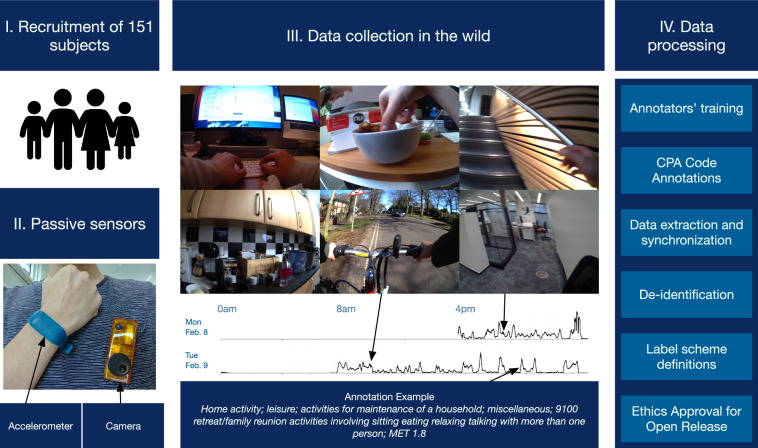
Existing activity tracker datasets for human activity recognition are typically obtained by having participants perform predefined activities in an enclosed environment under supervision. This results in small datasets with a limited number of activities and heterogeneity, lacking the mixed and nuanced movements normally found in free-living scenarios. As such, models trained on laboratory-style datasets may not generalise out of sample. To address this problem, we introduce a new dataset involving wrist-worn accelerometers, wearable cameras, and sleep diaries, enabling data collection for over 24 hours in a free-living setting. The result is CAPTURE-24, a large activity tracker dataset collected in the wild from 151 participants, amounting to 3883 hours of accelerometer data, of which 2562 hours are annotated. CAPTURE-24 is two to three orders of magnitude larger than existing publicly available datasets, which is critical to developing accurate human activity recognition models.
Overview
The claims and statistics of this paper haven’t been checked yet.
Free: it reads the open-access text and checks the first 5 claims that cite a source we can check. Create a free account to check every claim.
Integrity signals
Registry
Cites
Statistics
Figures
Verification
Claims the paper makes
The claims and statistics of this paper haven’t been checked yet.
Free: it reads the open-access text and checks the first 5 claims that cite a source we can check. Create a free account to check every claim.
Claims other papers make about this one
Each is checked against this paper’s own text: does it say what the citing paper says it does?
The cited source doesn’t support the claim as written.
In the citing paper
“Owing to the relative ease of data collection using wearables, there are now large repositories of datasets, e.g., UK Biobank [212], Capture-24 [21,198], and Fenland [145], but crucially, without annotations.”
From Past, Present, and Future of Sensor-based Human Activity Recognition Using Wearables: A Surveying Tutorial on a Still Challenging Task (2025) · cites this paper as [21]
Checked by a reasoning model — may be wrong.
Experimental — accuracy not yet measured
Self-check
Percentages, sums and reported differences re-computed from the paper’s own numbers.
The self-check needs the paper’s full text.
Citations
Cites
Hochreiter, S., & Schmidhuber, J. (1997) · Neural Computation · doi:10.1162/neco.1997.9.8.1735 · Cited by 102,318 · cited 1×
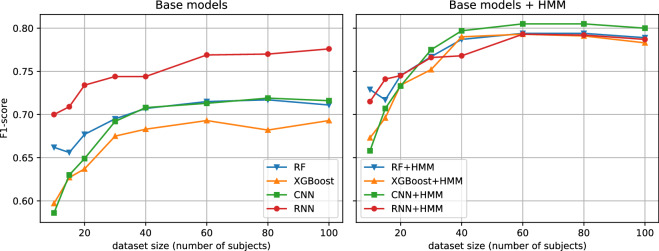
“Finally, we saw that temporal modelling using hidden Markov models consistently improved performance, but other time-series methods 40,42 could be investigated leveraging the unique long-span aspect of our dataset.”
XGBoost: A Scalable Tree Boosting System
Chen, T., & Guestrin, C. (2016) · Proceedings of the 22nd ACM SIGKDD International Conference on Knowledge Discovery and Data Mining · doi:10.1145/2939672.2939785 · Cited by 54,569
Identity mappings in deep residual networks
He, K., Zhang, X., Ren, S., & Sun, J. (2016) · Lecture Notes in Computer Science · doi:10.1007/978-3-319-46493-0_38 · Cited by 10,741
The Jackknife, the Bootstrap and Other Resampling Plans
Efron, B. (1982) · Society for Industrial and Applied Mathematics eBooks · doi:10.1137/1.9781611970319 · Cited by 8,120
2011 Compendium of Physical Activities: A Second Update of Codes and MET Values
AINSWORTH, B. E., HASKELL, W. L., HERRMANN, S. D., MECKES, N., BASSETT, D. R., TUDOR-LOCKE, C., GREER, J. L., VEZINA, J., WHITT-GLOVER, M. C., & LEON, A. S. (2011) · Medicine & Science in Sports & Exercise · doi:10.1249/mss.0b013e31821ece12 · Cited by 6,317 · cited 1×
“The Axivity Omgui software (https://github.com/digitalinteraction/ openmovement/wiki/AX3-GUI) distributed by the accelerometer manufacturers was used for initialization of the measurements, synchronization, and downloading binary accelerometry files recorded on the devices.”
SGDR: Stochastic Gradient Descent with Warm Restarts
Loshchilov, I., & Hutter, F. (2016) · arXiv · doi:10.48550/arxiv.1608.03983 · Cited by 5,309
Deep Convolutional and LSTM Recurrent Neural Networks for Multimodal Wearable Activity Recognition
Ordóñez, F., & Roggen, D. (2016) · Sensors · doi:10.3390/s16010115 · Cited by 2,761 · cited 2×
“Our existing benchmark incorporates common methods used for HAR, future work could also benefit from leveraging more recent modeling techniques using DeepConvLSTM 40,41 , transformers 42 , and self-supervised learning 43–46 .”
Cyclical Learning Rates for Training Neural Networks
Smith, L. N. (2017) · 2017 IEEE Winter Conference on Applications of Computer Vision (WACV) · doi:10.1109/wacv.2017.58 · Cited by 2,670
A tutorial on human activity recognition using body-worn inertial sensors
Bulling, A., Blanke, U., & Schiele, B. (2014) · ACM Computing Surveys · doi:10.1145/2499621 · Cited by 1,668 · cited 1×
“We followed the common practice of sliding-window segmentation 22 to extract fixed-size, non-overlapping windows of ten seconds.”
Introducing a New Benchmarked Dataset for Activity Monitoring
Reiss, A., & Stricker, D. (2012) · 2012 16th International Symposium on Wearable Computers · doi:10.1109/iswc.2012.13 · Cited by 1,456
Research works printed but not linked: 4
- Ladha, C., Ladha, K., Jackson, D. & Olivier, P. Shaker table validation of openmovement ax3 accelerometer. In Ahmerst (ICAMPAM 2013 AMHERST): In 3rd International Conference on Ambulatory Monitoring of Physical Activity and Movement, 69–70 (2013).
- Bergstra, J., Yamins, D. & Cox, D. Making a science of model search: Hyperparameter optimization in hundreds of dimensions for vision architectures. In International conference on machine learning, 115–123 (PMLR, 2013).
- Zhang, R. Making convolutional networks shift-invariant again. In International conference on machine learning, 7324–7334 (PMLR, 2019).
- Cramér, H.Mathematical Methods of Statistics (PMS-9), Volume 9 (Princeton university press, 2016).
Cited by
Haresamudram, H., Tang, C. I., Suh, S., Lukowicz, P., & Plötz, T. (2025) · Proceedings of the ACM on Interactive Mobile Wearable and Ubiquitous Technologies · doi:10.1145/3729467 · Cited by 33
Karim, M. F. A., Khalid, S., Lee, S., Almutairi, S. S., Namoun, A., & Abohashrh, M. (2025) · IEEE Access · doi:10.1109/access.2025.3590073 · Cited by 37
“Annotation Quality: Recent efforts (e.g., CAPTURE-24) focus on free-living, long-duration, and hierarchical annotations, enabling open-set and few-shot recognition research [67].”
MuJo: Multimodal Joint Feature Space Learning for Human Activity Recognition
Fritsch, S. G., Oguz, C., Rey, V. F., Ray, L. S. S., Kiefer-Emmanouilidis, M., & Lukowicz, P. (2025) · IEEE International Conference on Pervasive Computing and Communications · doi:10.1109/percom64205.2025.00020 · Cited by 16
“The work presented in this paper, which aims to address these issues, is based on three key observations: 1) Although the availability of input modalities during inference, the time when the system is utilized in the real world, may be constrained, the input modalities during training can be…”
Feasibility and Utility of Multimodal Micro Ecological Momentary Assessment on a Smartwatch
Le, H., Potter, V., Lakshminarayanan, R., Mishra, V., & Intille, S. S. (2025) · CHI Conference on Human Factors in Computing Systems · doi:10.1145/3706598.3714086 · Cited by 13
Tsanas, A. (2025) · IEEE Access · doi:10.1109/access.2025.3539278 · Cited by 4
Towards Customizable Foundation Models for Human Activity Recognition with Wearable Devices
Qiu, M., Weng, C., Fan, M., & Wu, K. (2025) · Proceedings of the ACM on Interactive Mobile Wearable and Ubiquitous Technologies · doi:10.1145/3749479 · Cited by 4
A Context-Assisted, Semi-Automated Activity Recall Interface Allowing Uncertainty
Le, H., Potter, V., Choube, A., Lakshminarayanan, R., Mishra, V., & Intille, S. S. (2025) · Proceedings of the ACM on Interactive Mobile Wearable and Ubiquitous Technologies · doi:10.1145/3770710 · Cited by 6
“Researchers in UbiComp, HCI, kinesiology, digital phenotyping, and behavioral science aim to leverage wearable sensing to build machine learning models for human activity recognition (HAR) [10, 17, 25, 56, 96].”
A Multi-Agent LLM Network for Suggesting and Correcting Human Activity and Posture Annotations
Le, H., Choube, A., Swain, V. D., Mishra, V., & Intille, S. S. (2025) · ACM International Joint Conference on Pervasive and Ubiquitous Computing (UbiComp) · doi:10.1145/3714394.3756185 · Cited by 6
“Researchers across ubiquitous computing, human-computer interaction (HCI), digital phenotyping, and behavioral sciences have long sought to use mobile and wearable sensing to develop machine learning models for human activity recognition (HAR) [1, 3, 9, 22, 43].”
Domain-specific physical activity levels and risk of dementia: a systematic review and meta-analysis
Feter, N., Iso‐Markku, P., Markarian, T., Luong, D. M., Gunnink, J., Schröder, N., Caputo, E. L., Feter, J. S., Nanda, A., Hourihan, S., et al. (2026) · The Lancet Public Health · doi:10.1016/s2468-2667(26)00142-8 · Cited by 4
Understanding Human Daily Experience Through Continuous Sensing: ETRI Lifelog Dataset 2024
Oh, S. W., Jeong, H., Chung, S., Lim, J., Noh, K. J., Lee, S., & Jung, G. (2025) · International Conference on Information and Communication Technology Convergence (ICTC) · doi:10.1109/ictc66702.2025.11388616 · Cited by 4
“To better understand the intricate nature of human behavior in daily life, it is important to systematically collect and analyze comprehensive lifelogs from a variety of sensor devices and user records [1], [2].”
Gu, X., Liu, Z., Han, J., Qiu, J., Fang, W., Lu, L., Clifton, L., Zhang, Y., & Clifton, D. A. (2025) · Communications Engineering · doi:10.1038/s44172-025-00467-6 · Cited by 11
“For IMU, 40 features 24 were extracted, including temporal, spectral, and angular measurements, which are essential for activity recognition tasks 36 .”
InfluentialFrequency-Aware Masked Autoencoders for Human Activity Recognition using Accelerometers
Lorenzen, N. R., Jennum, P. J., Mignot, E., & Brink-Kjaer, A. (2025) · 2025 47th Annual International Conference of the IEEE Engineering in Medicine and Biology Society (EMBC) · doi:10.1109/embc58623.2025.11252605 · Cited by 2
“For this purpose, we used the Capture-24 cohort [23] consisting of 151 participants with ~24 hours of data sampled at 100 Hz from Axivity AX3 devices.”
From Vision to Motion: Translating Large-Scale Knowledge for Data-Scarce IMU Applications
Yoon, H., Cha, H., Nguyen, H. C., Gong, T., & Lee, S.-J. (2025) · IEEE Transactions on Mobile Computing · doi:10.1109/tmc.2025.3556998 · Cited by 10
“Larger-scale efforts [15], such as Capture-24 [13] and U.K.-Biobank [14], are restricted to specific conditions, such as wrist-worn devices measuring general daily activities.”
InfluentialZi, Y., van de Ven, S. R. B., de Geus, E. J. C., & Chen, P. (2026) · Interactive Journal of Medical Research · doi:10.2196/76601 · Cited by 5
Wang, Y., Lai, S., Mu, H., Xu, S., Hu, R., & Hsu, C.-Y. (2026) · Technologies · doi:10.3390/technologies14010038 · Cited by 2
Weak-Annotation of HAR Datasets using Vision Foundation Models
Bock, M., Laerhoven, K. V., & Moeller, M. (2024) · ACM International Symposium on Wearable Computers (ISWC) · doi:10.1145/3675095.3676613 · Cited by 4
Reducing annotation burden in physical activity research using vision language models
Schönfeldt, A., Maylor, B. D., Chen, X., Clark, R., & Doherty, A. (2025) · Scientific Reports · doi:10.1038/s41598-025-21350-6 · Cited by 7
“The most realistic setting for validating behaviour measurement approaches and developing novel machine learning approaches (Logacjov et al., 2024; Yuan et al., 2024; Walmsley et al., 2022; Willetts et al., 2018; Doherty et al., 2017) is in diverse populations of people living their everyday lives,…”
InfluentialSelf-citationCai, Y., Ma, T., Sirard, J. R., Pang, M. Y. C., & Xie, Y. J. (2025) · Scandinavian Journal of Medicine and Science in Sports · doi:10.1111/sms.70124 · Cited by 1
“We used the Capture-24 dataset, collected in Oxford County, which contains synchronized accelerometer data (Axivity, wrist-worn—the same device and location as used in the UK Biobank study) and image-based annotations of physical activity [24].”
Human Activity Recognition on Embedded Devices: CNN-Based Walking Detection and Step Counting
Pascale, R., Tudose, D., & Alexandru, N. (2025) · Computer Science in Cars Symposium · doi:10.1109/cscs66924.2025.00058 · Cited by 1
Towards Practical, Best Practice Video Annotation to Support Human Activity Recognition
Tran, H., Potter, V., Mazzucchelli, U., John, D., & Intille, S. S. (2025) · Communications in computer and information science · doi:10.1007/978-3-032-09117-8_6 · Cited by 2
Internet of Things Dataset for Human Operator Activity Recognition in Industrial Environment
Forkan, A. R. M., Jayaraman, P. P., Antonmeryl, C., Montori, F., Banerjee, A., Fizza, K., & Georgakopoulos, D. (2025) · ACM International Conference on Information and Knowledge Management (CIKM) · doi:10.1145/3746252.3761649 · Cited by 1
Maylor, B. D., Small, S. R., Plekhanova, T., Brocklebank, L. A., van Duijvenboden, S., Sharman, R. L., Hill, E. A., Karpe, F., Kyle, S. D., & Doherty, A. (2025) · JMIR Research Protocols · doi:10.2196/78779 · Cited by 1
“For example, some validation studies have collected wrist-based accelerometer data paired with first-person camera images for behavior classification [6,7], and these methods have subsequently been adopted in large epidemiological studies for health research [8,9].”
InfluentialSelf-citationFrom accelerometer data to activity patterns in chronic pain: methodical reasoning is key
Doomen, A., Huijnen, I. P. J., Wittink, H. M., Evenhuis, T., Verwoerd, M. J., & Smeets, R. (2026) · Frontiers in Sports and Active Living · doi:10.3389/fspor.2026.1712235 · Cited by 1
Cai, Y., Ma, T., Sirard, J. R., Xie, Y. J., Yang, Q., Lee, C.-D., Wang, X., Liang, X., Li, Y., Lei, J., et al. (2026) · Communications Medicine · doi:10.1038/s43856-026-01421-z · Cited by 2
“The validation of the annotations has been reported elsewhere 22 .”
InfluentialDeep learning-based recommendation systems: a comprehensive review of methods and applications
Rajput, I. S., Tewari, A. S., & Tiwari, A. K. (2026) · Multimedia Tools and Applications · doi:10.1007/s11042-026-21655-2 · Cited by 1
Lapointe, Y., Kapur, A., Sharma, A., Panter, J., Fuller, D., & Mamiya, H. (2026) · Preventive Medicine · doi:10.1016/j.ypmed.2026.108603 · Cited by 1
Toward Wearable Sensor-Based Human Activity Recognition: A Survey
Zou, H., Chen, Z., Pan, Y., & Li, J. (2026) · IEEE Internet of Things Journal · doi:10.1109/jiot.2026.3702134 · Cited by 3
Fuller, D., & Stanley, K. G. (2026) · Biometrics · doi:10.1093/biomtc/ujag114 · Cited by 1
Xie, H., Xue, F., & Wang, X. (2026) · Lifetime Data Analysis · doi:10.1007/s10985-026-09721-1 · Cited by 1
“This approach combines a supervised classification model with temporal smoothing via a hidden Markov model (HMM), trained on free-living accelerometer data from the CAPTURE-24 study (Chan et al. 2024), which provides synchronized camera-derived ground truth activity labels.”
Le, H., Choube, A., Mishra, V., & Intille, S. S. (2026) · Proceedings of the ACM on Interactive Mobile Wearable and Ubiquitous Technologies · doi:10.1145/3831653 · Cited by 3
Khutaba, N., Ghanama, D., Alayedi, M., & Al-Hubaishi, M. (2025) · International Conference on Pervasive Computing and Social Networking (ICPCSN) · doi:10.1109/icpcsn65854.2025.11035891 · Cited by 2
“3) Summary of Gaps in Prior Work: Most studies on HAR and wireless networks are focused on either HAR [13] [19] [20] or network performance [21] [17].”
Gerasimou, I., Moustaklis, A., Sotirakis, C., Hadjidimitriou, S., & Hadjileontiadis, L. J. (2025) · Annual International Conference of the IEEE Engineering in Medicine and Biology Society (EMBC) · doi:10.1109/embc58623.2025.11252726 · Cited by 3
“A third dataset, Capture-24 dataset [8], was used to develop a gait detector in order to identify and omit periods of gait activity, prior to slowness of movement detection.”
Human Activity Recognition Dataset for Pedestrians with Mobility Disabilities
Woo, Y., Hwang, S., Oh, S., Kang, M., Lee, S., Kim, J., Cha, J., & Kim, K. K. (2026) · Scientific Data · doi:10.1038/s41597-025-06527-y · Cited by 3
Feng, M., Zhang, Q., & Fang, H. (2026) · Scientific Data · doi:10.1038/s41597-026-06710-9 · Cited by 4
“A total of 18 features, commonly adopted in prior HAR literature 16,17,26 , were considered.”
Temporal Distance Based Self-Supervised Learning for Human Activity Recognition
Bigelli, L., Contoli, C., Kania, N., & Lattanzi, E. (2025) · 2025 Sixth International Conference on Intelligent Data Science Technologies and Applications (IDSTA) · doi:10.1109/idsta66210.2025.11202839
“Such a condition led to the creation of huge datasets such as Capture24, containing up to 3,000 hours of accelerometer data [3] or the UnlabelledUK Biobank dataset, which contains data related to free-living activity collected by about 100,000 participants, wearing sensors for 7 days [4].”
Haresamudram, H., Tang, C. I., Suh, S., Lukowicz, P., & Ploetz, T. (2024) · arXiv · Cited by 31
Xu, Z., Chen, Y. Y., Pan, H., Lin, J., Zhu, K., & Shull, P. B. (2025) · IEEE Journal of Biomedical and Health Informatics · doi:10.1109/jbhi.2025.3635190 · Cited by 1
“AsnotedbyChan et al. [46], walking in real-world environments is naturally inter-woven with many other activities, introducing ambiguity into the annotationprocess.”
Díaz, C., Sanchez, M., Arce, R., & Sánchez, R. (2025) · IEEE International Geoscience and Remote Sensing Symposium (IGARSS) · doi:10.1109/igarss55030.2025.11243045
“Datasets such as CAPTURE-24 [3] have addressed similar challenges in activity recognition by emphasising diverse and free-living scenarios, showcasing the importance of realistic datasets for improving classification models.”
TCubes: Non-privacy invasive dataset for activities of daily living as thermal cubes
Badarch, L., Dorj, B., Pae, D.-S., Park, H.-S., Tsogtgerel, G., Alnajjar, F., & Gochoo, M. (2026) · Expert Systems with Applications · doi:10.1016/j.eswa.2026.133943
Steps to longevity: Association of daily total steps and bouted steps with all-cause mortality
Wang, X. H., Ma, T., Xie, Y. J., Yang, Q., Yang, L., Li, Y., Wang, Q., & Yu, C. (2025) · Journal of Sports Sciences · doi:10.1080/02640414.2025.2600814
“Therefore, using the recently released free-living accelerometer and wearable camera dataset of 151 participants, the largest of its kind, we developed and validated a novel algorithm to capture bouted steps (Chan et al., 2024).”
Scenario-Controlled Synthetic Data Augmentation: In Application of Agitation Monitoring
Najem, A., Deters, J. K., Sedighi, M., & Wörtche, H. J. (2026) · Lecture notes in computer science · doi:10.1007/978-3-032-13312-0_12
DS4ML: Visual Supporting Data Synthesis for Machine Learning Models Training
Jin, Y. (2025) · doi:10.1109/cbdcom68404.2025.00008
“In order to protect the privacy of relevant users, the dataset we used is the open-source Oxford Capture-24 data [27].”
A Categorical Kalman Filter for Human Activity Recognition
de França, D. S., Neto, A. R. P., Cruz, L. A., & Macedo, J. A. F. (2026) · Lecture notes in computer science · doi:10.1007/978-3-032-15987-8_1
Sigcha, L., Swenne, A., Hayes, G., Kühnová, J., Cimler, R., Elavsky, S., Větrovský, T., Fezeu, L., Bouchan, J., Oppert, J., et al. (2026) · doi:10.2196/preprints.94302
Evaluating Time Series Representation Methods for Rehabilitation Exercise Recognition
Florea, V. A., Sorici, A., Saraev, S., Manea, L.-E., & Manea, O. (2025) · IEEE International Conference on Intelligent Computer Communication and Processing (ICCP) · doi:10.1109/iccp68926.2025.11427120
TSEditor: Interactive Time Series Editing for Privacy Preservation
Xu, Z., Liu, S., Shao, K., Jin, Y., Wang, X., Deng, Z., Weng, D., & Wu, Y. (2026) · CHI Conference on Human Factors in Computing Systems · doi:10.1145/3772318.3790885
Kołakowski, M., Djaja-Jośko, V., Kołakowski, J., Mocanu, I. G., Cramariuc, O. T., Perera, I., Gąsowski, J., & Piotrowicz, K. (2026) · Data · doi:10.3390/data11050106
“The number of publicly available wrist sensor inertial signals datasets is much higher, as such signals are easier to collect and can serve a plethora of applications like activity recognition [14,19–21], gait analysis [15], or fall detection [14].”
Liu, X., & Wang, G. (2026) · Mathematics · doi:10.3390/math14111932
Sigcha, L., Swenne, A., Hayes, G., Kühnová, J., Cimler, R., Elavsky, S., Větrovský, T., Fezeu, L., Bouchan, J., Oppert, J., et al. (2026) · JMIR mhealth and uhealth · doi:10.2196/94302 · Cited by 2
“Previous studies on wearable-based activity recognition have frequently relied on laboratory-based protocols, short-term recordings, or single-sensor configurations, which may limit generalizability to free-living settings [22,25,26].”
InfluentialRotation Estimation Auxiliary Task for Wrist Inertial-Based Human Activity Recognition
Calatrava-Nicolás, F. M., Rey, V. F., Lukowicz, P., Stoyanov, T., & Mozos, Ó. M. (2026) · IEEE International Conference on Pervasive Computing and Communications Workshops (PerCom Workshops) · doi:10.1109/percomworkshops68308.2026.11585279
“…at different body locations and on different sensor modalities, in this work we focus on inertial data from the wrist, since it is one of the most common sensor locations [4], and inertial sensing remains a core modality in HAR thanks to its rich information content and low hardware cost [1], [5].”
Fratta, I. L., Calisti, L., Bigelli, L., Chiacchiaretta, P., Mascitelli, A., D’Ardes, D., Carlo, P. D., Lucertini, F., Ferretti, A., Lattanzi, E., et al. (2026) · Data in Brief · doi:10.1016/j.dib.2026.113201
“Among these, CAPTURE-24 [ 7 ] provides wrist accelerometer recordings from 151 participants collected over approximately 24 h per subject in unconstrained, real-world settings, resulting in one of the largest annotated free-living datasets currently available.”
Clinical Validity of Wrist‐ and Trunk‐Worn Sensor‐Derived Data Models in Parkinson’s Disease
Sun, Y., Day, S. E., Walters, K. R., & Schrag, A. E. (2026) · Parkinson s Disease · doi:10.1155/padi/8598501
“…conducted in controlled laboratory environments using specifc tasks, and only a few high-quality studies are performed in real-world settings [5, 14], largely due to the challenges associated with data collection, technical validation, and the establishment of clinical gold standards for…”
HART: A Pretrained Time-Series Foundation Model and Benchmark for Human Activity Recognition
Jare, S., Kajeeth Kumar, G., Srivastava, N., & Arjunan, P. (2026) · IEEE International Workshop on Foundation Models for Cyber-Physical Systems & Internet of Things (FMSys) · doi:10.1109/fmsys72110.2026.00021
Camerlingo, N., Koffman, L. J., Adamowicz, L., Moustridi, E., & Karahanoğlu, F. I. (2026) · Sensors · doi:10.3390/s26165194
“The open-source CAPTURE-24 dataset [32] is a large resource designed to support the development and validation of physical activity algorithms derived from wearable accelerometers in free-living conditions.”
Vo, A.-K., Huynh‐The, T., & Kim, T. (2026) · IEEE Internet of Things Journal · doi:10.1109/jiot.2026.3725871
Meng, Y., Yang, X., Sun, X., & Jia, Y. (2026) · Frontiers in Nutrition · doi:10.3389/fnut.2026.1892920
“MVPA was identified using a machine-learning algorithm developed and internally validated by Walmsley et al. using free-living data collected in the CAPTURE-24 study (24, 25).”
O’Callaghan, V. S., Brocklebank, L. A., Maylor, B. D., Plekhanova, T., & Doherty, A. (2026) · doi:10.2196/preprints.112903
Self-citationAdapting Pretrained Large Vision Models for Sensor-based Activity Recognition
Cai, Y., Feng, R., Cai, K., Liu, Y., Guo, B., & Hong, Z. (2026) · Proceedings of the ACM on Interactive Mobile Wearable and Ubiquitous Technologies · doi:10.1145/3832003
AutoResearcHAR: A Multi-Agent Framework for Dataset Adaptive IMU Based Human Activity Recognition
Ray, L. S. S., Rey, V. F., Bian, S., Suh, S., Lukowicz, P., & Zhou, B. (2026) · ACM International Symposium on Wearable Computers (ISWC) · doi:10.1145/3830727.3834823
ImpactEar: Cross Activity Ground Reaction Force Estimation using Earable IMUs
Stuchbury-Wass, J., Ciliberto, M., Yang, Q., Butkow, K.-J., Liu, Y., Röddiger, T., Ma, D., Preatoni, E., & Cecilia Mascolo, C. (2026) · Proceedings of the ACM on Interactive Mobile Wearable and Ubiquitous Technologies · doi:10.1145/3831649
StitchSense: Smart-Garment Sensing as a Source Domain for Watch-Based Activity Recognition
Datta, I., Leng, Z., Bhayana, R., & Ploetz, T. (2026) · ACM International Symposium on Wearable Computers (ISWC) · doi:10.1145/3830727.3834837 · Cited by 1
Doomen, A., Felius, R. A. W., Wittink, H. M., Huijnen, I. P. J., Punt, M., & Smeets, R. (2026) · Frontiers in Digital Health · doi:10.3389/fdgth.2026.1783507
“For Capture data, 74 activity codes from the Adult Compendium were used (38).”
Influential
Metadata
- Authors
- Chan, S., Hang, Y., Tong, C., Acquah, A., Schonfeldt, A., Gershuny, J., & Doherty, A.
- Affiliations
- University of Oxford (GB)
- University College London (GB)
- Corresponding author
- Doherty, Aiden
- Venue
- Scientific Data
- Published
- 2024-10-16
- Volume
- 11
- Issue
- 1
- Pages
- 1135-1135
- ISSN
- 2052-4463 (ISSN-L)
- PMC
- PMC11484779
- OpenAlex
- W4403473621
- Semantic Scholar
- 2c0f90d9f004e86e50f84e3d567c56ba83a59967
- Cited by
- 61
- References
- 61
- Citations by year
- 2026: 33 · 2025: 27 · 2024: 1
- Type
- data paper
- Language
- en
- Open access
- gold
- doi.org
- Licence
- cc-by
- creativecommons.org/licenses/by/4.0 (tdm)
- creativecommons.org/licenses/by/4.0 (vor)
- Locations
- Scientific Data (publishedVersion, cc-by)
- PubMed Central (publishedVersion, cc-by)
- PubMed (publishedVersion)
- arXiv (Cornell University) (submittedVersion, cc-by)
- DOAJ (DOAJ: Directory of Open Access Journals) (submittedVersion)
- arXiv (Cornell University) (cc-by)
- Funders
- GlaxoSmithKline
- Wellcome Trust (223100/Z/21/Z)
- UK Research and Innovation (ES/L011662/1)
- National Institute for Health and Care Research
- British Heart Foundation (RE/18/3/34214)
- Department of Health and Social Care
- Novo Nordisk
- Samsung
- Engineering and Physical Sciences Research Council (EP/S001530/1, EP/R018677/1, EP/S001530)
- Economic and Social Research Council (ES/T001550/1, ES/S010149/1, ES/V016644/1, 339703, ES/L011662/1, ES/L011662/2)
- H2020 European Research Council (805194)
- FP7 Ideas: European Research Council (339703)
- Topics
- Physical Sciences › Computer Science › Computer Vision and Pattern Recognition › Context-Aware Activity Recognition Systems
- Health Sciences › Medicine › Public Health, Environmental and Occupational Health › Physical Activity and Health
- Social Sciences › Transportation › Human Mobility and Location-Based Analysis
- Keywords
- human activity recognition, wrist-worn accelerometers, wearable cameras, sleep diary
- MeSH terms
- Fitness Trackers, Wearable Electronic Devices, Humans, Human Activities, Wrist, Accelerometry
About these checks
Registry, retraction, Cites and statistics results are computed, not judged, with one exception: a printed reference that no index lists is read once by a model before it counts as a citation error. Claims are extracted by a model and kept only when their quote appears verbatim in the text; each cited source is then checked, with a model’s help, for whether it says what the claim relies on. Those verdicts can be wrong — read the claim’s quote and the cited source before relying on one.
Statistics and arithmetic are recomputed, not judged.
Confidence bands are shown only for fields calibrated on our annotated test set. None is calibrated yet, so no band is shown.
What counts as a claim ›How we measure confidence ›How we check this ›
Are you an author, or do you see a problem with this page? Request a review
Data sources
Bibliographic data: Semantic Scholar, OpenAlex, Crossref.
Contains information from the Semantic Scholar Academic Graph Datasets, made available under the ODC Attribution License (ODC-BY 1.0).
Semantic Scholar’s data is described in: Kinney, R., et al. (2023). The Semantic Scholar Open Data Platform. arXiv:2301.10140.
