

The DOI matches its Crossref record; 1 of the 1 references it cites were found in a registry or an index.
A Second Mortuary Hiatus on Lake Baikal in Siberia and the Arrival of Small-Scale Pastoralism
Abstract
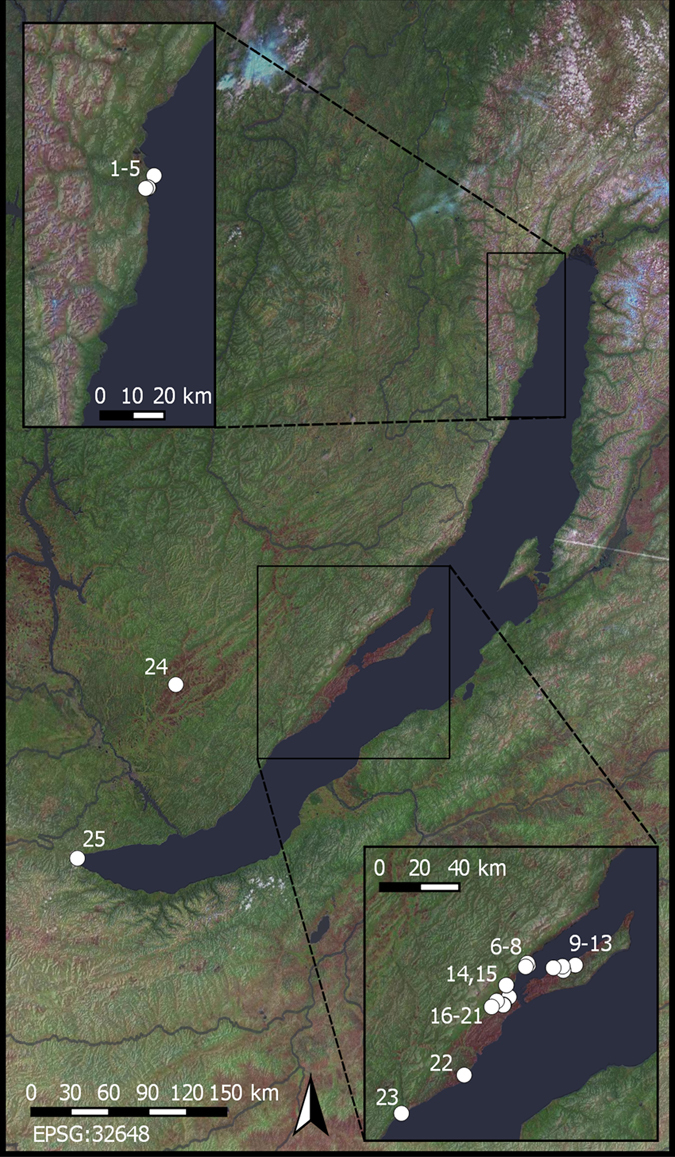
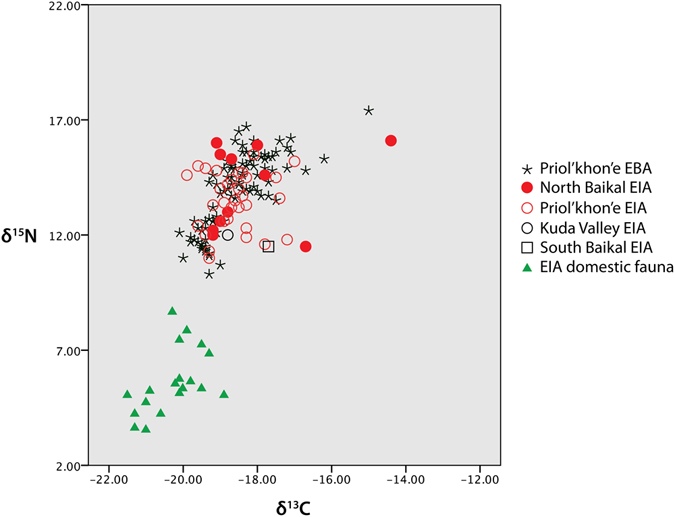
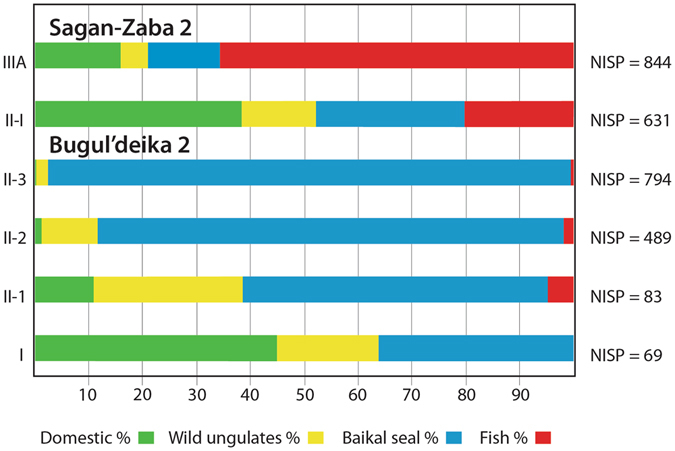
The spread of pastoralism in Asia is poorly understood, including how such processes affected northern forager populations. Lake Baikal’s western shore has a rich Holocene archaeological record that tracks these processes. The Early Bronze Age here is evidenced by numerous forager burials. The Early Iron Age (EIA) is thought to mark the arrival of pastoralists, but archaeological remains from this period have received little analysis. New radiocarbon dates for EIA human remains from 23 cemeteries indicate that no burials were created along this shore for ~900 years. This period, from ~3670 to 2760 cal. BP, spans from the end of the Early Bronze Age to the advent of the EIA. The burial gap may mark disruption of local foraging populations through incursions by non-local pastoralists. Radiocarbon dates on faunal remains indicate that domestic herd animals first appear around 3275 cal. BP, just prior to the first EIA human burials. Stable carbon and nitrogen isotope analysis of human remains and zooarchaeological data indicate that domestic fauna were minor dietary components for EIA people. Like preceding foragers, the EIA groups relied extensively on Baikal’s aquatic food sources, indicating that the scale of pastoralism during this period was relatively limited.
Overview
The claims and statistics of this paper haven’t been checked yet.
Run the check — free, no account needed. It reads the open-access text and checks the sources it cites.
Integrity signals
Registry
Cites
Statistics
Figures
Verification
Claims the paper makes
The claims and statistics of this paper haven’t been checked yet.
Run the check — free, no account needed. It reads the open-access text and checks the sources it cites.
Claims other papers make about this one
Each is checked against this paper’s own text: does it say what the citing paper says it does?
In the citing paper
“The genetic profile of PTO001 is consistent with an archaeologically described expansion of the Slab Grave culture into the Baikal region during EIA (Losey et al., 2017).”
From A Dynamic 6,000-Year Genetic History of Eurasia’s Eastern Steppe (2020) · cites this paper as Losey et al., 2017
Self-check
Percentages, sums and reported differences re-computed from the paper’s own numbers.
The self-check needs the paper’s full text.
Citations
Cites
Development and Application of the Trapezoidal Model for Archaeological Chronologies
Lee, S., & Ramsey, C. B. (2012) · Radiocarbon · doi:10.1017/s0033822200046786 · Cited by 97
Research works printed but not linked: 53
- Anthony, D. W. The Horse, the Wheel, and Language: How Bronze-Age Riders from the Eurasian Steppes Shaped the Modern World (Princeton University Press, 2007). · DOI
- Franchetti, M. Pastoralist Landscapes and Social Interaction in Bronze Age Eurasia (University of California Press, 2008). · DOI
- Hanks, B. Archaeology of the Eurasian Steppes and Mongolia. Annu. Rev. Anthropol. 39, 469–486 (2010). · DOI · Paper page
- Honeychurch, W. Inner Asia and the Spatial Politics of Empire: Archaeology, Mobility, and Culture Contact (Springer, 2015). · DOI
- Koryakova, L., Epimakhov, A. The Urals and Western Siberia in the Bronze and Iron Ages (Cambridge University Press, 2006). · DOI
- Di Cosmo, N. Ancient China and Its Enemies (Cambridge University Press, 2002). · DOI
- Grousset, R. The Empire of the Steppes: A History of Central Asia (Rutgers University Press, 2005). · DOI
- Khazanov, A. M. Nomads and the Outside World (Cambridge University Press, 1984).
- Losey, R. J., Nomokonova, T. & White, D. Fish and fishing in Holocene Cis-Baikal, Siberia: a review. J. Island Coastal Archaeol. 7, 126–145 (2012). · DOI
- Nomokonova, T. et al. People and Seals at Siberia’s Lake Baikal. J. Ethnobiol. 33, 259–280 (2013). · DOI
- Vanteeva, J. & Solodyankina, V. Ecosystem functions of steppe landscapes near Lake Baikal. Hacquetia 14, 65–78 (2015). · DOI
- Weber, A., Katzenberg, M., Schurr, T. (eds) Prehistoric Hunter-gatherers of the Baikal Region, Siberia (University of Pennsylvania Museum of Archaeology and Anthropology, University of Pennsylvania Press, 2010). · DOI
- Weber, A. & Bettinger, R. Middle Holocene hunter-gatherers of Cis-Baikal, Siberia: an overview for the new century. J. Anthropol. Archaeol. 29, 491–506 (2010). · DOI
- Katzenberg, M. A., McKenzie, H. G., Losey, R. J., Goriunova, O. I. & Weber, A. Prehistoric dietary adaptations among hunter-fisher-gatherers from the Little Sea of Lake Baikal, Siberia, Russian Federation. J. Archaeol. Sci. 39, 2612–2626 (2012). · DOI
- Weber, A. W. et al. Chronology of middle Holocene hunter–gatherers in the Cis-Baikal region of Siberia: Corrections based on examination of the freshwater reservoir effect. Quat. Int 419, 74–98 (2016). · DOI
- Weber, A. W., Schulting, R. J., Ramsey, C. B. & Bazaliiskii, V. I. Biogeochemical data from the Shamanka II Early Neolithic cemetery on southwest Baikal: Chronological and dietary patterns. Quat. Int 405, 233–254 (2016). · DOI
- Weber, A. W. et al. Hunter–gatherer foraging ranges, migrations, and travel in the middle Holocene Baikal region of Siberia: Insights from carbon and nitrogen stable isotope signatures. J. Anthropol. Archaeol. 30, 523–548 (2011). · DOI
- Nomokonova, T., Losey, R. J., Goriunova, O. I. & Weber, A. W. The chronology of the Sagan-Zaba II site and the Old Carbon Effect at Lake Baikal, Siberia. Quat. Int 290-1, 110–125 (2013). · DOI
- Schulting, R., Ramsey, C. B., Bazaliiskii, V. I., Goriunova, O. I. & Weber, A. Freshwater Reservoir Offsets Investigated through Paired Human-Faunal 14C Dating and Stable Carbon and Nitrogen Isotope Analysis at Lake Baikal, Siberia. Radiocarbon 56, 991–1008 (2014). · DOI
- Schulting, R. J., Ramsey, C. B., Bazaliiskii, V. I. & Weber, A. Highly Variable Freshwater Reservoir Offsets Found along the Upper Lena Watershed, Cis-Baikal, Southeast Siberia. Radiocarbon 57, 581–593 (2015). · DOI
- Kharinskii, A. V. Zapadnoe poberezh’e ozera Baikal v I tys. do n.e.- I tys. n.e. Izvestiia Laboratorii Drevnikh Tekhnologii 3, 198–215 (2005).
- Kharinskii, A. V. El’ginskie zakhoronenia Pribaikalia. Izvestia Laboratorii Drevnikh Technologii 3(12), 20–43 (2014).
- Nomokonova, T. & Goriunova, O. I. Kosti zhivotnykh v plitochnykh mogilakh Priol’khon’ia: po materialam pogrebeniia Sarma X. Drevnie Kul’tury Mongolii i Baikal’skoi Sibiri 4, 329–336 (2013).
- Turkin, G. V. Pogrebal’naia obriadnost’ naseleniia Predbaikal’ia v kontse II–I tys.do.n.e. (k voprosy ob etnokul’turnoi situatsii). Tsentral’naia Asiia i Pribaikal’e v drevnosti 2, 82–92 (2004).
- Losey, R. J., Nomokonova, T. & Savel’ev, N. A. Humans and animals at Bugul’deika II, a Trans-Holocene habitation site on the shore of Lake Baikal, Russia. Quat. Int. 419, 62–73 (2016). · DOI
- Nomokonova, T., Losey, R. J., Goriunova, O. I., Novikov, A. G. & Weber, A. W. A 9,000 Year History of Seal Hunting on Lake Baikal, Siberia: The Zooarchaeology of Sagan-Zaba II. PLOS ONE 10, e0128314 (2015). · DOI
- Bocherens, H. & Drucker, D. Trophic level isotopic enrichment of carbon and nitrogen in bone collagen: case studies from recent and ancient terrestrial ecosystems. Int. J. Osteoarchaeol. 13, 46–53 (2003). · DOI
- Schoeninger, M. J. & DeNiro, M. J. Nitrogen and carbon isotopic composition of bone collagen from marine and terrestrial animals. Geochim. Cosmochim. Acta 48, 625–639 (1984). · DOI
- O’Connell, T. C., Kneale, C. J., Tasevska, N. & Kuhnle, G. G. C. The Diet-Body Offset in Human Nitrogen Isotopic Values: A Controlled Dietary Study. Am. J. Phys. Anthropol. 149, 426–34 (2012). · DOI
- Yoshii, K. Stable isotope analyses of benthic organisms in Lake Baikal. Hydrobiologia 411, 145–159 (1999). · DOI
- Kiyashko, S. I., Richard, P., Chandler, T., Kozlova, T. A. & Williams, D. F. Stable carbon isotope ratios differentiate autotrophs supporting animal diversity in Lake Baikal. C. R. Biol. 321, 509–16 (1998).
- Katzenberg, M. A., Goriunova, O. I. & Weber, A. Paleodiet reconstruction of Early Bronze Age Siberians from the site of Khuzhir-Nuge XIV, Lake Baikal. J. Archaeol. Sci. 36, 663–74 (2009). · DOI
- Okladnikov, A. P. Neolit i Bronzovyi Vek Pribaikal’ia (Chast’ I i II). Materialy i Issledovaniia po Arkheologii SSSR, Vol. 18 (Izd-vo Akademii Nauk SSSR, 1950).
- Turkin, G. V. & Kharinskii, A. V. Mogil’nik Shamanka II: K voprosu o khronologii i kul’turnoi prinadlezhnosti pogrebal’nykh kompleksov neolita-bronzovogo veka na Iuzhnom Baikale. Izvestiia Laboratorii Drevnikh Tekhnologii 2, 124–58 (2004).
- Mackay, A. W. et al. Multiproxy evidence for abrupt climate change impacts on terrestrial and freshwater ecosystems in the Ol’khon region of Lake Baikal, central Asia. Quat. Int. 290–291, 46–56 (2013). · DOI
- Tarasov, P. et al. Vegetation and climate dynamics during the Holocene and Eemian interglacials derived from Lake Baikal pollen records. Palaeogeogr. Palaeoclimatol. Palaeoecolo. 252, 440–457 (2007). · DOI
- Lightfoot, E. et al. How ‘pastoral’ is pastoralism? Dietary diversity in Bronze Age communities in the central Kazakhstan steppes. Archaeometry 57, 232–249 (2015). · DOI
- Murphy, E. M. et al. Iron Age pastoral nomadism and agriculture in the eastern Eurasian steppe: implications from dental palaeopathology and stable carbon and nitrogen isotopes. J. Archaeol. Sci. 40, 2547–2560 (2013). · DOI
- O’Connell, T., Levine, M., Hedges, R. In Prehistoric Steppe Adaptation and the Horse, Levine, M., Renfrew, A., Boyle, K., editors, pp. 253–268 (McDonald Institute for Archaeological Research, 2003).
- Shishlina, N. I. et al. Paleoecology, Subsistence, and 14C Chronology of the Eurasian Caspian Steppe Bronze Age. Radiocarbon 51, 481–499 (2011). · DOI
- Svyatko, S. V. et al. Stable isotope dietary analysis of prehistoric populations from the Minusinsk Basin, Southern Siberia, Russia: a new chronological framework for the introduction of millet to the eastern Eurasian steppe. J. Archaeol. Sci. 40, 3936–3945 (2013). · DOI
- Ventresca Miller, A. et al. Subsistence and social change in central Eurasia: stable isotope analysis of populations spanning the Bronze Age transition. J. Archaeol. Sci. 42, 525–538 (2014). · DOI
- Laufer, B. The reindeer and its domestication. Memoirs Amer. Anthropol. Assoc. 4, 91–147 (1917).
- Okladnikov, A. P. The Soviet Far East in Antiquity: An Archaeological and Historical Study of the Maritime Region of the U.S.S.R. (University of Toronto Press, 1965).
- Sealy, J. Stable Carbon Isotopes and Prehistoric Diets in the South-western Cape Province, South Africa. Cambridge Monographs in African Archaeology 15, British Archaeology Report International Series 293 (1986). · DOI
- Sealy, J., Johnson, M., Richards, M. & Nehlich, O. Comparison of two methods of extracting bone collagen for stable carbon and nitrogen isotope analysis: comparing whole bone demineralization with gelatinization and ultrafiltration. J. Archaeol. Sci. 47, 64–69 (2014). · DOI
- Ambrose, S. H. Preparation and characterization of bone and tooth collagen for isotopic analysis. J. Archaeol. Sci. 17, 431–451 (1990). · DOI
- Deniro, M. J. Post mortem preservation and alteration of in vivo bone collagen isotope ratios in relation to paleodietary reconstruction. Nature 317, 806–809 (1985). · DOI
- DeNiro, M. J. & Weiner, S. Use of collagenase to purify collagen from prehistoric bones for stable isotopic analysis. Geochim. Cosmochim. Acta 52, 2425–2431 (1988). · DOI
- van Klinken, G. J. Bone Collagen Quality Indicators for Palaeodietary and Radiocarbon Measurements. J. Archaeol. Sci. 26, 687–695 (1999). · DOI
- Ramsey, C. B. Bayesian Analysis of Radiocarbon Dates. Radiocarbon 51, 337–360 (2009). · DOI · Paper page
- Reimer, P. J. et al. IntCal13 and Marine13 Radiocarbon Age Calibration Curves 0–50,000 Years cal BP. Radiocarbon 55, 1869–1887 (2013). · DOI · Paper page
- Waters-Rist, A. L., Losey, R. J., Nomokonova, T., Turkin, G. V. & Goriunova, O. I. Pervye dannye po analizam stabil’nykh isotopov pogrebenii posdnego golotsena v Pribaikal’e i ikh radiouglerodnoe datirovanie. Izvestiia IGU. Seriia Geoarkheologiia, Etnologiia, Antropologiia Vol. 18, 90–109 (2017).
Cited by
A Dynamic 6,000-Year Genetic History of Eurasia’s Eastern Steppe
Jeong, C., Wang, K., Wilkin, S., Taylor, W. T. T., Miller, B. K., Bemmann, J. H., Stahl, R., Chiovelli, C., Knolle, F., Ulziibayar, S., et al. (2020) · Cell · doi:10.1016/j.cell.2020.10.015 · Cited by 328
Metadata
- Authors
- Losey, R. J., Waters-Rist, A. L., Nomokonova, T., & Kharinskii, A. A.
- Venue
- Scientific Reports
- Published
- 2017-05-24
- Volume
- 7
- Issue
- 1
- ISSN
- 2045-2322
- PMC
- PMC5443801
- Cited by
- 12
- References
- 1
- Language
- en
About these checks
Registry, retraction, Cites and statistics results are computed, not judged, with one exception: a printed reference that no index lists is read once by a model before it counts as a citation error. Claims are extracted by a model and kept only when their quote appears verbatim in the text; each cited source is then checked, with a model’s help, for whether it says what the claim relies on. Those verdicts can be wrong — read the claim’s quote and the cited source before relying on one.
Statistics and arithmetic are recomputed, not judged.
Confidence bands are shown only for fields calibrated on our annotated test set. None is calibrated yet, so no band is shown.
What counts as a claim ›How we measure confidence ›How we check this ›
Are you an author, or do you see a problem with this page? Request a review
How to cite
Cite CoChat for the checks on this page, and the paper for its own findings.
- This page
- CoChat. (2026). Citation check: A Second Mortuary Hiatus on Lake Baikal in Siberia and the Arrival of Small-Scale Pastoralism. https://app.cochat.ai/papers/10.1038/s41598-017-02636-w
- The paper
- Losey, R. J., Waters-Rist, A. L., Nomokonova, T., & Kharinskii, A. A. (2017). A Second Mortuary Hiatus on Lake Baikal in Siberia and the Arrival of Small-Scale Pastoralism. Scientific Reports. https://doi.org/10.1038/s41598-017-02636-w
