

Using bamboo biochar with compost for the stabilization and phytotoxicity reduction of heavy metals in mine-contaminated soils of China
Open accessThe DOI matches its Crossref record; 46 of the 46 references it cites were found in a registry or an index; none of the 11 sources its claims cite is checked for support yet.
Abstract
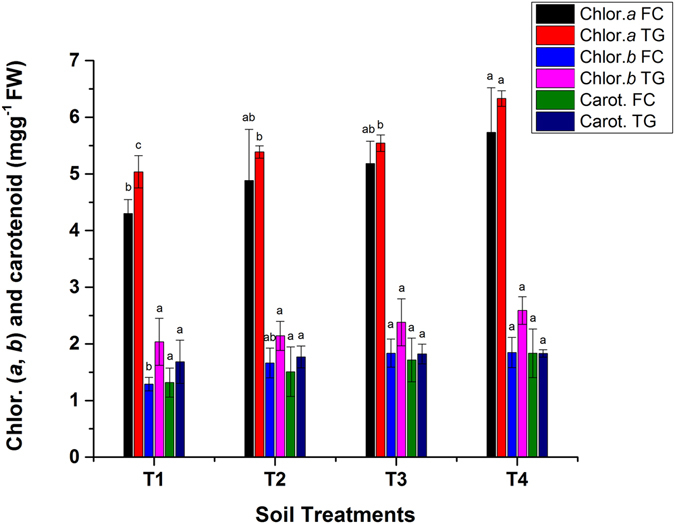
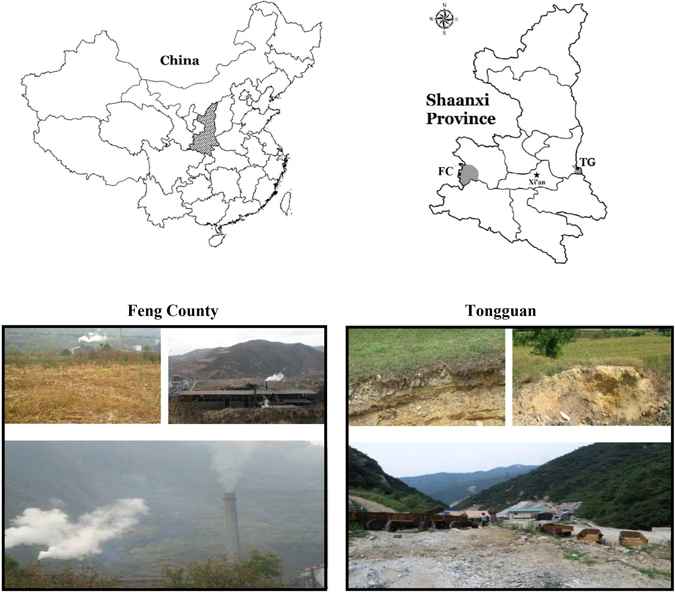
Anthropogenic activities have transformed the global geochemical cycling of heavy metals (HMs). Many physical, chemical and biological methods are used to reduce the toxicity of HMs to humans, plants and environment. This study aimed to investigate the immobilization and phytotoxicity reduction of HMs after application of bamboo biochar (BB) in mine-polluted soil in Feng county (FC) and Tongguan (TG). The results showed that BB application to contaminated soil immobilized HMs (Zn, Pb, Cd and Cu). The soil pH and EC increased and the bioavailability of HMs decreased in FC and TG, whereas Pb and Cu increased in TG soil. The addition of BB reduced HMs uptake in the shoot/root of Brassica juncea. Physiological responses showed that BB application improved the shoot/root growth, dry biomass, and enhanced the chlorophyll (a and b) and carotenoid concentrations in Brassica. The incorporation of BB improved the soil health and accelerated enzymatic activities (β-glucosidase, alkaline phosphatase and urease) in HMs polluted soils. Antioxidant activities (POD, PPO, CAT and SOD) were also used as biomarkers to determine the negative effects of HMs on the growth of Brassica. Overall, the immobilization potential and phytotoxicity reduction of HMs were confirmed by BCF, TF and MEA for both soils.
Overview
CoChat Summary
## TL;DR
This pot experiment found that adding bamboo biochar to mine-contaminated soils in China increased soil pH and reduced the bioavailable and plant-translocated fractions of heavy metals, thereby lowering phytotoxicity in *Brassica juncea*. Effects were stronger in Tongguan than in Feng County, and at the highest biochar rate (5%) some metals in Feng County were not fully stabilized, with Pb and Cu bioavailability increasing.
## Key findings
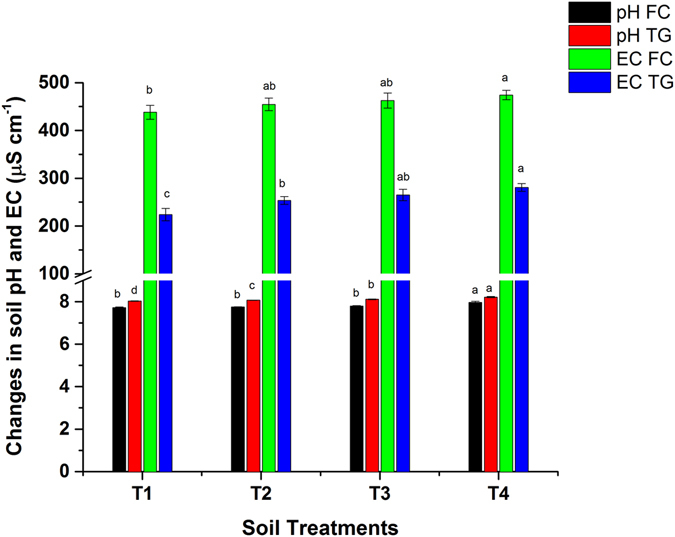
- In Feng County (FC) soil, 5% bamboo biochar increased soil pH from 7.72 to 7.96 and EC from 438.25 to 474.33 µS cm⁻¹; in Tongguan (TG) soil, pH rose from 8.03 to 8.21 and EC from 224 to 280.67 µS cm⁻¹.
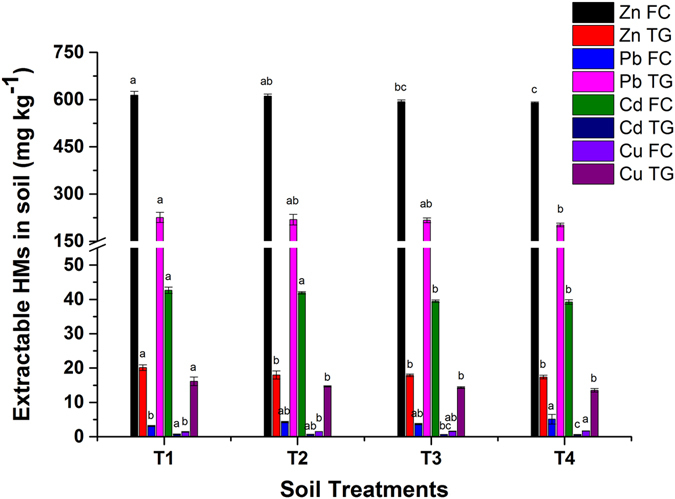
- DTPA-extractable heavy metals decreased with biochar in TG soil by 14% (Zn), 11% (Pb), 23% (Cd), and 16% (Cu), while in FC soil Zn and Cd decreased by 4% and 8% but Pb and Cu increased by 65% and 17% at 5% biochar.
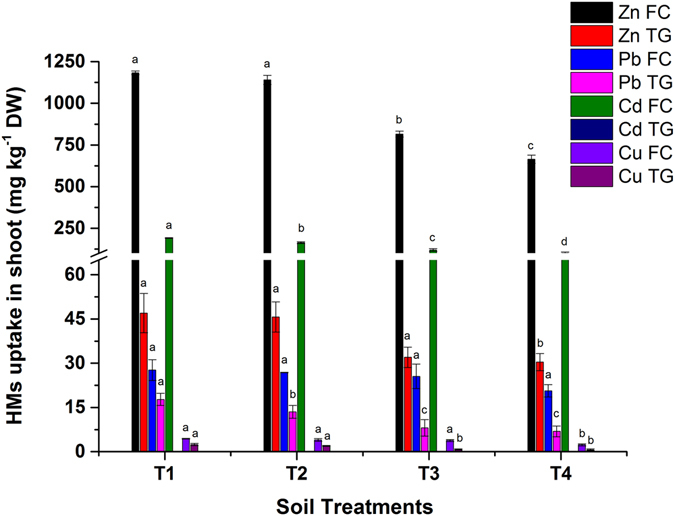
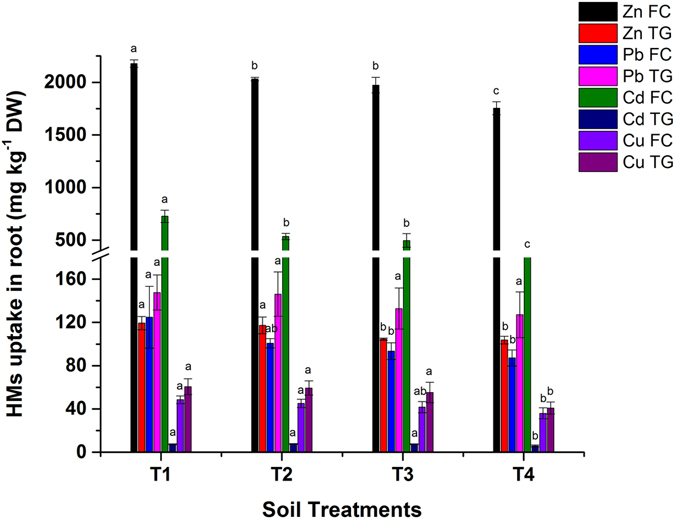
- Metal uptake into *Brassica juncea* shoots was reduced; at 5% biochar, shoot concentrations fell in FC by 44% (Zn), 25% (Pb), 48% (Cd), and 47% (Cu), and in TG by 35% (Zn), 61% (Pb), and 72% (Cu), with Cd in TG below detection limit.
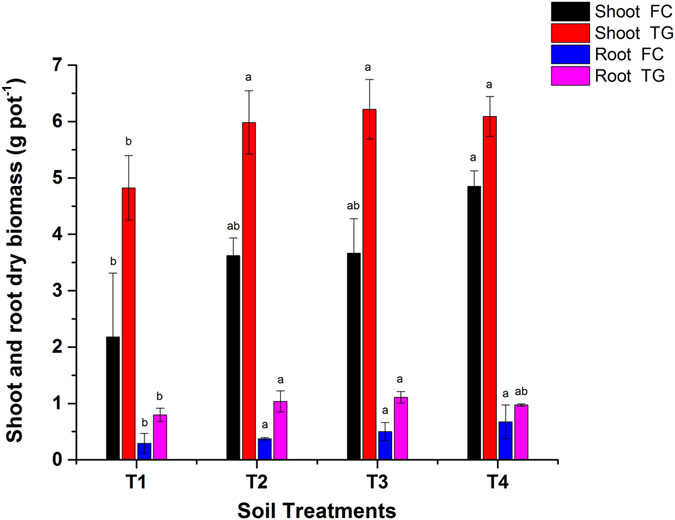
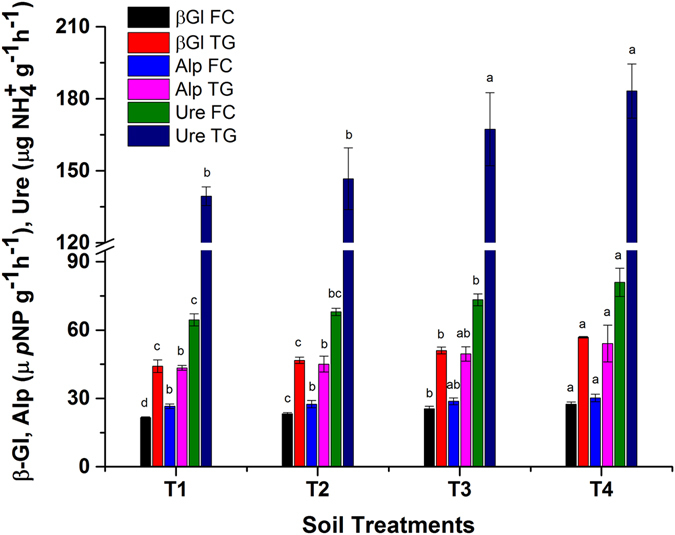
- Plant growth and soil function improved: shoot dry biomass increased by 123% and root dry biomass by 131% in FC at 5% biochar; in TG, 2.5% biochar increased shoot and root biomass by 29% and 39%, respectively. Biochar also increased β-glucosidase, phosphatase, and urease activities by 27.31 and 29%, 14 and 25%, and 26 and 31.44% in FC and TG soil, respectively.
## Methods
- Pot experiment in a complete randomized design using two contaminated soils from Feng County (smelter) and Tongguan (mine) in Shaanxi, China; four treatments per soil: control, 1.0% BB, 2.5% BB, and 5.0% BB, each with 2.5% medical-stone compost (MSC).
- *Brassica juncea* (ShaanYou 16) was grown in triplicate pots for 7 weeks; shoot/root biomass, chlorophyll and carotenoid contents, soil pH/EC, total and DTPA-extractable heavy metals, soil enzymes, and plant antioxidant enzymes were measured.
- Main analyses included one-way ANOVA (p < 0.05) and phytoextraction indices: bio-concentration factor (BCF), translocation factor (TF), metal extraction amount (MEA), and immobilization percentage (IM).
## Limitations
- The paper states that remediation is influenced by “the presence of a variety of HMs and soil conditions,” and that higher HMs in FC limited stabilization efficiency; this indicates treatment performance varied by site and contamination severity.
- The text also notes that the higher 5% BB dose in TG “limited the shoot and root biomass,” and that Pb and Cu bioavailability increased in FC at 5% BB, suggesting the amendment is not uniformly beneficial across metals, sites, and application rates.
- Evident from the study design: it is a short-term pot experiment under shelter-house conditions with a single plant species and 7-week growth period, so field-scale and long-term outcomes are not directly tested.
Model-written summary. Check it against the paper before relying on it.
Integrity signals
Registry
Cites
Statistics
Figures
Verification
Claims the paper makes
0 Valid · 0 Not valid · 6 Not checked · 43 Own results and interpretations
A result the paper reports from its own data — it cites no other source for it, so there is none to check. The quote shows it is in the paper.
In the paper
“Maximum of 123 and 131% increases in the shoot and root dry biomass of FC were reported in T4 (5% BB).”
plainstates a cause- Asserted: passes — The authors put it forward as true.
- Checkable: passes — It can be checked against evidence.
- Load-bearing: passes — The paper’s conclusions depend on it.
- Based: passes — The paper gives a reason why it holds.
A result the paper reports from its own data — it cites no other source for it, so there is none to check. The quote shows it is in the paper.
In the paper
“The application of BB to FC and TG contaminated soil significantly ( p < 0.05) increased the shoot and root dry biomass of Brassica compared to their respective controls (Fig. 5 ).”
plainstates a cause- Asserted: passes — The authors put it forward as true.
- Checkable: passes — It can be checked against evidence.
- Load-bearing: passes — The paper’s conclusions depend on it.
- Based: passes — The paper gives a reason why it holds.
A result the paper states — it cites no source for it, so there is none to check. The quote shows it is in the paper.
In the paper
“The significant ( p < 0.05) reduction in the bioavailable concentration of HMs in soil resulted in low translocation in the shoot of Brassica grown in FC and TG soil.”
plainstates a cause- Asserted: passes — The authors put it forward as true.
- Checkable: passes — It can be checked against evidence.
- Load-bearing: passes — The paper’s conclusions depend on it.
- Based: passes — The paper gives a reason why it holds.
A result the paper reports from its own data — it cites no other source for it, so there is none to check. The quote shows it is in the paper.
In the paper
“Similarly, DTPA-extractable HMs decreased in the following order in TG soil: Cd (23%) > Cu (16%) > Zn (14%) > Pb (11%).”
plainstates a cause- Asserted: passes — The authors put it forward as true.
- Checkable: passes — It can be checked against evidence.
- Load-bearing: unclear — It is unclear whether the paper’s conclusions depend on it.
- Based: passes — The paper gives a reason why it holds.
A result the paper reports from its own data — it cites no other source for it, so there is none to check. The quote shows it is in the paper.
In the paper
“The data revealed that the BCF of HMs (Zn, Pb, Cd and Cu) decreased in biochar-treated pots of FC and TG soil (except Cd) compared to untreated control pots.”
plainstates a cause- Asserted: passes — The authors put it forward as true.
- Checkable: passes — It can be checked against evidence.
- Load-bearing: passes — The paper’s conclusions depend on it.
- Based: passes — The paper gives a reason why it holds.
6 more claims
Create a free account to see all 49 claims and to verify the 11 references still open.
- It may state two separate claims as one. 29
- The quote only partly states this claim. 1
- Probably not a substantial claim. 10
Self-check
Percentages, sums and reported differences re-computed from the paper’s own numbers.
Each contradiction between two passages listed here was confirmed by an independent check.
Rated minor: it would not touch a result — a value no result rests on, a p-value that stays on the same side of the significance level, or a conflict that is clerical, resolved elsewhere in the paper, or outside its own findings.
In the paper
“The highest mean values of soil pH and EC were reported in T5 (5% BB) pots”
“Four treatments for each soil were performed i.e. T1 (Control), T2 (1.0% BB), T3 (2.5% BB), and T4 (5.0% BB).”
Rated minor: it would not touch a result — a value no result rests on, a p-value that stays on the same side of the significance level, or a conflict that is clerical, resolved elsewhere in the paper, or outside its own findings.
In the paper
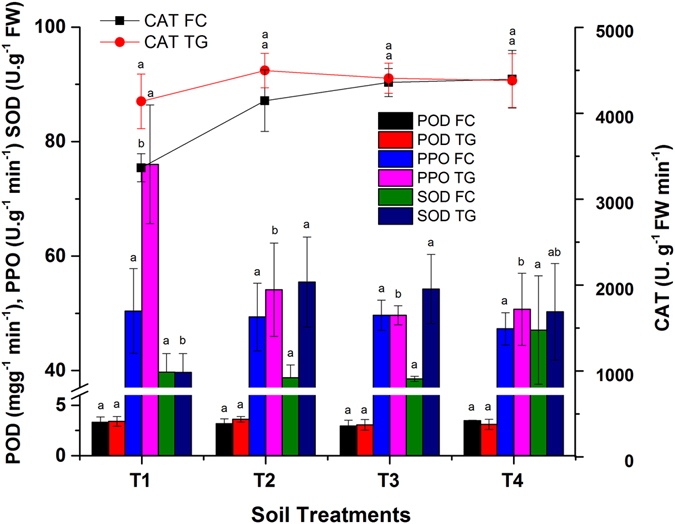
“Our findings indicated that BB enhanced the antioxidant (POD, PPO, CAT and SOD) capability”
“The application of bamboo biochar to FC and TG soil resulted a diminution of PPO activities in Brassica leaves compared to their respective controls.”
Rated minor: it would not touch a result — a value no result rests on, a p-value that stays on the same side of the significance level, or a conflict that is clerical, resolved elsewhere in the paper, or outside its own findings.
In the paper
“The availability of Zn, Pb, Cu and Cd decreased significantly ( p < 0.05) with BB amendments”
“the concentration of Pb and Cu increased by 65 and 17%, respectively in T4 (5% BB) in the case of FC soil.”
Citations
Cites
Biochar effects on soil biota – A review
Lehmann, J., Rillig, M. C., Thies, J., Masiello, C. A., Hockaday, W. C., & Crowley, D. (2011) · Soil Biology and Biochemistry · doi:10.1016/j.soilbio.2011.04.022 · Cited by 5,074
Biochar as a sorbent for contaminant management in soil and water: A review
Ahmad, M., Rajapaksha, A. U., Lim, J. E., Zhang, M., Bolan, N., Mohan, D., Vithanage, M., Lee, S. S., & Ok, Y. S. (2014) · Chemosphere · doi:10.1016/j.chemosphere.2013.10.071 · Cited by 4,662
Heavy metal removal from water/wastewater by nanosized metal oxides: A review
Hua, M., Zhang, S., Pan, B., Zhang, W., Lv, L., & Zhang, Q. (2012) · Journal of Hazardous Materials · doi:10.1016/j.jhazmat.2011.10.016 · Cited by 2,193
Shahid, M., Dumat, C., Khalid, S., Schreck, E., Xiong, T., & Niazi, N. K. (2017) · Journal of Hazardous Materials · doi:10.1016/j.jhazmat.2016.11.063 · Cited by 1,181
Houben, D., Evrard, L., & Sonnet, P. (2013) · Chemosphere · doi:10.1016/j.chemosphere.2013.03.055 · Cited by 726
Lu, K., Yang, X., Gielen, G., Bolan, N., Ok, Y. S., Niazi, N. K., Xu, S., Yuan, G., Chen, X., Zhang, X., et al. (2017) · Journal of Environmental Management · doi:10.1016/j.jenvman.2016.05.068 · Cited by 682
Actinobacteria: Current research and perspectives for bioremediation of pesticides and heavy metals
Alvarez, A., Saez, J. M., Davila Costa, J. S., Colin, V. L., Fuentes, M. S., Cuozzo, S. A., Benimeli, C. S., Polti, M. A., & Amoroso, M. J. (2017) · Chemosphere · doi:10.1016/j.chemosphere.2016.09.070 · Cited by 626
Yang, X., Liu, J., McGrouther, K., Huang, H., Lu, K., Guo, X., He, L., Lin, X., Che, L., Ye, Z., et al. (2016) · Environmental Science and Pollution Research · doi:10.1007/s11356-015-4233-0 · Cited by 569
Self-citationMobin, M., & Khan, N. A. (2007) · Journal of Plant Physiology · doi:10.1016/j.jplph.2006.03.003 · Cited by 513
Application of biochar on mine tailings: Effects and perspectives for land reclamation
Fellet, G., Marchiol, L., Delle Vedove, G., & Peressotti, A. (2011) · Chemosphere · doi:10.1016/j.chemosphere.2011.03.053 · Cited by 499
Cited by
Remediation techniques for heavy metal-contaminated soils: principles and applicability
Liu, L., Li, W., Song, W., & Guo, M. (2018) · Science of The Total Environment · doi:10.1016/j.scitotenv.2018.03.161 · Cited by 1,828
Toxicity of cadmium and its competition with mineral nutrients for uptake by plants: A review
QIN, S., LIU, H., NIE, Z., RENGEL, Z., GAO, W., LI, C., & ZHAO, P. (2020) · Pedosphere · doi:10.1016/s1002-0160(20)60002-9 · Cited by 423
A review on the application of clay minerals as heavy metal adsorbents for remediation purposes
Otunola, B. O., & Ololade, O. O. (2020) · Environmental Technology & Innovation · doi:10.1016/j.eti.2020.100692 · Cited by 418
Bandara, T., Franks, A., Xu, J., Bolan, N., Wang, H., & Tang, C. (2020) · Critical Reviews in Environmental Science and Technology · doi:10.1080/10643389.2019.1642832 · Cited by 289
“…mining, explosive and industrial sources, municipal waste, and power generation, discharge and accumulated PTEs into the soil environment (Ali et al., 2017; El-Naggar, Shaheen, et al., 2019; Igalavithana, Kim, et al., 2019; Liu, Xu, et al., 2018; Oh & Yoon, 2016; Wood, Tang, Franks, &…”
BackgroundReveal the response of enzyme activities to heavy metals through in situ zymography
Duan, C., Fang, L., Yang, C., Chen, W., Cui, Y., & Li, S. (2018) · Ecotoxicology and Environmental Safety · doi:10.1016/j.ecoenv.2018.03.015 · Cited by 252
Zulfiqar, U., Ayub, A., Hussain, S., Waraich, E. A., El-Esawi, M. A., Ishfaq, M., Ahmad, M., Ali, N., & Maqsood, M. F. (2022) · Journal of Soil Science and Plant Nutrition · doi:10.1007/s42729-021-00645-3 · Cited by 241
Biochar implications for sustainable agriculture and environment: A review
Semida, W. M., Beheiry, H. R., Sétamou, M., Simpson, C. R., Abd El-Mageed, T. A., Rady, M. M., & Nelson, S. D. (2019) · South African Journal of Botany · doi:10.1016/j.sajb.2019.11.015 · Cited by 234
Combining biochar and sewage sludge for immobilization of heavy metals in mining soils
Penido, E. S., Martins, G. C., Mendes, T. B. M., Melo, L. C. A., do Rosário Guimarães, I., & Guilherme, L. R. G. (2019) · Ecotoxicology and Environmental Safety · doi:10.1016/j.ecoenv.2019.01.110 · Cited by 216
LAHORI, A. H., GUO, Z., ZHANG, Z., LI, R., MAHAR, A., AWASTHI, M. K., SHEN, F., SIAL, T. A., KUMBHAR, F., WANG, P., et al. (2017) · Pedosphere · doi:10.1016/s1002-0160(17)60490-9 · Cited by 183
Self-citationRehman, Z. U., Junaid, M. F., Ijaz, N., Khalid, U., & Ijaz, Z. (2023) · The Science of The Total Environment · doi:10.1016/j.scitotenv.2023.161468 · Cited by 160
Ali, A., Shaheen, S. M., Guo, D., Li, Y., Xiao, R., Wahid, F., Azeem, M., Sohail, K., Zhang, T., Rinklebe, J., et al. (2020) · Environmental Pollution · doi:10.1016/j.envpol.2020.114773 · Cited by 133
Self-citationIbrahim, E. A.-A., El-Sherbini, M., & Selim, E.-M. M. (2022) · Scientia Horticulturae · doi:10.1016/j.scienta.2022.111097 · Cited by 137
Lahori, A. H., Zhang, Z., Guo, Z., Mahar, A., Li, R., Awasthi, M. K., Sial, T. A., Kumbhar, F., Wang, P., Shen, F. L., et al. (2017) · Ecotoxicology and Environmental Safety · doi:10.1016/j.ecoenv.2017.07.049 · Cited by 130
Self-citationAzeem, M., Ali, A., Jeyasundar, P. G. S. A., Li, Y., Abdelrahman, H. M., Latif, A., Li, R., Basta, N. T., Li, G., Shaheen, S. M., et al. (2021) · Environmental Pollution · doi:10.1016/j.envpol.2021.116800 · Cited by 126
Self-citationGhosh, D., & Maiti, S. K. (2020) · International Journal of Phytoremediation · doi:10.1080/15226514.2020.1840510 · Cited by 106
Guo, D., Ali, A., Ren, C., Du, J., Li, R., Lahori, A. H., Xiao, R., Zhang, Z., & Zhang, Z. (2019) · Ecotoxicology and Environmental Safety · doi:10.1016/j.ecoenv.2018.10.038 · Cited by 96
Self-citationSeleiman, M. F., & Kheir, A. M. S. (2018) · Chemosphere · doi:10.1016/j.chemosphere.2018.04.073 · Cited by 106
Wang, P., Shen, X., Qiu, S., Zhang, L., Ma, Y., & Liang, J. (2024) · Crystals · doi:10.3390/cryst14121046 · Cited by 139
Ali, A., Guo, D., Jeyasundar, P. G. S. A., Li, Y., Xiao, R., Du, J., Li, R., & Zhang, Z. (2019) · Ecotoxicology and Environmental Safety · doi:10.1016/j.ecoenv.2019.109635 · Cited by 102
Self-citationAwad, M. Y. M., Liu, Z., Skalický, M., Dessoky, E. S., Brestič, M., Mbarki, S., Rastogi, A., & Sabagh, A. E. (2021) · Biomolecules · doi:10.3390/biom11030448 · Cited by 103
Azeez, L. A., Adejumo, A. L., Lateef, A., Adebisi, S. A., Adetoro, R. O., Adewuyi, S. O., Tijani, K. O., & Olaoye, S. (2019) · Plant Physiology and Biochemistry · doi:10.1016/j.plaphy.2019.03.030 · Cited by 94
Qiu, Z., Tang, J., Chen, J., & Zhang, Q. (2019) · Environmental Pollution · doi:10.1016/j.envpol.2019.113436 · Cited by 94
Alam, M. Z., McGee, R. J., Hoque, M. A., Ahammed, G. J., & Carpenter‐Boggs, L. (2019) · Frontiers in Physiology · doi:10.3389/fphys.2019.00193 · Cited by 88
El‐Naggar, A., Chen, Z., Jiang, W., Cai, Y., & Chang, S. X. (2022) · Chemical Engineering Journal · doi:10.1016/j.cej.2022.136225 · Cited by 91
Visconti, D., Álvarez-Robles, M. J., Fiorentino, N., Fagnano, M., & Clemente, R. (2020) · Chemosphere · doi:10.1016/j.chemosphere.2020.127661 · Cited by 92
Azeem, M., Ali, A., Jeyasundar, P. G. S. A., Bashir, S., Hussain, Q., Wahid, F., Ali, E. F., Abdelrahman, H. M., Li, R., Antoniadis, V., et al. (2021) · Chemosphere · doi:10.1016/j.chemosphere.2021.131016 · Cited by 83
Self-citationDuan, C., Razavi, B. S., Shen, G., Cui, Y., Ju, W., Li, S., & Fang, L. (2019) · Soil Biology and Biochemistry · doi:10.1016/j.soilbio.2019.107574 · Cited by 79
El-Banna, M. F., Mosa, A., Gao, B., Yin, X., Ahmad, Z., & Wang, H. (2018) · Chemosphere · doi:10.1016/j.chemosphere.2018.06.052 · Cited by 73
Lahori, A. H., Zhang, Z., Guo, Z., Li, R., Mahar, A., Awasthi, M. K., Wang, P., Shen, F. L., Kumbhar, F., Sial, T. A., et al. (2017) · Ecotoxicology and Environmental Safety · doi:10.1016/j.ecoenv.2017.07.071 · Cited by 73
Self-citationWang, X., Cui, Y., Zhang, X., Ju, W., Duan, C., Wang, Y., & Fang, L. (2020) · The Science of The Total Environment · doi:10.1016/j.scitotenv.2020.139709 · Cited by 74
Can biochar reclaim coal mine spoil?
Ghosh, D., & Maiti, S. K. (2020) · Journal of Environmental Management · doi:10.1016/j.jenvman.2020.111097 · Cited by 67
Bogusz, A., & Oleszczuk, P. (2019) · Chemosphere · doi:10.1016/j.chemosphere.2019.124719 · Cited by 70
Taraqqi-A-Kamal, A., Atkinson, C. J., Khan, A., Zhang, K., Sun, P., Akther, S., & Zhang, Y. (2021) · Plant Soil and Environment · doi:10.17221/544/2020-pse · Cited by 65
Self-citationSoil health and crop response of biochar: an updated analysis
Mousavi, S. M., Srivastava, A. K., & Cheraghi, M. (2023) · Archives of Agronomy and Soil Science · doi:10.1080/03650340.2022.2054998 · Cited by 58
Sequential extraction of nickel and zinc in sewage sludge- or biochar/sewage sludge-amended soil
Bogusz, A., & Oleszczuk, P. (2018) · The Science of The Total Environment · doi:10.1016/j.scitotenv.2018.04.072 · Cited by 63
Evaluation methods of heavy metal pollution in soils based on enzyme activities: A review
Cui, Y., Wang, X., Wang, X., Zhang, X., & Fang, L. (2021) · Soil Ecology Letters · doi:10.1007/s42832-021-0096-0 · Cited by 57
Zulfiqar, F., Chen, J., Younis, A., Abideen, Z., Naveed, M., Koyro, H., & Siddique, K. H. M. (2021) · Frontiers in Plant Science · doi:10.3389/fpls.2021.707061 · Cited by 59
Natural Farming Improves Soil Quality and Alters Microbial Diversity in a Cabbage Field in Japan
Liao, J., Xu, Q., Xu, H.-L., & Huang, D. (2019) · Sustainability · doi:10.3390/su11113131 · Cited by 71
Hsu, C.-J., Cheng, Y.-H., Huang, Y., Atkinson, J. D., & Hsi, H. (2021) · The Science of The Total Environment · doi:10.1016/j.scitotenv.2021.147240 · Cited by 52
Mohamed, I., Ali, M. I. E. B., Ahmed, N., Abbas, M., Abdelsalam, M., Azab, A., Raleve, D., & Chen, F. (2018) · Ecotoxicology and Environmental Safety · doi:10.1016/j.ecoenv.2018.06.065 · Cited by 53
How temperature affects biochar properties for application in coal mine spoils? A meta-analysis
Roshan, A., Ghosh, D., & Maiti, S. K. (2023) · Carbon Research · doi:10.1007/s44246-022-00033-1 · Cited by 61
Zhong, Y., Igalavithana, A. D., Zhang, M., Li, X., Rinklebe, J., Hou, D., Tack, F. M. G., Alessi, D. S., Tsang, D. C. W., & Ok, Y. S. (2020) · Environmental Science: Processes & Impacts · doi:10.1039/d0em00057d · Cited by 46
Ma, W., Sun, T., Xu, Y., Zheng, S., & Sun, Y. (2021) · Environmental Pollution · doi:10.1016/j.envpol.2021.118327 · Cited by 49
Kracmarova, M., Alexova, E., Kodatova, A., Mercl, F., Száková, J., Tlustoš, P., Demnerová, K., & Stiborová, H. (2024) · Environmental Microbiome · doi:10.1186/s40793-024-00631-z · Cited by 61
Soil Enzyme Activities and Enzyme Activity Indices in Long-Term Arsenic-Contaminated Soils
Nurzhan, A., Tian, H., Nuralykyzy, B., & He, W. (2022) · Eurasian Soil Science · doi:10.1134/s106422932210012x · Cited by 42
Rashid, M., Liu, G., Yousaf, B., Hamid, Y., Rehman, A., Arif, M., Ahmed, R., Ashraf, A., & Song, Y. F. (2022) · Environmental Pollution · doi:10.1016/j.envpol.2022.120335 · Cited by 42
Sial, T. A., Lan, Z., Wang, L., Zhao, Y., Zhang, J., Kumbhar, F., Memon, M., Lashari, M. S., & Shah, A. N. (2019) · Molecules · doi:10.3390/molecules24091798 · Cited by 46
Sial, T. A., Liu, J., Zhao, Y., Khan, M. N., Lan, Z., Zhang, J., Kumbhar, F., Akhtar, K., & Rajpar, İ. (2019) · Molecules · doi:10.3390/molecules24030423 · Cited by 47
Tangviroon, P., Noto, K., Igarashi, T., Kawashima, T., Ito, M., Satō, T., Mufalo, W., Chirwa, M., Nyambe, I. A., Nakata, H., et al. (2020) · Minerals · doi:10.3390/min10090763 · Cited by 44
An overview on bioremediation technologies for soil pollution in E-waste dismantling areas
Xiao, L., Wu, Y., & Tan, Z. (2022) · Journal of environmental chemical engineering · doi:10.1016/j.jece.2022.107839 · Cited by 43
Gorka, R., Kumar, R., Yadav, S., & Verma, A. (2022) · Chemosphere · doi:10.1016/j.chemosphere.2022.136475 · Cited by 42
Ahmad, H., & Li, J. (2021) · BMC Plant Biology · doi:10.1186/s12870-021-03018-1 · Cited by 46
Ibrahim, E. A.-A., El-Sherbini, M., & Selim, E.-M. M. (2023) · Scientific Reports · doi:10.1038/s41598-023-33712-z · Cited by 52
Du, J., Zhang, L., Ali, A., Li, R., Xiao, R., Guo, D., Liu, X., Zhang, Z., Ren, C., & Zhang, Z. (2019) · Process Safety and Environmental Protection · doi:10.1016/j.psep.2019.03.035 · Cited by 35
Self-citationInfluence of Organic Amendments on Soil Properties, Microflora and Plant Growth
Chaudhari, S., Upadhyay, A., & Kulshreshtha, S. (2021) · Sustainable agriculture reviews · doi:10.1007/978-3-030-73245-5_5 · Cited by 47
Awasthi, M. K., Wang, Q., Chen, H., Liu, T., Awasthi, S. K., Duan, Y., Varjani, S., Pandey, A., & Zhang, Z. (2019) · Journal of Soils and Sediments · doi:10.1007/s11368-019-02277-8 · Cited by 35
Self-citationSarker, P., Liu, X., Hata, N., Takeshita, H., Miyamura, H., & Maruo, M. (2023) · Environmental Research · doi:10.1016/j.envres.2023.115992 · Cited by 30
Li, S., Sun, X., Liu, Y., Li, S., Zhou, W., Ma, Q., & Zhang, J. (2020) · Environmental Science and Pollution Research · doi:10.1007/s11356-019-07533-5 · Cited by 35
Self-citationEl-Mageed, T. A. A., Abdurrahman, H. A., & El-Mageed, S. A. A. (2020) · Environmental Science and Pollution Research · doi:10.1007/s11356-020-08847-5 · Cited by 30
Wang, Q., Duan, C., Liang, H.-X., Ren, J.-W., Geng, Z., & Xu, C. (2022) · The Science of The Total Environment · doi:10.1016/j.scitotenv.2022.159033 · Cited by 31
Hagner, M., Uusitalo, M., Ruhanen, H., Heiskanen, J., Peltola, R., Tiilikkala, K., Hyvönen, J., Sarala, P., & Mäkitalo, K. (2021) · Environmental Science and Pollution Research · doi:10.1007/s11356-021-14865-8 · Cited by 41
Biochar-based fertilizer enhanced Cd immobilization and soil quality in soil-rice system
Lv, G., Yang, T., Chen, Y., Hou, H., Liu, X., Li, J., Wei, L., & Li, J.-H. (2021) · Ecological Engineering · doi:10.1016/j.ecoleng.2021.106396 · Cited by 26
Vuong, T. X., Stephen, J., Minh, T. B., Nguyen, T. T. T., Duong, H. T., & Pham, D. T. N. (2022) · Molecules · doi:10.3390/molecules27228044 · Cited by 32
The management of Cd in rice with biochar and selenium: effects, efficiency, and practices
Danso, O. P., Acheampong, A., Zhang, Z., Song, J., Wang, Z., Dai, J., Tang, Z., Yin, X., & Zhu, R. (2023) · Carbon Research · doi:10.1007/s44246-023-00073-1 · Cited by 32
Self-citationGhorbani, M., Konvalina, P., Neugschwandtner, R. W., Kopecký, M., Amirahmadi, E., Moudrý, J., & Menšík, L. (2022) · Plants · doi:10.3390/plants11111424 · Cited by 30
Mohamed, I., Ali, M. I. E. B., Ahmed, N., & Chen, F. (2019) · Environmental Science and Pollution Research · doi:10.1007/s11356-019-05501-7 · Cited by 28
Kalousek, P., Holátko, J., Schreiber, P., Pluháček, T., Lónová, K., Radziemska, M., Tarkowski, P., Vyhnánek, T., Hammerschmiedt, T., & Brtnický, M. (2024) · Chemical and Biological Technologies in Agriculture · doi:10.1186/s40538-024-00544-6 · Cited by 28
Sol-Magdaleno, M., Aguilar-Aguilar, J. I., Beltrán-Naturi, E., Valencia-Ordóñez, L. D., Díaz-González, A., Trejo-Flores, P. G., Camas-Flores, C., Pola, G. P., Sahito, Z. A., & Moscoso, M. G. (2025) · Discover Soil. · doi:10.1007/s44378-025-00054-3 · Cited by 28
Farias, C. P., Alves, G. S., de Oliveira, D. C., de Melo, E. I., & Azevedo, L. C. B. (2019) · Journal of Soils and Sediments · doi:10.1007/s11368-019-02414-3 · Cited by 25
Ghani, M. I., Ahanger, M. A., Sial, T. A., Haider, S., Siddiqui, J. A., Fan, R., Liu, Y., Ali, E. F., Kumar, M., Yang, X. Y., et al. (2024) · The Science of The Total Environment · doi:10.1016/j.scitotenv.2024.172632 · Cited by 22
RetractedGu, J., Yao, J., Jordán, G., Roha, B., Min, N., Li, H., & Lu, C. (2018) · Environmental Science and Pollution Research · doi:10.1007/s11356-018-2780-x · Cited by 20
Enmiendas orgánicas en la inmovilización de cadmio en suelos agrícolas contaminados: una revisión
Fernandez, J. N. H., Pérez-Sosa, L., Cabala, L. B., & Quispe, N. B. P. (2020) · Información tecnológica · doi:10.4067/s0718-07642020000400139 · Cited by 35
Li, Y., Ali, A., Jeyasundar, P. G. S. A., Azeem, M., Tabassum, A., Guo, D., Li, R., Mian, I. A., & Zhang, Z. (2021) · Chemosphere · doi:10.1016/j.chemosphere.2021.131454 · Cited by 21
Self-citationKabiri, P., Motaghian, H., & Hosseinpur, A. R. (2019) · Water Air & Soil Pollution · doi:10.1007/s11270-019-4316-5 · Cited by 20
Li, X., Wu, P., Delang, C. O., He, Q., & Zhang, F. (2021) · Environmental Science and Pollution Research · doi:10.1007/s11356-021-15601-y · Cited by 19
Ma, B., Wang, Z., Yuan, X., Cen, K., Li, J., Yang, N., & Zhu, X. (2020) · Environmental Science and Pollution Research · doi:10.1007/s11356-020-07782-9 · Cited by 18
Zuzolo, D., Sciarrillo, R., Postiglione, A., & Guarino, C. (2021) · Biotechnology Reports · doi:10.1016/j.btre.2021.e00657 · Cited by 19
Performance of bamboo biochar as partial cement replacement in mortar
Gunasekaran, P. K., & Chin, S. C. (2023) · Materials Today Proceedings · doi:10.1016/j.matpr.2023.06.322 · Cited by 26
Canal, S. B., Bozkurt, M. A., & Yılmaz, H. (2023) · Plant Soil and Environment · doi:10.17221/394/2023-pse · Cited by 19
El‐Naggar, A., Jiang, W., Tang, R., Cai, Y., & Chang, S. X. (2023) · Chemosphere · doi:10.1016/j.chemosphere.2023.140983 · Cited by 24
Heiskanen, J., Ruhanen, H., & Hagner, M. (2022) · Heliyon · doi:10.1016/j.heliyon.2022.e08838 · Cited by 23
Maize straw biochar can alleviate heavy metals stress in potato by improving soil health
Wang, H., Chen, S., Liu, H., Li, J., Zaman, Q. U., Sultan, K., Rehman, M., Jeridi, M., Siddiqui, S., Fahad, S., et al. (2023) · South African Journal of Botany · doi:10.1016/j.sajb.2023.09.024 · Cited by 18
Fan, X., Du, C., Zhou, L., Fang, Y. W., Zhang, G., Zou, H., Yu, G., & Wu, H. (2024) · Environmental Science and Pollution Research · doi:10.1007/s11356-024-32243-y · Cited by 14
Chen, F., Zhu, Y., Bi, Y., Yang, Y., Ma, J., & Peng, S. (2024) · Engineering · doi:10.1016/j.eng.2024.09.012 · Cited by 18
Mao, X., Duan, Y., & Wang, C. (2018) · Journal of Chemical & Engineering Data · doi:10.1021/acs.jced.8b00744 · Cited by 14
Sushkova, S., Minkina, T., Dudnikova, T., Barbashev, A., Mazarji, M., Chernikova, N., Lobzenko, I., Deryabkina, I. T., & Kızılkaya, R. (2021) · Environmental Geochemistry and Health · doi:10.1007/s10653-021-00899-x · Cited by 17
Wang, H., Chen, Q., Liu, R., Xia, H., & Zhang, Y. (2023) · Journal of Water Process Engineering · doi:10.1016/j.jwpe.2023.104170 · Cited by 13
Self-citationEmamverdian, A., Ghorbani, A., Pehlivan, N., Li, Y., Zargar, M., & Liu, G. (2024) · Environmental Technology & Innovation · doi:10.1016/j.eti.2024.103753 · Cited by 18
Mansoor, S., Manzoor, S., Gull, R., Gani, G., Wani, O. A., Farooq, S., Popescu, S. M., Arya, V. M., Park, W.-P., & Chung, Y. S. (2025) · Journal of soil science and plant nutrition · doi:10.1007/s42729-025-02227-z · Cited by 15
Campos, P., Knicker, H., Núñez, R. L., & Arranz, J. M. D. L. R. (2021) · Agronomy · doi:10.3390/agronomy11071394 · Cited by 15
Boostani, H. R., Hardie, A. G., & Najafi‐Ghiri, M. (2023) · Chemistry and Ecology · doi:10.1080/02757540.2023.2206807 · Cited by 12
Cheema, A. I., Liu, G., Yousaf, B., Ashraf, A., Lu, M., Irshad, S., Pikoń, K., Munir, M. A. M., & Rashid, M. (2023) · Journal of Environmental Management · doi:10.1016/j.jenvman.2023.119018 · Cited by 11
Biochar assisted phytoremediation for metal(loid) contaminated soils
Lebrun, M., Nandillon, R., Miard, F., Bourgerie, S., & Morabito, D. (2021) · Elsevier eBooks · doi:10.1016/b978-0-12-822893-7.00010-0 · Cited by 17
Heiskanen, J., Hagner, M., Ruhanen, H., & Mäkitalo, K. (2020) · Environmental Earth Sciences · doi:10.1007/s12665-020-09154-5 · Cited by 15
Hongwei, W. A. N. G., Kaifeng, X. U., Longjun, D. O. N. G., & Sun, D. (2026) · Journal of environmental chemical engineering · doi:10.1016/j.jece.2026.121279 · Cited by 29
Biochar application on mine tailings from arid zones: Prospects for mine reclamation
Chávez-García, E., González-Méndez, B., & Molina‐Freaner, F. E. (2023) · Journal of Arid Environments · doi:10.1016/j.jaridenv.2023.105040 · Cited by 11
Osman, H. E., Fadhlallah, R. S., & El-Morsy, M. H. E. (2024) · Environmental Science and Pollution Research · doi:10.1007/s11356-024-34223-8 · Cited by 9
Hassan, M., Xu, H., Ghorbanpour, M., Yongfang, Y., Yang, B., Zhou, Q., Khan, T. A., & Guoqin, H. (2024) · The Science of The Total Environment · doi:10.1016/j.scitotenv.2024.177497 · Cited by 13
Du, J., Zhang, L., Song, S., Li, R., Xiao, R., Guo, D., Ali, A., Liu, X., Guan, W., & Zhang, Z. (2019) · Bioresource Technology · doi:10.1016/j.biortech.2019.122027 · Cited by 11
Self-citationNdour, P. M. S., Langrand, J., Fontaine, J., & Sahraoui, A. L. (2024) · Environmental Science and Pollution Research · doi:10.1007/s11356-024-35660-1 · Cited by 10
Metadata
- Authors
- Ali, A., Guo, D., Zhang, Y., Sun, X., Jiang, S., Guo, Z., Huang, H., Liang, W., Li, R., & Zhang, Z.
- Affiliations
- Northwest A&F University (CN)
- Anhui Agricultural University (CN)
- Corresponding author
- Zhang, Zengqiang
- Venue
- Scientific Reports
- Published
- 2017-06-02
- Volume
- 7
- Issue
- 1
- Pages
- 2690-2690
- ISSN
- 2045-2322 (ISSN-L)
- PMC
- PMC5457455
- OpenAlex
- W2618966469
- Cited by
- 136
- References
- 46
- Citations by year
- 2026: 7 · 2025: 7 · 2024: 14 · 2023: 20 · 2022: 13 · 2021: 27 · 2020: 16 · 2019: 19 · 2018: 9 · 2017: 4
- FWCI
- 5.91
- Type
- journal article
- Language
- en
- Open access
- gold
- doi.org
- Licence
- cc-by
- creativecommons.org/licenses/by/4.0 (tdm)
- creativecommons.org/licenses/by/4.0 (vor)
- Locations
- Scientific Reports (publishedVersion, cc-by)
- Europe PMC (PubMed Central) (publishedVersion, other-oa)
- PubMed Central (publishedVersion, cc-by)
- PubMed (publishedVersion)
- DOAJ (DOAJ: Directory of Open Access Journals) (submittedVersion, cc-by-sa)
- Funders
- China Scholarship Council
- Topics
- Physical Sciences › Environmental Science › Pollution › Heavy metals in environment
- Physical Sciences › Environmental Science › Water Science and Technology › Adsorption and biosorption for pollutant removal
- Physical Sciences › Environmental Science › Water Science and Technology › Environmental and Analytical Chemistry Studies
- Keywords
- bamboo biochar, mine-contaminated soil, heavy metal immobilization, phytotoxicity reduction, Brassica juncea, bioavailability, soil enzyme activity, antioxidant enzymes, zinc, lead, cadmium, copper, soil remediation
About these checks
Registry, retraction, Cites and statistics results are computed, not judged, with one exception: a printed reference that no index lists is read once by a model before it counts as a citation error. Claims are extracted by a model and kept only when their quote appears verbatim in the text; each cited source is then checked, with a model’s help, for whether it says what the claim relies on. Those verdicts can be wrong — read the claim’s quote and the cited source before relying on one.
A language model drew the claims from the paper on 2026-10-11, under version 3 of the claim definition (model deepseek-v4.1-flash, prompt extract-v3).
A second model labelled each claim on 2026-10-11 (model jev-1.13-20260917, definition revision gold-guideline-v0.2).
Statistics and arithmetic are recomputed, not judged.
Confidence bands are shown only for fields calibrated on our annotated test set. None is calibrated yet, so no band is shown.
What counts as a claim ›How we measure confidence ›How we check this ›
Are you an author, or do you see a problem with this page? Request a review
Data sources
Bibliographic data: Semantic Scholar, OpenAlex, Crossref.
Contains information from the Semantic Scholar Academic Graph Datasets, made available under the ODC Attribution License (ODC-BY 1.0).
Semantic Scholar’s data is described in: Kinney, R., et al. (2023). The Semantic Scholar Open Data Platform. arXiv:2301.10140.
