

Dengue virus activates cGAS through the release of mitochondrial DNA
Open accessThe DOI matches its Crossref record; 42 of the 42 references it cites were found in a registry or an index.
Abstract
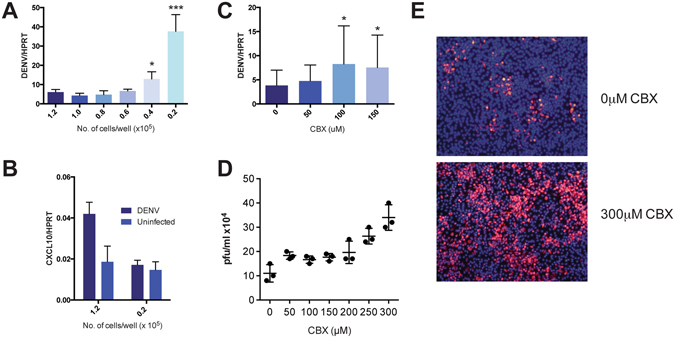
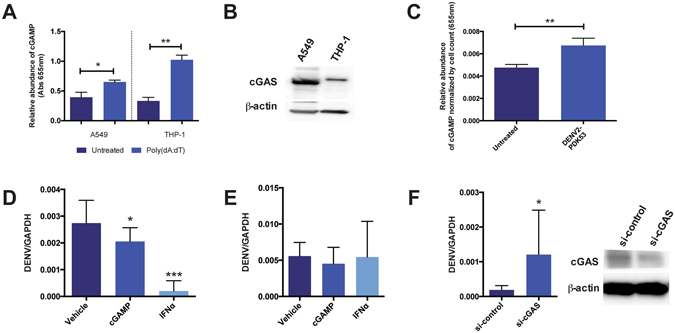
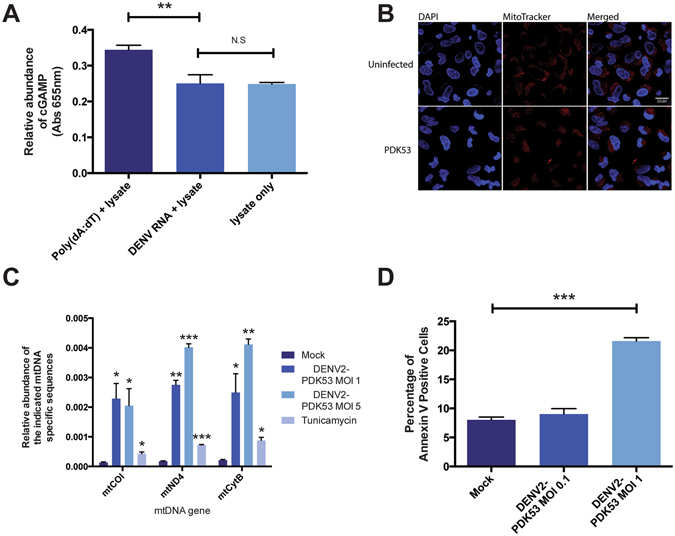
Cyclic GMP-AMP synthetase (cGAS) is a DNA-specific cytosolic sensor, which detects and initiates host defense responses against microbial DNA. It is thus curious that a recent study identified cGAS as playing important roles in inhibiting positive-sense single-stranded RNA (+ssRNA) viral infection, especially since RNA is not known to activate cGAS. Using a dengue virus serotype 2 (DENV-2) vaccine strain (PDK53), we show that infection creates an endogenous source of cytosolic DNA in infected cells through the release of mitochondrial DNA (mtDNA) to drive the production of cGAMP by cGAS. Innate immune responses triggered by cGAMP contribute to limiting the spread of DENV to adjacent uninfected cells through contact dependent gap junctions. Our result thus supports the notion that RNA virus indirectly activates a DNA-specific innate immune signaling pathway and highlights the breadth of the cGAS-induced antiviral response.
Overview
The claims and statistics of this paper haven’t been checked yet.
Free: it reads the open-access text and checks the first 5 claims that cite a source we can check. Create a free account to check every claim.
Integrity signals
Registry
Cites
Statistics
Figures
Verification
Claims the paper makes
The claims and statistics of this paper haven’t been checked yet.
Free: it reads the open-access text and checks the first 5 claims that cite a source we can check. Create a free account to check every claim.
Claims other papers make about this one
Each is checked against this paper’s own text: does it say what the citing paper says it does?
The source backs part of the claim, not all of it — or backs it for a different population, condition or comparison.
In the citing paper
“DNA damage promotes the production of cytosolic DNA, such as CCF, mtDNA, cDNA, micronuclei and nuclear buds.69, 70”
From Cellular senescence and senescence-associated secretory phenotype via the cGAS-STING signaling pathway in cancer (2020) · cites this paper as [70]
Experimental — accuracy not yet measuredIn the citing paper
“One study demonstrated that infecting human cells with the dengue virus (DENV-2), which has an RNA genome, resulted in increased mtDNA in the cytoplasm, which coincided with cGAS activation, thus providing a mechanism through which RNA viruses activate innate immune signaling (Sun et al., 2017).”
From Cytoplasmic DNA: sources, sensing, and role in aging and disease (2021) · cites this paper as Sun et al., 2017
Self-check
Percentages, sums and reported differences re-computed from the paper’s own numbers.
The self-check needs the paper’s full text.
Citations
Cites
Pattern Recognition Receptors and Inflammation
Takeuchi, O., & Akira, S. (2010) · Cell · doi:10.1016/j.cell.2010.01.022 · Cited by 8,895
Cyclic GMP-AMP Synthase Is a Cytosolic DNA Sensor That Activates the Type I Interferon Pathway
Sun, L., Wu, J., Du, F., Chen, X., & Chen, Z. J. (2013) · Science · doi:10.1126/science.1232458 · Cited by 4,996
Mitochondrial DNA stress primes the antiviral innate immune response
West, A. P., Khoury-Hanold, W., Staron, M., Tal, M. C., Pineda, C. M., Lang, S. M., Bestwick, M., Duguay, B. A., Raimundo, N., MacDuff, D. A., et al. (2015) · Nature · doi:10.1038/nature14156 · Cited by 1,975
Innate immune recognition of viral infection
Kawai, T., & Akira, S. (2006) · Nature Immunology · doi:10.1038/ni1303 · Cited by 1,899
Gao, P., Ascano, M., Wu, Y., Barchet, W., Gaffney, B. L., Zillinger, T., Serganov, A. A., Liu, Y., Jones, R. A., Hartmann, G., et al. (2013) · Cell · doi:10.1016/j.cell.2013.04.046 · Cited by 1,101
Distinct RIG-I and MDA5 Signaling by RNA Viruses in Innate Immunity
Loo, Y.-M., Fornek, J., Crochet, N., Bajwa, G., Perwitasari, O., Martinez-Sobrido, L., Akira, S., Gill, M. A., García-Sastre, A., Katze, M. G., et al. (2008) · Journal of Virology · doi:10.1128/jvi.01080-07 · Cited by 1,071
Cyclic GMP-AMP Synthase Is an Innate Immune Sensor of HIV and Other Retroviruses
Gao, D., Wu, J., Wu, Y.-T., Du, F., Aroh, C., Yan, N., Sun, L., & Chen, Z. J. (2013) · Science · doi:10.1126/science.1240933 · Cited by 992
The cGAS-cGAMP-STING Pathway of Cytosolic DNA Sensing and Signaling
Cai, X., Chiu, Y.-H., & Chen, Z. J. (2014) · Molecular Cell · doi:10.1016/j.molcel.2014.03.040 · Cited by 988
Apoptotic Caspases Suppress mtDNA-Induced STING-Mediated Type I IFN Production
White, M. J., McArthur, K., Metcalf, D., Lane, R. M., Cambier, J. C., Herold, M. J., van Delft, M. F., Bedoui, S., Lessene, G., Ritchie, M. E., et al. (2014) · Cell · doi:10.1016/j.cell.2014.11.036 · Cited by 983
Carcinoma–astrocyte gap junctions promote brain metastasis by cGAMP transfer
Chen, Q., Boire, A., Jin, X., Valiente, M., Er, E. E., Lopez-Soto, A., S. Jacob, L., Patwa, R., Shah, H., Xu, K., et al. (2016) · Nature · doi:10.1038/nature18268 · Cited by 969
Cited by
Items 101–200 of 225
Regulation of proteostasis and innate immunity via mitochondria-nuclear communication
Kim, S., Ramalho, T. R. D. O., & Haynes, C. M. (2024) · The Journal of Cell Biology · doi:10.1083/jcb.202310005 · Cited by 35
CMPK2 restricts Zika virus replication by inhibiting viral translation
Pawlak, J. B., Hsu, J. C.-C., Xia, H., Han, P., Suh, H., Grove, T. L., Morrison, J. M., Shi, P., Cresswell, P., & Laurent-Rolle, M. (2023) · PLoS Pathogens · doi:10.1371/journal.ppat.1011286 · Cited by 26
“Binding to the IFN-I receptors leads to the downstream activation of the JAK-STAT signaling pathway, which eventually results in protein expression of IFN-stimulated genes (ISGs), including CMPK2, leading to an antiviral state to curb viral replication and dissemination [9–11].”
BackgroundInfluentialLi, Z., Zhang, Y., Zhao, B. Y., Xue, Q., Wang, C., Wan, S., Wang, J., Chen, X., & Qi, X. (2024) · Veterinary Research · doi:10.1186/s13567-024-01284-z · Cited by 27
“There are several possible mechanisms by which mtDNA leaks into the cytosol to induce cGAS-STING signaling-mediated IFN responses [55, 56].”
BackgroundCytosolic Self-DNA—A Potential Source of Chronic Inflammation in Aging
Akbari, M., Shanley, D. P., Bohr, V. A., & Rasmussen, L. J. (2021) · Cells · doi:10.3390/cells10123544 · Cited by 27
Yan, Y., Wu, L., Yuan, Y., Wang, H., Yin, H., Li, M., Chai, L., Liang, R., Liu, Y., Zhao, D., et al. (2023) · PLoS Pathogens · doi:10.1371/journal.ppat.1011641 · Cited by 28
“Two groups reported that Dengue virus (DENV) infection resulted in the mtDNA release into the cytosol, which activates cGAS to restrict viral replication [15,16].”
BackgroundThe poxvirus F17 protein counteracts mitochondrially orchestrated antiviral responses
Meade, N., Toreev, H. K., Chakrabarty, R. P., Hesser, C. R., Park, C., Chandel, N. S., & Walsh, D. (2023) · Nature Communications · doi:10.1038/s41467-023-43635-y · Cited by 25
“Cell fractionation for analysis by Western Blot, conventional Polymerase Chain Reaction (PCR) or quantitative PCR (qPCR) was carried out as described previously, with minor modi fi cations 14,18,22 .”
InfluentialProteomic landscape of Japanese encephalitis virus-infected fibroblasts
Sharma, K. B., Chhabra, S., Aggarwal, S., Tripathi, A., Banerjee, A. K., Yadav, A. K., Vrati, S., & Kalia, M. (2021) · Journal of General Virology · doi:10.1099/jgv.0.001657 · Cited by 25
Innate Immune Antagonism of Mosquito-Borne Flaviviruses in Humans and Mosquitoes
Elrefaey, A. M. E., Hollinghurst, P., Reitmayer, C. M., Alphey, L., & Maringer, K. (2021) · Viruses · doi:10.3390/v13112116 · Cited by 27
Connors, J. R., Taramangalam, B., Cusimano, G. M., Bell, M. R., Matt, S. M., Runner, K., Gaskill, P. J., DeFilippis, V. R., Nikolich‐Žugich, J., Kutzler, M. A., et al. (2022) · GeroScience · doi:10.1007/s11357-022-00612-5 · Cited by 28
“STING-dependent autophagy responses are important for clearing DNA from the cytosol and for activating protective responses against viruses such as West Nile and dengue viruses [43].”
BackgroundCytosolic DNA Sensors and CNS Responses to Viral Pathogens
Jeffries, A. M., & Marriott, I. (2020) · Frontiers in Cellular and Infection Microbiology · doi:10.3389/fcimb.2020.576263 · Cited by 25
“Such transcription factor activation precipitates the expression of interferon-beta (IFN-β) and other antiviral and/or proinflammatory cytokines (Ishikawa et al., 2009; Li et al., 2013; Abe and Barber, 2014; Fang et al., 2017; Sun et al., 2017; Aarreberg et al., 2019).”
BackgroundInfluentialTransglutaminase 2 Regulates Innate Immunity by Modulating the STING/TBK1/IRF3 Axis
Occhigrossi, L., Rossin, F., D’Eletto, M., Farrace, M. G., Ciccosanti, F., Petrone, L., Sacchi, A., Nardacci, R., Falasca, L., Nonno, F. D., et al. (2021) · The Journal of Immunology · doi:10.4049/jimmunol.2001122 · Cited by 26
Kayesh, M. E. H., Kohara, M., & Tsukiyama–Kohara, K. (2021) · Frontiers in Microbiology · doi:10.3389/fmicb.2021.744233 · Cited by 25
Muccilli, S. G., Schwarz, B. H., Shue, B., Jessop, F., Shannon, J. G., Larson, C. L., Hage, A., Hong, S.-H., Bohrnsen, E., Hsu, T., et al. (2025) · PLoS Pathogens · doi:10.1371/journal.ppat.1012561 · Cited by 28
“Reduced STING expression did not affect IFN β following YFV-17D infection, but reduced IFN β production late in DENV2 infection, consistent with existing literature that mitochondrial DNA release late in DENV infection is sensed by cGAS/STING to contribute to induction of type I IFN [32].”
The Dengue virus protease NS2B3 cleaves cyclic GMP-AMP synthase to suppress cGAS activation
Bhattacharya, M., Bhowmik, D., Tian, Y., He, H., Zhu, F., & Yin, Q. (2023) · Journal of Biological Chemistry · doi:10.1016/j.jbc.2023.102986 · Cited by 21
“cGAS activation upon DENV infection may be indirect, through mitochondria damage and leakage of mitochondrial DNA into the cytoplasm (12, 13).”
BackgroundMechanism of Immune Evasion in Mosquito-Borne Diseases
Bhattacharjee, S., Ghosh, D., Saha, R., Sarkar, R., Kumar, S., Khokhar, M., & Pandey, R. K. (2023) · Pathogens · doi:10.3390/pathogens12050635 · Cited by 27
Chauhan, M., Osbron, C. A., Koehler, H. S., & Goodman, A. G. (2024) · Cell Death and Disease · doi:10.1038/s41419-024-06573-1 · Cited by 21
Immune response induced by novel coronavirus infection
Sun, Y., Zou, Y., Wang, H., Cui, G., Yu, Z., & Ren, Z. (2022) · Frontiers in Cellular and Infection Microbiology · doi:10.3389/fcimb.2022.988604 · Cited by 21
Huang, S., Yang, L., Zheng, R., Weng, S., He, J., & Xie, J. (2024) · Journal of Virology · doi:10.1128/jvi.00686-24 · Cited by 19
“Subsequently, Sun et al. demonstrated that mitochondrial DNA was released into the cytoplasm to activate the cGAS during DENV infection (28).”
BackgroundCellular Requirements for Sensing and Elimination of Incoming HSV-1 DNA and Capsids
Sun, C., Luecke, S., Bodda, C., Jønsson, K. L., Cai, Y., Zhang, B., Jensen, S. B., Nordentoft, I., Jensen, J. M., Jakobsen, M. R., et al. (2019) · Journal of Interferon & Cytokine Research · doi:10.1089/jir.2018.0141 · Cited by 22
The regulation of cGAS-STING signaling by RNA virus-derived components
Xie, F., & Zhu, Q. (2024) · Virology Journal · doi:10.1186/s12985-024-02359-1 · Cited by 24
“It is worth noting that the cGAS-STING signaling can also be regulated by other RNA virus components, such as influenza virus (IAV), encephalomyocarditis virus (EMCV), and lymphocytic choriomeningitis virus (LCMV) [73, 77–79].”
BackgroundNanoparticle-Based Strategies to Enhance the Efficacy of STING Activators in Cancer Immunotherapy
Qiao, Y., Wei, L., Su, Y., Tan, Q., Yang, X., & Li, S. (2025) · International Journal of Nanomedicine · doi:10.2147/ijn.s515893 · Cited by 22
cGAS Restricts PRRSV Replication by Sensing the mtDNA to Increase the cGAMP Activity
Liu, X., Li, L., Gao, F., Jiang, Y., Yuan, W., Li, G., Yu, L., Zhou, Y., Tong, G., & Zhao, K. (2022) · Frontiers in Immunology · doi:10.3389/fimmu.2022.887054 · Cited by 20
“Besides PRRSV, DENV was also restricted by cGAS with a similar method (19, 33, 34).”
Method[Mitochondrial DNA and cGAS-STING Innate Immune Signaling Pathway: Latest Research Progress].
Li, Y.-X., Cui, S.-F., Meng, W., Hu, H., & Wang, C. (2021) · 四川大学学报:医学版 · doi:10.12182/20210560501 · Cited by 22
The Many Ways to Deal with STING
Coderch, C., Arranz-Herrero, J., Nistal‐Villán, E., de Pascual‐Teresa, B., & Rius‐Rocabert, S. (2023) · International Journal of Molecular Sciences · doi:10.3390/ijms24109032 · Cited by 19
“Due to its main role as a fusion protein, the expression of the Spike under SARS-CoV-2 infection leads to the formation of multinucleated syncytial cells in which damaged nuclei produce micronuclei, which, in turn, are detected by cGAS [74,75].”
BackgroundThe molecular mechanism of dsDNA sensing through the cGAS-STING pathway
Shinde, O., & Li, P. (2024) · Advances in immunology · doi:10.1016/bs.ai.2024.02.003 · Cited by 25
Flaviviruses manipulate mitochondrial processes to evade the innate immune response
Boytz, R., Keita, K., Pawlak, J. B., & Laurent-Rolle, M. (2024) · npj Viruses · doi:10.1038/s44298-024-00057-x · Cited by 21
“For example, oxidatively-stressed mitochondria may release mtDNA, and DENV infection has been reported to increase cytoplasmic and extracellular mtDNA 30,54,61 . mtDNA, and DENV, activates antiviral cGAS-STING, and increased cGAMP and IFN production were also reported in these studies 30,54 .”
BackgroundChermahini, F. A., Arvejeh, P. M., Marincola, F. M., Ahmad, S., Naderian, R., Pajand, O., Eslami, M., Hasannia, M., & Sanami, S. (2025) · Virology Journal · doi:10.1186/s12985-025-02745-3 · Cited by 20
“Interestingly, DENV also exploits autophagy to degrade immune signaling proteins, such as STING, thereby dampening IFN responses and enhancing viral persistence [110].”
Self-DNA Sensing Fuels HIV-1-Associated Inflammation
Heil, M., & Brockmeyer, N. H. (2019) · Trends in Molecular Medicine · doi:10.1016/j.molmed.2019.06.004 · Cited by 17
Jeffries, A. M., Nitika, N., Truman, A. W., & Marriott, I. (2020) · Journal of NeuroVirology · doi:10.1007/s13365-020-00852-1 · Cited by 16
Mitochondria-dependent innate immunity: A potential therapeutic target in Flavivirus infection
Losarwar, S., Pancholi, B., Babu, R., & Garabadu, D. (2025) · International Immunopharmacology · doi:10.1016/j.intimp.2025.114551 · Cited by 17
Immunology of SARS-CoV-2 infections and vaccines
Schenten, D., & Bhattacharya, D. (2021) · Advances in immunology · doi:10.1016/bs.ai.2021.08.002 · Cited by 15
Regulation of Host Innate Immunity by Non-Coding RNAs During Dengue Virus Infection
Rajput, R., Sharma, J., Nair, M. T., Khanna, M., Arora, P., & Sood, V. (2020) · Frontiers in Cellular and Infection Microbiology · doi:10.3389/fcimb.2020.588168 · Cited by 19
“Under in vitro conditions, the presence of mtDNA has been shown to stimulate November 2020 | Volume 10 | Article 588168 another endosomal PRR, the TLR9, which enables identification of DNA harboring non-methylated CpG motifs in human DCs (Lai et al., 2018).”
BackgroundNeuroimmune Evasion of Zika Virus to Facilitate Viral Pathogenesis
Xie, X., & Zeng, J. (2021) · Frontiers in Cellular and Infection Microbiology · doi:10.3389/fcimb.2021.662447 · Cited by 16
“Human neural stem cells and iPSC-derived neural organoids are known to be vulnerable to ZIKV infection (Garcez et al., 2016; Qian et al., 2016; Tang et al., 2016).”
BackgroundSanz, M. Á., Polo, M., Rodríguez‐Pulido, M., Ranjitha, H. B., & Sáiz, M. (2024) · Cellular and Molecular Life Sciences · doi:10.1007/s00018-024-05190-7 · Cited by 14
“Though requiring further research, these results point in the same direction as those obtained with dengue or influenza viruses [28, 46] suggesting that the blockade of gap junctions may prevent the intercellular transmission of cGAMP and consequently favouring viral spread.”
MethodResultPutative role of mitochondria in SARS-CoV-2 mediated brain dysfunctions: a prospect
Maurya, S. K., Baghel, M. S., Gaurav, G., Chaudhary, V., Kaushik, A. K., & Gautam, A. (2022) · Biotechnology and Genetic Engineering Reviews · doi:10.1080/02648725.2022.2108998 · Cited by 14
“Similarly, dengue RNA virus infection induces the release of oxidized mtDNA into the cytosol, subsequently activating the cGAS-STING pathway (Collins et al., 2004; Schoggins et al., 2014; Sun et al., 2017).”
The cGAS-STING pathway in COPD: targeting its role and therapeutic potential
Liao, K., Wang, F., Xia, C., Xu, Z., Zhong, S., Bi, W., & Ruan, J. (2024) · Respiratory Research · doi:10.1186/s12931-024-02915-x · Cited by 16
“Therefore, theoretically, self DNA from mitochondria or nuclei can also act as a cGAS ligand, activating the cGAS-STING pathway and triggering inflammatory responses [58].”
BackgroundThe STING pathway: An uncharacterized angle beneath the gut–retina axis
Qin, X., Zou, H., & Niu, C. (2022) · Experimental Eye Research · doi:10.1016/j.exer.2022.108970 · Cited by 14
Mitochondrial DNA in innate immune responses against infectious diseases
Das, P., & Chakrabarti, O. (2020) · Biochemical Society Transactions · doi:10.1042/bst20200687 · Cited by 12
Multifaceted activation of STING axis upon Nipah and measles virus-induced syncytia formation
Amurri, L., Dumont, C., Pélissier, R., Reynard, O., Mathieu, C., Spanier, J., Pályi, B., Déri, D., Karkowski, L., González, C., et al. (2024) · PLoS Pathogens · doi:10.1371/journal.ppat.1012569 · Cited by 14
“It has been demonstrated that other RNA viruses, such as Dengue virus, trigger STING activation through mitochondrial damage induction [46], or through the generation of syncytia, as observed in SARS-CoV-2 infection [50], but no connection between syncytia formation and mitochondrial damage was…”
BackgroundRegulation of Tripartite Motif-Containing Proteins on Immune Response and Viral Evasion
Zhang, X., Li, F., & Wang, X. (2021) · Frontiers in Microbiology · doi:10.3389/fmicb.2021.794882 · Cited by 19
A fast-growing dengue virus mutant reveals a dual role of STING in response to infection
Ng, W. C., Kwek, S. S., Sun, B., Yousefi, M., Ong, E. Z., Tan, H. C., Puschnik, A. S., Chan, K. R., Ooi, Y. S., & Ooi, E. E. (2022) · Open Biology · doi:10.1098/rsob.220227 · Cited by 12
“Although the DENV genome is composed of RNA, the DNA-sensing cGAS/STING pathway is activated upon DENV infection likely through the release of mitochondrial DNA into the cytoplasm [42].”
BackgroundSelf-citationSenotherapeutics: An emerging approach to the treatment of viral infectious diseases in the elderly
Li, Z., Tian, M., Wang, G., Cui, X., Ma, J., Liu, S., Shen, B., Liu, F., Wu, K., Xiao, X., et al. (2023) · Frontiers in Cellular and Infection Microbiology · doi:10.3389/fcimb.2023.1098712 · Cited by 15
The Role of Flaviviral Proteins in the Induction of Innate Immunity
Cedillo‐Barrón, L., García‐Cordero, J., Shrivastava, G., Carrillo-Halfon, S., León‐Juárez, M., Bustos‐Arriaga, J., Valenzuela, P. L., & Gutiérrez‐Castañeda, B. (2018) · Sub-cellular biochemistry/Subcellular biochemistry · doi:10.1007/978-981-10-8456-0_17 · Cited by 13
Camarão, A. A. R., Gern, O. L., Stegmann, F., Mulenge, F., Costa, B., Saremi, B., Jung, K., Lepenies, B., Kalinke, U., & Steffen, I. (2023) · Microbiology Spectrum · doi:10.1128/spectrum.02192-23 · Cited by 14
“In this study, we investigated poly(I:C) induced DC responses, which are dependent on TLR3 and RLR pathways, without inducing other relevant mechanisms involved in innate sensing of flaviviruses, such as cyclic GMP-AMP synthase (cGAS) (51, 52) and the NLR family pyrin domain containing 3 (NLRP3) inflammasome (53–56).”
BackgroundLeaked Mitochondrial C1QBP Inhibits Activation of the DNA Sensor cGAS
Song, K., Wu, Y., Fu, B., Wang, L., Hao, W., Hua, F., Sun, Y., Dorf, M. E., & Li, S. (2021) · The Journal of Immunology · doi:10.4049/jimmunol.2100392 · Cited by 12
Unlocking STING as a Therapeutic Antiviral Strategy
Paulis, A., & Tramontano, E. (2023) · International Journal of Molecular Sciences · doi:10.3390/ijms24087448 · Cited by 12
“Moreover, the DENV protease NS2B3 has been reported to cleave both cGAS and STING to block IFN-I production [46,47,76].”
BackgroundThe Dynamic Relationship between Dengue Virus and the Human Cutaneous Innate Immune Response
Martí, M. M., Castanha, P. M. S., & Barratt‐Boyes, S. M. (2024) · Viruses · doi:10.3390/v16050727 · Cited by 15
Regulation of Mitochondria-Derived Immune Activation by ‘Antiviral’ TRIM Proteins
Oh, S., & Mandell, M. A. (2024) · Viruses · doi:10.3390/v16071161 · Cited by 11
Comparison of innate immune responses against arboviruses in mammalian hosts and mosquito vectors
Zhang, L., Zhu, Y., & Cheng, G. (2025) · hLife · doi:10.1016/j.hlife.2025.02.007 · Cited by 11
“DENV infection, for example, can cause mitochondrial damage, leading to the release of mtDNA into the cytoplasm [45]. cGAS senses mtDNA and synthesizes cyclic GMP-AMP (cGAMP), which activates STING.”
Xu, J., Xia, Z., Wang, S., & Xia, Q. (2025) · International Journal of Molecular Medicine · doi:10.3892/ijmm.2025.5612 · Cited by 13
“For instance, cells infected with Dengue virus can activate the cyclic guanosine monophosphate‑adenosine monophosphate synthase (cGAS) pathway by releasing mito‑ chondrial DNA, which in turn generates an antiviral immune response through the production of cyclic GMP‑AMP (119).”
Engineering antiviral immune-like systems for autonomous virus detection and inhibition in mice
Wang, Y., Xu, Y. C., Tan, C. W., Qiao, L., Chia, W. N., Zhang, H., Huang, Q., Deng, Z., Wang, Z., Wang, X., et al. (2022) · Nature Communications · doi:10.1038/s41467-022-35425-9 · Cited by 12
“Successful activation of our current STING-based ALICE sensor by SARS-CoV-2 and DENV-2 could have resulted from the release of nuclear or mitochondrial DNA due to cellular stress or cytokine response induced by infection 29,63 .”
Through DNA sensors and hidden mitochondrial effects of SARS-CoV-2
Targhetta, V. P., do Amaral, M. A., & Câmara, N. O. S. (2021) · The Journal of venomous animals and toxins including tropical diseases · doi:10.1590/1678-9199-jvatitd-2020-0183 · Cited by 10
Elyamany, A. S., Ghazala, R. A., Fayed, O., Hamed, Y., & El-Shendidi, A. (2023) · Scientific Reports · doi:10.1038/s41598-023-44665-8 · Cited by 10
“Additionally, influenza A virus triggered mtDNA release, and dengue virus did that in human lung carcinoma cell line A549 as well 36,37 .”
BackgroundSystem-Based Approaches to Delineate the Antiviral Innate Immune Landscape
Krey, K., Babnis, A. W., & Pichlmair, A. (2020) · Viruses · doi:10.3390/v12101196 · Cited by 10
Coordinated regulation of interferon and inflammasome signaling pathways by SARS-CoV-2 proteins
Kim, N., & Song, Y. (2022) · The Journal of Microbiology · doi:10.1007/s12275-022-1502-8 · Cited by 9
Megakaryocytes possess a STING pathway that is transferred to platelets to potentiate activation
El-Mortada, F., Landelouci, K., Bertrand-Perron, S., Aubé, F.-A., Poirier, A., Bidias, A. R., Jourdi, G., Welman, M., Gantier, M. P., Hamilton, J. R., et al. (2023) · Life Science Alliance · doi:10.26508/lsa.202302211 · Cited by 12
“Given that the cGAS-STING pathway contributes to the antiviral response against RNA viruses, including against SARS-CoV-2 (Sridharan et al, 2013; Sun et al, 2017; Domizio et al, 2022), it would be interesting to determine whether cGAS is involved in the antiviral response of lung megakaryocytes.”
BackgroundComplex regulation of mitochondrial signaling by human adenovirus minor capsid protein VI
Schubert, E., Mun, K., Larsson, M., Panagiotou, S., Idevall‐Hagren, O., Svensson, C., & Punga, T. (2024) · Journal of Virology · doi:10.1128/jvi.00356-24 · Cited by 9
“Therefore, we took advantage of the A549 cells, which have been used to study mtDNA release and IFN-β signaling (14, 53).”
BackgroundMethodInfluentialSurgical Strikes on Host Defenses: Role of the Viral Protease Activity in Innate Immune Antagonism
Chin, C. V., & Saeed, M. (2022) · Pathogens · doi:10.3390/pathogens11050522 · Cited by 12
Innate sensing and cellular metabolism: role in fine tuning antiviral immune responses
Ahmed, D., Daraawi, M. A., & Cassol, E. (2023) · Journal of Leukocyte Biology · doi:10.1093/jleuko/qiac011 · Cited by 10
Friendly fire: recognition of self by the innate immune system
Hornung, V., & Gaidt, M. M. (2024) · Current Opinion in Immunology · doi:10.1016/j.coi.2024.102457 · Cited by 8
Rabinowitz, J., Vila, I. K., Luchsinger, C., Bertelli, C., Schüssler, M., Taffoni, C., Cui, B., Dai, A. Z., Rashid, M. M., Cisneros, W. J., et al. (2025) · Journal of Biological Chemistry · doi:10.1016/j.jbc.2025.110430 · Cited by 8
“It is well established that cytoplasmic mtDNA activates the cGAS–STING pathway (41–43).”
cGAS–STING: From immunology and oncology view
Liu, X., Ding, C., Lü, J., & Zhang, N. (2025) · Chinese Medical Journal · doi:10.1097/cm9.0000000000003889 · Cited by 9
“[146,147] 148–151] Notably, pathogens have evolved sophisticated immune evasion strategies through co-evolution, including structural protein mutations and interference with downstream signaling to subvert cGAS–STING surveillance, enabling persistent infections.”
Wu, D., Wang, J., Huang, C., Zhao, J., Fu, Z. F., Zhao, L., & Zhou, M. (2023) · Veterinary Microbiology · doi:10.1016/j.vetmic.2023.109708 · Cited by 7
Xue, Q., Ma, K., Yang, F., Liu, H., Cao, W., Liu, P., Zhu, Z., & Zheng, H. (2024) · The FASEB Journal · doi:10.1096/fj.202402209r · Cited by 7
“28,29,66,67 Meanwhile, some RNA viruses have an antagonistic effect on the cGAS-STING signaling pathway through different mechanisms.”
Pathogenesis and Immune Response Caused by Vector-Borne and Other Viral Infections in a Tupaia Model
Kayesh, M. E. H., Hashem, M. A., Kitab, B., & Tsukiyama–Kohara, K. (2019) · Microorganisms · doi:10.3390/microorganisms7120686 · Cited by 9
“A recent study [37] demonstrated that DENV could activate a cGAS response and in an in vitro study of DENV infection we detected the expression pattern of cGAS in the sample from a previous study [24], as described [16].”
BackgroundMethodKumar, V. E., Cherupanakkal, C., Catherine, M., Kadhiravan, T., Parameswaran, N., Rajendiran, S., & Pillai, A. B. (2018) · BMC Research Notes · doi:10.1186/s13104-018-3620-2 · Cited by 7
Viral protease binds to nucleosomal DNA and cleaves nuclear cGAS that attenuates type I interferon
Wu, L., Yan, Y., Yuan, Y., Zhao, Z., Qu, W., Huang, X., Wang, H., Li, P., & Li, X. (2025) · mBio · doi:10.1128/mbio.03395-24 · Cited by 7
“An increasing number of studies have shown that RNA viruses, such as dengue virus (DENV), influenza A virus (IAV), EMCV, Zika virus (ZIKV), cause the leakage of mitochon drial DNA (mtDNA) in the cytoplasm upon infection (25, 34).”
Poly(I:C), a double stranded RNA analog, activates the anti-viral DNA sensors in buffalo fibroblasts
Chera, J. S., Kumar, S., Bairagi, A. K., Kumar, A., Chandra, P., Vats, A., Ali, M., Roshan, M., Kataria, R. S., & De, S. (2023) · Veterinary Vaccine · doi:10.1016/j.vetvac.2023.100016 · Cited by 6
Contributions of Ubiquitin and Ubiquitination to Flaviviral Antagonism of Type I IFN
Hay-McCullough, E., & Morrison, J. M. (2021) · Viruses · doi:10.3390/v13050763 · Cited by 6
Innate Immune Priming by cGAS as a Preparatory Countermeasure Against RNA Virus InfectionPreprint
Parker, M. T., Gopinath, S., Perez, C. E., Linehan, M. M., Crawford, J. M., Iwasaki, A., & Lindenbach, B. D. (2018) · bioRxiv (Cold Spring Harbor Laboratory) · doi:10.1101/434027 · Cited by 6
“hypothesis is that RNA viruses induce release of mitochondrial DNA (mtDNA) into 100 the cytosol, thereby activating innate immune responses (7, 33-36).”
BackgroundCrosstalk of mitochondrial dysfunction and macrophage polarization in sepsis
Ji, F., Zhang, L., Lili, N., Zhang, M., & Zhang, J. (2026) · Frontiers in Immunology · doi:10.3389/fimmu.2026.1692597 · Cited by 8
“RNA viruses such as in fl uenza, dengue, and norovirus are detected by sensors such as retinoic acid-inducible gene I (RIG-I), which triggers mitochondrial DNA (mtDNA) release and enhances type I interferon (IFN) production via the cGAS-STING pathway (21, 22).”
Liu, H. M. (2021) · IUBMB Life · doi:10.1002/iub.2551 · Cited by 7
“It is also known that certain RNA virus infections may trigger the release of mtDNA, which then can be sensed by the cytosolic DNA sensors.(28,29) The cytosolic DNA sensor could then soon recognize cytosolic DNA species and trigger type I IFN induction in response to these cellular stresses and infections.”
BackgroundDengue Fever in a One Health Perspective
Sperança, M. A. (2020) · IntechOpen eBooks · doi:10.5772/intechopen.87409 · Cited by 10
Kazmierski, J., Elsner, C., Döhner, K., Xu, S., Ducroux, A., Pott, F., Jansen, J., Thorball, C. W., Zeymer, O., Zhou, X., et al. (2022) · The Journal of Immunology · doi:10.4049/jimmunol.2100685 · Cited by 5
Taking AIM at Influenza: The Role of the AIM2 Inflammasome
Xu, D. W., & Tate, M. D. (2024) · Viruses · doi:10.3390/v16101535 · Cited by 6
Chalmers, T. J., & Wu, L. E. (2020) · BioEssays · doi:10.1002/bies.201900197 · Cited by 4
SARS-CoV-2 Nsp15 antagonizes the cGAS-STING-mediated antiviral innate immune responsesPreprint
Chiu, H.-P., Yeo, Y. Y., Lai, T. Y., Hung, C.-T., Kowdle, S., Haas, G. D., Jiang, S., Sun, W., & Lee, B. (2024) · bioRxiv (Cold Spring Harbor Laboratory) · doi:10.1101/2024.09.05.611469 · Cited by 4
Cell-Autonomous Immunity: From Cytosolic Sensing to Self-Defense
Han, D., Zhang, B., Wang, Z., & Mi, Y. (2025) · International Journal of Molecular Sciences · doi:10.3390/ijms26094025 · Cited by 6
“RNA viruses such as SARS-CoV-2 and dengue virus induce mtDNA leakage through mitochondrial stress, indirectly activating cGAS and resulting in antiviral defense [58,59].”
The Flavivirus NS3 Protein: Its Multifaceted Roles and Therapeutic Potential
Lee, H., Cho, H., & Gack, M. U. (2026) · Journal of Medical Virology · doi:10.1002/jmv.70878 · Cited by 5
“DENV infection leads to the release of mitochondrial DNA (mtDNA) into the cytosol, resulting in the activation of cGAS signaling [40].”
Bigotti, M. G., Klein, K., Gan, E. S., Anastasina, M., Andersson, S., Vapalahti, O., Katajisto, P., Erdmann, M., Davidson, A. D., Butcher, S. J., et al. (2024) · Antiviral Research · doi:10.1016/j.antiviral.2024.105837 · Cited by 4
“Viral replication was measured by RT-qPCR using the SYBR Green Supermix Kit (Roche) with primers for pan-serotype DENV and for the TATA box binding protein as a reference (Sun et al., 2017).”
Self-citationZFAND6 promotes TRAF2-dependent mitophagy to restrain cGAS-STING signaling
Shaikh, K., Bowman, M., McCormick, S. M., Gao, L., Zhang, J., Tawil, J., Kapoor, A., Arav‐Boger, R., Choi, Y. B., Pekosz, A. S., et al. (2024) · iScience · doi:10.1016/j.isci.2024.111544 · Cited by 6
Mitochondrial function and dysfunction in innate immunity
Oliva, A., Meroño, C., & Traba, J. (2022) · Current Opinion in Physiology · doi:10.1016/j.cophys.2022.100571 · Cited by 6
STING is a key driver of Japanese encephalitis virus induced inflammatory response
Chhabra, S., Patel, D., Sharma, K. B., Sah, V., Harshan, K. H., Chauhan, S., & Kalia, M. (2026) · Communications Biology · doi:10.1038/s42003-026-10396-5 · Cited by 3
“The mouse-adapted strain JEV-S3 was generated in 3 – 4-day-old C57BL/6 mousepups,followingtheprotocoldescribedbyTripathietal.”
InfluentialWang, X., Feng, Z., Sun, S., Zhang, J., Wang, K., Wang, Y., Zhao, Y., Zhao, B., Liu, B., Sun, M., et al. (2025) · Ageing Research Reviews · doi:10.1016/j.arr.2025.102983 · Cited by 4
Ali, A. H., Mughal, A. F., Ahmad, S., Abbas, S., Mumtaz, A., & Ahmed, I. (2023) · Elsevier eBooks · doi:10.1016/b978-0-323-90113-0.00008-0 · Cited by 2
Guimarães, E. S., Gomes, M. T. R., Moraes‐Vieira, P. M., & Oliveira, S. C. (2025) · The Journal of Immunology · doi:10.1093/jimmun/vkaf198 · Cited by 3
Viral Protein Interaction with Host Cells GSLs
Kim, C. (2020) · Springer eBooks · doi:10.1007/978-981-15-5807-8_4 · Cited by 2
Puerta-Guardo, H. N., Biering, S. B., Harris, E., Pavía‐Ruz, N., Vazquez‐Prokopec, G. M., Ayora‐Talavera, G., & Manrique-Saide, P. C. (2020) · IntechOpen eBooks · doi:10.5772/intechopen.93140 · Cited by 4
Mitochondrial DNA released by senescent cells triggers immunosuppression in cancerPreprint
Lai, P., Liu, L., Bancaro, N., Troiani, M., Calì, B., Chen, J., Singh, P. K., Arzola, R. A., Attanasio, G., Pernigoni, N., et al. (2023) · bioRxiv (Cold Spring Harbor Laboratory) · doi:10.1101/2023.08.06.551763 · Cited by 2
Activation of cGAS-STING signaling pathway during HCV infectionPreprint
Anwar, S., Islam, K. U., Azmi, I., & Iqbal, J. (2025) · bioRxiv (Cold Spring Harbor Laboratory) · doi:10.1101/2025.01.11.632524 · Cited by 2
New role of gramicidin A in RIG‐I ‐like receptors‐mediated IFN signalling
Li, X., Sun, X., Yan, Z., Zhao, Z., Pang, Z., Yang, H., Ji, X., Lei, Y., Zhu, Z., Guo, X., et al. (2023) · Immunology · doi:10.1111/imm.13626 · Cited by 1
“Given the fact that mitochondrial DNA and dsRNA can be released under certain pathological conditions to trigger IFN-I signalling through cGAS and MDA5, respectively [18,19], we tested the impact of gramicidin A on mitochondria in our experimental settings.”
Song, X., Ling, X., Liu, H., Zhao, Q., Li, X., Lai, W., & Wang, H. (2024) · Chemical Research in Chinese Universities · doi:10.1007/s40242-024-4120-7 · Cited by 1
Hu, T., Liu, Y., Fleck, J., King, C. R., Schalk, E., Zhang, Z., Mehle, A., & Smith, J. A. (2024) · Frontiers in Immunology · doi:10.3389/fimmu.2024.1358462 · Cited by 4
Innate Immune and Inflammatory Responses to Dengue Virus Infection
Hubner, L. J., Ascenção, F. R., & Mansur, D. S. (2025) · Current topics in microbiology and immunology · doi:10.1007/82_2025_291 · Cited by 1
Møhlenberg, M., Jørgensen, S. E., van der Sluis, R. M., Zillinger, T., Hinke, D. M., Hollensen, A. K., Hansen, A. L., Effort, C. H. G., COVID-19 DNABR Group, French COVID Cohort Study Group, et al. (2026) · Proceedings of the National Academy of Sciences · doi:10.1073/pnas.2522111123 · Cited by 1
“This includes infections with dengue virus, Zika virus, Influenza A virus, chikungunya virus, measles virus, and certain picornaviruses (69, 75–79), resulting in cGAS activation.”
Chiu, H.-P., Yeo, Y. Y., Lai, T. Y., Hung, C.-T., Kowdle, S., Haas, G. D., Jiang, S., Sun, W., & Lee, B. (2026) · Journal of General Virology · doi:10.1099/jgv.0.002233 · Cited by 5
Zhou, H., Zhao, Y., Kong, Y., Yin, J., He, N., Wang, Q., Liu, J., Zhou, T., Han, Y., Shouyi, D., et al. (2026) · Frontiers in Veterinary Science · doi:10.3389/fvets.2026.1799048 · Cited by 1
“Dengue virus (DENV) infection can trigger mitochondrial dynamics imbalance, elevated reactive oxygen species (ROS), release of mtDNA into the cytoplasm, and activation of innate immune pathways (34).”
Kitab, B., Kohara, M., & Tsukiyama–Kohara, K. (2018) · Archives of Virology · doi:10.1007/s00705-018-3784-z · Cited by 2
“Mitochondrial DNA is then detected by cGAS and serves as a trigger of the cGAS/STING pathway [47, 48].”
BackgroundWITHDRAWN: Research progress of cGAS-STING pathway in infectious diseases
Wang, X., & Chuntao, L. (2018) · Infection Genetics and Evolution · doi:10.1016/j.meegid.2018.02.014
RetractedSTING Engages Distinct Antiviral Mechanisms to Restrict RNA Virus and DNA Virus Replication
Franz, K. M. (2018) · Digital Access to Scholarship at Harvard (DASH) (Harvard University)
Metadata
- Authors
- Sun, B., Sundström, K. B., Chew, J. J., Bist, P., Gan, E. S., Tan, H. C., Goh, K. C., Chawla, T., Tang, C. K., & Ooi, E. E.
- Affiliations
- Duke University (US)
- Duke-NUS Medical School (SG)
- National University of Singapore (SG)
- Corresponding author
- Tang, Choon Kit
- Ooi, Eng Eong
- Venue
- Scientific Reports
- Published
- 2017-06-15
- Volume
- 7
- Issue
- 1
- Pages
- 3594-3594
- ISSN
- 2045-2322 (ISSN-L)
- PMC
- PMC5472572
- OpenAlex
- W2624386828
- Semantic Scholar
- fb98c4e5b33df2c93f6cb7cefdd33e2ab506860e
- Cited by
- 225
- References
- 42
- Citations by year
- 2026: 20 · 2025: 17 · 2024: 31 · 2023: 33 · 2022: 32 · 2021: 28 · 2020: 26 · 2019: 18 · 2018: 16 · 2017: 3
- FWCI
- 7.78
- Type
- journal article
- Language
- en
- Open access
- gold
- doi.org
- Licence
- cc-by
- creativecommons.org/licenses/by/4.0 (tdm)
- creativecommons.org/licenses/by/4.0 (vor)
- Locations
- Scientific Reports (publishedVersion, cc-by)
- Europe PMC (PubMed Central) (publishedVersion, other-oa)
- PubMed Central (publishedVersion, cc-by)
- PubMed (publishedVersion)
- National University of Singapore (submittedVersion)
- DOAJ (DOAJ: Directory of Open Access Journals) (submittedVersion, cc-by-sa)
- Funders
- Medical Research Council
- National Medical Research Council
- Topics
- Life Sciences › Immunology and Microbiology › Immunology › interferon and immune responses
- Health Sciences › Medicine › Public Health, Environmental and Occupational Health › Mosquito-borne diseases and control
- Life Sciences › Immunology and Microbiology › Immunology › Immune Response and Inflammation
- Keywords
- dengue virus, cGAS, mitochondrial DNA release, cGAMP, antiviral innate immunity, cytosolic DNA sensing, gap junctions, RNA viruses, host-virus interaction
- MeSH terms
- Cyclic Guanosine Monophosphate-Adenosine Monophosphate Synthase, Animals, Cell Line, Dengue Virus, DNA, Mitochondrial, Epithelial Cells, Cricetinae, Humans, Immunity, Innate, Nucleotidyltransferases, Receptors, Immunologic
About these checks
Registry, retraction, Cites and statistics results are computed, not judged, with one exception: a printed reference that no index lists is read once by a model before it counts as a citation error. Claims are extracted by a model and kept only when their quote appears verbatim in the text; each cited source is then checked, with a model’s help, for whether it says what the claim relies on. Those verdicts can be wrong — read the claim’s quote and the cited source before relying on one.
Statistics and arithmetic are recomputed, not judged.
Confidence bands are shown only for fields calibrated on our annotated test set. None is calibrated yet, so no band is shown.
What counts as a claim ›How we measure confidence ›How we check this ›
Are you an author, or do you see a problem with this page? Request a review
Data sources
Bibliographic data: Semantic Scholar, OpenAlex, Crossref.
Contains information from the Semantic Scholar Academic Graph Datasets, made available under the ODC Attribution License (ODC-BY 1.0).
Semantic Scholar’s data is described in: Kinney, R., et al. (2023). The Semantic Scholar Open Data Platform. arXiv:2301.10140.
