

Regular exercise participation improves genomic stability in diabetic patients: an exploratory study to analyse telomere length and DNA damage
Open accessThe DOI matches its Crossref record; 72 of the 72 references it cites were found in a registry or an index.
Abstract
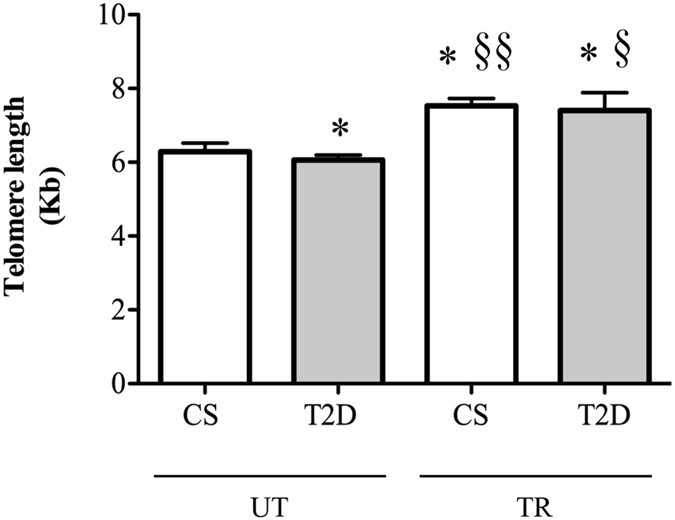
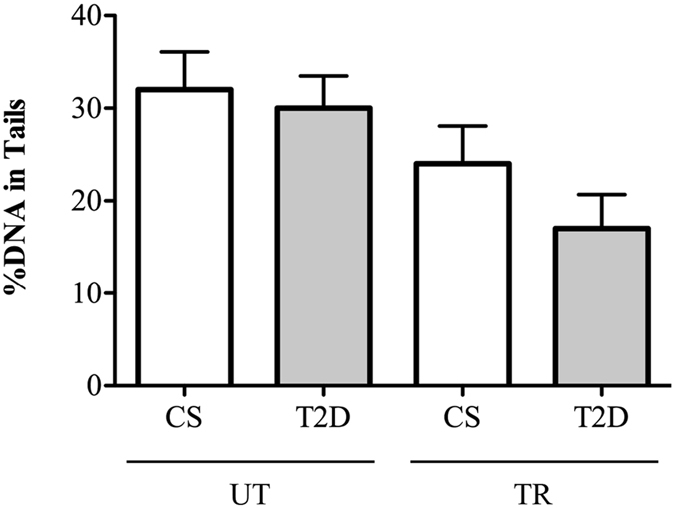
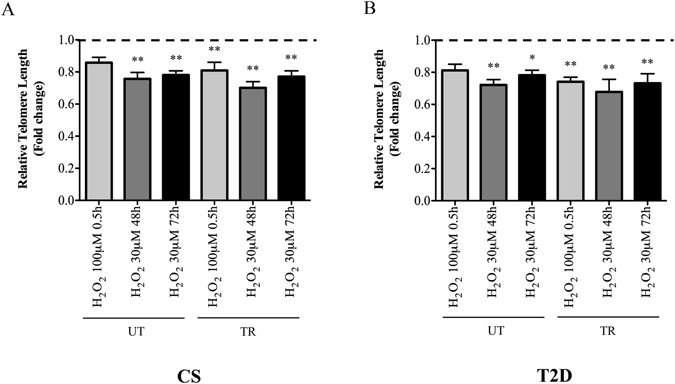
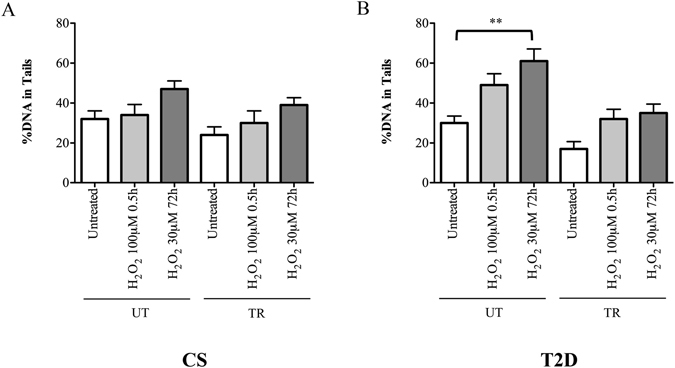
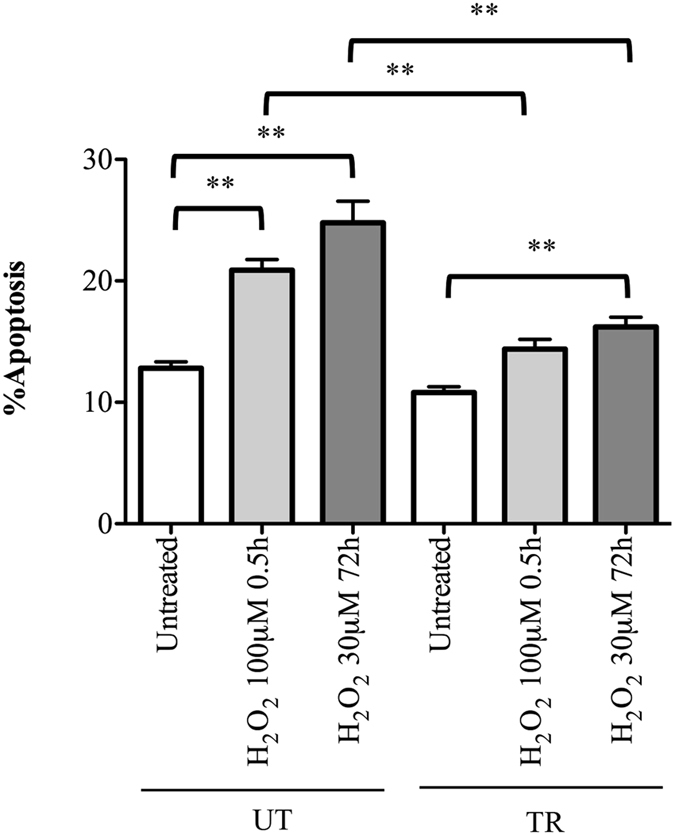
Physical activity has been demonstrated to be effective in the prevention and treatment of different chronic conditions, including type 2 diabetes (T2D). In particular, several studies highlighted how the beneficial effects of physical activity may be related to the stability of the DNA molecule, such as longer telomeric ends. Here we analyze the effect of exercise training on telomere length, spontaneous and H 2 O 2-induced DNA damage, as well as the apoptosis level in leukocytes from untrained or trained T2D patients vs. age-matched control subjects (CS) (57–66 years). Moreover, expression analysis of selected genes belonging to DNA repair systems, cell cycle control, antioxidant and defence systems was performed. Subjects that participated in a regular exercise program showed a longer telomere sequence than untrained counterparts. Moreover, ex vivo treatment of leukocytes with H 2 O 2 highlighted that: (1) oxidative DNA damage induced similar telomere attrition in all groups; (2) in T2D subjects, physical activity seemed to prevent a significant increase of genomic oxidative DNA damage induced by chronic exposure to pro-oxidant stimulus, and (3) decreased the sensitivity of leukocytes to apoptosis. Finally, the gene expression analysis in T2D subjects suggested an adaptive response to prolonged exercise training that improved the response of specific genes.
Overview
The claims and statistics of this paper haven’t been checked yet.
Free: it reads the open-access text and checks the first 5 claims that cite a source we can check. Create a free account to check every claim.
Integrity signals
Registry
Cites
Statistics
Figures
Verification
Claims the paper makes
The claims and statistics of this paper haven’t been checked yet.
Free: it reads the open-access text and checks the first 5 claims that cite a source we can check. Create a free account to check every claim.
Claims other papers make about this one
Each is checked against this paper’s own text: does it say what the citing paper says it does?
The source backs part of the claim, not all of it — or backs it for a different population, condition or comparison.
In the citing paper
“Interventions designed to reduce the stress-related effects of psychopathology or target telomere length directly (e.g. exercise, meditation, and antioxidants) may engender positive effects on physical and mental health by attenuating telomere erosion and/or increasing telomerase activity.48–50”
From Telomere Length and Psychopathology: Specificity and Direction of Effects Within the Bucharest Early Intervention Project (2020) · cites this paper as [49]
Experimental — accuracy not yet measured
Self-check
Percentages, sums and reported differences re-computed from the paper’s own numbers.
The self-check needs the paper’s full text.
Citations
Cites
Health benefits of physical activity: the evidence
Warburton, D. E. R. (2006) · Canadian Medical Association Journal · doi:10.1503/cmaj.051351 · Cited by 8,007
The American Journal of Physiology
(1899) · The American Naturalist · doi:10.1086/277182 · Cited by 5,654
Oxidative stress shortens telomeres
von Zglinicki, T. (2002) · Trends in Biochemical Sciences · doi:10.1016/s0968-0004(02)02110-2 · Cited by 2,524
Global Prevalence of Diabetes: Estimates for the Year 2000 and Projections for 2030
Rathmann, W., & Giani, G. (2004) · Diabetes Care · doi:10.2337/diacare.27.10.2568 · Cited by 1,994
Oxidative stress and the use of antioxidants in diabetes: Linking basic science to clinical practice
Johansen, J. S., Harris, A. K., Rychly, D. J., & Ergul, A. (2005) · Cardiovascular Diabetology · doi:10.1186/1475-2840-4-5 · Cited by 1,003
Beckman, K. B., & Ames, B. N. (1997) · Journal of Biological Chemistry · doi:10.1074/jbc.272.32.19633 · Cited by 951
Telomeric DNA damage is irreparable and causes persistent DNA-damage-response activation
Fumagalli, M., Rossiello, F., Clerici, M., Barozzi, S., Cittaro, D., Kaplunov, J. M., Bucci, G., Dobreva, M., Matti, V., Beausejour, C. M., et al. (2012) · Nature Cell Biology · doi:10.1038/ncb2466 · Cited by 851
Telomeres shorten at equivalent rates in somatic tissues of adults
Daniali, L., Benetos, A., Susser, E., Kark, J. D., Labat, C., Kimura, M., Desai, K. K., Granick, M., & Aviv, A. (2013) · Nature Communications · doi:10.1038/ncomms2602 · Cited by 601
The Association Between Physical Activity in Leisure Time and Leukocyte Telomere Length
Cherkas, L. F. (2008) · Archives of Internal Medicine · doi:10.1001/archinternmed.2007.39 · Cited by 573
H2AX Haploinsufficiency Modifies Genomic Stability and Tumor Susceptibility
Celeste, A., Difilippantonio, S., Difilippantonio, M. J., Fernandez-Capetillo, O., Pilch, D. R., Sedelnikova, O. A., Eckhaus, M., Ried, T., Bonner, W. M., & Nussenzweig, A. (2003) · Cell · doi:10.1016/s0092-8674(03)00567-1 · Cited by 551
Cited by
The multifaceted benefits of walking for healthy aging: from Blue Zones to molecular mechanisms
Ungvari, Z., Fazekas-Pongor, V., Csiszar, A., & Kunutsor, S. K. (2023) · GeroScience · doi:10.1007/s11357-023-00873-8 · Cited by 163
“First, exercise may promote DNA repair and maintenance, enhancing genome stability and reducing the accumulation of DNA damage over time [192–195].”
BackgroundTelomeres, Telomerase and Ageing
Saretzki, G. (2018) · Subcellular Biochemistry · doi:10.1007/978-981-13-2835-0_9 · Cited by 93
The role of αB-crystallin in skeletal and cardiac muscle tissues
Dimauro, I., Antonioni, A., Mercatelli, N., & Caporossi, D. (2017) · Cell Stress and Chaperones · doi:10.1007/s12192-017-0866-x · Cited by 93
Self-citationExercise, redox homeostasis and the epigenetic landscape
Dimauro, I., Paronetto, M. P., & Caporossi, D. (2020) · Redox Biology · doi:10.1016/j.redox.2020.101477 · Cited by 83
Self-citationBarragán, R., Ortega‐Azorín, C., Sorlí, J. V., Asensio, E. M., Coltell, Ó., St‐Onge, M., Portolés, O., & Corella, D. (2021) · Journal of Clinical Medicine · doi:10.3390/jcm11010076 · Cited by 79
“[98] 2017 24 men, 12 T2D and 12 controls.”
Redox homeostasis in sport: do athletes really need antioxidant support?
Antonioni, A., Fantini, C., Dimauro, I., & Caporossi, D. (2019) · Research in Sports Medicine · doi:10.1080/15438627.2018.1563899 · Cited by 60
“…shifted toward the emerging role of ROS as molecular messengers in a broad range of biological processes, such as genome stability, gene activation, drug detoxification, vasodilation, cell death, as well as cell growth, proliferation and adaptation (Dimauro et al., 2017; Peternelj & Coombes, 2011).”
BackgroundResultSelf-citationAcquired Resilience: An Evolved System of Tissue Protection in Mammals
Stone, J., Mitrofanis, J., Johnstone, D. M., Falsini, B., Bisti, S., Adam, P., Bravo‐Nuevo, A., George‐Weinstein, M., Mason, R. S., & Eells, J. T. (2018) · Dose-Response · doi:10.1177/1559325818803428 · Cited by 55
Chen, M., Wang, Z., Xu, H., Teng, P., Li, W., & Ma, L. (2024) · Journal of Translational Medicine · doi:10.1186/s12967-024-04956-8 · Cited by 55
“Most trials with small sample sizes reported that participants in active physical activity interventions showed increased telomere length compared to control groups [53–55].”
BackgroundWade, M., Fox, N. A., Zeanah, C. H., Nelson, C. A., & Drury, S. S. (2020) · Journal of the American Academy of Child & Adolescent Psychiatry · doi:10.1016/j.jaac.2019.02.013 · Cited by 43
Dimauro, I., Grazioli, E., Antinozzi, C., Duranti, G., Arminio, A., Mancini, A., Greco, E. A., Caporossi, D., Parisi, A., & Luigi, L. D. (2021) · International Journal of Environmental Research and Public Health · doi:10.3390/ijerph18189834 · Cited by 47
Self-citationSubudhi (2003) · doi:10.1155/2021/1938492 · Cited by 35
“adaptive response to exercise training and thereby index of a better redox balance [8, 10, 12, 27, 63, 67].”
BackgroundSelf-citationDimauro, I., Antonioni, A., Mercatelli, N., Grazioli, E., Fantini, C., Barone, R., Macaluso, F., Felice, V. D., & Caporossi, D. (2019) · Redox Biology · doi:10.1016/j.redox.2019.101183 · Cited by 36
Self-citationExercise as a drug for glucose management and prevention in type 2 diabetes mellitus
Sgrò, P., Emerenziani, G. P., Antinozzi, C., Sacchetti, M., & Luigi, L. D. (2021) · Current Opinion in Pharmacology · doi:10.1016/j.coph.2021.05.006 · Cited by 48
Paronetto, M. P., Dimauro, I., Grazioli, E., Palombo, R., Guidotti, F., Fantini, C., Sgrò, P., Francesco, D. D., Luigi, L. D., Capranica, L., et al. (2020) · Free Radical Biology and Medicine · doi:10.1016/j.freeradbiomed.2020.06.037 · Cited by 36
Self-citationExercise and survival benefit in cancer patients: evidence from a comprehensive meta-analysis
Ungvari, Z. I., Fekete, M., Varga, P., Munkácsy, G., Fekete, J. T., Lehoczki, A., Buda, A., Kiss, C., Ungvari, A., & Győrffy, B. (2025) · GeroScience · doi:10.1007/s11357-025-01647-0 · Cited by 45
“Regular exercise has been shown to reduce chronic inflammation [33], prevent cellular senescence [34], enhance mitochondrial function [31, 35], maintain genomic stability[25, 36], and improve immune surveillance[37]— mechanisms that are intricately linked to both aging and cancer progression[38–41].”
Tranchita, E., Murri, A., Grazioli, E., Cerulli, C., Emerenziani, G. P., Ceci, R., Caporossi, D., Dimauro, I., & Parisi, A. (2022) · Cancers · doi:10.3390/cancers14092288 · Cited by 48
Self-citationRosa, E. C. C. C., dos Santos, R. R. C., Fernandes, L. F. A., Neves, F. D. A. R., Coelho, M. S., & Amato, A. A. (2018) · Diabetes Research and Clinical Practice · doi:10.1016/j.diabres.2017.10.020 · Cited by 28
Magi, F., Dimauro, I., Margheritini, F., Duranti, G., Mercatelli, N., Fantini, C., Ripani, F. R., Sabatini, S., & Caporossi, D. (2018) · Free Radical Research · doi:10.1080/10715762.2018.1459043 · Cited by 29
“Our group extensively demonstrated that engagement in regular exercise may lower aging or disease-related oxidative stress by restoring the proper balance between ROS production, the efficacy of the antioxidant system, such as catalase, and the expression of heat shock proteins (HSPs) [16–18], ultimately exerting a pr…”
BackgroundSelf-citationNair, R. G., Vasudev, M. M., & Mavathur, R. N. (2021) · Annals of Behavioral Medicine · doi:10.1093/abm/kaab043 · Cited by 21
Mwimo, J., Somoka, S., Leyaro, B. J., Amour, C., Mao, E., & Mboya, I. B. (2021) · BMJ Open · doi:10.1136/bmjopen-2020-046841 · Cited by 31
Lisi, V., Moulton, C., Fantini, C., Grazioli, E., Guidotti, F., Sgrò, P., Dimauro, I., Capranica, L., Parisi, A., Luigi, L. D., et al. (2023) · Free Radical Biology and Medicine · doi:10.1016/j.freeradbiomed.2023.05.007 · Cited by 18
Self-citationUnraveling the link between cardiorespiratory fitness and cancer: a state-of-the-art review
Kunutsor, S. K., Kaminsky, L. A., Lehoczki, A., & Laukkanen, J. A. (2024) · GeroScience · doi:10.1007/s11357-024-01222-z · Cited by 26
“Engaging in regular PA has been closely associated with improved DNA repair capabilities and greater genomic stability [126–130].”
BackgroundAntonioni, A., Dimauro, I., Fantini, C., Barone, R., Macaluso, F., Felice, V. D., & Caporossi, D. (2020) · Free Radical Biology and Medicine · doi:10.1016/j.freeradbiomed.2020.03.013 · Cited by 19
Self-citationCeci, R., Duranti, G., Giuliani, S., Rossi, M. N., Dimauro, I., Sabatini, S., Mariottini, P., & Cervelli, M. (2022) · International Journal of Molecular Sciences · doi:10.3390/ijms231910986 · Cited by 16
“It is also worth mentioning that many types of physical exercise, especially intense or unaccustomed, result in oxidative stress, as evidenced by increased biomarkers of oxidation in both skeletal muscle and blood [12,14,15].”
BackgroundSelf-citationOxidative DNA Damage and Arterial Hypertension in Light of Current ESC Guidelines
Hazuková, R., Zadák, Z., Pleskot, M., Zdráhal, P., Pumprla, M., & Táborský, M. (2024) · International Journal of Molecular Sciences · doi:10.3390/ijms252312557 · Cited by 13
Caporossi, D., & Dimauro, I. (2024) · Free Radical Biology and Medicine · doi:10.1016/j.freeradbiomed.2024.01.023 · Cited by 14
Self-citationLow power lasers on genomic stability
Trajano, L. A. D. S. N., Sergio, L. P. D. S., Stumbo, A. C., Mencalha, A. L., & da Fonseca, A. D. S. (2018) · Journal of Photochemistry and Photobiology B Biology · doi:10.1016/j.jphotobiol.2018.02.010 · Cited by 12
Antinozzi, C., Duranti, G., Ceci, R., Lista, M., Sabatini, S., Caporossi, D., Luigi, L. D., Sgrò, P., & Dimauro, I. (2022) · International Journal of Molecular Sciences · doi:10.3390/ijms23126566 · Cited by 11
Self-citationDamico, D. C. S., Fiore, R., Caporossi, D., Felice, V. D., Cappello, F., Dimauro, I., & Barone, R. (2021) · Biology · doi:10.3390/biology10020077 · Cited by 17
Self-citationHu, S., Yang, L., Wu, C., & Liu, T.-Y. (2019) · Physiology International · doi:10.1556/2060.106.2019.07 · Cited by 9
Exercise and the hallmarks of cardiovascular aging
Zhong, D., Fernández‐Garcia, B., Gokulnath, P., Lin, K., Li, G., Kroemer, G., López-Otín, C., & Xiao, J. (2026) · Ageing Research Reviews · doi:10.1016/j.arr.2026.103030 · Cited by 12
The effect of maternal type 2 diabetes on fetal endothelial gene expression and function
Sultan, S. (2018) · Acta Diabetologica · doi:10.1007/s00592-018-1207-y · Cited by 8
How to Exercise During Coronavirus Quarantine?
Hoseini, R. (2020) · PubMed Central · doi:10.22088/cjim.11.0.479 · Cited by 8
“While intense exercise weakens the body’s defense mechanisms, moderate-intensity exercise seems to improve them (20, 21).”
BackgroundAntinozzi, C., Grazioli, E., Santis, M. D., Motta, F., Sgrò, P., Mari, F., Mauri, C., Parisi, A., Caporossi, D., Duranti, G., et al. (2022) · International Journal of Environmental Research and Public Health · doi:10.3390/ijerph191610303 · Cited by 8
Self-citationLi, Z., Anugula, S., & Rasmussen, L. J. (2022) · Elsevier eBooks · doi:10.1016/b978-0-12-823761-8.00020-3 · Cited by 7
Ceci, R., Maldini, M., Rosa, P. L., Sireno, L., Antinozzi, C., Olson, M. E., Dimauro, I., & Duranti, G. (2024) · Antioxidants · doi:10.3390/antiox13121460 · Cited by 7
Self-citationType 2 diabetes mellitus, physical activity, yoga and telomere length: A literature review
Ughreja, R. A., & Ughreja, R. (2019) · Journal of Metabolic Health · doi:10.4102/jir.v4i1.52 · Cited by 7
Lee, T.-H., Jung, W., Cho, H., & Lee, M.-G. (2019) · Korean Journal of Sport Science · doi:10.24985/kjss.2019.30.3.470 · Cited by 2
Epigenomic adaptations of exercise in the control of metabolic disease and cancer
Dimauro, I., Paronetto, M. P., & Caporossi, D. (2019) · Elsevier eBooks · doi:10.1016/b978-0-12-816843-1.00018-7 · Cited by 3
Self-citationAllgayer, H., Owen, R. W., Wiskemann, J., Bussas, U., Ulrich, C. M., Huber, G., Steindorf, K., & Brenner, H. (2021) · Endocrine and Metabolic Science · doi:10.1016/j.endmts.2021.100091 · Cited by 1
Environmental enrichment and physiological aging
Komleva, Y. K., Salmin, V. V., Lopatina, O. L., Belova, O. A., & Salmina, A. B. (2021) · Elsevier eBooks · doi:10.1016/b978-0-12-817990-1.00033-0 · Cited by 1
Exercise, epigenetics, and aging
Chilton, W., Maier, M. C., Akinnibosun, O. A., O’Brien, B. J., & Charchar, F. J. (2021) · Elsevier eBooks · doi:10.1016/b978-0-12-820682-9.00002-5 · Cited by 2
Saffari, I., Saghebjoo, M., Hedayati, M., Sarir, H., & Dimauro, I. (2022) · Middle East Journal of Rehabilitation and Health Studies · doi:10.5812/mejrh.121818 · Cited by 1
Self-citationEffect of Exercise on Oxidative Stress and Telomere Length in Type 2 Diabetes
Gupta, S., Kaushik, G., & Amaravadi, S. K. (2023) · Critical Reviews in Physical and Rehabilitation Medicine · doi:10.1615/critrevphysrehabilmed.2023047548
The impact of physical exercise on genotoxicity in older adults: a systematic review
Pinto, T. G., de Souza, D. V., Angelis, K. D., dos Santos, R. V. T., Cury, P. R., dos Santos, J. N., Dedivitis, R. A., & Ribeiro, D. A. (2025) · Biogerontology · doi:10.1007/s10522-025-10327-7
“…of exercise training in the prevention and management of type 2 diabetes and found that, in diabetic individuals; regular exercise appeared to inhibit a substantial rise in genomic oxidative DNA damage caused by this chronic degenerative disease (Dimauro et al. 2017; Pittaluga et al. 2015).”
Chen, M., Wang, Z., Xu, H., Teng, P., Li, W., & Ma, L. (2024) · Figshare · doi:10.6084/m9.figshare.25237265
Chen, T., Su, Y., Yang, L., Gu, M., Liang, J., Li, K., Shu, Y., Chen, K., Pang, J., Hu, D., et al. (2026) · Maturitas · doi:10.1016/j.maturitas.2026.108828
Metadata
- Authors
- Dimauro, I., Sgura, A., Pittaluga, M., Magi, F., Fantini, C., Mancinelli, R., Sgadari, A., Fulle, S., & Caporossi, D.
- Affiliations
- Foro Italico University of Rome (IT)
- Roma Tre University (IT)
- University of Chieti-Pescara (IT)
- Università Cattolica del Sacro Cuore (IT)
- Corresponding author
- Caporossi, Daniela
- ORCID
- Venue
- Scientific Reports
- Published
- 2017-06-23
- Volume
- 7
- Issue
- 1
- Pages
- 4137-4137
- ISSN
- 2045-2322 (ISSN-L)
- PMC
- PMC5482873
- OpenAlex
- W2721717676
- Cited by
- 47
- References
- 72
- Citations by year
- 2026: 2 · 2025: 2 · 2024: 6 · 2023: 3 · 2022: 6 · 2021: 10 · 2020: 4 · 2019: 6 · 2018: 6 · 2017: 2
- FWCI
- 3.64
- Type
- journal article
- Language
- en
- Open access
- gold
- doi.org
- Licence
- cc-by
- creativecommons.org/licenses/by/4.0 (tdm)
- creativecommons.org/licenses/by/4.0 (vor)
- Locations
- Scientific Reports (publishedVersion, cc-by)
- Europe PMC (PubMed Central) (publishedVersion, cc-by)
- PubMed Central (publishedVersion, cc-by)
- PubMed (publishedVersion)
- DOAJ (DOAJ: Directory of Open Access Journals) (submittedVersion, cc-by-sa)
- Iris (Roma Tre University) (submittedVersion)
- PubliCatt (Università Cattolica del Sacro Cuore) (submittedVersion, cc-by)
- Funders
- Ministero dell’Istruzione, dell’Università e della Ricerca (PRIN2012)
- Topics
- Life Sciences › Biochemistry, Genetics and Molecular Biology › Cell Biology › Telomeres, Telomerase, and Senescence
- Health Sciences › Medicine › Physiology (medical) › Exercise and Physiological Responses
- Health Sciences › Medicine › Public Health, Environmental and Occupational Health › Physical Activity and Health
- Keywords
- type 2 diabetes, exercise training, telomere length, genome stability, DNA damage, oxidative DNA damage, hydrogen peroxide, apoptosis, leukocytes, DNA repair genes, antioxidant genes, cell cycle genes, gene expression
- MeSH terms
- Aged, Diabetes Mellitus, Type 2, DNA Damage, Humans, Hydrogen Peroxide, Leukocytes, Male, Middle Aged, Exercise, Case-Control Studies, Telomere, Apoptosis, In Situ Hybridization, Fluorescence, Gene Expression Profiling, Genomic Instability, Telomere Homeostasis, Telomere Shortening
About these checks
Registry, retraction, Cites and statistics results are computed, not judged, with one exception: a printed reference that no index lists is read once by a model before it counts as a citation error. Claims are extracted by a model and kept only when their quote appears verbatim in the text; each cited source is then checked, with a model’s help, for whether it says what the claim relies on. Those verdicts can be wrong — read the claim’s quote and the cited source before relying on one.
Statistics and arithmetic are recomputed, not judged.
Confidence bands are shown only for fields calibrated on our annotated test set. None is calibrated yet, so no band is shown.
What counts as a claim ›How we measure confidence ›How we check this ›
Are you an author, or do you see a problem with this page? Request a review
Data sources
Bibliographic data: Semantic Scholar, OpenAlex, Crossref.
Contains information from the Semantic Scholar Academic Graph Datasets, made available under the ODC Attribution License (ODC-BY 1.0).
Semantic Scholar’s data is described in: Kinney, R., et al. (2023). The Semantic Scholar Open Data Platform. arXiv:2301.10140.
