

The DOI matches its Crossref record; 68 of the 69 references it cites were found in a registry or an index.
Estrogen Regulates Bone Turnover by Targeting RANKL Expression in Bone Lining Cells
Open accessAbstract
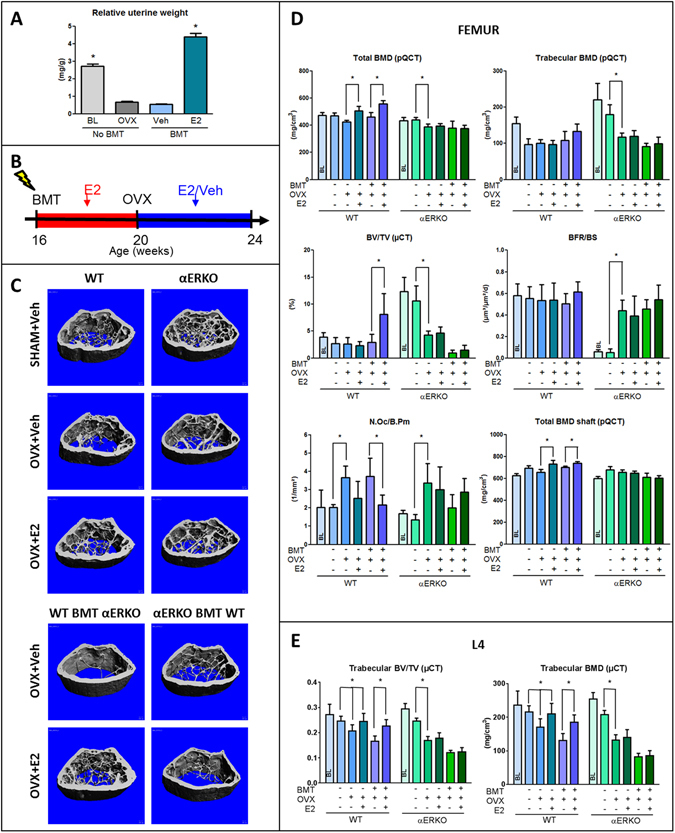
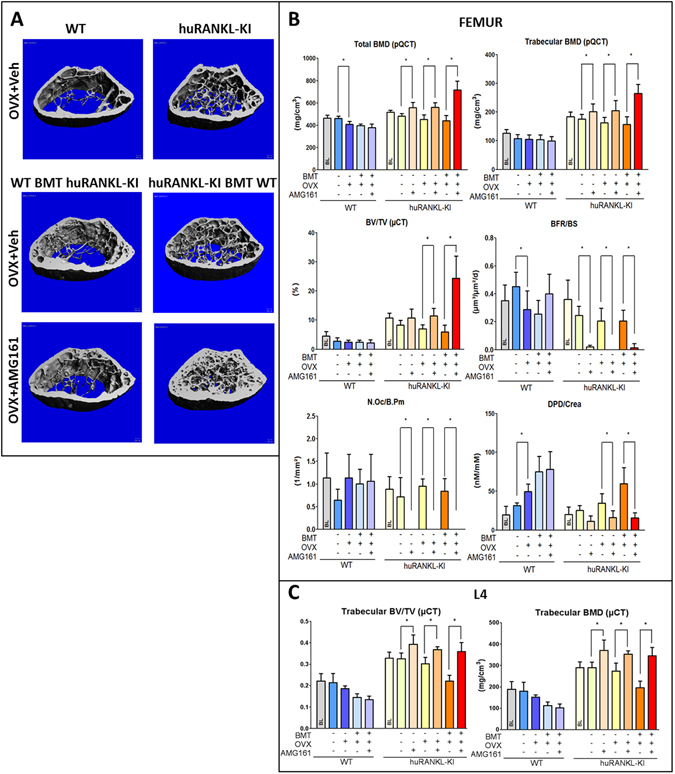
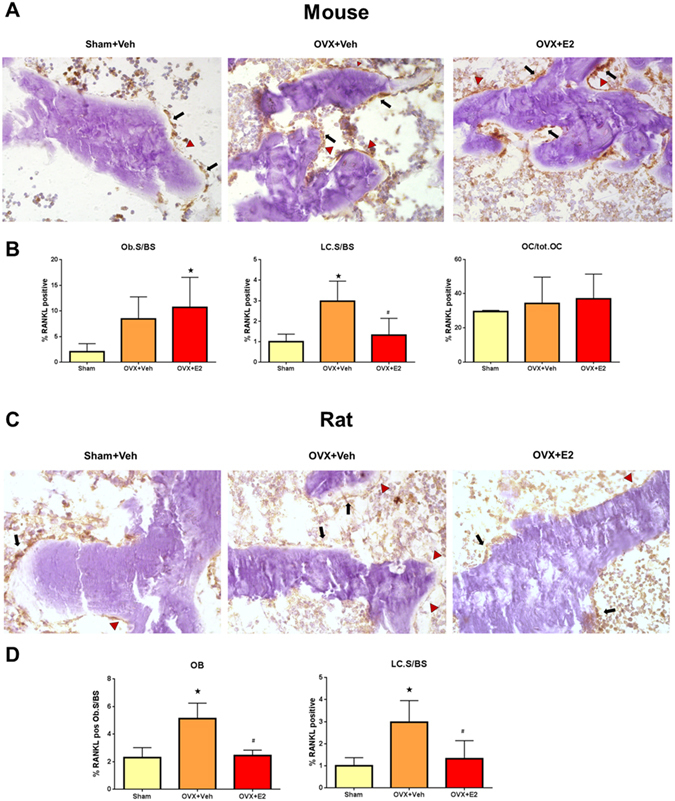
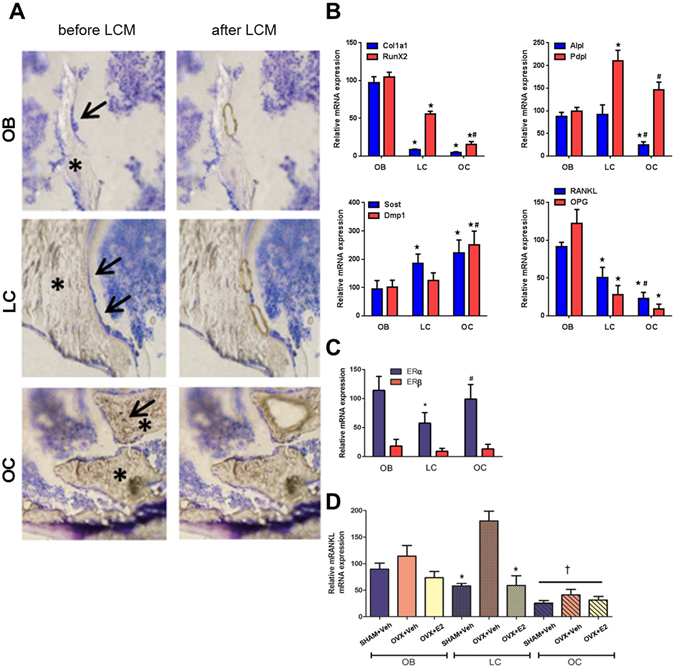
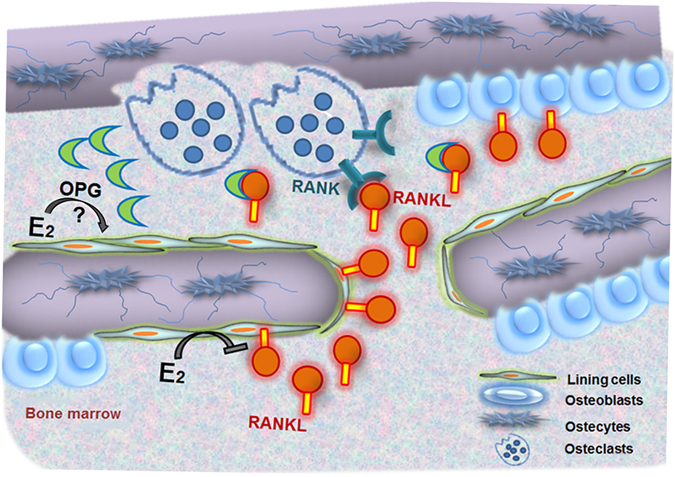
Estrogen is critical for skeletal homeostasis and regulates bone remodeling, in part, by modulating the expression of receptor activator of NF-κB ligand (RANKL), an essential cytokine for bone resorption by osteoclasts. RANKL can be produced by a variety of hematopoietic (e.g. T and B-cell) and mesenchymal (osteoblast lineage, chondrocyte) cell types. The cellular mechanisms by which estrogen acts on bone are still a matter of controversy. By using murine reconstitution models that allow for selective deletion of estrogen receptor-alpha (ERα) or selective inhibition of RANKL in hematopoietic vs. mesenchymal cells, in conjunction with in situ expression profiling in bone cells, we identified bone lining cells as important gatekeepers of estrogen-controlled bone resorption. Our data indicate that the increase in bone resorption observed in states of estrogen deficiency in mice is mainly caused by lack of ERα-mediated suppression of RANKL expression in bone lining cells.
Overview
The claims and statistics of this paper haven’t been checked yet.
Run the check — free, no account needed. It reads the open-access text and checks the sources it cites.
Integrity signals
Registry
Cites
Statistics
Figures
Verification
Claims the paper makes
The claims and statistics of this paper haven’t been checked yet.
Run the check — free, no account needed. It reads the open-access text and checks the sources it cites.
Claims other papers make about this one
Each is checked against this paper’s own text: does it say what the citing paper says it does?
In the citing paper
“Fusion also requires RANKL, which is highly expressed by BLCs;161 osteoblasts in the growing skeleton; and osteocyte arborizations that reach the bone surface in adults.51,52”
From Bone remodeling: an operational process ensuring survival and bone mechanical competence (2022) · cites this paper as [161]
Self-check
Percentages, sums and reported differences re-computed from the paper’s own numbers.
The self-check needs the paper’s full text.
Citations
Cites
A new mathematical model for relative quantification in real-time RT-PCR
Pfaffl, M. W. (2001) · Nucleic Acids Research · doi:10.1093/nar/29.9.e45 · Cited by 34,610
Osteoprotegerin ligand is a cytokine that regulates osteoclast differentiation and activation.
Lacey, D. L., Timms, E., Tan, H.-L., Kelley, M. J., Dunstan, C. R., Burgess, T., Elliott, R., Colombero, A., Elliott, G., Scully, S., et al. (1998) · Cell · doi:10.1016/s0092-8674(00)81569-x · Cited by 5,439
Osteoprotegerin: a novel secreted protein involved in the regulation of bone density.
Simonet, W. S., Lacey, D. L., Dunstan, C. R., Kelley, M., Chang, M.-S., Lüthy, R., Nguyen, H. Q., Wooden, S., Bennett, L., Boone, T., et al. (1997) · Cell · doi:10.1016/s0092-8674(00)80209-3 · Cited by 5,130
OPGL is a key regulator of osteoclastogenesis, lymphocyte development and lymph node organogenesis.
Kong, Y.-Y., Yoshida, H., Sarosi, I., Tan, H.-L., Timms, E., Capparelli, C., Morony, S., Oliveira-dos-Santos, A. J., Van, G., Itie, A., et al. (1999) · Nature · doi:10.1038/16852 · Cited by 3,351
Osteoprotegerin-deficient mice develop early onset osteoporosis and arterial calcification.
Bucay, N., Sarosi, I., Dunstan, C. R., Morony, S., Tarpley, J., Capparelli, C., Scully, S., Tan, H. L., Xu, W., Lacey, D. L., et al. (1998) · Genes & Development · doi:10.1101/gad.12.9.1260 · Cited by 2,483
Pathogenesis of osteoporosis: concepts, conflicts, and prospects
Raisz, L. G. (2005) · Journal of Clinical Investigation · doi:10.1172/jci27071 · Cited by 1,779
Evidence for osteocyte regulation of bone homeostasis through RANKL expression
Nakashima, T., Hayashi, M., Fukunaga, T., Kurata, K., Oh-hora, M., Feng, J. Q., Bonewald, L. F., Kodama, T., Wutz, A., Wagner, E. F., et al. (2011) · Nature Medicine · doi:10.1038/nm.2452 · Cited by 1,778
Matrix-embedded cells control osteoclast formation
Xiong, J., Onal, M., Jilka, R. L., Weinstein, R. S., Manolagas, S. C., & O'Brien, C. A. (2011) · Nature Medicine · doi:10.1038/nm.2448 · Cited by 1,304
Denosumab in postmenopausal women with low bone mineral density.
McClung, M. R., Lewiecki, E. M., Cohen, S. B., Bolognese, M. A., Woodson, G. C., Moffett, A. H., Peacock, M., Miller, P. D., Lederman, S. N., Chesnut, C. H., et al. (2006) · New England Journal of Medicine · doi:10.1056/nejmoa044459 · Cited by 1,228
Li, J., Sarosi, I., Yan, X.-Q., Morony, S., Capparelli, C., Tan, H.-L., McCabe, S., Elliott, R., Scully, S., Van, G., et al. (2000) · Proceedings of the National Academy of Sciences · doi:10.1073/pnas.97.4.1566 · Cited by 1,119
Self-citation
Cited by
Sorted by citations
Bone remodeling: an operational process ensuring survival and bone mechanical competence
Bolamperti, S., Villa, I., & Rubinacci, A. (2022) · Bone Research · doi:10.1038/s41413-022-00219-8 · Cited by 482
Natural Polymeric Scaffolds in Bone Regeneration
Filippi, M., Born, G., Chaaban, M., & Scherberich, A. (2020) · Frontiers in Bioengineering and Biotechnology · doi:10.3389/fbioe.2020.00474 · Cited by 378
Li, J., Chen, X., Lu, L., & Yu, X. (2020) · Cytokine & Growth Factor Reviews · doi:10.1016/j.cytogfr.2020.02.003 · Cited by 278
Bhattarai, D. P., Aguilar, L. E., Park, C. H., & Kim, C. S. (2018) · Membranes · doi:10.3390/membranes8030062 · Cited by 265
Functions of estrogen and estrogen receptor signaling on skeletal muscle
Ikeda, K., Horie‐Inoue, K., & Inoue, S. (2019) · The Journal of Steroid Biochemistry and Molecular Biology · doi:10.1016/j.jsbmb.2019.105375 · Cited by 213
Metadata
- Authors
- Streicher, C., Heyny, A., Andrukhova, O., Haigl, B., Slavic, S., Schüler, C., Kollmann, K., Kantner, I., Sexl, V., Kleiter, M., Hofbauer, L. C., Kostenuik, P. J., & Erben, R. G.
- Affiliations
- University of Veterinary Medicine Vienna (AT)
- Technische Universität Dresden (DE)
- Amgen (United States) (US)
- Corresponding author
- Erben, Reinhold G.
- ORCID
- Venue
- Scientific Reports
- Published
- 2017-07-25
- Volume
- 7
- Issue
- 1
- Pages
- 6460-6460
- ISSN
- 2045-2322 (ISSN-L)
- PMC
- PMC5527119
- OpenAlex
- W2738919786
- Cited by
- 251
- References
- 69
- Citations by year
- 2026: 30 · 2025: 36 · 2024: 32 · 2023: 29 · 2022: 40 · 2021: 26 · 2020: 25 · 2019: 18 · 2018: 13 · 2017: 1
- FWCI
- 6.37
- Type
- journal article
- Language
- en
- Open access
- gold
- doi.org
- Locations
- Scientific Reports (publishedVersion, cc-by)
- PubMed Central (publishedVersion, cc-by)
- PubMed (publishedVersion)
- DOAJ (DOAJ: Directory of Open Access Journals) (submittedVersion, cc-by-sa)
- Funders
- Austrian Science Fund (FWF P 21904-B11)
- Topics
- Life Sciences › Biochemistry, Genetics and Molecular Biology › Molecular Biology › Bone Metabolism and Diseases
- Life Sciences › Biochemistry, Genetics and Molecular Biology › Endocrinology › Estrogen and related hormone effects
- Health Sciences › Medicine › Orthopedics and Sports Medicine › Bone health and osteoporosis research
- Keywords
- estrogen, estrogen receptor alpha, RANKL, bone lining cells, bone resorption, bone turnover, bone remodeling, estrogen deficiency, osteoclasts, skeletal homeostasis, hematopoietic cells, mesenchymal cells
- MeSH terms
- Alkaline Phosphatase, Animals, Bone and Bones, Estrogens, Female, Gene Expression Regulation, Humans, Isoenzymes, Mice, Transgenic, Rats, Inbred F344, Bone Density, Bone Marrow Transplantation, Bone Remodeling, Mice, Knockout, Estrogen Receptor alpha, RANK Ligand, GPI-Linked Proteins, Mesenchymal Stem Cells
About these checks
Registry, retraction, Cites and statistics results are computed, not judged, with one exception: a printed reference that no index lists is read once by a model before it counts as a citation error. Claims are extracted by a model and kept only when their quote appears verbatim in the text; each cited source is then checked, with a model’s help, for whether it says what the claim relies on. Those verdicts can be wrong — read the claim’s quote and the cited source before relying on one.
Statistics and arithmetic are recomputed, not judged.
Confidence bands are shown only for fields calibrated on our annotated test set. None is calibrated yet, so no band is shown.
What counts as a claim ›How we measure confidence ›How we check this ›
Are you an author, or do you see a problem with this page? Request a review
