

Disturbance and mosquito diversity in the lowland tropical rainforest of central Panama
Open accessThe DOI matches its Crossref record; 75 of the 75 references it cites were found in a registry or an index.
Abstract
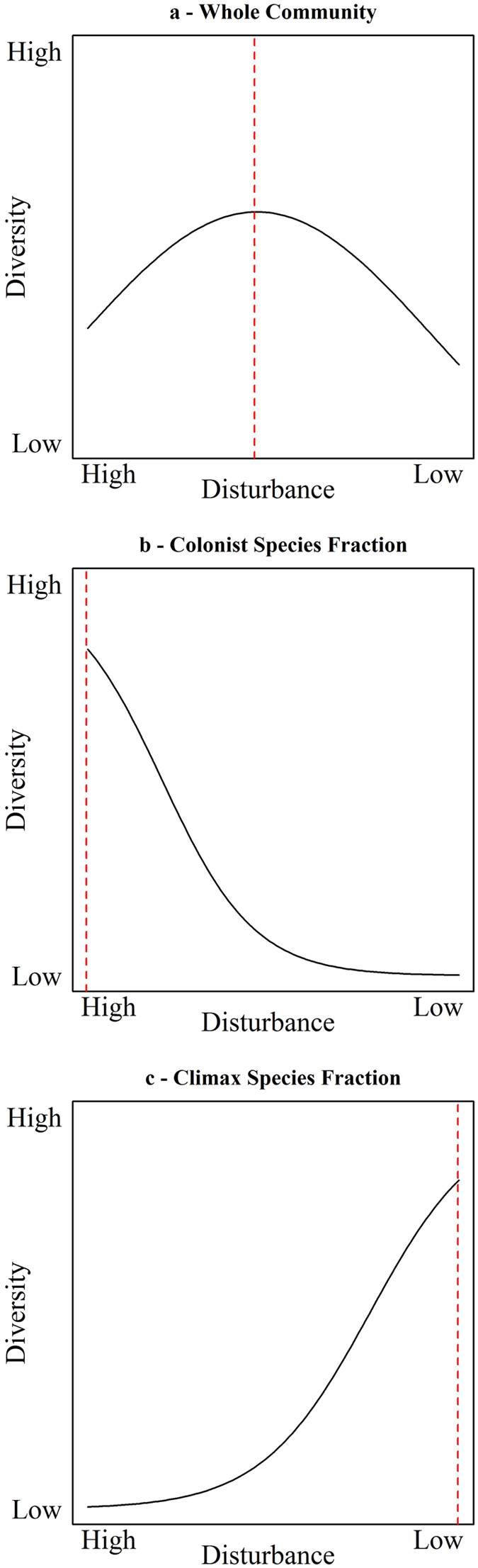
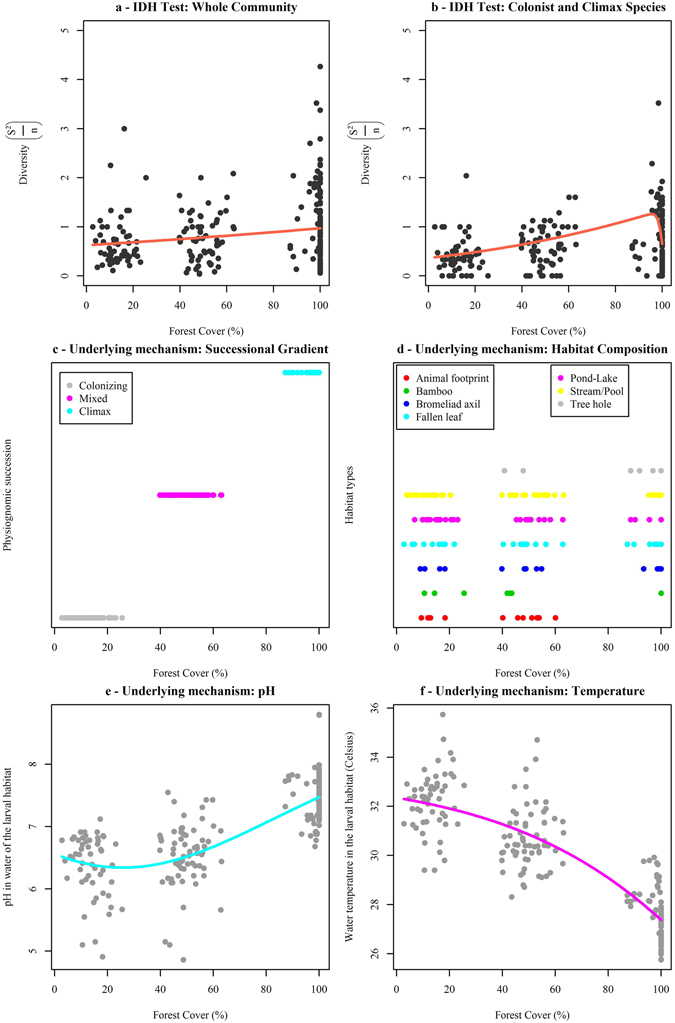
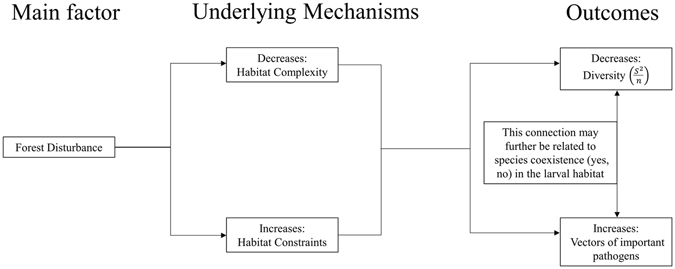
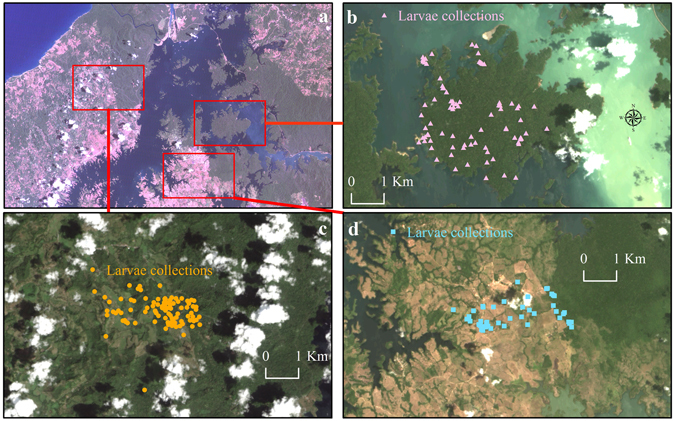
The Intermediate Disturbance Hypothesis (IDH) is well-known in ecology providing an explanation for the role of disturbance in the coexistence of climax and colonist species. Here, we used the IDH as a framework to describe the role of forest disturbance in shaping the mosquito community structure, and to identify the ecological processes that increase the emergence of vector-borne disease. Mosquitoes were collected in central Panama at immature stages along linear transects in colonising, mixed and climax forest habitats, representing different levels of disturbance. Species were identified taxonomically and classified into functional categories (i.e., colonist, climax, disturbance-generalist, and rare). Using the Huisman-Olff-Fresco multi-model selection approach, IDH testing was done. We did not detect a unimodal relationship between species diversity and forest disturbance expected under the IDH; instead diversity peaked in old-growth forests. Habitat complexity and constraints are two mechanisms proposed to explain this alternative postulate. Moreover, colonist mosquito species were more likely to be involved in or capable of pathogen transmission than climax species. Vector species occurrence decreased notably in undisturbed forest settings. Old-growth forest conservation in tropical rainforests is therefore a highly-recommended solution for preventing new outbreaks of arboviral and parasitic diseases in anthropic environments.
Overview
The claims and statistics of this paper haven’t been checked yet.
Free: it reads the open-access text and checks the first 5 claims that cite a source we can check. Create a free account to check every claim.
Integrity signals
Registry
Cites
Statistics
Figures
Verification
Claims the paper makes
The claims and statistics of this paper haven’t been checked yet.
Free: it reads the open-access text and checks the first 5 claims that cite a source we can check. Create a free account to check every claim.
Claims other papers make about this one
Each is checked against this paper’s own text: does it say what the citing paper says it does?
The cited source says what the claim attributes to it.
In the citing paper
“With the intent of preventing malaria epidemics, environmental manipulation has been proposed in Panama and other Latin American countries by increasing forest cover recovery in highly disturbed deforested areas, thus favouring the prevalence of auxiliary over primary vectors [34].”
From Achieving global malaria eradication in changing landscapes (2021) · cites this paper as [34]
Self-check
Percentages, sums and reported differences re-computed from the paper’s own numbers.
The self-check needs the paper’s full text.
Citations
Cites
Tamura, K., Peterson, D., Peterson, N., Stecher, G., Nei, M., & Kumar, S. (2011) · Molecular Biology and Evolution · doi:10.1093/molbev/msr121 · Cited by 39,969
Connell, J. H. (1978) · Science · doi:10.1126/science.199.4335.1302 · Cited by 9,417 · cited 3×
“Ideally, the best study design would match characteristics to cope with these three limitations: (1) The gradient of forest disturbance in this study was not continuous.”
BackgroundMethodThe Unified Neutral Theory of Biodiversity and Biogeography
Jetschke, G. (2002) · Ecology · doi:10.1890/0012-9658(2002)083[1771:tuntob]2.0.co;2 · Cited by 6,993
Gotelli, N. J., & Colwell, R. K. (2001) · Ecology Letters · doi:10.1046/j.1461-0248.2001.00230.x · Cited by 6,420
A General Hypothesis of Species Diversity
Huston, M. (1979) · The American Naturalist · doi:10.1086/283366 · Cited by 3,390
Hutchinson, G. E. (1961) · The American Naturalist · doi:10.1086/282171 · Cited by 3,074
Dayton, P. K. (1971) · Ecological Monographs · doi:10.2307/1948498 · Cited by 2,423
The Role of Disturbance in Natural Communities
Sousa, W. P. (1984) · Annual Review of Ecology and Systematics · doi:10.1146/annurev.es.15.110184.002033 · Cited by 2,305
Primary forests are irreplaceable for sustaining tropical biodiversity
Gibson, L., Lee, T. M., Koh, L. P., Brook, B. W., Gardner, T. A., Barlow, J., Peres, C. A., Bradshaw, C. J. A., Laurance, W. F., Lovejoy, T. E., et al. (2011) · Nature · doi:10.1038/nature10425 · Cited by 2,147
Light-Gap Disturbances, Recruitment Limitation, and Tree Diversity in a Neotropical Forest
Hubbell, S. P., Foster, R. B., O'Brien, S. T., Harms, K. E., Condit, R., Wechsler, B., Wright, S. J., & de Lao, S. L. (1999) · Science · doi:10.1126/science.283.5401.554 · Cited by 1,537
Research works printed but not linked: 5
- Wiens JA On competition and variable environments Am. Sci. 1977 65 590 607
- MacArthur, R. H. & Wilson, E. O. The theory of island biogeography 22-40 (Princeton University Press 1967).
- Tokeshi, M. Species Coexistence: Ecological and Evolutionary Perspectives 146-182 (Wiley-Blackwell 1998).
- Pecor, J. E., Mallampalli, V. L., Harbach, R. E., & Peyton, E. L. Catalog and illustrated review of the subgenus Melanoconion of Culex (Diptera: Culicidae). Contrib. Am. Entomol. Inst. (1992).
- GenBank - The genetic sequence database: collection of all publicly available DNA sequences. Available at: http://www.ncbi.nlm.nih.gov/genbank/. (Accessed: 10th July 2015).
Cited by
The effect of global change on mosquito-borne disease
Franklinos, L. H. V., Jones, K. E., Redding, D. W., & Abubakar, I. (2019) · The Lancet Infectious Diseases · doi:10.1016/s1473-3099(19)30161-6 · Cited by 641
Ortiz, D. I., Piche-Ovares, M., Romero-Vega, L. M., Wagman, J., & Troyo, A. (2021) · Insects · doi:10.3390/insects13010020 · Cited by 162
“In Panama, several rodent and bat reservoirs have been proposed, including the black rat (Rattus rattus [Linnaeus, 1758]), short-tailed cane mouse (Z. brevicauda), long-whiskered rice rat (T. bolivaris), Tome’s spiny rat (P. semispinosus), Seba’s short-tailed bat (Carollia perspicillata [Linnaeus, 1758]), and pale spe…”
BackgroundInfluentialAchieving global malaria eradication in changing landscapes
Fornace, K. M., Diaz, A. V., Lines, J., & Drakeley, C. J. (2021) · Malaria Journal · doi:10.1186/s12936-021-03599-0 · Cited by 112
“Counter-intuitively, the abundance of both colonist (disturbance-tolerant) and climax (disturbance-intolerant) anopheline mosquitoes species increased in disturbed forests in Panama [34].”
BackgroundInfluentialIntermediate Disturbance Hypothesis in Ecology: A Literature Review
Moi, D. A., García-Ríos, R., Hong, Z., Daquila, B. V., & Mormul, R. P. (2020) · Annales Zoologici Fennici · doi:10.5735/086.057.0108 · Cited by 119
“However, several other studies showed that the three mechanisms mentioned above are invalid (Chesson et al. 1994, Roxburgh et al. 2004, Loaiza et al. 2017), and according to Fox (2013), this controversy indicates that the IDH should be abandoned.”
ResultEpidemiology of the zoonotic malaria Plasmodium knowlesi in changing landscapes
Cuenca, P. R., Key, S., Jumail, A., Surendra, H., Ferguson, H. M., DRAKELEY, C. J., & Fornace, K. (2021) · Advances in Parasitology/Advances in parasitology · doi:10.1016/bs.apar.2021.08.006 · Cited by 53
Wilk-da-Silva, R., Mucci, L. F., Ceretti-Júnior, W., Duarte, A. M. R. D. C., Marrelli, M. T., & Medeiros‐Sousa, A. R. (2020) · Acta Tropica · doi:10.1016/j.actatropica.2020.105385 · Cited by 36
Carrera, J., Cucunubá, Z. M., Neira, K., Lambert, B. C., Pittí, Y., Jackman, C., Liscano, J., Garzón, J. L., Beltrán, D., Collado-Mariscal, L., et al. (2020) · American Journal of Tropical Medicine and Hygiene · doi:10.4269/ajtmh.20-0408 · Cited by 39
Evolutionary and ecological insights into the emergence of arthropod-borne viruses
Marklewitz, M., & Junglen, S. (2018) · Acta Tropica · doi:10.1016/j.actatropica.2018.10.006 · Cited by 41
Dharmamuthuraja, D., Rohini, P. D., Iswarya Lakshmi, M., Isvaran, K., Ghosh, S. K., Sutharsan, G., & Ishtiaq, F. (2023) · PLoS neglected tropical diseases · doi:10.1371/journal.pntd.0011702 · Cited by 54
“Similar patterns have been observed in forest community where presence of diverse habitat types and less disturbance supports a diversity of mosquito species [62].”
Dharmarajan, G., Gupta, P., Vishnudas, C. K., & Robin, V. V. (2021) · Ecology Letters · doi:10.1111/ele.13818 · Cited by 36
Loaiza, J. R., Rovira, J. R., Sanjur, O. I., Zepeda, J. A., Pecor, J. E., Foley, D. H., Dutari, L. C., Radtke, M. G., Pongsiri, M. J., Smith, O., et al. (2019) · Tropical Medicine & International Health · doi:10.1111/tmi.13244 · Cited by 32
“A thorough description of the collecting procedure was published earlier [22, 25].”
BackgroundMethodSelf-citationInfluence of land use and host species on parasite richness, prevalence and co-infection patterns
Reis, S., Melo, M., Covas, R., Doutrelant, C., Pereira, H., de Lima, R. F., & Loiseau, C. (2020) · International Journal for Parasitology · doi:10.1016/j.ijpara.2020.08.005 · Cited by 34
Diverse novel phleboviruses in sandflies from the Panama Canal area, Central Panama
Marklewitz, M., Dutari, L. C., Paraskevopoulou, S., Page, R. A., Loaiza, J. R., & Junglen, S. (2019) · Journal of General Virology · doi:10.1099/jgv.0.001260 · Cited by 30
“We did not find differences in phlebotomine sandfly species richness among landscape types, suggesting that phlebotomine sand-flies are probably more resilient to forest fragmentation than other blood-feeding dipterans [42].”
BackgroundSelf-citationYoung, K. I., Buenemann, M., Vasilakis, N., Perera, D., & Hanley, K. A. (2021) · Ecosphere · doi:10.1002/ecs2.3463 · Cited by 25
“LCLUC may effect changes in host and vector abundance and diversity, formation of novel vector-host interactions, and shifts in microclimate (Foley et al. 2007, Patz et al. 2008, Lambin et al. 2010, Rogalski et al. 2017, Faust et al. 2018) that engender spillover, the transmission of a pathogen from a reservoir to a n…”
BackgroundInfluentialVittor, A. Y., Laporta, G. Z., Sallum, M. A. M., & Walker, R. T. (2021) · World Development · doi:10.1016/j.worlddev.2021.105533 · Cited by 24
“Furthermore, the mosquito vectors also occupy this spectrum of habitats (Loaiza et al., 2017).”
BackgroundSelf-citationOrta‐Pineda, G., Abella‐Medrano, C. A., Suzán, G., Serrano-Villagrana, A., & Flores, R. O. (2021) · Acta Tropica · doi:10.1016/j.actatropica.2021.105849 · Cited by 25
Romero, L., Piche-Ovares, M., Soto-Garita, C., Murillo, D. F. B., Chaverri, L. G., Alfaro-Alarcón, A., Corrales‐Aguilar, E., & Troyo, A. (2023) · Parasites & Vectors · doi:10.1186/s13071-022-05579-y · Cited by 19
(Re)Emerging Arboviruses of Public Health Significance in the Brazilian Amazon
Dye‐Braumuller, K. C., Prisco, R. A., & Nolan, M. S. (2025) · Microorganisms · doi:10.3390/microorganisms13030650 · Cited by 22
Amazonian rainforest loss and declining malaria burden in Brazil
Laporta, G. Z. (2019) · The Lancet Planetary Health · doi:10.1016/s2542-5196(18)30243-2 · Cited by 17
Self-citationImpacts of Deforestation on Childhood Malaria Depend on Wealth and Vector Biology
Estifanos, T. K., Fisher, B., Galford, G. L., & Ricketts, T. H. (2024) · GeoHealth · doi:10.1029/2022gh000764 · Cited by 20
“Such landscape transformations could lead to significant losses in biodiversity (Barlow et al., 2016) and changes in the abundance and composition of species, including species that are disease vectors (Loaiza et al., 2017; Newbold et al., 2015).”
BackgroundEastwood, G., Sang, R. C., Lutomiah, J., Tunge, P., & Weaver, S. C. (2020) · Insects · doi:10.3390/insects11060342 · Cited by 13
“In other countries, although undisturbed primary forest has peak mosquito diversity, disturbance has led to mosquito communities with a greater abundance of ‘pathogen-transmitting’ vector species [54].”
BackgroundSelf-citationMerchán, F., Contreras, K., Gittens, R. A., Loaiza, J. R., & Sánchez-Galán, J. E. (2023) · Artificial Intelligence in the Life Sciences · doi:10.1016/j.ailsci.2023.100071 · Cited by 19
Self-citationDavidson, J. R., Sudirman, R., Wahid, I., Baskin, R. N., Hasan, H., Arfah, A. M., Nur, N., Hidayat, M. Y., Syafruddin, D., & Lobo, N. F. (2019) · Parasites & Vectors · doi:10.1186/s13071-019-3640-3 · Cited by 12
Evans, M., Bhatnagar, S., Drake, J. M., Murdock, C. C., & Mukherjee, S. (2022) · People and Nature · doi:10.1002/pan3.10311 · Cited by 18
González-Daza, W., Muylaert, R. L., Sobral‐Souza, T., & Landeiro, V. L. (2023) · International Journal of Environmental Research and Public Health · doi:10.3390/ijerph20156497 · Cited by 19
“Despite the adaptability of certain Anopheles species to modified environments [10,16,69], the majority of malaria-transmitting species still depend on the presence of forests for their life cycle [70].”
BackgroundHartman, D. A., Rice, L. M., deMaria, J., Borland, E. M., Bergren, N. A., Fagre, A. C., Robb, L. L., Webb, C. T., & Kading, R. C. (2019) · Transboundary and Emerging Diseases · doi:10.1111/tbed.13206 · Cited by 12
Bennett, K. L., Almanza, A., McMillan, W. O., Saltonstall, K., Vdovenko, E. L., Vinda, J. S., Mejía, L. C., Driesse, K., León, L. F. D., & Loaiza, J. R. (2019) · PLoS ONE · doi:10.1371/journal.pone.0222145 · Cited by 13
Self-citationSantos, M., Collado-Mariscal, L., Henríquez, B., Garzón, J. L., González, P., Carrera, J., Tello, J., Koo, S., Pascale, J. M., Burkett-Cadena, N. D., et al. (2020) · Acta Tropica · doi:10.1016/j.actatropica.2020.105352 · Cited by 10
Yeo, H., Yeoh, T. X., Ding, H., Lee, T. T. M., & Puniamoorthy, N. (2021) · Journal of Applied Ecology · doi:10.1111/1365-2664.13966 · Cited by 10
Rodrigues, L. A., da Silva, D. K. A., & Yano‐Melo, A. M. (2021) · Microbial Ecology · doi:10.1007/s00248-020-01653-z · Cited by 10
Fletcher, I. K., Gibb, R., Lowe, R., & Jones, K. E. (2023) · PLoS neglected tropical diseases · doi:10.1371/journal.pntd.0011450 · Cited by 17
“In contrast, mosquito biodiversity is 84 higher in rural, forested landscapes (26,27), with some mosquitoes exhibiting a preference for 85”
BackgroundDeforestation and mosquito-borne diseases: another 'wake-up call' to Latin America
Alarcón‐Elbal, P. M. (2018) · InterAmerican Journal of Medicine and Health · doi:10.31005/iajmh.v1i1.23 · Cited by 9
Mancini, M. C. S., Barreto, J. R., Carvalho, R. L., Muylaert, R. L., Arrais, R. C., & Prist, P. R. (2024) · Current Landscape Ecology Reports · doi:10.1007/s40823-024-00096-3 · Cited by 11
“Likewise, disturbed/impacted areas presented lower patho-gen and host diversity, but with hosts exhibiting higher abundances and pathogen prevalences and infection intensities [37, 39] and a higher spillover risk.”
Bardehji, S., Eshghizadeh, H. R., Zahedi, M., Sabzalian, M. R., & Gheisari, M. (2021) · The Journal of Agricultural Science · doi:10.1017/s0021859621000149 · Cited by 8
“Also, in this study, nitrogen reduced the amount of TSC, which was consistent with the results of Loaiza et al. (2017).”
ResultAyala-Sulca, Y., Carrasco-Badajoz, C., Ramírez, R. L., & Iannacone, J. (2021) · Revista de la Facultad de Medicina · doi:10.15446/revfacmed.v70n3.92324 · Cited by 6
Chaves, L. S. M., Bergo, E. S., Bickersmith, S. A., Laporta, G. Z., Conn, J. E., & Sallum, M. A. M. (2024) · Malaria Journal · doi:10.1186/s12936-024-04984-1 · Cited by 11
“This approach has been successfully employed to test the intermediate disturbance hypothesis with mosquito community data in a gradient of forest cover in Panama [47].”
MethodSelf-citationFa, J. E., Fa, J. E., Nasi, R., van Vliet, N., Nasi, R., & van Vliet, N. (2019) · Santé Publique · doi:10.3917/spub.190.0107 · Cited by 9
Rangel, M. E. O., de Oliveira, L. P. R., Cabral, A. D., de Gois, K. C., de Lima, M. V. M., Reis, B. C. A. A., Fonseca, F. L. A., Sperança, M. A., Gehrke, F. S., & Laporta, G. Z. (2021) · Insects · doi:10.3390/insects12030248 · Cited by 5
Self-citationTuñón, A., García, J., Carrera, L. C., Chaves, L. F., Lenhart, A. E., & Loaiza, J. R. (2024) · Acta Tropica · doi:10.1016/j.actatropica.2024.107217 · Cited by 9
Self-citationResolution of cryptic mosquito species through wing morphometrics
Yeo, H., Lin, J., Yeoh, T. X., & Puniamoorthy, N. (2024) · Infection Genetics and Evolution · doi:10.1016/j.meegid.2024.105647 · Cited by 5
Dutari, L. C., & Loaiza, J. R. (2019) · Memórias do Instituto Oswaldo Cruz · doi:10.1590/0074-02760190034 · Cited by 4
“Detailed information on the sampling area, trapping design and effort was published elsewhere.(14,15) Captured sandflies were separated from other insects under a stereoscope, labeled with a unique code, and initially identified using female morphological characters(16,17) and the taxonomic nomenclature by Galati.”
MethodSelf-citationPathy, T. S., Lee, J., & Yek, S. H. (2022) · Biodiversity Data Journal · doi:10.3897/bdj.10.e83800 · Cited by 4
How deforestation helps deadly viruses jump from animals to humans
Vittor, A. Y., Sallum, M. A. M., & Laporta, G. Z. (2020) · The Conversation · doi:10.64628/aai.9kwqknrrh · Cited by 11
Self-citationMedeiros, Í. L. S., Palacio-Cortés, A. M., & Navarro-Silva, M. A. (2025) · Insect Conservation and Diversity · doi:10.1111/icad.12827 · Cited by 6
“This reflects the focus on tropical and subtropical humid forests, which harbour greater species diversity and more natural breeding sites (Guedes & Navarro-Silva, 2014; Loaiza et al., 2017; Rosero-García et al., 2018).”
Loaiza, J. R., & Miller, M. J. (2018) · Biological Journal of the Linnean Society · doi:10.1093/biolinnean/bly168 · Cited by 4
Self-citationEvans, M., Bhatnagar, S., Drake, J., Murdock, C., & Mukherjee, S. (2021) · bioRxiv (Cold Spring Harbor Laboratory) · doi:10.1101/2021.09.06.459057 · Cited by 2
Guzmán-Guzmán, M., Saavedra, M. P., Rodriguez, P., Acosta, C., Gomez, J., Valdivia, H. O., Sánchez, J. F., Vittet, M., Manrique, E., Herrera-Varela, M., et al. (2025) · Scientific Reports · doi:10.1038/s41598-025-23135-3 · Cited by 2
Nwane, P. B., Piameu, M., Niamsi-Emalio, Y., Ekoko, W. E., Mandeng, S. E., Mbakop, L. R., Patchoké, S., Toto, J.-C., Alenou, L. D., Bikoy, E. N., et al. (2024) · Frontiers in Tropical Diseases · doi:10.3389/fitd.2024.1235146 · Cited by 2
Deepa, D., Rohini, P. D., Lakshmi, M. I., Isvaran, K., Ghosh, S. K., Sutharsan, G., & Ishtiaq, F. (2023) · medRxiv · doi:10.1101/2023.06.19.23291608 · Cited by 2
Rivera-García, K. D., Ibáñez‐Bernal, S., & Moreno‐Casasola, P. (2024) · Wetlands Ecology and Management · doi:10.1007/s11273-024-09991-2 · Cited by 2
“…that more disturbed areas typically exhibit lower species richness compared to preserved or less disturbed areas or, depending on the species, these sites may show higher or lower abundances, as documented in previous studies (Chipps et al. 2006; Loaiza et al. 2017, 2019; Zettle et al. 2022).”
Ortíz-Carbajal, L. A., Ramos, J. L. B., Ibáñez‐Bernal, S., & Salas, D. R. (2026) · Parasitologia · doi:10.3390/parasitologia6020021 · Cited by 2
“This species has been previously reported as highly adaptable to disturbed wetland environments, particularly those characterized by increased organic matter, eutrophication, and dense aquatic vegetation [31,32].”
One Health in Mesoamerica: historical legacies, current challenges, and strategic directions
Cubillo-Cervantes, B., Losilla, M., Fernández, A., Ortiz-Gamboa, J., Ibarra-Cerdeña, C. N., Kabisch, N., Drexler, J. F., Suzán, G., & Chaves, A. (2026) · One Health Outlook · doi:10.1186/s42522-026-00236-1 · Cited by 1
Forest Degradation Under Global Change
Samec, P. (2022) · Sustainable development · doi:10.5772/intechopen.100671 · Cited by 3
The bibliometric landscape of infectious disease research in Panama (1990–2019)
Loaiza, J. R., Gittens, R. A., Zapata, R., Armién, B., González, J., Laporta, G. Z., & Franco, L. (2023) · Dialogues in Health · doi:10.1016/j.dialog.2023.100117 · Cited by 1
Self-citationFa, J. E., Nasi, R., & Vanvliet, N. (2018) · Revue Forestière Française · doi:10.4267/2042/69999 · Cited by 1
Unraveling the genomic complexity of sylvatic mosquitoes in changing Neotropical environments
Loaiza, J. R., Bennett, K. L., Miller, M. J., & León, L. F. D. (2023) · Current Opinion in Biotechnology · doi:10.1016/j.copbio.2023.102944 · Cited by 1
Self-citationLoaiza, J. R., Zapata, R., Rao, K. S. J., Gittens, R. A., Mendoza, E., Sanjur, O. I., Urrutia, V. S., Romero, L. I., Franco, L., Armién, B., et al. (2020) · Research Square · doi:10.21203/rs.3.rs-51064/v1
“However, the threat from novel pathogens has increased in recent years due to a rise in the worldwide shipping trade [29, 30], uncontrolled urban development and social inequality [6-8, 31], climate change [32-34], and anthropogenic habitat disturbance [35-44].”
BackgroundSelf-citationLoaiza, J. R., Zapata, R., Rao, K. S. J., Gittens, R. A., Mendoza, E., Sanjur, O. I., Urrutia, V. S., Romero, L. I., Franco, L., Armién, B., et al. (2020) · Research Square · doi:10.21203/rs.3.rs-51064/v2
Self-citationDrugs and Biodiversity Loss: Narcotraffic-Linked Landscape Change in Guatemala
Winter, S. N., Eastwood, G., & Barrios-Izás, M. A. (2022) · Sustainable development · doi:10.5772/intechopen.107152
Self-citationSpecies Composition of Anopheles Mosquitoes in Danum Valley, Lahad Datu, Sabah
Sonia Hui Meng, L. I. N. G., Rahman, H., Daim, S. J., Mahsol, H. H., Manin, B. O., BALINU, C. P., Fornace, K., & Chua, T. H. (2024) · Journal of Tropical Biology & Conservation (JTBC) · doi:10.51200/jtbc.v21i.5339
“The Intermediate Disturbance Hypothesis (IDH) provides an explanation for the role of disturbance coexistence of climax and colonist species ( Loaiza et al., 2017).”
BackgroundShang, X., Chen, W., & Zhang, F. (2025) · Ecohydrology · doi:10.1002/eco.70021
“Species can adapt to new environments to a certain extent, and the disturbance process may drive species evolution (Loaiza et al. 2017; Bowd et al. 2021).”
de Oliveira, K. C., Cruvinel, V. R. N., Medeiros‐Sousa, A. R., Scott, J. A., & Obara, M. T. (2025) · Revista de Gestão Social e Ambiental · doi:10.24857/rgsa.v19n7-056
Mosquito Biodiversity and Its Implications for Public Health in South Kalimantan's Forested Areas
Kesuma, A. P., Wahono, T., Ernawan, B., Setyaningtyas, D. E., Nurwidayati, A., Machfutra, E. D., Wigati, R. A., Pratiwi, A. P., Garjito, T. A., Hidajat, M. C., et al. (2025) · BIO Web of Conferences · doi:10.1051/bioconf/202519300068
Romero, L., Piche-Ovares, M., Soto-Garita, C., Barantes Murillo, D. F., Chaverri, L. G., Alfaro-Alarcón, A., Corrales‐Aguilar, E., & Troyo, A. (2024) · Figshare · doi:10.6084/m9.figshare.26564466
Potential of the mosquito Aedes malayensis as an arbovirus vector in South East Asia
Miot, E. F. (2019) · theses.fr (ABES) · doi:10.70675/75de993ez20daz4787zb9e4z37c984d03495 · Cited by 2
Nolan, H. A., Davis, T. S., & Stewart, J. E. (2026) · Fire Ecology · doi:10.1186/s42408-026-00542-z
“…the cascading effects of ecosystem disturbance on insect vector populations and subsequent transmission risk of zoonotic diseases are relatively well described and are often elevated following disturbances (e.g., Shultz et al. 2005, Behie et al. 2014, Loaiza et al. 2017 among many others).”
InfluentialRoche, D. C., Ferreira, L., Bernal, C., Sacchetto, L., Echeverria, S., Ayala, P., Valenzuela, A., Mendoza, L. P., Ibarrola-Vannucci, A. K., Montiel, J., et al. (2026) · Acta Tropica · doi:10.1016/j.actatropica.2026.108299
Dirofilaria immitis in Panama City: first molecular detection with public health implications
González, K., Pérez, A., Aguilar, C., & Valderrama, A. (2026) · Helminthologia · doi:10.2478/helm-2026-0017
Metadata
- Authors
- Loaiza, J. R., Dutari, L. C., Rovira, J. R., Sanjur, O. I., Laporta, G. Z., Pecor, J., Foley, D. H., Eastwood, G., Kramer, L. D., Radtke, M., & Pongsiri, M.
- Affiliations
- Instituto de Investigaciones Científicas y Servicios de Alta Tecnología (PA)
- Smithsonian Tropical Research Institute (PA)
- Faculdade de Medicina do ABC (BR)
- Smithsonian Institution (US)
- New York State Department of Health (US)
- Environmental Protection Agency (US)
- Corresponding author
- Laporta, Gabriel Z.
- ORCID
- Venue
- Scientific Reports
- Published
- 2017-08-03
- Volume
- 7
- Issue
- 1
- Pages
- 7248-7248
- ISSN
- 2045-2322 (ISSN-L)
- PMC
- PMC5543164
- OpenAlex
- W2741618637
- Cited by
- 68
- References
- 74
- Citations by year
- 2026: 5 · 2025: 6 · 2024: 9 · 2023: 8 · 2022: 4 · 2021: 13 · 2020: 9 · 2019: 10 · 2018: 4
- FWCI
- 5.90
- Type
- journal article
- Language
- en
- Open access
- gold
- doi.org
- Licence
- cc-by
- creativecommons.org/licenses/by/4.0 (tdm)
- creativecommons.org/licenses/by/4.0 (vor)
- Locations
- Scientific Reports (publishedVersion, cc-by)
- Europe PMC (PubMed Central) (publishedVersion, cc-by)
- PubMed Central (publishedVersion, cc-by)
- PubMed (publishedVersion)
- DOAJ (DOAJ: Directory of Open Access Journals) (submittedVersion, cc-by-sa)
- Greater South Information System
- Funders
- Smithsonian Institution
- Fundação de Amparo à Pesquisa do Estado de São Paulo (14/09774-1, 2014/, 2015/, 2015/09669-6)
- Smithsonian Tropical Research Institute
- Topics
- Health Sciences › Medicine › Public Health, Environmental and Occupational Health › Mosquito-borne diseases and control
- Physical Sciences › Environmental Science › Nature and Landscape Conservation › Ecology and Vegetation Dynamics Studies
- Life Sciences › Agricultural and Biological Sciences › Ecology, Evolution, Behavior and Systematics › Diptera species taxonomy and behavior
- Keywords
- intermediate disturbance hypothesis, mosquito diversity, forest disturbance, climax species, old-growth forest, tropical rainforest, vector-borne diseases, arbovirus infection, habitat complexity, species coexistence, functional categories, Panama
- MeSH terms
- Mosquito Vectors, Animals, Humans, Culicidae, Panama, Population Dynamics, Tropical Climate, Ecosystem, Communicable Diseases, Emerging, Biodiversity, Rainforest
About these checks
Registry, retraction, Cites and statistics results are computed, not judged, with one exception: a printed reference that no index lists is read once by a model before it counts as a citation error. Claims are extracted by a model and kept only when their quote appears verbatim in the text; each cited source is then checked, with a model’s help, for whether it says what the claim relies on. Those verdicts can be wrong — read the claim’s quote and the cited source before relying on one.
Statistics and arithmetic are recomputed, not judged.
Confidence bands are shown only for fields calibrated on our annotated test set. None is calibrated yet, so no band is shown.
What counts as a claim ›How we measure confidence ›How we check this ›
Are you an author, or do you see a problem with this page? Request a review
Data sources
Bibliographic data: Semantic Scholar, OpenAlex, Crossref.
Contains information from the Semantic Scholar Academic Graph Datasets, made available under the ODC Attribution License (ODC-BY 1.0).
Semantic Scholar’s data is described in: Kinney, R., et al. (2023). The Semantic Scholar Open Data Platform. arXiv:2301.10140.
