

The DOI matches its Crossref record; 65 of the 65 references it cites were found in a registry or an index.
Gut dysbiosis and impairment of immune system homeostasis in perinatally-exposed mice to Bisphenol A precede obese phenotype development
Open accessAbstract
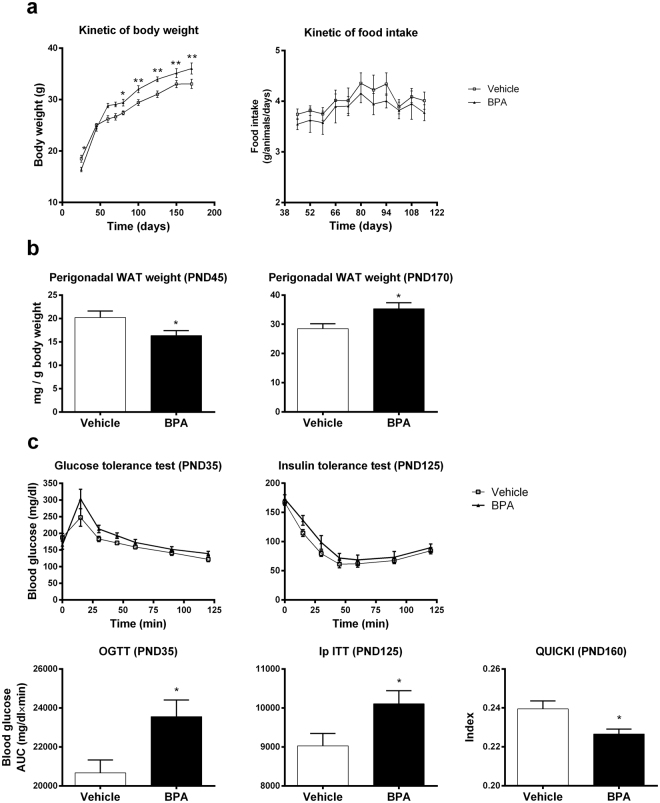
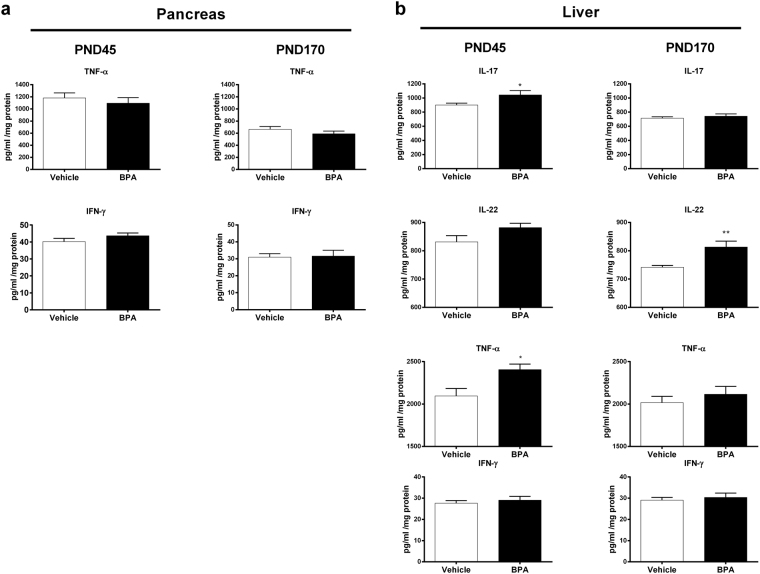
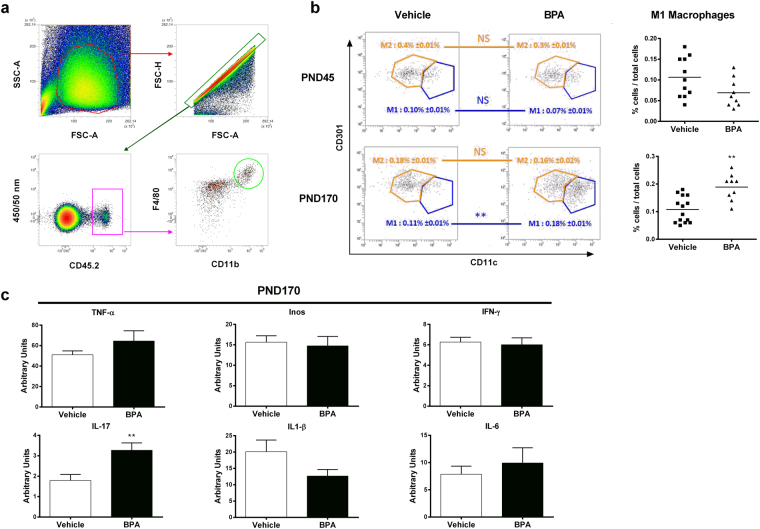
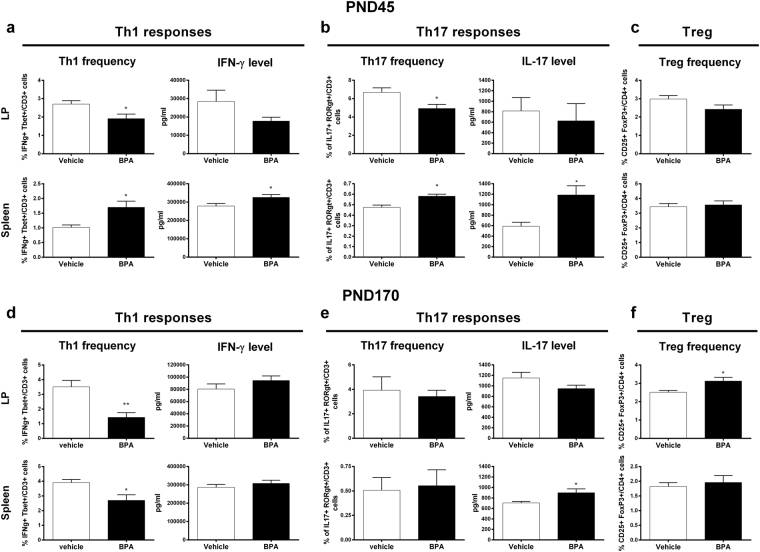
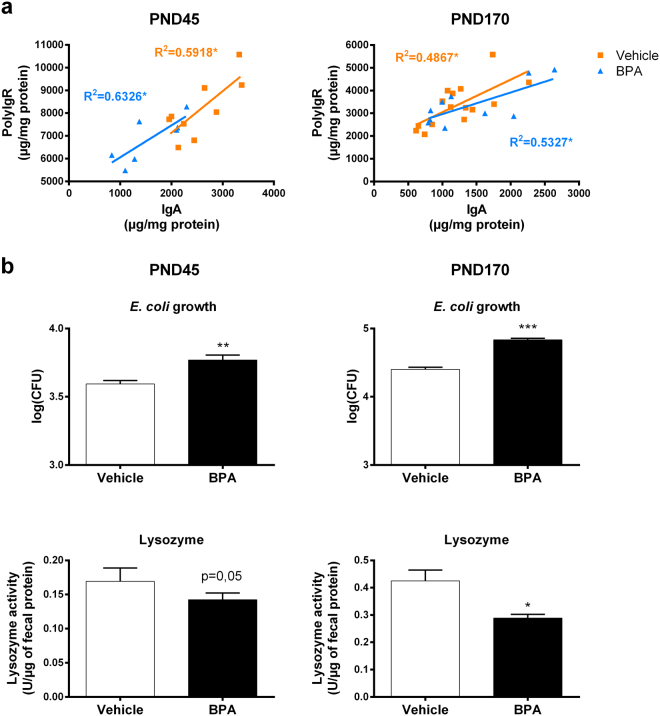
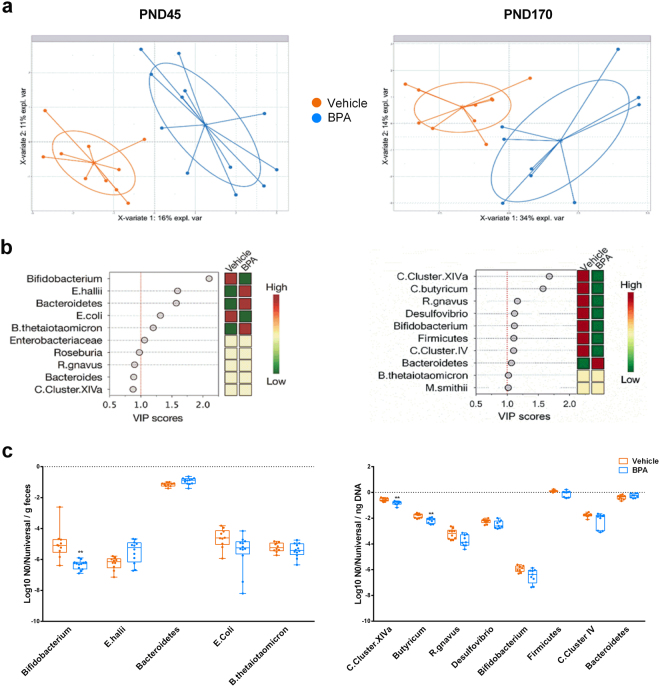
Epidemiology evidenced the Bisphenol A (BPA), a chemical found in daily consumer products, as an environmental contributor to obesity and type II diabetes (T2D) in Humans. However, the BPA-mediated effects supporting these metabolic disorders are still unknown. Knowing that obesity and T2D are associated with low-grade inflammation and gut dysbiosis, we performed a longitudinal study in mice to determine the sequential adverse effects of BPA on immune system and intestinal microbiota that could contribute to the development of metabolic disorders. We observed that perinatal exposure to BPA (50 µg/kg body weight/day) induced intestinal and systemic immune imbalances at PND45, through a decrease of Th1/Th17 cell frequencies in the lamina propria concomitant to an increase of splenic Th1/Th17 immune responses. These early effects are associated with an altered glucose sensitivity, a defect of IgA secretion into faeces and a fall of faecal bifidobacteria relative to control mice. Such BPA-mediated events precede infiltration of pro-inflammatory M1 macrophages in gonadal white adipose tissue appearing with ageing, together with a decreased insulin sensitivity and an increased weight gain. Our findings provide a better understanding of the sequential events provoked by perinatal exposure to BPA that could support metabolic disorder development in later life.
Overview
The claims and statistics of this paper haven’t been checked yet.
Run the check — free, no account needed. It reads the open-access text and checks the sources it cites.
Integrity signals
Registry
Cites
Statistics
Figures
Verification
Claims the paper makes
The claims and statistics of this paper haven’t been checked yet.
Run the check — free, no account needed. It reads the open-access text and checks the sources it cites.
Claims other papers make about this one
Each is checked against this paper’s own text: does it say what the citing paper says it does?
The source backs part of the claim, not all of it — or backs it for a different population, condition or comparison.
In the citing paper
“In part, these changes are associated with enhanced adipocyte size, infiltration of inflammatory leukocytes, and elevated expression of lipogenic markers, like PPAR-γ and SREBP [113].”
From Developmental programming of offspring adipose tissue biology and obesity risk (2021) · cites this paper as [113]
Experimental — accuracy not yet measured
Self-check
Percentages, sums and reported differences re-computed from the paper’s own numbers.
The self-check needs the paper’s full text.
Citations
Cites
An obesity-associated gut microbiome with increased capacity for energy harvest
Turnbaugh, P. J., Ley, R. E., Mahowald, M. A., Magrini, V., Mardis, E. R., & Gordon, J. I. (2006) · Nature · doi:10.1038/nature05414 · Cited by 12,444
Obesity is associated with macrophage accumulation in adipose tissue
Weisberg, S. P., McCann, D., Desai, M., Rosenbaum, M., Leibel, R. L., & Ferrante, A. W. (2003) · Journal of Clinical Investigation · doi:10.1172/jci200319246 · Cited by 10,041
Adipose Expression of Tumor Necrosis Factor-α: Direct Role in Obesity-Linked Insulin Resistance
Hotamisligil, G. S., Shargill, N. S., & Spiegelman, B. M. (1993) · Science · doi:10.1126/science.7678183 · Cited by 7,518
Metabolic Endotoxemia Initiates Obesity and Insulin Resistance
Cani, P. D., Amar, J., Iglesias, M. A., Poggi, M., Knauf, C., Bastelica, D., Neyrinck, A. M., Fava, F., Tuohy, K. M., Chabo, C., et al. (2007) · Diabetes · doi:10.2337/db06-1491 · Cited by 6,638
The gut microbiota as an environmental factor that regulates fat storage
Bäckhed, F., Ding, H., Wang, T., Hooper, L. V., Koh, G. Y., Nagy, A., Semenkovich, C. F., & Gordon, J. I. (2004) · Proceedings of the National Academy of Sciences · doi:10.1073/pnas.0407076101 · Cited by 6,245
The gut microbiota shapes intestinal immune responses during health and disease
Round, J. L., & Mazmanian, S. K. (2009) · Nature Reviews Immunology · doi:10.1038/nri2515 · Cited by 5,029
C-Reactive Protein, Interleukin 6, and Risk of Developing Type 2 Diabetes Mellitus
Pradhan, A. D. (2001) · JAMA · doi:10.1001/jama.286.3.327 · Cited by 4,433
mixOmics: An R package for ‘omics feature selection and multiple data integration
Rohart, F., Gautier, B., Singh, A., & Lê Cao, K.-A. (2017) · PLOS Computational Biology · doi:10.1371/journal.pcbi.1005752 · Cited by 4,056
Katz, A., Nambi, S. S., Mather, K., Baron, A. D., Follmann, D. A., Sullivan, G., & Quon, M. J. (2000) · The Journal of Clinical Endocrinology & Metabolism · doi:10.1210/jcem.85.7.6661 · Cited by 3,931
Kim, H. J., Park, S. Y., Choi, Y. J., Han, S. J., Lee, K. W., & Kim, D. J. (2013) · Hormone Research in Paediatrics · doi:10.1159/000348848 · Cited by 3,061
Research works printed but not linked: 1
- Bagchi, D. & Preuss, H. G. Obesity epidemiology, pathophysiology, and prevention. (CRC Press, 2013).
Cited by
Sorted by citations
Items 101–107 of 107
Ilchmann-Diounou, H. (2019) · theses.fr (ABES) · doi:10.70675/77d1e895zc1e7z4ff0zab27z0432cc19c25d · Cited by 1
Mazenc, A. (2022) · theses.fr (ABES) · doi:10.70675/993fac83z1efdz4dd2z8639z1373d18cf659
Darracq-Ghitalla-Ciock, M. (2023) · theses.fr (ABES) · doi:10.70675/8034e151z3321z47f3zaca4z7471c629142e
Becherucci, G., Puca, P., Vincenzo, F. D., Biamonte, F., Gaudio, A. D., Mentella, M. C., Laterza, L., Raoul, P. C., Rinninella, E., Napolitano, D., et al. (2026) · Frontiers in Nutrition · doi:10.3389/fnut.2026.1881234
Natural products as protective modulators of environmental pollutant toxicity through the gut-X axis
Oyovwi, M. O., Ohwin, P. E., Ben‐Azu, B., Atere, A. D., & Ovie, O. F. (2026) · Food and Chemical Toxicology · doi:10.1016/j.fct.2026.116465
Ruan, C., He, Y., Ran, N., & Wang, Z. (2026) · Environmental Pollution · doi:10.1016/j.envpol.2026.129383
Metadata
- Authors
- Malaisé, Y., Menard, S., Cartier, C., Gaultier, E., Lasserre, F., Lencina, C., Harkat, C., Geoffre, N., Lakhal, L., Castan, I., Olier, M., Houdeau, E., & Guzylack-Piriou, L.
- Affiliations
- Université Toulouse III - Paul Sabatier (FR)
- ORCID
- Malaisé, Yann
- Venue
- Scientific Reports
- Published
- 2017-11-03
- Volume
- 7
- Issue
- 1
- Pages
- 14472-14472
- ISSN
- 2045-2322 (ISSN-L)
- PMC
- PMC5670173
- OpenAlex
- W2767042225
- Cited by
- 107
- References
- 65
- Citations by year
- 2026: 4 · 2025: 8 · 2024: 22 · 2023: 16 · 2022: 15 · 2021: 12 · 2020: 16 · 2019: 8 · 2018: 4 · 2017: 1
- FWCI
- 4.27
- Type
- journal article
- Language
- en
- Open access
- gold
- doi.org
- Locations
- Scientific Reports (publishedVersion, cc-by)
- Europe PMC (PubMed Central) (publishedVersion, cc-by)
- PubMed Central (publishedVersion, cc-by)
- PubMed (publishedVersion)
- HAL (submittedVersion, other-oa)
- Funders
- Agence Nationale de la Recherche (ANR-10-CESA-005, ANR-10-CESA-0005, ANR-10)
- Institut National de la Recherche Agronomique
- Agence Nationale de Sécurité Sanitaire de l’Alimentation, de l’Environnement et du Travail (EST-2015/1/026)
- Topics
- Physical Sciences › Environmental Science › Health, Toxicology and Mutagenesis › Effects and risks of endocrine disrupting chemicals
- Life Sciences › Biochemistry, Genetics and Molecular Biology › Molecular Biology › Gut microbiota and health
- Health Sciences › Medicine › Endocrinology, Diabetes and Metabolism › Adipokines, Inflammation, and Metabolic Diseases
- Keywords
- bisphenol A, perinatal exposure, gut dysbiosis, gut microbiota, immune homeostasis, Th1/Th17 cells, lamina propria, IgA secretion, Bifidobacterium, M1 macrophages, white adipose tissue, insulin resistance, obesity, type 2 diabetes, low-grade inflammation, endocrine disruptors, metabolic disorders
- MeSH terms
- Gastrointestinal Microbiome, Bisphenol A Compounds, Animals, Animals, Newborn, Benzhydryl Compounds, Environmental Pollutants, Feces, Female, Glucose, Immunoglobulin A, Immune System, Inflammation, Longitudinal Studies, Male, Mice, Inbred C3H, Obesity, Phenols, Pregnancy, Prenatal Exposure Delayed Effects, Time Factors, Dysbiosis
About these checks
Registry, retraction, Cites and statistics results are computed, not judged, with one exception: a printed reference that no index lists is read once by a model before it counts as a citation error. Claims are extracted by a model and kept only when their quote appears verbatim in the text; each cited source is then checked, with a model’s help, for whether it says what the claim relies on. Those verdicts can be wrong — read the claim’s quote and the cited source before relying on one.
Statistics and arithmetic are recomputed, not judged.
Confidence bands are shown only for fields calibrated on our annotated test set. None is calibrated yet, so no band is shown.
What counts as a claim ›How we measure confidence ›How we check this ›
Are you an author, or do you see a problem with this page? Request a review
