

Repurposing an inhibitor of ribosomal biogenesis with broad anti-fungal activity
Open accessThe DOI matches its Crossref record; 28 of the 28 references it cites were found in a registry or an index.
Abstract
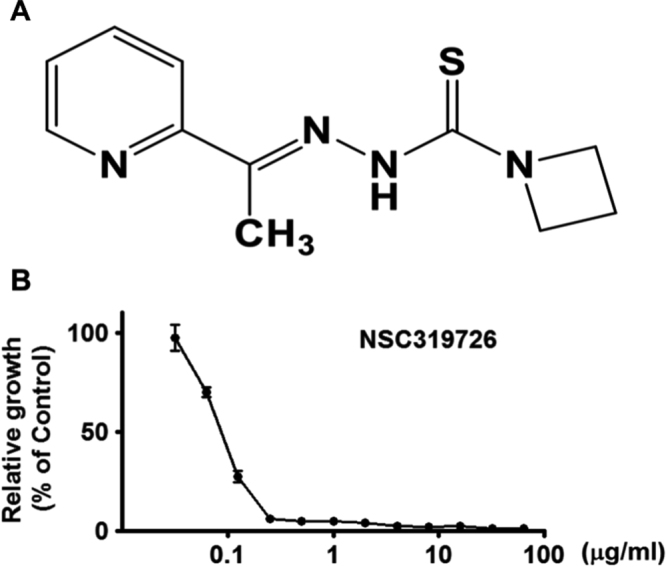
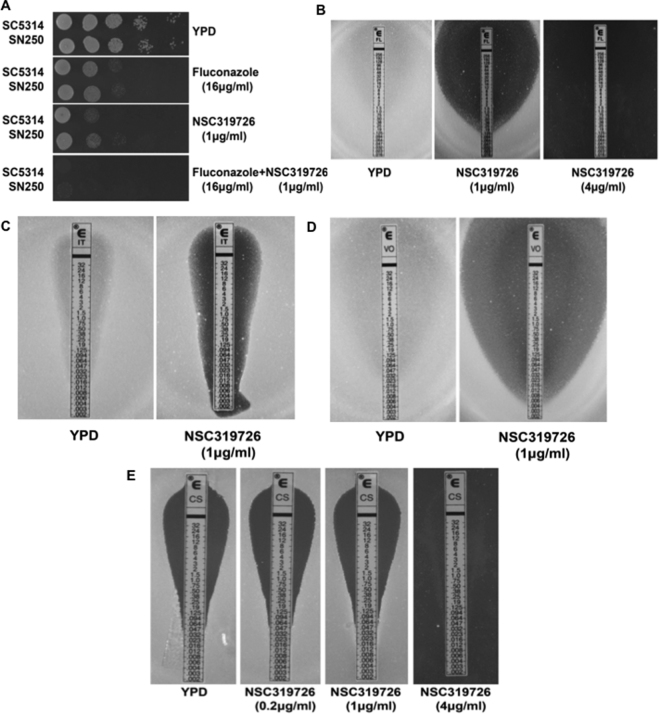
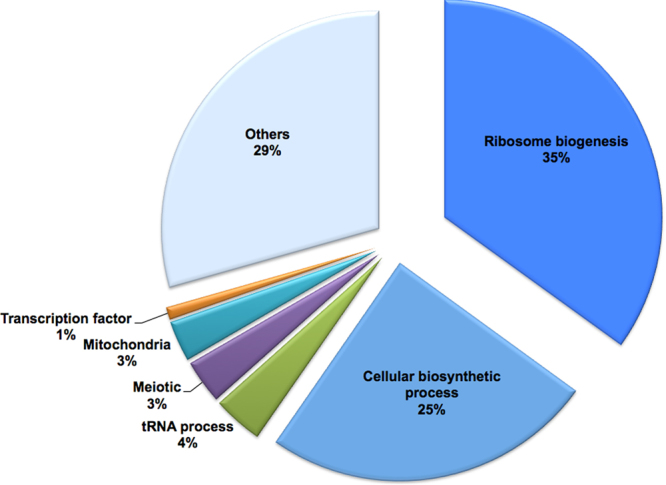
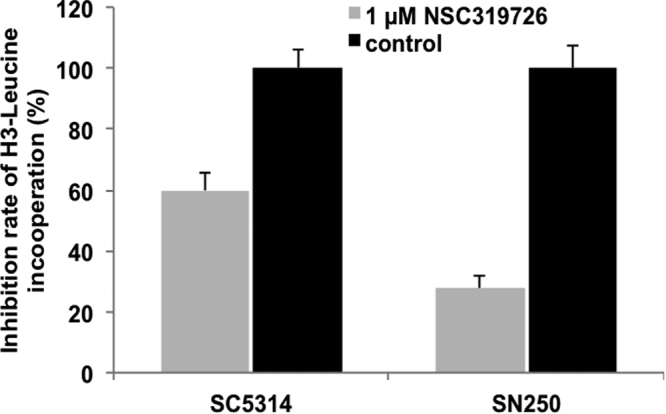
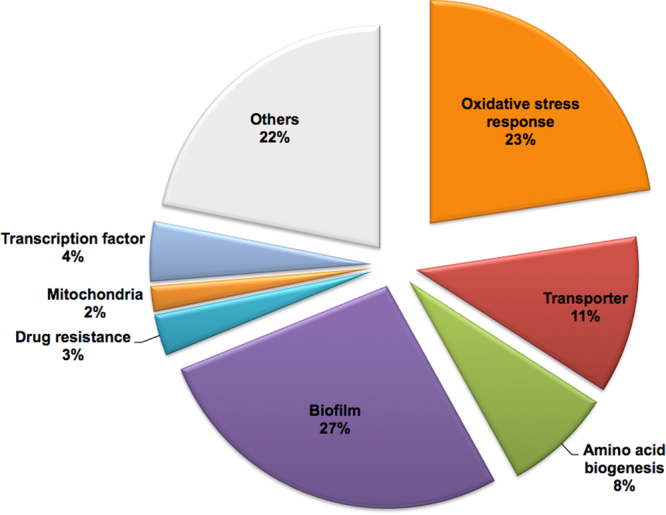
The lack of new antifungal compounds with unique mechanisms of action is a concern for therapeutic management of patients. To identify inhibitors against human pathogenic fungi, we screened ~3000 compounds provided by the Developmental Therapeutics Program of NIH/NCI against a panel of pathogenic fungi including Candida species, Aspergillus fumigatus, and Cryptococcus neoformans. NSC319726 (a thiosemicarbazone) had broad antifungal activity in the range of 0.1–2.0 µg/ml and was also inhibitory to fluconazole-resistant isolates of Candida species. Synergy was demonstrated with NSC319726 and azoles, as well as caspofungin. The inhibitory concentration 50% (IC 50) of NSC319726 was 35–800-fold higher than the Minimum Inhibitory Concentration 50% (MIC 50 values), which indicates low compound toxicity to human cells in vitro. Transcriptome analysis of treated and untreated C. albicans using Gene Ontology (GO) revealed a large cluster of down regulated genes that encode translational proteins, especially those with ribosome biogenesis functions. As NSC319726 was first shown to have anti-cancer activity, its affects against human pathogenic fungi establish NSC319726 as a repurposed, off-patent compound that has potential antifungal activity. The minimal in vitro toxicity of lead optimized NSC319726 and its reasonable inhibitory activity against pathogens suggest advancing this compound to in vivo toxicity testing and protection studies against candidiasis.
Overview
The claims and statistics of this paper haven’t been checked yet.
Free: it reads the open-access text and checks the first 5 claims that cite a source we can check. Create a free account to check every claim.
Integrity signals
Registry
Cites
Statistics
Figures
Verification
Claims the paper makes
The claims and statistics of this paper haven’t been checked yet.
Free: it reads the open-access text and checks the first 5 claims that cite a source we can check. Create a free account to check every claim.
Claims other papers make about this one
Each is checked against this paper’s own text: does it say what the citing paper says it does?
The source backs part of the claim, not all of it — or backs it for a different population, condition or comparison.
In the citing paper
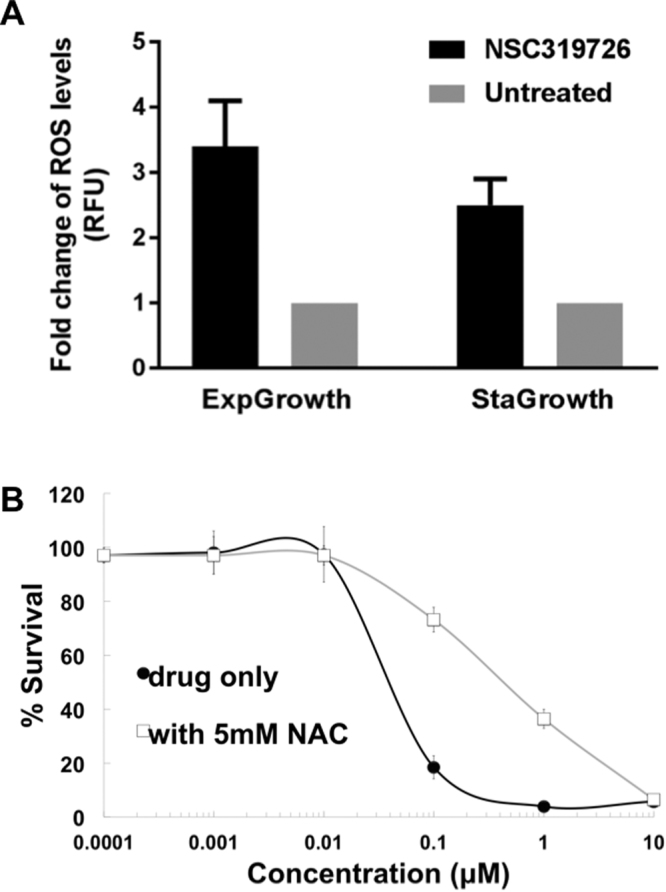
“In addition, Sun et al. reported that the thiosemicarbazone derivative NSC319726 exerts fungicidal activity by inhibiting ribosome biogenesis and increasing ROS generation (57).”
From Selective Metal Chelation by a Thiosemicarbazone Derivative Interferes with Mitochondrial Respiration and Ribosome Biogenesis in Candida albicans (2022) · cites this paper as [57]
Experimental — accuracy not yet measured
Self-check
Percentages, sums and reported differences re-computed from the paper’s own numbers.
The self-check needs the paper’s full text.
Citations
Cites
Hidden Killers: Human Fungal Infections
Brown, G. D., Denning, D. W., Gow, N. A. R., Levitz, S. M., Netea, M. G., & White, T. C. (2012) · Science Translational Medicine · doi:10.1126/scitranslmed.3004404 · Cited by 4,284
Antifungal drug resistance: mechanisms, epidemiology, and consequences for treatment
Pfaller, M. A. (2012) · The American Journal of Medicine · doi:10.1016/j.amjmed.2011.11.001 · Cited by 903
Efflux-Mediated Antifungal Drug Resistance
Cannon, R. D., Lamping, E., Holmes, A. R., Niimi, K., Baret, P. V., Keniya, M. V., Tanabe, K., Niimi, M., Goffeau, A., & Monk, B. C. (2009) · Clinical Microbiology Reviews · doi:10.1128/cmr.00051-08 · Cited by 608
Morschhäuser, J., Barker, K. S., Liu, T. T., Blaß-Warmuth, J., Homayouni, R., & Rogers, P. D. (2007) · PLoS Pathogens · doi:10.1371/journal.ppat.0030164 · Cited by 355
Allele-Specific p53 Mutant Reactivation
Yu, X., Vazquez, A., Levine, A. J., & Carpizo, D. R. (2012) · Cancer Cell · doi:10.1016/j.ccr.2012.03.042 · Cited by 319
Zhang, L., Yan, K., Zhang, Y., Huang, R., Bian, J., Zheng, C., Sun, H., Chen, Z., Sun, N., An, R., et al. (2007) · Proceedings of the National Academy of Sciences · doi:10.1073/pnas.0609370104 · Cited by 248
Self-citationBursać, S., Brdovčak, M. C., Pfannkuchen, M., Orsolić, I., Golomb, L., Zhu, Y., Katz, C., Daftuar, L., Grabušić, K., Vukelić, I., et al. (2012) · Proceedings of the National Academy of Sciences · doi:10.1073/pnas.1218535109 · Cited by 227
Global Analysis of the Evolution and Mechanism of Echinocandin Resistance in Candida glabrata
Singh-Babak, S. D., Babak, T., Diezmann, S., Hill, J. A., Xie, J. L., Chen, Y.-L., Poutanen, S. M., Rennie, R. P., Heitman, J., & Cowen, L. E. (2012) · PLoS Pathogens · doi:10.1371/journal.ppat.1002718 · Cited by 205
Signalling and oxidant adaptation in Candida albicans and Aspergillus fumigatus
Chauhan, N., Latge, J.-P., & Calderone, R. (2006) · Nature Reviews Microbiology · doi:10.1038/nrmicro1426 · Cited by 199
Self-citationAntifungal Drug Discovery: Something Old and Something New
Butts, A., & Krysan, D. J. (2012) · PLoS Pathogens · doi:10.1371/journal.ppat.1002870 · Cited by 182
Cited by
The Virtuous Galleria mellonella Model for Scientific Experimentation
Serrano, I. D., Verdial, C., Tavares, L. M., & Oliveira, M. (2023) · Antibiotics · doi:10.3390/antibiotics12030505 · Cited by 140
Antifungal drugs: New insights in research & development
Nicola, A. M., Albuquerque, P., Paes, H. C., Fernandes, L., Costa, F. F., Kioshima, E. S., Abadio, A. K. R., Bocca, A. L., & Felipe, M. S. (2019) · Pharmacology & Therapeutics · doi:10.1016/j.pharmthera.2018.10.008 · Cited by 139
Galleria mellonella Larvae as a Model for Investigating Fungal—Host Interactions
Curtis, A., Binder, U., & Kavanagh, K. A. (2022) · Frontiers in Fungal Biology · doi:10.3389/ffunb.2022.893494 · Cited by 82
Kim, J. H., Cheng, L. W., Chan, K. L., Tam, C. C., Mahoney, N., Friedman, M., Shilman, M. M., & Land, K. M. (2020) · Antibiotics · doi:10.3390/antibiotics9110812 · Cited by 71
Screening Repurposing Libraries for Identification of Drugs with Novel Antifungal Activity
Wall, G., & Lopez-Ribot, J. L. (2020) · Antimicrobial Agents and Chemotherapy · doi:10.1128/aac.00924-20 · Cited by 62
Metadata
- Authors
- Sun, N., Li, D., Zhang, Y., Killeen, K., Groutas, W., & Calderone, R.
- Affiliations
- Georgetown University Medical Center (US)
- Wichita State University (US)
- Corresponding author
- Calderone, Richard
- Venue
- Scientific Reports
- Published
- 2017-12-05
- Volume
- 7
- Issue
- 1
- Pages
- 17014-17014
- ISSN
- 2045-2322 (ISSN-L)
- PMC
- PMC5717060
- OpenAlex
- W2768167309
- Cited by
- 36
- References
- 28
- Citations by year
- 2026: 2 · 2025: 6 · 2024: 2 · 2023: 2 · 2022: 9 · 2021: 6 · 2020: 6 · 2019: 1 · 2018: 2
- FWCI
- 1.89
- Type
- journal article
- Language
- en
- Open access
- gold
- doi.org
- Licence
- cc-by
- creativecommons.org/licenses/by/4.0 (tdm)
- creativecommons.org/licenses/by/4.0 (vor)
- Locations
- Scientific Reports (publishedVersion, cc-by)
- Europe PMC (PubMed Central) (publishedVersion, cc-by)
- PubMed Central (publishedVersion, cc-by)
- PubMed (publishedVersion)
- Holmes Museum Of Anthropology (Wichita State University) (submittedVersion)
- Funders
- National Institutes of Health
- National Institute of Allergy and Infectious Diseases
- Topics
- Health Sciences › Medicine › Infectious Diseases › Antifungal resistance and susceptibility
- Life Sciences › Agricultural and Biological Sciences › Plant Science › Fungal Plant Pathogen Control
- Life Sciences › Biochemistry, Genetics and Molecular Biology › Molecular Biology › Fungal and yeast genetics research
- Keywords
- thiosemicarbazones, drug repurposing, antifungal activity, Candida albicans, Candida, Aspergillus fumigatus, Cryptococcus neoformans, fluconazole resistance, antifungal synergy, caspofungin, azoles, candidiasis, gene expression profiling, cytotoxicity
- MeSH terms
- Antifungal Agents, Aspergillosis, Aspergillus fumigatus, Candida, Candidiasis, Cryptococcosis, Cryptococcus neoformans, Fungi, Humans, Microbial Sensitivity Tests, Mycoses, Pyridines, Ribosomes, Protein Biosynthesis, Tumor Cells, Cultured, Apoptosis, Cell Proliferation, Drug Repositioning
About these checks
Registry, retraction, Cites and statistics results are computed, not judged, with one exception: a printed reference that no index lists is read once by a model before it counts as a citation error. Claims are extracted by a model and kept only when their quote appears verbatim in the text; each cited source is then checked, with a model’s help, for whether it says what the claim relies on. Those verdicts can be wrong — read the claim’s quote and the cited source before relying on one.
Statistics and arithmetic are recomputed, not judged.
Confidence bands are shown only for fields calibrated on our annotated test set. None is calibrated yet, so no band is shown.
What counts as a claim ›How we measure confidence ›How we check this ›
Are you an author, or do you see a problem with this page? Request a review
How to cite
Cite CoChat for the checks on this page, and the paper for its own findings.
- This page
- CoChat. (2026). Citation check: Repurposing an inhibitor of ribosomal biogenesis with broad anti-fungal activity. https://app.cochat.ai/papers/10.1038/s41598-017-17147-x
- The paper
- Sun, N., Li, D., Zhang, Y., Killeen, K., Groutas, W., & Calderone, R. (2017). Repurposing an inhibitor of ribosomal biogenesis with broad anti-fungal activity. Scientific Reports. https://doi.org/10.1038/s41598-017-17147-x
Data sources
Bibliographic data: Semantic Scholar, OpenAlex, Crossref.
Contains information from the Semantic Scholar Academic Graph Datasets, made available under the ODC Attribution License (ODC-BY 1.0).
Semantic Scholar’s data is described in: Kinney, R., et al. (2023). The Semantic Scholar Open Data Platform. arXiv:2301.10140.
