

Oligonucleotide conjugated multi-functional adeno-associated viruses
Open accessThe DOI matches its Crossref record; 55 of the 56 references it cites were found in a registry or an index.
Abstract
Recombinant adeno-associated viruses (AAVs) are among the most commonly used vehicles for in vivo gene delivery. However, their tropism is limited, and additionally their efficacy can be negatively affected by prevalence of neutralizing antibodies in sera. Methodologies to systematically engineer AAV capsid properties would thus be of great relevance. In this regard, we develop here multi-functional AAVs by engineering precision tethering of oligonucleotides onto the AAV surface, and thereby enabling a spectrum of nucleic-acid programmable functionalities. Towards this, we engineered genetically encoded incorporation of unnatural amino acids (UAA) bearing bio-orthogonal chemical handles onto capsid proteins. Via these we enabled site-specific coupling of oligonucleotides onto the AAV capsid surface using facile click chemistry. The resulting oligo-AAVs could be sequence specifically labeled, and also patterned in 2D using DNA array substrates. Additionally, we utilized these oligo conjugations to engineer viral shielding by lipid-based cloaks that efficaciously protected the AAV particles from neutralizing serum. We confirmed these ‘cloaked AAVs’ retained full functionality via their ability to transduce a range of cell types, and also enable robust delivery of CRISPR-Cas9 effectors. Taken together, we anticipate this programmable oligo-AAV system will have broad utility in synthetic biology and AAV engineering applications.
Overview
The claims and statistics of this paper haven’t been checked yet.
Free: it reads the open-access text and checks the first 5 claims that cite a source we can check. Create a free account to check every claim.
Integrity signals
Registry
Cites
Statistics
Figures
Verification
Claims the paper makes
The claims and statistics of this paper haven’t been checked yet.
Free: it reads the open-access text and checks the first 5 claims that cite a source we can check. Create a free account to check every claim.
Claims other papers make about this one
Each is checked against this paper’s own text: does it say what the citing paper says it does?
In the citing paper
“However, the packaging yields were signi fi cantly lowered.”
From A versatile toolkit for overcoming AAV immunity (2022) · cites this paper as [139]
In the citing paper
“A more recent study applied click chemistry to speci fi cally introduce unnatural amino acids (UAA), which can be tethered with various small molecules and polymers, into capsid proteins (139). This study showed that the resultant chemically modi fi ed AAV, oligo-AAV, had improved resistance against NAbs compared with previous polymer-conjugated AAVs.”
From A versatile toolkit for overcoming AAV immunity (2022) · cites this paper as [139]
Self-check
Percentages, sums and reported differences re-computed from the paper’s own numbers.
The self-check needs the paper’s full text.
Citations
Cites
Folding DNA to create nanoscale shapes and patterns
Rothemund, P. W. K. (2006) · Nature · doi:10.1038/nature04586 · Cited by 7,354
Agard, N. J., Prescher, J. A., & Bertozzi, C. R. (2004) · Journal of the American Chemical Society · doi:10.1021/ja044996f · Cited by 3,017
Self-assembly of DNA into nanoscale three-dimensional shapes
Douglas, S. M., Dietz, H., Liedl, T., Högberg, B., Graf, F., & Shih, W. M. (2009) · Nature · doi:10.1038/nature08016 · Cited by 2,571
Manno, C. S., Pierce, G. F., Arruda, V. R., Glader, B., Ragni, M., Rasko, J. J. E., Ozelo, M. C., Hoots, K., Blatt, P., Konkle, B., et al. (2006) · Nature Medicine · doi:10.1038/nm1358 · Cited by 2,163
Adenovirus-Associated Virus Vector–Mediated Gene Transfer in Hemophilia B
Nathwani, A. C., Tuddenham, E. G. D., Rangarajan, S., Rosales, C., McIntosh, J., Linch, D. C., Chowdary, P., Riddell, A., Pie, A. J., Harrington, C., et al. (2011) · New England Journal of Medicine · doi:10.1056/nejmoa1108046 · Cited by 1,864
Expanding the Genetic Code of Escherichia coli
Wang, L., Brock, A., Herberich, B., & Schultz, P. G. (2001) · Science · doi:10.1126/science.1060077 · Cited by 1,499
Analysis of AAV Serotypes 1–9 Mediated Gene Expression and Tropism in Mice After Systemic Injection
Zincarelli, C., Soltys, S., Rengo, G., & Rabinowitz, J. E. (2008) · Molecular Therapy · doi:10.1038/mt.2008.76 · Cited by 1,490
Folding DNA into Twisted and Curved Nanoscale Shapes
Dietz, H., Douglas, S. M., & Shih, W. M. (2009) · Science · doi:10.1126/science.1174251 · Cited by 1,335
Three-Dimensional Structures Self-Assembled from DNA Bricks
Ke, Y., Ong, L. L., Shih, W. M., & Yin, P. (2012) · Science · doi:10.1126/science.1227268 · Cited by 1,246
Cre-dependent selection yields AAV variants for widespread gene transfer to the adult brain
Deverman, B. E., Pravdo, P. L., Simpson, B. P., Kumar, S. R., Chan, K. Y., Banerjee, A., Wu, W.-L., Yang, B., Huber, N., Pasca, S. P., et al. (2016) · Nature Biotechnology · doi:10.1038/nbt.3440 · Cited by 1,061
Cited by
Adeno-associated virus vector as a platform for gene therapy delivery
Wang, D., Tai, P. W. L., & Gao, G. (2019) · Nature Reviews Drug Discovery · doi:10.1038/s41573-019-0012-9 · Cited by 2,444
Base editing: advances and therapeutic opportunities
Porto, E. M., Komor, A. C., Slaymaker, I. M., & Yeo, G. W. (2020) · Nature Reviews Drug Discovery · doi:10.1038/s41573-020-0084-6 · Cited by 476
AAV vectors: The Rubik’s cube of human gene therapy
Pupo, A., Fernández, A., Low, S. H., François, A., Suárez-Amarán, L., & Samulski, R. J. (2022) · Molecular Therapy · doi:10.1016/j.ymthe.2022.09.015 · Cited by 360
AAV vectors applied to the treatment of CNS disorders: Clinical status and challenges
Kang, L., Jin, S., Wang, J., Lv, Z., Xin, C., Tan, C., Zhao, M., Wang, L., & Liu, J. (2023) · Journal of Controlled Release · doi:10.1016/j.jconrel.2023.01.067 · Cited by 131
Using genetically incorporated unnatural amino acids to control protein functions in mammalian cells
Nödling, A. R., Spear, L. A., Williams, T., Luk, L. Y. P., & Tsai, Y.-H. (2019) · Essays in Biochemistry · doi:10.1042/ebc20180042 · Cited by 71
Engineering the AAV capsid to evade immune responses
Barnes, C., Scheideler, O., & Schaffer, D. (2019) · Current Opinion in Biotechnology · doi:10.1016/j.copbio.2019.01.002 · Cited by 102
Liposomal delivery of CRISPR/Cas9
Zhen, S., & Li, X. (2019) · Cancer Gene Therapy · doi:10.1038/s41417-019-0141-7 · Cited by 114
Dogbey, D. M., Torres, V. E. S., Fajemisin, E. A., Mpondo, L., Ngwenya, T., Akinrinmade, O. A., Perriman, A. W., & Barth, S. (2023) · Drug Delivery and Translational Research · doi:10.1007/s13346-023-01362-3 · Cited by 108
“In addition, development of site-specific targeting oligonucleotides coupled to the capsid of a recombinant AAV has successfully delivered CRISPR-Cas9 effectors as well as the ability to withstand neutralization antibodies when exposed to pig serum [86].”
Manso, A. M., Hashem, S. I., Nelson, B. C., Gault, E., Soto-Hermida, A., Villarruel, E., Brambatti, M., Bogomolovas, J., Bushway, P. J., Chen, C., et al. (2020) · Science Translational Medicine · doi:10.1126/scitranslmed.aax1744 · Cited by 86
Becker, J., Fakhiri, J., & Grimm, D. (2022) · Pathogens · doi:10.3390/pathogens11070756 · Cited by 79
“To this end, a multitude of chemical and biochemical approaches exist to couple oligonucleotides [128], sugar moie‐ ties [129–131], proteins [132], or synthetic polymers such as polyethylene glycol [133,134] to the AAV capsid.”
BackgroundAdeno-Associated Viruses (AAV) and Host Immunity – A Race Between the Hare and the Hedgehog
Rapti, K., & Grimm, D. (2021) · Frontiers in Immunology · doi:10.3389/fimmu.2021.753467 · Cited by 79
Sood, D., Cairns, D. M., Dabbi, J. M., Ramakrishnan, C., Deisseroth, K., Black, L. D., Santaniello, S., & Kaplan, D. L. (2019) · Scientific Reports · doi:10.1038/s41598-019-54248-1 · Cited by 70
A versatile toolkit for overcoming AAV immunity
Li, X., Wei, X., Lin, J., & Ou, L. (2022) · Frontiers in Immunology · doi:10.3389/fimmu.2022.991832 · Cited by 57
“Frontiers in Immunology 10 and polymers, into capsid proteins (139).”
BackgroundAntibody-drug conjugates in cancer therapy: applications and future advances
Long, R., Zuo, H., Tang, G., Zhang, C., Yue, X., Yang, J., Luo, X., Deng, Y., Qiu, J.-Y., Li, J., et al. (2025) · Frontiers in Immunology · doi:10.3389/fimmu.2025.1516419 · Cited by 66
“Similarly, the incorporation of non-natural amino acids enables bioorthogonal click chemistry conjugation, which has been validated in tumor-targeting nanocarriers (82).”
Maybe you can turn me on: CRISPRa-based strategies for therapeutic applications
Bećirović, E. (2022) · Cellular and Molecular Life Sciences · doi:10.1007/s00018-022-04175-8 · Cited by 57
Han, Z., Luo, N., Ma, W., Liu, X., Cai, Y., Kou, J., Wang, J., Li, L., Peng, S., Xu, Z., et al. (2023) · Nature Communications · doi:10.1038/s41467-023-39554-7 · Cited by 53
Positron emission tomography imaging of novel AAV capsids maps rapid brain accumulation
Seo, J. W., Ingham, E. S., Mahakian, L. M., Tumbale, S. K., Wu, B., Aghevlian, S., Shams, S., Baikoghli, M., Jain, P., Ding, X., et al. (2020) · Nature Communications · doi:10.1038/s41467-020-15818-4 · Cited by 47
Translating CRISPR-Cas Therapeutics: Approaches and Challenges
Tay, L. S., Palmer, N. D., Panwala, R., Chew, W. L., & Mali, P. (2020) · The CRISPR Journal · doi:10.1089/crispr.2020.0025 · Cited by 48
“’’ This strategy was used to tether ligands on the AAV capsid to achieve tissue-specific targeting and protection against antibodies.(66,67) Another approach involves encasing the AAV in a membrane exosome, allowing for greater customization of the external layer of the drug.”
Self-citationLam, A. K., Zhang, J., Frabutt, D. A., Mulcrone, P. L., Li, L., Zeng, L., Herzog, R. W., & Xiao, W. (2022) · Molecular Therapy — Methods & Clinical Development · doi:10.1016/j.omtm.2022.09.008 · Cited by 42
Puzzo, F., Zhang, C., Gray, B. P., Zhang, F., Sullenger, B. A., & Kay, M. A. (2023) · Molecular Therapy — Nucleic Acids · doi:10.1016/j.omtn.2023.01.007 · Cited by 42
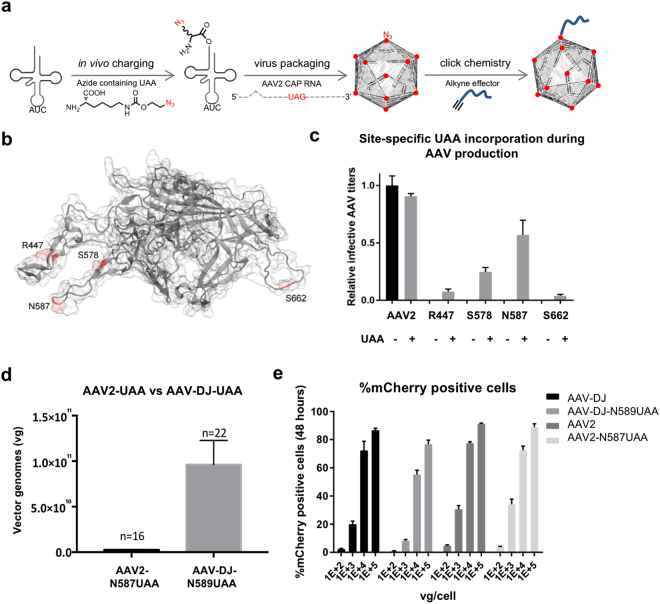
“In particular, the placement of an azido group (N3) on the capsid surface allows click chemistry conjugation of molecules on AAV2.”
MethodGene therapy for genetic diseases: challenges and future directions
Beibei, Q. I. E., Tuo, J., Chen, F., Ding, H., & Lyu, L. (2025) · MedComm · doi:10.1002/mco2.70091 · Cited by 45
Zhao, Z., Kim, J., Suja, V. C., Kapate, N., Gao, Y., Guo, J., Muzykantov, V. R., & Mitragotri, S. (2022) · Advanced Science · doi:10.1002/advs.202201293 · Cited by 36
Oligonucleotide-Based Therapies for Renal Diseases
Cartón‐García, F., Saande, C. J., Meraviglia-Crivelli, D., Aldabe, R., & Pastor, F. (2021) · Biomedicines · doi:10.3390/biomedicines9030303 · Cited by 29
RNA-Guided Adenosine Deaminases: Advances and Challenges for Therapeutic RNA Editing
Chen, G., Katrekar, D., & Mali, P. (2019) · Biochemistry · doi:10.1021/acs.biochem.9b00046 · Cited by 29
Self-citationLam, A. K., Frabutt, D. A., Li, L., & Xiao, W. (2021) · Human Gene Therapy · doi:10.1089/hum.2021.124 · Cited by 28
“28 Since AAV-DJ is a chimera of AAV serotypes 2, 8, and 9, its titer and infectivity outperform AAV2 about 10-folds in multiple cell lines and naive mice.”
Chemical approaches to probe and engineer AAV vectors
Pham, Q. T., Glicksman, J., & Chatterjee, A. (2024) · Nanoscale · doi:10.1039/d4nr01300j · Cited by 26
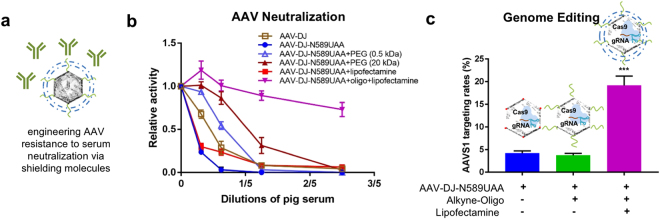
“110 By complexing the resulting oligonucleotide-labeled capsids with lipofectamine (a cationic lipid based transfection agent), they showed that the resulting lipofectamine-coated capsids were e ff ectively shielded from neutralizing serum.”
BackgroundSynthesis at the interface of virology and genetic code expansion
Kelemen, R. E., Erickson, S. B., & Chatterjee, A. (2018) · Current Opinion in Chemical Biology · doi:10.1016/j.cbpa.2018.07.015 · Cited by 24
Erickson, S. B., Pham, Q. T., Cao, X., Glicksman, J., Kelemen, R. E., Shahraeini, S. S., Bodkin, S., Kiyam, Z., & Chatterjee, A. (2023) · Bioconjugate Chemistry · doi:10.1021/acs.bioconjchem.3c00411 · Cited by 20
AAV vectors engineered to target insulin receptor greatly enhance intramuscular gene delivery
Jackson, C. B., Richard, A. S., Ojha, A., Conkright, K. A., Trimarchi, J. M., Bailey, C. C., Alpert, M. D., Kay, M. A., Farzan, M., & Choe, H. (2020) · Molecular Therapy — Methods & Clinical Development · doi:10.1016/j.omtm.2020.11.004 · Cited by 19
Site‐Specific Antibody Fragment Conjugates for Reversible Staining in Fluorescence Microscopy
Schwach, J., Kolobynina, K. G., Brandstetter, K., Gerlach, M., Ochtrop, P., Helma, J., Hackenberger, C. P. R., Harz, H., Cardoso, M. C., Leonhardt, H., et al. (2020) · ChemBioChem · doi:10.1002/cbic.202000727 · Cited by 15
Fakhiri, J., Landegger, L. D., & Grimm, D. (2020) · Hearing Research · doi:10.1016/j.heares.2020.108092 · Cited by 15
Non-canonical amino acid incorporation into AAV5 capsid enhances lung transduction in mice
Chang, H., Du, A., Jiang, J., Ren, L., Liu, N., Zhou, X., Liang, J., Gao, G., & Wang, D. (2023) · Molecular Therapy — Methods & Clinical Development · doi:10.1016/j.omtm.2023.101129 · Cited by 14
“13,22,24,25 40 For example, Horowitz et al. modi fi ed AAV2 arginine residues to the neutral adduct hydroimidazolone by glycation, which redirected the vector tropism from liver to skeletal and cardiac muscle in mice by systemic administration.”
BackgroundFluorescence Microscopy in Adeno-Associated Virus Research
Golm, S. K., Hübner, W., & Müller, K. M. (2023) · Viruses · doi:10.3390/v15051174 · Cited by 13
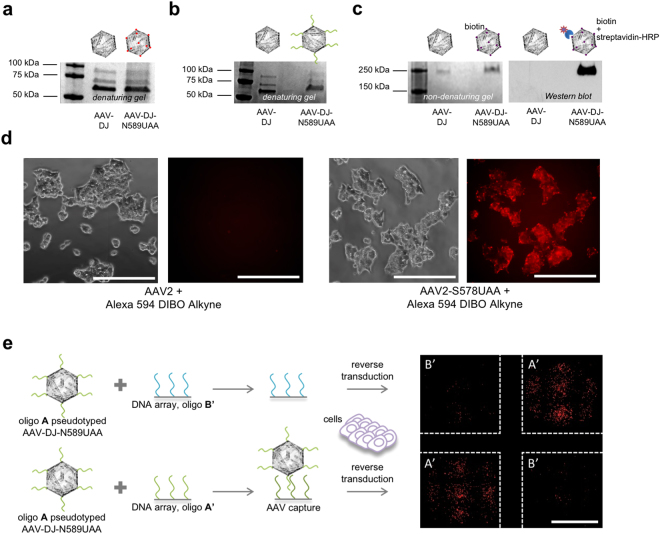
“The virus crosslinked with DBIO-AlexaFluor was added to HEK-293T cells and imaged 2 h after treatment [61].”
MethodHao, R., Ma, K., Ru, Y., Li, D., Song, G., Lu, B., Liu, H., Li, Y., Zhang, J., Wu, C., et al. (2021) · RNA Biology · doi:10.1080/15476286.2021.1907055 · Cited by 12
Reaching New Heights in Genetic Code Manipulation with High Throughput Screening
Lino, B. R., Williams, S. J., Castor, M. E., & Deventer, J. A. V. (2024) · Chemical Reviews · doi:10.1021/acs.chemrev.4c00329 · Cited by 11
Emerging Concepts in Vector Development for Glial Gene Therapy: Implications for Leukodystrophies
von Jonquières, G., Rae, C. D., & Housley, G. D. (2021) · Frontiers in Cellular Neuroscience · doi:10.3389/fncel.2021.661857 · Cited by 12
A facile chemical strategy to synthesize precise AAV-protein conjugates for targeted gene delivery
Pham, Q. T., Glicksman, J., Han, B., Shahraeini, S. S., Jewel, D., Loynd, C., Roy, S. J. S., & Chatterjee, A. (2025) · Molecular Therapy Oncology · doi:10.1016/j.omton.2025.201040 · Cited by 12
Cho, M., Jung, K., Kim, S., Kim, I., Kim, M., Shin, M., Lee, H., Park, K. I., & Jang, J. (2019) · Gene Therapy · doi:10.1038/s41434-019-0057-8 · Cited by 7
Gene delivery into cells and tissues
Nelson, C. E., Duvall, C. L., Prokop, A., Gersbach, C. A., & Davidson, J. M. (2020) · Elsevier eBooks · doi:10.1016/b978-0-12-818422-6.00030-7 · Cited by 9
Reprogramming Adeno-Associated Virus Tropism Via Displayed Peptides Tiling Receptor-LigandsPreprint
Portell, A. J., Ford, K. M., Suhardjo, A., Rainaldi, J., Bublik, M. N., Sanghvi, M., Kumar, A., Wing, M. K., Palmer, N. D., Le, D. A., et al. (2022) · bioRxiv (Cold Spring Harbor Laboratory) · doi:10.1101/2022.09.26.509383 · Cited by 5
Self-citationSynergistic antioxidant and gene supplementation for high-efficacy retinitis pigmentosa therapy
Wu, F., Wu, H., Yang, J., Wang, H., Pan, S., Zhan, Y., Liao, H., Chen, Y., Wu, X., & Yang, Z. (2026) · Science Advances · doi:10.1126/sciadv.aed0154 · Cited by 4
Milagros, S., de Erenchun, P. R.-R., Guembe, M., Carte, B., Méndez, M., Uribarri, A., & Aldabe, R. (2024) · Journal of Biological Engineering · doi:10.1186/s13036-024-00430-7 · Cited by 4
“Furthermore, site-specific pegylation and oligo conjugations have been employed to engineer viral shielding, providing protection to AAV particles against neutralizing antibodies [26, 28].”
BackgroundMethodInfluentialIn Cellulo Fabrication of Supramolecular Protein Assemblies
Yang, H., Song, C. W., Lu, J., & Lin, D. (2026) · Chemical Reviews · doi:10.1021/acs.chemrev.5c01095 · Cited by 4
Receptor-Guided AAV Tropism Engineering via MATCH
Graham, N., Kumar, S., Rainaldi, J., Yang, S., Portell, A. J., Santoso, B., & Mali, P. (2026) · ACS Synthetic Biology · doi:10.1021/acssynbio.5c00910 · Cited by 2
Self-citationPreparation and Biological Properties of Oligonucleotide-Functionalized Virus-like Particles
Hincapie, R., Bhattacharya, S., Keshavarz‐Joud, P., Chapman, A. P., Crooke, S. N., & Finn, M. G. (2023) · Biomacromolecules · doi:10.1021/acs.biomac.3c00178 · Cited by 2
“23 A relevant precedent describes the surface decoration of nanoparticles from the E2 protein with immunostimulatory CpG oligonucleotides (16 ± 5 CpG per 30 nm diameter particle) via thiol alkylation.”
Bioorthogonal Chemical Engineering of rAAV Capsid: Advancing Gene Therapy Targeting Using Proteins
Marchand, M., Depienne, S., Bouzelha, M., Pavageau, K., Peumery, R., Loquet, D., Álvarez‐Dorta, D., Guilbaud, M., Croyal, M., Dupont, A., et al. (2025) · Bioconjugate Chemistry · doi:10.1021/acs.bioconjchem.4c00580 · Cited by 2
Liver dysfunction in AAV-mediated Hemophilia B gene therapy: Mechanisms and management strategies
Song, X., Ding, B., Jia, H., & Zhou, H. (2025) · Blood Reviews · doi:10.1016/j.blre.2025.101356 · Cited by 2
Targeted AAV gene therapy for neuroblastoma via direct capsid-antibody coupling
Luoni, M., Parracino, S., Giannelli, S. G., Morosi, F., Ventura, E., Pizio, A. D., Muggeo, S., Iannielli, A., Sicardi, S., Canu, T., et al. (2026) · EMBO Molecular Medicine · doi:10.1038/s44321-026-00520-7 · Cited by 1
“This impairment aligns with previous observations showing that an excessive coupling of FITC molecules onto the AAV2 capsid reduced its infectivity in HEK293 cells (Katrekar et al, 2018).”
Non-canonical capsid engineering highlights new possibilities for AAV vectorology
Zhang, Z., & Counsell, J. R. (2024) · Molecular Therapy — Methods & Clinical Development · doi:10.1016/j.omtm.2024.101221 · Cited by 1
Chemical modification strategies of viral vectors for gene therapy
Zhang, C., & Zhou, D. (2018) · Scientia Sinica Chimica · doi:10.1360/n032018-00075
Lino, B. R., & Deventer, J. A. V. (2025) · bioRxiv (Cold Spring Harbor Laboratory) · doi:10.1101/2025.09.10.675417 · Cited by 1
Reprogramming AAV tropism with tumor-associated targeting ligands
Trisno, S. L., & Kay, M. A. (2025) · Molecular Therapy Oncology · doi:10.1016/j.omton.2025.201103
Modification chimique d’AAV pour la thérapie génique
Leray, A. (2021) · theses.fr (ABES) · doi:10.70675/c33b1ba2z6c22z40e1z9a98z3ed26b698b7a
Site‐Specific Protein Bioconjugation Through Cellular Incorporation of Noncanonical Amino Acids
Sarkar, R., Joshi, M., & Chatterjee, A. (2026) · Angewandte Chemie International Edition · doi:10.1002/anie.1922738
Site‐Specific Protein Bioconjugation Through Cellular Incorporation of Noncanonical Amino Acids
Sarkar, R., Joshi, M., & Chatterjee, A. (2026) · Angewandte Chemie · doi:10.1002/ange.1922738
Metadata
- Authors
- Katrekar, D., Moreno, A. M., Chen, G., Worlikar, A., & Mali, P.
- Affiliations
- University of California San Diego (US)
- Corresponding author
- Mali, Prashant
- Venue
- Scientific Reports
- Published
- 2018-02-26
- Volume
- 8
- Issue
- 1
- Pages
- 3589-3589
- ISSN
- 2045-2322 (ISSN-L)
- PMC
- PMC5827683
- OpenAlex
- W2795699681
- Cited by
- 57
- References
- 56
- Citations by year
- 2026: 6 · 2025: 8 · 2024: 5 · 2023: 8 · 2022: 7 · 2021: 6 · 2020: 8 · 2019: 7 · 2018: 2
- FWCI
- 3.47
- Type
- journal article
- Language
- en
- Open access
- gold
- doi.org
- Licence
- cc-by
- creativecommons.org/licenses/by/4.0 (tdm)
- creativecommons.org/licenses/by/4.0 (vor)
- Locations
- Scientific Reports (publishedVersion, cc-by)
- PubMed Central (publishedVersion, cc-by)
- PubMed (publishedVersion)
- DOAJ (DOAJ: Directory of Open Access Journals) (submittedVersion, cc-by-sa)
- eScholarship (California Digital Library) (submittedVersion)
- eScholarship (California Digital Library) (submittedVersion, cc-by)
- Funders
- U.S. Department of Veterans Affairs (CDA 16-150)
- Burroughs Wellcome Fund (1013926)
- March of Dimes Foundation (5-FY15-450)
- National Institutes of Health
- University of California, San Diego (RO1CA222826)
- National Human Genome Research Institute (R01HG009285)
- National Cancer Institute (R01CA222826)
- Topics
- Life Sciences › Biochemistry, Genetics and Molecular Biology › Genetics › Virus-based gene therapy research
- Life Sciences › Biochemistry, Genetics and Molecular Biology › Molecular Biology › RNA Interference and Gene Delivery
- Life Sciences › Biochemistry, Genetics and Molecular Biology › Molecular Biology › CRISPR and Genetic Engineering
- Keywords
- adeno-associated virus, oligonucleotide conjugation, capsid engineering, unnatural amino acids, bioorthogonal chemistry, click chemistry, neutralizing antibodies, CRISPR/Cas9 delivery, in vivo gene delivery, viral tropism
- MeSH terms
- CRISPR-Associated Protein 9, Dependovirus, Amino Acids, Animals, Genetic Vectors, Humans, Oligonucleotides, Swine, Transduction, Genetic, Transfection, Genetic Therapy, Capsid Proteins, Antibodies, Neutralizing, HEK293 Cells, Click Chemistry
About these checks
Registry, retraction, Cites and statistics results are computed, not judged, with one exception: a printed reference that no index lists is read once by a model before it counts as a citation error. Claims are extracted by a model and kept only when their quote appears verbatim in the text; each cited source is then checked, with a model’s help, for whether it says what the claim relies on. Those verdicts can be wrong — read the claim’s quote and the cited source before relying on one.
Statistics and arithmetic are recomputed, not judged.
Confidence bands are shown only for fields calibrated on our annotated test set. None is calibrated yet, so no band is shown.
What counts as a claim ›How we measure confidence ›How we check this ›
Are you an author, or do you see a problem with this page? Request a review
Data sources
Bibliographic data: Semantic Scholar, OpenAlex, Crossref.
Contains information from the Semantic Scholar Academic Graph Datasets, made available under the ODC Attribution License (ODC-BY 1.0).
Semantic Scholar’s data is described in: Kinney, R., et al. (2023). The Semantic Scholar Open Data Platform. arXiv:2301.10140.
