

HDAC genes play distinct and redundant roles in Cryptococcus neoformans virulence
Open accessThe DOI matches its Crossref record; 81 of the 81 references it cites were found in a registry or an index.
Abstract
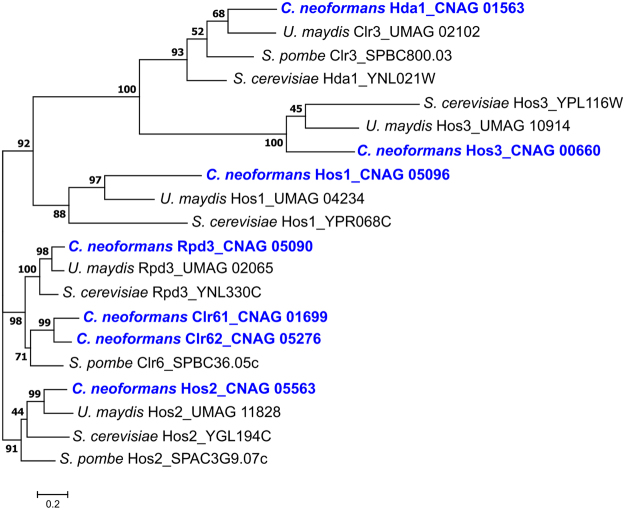
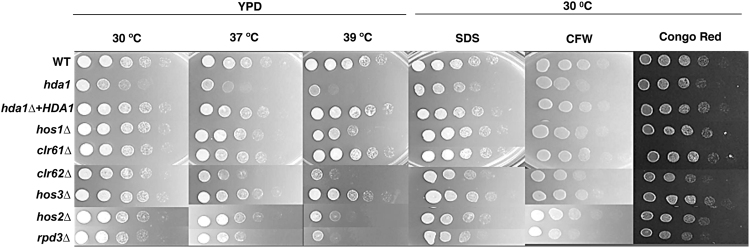
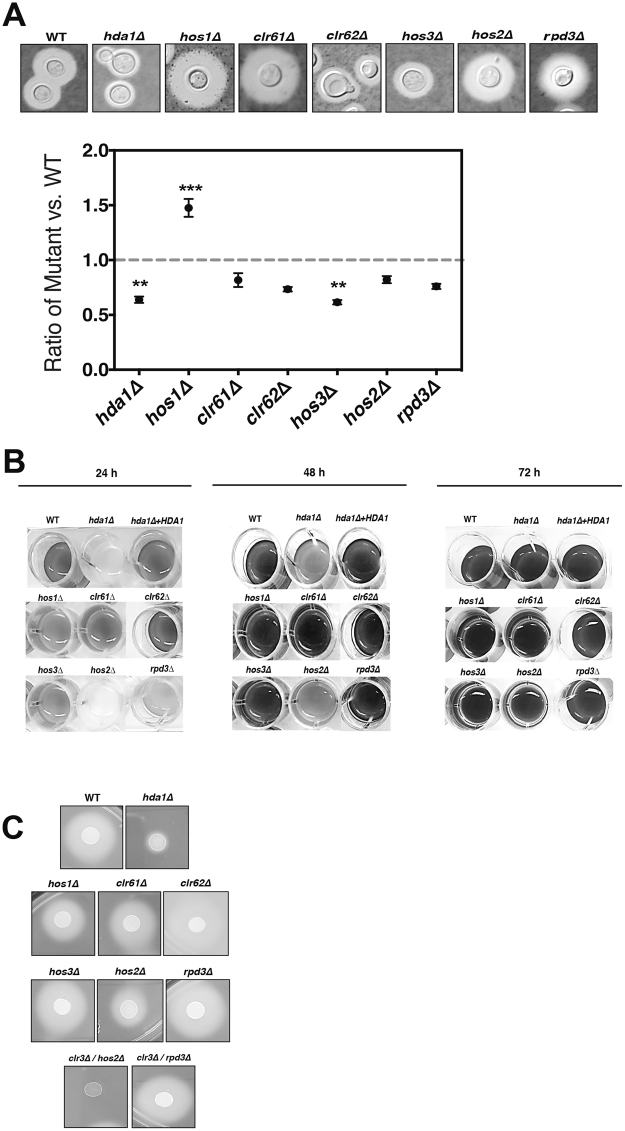
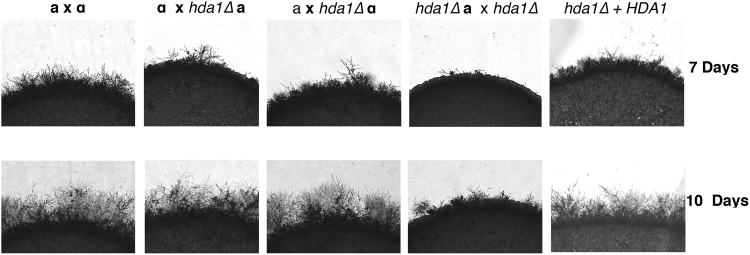
The human fungal pathogen Cryptococcus neoformans undergoes many phenotypic changes to promote its survival in specific ecological niches and inside the host. To explore the role of chromatin remodeling on the expression of virulence-related traits, we identified and deleted seven genes encoding predicted class I/II histone deacetylases (HDACs) in the C. neoformans genome. These studies demonstrated that individual HDACs control non-identical but overlapping cellular processes associated with virulence, including thermotolerance, capsule formation, melanin synthesis, protease activity and cell wall integrity. We also determined the HDAC genes necessary for C. neoformans survival during in vitro macrophage infection and in animal models of cryptococcosis. Our results identified the HDA1 HDAC gene as a central mediator controlling several cellular processes, including mating and virulence. Finally, a global gene expression profile comparing the hda1Δ mutant versus wild-type revealed altered transcription of specific genes associated with the most prominent virulence attributes in this fungal pathogen. This study directly correlates the effects of Class I/II HDAC-mediated chromatin remodeling on the marked phenotypic plasticity and virulence potential of this microorganism. Furthermore, our results provide insights into regulatory mechanisms involved in virulence gene expression that are likely shared with other microbial pathogens.
Overview
The claims and statistics of this paper haven’t been checked yet.
Free: it reads the open-access text and checks the first 5 claims that cite a source we can check. Create a free account to check every claim.
Integrity signals
Registry
Cites
Statistics
Figures
Verification
Claims the paper makes
The claims and statistics of this paper haven’t been checked yet.
Free: it reads the open-access text and checks the first 5 claims that cite a source we can check. Create a free account to check every claim.
Claims other papers make about this one
Each is checked against this paper’s own text: does it say what the citing paper says it does?
The cited source says what the claim attributes to it.
In the citing paper
“Subsequently, lysine acetylation has also been identified in Candida glabrata (21), Cryptococcus neoformans (22), Trichophyton rubrum (23), and Aspergillus fumigatus (24)”
From Potential role of lysine acetylation in the stepwise adaptation of Candida albicans to fluconazole (2025) · cites this paper as [22]
Self-check
Percentages, sums and reported differences re-computed from the paper’s own numbers.
The self-check needs the paper’s full text.
Citations
Cites
Analysis of Relative Gene Expression Data Using Real-Time Quantitative PCR and the 2−ΔΔCT Method
Livak, K. J., & Schmittgen, T. D. (2001) · Methods · doi:10.1006/meth.2001.1262 · Cited by 180,860
Moderated estimation of fold change and dispersion for RNA-seq data with DESeq2
Love, M. I., Huber, W., & Anders, S. (2014) · Genome Biology · doi:10.1186/s13059-014-0550-8 · Cited by 95,106
Fiji: an open-source platform for biological-image analysis
Schindelin, J., Arganda-Carreras, I., Frise, E., Kaynig, V., Longair, M., Pietzsch, T., Preibisch, S., Rueden, C., Saalfeld, S., Schmid, B., et al. (2012) · Nature Methods · doi:10.1038/nmeth.2019 · Cited by 66,890
STAR: ultrafast universal RNA-seq aligner
Dobin, A., Davis, C. A., Schlesinger, F., Drenkow, J., Zaleski, C., Jha, S., Batut, P., Chaisson, M., & Gingeras, T. R. (2013) · Bioinformatics · doi:10.1093/bioinformatics/bts635 · Cited by 51,709
MEGA7: Molecular Evolutionary Genetics Analysis Version 7.0 for Bigger Datasets
Kumar, S., Stecher, G., & Tamura, K. (2016) · Molecular Biology and Evolution · doi:10.1093/molbev/msw054 · Cited by 44,059
Kim, D., Pertea, G., Trapnell, C., Pimentel, H., Kelley, R., & Salzberg, S. L. (2013) · Genome Biology · doi:10.1186/gb-2013-14-4-r36 · Cited by 12,668
NCBI GEO: archive for functional genomics data sets—update
Barrett, T., Wilhite, S. E., Ledoux, P., Evangelista, C., Kim, I. F., Tomashevsky, M., Marshall, K. A., Phillippy, K. H., Sherman, P. M., Holko, M., et al. (2012) · Nucleic Acids Research · doi:10.1093/nar/gks1193 · Cited by 10,418
Jenuwein, T., & Allis, C. D. (2001) · Science · doi:10.1126/science.1063127 · Cited by 9,756
Crystal structure of the nucleosome core particle at 2.8 Å resolution
Luger, K., Mäder, A. W., Richmond, R. K., Sargent, D. F., & Richmond, T. J. (1997) · Nature · doi:10.1038/38444 · Cited by 9,466
Chen, X., Xiu, M., Xing, J., Yu, S., Min, D., & Guo, F. (2017) · Cellular Physiology and Biochemistry · doi:10.1159/000479439 · Cited by 5,742
Cited by
Antifungal drugs: New insights in research & development
Nicola, A. M., Albuquerque, P., Paes, H. C., Fernandes, L., Costa, F. F., Kioshima, E. S., Abadio, A. K. R., Bocca, A. L., & Felipe, M. S. (2019) · Pharmacology & Therapeutics · doi:10.1016/j.pharmthera.2018.10.008 · Cited by 139
Self-citationLife Cycle of Cryptococcus neoformans
Zhao, Y., Lin, J., Fan, Y., & Lin, X. (2019) · Annual Review of Microbiology · doi:10.1146/annurev-micro-020518-120210 · Cited by 100
Epigenetic mechanisms of drug resistance in fungi
Chang, Z., Yadav, V., Lee, S. C., & Heitman, J. (2019) · Fungal Genetics and Biology · doi:10.1016/j.fgb.2019.103253 · Cited by 92
Cryptococcus neoformans: Sex, morphogenesis, and virulence
Zhao, Y., & Lin, X. (2021) · Infection Genetics and Evolution · doi:10.1016/j.meegid.2021.104731 · Cited by 66
“For instance, the histone deacetylase and acetyltransferase regulate mating and/or virulence (Brandao et al., 2018; O’Meara et al., 2010).”
BackgroundRegulatory Roles of Histone Modifications in Filamentous Fungal Pathogens
Lai, Y., Wang, L., Zheng, W., & Wang, S. (2022) · Journal of Fungi · doi:10.3390/jof8060565 · Cited by 60
Post-Translational Modifications Drive Success and Failure of Fungal–Host Interactions
Retanal, C., Ball, B., & Geddes‐McAlister, J. (2021) · Journal of Fungi · doi:10.3390/jof7020124 · Cited by 56
“, hda1Δ, clr62Δ and hos3Δ) showed a reduction in capsule enlargement when exposed to capsule-inducing conditions [49] (Figure 3C).”
BackgroundThe interplay of phenotype and genotype inCryptococcus neoformansdisease
Altamirano, S., Jackson, K. M., & Nielsen, K. (2020) · Bioscience Reports · doi:10.1042/bsr20190337 · Cited by 47
“deacetylases results in changes to virulence phenotypes [122, 123] and the post-transcriptional”
BackgroundZhu, T., Chen, X., Li, C., Tu, J., Liu, N., Xu, D., & Sheng, C. (2021) · European Journal of Medicinal Chemistry · doi:10.1016/j.ejmech.2021.113524 · Cited by 44
Li, Y., Li, H., Sui, M., Li, M., Wang, J., Meng, Y., Sun, T., Liang, Q., Suo, C., Gao, X., et al. (2019) · Communications Biology · doi:10.1038/s42003-019-0419-1 · Cited by 42
Sterol-Response Pathways Mediate Alkaline Survival in Diverse Fungi
Brown, H. E., Telzrow, C. L., Saelens, J. W., Fernandes, L., & Alspaugh, J. A. (2020) · mBio · doi:10.1128/mbio.00719-20 · Cited by 40
“A modified Gene Ontology-term (GO-term) analysis using the FungiDB database was 594 performed to identify genes that were significantly regulated in a given process as previously 595 reported (15, 88).”
MethodSelf-citationLee, S. H., Farh, M. E.-A., Lee, J., Oh, Y. T., Cho, E., Park, J., Son, H., & Jeon, J. (2021) · mBio · doi:10.1128/mbio.02600-21 · Cited by 39
“maydis, it was shown that Rpd3 regulates development and pathogenesis (29, 30, 37).”
BackgroundLi, X., Pan, L., Wang, B., & Pan, L. (2019) · Toxins · doi:10.3390/toxins11090520 · Cited by 38
“It has been reported that HDACs significantly influence stress tolerance [4,18,20] and virulence-associated phenotypes [21,22].”
BackgroundProtein Acetylation/Deacetylation: A Potential Strategy for Fungal Infection Control
Chen, J.-Z., Liu, Q., Zeng, L., & Huang, X. (2020) · Frontiers in Microbiology · doi:10.3389/fmicb.2020.574736 · Cited by 38
Regulation of Histone Acetylation Modification on Biosynthesis of Secondary Metabolites in Fungi
Hou, X., Liu, L., Li, Y., Wang, P., Pan, X., Xu, D. Q., Lai, D., & Zhou, L. (2024) · International Journal of Molecular Sciences · doi:10.3390/ijms26010025 · Cited by 36
“It was found that the change in virulence of the ∆ Hda1 mutant of Cryptococcus neoformans might be due to its markedly reduced formation of capsule, melanin, and extracellular proteases, all of which are specifically required for the survival of microbes in the host [92].”
Phenotypic landscape of a fungal meningitis pathogen reveals its unique biology
Boucher, M. J., Banerjee, S., Joshi, M. B., Wei, A. L., Nalley, M. J., Huang, M. Y., Lei, S., Ciranni, M., Condon, A., Langen, A., et al. (2024) · Cell · doi:10.1016/j.cell.2025.05.017 · Cited by 36
Novel Promising Antifungal Target Proteins for Conquering Invasive Fungal Infections
Zhen, C., Lu, H., & Jiang, Y. (2022) · Frontiers in Microbiology · doi:10.3389/fmicb.2022.911322 · Cited by 36
Polycomb Repression without Bristles: Facultative Heterochromatin and Genome Stability in Fungi
Ridenour, J. B., Möller, M., & Freitag, M. (2020) · Genes · doi:10.3390/genes11060638 · Cited by 33
“Loss of Hda1 causes defects in multiple virulence-associated phenotypes similar to MSL1 deletion, reduced survival in murine macrophages, and decreased virulence in a murine infection model [110].”
BackgroundNanotechnology-Based Approaches for Voriconazole Delivery Applied to Invasive Fungal Infections
Campos, L. D. A., Fin, M. T., dos Santos, K. S., Gualque, M. W. D. L., Cabral, A. K. L. F., Khalil, N. M., Fusco‐Almeida, A. M., Mainardes, R. M., & Mendes‐Giannini, M. J. S. (2023) · Pharmaceutics · doi:10.3390/pharmaceutics15010266 · Cited by 33
The Lysine Deacetylase RpdA Is Essential for Virulence in Aspergillus fumigatus
Bauer, I., Misslinger, M., Shadkchan, Y., Dietl, A., Petzer, V., Orasch, T., Abt, B., Graessle, S., Osherov, N., & Haas, H. (2019) · Frontiers in Microbiology · doi:10.3389/fmicb.2019.02773 · Cited by 33
“Most fungi have four classical KDACs (Brosch et al., 2008) belonging to two different classes.”
BackgroundInfluentialZhang, X., Zhou, Y., Liu, Y., Li, B., Tian, S., & Zhang, Z. (2024) · Journal of Fungi · doi:10.3390/jof10080522 · Cited by 32
“In the context of regulating adaptation and virulence, HDA1 fulfills a pivotal role as a mediator, orchestrating the transcription of essential genes that are necessary for governing mating and virulence processes [95].”
BackgroundAntifungal resistance: Emerging mechanisms and implications (Review)
Kadariswantiningsih, I. N., Empitu, M. A., Santosa, T., & Alimu, Y. (2025) · Molecular Medicine Reports · doi:10.3892/mmr.2025.13612 · Cited by 30
“Histone deacetylase 1 ( HDA1 ) and HDAC genes are required for the survival of C. neoformans in a cultured macrophage model and a mouse model of infection (94,95).”
Fernandes, K. E., Fraser, J. A., & Carter, D. A. (2022) · mBio · doi:10.1128/mbio.00283-22 · Cited by 26
“Studies looking at epigenetic regulation in Cryptococcus have found links between histone deacetylases and a range of cellular functions, including thermotolerance, capsule formation, melanin synthesis, protease activity (33), and drug sensitivity (34); however, relatively little is known about the role of epigenetics…”
BackgroundThe Significance of Mono‐ and Dual‐Effective Agents in the Development of New Antifungal Strategies
Zobi, C., & Algül, Ö. (2025) · Chemical Biology & Drug Design · doi:10.1111/cbdd.70045 · Cited by 27
Identifying a novel connection between the fungal plasma membrane and pH‐sensing
Brown, H. E., Ost, K. S., Esher, S. K., Pianalto, K. M., Saelens, J. W., Guan, Z., & Alspaugh, J. A. (2018) · Molecular Microbiology · doi:10.1111/mmi.13998 · Cited by 26
“A modified GO term analysis using the FungiDB database was performed to identify genes that were significantly regulated in a given process as previously reported (Brandão et al., 2018).”
Self-citationSodium butyrate inhibits planktonic cells and biofilms of Trichosporon spp.
Cordeiro, R. D. A., Aguiar, A. L. R., Pereira, V. S., Pereira, L. M. G., Portela, F. V. M., Brilhante, R. S. N., Camargo, Z. P. D., Sidrim, J. J. C., Castelo‐Branco, D. D. S. C. M., & Rocha, M. F. G. (2019) · Microbial Pathogenesis · doi:10.1016/j.micpath.2019.03.013 · Cited by 26
Recent Advances in Genome Editing Tools in Medical Mycology Research
Nargesi, S., Kaboli, S., Thekkiniath, J., Heidari, S., Keramati, F., Seyedmousavi, S., & Hedayati, M. T. (2021) · Journal of Fungi · doi:10.3390/jof7040257 · Cited by 25
Chromatin modification factors in plant pathogenic fungi: Insights from Ustilago maydis
Elías-Villalobos, A., Barrales, R. R., & Ibeas, J. I. (2019) · Fungal Genetics and Biology · doi:10.1016/j.fgb.2019.04.006 · Cited by 24
Baker, R. P., Liu, A., & Casadevall, A. (2024) · Proceedings of the National Academy of Sciences · doi:10.1073/pnas.2412534121 · Cited by 19
“C. neoformans is a species complex ( 4 ) that encompasses several species with human pathogenic potential sharing a suite of virulence factors that includes a polysaccharide capsule ( 5 ), a laccase that catalyzes the synthesis of melanin ( 6 ), urease ( 7 ), and several other enzymes ( 8 , 9 ).”
Ranjan, K., Brandão, F., Morais, J. A. V., Muehlmann, L. A., Silva-Pereira, I., Bocca, A. L., Matos, L. F., & Poças-Fonseca, M. J. (2021) · Journal of Photochemistry and Photobiology B Biology · doi:10.1016/j.jphotobiol.2021.112131 · Cited by 19
Self-citationHistone deacetylase inhibitor attenuates experimental fungal keratitis in mice
Li, X., Yuan, M., Yin, R., Liu, X., Zhang, Y., Sun, S., Han, L., & He, S. (2019) · Scientific Reports · doi:10.1038/s41598-019-46361-y · Cited by 18
Du, J., Dong, Y., Zhao, H., Peng, L., Wang, Y., Yu, Q., & Li, M. (2022) · FEBS Journal · doi:10.1111/febs.16636 · Cited by 18
Biological functions of the autophagy-related proteins Atg4 and Atg8 in Cryptococcus neoformans
Roberto, T. N., Lima, R. F., Pascon, R. C., Idnurm, A., & Vallim, M. A. (2020) · PLoS ONE · doi:10.1371/journal.pone.0230981 · Cited by 17
“neoformans genome that are thought to be important for pathogenesis [50,51].”
BackgroundHovhannisyan, H., & Gabaldón, T. (2018) · Current topics in microbiology and immunology · doi:10.1007/82_2018_122 · Cited by 18
Pathogen and host genetics underpinning cryptococcal disease
Coelho, C., & Farrer, R. A. (2020) · Advances in genetics · doi:10.1016/bs.adgen.2020.02.001 · Cited by 16
Yu, H., Ayhan, D. H., Martínez‐Soto, D., Milo, S., & Ma, L. (2022) · The mycota · doi:10.1007/978-3-031-16503-0_16 · Cited by 16
Integrative Proteome and Acetylome Analyses of Murine Responses to Cryptococcus neoformans Infection
Li, H., Li, Y., Sun, T., Du, W., Zhang, Z., Li, D., & Ding, C. (2020) · Frontiers in Microbiology · doi:10.3389/fmicb.2020.00575 · Cited by 16
“neoformans, and Aspergillus fumigatus (Srikantha et al., 2001; Liu et al., 2014; Sang et al., 2016; Arras et al., 2017; Brandao et al., 2018; Li Y. et al., 2019).”
BackgroundSteffen, H. C., Bosch, C., Wolfaardt, G. M., & Botha, A. (2022) · Water SA · doi:10.17159/wsa/2022.v48.i2.3918 · Cited by 14
Kwon, J. Y., Choi, Y.-H., Lee, M.-W., Yu, J., & Shin, K.-S. (2023) · Cells · doi:10.3390/cells12222642 · Cited by 12
“Further evidence of histone acetylation in human fungal pathogens was observed in Histoplasma capsulatum , Cryptococcus neoformans , and A . fumigatus [8,15,16].”
BackgroundSpeckbacher, V., Flatschacher, D., Martini-Lösch, N., Ulbrich, L., Baldin, C., Bauer, I., Ruzsányi, V., & Zeilinger, S. (2024) · Microbiology Spectrum · doi:10.1128/spectrum.03097-23 · Cited by 12
“In Cryptococcus neoformans , Hda1 is a central mediator of virulence (49); in the plant pathogen M. oryzae , hda1 gene deletion caused a 60% reduction of lesions (50); and in F. fujikuroi , a 25% reduction of internode elongation in the host plant Oryza sativa was reported (21).”
BackgroundFungal Lysine Deacetylases in Virulence, Resistance, and Production of Small Bioactive Compounds
Bauer, I., & Graessle, S. (2021) · Genes · doi:10.3390/genes12101470 · Cited by 14
“In line with this, ∆hda1 showed defects for critical virulence-associated phenotypes, such as capsule formation, melanization, protease production, and resistance to various stressors [94].”
BackgroundImproving signal-to-noise ratio of Raman measurements based on ensemble learning approach
Jia, Y., Gao, Y., Xu, W., Wang, Y., Yan, Z., Chen, K., & Chen, S. (2024) · Analytical and Bioanalytical Chemistry · doi:10.1007/s00216-024-05676-0 · Cited by 9
“…neo-formans strain H99 and HDACs knockout mutants of six different deacetylase-encoding genes, i.e., Hos2Δ (Gene ID: CNAG_05563), Hos3Δ (Gene ID: CNAG_00660), Hda1Δ (Gene ID: CNAG_01563), Hos1Δ (Gene ID: CNAG_05096), Clr62Δ (Gene ID: CNAG_05276), and Clr61Δ (Gene ID: CNAG_01699) [25, 26].”
Ramos-García, V. H., Villota-Salazar, N. A., González-Prieto, J. M., & Cortés-Espinosa, D. V. (2022) · World Journal of Microbiology and Biotechnology · doi:10.1007/s11274-022-03249-w · Cited by 8
“According to previous evidence, melanin production is regulated by HDACs (Brandão et al. 2018; RodríguezPiña et al. 2019).”
BackgroundInfluentialde Oliveira, A. S., de Oliveira, J. S., Kumar, R., Brandão, F., Fernandes, M. R., Nobre, F. D., Costa, A. D. C., Albuquerque, P., Sidrim, J. J. C., Rocha, M. F. G., et al. (2023) · Medical Mycology · doi:10.1093/mmy/myad073 · Cited by 7
Self-citationPost-transcriptional control of antifungal resistance in human fungal pathogens
Sharma, C., & Kadosh, D. (2023) · Critical Reviews in Microbiology · doi:10.1080/1040841x.2022.2080527 · Cited by 6
Li, R., Chen, F., Li, S., Yuan, L., Zhao, L., Tian, S., & Chen, B. (2023) · Molecular Plant Pathology · doi:10.1111/mpp.13358 · Cited by 5
Betancourt, J. J., McAlister, J. A., Perez, J. M., Meya, D. B., Thomas, S. N., Geddes‐McAlister, J., & Nielsen, K. (2025) · mSystems · doi:10.1128/msystems.00751-25 · Cited by 4
“Histone deacetylase 1 (HDAC1) expres sion significantly impacts C. neoformans survival and virulence factor production (57).”
Raman spectromics method for fast and label-free genotype screening
Zhu, S., Li, Y., Zhang, F., Xiong, C., Gao, H., Yao, Y., Qian, W., Ding, C., & Chen, S. (2023) · Biomedical Optics Express · doi:10.1364/boe.493524 · Cited by 4
Ranjan, K., Morais, J. A. V., Dixit, M., Nunes, L. C., Rodrigues, F. P., Muehlmann, L. A., Shukla, P., & Poças-Fonseca, M. J. (2024) · Lasers in Medical Science · doi:10.1007/s10103-024-04204-x · Cited by 4
“…(MICs) against Cryptococcus neoformans H99 (reference), T1-5796 and 89–610 (fluconazole-tolerant), and HDAC genes deletion mutant strains ( hda1 Δ, hos2 Δ, hda1 Δ / hos2 Δ, and hda1 Δ + HDA1) [8], C . gattii NIH198, Candida albicans , C . glabrata , C . parapsilosis and C . tropicalis.”
Self-citationHorianopoulos, L. C., Lee, C. W. J., Schmitt, K., Valerius, O., Hu, G., Caza, M., Braus, G. H., & Kronstad, J. W. (2021) · mBio · doi:10.1128/mbio.03273-21 · Cited by 4
Le più antiche asce a margini rialzati della Sardegna
Schiavo, F. L. (1989) · Rivista di scienze preistoriche · Cited by 4
Roa-Cordero, M. V., Sepúlveda, C. A. A., Plata, M. C. H., Pinto, S. M. L., Villota-Salazar, N. A., & González-Prieto, J. M. (2025) · Research in Microbiology · doi:10.1016/j.resmic.2025.104299 · Cited by 3
Epigenetic regulation of pathogenicity in fungi
Hardin, A. M., Hardin, C. M., Isaacs, G. D., & Price, M. S. (2025) · Current Genetics · doi:10.1007/s00294-025-01329-6 · Cited by 3
“In C. neoformans , the hos2∆ mutant exhibits transiently reduced melanin production with corresponding reductions in survival in macrophages and virulence in a Galleria virulence model (Brandão et al. 2018).”
InfluentialGu, Z., Li, X., Moore, F., Jamithireddy, A. K., Bates, S., & Harmer, N. J. (2026) · Fermentation · doi:10.3390/fermentation12040182 · Cited by 4
Costa, F. C., Nunes, L. C., Ranjan, K., Silveira, A. P., da Silva, I. G. M., Mariano, A. D. L. E. S., de Souza, P. E. N., Báo, S. N., Poças-Fonseca, M. J., & Muehlmann, L. A. (2025) · Pharmaceuticals · doi:10.3390/ph18020240 · Cited by 3
“Studies have shown that HDAC inhibitors can modulate fungal virulence traits, including biofilm formation and resistance to oxidative stress, suggesting their potential as antifungal adju-vants [7,9].”
Self-citationTahiri, G., Lax, C., Binder, U., Scheler, J., Navarro, E., Nicolás, F. E., & Garre, V. (2026) · PLoS Pathogens · doi:10.1371/journal.ppat.1013653 · Cited by 2
“This protein has been implicated in regulating virulence-related pathways, including morphogenesis, stress response, and drug resistance, highlighting its potential as an anti-fungal target, in human fungal pathogens such as Candida albicans , C. glabrata , and Cryptococcus neoformans [32,33].”
Araújo, C., Shadday, L., Gomes, B. M. M., Torquati, A., & Brandão, F. (2020) · Revista de Divulgação Científica Sena Aires · doi:10.36239/revisa.v9.n4.p823a833 · Cited by 2
Self-citationHybrid genome sequence of Cryptococcus neoformans of Indian origin and comparative genome analysis
Sathiyamoorthy, J., & Ramakrishnan, J. (2025) · Scientific Reports · doi:10.1038/s41598-025-25672-3 · Cited by 1
Zobi, C. (2025) · Bioorganic & Medicinal Chemistry Reports · doi:10.25135/bmcr.36.2512.3745 · Cited by 1
Ali, N., Voorhies, M., Rodriguez, R. A., & Sil, A. (2026) · PLoS Biology · doi:10.1371/journal.pbio.3003341 · Cited by 1
Genetic Diversity of Pathogenic Yeasts
Ranjan, K., & Poças-Fonseca, M. J. (2019) · Springer eBooks · doi:10.1007/978-981-13-8487-5_22 · Cited by 1
Self-citationProbióticos – uma espada ou um escudo no desfecho da COVID-19?
de Abreu, J. A. C., de Freitas, N. L., AZEVEDO, P. R. G., & Brandão, F. (2022) · Research Society and Development · doi:10.33448/rsd-v11i4.27165 · Cited by 1
Self-citationXu, H., Jiang, R., Fu, X., Wang, Q., Shi, Y., Zhao, X., Jiang, C., & Jiang, H. (2024) · Journal of Integrative Agriculture · doi:10.1016/j.jia.2024.01.006 · Cited by 1
Potential role of lysine acetylation in the stepwise adaptation of Candida albicans to fluconazole
Song, N., Huang, Y., Zhou, X., Li, D., Liu, W., & Li, X. (2025) · Microbiology Spectrum · doi:10.1128/spectrum.02797-24
“Subsequently, lysine acetylation has also been identified in Candida glabrata (21), Cryptococcus neoformans (22), Trichophyton rubrum (23), and Aspergillus fumigatus (24), highlighting its broader significance in fungal biology.”
Ferreira, F. F. (2018) · RIUnB Institutional Repository (University of Brasília) · doi:10.26512/2018.03.d.32523
Comparative transcriptomics of host-pathogen interactions and hybridization in Candida pathogens
Hovhannisyan, H. (2020) · Tesis Doctorals en Xarxa (Consorci de Serveis Universitaris de Catalunya)
Siagian, F. E. (2021) · International Blood Research & Reviews · doi:10.9734/ibrr/2021/v12i130144
“g the CAP and CAS gene families and the STE12, UXS1, CHS3, MAN1, AGS1, GPA1, PKA1 and PKR1 genes; all of these genes are responsible for capsule formation or biochemical pathways that are related to capsule formation [42-44].”
BackgroundRelationship between capsule formation and drug resistance of Cryptococcus
Wang, C. (2024) · Highlights in Science Engineering and Technology · doi:10.54097/f7t5ye62
Ultrastructural Features of Cryptococcus neoformans Histone Deacetylases Null Mutant Strains
da Mata, D. O., Campos, L. D. C., Roa-Cordero, M. V., Silveira, A. P., da Silva, I. G. M., da Silva, V. C. M., Muehlmann, L. A., Ribeiro, B. M., Báo, S. N., & Poças-Fonseca, M. J. (2025) · Indian Journal of Microbiology · doi:10.1007/s12088-025-01533-5
“C . neo-formans genome encodes for 8 different HDACs and the collection of our studies supports the notion of an intricate, complex regulatory pathway involving distinct and overlapping gene functions that underlie the phenotypic plasticity [10].”
InfluentialSelf-citationAli, N. (2025) · eScholarship (California Digital Library)
Fungal response to stress induced by cold plasma technology: the case of Aspergillus chevalieri
Molina-Hernández, J. B., Landi, L., Romanazzi, G., & Chaves-Lopez, C. (2024) · Archivio istituzionale della ricerca (Alma Mater Studiorum Università di Bologna)
Zobi, C. (2025) · Bioorganic & Medicinal Chemistry Reports · doi:10.25135/acg.bmcr.36.2512.3745
Kwon, S., Khuong, T. M., Jang, Y.-B., Yu, S.-R., Kim, E.-S., Lim, S., Jung, J., Lee, K.-T., Bahn, Y., & Jung, K. (2026) · bioRxiv (Cold Spring Harbor Laboratory) · doi:10.64898/2026.05.19.726417
Nunes, L. C., Ranjan, K., Costa, F. C., da Mata, D. O., Muehlmann, L. A., & Poças-Fonseca, M. J. (2026) · Photochemical & Photobiological Sciences · doi:10.1007/s43630-026-00943-8
“The HDACi activity of this drug affects gene expression and can influence cellular processes related to virulence and to drug resistance in fungi [11, 12, 16, 29–31] The increased sensitivity of C . glabrata to NaBut requires further investigation.”
Self-citationInvestigating the host-pathogen characteristics of latent Cryptococcus neoformans infection
Betancourt, J. J. (2025) · University of Minnesota Digital Conservancy (University of Minnesota)
Ni, Y., Meng, Y., Qiao, Y., Li, C., Li, H., Sun, T., Chen, L., Zheng, Q., Li, Y., Yu, K., et al. (2026) · Microbiological Research · doi:10.1016/j.micres.2026.128807
Metadata
- Authors
- Brandão, F., Esher, S. K., Ost, K. S., Pianalto, K., Nichols, C. B., Fernandes, L., Bocca, A. L., Poças-Fonseca, M. J., & Alspaugh, J. A.
- Affiliations
- Universidade de Brasília (BR)
- Duke University (US)
- Corresponding author
- Alspaugh, J. Andrew
- ORCID
- Venue
- Scientific Reports
- Published
- 2018-03-26
- Volume
- 8
- Issue
- 1
- Pages
- 5209-5209
- ISSN
- 2045-2322 (ISSN-L)
- PMC
- PMC5979944
- OpenAlex
- W2805996903
- Cited by
- 67
- References
- 81
- Citations by year
- 2026: 5 · 2025: 10 · 2024: 8 · 2023: 5 · 2022: 9 · 2021: 9 · 2020: 8 · 2019: 9 · 2018: 3
- FWCI
- 5.66
- Type
- journal article
- Language
- en
- Open access
- gold
- doi.org
- Licence
- cc-by
- creativecommons.org/licenses/by/4.0 (tdm)
- creativecommons.org/licenses/by/4.0 (vor)
- Locations
- Scientific Reports (publishedVersion, cc-by)
- Europe PMC (PubMed Central) (publishedVersion, cc-by)
- PubMed Central (publishedVersion, cc-by)
- PubMed (publishedVersion)
- DOAJ (DOAJ: Directory of Open Access Journals) (submittedVersion)
- Funders
- Coordenação de Aperfeiçoamento de Pessoal de Nível Superior (99999)
- Fundação de Apoio à Pesquisa do Distrito Federal
- National Institutes of Health (NIH-R01, R01‐grant, AI074677)
- University of California, San Francisco
- National Institute of General Medical Sciences (T32GM007184)
- National Institute of Allergy and Infectious Diseases (R56AI074677, P01AI104533, R01AI074677, R01AI100272)
- Duke Cancer Institute
- Topics
- Health Sciences › Medicine › Infectious Diseases › Fungal Infections and Studies
- Life Sciences › Biochemistry, Genetics and Molecular Biology › Molecular Biology › Fungal and yeast genetics research
- Life Sciences › Agricultural and Biological Sciences › Plant Science › Plant Pathogens and Fungal Diseases
- Keywords
- Cryptococcus neoformans, histone deacetylase, fungal virulence, chromatin remodeling, Hda1, heat tolerance, capsule formation, melanogenesis, proteolytic activity, cell wall integrity, macrophage infection, cryptococcosis, mating, gene expression profiling, phenotypic plasticity
- MeSH terms
- Animals, Cell Wall, Cryptococcosis, Cryptococcus neoformans, Disease Models, Animal, Histone Deacetylases, Humans, Macrophages, Virulence, Gene Expression Regulation, Enzymologic, Genome, Fungal
About these checks
Registry, retraction, Cites and statistics results are computed, not judged, with one exception: a printed reference that no index lists is read once by a model before it counts as a citation error. Claims are extracted by a model and kept only when their quote appears verbatim in the text; each cited source is then checked, with a model’s help, for whether it says what the claim relies on. Those verdicts can be wrong — read the claim’s quote and the cited source before relying on one.
Statistics and arithmetic are recomputed, not judged.
Confidence bands are shown only for fields calibrated on our annotated test set. None is calibrated yet, so no band is shown.
What counts as a claim ›How we measure confidence ›How we check this ›
Are you an author, or do you see a problem with this page? Request a review
Data sources
Bibliographic data: Semantic Scholar, OpenAlex, Crossref.
Contains information from the Semantic Scholar Academic Graph Datasets, made available under the ODC Attribution License (ODC-BY 1.0).
Semantic Scholar’s data is described in: Kinney, R., et al. (2023). The Semantic Scholar Open Data Platform. arXiv:2301.10140.
