

TMS Over the Cerebellum Interferes with Short-term Memory of Visual Sequences
Open accessThe DOI matches its Crossref record; 65 of the 65 references it cites were found in a registry or an index.
Abstract
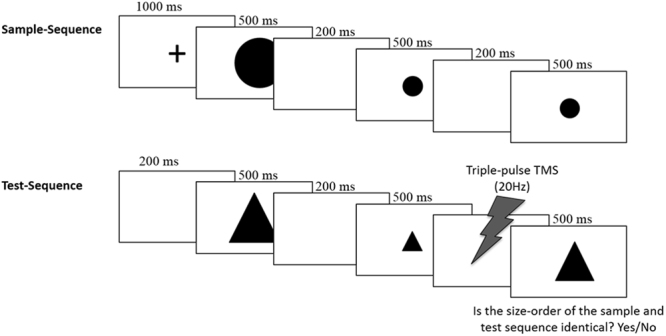
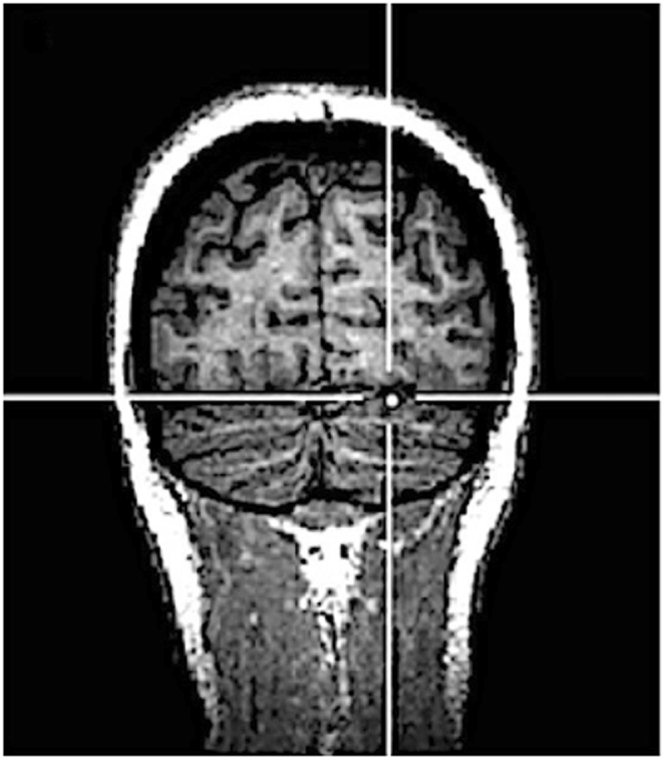
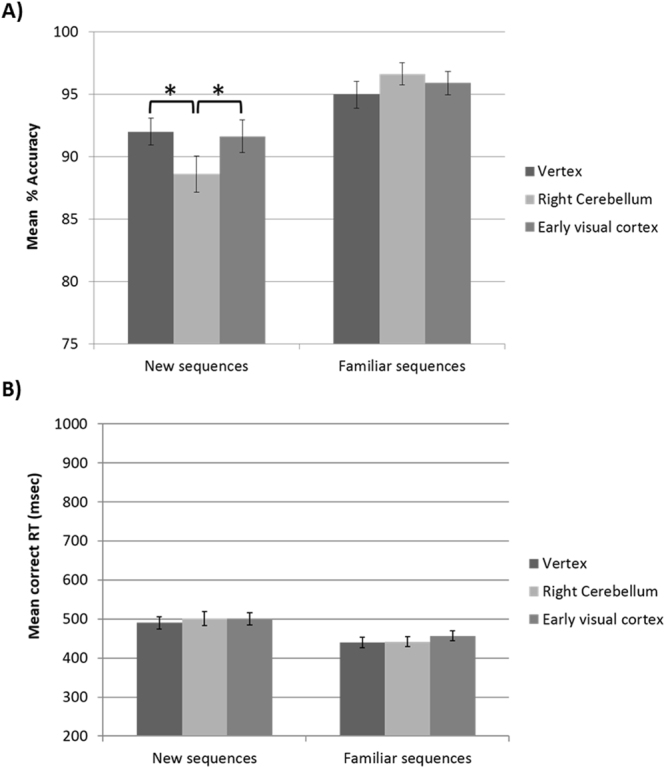
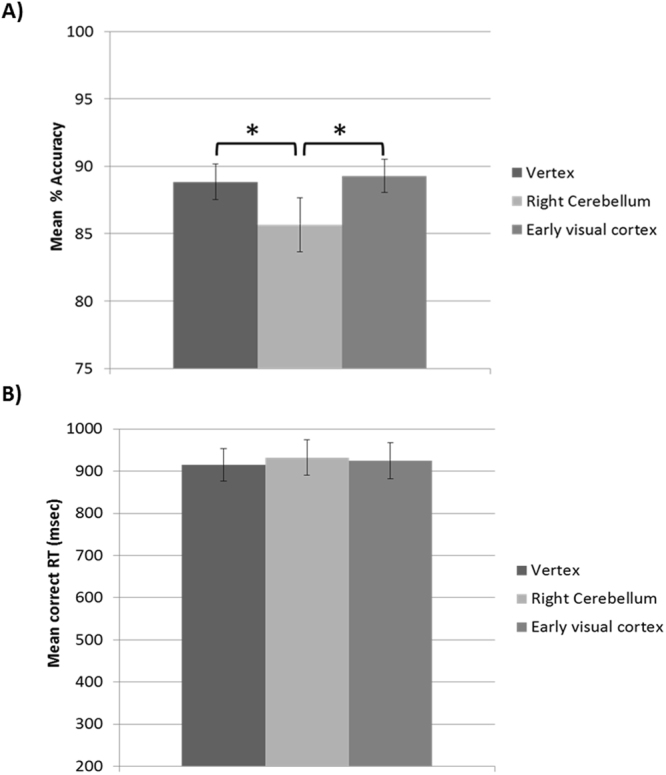
Growing evidence suggests that the cerebellum is not only involved in motor functions, but it significantly contributes to sensory and cognitive processing as well. In particular, it has been hypothesized that the cerebellum identifies recurrent serial events and recognizes their violations. Here we used transcranial magnetic stimulation (TMS) to shed light on the role of the cerebellum in short-term memory of visual sequences. In two experiments, we found that TMS over the right cerebellar hemisphere impaired participants’ ability to recognize the correct order of appearance of geometrical stimuli varying in shape and/or size. In turn, cerebellar TMS did not affect recognition of highly familiar short sequences of letters or numbers. Overall, our data suggest that the cerebellum is involved in memorizing the order in which (concatenated) stimuli appear, this process being important for sequence learning.
Overview
The claims and statistics of this paper haven’t been checked yet.
Free: it reads the open-access text and checks the first 5 claims that cite a source we can check. Create a free account to check every claim.
Integrity signals
Registry
Cites
Statistics
Figures
Verification
Claims the paper makes
The claims and statistics of this paper haven’t been checked yet.
Free: it reads the open-access text and checks the first 5 claims that cite a source we can check. Create a free account to check every claim.
Claims other papers make about this one
Each is checked against this paper’s own text: does it say what the citing paper says it does?
The source backs part of the claim, not all of it — or backs it for a different population, condition or comparison.
In the citing paper
“the cemi field theory proposes that EM fields are involved in memory and learning and so would predict that external EM fields, such as those delivered by TMS, will interfere with these processes, as found in several studies (Ferrari et al., 2018; Bang et al., 2019)”
From Consciousness: Matter or EMF? (2023) · cites this paper as Ferrari et al., 2018
Experimental — accuracy not yet measuredThe source backs part of the claim, not all of it — or backs it for a different population, condition or comparison.
In the citing paper
“which aligns with prior studies (Casula et al., 2016; Esterman et al., 2017; Ferrari et al., 2018; Gatti et al., 2021; Lesage et al., 2012; Shinn et al., 2023)”
From A double-blind, randomized, sham-controlled clinical trial of cerebellar intermittent theta burst stimulation for bipolar disorder: Safety, tolerability, mood and cognitive effects (2025) · cites this paper as Ferrari et al., 2018
Experimental — accuracy not yet measured
Self-check
Percentages, sums and reported differences re-computed from the paper’s own numbers.
The self-check needs the paper’s full text.
Citations
Cites
Co-Planar Stereotaxic Atlas of the Human Brain
Talairach, J., & Tournoux, P. (1988) · Medical Entomology and Zoology · Cited by 11,798
Motor sequence learning: a study with positron emission tomography
Jenkins, I., Brooks, D., Nixon, P., Frackowiak, R., & Passingham, R. (1994) · The Journal of Neuroscience · doi:10.1523/jneurosci.14-06-03775.1994 · Cited by 1,150
Consensus Paper: The Cerebellum's Role in Movement and Cognition
Koziol, L. F., Budding, D., Andreasen, N., D’Arrigo, S., Bulgheroni, S., Imamizu, H., Ito, M., Manto, M., Marvel, C., Parker, K., et al. (2014) · The Cerebellum · doi:10.1007/s12311-013-0511-x · Cited by 1,133 · cited 7×
“Neither the main effect of TMS, F(2, 34) = 1.”
BackgroundMethodInfluentialManto, M., Bower, J. M., Conforto, A. B., Delgado-García, J. M., da Guarda, S. N. F., Gerwig, M., Habas, C., Hagura, N., Ivry, R. B., Mariën, P., et al. (2012) · The Cerebellum · doi:10.1007/s12311-011-0331-9 · Cited by 1,002 · cited 2×
“The ANOVA on mean accuracy scores revealed a significant main effect of task condition, F(1, 17) = 19.”
MethodPrediction, cognition and the brain
Bubic (2010) · Frontiers in Human Neuroscience · doi:10.3389/fnhum.2010.00025 · Cited by 647
Screening questionnaire before TMS: An update
Rossi, S., Hallett, M., Rossini, P. M., & Pascual-Leone, A. (2011) · Clinical Neurophysiology · doi:10.1016/j.clinph.2010.12.037 · Cited by 629
Houk, J. C., & Wise, S. P. (1995) · Cerebral Cortex · doi:10.1093/cercor/5.2.95 · Cited by 593
Prediction of external events with our motor system: towards a new framework
Schubotz, R. I. (2007) · Trends in Cognitive Sciences · doi:10.1016/j.tics.2007.02.006 · Cited by 549
A meta-analysis of cerebellar contributions to higher cognition from PET and fMRI studies
E, K., Chen, S. A., Ho, M. R., & Desmond, J. E. (2014) · Human Brain Mapping · doi:10.1002/hbm.22194 · Cited by 516
Consensus Paper: Language and the Cerebellum: an Ongoing Enigma
Mariën, P., Ackermann, H., Adamaszek, M., Barwood, C. H. S., Beaton, A., Desmond, J., De Witte, E., Fawcett, A. J., Hertrich, I., Küper, M., et al. (2013) · The Cerebellum · doi:10.1007/s12311-013-0540-5 · Cited by 495
Cited by
Siebner, H. R., Funke, K., Aberra, A. S., Antal, A., Bestmann, S., Chen, R., Classen, J., Davare, M., Di Lazzaro, V., Fox, P. T., et al. (2022) · Clinical Neurophysiology · doi:10.1016/j.clinph.2022.04.022 · Cited by 566
Multimodal neuroimaging in post-COVID syndrome and correlation with cognition
Díez-Cirarda, M., Yus, M., Gómez-Ruiz, N., Polidura, C., Gil-Martínez, L., Delgado-Alonso, C., Jorquera, M., Gómez-Pinedo, U., Matias-Guiu, J., Arrazola, J., et al. (2023) · Brain · doi:10.1093/brain/awac384 · Cited by 208
Cerebellar disruption impairs working memory during evidence accumulation
Deverett, B., Kislin, M., Tank, D. W., & Wang, S. S. ‐. (2019) · Nature Communications · doi:10.1038/s41467-019-11050-x · Cited by 66
New Horizons on Non-invasive Brain Stimulation of the Social and Affective Cerebellum
Cattaneo, Z., Ferrari, C., Ciricugno, A., Heleven, E., Schutter, D. J. L. G., Manto, M. U., & Overwalle, F. V. (2021) · The Cerebellum · doi:10.1007/s12311-021-01300-4 · Cited by 64
“Whereas prior TMS studies targeted hemispheric regions that were somehow at the intersection of Crus I and II [13, 16], it would be certainly of interest to selectively test the role of Crus II and Crus I in different social processes.”
MethodResultSelf-citationCerebellar contribution to emotional body language perception: a TMS study
Ferrari, C., Ciricugno, A., Urgesi, C., & Cattaneo, Z. (2019) · Social Cognitive and Affective Neuroscience · doi:10.1093/scan/nsz074 · Cited by 58
Self-citationEffects of cerebellar transcranial magnetic stimulation on ataxias: A randomized trial
França, C., de Andrade, D. C., da Silva, V. A., Galhardoni, R., Barbosa, E. R., Teixeira, M. J., & Cury, R. G. (2020) · Parkinsonism & Related Disorders · doi:10.1016/j.parkreldis.2020.09.001 · Cited by 51
A causal role for the cerebellum in semantic integration: a transcranial magnetic stimulation study
Gatti, D., van Vugt, F. T., & Vecchi, T. (2020) · Scientific Reports · doi:10.1038/s41598-020-75287-z · Cited by 53
Self-citationCerebellum and semantic memory: A TMS study using the DRM paradigm
Gatti, D., Vecchi, T., & Mazzoni, G. A. L. (2020) · Cortex · doi:10.1016/j.cortex.2020.11.017 · Cited by 49
Self-citationWang, M., Yu, B., Luo, C., Fogelson, N., Zhang, J., Jin, Z., & Li, L. (2020) · Cortex · doi:10.1016/j.cortex.2020.01.005 · Cited by 36
Distinct cerebellar regions for body motion discrimination
Ferrari, C., Ciricugno, A., Battelli, L., Grossman, E. D., & Cattaneo, Z. (2019) · Social Cognitive and Affective Neuroscience · doi:10.1093/scan/nsz088 · Cited by 36
“…posterior cerebellum may be a critical node of an extended network mediating processing of socially relevant information, including biological motion discrimination but also emotion attribution and action recognition (Cattaneo et al., 2012; Van Overwalle et al., 2014; Ferrari et al., 2018a, 2019).”
BackgroundMethodSelf-citationPezzetta, R., Gambarota, F., Tarantino, V., Devita, M., Cattaneo, Z., Arcara, G., Mapelli, D., & Masina, F. (2023) · Neuroscience & Biobehavioral Reviews · doi:10.1016/j.neubiorev.2023.105509 · Cited by 45
“…within the high-frequency TMS cluster, the majority of experiments used triple-pulse 20 Hz TMS protocols (15 out of 17 experiments), which have been proven to transiently disrupt the stimulated cortical and cerebellar areas (Ferrari et al., 2018, 2022; Koch et al., 2007; Schwarzkopf et al., 2011).”
BackgroundSelf-citationProbing cerebellar involvement in cognition through a meta-analysis of TMS evidence
Gatti, D., Rinaldi, L., Cristea, I. A., & Vecchi, T. (2021) · Scientific Reports · doi:10.1038/s41598-021-94051-5 · Cited by 37
Self-citationThe Human Cerebellum as a Hub of the Predictive Brain
Gatti, D., Rinaldi, L., Ferreri, L., & Vecchi, T. (2021) · Brain Sciences · doi:10.3390/brainsci11111492 · Cited by 33
Self-citationMcFadden, J. (2023) · Frontiers in Human Neuroscience · doi:10.3389/fnhum.2022.1024934 · Cited by 27
“…learning and so would predict that external EM fields, such as those delivered by TMS, will interfere with these processes, as found in several studies (Ferrari et al., 2018; Bang et al., 2019) but will be impervious to external fields once learnt, as has also been demonstrated (Bang et al., 2019).”
BackgroundMethodJanssens, S. E. W., & Sack, A. T. (2021) · Frontiers in Human Neuroscience · doi:10.3389/fnhum.2021.802244 · Cited by 36
Cao, D., Li, Y., & Tang, Y. (2021) · Cognitive Affective & Behavioral Neuroscience · doi:10.3758/s13415-021-00881-1 · Cited by 24
“As in previous studies (Ferrari et al., 2018; Ku et al., 2015), participants wore earplugs during the TMS tasks to attenuate the influence of sounds evoked by the coil discharge.”
ResultMemory as Prediction: From Looking Back to Looking Forward
Vecchi, T., & Gatti, D. (2020) · The MIT Press eBooks · doi:10.7551/mitpress/13543.001.0001 · Cited by 39
Self-citationMill, R. D., & Cole, M. W. (2025) · Nature Communications · doi:10.1038/s41467-025-65041-2 · Cited by 33
Working Memory Impairments in Cerebellar Disorders of Childhood
Seese, R. R. (2020) · Pediatric Neurology · doi:10.1016/j.pediatrneurol.2020.02.005 · Cited by 23
The Optogenetic Revolution in Cerebellar Investigations
Prestori, F., Montagna, I., D'Angelo, E. U., & Mapelli, L. (2020) · International Journal of Molecular Sciences · doi:10.3390/ijms21072494 · Cited by 23
Self-citationFunctional segregation of the human cerebellum in social cognitive tasks revealed by TMS
Ferrari, C., Ciricugno, A., Arioli, M., & Cattaneo, Z. (2023) · Journal of Neuroscience · doi:10.1523/jneurosci.1818-22.2023 · Cited by 26
Self-citationCasartelli, L., Riva, M., Villa, L. M., & Borgatti, R. (2018) · Neuroscience & Biobehavioral Reviews · doi:10.1016/j.neubiorev.2018.09.017 · Cited by 18
A review of the sufficient conditions for consciousnessPreprint
Coppola, P. (2023) · PsyArXiv (OSF Preprints) · doi:10.31234/osf.io/2xvc4 · Cited by 14
Starowicz–Filip, A., Chrobak, A. A., Kwiatkowski, S., Milczarek, O., & Rajtar-Zembaty, A. (2019) · Child Neuropsychology · doi:10.1080/09297049.2019.1657391 · Cited by 12
“out, however, that cerebellar involvement in a cognitive task is dependent on the complexity of the task, response uncertainty and cognitive load (Ferrari et al., 2018).”
BackgroundSzücs-Bencze, L., Vékony, T., Pesthy, O., Szabó, N., Kincses, Z. T., Turi, Z., & Németh, D. (2023) · Journal of Intelligence · doi:10.3390/jintelligence11100201 · Cited by 12
“…(Fitzgerald et al. 2006; Huang et al. 2017; Klomjai et al. 2015); thus, it is widely used in studying the functional relevance of the targeted brain areas of various cognitive processes (Ferrari et al. 2018; Kim et al. 2004; Ruitenberg et al. 2014; Smalle et al. 2017; Verwey et al. 2002).”
BackgroundCiricugno, A., Arioli, M., Oldrati, V., Finisguerra, A., Urgesi, C., Borgatti, R., & Cattaneo, Z. (2025) · NeuroImage · doi:10.1016/j.neuroimage.2025.121350 · Cited by 11
Self-citationGatti, D., Rinaldi, L., Vecchi, T., & Ferrari, C. (2023) · Current Opinion in Behavioral Sciences · doi:10.1016/j.cobeha.2023.101300 · Cited by 9
“understood, online cerebellar TMS is usually associated with cognitive performance impairment [21,19,16,18], consistent with the ‘noise model’ of TMS effects ([37,66], but see [54]).”
Self-citationStarowicz–Filip, A., Prochwicz, K., Kłosowska, J., Chrobak, A. A., Krzyżewski, R. M., Myszka, A. M., Rajtar-Zembaty, A., Bętkowska-Korpała, B., & Kwinta, B. M. (2021) · Archives of Clinical Neuropsychology · doi:10.1093/arclin/acab045 · Cited by 10
Cerebellar non-invasive stimulation of social and emotional mentalizing: A meta-analysis
Overwalle, F. V., Haihambo, N., Ma, Q.-Y., Li, M.-J., Martínez-Regueiro, R., Argoub, I., Firouzi, M., Deroost, N., Baeken, C., & Baetens, K. (2024) · Imaging Neuroscience · doi:10.1162/imag_a_00334 · Cited by 7
“We obtained almost all the data from the studies conducted by Chiara Ferrari ( Ciricugno et al., 2024; Ferrari, Ciricugno, Battelli, et al., 2022; Ferrari, Ciricugno, Urgesi, et al., 2022; Ferrari et al., 2018, 2023), for which we are very grateful.”
BackgroundMethodSilcox, J. W., Mickey, B. J., & Payne, B. R. (2023) · Psychophysiology · doi:10.1111/psyp.14312 · Cited by 10
A review of the sufficient conditions for consciousness
Coppola, P. (2025) · Neuroscience & Biobehavioral Reviews · doi:10.1016/j.neubiorev.2025.106333 · Cited by 9
“Of interest is that modification of the cerebellum activity via TMS seemed to have a bearing on content-specific NCCs, such as short term memory of visual sequences 90 , motion discrimination 91 , emotional perception 92 .”
Li, M., Qin, Z., Chen, H., Yang, Z., Wang, L., Qin, R., Zhao, H., & Bai, F. (2023) · Brain Sciences · doi:10.3390/brainsci13030419 · Cited by 11
“It is important to acknowledge that while rTMS has a direct effect on neurons in the stimulated area, it may also indirectly modulate neural responses in other nearby or distant regions, such as the motor cortex or prefrontal cortex [40,49,50].”
BackgroundMemory, Executive, and Intellectual Functions in Adults with Moyamoya Disease
Maehara, N., Nakamizo, A., Arimura, K., & Yoshimoto, K. (2023) · World Neurosurgery · doi:10.1016/j.wneu.2023.09.092 · Cited by 4
Oldrati, V., Butti, N., Ferrari, E., Cattaneo, Z., Urgesi, C., & Finisguerra, A. (2024) · Social Cognitive and Affective Neuroscience · doi:10.1093/scan/nsae019 · Cited by 7
“This aligns with findings from transcranial magnetic stimulation (TMS) studies, indicating the cerebellum’s lack of impact on recognizing familiar sequences (Ferrari et al ., 2018).”
Self-citationBansal, K., Cattaneo, Z., Oldrati, V., Ferrari, C., Grossman, E. D., & Garcia, J. O. (2024) · bioRxiv (Cold Spring Harbor Laboratory) · doi:10.1101/2024.09.12.612716 · Cited by 4
“…3, participants received 1 Hz rTMS for 20 minutes over the right cerebellum Crus I (Talairach coordinate 22, -75, -21) at 100% resting motor threshold as assessed in session 1 and in line with previous TMS studies targeting the cerebellum (Demirtas-Tatlidede et al., 2011; Ferrari et al., 2018).”
MethodSelf-citationTrapp, N. T., Muller Ewald, V. A., Pace, B. D., Wendt, L., Garrett, L., Penaluna, B., Miller, J., Purgianto, A., van der Plas, E., Magnotta, V. A., et al. (2025) · Transcranial Magnetic Stimulation · doi:10.1016/j.transm.2024.100082 · Cited by 3
“These data point to the possibility that CBM-iTBS may have differential effects on distinct cognitive functions, which aligns with prior studies (Casula et al., 2016; Esterman et al., 2017; Ferrari et al., 2018; Gatti et al., 2021; Lesage et al., 2012; Shinn et al., 2023).”
Popyvanova, A., Koriakina, M. A., Pomelova, E. D., Ilyukina, N. A., Agranovich, O. Е., Шестакова, А. Н., & Blagovechtchenski, E. (2023) · Neuroscience and Behavioral Physiology · doi:10.1007/s11055-023-01412-w · Cited by 3
“Thus, TMS over the right cerebellar hemisphere was found to impair the ability of participants to recognize the correct order of appearance of geometric stimuli, helping to clarify the role of the cerebellum in short-term memory processes [Ferrari et al., 2018].”
BackgroundAn update on the effects of cerebellar transcranial magnetic stimulation on cognitive function
Jiang, Y., Lv, D., Chen, Y., Zhang, M., & Lingchuan, N. I. U. (2026) · Neurological Sciences · doi:10.1007/s10072-025-08595-9 · Cited by 2
Transcranial Magnetic Stimulation for Cognitive Neurosciences: Applications and Open Questions
Balconi, M., & Crivelli, D. (2020) · Springer eBooks · doi:10.1007/978-3-030-43356-7_14 · Cited by 2
The Past, Current and Future Research in Cerebellar TMS Evoked Responses—A Narrative Review
Fong, P., Rothwell, J. C., & Rocchi, L. (2024) · Brain Sciences · doi:10.3390/brainsci14050432 · Cited by 1
“CBI can be probed either at rest or during behavioral tasks involving motor learning [40–42] or cognitive tests [43]; these applications are useful to shed light on how the cerebellum responds to sudden changes in motor feedback [44], cognitive processing [45], and visual learning [43].”
BackgroundFajea, A. A., Bashir, S., & Abualait, T. (2026) · Neuromodulation Technology at the Neural Interface · doi:10.1016/j.neurom.2026.04.005 · Cited by 1
França, C. (2021) · Digital Library of Theses and Dissertations (Universidade de São Paulo) · doi:10.11606/t.5.2021.tde-25072021-180120
Wang, T., Yang, X., Zhang, S., Liu, Q., Zhang, H., Lu, Y., Chen, X.-Q., gui, T., & Yao, L. (2024) · SSRN Electronic Journal · doi:10.2139/ssrn.4865372
Current perspectives on the mechanisms of visual memory: a literature review
Рычкова, С. И., Kurysheva, N. I., Laver, A. B., & Tolmacheva, A. I. (2025) · The EYE GLAZ · doi:10.33791/2222-4408-2025-1-43-53
Abualait, T., & Bashir, S. (2026) · The Cerebellum · doi:10.1007/s12311-026-02090-3
“In contrast, brief high-frequency pulse trains have been shown to more effectively interfere with ongo - ing neural computations, producing transient perturbations of task-relevant processing and modulating activity within distributed cortico-cerebellar networks [53, 61].”
Metadata
- Authors
- Ferrari, C., Cattaneo, Z., Oldrati, V., Casiraghi, L., Castelli, F., D’Angelo, E., & Vecchi, T.
- Affiliations
- University of Milano-Bicocca (IT)
- Fondazione Istituto Neurologico Nazionale Casimiro Mondino (IT)
- University of Pavia (IT)
- Corresponding author
- Ferrari, C.
- Venue
- Scientific Reports
- Published
- 2018-04-30
- Volume
- 8
- Issue
- 1
- Pages
- 6722-6722
- ISSN
- 2045-2322 (ISSN-L)
- PMC
- PMC5928079
- OpenAlex
- W2801371507
- Cited by
- 45
- References
- 64
- Citations by year
- 2026: 3 · 2025: 4 · 2024: 6 · 2023: 10 · 2022: 2 · 2021: 7 · 2020: 8 · 2019: 4 · 2018: 1
- FWCI
- 2.25
- Type
- journal article
- Language
- en
- Open access
- gold
- doi.org
- Licence
- cc-by
- creativecommons.org/licenses/by/4.0 (tdm)
- creativecommons.org/licenses/by/4.0 (vor)
- Locations
- Scientific Reports (publishedVersion, cc-by)
- Europe PMC (PubMed Central) (publishedVersion, cc-by)
- PubMed Central (publishedVersion, cc-by)
- PubMed (publishedVersion)
- Aisberg (University of Bergamo) (submittedVersion, cc-by)
- BOA (University of Milano-Bicocca) (submittedVersion, other-oa)
- DOAJ (DOAJ: Directory of Open Access Journals) (submittedVersion, cc-by-sa)
- Funders
- Ministero della Salute
- Regione Lombardia
- Topics
- Life Sciences › Neuroscience › Neurology › Transcranial Magnetic Stimulation Studies
- Life Sciences › Neuroscience › Cognitive Neuroscience › Memory and Neural Mechanisms
- Life Sciences › Neuroscience › Cognitive Neuroscience › Motor Control and Adaptation
- Keywords
- cerebellum, short-term memory, visual sequences, sequence learning, serial order memory, transcranial magnetic stimulation
- MeSH terms
- Cerebellum, Cognition, Humans, Male, Memory, Short-Term, Motor Activity, Transcranial Magnetic Stimulation, Young Adult, Central Nervous System Sensitization
About these checks
Registry, retraction, Cites and statistics results are computed, not judged, with one exception: a printed reference that no index lists is read once by a model before it counts as a citation error. Claims are extracted by a model and kept only when their quote appears verbatim in the text; each cited source is then checked, with a model’s help, for whether it says what the claim relies on. Those verdicts can be wrong — read the claim’s quote and the cited source before relying on one.
Statistics and arithmetic are recomputed, not judged.
Confidence bands are shown only for fields calibrated on our annotated test set. None is calibrated yet, so no band is shown.
What counts as a claim ›How we measure confidence ›How we check this ›
Are you an author, or do you see a problem with this page? Request a review
Data sources
Bibliographic data: Semantic Scholar, OpenAlex, Crossref.
Contains information from the Semantic Scholar Academic Graph Datasets, made available under the ODC Attribution License (ODC-BY 1.0).
Semantic Scholar’s data is described in: Kinney, R., et al. (2023). The Semantic Scholar Open Data Platform. arXiv:2301.10140.
