

Touchscreen typing-pattern analysis for detecting fine motor skills decline in early-stage Parkinson's disease
Open accessThe DOI matches its Crossref record; 43 of the 43 references it cites were found in a registry or an index.
Abstract
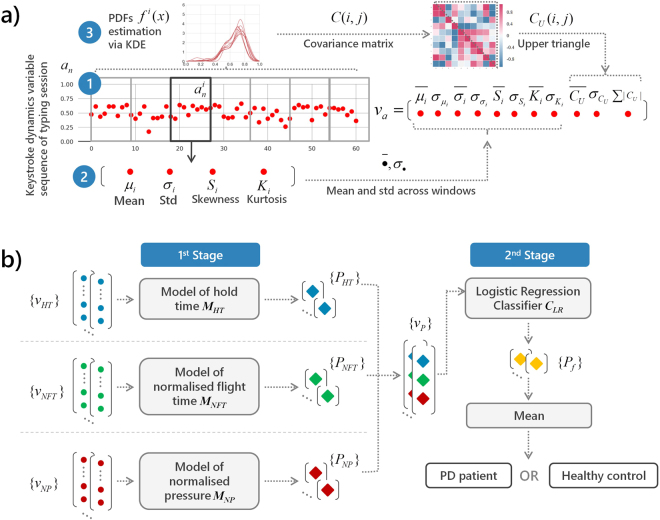
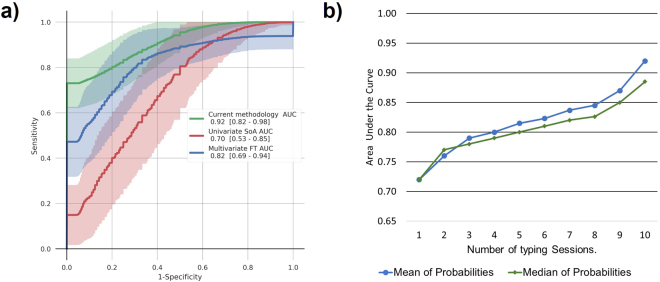
Parkinson’s disease (PD) is a degenerative movement disorder causing progressive disability that severely affects patients’ quality of life. While early treatment can produce significant benefits for patients, the mildness of many early signs combined with the lack of accessible high-frequency monitoring tools may delay clinical diagnosis. To meet this need, user interaction data from consumer technologies have recently been exploited towards unsupervised screening for PD symptoms in daily life. Similarly, this work proposes a method for detecting fine motor skills decline in early PD patients via analysis of patterns emerging from finger interaction with touchscreen smartphones during natural typing. Our approach relies on low-/higher-order statistical features of keystrokes timing and pressure variables, computed from short typing sessions. Features are fed into a two-stage multi-model classification pipeline that reaches a decision on the subject’s status (PD patient/control) by gradually fusing prediction probabilities obtained for individual typing sessions and keystroke variables. This method achieved an AUC = 0.92 and 0.82/0.81 sensitivity/specificity (matched groups of 18 early PD patients/15 controls) with discriminant features plausibly correlating with clinical scores of relevant PD motor symptoms. These findings suggest an improvement over similar approaches, thereby constituting a further step towards unobtrusive early PD detection from routine activities.
Overview
The claims and statistics of this paper haven’t been checked yet.
Free: it reads the open-access text and checks the first 5 claims that cite a source we can check. Create a free account to check every claim.
Integrity signals
Registry
Cites
Statistics
Figures
Verification
Claims the paper makes
The claims and statistics of this paper haven’t been checked yet.
Free: it reads the open-access text and checks the first 5 claims that cite a source we can check. Create a free account to check every claim.
Claims other papers make about this one
Each is checked against this paper’s own text: does it say what the citing paper says it does?
The cited source doesn’t support the claim as written.
In the citing paper
“While classification tasks are common in automated speech analysis in neurodegenerative research, several studies have employed regression models to predict continuous cognitive outcomes (e.g., MMSE)97,98 or to explore relationships with imaging and biomarker measures.99–101”
From Review of Artificial Intelligence for Clinical Use in Alzheimer's Disease and Related Dementias (2026) · cites this paper as [99]
Checked by a reasoning model — may be wrong.
Experimental — accuracy not yet measured
Self-check
Percentages, sums and reported differences re-computed from the paper’s own numbers.
The self-check needs the paper’s full text.
Citations
Cites
Quinlan, J. R. (1986) · Machine Learning · doi:10.1007/bf00116251 · Cited by 21,439
Classification and Regression by randomForest
Liaw, A. I., & Wiener, M. C. (2007) · Cited by 18,594
Neural networks for pattern recognition
(1994) · Choice Reviews Online · doi:10.5860/choice.31-5500 · Cited by 18,538
An Introduction to Support Vector Machines and Other Kernel-based Learning Methods
Cristianini, N., & Shawe-Taylor, J. (2000) · doi:10.1017/cbo9780511801389 · Cited by 13,855
Parkinsonism: onset, progression, and mortality
Hoehn, M. M., & Yahr, M. D. (1967) · Neurology · doi:10.1212/wnl.17.5.427 · Cited by 12,107
Goetz, C. G., Tilley, B. C., Shaftman, S. R., Stebbins, G. T., Fahn, S., Martinez‐Martin, P., Poewe, W., Sampaio, C., Stern, M. B., Dodel, R., et al. (2008) · Movement Disorders · doi:10.1002/mds.22340 · Cited by 7,536 · cited 12×
“Regarding the 18 early PD patients involved (Table 3), four of them have never received PD medication (de-novo) and all of them were at early stages (Hoehn-Yahr stages I or II, mean UPDRS Part III score/std 16.9/7.8) and recently diagnosed (mean disease onset yrs.”
MethodInfluentialOverdependence on degraded gist memory in Alzheimer's disease.
Gallo, D. A., Shahid, K. R., Olson, M. A., Solomon, T. M., Schacter, D. L., & Budson, A. E. (2006) · Neuropsychology · doi:10.1037/0894-4105.20.6.625 · Cited by 4,732
An Introduction to Support Vector Machines
Cristianini, N., & Shawe-Taylor, J. S. (2000) · ePrints Soton (University of Southampton) · Cited by 4,115
The American Journal of Managed Care
(2020) · The American Journal of Managed Care · doi:10.37765/ajmc · Cited by 3,237
Adams, J. L., Dinesh, K., Xiong, M., Tarolli, C. G., Sharma, S., Sheth, N., Aranyosi, A. J., Zhu, W., Goldenthal, S., Biglan, K. M., et al. (2017) · Digital Biomarkers · doi:10.1159/000479018 · Cited by 3,171
Research works printed but not linked: 1
- Ng, A. Feature selection, L1 vs. L2 regularization, and rotational invariance. In Proceedings of the twenty-first international conference on Machine learning (ACM 2004).
Cited by
Bee Venom: Overview of Main Compounds and Bioactivities for Therapeutic Interests
Wehbe, R., Frangieh, J., Rima, M., El Obeid, D., Sabatier, J.-M., & Fajloun, Z. (2019) · Molecules · doi:10.3390/molecules24162997 · Cited by 372
Liang, Y., Samtani, S., Guo, B., & Yu, Z. (2020) · IEEE Internet of Things Journal · doi:10.1109/jiot.2020.3004077 · Cited by 214
Artificial intelligence for assisting diagnostics and assessment of Parkinson’s disease—A review
Belić, M., Bobić, V., Badža, M., Šolaja, N., Đurić-Jovičić, M., & Kostić, V. S. (2019) · Clinical Neurology and Neurosurgery · doi:10.1016/j.clineuro.2019.105442 · Cited by 194
Arya, S. S., Dias, S. B., Jelinek, H. F., Hadjileontiadis, L. J., & Pappa, A. (2023) · Biosensors and Bioelectronics · doi:10.1016/j.bios.2023.115387 · Cited by 188
Self-citationDigital biomarkers for precision diagnosis and monitoring in Parkinson’s disease
Sun, Y.-M., Wang, Z.-Y., Liang, Y.-Y., Hao, C.-W., & Shi, C.-H. (2024) · npj Digital Medicine · doi:10.1038/s41746-024-01217-2 · Cited by 103
Touchscreen typing pattern analysis for remote detection of the depressive tendency
Mastoras, R.-E., Iakovakis, D., Hadjidimitriou, S., Charisis, V., Kassie, S., Alsaadi, T., Khandoker, A., & Hadjileontiadis, L. J. (2019) · Scientific Reports · doi:10.1038/s41598-019-50002-9 · Cited by 100
Self-citationAlfalahi, H., Khandoker, A. H., Chowdhury, N., Iakovakis, D., Dias, S. B., Chaudhuri, К. R., & Hadjileontiadis, L. J. (2022) · Scientific Reports · doi:10.1038/s41598-022-11865-7 · Cited by 88
Self-citationEarly diagnosis of Parkinson’s disease using EEG, machine learning and partial directed coherence
Oliveira, A. P. S., de Santana, M. A., Andrade, M. K. S., Gomes, J. C., Rodrigues, M. C. A., & dos Santos, W. P. (2020) · Research on Biomedical Engineering · doi:10.1007/s42600-020-00072-w · Cited by 80
Papadopoulos, A., Kyritsis, K., Klingelhoefer, L., Bostanjopoulou, S., Chaudhuri, K. R., & Delopoulos, A. (2020) · IEEE Journal of Biomedical and Health Informatics · doi:10.1109/jbhi.2019.2961748 · Cited by 79
Digital Technology in Movement Disorders: Updates, Applications, and Challenges
Adams, J., Lizárraga, K. J., Waddell, E. M., Myers, T. L., Jensen-Roberts, S., Modica, J. S., & Schneider, R. B. (2021) · Current Neurology and Neuroscience Reports · doi:10.1007/s11910-021-01101-6 · Cited by 72
Wearables, smartphones, and artificial intelligence for digital phenotyping and health
Perez-Pozuelo, I., Spathis, D., Clifton, E. A. D., & Mascolo, C. (2020) · Elsevier eBooks · doi:10.1016/b978-0-12-820077-3.00003-1 · Cited by 70
A scoping review of neurodegenerative manifestations in explainable digital phenotyping
Alfalahi, H., Dias, S. B., Khandoker, A. H., Chaudhuri, К. R., & Hadjileontiadis, L. J. (2023) · npj Parkinson's Disease · doi:10.1038/s41531-023-00494-0 · Cited by 67
Self-citationLam, K., Meijer, K. A., Loonstra, F. C., Coerver, E. M. E., Twose, J., Redeman, E. G. M., Moraal, B., Barkhof, F., de Groot, V., Uitdehaag, B. M. J., et al. (2020) · Multiple Sclerosis Journal · doi:10.1177/1352458520968797 · Cited by 67
A Systematic Literature Review on Latest Keystroke Dynamics Based Models
Roy, S., Pradhan, J., Kumar, A., Adhikary, D. R. D., Roy, U., Sinha, D., & Pal, R. K. (2022) · IEEE Access · doi:10.1109/access.2022.3197756 · Cited by 66
Data Representativeness in Accessibility Datasets: A Meta-Analysis
Kamikubo, R., Wang, L., Marte, C., Mahmood, A., & Kacorri, H. (2022) · International ACM SIGACCESS Conference on Computers and Accessibility (ASSETS) · doi:10.1145/3517428.3544826 · Cited by 64
Detection of Mild Cognitive Impairment Through Natural Language and Touchscreen Typing Processing
Ntracha, A., Iakovakis, D., Hadjidimitriou, S., Charisis, V. S., Tsolaki, M., & Hadjileontiadis, L. J. (2020) · Frontiers in Digital Health · doi:10.3389/fdgth.2020.567158 · Cited by 62
Self-citationRemote Assessments of Hand Function in Neurological Disorders: Systematic Review
Gopal, A., Hsu, W., Allen, D. D., & Bove, R. M. (2022) · JMIR Rehabilitation and Assistive Technologies · doi:10.2196/33157 · Cited by 61
Screening of Parkinsonian subtle fine-motor impairment from touchscreen typing via deep learning
Iakovakis, D., Chaudhuri, К. R., Klingelhoefer, L., Bostantjopoulou, S., Katsarou, Z., Trivedi, D., Reichmann, H., Hadjidimitriou, S., Charisis, V. S., & Hadjileontiadis, L. J. (2020) · Scientific Reports · doi:10.1038/s41598-020-69369-1 · Cited by 54
Self-citationPapadopoulos, A., Iakovakis, D., Klingelhoefer, L., Bostantjopoulou, S., Chaudhuri, K. R., Kyritsis, K., Hadjidimitriou, S., Charisis, V., Hadjileontiadis, L. J., & Delopoulos, A. (2020) · Scientific Reports · doi:10.1038/s41598-020-78418-8 · Cited by 51
Self-citationIakovakis, D., Hadjidimitriou, S., Charisis, V. S., Bostantjopoulou, S., Katsarou, Z., Klingelhoefer, L., Reichmann, H., Dias, S. B., Diniz, J. A., Trivedi, D., et al. (2018) · Frontiers in ICT · doi:10.3389/fict.2018.00028 · Cited by 48
Self-citationWearables, smartphones, and artificial intelligence for digital phenotyping and health
Perez-Pozuelo, I., Spathis, D., Clifton, E. A., & Mascolo, C. (2020) · Elsevier · doi:10.17863/cam.60922 · Cited by 47
Parkinson’s disease severity clustering based on tapping activity on mobile device
Surangsrirat, D., Sri-iesaranusorn, P., Chaiyaroj, A., Vateekul, P., & Bhidayasiri, R. (2022) · Scientific Reports · doi:10.1038/s41598-022-06572-2 · Cited by 42
Tripathi, S., Arroyo‐Gallego, T., & Giancardo, L. (2022) · IEEE Transactions on Biomedical Engineering · doi:10.1109/tbme.2022.3187309 · Cited by 41
Imbalanced ensemble learning in determining Parkinson’s disease using Keystroke dynamics
Roy, S., Roy, U., Sinha, D., & Pal, R. K. (2023) · Expert Systems with Applications · doi:10.1016/j.eswa.2023.119522 · Cited by 39
Tian, F., Fan, X., Fan, J., Zhu, Y., Gao, J., Wang, D., Bi, X., & Wang, H. (2019) · Proceedings of the 2019 CHI Conference on Human Factors in Computing Systems · doi:10.1145/3290605.3300313 · Cited by 38
Kyritsis, K., Fagerberg, P., Ioakimidis, I., Chaudhuri, К. R., Reichmann, H., Klingelhoefer, L., & Delopoulos, A. N. (2021) · Scientific Reports · doi:10.1038/s41598-020-80394-y · Cited by 36
Guo, C. C., Chiesa, P. A., de Moor, C., Fazeli, M. S., Schofield, T., Hofer, K., Belachew, S. M., & Scotland, A. (2022) · Journal of Medical Internet Research · doi:10.2196/37683 · Cited by 35
Faúndez-Zanuy, M., Mekyska, J., & Impedovo, D. (2021) · Cognitive Computation · doi:10.1007/s12559-021-09938-2 · Cited by 32
Iakovakis, D., Diniz, J. A., Trivedi, D., Chaudhuri, К. R., Hadjileontiadis, L. J., Hadjidimitriou, S., Charisis, V. S., Bostanjopoulou, S., Katsarou, Z., Klingelhoefer, L., et al. (2019) · Annual International Conference of the IEEE Engineering in Medicine and Biology Society (EMBC) · doi:10.1109/embc.2019.8857211 · Cited by 29
Self-citationA machine learning algorithm successfully screens for Parkinson's in web users
Youngmann, B., Allerhand, L., Paltiel, O., Yom‐Tov, E., & Arkadir, D. (2019) · Annals of Clinical and Translational Neurology · doi:10.1002/acn3.50945 · Cited by 27
Lam, K., Twose, J., Lissenberg-Witte, B. I., Licitra, G., Meijer, K. A., Uitdehaag, B. M. J., de Groot, V., & Killestein, J. (2022) · Journal of Medical Internet Research · doi:10.2196/37614 · Cited by 25
Data-Driven Models for Objective Grading Improvement of Parkinson’s Disease
Butt, A. H., Rovini, E., Fujita, H., Maremmani, C., & Cavallo, F. (2020) · Annals of Biomedical Engineering · doi:10.1007/s10439-020-02628-4 · Cited by 22
Pedroso, A. F., Schwamm, L. H., & Khera, R. (2025) · Stroke · doi:10.1161/strokeaha.125.050447 · Cited by 18
Zadoo, S., Singh, Y. P., & Singh, P. K. (2024) · International Journal on Smart Sensing and Intelligent Systems · doi:10.2478/ijssis-2024-0008 · Cited by 18
Twose, J., Licitra, G., McConchie, H., Lam, K., & Killestein, J. (2020) · Chaos An Interdisciplinary Journal of Nonlinear Science · doi:10.1063/5.0022031 · Cited by 18
Hoeijmakers, A., Licitra, G., Meijer, K. A., Lam, K., Molenaar, P. C. G., Strijbis, E. M. M., & Killestein, J. (2023) · Scientific Reports · doi:10.1038/s41598-023-28990-6 · Cited by 18
He, T., Chen, J., Hossain, M. S., & Lv, Z. (2024) · Information Fusion · doi:10.1016/j.inffus.2024.102889 · Cited by 17
Smartwatch-based Activity Analysis During Sleep for Early Parkinson’s Disease Detection
Iakovakis, D., Mastoras, R.-E., Hadjidimitriou, S., Charisis, V. S., Bostanjopoulou, S., Katsarou, Z., Klingelhoefer, L., Reichmann, H., Trivedi, D., Chaudhuri, К. R., et al. (2020) · Annual International Conference of the IEEE Engineering in Medicine and Biology Society (EMBC) · doi:10.1109/embc44109.2020.9176412 · Cited by 17
Self-citationPaolillo, E. W., Casaletto, K. B., Clark, A. L., Taylor, J. C., Heuer, H. W., Wise, A. B., Dhanam, S., Sanderson-Cimino, M., Saloner, R., Kramer, J. H., et al. (2024) · JMIR Aging · doi:10.2196/52831 · Cited by 16
Erb, M. K., Calcagno, N., Brown, R. Z., Burke, K. M., Scheier, Z. A., Iyer, A. S., Clark, A., Higgins, M., Keegan, M., Gupta, A. S., et al. (2024) · Amyotrophic Lateral Sclerosis and Frontotemporal Degeneration · doi:10.1080/21678421.2024.2322549 · Cited by 16
Acien, A., Calcagno, N., Burke, K. M., Mondesire-Crump, I., Holmes, A. A., Mruthik, S., Goldy, B., Syrotenko, J. E., Scheier, Z. A., Iyer, A., et al. (2024) · Scientific Reports · doi:10.1038/s41598-024-67940-8 · Cited by 14
A novel framework to estimate cognitive impairment via finger interaction with digital devices
Holmes, A. A., Tripathi, S., Katz, E. R., Mondesire-Crump, I., Mahajan, R., Ritter, A. R., Arroyo‐Gallego, T., & Giancardo, L. (2022) · Brain Communications · doi:10.1093/braincomms/fcac194 · Cited by 14
Peachap, A. B., Tchiotsop, D., Louis-Dorr, V., & Wolf, D. (2020) · SN Applied Sciences · doi:10.1007/s42452-020-03473-9 · Cited by 13
Park, S., & Schott, N. (2022) · Applied Neuropsychology Adult · doi:10.1080/23279095.2022.2147837 · Cited by 12
Quantifying Touch: New Metrics for Characterizing What Happens During a Touch
Kong, J., Zhong, M., Fogarty, J. A., & Wobbrock, J. O. (2022) · International ACM SIGACCESS Conference on Computers and Accessibility (ASSETS) · doi:10.1145/3517428.3544804 · Cited by 11
The effect of socially evaluated multitasking stress on typing rhythms
Wetherell, M. A., Lau, S.-H., & Maxion, R. A. (2023) · Psychophysiology · doi:10.1111/psyp.14293 · Cited by 10
Huang, Y.-C., Hong, C., Chi, W., Yen, C.-F., Liao, H. F., Liou, T., & Chan, L. (2024) · Archives of Gerontology and Geriatrics · doi:10.1016/j.archger.2024.105366 · Cited by 10
He, T., Chen, J., & Chen, Y. (2024) · IEEE Sensors Journal · doi:10.1109/jsen.2024.3452092 · Cited by 10
Sanderson, J. B., Yu, J. Y. H., Liu, D. D., Amaya, D. E., Lauro, P. M., D’Abreu, A., Akbar, U., Lee, S., & Asaad, W. F. (2020) · Frontiers in Neurology · doi:10.3389/fneur.2020.00886 · Cited by 10
Papadopoulos, A., & Delopoulos, A. N. (2023) · IEEE Journal of Biomedical and Health Informatics · doi:10.1109/jbhi.2023.3267095 · Cited by 9
Kyritsis, K., Fagerberg, P., Ioakimidis, I., Klingelhoefer, L., Reichmann, H., & Delopoulos, A. N. (2020) · Annual International Conference of the IEEE Engineering in Medicine and Biology Society (EMBC) · doi:10.1109/embc44109.2020.9175615 · Cited by 9
Self-supervised learning for early detection of neurodegenerative diseases with small data
Jiang, H. (2023) · DR-NTU (Nanyang Technological University) · doi:10.32657/10356/166402 · Cited by 9
Belić, M., Radivojević, Z., Bobic, V. N., Kostić, V., & Djuric-Jovicic, M. D. (2023) · Heliyon · doi:10.1016/j.heliyon.2023.e14824 · Cited by 8
Password-free Authentication for Smartphone Touchscreen Based on Finger Size Pattern
Enaya, Y. A., & Mohammed, M. J. (2020) · International Journal of Interactive Mobile Technologies (iJIM) · doi:10.3991/ijim.v14i19.17239 · Cited by 7
Review of Artificial Intelligence for Clinical Use in Alzheimer's Disease and Related Dementias
Breithaupt, A. G., Tang, A., Paolillo, E. W., Bibars, M., Johnson, E. C. B., Saloner, R., Possin, K. L., Windon, C. C., Hill-Jarrett, T. G., Giorgio, J., et al. (2026) · Seminars in Neurology · doi:10.1055/a-2744-9871 · Cited by 6
WildKey: A Privacy-Aware Keyboard Toolkit for Data Collection In-The-Wild
Rodrigues, A., Santos, A. J. D., Montague, K., Nicolau, H., & Guerreiro, T. (2021) · ACM International Joint Conference on Pervasive and Ubiquitous Computing (UbiComp) · doi:10.1145/3460418.3482872 · Cited by 6
Vasileiou, E., Dias, S. B., Hadjidimitriou, S., Charisis, V., Karagkiozidis, N., Malakoudis, S., de Groot, P., Andreadis, S. T., Tsekouras, V., Apostolidis, G. K., et al. (2024) · IEEE Journal of Biomedical and Health Informatics · doi:10.1109/jbhi.2024.3487785 · Cited by 5
Self-citationChitale, V., Henry, J. D., Matthews, B., Cobham, V. E., & Baghaei, N. (2025) · JMIR Mental Health · doi:10.2196/70577 · Cited by 6
Modeling Mouse-based Pointing and Steering Tasks for People with Parkinson's Disease
Zhao, H., Ling, K., Ramakrishnan, I. V., Schwartz, G. J., & Bi, X. (2025) · Proceedings of the ACM on Interactive Mobile Wearable and Ubiquitous Technologies · doi:10.1145/3712267 · Cited by 4
Mobile health technologies for the management of Parkinson’s disease
Bougea, A. M. (2025) · Expert Review of Neurotherapeutics · doi:10.1080/14737175.2025.2580468 · Cited by 4
A Mobile-Based Multimodal Framework for Pervasive Health Monitoring
Mastoras, R.-E., Triantafyllidis, A. K., Giakoumis, D., Kordonias, R.-K., Papaprodromou, A., Nalbadis, F., Segkouli, S., Lithoxoidou, E. E., Georgiadis, C., Paliokas, I., et al. (2021) · IEEE International Conference on Pervasive Computing and Communications Workshops (PerCom Workshops) · doi:10.1109/percomworkshops51409.2021.9430967 · Cited by 4
AI for Stress Diagnosis at Home Environment
Roy, S., Roy, U., Sinha, D., & Pal, R. K. (2022) · Studies in computational intelligence · doi:10.1007/978-981-19-2416-3_10 · Cited by 4
An Instrumented Apartment to Monitor Human Behavior: A Pilot Case Study in the NeuroTec Loft
Gerber, S. M., Single, M., Knobel, S. E. J., Schütz, N., Bruhin, L. C., Botros, A., Naef, A. C., Schindler, K. A., & Nef, T. (2022) · Sensors · doi:10.3390/s22041657 · Cited by 4
Keyboard typing for the detection of early Parkinson's disease
Adams, W. R. (2020) · Elsevier eBooks · doi:10.1016/b978-0-12-815946-0.00020-x · Cited by 3
Zeng, Z., Jiang, H., Zhang, Y., Shen, Z., Ji, J., McKeown, M. J., Chin, J. J., Leung, C., & Miao, C. (2020) · International Joint Conference on Artificial Intelligence · doi:10.24963/ijcai.2020/775 · Cited by 3
Automatic Parkinson's tremor assessment with data analysis from daily activities
Fiska, V., Gakilazou, V., Katertsidis, N. S., Tzallas, A. T., Γιαννακέας, Ν., & Tsipouras, M. G. (2021) · South-East Europe Design Automation, Computer Engineering, Computer Networks and Social Media Conference (SEEDA-CECNSM) · doi:10.1109/seeda-cecnsm53056.2021.9566225 · Cited by 2
Bee Venom and Its Therapeutic Uses
Morovvati, H., Keyhan, H., Koohi, M. K., & Hassan, J. (2024) · Journal of Apitherapy and Nature · doi:10.35206/jan.1378226 · Cited by 2
He, T., Chen, J., Lin, C., & Wang, W. W. (2025) · IEEE Transactions on Mobile Computing · doi:10.1109/tmc.2025.3581525 · Cited by 2
Mustafa, S. A.-H., von Wrede, R. D., & Helmstaedter, C. (2025) · Epilepsy & Behavior · doi:10.1016/j.yebeh.2025.110586 · Cited by 2
Natural interactive techniques for the detection and assessment of neurological diseases
Tian, F., Wang, Y., & Zhu, Y. (2021) · Communications of the ACM · doi:10.1145/3481616 · Cited by 2
Matias, P., Araújo, R., Graça, R., Henriques, A. R., Belo, D., Valada, M. P., Lotfi, N. N., Mateus, E. F., Radner, H., Rodrigues, A. M., et al. (2024) · IEEE Journal of Biomedical and Health Informatics · doi:10.1109/jbhi.2024.3456069 · Cited by 2
Bee venom: Antitumor activity and its therapeutic applications
Nassar, M. I. (2022) · Elsevier eBooks · doi:10.1016/b978-0-323-85400-9.00014-9 · Cited by 2
Roy, S., Roy, U., Sinha, D., & Pal, R. K. (2023) · Lecture notes in networks and systems · doi:10.1007/978-981-19-6791-7_1 · Cited by 2
Smartphone Keyboard Typing for Rheumatic Disease Identification: A Machine Learning Approach
Matias, P., Afonseca, P., Nunes, F., Henriques, A. R., Gonçalves, C., Rodrigues, A. M., & Sousa, I. (2025) · Lecture notes in computer science · doi:10.1007/978-3-032-05176-9_7 · Cited by 1
Song, S., Chen, Y., Zhang, Y., Yang, X., Gao, J., & Wang, X. (2026) · International Journal of Human-Computer Interaction · doi:10.1080/10447318.2026.2618554 · Cited by 1
Cross-Dataset Multivariate Time-Series Model for Parkinson’s Diagnosis via Keyboard Dynamics
Francesconi, A., Cappetta, D., Rebecchi, F., Soda, P., Guarrasi, V., & Sicilia, R. (2026) · Communications in computer and information science · doi:10.1007/978-3-032-17216-7_6 · Cited by 1
Li, Y., Guo, L., Yu, X., & Peng, C. (2026) · Ageing and Neurodegenerative Diseases · doi:10.20517/and.2025.31 · Cited by 1
Bernardo, L. S., Damaševičius, R., & Maskeliūnas, R. (2022) · Communications in computer and information science · doi:10.1007/978-3-031-04112-9_28 · Cited by 1
Automatic Assessment of Bradykinesia in Parkinson’s Disease Using Tapping Videos
Zupanič, M., Georgiev, D., & Žabkar, J. (2024) · Student Computing Research Symposium (SCORES) · doi:10.18690/um.feri.6.2024.15 · Cited by 1
Inverse Reinforcement Learning for Interpretable Keystroke Biomarkers in Parkinson's DiseasePreprint
Bondade, N. (2026) · arXiv (Cornell University) · doi:10.48550/arxiv.2606.25270 · Cited by 1
Матрисуицид у сяньбийцев: древний обычай или «Изобретённая традиция»?
Цуньлиевич, Г. В. (2010) · Общество и государство в Китае
A Novel Fall Detection Framework for Monitoring Patients with Neurodegenerative Disorders
Garg, R., Gupta, S., Brahma, B., Kaur, H., Khan, Z., & Ahamed, J. (2025) · Lecture notes in networks and systems · doi:10.1007/978-981-96-3372-2_49
A predictive contrivance for recognising traits in keystroke dynamics
Roy, S., Roy, U., Sinha, D., & Pal, R. K. (2025) · Advances in Computational Intelligence · doi:10.1007/s43674-025-00081-1
Vasileiou, E., Apostolidis, G. K., Charisis, V. S., Hadjidimitriou, S., Malakoudis, S., Karagkiozidis, N., Andreadis, S. T., Stavropoulos, T. G., Tsekouras, V., Duan, C., et al. (2025) · Annual International Conference of the IEEE Engineering in Medicine and Biology Society (EMBC) · doi:10.1109/embc58623.2025.11254608
Self-citationAvtomatsko ocenjevanje testa tapkanja s prsti pri bolnikih s Parkinsonovo boleznijo
Zupanič, M. (2024) · Repository of the University of Ljubljana (University of Ljubljana)
Zon, M. (2023) · MacSphere (McMaster University) · doi:10.71548/19464
Development and validation of patient-friendly dexterity marker in multiple sclerosis
Gopal, A. (2023) · eScholarship (California Digital Library)
Belić, M. (2023) · National Repository of Dissertations in Serbia
Abdolalizadeh, A., Rosemann, S., Tahmasian, M., & Thiel, C. M. (2026) · medRxiv · doi:10.64898/2026.01.07.26343523
Handwriting Analysis for Diagnosing Parkinson’s Disease: A Survey of Learning Techniques
Zadoo, S., & Singh, Y. P. (2026) · Lecture notes in electrical engineering · doi:10.1007/978-981-96-5969-2_1
Neurological Disease Severity Classification Using Keystrokes Dynamics
Basu, P., Mukherjee, R., & Saha, R. (2026) · Lecture notes in electrical engineering · doi:10.1007/978-3-032-12474-6_22
Touchscreen use in people with Parkinson’s disease – frequency, cognition and upper limb function
Cohen, N., Danial‐Saad, A., & Kizony, R. (2026) · Disability and Rehabilitation Assistive Technology · doi:10.1080/17483107.2026.2671842
Parkinson’s Disease Detection Using Keystroke Dynamics and with Convolutional Neural Networks
Gentiyal, B. M., Vahora, S., Gamit, P. R., Patel, M. N., Patel, H. R., Goyani, M. M., Chauhan, U., & Patel, P. J. (2026) · ITEGAM- Journal of Engineering and Technology for Industrial Applications (ITEGAM-JETIA) · doi:10.5935/jetia.v12i59.3756
FastAPI-Based AI Prototype for Privacy-Preserving Keystroke Analysis in Parkinson’s Detection
Golmohammadi, L., Santaniello, D., Colace, F., Lorusso, A., & Khan, M. (2026) · Lecture notes in computer science · doi:10.1007/978-3-032-35387-0_38
Phokaewvarangkul, O., Yamutai, S., Bhidayasiri, R., Vateekul, P., Surangsrirat, D., Maetzler, W., Pilotto, A., Shin, C., & Oyama, G. (2026) · Journal of Neural Transmission · doi:10.1007/s00702-026-03269-y
Modelling and Correcting the Effects of Tremor on Touchscreen Interaction
Dunlop, M. D., & MacKenzie, I. S. (2026) · Sensors · doi:10.3390/s26185981
WEARABLE DEVICES AND SMARTPHONES FOR PARKINSON’S DISEASE DIAGNOSIS
Bostantzopoulou, S., Κατσαρού, Ζ., & Dagklis, I. E. (2024) · ΑΡΧΕΙΑ ΚΛΙΝΙΚΗΣ ΝΕΥΡΟΛΟΓΙΑΣ
Self-citationZhao, M. (2026) · International Conference on Biomedical Engineering and Bioinformatics for Health (ICBEBH) · doi:10.1109/icbebh71590.2026.11722497
Menteşe, B., Savran, F. N., Batum, M., & Kutlu, N. (2026) · Neurological Sciences · doi:10.1007/s10072-026-09482-7
Wang, Y., Hu, H., Peng, J., Yu, Z., & Yang, F. (2026) · Frontiers in Aging Neuroscience · doi:10.3389/fnagi.2026.1982964
Metadata
- Authors
- Iakovakis, D., Hadjidimitriou, S., Charisis, V., Bostantzopoulou, S., Katsarou, Z., & Hadjileontiadis, L. J.
- Affiliations
- Aristotle University of Thessaloniki (GR)
- G. Papanikolaou General Hospital (GR)
- Ippokrateio General Hospital of Thessaloniki (GR)
- Khalifa University of Science and Technology (AE)
- Corresponding author
- Hadjileontiadis, Leontios J.
- ORCID
- Venue
- Scientific Reports
- Published
- 2018-05-16
- Volume
- 8
- Issue
- 1
- Pages
- 7663-7663
- ISSN
- 2045-2322 (ISSN-L)
- PMC
- PMC5955899
- OpenAlex
- W2807561669
- Cited by
- 92
- References
- 42
- Citations by year
- 2026: 13 · 2025: 10 · 2024: 12 · 2023: 9 · 2022: 16 · 2021: 7 · 2020: 16 · 2019: 7 · 2018: 1
- FWCI
- 3.88
- Type
- journal article
- Language
- en
- Open access
- gold
- doi.org
- Licence
- cc-by
- creativecommons.org/licenses/by/4.0 (tdm)
- creativecommons.org/licenses/by/4.0 (vor)
- Locations
- Scientific Reports (publishedVersion, cc-by)
- Europe PMC (PubMed Central) (publishedVersion, other-oa)
- PubMed Central (publishedVersion, cc-by)
- PubMed (publishedVersion)
- DOAJ (DOAJ: Directory of Open Access Journals) (submittedVersion)
- Funders
- European Commission (690494, HORIZON2020)
- Topics
- Physical Sciences › Computer Science › Computer Vision and Pattern Recognition › Context-Aware Activity Recognition Systems
- Health Sciences › Health Professions › Health Information Management › Artificial Intelligence in Healthcare
- Physical Sciences › Computer Science › Information Systems › User Authentication and Security Systems
- Keywords
- Parkinson's disease, early detection, keystroke dynamics, keystroke timing, motor symptoms
- MeSH terms
- Smartphone, Diagnosis, Computer-Assisted, Female, Fingers, Humans, Male, Middle Aged, Motor Skills, Movement Disorders, Parkinson Disease, Pattern Recognition, Automated, Quality of Life, Case-Control Studies
About these checks
Registry, retraction, Cites and statistics results are computed, not judged, with one exception: a printed reference that no index lists is read once by a model before it counts as a citation error. Claims are extracted by a model and kept only when their quote appears verbatim in the text; each cited source is then checked, with a model’s help, for whether it says what the claim relies on. Those verdicts can be wrong — read the claim’s quote and the cited source before relying on one.
Statistics and arithmetic are recomputed, not judged.
Confidence bands are shown only for fields calibrated on our annotated test set. None is calibrated yet, so no band is shown.
What counts as a claim ›How we measure confidence ›How we check this ›
Are you an author, or do you see a problem with this page? Request a review
Data sources
Bibliographic data: Semantic Scholar, OpenAlex, Crossref.
Contains information from the Semantic Scholar Academic Graph Datasets, made available under the ODC Attribution License (ODC-BY 1.0).
Semantic Scholar’s data is described in: Kinney, R., et al. (2023). The Semantic Scholar Open Data Platform. arXiv:2301.10140.
