

Evaluation of Oxford Nanopore’s MinION Sequencing Device for Microbial Whole Genome Sequencing Applications
Open accessThe DOI matches its Crossref record; 32 of the 32 references it cites were found in a registry or an index.
Abstract
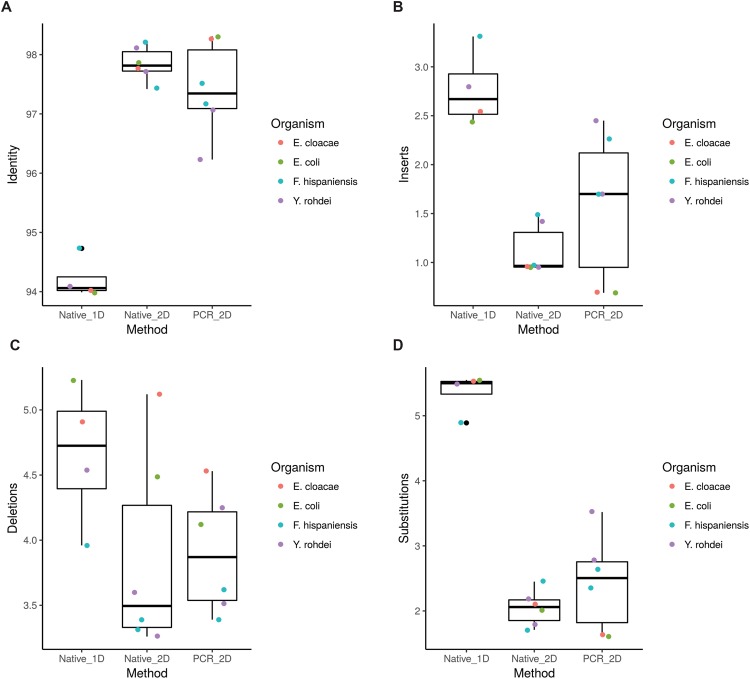
The MinION sequencer (Oxford Nanopore Technologies) is a paradigm shifting device allowing rapid, real time long read sequencing of nucleic acids. Yet external benchmarking of this technologies’ capabilities has not been extensively reported, nor has thorough evaluation of its utility for field-based analysis with sub-optimal sample types been described. The aim of this study was to evaluate the capability of the MinION sequencer for bacterial genomic and metagenomic applications, with specific emphasis placed on the quality, yield, and accuracy of generated sequence data. Two independent laboratories at the National Microbiology Laboratory (Public Health Agency of Canada), sequenced a set of microbes in replicate, using the currently available flowcells, sequencing chemistries, and software available at the time of the experiment. Overall sequencing yield and quality improved through the course of this set of experiments. Sequencing alignment accuracy was high reaching 97% for all 2D experiments, though was slightly lower for 1D sequencing (94%). 1D sequencing provided much longer sequences than 2D. Both sequencing chemistries performed equally well in constructing genomic assemblies. There was evidence of barcode cross-over using both the native and PCR barcoding methods. Despite the sub-optimal nature of samples sequenced in the field, sequences attributable to B. anthracis the target organism used in this scenario, could none-the-less be detected. Together, this report showcases the rapid advancement in this technology and its utility in the context of genomic sequencing of microbial isolates of importance to public health.
Overview
The claims and statistics of this paper haven’t been checked yet.
Free: it reads the open-access text and checks the first 5 claims that cite a source we can check. Create a free account to check every claim.
Integrity signals
Registry
Cites
Statistics
Figures
Verification
Claims the paper makes
The claims and statistics of this paper haven’t been checked yet.
Free: it reads the open-access text and checks the first 5 claims that cite a source we can check. Create a free account to check every claim.
Claims other papers make about this one
Each is checked against this paper’s own text: does it say what the citing paper says it does?
In the citing paper
“Research studies have also demonstrated the clinical potential of nanopore sequencing in targeted universal 16S ribosomal RNA (rRNA) bacterial detection127, microbiome analyses128, whole-genome sequencing of bacteria129 and outbreak viruses44,45,47, RNA sequencing (RNA-seq) using standardized controls130 and diagnosis of prosthetic joint131 and lower respiratory infections99.”
From Clinical metagenomics (2019) · cites this paper as [129]
Self-check
Percentages, sums and reported differences re-computed from the paper’s own numbers.
The self-check needs the paper’s full text.
Citations
Cites
Walker, B. J., Abeel, T., Shea, T., Priest, M., Abouelliel, A., Sakthikumar, S., Cuomo, C. A., Zeng, Q., Wortman, J., Young, S. K., et al. (2014) · PLoS ONE · doi:10.1371/journal.pone.0112963 · Cited by 9,197
Canu: scalable and accurate long-read assembly via adaptive k -mer weighting and repeat separation
Koren, S., Walenz, B. P., Berlin, K., Miller, J. R., Bergman, N. H., & Phillippy, A. M. (2017) · Genome Research · doi:10.1101/gr.215087.116 · Cited by 7,304
Assembly of long, error-prone reads using repeat graphs
Kolmogorov, M., Yuan, J., Lin, Y., & Pevzner, P. A. (2019) · Nature Biotechnology · doi:10.1038/s41587-019-0072-8 · Cited by 5,986
Versatile and open software for comparing large genomes
Kurtz, S., Phillippy, A., Delcher, A. L., Smoot, M., Shumway, M., Antonescu, C., & Salzberg, S. L. (2004) · Genome Biology · doi:10.1186/gb-2004-5-2-r12 · Cited by 5,254
Kraken: ultrafast metagenomic sequence classification using exact alignments
Wood, D. E., & Salzberg, S. L. (2014) · Genome Biology · doi:10.1186/gb-2014-15-3-r46 · Cited by 4,521
Mash: fast genome and metagenome distance estimation using MinHash
Ondov, B. D., Treangen, T. J., Melsted, P., Mallonee, A. B., Bergman, N. H., Koren, S., & Phillippy, A. M. (2016) · Genome biology · doi:10.1186/s13059-016-0997-x · Cited by 3,373
A complete bacterial genome assembled de novo using only nanopore sequencing data
Loman, N. J., Quick, J., & Simpson, J. T. (2015) · Nature Methods · doi:10.1038/nmeth.3444 · Cited by 1,294
Adaptive seeds tame genomic sequence comparison
Kiełbasa, S. M., Wan, R., Sato, K., Horton, P., & Frith, M. C. (2011) · Genome Research · doi:10.1101/gr.113985.110 · Cited by 1,281
Quick, J., Grubaugh, N. D., Pullan, S. T., Claro, I. M., Smith, A. D., Gangavarapu, K., Oliveira, G., Robles-Sikisaka, R., Rogers, T. F., Beutler, N. A., et al. (2017) · Nature Protocols · doi:10.1038/nprot.2017.066 · Cited by 1,190
Detecting DNA cytosine methylation using nanopore sequencing
Simpson, J. T., Workman, R. E., Zuzarte, P. C., David, M., Dursi, L. J., & Timp, W. (2017) · Nature Methods · doi:10.1038/nmeth.4184 · Cited by 1,136
Research works printed but not linked: 1
- Multiple contributors. Oxford Nanopore Community. Available at: community.nanoporetech.com. (Accessed: 12th March 2018) (2018).
Cited by
Items 201–300 of 322
Renchinsengee, N., Saruuljavkhlan, B., Khangai, A., Boldbaatar, G., Luvsandagva, B., Lazatkhan, A., Duger, D., Oyuntsetseg, K., Matsumoto, T., & Yamaoka, Y. (2026) · Gut Pathogens · doi:10.1186/s13099-026-00805-9 · Cited by 3
“In contrast, full-length V1–V9 16 S rRNA profiling with Oxford Nanopore sequencing captures the entire gene, enabling more accurate species-level classification and detection of subtle community changes [19, 20].”
Mahidsanan, T., Srinamngoen, P., & Sittisart, P. (2026) · PeerJ · doi:10.7717/peerj.20864 · Cited by 4
“This approach also supports risk assessment, process optimization, and regulatory compliance to ensure product quality and consumer protection ( Tyler et al., 2018 ; Jabeen et al., 2022 ).”
Considerations of Depth, Coverage, and Other Read Quality Metrics
Smith, D. D. N., & Tyler, A. D. (2025) · Wiley eBooks · doi:10.1002/9781683674597.ch19 · Cited by 3
Self-citationFischer, S., Römling, U., & Tümmler, B. (2019) · FEMS Microbiology Letters · doi:10.1093/femsle/fnz053 · Cited by 3
Yao, Z., Liu, Y., Zhan, L., Qiu, T., Li, G., Chen, Z., Fang, X., Liu, Z., Wu, W., Liao, Z., et al. (2023) · Frontiers in Microbiology · doi:10.3389/fmicb.2023.1238666 · Cited by 3
“It can identify DNA sequences by the current changes brought on when DNA strands are compelled to pass through membrane-encased nanopores (Tyler et al., 2018).”
BackgroundClinical metagenomics for infection diagnosis
Schlaberg, R., & Filkins, L. (2019) · Elsevier eBooks · doi:10.1016/b978-0-12-801496-7.00004-6 · Cited by 5
Balaji, A., Liu, Y., Nute, M., Hu, B., Kappell, A. D., LeSassier, D. S., Godbold, G. D., Ternus, K. L., & Treangen, T. J. (2023) · bioRxiv (Cold Spring Harbor Laboratory) · doi:10.1101/2023.02.10.528096 · Cited by 3
Diversity and Evolution of Nassellaria and Spumellaria (Radiolaria)
Sandín, M. M. (2019) · theses.fr (ABES) · doi:10.70675/233467e8zb621z4722zbd3cz589c853e93fa · Cited by 5
Kaleli, A., Ozbayram, E. G., Zengin, Z., & Akçaalan, R. (2025) · Journal of Phycology · doi:10.1111/jpy.70035 · Cited by 2
“The pocket-size, third-generation sequencer, MinION (Oxford Nanopore Technologies), is an affordable laboratory instrument that enables rapid and real-time data acquisition (Tyler et al., 2018).”
Chamonara, K., Uddin, M. S., & Masum, M. H. U. (2025) · Microbiology Resource Announcements · doi:10.1128/mra.00590-25 · Cited by 2
Hayashi, K., Doi, Y., & Suzuki, M. (2022) · Journal of Applied Microbiology · doi:10.1111/jam.15807 · Cited by 2
“However, the high error rates inherent to MinION sequencing are recognized as a concern and have limited its use in phylogenetic and epidemiological analysis (Garcia-Garcia et al., 2020; Lu et al., 2016; Rang et al., 2018; Tyler et al., 2018).”
BackgroundLi, Z., & Jin, W. (2022) · International Journal of Ophthalmology · doi:10.18240/ijo.2022.12.17 · Cited by 2
Cellular Surveillance: DNA-Based Recording to Monitor and Memorize Biological Events
David, G., O’Keefe, R. T., & Cai, Y. (2023) · GEN Biotechnology · doi:10.1089/genbio.2023.0018 · Cited by 2
“78 Imaging.”
Mahnoor, M., Noor‐ul‐Ain, Arshad, F., Ahsan, T., Alharbi, S. A., Ansari, M. J., Khan, I. A., Alshiekheid, M. A., & Sabour, A. A. A. (2024) · International Microbiology · doi:10.1007/s10123-024-00612-9 · Cited by 2
“WGS may be used to identify a variety of microbial communities, such as those found in soil, among various fungi and intestinal flora (Tyler et al. 2018).”
Sangeet, S., & Khan, A. (2022) · Bioinformatics and Biology Insights · doi:10.1177/11779322221126294 · Cited by 2
Alanin, K. S., Jørgensen, T. S., Browne, P. D., Petersen, B., Riber, L., Kot, W., & Hansen, L. H. (2019) · bioRxiv (Cold Spring Harbor Laboratory) · doi:10.1101/761098 · Cited by 2
Ultra-Short DNA Satellites as Environmental Sensing Elements in Soil Microbiomes: A Frontier ReviewPreprint
Odah, M. (2025) · Preprints.org · doi:10.20944/preprints202504.1277.v1 · Cited by 3
Genome Sequencing - Changing the Pandemic Dynamics
Jaggi, N. (2024) · Journal of Public Health and Primary Care · doi:10.4103/jphpc.jphpc_39_22 · Cited by 1
Guo, Y., Navarro-Muñoz, J. C., Rodenbach, C., Dwars, E., Dieleman, C., van den Hout, B., Sanders, B., Zhou, M., Arogunjo, A., Cox, R. J., et al. (2025) · Journal of Natural Products · doi:10.1021/acs.jnatprod.4c00350 · Cited by 1
Zhang, L., Cui, J., Shi, J., Cai, J., Sun, T., Sun, G., Li, Y., Li, H., Xu, S., Tang, X., et al. (2026) · Human Genomics · doi:10.1186/s40246-026-00931-0 · Cited by 2
“11.8) [41].”
InfluentialKumar, R., Braian, C., Fröberg, G., Forsman, L. D., & Schön, T. (2026) · Microbial Genomics · doi:10.1099/mgen.0.001687 · Cited by 1
“All procedures were performed as recommended by the latest available Ligation Sequencing DNA protocol for SQK-LSK12 or SQK-LSK14 kits found online on the Nanopore website (https://nanoporetech.com) [17, 18].”
Expectations and Realities of Adaptive Sampling in Nanopore Sequencing
Savari, A., & Magierowski, S. (2026) · DNA · doi:10.3390/dna6020023 · Cited by 1
“Continuous data streaming, portable instruments, and real-time analysis opened the possibility that sequencing could be shaped around the needs of an ongoing experiment rather than performed as a static, offline measurement [8,9].”
Vitale, D., Colarossi, L., Russo, G., Scimone, C., Cozzolino, D., Luca, C. D., Prjibelski, A. D., Mikheenko, A., Colarossi, C., Muti, F. D., et al. (2026) · Pathologica · doi:10.32074/1591-951x-1936 · Cited by 1
Safari, M., Chawich, J., Sohi, A. N., Charron, M., Tabard‐Cossa, V., & Godin, M. (2026) · Small Methods · doi:10.1002/smtd.70924 · Cited by 1
Salviano, D. A., Moraes, M. A., Zagui, G. S., Segura-Muñoz, S. I., Souza, L. R. R., da Veiga, M. A. M. S., Teixeira, K. M., Fujimoto, R. Y., Zucherato, V. S., Lorenzon, L., et al. (2026) · Total Environment Microbiology · doi:10.1016/j.temicr.2026.100093 · Cited by 1
Duman, M., Armwood, A. R., Ajmi, N., Tasci, G., Speare, D. J., Yavaş, Ö., & Satıcıoğlu, İ. B. (2026) · Frontiers in Cellular and Infection Microbiology · doi:10.3389/fcimb.2026.1831351 · Cited by 1
“Reads with a minimum Q-score of 15 were retained to ensure high-quality input (Lane, 1991; Knight et al., 2018; Li, 2018; Tyler et al., 2018; Johnson et al., 2019).”
Quiñones-Sanchez, C. L., Valle, J. L. B.-D., Urdaneta-Colon, M. A., Santiago-Rodriguez, T. M., & Rodriguez‐Fernandez, I. A. (2026) · Scientific Reports · doi:10.1038/s41598-026-63122-w · Cited by 1
Masum, M. H. U., Nayem, M. R., Mahdeen, A. A., Sultana, S., & Barua, A. (2026) · Veterinary Medicine and Science · doi:10.1002/vms3.71154 · Cited by 1
“Taxonomic assignment of the reads was performed using the wf-16s workflow in EPI2me software (Oxford Nanopore Technologies) (Tyler et al. 2018 ) using SILVA 138.1 (Quast et al. 2013 ) as the reference database and Kraken2 (v.2.1.3) as the classifier (Wood et al. 2019 ).”
InfluentialAzarian, T. (2020) · Clinical Infectious Diseases · doi:10.1093/cid/ciaa724 · Cited by 2
The Global Ocean Genome: A “Catalog” of Ocean Life
Laiolo, E., Alam, I. S., Uludağ, M., Jamil, T., Agustí, S., Gojobori, T., Acinas, S. G., Gasol, J. M., & Duarte, C. M. (2024) · Frontiers for Young Minds · doi:10.3389/frym.2023.1052361 · Cited by 1
“Recent breakthroughs in sequencing technologies have resulted in systems that are faster, more kids.frontiersin.org Laiolo et al. The Global Ocean Genome accurate, and portable [7].”
Kristianti, A., Dwiyanti, F. G., Pratama, R., & Siregar, I. Z. (2024) · IOP Conference Series Earth and Environmental Science · doi:10.1088/1755-1315/1315/1/012077 · Cited by 1
Wastewater, 2. Aerobic Biological Treatment
Telgmann, L., Horn, H., Schönberger, H., Gescher, J., Abbt‐Braun, G., Blöcher, C., Gisselmann, J., Blesgen, A., Wagner, M., West, S., et al. (2019) · Wiley eBooks · doi:10.1002/14356007.o28_o08.pub2 · Cited by 1
Genomic Analysis of the Polyvalent Bacteriophage FP01Preprint
Vásquez, I., Retamales, J., Parra, B., Robeson, J. P., & Santander, J. (2019) · Preprints.org · doi:10.20944/preprints201907.0169.v1 · Cited by 1
Tamburini, F. B., Maghini, D. G., Oduaran, O. H., Brewster, R., Hulley, M., Sahibdeen, V., Norris, S. A., Tollman, S. M., Kahn, K., Wagner, R. G., et al. (2020) · bioRxiv (Cold Spring Harbor Laboratory) · doi:10.1101/2020.05.18.099820 · Cited by 1
Martin, M. (2022) · ThinkIR: The University of Louisville's Institutional Repository (University of Louisville) · doi:10.18297/etd/3936 · Cited by 1
Ling, D. B., Siddiqui, G., MacRaild, C. A., Yamaryo‐Botté, Y., Dans, M. G., Kouskousis, B. P., Weiss, G. E., Razook, Z., Mehra, S., Nguyen, W., et al. (2026) · bioRxiv (Cold Spring Harbor Laboratory) · doi:10.64898/2026.02.24.707847 · Cited by 1
Short papers on current state of sequencing, metagenomics, and RNAseq for diagnostics
Davenport, K. W., & Defense Threat Reduction Agency (DTRA) (2019) · OSTI OAI (U.S. Department of Energy Office of Scientific and Technical Information) · doi:10.2172/1503174
Análisis de datos en Biocomputación: tecnología MinION y herramientas bioinformáticas.
Herrera, E. T. (2019) · RIULL (Universidad de La Laguna)
Hansen, S. (2019) · eDiss (Georg-August-Universität Göttingen) · doi:10.53846/goediss-7568
The Genomics Revolution: Agri-Food Research in the 21st Century
Mitchell, M., Marshall, H., Nguyen, S. V., Macori, G., & Fanning, S. (2020) · Elsevier eBooks · doi:10.1016/b978-0-08-100596-5.22687-5
Nixon, A. N. (2020) · NSUWorks (Nova Southeastern University)
High-resolution sequencing of mitochondrial DNA
Annis, S. (2020) · Digital Repository Service (Northeastern University) · doi:10.17760/d20382805
Historia sekwencjonowania genomów roślinnych
Puchta-Jasińska, M., Bolc, P., Włodarczyk, S., Groszyk, J., & Boczkowska, M. (2020) · Laboratorium - Przegląd Ogólnopolski
On assembling bacterial genomes from long reads: a case study in walnutassociated Xanthomonas spp.
Teixeira, M. (2020) · Portuguese National Funding Agency for Science, Research and Technology (RCAAP Project by FCT) · doi:10.34626/63jy-0k15
Pearman, W. S. (2019) · Massey Research Online (Massey University)
Genomics approach to understanding silicon in ash trees (Fraxinus excelsior)
Bedford, J. A. (2020) · White Rose eTheses Online (University of Leeds, The University of Sheffield, University of York)
The forgotten world of mycobiome in the skin of dogs
D’Andreano, S. (2020) · LA Referencia (Red Federada de Repositorios Institucionales de Publicaciones Científicas)
Power of Transcriptomics in Lung Biology
Mdawar, M.-B. E., Pennycuick, A., & Lazarus, K. A. (2021) · Elsevier eBooks · doi:10.1016/b978-0-08-102723-3.00188-8
Pucker, B. (2019) · PUB – Publications at Bielefeld University (Bielefeld University) · doi:10.4119/unibi/2935794
Balasubramanian, R., Pal, S., Rao, A., Naik, A. K., Chakraborty, B., Maiti, P. K., & Varma, M. M. (2020) · ChemRxiv · doi:10.26434/chemrxiv.12103515
Reconstruction of encoded data in DNA storage technology
Sankar, S. (2022) · DR-NTU (Nanyang Technological University) · doi:10.32657/10356/156818
Klier, N. (2022) · San José State University ScholarWorks (San Jose State University) · doi:10.31979/etd.n6cs-f4jw
“Pores can remain active for up to 72 hours, however, there is much variation in pore lifespan, often resulting in sequencing runs ending before this [21].”
BackgroundInfluentialBCL6 is a context-dependent mediator of the glioblastoma therapy response
Tribe, A. K. W. (2023) · Open Access Victoria University of Wellington | Te Herenga Waka (Figshare) · doi:10.26686/wgtn.21937850
D2Sim: A Computational Simulator for Nanopore Sequencing Based DNA Data Storage
Sankar, S., Yixin, W., Noor‐A‐Rahim, M., Gunawan, E., Guan, Y. L., & Poh, C. L. (2026) · IEEE Transactions on Computational Biology and Bioinformatics · doi:10.1109/tcbbio.2026.3716589
“with Illumina/Nanopore is the major contributor to these errors and losses [1].”
A Review on Breast Cancer: A Global Risk Factor and Preventive Measures
(2023) · Journal of Clinical Oncology and Therapeutics · doi:10.47275/2690-5663-131
“Targetable mutations in advanced breast cancer include PIK3CA, HER2, and rare instances of mismatch deficiency or other targets for tyrosine kinase inhibitors [62-64]. pass through a thin membrane with a tiny pore suspended inside.”
BackgroundTechnologies Promoting Genome-Based Taxonomy
Rekadwad, B. N., Lian, Z., Jiao, J., & Li, W. (2024) · Springer eBooks · doi:10.1007/978-981-99-5720-0_3
Structural and Functional Genomics for Assessment of Genetic Variability
Mohindra, V., Kumar, S., Kushwaha, B., Divya, P. R., Chowdhury, L. M., & Kumar, R. (2024) · Springer eBooks · doi:10.1007/978-981-97-5250-8_4
Adhikari, A., Fulton, J. C., Lane, B. R., Brawner, J. T., Rollins, J. A., Harmon, P. F., & Goss, E. M. (2024) · PhytoFrontiers™ · doi:10.1094/phytofr-09-24-0094-a
Grigoryan, D. A., Дмитриевна, М. А., Chernitsov, A. V., & Shipulin, G. A. (2024) · Laboratory Service · doi:10.17116/labs20241304149
Mariner-Llicer, C. (2024) · RiuNet (Universitat Politècnica de València) · doi:10.4995/thesis/10251/213332
Sequence‐Based Identification and Typing
She, R. C., Fisher, M. A., Kozyreva, V. K., & Yang, S. (2023) · Wiley eBooks · doi:10.1002/9781683670438.cmph0156
High throughput method for monitoring SARS-CoV-2 variants in wastewater by Nanopore sequencing
Rasmussen, L. D., Karst, S. M., Richter, S. R., Midgley, S., Berrig, C., Qvesel, A. G., & Franck, K. T. (2025) · Heliyon · doi:10.1016/j.heliyon.2025.e43751
Dhaniyala, S., Sur, S., & Ravindran, H. (2020) · The Conversation · doi:10.64628/aai.yegsujsxm
Dhaniyala, S., Sur, S., & Ravindran, H. (2020) · The Conversation · doi:10.64628/aai.6y6sv9ae7
Meletis, G., Pappa, S., Gioula, G., Exindari, M., Christoforidi, M., & Papa, A. (2025) · Epidemiologia · doi:10.3390/epidemiologia6040078
“Nanopore sequencing is increasingly adopted for real-time outbreak monitoring due to its portability and ability to generate complete viral genomes within hours [35,36].”
Pagano, F. S., Bemis, D. H., Rehman, R., Shapiro, J. M., & Belenky, P. A. (2025) · Frontiers in Microbiology · doi:10.3389/fmicb.2025.1629464
Das, T., Singh, M. S., Rabina, K., & Singh, M. S. (2025) · International Journal of Research in Agronomy · doi:10.33545/2618060x.2025.v8.i12sb.4333
Fracowiak, J., & Justus Liebig University Giessen (2019) · University writing server of the Justus Liebig University Giessen (Justus-Liebig-Universität Gießen) · doi:10.22029/jlupub-10479
Slizovskiy, I. B., Oliva, M., Settle, J., Zyskina, L. V., Prosperi, M., Boucher, C., & Noyes, N. R. (2022) · Figshare · doi:10.6084/m9.figshare.21485325
Chang, J. J. M., Ip, Y. C. A., Neo, W. L., Mowe, M. A. D., Jaafar, Z., & Huang, D. (2024) · Figshare · doi:10.6084/m9.figshare.26974494
Chang, J. J. M., Ip, Y. C. A., Neo, W. L., Mowe, M. A. D., Jaafar, Z., & Huang, D. (2024) · Figshare · doi:10.6084/m9.figshare.26974506
Chang, J. J. M., Ip, Y. C. A., Neo, W. L., Mowe, M. A. D., Jaafar, Z., & Huang, D. (2024) · Figshare · doi:10.6084/m9.figshare.26974503
Neubert, K., Zuchantke, E., Leidenfrost, R. M., Wuenschiers, R., Grützke, J., Malorny, B., Brendebach, H., Dahouk, S. A., Homeier, T., Hotzel, H., et al. (2021) · Figshare · doi:10.6084/m9.figshare.17007216
Slizovskiy, I. B., Oliva, M., Settle, J., Zyskina, L. V., Prosperi, M., Boucher, C., & Noyes, N. R. (2022) · Figshare · doi:10.6084/m9.figshare.21485322
Wu, X. (2021) · CaltechTHESIS (California Institute of Technology) · doi:10.7907/fwhf-a510
Slizovskiy, I. B., Oliva, M., Settle, J., Zyskina, L. V., Prosperi, M., Boucher, C., & Noyes, N. R. (2022) · Figshare · doi:10.6084/m9.figshare.21485307
Chang, J. J. M., Ip, Y. C. A., Neo, W. L., Mowe, M. A. D., Jaafar, Z., & Huang, D. (2024) · Figshare · doi:10.6084/m9.figshare.26974497
Slizovskiy, I. B., Oliva, M., Settle, J., Zyskina, L. V., Prosperi, M., Boucher, C., & Noyes, N. R. (2022) · Figshare · doi:10.6084/m9.figshare.21485328
Neubert, K., Zuchantke, E., Leidenfrost, R. M., Wuenschiers, R., Grützke, J., Malorny, B., Brendebach, H., Dahouk, S. A., Homeier, T., Hotzel, H., et al. (2021) · Figshare · doi:10.6084/m9.figshare.17007210
Slizovskiy, I. B., Oliva, M., Settle, J., Zyskina, L. V., Prosperi, M., Boucher, C., & Noyes, N. R. (2022) · Figshare · doi:10.6084/m9.figshare.21485319
Chang, J. J. M., Ip, Y. C. A., Neo, W. L., Mowe, M. A. D., Jaafar, Z., & Huang, D. (2024) · Figshare · doi:10.6084/m9.figshare.26974500
Maloney, J. G., Molokin, A., & Santin, M. (2020) · Figshare · doi:10.6084/m9.figshare.13291112
Tuekam Nono, A. (2024) · Dépôt institutionnel de l'Université libre de Bruxelles (Université Libre de Bruxelles)
Ivanova, M. (2020) · ThinkTech (Texas Tech University) · Cited by 1
Mitogenomic Phylogeny of freshwater mussels (Bivalvia: Unionida)
Teixeira, J. E. A. T. (2021) · Portuguese National Funding Agency for Science, Research and Technology (RCAAP Project by FCT)
Fagerland, C. (2019) · NVA (Nasjonalt vitenarkiv)
Characterising some mechanisms of iron homeostasis in selected Armillaria species
(2023) · UpSpace Institutional Repository (University of Pretoria)
Patil, T. (2024) · DiVA (Digitala Vetenskapliga Arkivet) · Cited by 3
Metadata
- Authors
- Tyler, A. D., Mataseje, L., Urfano, C. J., Schmidt, L., Antonation, K. S., Mulvey, M. R., & Corbett, C. R.
- Affiliations
- Public Health Agency of Canada (CA)
- Corresponding author
- Tyler, Andrea D.
- ORCID
- Venue
- Scientific Reports
- Published
- 2018-07-19
- Volume
- 8
- Issue
- 1
- Pages
- 10931-10931
- ISSN
- 2045-2322 (ISSN-L)
- PMC
- PMC6053456
- OpenAlex
- W2884978946
- Cited by
- 294
- References
- 29
- Citations by year
- 2026: 24 · 2025: 19 · 2024: 33 · 2023: 22 · 2022: 46 · 2021: 48 · 2020: 55 · 2019: 44 · 2018: 3
- FWCI
- 13.34
- Type
- journal article
- Language
- en
- Open access
- gold
- doi.org
- Licence
- cc-by
- creativecommons.org/licenses/by/4.0 (tdm)
- creativecommons.org/licenses/by/4.0 (vor)
- Locations
- Scientific Reports (publishedVersion, cc-by)
- Europe PMC (PubMed Central) (publishedVersion, cc-by)
- PubMed Central (publishedVersion, cc-by)
- PubMed (publishedVersion)
- DOAJ (DOAJ: Directory of Open Access Journals) (submittedVersion)
- Funders
- Canadian Safety and Security Program
- Genomics Research and Development Initiative
- Topics
- Life Sciences › Biochemistry, Genetics and Molecular Biology › Molecular Biology › Genomics and Phylogenetic Studies
- Health Sciences › Medicine › Microbiology (medical) › Bacterial Identification and Susceptibility Testing
- Physical Sciences › Engineering › Biomedical Engineering › Nanopore and Nanochannel Transport Studies
- Keywords
- Oxford Nanopore MinION, long-read sequencing, bacterial whole-genome sequencing, metagenomics, sequencing accuracy, genome assembly, Bacillus anthracis, public health microbiology
- MeSH terms
- Whole Genome Sequencing, Bacillus anthracis, Genome, Bacterial, Metagenomics, Nanopores, High-Throughput Nucleotide Sequencing
About these checks
Registry, retraction, Cites and statistics results are computed, not judged, with one exception: a printed reference that no index lists is read once by a model before it counts as a citation error. Claims are extracted by a model and kept only when their quote appears verbatim in the text; each cited source is then checked, with a model’s help, for whether it says what the claim relies on. Those verdicts can be wrong — read the claim’s quote and the cited source before relying on one.
Statistics and arithmetic are recomputed, not judged.
Confidence bands are shown only for fields calibrated on our annotated test set. None is calibrated yet, so no band is shown.
What counts as a claim ›How we measure confidence ›How we check this ›
Are you an author, or do you see a problem with this page? Request a review
Data sources
Bibliographic data: Semantic Scholar, OpenAlex, Crossref.
Contains information from the Semantic Scholar Academic Graph Datasets, made available under the ODC Attribution License (ODC-BY 1.0).
Semantic Scholar’s data is described in: Kinney, R., et al. (2023). The Semantic Scholar Open Data Platform. arXiv:2301.10140.
