

Tumour cell invasiveness and response to chemotherapeutics in adipocyte invested 3D engineered anisotropic collagen scaffolds
Open accessThe DOI matches its Crossref record; 56 of the 56 references it cites were found in a registry or an index.
Abstract
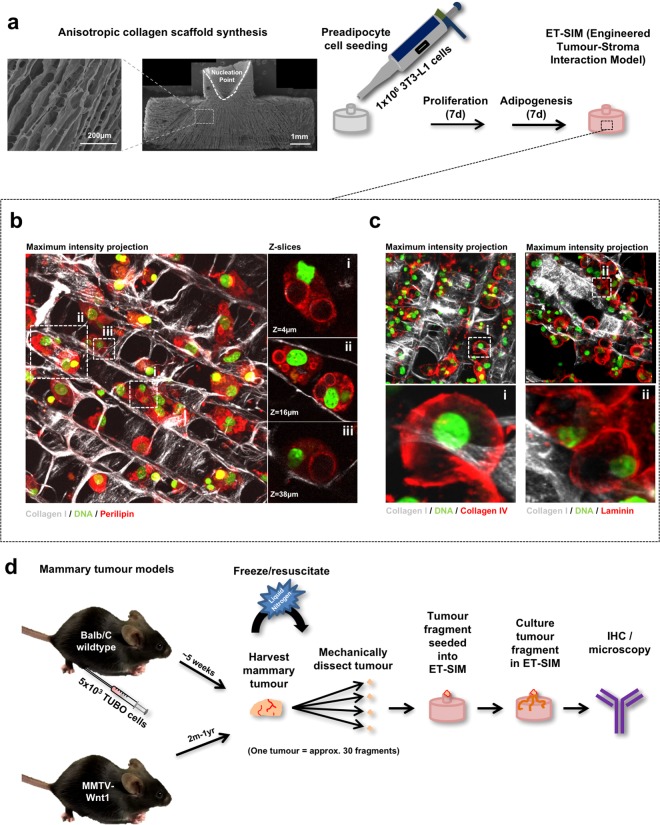
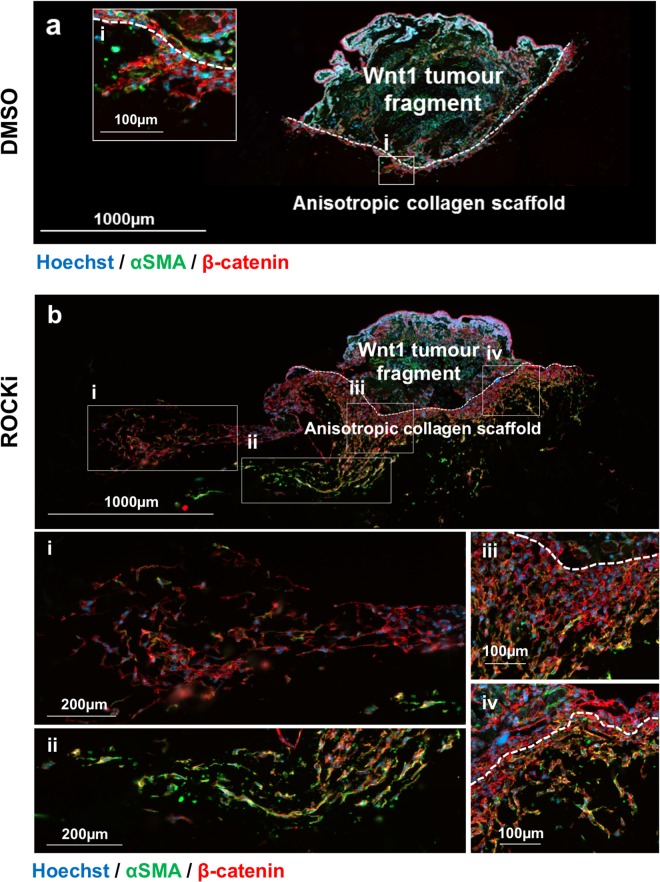
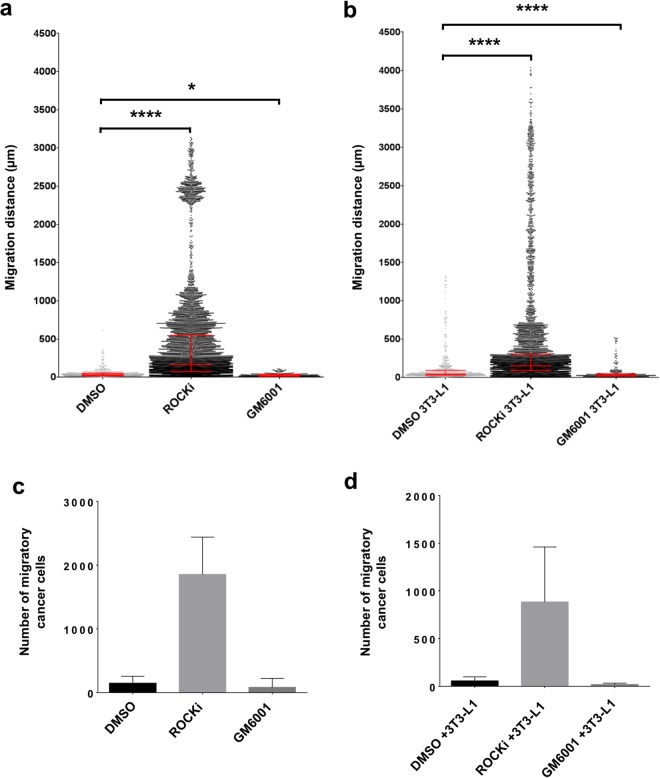
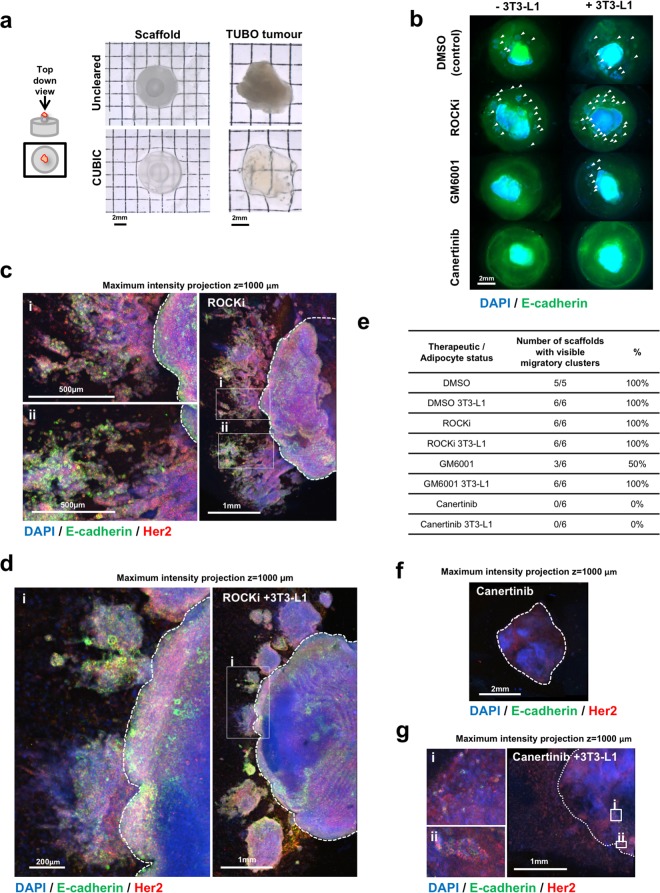
Breast cancers are highly heterogeneous and their metastatic potential and response to therapeutic drugs is difficult to predict. A tool that could accurately gauge tumour invasiveness and drug response would provide a valuable addition to the oncologist’s arsenal. We have developed a 3-dimensional (3D) culture model that recapitulates the stromal environment of breast cancers by generating anisotropic (directional) collagen scaffolds seeded with adipocytes and culturing tumour fragments therein. Analysis of tumour cell invasion in the presence of various therapeutic drugs, by immunofluorescence microscopy coupled with an optical clearing technique, demonstrated the utility of this approach in determining both the rate and capacity of tumour cells to migrate through the stroma while shedding light also on the mode of migration. Furthermore, the response of different murine mammary tumour types to chemotherapeutic drugs could be readily quantified.
Overview
The claims and statistics of this paper haven’t been checked yet.
Free: it reads the open-access text and checks the first 5 claims that cite a source we can check. Create a free account to check every claim.
Integrity signals
Registry
Cites
Statistics
Figures
Verification
Claims the paper makes
The claims and statistics of this paper haven’t been checked yet.
Free: it reads the open-access text and checks the first 5 claims that cite a source we can check. Create a free account to check every claim.
Claims other papers make about this one
Each is checked against this paper’s own text: does it say what the citing paper says it does?
The source backs part of the claim, not all of it — or backs it for a different population, condition or comparison.
In the citing paper
“The presence of adipocytes increased the migration of both cancer cell types, and promoted cancer cell invasion, while reducing the overall number of migratory cells, thus demonstrating the heterogeneity of cellular behavior in this model [30].”
From 3D In Vitro Model (R)evolution: Unveiling Tumor–Stroma Interactions (2021) · cites this paper as [30]
Experimental — accuracy not yet measuredThe cited source says what the claim attributes to it.
In the citing paper
“The presence of adipocytes increased the migration of both cancer cell types, and promoted cancer cell invasion, while reducing the overall number of migratory cells, thus demonstrating the heterogeneity of cellular behavior in this model [30].”
From 3D In Vitro Model (R)evolution: Unveiling Tumor–Stroma Interactions (2021) · cites this paper as [30]
The cited source says what the claim attributes to it.
In the citing paper
“In a different approach, a 3D tumor model was developed by generating anisotropic collagen scaffolds seeded with adipocytes and tumor cells [30].”
From 3D In Vitro Model (R)evolution: Unveiling Tumor–Stroma Interactions (2021) · cites this paper as [30]
Self-check
Percentages, sums and reported differences re-computed from the paper’s own numbers.
The self-check needs the paper’s full text.
Citations
Cites
Fiji: an open-source platform for biological-image analysis
Schindelin, J., Arganda-Carreras, I., Frise, E., Kaynig, V., Longair, M., Pietzsch, T., Preibisch, S., Rueden, C., Saalfeld, S., Schmid, B., et al. (2012) · Nature Methods · doi:10.1038/nmeth.2019 · Cited by 66,890
Tensional homeostasis and the malignant phenotype
Paszek, M. J., Zahir, N., Johnson, K. R., Lakins, J. N., Rozenberg, G. I., Gefen, A., Reinhart-King, C. A., Margulies, S. S., Dembo, M., Boettiger, D., et al. (2005) · Cancer Cell · doi:10.1016/j.ccr.2005.08.010 · Cited by 3,941
THE CHEMOTACTIC EFFECT OF MIXTURES OF ANTIBODY AND ANTIGEN ON POLYMORPHONUCLEAR LEUCOCYTES
Boyden, S. (1962) · The Journal of Experimental Medicine · doi:10.1084/jem.115.3.453 · Cited by 2,733
Debnath, J., Muthuswamy, S. K., & Brugge, J. S. (2003) · Methods · doi:10.1016/s1046-2023(03)00032-x · Cited by 1,995
Collagen reorganization at the tumor-stromal interface facilitates local invasion
Provenzano, P. P., Eliceiri, K. W., Campbell, J. M., Inman, D. R., White, J. G., & Keely, P. J. (2006) · BMC Medicine · doi:10.1186/1741-7015-4-38 · Cited by 1,804
Self-citationRoles of matrix metalloproteinases in cancer progression and their pharmacological targeting
Gialeli, C., Theocharis, A. D., & Karamanos, N. K. (2011) · The FEBS Journal · doi:10.1111/j.1742-4658.2010.07919.x · Cited by 1,607
Three-dimensional culture models of normal and malignant breast epithelial cells
Lee, G. Y., Kenny, P. A., Lee, E. H., & Bissell, M. J. (2007) · Nature Methods · doi:10.1038/nmeth1015 · Cited by 1,336
Whole-Brain Imaging with Single-Cell Resolution Using Chemical Cocktails and Computational Analysis
Susaki, E. A., Tainaka, K., Perrin, D., Kishino, F., Tawara, T., Watanabe, T. M., Yokoyama, C., Onoe, H., Eguchi, M., Yamaguchi, S., et al. (2014) · Cell · doi:10.1016/j.cell.2014.03.042 · Cited by 1,325
Aligned Collagen Is a Prognostic Signature for Survival in Human Breast Carcinoma
Conklin, M. W., Eickhoff, J. C., Riching, K. M., Pehlke, C. A., Eliceiri, K. W., Provenzano, P. P., Friedl, A., & Keely, P. J. (2011) · The American Journal of Pathology · doi:10.1016/j.ajpath.2010.11.076 · Cited by 1,285
Guy, C. T., Webster, M. A., Schaller, M., Parsons, T. J., Cardiff, R. D., & Muller, W. J. (1992) · Proceedings of the National Academy of Sciences · doi:10.1073/pnas.89.22.10578 · Cited by 1,193
Cited by
3D Cell Culture Systems: Tumor Application, Advantages, and Disadvantages
Habanjar, O., Diab-Assaf, M., Caldefie-Chezet, F., & Delort, L. (2021) · International Journal of Molecular Sciences · doi:10.3390/ijms222212200 · Cited by 547
Tumor microenvironment: barrier or opportunity towards effective cancer therapy
Tiwari, A., Trivedi, R., & Lin, S.-Y. (2022) · Journal of Biomedical Science · doi:10.1186/s12929-022-00866-3 · Cited by 377
“Thus, this 3D tumor model clearly demonstrates the heterogeneous cell behavior within TME [197].”
Background3D In Vitro Model (R)evolution: Unveiling Tumor–Stroma Interactions
Rodrigues, J., Heinrich, M. A., Teixeira, L. M., & Prakash, J. (2021) · Trends in Cancer · doi:10.1016/j.trecan.2020.10.009 · Cited by 405
Harane, S. E., Zidi, B., Harane, N. E., Krause, K., Matthes, T., & Preynat‐Seauve, O. (2023) · Cells · doi:10.3390/cells12071001 · Cited by 157
Generation of a three-dimensional collagen scaffold-based model of the human endometrium
Abbas, Y., Brunel, L. G., Hollinshead, M. S., Fernando, R. C., Gardner, L., Duncan, I. A., Moffett, A., Best, S. M., Turco, M. Y., Burton, G. J., et al. (2020) · Interface Focus · doi:10.1098/rsfs.2019.0079 · Cited by 119
Self-citationAdvancement of Scaffold-Based 3D Cellular Models in Cancer Tissue Engineering: An Update
Unnikrishnan, K., Thomas, L. V., & Kumar, R. M. R. (2021) · Frontiers in Oncology · doi:10.3389/fonc.2021.733652 · Cited by 106
Redmond, J., McCarthy, H. O., Buchanan, P., Levingstone, T. J., & Dunne, N. (2021) · Materials Science and Engineering C · doi:10.1016/j.msec.2021.111944 · Cited by 80
Breaking the stromal barrier in pancreatic cancer: Advances and challenges
Chakkera, M., Foote, J. B., Farran, B., & Nagaraju, G. P. (2023) · Biochimica et Biophysica Acta (BBA) - Reviews on Cancer · doi:10.1016/j.bbcan.2023.189065 · Cited by 58
The importance of 3D fibre architecture in cancer and implications for biomaterial model design
Ashworth, J. C., & Cox, T. R. (2024) · Nature reviews. Cancer · doi:10.1038/s41568-024-00704-8 · Cited by 53
In vitro tissue-engineered adipose constructs for modeling disease
Murphy, C. S., Liaw, L., & Reagan, M. R. (2019) · BMC Biomedical Engineering · doi:10.1186/s42490-019-0027-7 · Cited by 47
Mammary Organoids and 3D Cell Cultures: Old Dogs with New Tricks
Sumbal, J., Budková, Z., Traustadóttir, G. Á., & Koledova, Z. S. (2020) · Journal of Mammary Gland Biology and Neoplasia · doi:10.1007/s10911-020-09468-x · Cited by 45
Patient-derived scaffolds as a drug-testing platform for endocrine therapies in breast cancer
Gustafsson, A., Garré, E., Leiva, M. C., Salerno, S., Ståhlberg, A., & Landberg, G. (2021) · Scientific Reports · doi:10.1038/s41598-021-92724-9 · Cited by 46
Senescent cells in 3D culture show suppressed senescence signatures
Yadav, P., Chatterjee, K., & Saini, D. K. (2021) · Biomaterials Science · doi:10.1039/d1bm00536g · Cited by 23
Dynamic Heterochromatin States in Anisotropic Nuclei of Cells on Aligned Nanofibers
Liu, W., Padhi, A., Zhang, X., Narendran, J., Anastasio, M. A., Nain, A. S., & Irudayaraj, J. (2022) · ACS Nano · doi:10.1021/acsnano.2c02660 · Cited by 21
Horder, H., Böhringer, D., Endrizzi, N., Hildebrand, L. S., Cianciosi, A., Stecher, S., Dusi, F., Schweinitzer, S., Watzling, M., Gröll, J., et al. (2024) · Biofabrication · doi:10.1088/1758-5090/ad57f7 · Cited by 14
Generation of Individualized, Standardized, and Electrically Synchronized Human Midbrain Organoids
Harane, S. E., Nazari, B., Harane, N. E., Locatelli, M., Zidi, B., Durual, S., Karmime, A., Ravier, F., Roux, A., Stoppini, L., et al. (2025) · Cells · doi:10.3390/cells14151211 · Cited by 14
Three-dimensional In Vitro Biomimetic Model of Neuroblastoma using Collagen-based Scaffolds
Gallagher, C., Murphy, C., Kelly, G., O’Brien, F. J., & Piskareva, O. (2021) · Journal of Visualized Experiments · doi:10.3791/62627 · Cited by 13
Dellaquila, A., Dujardin, C., Bao, C. L., Chaumeton, C., Carré, A., Guilcher, C. L., Lam, F., & Simón‐Yarza, T. (2023) · Biomaterials Advances · doi:10.1016/j.bioadv.2023.213636 · Cited by 12
Exploring the principles of embryonic mammary gland branching morphogenesis
Lindström, R., Lindström, R., Myllymäki, S.-M., Lan, Q., Trela, E., Prunskaite‐Hyyryläinen, R., Kaczyńska, B., Voutilainen, M., Kuure, S., Vainio, S. J., et al. (2024) · Development · doi:10.1242/dev.202179 · Cited by 10
Re-engineering Artificial Neoplastic Milieus: Taking Lessons from Mechano- and Topobiology
Leal‐Egaña, A., Balland, M., & Boccaccini, A. R. (2019) · Trends in biotechnology · doi:10.1016/j.tibtech.2019.08.003 · Cited by 10
Vallone, S. A., Solá, M. E. G., Schere‐Levy, C., Meiss, R. P., Hermida, G. N., Chodosh, L. A., Kordon, E. C., Hynes, N. E., & Gattelli, A. (2022) · Disease Models & Mechanisms · doi:10.1242/dmm.049286 · Cited by 8
“Quantification of adipocyte-specific perilipin-1 levels (Hume et al., 2018), which is significantly increased in RET-expressing glands (Fig.”
Garcia, A. R., Mendes, A., Custódia, C., Faria, C. C., Barata, J. T., Malhó, R., Figueira, I., & Brito, M. A. (2023) · Cancers · doi:10.3390/cancers15153973 · Cited by 7
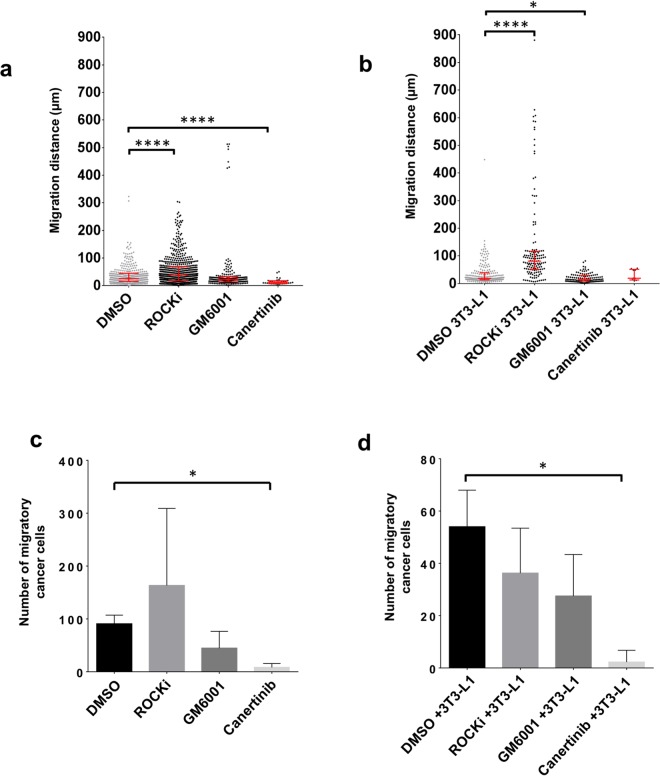
“reduce cell migration distance and the number of migrated BC cells [66].”
BackgroundEngineering anisotropic tissues: from structured scaffolds to magnetic actuation
Demri, N., Descroix, S., & Wilhelm, C. (2026) · Materials Today Bio · doi:10.1016/j.mtbio.2026.103191 · Cited by 7
“[170]. porous scaffolds from a wide selection of materials, such as collagen [269], silk fibroin [232] or chitosan [185] hydrogels.”
Ribovski, L., Lins, P. M. P., Moreira, B. J., Antonio, L. C., Cancino‐Bernardi, J., & Zucolotto, V. (2025) · Biomaterials Advances · doi:10.1016/j.bioadv.2025.214420 · Cited by 6
Why 3D in vitro cancer models are the future of cancer research?
Petrić, T., & Sabol, M. (2023) · Periodicum Biologorum · doi:10.18054/pb.v124i3-4.24697 · Cited by 3
“Natural biomaterials originated from tissues and cells would include collagen, fibrin, alginate, and chitosan (92-94) .”
Ingavle, G. C., & Das, M. (2022) · ACS Biomaterials Science & Engineering · doi:10.1021/acsbiomaterials.2c00484 · Cited by 3
Co-culture and 3D tumor models for drug/gene therapy testing
Costard, L. S., Ramanayake, H., & Curtin, C. M. (2020) · Elsevier eBooks · doi:10.1016/b978-0-12-818128-7.00021-6
Bionanomateriais para o cruzamento de barreira biológica e entrega controlada
Ribovski, L. (2020) · Digital Library of Theses and Dissertations (Universidade de São Paulo) · doi:10.11606/t.76.2020.tde-29092020-101056
Introduction to I Have Been to Hiroshima Mon Amour
Harries, M. (2010) · TheatreForum
Martinez, J., Wang, N., Hu, L., Benitez, E. C., Nguyen, U. T. T., Martínez, R., & Walsh, A. J. (2022) · Royal Society of Chemistry eBooks · doi:10.1039/9781839166013-00304
Future perspectives and challenges for biomaterials in cancer precision medicine
Kargozar, S., & Mozafari, M. (2024) · Elsevier eBooks · doi:10.1016/b978-0-323-85661-4.00008-1
Vallone, S. A. (2025) · Repositorio Digital Institucional de la Universidad de Buenos Aires (Universidad de Buenos Aires)
Etude métabolomique de cellules cancéreuses par RMN à très hauts champs
Mili, M. (2019) · theses.fr (ABES) · doi:10.70675/db7de31fz748az4b3fzbb90z97ba8e3ff712
Lab-on-a-Chip Modeling of Ovarian Cancer and Induced Epithelial-Mesenchymal Transition
Chen, C. (2023) · theses.fr (ABES) · doi:10.70675/9561117fzc645z4907za71czf4ba5d3659aa
Obesity, Inflammation, and Tumor Microenvironment in Three-Dimensional Models of Breast Cancer
Salinas-Vera, Y. M., Pérez‐Navarro, Y., Puente-Rivera, J., Álvarez-Sánchez, M. E., & López‐Camarillo, C. (2026) · Cells · doi:10.3390/cells15090761
“These models demonstrated that adipocyte integration within anisotropically organized collagen matrices promotes directional tumor cell invasion and alters the response to chemotherapeutic agents, highlighting the regulatory role of stromal biomechanics in breast cancer aggressiveness [89].”
Xie, J., Cai, T., Wang, N., Zhang, W., Zhong, S., Qian, H., Liu, Y., Ye, D., Wang, Z., & Tang, H. (2026) · Cancer Letters · doi:10.1016/j.canlet.2026.218911
Metadata
- Authors
- Hume, R. D., Pensa, S., Brown, E. J., Kreuzaler, P. A., Hitchcock, J., Husmann, A., Campbell, J. J., Lloyd-Thomas, A. O., Cameron, R. E., & Watson, C. J.
- Affiliations
- University of Cambridge (GB)
- Corresponding author
- Watson, Christine J.
- ORCID
- Venue
- Scientific Reports
- Published
- 2018-08-23
- Volume
- 8
- Issue
- 1
- Pages
- 12658-12658
- ISSN
- 2045-2322 (ISSN-L)
- PMC
- PMC6107500
- OpenAlex
- W2885206766
- Cited by
- 37
- References
- 56
- Citations by year
- 2026: 3 · 2025: 2 · 2024: 4 · 2023: 6 · 2022: 6 · 2021: 7 · 2020: 5 · 2019: 3
- FWCI
- 2.08
- Type
- journal article
- Language
- en
- Open access
- gold
- doi.org
- Licence
- cc-by
- creativecommons.org/licenses/by/4.0 (tdm)
- creativecommons.org/licenses/by/4.0 (vor)
- Locations
- Scientific Reports (publishedVersion, cc-by)
- Europe PMC (PubMed Central) (publishedVersion, other-oa)
- PubMed Central (publishedVersion, cc-by)
- PubMed (publishedVersion)
- DOAJ (DOAJ: Directory of Open Access Journals) (submittedVersion)
- Apollo (University of Cambridge) (submittedVersion, cc-by)
- Apollo (cc-by)
- Funders
- Queen Mary University of London
- National Centre for the Replacement, Refinement and Reduction of Animals in Research (NC/K001655/1)
- National Centre for the Replacement Refinement and Reduction of Animals in Research (NC/K001655/1)
- Medical Research Council (MR/K011014/1, MR/N022963/1)
- FP7 Ideas: European Research Council (320598)
- Topics
- Life Sciences › Biochemistry, Genetics and Molecular Biology › Cell Biology › Cellular Mechanics and Interactions
- Health Sciences › Medicine › Oncology › Cancer Cells and Metastasis
- Physical Sciences › Engineering › Biomedical Engineering › 3D Printing in Biomedical Research
- Keywords
- breast cancer, tumor invasion, chemosensitivity, 3D collagen scaffold, adipocytes, tumor microenvironment, tumor stroma, tumor cell migration, optical tissue clearing, 3D culture models
- MeSH terms
- Animals, Cell Movement, Collagen, Female, Humans, Immunohistochemistry, Mice, Inbred BALB C, Microscopy, Fluorescence, Adipocytes, Microscopy, Confocal, Tissue Engineering, 3T3-L1 Cells, Mice, Tissue Scaffolds
About these checks
Registry, retraction, Cites and statistics results are computed, not judged, with one exception: a printed reference that no index lists is read once by a model before it counts as a citation error. Claims are extracted by a model and kept only when their quote appears verbatim in the text; each cited source is then checked, with a model’s help, for whether it says what the claim relies on. Those verdicts can be wrong — read the claim’s quote and the cited source before relying on one.
Statistics and arithmetic are recomputed, not judged.
Confidence bands are shown only for fields calibrated on our annotated test set. None is calibrated yet, so no band is shown.
What counts as a claim ›How we measure confidence ›How we check this ›
Are you an author, or do you see a problem with this page? Request a review
Data sources
Bibliographic data: Semantic Scholar, OpenAlex, Crossref.
Contains information from the Semantic Scholar Academic Graph Datasets, made available under the ODC Attribution License (ODC-BY 1.0).
Semantic Scholar’s data is described in: Kinney, R., et al. (2023). The Semantic Scholar Open Data Platform. arXiv:2301.10140.
