

Cardioprotection from stress conditions by weak magnetic fields in the Schumann Resonance band
Open accessThe DOI matches its Crossref record; 40 of the 40 references it cites were found in a registry or an index.
Abstract
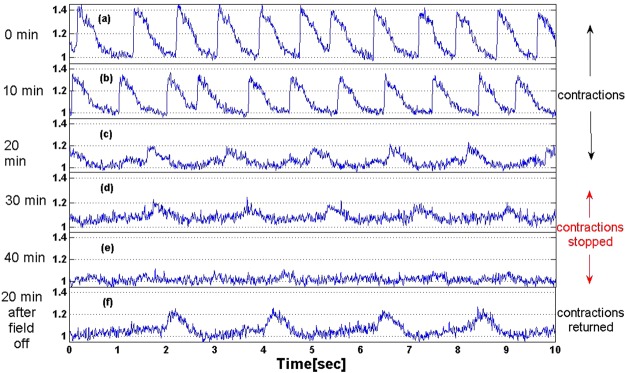
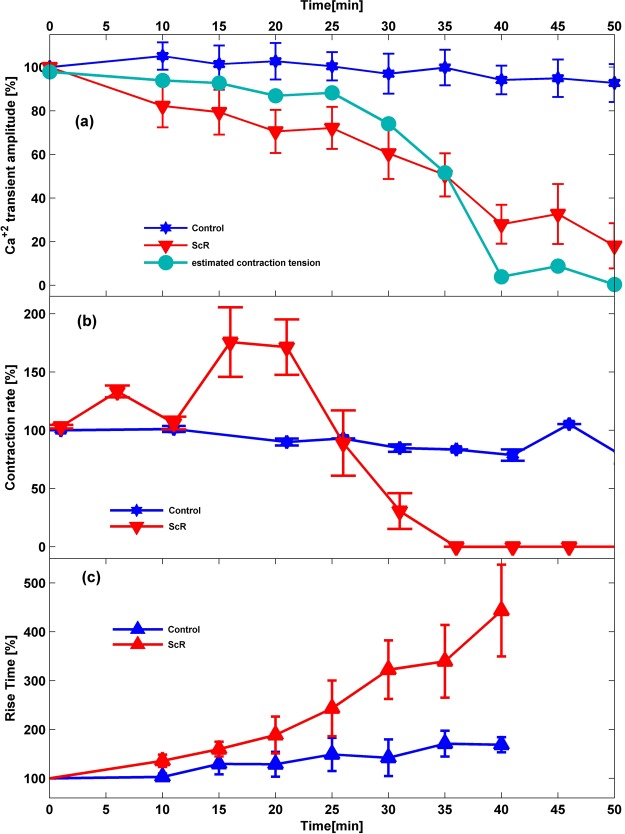
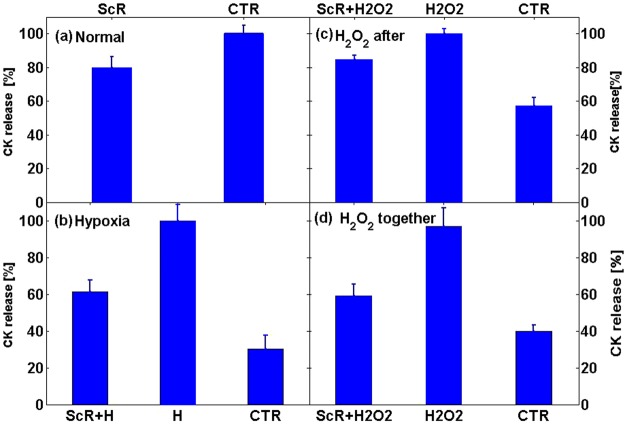
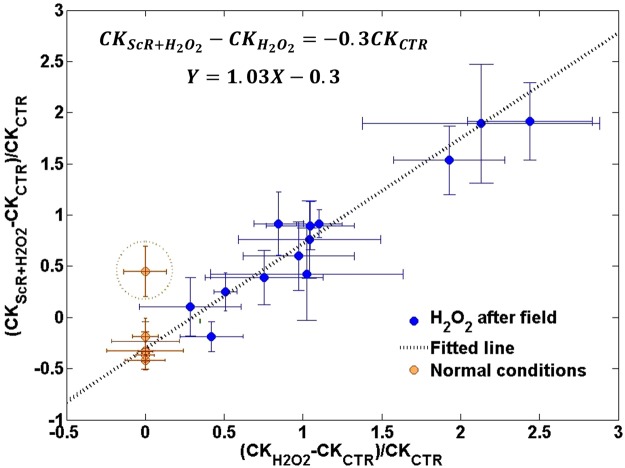
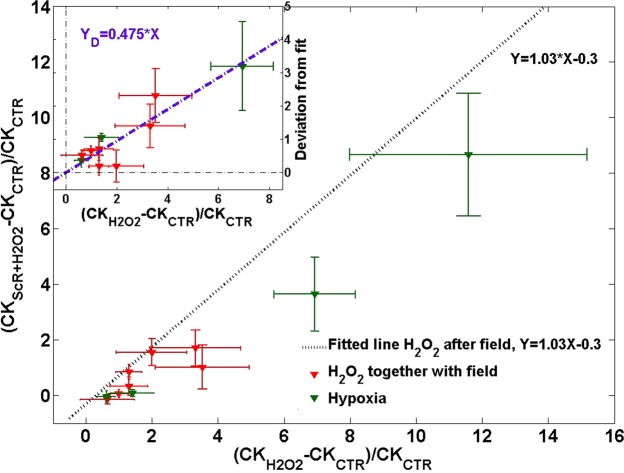
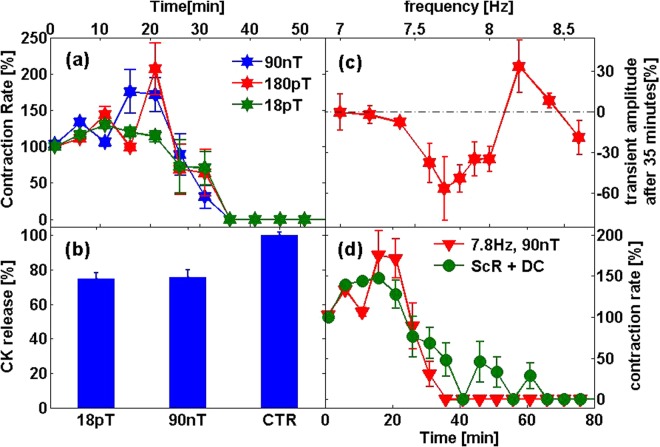
The Schumann Resonances (ScR) are Extremely Low Frequency (ELF) electromagnetic resonances in the Earth-ionosphere cavity excited by global lightning discharges. This natural electromagnetic noise has likely existed on the Earth ever since the Earth had an atmosphere and an ionosphere, hence surrounding us throughout our evolutionary history. The purpose of this study was to examine the influence of extremely weak magnetic fields in the ScR first mode frequency range on the spontaneous contractions, calcium transients and Creatine Kinase (CK) release of rat cardiac cell cultures. We show that applying 7.8 Hz, 90 nT magnetic fields (MF) causes a gradual decrease in the spontaneous calcium transients’ amplitude, reaching 28% of the initial amplitude after 40 minutes of MF application, and accompanied with a gradual decrease in the calcium transients’ rise time. The mechanical spontaneous contractions cease after the ScR fields have been applied for more than 30 minutes, when the calcium transient’s amplitude reached ~60% of its initial value. The influence of the ScR MF was reversible, independent of the field magnitude in the range 20 pT-100 nT, and independent of the external DC magnetic field. However, the effect is frequency dependent; the described changes occurred only in the 7.6–8 Hz range. In addition, applying 7.8 Hz, 90 nT MF for 1.5 hours, reduced the amount of CK released to the buffer, during normal conditions, hypoxic conditions and oxidative stress induced by 80 μM H 2 O 2. We show that the ScR field induced reduction in CK release is associated with a stress response process and has a protective character.
Overview
The claims and statistics of this paper haven’t been checked yet.
Free: it reads the open-access text and checks the first 5 claims that cite a source we can check. Create a free account to check every claim.
Integrity signals
Registry
Cites
Statistics
Figures
Verification
Claims the paper makes
The claims and statistics of this paper haven’t been checked yet.
Free: it reads the open-access text and checks the first 5 claims that cite a source we can check. Create a free account to check every claim.
Claims other papers make about this one
Each is checked against this paper’s own text: does it say what the citing paper says it does?
The source backs part of the claim, not all of it — or backs it for a different population, condition or comparison.
In the citing paper
“Its EMF is generated throughout the cardiac cycle and is mainly attributed to transmembrane Na+, K+, and Ca2+ fluxes during depolarization and repolarization, generating time-varying magnetic signals, detectable by sensitive biosensors, in line with Maxwell’s equations [Figure 1] [22,23,24,25,26].”
From The Heart’s Electromagnetic Field in Emotions, Empathy and Human Connection: Biosensor-Derived Insights into Heart–Brain Axis Mechanisms and a Basis for Novel BioMagnetoTherapies (2026) · cites this paper as [24]
Experimental — accuracy not yet measuredThe source backs part of the claim, not all of it — or backs it for a different population, condition or comparison.
In the citing paper
“It is important to note that MST, as well as TMS, utilize magnetic fields in the range of teslas and therefore do not reflect or resemble the interactions mediated by the HEMF, which is many orders of magnitude weaker (0.1–1 nT) [23,24,25,26].”
From The Heart’s Electromagnetic Field in Emotions, Empathy and Human Connection: Biosensor-Derived Insights into Heart–Brain Axis Mechanisms and a Basis for Novel BioMagnetoTherapies (2026) · cites this paper as [24]
Experimental — accuracy not yet measuredThe source backs part of the claim, not all of it — or backs it for a different population, condition or comparison.
In the citing paper
“Advances in biosensing technologies have allowed for robust technological validation through advanced MCG techniques, providing objective confirmation of the detectability and quantification of these signals and reinforcing their biological reality and measurable nature [23,24,25,26].”
From The Heart’s Electromagnetic Field in Emotions, Empathy and Human Connection: Biosensor-Derived Insights into Heart–Brain Axis Mechanisms and a Basis for Novel BioMagnetoTherapies (2026) · cites this paper as [24]
Experimental — accuracy not yet measuredThe check wasn’t confident either way, so it gives no verdict — never disputed.
In the citing paper
“From a practical standpoint, technological challenges including shielding, noise, cost, and scalability limitations in SQUID, OPM, TMR, and magnetoelectric systems—though currently addressed in several prototype systems—remain significant barriers to scalable clinical translation [23,24,25,26,27,46,47].”
From The Heart’s Electromagnetic Field in Emotions, Empathy and Human Connection: Biosensor-Derived Insights into Heart–Brain Axis Mechanisms and a Basis for Novel BioMagnetoTherapies (2026) · cites this paper as [24]
Experimental — accuracy not yet measuredThe check wasn’t confident either way, so it gives no verdict — never disputed.
In the citing paper
“Both SQUIDs and OPMs are highly sensitive to ambient magnetic interference, thus requiring magnetically shielded rooms or advanced active noise-cancelation systems to achieve sufficient signal-to-noise ratios for reliable isolation of cardiac magnetic signals, limitations that hinder widespread clinical scalability [23,24,25,26,27].”
From The Heart’s Electromagnetic Field in Emotions, Empathy and Human Connection: Biosensor-Derived Insights into Heart–Brain Axis Mechanisms and a Basis for Novel BioMagnetoTherapies (2026) · cites this paper as [24]
Experimental — accuracy not yet measured
1 more claim about this paper
Create a free account to see every claim other papers make about this one.
Self-check
Percentages, sums and reported differences re-computed from the paper’s own numbers.
The self-check needs the paper’s full text.
Citations
Cites
A new generation of Ca2+ indicators with greatly improved fluorescence properties.
Grynkiewicz, G., Poenie, M., & Tsien, R. Y. (1985) · Journal of Biological Chemistry · doi:10.1016/s0021-9258(19)83641-4 · Cited by 21,607
Polazzi, E., Mengoni, I., Caprini, M., Peña-Altamira, E., Kurtys, E., & Monti, B. (2013) · Neurosignals · doi:10.1159/000337115 · Cited by 8,994
Cardiac excitation–contraction coupling
Bers, D. M. (2002) · Nature · doi:10.1038/415198a · Cited by 4,744
Calcium and ROS: A mutual interplay
Görlach, A., Bertram, K., Hudecova, S., & Krizanova, O. (2015) · Redox Biology · doi:10.1016/j.redox.2015.08.010 · Cited by 1,546
Calcium and oxidative stress: from cell signaling to cell death
Ermak, G., & Davies, K. J. A. (2002) · Molecular Immunology · doi:10.1016/s0161-5890(01)00108-0 · Cited by 871
MECHANISMS OF HAIR CELL TUNING
Fettiplace, R., & Fuchs, P. A. (1999) · Annual Review of Physiology · doi:10.1146/annurev.physiol.61.1.809 · Cited by 417
Grissom, C. B. (1995) · Chemical Reviews · doi:10.1021/cr00033a001 · Cited by 411 · cited 1×
“The influence on radical pair recombination for example can produce a significant affect only at higher field magnitudes23 (1–10 mT, see Grissom, 1995).”
Cell biology of Ca2+-triggered exocytosis
Pang, Z. P., & Südhof, T. C. (2010) · Current Opinion in Cell Biology · doi:10.1016/j.ceb.2010.05.001 · Cited by 390
Terentyev, D., Györke, I., Belevych, A. E., Terentyeva, R., Sridhar, A., Nishijima, Y., Carcache de Blanco, E., Khanna, S., Sen, C. K., Cardounel, A. J., et al. (2008) · Circulation Research · doi:10.1161/circresaha.108.184457 · Cited by 372
Hair Cell Transduction, Tuning, and Synaptic Transmission in the Mammalian Cochlea
Fettiplace, R. (2017) · Comprehensive Physiology · doi:10.1002/cphy.c160049 · Cited by 318
Relationship between force and intracellular [Ca2+] in tetanized mammalian heart muscle.
Yue, D. T., Marban, E., & Wier, W. G. (1986) · The Journal of general physiology · doi:10.1085/jgp.87.2.223 · Cited by 195
Cross-Talk between Reactive Oxygen Species and Calcium in Living Cells
Gordeeva, A. V., Zvyagilskaya, R. A., & Labas, Y. A. (2003) · Biochemistry (Moscow) · doi:10.1023/a:1026398310003 · Cited by 187
Interaction of Extremely Low Frequency Electric and Magnetic Fields With Humans
Tenforde, T. S., & Kaune, W. T. (1987) · Health Physics · doi:10.1097/00004032-198712000-00002 · Cited by 181 · cited 1×
“5 hours) on CK release in 4 different experimental configurations: (1) in normal conditions (2) When the ScR MF application was followed by 2 hours of hypoxia (3) When 80 μM of H2O2 was added to the cultures for 1 hour following the ScR MF application (4) Samples were subjected to 0.”
Yan, Y., Liu, J., Wei, C., Li, K., Xie, W., Wang, Y., & Cheng, H. (2008) · Cardiovascular Research · doi:10.1093/cvr/cvm047 · Cited by 159
Calcium-dependent regulation of exocytosis
Barclay, J. W., Morgan, A., & Burgoyne, R. D. (2005) · Cell Calcium · doi:10.1016/j.ceca.2005.06.012 · Cited by 154
Electroreception and communication in fishes
Kramer, B. (1996) · University of Regensburg Publication Server (University of Regensburg) · doi:10.5283/epub.2108 · Cited by 152
BK channel activators and their therapeutic perspectives
Bentzen, B. H., Olesen, S.-P., Rønn, L. C. B., & Grunnet, M. (2014) · Frontiers in Physiology · doi:10.3389/fphys.2014.00389 · Cited by 151
Subcellular Creatine Kinase Alterations: Implications in Heart Failure
De Sousa, E., Veksler, V., Minajeva, A., Kaasik, A., Mateo, P., Mayoux, E., Hoerter, J., Bigard, X., Serrurier, B., & Ventura-Clapier, R. (1999) · Circulation Research · doi:10.1161/01.res.85.1.68 · Cited by 146
Trafford, A. W., Díaz, M. E., Negretti, N. M., & Eisner, D. A. (1997) · Circulation Research · doi:10.1161/01.res.81.4.477 · Cited by 136
Effects of weak magnetic fields on biological systems: physical aspects
Binhi, V. N., & Savin, A. V. (2003) · Physics-Uspekhi · doi:10.1070/pu2003v046n03abeh001283 · Cited by 132
Molecular basis of ancestral vertebrate electroreception
Bellono, N. W., Leitch, D. B., & Julius, D. J. (2017) · Nature · doi:10.1038/nature21401 · Cited by 125
Antoons, G., Mubagwa, K., Nevelsteen, I., & Sipido, K. R. (2002) · The Journal of Physiology · doi:10.1113/jphysiol.2002.025619 · Cited by 112
Mitochondria Shape Hormonally Induced Cytoplasmic Calcium Oscillations and Modulate Exocytosis
Kaftan, E. J., Xu, T., Abercrombie, R. F., & Hille, B. (2000) · Journal of Biological Chemistry · doi:10.1074/jbc.m000903200 · Cited by 111
KCNMA1 Encoded Cardiac BK Channels Afford Protection against Ischemia-Reperfusion Injury
Soltysinska, E., Bentzen, B. H., Barthmes, M., Hattel, H. B., Thrush, A. B., Harper, M., Qvortrup, K., Larsen, F. J., Schiffer, T. A., Losa‐Reyna, J., et al. (2014) · PLoS ONE · doi:10.1371/journal.pone.0103402 · Cited by 104
Diurnal, seasonal and inter-annual variations in the Schumann resonance parameters
Price, C. G., & Melnikov, A. (2004) · Journal of Atmospheric and Solar-Terrestrial Physics · doi:10.1016/j.jastp.2004.05.004 · Cited by 98
Self-citationBiological interactions of extremely-low-frequency electric and magnetic fields
Tenforde, T. S. (1991) · Bioelectrochemistry and Bioenergetics · doi:10.1016/0302-4598(91)87015-9 · Cited by 73
Natural and man-made terrestrial electromagnetic noise: an outlook
Bianchi, C., & Meloni, A. (2007) · Annals of Geophysics · doi:10.4401/ag-4425 · Cited by 70 · cited 1×
“5 hours) on CK release in 4 different experimental configurations: (1) in normal conditions (2) When the ScR MF application was followed by 2 hours of hypoxia (3) When 80 μM of H2O2 was added to the cultures for 1 hour following the ScR MF application (4) Samples were subjected to 0.”
Biological interactions of extremely-low-frequency electric and magnetic fields
Tenforde, T. S. (1991) · Journal of Electroanalytical Chemistry · doi:10.1016/0022-0728(91)85576-b · Cited by 70 · cited 1×
“5 hours) on CK release in 4 different experimental configurations: (1) in normal conditions (2) When the ScR MF application was followed by 2 hours of hypoxia (3) When 80 μM of H2O2 was added to the cultures for 1 hour following the ScR MF application (4) Samples were subjected to 0.”
Molecular gyroscopes and biological effects of weak extremely low-frequency magnetic fields
Binhi, V. N., & Savin, A. V. (2002) · Physical review. E, Statistical physics, plasmas, fluids, and related interdisciplinary topics · doi:10.1103/physreve.65.051912 · Cited by 69
Detection and processing of electromagnetic and near–field acoustic signals in elasmobranch fishes
Kalmijn, A. J. (2000) · Philosophical Transactions of the Royal Society B Biological Sciences · doi:10.1098/rstb.2000.0654 · Cited by 67
Shneyvays, V., Zinman, T., & Shainberg, A. (2004) · Cell Calcium · doi:10.1016/j.ceca.2004.03.004 · Cited by 45
Self-citationBorchert, G. H., Hlaváčková, M., & Kolář, F. (2013) · Experimental Biology and Medicine · doi:10.1177/1535370212474596 · Cited by 41
Thiamine deficiency in cardiac cells in culture
Zangen, A., & Shainberg, A. (1997) · Biochemical Pharmacology · doi:10.1016/s0006-2952(97)00178-0 · Cited by 35
Self-citationSakamoto, K., Ohya, S., Muraki, K., & Imaizumi, Y. (2008) · Journal of Pharmacological Sciences · doi:10.1254/jphs.08150sc · Cited by 34
Correlation of magnetic AC field on cardiac myocyte Ca2+ transients at different magnetic DC levels
Fixler, D., Yitzhaki, S., Axelrod, A., Zinman, T., & Shainberg, A. (2012) · Bioelectromagnetics · doi:10.1002/bem.21729 · Cited by 17
Self-citationCordeiro, B., Terentyev, D. A., & Clements, R. (2015) · American Journal of Physiology-Heart and Circulatory Physiology · doi:10.1152/ajpheart.00818.2014 · Cited by 16
The interaction of power-line electromagnetic fields with the human body
King, R. W. P. (1998) · IEEE Engineering in Medicine and Biology Magazine · doi:10.1109/51.731324 · Cited by 8 · cited 1×
“5 hours) on CK release in 4 different experimental configurations: (1) in normal conditions (2) When the ScR MF application was followed by 2 hours of hypoxia (3) When 80 μM of H2O2 was added to the cultures for 1 hour following the ScR MF application (4) Samples were subjected to 0.”
Adler, D., Fixler, D., Scheinowitz, M., Shainberg, A., & Katz, A. (2016) · Pflügers Archiv - European Journal of Physiology · doi:10.1007/s00424-016-1837-2 · Cited by 6
Self-citationYitzhaki, S., Shainberg, A., Shaked, M., Schuss, Z., & Fixler, D. (2011) · The Open Optics Journal · doi:10.2174/1874328501105010033 · Cited by 5
Self-citationMeasurement of Rat Magnetocardiograms by Using a High-$T_{\rm C}$ SQUID Magnetometer System
Kim, I.-S., Kwon, H., Ahn, S., & Song, J. H. (2010) · IEEE Transactions on Applied Superconductivity · doi:10.1109/tasc.2010.2094994 · Cited by 4
Research works printed but not linked: 2
- In-Seon K Hyuckchan K San A Jong-Hyu S Measurement of Rat Magnetocardiograms by Using a High-TC SQUID Magnetometer System. IEEE Trans. on Appl Superconductivity 2011 21 3 497 500
- Binhi VN Savin AV Effects of weak magnetic fields on biological systems: physical aspects Phys.-Usp 2003 46 3 259 10.1070/PU2003v046n03ABEH001283 · DOI
Cited by
Martel, J., Chang, S.-H., Chevalier, G., Ojcius, D. M., & Young, J. D. (2023) · Biomedical Journal · doi:10.1016/j.bj.2023.01.003 · Cited by 113
The Possible Effect of Space Weather Factors on Various Physiological Systems of the Human Organism
Zenchenko, T. A., & Breus, T. K. (2021) · Atmosphere · doi:10.3390/atmos12030346 · Cited by 55
Challenges in coupling atmospheric electricity with biological systems
Hunting, E. R., Matthews, J. C., Fdez-Arróyabe, P., England, S. J., Kourtidis, K., Koh, K. L., Nicoll, K., Harrison, R. G., Manser, K., Price, C. G., et al. (2020) · International Journal of Biometeorology · doi:10.1007/s00484-020-01960-7 · Cited by 51
“As early as the 1960s, studies on circadian rhythms have shown that weak 10 Hz SR fields can influence the daily activity cycle of humans, birds, and fruit flies (Wever 1973; Engelmann et al. 1996).”
BackgroundSelf-citationRevisiting the Photon/Cell Interaction Mechanism in Low-Level Light Therapy
Sommer, A. P. (2019) · Photobiomodulation Photomedicine and Laser Surgery · doi:10.1089/photob.2018.4606 · Cited by 42
Natural ELF fields in the atmosphere and in living organisms
Price, C. G., Williams, E., Elhalel, G., & Sentman, D. D. (2020) · International Journal of Biometeorology · doi:10.1007/s00484-020-01864-6 · Cited by 38
“Recently our group (Elhalael et al. 2019) has also shown significant impacts of the 7.8-Hzmagnetic fields on rat cardiac myocytes.”
BackgroundInfluentialSelf-citation
Metadata
- Authors
- Elhalel, G., Price, C., Fixler, D., & Shainberg, A.
- Affiliations
- Tel Aviv University (IL)
- Bar-Ilan University (IL)
- Corresponding author
- Price, C.
- ORCID
- Venue
- Scientific Reports
- Published
- 2019-02-07
- Volume
- 9
- Issue
- 1
- Pages
- 1645-1645
- ISSN
- 2045-2322 (ISSN-L)
- PMC
- PMC6367437
- OpenAlex
- W2912516892
- Cited by
- 64
- References
- 40
- Citations by year
- 2026: 3 · 2025: 9 · 2024: 11 · 2023: 11 · 2022: 6 · 2021: 11 · 2020: 10 · 2019: 3
- FWCI
- 3.63
- Type
- journal article
- Language
- en
- Open access
- gold
- doi.org
- Licence
- cc-by
- creativecommons.org/licenses/by/4.0 (tdm)
- creativecommons.org/licenses/by/4.0 (vor)
- Locations
- Scientific Reports (publishedVersion, cc-by)
- Europe PMC (PubMed Central) (publishedVersion, cc-by)
- PubMed Central (publishedVersion, cc-by)
- PubMed (publishedVersion)
- DOAJ (DOAJ: Directory of Open Access Journals) (submittedVersion)
- Funders
- Bar-Ilan University
- Tel Aviv University
- Topics
- Life Sciences › Biochemistry, Genetics and Molecular Biology › Biophysics › Electromagnetic Fields and Biological Effects
- Life Sciences › Agricultural and Biological Sciences › Agronomy and Crop Science › Magnetic and Electromagnetic Effects
- Health Sciences › Medicine › Complementary and alternative medicine › Biofield Effects and Biophysics
- Keywords
- Schumann resonance, extremely low frequency magnetic fields, cardioprotection, calcium transients, spontaneous contractions, creatine kinase release, oxidative stress, hypoxia, rat cardiomyocytes, frequency dependence, stress response
- MeSH terms
- Animals, Cardiotonic Agents, Creatine Kinase, Electromagnetic Fields, Rats, Sprague-Dawley, Oxidative Stress, Myocytes, Cardiac, Rats
About these checks
Registry, retraction, Cites and statistics results are computed, not judged, with one exception: a printed reference that no index lists is read once by a model before it counts as a citation error. Claims are extracted by a model and kept only when their quote appears verbatim in the text; each cited source is then checked, with a model’s help, for whether it says what the claim relies on. Those verdicts can be wrong — read the claim’s quote and the cited source before relying on one.
Statistics and arithmetic are recomputed, not judged.
Confidence bands are shown only for fields calibrated on our annotated test set. None is calibrated yet, so no band is shown.
What counts as a claim ›How we measure confidence ›How we check this ›
Are you an author, or do you see a problem with this page? Request a review
Data sources
Bibliographic data: Semantic Scholar, OpenAlex, Crossref.
Contains information from the Semantic Scholar Academic Graph Datasets, made available under the ODC Attribution License (ODC-BY 1.0).
Semantic Scholar’s data is described in: Kinney, R., et al. (2023). The Semantic Scholar Open Data Platform. arXiv:2301.10140.
