

The DOI matches its Crossref record; 36 of the 36 references it cites were found in a registry or an index.
Development of High-Performance Supercapacitor based on a Novel Controllable Green Synthesis for 3D Nitrogen Doped Graphene
Open accessAbstract
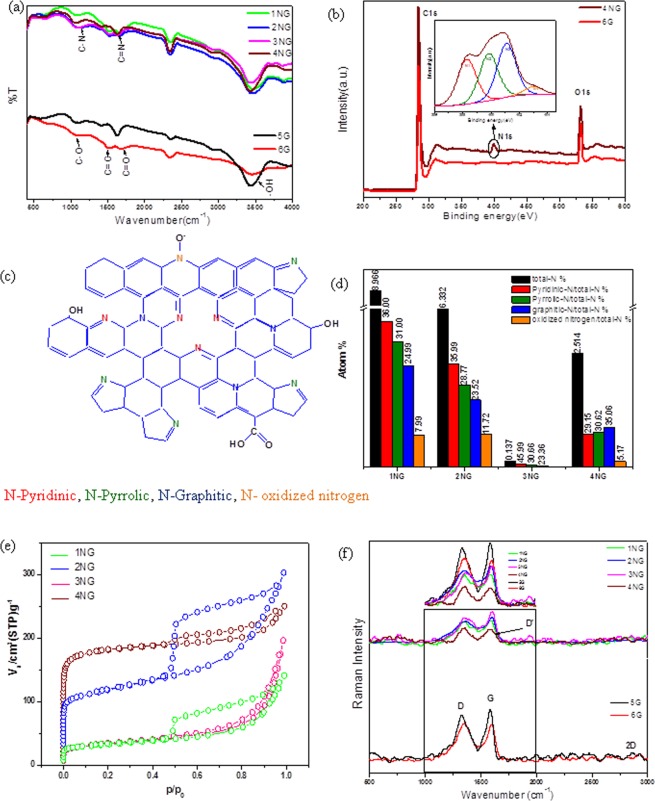
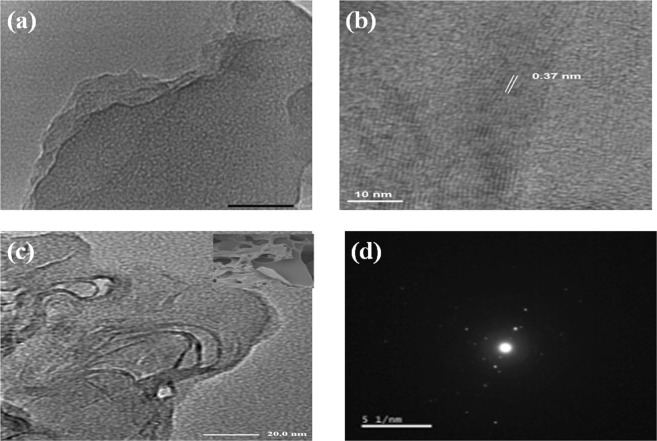
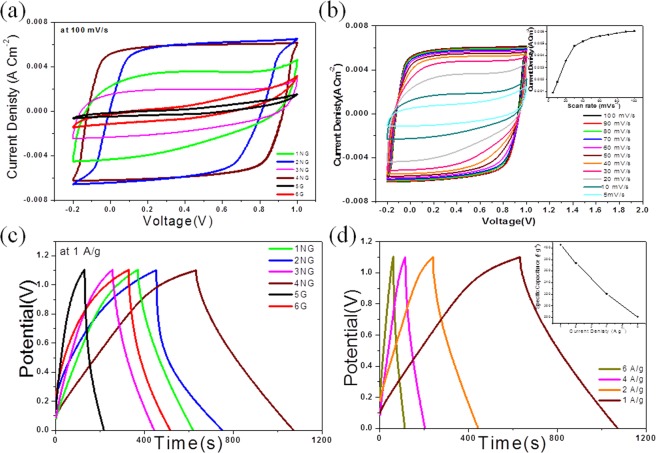
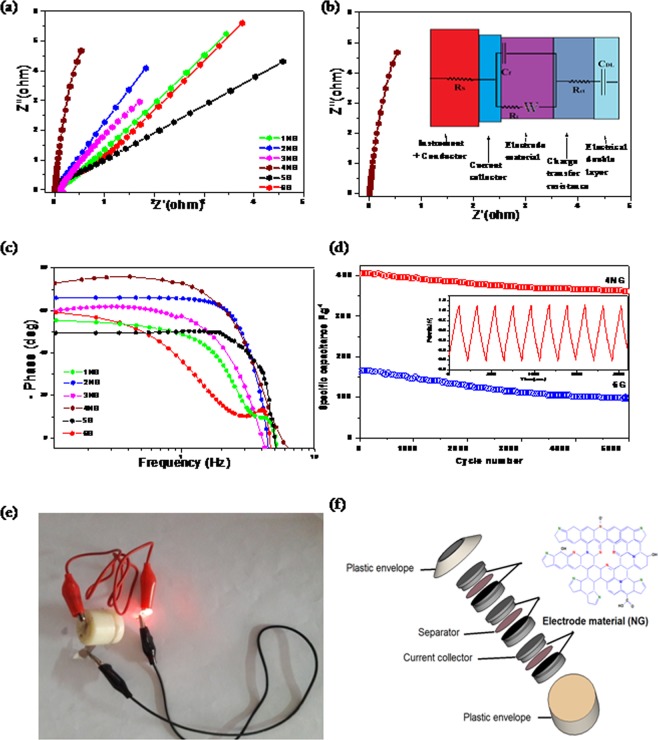
3D sponge nitrogen doped graphene (NG) was prepared economically from waste polyethylene-terephthalate (PET) bottles mixed with urea at different temperatures using green approach via a novel one-step method. The effect of temperature and the amount of urea on the formation of NG was investigated. Cyclic voltammetry and impedance spectroscopy measurements, revealed that nitrogen fixation, which affects the structure and morphology of prepared materials improve the charge propagation and ion diffusion. The prepared materials show outstanding performance as a supercapacitor electrode material, with the specific capacitance going up to 405 F g −1 at 1 A g −1 . An energy density of 68.1 W h kg −1 and a high maximum power density of 558.5 W kg −1 in 6 M KOH electrolytes were recorded for the optimum sample. The NG samples showed an appropriate cyclic stability with capacitance retention of 87.7% after 5000 cycles at 4 A g −1 with high charge/discharge duration. Thus, the prepared NG herein is considered to be promising, cheap material used in energy storage applications and the method used is cost-effective and environmentally friendly method for mass production of NG in addition to opening up opportunities to process waste materials for a wide range of applications.
Overview
The claims and statistics of this paper haven’t been checked yet.
Run the check — free, no account needed. It reads the open-access text and checks the sources it cites.
Integrity signals
Registry
Cites
Statistics
Figures
Verification
Claims the paper makes
The claims and statistics of this paper haven’t been checked yet.
Run the check — free, no account needed. It reads the open-access text and checks the sources it cites.
Claims other papers make about this one
Each is checked against this paper’s own text: does it say what the citing paper says it does?
In the citing paper
“| Oxygen-limited | Polyethylene tere- | Autoclave reactor 873 K or 1073 | Graphene | - | Elessawy et al. | |”
From Conversion of waste plastics into value-added carbon materials (2023) · cites this paper as Elessawy et al. (2019)
Self-check
Percentages, sums and reported differences re-computed from the paper’s own numbers.
The self-check needs the paper’s full text.
Citations
Cites
Jeong, H. M., Lee, J. W., Shin, W. H., Choi, Y. J., Shin, H. J., Kang, J. K., & Choi, J. W. (2011) · Nano Letters · doi:10.1021/nl2009058 · Cited by 1,683
Supercapacitors Performance Evaluation
Zhang, S., & Pan, N. (2014) · Advanced Energy Materials · doi:10.1002/aenm.201401401 · Cited by 1,546
Graphene-based materials for supercapacitor electrodes – A review
Ke, Q., & Wang, J. (2016) · Journal of Materiomics · doi:10.1016/j.jmat.2016.01.001 · Cited by 1,030
Lin, Z., Waller, G. H., Liu, Y., Liu, M., & Wong, C. (2012) · Advanced Energy Materials · doi:10.1002/aenm.201200038 · Cited by 924
Sun, L. G., Wang, L., Tian, C., Tan, T., Xie, Y. H., Shi, K., Li, M., & Fu, H. (2012) · RSC Advances · doi:10.1039/c2ra01367c · Cited by 761
Ultrahigh Thermal Conductive yet Superflexible Graphene Films
Peng, L., Xu, Z. Y., Liu, Z., Guo, Y., Peng, L., & Gao, C. (2017) · Advanced Materials · doi:10.1002/adma.201700589 · Cited by 586
Wang, J., Liu, H., Sun, H., Hua, W., Wang, H., Liu, X., & Wei, B. (2017) · Carbon · doi:10.1016/j.carbon.2017.10.084 · Cited by 393
Capacitive mechanism of oxygen functional groups on carbon surface in supercapacitors
He, Y., Zhang, Y., Li, X., Lv, Z., Wang, X., Liu, Z., & Huang, X. (2018) · Electrochimica Acta · doi:10.1016/j.electacta.2018.06.103 · Cited by 357
Physical principles of electron microscopy: an introduction to TEM, SEM, and AEM
Egerton, R. F. (2006) · Choice Reviews Online · doi:10.5860/choice.43-3442 · Cited by 339
Jiang, W., Yu, D., Zhang, Q., Goh, K., Li, W., Yong, Y., Jiang, R., Wei, J., & Chen, Y. (2015) · Advanced Functional Materials · doi:10.1002/adfm.201403354 · Cited by 313
Importance of Electrode Preparation Methodologies in Supercapacitor Applications
Arunkumar, M., & Paul, A. (2017) · ACS Omega · doi:10.1021/acsomega.7b01275 · Cited by 261
Chen, Q., Zhao, Y., Huang, X., Chen, N., & Qu, L. (2015) · Journal of Materials Chemistry A · doi:10.1039/c5ta00734h · Cited by 197
Synthesis, characterization and prospective applications of nitrogen-doped graphene: A short review
Yadav, R., & Dixit, C. K. (2017) · Journal of Science Advanced Materials and Devices · doi:10.1016/j.jsamd.2017.05.007 · Cited by 195
Heavily nitrogen doped, graphene supercapacitor from silk cocoon
Sahu, V., Grover, S., Tulachan, B., Sharma, M., Srivastava, G. K., Roy, M., Saxena, M., Sethy, N. K., Bhargava, K., Philip, D., et al. (2015) · Electrochimica Acta · doi:10.1016/j.electacta.2015.02.019 · Cited by 194
Antink, W. H., Choi, Y., Seong, K., Kim, J. M., & Piao, Y. (2017) · Advanced Materials Interfaces · doi:10.1002/admi.201701212 · Cited by 161
Gopalsamy, K., Balamurugan, J., Tran, D. T., Kim, N. H., & Lee, J. H. (2016) · Chemical Engineering Journal · doi:10.1016/j.cej.2016.11.130 · Cited by 157
Gopalakrishnan, K., Govindaraj, A., & Rao, C. N. R. (2013) · Journal of Materials Chemistry A · doi:10.1039/c3ta11385j · Cited by 146
Brack, W., Heine, B., Birkhold, F., Kruse, M., Schoch, G., Tischer, S., & Deutschmann, O. (2013) · Chemical Engineering Science · doi:10.1016/j.ces.2013.11.013 · Cited by 139
Three-dimensional graphene layers prepared by a gas-foaming method for supercapacitor applications
Hao, J., Liao, Y., Zhong, Y., Shu, D., He, C., Guo, S., Huang, Y., Zhong, J. P., & Hu, L. (2015) · Carbon · doi:10.1016/j.carbon.2015.07.069 · Cited by 119
Wang, D., Min, Y., Yu, Y., & Peng, B. (2013) · Journal of Colloid and Interface Science · doi:10.1016/j.jcis.2013.11.021 · Cited by 106
Xiao, N., Tan, H., Zhu, J., Tan, L., Rui, X., Dong, X., & Yan, Q. (2013) · ACS Applied Materials & Interfaces · doi:10.1021/am402686r · Cited by 98
Contribution of surface oxygen groups to the measured capacitance of porous carbon supercapacitors
Zuliani, J. E., Tong, S., Jia, C. Q., & Kirk, D. W. (2018) · Journal of Power Sources · doi:10.1016/j.jpowsour.2018.05.046 · Cited by 95
Ren, G., Li, S., Fan, Z.-X., Hoque, M. N. F., & Fan, Z. (2016) · Journal of Power Sources · doi:10.1016/j.jpowsour.2016.06.021 · Cited by 77
High Performance of N‐Doped Graphene with Bubble‐like Textures for Supercapacitors
Zhang, S., Sui, L., Kang, H., Dong, H., Dong, L., & Yu, L. (2017) · Small · doi:10.1002/smll.201702570 · Cited by 76
Huang, J., Chen, L., Dong, H., Zeng, Y., Hu, H., Zheng, M., Liu, Y., Xiao, Y., & Liang, Y. (2017) · Electrochimica Acta · doi:10.1016/j.electacta.2017.11.092 · Cited by 70
Sovová, K., Ferus, M., Matulková, I., Španěl, P., Dryahina, K., Dvořák, O., & Civiš, S. (2008) · Molecular Physics · doi:10.1080/00268970802077876 · Cited by 67
Liu, L., Su, L., Lang, J., Hu, B., Xu, S., & Yan, X. (2017) · Journal of Materials Chemistry A · doi:10.1039/c7ta00744b · Cited by 66
Ma, L., Sun, G., Ran, J., Lv, S., Shen, X., & Tong, H. (2018) · ACS Applied Materials & Interfaces · doi:10.1021/acsami.8b05967 · Cited by 64
Nitrogen-doped graphene/carbon nanohorns composite as a high-performance supercapacitor electrode
Lin, X., Wang, W., Lü, Q., Jin, Y., Lin, Q., & Liu, R. (2017) · Journal of Material Science and Technology · doi:10.1016/j.jmst.2017.06.006 · Cited by 36
Zhu, J., & Xu, Y. (2018) · Electrochimica Acta · doi:10.1016/j.electacta.2018.01.031 · Cited by 28
Fabrication of flexible nanoporous nitrogen-doped graphene film for high-performance supercapacitors
Yue, S., Tong, H., Gao, Z., Bai, W., Lu, L., Wang, J., & Zhang, X. (2017) · Journal of Solid State Electrochemistry · doi:10.1007/s10008-017-3538-y · Cited by 23
Dangling bond induced cross-linking model in nanoscratched graphene layers
Zhang, Q., Diao, D., & Yang, L. (2013) · Surface and Coatings Technology · doi:10.1016/j.surfcoat.2013.06.039 · Cited by 21
Fabrication of pore-rich nitrogen-doped graphene aerogel
Xie, B., Ren, X., Yan, X., Dai, Z., Hou, W., Du, N., Li, H., & Zhang, R. (2016) · RSC Advances · doi:10.1039/c6ra02049f · Cited by 16
Liu, D., Fu, C., Zhang, N., Li, Y., Zhou, H., & Kuang, Y. (2016) · Journal of Solid State Electrochemistry · doi:10.1007/s10008-016-3431-0 · Cited by 16
Wang, F., Zheng, M., Ma, L., Li, Q., Song, J., You, Y., Ma, L., & Shen, W. (2017) · Nanotechnology · doi:10.1088/1361-6528/aa79e4 · Cited by 11
High capacitance and long cycle-life of nitrogen doped reduced graphene oxide
Bharathidasan, P., Sridhar, S., Vardhan, P. V., Sivakkumar, S. R., Kim, D., & Devaraj, S. (2018) · Journal of Materials Science Materials in Electronics · doi:10.1007/s10854-018-8760-6 · Cited by 7
Research works printed but not linked: 1
- Lin, X. Q. et al. Nitrogen-doped graphene/carbon nanohorns composite as ahigh-performance supercapacitor electrode Mater. Sci. Technol 33, 1339 (2017).
Cited by
Sorted by citations
Graphene research and their outputs: Status and prospect
Tiwari, S. K., Sahoo, S., Wang, N., & Huczko, A. (2020) · Journal of Science Advanced Materials and Devices · doi:10.1016/j.jsamd.2020.01.006 · Cited by 824
Recent Advances in Carbon‐Based Electrodes for Energy Storage and Conversion
Kothandam, G., Singh, G., Guan, X., Lee, J. M., Ramadass, K., Joseph, S., Benzigar, M. R., Karakoti, A. S., Yi, J., Kumar, P., et al. (2023) · Advanced Science · doi:10.1002/advs.202301045 · Cited by 441
da Silva, L. M., Cesar, R., Moreira, C. M. R., Santos, J. H. M., Souza, L. G. D., Pires, B. M., Vicentini, R., Nunes, W. G., & Zanin, H. (2019) · Energy storage materials · doi:10.1016/j.ensm.2019.12.015 · Cited by 359
Heteroatom-doped graphene-based materials for sustainable energy applications: A review
Lee, S. J., Theerthagiri, J., Palaniyandy, N., Arunachalam, P., Balaji, D., Kumar, A. M., Madhavan, J., Mittal, V., & Choi, M. Y. (2021) · Renewable and Sustainable Energy Reviews · doi:10.1016/j.rser.2021.110849 · Cited by 359
Shah, S. S., Niaz, F., Ehsan, M. A., Das, H. T., Younas, M., Khan, A. S., Rahman, H. U., Nayem, S. M. A., Oyama, M., & Aziz, M. A. (2023) · Journal of Energy Storage · doi:10.1016/j.est.2023.110152 · Cited by 324
Metadata
- Authors
- Elessawy, N. A., El Nady, J., Wazeer, W., & Kashyout, A. B.
- Affiliations
- City of Scientific Research and Technological Applications (EG)
- Corresponding author
- Elessawy, Noha A.
- Venue
- Scientific Reports
- Published
- 2019-02-04
- Volume
- 9
- Issue
- 1
- Pages
- 1129-1129
- ISSN
- 2045-2322 (ISSN-L)
- PMC
- PMC6362120
- OpenAlex
- W2912441635
- Cited by
- 163
- References
- 36
- Citations by year
- 2026: 18 · 2025: 24 · 2024: 18 · 2023: 28 · 2022: 34 · 2021: 13 · 2020: 22 · 2019: 6
- FWCI
- 5.81
- Type
- journal article
- Language
- en
- Open access
- gold
- doi.org
- Locations
- Scientific Reports (publishedVersion, cc-by)
- Europe PMC (PubMed Central) (publishedVersion, other-oa)
- PubMed Central (publishedVersion, cc-by)
- PubMed (publishedVersion)
- DOAJ (DOAJ: Directory of Open Access Journals) (submittedVersion, cc-by-sa)
- Topics
- Physical Sciences › Materials Science › Electronic, Optical and Magnetic Materials › Supercapacitor Materials and Fabrication
- Physical Sciences › Energy › Renewable Energy, Sustainability and the Environment › Electrocatalysts for Energy Conversion
- Physical Sciences › Materials Science › Materials Chemistry › Graphene research and applications
- Keywords
- nitrogen-doped graphene, supercapacitor electrodes, green synthesis, PET waste, PET bottle recycling, urea, specific capacitance, energy density, cycling stability, waste valorization, energy storage
About these checks
Registry, retraction, Cites and statistics results are computed, not judged, with one exception: a printed reference that no index lists is read once by a model before it counts as a citation error. Claims are extracted by a model and kept only when their quote appears verbatim in the text; each cited source is then checked, with a model’s help, for whether it says what the claim relies on. Those verdicts can be wrong — read the claim’s quote and the cited source before relying on one.
Statistics and arithmetic are recomputed, not judged.
Confidence bands are shown only for fields calibrated on our annotated test set. None is calibrated yet, so no band is shown.
What counts as a claim ›How we measure confidence ›How we check this ›
Are you an author, or do you see a problem with this page? Request a review
