

Dual blockage of both PD-L1 and CD47 enhances immunotherapy against circulating tumor cells
Open accessThe DOI matches its Crossref record; 29 of the 29 references it cites were found in a registry or an index.
Abstract
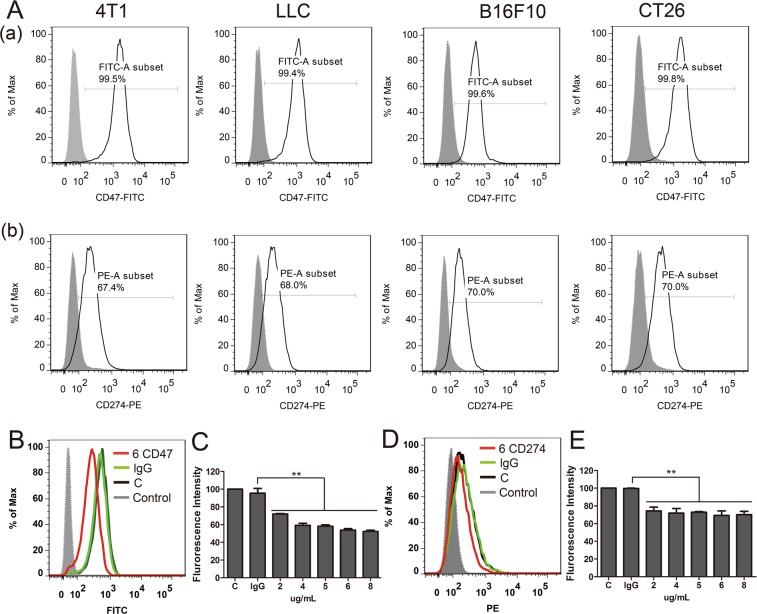
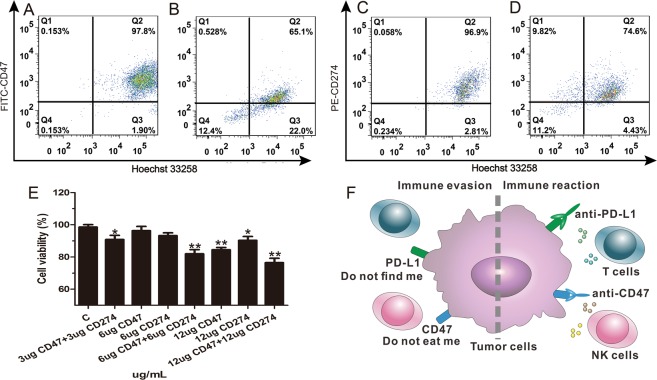
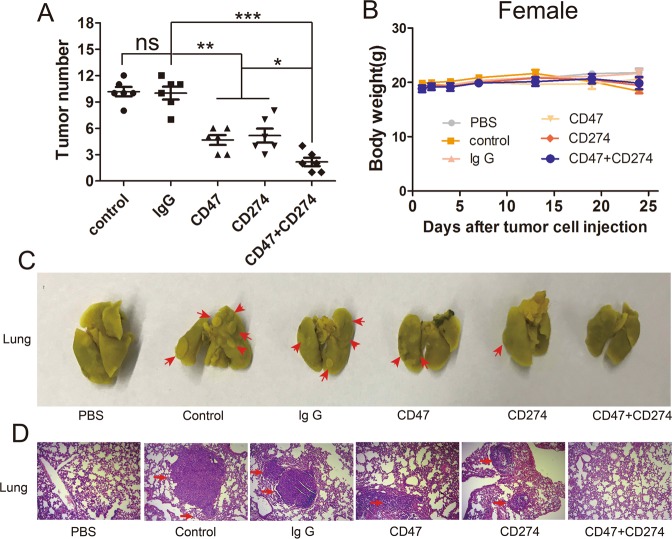
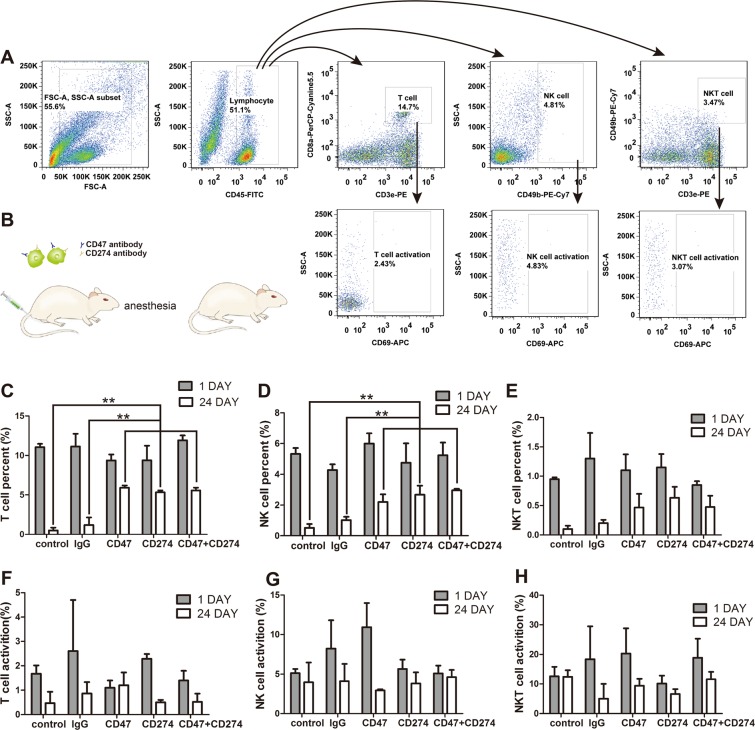
Carcinoma metastasis is triggered by a subpopulation of circulating tumor cells (CTCs). And single immune checkpoint therapy is not good enough to inhibit CTC-induced metastasis. Here, we demonstrate that simultaneously blocking CD274 (programmed death ligand 1, PD-L1 or B7-H1) and CD47 checkpoints which were respectively signal of “don’t find me” and “don’t eat me” on CTCs by corresponding antibodies could enhance the inhibition tumor growth than single CD274 or CD47 antibody alone.In vitro flow cytometry data proved that CD47 and CD274 were overexpressed on the tested mouse tumor cell lines. The antibodies could effectively block the expressions of CD47 and CD274 on the cell surface and stably attached to tumor cell surface for several hours. The simultaneous blockade on both CD47 and CD274 checkpoints inhibited tumor growth and CTCs metastasis more potently than a single antibody inhibition or blank control on 4T1 tumor mouse model in vivo. Our results demonstrated that simultaneous dual targeting immune checkpoints, i.e., CD47 and CD274, by using specific antibodies may be more effective as an immunotherapeutics on CTCs than a CD47 or CD274 alone.
Overview
The claims and statistics of this paper haven’t been checked yet.
Free: it reads the open-access text and checks the first 5 claims that cite a source we can check. Create a free account to check every claim.
Integrity signals
Registry
Cites
Statistics
Figures
Verification
Claims the paper makes
The claims and statistics of this paper haven’t been checked yet.
Free: it reads the open-access text and checks the first 5 claims that cite a source we can check. Create a free account to check every claim.
Claims other papers make about this one
Each is checked against this paper’s own text: does it say what the citing paper says it does?
The cited source says what the claim attributes to it.
In the citing paper
“Thus, these combination shifts immune evasion to immune activation, which resulted in enhanced anti-tumor growth activity and reduced CTCs metastasis in 4 T1 tumor mouse model in vivo [153].”
From Tumor microenvironment complexity and therapeutic implications at a glance (2020) · cites this paper as [153]
The cited source says what the claim attributes to it.
In the citing paper
“CTCs usually express simultaneously over one immune checkpoint [153]”
From Tumor microenvironment complexity and therapeutic implications at a glance (2020) · cites this paper as [153]
The cited source says what the claim attributes to it.
In the citing paper
“Lian et al. described a unique set of checkpoints, CD274 and CD47, on CTCs which camouflaged these cells from being detected by immune cells and corresponding apoptosis.”
From Tumor microenvironment complexity and therapeutic implications at a glance (2020) · cites this paper as [153]
The cited source says what the claim attributes to it.
In the citing paper
“Their results indicated that simultaneous administration of anti-CD274 antibody (also known as PD-L1 or B7-H1) and anti-CD47 checkpoints antibody can respectively block the signal of “don’t find me” for immune evasion and “don’t eat me” for phagocytosis on CTCs.”
From Tumor microenvironment complexity and therapeutic implications at a glance (2020) · cites this paper as [153]
Self-check
Percentages, sums and reported differences re-computed from the paper’s own numbers.
The self-check needs the paper’s full text.
Citations
Cites
Jemal, A., Bray, F., Center, M. M., Ferlay, J., Ward, E., & Forman, D. (2011) · CA: A Cancer Journal for Clinicians · doi:10.3322/caac.20107 · Cited by 54,679
The blockade of immune checkpoints in cancer immunotherapy
Pardoll, D. M. (2012) · Nature Reviews Cancer · doi:10.1038/nrc3239 · Cited by 13,838
Safety and activity of anti-PD-L1 antibody in patients with advanced cancer
Brahmer, J. R., Tykodi, S. S., Chow, L. Q. M., Hwu, W.-J., Topalian, S. L., Hwu, P., Drake, C. G., Camacho, L. H., Kauh, J., Odunsi, K., et al. (2012) · New England Journal of Medicine · doi:10.1056/nejmoa1200694 · Cited by 7,945
Metastasis: from dissemination to organ-specific colonization
Nguyen, D. X., Bos, P. D., & Massagué, J. (2009) · Nature Reviews Cancer · doi:10.1038/nrc2622 · Cited by 2,649
MPDL3280A (anti-PD-L1) treatment leads to clinical activity in metastatic bladder cancer
Powles, T., Eder, J. P., Fine, G. D., Braiteh, F. S., Loriot, Y., Cruz, C., Bellmunt, J., Burris, H. A., Petrylak, D. P., Teng, S.-L., et al. (2014) · Nature · doi:10.1038/nature13904 · Cited by 2,381
Regulatory T cells, tumour immunity and immunotherapy
Zou, W. (2006) · Nature Reviews Immunology · doi:10.1038/nri1806 · Cited by 2,085
Kägi, D., Ledermann, B., Bürki, K., Seiler, P., Odermatt, B., Olsen, K. J., Podack, E. R., Zinkernagel, R. M., & Hengartner, H. (1994) · Nature · doi:10.1038/369031a0 · Cited by 1,757
Majeti, R., Chao, M. P., Alizadeh, A. A., Pang, W. W., Jaiswal, S., Gibbs, K. D., van Rooijen, N., & Weissman, I. L. (2009) · Cell · doi:10.1016/j.cell.2009.05.045 · Cited by 1,752
CD47 Is Upregulated on Circulating Hematopoietic Stem Cells and Leukemia Cells to Avoid Phagocytosis
Jaiswal, S., Jamieson, C. H. M., Pang, W. W., Park, C. Y., Chao, M. P., Majeti, R., Traver, D., van Rooijen, N., & Weissman, I. L. (2009) · Cell · doi:10.1016/j.cell.2009.05.046 · Cited by 1,581
Loss of tumor suppressor PTEN function increases B7-H1 expression and immunoresistance in glioma
Parsa, A. T., Waldron, J. S., Panner, A., Crane, C. A., Parney, I. F., Barry, J. J., Cachola, K. E., Murray, J. C., Tihan, T., Jensen, M. C., et al. (2007) · Nature Medicine · doi:10.1038/nm1517 · Cited by 1,344
Cited by
Tumor microenvironment complexity and therapeutic implications at a glance
Baghban, R., Roshangar, L., Jahanban-Esfahlan, R., Seidi, K., Ebrahimi-Kalan, A., Jaymand, M., Kolahian, S., Javaheri, T., & Zare, P. (2020) · Cell Communication and Signaling · doi:10.1186/s12964-020-0530-4 · Cited by 1,784
“CTCs usually express simultaneously over one immune checkpoint [153], hence the blockage of”
BackgroundNK Cell-Based Immune Checkpoint Inhibition
Khan, M., Arooj, S., & Wang, H. (2020) · Frontiers in Immunology · doi:10.3389/fimmu.2020.00167 · Cited by 356
“Dual blockade of CD47 in combination with PD-L1 has also been explored and has shown to enhance immunotherapy against circulating tumor cells (296).”
BackgroundRen, D., Hua, Y., Yu, B., Ye, X., He, Z., Li, C., Wang, J., Mo, Y., Wei, X., Chen, Y., et al. (2020) · Molecular Cancer · doi:10.1186/s12943-020-1144-6 · Cited by 316
“Moreover, the simultaneous blocking of CD47 and PD-1 can further prevent the immune escape of circulating tumor cell subsets, thereby inhibiting metastasis [161, 162].”
BackgroundWNT Signaling in Tumors: The Way to Evade Drugs and Immunity
Martin-Orozco, E., Sanchez-Fernandez, A., Ortiz-Parra, I., & Ayala-San Nicolas, M. (2019) · Frontiers in Immunology · doi:10.3389/fimmu.2019.02854 · Cited by 286
“The combination of agents with capacity to inhibit the CD47-SIRPα interaction with Abs that block the PD-1-PD-L1 binding is a promising therapeutic approach for the treatment of a broad range of cancers (144, 210, 211).”
BackgroundEstrogen Receptor Signaling in the Immune System
Chakraborty, B., Byemerwa, J., Krebs, T., Lim, F., Chang, C.-Y., & McDonnell, D. P. (2023) · Endocrine Reviews · doi:10.1210/endrev/bnac017 · Cited by 263
Cancer Stemness Meets Immunity: From Mechanism to Therapy
Chen, P., Hsu, W.-H., Han, J., Xia, Y., & DePinho, R. A. (2021) · Cell Reports · doi:10.1016/j.celrep.2020.108597 · Cited by 252
“Indeed, a growing body of evidence demonstrates that macro-phage-targeted therapies, such as activation of macrophage phagocytosis (Lian et al., 2019; Liu et al., 2018) or reprogramming of TAMs from pro-to anti-tumor phenotype (Baer et al., 2016; Guerriero et al., 2017; Kaneda et al., 2016; Zhu et…”
BackgroundCD47–SIRPα-targeted therapeutics: status and prospects
Maute, R. L., Xu, J., & Weissman, I. L. (2022) · Immuno-Oncology Technology · doi:10.1016/j.iotech.2022.100070 · Cited by 200
“Similar tumorspecific effects of anti-CD47 and anti-PD-L1 antibodies in mouse pancreatic cancer models suggest that the efficacy of a dual anti-CD47-SIRPa/PD-L1 approach will depend on tumor type and microenvironment.(74,75) In combination with anti-cytotoxic T-lymphocyte associated protein 4 (CTLA4) antibodies, anti-…”
BackgroundYuba, E. (2020) · Journal of Materials Chemistry B · doi:10.1039/c9tb02470k · Cited by 138
Circulating tumor cells in cancer patients: developments and clinical applications for immunotherapy
Zhong, X., Zhang, H.-T., Zhu, Y., Liang, Y., Yuan, Z., Li, J., Li, X., Li, X., Jia, Y., Tian, H., et al. (2020) · Molecular Cancer · doi:10.1186/s12943-020-1141-9 · Cited by 144
Circadian regulation of cancer cell and tumor microenvironment crosstalk
Xuan, W., Khan, F., James, C. D., Heimberger, A. B., Lesniak, M. S., & Chen, P. (2021) · Trends in Cell Biology · doi:10.1016/j.tcb.2021.06.008 · Cited by 111
“For example, TAM-targeted therapies (e.g., targeting TAM phagocytosis [91,92] or reprogramming [93 – 96]), MDSC-targeted therapies (e.g., targeting MDSC in fi ltration [61,97 – 99] or activation [100 – 102]), CAF-targeting therapies (e.g., blocking CAF function or activation [103]), and…”
BackgroundCD47‐SIRPα blocking‐based immunotherapy: Current and prospective therapeutic strategies
Bouwstra, R., van Meerten, T., & Bremer, E. (2022) · Clinical and Translational Medicine · doi:10.1002/ctm2.943 · Cited by 120
Wang, Y., Ni, H., Zhou, S., He, K., Gao, Y., Wu, W., Wu, M. H., Wu, Z., Qiu, X., Zhou, Y., et al. (2020) · Cancer Immunology Immunotherapy · doi:10.1007/s00262-020-02679-5 · Cited by 117
Sundaram, K., Teng, Y., Mu, J., Xu, Q., Xu, F., Sriwastva, M. K., Zhang, L., Park, J. W., Zhang, X., Yan, J., et al. (2024) · Small · doi:10.1002/smll.202308680 · Cited by 113
The Role of Proteoglycans in Cancer Metastasis and Circulating Tumor Cell Analysis
Ahrens, T. D., Bang-Christensen, S. R., Jørgensen, A. M., Løppke, C., Spliid, C. B., Sand, N. T., Clausen, T. M., Salanti, A., & Agerbæk, M. Ø. (2020) · Frontiers in Cell and Developmental Biology · doi:10.3389/fcell.2020.00749 · Cited by 104
Just eat it: A review of CD47 and SIRP-α antagonism
Oronsky, B. T., Carter, C. A., Reid, T. R., Brinkhaus, F., & Knox, S. J. (2020) · Seminars in Oncology · doi:10.1053/j.seminoncol.2020.05.009 · Cited by 98
CD47: the next checkpoint target for cancer immunotherapy
Feng, R., Hai, Z., Xu, J., & Shen, C. (2020) · Critical Reviews in Oncology/Hematology · doi:10.1016/j.critrevonc.2020.103014 · Cited by 88
NK Cell Therapy: A Rising Star in Cancer Treatment
Du, N., Guo, F., Wang, Y., & Cui, J. (2021) · Cancers · doi:10.3390/cancers13164129 · Cited by 87
“The PD-L1 and CD47 antibody simultaneous blocking “don’t find me” and “don’t eat me” signal mediated more effective anti-cancer immunity in a mouse model compared with single antibody treatment [113].”
BackgroundThe role of CD47-SIRPα immune checkpoint in tumor immune evasion and innate immunotherapy
Li, Z., Li, Y., Gao, J., Fu, Y., Hua, P., Jing, Y., Cai, M., Wang, H., & Tong, T. (2021) · Life Sciences · doi:10.1016/j.lfs.2021.119150 · Cited by 73
Checkpoint CD47 Function On Tumor Metastasis And Immune Therapy
Lian, S., Xie, X., Lu, Y., & Lee, J. (2019) · OncoTargets and Therapy · doi:10.2147/ott.s220196 · Cited by 75
“Dual inhibition CD47 and PD-L1 by siRNA could increase innate and adaptive immune responses including T cells, NK cells and IFN-γ cytokine release.(5,73)”
BackgroundSelf-citationEmerging immunotherapies for metastasis
Edwards, S. C., Hoevenaar, W. H. M., & Coffelt, S. B. (2020) · British Journal of Cancer · doi:10.1038/s41416-020-01160-5 · Cited by 67
Emerging Role of Circulating Tumor Cells in Gastric Cancer
Huong, P. T., Gurshaney, S., Bình, N. T., Pham, A. G., Nguyen, H. H., Nguyễn, X. T., Pham‐The, H., Tran, P., Vu, K. T., Duong, N. X., et al. (2020) · Cancers · doi:10.3390/cancers12030695 · Cited by 64
Al‐Sudani, H., Ni, Y., Jones, P., Karakilic, H., Cui, L. G., Johnson, L. D. S., Rose, P. G., Olawaiye, A. B., Edwards, R. P., Uger, R. A., et al. (2022) · npj Precision Oncology · doi:10.1038/s41698-023-00418-4 · Cited by 56
Antibody nanoparticle conjugate–based targeted immunotherapy for non–small cell lung cancer
Saha, T., Fojtů, M., Nagar, A. V., Thurakkal, L., Srinivasan, B. B., Mukherjee, M., Sibiyon, A., Aggarwal, H., Samuel, A., Dash, C. P., et al. (2024) · Science Advances · doi:10.1126/sciadv.adi2046 · Cited by 52
Wu, Y., Wen, H., Bernstein, Z. J., Hainline, K. M., Blakney, T. S., Congdon, K. L., Snyder, D. J., Sampson, J. H., Sanchez-Perez, L. A., & Collier, J. H. (2022) · Science Advances · doi:10.1126/sciadv.abm7833 · Cited by 51
Therapeutic strategies for gastric cancer targeting immune cells: Future directions
Zhao, Y. F., Bai, Y., Shen, M., & Li, Y. (2022) · Frontiers in Immunology · doi:10.3389/fimmu.2022.992762 · Cited by 57
Regulation of CD47 expression by interferon-gamma in cancer cells
Ye, Z.-H., Jiang, X., Huang, M., Xu, Y., Chen, Y., Yuan, L., Huang, C.-Y., Yu, W., Chen, X., & Lu, J. (2021) · Translational Oncology · doi:10.1016/j.tranon.2021.101162 · Cited by 51
“The bi-specific antibodies also exhibited improved phagocytosis and better tumor control [47-50].”
BackgroundCTCs 2020: Great Expectations or Unreasonable Dreams
Rossi, E. M. C., & Fabbri, F. (2019) · Cells · doi:10.3390/cells8090989 · Cited by 46
“It offers the opportunity to act both with drugs that affect CTCs, but also with drugs that limit the formation of clusters, as already mentioned [14], or with anticoagulant agents or those acting by stimulating the immune system to recognize CTCs [65,66].”
BackgroundRamamoorthi, G., Kodumudi, K. N., Gallen, C., Zachariah, N. N., Basu, A. B., Albert, G. K., Beyer, A., Snyder, C., Wiener, D. A., Costa, R. L. B., et al. (2021) · Seminars in Cancer Biology · doi:10.1016/j.semcancer.2021.02.004 · Cited by 43
Circulating Tumor Microenvironment in Metastasis
Tang, R., Luo, S., Liu, H., Sun, Y., Liu, M., Li, L., Ren, H., Angele, M. K., Börner, N., Yu, K., et al. (2025) · Cancer Research · doi:10.1158/0008-5472.can-24-1241 · Cited by 47
“Blocking CD47 expression can inhibit CTC metastasis in breast cancer mouse model (91).”
Circulating tumor cells in colorectal cancer in the era of precision medicine
Hu, M., Wang, Z., Wu, Z., Ding, P., Pei, R., Wang, Q., & Xing, C. (2021) · Journal of Molecular Medicine · doi:10.1007/s00109-021-02162-3 · Cited by 41
Hu, Z., Li, W., Chen, S., Chen, D., Xu, R., Zheng, D., Yang, X., Li, S., Zhou, X., Niu, X., et al. (2023) · Science China Life Sciences · doi:10.1007/s11427-022-2285-6 · Cited by 39
“However, the majority of patients do not benefit from single-agent PD-1/PD-L1 immune checkpoint blockade therapy (Lian et al., 2019a; Lian et al., 2019b).”
BackgroundSelf-citationRefining PD-1/PD-L1 assessment for biomarker-guided immunotherapy: A review
Zdrenka, M., Kowalewski, A., Ahmadi, N., Sadiqi, R. U., Chmura, Ł., Borowczak, J., Maniewski, M., & Szylberg, Ł. (2024) · Biomolecules and Biomedicine · doi:10.17305/bb.2023.9265 · Cited by 35
Li, Y., Xu, Y., Gao, C., Sun, Y., Zhou, K., Wang, P., Cheng, J., Guo, W., Cao, Y., Fan, J., et al. (2020) · Frontiers in Oncology · doi:10.3389/fonc.2020.554809 · Cited by 30
“Some CTCs may enter a dormant state to evade immune surveillance, whereas others may upregulate their “do not eat me” signals to enable them to escape from the immune system (23, 30, 31).”
BackgroundKotsifaki, A., Maroulaki, S., & Armakolas, A. (2024) · International Journal of Molecular Sciences · doi:10.3390/ijms25094832 · Cited by 29
Advances in the study of CD47 ‐based bispecific antibody in cancer immunotherapy
Zhang, B., Li, W., Fan, D., Tian, W., Zhou, J., Ji, Z., & Song, Y. (2022) · Immunology · doi:10.1111/imm.13498 · Cited by 32
“The application of BsAbs overcomes the limitations of single antibodies, which targets fewer checkpoints and has poorer binding affinity which is more conducive to long-term remission and longer patient survival [48].”
BackgroundCendrowicz, E., Jacob, L., Greenwald, S., Tamir, A., Pecker, I., Tabakman, R., Ghantous, L., Tamir, L., Kahn, R., Avichzer, J., et al. (2022) · Journal of Experimental & Clinical Cancer Research · doi:10.1186/s13046-022-02256-x · Cited by 28
Liquid biopsies for cancer: From bench to clinic
Chen, Z., Li, C., Zhou, Y., Yao, Y., Liu, J., Wu, M., & Su, J. (2023) · MedComm · doi:10.1002/mco2.329 · Cited by 29
Survival mechanisms of circulating tumor cells and their implications for cancer treatment
Zhou, S. Y., Xu, H., Duan, Y., Tang, Q., Huang, H., & Bi, F. (2024) · Cancer and Metastasis Reviews · doi:10.1007/s10555-024-10178-7 · Cited by 27
“When CD47 and PD-L1 blocking antibodies are combined, the proportions of T cells and NK cells in the bloodstream increase, impeding the immune escape of CTCs in vivo [117].”
Near-Infrared Blinking Carbon Dots Designed for Quantitative Nanoscopy
Mao, J., Xue, M., Guan, X., Wang, Q., Wang, Z., Qin, G., & He, H. (2022) · Nano Letters · doi:10.1021/acs.nanolett.2c03711 · Cited by 25
Strati, A. D., Economopoulou, P., Lianidou, E. S., & Psyrri, A. K. (2023) · Biomedicines · doi:10.3390/biomedicines11061768 · Cited by 26
“Simultaneously blocking CD274 (programmed death ligand 1, PD-L1, or B7-H1) and CD47 checkpoints on CTCs by corresponding antibodies enhances the inhibition of tumor growth [80].”
BackgroundPurcell, E., Niu, Z., Owen, S., Grzesik, M., Radomski, A., Kaehr, A., Onukwugha, N., Winkler, H. F., Ramnath, N., Lawrence, T. S., et al. (2024) · Cell Reports · doi:10.1016/j.celrep.2024.113687 · Cited by 25
Tomita, Y., Oronsky, B. T., Abrouk, N., Cabrales, P., Reid, T. R., Lee, M.-J., Yuno, A., Baker, J., Lee, S., & Trepel, J. B. (2021) · Translational Lung Cancer Research · doi:10.21037/tlcr-20-359 · Cited by 22
“The enumeration and characterization of circulating tumor cells (CTCs), cells that are shed from the primary or metastatic tumor, provided a minimally invasive and, therefore, repeatable, method despite being present in extremely low numbers (approximately 1 CTC to, rarely, greater than 40 CTCs per 1 mL in SCLC patien…”
BackgroundTNF-α-Secreting Lung Tumor-Infiltrated Monocytes Play a Pivotal Role During Anti-PD-L1 Immunotherapy
Ridder, K. D., Locy, H., Piccioni, E., Zuazo, M., Awad, R. M., Verhulst, S., Bulck, M. V., Vlaeminck, Y. D., Lecocq, Q., Reijmen, E., et al. (2022) · Frontiers in Immunology · doi:10.3389/fimmu.2022.811867 · Cited by 22
Harnessing Liquid Biopsies to Guide Immune Checkpoint Inhibitor Therapy
Fatima, S., Ma, Y., Safrachi, A., Haider, S., Spring, K. J., Vafaee, F., Scott, K. F., Roberts, T. L., Becker, T. M., & SOUZA, P. D. (2022) · Cancers · doi:10.3390/cancers14071669 · Cited by 21
“In addition to supporting a predictive role for CD47 and PD-L1 in these patients, the findings indicate the potential importance of both innate and adaptive immune evasion mechanisms in the metastatic potential of breast cancer in this cohort [93].”
BackgroundDotse, E., Lim, K. H., Wang, M., Wijanarko, K. J., & Chow, K. T. (2022) · Life · doi:10.3390/life12020323 · Cited by 20
Targeting circulating tumor cells to prevent metastases
Gostomczyk, K., Marsool, M. D. M., Tayyab, H., Pandey, A., Borowczak, J., Macome, F., Chacón, J. A., Dave, T., Maniewski, M., & Szylberg, Ł. (2023) · Human Cell · doi:10.1007/s13577-023-00992-6 · Cited by 20
“The co-inhibition of CD47 and PD-L1 decreased lung cancer nodules in mice dose-dependently [83].”
BackgroundInfluentialAtypical artificial cells: Novel biomimetic materials for combating cancer
Ren, Z., Wan, Q., Zhu, Y., Li, L., Wang, K., Zhao, F., Jiao, K., Tang, M., Tay, F. R., Wan, M., et al. (2024) · Interdisciplinary materials · doi:10.1002/idm2.12199 · Cited by 24
Papapostolou, I., Ross‐Kaschitza, D., Bochen, F., Peinelt, C., & Maldifassi, M. C. (2023) · Cells · doi:10.3390/cells12152000 · Cited by 16
Pereira, B. L., Fernández‐Velasco, A. A., Fernández‐Vega, I., Corte-Torres, M. D., Quirós, C., Villegas-Rubio, J. A., Palomo, P., González, S., González, A. P., Páyer, Á. R., et al. (2019) · Clinical & Translational Oncology · doi:10.1007/s12094-019-02171-2 · Cited by 15
Design of siRNA Bioconjugates for Efficient Control of Cancer-Associated Membrane Receptors
Lee, J. W., Choi, J., Kim, E. H., Choi, J., Kim, S. H., & Yang, Y. (2023) · ACS Omega · doi:10.1021/acsomega.3c05395 · Cited by 15
Immunomodulatory Molecules On Lung Cancer Stem Cells From Lymph Nodes Aspirates
Raniszewska, A., Kwiecień, I., Sokołowski, R., Rutkowska, E., & Domagala-Kulawik, J. J. (2020) · Cancers · doi:10.3390/cancers12040838 · Cited by 10
Karizak, A. Z., Salmasi, Z., Hayat, S. M. G., Asadi, M., Ghasemi, Y., Tajbakhsh, A., & Savardashtaki, A. (2022) · Journal of Cancer Research and Clinical Oncology · doi:10.1007/s00432-022-04452-w · Cited by 12
Circulating tumor cells in pancreatic cancer: more than liquid biopsy
Li, Z., Qin, C. Y., Zhao, B., Li, T., Zhao, Y., Zhang, X., & Wang, W. (2024) · Therapeutic Advances in Medical Oncology · doi:10.1177/17588359241284935 · Cited by 9
“111 In addition to targeting CTCs themselves, immune cells that interact with CTCs have also been found to be potential targets for tumor therapy.”
BackgroundLentz, R. W., Lang, J., Pitts, T. M., Blatchford, P. J., Hu, J., Jordan, K. R., van Bokhoven, A., Bagby, S. M., Dominguez, A. T. A., Binns, C. A., et al. (2025) · Cancer Research Communications · doi:10.1158/2767-9764.crc-25-0332 · Cited by 9
Emerging immunotherapies in the Hodgkin lymphoma armamentarium
Spinner, M. A., & Advani, R. H. (2024) · Expert Opinion on Emerging Drugs · doi:10.1080/14728214.2024.2349083 · Cited by 8
“These agents are likely to synergize with PD-1 inhibitors by increasing antigen presentation to T cells, enhancing antibody dependent cellular phagocytosis, and linking the innate and adaptive immune systems [106–108].”
Therapeutic In Situ Cancer Vaccine Using Pulsed Stereotactic Body Radiotherapy—A Translational Model
Swamy, K. (2023) · Vaccines · doi:10.3390/vaccines12010007 · Cited by 7
Ghosh, A., Bhoumick, A., Paul, S., Chatterjee, A., Mandal, S., Basu, A., Mukhopadhyay, S., Das, K., & Sen, P. (2024) · Journal of Thrombosis and Haemostasis · doi:10.1016/j.jtha.2024.11.027 · Cited by 6
Targeting CD47 Enhanced the Antitumor Immunity of PD-L1 Blockade in B-Cell Lymphoma
Nan, Y., Zhang, X., Wang, S., Xu, C., Wang, Y., Han, L., Luan, J., Hu, X., Chen, W., Cao, Z., et al. (2023) · Immunotherapy · doi:10.2217/imt-2022-0087 · Cited by 6
Circulating tumor cells: Biological features and survival mechanisms
LI, X., ZHENG, J., ZHU, J., Huang, X., ZHU, H., & Chen, B. (2023) · Biocell · doi:10.32604/biocell.2023.028343 · Cited by 5
The role of hypoxia and radiation in developing a CTCs-like phenotype in murine osteosarcoma cells
Quartieri, M., Puspitasari, A., Vitacchio, T., Durante, M., & Tinganelli, W. (2023) · Frontiers in Cell and Developmental Biology · doi:10.3389/fcell.2023.1222809 · Cited by 6
“Our study demonstrates a signi fi cant increase in CD47 expression under chronic hypoxia, indicating that this stressor not only increases cell mobility, ability to form clusters, and decreases sphere size, but also increases the expression of the “ do not eat me ” signal marker, which is fundamental for the formation…”
BackgroundInfluentialLongitudinal Intravital Imaging of Tumor-Infiltrating Lymphocyte Motility in Breast Cancer Models
Park, I., Hong, S., Seok, J., Lucia, S. E., Song, E., Kim, M., Kong, E., Seo, H., Hwang, Y., Ahn, S., et al. (2021) · Journal of Breast Cancer · doi:10.4048/jbc.2021.24.e40 · Cited by 5
“In addition, although our study with immunofluorescence and flow cytometry indicated that PD-L1 expression was reduced in 4T1 cells 8 days after implantation, controversy over PD-L1 expression in 4T1 cancer cells remains in previous studies (high [19] versus low [9]).”
ResultNicolini, A., Ferrari, P., Silvestri, R., & Bini, D. A. (2025) · MedComm · doi:10.1002/mco2.70373 · Cited by 8
“Similarly, in the 4T1 TNBC mouse model, combined anti-PD-L1 and anti-CD47 antibody treatment inhibited tumor proliferation and CTC–mediated lung metastasis [346].”
Phase 1 Study of IMC-002, a Next-Generation Anti-CD47 Antibody, in Advanced Solid Tumors
Ahn, J. S., Hong, J. Y., Park, J. O., Lee, S. Y., Kim, S., Yun, H., Ock, C.-Y., Hwang, W., Kim, S. H., Kim, H. T., et al. (2025) · Cancer Research and Treatment · doi:10.4143/crt.2025.820 · Cited by 4
Táborská, P., Lukáč, P., Stakheev, D., Rajsiglová, L., Kalkusova, K., Strnadová, K., Lacina, L., Dvořánková, B., Novotný, J., Kolář, M., et al. (2023) · Scientific Reports · doi:10.1038/s41598-023-46305-7 · Cited by 4
“In addition, our phenotypic analysis of JBT19 cells revealed the expression of other currently promising immunotherapeutic targets, some of which are already tested in or considered for clinical trials—CD47 69,70 , FAP 71 , and CD95 72 .”
Jin, L., Wang, Y., Mao, S., Yao, Y., Yang, X., & Qian, J. (2026) · Advances in Cancer Biology - Metastasis · doi:10.1016/j.adcanc.2026.100185 · Cited by 3
Circulating tumor cells and host immunity: A tricky liaison
Muraro, E., & Brisotto, G. (2023) · International review of cytology · doi:10.1016/bs.ircmb.2023.07.002 · Cited by 4
Discovery of Anti‐CD47 Peptides as Innate Immune Checkpoint Inhibitors
Mustafa, B., Fetse, J., Kandel, S., Lin, C., Adhikary, P., Mamani, U., Liu, Y., Ibrahim, M. N., Alahmari, M., & Cheng, K. (2023) · Advanced Therapeutics · doi:10.1002/adtp.202300114 · Cited by 2
Zhang, J., & Shen, J. (2026) · Annals of Medicine · doi:10.1080/07853890.2026.2634462 · Cited by 2
“This specific antibody approach resulted in significant inhibition of tumor growth and metastasis in CTCs [49].”
Circulating Tumor Cells: Emerging Frontiers in Cancer Technology
Agarwal, P., Raman, R., Bhagwat, M., Agarwal, P., & Kumar, P. (2026) · Expert Reviews in Molecular Medicine · doi:10.1017/erm.2026.10039 · Cited by 2
Chauhan, A., Kaur, R., Ghoshal, S., Chatterjee, D., & Pal, A. (2021) · Oral Oncology · doi:10.1016/j.oraloncology.2021.105636 · Cited by 2
Tansou, R., Kubo, T., Nishida, H., Nishimura, Y., Mihara, K., Yanagihara, K., & Seyama, T. (2025) · Biomolecules · doi:10.3390/biom15020293 · Cited by 3
“Cancer immunotherapy is a promising treatment option that enhances immune response and induces cancer cell death mediated via the host immune system [1,2].”
Yates, J. G. E., Chan, L., Bogle, A. E., Campbell, E. S. B., Gillies, A., Hughes, M. E., McAusland, T. M., Susta, L., Karimi, K., Workenhe, S. T., et al. (2025) · Molecular Therapy Oncology · doi:10.1016/j.omton.2025.201076 · Cited by 1
“33 Blocking the interaction of CD47 with SIRP α reduces Src homology region 2 domain-containing phosphatase 1 (SHP-1) and SHP-2 activation, restoring the anti-tumor activities of APCs.”
Zhou, P., Ye, Q., Huang, Y., Feng, Y., Zhou, L., & Xie, K. (2026) · Oncology Reports · doi:10.3892/or.2026.9062 · Cited by 1
“Targeting both PD‑L1 and CD47 simultaneously with specific antibodies has been shown to be more effective at suppressing lung metastases than targeting PD‑L1 or CD47 alone (114) (Fig.”
InfluentialBiomarkers of minimal residual disease and treatment
Murray, N. P. (2024) · Advances in clinical chemistry · doi:10.1016/bs.acc.2024.02.002 · Cited by 2
Pieper, A. A., Stowe, N. A., Periyasamy, S., Burkel, B. M., Tsarovsky, N. W., Singh, A. P., Rakhmilevich, A. L., Sondel, P. M., Ponik, S. M., Laeseke, P. F., et al. (2024) · Journal of Vascular and Interventional Radiology · doi:10.1016/j.jvir.2024.03.012 · Cited by 1
Tumor-specific genetic profiling and therapy in biomedicine
Uzuner, E., Kiraz, Y., & Baran, Y. (2020) · Elsevier eBooks · doi:10.1016/b978-0-12-819541-3.00023-2
CIRCULATING TUMOR CELLS: WHERE WE LEFT OFF?
Kryvoshlyk, I. (2021) · Biotechnologia Acta · doi:10.15407/biotech14.04.005
Niu, Z. (2022) · Deep Blue (University of Michigan) · doi:10.7302/6811 · Cited by 1
The Tumor Microenvironment: Immunological Interactions and Therapeutic Targeting
Zgura, A. F., Anghel, R. M., & Chipuc, S. (2025) · IntechOpen eBooks · doi:10.5772/intechopen.1011106
Positron Emission Tomography of CD47/SIRPα Axis and Image-Informed Therapeutic DesignPreprint
Need, E., Singh, N., Berndt, A., Shelton, A., Cheshier, S. H., Goel, S., & Shi, S. (2026) · bioRxiv (Cold Spring Harbor Laboratory) · doi:10.64898/2026.01.28.702416
“There has been continued interest in improving ICIs, including dosing strategies 19,28 , co-therapies 29–33 , developing tumor specific anti-CD47 antibodies 34 , and anti-SIRPα therapies 7,35 in an attempt to mitigate these side effects.”
Sustained interferon exposure creates a hyper-metastatic subset of melanoma cellsPreprint
Mannino, M., Wei, T., Cassidy, D., Knight, B., Moose, D. L., Shannon, A. B., Piskounova, E., Zhao, Z., & Morrison, S. J. (2026) · bioRxiv (Cold Spring Harbor Laboratory) · doi:10.64898/2026.04.01.715921
Lau, A. P. Y., Gorospe, K. A., & Thu, K. L. (2026) · bioRxiv (Cold Spring Harbor Laboratory) · doi:10.64898/2026.04.24.720733
“…approaches has been shown to enhance tumour killing in models of several tumour types, including breast cancer, colorectal cancer, pancreatic cancer, lymphoma, and NSCLC. 16,19 – Interestingly, clinical studies have reported that CD47 and PD-L1 expression are anti-correlated in NSCLC tissues.”
Patiño-Escobar, B., Steinbrunn, T., Lugo, L. M. P., Rampersaud, S., Waller, D. D., Ordoñez, D., Geng, H., Salangsang, F., Phojanakong, P., Serrano, J. A. C., et al. (2026) · JCI Insight · doi:10.64898/2026.05.08.723909
Demir, Z. E. F., Sherlock, T., DeWitt, M. R., Talebibarmi, P., Palacios-Gomez, C., Klibanov, A. L., Neumann, K. D., PEIRCE, S. M., Lazzara, M. J., Lindner, J. R., et al. (2026) · bioRxiv (Cold Spring Harbor Laboratory) · doi:10.64898/2026.06.10.731490
“CD47 is enriched in 4T1 tumors 40 and is relevant to the biology of breast cancer 41,42 and other solid tumor types to which these findings could extend.”
Liquid biopsy in gynecologic cancers: Cellular origin to early detection and precision care
Rejili, M., Farahani, N., & Hashemi, F. (2026) · Pathology - Research and Practice · doi:10.1016/j.prp.2026.156591
Hamabe, Y., Nii, T., Yoshimi, T., Tanito, K., Hosokawa, T., Nagai, A., Kishimura, A., Mori, T., & Katayama, Y. (2026) · Biological and Pharmaceutical Bulletin · doi:10.1248/bpb.b26-00341
Metadata
- Authors
- Lian, S., Xie, R., Ye, Y., Lu, Y., Cheng, Y., Xie, X., Li, S., & Jia, L.
- Affiliations
- Fuzhou University (CN)
- Fujian University of Traditional Chinese Medicine (CN)
- Minjiang University (CN)
- Corresponding author
- Jia, Lee
- Venue
- Scientific Reports
- Published
- 2019-03-14
- Volume
- 9
- Issue
- 1
- Pages
- 4532-4532
- ISSN
- 2045-2322 (ISSN-L)
- PMC
- PMC6418176
- OpenAlex
- W2921760704
- Semantic Scholar
- b96a5c9065737ccf551d92e4044ce52ded1b7916
- Cited by
- 81
- References
- 29
- Citations by year
- 2026: 8 · 2025: 6 · 2024: 11 · 2023: 14 · 2022: 13 · 2021: 11 · 2020: 14 · 2019: 4
- FWCI
- 4.39
- Type
- journal article
- Language
- en
- Open access
- gold
- doi.org
- Licence
- cc-by
- creativecommons.org/licenses/by/4.0 (tdm)
- creativecommons.org/licenses/by/4.0 (vor)
- Locations
- Scientific Reports (publishedVersion, cc-by)
- Europe PMC (PubMed Central) (publishedVersion, cc-by)
- PubMed Central (publishedVersion, cc-by)
- PubMed (publishedVersion)
- DOAJ (DOAJ: Directory of Open Access Journals) (submittedVersion)
- Funders
- National Natural Science Foundation of China (81703555, U1505225, 81773063)
- China Postdoctoral Science Foundation (2017M620268)
- Chinese Ministry of Science and Technology | Department of S and T for Social Development (2015CB931804)
- Topics
- Health Sciences › Medicine › Oncology › Cancer Immunotherapy and Biomarkers
- Life Sciences › Immunology and Microbiology › Immunology › Phagocytosis and Immune Regulation
- Life Sciences › Immunology and Microbiology › Immunology › Immunotherapy and Immune Responses
- Keywords
- circulating tumor cells, PD-L1, CD47, dual immune checkpoint blockade, cancer immunotherapy, metastasis, 4T1 breast cancer, PD-L1 inhibitors, anti-CD47 antibody, tumor growth inhibition
- MeSH terms
- Animals, Antibodies, Female, Immunotherapy, Killer Cells, Natural, Mice, Inbred BALB C, Neoplastic Cells, Circulating, Neoplasms, T-Lymphocytes, Transplantation, Homologous, Cell Line, Tumor, Mice, CD47 Antigen, B7-H1 Antigen
About these checks
Registry, retraction, Cites and statistics results are computed, not judged, with one exception: a printed reference that no index lists is read once by a model before it counts as a citation error. Claims are extracted by a model and kept only when their quote appears verbatim in the text; each cited source is then checked, with a model’s help, for whether it says what the claim relies on. Those verdicts can be wrong — read the claim’s quote and the cited source before relying on one.
Statistics and arithmetic are recomputed, not judged.
Confidence bands are shown only for fields calibrated on our annotated test set. None is calibrated yet, so no band is shown.
What counts as a claim ›How we measure confidence ›How we check this ›
Are you an author, or do you see a problem with this page? Request a review
Data sources
Bibliographic data: Semantic Scholar, OpenAlex, Crossref.
Contains information from the Semantic Scholar Academic Graph Datasets, made available under the ODC Attribution License (ODC-BY 1.0).
Semantic Scholar’s data is described in: Kinney, R., et al. (2023). The Semantic Scholar Open Data Platform. arXiv:2301.10140.
