

Long-term trends, current status, and transitions of water quality in Chesapeake Bay.
Open accessThe DOI matches its Crossref record; 55 of the 55 references it cites were found in a registry or an index.
Abstract
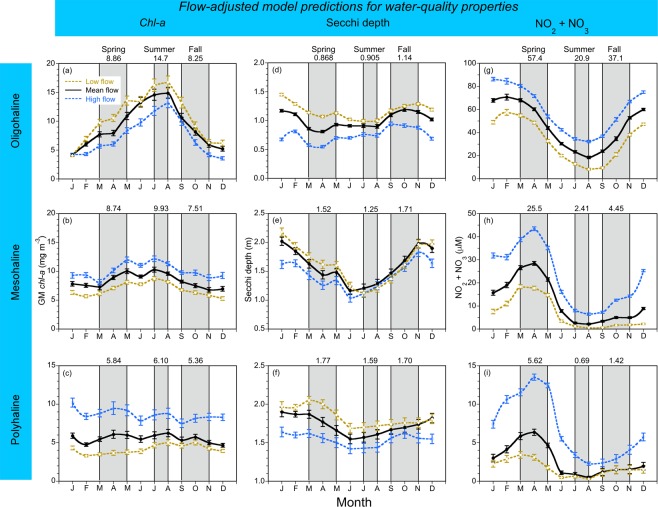
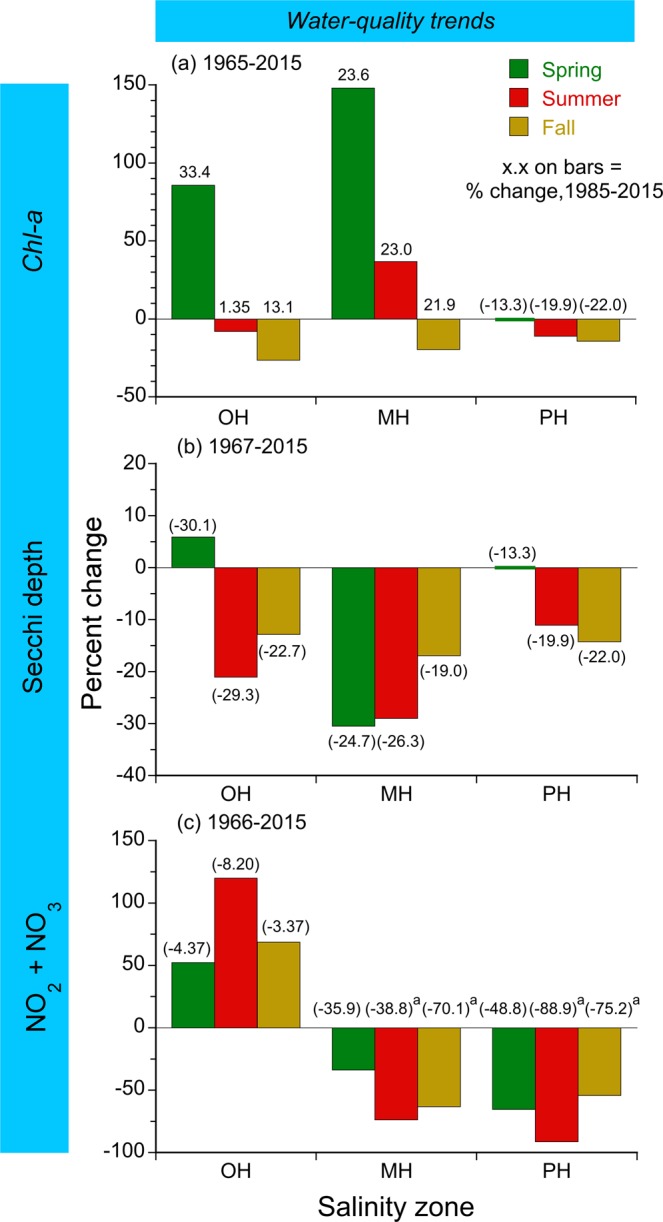
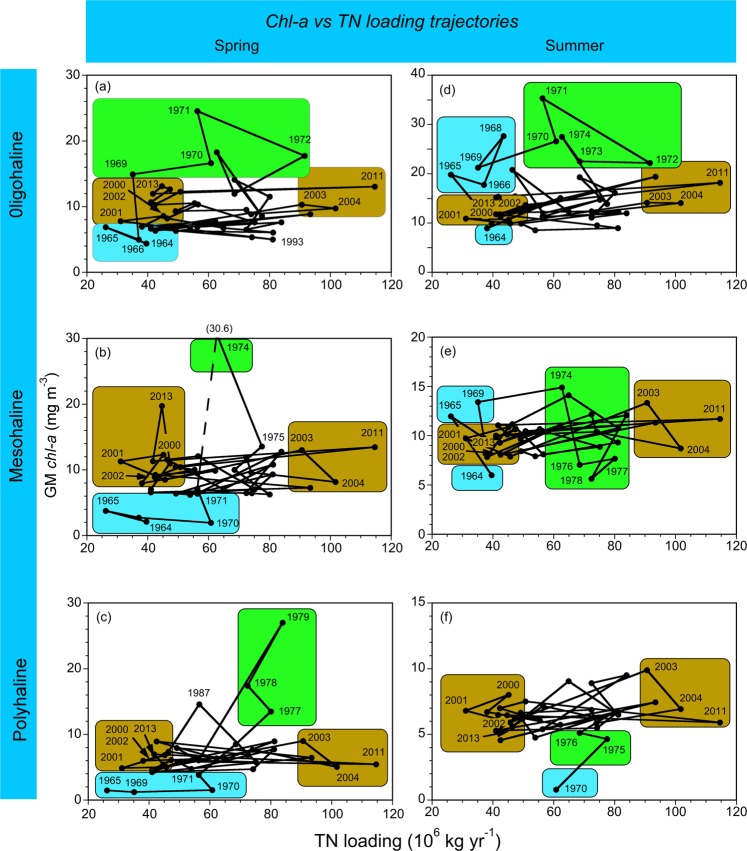
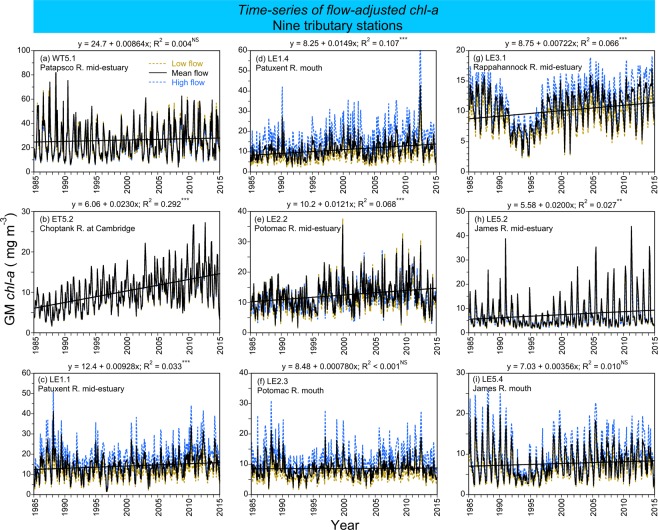
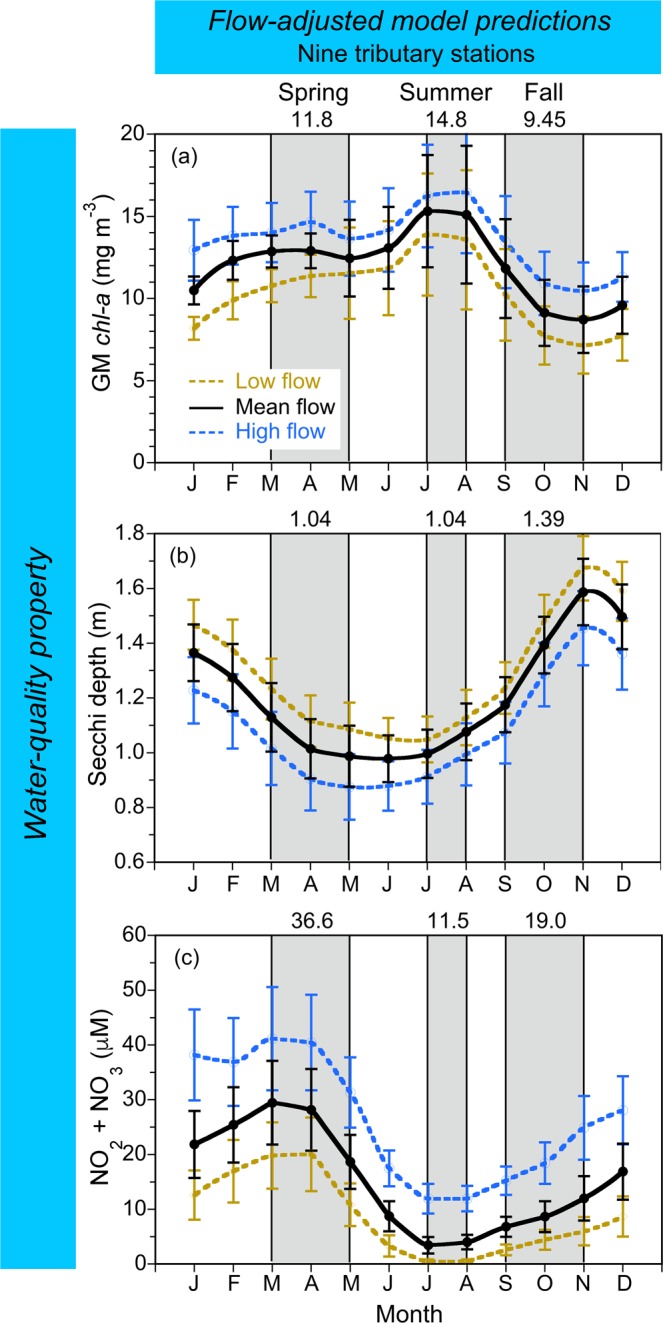
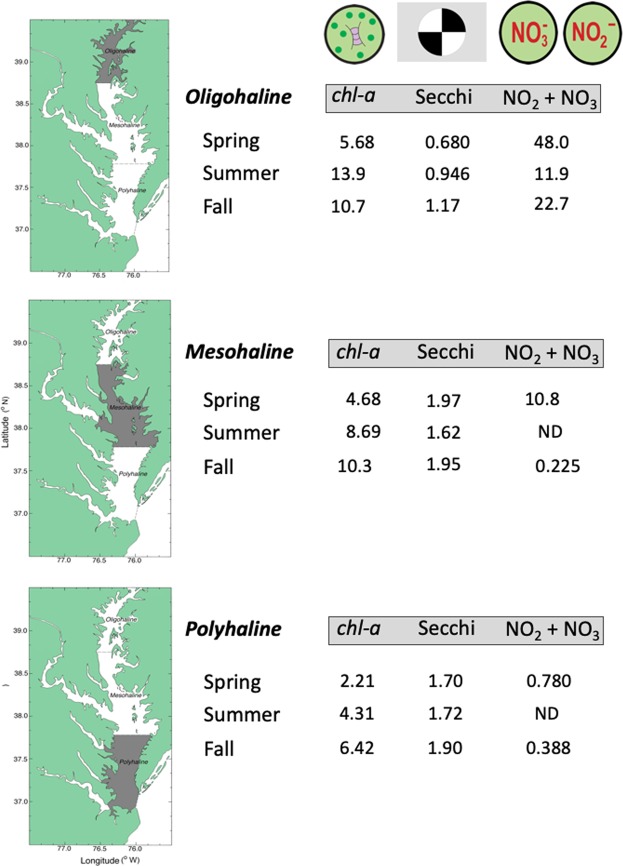
Coincident climatic and human effects strongly influence water-quality properties in estuarine-coastal ecosystems around the world. Time-series data for a number of ecosystems reveal high spatio-temporal variability superimposed on secular trends traceable to nutrient over-enrichment. In this paper, we present new analyses of long-term data for Chesapeake Bay directed at several goals: (1) to distinguish trends from spatio-temporal variability imposed by climatic effects; (2) to assess long-term trends of water-quality properties reflecting degradation and recovery; (3) to propose numerical water-quality criteria as targets for restoration; (4) to assess progress toward attainment of these targets. The bay has experienced multiple impairments associated with nutrient over-enrichment since World War II, e.g., low dissolved oxygen (DO), decreased water clarity, and harmful algal blooms (HAB). Anthropogenic eutrophication has been expressed as increased chlorophyll-a (chl-a) driven by accelerated nutrient loading from 1945 to 1980. Management intervention led to decreased loading thereafter, but deleterious symptoms of excess nutrients persist. Climatic effects exemplified by irregular “dry” and “wet” periods in the last 30+ years largely explain high inter-annual variability of water-quality properties, requiring adjustments to resolve long-term trends. Here, we extend these analyses at a finer temporal scale to six decades of chl-a, Secchi depth, and nitrite plus nitrate (NO 2 + NO 3) data to support trend analyses and the development of numerical water-quality criteria. The proposed criteria build on a conceptual model emphasizing the need to distinguish climatic and human effects in gauging progress to reverse eutrophication in estuarine-coastal ecosystems.
Overview
The claims and statistics of this paper haven’t been checked yet.
Free: it reads the open-access text and checks the first 5 claims that cite a source we can check. Create a free account to check every claim.
Integrity signals
Registry
Cites
Statistics
Figures
Verification
Claims the paper makes
The claims and statistics of this paper haven’t been checked yet.
Free: it reads the open-access text and checks the first 5 claims that cite a source we can check. Create a free account to check every claim.
Claims other papers make about this one
Each is checked against this paper’s own text: does it say what the citing paper says it does?
The source backs part of the claim, not all of it — or backs it for a different population, condition or comparison.
In the citing paper
“over the past 15-20 years oyster populations have been additionally stressed by reduced water quality and habitat loss (Kemp et al., 2005;Harding et al., 2019) and episodic harmful algal blooms (HABs) (Tango et al., 2005;Glibert et al., 2007;Mulholland et al., 2009;May et al., 2010;Griffith and Gobler, 2020).”
From Current and Future Remote Sensing of Harmful Algal Blooms in the Chesapeake Bay to Support the Shellfish Industry (2020) · cites this paper as Harding et al., 2019
Experimental — accuracy not yet measured
Self-check
Percentages, sums and reported differences re-computed from the paper’s own numbers.
The self-check needs the paper’s full text.
Citations
Cites
Generalized Additive Models: An Introduction with R
Wood, S. N. (2017) · doi:10.1201/9781315370279 · Cited by 13,852
Odum, E. P. (1969) · Science · doi:10.1126/science.164.3877.262 · Cited by 5,433
Our evolving conceptual model of the coastal eutrophication problem
Cloern, J. (2001) · Marine Ecology Progress Series · doi:10.3354/meps210223 · Cited by 2,895 · cited 8×
“instrumental for assessing estuarine health, including: (1) chlorophyll-a (chl-a) as a measure of phytoplankton biomass; (2) Secchi depth as a proxy for water clarity; (3) nitrite plus nitrate (NO2 + NO3) as a measure of nutrient loading/concentrations.”
BackgroundMethodResultInfluentialCoastal marine eutrophication: A definition, social causes, and future concerns
Nixon, S. W. (1995) · Ophelia · doi:10.1080/00785236.1995.10422044 · Cited by 2,672 · cited 8×
“instrumental for assessing estuarine health, including: (1) chlorophyll-a (chl-a) as a measure of phytoplankton biomass; (2) Secchi depth as a proxy for water clarity; (3) nitrite plus nitrate (NO2 + NO3) as a measure of nutrient loading/concentrations.”
BackgroundMethodResultInfluentialStable and Efficient Multiple Smoothing Parameter Estimation for Generalized Additive Models
Wood, S. N. (2004) · Journal of the American Statistical Association · doi:10.1198/016214504000000980 · Cited by 2,295
Eutrophication of Chesapeake Bay: historical trends and ecological interactions.
Kemp, W., Boynton, W., Adolf, J., Boesch, D., Boicourt, W., Brush, G., Cornwell, J., Fisher, T., Glibert, P., Hagy, J., et al. (2005) · Marine Ecology Progress Series · doi:10.3354/meps303001 · Cited by 1,468
Self-citationEffects of nutrient enrichment in the nation's estuaries: A decade of change
Bricker, S. B., Longstaff, B., Dennison, W., Jones, A., Boicourt, K., Wicks, C., & Woerner, J. (2008) · Harmful Algae · doi:10.1016/j.hal.2008.08.028 · Cited by 921
Return to Neverland: Shifting Baselines Affect Eutrophication Restoration Targets
Duarte, C. M., Conley, D. J., Carstensen, J., & Sánchez-Camacho, M. (2009) · Estuaries and Coasts · doi:10.1007/s12237-008-9111-2 · Cited by 627
Hagy, J. D., Boynton, W. R., Keefe, C. W., & Wood, K. V. (2004) · Estuaries · doi:10.1007/bf02907650 · Cited by 623
Low‐Rank Scale‐Invariant Tensor Product Smooths for Generalized Additive Mixed Models
Wood, S. N. (2006) · Biometrics · doi:10.1111/j.1541-0420.2006.00574.x · Cited by 616
Research works printed but not linked: 3
- Boynton, W. R. & Kemp, W. M. Influence of river flow and nutrient loads on selected ecosystem processes: A synthesis of Chesapeake Bay data. In Estuarine science, a synthetic approach to research and practice, ed. Hobbie, J. E., 269–298 (Washington, D. C.: Island Press, 2000).
- Malone T. C. Effects of water column processes on dissolved oxygen: nutrients, phytoplankton and zooplankton. In: Smith, D., Leffler, M., Mackiernan, G. (Eds), Oxygen dynamics in Chesapeake Bay: A synthesis of research, pp. 61–112 (University of Maryland Sea Grant, College Park, Maryland, USA, 1992).
- Jaworski, N. A., Romano, B. & Buchanan, C. The Potomac River basin and its estuary: Landscape loadings and water quality trends 1895–2005. In: Jaworski, C. L. (Ed.), Report, Interstate Commission on the Potomac River Basin, Rockville, Maryland, USA (2007).
Cited by
The Globalization of Cultural Eutrophication in the Coastal Ocean: Causes and Consequences
Malone, T. C., & Newton, A. (2020) · Frontiers in Marine Science · doi:10.3389/fmars.2020.00670 · Cited by 531
“These decreases persisted through the 1990s (Orth et al., 2010; Harding et al., 2019) but show signs of increasing since ∼2006 during a sustained low-flow period (Testa et al.”
BackgroundInteractions of microalgae-bacteria consortia for nutrient removal from wastewater: A review
Fallahi, A., Rezvani, F., Asgharnejad, H., Khorshidi Nazloo, E., Hajinajaf, N., & Higgins, B. (2021) · Chemosphere · doi:10.1016/j.chemosphere.2021.129878 · Cited by 404
Persistent eutrophication and hypoxia in the coastal ocean
Dai, M., Zhao, Y., Chai, F., Chen, M., Chen, N., Chen, Y., Cheng, D., Gan, J., Guan, D., Hong, Y., et al. (2023) · Cambridge Prisms: Coastal Futures · doi:10.1017/cft.2023.7 · Cited by 179
“…including climatic effects (e.g., irregular dry and we periods), weather (e.g., precipitation), nutrient loading, physical conditions (e.g., river discharge, water temperature, wind speed and wind direction), and biological activities (e.g., respiration) (Du et al., 2018; Harding et al., 2019).”
Byrnes, D., Meter, K. J. V., & Basu, N. B. (2020) · Global Biogeochemical Cycles · doi:10.1029/2020gb006626 · Cited by 108
“Problems of nutrient‐induced hypoxia have been noted for decades along the Louisiana continental shelf in the Gulf of Mexico and in the Chesapeake Bay (Harding et al., 2019; Rabalais et al., 2002; Van Meter et al., 2017).”
BackgroundCosta, D. D. A., de Azevedo, J. P. S., dos Santos, M. A., & Assumpção, R. D. S. F. V. (2020) · Scientific Reports · doi:10.1038/s41598-020-78563-0 · Cited by 101
Wolny, J. L., Tomlinson, M. C., Schollaert Uz, S., Egerton, T. A., McKay, J. R., Meredith, A., Reece, K. S., Scott, G. P., & Stumpf, R. P. (2020) · Frontiers in Marine Science · doi:10.3389/fmars.2020.00337 · Cited by 80
“, 2012; Tarnowski, 2017), over the past 15–20 years oyster populations have been additionally stressed by reduced water quality and habitat loss (Kemp et al., 2005; Harding et al., 2019) and episodic harmful algal blooms (HABs) (Tango et al.”
BackgroundBrauko, K. M., Cabral, A., Costa, N. V., Hayden, J., Dias, C. E. P., Leite, E. S., Westphal, R. D., Mueller, C. M., Hall-Spencer, J. M., Rodrigues, R. R., et al. (2020) · Frontiers in Marine Science · doi:10.3389/fmars.2020.590258 · Cited by 93
“The significance of trends in temperature, oxygen, DIP and macrobenthic taxonomic richness were obtained using the non-parametric test of Mann–Kendall (MK; p < 0.05) (Harding et al., 2019).”
MethodInfluentialMurphy, R. R., Keisman, J., Harcum, J., Karrh, R. R., Lane, M., Perry, E. S., & Zhang, Q. (2021) · Environmental Science & Technology · doi:10.1021/acs.est.1c05388 · Cited by 73
Self-citationAbbas, M., Melesse, A. M., Scinto, L. J., & Rehage, J. S. (2019) · Water · doi:10.3390/w11081621 · Cited by 59
“The Susquehanna river drains a large amount of nutrients in the upper bay [28,44].”
Zhang, P., Peng, C., Zhang, J., Zhang, J., Chen, J., & Zhao, H. (2022) · Frontiers in Marine Science · doi:10.3389/fmars.2022.849819 · Cited by 71
“The suitable temperature of Phaeocystis globosa ranged from 15 to 27◦C (He et al., 2019).”
BackgroundPan, S., Bian, Z., Tian, H., Yao, Y., Najjar, R. G., Friedrichs, M. A. M., Hofmann, E. E., Xu, R., & Zhang, B. (2021) · Journal of Geophysical Research Biogeosciences · doi:10.1029/2020jg005826 · Cited by 53
Nitrous oxide production in the Chesapeake Bay
Tang, W., Tracey, J. C., Carroll, J., Wallace, E., Lee, J. A., Nathan, L. I., Sun, X., Jayakumar, A., & Ward, B. B. (2022) · Limnology and Oceanography · doi:10.1002/lno.12191 · Cited by 43
Eutrophication, Harmful Algae, Oxygen Depletion, and Acidification
Brush, M. J., Giani, M., Totti, C., Testa, J. M., Faganeli, J., Ogrinc, N., Kemp, W. M., & Umani, S. F. (2020) · Geophysical monograph · doi:10.1002/9781119543626.ch5 · Cited by 61
Zhang, Q., Blomquist, J. D., Fanelli, R. M., Keisman, J., Moyer, D., & Langland, M. J. (2023) · Wiley Interdisciplinary Reviews Water · doi:10.1002/wat2.1671 · Cited by 46
Cabral, A., Bonetti, C., Garbossa, L. H. P., Filho, J. P., Besen, K., & Fonseca, A. L. D. O. (2020) · The Science of The Total Environment · doi:10.1016/j.scitotenv.2020.141553 · Cited by 45
Kaufman, D. E., Shenk, G. W., Bhatt, G., Asplen, K. W., Devereux, O. H., Rigelman, J. R., Ellis, J., Hobbs, B. F., Bosch, D. J., Houtven, G. V., et al. (2021) · Environmental Modelling & Software · doi:10.1016/j.envsoft.2021.105141 · Cited by 42
A three-dimensional mixotrophic model of Karlodinium veneficum blooms for a eutrophic estuary
Li, M. H., Chen, Y., Zhang, F., Song, Y., Glibert, P. M., & Stoecker, D. K. (2022) · Harmful Algae · doi:10.1016/j.hal.2022.102203 · Cited by 38
Windle, A. E., Evers-King, H., Loveday, B. R., Ondrusek, M. E., & Silsbe, G. M. (2022) · Remote Sensing · doi:10.3390/rs14081881 · Cited by 36
Localized Water Quality Improvement in the Choptank Estuary, a Tributary of Chesapeake Bay
Fisher, T. R., Fox, R. J., Gustafson, A. B., Koontz, E. L., Lepori‐Bui, M., & Lewis, J. (2021) · Estuaries and Coasts · doi:10.1007/s12237-020-00872-4 · Cited by 36
He, J., Christakos, G., Wu, J., Li, M., & Leng, J. (2021) · The Science of The Total Environment · doi:10.1016/j.scitotenv.2021.148670 · Cited by 26
Phytoplankton Dynamics in a Changing Environment
Brush, M. J., Mozetič, P., Francé, J., Aubry, F. B., Djakovac, T., Faganeli, J., Harris, L. A., & Niesen, M. E. (2020) · Geophysical monograph · doi:10.1002/9781119543626.ch4 · Cited by 29
Snelder, T. H., Fraser, C., Larned, S. T., Monaghan, R. M., Malmanche, S. D., & WHITEHEAD, A. L. (2021) · Marine and Freshwater Research · doi:10.1071/mf21086 · Cited by 28
Lheureux, A., David, V., Amo, Y. D., Soudant, D., Auby, I., Bozec, Y., Conan, P., Ganthy, F., Grégori, G., Lefebvre, A., et al. (2022) · The Science of The Total Environment · doi:10.1016/j.scitotenv.2022.159619 · Cited by 27
Rodriguez, L. K., Fandel, A. D., Colbert, B. R., Testa, J. C., & Bailey, H. (2021) · PLoS ONE · doi:10.1371/journal.pone.0251637 · Cited by 24
“Residing along the northeastern coast of the USA, the Chesapeake Bay is an expansive estuary with an area of 11,600 km(2) [3].”
BackgroundEffect of climate variability on water quality trends in New Zealand rivers
Snelder, T. H., Larned, S. T., Fraser, C., & Malmanche, S. D. (2021) · Marine and Freshwater Research · doi:10.1071/mf21087 · Cited by 21
“…studies, temporal changes in coastal and fresh water quality were attributed to natural climate variability generated by climatic processes such as the El Niño–Southern Oscillation (ENSO) and the North Atlantic Oscillation (NAO; Mellander et al. 2018; Harding et al. 2019; Murphy and Sprague 2019).”
BackgroundHarding, L. W., Mallonee, M. E., Perry, E. S., Miller, W. D., Adolf, J. E., Gallegos, C. L., & Paerl, H. W. (2020) · Scientific Reports · doi:10.1038/s41598-020-58702-3 · Cited by 21
Self-citationUbiquitous Patchiness in Chlorophyll a Concentration in Coastal Archipelago of Baltic Sea
Scheinin, M., & Asmala, E. (2020) · Frontiers in Marine Science · doi:10.3389/fmars.2020.00563 · Cited by 17
Ni, W., & Li, M. H. (2022) · The Science of The Total Environment · doi:10.1016/j.scitotenv.2022.160650 · Cited by 20
Impacts of Water Clarity Variability on Temperature and Biogeochemistry in the Chesapeake Bay
Kim, G., St‐Laurent, P., Friedrichs, M. A. M., & Mannino, A. (2020) · Estuaries and Coasts · doi:10.1007/s12237-020-00760-x · Cited by 18
Time series forecasting of chlorophyll-a concentrations in the Chesapeake Bay
Gupta, S., & Gupta, S. (2025) · Scientific Reports · doi:10.1038/s41598-025-16352-3 · Cited by 18
Bharti, S., Raj, A., Saratale, G. D., Ferreira, L. F. R., de Souza, R. L., Mulla, S. I., & Bharagava, R. N. (2024) · Journal of Environmental Management · doi:10.1016/j.jenvman.2024.123704 · Cited by 17
Long‐Term Trends in Chesapeake Bay Remote Sensing Reflectance: Implications for Water Clarity
Turner, J. S., Friedrichs, C. T., & Friedrichs, M. A. M. (2021) · Journal of Geophysical Research Oceans · doi:10.1029/2021jc017959 · Cited by 16
“Skill of satellite Rrs was minimally different among different spatial resolutions (Table S4 in Supporting Information S1, Figures S6, and S7 in Supporting Information S1).”
BackgroundInfluentialRewrie, L., Baschek, B., van Beusekom, J. E. E., Körtzinger, A., Ollesch, G., & Voynova, Y. G. (2023) · Biogeosciences · doi:10.5194/bg-20-4931-2023 · Cited by 17
“, 2019) and Delaware Estuary (Sharp, 2010), effects of anthropogenic eutrophication persist (Harding et al., 2019).”
BackgroundA Water Quality Binning Method to Infer Phytoplankton Community Structure and Function
Buchanan, C. (2020) · Estuaries and Coasts · doi:10.1007/s12237-020-00714-3 · Cited by 16
Mallick, N., & Dunn, R. P. (2024) · Ocean-Land-Atmosphere Research · doi:10.34133/olar.0070 · Cited by 15
Paulino, R. S., Martins, V. S., Caballero, C. B., Lima, T. M. A., Liu, B., Ashapure, A., & Werdell, J. (2025) · ISPRS Journal of Photogrammetry and Remote Sensing · doi:10.1016/j.isprsjprs.2025.12.003 · Cited by 14
Analysis of irregularly sampled stream temperature time series: challenges and solutions
Grey, V., Hatt, B. E., Fletcher, T. D., Smith‐Miles, K., & Coleman, R. A. (2024) · Journal of Hydrology · doi:10.1016/j.jhydrol.2024.131244 · Cited by 10
Emerging insights into nitrogen assimilation in gymnosperms
Valderrama‐Martín, J. M., Ortigosa, F., Cantón, F. R., Ávila, C., Cañas, R. A., & Cánovas, F. M. (2023) · Trees · doi:10.1007/s00468-023-02403-7 · Cited by 9
“Excess N can also lead to eutrophication of aquatic and terrestrial habitats (Harding et al. 2019), an increase of N reactive species input into the environment (Canfield et al. 2010) and other environmental problems (Hirel et al. 2011), which have repercussions on the biodiversity of the…”
Noriega, C., Medeiros, C., Varona, H. L., Rodrigues, L., Araújo, M., Monteiro, S., Silva, A. X., Pereira, N. A., de Lima, E. E. S., da Silva, D. S. T., et al. (2022) · Water Air & Soil Pollution · doi:10.1007/s11270-022-05852-x · Cited by 9
Effect of tidal resuspension with oyster biodeposits on nutrient and oxygen dynamics
Porter, E. T., Blickenstaff, S., Cornwell, J. C., Jackson, M., & Tolbert, S. (2022) · Marine Ecology Progress Series · doi:10.3354/meps13995 · Cited by 8
Response of hypoxia to future climate change is sensitive to methodological assumptions
Hinson, K. E., Friedrichs, M. A. M., Najjar, R. G., Bian, Z., Herrmann, M., St‐Laurent, P., & Tian, H. (2024) · Scientific Reports · doi:10.1038/s41598-024-68329-3 · Cited by 11
Oates, C., Fajardo, H., Grieger, K., Obenour, D. R., Muenich, R. L., & Nelson, N. G. (2024) · ACS Environmental Au · doi:10.1021/acsenvironau.4c00060 · Cited by 8
Chlorophyll-a in the Chesapeake Bay Estimated by Extra-Trees Machine Learning Modeling
Nezlin, N. P., Son, S., Salem, S. I., & Ondrusek, M. E. (2025) · Remote Sensing · doi:10.3390/rs17132151 · Cited by 8
Porter, E. T., Robins, E., Davis, S., Lacouture, R. V., & Cornwell, J. C. (2020) · Marine Ecology Progress Series · doi:10.3354/meps13277 · Cited by 8
Reconstructing primary production in a changing estuary: A mass balance modeling approach
Kim, J.-S., Brush, M. J., Song, B., & Anderson, I. C. (2021) · Limnology and Oceanography · doi:10.1002/lno.11771 · Cited by 10
Liao, Y., Zhao, S., Zhang, W., Zhao, P., Lu, B., Moody, M. L., Tan, N., & Chen, L. (2023) · Frontiers in Plant Science · doi:10.3389/fpls.2023.1138498 · Cited by 7
Minaudo, C., Abonyi, A., Alcaráz, C., Diamond, J. S., Howden, N. J. K., Rode, M., Romero, E., Thieu, V., Worrall, F., Zhang, Q., et al. (2025) · Earth system science data · doi:10.5194/essd-17-3411-2025 · Cited by 8
Badlowski, G. A., Adolf, J. E., & Fouad, G. (2021) · Environmental Monitoring and Assessment · doi:10.1007/s10661-021-08894-6 · Cited by 6
“Estuaries are characterized by high degrees of spatial and temporal variabilities in key water quality parameters (Harding et al. 2019), including salinity, turbidity, nutrients, and chlorophyll a (e.g., phytoplankton biomass).”
BackgroundSelf-citationOptical water typing in optically complex waters: A case study of Chesapeake Bay
Windle, A. E., Malkin, S. Y., Hood, R. R., & Silsbe, G. M. (2025) · The Science of The Total Environment · doi:10.1016/j.scitotenv.2025.179558 · Cited by 7
Nezlin, N. P., Testa, J. M., Zheng, G., & DiGiacomo, P. M. (2022) · Integrated Environmental Assessment and Management · doi:10.1002/ieam.4597 · Cited by 5
“…of phytoplankton bio - mass associated with long ‐ term eutrophication caused by riverine nutrient inputs (Boesch et al., 2001; Harding & Perry, 1997; Harding et al., 2019; Kemp et al., 2005; Murphy et al., 2011) resulting in hypoxia and anoxia (Hagy et al., 2004; Of fi cer et al., 1984; Taft et…”
BackgroundResultInfluentialZhu, Y., Mulholland, M. R., Macías‐Tapia, A., Echevarría, M. A., Pérez-Vega, E., & Bernhardt, P. W. (2022) · Estuarine Coastal and Shelf Science · doi:10.1016/j.ecss.2022.108188 · Cited by 5
Longobardi, L., Dubroca, L., Sarno, D., & Zingone, A. (2022) · Journal of Plankton Research · doi:10.1093/plankt/fbac050 · Cited by 5
Application of unsupervised clustering model based on graph embedding in water environment
Fang, M., Lyu, L., Wang, N., Zhou, X., & Hu, Y.-K. (2023) · Scientific Reports · doi:10.1038/s41598-023-50301-2 · Cited by 3
“These methods mainly include multivariate linear analysis method, principal component analysis method, discriminant analysis and cluster analysis method 7,27–30 .”
MethodChazal, N., Carr, M., Haines, A., Leight, A. K., & Nelson, N. G. (2024) · Marine Pollution Bulletin · doi:10.1016/j.marpolbul.2024.116465 · Cited by 4
McKibben, S. M., Uz, S. S., & Palacios, S. L. (2024) · Earth and Space Science · doi:10.1029/2023ea003244 · Cited by 9
Nutrient Inputs and Organic Carbon Enrichment: Causes and Consequences of Eutrophication
Kennish, M. J. (2023) · Elsevier eBooks · doi:10.1016/b978-0-323-90798-9.00015-9 · Cited by 5
Neale, P. J., Brown, S., Sill, T., Cawood, A. M., Tzortziou, M. A., Park, J., Lee, M.-S., & Paquette, B. (2024) · PLoS ONE · doi:10.1371/journal.pone.0305505 · Cited by 4
“This contrasts with the extensive, long-term monitoring of the main stem of the Chesapeake Bay which has informed quantitative targets for acceptable water quality [14].”
Assessing water clarity in the Chesapeake Bay using satellite-derived Secchi disk depth
Son, S., Nezlin, N. P., & Lance, V. P. (2025) · International Journal of Applied Earth Observation and Geoinformation · doi:10.1016/j.jag.2025.104574 · Cited by 4
Sadchikov, А. P., & Ostroumov, S. A. (2019) · Russian Journal of General Chemistry · doi:10.1134/s107036321913019x · Cited by 4
Zagarese, H. E., Diovisalvi, N., Sagrario, M. D. L. Á. G., Izaguirre, I., Fermani, P., Unrein, F., Berman, M. C., & Pérez, G. L. (2022) · Water · doi:10.3390/w14020159 · Cited by 4
“Long-term increases in light scattering in Chesapeake Bay have been inferred from ZSD, light attenuation, and remote sensing measurements [53].”
BackgroundTemporal escape–adaptation to eutrophication by Skeletonema marinoi
Olofsson, M., Almén, A.-K., Jaatinen, K., & Scheinin, M. (2022) · FEMS Microbiology Letters · doi:10.1093/femsle/fnac011 · Cited by 4
“Measuring environmental parameters during summer directly reflects the situation during spring as demonstrated by the unimodal seasonal dynamics (Harding et al. 2019).”
Singh, K. K., Singh, K. K., Usha, K., Das, S., & Singh, S. S. (2022) · Environmental Science and Pollution Research · doi:10.1007/s11356-022-20631-1 · Cited by 8
“Moreover, the aquatic ecosystem has been extensively affected by anthropogenic activities thereby leading to the deterioration of water quality, reduction in water availability, and depletion of the carrying capacity of the aquatic life (Wang et al. 2012; Harding et al. 2019).”
BackgroundLee, J. A., Vineis, J. H., Poupon, M., Resplandy, L., & Ward, B. B. (2025) · Biogeosciences · doi:10.5194/bg-22-4743-2025 · Cited by 5
Kottler, E. J., Hamilton, M. B., & Gedan, K. B. (2024) · Ecosphere · doi:10.1002/ecs2.4962 · Cited by 3
Li, Z., Zhu, K., Zhang, Y., Ba, Y., Zhang, Y., He, C., Song, L., Hou, Z., Dong, C., Wang, H., et al. (2025) · Scientific Reports · doi:10.1038/s41598-024-83591-1 · Cited by 3
Li, M. H., Li, R., Guo, Y., Testa, J. M., Cai, W., Shen, C., Chen, Y., & Kaushal, S. S. (2025) · AGU Advances · doi:10.1029/2024av001350 · Cited by 9
Palinkas, C. M., Koontz, E. L., & Fisher, T. R. (2022) · Estuaries and Coasts · doi:10.1007/s12237-022-01077-7 · Cited by 4
“Seasonal data in the Chesapeake typically show blooms of phytoplankton in late winter to spring, associated with increasing light, nutrient availability, and freshwater flow, along with warming temperatures and increasing vertical stratification (Harding 1994; Harding et al. 2019).”
BackgroundTesta, J. M., Bukaveckas, P. A., Boynton, W. R., Harris, L. A., Murphy, R. R., Lane, M. F., & Lyubchich, V. (2025) · JAWRA Journal of the American Water Resources Association · doi:10.1111/1752-1688.70070 · Cited by 2
“…have shown an increase in both TN and TP loads from BFL and AFL sources, which would explain the TP concentration increases we documented, and recent studies have suggested a flow-adjusted increase in chlorophyll-a in the middle Choptank River over the timeframe of our study (Harding et al. 2019).”
High-resolution temporal dynamics of diatoms in a large and well-mixed tropical estuary
Birocchi, P., Oliveira-Souza, W., Braz, C., Silva, D. A., Frazão, L. R., Barrera-Alba, J. J., Lessa, G. C., & Lopes, R. M. (2025) · Marine Environmental Research · doi:10.1016/j.marenvres.2025.107807 · Cited by 2
Moradi, M., Lü, M., van der Molen, J., & Arabi, B. (2026) · ISPRS Journal of Photogrammetry and Remote Sensing · doi:10.1016/j.isprsjprs.2026.03.045 · Cited by 2
Odo, S. N., Odo, M. K., Anyanwu, E. D., & Ikechukwu, P. I. (2022) · Limnology and Freshwater Biology · doi:10.31951/2658-3518-2022-a-2-1217 · Cited by 2
He, J., Gao, Z., Jiang, Y., & Li, M. (2024) · Frontiers in Physics · doi:10.3389/fphy.2024.1331660 · Cited by 5
Lucas, S. N., Fouad, G., & Adolf, J. E. (2023) · Environmental Monitoring and Assessment · doi:10.1007/s10661-023-11006-1 · Cited by 2
Self-citationAuthor comment: Persistent eutrophication and hypoxia in the coastal ocean — R1/PR6
Dai, M. (2023) · Cambridge Prisms Coastal Futures · doi:10.1017/cft.2023.7.pr6 · Cited by 3
Cyclone‐induced mixing and stratification shape autumnal hypoxia in a temperate estuary
Shen, C., & Testa, J. M. (2026) · Limnology and Oceanography Letters · doi:10.1002/lol2.70107 · Cited by 1
“These results showed higher hypoxic volumes in both summer and autumn during wet years, which aligns with previous research (Li et al. 2016; Harding et al. 2019) that emphasizes the crucial role of the dry-wet cycle in explaining the inter-annual variability of hypoxia.”
Environmental controls and nonlinear responses of the diatom-dinoflagellate ratio in Jiaozhou Bay
Huang, Y., Cui, Z., Liu, C., Ding, D., Zhu, L., Qu, K., Wei, Y., & Sun, J. (2026) · Marine Pollution Bulletin · doi:10.1016/j.marpolbul.2026.119507 · Cited by 1
Elabor, R., Herbert, K. A., Fiola, T. E., Mwashote, B. M., Badisa, V. L. D., & Ibeanusi, V. M. (2026) · Discover Water · doi:10.1007/s43832-026-00380-9 · Cited by 1
Atlantic Coast Rivers of the Northeastern United States
Jackson, J. K., Entrekin, S. A., Greig, H. S., & Roy, A. H. (2023) · Elsevier eBooks · doi:10.1016/b978-0-12-818847-7.00008-2 · Cited by 1
Hardison, S., Lefcheck, J. S., White, S. B., Liang, M., Zhang, Y. S., Patrick, C. J., Scheld, A. M., Latour, R. J., Fodrie, F. J., Anderson, S. C., et al. (2025) · Ecological Applications · doi:10.1002/eap.70097 · Cited by 1
Hoài, P. N., Nguyen, T. D., Phan, H. T., Nguyen, Y. T. M., Tran, H. Y. T., Pham, Q. B., Pham, L. T., Quảng, N. X., Le, T. T., Nguyen, A. N., et al. (2024) · Research Square · doi:10.21203/rs.3.rs-4457483/v1 · Cited by 1
Decision: Persistent eutrophication and hypoxia in the coastal ocean — R1/PR10
(2023) · Cambridge Prisms Coastal Futures · doi:10.1017/cft.2023.7.pr10
Review: Persistent eutrophication and hypoxia in the coastal ocean — R1/PR7
Dai, M., Zhao, Y., Chai, F., et al. (2023) · Cambridge Prisms Coastal Futures · doi:10.1017/cft.2023.7.pr7
Review: Persistent eutrophication and hypoxia in the coastal ocean — R1/PR8
Dai, M., Zhao, Y., Chai, F., et al. (2023) · Cambridge Prisms Coastal Futures · doi:10.1017/cft.2023.7.pr8
Recommendation: Persistent eutrophication and hypoxia in the coastal ocean — R0/PR4
(2023) · Cambridge Prisms Coastal Futures · doi:10.1017/cft.2023.7.pr4
Decision: Persistent eutrophication and hypoxia in the coastal ocean — R0/PR5
Dai, M., Zhao, Y., Chai, F., et al. (2023) · Cambridge Prisms Coastal Futures · doi:10.1017/cft.2023.7.pr5
Review: Persistent eutrophication and hypoxia in the coastal ocean — R0/PR3
(2023) · Cambridge Prisms Coastal Futures · doi:10.1017/cft.2023.7.pr3
Review: Persistent eutrophication and hypoxia in the coastal ocean — R0/PR2
Dai, M., Zhao, Y., Chai, F., et al. (2022) · Cambridge Prisms Coastal Futures · doi:10.1017/cft.2023.7.pr2
Author comment: Persistent eutrophication and hypoxia in the coastal ocean — R0/PR1
Dai, M. (2022) · Cambridge Prisms Coastal Futures · doi:10.1017/cft.2023.7.pr1
Microplankton community structure in the subtropical Mlalazi estuary.
Azinwi, N.-F. F. (2021) · ResearchSpace (University of KwaZulu-Natal) · doi:10.29086/10413/22790 · Cited by 1
Lakhanpal, G., Fenton, O. S., Basu, N. B., Horan, B., Richards, K. G., Alvarez, G. C., Lopez‐Sangil, L., & Condon, T. (2025) · SSRN Electronic Journal · doi:10.2139/ssrn.5396061
Lee, J., Park, M.-O., Cho, H., Baek, Y., & Song, Y. (2026) · Journal of the Korean Society for Marine Environment & Energy · doi:10.7846/jkosmee.2026.29.1.30
Sustainably intensified fresh-market vegetable production with compact bed plasticulture
Hansen, K. M., Shukla, S., Santikari, V. P., & Holt, N. L. (2026) · Communications Earth & Environment · doi:10.1038/s43247-026-03394-2
“Similarly, ef fi cient utilization of fertilizer is necessary to protect the downstream waterbodiesandsensitiveecosystems(e.g.,EvergladesandChesapeakeBay) from the effects of nutrient pollution, such as water quality degradation, eutrophication, and loss of native species 46,47 .”
Wang, Y., Wang, J., Shen, R., Qiao, W., Lv, Z., & Zhang, J. (2026) · Water · doi:10.3390/w18111283
Assessing the impact of land use on water quality in the Chesapeake Bay Watershed
Fields, K., & Joseph, N. (2026) · H2Open Journal · doi:10.1016/j.htopen.2026.100040
Rose, K. A., Monaco, M. E., Ihde, T. F., Smith, E. P., Stauffer, J. R., Havens, K. J., McDonnell, L., Linker, L. C., Gootman, K. S., Vogt, B., et al. (2026) · JAWRA Journal of the American Water Resources Association · doi:10.1111/1752-1688.70134 · Cited by 1
Joseph, N., & Maxwell, R. S. (2026) · Journal of Environmental Quality · doi:10.1002/jeq2.70212 · Cited by 1
“Urban areas within the Chesapeake Bay watershed, such as Arlington, Virginia, represent critical focal points for understanding water quality dynamics in highly developed settings (Harding et al., 2019; Tango & Batiuk, 2013).”
On the Influence of Synoptic Air Masses on Water Conditions in the Chesapeake BayPreprint
Lee, C. C., & Pirhalla, D. E. (2026) · Research Square · doi:10.21203/rs.3.rs-10681616/v1
Huizenga, K. N., Neill, C., Jakuba, R. W., Rheuban, J. E., & Williams, T. (2026) · Estuaries and Coasts · doi:10.1007/s12237-026-01810-6
“…potentially because of the release of stored nitrogen from sediments, warming temperatures, and the challenge of achieving large nitrogen reductions in a large water-body with many states and entities involved (Boesch, 2019; Chang et al., 2021; Harding et al., 2016, 2019; Murphy et al., 2011).”
Metadata
- Authors
- Harding, L. W., Mallonee, M. E., Perry, E. S., Miller, W. D., Adolf, J. E., Gallegos, C. L., & Paerl, H. W.
- Affiliations
- University of California, Los Angeles (US)
- Environmental Protection Agency (US)
- United States Naval Research Laboratory (US)
- Monmouth University (US)
- Smithsonian Environmental Research Center (US)
- University of North Carolina at Chapel Hill (US)
- Corresponding author
- Harding, Lawrence W.
- Venue
- Scientific Reports
- Published
- 2019-04-30
- Volume
- 9
- Issue
- 1
- Pages
- 6709-6709
- ISSN
- 2045-2322 (ISSN-L)
- PMC
- PMC6491606
- OpenAlex
- W2943517255
- Cited by
- 98
- References
- 55
- Citations by year
- 2026: 12 · 2025: 13 · 2024: 11 · 2023: 16 · 2022: 18 · 2021: 13 · 2020: 13 · 2019: 2
- FWCI
- 6.35
- Type
- journal article
- Language
- en
- Open access
- gold
- doi.org
- Licence
- cc-by
- creativecommons.org/licenses/by/4.0 (tdm)
- creativecommons.org/licenses/by/4.0 (vor)
- Locations
- Scientific Reports (publishedVersion, cc-by)
- Europe PMC (PubMed Central) (publishedVersion, cc-by)
- PubMed Central (publishedVersion, cc-by)
- PubMed (publishedVersion)
- Carolina Digital Repository (University of North Carolina at Chapel Hill) (submittedVersion)
- eScholarship (California Digital Library) (submittedVersion, cc-by)
- NOAA Institutional Repository (submittedVersion)
- UNC Libraries
- Funders
- National Science Foundation
- National Aeronautics and Space Administration
- U.S. Environmental Protection Agency
- National Oceanic and Atmospheric Administration
- Topics
- Physical Sciences › Earth and Planetary Sciences › Oceanography › Marine Plankton and Biogeochemistry
- Physical Sciences › Environmental Science › Environmental Chemistry › Aquatic Ecosystems and Phytoplankton Dynamics
- Physical Sciences › Earth and Planetary Sciences › Oceanography › Oceanographic and Atmospheric Processes
- Keywords
- Chesapeake Bay, water quality trends, eutrophication, chlorophyll a, Secchi depth, nitrate, dissolved oxygen, harmful algal blooms, water transparency, climate variability, long-term monitoring, water quality criteria, estuarine restoration, anthropogenic nutrient loading
About these checks
Registry, retraction, Cites and statistics results are computed, not judged, with one exception: a printed reference that no index lists is read once by a model before it counts as a citation error. Claims are extracted by a model and kept only when their quote appears verbatim in the text; each cited source is then checked, with a model’s help, for whether it says what the claim relies on. Those verdicts can be wrong — read the claim’s quote and the cited source before relying on one.
Statistics and arithmetic are recomputed, not judged.
Confidence bands are shown only for fields calibrated on our annotated test set. None is calibrated yet, so no band is shown.
What counts as a claim ›How we measure confidence ›How we check this ›
Are you an author, or do you see a problem with this page? Request a review
Data sources
Bibliographic data: Semantic Scholar, OpenAlex, Crossref.
Contains information from the Semantic Scholar Academic Graph Datasets, made available under the ODC Attribution License (ODC-BY 1.0).
Semantic Scholar’s data is described in: Kinney, R., et al. (2023). The Semantic Scholar Open Data Platform. arXiv:2301.10140.
