

Α Quantum Pattern Recognition Method for Improving Pairwise Sequence Alignment
Open accessThe DOI matches its Crossref record; 43 of the 43 references it cites were found in a registry or an index.
Abstract
Quantum pattern recognition techniques have recently raised attention as potential candidates in analyzing vast amount of data. The necessity to obtain faster ways to process data is imperative where data generation is rapid. The ever-growing size of sequence databases caused by the development of high throughput sequencing is unprecedented. Current alignment methods have blossomed overnight but there is still the need for more efficient methods that preserve accuracy in high levels. In this work, a complex method is proposed to treat the alignment problem better than its classical counterparts by means of quantum computation. The basic principal of the standard dot-plot method is combined with a quantum algorithm, giving insight into the effect of quantum pattern recognition on pairwise alignment. The central feature of quantum algorithmic -quantum parallelism- and the diffraction patterns of x-rays are synthesized to provide a clever array indexing structure on the growing sequence databases. A completely different approach is considered in contrast to contemporary conventional aligners and a variety of competitive classical counterparts are classified and organized in order to compare with the quantum setting. The proposed method seems to exhibit high alignment quality and prevail among the others in terms of time and space complexity.
Overview
The claims and statistics of this paper haven’t been checked yet.
Free: it reads the open-access text and checks the first 5 claims that cite a source we can check. Create a free account to check every claim.
Integrity signals
Registry
Cites
Statistics
Figures
Verification
Claims the paper makes
The claims and statistics of this paper haven’t been checked yet.
Free: it reads the open-access text and checks the first 5 claims that cite a source we can check. Create a free account to check every claim.
Claims other papers make about this one
Each is checked against this paper’s own text: does it say what the citing paper says it does?
The cited source says what the claim attributes to it.
In the citing paper
“One example includes sequence alignment [49, 72].”
From Quantum Computing in the Next-Generation Computational Biology Landscape: From Protein Folding to Molecular Dynamics (2024) · cites this paper as [72]
The cited source says what the claim attributes to it.
In the citing paper
“A second approach for detecting local alignments between reads and reference sequence, or a slice of it, has been described by Prousalis and Kofonaus [141].”
From Quantum computing algorithms: getting closer to critical problems in computational biology (2022) · cites this paper as [141]
In the citing paper
“For instance, quantum machine learning algorithms for identifying common patterns between two DNA sequences -a task known as DNA alignment -have been proposed in recent years.[237,238]”
From Quantum Computing for Molecular Biology** (2023) · cites this paper as [237]
In the citing paper
“It is based on dot matrix, a simple structure for comparing two sequences point by point.”
From Quantum computing algorithms: getting closer to critical problems in computational biology (2022) · cites this paper as [141]
Self-check
Percentages, sums and reported differences re-computed from the paper’s own numbers.
The self-check needs the paper’s full text.
Citations
Cites
Basic local alignment search tool
Altschul, S. F., Gish, W., Miller, W., Myers, E. W., & Lipman, D. J. (1990) · Journal of Molecular Biology · doi:10.1006/jmbi.1990.9999 · Cited by 98,669
Fast and accurate short read alignment with Burrows-Wheeler transform
Li, H., & Durbin, R. (2009) · Bioinformatics · doi:10.1093/bioinformatics/btp324 · Cited by 58,607
Fast gapped-read alignment with Bowtie 2
Langmead, B., & Salzberg, S. L. (2012) · Nature Methods · doi:10.1038/nmeth.1923 · Cited by 56,400
Ultrafast and memory-efficient alignment of short DNA sequences to the human genome.
Langmead, B., Trapnell, C., Pop, M., & Salzberg, S. L. (2009) · Genome Biology · doi:10.1186/gb-2009-10-3-r25 · Cited by 21,849
Fast and accurate long-read alignment with Burrows-Wheeler transform.
Li, H., & Durbin, R. (2010) · Bioinformatics · doi:10.1093/bioinformatics/btp698 · Cited by 12,063
Needleman, S. B., & Wunsch, C. D. (1970) · Journal of Molecular Biology · doi:10.1016/0022-2836(70)90057-4 · Cited by 11,288
Identification of common molecular subsequences
Smith, T. F., & Waterman, M. S. (1981) · Journal of Molecular Biology · doi:10.1016/0022-2836(81)90087-5 · Cited by 9,940
SOAP2: an improved ultrafast tool for short read alignment
Li, R., Yu, C., Li, Y., Lam, T.-W., Yiu, S.-M., Kristiansen, K., & Wang, J. (2009) · Bioinformatics · doi:10.1093/bioinformatics/btp336 · Cited by 3,760
SOAP: Short oligonucleotide alignment program
Li, R., Li, Y., Kristiansen, K., & Wang, J. (2008) · Bioinformatics · doi:10.1093/bioinformatics/btn025 · Cited by 3,597
A Block-sorting Lossless Data Compression Algorithm
Burrows, M. T., & Wheeler, D. J. (1994) · Cited by 3,103
Mapping short DNA sequencing reads and calling variants using mapping quality scores
Li, H., Ruan, J., & Durbin, R. (2008) · Genome Research · doi:10.1101/gr.078212.108 · Cited by 2,638 · cited 2×
“…(1) the k -mer exact match seed (BLAST 21 and GNUMap 22 ), (2) the k -mer inexactly match seed (SOAP 23,24 , Bowtie 25,26 , BWA 27 ), (3) the k -mer spaced seed (RMAP 28 , Maq 29 ), (4) the maximum extend match 30 (MEM) seed (BWA-MEM 20 , CUSHAW2 31 ) and (5) the adaptive seed (LAST 32 , AMAS 33 ).”
BackgroundComparison of Next-Generation Sequencing Systems
Liu, L., Li, Y., Li, S., Hu, N., He, Y., Pong, R., Lin, D., Lu, L., & Law, M. (2012) · Journal of Biomedicine and Biotechnology · doi:10.1155/2012/251364 · Cited by 1,533 · cited 1×
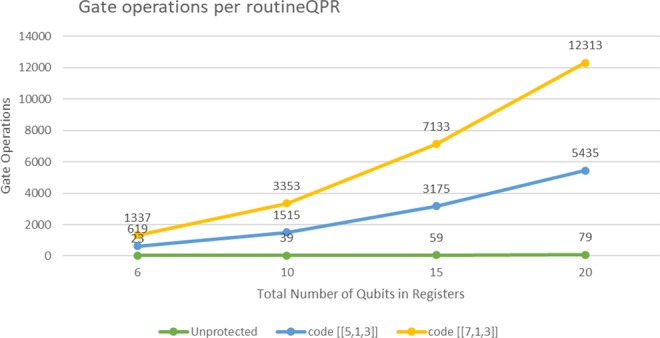
“The well-studied distance-3 [[5,1,3]] and [[7,1,3]] error correcting codes are included in the estimation chart in Fig.”
BackgroundAdaptive seeds tame genomic sequence comparison
Kiełbasa, S. M., Wan, R., Sato, K., Horton, P., & Frith, M. C. (2011) · Genome Research · doi:10.1101/gr.113985.110 · Cited by 1,281
Opportunistic data structures with applications
Ferragina, P., & Manzini, G. (2002) · Proceedings 41st Annual Symposium on Foundations of Computer Science · doi:10.1109/sfcs.2000.892127 · Cited by 1,063
AMAS: a fast tool for alignment manipulation and computing of summary statistics
Borowiec, M. L. (2016) · PeerJ · doi:10.7717/peerj.1660 · Cited by 894
A survey of sequence alignment algorithms for next-generation sequencing
Li, H., & Homer, N. (2010) · Briefings in Bioinformatics · doi:10.1093/bib/bbq015 · Cited by 875
Sonnhammer, E. L. L., & Durbin, R. (1995) · Gene · doi:10.1016/0378-1119(95)00714-8 · Cited by 777
Replacing suffix trees with enhanced suffix arrays
Abouelhoda, M. I., Kurtz, S., & Ohlebusch, E. (2004) · Journal of Discrete Algorithms · doi:10.1016/s1570-8667(03)00065-0 · Cited by 668
SHRiMP: Accurate Mapping of Short Color-space Reads
Rumble, S. M., Lacroute, P., Dalca, A. V., Fiume, M., Sidow, A., & Brudno, M. (2009) · PLoS Computational Biology · doi:10.1371/journal.pcbi.1000386 · Cited by 575
Experimental comparison of two quantum computing architectures
Linke, N. M., Maslov, D., Roetteler, M., Debnath, S., Figgatt, C., Landsman, K. A., Wright, K., & Monroe, C. (2017) · Proceedings of the National Academy of Sciences · doi:10.1073/pnas.1618020114 · Cited by 508
Exploring single-sample SNP and INDEL calling with whole-genome de novo assembly
Li, H. (2012) · Bioinformatics · doi:10.1093/bioinformatics/bts280 · Cited by 398
The Diagram, a Method for Comparing Sequences: Its Use with Amino Acid and Nucleotide Sequences
Gibbs, A. J., & Mcintyre, G. A. (1970) · European Journal of Biochemistry · doi:10.1111/j.1432-1033.1970.tb01046.x · Cited by 313
Hu, Y., Li, J., Liu, P., Chen, X., Guo, D.-H., Li, Q.-S., & Rahman, K. (2012) · Journal of Biomedicine and Biotechnology · doi:10.1155/2012/728342 · Cited by 311
Faster Smith-Waterman database searches with inter-sequence SIMD parallelisation
Rognes, T. (2011) · BMC Bioinformatics · doi:10.1186/1471-2105-12-221 · Cited by 206
Updates to the RMAP short-read mapping software
Smith, A. D., Chung, W.-Y., Hodges, E., Kendall, J., Hannon, G., Hicks, J., Xuan, Z., & Zhang, M. Q. (2009) · Bioinformatics · doi:10.1093/bioinformatics/btp533 · Cited by 164
CUSHAW: a CUDA compatible short read aligner to large genomes based on the Burrows–Wheeler transform
Liu, Y., Schmidt, B., & Maskell, D. L. (2012) · Bioinformatics · doi:10.1093/bioinformatics/bts276 · Cited by 160
Trugenberger, C. A. (2002) · Quantum Information Processing · doi:10.1023/a:1024022632303 · Cited by 115
Pattern recognition on a quantum computer
Schützhold, R. (2003) · Physical Review A · doi:10.1103/physreva.67.062311 · Cited by 100
CUSHAW2-GPU: Empowering Faster Gapped Short-Read Alignment Using GPU Computing
Liu, Y., & Schmidt, B. (2013) · IEEE Design and Test · doi:10.1109/mdat.2013.2284198 · Cited by 87
Clement, N. L., Snell, Q., Clement, M. J., Hollenhorst, P. C., Purwar, J., Graves, B. J., Cairns, B. R., & Johnson, W. E. (2010) · Bioinformatics · doi:10.1093/bioinformatics/btp614 · Cited by 82
Khan, Z., Bloom, J. S., Kruglyak, L., & Singh, M. (2009) · Bioinformatics · doi:10.1093/bioinformatics/btp275 · Cited by 66
Hobbes: optimized gram-based methods for efficient read alignment
Ahmadi, A., Behm, A., Honnalli, N., Li, C., Weng, L., & Xie, X. (2012) · Nucleic Acids Research · doi:10.1093/nar/gkr1246 · Cited by 64
Phase Transitions in Quantum Pattern Recognition
Trugenberger, C. A. (2002) · Physical Review Letters · doi:10.1103/physrevlett.89.277903 · Cited by 51
Ye, H., Meehan, J., Tong, W., & Hong, H. (2015) · Pharmaceutics · doi:10.3390/pharmaceutics7040523 · Cited by 51
Quantum pattern recognition with liquid-state nuclear magnetic resonance
Neigovzen, R., Neves, J. L., Sollacher, R., & Glaser, S. J. (2009) · Physical Review A · doi:10.1103/physreva.79.042321 · Cited by 50
Song, X.-B., Sun, Y., Li, P., Qin, H., & Zhang, X. (2015) · Scientific Reports · doi:10.1038/srep14113 · Cited by 41
Quantum Pattern Recognition with Probability of 100%
Zhou, R., & Qiu-lin, D. (2007) · International Journal of Theoretical Physics · doi:10.1007/s10773-007-9561-5 · Cited by 23
Improving the Sequence Alignment Method by Quantum Multi-Pattern Recognition
Prousalis, K. P., & Konofaos, N. (2018) · Hellenic Conference on Artificial Intelligence · doi:10.1145/3200947.3201041 · Cited by 12
Self-citationQuantum pattern recognition with multi-neuron interactions
Fard, E. R., Aghayar, K., & Amniat-Talab, M. (2018) · Quantum Information Processing · doi:10.1007/s11128-018-1816-y · Cited by 11
Exploration of Electrical and Novel Optical Chip-to-Chip Interconnects
Liu, W., Chen, G., Wang, Y., Feng, X., Xie, Y., Huang, Y., & Yang, H. (2014) · IEEE Design and Test · doi:10.1109/mdat.2014.2336217 · Cited by 10
IMPLEMENTATION OF DIRECTED ACYCLIC WORD GRAPH
Balík, M. (2002) · Czech digital mathematics library · Cited by 5
Song, X.-B., Sun, Y., Qin, H., et al. (2015) · arXiv (Cornell University) · doi:10.48550/arxiv.1502.02811 · Cited by 4
Quantum Pattern Recognition for Local Sequence Alignment
Prousalis, K. P., & Konofaos, N. (2017) · IEEE Globecom Workshops (GC Wkshps) · doi:10.1109/glocomw.2017.8269076 · Cited by 2
Self-citation
Research works printed but not linked: 1
- Nielsen, M.A. & Chuang. I. L. Quantum Computation and Quantum Information (Cambridge, 2000).
Cited by
The state of quantum computing applications in health and medicine
Flöther, F. F. (2023) · Research Directions Quantum Technologies · doi:10.1017/qut.2023.4 · Cited by 193
Quantum Computing for Molecular Biology**
Baiardi, A., Christandl, M., & Reiher, M. (2023) · ChemBioChem · doi:10.1002/cbic.202300120 · Cited by 93
Biology and medicine in the landscape of quantum advantages
Cordier, B. A., Sawaya, N. P. D., Guerreschi, G. G., & McWeeney, S. K. (2022) · Journal of The Royal Society Interface · doi:10.1098/rsif.2022.0541 · Cited by 87
“Sequence Alignment [87, 88, 89, 270, 271] No Universal Gate-Based Quantum Device Optimization Polynomial; heuristic approximation Polynomial”
MethodPal, S., Bhattacharya, M., Lee, S.-S., & Chakraborty, C. (2024) · Molecular Biotechnology · doi:10.1007/s12033-023-00765-4 · Cited by 103
“One example includes sequence alignment [49, 72].”
Genome assembly using quantum and quantum-inspired annealing
Boev, A. S., Rakitko, A. S., Usmanov, S. R., Kobzeva, A. N., Popov, I. V., Ilinsky, V. V., Kiktenko, E. O., & Fedorov, A. K. (2021) · Scientific Reports · doi:10.1038/s41598-021-88321-5 · Cited by 63
Metadata
- Authors
- Prousalis, K., & Konofaos, N.
- Affiliations
- Aristotle University of Thessaloniki (GR)
- Corresponding author
- Prousalis, Konstantinos
- Venue
- Scientific Reports
- Published
- 2019-05-10
- Volume
- 9
- Issue
- 1
- Pages
- 7226-7226
- ISSN
- 2045-2322 (ISSN-L)
- PMC
- PMC6510764
- OpenAlex
- W2944782957
- Cited by
- 33
- References
- 42
- Citations by year
- 2026: 3 · 2025: 6 · 2024: 8 · 2023: 5 · 2022: 5 · 2021: 5 · 2020: 1
- FWCI
- 1.25
- Type
- journal article
- Language
- en
- Open access
- gold
- doi.org
- Licence
- cc-by
- creativecommons.org/licenses/by/4.0 (tdm)
- creativecommons.org/licenses/by/4.0 (vor)
- Locations
- Scientific Reports (publishedVersion, cc-by)
- PubMed Central (publishedVersion, cc-by)
- PubMed (publishedVersion)
- Topics
- Physical Sciences › Computer Science › Artificial Intelligence › Quantum Computing Algorithms and Architecture
- Physical Sciences › Mathematics › Theoretical Computer Science › Algorithms and Data Compression
- Life Sciences › Biochemistry, Genetics and Molecular Biology › Molecular Biology › Genomics and Phylogenetic Studies
- Keywords
- pairwise sequence alignment, quantum algorithms, quantum parallelism, sequence databases, next-generation sequencing, time and space complexity
About these checks
Registry, retraction, Cites and statistics results are computed, not judged, with one exception: a printed reference that no index lists is read once by a model before it counts as a citation error. Claims are extracted by a model and kept only when their quote appears verbatim in the text; each cited source is then checked, with a model’s help, for whether it says what the claim relies on. Those verdicts can be wrong — read the claim’s quote and the cited source before relying on one.
Statistics and arithmetic are recomputed, not judged.
Confidence bands are shown only for fields calibrated on our annotated test set. None is calibrated yet, so no band is shown.
What counts as a claim ›How we measure confidence ›How we check this ›
Are you an author, or do you see a problem with this page? Request a review
Data sources
Bibliographic data: Semantic Scholar, OpenAlex, Crossref.
Contains information from the Semantic Scholar Academic Graph Datasets, made available under the ODC Attribution License (ODC-BY 1.0).
Semantic Scholar’s data is described in: Kinney, R., et al. (2023). The Semantic Scholar Open Data Platform. arXiv:2301.10140.
