

Heterotrophy as a tool to overcome the long and costly autotrophic scale-up process for large scale production of microalgae.
Open accessThe DOI matches its Crossref record; 26 of the 27 references it cites were found in a registry or an index.
Abstract
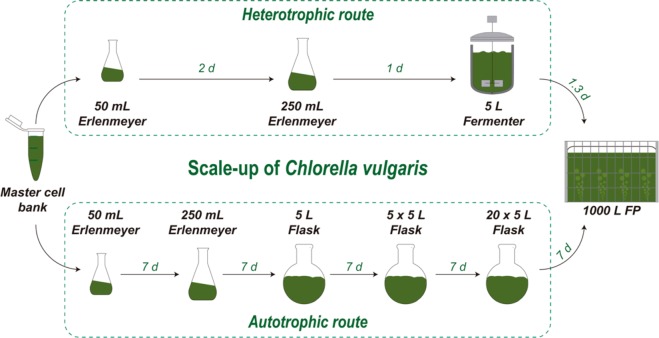
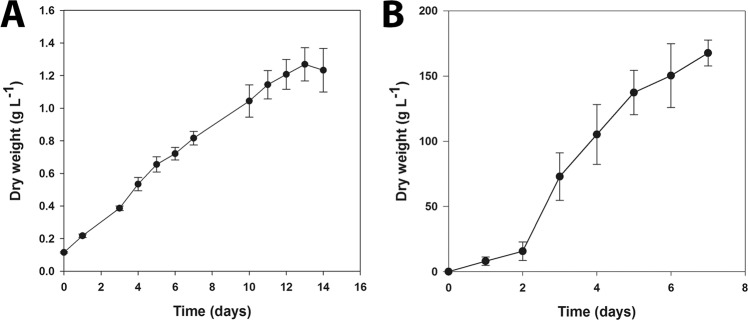
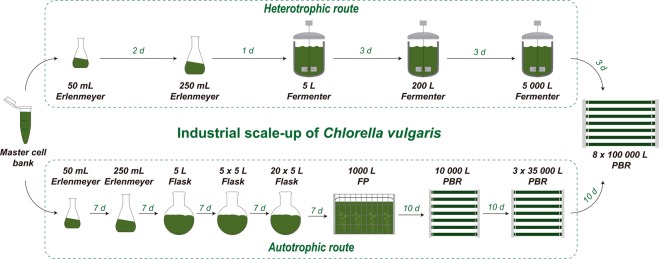
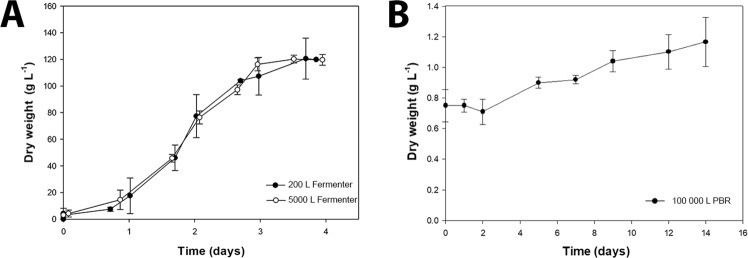
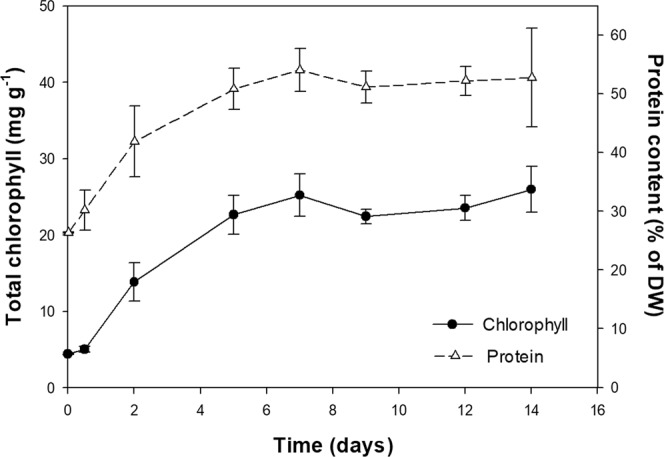
Industrial scale-up of microalgal cultures is often a protracted step prone to culture collapse and the occurrence of unwanted contaminants. To solve this problem, a two-stage scale-up process was developed – heterotrophically Chlorella vulgaris cells grown in fermenters (1 st stage) were used to directly inoculate an outdoor industrial autotrophic microalgal production unit (2 nd stage). A preliminary pilot-scale trial revealed that C. vulgaris cells grown heterotrophically adapted readily to outdoor autotrophic growth conditions (1-m 3 photobioreactors) without any measurable difference as compared to conventional autotrophic inocula. Biomass concentration of 174.5 g L −1 , the highest value ever reported for this microalga, was achieved in a 5-L fermenter during scale-up using the heterotrophic route. Inocula grown in 0.2- and 5-m 3 industrial fermenters with mean productivity of 27.54 ± 5.07 and 31.86 ± 2.87 g L −1 d −1 , respectively, were later used to seed several outdoor 100-m 3 tubular photobioreactors. Overall, all photobioreactor cultures seeded from the heterotrophic route reached standard protein and chlorophyll contents of 52.18 ± 1.30% of DW and 23.98 ± 1.57 mg g −1 DW, respectively. In addition to providing reproducible, high-quality inocula, this two-stage approach led to a 5-fold and 12-fold decrease in scale-up time and occupancy area used for industrial scale-up, respectively.
Overview
The claims and statistics of this paper haven’t been checked yet.
Free: it reads the open-access text and checks the first 5 claims that cite a source we can check. Create a free account to check every claim.
Integrity signals
Registry
Cites
Statistics
Figures
Verification
Claims the paper makes
The claims and statistics of this paper haven’t been checked yet.
Free: it reads the open-access text and checks the first 5 claims that cite a source we can check. Create a free account to check every claim.
Claims other papers make about this one
Each is checked against this paper’s own text: does it say what the citing paper says it does?
The cited source doesn’t support the claim as written.
In the citing paper
“Although industrial microalgae production was already established a long time ago the high production costs and technological constraints as well as gaps in the scientific understanding of large scale algae cultivation, limit the commercialization of the biomass as high-value products excluding large scale low-cost applications such as fuel (Caporgno and Mathys, 2018; Kiesenhofer and Fluch, 2018;”
From Current Status of the Algae Production Industry in Europe: An Emerging Sector of the Blue Bioeconomy (2021) · cites this paper as Barros et al., 2019
Checked by a reasoning model — may be wrong.
Experimental — accuracy not yet measuredThe source backs part of the claim, not all of it — or backs it for a different population, condition or comparison.
In the citing paper
“They are a more recently developed method that allows for higher productivity and densities, control of contamination and manipulation of the biomass quality and profiles during the first growth phases of microalgae cultures (Barros et al., 2019).”
From Current Status of the Algae Production Industry in Europe: An Emerging Sector of the Blue Bioeconomy (2021) · cites this paper as Barros et al., 2019
Experimental — accuracy not yet measuredThe source backs part of the claim, not all of it — or backs it for a different population, condition or comparison.
In the citing paper
“However, growing an inoculum heterotrophically, which, although carries an initial higher cost, markedly increases cell densities and reduces subsequent production times.”
From Key Targets for Improving Algal Biofuel Production (2021) · cites this paper as [29]
Experimental — accuracy not yet measuredThe source backs part of the claim, not all of it — or backs it for a different population, condition or comparison.
In the citing paper
“Companies such as Corbion and DSM-Veramaris already employ large-scale fermenters (over 600 m3) for the commercial production of omega-3 oils and other high-value compounds (Barros et al., 2019).”
From Microalgae biotechnology and its role in sustainable and healthy food design (2025) · cites this paper as Barros et al., 2019
Experimental — accuracy not yet measuredThe source backs part of the claim, not all of it — or backs it for a different population, condition or comparison.
In the citing paper
“This mode allows substantially higher cell densities (50–100 g L-1) compared to phototrophic systems (2–3 g L-1), significantly reducing downstream costs and land requirements (Barros et al., 2019; Glencross et al., 2025).”
From Microalgae biotechnology and its role in sustainable and healthy food design (2025) · cites this paper as Barros et al., 2019
Experimental — accuracy not yet measured
2 more claims about this paper
Create a free account to see every claim other papers make about this one.
Self-check
Percentages, sums and reported differences re-computed from the paper’s own numbers.
The self-check needs the paper’s full text.
Citations
Cites
Chisti, Y. (2007) · Biotechnology Advances · doi:10.1016/j.biotechadv.2007.02.001 · Cited by 9,524
Commercial Applications of Microalgae
Spolaore, P., Joannis-Cassan, C., Duran, E., & Isambert, A. (2006) · Journal of Bioscience and Bioengineering · doi:10.1263/jbb.101.87 · Cited by 4,285
Heterotrophic cultures of microalgae: Metabolism and potential products
Perez-Garcia, O., Escalante, F. M. E., de-Bashan, L. E., & Bashan, Y. (2011) · Water Research · doi:10.1016/j.watres.2010.08.037 · Cited by 1,767
Jorquera, O., Kiperstok, A., Sales, E. A., Embiruçu, M., & Ghirardi, M. L. (2010) · Bioresource Technology · doi:10.1016/j.biortech.2009.09.038 · Cited by 863
Carbon Dioxide Recycling: Emerging Large‐Scale Technologies with Industrial Potential
Quadrelli, E. A., Centi, G., Duplan, J., & Perathoner, S. (2011) · ChemSusChem · doi:10.1002/cssc.201100473 · Cited by 648
Xiong, W., Li, X., Xiang, J., & Wu, Q. (2008) · Applied Microbiology and Biotechnology · doi:10.1007/s00253-007-1285-1 · Cited by 542
Bumbak, F., Cook, S., Zachleder, V., Hauser, S., & Kovar, K. (2011) · Applied Microbiology and Biotechnology · doi:10.1007/s00253-011-3311-6 · Cited by 272
Kim, S., Park, J.-E., Cho, Y.-B., & Hwang, S.-J. (2013) · Bioresource Technology · doi:10.1016/j.biortech.2013.06.068 · Cited by 242
Guccione, A., Biondi, N., Sampietro, G., Rodolfi, L., Bassi, N., & Tredici, M. R. (2014) · Biotechnology for Biofuels · doi:10.1186/1754-6834-7-84 · Cited by 215
Shi, X., & Chen, F. (2002) · Biotechnology Progress · doi:10.1021/bp0101987 · Cited by 193
Cited by
Items 101–170 of 170
Microalgal protein production: current needs and challenges
Villaró, S., Acién, F. G., Fernández-Sevilla, J. M., & Lafarga, T. (2023) · Elsevier eBooks · doi:10.1016/b978-0-323-91739-1.00008-8 · Cited by 4
Çakır, Z. B., & Özkan, M. (2025) · Scientific Reports · doi:10.1038/s41598-025-05956-4 · Cited by 3
Vieira, J., Saque, M., Gama, F., Viana, C., Coelho, L., Rodrigues, M. H. C., Varela, J. C. S., Pereira, H., Palencia, P., Reis, M., et al. (2025) · Journal of Applied Phycology · doi:10.1007/s10811-025-03660-4 · Cited by 3
“The experiment utilized Chlorella vulgaris cultivated by Allmicroalgae S.A. (Pataias, Portugal), employing 10 m 3 tubular photobioreactors as described in Barros et al. (2019).”
Self-citationAlgae-Driven Transition from Oil to Renewable Alternatives: Policy for Scale and Sustainability
Gehring, T., Choo, Y. S. L., Vidal, J. L., & Fung, F. M. (2026) · Sustainability & Circularity NOW · doi:10.1055/a-2778-9185 · Cited by 3
Guerra, I., Cardoso, H., Costa, M., Trovão, M., Silva, J., & Varela, J. C. S. (2026) · Journal of Applied Phycology · doi:10.1007/s10811-026-03833-9 · Cited by 3
“Biomass production was conducted using a Guillard's F/2 medium adapted to the local water (Barros et al. 2019).”
Self-citationLi, J., Liu, N., Yan, W., Zhao, Q., Zhou, X., Jia, C., Xu, C., Song, X., & Song, M. (2025) · Biomass and Bioenergy · doi:10.1016/j.biombioe.2025.107918 · Cited by 4
Atalay, S., Gęgotek, A., Domingues, M. R., Domingues, P. M., & Skrzydlewska, E. (2025) · Antioxidants · doi:10.3390/antiox14050545 · Cited by 3
“Spray-dried (powder form) Nannochloropsis oceanica (marine) and Chlorococcum am-blystomatis (freshwater) were delivered by Allmicroalgae (located in Rua 25 de Abril s/n 2445-413 Pataias, Portugal) [23].”
Translating research into reality: The journey of Nannochloropsis from laboratory to industry
Ji, X., Dart, P. J., Thomas‐Hall, S. R., & Sagulenko, E. (2025) · Algal Research · doi:10.1016/j.algal.2025.104381 · Cited by 3
Kriechbaum, R., Kronlachner, L., Limbeck, A., Kopp, J., & Spadiut, O. (2024) · Journal of Environmental Management · doi:10.1016/j.jenvman.2024.121796 · Cited by 3
Gęgotek, A., Conde, T., Domingues, M. R., Domingues, P. M., & Skrzydlewska, E. (2024) · Cells · doi:10.3390/cells13231934 · Cited by 3
“The microalgae Nannochloropsis oceanica and Chlorococcum amblystomatis needed for the study were grown in Guillard’s F2 medium supplemented with a mixture of magnesium salts and sodium chloride adapted to the water used [30].”
Petersen, J. K., Bruhn, A., Behrens, J. W., Dalskov, J., Larsen, E., Thomsen, M., & Vinther, M. (2021) · Cited by 3
Exploring Chlorella honey for the improvement of energy boost hydrogels
Almeida, J., Bettencourt, A., Lopes, S., Paiva, J., Leal, C. R., Santos, M. T., Cardoso, H., Almeida, C. M. M., & Ribeiro, I. (2025) · Algal Research · doi:10.1016/j.algal.2025.104352 · Cited by 2
High-cell-density heterotrophic cultivation of Chlorella pyrenoidosa for single cell protein
Zhao, A., Duan, X., Guo, Y., Yu, Z., Zhang, B., Lv, Y., Solovchenko, A. E., Chen, J., & Xu, J. (2025) · Algal Research · doi:10.1016/j.algal.2025.104472 · Cited by 2
Štěrbová, K., Bišová, K., & Masojídek, J. (2026) · Applied Microbiology and Biotechnology · doi:10.1007/s00253-025-13682-0 · Cited by 2
“However, only a few microalgae, such as Scenedesmus sp., Chlorococcum sp., Chlorella sp. and Chlamydomonas sp., can grow heterotrophically (Chen and Johns 1996; Barros et al. 2019; Jin et al. 2020; Correia et al. 2023).”
A deep learning framework for spectrophotometric quantification of key microalgal pigments
Bayomie, O. S., & Pozzobon, V. (2026) · Machine Learning with Applications · doi:10.1016/j.mlwa.2026.100879 · Cited by 2
“Second of all, because they are indicators of the market value of the biomass (the higher, the better) (Barros et al., 2019), which is especially true for carotenoids.”
Pozzobon, V., Salas, D. L., Laury, C., Camarena-Bernard, C., & Levasseur, W. (2026) · Journal of Biotechnology · doi:10.1016/j.jbiotec.2026.03.021 · Cited by 2
Yin, J., Levasseur, W., & Pozzobon, V. (2026) · Plant Physiology and Biochemistry · doi:10.1016/j.plaphy.2026.111431 · Cited by 2
Process intensification for the protein production from microalgae: a comprehensive review
Nath, A., Ahmad, A. S., Enkhbold, M., Elzhraa, F., & Kiskó, G. (2026) · Bioresources and Bioprocessing · doi:10.1186/s40643-026-01118-0 · Cited by 3
“…to reduce the mentioned limitations of single cultivation strategy, sequential het-erotrophic-autotrophic (Ogbonna et al. 1997; Fan et al. 2012; Barros et al. 2019) and mixotrophic (Matos et al. 2017; Abiusi et al. 2022; de Mendonça et al. 2022) culti-vation systems were employed in some cases.”
InfluentialNagy, B. J., Nagy, K., Ivanics, B., Fózer, D., Balogh, I., & Németh, Á. (2022) · Periodica Polytechnica Chemical Engineering · doi:10.3311/ppch.19093 · Cited by 2
“Glucose is the preferred carbon source in most experiments, as the culture also tolerates higher concentrations [48].”
BackgroundThom, L. T., Ha, N. C., Hien, H. T. M., Thu, N. T. H., Loan, V. T., Dan, N. T., Hai, T. B., & Hồng, Đ. D. (2022) · Vietnam Journal of Biotechnology · doi:10.15625/1811-4989/16835 · Cited by 2
“The morphological characteristics, biomass and nutritional compositions, as well as fatty acid content in the biomass of thraustochytrids, were changed by the culture conditions, including nutrient composition, temperature, pH and salinity, especially carbon and nitrogen sources (Dang Diem Hong, Hoang Thi Lan Anh, 201…”
BackgroundSousa, H., Kinney, K. A., Sousa, C. A., & Simões, M. V. (2025) · Microorganisms · doi:10.3390/microorganisms13051060 · Cited by 2
“Microorganisms, Culture Medium, and Experimental Setup C. vulgaris AGF002, provided via AllMicroalgae (Pataias, Portugal), was used as a model organism for wastewater bioremediation studies [14,17–19].”
Lucato, V. (n.d.) · Padua Research Archive (University of Padova) · Cited by 2
Unlocking the richness of microalgae biodiversity for potential applications
Badr, A. A., & Fouad, W. M. (2023) · IntechOpen eBooks · doi:10.5772/intechopen.1002319 · Cited by 3
Next-Gen Bioprocessing: Sustainable Scale-Up of Triple Algal Co-culture System
Dincoglu, B., Güler, B. A., Demirel, Z., & İmamoğlu, E. (2025) · Chemical Engineering and Processing - Process Intensification · doi:10.1016/j.cep.2025.110512 · Cited by 1
Wu, J., Cagney, N., Meeten, G. H., Jones, T. G. J., & Boek, E. S. (2025) · Separation and Purification Technology · doi:10.1016/j.seppur.2025.136238 · Cited by 1
Scaling up the Production of Microalgal Pigments for Commercial Applications
Mutaf, T., İnam, A., FİLİZFİDANOĞLU, A., & Deniz, İ. (2026) · Springer eBooks · doi:10.1007/978-3-032-05438-8_2 · Cited by 1
Reuscher, S., Klock, G., & Graf, R. (2026) · Biofuels Bioproducts and Biorefining · doi:10.1002/bbb.70128 · Cited by 1
“19,28 29–33 Cost factors will also influence the decision of whether to use an open (e.g. open pond) or closed system (e.g. photo-bioreactor), taking into account capital, operating and harvesting costs.”
Microalgae-Derived Pigments: Sustainable Solution and Their Multifaceted Applications
Babu, A., Sunil, A. V., Shirin Fathima, M., Ramalal, N., & Praveena, P. (2026) · Springer eBooks · doi:10.1007/978-981-95-7234-2_10 · Cited by 1
Gao, L., Chen, W., Lin, Z., Ye, S., Wang, H., Lin, G., Xu, D., Chi, C., Xiang, L., & Zhou, Y. (2026) · Foods · doi:10.3390/foods15081428 · Cited by 1
“In comparison, starch-based fat substitutes demonstrate superior safety under high-temperature food processing conditions relative to protein-and lipid-based alternatives [16].”
Structured microalgal bioprints for enhanced photosynthetic performance and growth
Murthy, S., Moßhammer, M., & Kühl, M. (2026) · Frontiers in Bioengineering and Biotechnology · doi:10.3389/fbioe.2026.1755740 · Cited by 1
“In contrast, heterotrophic cultivation enables much higher cell densities and volumetric productivities through the use of organic carbon sources; however, it sacrifices direct CO 2 utilization and increases operational costs (Barros et al., 2019; Doucha and Lívanský, 2012).”
Bioactive compound profiling of Chlorella sorokiniana under controlled irradiation conditions
Pires, R., Santos, P. M. P., Theodosiou, E., Zorzompokou, L. M., Cardoso, H., Silva, J., Madesis, P. B., Casimiro, M. H., Ventura, M., Lapa, N., et al. (2026) · Algal Research · doi:10.1016/j.algal.2026.104888 · Cited by 1
Self-citationPrecision Microalgae: A New Conceptual Framework for Bioengineering Applications
Dutra, D. A., Machado, R. L. S., Deprá, M. C., Schneider, A. T., Machado, E. F., Fagundes, M. B., Zepka, L. Q., & Lopes, E. J. (2026) · Bioengineering · doi:10.3390/bioengineering13091011 · Cited by 1
Schenzle, L., Dzieciol, M., Selberherr, E., Goyal, S., Pichler, H., & Fuchs, A. (2026) · Future Foods · doi:10.1016/j.fufo.2026.101229 · Cited by 1
Deka, D., Chikkaputtaiah, C., & Velmurugan, N. (2023) · Russian Journal of Marine Biology · doi:10.1134/s1063074023040028 · Cited by 1
Algae and Aquaculture: Enhancing Fish Farming
Singh, H. (2025) · Springer eBooks · doi:10.1007/978-981-96-1844-6_5 · Cited by 1
Toro Acevedo, C. A. (2025) · publish.UP (University of Potsdam) · doi:10.25932/publishup-68784 · Cited by 1
Advances in treatment of anaerobic digestate of piggery effluent using microalgae
Ayre, J. M. (2021) · Murdoch University Research Portal
Análise de ciclo de vida de processos e produtos baseados em microalgas
de Lira, G. S., Furlan, B. J., Gonçalves, R. S. R., da Silva, P. A. S., Moreira, M. A. C., VARGAS, J. V. C., & Mariano, A. B. (2021) · Mérida Publishers eBooks · doi:10.4322/mp.978-65-994457-8-1.c9
PROPAGAÇÃO DE CLADÓDIOS DE DIFERENTES COMPRIMENTOS DE DUAS ESPÉCIES DE PITAIAS
Silva, F. O. D. R., Moreira, R. A., Avelar, R. I. S., Brandão, L. C., & Ramos, J. D. (2023) · doi:10.22533/at.ed.68723160114
Dionisio, A. R. C., Souza, A. C. M., Monteiro, B. J. Z., Haber, E. P. Z., & Nonato, T. R. D. O. (2023) · doi:10.22533/at.ed.6872316014
Gallegos-García, M. I. L. (2023) · Journal of Enviromental Sciences and Natural Resources · doi:10.35429/jesn.2023.24.9.1.16
Nur, M. M. A., Dewi, R. N., Hadi, F., Widayati, T. W., Jaya, D., Putri, N. A., Fauziah, S., & Nisya, A. F. (2025) · International Journal of Marine Engineering Innovation and Research · doi:10.12962/j25481479.v10i2.6377
Microalgal Biomass Production and Harvesting
Akolkar, H. N., Haghi, A. K., Darekar, N. R., & Pawar, G. B. (2025) · Synthesis lectures on renewable energy technologies · doi:10.1007/978-3-032-03434-2_2
Algal biomass as a feedstock for the sustainable production of bioethanol and biobutanol
Nath, K., Ghosh, S., & Chowdhury, R. (2025) · Elsevier eBooks · doi:10.1016/b978-0-443-34088-8.00048-3
Conde, T., Lopes, D., Gros, V., Réversat, G., Oger, C., Galano, J., Vigor, C., Rodrigues, A. M. C., Coelho, N., Cardoso, H., et al. (2025) · Algal Research · doi:10.1016/j.algal.2025.104424
Gęgotek, A., Domingues, M. R., Domingues, P. M., & Skrzydlewska, E. (2025) · Marine Drugs · doi:10.3390/md23120454
“The microalgae Nannochloropsis oceanica ( N.o. ) were cultivated in Guillard’s F2 culture medium adapted to local water as described previously [9,44].”
Hohl, L.-M. (2022) · reposiTUm (TU Wien) · doi:10.34726/hss.2022.100723
Avfallsvann som et alternativt dyrkingsmedium for mikroalger med et høyt innhold av EPA og DHA
Rundqvist, S. C. (2020) · NVA (Nasjonalt vitenarkiv)
Biological contaminant detection in industrial microalgal cultures
José, M. (2023) · Portuguese National Funding Agency for Science, Research and Technology (RCAAP Project by FCT)
Productivities and growth of the different algae on different Carbon sources from the candy industry
Andrés Antolïn, D. (2022) · UVaDOC UVaDOC University of Valladolid Documentary Repository (University of Valladolid)
Pires, R. (2022) · Portuguese National Funding Agency for Science, Research and Technology (RCAAP Project by FCT)
Evaluate the use of retail food waste for the production of Chlorella vulgaris
Pereira, P. E. D. S. (2023) · Portuguese National Funding Agency for Science, Research and Technology (RCAAP Project by FCT) · doi:10.34626/8j4t-g207
Dagnaisser, L. S. (2023) · LA Referencia (Red Federada de Repositorios Institucionales de Publicaciones Científicas)
Algae-based alternative fuel feedstocks
Malik, M. A. I., Kalam, M. A., Abbas, M., Silitonga, A. S., & Naqvi, M. (2026) · Elsevier eBooks · doi:10.1016/b978-0-443-40354-5.00005-9
Industrial microalgal production—what is new?
Norsker, N. H. (2026) · Elsevier eBooks · doi:10.1016/b978-0-443-34082-6.00045-3
Advanced microalgae culture technologies
Okpanachi, I. Y., Ogbonna, C. N., Chia, M. A., & Nwoba, E. G. (2026) · Elsevier eBooks · doi:10.1016/b978-0-443-34082-6.00014-3
Enbo, Z. H. A. O. (2024) · Institutional Repositories DataBase (IRDB)
Modélisation prédictive et contrôle avancé des photobioréacteurs solaires
Sébile-Meilleroux, J. (2023) · theses.fr (ABES) · doi:10.70675/898219e6zff9bz41e8za5c5z518f239017fb
Cultivation systems of microalgae
Viviano, E., Villaró‐Cos, S., & Lafarga, T. (2026) · Elsevier eBooks · doi:10.1016/b978-0-443-33492-4.00003-6
Cultivation strategies for added-value products
Levasseur, W., & Pozzobon, V. (2026) · Elsevier eBooks · doi:10.1016/b978-0-443-33492-4.00005-x
Extraction and purification of functional proteins from microalgae for food applications
Méar, H. (2023) · theses.fr (ABES) · doi:10.70675/a4e8d8ddzc085z4e5azb156zc7db7499d176
Camarena-Bernard, C. (2024) · theses.fr (ABES) · doi:10.70675/2fa6f2a9z3e6cz496eza4b0z240cc01b75e8
Effects of different sugar sources on photoheterotrophic hydrogen production by Chlorella vulgaris
Moia, I. C., Zampieri, R. M., & Touloupakis, E. (2026) · Discover Energy · doi:10.1007/s43937-026-00151-6
“It has been reported that heterotrophic cultivation of this microalga in fermenters can be performed before inoculation into outdoor flat-panel and tubular photobioreactors (PBRs) [38].”
Microalgae Bioprospecting for Biofuel Synthesis: A Path Toward Sustainable Energy
Sagar, K., & Priti, K. (2026) · Green energy and technology · doi:10.1007/978-981-95-6766-9_8
Sousa, H., Cardoso, F., Sousa, C. A., & Simões, M. V. (2026) · Journal of Water Process Engineering · doi:10.1016/j.jwpe.2026.110524
Correia, N., Trovão, M., Santo, G. E., Guerra, I., Cunha, P., Fonseca, J., Pereira, H., Costa, M. M., Ferreira, S., Santos, T., et al. (2026) · Journal of Applied Phycology · doi:10.1007/s10811-026-03969-8
Self-citationSarvajith, M., de Freitas, B. B., Ruiz-Haddad, L., Lauersen, K. J., & Saikaly, P. E. (2026) · Bioresource Technology · doi:10.1016/j.biortech.2026.135870
Kovaleski, G., Ferreira, A. S., Nunes, C., & Ventura, S. P. M. (2026) · Foods · doi:10.3390/foods15193405
“This strain was derived from a heterotrophic C. vulgaris strain through chemically induced random mutagenesis [20] and is produced by heterotrophic fed-batch fermentation [21].”
Opal glass method, an extraction-free way to access microalgae pigment content
Pozzobon, V., Arnoudts, C., & Levasseur, W. (2026) · Bioresource Technology · doi:10.1016/j.biortech.2026.135966
Kinetic modelling of Chlorella spp. wastewater treatment and resource recovery in the food industry
Lavelli, V., & Zhou, Z. (2026) · Bioresources and Bioprocessing · doi:10.1186/s40643-026-01145-x
“The main limitation of this approach lies in the indirect energy cost of the C sources (Barros et al. 2019).”
Influential
Metadata
- Authors
- Barros, A., Pereira, H., Campos, J., Marques, A., Varela, J., & Silva, J.
- Affiliations
- Centro de Ciências do Mar do Algarve (PT)
- Corresponding author
- Silva, J.
- Venue
- Scientific Reports
- Published
- 2019-09-26
- Volume
- 9
- Issue
- 1
- Pages
- 13935-13935
- ISSN
- 2045-2322 (ISSN-L)
- PMC
- PMC6763493
- OpenAlex
- W2974934144
- Semantic Scholar
- b44781c38ee4a95505b11ff146d62f0ae5098bc9
- Cited by
- 156
- References
- 27
- Citations by year
- 2026: 31 · 2025: 35 · 2024: 18 · 2023: 32 · 2022: 12 · 2021: 15 · 2020: 13
- FWCI
- 2.13
- Type
- journal article
- Language
- en
- Open access
- gold
- doi.org
- Licence
- cc-by
- creativecommons.org/licenses/by/4.0 (tdm)
- creativecommons.org/licenses/by/4.0 (vor)
- Locations
- Scientific Reports (publishedVersion, cc-by)
- Europe PMC (PubMed Central) (publishedVersion, cc-by)
- PubMed Central (publishedVersion, cc-by)
- PubMed (publishedVersion)
- DOAJ (DOAJ: Directory of Open Access Journals) (submittedVersion)
- Portuguese National Funding Agency for Science, Research and Technology (RCAAP Project by FCT) (submittedVersion, cc-by)
- Funders
- Fundação para a Ciência e a Tecnologia (COMPETE, UID/Multi/04326/2019, /04326/2019)
- Topics
- Physical Sciences › Energy › Renewable Energy, Sustainability and the Environment › Algal biology and biofuel production
- Physical Sciences › Environmental Science › Environmental Chemistry › Aquatic Ecosystems and Phytoplankton Dynamics
- Life Sciences › Agricultural and Biological Sciences › Aquatic Science › Aquaculture Nutrition and Growth
- Keywords
- Chlorella vulgaris, heterotrophic cultivation, two-stage cultivation, tubular photobioreactor, biomass productivity, outdoor photobioreactor, chlorophyll content
- MeSH terms
- Chlorophyll, Costs and Cost Analysis, Industrial Microbiology, Plant Proteins, Biomass, Bioreactors, Chlorella vulgaris, Autotrophic Processes, Heterotrophic Processes, Microalgae
About these checks
Registry, retraction, Cites and statistics results are computed, not judged, with one exception: a printed reference that no index lists is read once by a model before it counts as a citation error. Claims are extracted by a model and kept only when their quote appears verbatim in the text; each cited source is then checked, with a model’s help, for whether it says what the claim relies on. Those verdicts can be wrong — read the claim’s quote and the cited source before relying on one.
Statistics and arithmetic are recomputed, not judged.
Confidence bands are shown only for fields calibrated on our annotated test set. None is calibrated yet, so no band is shown.
What counts as a claim ›How we measure confidence ›How we check this ›
Are you an author, or do you see a problem with this page? Request a review
Data sources
Bibliographic data: Semantic Scholar, OpenAlex, Crossref.
Contains information from the Semantic Scholar Academic Graph Datasets, made available under the ODC Attribution License (ODC-BY 1.0).
Semantic Scholar’s data is described in: Kinney, R., et al. (2023). The Semantic Scholar Open Data Platform. arXiv:2301.10140.
