

Heterotrophy as a tool to overcome the long and costly autotrophic scale-up process for large scale production of microalgae.
Open accessThe DOI matches its Crossref record; 26 of the 27 references it cites were found in a registry or an index.
Abstract
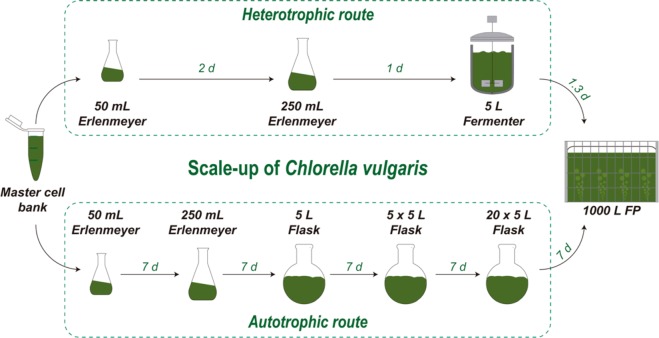
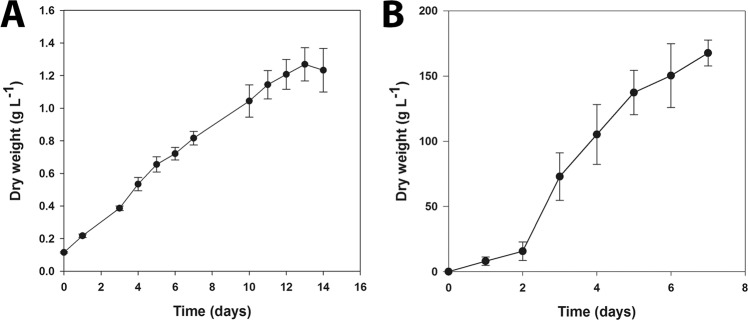
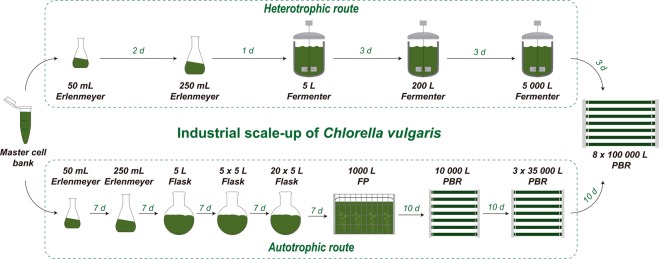
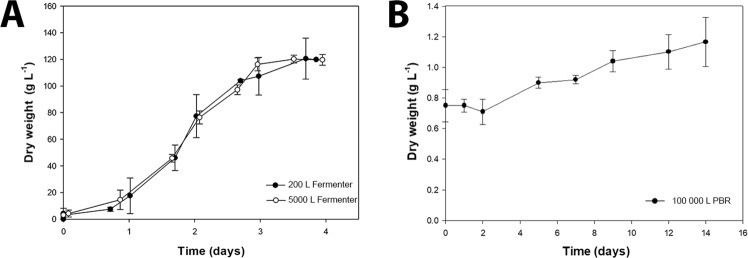
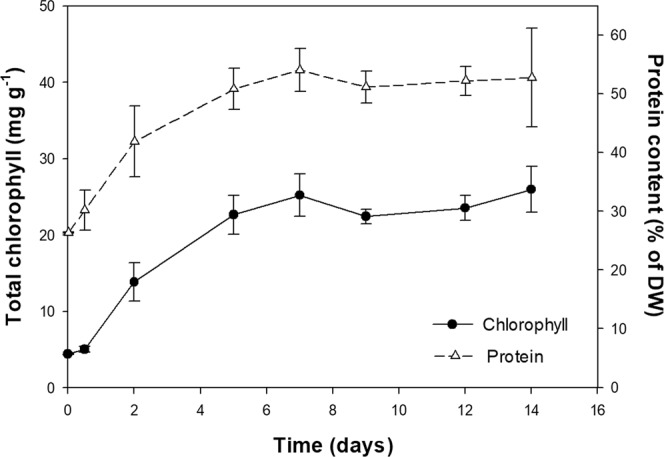
Industrial scale-up of microalgal cultures is often a protracted step prone to culture collapse and the occurrence of unwanted contaminants. To solve this problem, a two-stage scale-up process was developed – heterotrophically Chlorella vulgaris cells grown in fermenters (1 st stage) were used to directly inoculate an outdoor industrial autotrophic microalgal production unit (2 nd stage). A preliminary pilot-scale trial revealed that C. vulgaris cells grown heterotrophically adapted readily to outdoor autotrophic growth conditions (1-m 3 photobioreactors) without any measurable difference as compared to conventional autotrophic inocula. Biomass concentration of 174.5 g L −1 , the highest value ever reported for this microalga, was achieved in a 5-L fermenter during scale-up using the heterotrophic route. Inocula grown in 0.2- and 5-m 3 industrial fermenters with mean productivity of 27.54 ± 5.07 and 31.86 ± 2.87 g L −1 d −1 , respectively, were later used to seed several outdoor 100-m 3 tubular photobioreactors. Overall, all photobioreactor cultures seeded from the heterotrophic route reached standard protein and chlorophyll contents of 52.18 ± 1.30% of DW and 23.98 ± 1.57 mg g −1 DW, respectively. In addition to providing reproducible, high-quality inocula, this two-stage approach led to a 5-fold and 12-fold decrease in scale-up time and occupancy area used for industrial scale-up, respectively.
Overview
The claims and statistics of this paper haven’t been checked yet.
Free: it reads the open-access text and checks the first 5 claims that cite a source we can check. Create a free account to check every claim.
Integrity signals
Registry
Cites
Statistics
Figures
Verification
Claims the paper makes
The claims and statistics of this paper haven’t been checked yet.
Free: it reads the open-access text and checks the first 5 claims that cite a source we can check. Create a free account to check every claim.
Claims other papers make about this one
Each is checked against this paper’s own text: does it say what the citing paper says it does?
The cited source doesn’t support the claim as written.
In the citing paper
“Although industrial microalgae production was already established a long time ago the high production costs and technological constraints as well as gaps in the scientific understanding of large scale algae cultivation, limit the commercialization of the biomass as high-value products excluding large scale low-cost applications such as fuel (Caporgno and Mathys, 2018; Kiesenhofer and Fluch, 2018;”
From Current Status of the Algae Production Industry in Europe: An Emerging Sector of the Blue Bioeconomy (2021) · cites this paper as Barros et al., 2019
Checked by a reasoning model — may be wrong.
Experimental — accuracy not yet measuredThe source backs part of the claim, not all of it — or backs it for a different population, condition or comparison.
In the citing paper
“They are a more recently developed method that allows for higher productivity and densities, control of contamination and manipulation of the biomass quality and profiles during the first growth phases of microalgae cultures (Barros et al., 2019).”
From Current Status of the Algae Production Industry in Europe: An Emerging Sector of the Blue Bioeconomy (2021) · cites this paper as Barros et al., 2019
Experimental — accuracy not yet measuredThe source backs part of the claim, not all of it — or backs it for a different population, condition or comparison.
In the citing paper
“However, growing an inoculum heterotrophically, which, although carries an initial higher cost, markedly increases cell densities and reduces subsequent production times.”
From Key Targets for Improving Algal Biofuel Production (2021) · cites this paper as [29]
Experimental — accuracy not yet measuredThe source backs part of the claim, not all of it — or backs it for a different population, condition or comparison.
In the citing paper
“Companies such as Corbion and DSM-Veramaris already employ large-scale fermenters (over 600 m3) for the commercial production of omega-3 oils and other high-value compounds (Barros et al., 2019).”
From Microalgae biotechnology and its role in sustainable and healthy food design (2025) · cites this paper as Barros et al., 2019
Experimental — accuracy not yet measuredThe source backs part of the claim, not all of it — or backs it for a different population, condition or comparison.
In the citing paper
“This mode allows substantially higher cell densities (50–100 g L-1) compared to phototrophic systems (2–3 g L-1), significantly reducing downstream costs and land requirements (Barros et al., 2019; Glencross et al., 2025).”
From Microalgae biotechnology and its role in sustainable and healthy food design (2025) · cites this paper as Barros et al., 2019
Experimental — accuracy not yet measured
2 more claims about this paper
Create a free account to see every claim other papers make about this one.
Self-check
Percentages, sums and reported differences re-computed from the paper’s own numbers.
The self-check needs the paper’s full text.
Citations
Cites
Chisti, Y. (2007) · Biotechnology Advances · doi:10.1016/j.biotechadv.2007.02.001 · Cited by 9,524
Commercial Applications of Microalgae
Spolaore, P., Joannis-Cassan, C., Duran, E., & Isambert, A. (2006) · Journal of Bioscience and Bioengineering · doi:10.1263/jbb.101.87 · Cited by 4,285
Heterotrophic cultures of microalgae: Metabolism and potential products
Perez-Garcia, O., Escalante, F. M. E., de-Bashan, L. E., & Bashan, Y. (2011) · Water Research · doi:10.1016/j.watres.2010.08.037 · Cited by 1,767
Jorquera, O., Kiperstok, A., Sales, E. A., Embiruçu, M., & Ghirardi, M. L. (2010) · Bioresource Technology · doi:10.1016/j.biortech.2009.09.038 · Cited by 863
Carbon Dioxide Recycling: Emerging Large‐Scale Technologies with Industrial Potential
Quadrelli, E. A., Centi, G., Duplan, J., & Perathoner, S. (2011) · ChemSusChem · doi:10.1002/cssc.201100473 · Cited by 648
Xiong, W., Li, X., Xiang, J., & Wu, Q. (2008) · Applied Microbiology and Biotechnology · doi:10.1007/s00253-007-1285-1 · Cited by 542
Bumbak, F., Cook, S., Zachleder, V., Hauser, S., & Kovar, K. (2011) · Applied Microbiology and Biotechnology · doi:10.1007/s00253-011-3311-6 · Cited by 272
Kim, S., Park, J.-E., Cho, Y.-B., & Hwang, S.-J. (2013) · Bioresource Technology · doi:10.1016/j.biortech.2013.06.068 · Cited by 242
Guccione, A., Biondi, N., Sampietro, G., Rodolfi, L., Bassi, N., & Tredici, M. R. (2014) · Biotechnology for Biofuels · doi:10.1186/1754-6834-7-84 · Cited by 215
Shi, X., & Chen, F. (2002) · Biotechnology Progress · doi:10.1021/bp0101987 · Cited by 193
Cited by
Current Status of the Algae Production Industry in Europe: An Emerging Sector of the Blue Bioeconomy
Araújo, R., Vázquez Calderón, F., Sánchez López, J., Azevedo, I. C., Bruhn, A., Fluch, S., Garcia Tasende, M., Ghaderiardakani, F., Ilmjärv, T., Laurans, M., et al. (2021) · Frontiers in Marine Science · doi:10.3389/fmars.2020.626389 · Cited by 653
“…constraints as well as gaps in the scientific understanding of large scale algae cultivation, limit the commercialization of the biomass as high-value products excluding large scale low-cost applications such as fuel (Caporgno and Mathys, 2018; Kiesenhofer and Fluch, 2018; Barros et al., 2019).”
BackgroundMethodThe role of microalgae in the bioeconomy
Fernández, F. G. A., Reis, A., Wijffels, R. H., Barbosa, M., Verdelho, V., & Llamas, B. (2021) · New Biotechnology · doi:10.1016/j.nbt.2020.11.011 · Cited by 291
Developing algae as a sustainable food source
Diaz, C. J., Douglas, K. J., Kang, K., Kolarik, A. L., Malinovski, R., Torres-Tiji, Y., Molino, J. V., Badary, A., & Mayfield, S. P. (2023) · Frontiers in Nutrition · doi:10.3389/fnut.2022.1029841 · Cited by 194
“Heterotrophic growth in bioreactors is currently used for large-scale commercial algae production (79, 80).”
BackgroundMicroalgae-based products: Food and public health
Ferreira de Oliveira, A. P., & Bragotto, A. P. A. (2022) · Future Foods · doi:10.1016/j.fufo.2022.100157 · Cited by 190
Abreu, A. P., Morais, R. C., Teixeira, J. A., & Nunes, J. (2022) · Renewable and Sustainable Energy Reviews · doi:10.1016/j.rser.2022.112247 · Cited by 189
Microalgae as Biofertilizers: A Sustainable Way to Improve Soil Fertility and Plant Growth
Gonçalves, J., Freitas, J., Fernandes, I. A., & Silva, P. (2023) · Sustainability · doi:10.3390/su151612413 · Cited by 176
“In general, the production of microalgae can be a very expensive process, with relatively low biomass productivity [51,102,103].”
BackgroundMass cultivation and harvesting of microalgal biomass: Current trends and future perspectives
Udayan, A., Sirohi, R., Sreekumar, N., Sang, B.-I., & Sim, S. J. (2022) · Bioresource Technology · doi:10.1016/j.biortech.2021.126406 · Cited by 159
Ruiz, J., Wijffels, R. H., Dominguez, M., & Barbosa, M. J. (2022) · Algal Research · doi:10.1016/j.algal.2022.102698 · Cited by 141
Schüler, L., Greque de Morais, E., Trovão, M., Machado, A., Carvalho, B., Carneiro, M., Maia, I., Soares, M., Duarte, P., Barros, A., et al. (2020) · Frontiers in Bioengineering and Biotechnology · doi:10.3389/fbioe.2020.00469 · Cited by 121
“As in the Erlenmeyer flask tests, HM medium was used (Barros et al., 2019), but glucose was added in fed batch so that a non-limiting concentration of 1 to 20 g L−1 was kept.”
MethodResultSelf-citationAdvantages of Heterotrophic Microalgae as a Host for Phytochemicals Production
Jareonsin, S., & Pumas, C. (2021) · Frontiers in Bioengineering and Biotechnology · doi:10.3389/fbioe.2021.628597 · Cited by 100
Bio-based rhamnolipids production and recovery from waste streams: Status and perspectives
Varjani, S., Rakholiya, P., Ng, H. Y., Taherzadeh, M. J., Ngo, H. H., Chang, J., Wong, J. W. C., You, S., Teixeira, J. A., & Bui, X. (2020) · Bioresource Technology · doi:10.1016/j.biortech.2020.124213 · Cited by 104
Shan, S., Manyakhin, A. Y., Wang, C., Ge, B., Han, J., Zhang, X., Zhou, C., Yan, X., Ruan, R. R., & Cheng, P. (2023) · Bioresource Technology · doi:10.1016/j.biortech.2023.129512 · Cited by 88
Gurreri, L., Calanni Rindina, M., Luciano, A., Lima, S., Scargiali, F., Fino, D., & Mancini, G. (2023) · Sustainable Chemistry and Pharmacy · doi:10.1016/j.scp.2023.101191 · Cited by 46
Chlorella vulgaris as a food substitute: Applications and benefits in the food industry
Wang, C., Onyeaka, H., Miri, T., & Soltani, F. (2024) · Journal of Food Science · doi:10.1111/1750-3841.17529 · Cited by 65
Recent advances in enhancing the production of long chain omega-3 fatty acids in microalgae
Kumari, A., Pabbi, S., & Tyagi, A. (2023) · Critical Reviews in Food Science and Nutrition · doi:10.1080/10408398.2023.2226720 · Cited by 63
“The period of scale-up is shorter and overall cultivation area may be lesser (12 times lesser) than autotrophic mode of cultivation (Barros et al. 2019).”
Maurício, T., Couto, D., Lopes, D., Conde, T., Pais, R., Batista, J., Melo, T., Pinho, M., Moreira, A. S. P., Trovão, M., et al. (2023) · Foods · doi:10.3390/foods12081625 · Cited by 51
“The lower lipid content observed in the heterotrophically grown strains (C-Hetero, C-Honey, and C-White) can also be associated with the lower amount of chloroplasts in these strains, inferred by the lower glycolipid (lipids typical of chloroplasts) content and pigments, particularly chlorophylls, which are in lower a…”
BackgroundMethodInfluentialSelf-citationThe microalgal sector in Europe: Towards a sustainable bioeconomy
Gallego, I., Medić, N., Pedersen, J. S., Ramasamy, P. K., Robbens, J., Vereecke, E., & Romeis, J. (2025) · New Biotechnology · doi:10.1016/j.nbt.2025.01.002 · Cited by 61
Parra-Ríofrio, G., García‐Márquez, J., Casas-Arrojo, V., Uribe-Tapia, E., & Abdala‐Díaz, R. (2020) · Marine Drugs · doi:10.3390/md18110534 · Cited by 62
“Crop types and systems provide advances both for the production of biomass with high nutritional value and economic viability and for the search, extraction and characterization of new products [9,10].”
BackgroundRegueiras, A., Huguet, Á., Conde, T., Couto, D., Domingues, P. M., Domingues, M. R., Costa, A. M., Silva, J., Vasconcelos, V. M., & Urbatzka, R. (2021) · Marine Drugs · doi:10.3390/md20010009 · Cited by 55
“Heterotrophic growth is more profitable in terms of lipid content when compared to traditional autotrophic growth conditions [30,31].”
BackgroundSelf-citationCouto, D., Melo, T., Conde, T. A., Costa, M., Silva, J., Domingues, M. R. M., & Domingues, P. (2021) · Algal Research · doi:10.1016/j.algal.2020.102128 · Cited by 53
Self-citationFalcão, R. L., Pinheiro, V., Ribeiro, C. V. D. M., de Sousa, I. M. N., Raymundo, A., & Nunes, M. C. (2023) · Food Technology and Biotechnology · doi:10.17113/ftb.61.02.23.7851 · Cited by 53
“The great advantage of this type of production over the autotrophic production is that it is faster and takes less space to produce the same amount of biomass (20).”
Key Targets for Improving Algal Biofuel Production
Griffiths, G., Hossain, A. K., Sharma, V., & Duraisamy, G. (2021) · Clean Technologies · doi:10.3390/cleantechnol3040043 · Cited by 49
Ayre, J. M., Mickan, B. S., Jenkins, S. N., & Moheimani, N. R. (2021) · Algal Research · doi:10.1016/j.algal.2021.102338 · Cited by 49
Correia, N., Pereira, H., Schulze, P. S. C., Costa, M. M., Santo, G. E., Guerra, I., Trovão, M., Barros, A. I. R. N. A., Cardoso, H., Silva, J., et al. (2023) · Applied Sciences · doi:10.3390/app13042089 · Cited by 46
Self-citationAdvances in Chlorella microalgae for sustainable wastewater treatment and bioproduction
Abuhasheesh, Y. H., Ghazal, A., Tang, D. Y. Y., BANAT, F. A., Hasan, S. W., & Show, P. L. (2025) · Chemical Engineering Journal Advances · doi:10.1016/j.ceja.2025.100715 · Cited by 47
Nunes, M. C., Ferreira, J. P. A., & Raymundo, A. (2023) · Current Opinion in Food Science · doi:10.1016/j.cofs.2023.101040 · Cited by 41
Solar bioreactors used for the industrial production of microalgae
Masojídek, J., Lhotský, R., Štěrbová, K., Zittelli, G. C., & Torzillo, G. (2023) · Applied Microbiology and Biotechnology · doi:10.1007/s00253-023-12733-8 · Cited by 41
Walle, S. V. D., Gifuni, I., Coleman, B., Baune, M., Rodrigues, A. M. C., Cardoso, H., Fanari, F., Muylaert, K., & Royen, G. V. (2024) · Food Research International · doi:10.1016/j.foodres.2024.114142 · Cited by 41
Pozzobon, V. (2022) · Algal Research · doi:10.1016/j.algal.2022.102874 · Cited by 38
Joun, J., Hong, M. E., Sirohi, R., & Sim, S. J. (2021) · Bioresource Technology · doi:10.1016/j.biortech.2021.125532 · Cited by 37
Mixotrophic and heterotrophic growth of Galdieria sulphuraria using buttermilk as a carbon source
Occhipinti, P. S., Signore, F. D., Canziani, S., Caggia, C., Mezzanotte, V., & Ferrer-Ledo, N. (2023) · Journal of Applied Phycology · doi:10.1007/s10811-023-03012-0 · Cited by 37
“The heterotrophic production results in higher biomass concentrations and higher growth rates, and therefore higher substrate removal rates (Barros et al. 2019).”
BackgroundSivakumar, R., Sachin, S., Priyadarshini, R., & Ghosh, S. (2022) · Journal of Applied Microbiology · doi:10.1111/jam.15508 · Cited by 35
Zimermann, J. D. F., Sydney, E. B., Cerri, M. L., Carvalho, I. C. D. M. R., Schafranski, K., Sydney, A. C. N., Vitali, L., Gonçalves, S., Micke, G. A., Soccol, C. R., et al. (2020) · Journal of Water Process Engineering · doi:10.1016/j.jwpe.2020.101598 · Cited by 33
Airlift photo-bioreactors for Chlorella vulgaris cultivation in closed-loop zero waste biorefineries
Paladino, O., & Neviani, M. (2020) · Biomass and Bioenergy · doi:10.1016/j.biombioe.2020.105926 · Cited by 33
Meehan, D. J., Cabrita, A. R. J., Silva, J., Fonseca, A. J. M., & Maia, M. R. G. (2021) · Algal Research · doi:10.1016/j.algal.2021.102284 · Cited by 33
Self-citationKhemiri, S., Nunes, M. C., Bessa, R. J. B., Alves, S. P., Smaali, I., & Raymundo, A. (2021) · Foods · doi:10.3390/foods10123159 · Cited by 32
“Examples include the addition of other natural ingredients to improve the flavor and modify the food color, the combination of hetero- and photoautotrophic growth of wild types of microalgae (only possible for some strains) [14] and chlorophyl-deficient mutants obtained by chemical-induced mutagenesis [15].”
BackgroundThe Effect of Trophic Modes on Biomass and Lipid Production of Five Microalgal Strains
Nicodemou, A., Kallis, M., Agapiou, A., Markidou, A., & Koutinas, M. (2022) · Water · doi:10.3390/w14020240 · Cited by 32
Microbial lipid biosynthesis from lignocellulosic biomass pyrolysis products
Palazzolo, M. A., & Garcìa-Pèrez, M. (2021) · Biotechnology Advances · doi:10.1016/j.biotechadv.2021.107791 · Cited by 31
Oat Milk By-Product: A Review of Nutrition, Processing and Applications of Oat Pulp
Le, M. S., Hermansen, C., & Vuong, Q. V. (2025) · Food Reviews International · doi:10.1080/87559129.2025.2450263 · Cited by 30
“[261 ] Recent studies have revealed that heterotrophic microalgae cultures can also produce pigments such as carotenoids, lutein, and phycocyanin, which were previously thought to be exclusive to autotrophic conditions.”
Current advances in microalgae-based fucoxanthin production and downstream processes
Budiarso, F. S., Leong, Y. K., Chang, J.-J., Chen, C.-Y., Chen, J.-H., Yen, H., & Chang, J. (2025) · Bioresource Technology · doi:10.1016/j.biortech.2025.132455 · Cited by 27
Masojídek, J., Ranglová, K., Rearte, T. A., Celis‐Plá, P. S. M., Torzillo, G., Benavides, A. M. S., Neori, A., Gómez-Serrano, C., Álvarez‐Gómez, F., Lukeš, M., et al. (2021) · Algal Research · doi:10.1016/j.algal.2021.102303 · Cited by 27
“tubular photobioreactors (2nd stage) [20].”
ResultSelf-citationMicroalgae: A good carrier for biological selenium enrichment
Liu, S., Saddique, M. A. B., Liang, Y., Guan, G., Su, H., Hu, B., Yang, S., Luo, X., & Ren, M. (2024) · Bioresource Technology · doi:10.1016/j.biortech.2024.131768 · Cited by 26
A comprehensive review of current progress in biofuel production using marine algae biomass
Rengarajan, S., Narayanan, M., & Ma, Y. (2024) · Biocatalysis and Agricultural Biotechnology · doi:10.1016/j.bcab.2024.103311 · Cited by 26
Conde, T., Neves, B., Couto, D., Melo, T., Lopes, D., Pais, R., Batista, J., Cardoso, H., Silva, J. L., Domingues, P., et al. (2023) · Marine Drugs · doi:10.3390/md21120629 · Cited by 25
“The temperature limit and pH conditions in the 10 m 3 PBRs were operated as previously described [58].”
MethodSelf-citationFerreira, F., Ortigueira, J., dos Reis, A. J. D., & Lopes, T. F. (2025) · Biotechnology for Biofuels and Bioproducts · doi:10.1186/s13068-025-02633-6 · Cited by 25
“The high water content and relatively low biomass concentrations (approximately 1 g biomass per L) in autotrophic systems make harvesting processes long, expensive and energy intensive, thus hindering commercial feasibility [9].”
Jastrząb, A., Conde, T., Gęgotek, A., Domingues, M. R., Domingues, P. M., & Skrzydlewska, E. (2023) · International Journal of Molecular Sciences · doi:10.3390/ijms241411302 · Cited by 24
“This microalga was cultivated in Guillard’s F2 culture medium adapted to the local water [86].”
MethodLevasseur, W., Perré, P., & Pozzobon, V. (2023) · Algal Research · doi:10.1016/j.algal.2023.102976 · Cited by 23
Microalgae-Based Processes for Pigments Production
Maroneze, M. M., Dias, R. R., Severo, I. A., & Queiroz, M. I. (2020) · Springer eBooks · doi:10.1007/978-3-030-50971-2_11 · Cited by 23
Eze, C. N., Ogbonna, I. O., Aoyagi, H., & Ogbonna, J. C. (2022) · Brazilian Journal of Chemical Engineering · doi:10.1007/s43153-021-00120-7 · Cited by 21
Microalgal Biodiesel: A Challenging Route toward a Sustainable Aviation Fuel
Sharma, V., Hossain, A. K., Duraisamy, G., & Griffiths, G. J. (2023) · Fermentation · doi:10.3390/fermentation9100907 · Cited by 21
Development of an Organic Culture Medium for Autotrophic Production of Chlorella vulgaris Biomass
Machado, A., Pereira, H., Costa, M., Santos, T., Carvalho, B., Soares, M., Quelhas, P., Silva, J. T., Trovão, M., Barros, A. I. R. N. A., et al. (2020) · Applied Sciences · doi:10.3390/app10062156 · Cited by 21
Self-citationPaladino, O., & Neviani, M. (2023) · Enzyme and Microbial Technology · doi:10.1016/j.enzmictec.2023.110371 · Cited by 20
“In mixotrophic conditions [50], the microalgae can leverage both CO 2 and other nutrients to grow, shifting their metabolism as reported in [51] and [52].”
Costa, K. C., Rios, L. D. J. S., Reis, I. M. A., & Cova, S. C. (2020) · Brazilian Journal of Development · doi:10.34117/bjdv6n1-252 · Cited by 18
Zieliński, M., Dębowski, M., & Kazimierowicz, J. (2022) · Energies · doi:10.3390/en15082912 · Cited by 18
Babaei, A., Ranglová, K., Malapascua, J. R., Torzillo, G., Shayegan, J., Benavides, A. M. S., & Masojídek, J. (2020) · Journal of Applied Phycology · doi:10.1007/s10811-020-02137-w · Cited by 18
Do, S., & Du, Z. (2024) · Energies · doi:10.3390/en17205218 · Cited by 17
Establishing and validating axenic cultures of the microalga Haematococcus lacustris (Chlorophyceae)
Asatryan, A., Gunasekaran, M., Boussiba, S., & Zarka, A. (2022) · Applied Phycology · doi:10.1080/26388081.2022.2061871 · Cited by 16
“…materials free of any bacterial genome contamination and (iii) some commercial applications of microalgae such as heterotrophic cultivation demand axenic algal cultures (Barros et al., 2019; Cooper & Smith, 2015; Pienkos & Darzins, 2009; Ryan Georgianna & Mayfield, 2012; Stephens et al., 2010).”
BackgroundCastro-Cosio, P., Monreal‐Escalante, E., Romero-Geraldo, R. D. J., & Angulo, C. (2023) · Algal Research · doi:10.1016/j.algal.2023.103273 · Cited by 17
Microalgae biotechnology and its role in sustainable and healthy food design
Schneider, A. T., Machado, R. L. S., Dutra, D. A., Machado, E. F., Dias, R. R., Deprá, M. C., Zepka, L. Q., & Jacob-Lopes, E. (2025) · Frontiers in Bioengineering and Biotechnology · doi:10.3389/fbioe.2025.1716473 · Cited by 15
Kurniawan, S. B., Čížková, M., Ahmad, A., Wibowo, Y. G., Said, N. S. M., Jusoh, H. H. W., Ismail, A., & Imron, M. F. (2025) · Desalination and Water Treatment · doi:10.1016/j.dwt.2025.101159 · Cited by 15
Scenedesmus rubescens Heterotrophic Production Strategies for Added Value Biomass
Santo, G. E., Barros, A. I. R. N. A., Costa, M., Pereira, H., Trovão, M., Cardoso, H., Carvalho, B., Soares, M., Correia, N., Silva, J. T., et al. (2023) · Marine Drugs · doi:10.3390/md21070411 · Cited by 16
“In a study performed with Chlorella vulgaris, biomass reached 175 g/L in a 7 L heterotrophic scale-up phase [7].”
BackgroundMethodResultInfluentialSelf-citationExperimental investigation of heterotrophic Micro-Algae Oil biodiesel production processes
Johnson, F. A., Patel, B., & Ikotun, B. D. (2025) · Results in Engineering · doi:10.1016/j.rineng.2025.104698 · Cited by 13
Borowiak, D., Pstrowska, K., Wiśniewski, M., & Grzebyk, M. (2020) · Applied Sciences · doi:10.3390/app10186283 · Cited by 13
Sutherland, D. L., & Ralph, P. J. (2021) · Journal of Applied Phycology · doi:10.1007/s10811-021-02593-y · Cited by 13
“Such applications are promising for next-generation foods, feeds, and biofuels (Barros et al. 2019).”
BackgroundSe-enrichment of Chlorella vulgaris grown under different trophic states for food supplementation
Pires, R., Costa, M., Silva, J., Pedras, B., Concórdio‐Reis, P., Lapa, N., & Ventura, M. G. (2022) · Algal Research · doi:10.1016/j.algal.2022.102876 · Cited by 13
Self-citationThe role of microalgae culture modes in aquaculture: a brief opinion
Cheng, P., Shan, S., Zhu, Z., Liu, K., Namsaraev, Z. B., Dubovskiy, I. M., & Xu, Q. (2023) · Frontiers in Bioengineering and Biotechnology · doi:10.3389/fbioe.2023.1196948 · Cited by 14
“In heterotrophy mode, microalgae use organic carbon and nutrients through their own Calvin cycle for aerobic respiration to obtain energy for cell metabolism (Barros et al., 2019).”
High-value compound induction by flashing light in Diacronema lutheri and Tetraselmis striata CTP4
Schüler, L., Walter, J. M., Kato, H., Suzuki, H., Hulatt, C. J., Rautenberger, R., Navalho, S., Schmid, B., Varela, J. C. S., Kiron, V., et al. (2022) · Bioresource Technology Reports · doi:10.1016/j.biteb.2022.101158 · Cited by 13
Self-citationPark, S., Lee, Y. R., Yun, J.-H., Choi, H. I., Sim, E. J., Cho, D., Cho, D.-H., Kim, H.-S., & Lee, Y. J. (2024) · Microbial Cell Factories · doi:10.1186/s12934-024-02550-7 · Cited by 12
“In industrial production systems, heterotrophic and mixo-trophic cultivation are more favorable because they have a higher growth rate than photoautotrophic cultivation and can reduce contamination risks and operational costs [16].”
BackgroundBaune, M., Januschewski, E., Bussa, M., Walle, S. V. D., Gifuni, I., Rodrigues, A. M. C., Cardoso, H., Royen, G. V., Juadjur, A., Jungbluth, N., et al. (2025) · Algal Research · doi:10.1016/j.algal.2025.103913 · Cited by 12
Can microalgal omega-3 PUFA production systems remain viable as GM plant sources emerge?
Deepika, C., Hankamer, B. D., & Ross, I. L. (2025) · Bioresource Technology · doi:10.1016/j.biortech.2025.133525 · Cited by 14
Nunes, N. S. P., Ansilago, M., de Oliveira, N. N., Leite, R. S. R., da Paz, M. F., & Fonseca, G. G. (2020) · Elsevier eBooks · doi:10.1016/b978-0-12-821218-9.00006-2 · Cited by 12
Ecosystem Metabolisms and Functions: An eco-literacy framework and model for designers
Snow, T. (2020) · FormAkademisk - forskningstidsskrift for design og designdidaktikk · doi:10.7577/formakademisk.3370 · Cited by 12
Legodi, L. M., & Moganedi, K. L. M. (2024) · International Journal of Chemical Engineering · doi:10.1155/2024/5153495 · Cited by 11
“Recently, Barros et al. [115] reported that C . vulgaris could attain a growth rate of 1.05 d − 1 and biomass productivity of 27.3 g/L/d in a 5 L fermenter using glucose as substrate.”
InfluentialCultivation Conditions and Operating Modes in Large-Scale Microalgae Processes
Ahamefule, C. S., Osilo, C. B., Idenyi, J. N., Ogbonna, I. O., & Ogbonna, J. C. (2025) · Grand challenges in biology and biotechnology · doi:10.1007/978-3-031-84282-5_3 · Cited by 11
Comparative nutrient and sensory analysis of eight different commercial Chlorella powders
Melcher, F., Peest, T., Garay, D. F. A., Utz, F., Paper, M., Spaccasassi, A., Obermaier, L., Schneiderbanger, J., Koch, M., Garbe, D., et al. (2025) · Frontiers in Food Science and Technology · doi:10.3389/frfst.2025.1534438 · Cited by 11
Ibarruri, J., Manso, M., & Cebrían, M. (2023) · Fermentation · doi:10.3390/fermentation9040360 · Cited by 11
Trovão, M., Schüler, L., Pedroso, H., Reis, A., Santo, G. E., Barros, A. I. R. N. A., Correia, N., Ribeiro, J., Bombo, G., Gama, F., et al. (2024) · Plants · doi:10.3390/plants13172441 · Cited by 11
“Chlorella vulgaris is one of the few industrial species of microalgae with the ability to grow heterotrophically, which contributes to the fact that some of the highest biomass productivities reported for microalgae cultivation were achieved with this species [29,30].”
BackgroundMethodInfluentialSelf-citationZhang, H., Zhao, J., & Chou, H.-H. (2024) · Algal Research · doi:10.1016/j.algal.2024.103842 · Cited by 11
Trovão, M., Cardoso, L., Schüler, L., Machado, A., Santo, G. E., Pedroso, H., Reis, A., Barros, A. I. R. N. A., Correia, N., Costa, M. M., et al. (2024) · Algal Research · doi:10.1016/j.algal.2024.103572 · Cited by 10
Self-citationMicroalgae as a selenium vehicle for nutrition: a review
Pires, R., Costa, M., Pereira, H., Cardoso, H., Ferreira, L., Lapa, N., Silva, J., & Ventura, M. G. (2024) · Discover Food · doi:10.1007/s44187-024-00157-w · Cited by 10
“• Heterotrophic cultivation: Uses organic carbon such as glucose as a carbon and energy source, and grows without light, making it suitable for regions with insufficient sunlight [79].”
Self-citationIsolation and Characterization of a Salt Inducible Promoter from Chlorella vulgaris PKVL7422
Kim, M., Kim, S., Abdellaoui, N., & Choi, T. (2023) · Journal of Microbiology and Biotechnology · doi:10.4014/jmb.2304.04005 · Cited by 10
Beyond the omega-3 bottleneck: Microalgal biorefineries as a sustainable paradigm for aquafeeds
Öz, M., & Üstüner, E. (2026) · Algal Research · doi:10.1016/j.algal.2026.104700 · Cited by 9
Potential of Lipid Biosynthesis under Heterotrophy in the Marine Diatom Cyclotella cryptica
Morra, S., Lanzilli, M., Grazioso, A., Cupo, A., Landi, S., Nuzzo, G., Castiglia, D., Gallo, C., Manzo, E., Fontana, A., et al. (2023) · ACS Sustainable Chemistry & Engineering · doi:10.1021/acssuschemeng.3c02542 · Cited by 9
“13,14 − 18 This process enables obtaining high cell density and lipid productivity and circumvents light-dependent limitations related to photosynthetic efficiency, manufacturing, and seasonality of biomass harvest, offering the possibility to achieve high cell density.”
Jastrząb, A., Conde, T., Domingues, M. R., Domingues, P. M., Biernacki, M., & Skrzydlewska, E. (2024) · Antioxidants · doi:10.3390/antiox13030276 · Cited by 9
“The microalgae were cultured in Guillard F2 medium adapted to local water [40].”
MethodCharria‐Girón, E., Amazo, V., Angulo, D. D., Hidalgo, E., Villegas-Torres, M. F., Baganz, F., & Caicedo, N. H. (2021) · Bioengineering · doi:10.3390/bioengineering8060082 · Cited by 9
“Additional benefits of heterotrophic cultivation include a significant decrease in photobioreactor operational time and occupancy area used in scaling-up processes [11].”
BackgroundApplication of microalgae in baked goods and pasta
Raymundo, A., Fradinho, P., & Nunes, M. C. (2023) · Elsevier eBooks · doi:10.1016/b978-0-323-99196-4.00022-x · Cited by 9
Karacaoğlu, B., Koçer, A. T., İnan, B., Bütün, İ., Mercimek, R., Ghorbani, M., Koşar, A., & Balkanlı, D. (2024) · Journal of Applied Phycology · doi:10.1007/s10811-024-03337-4 · Cited by 8
“Furthermore, microalgae can be of different sizes, large and small, depending on their stage of cell division and they are commonly regarded as prone to collapse microorganisms (Barros et al. 2019).”
Microalgae bio-reactive façade: System thermal–biological optimization
Pozzobon, V. (2024) · Renewable Energy · doi:10.1016/j.renene.2024.121377 · Cited by 8
Paladino, O., Neviani, M., Ciancio, D., & De Francesco, M. (2024) · Biomass Conversion and Biorefinery · doi:10.1007/s13399-022-03634-3 · Cited by 7
“In mixotrophic conditions [6], the microalgae can use both CO 2 and other nutrients to grow, shifting their metabolism as reported in [9] and [10].”
The algal carbon diet: Repurposing volatile fatty acids into sustainable lipids
Tesfaye, E. L., Jutur, P. P., Belay, A., & Aragaw, T. A. (2026) · Energy Nexus · doi:10.1016/j.nexus.2026.100677 · Cited by 7
Factors affecting the microalgal biomass productivity in photobioreactors
Reddy, S. D. M., Deepika, N., Dropathi, M. R., Vishwanutha, S., Daaman, J. D., Reddy, C. N., & Yadavalli, R. (2023) · Elsevier eBooks · doi:10.1016/b978-0-323-99911-3.00003-8 · Cited by 7
Su, B., Huang, J., Zhang, J., Cao, L., Zhang, R., Wang, H., Xue, X., & Wang, X. (2025) · Aquacultural Engineering · doi:10.1016/j.aquaeng.2025.102539 · Cited by 7
Trovão, M., Barros, A. I. R. N. A., Machado, A., Reis, A., Pedroso, H., Santo, G. E., Correia, N., Costa, M. M., Ferreira, S., Cardoso, H., et al. (2025) · Journal of environmental chemical engineering · doi:10.1016/j.jece.2025.115361 · Cited by 6
“Concerning protein content, in heterotrophic conditions, a wide range of values (from 20 % up to 64 % DW) have also been reported for this species [21,53,56], as reviewed by Trov ˜ ao et al. [10].”
InfluentialSelf-citationJohnson, F. A., Patel, B., & Hossi, J. D. C. (2025) · Green Technologies and Sustainability · doi:10.1016/j.grets.2025.100304 · Cited by 6
Trovão, M., da Cunha, M. H., Santo, G. E., Pedroso, H., Reis, A., Barros, A. I. R. N. A., Correia, N., Schüler, L., Costa, M. M., Ferreira, S., et al. (2025) · Scientific Reports · doi:10.1038/s41598-025-05913-1 · Cited by 5
Self-citationUnlocking the algae toolbox: Cutting-edge tools for environmental and biotechnological solutions
Bui, V. K. H., Trung, L. G., Huu, H., Tran, N. T., & Nguyen, M. K. (2025) · Biotechnology Advances · doi:10.1016/j.biotechadv.2025.108652 · Cited by 5
Leber, R., Rosa, J. T., Laizé, V., Fernando, G. F., Buyel, J. F., & Fuchs, A. (2026) · Foods · doi:10.3390/foods15142494 · Cited by 5
Levasseur, W., & Pozzobon, V. (2025) · Bioresource Technology · doi:10.1016/j.biortech.2025.133262 · Cited by 4
Atalay, S., Gęgotek, A., Domingues, P. M., Domingues, M. R., & Skrzydlewska, E. (2024) · Marine Drugs · doi:10.3390/md22110509 · Cited by 4
“They were cultivated in Guillard’s F2 culture medium adapted to the local water [66] supplemented with magnesium and NaCl with a salinity of 30 g/L.”
Sensorial characters of microalgae biomass and its individual components
Queiroz, M. I., & Mitterer‐Daltoé, M. L. (2023) · Elsevier eBooks · doi:10.1016/b978-0-323-99196-4.00050-4 · Cited by 4
Metadata
- Authors
- Barros, A., Pereira, H., Campos, J., Marques, A., Varela, J., & Silva, J.
- Affiliations
- Centro de Ciências do Mar do Algarve (PT)
- Corresponding author
- Silva, J.
- Venue
- Scientific Reports
- Published
- 2019-09-26
- Volume
- 9
- Issue
- 1
- Pages
- 13935-13935
- ISSN
- 2045-2322 (ISSN-L)
- PMC
- PMC6763493
- OpenAlex
- W2974934144
- Semantic Scholar
- b44781c38ee4a95505b11ff146d62f0ae5098bc9
- Cited by
- 156
- References
- 27
- Citations by year
- 2026: 31 · 2025: 35 · 2024: 18 · 2023: 32 · 2022: 12 · 2021: 15 · 2020: 13
- FWCI
- 2.13
- Type
- journal article
- Language
- en
- Open access
- gold
- doi.org
- Licence
- cc-by
- creativecommons.org/licenses/by/4.0 (tdm)
- creativecommons.org/licenses/by/4.0 (vor)
- Locations
- Scientific Reports (publishedVersion, cc-by)
- Europe PMC (PubMed Central) (publishedVersion, cc-by)
- PubMed Central (publishedVersion, cc-by)
- PubMed (publishedVersion)
- DOAJ (DOAJ: Directory of Open Access Journals) (submittedVersion)
- Portuguese National Funding Agency for Science, Research and Technology (RCAAP Project by FCT) (submittedVersion, cc-by)
- Funders
- Fundação para a Ciência e a Tecnologia (COMPETE, UID/Multi/04326/2019, /04326/2019)
- Topics
- Physical Sciences › Energy › Renewable Energy, Sustainability and the Environment › Algal biology and biofuel production
- Physical Sciences › Environmental Science › Environmental Chemistry › Aquatic Ecosystems and Phytoplankton Dynamics
- Life Sciences › Agricultural and Biological Sciences › Aquatic Science › Aquaculture Nutrition and Growth
- Keywords
- Chlorella vulgaris, heterotrophic cultivation, two-stage cultivation, tubular photobioreactor, biomass productivity, outdoor photobioreactor, chlorophyll content
- MeSH terms
- Chlorophyll, Costs and Cost Analysis, Industrial Microbiology, Plant Proteins, Biomass, Bioreactors, Chlorella vulgaris, Autotrophic Processes, Heterotrophic Processes, Microalgae
About these checks
Registry, retraction, Cites and statistics results are computed, not judged, with one exception: a printed reference that no index lists is read once by a model before it counts as a citation error. Claims are extracted by a model and kept only when their quote appears verbatim in the text; each cited source is then checked, with a model’s help, for whether it says what the claim relies on. Those verdicts can be wrong — read the claim’s quote and the cited source before relying on one.
Statistics and arithmetic are recomputed, not judged.
Confidence bands are shown only for fields calibrated on our annotated test set. None is calibrated yet, so no band is shown.
What counts as a claim ›How we measure confidence ›How we check this ›
Are you an author, or do you see a problem with this page? Request a review
Data sources
Bibliographic data: Semantic Scholar, OpenAlex, Crossref.
Contains information from the Semantic Scholar Academic Graph Datasets, made available under the ODC Attribution License (ODC-BY 1.0).
Semantic Scholar’s data is described in: Kinney, R., et al. (2023). The Semantic Scholar Open Data Platform. arXiv:2301.10140.
