

Characterization and prediction of acute and sustained response to psychedelic psilocybin in a mindfulness group retreat
Open accessThe DOI matches its Crossref record; 95 of the 95 references it cites were found in a registry or an index.
Abstract
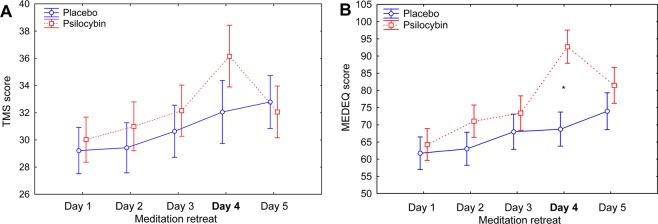
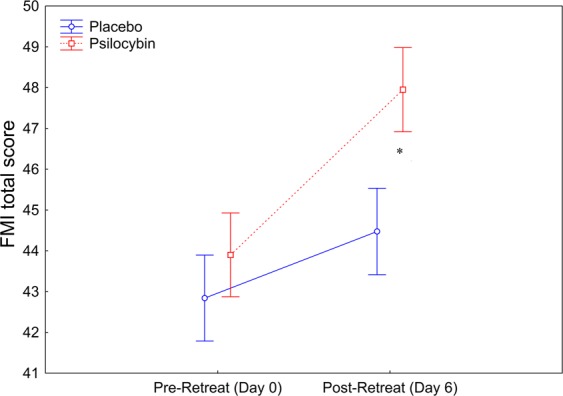
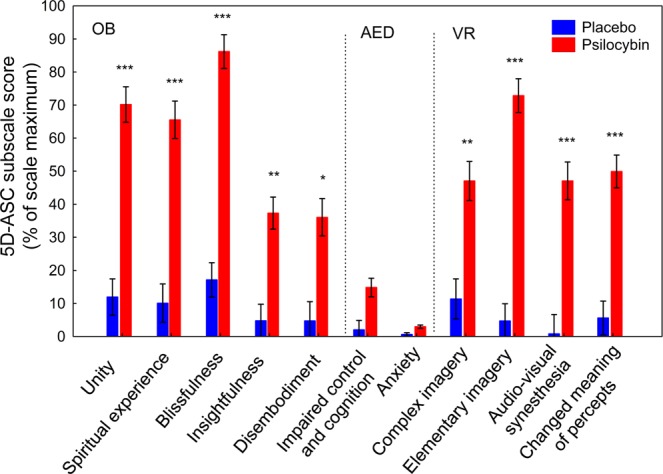
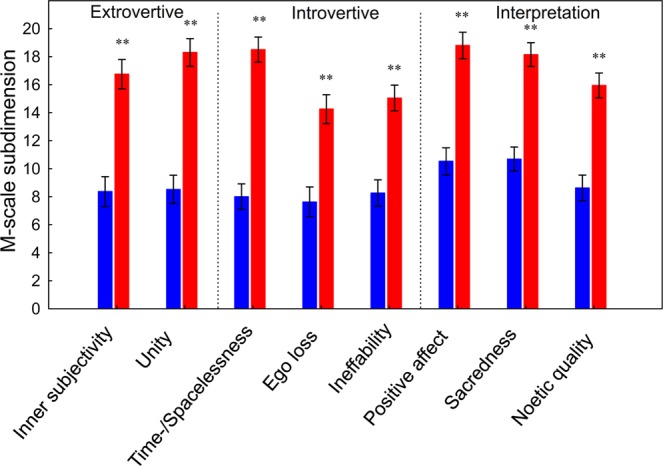
Meditation and psychedelics have played key roles in humankind’s search for self-transcendence and personal change. However, neither their possible synergistic effects, nor related state and trait predictors have been experimentally studied. To elucidate these issues, we administered double-blind the model psychedelic drug psilocybin (315 μg/kg PO) or placebo to meditators (n = 39) during a 5-day mindfulness group retreat. Psilocybin increased meditation depth and incidence of positively experienced self-dissolution along the perception-hallucination continuum, without concomitant anxiety. Openness, optimism, and emotional reappraisal were predictors of the acute response. Compared with placebo, psilocybin enhanced post-intervention mindfulness and produced larger positive changes in psychosocial functioning at a 4-month follow-up, which were corroborated by external ratings, and associated with magnitude of acute self-dissolution experience. Meditation seems to enhance psilocybin’s positive effects while counteracting possible dysphoric responses. These findings highlight the interactions between non-pharmacological and pharmacological factors, and the role of emotion/attention regulation in shaping the experiential quality of psychedelic states, as well as the experience of selflessness as a modulator of behavior and attitudes. A better comprehension of mechanisms underlying most beneficial psychedelic experiences may guide therapeutic interventions across numerous mental conditions in the form of psychedelic-assisted applications.
Overview
The claims and statistics of this paper haven’t been checked yet.
Free: it reads the open-access text and checks the first 5 claims that cite a source we can check. Create a free account to check every claim.
Integrity signals
Registry
Cites
Statistics
Figures
Verification
Claims the paper makes
The claims and statistics of this paper haven’t been checked yet.
Free: it reads the open-access text and checks the first 5 claims that cite a source we can check. Create a free account to check every claim.
Claims other papers make about this one
Each is checked against this paper’s own text: does it say what the citing paper says it does?
The source backs part of the claim, not all of it — or backs it for a different population, condition or comparison.
In the citing paper
“A combination of MM and PAT increases empathy and reduces egocentricity, potentially aiding psychopathology reduction [7].”
From Mindfulness meditation and psychedelics: potential synergies and commonalities (2023) · cites this paper as [7]
Experimental — accuracy not yet measuredThe source backs part of the claim, not all of it — or backs it for a different population, condition or comparison.
In the citing paper
“The process of decoupling within self-referential networks combined with the alteration in one's sense of self induced by psilocybin during a meditation retreat, can serve as a predictive factor for lasting positive changes in psycho-social well-being [7].”
From Mindfulness meditation and psychedelics: potential synergies and commonalities (2023) · cites this paper as [7]
Experimental — accuracy not yet measuredThe source backs part of the claim, not all of it — or backs it for a different population, condition or comparison.
In the citing paper
“This was a double-blind, placebo-controlled trial involving 38 participants who were screened with psychometric instruments and in addition with functional magnetic resonance imaging during the resting state and two meditation forms, pre to post-intervention.”
From Mindfulness meditation and psychedelics: potential synergies and commonalities (2023) · cites this paper as [7]
Experimental — accuracy not yet measuredThe source backs part of the claim, not all of it — or backs it for a different population, condition or comparison.
In the citing paper
“This was effectively demonstrated in three recent studies, which, utilising a combined design, produced beneficial trait-alterations, as well as enhancements in mood, satisfaction with life and behavioural change, which were more significant and longer-lasting than previously observed changes, when each intervention was used in isolation (60–62).”
From Examining the Potential Synergistic Effects Between Mindfulness Training and Psychedelic-Assisted Therapy (2021) · cites this paper as [61]
Experimental — accuracy not yet measuredThe source backs part of the claim, not all of it — or backs it for a different population, condition or comparison.
In the citing paper
“Hierarchical regression analyses demonstrated that the intensity of mystical experience predicted most positive shifts in trait measures, observed long-term in the aforementioned studies.”
From Examining the Potential Synergistic Effects Between Mindfulness Training and Psychedelic-Assisted Therapy (2021) · cites this paper as [61]
Experimental — accuracy not yet measured
11 more claims about this paper
Create a free account to see every claim other papers make about this one.
Self-check
Percentages, sums and reported differences re-computed from the paper’s own numbers.
The self-check needs the paper’s full text.
Citations
Cites
The satisfaction with life scale
Diener, E., Emmons, R. A., Larsen, R. J., & Griffin, S. (1985) · Journal of Personality Assessment · doi:10.1207/s15327752jpa4901_13 · Cited by 31,768
Gross, J. J., & John, O. P. (2003) · Journal of Personality and Social Psychology · doi:10.1037/0022-3514.85.2.348 · Cited by 11,929
Mindfulness-based interventions in context: Past, present, and future
Kabat-Zinn, J. (2003) · Clinical Psychology: Science and Practice · doi:10.1093/clipsy.bpg016 · Cited by 8,615
Mindfulness-based interventions in context: Past, present, and future.
Kabat-Zinn, J. (2003) · Clinical Psychology: Science and Practice · doi:10.1093/clipsy/bpg016 · Cited by 8,612
Scheier, M. F., Carver, C. S., & Bridges, M. W. (1994) · Journal of Personality and Social Psychology · doi:10.1037//0022-3514.67.6.1063 · Cited by 7,456
An Introduction to the Five‐Factor Model and Its Applications
McCrae, R. R., & John, O. P. (1992) · Journal of Personality · doi:10.1111/j.1467-6494.1992.tb00970.x · Cited by 6,835
Mindfulness-based stress reduction and health benefits
Grossman, P., Niemann, L., Schmidt, S., & Walach, H. (2004) · Journal of Psychosomatic Research · doi:10.1016/s0022-3999(03)00573-7 · Cited by 3,958
Clinical Psychology: Science and Practice
(2021) · Clinical Psychology Science and Practice · doi:10.1111/(issn)1468-2850 · Cited by 3,672
Hölzel, B. K., Lazar, S. W., Gard, T., Schuman-Olivier, Z., Vago, D. R., & Ott, U. (2011) · Perspectives on Psychological Science · doi:10.1177/1745691611419671 · Cited by 3,024
The Neuroscience of Mindfulness Meditation
Tang, Y.-Y., Hölzel, B. K., & Posner, M. I. (2015) · Nature reviews. Neuroscience · doi:10.1038/nrn3916 · Cited by 2,889
Research works printed but not linked: 15
- Pahnke, W. N. Drugs & Mysticism: An Analysis of the Relationship between Psychedelic Drugs and Mystical Consciousness Divinity. Harvard University, Cambridge MA, 315 (1963).
- Hood, R. W., Hill, P. C. & Spilka, B. The psychology of religion: An empirical approach. (Guilford Press, 2009).
- Nichols DE Chemel BR The neuropharmacology of religious experience: Hallucinogens and the experience of the divine Where God and science meet: How brain and evolutionary studies alter our understanding of religion 2006 3 1 33
- Piron H The meditation depth index (MEDI) and the meditation depth questionnaire (MEDEQ) Journal for Meditation and Meditation Research 2001 1 69 92
- Hölzel BK U. O Relationship between mediation depth, absorption, mediation practice, and mindfullness: A laten variable approach The Journal of Transpersonal Psychology 2006 38 20
- Studerus E Kometer M Hasler F Vollenweider FX Acute, subacute and long-term subjective effects of psilocybin in healthy humans: a pooled analysis of experimental studies J. Psychopharmacol 2011 25 1434 1452 10.1177/0269881110382466 20855349 · DOI · Paper page
- Rümmele W Gnirss F Untersuchungen mit Psilocybin, einer psychotropen Substanz aus Psilocybe Mexicana Schweiz Arch Neurol Neurochir Psychiatr 1961 87 365 385 13744546
- Preller, K. H. & Vollenweider, F. X. In Behavioral Neurobiology of Hallucinogens, Entactogens, and Psychotomimetics Current Topics in Behavioral Neurosciences (eds Halberstadt, A. L., Nichols, D. E. & Vollenweider, F. X.) 360–389 (Springer, 2016).
- Austin, J. H. Zen and the Brain: Toward an Understanding of Meditation and Consciousness. (The MIT Press, 1998). · DOI · Paper page
- Griffiths RR Richards WA McCann U Jesse R Psilocybin can occasion mystical-type experiences having substantial and sustained personal meaning and spiritual significance Psychopharmacology (Berl) 2006 187 268 283 10.1007/s00213-006-0457-5 16826400 · DOI · Paper page
- Piron H Meditation depth, mental health, and personal development Journal for Meditation and Meditation Research 2003 3 45 58
- Buchheld N Grossman P Walach H Measuring mindfulness in insight meditation (Vipassana) and meditation-based psychotherapy: The development of the Freiburg Mindfulness Inventory (FMI) Journal for Meditation and Meditation Research 2001 1 11 34
- Derogatis, L. SCL-90-R: Symptom Checklist-90-R: administration, scoring, and procedures manual. NCS Pearson (1996).
- Hood, R. W. Jr. The construction and preliminary validation of a measure of reported mystical experience. Journal for the scientific study of religion, 29–41 (1975). · DOI · Paper page
- Stace, W. (Philadelphia, Lippincott, 1960).
Cited by
Items 101–176 of 176
Bukovsky, D., Amaev, A., Song, J., Kyte, S., Carmona-Torres, E., Ueno, F., Luca, V. D., Strafella, A. P., Husain, M. I., Graff‐Guerrero, A., et al. (2025) · Progress in Neuro-Psychopharmacology and Biological Psychiatry · doi:10.1016/j.pnpbp.2025.111541 · Cited by 10
Multimodal Neuroimaging of the Effect of Serotonergic Psychedelics on the Brain
Frautschi, P. C., Singh, A. P., Stowe, N. A., & Yu, J. J. (2024) · American Journal of Neuroradiology · doi:10.3174/ajnr.a8118 · Cited by 5
Levin, A. W. (2024) · Journal of Psychopharmacology · doi:10.1177/02698811241303599 · Cited by 6
“Furthermore, the interactions between psychedelics and meditation appear to be synergistic (Smigielski et al., 2019), making it likely that many of the core, right hemispheric networks enhanced and stabilized through regular meditation practice are also enhanced by psychedelics.”
Majić, T., Schmidt, T. T., Gröticke, A., Gasser, P., Richards, W. A., Riemer, T., & Evens, R. (2025) · Journal of Psychopharmacology · doi:10.1177/02698811251326937 · Cited by 7
“This finding might be particularly relevant as it is still debated whether the quality and intensity of acute psychedelic effects predict individual post-acute outcomes (Majić et al., 2015; Roseman et al., 2018; Smigielski et al., 2019).”
Korman, B. A. (2023) · Drug Science Policy and Law · doi:10.1177/20503245231191400 · Cited by 6
“Further research is needed here, however, as self-reported and observer-rated changes in personality following classic psychedelic use do not always align (Weiss et al., 2020; see also Smigielski et al., 2019).”
BackgroundPsychedelics and Mindfulness: A Systematic Review and Meta-AnalysisPreprint
Radakovic, C., Radaković, R., Peryer, G., & Geere, J. (2021) · doi:10.31234/osf.io/yu7jf · Cited by 5
“The searches identified a total of 1805 records from databases and other sources with a total of 13 studies meeting inclusion criteria (Domínguez-Clavé et al., 2019; Madsen et al., 2020; Mian, Altman, & Earleywine, 2019; MurphyBeiner & Soar, 2020; Polito & Stevenson, 2019; Sampedro et al., 2017; Smigielski et al., 201…”
BackgroundMethodInfluentialBuddhism and Intelligent Technology: A Futures Meditation
Hershock, P. D. (2025) · Contemporary Buddhism · doi:10.1080/14639947.2025.2562762 · Cited by 4
“…brain networks to yield therapeutic experiences, facilitate creative insights, and deepen meditative practices (see, e.g. Millière et al. 2018; Smigielski et al. 2019; Ko et al. 2022), might machine learning systems be used to develop new psychoactive substances that would be more effective…”
Garcia, A. C. M., Maia, L. O., & Reed, P. G. (2024) · Journal of Holistic Nursing · doi:10.1177/08980101241257836 · Cited by 9
“Psychedelics have played a fundamental role in humanity ’ s quest for personal transformation and self-transcendence (Smigielski et al., 2019).”
Baker, K. M., Ulrich, C. M., & Meghani, S. H. (2023) · American Journal of Hospice and Palliative Medicine® · doi:10.1177/10499091221147700 · Cited by 4
Ip, C.-T., Olbrich, S., de Bardeci, M., Monn, A., Ort, A., Smallridge, J. W., & Vollenweider, F. X. (2026) · Progress in Neuro-Psychopharmacology and Biological Psychiatry · doi:10.1016/j.pnpbp.2026.111626 · Cited by 5
Self-citationIvan, V. E., Tomàs‐Cuesta, D. P., Esteves, I. M., Luczak, A., Mohajerani, M. H., McNaughton, B. L., & Gruber, A. J. (2024) · European Journal of Neuroscience · doi:10.1111/ejn.16558 · Cited by 4
“Psychedelics often disrupt the sense of space and time, causing disorientation and a feeling of spacelessness (Carbonaro et al., 2016; Garcia-Romeu et al., 2016; Smigielski et al., 2019).”
David, J., Berkovich‐Ohana, A., & Dor‐Ziderman, Y. (2025) · Psychopharmacology · doi:10.1007/s00213-025-06792-0 · Cited by 6
“Psyche-delic interventions often incorporate mindfulness elements as an integral part of their design with good results (Griffiths et al. 2018; Smigielski et al. 2019a, b; Smigielski, Schei-degger, et al., 2019).”
InfluentialA long trip into the universe: Psychedelics and space travel
Lerer, L. B., & Varia, J. C. (2022) · Frontiers in Space Technologies · doi:10.3389/frspt.2022.899159 · Cited by 2
“The vast majority of psychedelic experiences are indeed regarded as positive and given that there is a strong, positive association between various forms of spirituality and wellbeing, the combination of psychedelics with meditation and group therapy may offer a way to improve psychosocial functioning during long spac…”
BackgroundAssociations between psychedelic-related and meditation-related variables: A longitudinal study
Simonsson, O., Chaturvedi, S., Hendricks, P. S., Stenfors, C. U. D., Osika, W., Narayanan, J., Palitsky, R., & Goldberg, S. B. (2025) · Journal of Psychiatric Research · doi:10.1016/j.jpsychires.2025.03.025 · Cited by 5
“However, results have been mixed at longer-term follow-ups and many these studies have lacked a control group (e.g., Domínguez-Clav ´ e et al., 2022; Madsen et al., 2020; Sampedro et al., 2017; Smigielski et al., 2019; Soler et al., 2016, 2018).”
Tunstad, P. A., Kvam, T.-M., Uthaug, M. V., Stewart, L. H., Andersen, K. A. A., & Grønnerød, C. (2025) · Frontiers in Pharmacology · doi:10.3389/fphar.2025.1556299 · Cited by 4
Baseline power of theta oscillations predicts mystical-type experiences induced by DMTPreprint
Tagliazucchi, E., Zamberlán, F., Cavanna, F., de la Fuente, L., Romero, C., Perl, Y. S., & Pallavicini, C. (2021) · bioRxiv (Cold Spring Harbor Laboratory) · doi:10.1101/2021.03.11.434994 · Cited by 3
Bhatt, K. V., Compton, J. N., Ellerman-Tayag, E., Mishra, J., Perivoliotis, D., Pittman, J. O. E., Ramanathan, D., & Bismark, A. W. (2025) · Psychedelic Medicine · doi:10.1089/psymed.2024.0040 · Cited by 2
“41,53 It is important to acknowledge that mystical experiences may carry certain psychiatric risks, such as psychosis, which could be heightened by treatment protocols designed to enhance such experiences.”
Beyköylü, H., Vervaeke, J., & Meling, D. (2025) · Philosophical Psychology · doi:10.1080/09515089.2025.2601717 · Cited by 5
“…& Luke, 2021; van der Tempel & Moodley, 2020) or through various practices including psychedelic use (Yaden et al., 2016), meditation (Wahbeh et al., 2018), somatic practices (Woollacott et al., 2021), and combinations thereof (Azmoodeh et al., 2023; Meling et al., 2024; Smigielski et al., 2019).”
Kerr‐Gaffney, J., Myrtle, S., Askari, F., Bird, C., Modlin, N. L., Young, A. H., & Rucker, J. (2026) · Journal of Psychopharmacology · doi:10.1177/02698811251408769 · Cited by 3
“The LCI measures changes in values and attitudes after near-death experiences, but has also been used to evaluate personal transformation following spiritually oriented experiences, including psychedelic experiences (Smigielski et al., 2019).”
Back, A. L., McGregor, B. A., Thorn, L. L., Harvey, K., Blom, D., Callan, G., Guy, J., Kumar, S. M., Hershberg, R., Layer, M., et al. (2026) · Frontiers in Public Health · doi:10.3389/fpubh.2026.1810904 · Cited by 2
Foe, A. D. (2023) · Psychoactives · doi:10.3390/psychoactives2020011 · Cited by 2
“, mystical/unity encounters [19]), as well as alteration in existential attitudes (such as those applied in palliative care [20]).”
BackgroundEarleywine, M., Low, F., & Leo, J. A. D. (2021) · Journal of Psychedelic Studies · doi:10.1556/2054.2021.00187 · Cited by 3
david, J., Berkovich‐Ohana, A., & Dor‐Ziderman, Y. (2024) · doi:10.31234/osf.io/tmeb3 · Cited by 2
Lyon, A. (2023) · Oxford University Press eBooks · doi:10.1093/oso/9780198843757.003.0009 · Cited by 1
The way of O: phenomenology of psychedelic use and the path to ultimate reality
Miller, C. W. T. (2024) · Psychodynamic Practice · doi:10.1080/14753634.2024.2371787 · Cited by 3
“Reaching such mystical states has been associated with previous spiritual practices (Griffiths et al., 2018; Smigielski et al., 2019), which seem to facilitate one’s ability to experience ‘ego dissolution’ when taking the psychedelic.”
Herrmann, F. M., Jones, G. M., Low, D. M., Zech, J. M., Carhart-Harris, R. L., & Kettner, H. (2025) · Journal of Psychiatric Research · doi:10.1016/j.jpsychires.2025.09.007 · Cited by 1
Briggs, D., Sease, T. B., Menou, R., & Perkins, D. R. (2026) · Behavioral Sciences · doi:10.3390/bs16050686 · Cited by 1
“For example, participants who ingested psilocybin scored higher on self-acceptance compared to placebo controls (Smigielski et al., 2019).”
Lyon, A. (2023) · Oxford University Press eBooks · doi:10.1093/oso/9780198843757.003.0001 · Cited by 1
Lyon, A. (2023) · Oxford University Press eBooks · doi:10.1093/oso/9780198843757.003.0005 · Cited by 1
Ruban, A., Magnuski, M., Hobot, J., Orlowski, P., Kołodziej, A., Bola, M., & Brzezicka, A. (2024) · Progress in Neuro-Psychopharmacology and Biological Psychiatry · doi:10.1016/j.pnpbp.2024.111196 · Cited by 5
Psychedelic therapy for body dysmorphic disorder
Johnson, S., & Letheby, C. (2022) · Journal of Psychedelic Studies · doi:10.1556/2054.2022.00200 · Cited by 1
“Multiple controlled studies in healthy volunteers have found that moderate-to-high doses of psilocybin are safe and well-tolerated, with no serious and lasting adverse effects and some evidence suggesting psychological benefits (Carhart-Harris et al., 2012; Griffiths et al., 2006, 2011, 2017; Madsen et al., 2020; Nich…”
BackgroundA Needs Assessment of Older Hispanics in Omaha, Nebraska
DiMartino, D. R. (1979) · DigitalCommons@UNO · Cited by 1
Ruban, A., Magnuski, M., Hobot, J., Orlowski, P., Kołodziej, A., Bola, M., & Brzezicka, A. (2024) · doi:10.31219/osf.io/bhmtn · Cited by 1
Ivan, V. E., Tomàs‐Cuesta, D. P., Esteves, I. M., Luczak, A., Mohajerani, M. H., McNaughton, B. L., & Gruber, A. J. (2024) · doi:10.22541/au.171378690.00112411/v1 · Cited by 1
Aharon-Almagor, A., & Barrett, F. S. (2022) · Research Square · doi:10.21203/rs.3.rs-1529935/v1
Death risk: Lack of movement: The ignored pandemic of digitalization escalates the COVID-19 crisis
Pawlik, L. (2021) · Technoetic Arts · doi:10.1386/tear_00058_1
Yaden, D. B., & Newberg, A. B. (2022) · Oxford University Press eBooks · doi:10.1093/oso/9780190665678.003.0018
Tarrant, J. (2022) · Biofeedback · doi:10.5298/1081-5937-50.03.03 · Cited by 1
Wu, P. (2023) · PsyArXiv (OSF Preprints) · doi:10.31234/osf.io/syg7t
Stevenson, R. M. (2023) · Journal of Community Safety and Well-Being · doi:10.35502/jcswb.339
Lyon, A. (2023) · Oxford University Press eBooks · doi:10.1093/oso/9780198843757.003.0010
Lyon, A. (2023) · Oxford University Press eBooks · doi:10.1093/oso/9780198843757.003.0011
Lyon, A. (2023) · Oxford University Press eBooks · doi:10.1093/oso/9780198843757.003.0008
Lyon, A. (2023) · Oxford University Press eBooks · doi:10.1093/oso/9780198843757.003.0006
Lyon, A. (2023) · Oxford University Press eBooks · doi:10.1093/oso/9780198843757.003.0012
(2023) · Oxford University Press eBooks · doi:10.1093/oso/9780198843757.002.0006
Lyon, A. (2023) · Oxford University Press eBooks · doi:10.1093/oso/9780198843757.003.0007
(2023) · Oxford University Press eBooks · doi:10.1093/oso/9780198843757.002.0003
Lyon, A. (2023) · Oxford University Press eBooks · doi:10.1093/oso/9780198843757.003.0004
What Is Psychedelic Experience?
Lyon, A. (2023) · Oxford University Press eBooks · doi:10.1093/oso/9780198843757.003.0002
(2023) · Oxford University Press eBooks · doi:10.1093/oso/9780198843757.002.0005
Lyon, A. (2023) · Oxford University Press eBooks · doi:10.1093/oso/9780198843757.003.0003
Zeifman, R. J. (2024) · doi:10.32920/26052859.v1 · Cited by 1
No Attainment, Nothing to Attain: A Buddhist Reflection on Psychedelics
Hershock, P. D. (2024) · Journal of Contemplative Studies · doi:10.57010/pmjx1418
Intact neurophysiological markers of death denial in ayahuasca veteransPreprint
Dor‐Ziderman, Y., david, J., & Berkovich‐Ohana, A. (2024) · doi:10.31219/osf.io/my9sd
Psychedelic ego-dissolution: a philosophical and qualitative critique
Day, J. K., & Zahavi, D. (2026) · Philosophical Transactions of the Royal Society B Biological Sciences · doi:10.2139/ssrn.5144068 · Cited by 1
Exploring the therapeutic convergence of meditation, psychedelics, and MDMA
Dines, J. T. (2025) · Journal of Psychedelic Studies · doi:10.1556/2054.2025.00435 · Cited by 4
Religion and the Brain - on Consciousness and AttentionPreprint
Bronkhorst, J. (2025) · Preprints.org · doi:10.20944/preprints202504.2087.v1
Psychedelic-induced behavioral and developmental effects on zebrafish: a systematic review
de Oliveira, A. L., de Oliveira, D. P., SANTOS, R. G. D., & Hallak, J. E. C. (2025) · Progress in Neuro-Psychopharmacology and Biological Psychiatry · doi:10.1016/j.pnpbp.2025.111534
Intact neurophysiological markers of death denial in long-term ayahuasca users
Dor‐Ziderman, Y., David, J., & Berkovich‐Ohana, A. (2025) · Psychopharmacology · doi:10.1007/s00213-025-06963-z
“An intriguing study (Smigielski et al. 2019a), in which psilocybin (with of self-and other-related electric field configurations dur - ing the P300 timeframe in an auditory self-other task.”
The interplay of psychedelic use and meditation in shaping psychological well-being
Krabbe, A., Sikka, P., & Jylkkä, J. (2025) · Consciousness and Cognition · doi:10.1016/j.concog.2025.103977 · Cited by 2
Psychedelics and Centering Prayer
Rajcok, B. (2026) · Pastoral Psychology · doi:10.1007/s11089-026-01306-x
“M-Scale scores revealed that 95% (19 of 20) of the psilocybin participants met a priori criteria for a complete mystical experience, whereas three of 19 in the mindfulness control group met the same criteria (Smigielski et al., 2019).”
InfluentialSchlomberg, J. T., Meling, D., Grylka, R., Vasella, E. A., Augustinovic, D., & Scheidegger, M. (2026) · Scientific Reports · doi:10.1038/s41598-026-39261-5 · Cited by 1
“…topics , including themes like control, equanimity, impermanence or embodied wisdom, have largely remained underrepresented in mainstream psychedelic literature but gained increased attention in recent studies exploring the convergence of psychedelics and mindfulness practices 10,11,14,15,78 .”
Self-citationBoehnke, K. F., Pouyan, N., & Aday, J. S. (2026) · Drugs · doi:10.1007/s40265-026-02339-5 · Cited by 2
“…comforting items like blankets, water, and music that are calming or inspiring [177] Practice relaxation techniques like deep breathing or meditation to use during the experience to help manage anxiety [178] Ensure there is an emergency plan in place, including a trusted loved one to contact [179]”
Udoro, A. J., Yukyi, Y., Ansari, A. Z., Gandara, H. A., Ahmed, F., & Hunt, D. (2026) · Cureus · doi:10.7759/cureus.110791 · Cited by 1
“This serotonergic activity produces profound alterations in sensory perception, cognition, and emotional processing, which may manifest as vivid visual and auditory hallucinations, synesthesia, time distortion, and marked changes in mood or affect [4].”
DESI-MSI-Based Multi-Organ Distribution Mapping of Psilocin in Zebrafish
Dong, M., Zhang, Y., Cao, M., Shi, T., Li, L., Zong, X., & Wang, C. (2026) · Molecules · doi:10.3390/molecules31122143
“However, the hallucinogenic toxicity of psilocybin cannot be overlooked: high doses may precipitate acute psychotic symptoms, panic attacks, perceptual abnormalities, and, in rare cases, the risk of hallucinogen-persisting perception disorder (HPPD) [14,15].”
Cellular mechanisms of serotonergic psychedelics - apical hypercontextualisation
Kaup, K., Jiménez, J. H., & Aru, J. (2026) · Neuroscience & Biobehavioral Reviews · doi:10.1016/j.neubiorev.2026.106876 · Cited by 3
Retreat from racism: A psychedelic group experience for racial stress and trauma
Rosal, S. P., Faber, S., MacIntyre, M. M., & Williams, M. (2026) · Psychedelics · doi:10.1016/j.psyche.2026.100031
Albertyn, C. P., Richard, J., Shore, R., & Carlson, L. E. (2026) · Psychedelics · doi:10.1016/j.psyche.2026.100032
Gentry, J. W. (2026) · Journal of the American Academy of Religion · doi:10.1093/jaarel/lfag046
McAlpine, R. G., Utanğaç, M., Kuc, J., Pankhurst, H., Sellers, A., Kraft, D., Litchy, A., Gupta, N. E., Timmermann, C., Kamboj, S. K., et al. (2026) · Mindfulness · doi:10.1007/s12671-026-02957-w · Cited by 6
Toward an interdisciplinary mind science of advanced meditation
Lieberman, J. M., & Sacchet, M. D. (2026) · Trends in Cognitive Sciences · doi:10.1016/j.tics.2026.07.009 · Cited by 1
Lueken, U., Dziobek, I., Havenith, M. N., Schild, M., & Daedelow, L. S. (2026) · npj Mental Health Research · doi:10.1038/s44184-026-00246-x
“…partly corroborate the relevance of personality traits and in-session processes such as emotional breakthrough experiences not only as important moderators of the effects of psychedelics 4,28,29,32 , but point toward therapists ’ characteristics moderating the perceived clinical potentials of HVB.”
Byrne, K., Odette, M. M., Garland, E. L., & Lewis, B. R. (2026) · Journal of Affective Disorders Reports · doi:10.1016/j.jadr.2026.101187
Context Shapes Alpha-Band Electrophysiological Signatures under PsilocybinPreprint
Dhanawansa, V., Stoliker, D., Novelli, L., Biabani, M., Razi, A., & Kuhlmann, L. (2026) · bioRxiv (Cold Spring Harbor Laboratory) · doi:10.64898/2026.10.06.757155
“Although meditation under psychedelics may alter neural dynamics and promote positive experiences with sustained or repeated practice [12, 50, 58], the brief meditation condition here may have been insufficient to produce a distinct neural state beyond rest.”
Metadata
- Authors
- Smigielski, L., Kometer, M., Scheidegger, M., Krähenmann, R., Huber, T., & Vollenweider, F. X.
- Affiliations
- University of Zurich (CH)
- Corresponding author
- Smigielski, Lukasz
- Venue
- Scientific Reports
- Published
- 2019-10-24
- Volume
- 9
- Issue
- 1
- Pages
- 14914-14914
- ISSN
- 2045-2322 (ISSN-L)
- PMC
- PMC6813317
- OpenAlex
- W2981695213
- Semantic Scholar
- fcd7b11b16450124bf47adf83ecef65b0ff6420b
- Cited by
- 176
- References
- 95
- Citations by year
- 2026: 18 · 2025: 31 · 2024: 24 · 2023: 44 · 2022: 32 · 2021: 15 · 2020: 8 · 2019: 2
- FWCI
- 16.64
- Type
- journal article
- Language
- en
- Open access
- gold
- doi.org
- Licence
- cc-by
- creativecommons.org/licenses/by/4.0 (tdm)
- creativecommons.org/licenses/by/4.0 (vor)
- Locations
- Scientific Reports (publishedVersion, cc-by)
- Europe PMC (PubMed Central) (publishedVersion, cc-by)
- PubMed Central (publishedVersion, cc-by)
- PubMed (publishedVersion)
- DOAJ (DOAJ: Directory of Open Access Journals) (submittedVersion)
- Zurich Open Repository and Archive (University of Zurich) (submittedVersion, cc-by)
- Funders
- Swiss Neuromatrix Foundation
- Topics
- Social Sciences › Psychology › Clinical Psychology › Psychedelics and Drug Studies
- Social Sciences › Psychology › Social Psychology › Paranormal Experiences and Beliefs
- Social Sciences › Health › Religion, Spirituality, and Psychology
- Keywords
- psilocybin, mindfulness meditation, psychedelic therapy, dissolution of the self, self-transcendence, openness to experience, optimism, emotional reappraisal, emotion regulation, placebo response
- MeSH terms
- Attention, Buddhism, Emotions, Female, Hallucinogens, Humans, Male, Middle Aged, Psilocybin, Social Behavior, Meditation, Mindfulness
About these checks
Registry, retraction, Cites and statistics results are computed, not judged, with one exception: a printed reference that no index lists is read once by a model before it counts as a citation error. Claims are extracted by a model and kept only when their quote appears verbatim in the text; each cited source is then checked, with a model’s help, for whether it says what the claim relies on. Those verdicts can be wrong — read the claim’s quote and the cited source before relying on one.
Statistics and arithmetic are recomputed, not judged.
Confidence bands are shown only for fields calibrated on our annotated test set. None is calibrated yet, so no band is shown.
What counts as a claim ›How we measure confidence ›How we check this ›
Are you an author, or do you see a problem with this page? Request a review
Data sources
Bibliographic data: Semantic Scholar, OpenAlex, Crossref.
Contains information from the Semantic Scholar Academic Graph Datasets, made available under the ODC Attribution License (ODC-BY 1.0).
Semantic Scholar’s data is described in: Kinney, R., et al. (2023). The Semantic Scholar Open Data Platform. arXiv:2301.10140.
