

Characterization and prediction of acute and sustained response to psychedelic psilocybin in a mindfulness group retreat
Open accessThe DOI matches its Crossref record; 95 of the 95 references it cites were found in a registry or an index.
Abstract
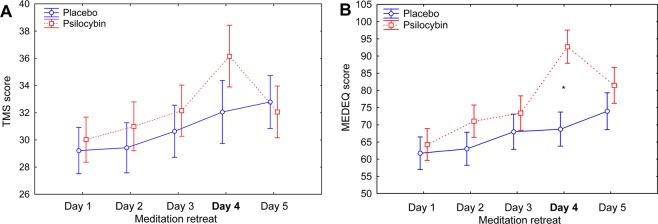
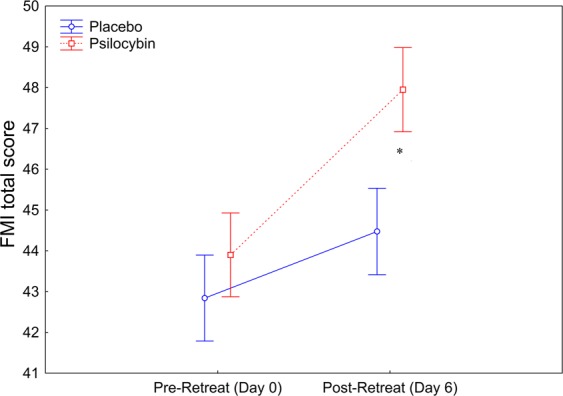
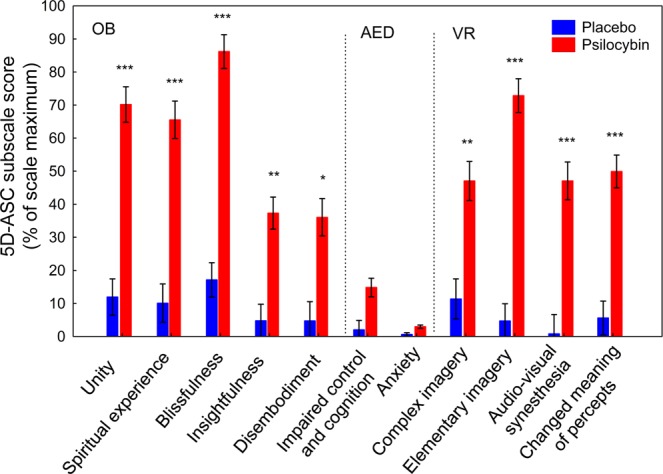
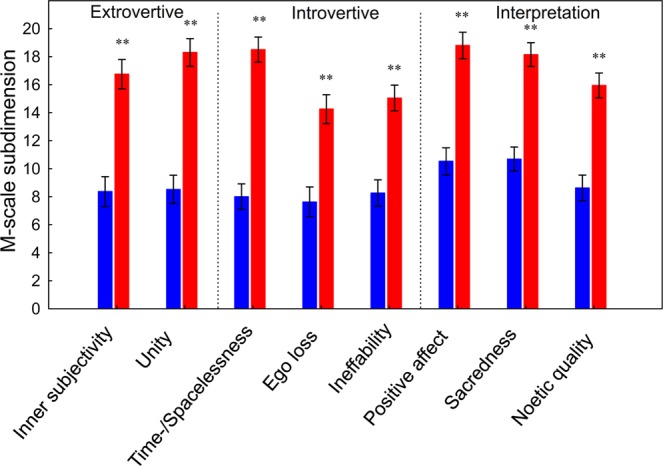
Meditation and psychedelics have played key roles in humankind’s search for self-transcendence and personal change. However, neither their possible synergistic effects, nor related state and trait predictors have been experimentally studied. To elucidate these issues, we administered double-blind the model psychedelic drug psilocybin (315 μg/kg PO) or placebo to meditators (n = 39) during a 5-day mindfulness group retreat. Psilocybin increased meditation depth and incidence of positively experienced self-dissolution along the perception-hallucination continuum, without concomitant anxiety. Openness, optimism, and emotional reappraisal were predictors of the acute response. Compared with placebo, psilocybin enhanced post-intervention mindfulness and produced larger positive changes in psychosocial functioning at a 4-month follow-up, which were corroborated by external ratings, and associated with magnitude of acute self-dissolution experience. Meditation seems to enhance psilocybin’s positive effects while counteracting possible dysphoric responses. These findings highlight the interactions between non-pharmacological and pharmacological factors, and the role of emotion/attention regulation in shaping the experiential quality of psychedelic states, as well as the experience of selflessness as a modulator of behavior and attitudes. A better comprehension of mechanisms underlying most beneficial psychedelic experiences may guide therapeutic interventions across numerous mental conditions in the form of psychedelic-assisted applications.
Overview
The claims and statistics of this paper haven’t been checked yet.
Free: it reads the open-access text and checks the first 5 claims that cite a source we can check. Create a free account to check every claim.
Integrity signals
Registry
Cites
Statistics
Figures
Verification
Claims the paper makes
The claims and statistics of this paper haven’t been checked yet.
Free: it reads the open-access text and checks the first 5 claims that cite a source we can check. Create a free account to check every claim.
Claims other papers make about this one
Each is checked against this paper’s own text: does it say what the citing paper says it does?
The source backs part of the claim, not all of it — or backs it for a different population, condition or comparison.
In the citing paper
“A combination of MM and PAT increases empathy and reduces egocentricity, potentially aiding psychopathology reduction [7].”
From Mindfulness meditation and psychedelics: potential synergies and commonalities (2023) · cites this paper as [7]
Experimental — accuracy not yet measuredThe source backs part of the claim, not all of it — or backs it for a different population, condition or comparison.
In the citing paper
“The process of decoupling within self-referential networks combined with the alteration in one's sense of self induced by psilocybin during a meditation retreat, can serve as a predictive factor for lasting positive changes in psycho-social well-being [7].”
From Mindfulness meditation and psychedelics: potential synergies and commonalities (2023) · cites this paper as [7]
Experimental — accuracy not yet measuredThe source backs part of the claim, not all of it — or backs it for a different population, condition or comparison.
In the citing paper
“This was a double-blind, placebo-controlled trial involving 38 participants who were screened with psychometric instruments and in addition with functional magnetic resonance imaging during the resting state and two meditation forms, pre to post-intervention.”
From Mindfulness meditation and psychedelics: potential synergies and commonalities (2023) · cites this paper as [7]
Experimental — accuracy not yet measuredThe source backs part of the claim, not all of it — or backs it for a different population, condition or comparison.
In the citing paper
“This was effectively demonstrated in three recent studies, which, utilising a combined design, produced beneficial trait-alterations, as well as enhancements in mood, satisfaction with life and behavioural change, which were more significant and longer-lasting than previously observed changes, when each intervention was used in isolation (60–62).”
From Examining the Potential Synergistic Effects Between Mindfulness Training and Psychedelic-Assisted Therapy (2021) · cites this paper as [61]
Experimental — accuracy not yet measuredThe source backs part of the claim, not all of it — or backs it for a different population, condition or comparison.
In the citing paper
“Hierarchical regression analyses demonstrated that the intensity of mystical experience predicted most positive shifts in trait measures, observed long-term in the aforementioned studies.”
From Examining the Potential Synergistic Effects Between Mindfulness Training and Psychedelic-Assisted Therapy (2021) · cites this paper as [61]
Experimental — accuracy not yet measured
11 more claims about this paper
Create a free account to see every claim other papers make about this one.
Self-check
Percentages, sums and reported differences re-computed from the paper’s own numbers.
The self-check needs the paper’s full text.
Citations
Cites
The satisfaction with life scale
Diener, E., Emmons, R. A., Larsen, R. J., & Griffin, S. (1985) · Journal of Personality Assessment · doi:10.1207/s15327752jpa4901_13 · Cited by 31,768
Gross, J. J., & John, O. P. (2003) · Journal of Personality and Social Psychology · doi:10.1037/0022-3514.85.2.348 · Cited by 11,929
Mindfulness-based interventions in context: Past, present, and future
Kabat-Zinn, J. (2003) · Clinical Psychology: Science and Practice · doi:10.1093/clipsy.bpg016 · Cited by 8,615
Mindfulness-based interventions in context: Past, present, and future.
Kabat-Zinn, J. (2003) · Clinical Psychology: Science and Practice · doi:10.1093/clipsy/bpg016 · Cited by 8,612
Scheier, M. F., Carver, C. S., & Bridges, M. W. (1994) · Journal of Personality and Social Psychology · doi:10.1037//0022-3514.67.6.1063 · Cited by 7,456
An Introduction to the Five‐Factor Model and Its Applications
McCrae, R. R., & John, O. P. (1992) · Journal of Personality · doi:10.1111/j.1467-6494.1992.tb00970.x · Cited by 6,835
Mindfulness-based stress reduction and health benefits
Grossman, P., Niemann, L., Schmidt, S., & Walach, H. (2004) · Journal of Psychosomatic Research · doi:10.1016/s0022-3999(03)00573-7 · Cited by 3,958
Clinical Psychology: Science and Practice
(2021) · Clinical Psychology Science and Practice · doi:10.1111/(issn)1468-2850 · Cited by 3,672
Hölzel, B. K., Lazar, S. W., Gard, T., Schuman-Olivier, Z., Vago, D. R., & Ott, U. (2011) · Perspectives on Psychological Science · doi:10.1177/1745691611419671 · Cited by 3,024
The Neuroscience of Mindfulness Meditation
Tang, Y.-Y., Hölzel, B. K., & Posner, M. I. (2015) · Nature reviews. Neuroscience · doi:10.1038/nrn3916 · Cited by 2,889
Research works printed but not linked: 15
- Pahnke, W. N. Drugs & Mysticism: An Analysis of the Relationship between Psychedelic Drugs and Mystical Consciousness Divinity. Harvard University, Cambridge MA, 315 (1963).
- Hood, R. W., Hill, P. C. & Spilka, B. The psychology of religion: An empirical approach. (Guilford Press, 2009).
- Nichols DE Chemel BR The neuropharmacology of religious experience: Hallucinogens and the experience of the divine Where God and science meet: How brain and evolutionary studies alter our understanding of religion 2006 3 1 33
- Piron H The meditation depth index (MEDI) and the meditation depth questionnaire (MEDEQ) Journal for Meditation and Meditation Research 2001 1 69 92
- Hölzel BK U. O Relationship between mediation depth, absorption, mediation practice, and mindfullness: A laten variable approach The Journal of Transpersonal Psychology 2006 38 20
- Studerus E Kometer M Hasler F Vollenweider FX Acute, subacute and long-term subjective effects of psilocybin in healthy humans: a pooled analysis of experimental studies J. Psychopharmacol 2011 25 1434 1452 10.1177/0269881110382466 20855349 · DOI · Paper page
- Rümmele W Gnirss F Untersuchungen mit Psilocybin, einer psychotropen Substanz aus Psilocybe Mexicana Schweiz Arch Neurol Neurochir Psychiatr 1961 87 365 385 13744546
- Preller, K. H. & Vollenweider, F. X. In Behavioral Neurobiology of Hallucinogens, Entactogens, and Psychotomimetics Current Topics in Behavioral Neurosciences (eds Halberstadt, A. L., Nichols, D. E. & Vollenweider, F. X.) 360–389 (Springer, 2016).
- Austin, J. H. Zen and the Brain: Toward an Understanding of Meditation and Consciousness. (The MIT Press, 1998). · DOI · Paper page
- Griffiths RR Richards WA McCann U Jesse R Psilocybin can occasion mystical-type experiences having substantial and sustained personal meaning and spiritual significance Psychopharmacology (Berl) 2006 187 268 283 10.1007/s00213-006-0457-5 16826400 · DOI · Paper page
- Piron H Meditation depth, mental health, and personal development Journal for Meditation and Meditation Research 2003 3 45 58
- Buchheld N Grossman P Walach H Measuring mindfulness in insight meditation (Vipassana) and meditation-based psychotherapy: The development of the Freiburg Mindfulness Inventory (FMI) Journal for Meditation and Meditation Research 2001 1 11 34
- Derogatis, L. SCL-90-R: Symptom Checklist-90-R: administration, scoring, and procedures manual. NCS Pearson (1996).
- Hood, R. W. Jr. The construction and preliminary validation of a measure of reported mystical experience. Journal for the scientific study of religion, 29–41 (1975). · DOI · Paper page
- Stace, W. (Philadelphia, Lippincott, 1960).
Cited by
Psychedelic drugs: neurobiology and potential for treatment of psychiatric disorders
Vollenweider, F. X., & Preller, K. H. (2020) · Nature Reviews Neuroscience · doi:10.1038/s41583-020-0367-2 · Cited by 570
Self-citationThe Therapeutic Potential of Psilocybin
Lowe, H., Toyang, N., Steele, B., Valentine, H., Grant, J., Ali, A., Ngwa, W., & Gordon, L. (2021) · Molecules · doi:10.3390/molecules26102948 · Cited by 242
Aday, J. S., Davis, A. K., Mitzkovitz, C. M., Bloesch, E. K., & Davoli, C. C. (2021) · ACS Pharmacology & Translational Science · doi:10.1021/acsptsci.1c00014 · Cited by 224
Pharmacological, neural, and psychological mechanisms underlying psychedelics: A critical review
van Elk, M., & Yaden, D. B. (2022) · Neuroscience & Biobehavioral Reviews · doi:10.1016/j.neubiorev.2022.104793 · Cited by 221
Madsen, M. K., Fisher, P. M., Stenbæk, D. S., Kristiansen, S., Burmester, D., Lehel, S., Páleníček, T., Kuchař, M., Svarer, C., Ozenne, B., et al. (2020) · European Neuropsychopharmacology · doi:10.1016/j.euroneuro.2020.02.001 · Cited by 183
Preparing for the bursting of the psychedelic hype bubble.
Yaden, D. B., Potash, J. B., & Griffiths, R. R. (2022) · JAMA Psychiatry · doi:10.1001/jamapsychiatry.2022.2546 · Cited by 162
Kettner, H., Gandy, S., Haijen, E. C. H. M., & Carhart-Harris, R. L. (2019) · International Journal of Environmental Research and Public Health · doi:10.3390/ijerph16245147 · Cited by 157
Timmermann, C., Bauer, P. R., Gosseries, O., Vanhaudenhuyse, A., Vollenweider, F., Laureys, S., Singer, T., Antonova, E., & Lutz, A. (2023) · Trends in Cognitive Sciences · doi:10.1016/j.tics.2022.11.006 · Cited by 150
Self-citationHistory repeating: guidelines to address common problems in psychedelic science
van Elk, M., & Fried, E. I. (2023) · Therapeutic Advances in Psychopharmacology · doi:10.1177/20451253231198466 · Cited by 137
Classic Psychedelic Drugs: Update on Biological Mechanisms
Vollenweider, F. X., & Smallridge, J. W. (2022) · Pharmacopsychiatry · doi:10.1055/a-1721-2914 · Cited by 128
“The results of these studies suggest that scoring high on the personality traits including openness to experience [47, 48], trait absorption [32, 54], optimism towards life [47, 48], being well and relaxed the day(s) before and during drug intake [32, 47, 48], and using a mindful attention and emotion regulation strat…”
InfluentialSelf-citationDose–response relationships of psilocybin-induced subjective experiences in humans
Hirschfeld, T., & Schmidt, T. T. (2021) · Journal of Psychopharmacology · doi:10.1177/0269881121992676 · Cited by 93
“…to the experience (Studerus et al., 2012) have been associated with challenging experiences, whereas feeling well prepared, having a recreational intention and emotional reappraisal have been shown to reduce the occurrence of challenging experiences (Haijen et al., 2018; Smigielski et al., 2019a).”
BackgroundResultInfluentialNayak, S. M., Jackson, H., Sepeda, N. D., Mathai, D. S., So, S., Yaffe, A., Zaki, H., Brasher, T. J., Lowe, M. X., Jolly, D. R. P., et al. (2023) · Frontiers in Psychiatry · doi:10.3389/fpsyt.2023.1199642 · Cited by 112
“Results suggest psilocybin holds further promise for spirituality and wellbeing enhancement in non-clinical populations, which warrants additional research (21, 25).”
BackgroundGolden, T. L., Magsamen, S., Sandu, C. C., Lin, S., Roebuck, G. M., Shi, K. M., & Barrett, F. S. (2022) · Current Topics in Behavioral Neurosciences · doi:10.1007/7854_2021_298 · Cited by 85
Neural Mechanisms and Psychology of Psychedelic Ego Dissolution
Stoliker, D., Egan, G. F., Friston, K. J., & Razi, A. (2022) · Pharmacological Reviews · doi:10.1124/pharmrev.121.000508 · Cited by 81
Combining Psychedelic and Mindfulness Interventions: Synergies to Inform Clinical Practice
Payne, J. E., Chambers, R., & Liknaitzky, P. (2021) · ACS Pharmacology & Translational Science · doi:10.1021/acsptsci.1c00034 · Cited by 78
Psychedelic therapy's transdiagnostic effects: A research domain criteria (RDoC) perspective
Kelly, J. R., Gillan, C. M., Prenderville, J., Kelly, C., Harkin, A., Clarke, G., & O'Keane, V. (2021) · Frontiers in Psychiatry · doi:10.3389/fpsyt.2021.800072 · Cited by 69
“Whereas, a double-blind placebo-controlled study of 38 healthy experienced mediators that received psilocybin, reported positive changes in appreciation for life, self-acceptance, quest for meaning/sense of purpose at 4 months post-psilocybin (209).”
BackgroundGiluk (2009) · doi:10.1017/s003329172000389x · Cited by 68
Sloshower, J., Zeifman, R. J., Guss, J., Krause, R., Safi-Aghdam, H., Pathania, S., Pittman, B., & D’Souza, D. C. (2024) · Scientific Reports · doi:10.1038/s41598-024-58318-x · Cited by 65
Gandy, S., Forstmann, M., Carhart-Harris, R. L., Timmermann, C., Luke, D., & Watts, R. (2020) · Health Psychology Open · doi:10.1177/2055102920978123 · Cited by 63
“…including remembering the past, envisioning the future and considering the thoughts and perspectives of others (Buckner and Caroll, 2007; Spreng and Grady, 2010) with parts of this brain region thought to mediate the sense of self (Letheby and Gerrans, 2017; Smigielski et al., 2019b).”
Background2019: A year of expansion in psychedelic research, industry, and deregulation
Aday, J. S., Bloesch, E. K., & Davoli, C. C. (2020) · Drug Science, Policy and Law · doi:10.1177/2050324520974484 · Cited by 59
“…findings were published on the drugs’ effects on depression (Davis et al., 2019), substance misuse (Garcia-Romeu et al., 2019), mindfulness (Smigielski et al., 2019), life satisfaction (Uthaug et al., 2019), nature relatedness (Kettner et al., 2019), spiritual experiences (Griffiths et…”
BackgroundSustained effects of single doses of classical psychedelics in humans
Knudsen, G. M. (2022) · Neuropsychopharmacology · doi:10.1038/s41386-022-01361-x · Cited by 79
“Compared with placebo, psilocybin also enhances mindfulness and improves psychosocial functioning at 3-4-month follow-up [8].”
BackgroundWolff, M., Mertens, L. J., Walter, M., Enge, S., & Evens, R. (2022) · Journal of Psychopharmacology · doi:10.1177/02698811211073758 · Cited by 58
“Observational and experimental studies in healthy individuals (Smigielski et al., 2019; Soler et al., 2016, 2018) as well as online surveys (Davis et al., 2020a, 2021; Zeifman et al., 2020) suggest that the acceptance-promoting effects of psychedelics are not restricted to their clinical uses.”
BackgroundPerkins, D., Pagni, B. A., Sarris, J. J., Barbosa, P. C. R., & Chenhall, R. D. (2022) · Frontiers in Pharmacology · doi:10.3389/fphar.2022.884703 · Cited by 73
“, neuroticism associated with unpleasant/anxious experiences, trail-level ‘absorption’ associated with enjoyable psychedelic experiences, and openness and optimism associated with acute psychedelic effects; (Studerus et al., 2012; Smigielski et al., 2019; Studerus et al., 2021), this study is the first to characterize…”
BackgroundWießner, I., Falchi-Carvalho, M., Palhano-Fontes, F., Feilding, A., Ribeiro, S. T. G., & Tófoli, L. F. (2021) · Psychological Medicine · doi:10.1017/s0033291721002531 · Cited by 62
Ort, A., Smallridge, J. W., Sarasso, S., Casarotto, S., von Rotz, R., Casanova, A., Seifritz, E., Preller, K. H., Tononi, G., & Vollenweider, F. X. (2023) · iScience · doi:10.1016/j.isci.2023.106589 · Cited by 59
Self-citationAgnorelli, C., Spriggs, M. J., Godfrey, K., Sawicka, G., Bohl, B., Douglass, H. M., Fagiolini, A. M., Hashemi, P., Carhart-Harris, R. L., Nutt, D. J., et al. (2025) · Neuroscience & Biobehavioral Reviews · doi:10.1016/j.neubiorev.2025.106132 · Cited by 69
“…changes such as increased nature connection (Kettner et al., 2019), sexual functioning (Barba et al., 2024), mindfulness (Madsen et al., 2020; Smigielski et al., 2019), openness (Lebedev et al., 2016; MacLean et al., 2011; Madsen et al., 2020; Weiss et al., 2021; Erritzoe et al., 2018),…”
Psychedelics and potential benefits in “healthy normals”: A review of the literature
Gandy, S. (2019) · Journal of Psychedelic Studies · doi:10.1556/2054.2019.029 · Cited by 60
Psychedelic unselfing: self-transcendence and change of values in psychedelic experiences
Kähönen, J. (2023) · Frontiers in Psychology · doi:10.3389/fpsyg.2023.1104627 · Cited by 58
“From a neurodynamic viewpoint, reduction in egocentric attributions of salience and evaluations likely occurs through altered brain areas and networks associated with selfhood, such as the default mode network, posterior cingulate cortex, and salience network; changes in these correlates acutely and in the long-term w…”
BackgroundKałużna, A., Schlosser, M., Craste, E. G., Stroud, J., & Cooke, J. E. (2022) · Journal of Psychedelic Studies · doi:10.1556/2054.2022.00199 · Cited by 61
“…has long been theorized to underlie some of the mental health problems (Beck, 1976), something ego-dissolution challenges by stripping away self-judgement (Amada et al., 2020), increasing self-compassion (Stansbury, 2019), and reducing public self-consciousness (Or ł owski et al., 2022).”
Mindfulness meditation and psychedelics: potential synergies and commonalities
Holas, P., & Kamińska, J. (2023) · Pharmacological Reports · doi:10.1007/s43440-023-00551-8 · Cited by 43
Linkages between Psychedelics and Meditation in a Population-Based Sample in the United States
Simonsson, O., & Goldberg, S. B. (2022) · Journal of Psychoactive Drugs · doi:10.1080/02791072.2021.2022816 · Cited by 48
“…which permits non-commercial re-use, distribution, and reproduction in any medium, provided the original work is properly cited, and is not altered, transformed, or built upon in any way. increase both frequency and depth of meditation practice (Griffiths et al. 2018; Smigielski et al. 2019).”
BackgroundWolff, M., Evens, R., Mertens, L. J., Schmidt, C., Beck, J. L., Rutrecht, H. M., Cherniak, A. D., Gründer, G., & Jungaberle, H. (2024) · Journal of Psychopharmacology · doi:10.1177/02698811241249698 · Cited by 43
“including trait mindfulness, well-being, and life satisfaction (e.g., Griffiths et al., 2018; Madsen et al., 2020; Smigielski et al., 2019; Timmermann et al., 2024).”
BackgroundSmigielski, L., Kometer, M., Scheidegger, M., Stress, C., Preller, K. H., Koenig, T. W., & Vollenweider, F. X. (2020) · Human Brain Mapping · doi:10.1002/hbm.25174 · Cited by 49
Self-citationEleftheriou, M. E., & Thomas, E. (2021) · Frontiers in Psychiatry · doi:10.3389/fpsyt.2021.707057 · Cited by 39
“Psychedelics: A “Gateway” Into Meditative Practises? In the aforementioned studies, the administration of psilocybin within a context of mindfulness-training significantly enhanced engagement with formal spiritual practises, mindfulness meditation depth and trait mindfulness (60, 61).”
BackgroundMethodInfluentialGaddis, A., Lidstone, D. E., Nebel, M. B., Griffiths, R. R., Mostofsky, S. H., Mejia, A. F., & Barrett, F. S. (2022) · NeuroImage · doi:10.1016/j.neuroimage.2022.119434 · Cited by 47
A Systematic Review of Study Design and Placebo Controls in Psychedelic Research
Wen, A. Q., Singhal, N., Jones, B. D. M., Zeifman, R. J., Mehta, S. H., Shenasa, M. A., Blumberger, D. M., Daskalakis, Z. J., & Weissman, C. R. (2024) · Psychedelic Medicine · doi:10.1089/psymed.2023.0028 · Cited by 47
“Out of the 48 studies included in this analysis, 11 did not report on mean age 16,34–38,40, 42 43, 48, 59 ; and”
Dourron, H. M., Strauss, C. K., & Hendricks, P. S. (2022) · Pharmacological Reviews · doi:10.1124/pharmrev.121.000514 · Cited by 42
Søndergaard, A., Madsen, M. K., Ozenne, B., Armand, S., Knudsen, G. M., Fisher, P. M., & Stenbæk, D. S. (2022) · Frontiers in Psychology · doi:10.3389/fpsyg.2022.948729 · Cited by 38
Psychedelics in the treatment of unipolar and bipolar depression
Bosch, O. G., Halm, S., & Seifritz, E. (2022) · International Journal of Bipolar Disorders · doi:10.1186/s40345-022-00265-5 · Cited by 41
“in a placebo-controlled design, a significant positive association between psychedelic effects and mindfulness was observed (Smigielski et al., 2019).”
BackgroundResultPsychedelics as Novel Therapeutics in Alzheimer’s Disease: Rationale and Potential Mechanisms
Garcia‐Romeu, A., Darcy, S., Jackson, H., White, T., & Rosenberg, P. B. (2021) · Current topics in behavioral neurosciences · doi:10.1007/7854_2021_267 · Cited by 36
“…they have been linked to acute psychoactive drug effects that include a sense of insight and meaning (Erritzoe et al. 2018; Griffiths et al. 2008; Smigielski et al. 2019a), spiritual or mystical-type effects characterized by a sense of oneness (Garcia-Romeu et al. 2014; MacLean et al. 2011;…”
BackgroundThe Altered States Database: Psychometric data from a systematic literature review
Prugger, J., Derdiyok, E., Dinkelacker, J., Costines, C., & Schmidt, T. T. (2022) · Scientific Data · doi:10.1038/s41597-022-01822-4 · Cited by 36
Frymann, T., Whitney, S., Yaden, D. B., & Lipson, J. (2022) · Frontiers in Psychology · doi:10.3389/fpsyg.2022.863247 · Cited by 30
Johnstad, P. G. (2021) · Journal of Psychoactive Drugs · doi:10.1080/02791072.2020.1842569 · Cited by 29
“Furthermore, the present study did not find a significant contribution from the personality trait Extraversion on experiences of inner visions, which is consistent with the results from Studerus et al. (2012), but not with recent findings by Smigielski et al. (2019).”
ResultOptimizing outcomes in psilocybin therapy: Considerations in participant evaluation and preparation
Modlin, N. L., Miller, T. M., Rucker, J., Kirlić, N., Lennard-Jones, M., Schlosser, D. A., & Aaronson, S. T. (2023) · Journal of Affective Disorders · doi:10.1016/j.jad.2023.01.077 · Cited by 32
History repeating: A roadmap to address common problems in psychedelic science
van Elk, M., & Fried, E. I. (2023) · doi:10.31234/osf.io/ak6gx · Cited by 9
Psychedelic experiences and long-term spiritual growth: a systematic review
Schutt, W. A., Exline, J. J., Pait, K. C., & Wilt, J. A. (2024) · Current Psychology · doi:10.1007/s12144-024-06272-2 · Cited by 32
“In a double-blind trial, Smigielski et al. (2019) administered either psi-locybin or placebo to 39 participants at a 5-day mindfulness group retreat.”
InfluentialKo, K., Carter, B., Cleare, A. J., & Rucker, J. (2023) · Neuropsychiatric Disease and Treatment · doi:10.2147/ndt.s426193 · Cited by 32
Thal, S. B., Baker, P., Marinis, J., Wieberneit, M., Sharbanee, J. M., Bruno, R., Skeffington, P., & Bright, S. J. (2023) · Clinical Psychology & Psychotherapy · doi:10.1002/cpp.2945 · Cited by 38
Virtual Reality as a Moderator of Psychedelic-Assisted Psychotherapy
Sekula, A. D., Downey, L. A., & Puspanathan, P. (2022) · Frontiers in Psychology · doi:10.3389/fpsyg.2022.813746 · Cited by 36
Urrutia, J., Anderson, B. T., Belouin, S. J., Berger, A. M., Griffiths, R. R., Grob, C. S., Henningfield, J. E., Labate, B. C., Maier, L. J., Maternowska, M. C., et al. (2023) · Journal of Psychoactive Drugs · doi:10.1080/02791072.2023.2258367 · Cited by 31
“Meditation practice appears not only to enhance psilocybin’s positive effects but also to counteract negative dysphoric responses that it sometimes induces (Lukasz et al. 2019).”
BackgroundInsights on psychedelics: A systematic review of therapeutic effects
Kugel, J., Laukkonen, R., Yaden, D. B., Yücel, M., & Liknaitzky, P. (2025) · Neuroscience & Biobehavioral Reviews · doi:10.1016/j.neubiorev.2025.106117 · Cited by 32
Psychedelics and mindfulness: a systematic review and meta-analysis
Radakovic, C., Radakovic, R., Peryer, G., & Geere, J.-A. (2022) · Journal of Psychedelic Studies · doi:10.1556/2054.2022.00218 · Cited by 25
Predictors and potentiators of psychedelic-occasioned mystical experiences
Gandy, S. (2022) · Journal of Psychedelic Studies · doi:10.1556/2054.2022.00198 · Cited by 34
“…(Cor-neille & Luke, 2021; Lifshitz, van Elk, & Luhrmann, 2019) and is strongly correlated with personality trait openness to experience (Radtke & Stam, 1991), which is also predictive of the occurrence of mystical experiences under psilocybin (Russ et al., 2019b; Smigielski et al., 2019).”
InfluentialIsham, A., Elf, P., & Jackson, T. P. (2022) · Frontiers in Psychology · doi:10.3389/fpsyg.2022.1051478 · Cited by 28
A beautiful loop: An active inference theory of consciousness.
Laukkonen, R., Friston, K., & Chandaria, S. (2025) · Neuroscience & Biobehavioral Reviews · doi:10.1016/j.neubiorev.2025.106296 · Cited by 45
“11 This feeling of increased awareness is supported by the finding that psyche-delics lead to boosted mindfulness post-acutely (Smigielski et al., 2019; Radakovic et al., 2022) and increases in the noetic feeling, i.e., the sense of knowing and the global quality of realness or truthiness (James,…”
Esketamine combined with a mindfulness-based intervention for individuals with alcohol problems
Gent, E. M., Bryan, J., Cleary, M. A., Clarke, T. I., Holmwood, H. D., Nassereddine, R. O., Salway, C., Depla, S., Statton, S., Krecké, J., et al. (2024) · Journal of Psychopharmacology · doi:10.1177/02698811241254834 · Cited by 27
“Secondly, ketamine may aid in increasing engagement in therapy through the drug’s ability to decrease avoidance in meditation (Smigielski et al., 2019).”
BackgroundWolfson, P., & Vaid, G. (2024) · Frontiers in Psychiatry · doi:10.3389/fpsyt.2024.1209419 · Cited by 34
Tagliazucchi, E., Zamberlán, F., Cavanna, F., de la Fuente, L., Romero, C., Perl, Y. S., & Pallavicini, C. (2021) · Frontiers in Psychiatry · doi:10.3389/fpsyt.2021.720066 · Cited by 34
The altered state of consciousness induced by Δ9-THC
Murray, C. H., & Desikan, B. S. (2022) · Consciousness and Cognition · doi:10.1016/j.concog.2022.103357 · Cited by 24
“To our knowledge, only one study has explored changes in state mindfulness after drug administration, finding non-significant increases after psilocybin (315 μ g/kg; oral) (Smigielski et al., 2019).”
The Health and Clinical Benefits of Medicinal Fungi
Hobbs, C. (2023) · Advances in biochemical engineering, biotechnology · doi:10.1007/10_2023_230 · Cited by 30
Pharmacological and non-pharmacological predictors of the LSD experience in healthy participants
Vizeli, P., Studerus, E., Holze, F., Schmid, Y., Dolder, P. C., Ley, L., Straumann, I., Becker, A., Müller, F., Arikci, D., et al. (2024) · Translational Psychiatry · doi:10.1038/s41398-024-03074-9 · Cited by 27
“…conceptually overlaps strongly with the personality trait of “ Openness to Experience ” [51], has been identi fi ed as a key predictor of both pleasurable and mystical experiences following the use of psychedelics [24, 52] including psilocybin [21, 53], ayahuasca [54], and the entactogen MDMA [20].”
BackgroundNot in the drug, not in the brain: Causality in psychedelic experiences from an enactive perspective
Meling, D., & Scheidegger, M. (2023) · Frontiers in Psychology · doi:10.3389/fpsyg.2023.1100058 · Cited by 24
“Interestingly, psilocybin administered to experienced meditators reliably induces this core element of the mystical-type experience (Smigielski et al., 2019a), which, in turn, is associated with changes in brain default-mode network connectivity and lasting behavioral effects (Smigielski et al.”
BackgroundSelf-citationComparing Neural Correlates of Consciousness: From Psychedelics to Hypnosis and Meditation
Moujaes, F., Rieser, N. M., Phillips, C. L. M., de Matos, N. M. P., Brügger, M., Duerler, P., Smigielski, L., Stämpfli, P., Seifritz, E., Vollenweider, F. X., et al. (2023) · Biological Psychiatry Cognitive Neuroscience and Neuroimaging · doi:10.1016/j.bpsc.2023.07.003 · Cited by 33
Self-citationBonnelle, V., Feilding, A., Rosas, F. E., Nutt, D. J., Carhart-Harris, R. L., & Timmermann, C. (2024) · Journal of Psychopharmacology · doi:10.1177/02698811241276788 · Cited by 25
Newton, K., & Moreton, S. G. (2022) · Ecopsychology · doi:10.1089/eco.2022.0044 · Cited by 21
“…during psychedelic experiences have been linked to a range of enduring positive psychological outcomes (Davis, Barrett, & Griffiths, 2020; Griffiths, Ri-chards, McCann, & Jesse, 2006; Griffiths et al., 2011, 2018; MacLean, Johnson, & Griffiths, 2011; Smigielski et al., 2019; Uthaug et al., 2018).”
Traumatic Psychedelic Experiences
Calder, A. E., Diehl, V. J., & Hasler, G. (2025) · Current topics in behavioral neurosciences · doi:10.1007/7854_2025_579 · Cited by 21
Classic Psychedelic Use and Current Meditation Practice
Simonsson, C., Chambers, R., Hendricks, P. S., Goldberg, S. B., Osika, W., Schlosser, M., Ryde, A., Christersson, E., & Simonsson, O. (2023) · Mindfulness · doi:10.1007/s12671-023-02103-w · Cited by 21
“Previous work has identified potential synergies between classic psychedelics and meditation practice (Griffiths et al., 2018; Smigielski et al., 2019).”
BackgroundMeling, D., Egger, K., Aicher, H., Redondo, J. J., Mueller, J., Dornbierer, J., Temperli, E., Vasella, E. A., Caflisch, L., Pfeiffer, D., et al. (2024) · Journal of Psychopharmacology · doi:10.1177/02698811241282637 · Cited by 24
“Psychedelics supposedly promote mystical experiences and non-dual awareness by attenuating self-boundaries and changes in brain network function underlying self-perception (Smigielski et al., 2019b).”
BackgroundResultInfluentialSelf-citationPsychedelic Experiences and Mindfulness are Associated with Improved Wellbeing
Qiu, T. T., & Minda, J. P. (2022) · Journal of Psychoactive Drugs · doi:10.1080/02791072.2022.2060773 · Cited by 17
“Neuroimaging studies suggest that the neural correlates of meditation and psychedelic states are comparable such as the marked diminishment of default mode network activity in both cases (Millière et al. 2018; Smigielski et al. 2019a, 2019b).”
BackgroundSimonsson, O., Osika, W., Stenfors, C. U. D., Goldberg, S. B., Honk, L., & Hendricks, P. S. (2023) · Psychological Medicine · doi:10.1017/s0033291723003082 · Cited by 17
“For example, in a randomized placebo-controlled trial, psilocybin administration was found to increase meditation depth among experienced meditators who participated in a mindfulness mediation retreat (Smigielski et al., 2019; see also Griffiths et al., 2018).”
BackgroundPouyan, N., Khankahdani, Z. H., Sisi, F. Y., Lee, Y. L., Rosenblat, J. D., Teopiz, K. M., Lui, L. M. W., Subramaniapillai, M., Lin, K., Nasri, F., et al. (2022) · CNS Drugs · doi:10.1007/s40263-022-00944-y · Cited by 18
Psychedelic Experience: Revealing the Mind
Lyon, A. (2023) · doi:10.1093/oso/9780198843757.001.0001 · Cited by 29
Utilizing Psychedelics to Enhance Well-Being: A Systematic Review
Thomson, S., & Thomacos, N. (2025) · Journal of Psychoactive Drugs · doi:10.1080/02791072.2025.2484380 · Cited by 16
Singer, B., Meling, D., Hirsch‐Hoffmann, M., Michels, L., Kometer, M., Smigielski, L., Dornbierer, D., Seifritz, E., Vollenweider, F. X., & Scheidegger, M. (2024) · Scientific Reports · doi:10.1038/s41598-024-55726-x · Cited by 23
Self-citationGriffiths, R. R., Jesse, R., Richards, W. A., Johnson, M. W., Sepeda, N. D., Bossis, A. P., & Ross, S. (2025) · Psychedelic Medicine · doi:10.1089/psymed.2023.0044 · Cited by 18
“11 26 Further, in clinical trials with psilocybin, the intensity of mystical experiences tends to correlate with or mediate persisting therapeutic effects of psilocybin-assisted psychotherapy across study populations, such as those with advanced cancer-related psychiatric and existential distress,…”
Effects of two online positive psychology and meditation programs on persistent self-transcendence.
Martin, J. A., Ericson, M., Berwaldt, A., Stephens, E. D., & Briner, L. (2023) · Psychology of Consciousness Theory Research and Practice · doi:10.1037/cns0000286 · Cited by 21
Psychedelic-Assisted Psychotherapy and Mindfulness-Based Cognitive Therapy: Potential Synergies
Chambers, R., Stoliker, D., & Simonsson, O. (2023) · Mindfulness · doi:10.1007/s12671-023-02206-4 · Cited by 17
“…focus on present-moment experience is antithetical to resisting the psychedelic experience, such nonjudgmental focus is likely to be useful for facing challenging experiences in a way that leads to positive outcomes (Eleftheriou & Thomas, 2021; Payne et al., 2021; Smigielski et al., 2019).”
Catalyst for change: Psilocybin’s antidepressant mechanisms—A systematic review
Liebnau, J., Betzler, F., & Kerber, A. (2025) · Journal of Psychopharmacology · doi:10.1177/02698811241312866 · Cited by 14
“Findings on increased absorption align with another study in this review observing enhanced trait mindfulness, deeper meditation experience, and increases in oceanic boundlessness following psilocy-bin (Smigielski et al., 2019b).”
InfluentialThe potential of psilocybin use to enhance well-being in healthy individuals – A scoping review
Wiepking, L., de Bruin, E. J., & Ghiţă, A. (2023) · Journal of Psychedelic Studies · doi:10.1556/2054.2023.00244 · Cited by 14
Fagetti, A., & Mercadillo, R. E. (2022) · Anthropology of Consciousness · doi:10.1111/anoc.12163 · Cited by 12
How Early Life Adversity Transforms the Learning Brain
Hauser, M. D. (2020) · Mind Brain and Education · doi:10.1111/mbe.12277 · Cited by 14
Psilocybin as a Novel Pharmacotherapy for Treatment-Refractory Anorexia Nervosa
Rodan, S.-C., Aouad, P., McGregor, I. S., & Maguire, S. (2021) · OBM Neurobiology · doi:10.21926/obm.neurobiol.2102102 · Cited by 13
“thinking [30, 31], optimism, happiness, mindfulness [32], insightfulness [33], motivation [34], memory recovery [35], acceptance of, and connectedness to, others [35, 36], and induces ego dissolution/personality change (i.”
BackgroundPsychedelics and fNIRS neuroimaging: exploring new opportunities
Scholkmann, F., & Vollenweider, F. X. (2022) · Neurophotonics · doi:10.1117/1.nph.10.1.013506 · Cited by 9
Self-citationUse of psychedelic treatments in psychiatric clinical practice: an EPA policy paper
Destoop, M., Mohr, P., Butlen‐Ducuing, F., Kéri, P., Samochowiec, J., Picker, L. D., Fiorillo, A., Kuypers, K. P. C., & Dom, G. (2025) · European Psychiatry · doi:10.1192/j.eurpsy.2024.1806 · Cited by 11
The road to Aha: A recipe for mental breakthroughs
Tulver, K., Kaup, K., & Aru, J. (2025) · Cognition · doi:10.1016/j.cognition.2025.106081 · Cited by 14
Ramirez, C., Alayine, G. A., Akafia, C. S. K., Adichie, K., Watts, D., Galdamez, Y., Harding, L., & Allsop, S. A. (2025) · Frontiers in Neuroscience · doi:10.3389/fnins.2025.1554156 · Cited by 13
Psychedelics and psychological strengths
Brasher, T. J., Rosen, D., & Spinella, M. (2023) · International Journal of Wellbeing · doi:10.5502/ijw.v13i1.2325 · Cited by 10
The nature of nonduality: The epistemic implications of meditative and psychedelic experiences
Tempone-Wiltshire, J., & Matthews, F. (2024) · Anthropology of Consciousness · doi:10.1111/anoc.12233 · Cited by 12
Psychedelic Microdosing among Young Adults from Southern California
Harlow, A. F., Hendricks, P. S., Leventhal, A. M., & Barrington‐Trimis, J. L. (2024) · Journal of Psychoactive Drugs · doi:10.1080/02791072.2024.2313684 · Cited by 9
“…larger doses of psilo-cybin and LSD can produce transient and profound changes to consciousness characterized by enhanced attentional scope and decreased self-focus, similar to self-transcendence tied to mindfulness meditation (Dourron, Strauss, and Hendricks 2022; Smigielski et al. 2019).”
Experience after Floatation-REST: Relaxation during floating mediates the afterglow effect
Pantazis, I., & Wittmann, M. (2025) · Consciousness and Cognition · doi:10.1016/j.concog.2025.103836 · Cited by 7
Erhan, E., Külahlı, İ., Kandemir, O., Cemiloglu, R., Yigitbasi, O. G., & Cüreoğlu, S. (1996) · PubMed · Cited by 8
Calnan, M., Blest‐Hopley, G., Busch, C., Adams, M., Ruffell, S., Piper, T., Roseman, L., Kettner, H., & Carhart-Harris, R. L. (2025) · Brain and Behavior · doi:10.1002/brb3.70660 · Cited by 10
Blest‐Hopley, G., Pasculli, G., Ruffell, S., Tsang, W., Olateju, E., Pate, K. M., Kettner, H., Roseman, L., Erritzøe, D., & Carhart-Harris, R. L. (2025) · Frontiers in Psychiatry · doi:10.3389/fpsyt.2025.1594307 · Cited by 8
Breaking the chains of depression: A systematic review and meta-analysis of psilocybin therapy
Khan, F. A., Pandupuspitasari, N. S., Tencomnao, T., & Chuchawankul, S. (2025) · Journal of Affective Disorders · doi:10.1016/j.jad.2025.120882 · Cited by 8
Stocker, K., Hartmann, M., Schmid, Y., Vogt, S. B., Becker, A., Ley, L., Straumann, I., Arikci, D., Klaiber, A., Erne, L., et al. (2025) · Journal of Psychopharmacology · doi:10.1177/02698811251397328 · Cited by 11
“…et al., 2021), others rely solely on Studerus’ 11-ASC analysis (Huels et al., 2021; Sumner et al., 2021), and many report both without a coherent factor structure linking them (Becker et al., 2022a; Holze et al., 2021; Hovmand et al., 2024b; Preller and Vollenweider, 2018; Smigielski et al., 2019).”
Psychedelika in der Psychiatrie – Entwicklungen und die Stellung in Deutschland
Herwig, U., Mertens, L. J., Rosal, S. P., Koller, G., Jungaberle, A., Borgwardt, S., & Gründer, G. (2023) · Fortschritte der Neurologie · Psychiatrie · doi:10.1055/a-1981-3152 · Cited by 7
“Beispielsweise wurde für das „default mode network“ während des Psyilocybin- oder auch Ayahuasca-Einflusses [39] von einer reduzierten Konnektivität zwischen präfrontaler Regionen, welche in kognitive Kontrolle eingebunden sind, und basaleren wie auch phylogenetisch älteren Regionen wie posteriores Cingulum und Amygda…”
BackgroundJiwani, Z., Goldberg, S. B., Stroud, J., Young, J., Curtin, J., Dunne, J. D., Simonsson, O., Webb, C. A., Carhart-Harris, R., & Schlosser, M. (2025) · PLOS ONE · doi:10.1371/journal.pone.0310160 · Cited by 6
“In a recent experimental study, psilocybin or placebo was given to 39 meditators during a five-day mindfulness meditation retreat [22,28,29].”
InfluentialUnlocking the self: Can microdosing psychedelics make one feel more authentic?
Pop, I. A., & Dinkelacker, J. (2023) · Nordic Studies on Alcohol and Drugs · doi:10.1177/14550725231175353 · Cited by 7
Schlosser, M., Klimecki, O., Collette, F., Gonneaud, J., Kliegel, M., Marchant, N. L., Chételat, G., & Lutz, A. (2023) · PLoS ONE · doi:10.1371/journal.pone.0294753 · Cited by 11
“…it will be pertinent for the field to identify and characterise additional factors—including teacher-student relations, the worldviews embedding meditation practices [62, 63], and prior psychedelic experience [64–66]—that could predict and potentially augment the effects of meditation training.”
BackgroundJiwani, Z., Goldberg, S. B., Stroud, J., Young, J., Curtin, J., Dunne, J. D., Simonsson, O., Webb, C. A., Carhart-Harris, R., & Schlosser, M. (2024) · doi:10.1101/2024.08.27.24312677 · Cited by 6
Metadata
- Authors
- Smigielski, L., Kometer, M., Scheidegger, M., Krähenmann, R., Huber, T., & Vollenweider, F. X.
- Affiliations
- University of Zurich (CH)
- Corresponding author
- Smigielski, Lukasz
- Venue
- Scientific Reports
- Published
- 2019-10-24
- Volume
- 9
- Issue
- 1
- Pages
- 14914-14914
- ISSN
- 2045-2322 (ISSN-L)
- PMC
- PMC6813317
- OpenAlex
- W2981695213
- Semantic Scholar
- fcd7b11b16450124bf47adf83ecef65b0ff6420b
- Cited by
- 176
- References
- 95
- Citations by year
- 2026: 18 · 2025: 31 · 2024: 24 · 2023: 44 · 2022: 32 · 2021: 15 · 2020: 8 · 2019: 2
- FWCI
- 16.64
- Type
- journal article
- Language
- en
- Open access
- gold
- doi.org
- Licence
- cc-by
- creativecommons.org/licenses/by/4.0 (tdm)
- creativecommons.org/licenses/by/4.0 (vor)
- Locations
- Scientific Reports (publishedVersion, cc-by)
- Europe PMC (PubMed Central) (publishedVersion, cc-by)
- PubMed Central (publishedVersion, cc-by)
- PubMed (publishedVersion)
- DOAJ (DOAJ: Directory of Open Access Journals) (submittedVersion)
- Zurich Open Repository and Archive (University of Zurich) (submittedVersion, cc-by)
- Funders
- Swiss Neuromatrix Foundation
- Topics
- Social Sciences › Psychology › Clinical Psychology › Psychedelics and Drug Studies
- Social Sciences › Psychology › Social Psychology › Paranormal Experiences and Beliefs
- Social Sciences › Health › Religion, Spirituality, and Psychology
- Keywords
- psilocybin, mindfulness meditation, psychedelic therapy, dissolution of the self, self-transcendence, openness to experience, optimism, emotional reappraisal, emotion regulation, placebo response
- MeSH terms
- Attention, Buddhism, Emotions, Female, Hallucinogens, Humans, Male, Middle Aged, Psilocybin, Social Behavior, Meditation, Mindfulness
About these checks
Registry, retraction, Cites and statistics results are computed, not judged, with one exception: a printed reference that no index lists is read once by a model before it counts as a citation error. Claims are extracted by a model and kept only when their quote appears verbatim in the text; each cited source is then checked, with a model’s help, for whether it says what the claim relies on. Those verdicts can be wrong — read the claim’s quote and the cited source before relying on one.
Statistics and arithmetic are recomputed, not judged.
Confidence bands are shown only for fields calibrated on our annotated test set. None is calibrated yet, so no band is shown.
What counts as a claim ›How we measure confidence ›How we check this ›
Are you an author, or do you see a problem with this page? Request a review
Data sources
Bibliographic data: Semantic Scholar, OpenAlex, Crossref.
Contains information from the Semantic Scholar Academic Graph Datasets, made available under the ODC Attribution License (ODC-BY 1.0).
Semantic Scholar’s data is described in: Kinney, R., et al. (2023). The Semantic Scholar Open Data Platform. arXiv:2301.10140.
