

Comparative study of flocculation and adsorption behaviour of water treatment proteins from Moringa peregrina and Moringa oleifera seeds
Open accessThe DOI matches its Crossref record; 56 of the 56 references it cites were found in a registry or an index.
Abstract
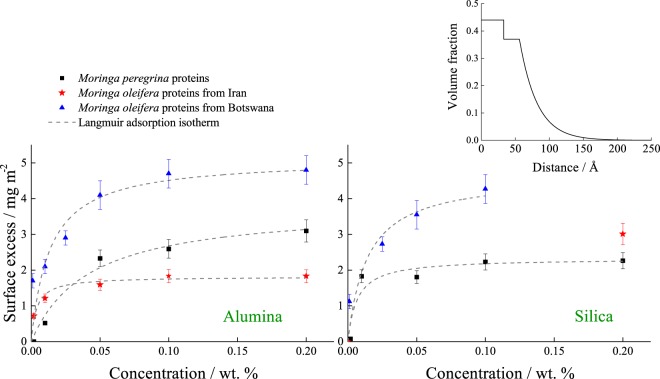
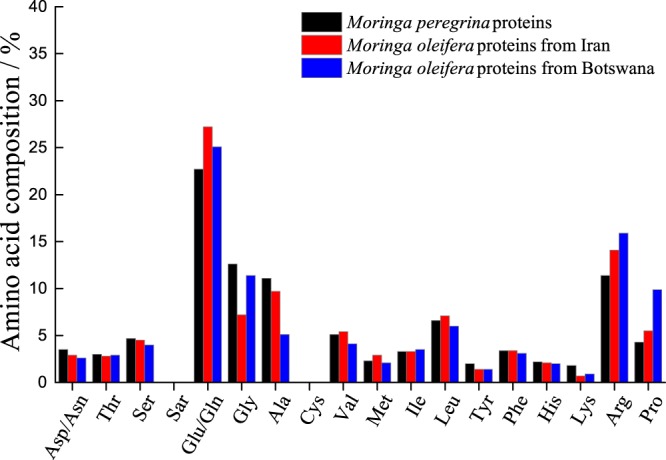
Trees of Moringa oleifera are the most widely exploited species of Moringa and proteins extracted from its seeds have been identified as the most efficient natural coagulant for water purification. Largely for climatic reasons, other Moringa species are more accessible in some regions and this paper presents a comparative study of the adsorption to different materials of the proteins extracted from seeds of Moringa peregrina and Moringa oleifera to explore their use as flocculating agents in regions where each is more readily accessible. Results showed that Moringa peregrina seed proteins had higher adsorption to alumina compared to silica, in contrast to opposite behavior for Moringa oleifera . Both species provide cationic proteins that can act as effective coagulants for the various impurities with different surface potential. Despite the considerable similarity of the amino acid composition, the seed proteins have significantly different adsorption and this presents the opportunity to improve processes by choosing the optimal species or combination of species depending on the type of impurity or possible development of separation processes.
Overview
The claims and statistics of this paper haven’t been checked yet.
Free: it reads the open-access text and checks the first 5 claims that cite a source we can check. Create a free account to check every claim.
Integrity signals
Registry
Cites
Statistics
Figures
Verification
Claims the paper makes
The claims and statistics of this paper haven’t been checked yet.
Free: it reads the open-access text and checks the first 5 claims that cite a source we can check. Create a free account to check every claim.
Claims other papers make about this one
Each is checked against this paper’s own text: does it say what the citing paper says it does?
The source backs part of the claim, not all of it — or backs it for a different population, condition or comparison.
In the citing paper
“By using MO seed extracts rather than the whole seed, one can reduce the amount of organic matter introduced to the water (Nouhi et al., 2019).”
From Use of biochar and Moringa oleifera in greywater treatment to remove heavy metals and contaminants of emerging concern (2023) · cites this paper as Nouhi et al., 2019
Experimental — accuracy not yet measuredThe source backs part of the claim, not all of it — or backs it for a different population, condition or comparison.
In the citing paper
“The active component of a powder prepared from dried, crushed MO seeds is a soluble protein which acts as a natural cationic polyelectrolyte that causes flocculation (Nouhi et al., 2019).”
From Use of biochar and Moringa oleifera in greywater treatment to remove heavy metals and contaminants of emerging concern (2023) · cites this paper as Nouhi et al., 2019
Experimental — accuracy not yet measured
Self-check
Percentages, sums and reported differences re-computed from the paper’s own numbers.
The self-check needs the paper’s full text.
Citations
Cites
Verma, A. K., Dash, R. R., & Bhunia, P. (2012) · Journal of Environmental Management · doi:10.1016/j.jenvman.2011.09.012 · Cited by 1,996
Coagulation by hydrolysing metal salts
Duan, J., & Gregory, J. (2003) · Advances in Colloid and Interface Science · doi:10.1016/s0001-8686(02)00067-2 · Cited by 1,716
Aluminium as a risk factor in Alzheimer’s disease, with emphasis on drinking water
Flaten, T. P. (2001) · Brain Research Bulletin · doi:10.1016/s0361-9230(01)00459-2 · Cited by 939
Emerging usage of plant-based coagulants for water and wastewater treatment
Yin, C.-Y. (2010) · Process Biochemistry · doi:10.1016/j.procbio.2010.05.030 · Cited by 581
Adsorption and flocculation by polymers and polymer mixtures
Gregory, J., & Barany, S. (2011) · Advances in Colloid and Interface Science · doi:10.1016/j.cis.2011.06.004 · Cited by 501
Compilation of PZC and IEP of sparingly soluble metal oxides and hydroxides from literature
Kosmulski, M. (2009) · Advances in Colloid and Interface Science · doi:10.1016/j.cis.2009.08.003 · Cited by 461
Isolation and characterization of a flocculating protein from Moringa oleifera Lam
Gassenschmidt, U., Jany, K. D., Bernhard, T., & Niebergall, H. (1995) · Biochimica et Biophysica Acta (BBA) - General Subjects · doi:10.1016/0304-4165(94)00176-x · Cited by 370
Aluminium in brain tissue in familial Alzheimer’s disease
Mirza, A., King, A., Troakes, C., & Exley, C. (2017) · Journal of Trace Elements in Medicine and Biology · doi:10.1016/j.jtemb.2016.12.001 · Cited by 261
Moringa oleifera seeds for softening hardwater
Muyibi, S. A., & Evison, L. M. (1995) · Water Research · doi:10.1016/0043-1354(94)00250-b · Cited by 214
International Journal of Water Resources and Environmental Engineering
(2026) · International Journal of Water Resources and Environmental Engineering · doi:10.5897/ijwree · Cited by 213
Cited by
Isaeva, V. I., Vedenyapina, M. D., Kurmysheva, A. Y., Weichgrebe, D., Nair, R. R., Nguyen, N. P. T., & Kustov, L. M. (2021) · Molecules · doi:10.3390/molecules26216628 · Cited by 196
Peydayesh, M., Suta, T., Usuelli, M., Handschin, S., Canelli, G., Bagnani, M., & Mezzenga, R. (2021) · Environmental Science & Technology · doi:10.1021/acs.est.1c01918 · Cited by 192
Orejuela-Escobar, L. M., Landázuri, A. C., & Goodell, B. (2021) · Journal of Bioresources and Bioproducts · doi:10.1016/j.jobab.2021.01.004 · Cited by 114
Girish, N., Parashar, N., & Hait, S. (2023) · The Science of The Total Environment · doi:10.1016/j.scitotenv.2023.165723 · Cited by 94
Diver, D., Nhapi, I., & Ruziwa, W. R. (2023) · Environmental Advances · doi:10.1016/j.envadv.2023.100421 · Cited by 107
Kumar, M., Selvasekaran, P., Kapoor, S., Barbhai, M. D., Lorenzo, J. M., Saurabh, V., Potkule, J. B., Changan, S. S., Elkelish, A., Selim, S., et al. (2022) · Food Hydrocolloids · doi:10.1016/j.foodhyd.2022.107791 · Cited by 69
Horn, L. N., Shakela, N., Mutorwa, M. K., Naomab, E., & Kwaambwa, H. M. (2022) · Journal of Agriculture and Food Research · doi:10.1016/j.jafr.2022.100397 · Cited by 95
Self-citationMao, Y., Hu, Z.-F., Li, H., Zheng, H., Yang, S., Yu, W., Tang, B., Yang, H., He, R., Guo, W., et al. (2024) · Environmental Pollution · doi:10.1016/j.envpol.2024.123863 · Cited by 71
Escobar, O. D. S., de Azevedo, C. F., Swarowsky, A., Adebayo, M. A., Netto, M. S., & Machado, F. M. (2021) · Journal of environmental chemical engineering · doi:10.1016/j.jece.2021.105553 · Cited by 48
Vu, T. N., Le, P. H. P., Pham, D. N. P., Hoang, T. H., Nadda, A. K., Lê, T. S., & Pham, T. D. (2022) · Chemosphere · doi:10.1016/j.chemosphere.2022.135856 · Cited by 36
Elsergany, M. (2023) · Water · doi:10.3390/w15152804 · Cited by 39
Pandey, P., Khan, F., Ahmad, V., Singh, A. K., Shamshad, T., & Mishra, R. (2020) · SN Applied Sciences · doi:10.1007/s42452-020-3124-2 · Cited by 33
Recent developments in functionalized polymer NF membranes for biofouling control
Allaoui, B. E., Chakhtouna, H., Zari, N., Bouhfid, R., & Qaiss, A. E. K. (2022) · Emergent Materials · doi:10.1007/s42247-022-00367-x · Cited by 29
“Although the coagulation/flocculation process is capable of removing protein and polysaccharide types, adsorbent clarifying may be required afterwards [131].”
BackgroundGarg, P., Pundir, S., Ali, A., Panja, S., Chellappan, D. K., Dua, K., Kulshrestha, S., & Negi, P. (2023) · Naunyn-Schmiedeberg s Archives of Pharmacology · doi:10.1007/s00210-023-02862-2 · Cited by 35
“Moreover, it is used as natural coagulant for wastewater treatment (Nouhi et al. 2019).”
Biopolymer composites for removal of toxic organic compounds in pharmaceutical effluents – a review
Simelane, N. P., Asante, J. K. O., Ndibewu, P. P., Mramba, A. S., & Sibali, L. L. (2022) · Carbohydrate Polymer Technologies and Applications · doi:10.1016/j.carpta.2022.100239 · Cited by 35
Alsamhary, K. I. (2023) · Saudi Journal of Biological Sciences · doi:10.1016/j.sjbs.2023.103820 · Cited by 21
“MOS contains cationic protein due to which it is used as flocculation/coagulation agent (Nouhi et al., 2019).”
BackgroundMethodInfluentialApple Pomace-Derived Cationic Cellulose Nanocrystals for PFAS Removal from Contaminated Water
Franco, L. A., Stuart, T. D., Hossain, M. S., Ramarao, B. V., VanLeuven, C. C., Wriedt, M., Satchwell, M. F., & Kumar, D. (2024) · Processes · doi:10.3390/pr12020297 · Cited by 20
Trigueros, D. E. G., Hinterholz, C. L., Fagundes‐Klen, M. R., Veit, M. T., & Formentini‐Schmitt, D. M. (2023) · Bioresource Technology Reports · doi:10.1016/j.biteb.2023.101579 · Cited by 23
Kozyatnyk, I., & Njenga, M. (2023) · Bioresource Technology Reports · doi:10.1016/j.biteb.2023.101615 · Cited by 19
“The MO seeds were sourced from Kenya, and the active substance was extracted following a the protocol presented by (Nouhi et al., 2019) with several modifications.”
BackgroundMethodInfluentialTahir, R., Samra, Ghaffar, A., Afzal, F., Qazi, I. H., Zhao, L., Yan, H., Kuo, H., Khan, H., & Yang, S. Y. (2024) · Chemosphere · doi:10.1016/j.chemosphere.2024.142096 · Cited by 17
Antibiotics pollutants in agricultural soil: Kinetic, sorption, and thermodynamic of ciprofloxacin
Sharifmand, M., Sepehr, E., Rasouli-Sadaghiani, M., Asri‐Rezaei, S., & Rengel, Z. (2024) · Heliyon · doi:10.1016/j.heliyon.2024.e37035 · Cited by 14
Sané, N., Sivalingam, P., Koželuh, M., Mbengue, M., Stoll, S., Poté, J. W., & Coustumer, P. L. (2024) · Environmental Science and Pollution Research · doi:10.1007/s11356-024-35362-8 · Cited by 17
Adeleke, V. T., Madlala, N. E., Adeniyi, A. A., & Lokhat, D. (2022) · Molecules · doi:10.3390/molecules27051685 · Cited by 11
“the 2S albumin protein derived from certain plant species has shown potential in flocculation/coagulation studies [4,5].”
BackgroundMoringa Oleifera leaf extract induced pulmonary embolism-a case report
Ebhohon, E., & Miller, D. (2022) · International Journal of Emergency Medicine · doi:10.1186/s12245-022-00419-3 · Cited by 11
Ahizi, A. E., Njoku, C. N., Onyelucheya, O. E., Anusi, M. O., Okonkwo, I. J., Okoye, P. U., & Igwegbe, C. A. (2022) · Sustainable Water Resources Management · doi:10.1007/s40899-022-00780-4 · Cited by 11
“oleifera plant may effectively coagulate a variety of contaminants with varying surface potentials (Nouhi et al. 2019; Menkiti and Onukwuli 2010).”
BackgroundCoagulation of organic pollutants by Moringa oleifera protein molecules: in silico approach
Adeleke, V. T., Adeniyi, A. A., & Lokhat, D. (2021) · Environmental Science Water Research & Technology · doi:10.1039/d1ew00247c · Cited by 9
Al‐Harthi, M. A., Attia, Y. A., Elgandy, M. F., & Bovera, F. (2023) · Frontiers in Veterinary Science · doi:10.3389/fvets.2023.1158468 · Cited by 8
Kosba, A. M., El-Naggar, G. M., El-Maghraby, E. M., & Khalaf, H. A. (2024) · Catalysis Surveys from Asia · doi:10.1007/s10563-024-09429-y · Cited by 8
“One of the main advantages of using Moringa oleifera as a flocculant is its accessibility, cost-effectiveness, and ease of use in wastewater treatment in removing various contaminants like heavy metals, organic pollutants, and pathogens [29].”
Exploring biochar and Moringa oleifera seed proteins for greywater remediation on small farms
Ndinda, C., Njenga, M., & Kozyatnyk, I. (2024) · Bioresource Technology · doi:10.1016/j.biortech.2024.130935 · Cited by 7
“These proteins exhibit a positive charge, allowing them to neutralize and bind to negatively charged particles and microorganisms in the water (Nouhi et al., 2019).”
Dhanalekshmi, U. M., Alam, T., & Khan, S. A. (2022) · Springer eBooks · doi:10.1007/978-981-16-4880-9_1 · Cited by 9
Azmi, N., Akanno, A., Jacobsen, C., & Fossum, J. O. (2025) · Food Hydrocolloids for Health · doi:10.1016/j.fhfh.2025.100231 · Cited by 6
Soil-applied selenite increases selenium and reduces cadmium in roots of Moringa oleifera
Fu, Z., Liu, G., Du, L., Wang, L., Yan, H., Yin, B., & Ou, Q. (2020) · Scientific Reports · doi:10.1038/s41598-020-77350-1 · Cited by 8
Konkobo, F. A., Diao, M., Savadogo, P. W., Dakuyo, R., Roamba, E. N., Zongo, S., & Dicko, M. H. (2024) · International Journal of Environmental Research and Public Health · doi:10.3390/ijerph21050519 · Cited by 7
“…the release of cationic proteins (in the case of Moringa) and various cationic polyelectrolytes (in the cases of the other bioextracts) that attach to the surfaces of the negatively charged mineral particles, which will be removed by adsorption as a result of electrostatic interactions [47,52].”
BackgroundKonucu, M., Tekdal, D., Eker‐Develi, E., Meers, E., & de Souza, M. F. (2022) · Applied Sciences · doi:10.3390/app122412968 · Cited by 6
A comprehensive review of coagulation as a technique for microplastics removal from water
Sahini, M. G., & Banyikwa, A. T. (2026) · Discover Chemistry. · doi:10.1007/s44371-026-00627-3 · Cited by 4
Metal ions removal from wastewaters using Moringa oleifera seeds
Stanikina, N. (2023) · BIO Web of Conferences · doi:10.1051/bioconf/20235803005 · Cited by 6
Farahat, E. A., Cherubini, P., Saurer, M. M., & Gärtner, H. (2021) · International Journal of Biometeorology · doi:10.1007/s00484-021-02198-7 · Cited by 4
Moringa oleifera Plant as potent alternate to Chemical Coagulant in Water Purification
Pandey, P., & Khan, F. (2022) · Brazilian Journal of Pharmaceutical Sciences · doi:10.1590/s2175-97902022e201158 · Cited by 6
Coagulation/Floculation Of Slaughter Effluent Using Moringa Oleifera Lam as A Coagulant
Koelln, A. D. O., Werberich, T., Dornelas, K. C., do Amaral, A. G., Schneider, R. M., & Bongiovani, M. C. (2024) · Revista de Gestão Social e Ambiental · doi:10.24857/rgsa.v18n3-055 · Cited by 3
Uso das Sementes de Moringa Oleifera no Tratamento da Água
Koike, M. K., Kochi, A. K., & Pinto, D. Y. G. (2020) · Arquivos Brasileiros de Cardiologia · doi:10.36660/abc.20200390 · Cited by 3
Interaction of Perfluorooctanoate and Perfluorohexanoate with Moringa oleifera Seed Protein
Sanga, N., Croy, N., Ahrens, L., Welbourn, R. J. L., & Rennie, A. R. (2025) · Langmuir · doi:10.1021/acs.langmuir.5c01879 · Cited by 2
Self-citationMoringa Proteins: Nutrition, Functionality, and Applications
Wong, S. E., Illingworth, K. A., & Siow, L. F. (2024) · Elsevier eBooks · doi:10.1016/b978-0-323-91652-3.00020-4 · Cited by 3
Yusaerah, N., Supriyanto, G., & Hasri, H. (2024) · AIP conference proceedings · doi:10.1063/5.0202001 · Cited by 2
Interactions of CdSe Nanocrystals with Cationic Proteins Extracted from Moringa oleifera Seeds
Daniel, L. S., Kapofi, S., Kandawa‐Schulz, M., & Kwaambwa, H. M. (2024) · Photochem · doi:10.3390/photochem4010003 · Cited by 1
Self-citationEl-Tawila, M. M., Hamdy, R. A., Hussein, M. A., & Aborhyem, S. M. (2025) · Current Pharmaceutical Biotechnology · doi:10.2174/0113892010352642241221152820 · Cited by 1
Biogenic magnetite nanoparticles for the magnetic separation of microalgae
Taveira, I. N., Presciliano, R., Castro, J., Corrêa, T., Richard, R., Mendes, L. B. B., & Abreu, F. D. Á. (2025) · Algal Research · doi:10.1016/j.algal.2025.104237 · Cited by 1
Azmi, N., Akanno, A., Demchenko, H., Sanga, N., & Fossum, J. O. (2025) · European Journal of Lipid Science and Technology · doi:10.1002/ejlt.70071 · Cited by 2
Sané, N., Mbengue, M., Ndoye, S., Stoll, S., Poté, J. W., & Coustumer, P. L. (2024) · International Journal of Environmental Research and Public Health · doi:10.3390/ijerph21081031 · Cited by 2
“The at the University of Geneva for quantifying organic matters, The coagulant effect of MOS has been widely studied by authors such as Nouhi et al. 2019 [47].”
BackgroundPotential application as a bio-coagulant for Moringa oleifera seeds
Zviuya, A., Govha, J., Sigauke, P., Mamvura, T. A., & Danha, G. (2025) · Chemical Industry and Chemical Engineering Quarterly · doi:10.2298/ciceq240313008z · Cited by 1
Rodríguez, J. L. L., Benítez-Jiménez, D. G., Pérez, Y. N., Wright-Ramírez, J. V., & Sanz, L. R. (2022) · Agronomía Mesoamericana · doi:10.15517/am.v34i1.50528
The research of a novel flocculant mainly prepared by Moringa seed meal
Shen, L., & Zheng, Y. (2023) · International Journal of Chemical Reactor Engineering · doi:10.1515/ijcre-2023-0050
Rupesh, D., Ganesan, R., & Thiruchelvam, V. (2024) · AIP conference proceedings · doi:10.1063/5.0229323
Rupesh, D., & Ganesan, R. (2024) · AIP conference proceedings · doi:10.1063/5.0234056
Eldeen, T. R. M., Hussein, M. A., Mostafa, N. Y., & Abdelsalam, S. M. F. (2025) · Pharmaceutical Nanotechnology · doi:10.2174/0122117385338859241227172523 · Cited by 1
Sundar, S., & Prabakaran, K. (2025) · AIP conference proceedings · doi:10.1063/5.0272762
Rupesh, D., & Ganesan, R. (2025) · AIP conference proceedings · doi:10.1063/5.0266042
Optimization of Moringa oleifera-based coagulant in textile wastewater treatment
Rendana, M., Renaldi, F., Akbar, M. S. R., & Hardestyariki, D. (2025) · Discover Applied Sciences · doi:10.1007/s42452-025-07323-4 · Cited by 2
“Both alum and MO effectively eliminate turbidity, however, alum can achieve slightly better removal rates in certain circumstances [45, 46]. found that alum was usually more efficacious in lowering COD and BOD levels.”
Sreekala, S. R., & Muraleedharan, U. D. (2026) · Indian Journal of Natural Products and Resources · doi:10.56042/ijnpr.v17i2.20072
Azmi, N., Ceccato, B. T., Rathod, S., Passos, A. R., Tenório, R. P., Kirch, A., Terry, A. E., & Fossum, J. O. (2026) · SSRN Electronic Journal · doi:10.2139/ssrn.7285964
Matebese, F., Phadagi, R., Motloutsi, M. L., Mekoyete, T. M., Raseala, M. J., & Moutloali, R. M. (2026) · Sustainable materials and technologies · doi:10.1016/j.susmat.2026.e02210
Towards Sustainable Flocculation: Advances, Challenges, and Future Perspectives
Magalhães, S., Oliveira, M., Venâncio, C., Lopes, I., Alves, L., Medronho, B., Rasteiro, M. G., Backe, C., Wärn, A., Johansson, M., et al. (2026) · Macromol—A Journal of Macromolecular Research · doi:10.3390/macromol6030071
Metadata
- Authors
- Nouhi, S., Kwaambwa, H. M., Gutfreund, P., & Rennie, A. R.
- Affiliations
- Uppsala University (SE)
- Namibia University of Science and Technology (NA)
- Institut Laue-Langevin (FR)
- Corresponding author
- Nouhi, Shirin
- Venue
- Scientific Reports
- Published
- 2019-11-29
- Volume
- 9
- Issue
- 1
- Pages
- 17945-17945
- ISSN
- 2045-2322 (ISSN-L)
- PMC
- PMC6884452
- OpenAlex
- W2991175787
- Cited by
- 61
- References
- 56
- Citations by year
- 2026: 4 · 2025: 10 · 2024: 16 · 2023: 10 · 2022: 12 · 2021: 6 · 2020: 3
- FWCI
- 1.90
- Type
- journal article
- Language
- en
- Open access
- gold
- doi.org
- Licence
- cc-by
- creativecommons.org/licenses/by/4.0 (tdm)
- creativecommons.org/licenses/by/4.0 (vor)
- Locations
- Scientific Reports (publishedVersion, cc-by)
- PubMed Central (publishedVersion, cc-by)
- PubMed (publishedVersion)
- KTH Publication Database DiVA (KTH Royal Institute of Technology) (submittedVersion, other-oa)
- DOAJ (DOAJ: Directory of Open Access Journals) (submittedVersion)
- Funders
- Vetenskapsrådet (621-2012-4382)
- Topics
- Physical Sciences › Environmental Science › Water Science and Technology › Coagulation and Flocculation Studies
- Life Sciences › Agricultural and Biological Sciences › Plant Science › Moringa oleifera research and applications
- Physical Sciences › Chemical Engineering › Filtration and Separation › Minerals Flotation and Separation Techniques
- Keywords
- Moringa peregrina, Moringa oleifera, seed proteins, natural coagulants, flocculation, adsorption, alumina, silica, cationic proteins, water treatment, surface potential, amino acid composition, plant-based coagulants
- MeSH terms
- Adsorption, Aluminum Oxide, Flocculation, Plant Proteins, Seeds, Silicon Dioxide, Water Purification, Moringa, Moringa oleifera
About these checks
Registry, retraction, Cites and statistics results are computed, not judged, with one exception: a printed reference that no index lists is read once by a model before it counts as a citation error. Claims are extracted by a model and kept only when their quote appears verbatim in the text; each cited source is then checked, with a model’s help, for whether it says what the claim relies on. Those verdicts can be wrong — read the claim’s quote and the cited source before relying on one.
Statistics and arithmetic are recomputed, not judged.
Confidence bands are shown only for fields calibrated on our annotated test set. None is calibrated yet, so no band is shown.
What counts as a claim ›How we measure confidence ›How we check this ›
Are you an author, or do you see a problem with this page? Request a review
Data sources
Bibliographic data: Semantic Scholar, OpenAlex, Crossref.
Contains information from the Semantic Scholar Academic Graph Datasets, made available under the ODC Attribution License (ODC-BY 1.0).
Semantic Scholar’s data is described in: Kinney, R., et al. (2023). The Semantic Scholar Open Data Platform. arXiv:2301.10140.
