

Colletotrichum species associated with mango in southern China
Open accessThe DOI matches its Crossref record; 41 of the 43 references it cites were found in a registry or an index, and 1 are not checked yet; 13 of the 31 sources its claims cite were checked for support.
Abstract
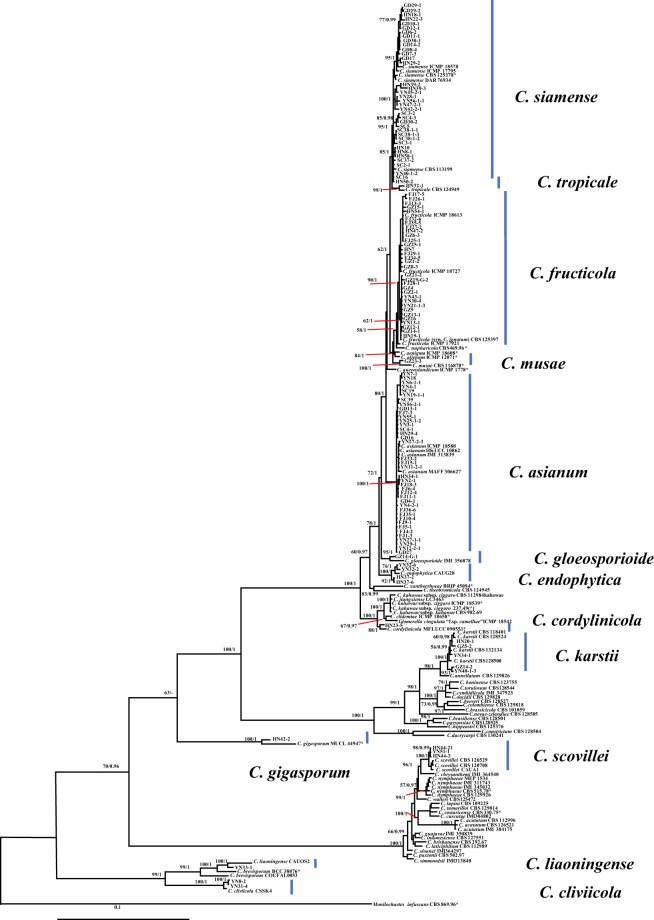
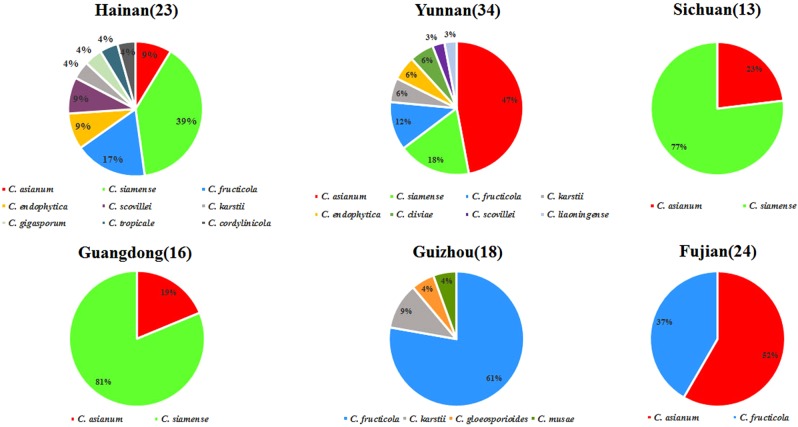
Mango (Mangifera indica L.) is an economically significant fruit crop in provinces of southern China including Hainan, Yunnan, Sichuan, Guizhou, Guangdong and Fujian. The objective of this study was to examine the diversity of Colletotrichum species infecting mango cultivars in major growing areas in China, using morphological and molecular techniques together with pathogenicity tests on detached leaves and fruits. Over 200 Colletotrichum isolates were obtained across all mango orchards investigated, and 128 of them were selected for sequencing and analyses of actin (ACT), chitin synthase (CHS-1), glyceraldehyde-3-phosphate dehydrogenase (GAPDH), the internal transcribed spacer (ITS) region, β-tubulin (TUB2) genomic regions. Our results showed that the most common fungal isolates associated with mango in southern China involved 13 species: Colletotrichum asianum, C. cliviicola, C. cordylinicola, C. endophytica, C. fructicola, C. gigasporum, C. gloeosporioides, C. karstii, C. liaoningense, C. musae, C. scovillei, C. siamense and C. tropicale. The dominant species were C. asianum and C. siamense each accounting for 30%, and C. fructicola for 25%. Only C. asianum, C. fructicola, C. scovillei and C. siamense have previously been reported on mango, while the other nine Colletotrichum species listed above were first reports associated with mango in China. From this study, five Colletotrichum species, namely C. cordylinicola, C. endophytica, C. gigasporum, C. liaoningense and C. musae were the first report on mango worldwide. Pathogenicity tests revealed that all 13 species caused symptoms on artificially wounded mango fruit and leaves (cv. Tainong). There was no obvious relationship between aggressiveness and the geographic origin of the isolates. These findings will help in mango disease management and future disease resistance breeding.
Verified 2026-11-22 · 1 reference not checked yet
Overview
CoChat Summary
## TL;DR
The paper surveyed Colletotrichum from mango anthracnose across six major mango-growing provinces in southern China and used morphology plus five-locus phylogenetics to identify 13 species. It found that three species dominated, several species were first reports on mango in China, and all 13 species were pathogenic on wounded mango leaves and fruits.
## Key findings
- From 2016–2017, the authors obtained 205 Colletotrichum isolates from symptomatic mango tissue and selected 128 representative isolates for detailed study.
- The 128 isolates were classified into 13 species: *C. asianum, C. cliviicola, C. cordylinicola, C. endophytica, C. fructicola, C. gigasporum, C. gloeosporioides, C. karstii, C. liaoningense, C. musae, C. scovillei, C. siamense,* and *C. tropicale*.
- The dominant species were *C. asianum* and *C. siamense* (38 isolates each, 29.7% each) and *C. fructicola* (32 isolates, 25.0%); together the dominant species accounted for 84.4% of all isolates.
- Nine species were reported as first records on mango in China, and five species (*C. cordylinicola, C. endophytica, C. gigasporum, C. liaoningense,* and *C. musae*) were first reports on mango worldwide.
- All 128 tested isolates were pathogenic on wounded mango leaves and fruits. Fruit lesion diameters ranged from 0.54 cm to 3.64 cm; leaf lesion diameters ranged from 0.60 cm to 4.34 cm.
- On fruits, 52% (66/128) were moderately virulent, 7% (9/128) strongly virulent, and 41% (53/128) weakly virulent; on leaves, 65% (84/128) were moderately virulent, 30% (38/128) strongly virulent, and 5% (6/128) weakly virulent.
## Methods
- Sampling/design: Mango leaves, fruits, and branches with anthracnose symptoms were collected during 2016 and 2017 from six provinces in southern China (Fujian, Guangdong, Guizhou, Hainan, Sichuan, and Yunnan).
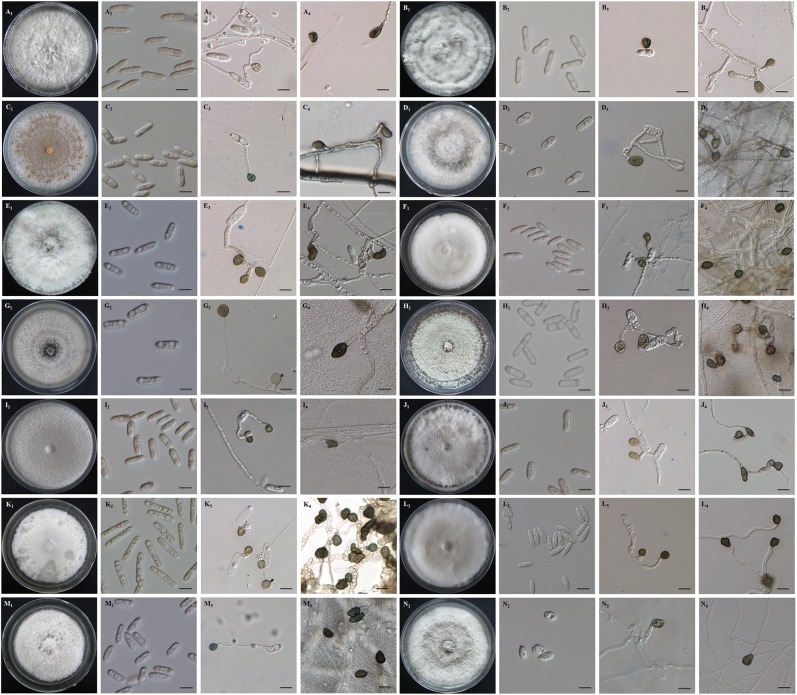
- Identification approach: Isolates were cultured and characterized morphologically, then sequenced at five loci (ACT, CHS-1, GAPDH, ITS, TUB2) and analyzed with maximum likelihood and Bayesian phylogenetic methods using concatenated data.
- Pathogenicity tests: Representative isolates were inoculated onto wounded detached mango leaves and fruits (cv. Tainong) under controlled conditions, and lesion diameters were measured; statistical comparisons used ANOVA followed by Fisher’s LSD.
## Limitations
- The authors state that the pathogenicity test used wounded detached leaves and fruits with mycelial plugs, so the results “may not reflect the full aggressiveness potential” of the isolates; they suggest testing conidial inoculation in planta instead.
- They also note that symptoms and aggressiveness can vary with cultivar, fruit physiological state, inoculum concentration, humidity, and temperature, which makes the detached-tissue assay an incomplete proxy for field disease.
- Evident from the text: sampling was confined to six provinces in southern China and to symptomatic anthracnose tissue, so it may not capture the full diversity of Colletotrichum on mango outside those areas or without visible symptoms.
Model-written summary. Check it against the paper before relying on it.
Integrity signals
Registry
Cites
Statistics
Figures
Verification
Claims the paper makes
11 Valid · 3 Not valid · 5 Not checked · 29 Own results and interpretations
At least one cited source doesn’t support this claim or points to a different paper, and none confirmed it — see the verdicts below.
In the paper
“Only C. asianum, C. fructicola, C. scovillei and C. siamense have previously been reported on mango”
- Also stated in: § Discussion · plain
“Mo et al.15, Liu et al.24 and Qin et al. 22,25 identified four Colletotrichum species (C. asianum, C. fructicola, C. scovillei, C. siamense) prevalent on mango in China.”
§ Colletotrichum species associated with mango in southern China > Abstract Mango (Mangifera indica L.) is an economically significant fruit crop in provinces of southern China including Hainan, Yunnan, Sichuan, Guizhou, Guangdong and Fujian. The objective of this study was to examine the diversity of Colletotrichum species infecting mango cultivars in major growing areas in China, using morphological and molecular techniques together with pathogenicity tests on detached leaves and fruits. Over 200 Colletotrichum isolates were obtained across all mango orchards investigated, and 128 of them were selected for sequencing and analyses of actin (ACT), chitin synthase (CHS-1), glyceraldehyde-3-phosphate dehydrogenase (GAPDH), the internal transcribed spacer (ITS) region, β-tubulin (TUB2) genomic regions. Our results showed that the most common fungal isolates associated with mango in southern China involved 13 species: Colletotrichum asianum, C. cliviicola, C. cordylinicola, C. endophytica, C. fructicola, C. gigasporum, C. gloeosporioides, C. karstii, C. liaoningense, C. musae, C. scovillei, C. siamense and C. tropicale. The dominant species were C. asianum and C. siamense each accounting for 30%, and C. fructicola for 25%. Only C. asianum, C. fructicola, C. scovillei and C. siamense have previously been reported on mango, while the other nine Colletotrichum species listed above were first reports associated with mango in China. From this study, five Colletotrichum species, namely C. cordylinicola, C. endophytica, C. gigasporum, C. liaoningense and C. musae were the first report on mango worldwide. Pathogenicity tests revealed that all 13 species caused symptoms on artificially wounded mango fruit and leaves (cv. Tainong). There was no obvious relationship between aggressiveness and the geographic origin of the isolates. These findings will help in mango disease management and future disease resistance breeding.
What the sources say
- Disputedcites Mo et al.15 Mo J Identification and Characterization of Colletotrichum Species Associated with Mango Anthracnose in Guangxi, China Plant Dis. 2018 102 1283 1289 10.1094/PDIS-09-17-1516-RE 30673569 sourceExperimental — accuracy not yet measured
The Discussion reports prior records of C. asianum, C. fructicola, and C. siamense on mango, but it also discusses C. acutatum from mango and says C. gloeosporioides had previously been shown to cause mango fruit rot. Those additional reports contradict “only” the four named species. The passages do not establish a prior mango report for C. scovillei. (LLM, conf=0.86)
Checked by a reasoning model — may be wrong.
- Not checked — no full text of the sourcecites Liu et al.24 Liu LP First report of post-harvest anthracnose on mango (Mangifera indica) caused by Colletotrichum siamense in China Plant Disease 2017 101 5 833 833 10.1094/PDIS-08-16-1130-PDN source
- Not matchedcites Qin et al. 22,25
This doesn’t read as a citation we can look up.
plain- Asserted: passes — The authors put it forward as true.
- Checkable: passes — It can be checked against evidence.
- Load-bearing: passes — The paper’s conclusions depend on it.
- Based: passes — The paper gives a reason why it holds.
- Also stated in: § Discussion · plain
Every source the paper cites for this claim was checked and supports it.
In the paper
“conidial morphology alone could not distinguish all species within species complexes9.”
§ Colletotrichum species associated with mango in southern China > Discussion
What the sources say
- Supportedcites [9] Weir BS Johnston PR Damm U The Colletotrichum gloeosporioides species complex Stud. Mycol. 2012 73 115 180 10.3114/sim0011 23136459 PMC3458417 source
The Results (Morphology and biology) say conidial size ranges often overlap between species in the C. gloeosporioides complex. The Discussion adds that many accepted species have few or no reliable diagnostic morphological features. Together, these support the claim that conidial morphology alone cannot distinguish every species in the complex. (LLM, conf=0.92)
hedged- Asserted: passes — The authors put it forward as true.
- Checkable: passes — It can be checked against evidence.
- Load-bearing: passes — The paper’s conclusions depend on it.
- Based: passes — The paper gives a reason why it holds.
- Supported
Every source the paper cites for this claim was checked and supports it.
In the paper
“Our study showed that a single host species may be attacked by several Colletotrichum species, and this was previously reported by Phoulivong et al.28.”
§ Colletotrichum species associated with mango in southern China > Discussion
What the sources say
- Supportedcites Phoulivong et al.28 Phoulivong S McKenzie EHC Hyde KD Cross infection of Colletotrichum species; a case study with tropical fruits Current Research in Environmental & Applied Mycology. 2012 2 99 111 10.5943/cream/2/2/2 source
The Discussion explicitly states that one host can be infected by many Colletotrichum species. The Introduction likewise describes multiple species occurring on a single host. Page numbers are not available in the supplied copy. (LLM, conf=0.94)
plainstates a possible cause- Asserted: passes — The authors put it forward as true.
- Checkable: passes — It can be checked against evidence.
- Load-bearing: unclear — It is unclear whether the paper’s conclusions depend on it.
- Based: passes — The paper gives a reason why it holds.
- Supported
A result the paper reports from its own data — it cites no other source for it, so there is none to check. The quote shows it is in the paper.
In the paper
“There was no obvious relationship between aggressiveness and the geographic origin of the isolates.”
- Also stated in: § Discussion · plain
“The difference in aggressiveness of Colletotrichum within species was independent of a particular geographical origin for sample collection”
- Also stated in: § Discussion · plain
“no specific correlations were found between aggressiveness and province of origin.”
§ Colletotrichum species associated with mango in southern China > Abstract
plain- Asserted: passes — The authors put it forward as true.
- Checkable: passes — It can be checked against evidence.
- Load-bearing: unclear — It is unclear whether the paper’s conclusions depend on it.
- Based: passes — The paper gives a reason why it holds.
- Also stated in: § Discussion · plain
The paper states this without a source or data behind it here, so there is nothing to check it against. The quote shows it is in the paper.
In the paper
“All 128 tested isolates were pathogenic to wounded mango leaves and fruits.”
§ Colletotrichum species associated with mango in southern China > Results > Pathogenicity and aggressiveness in tissues
states a cause- Asserted: passes — The authors put it forward as true.
- Checkable: passes — It can be checked against evidence.
- Load-bearing: passes — The paper’s conclusions depend on it.
- Based: unclear — It is unclear why the paper says it holds.
18 more claims
Create a free account to see all 48 claims and to verify the 2 references still open.
- Probably not a substantial claim. 14
- It may state two separate claims as one. 19
- Borderline: one of the tests for a substantial claim is unclear. 1
Citations
Cites
Basic local alignment search tool
Altschul, S. F., Gish, W., Miller, W., Myers, E. W., & Lipman, D. J. (1990) · Journal of Molecular Biology · doi:10.1006/jmbi.1990.9999 · Cited by 98,669
MUSCLE: multiple sequence alignment with high accuracy and high throughput
Edgar, R. C. (2004) · Nucleic Acids Research · doi:10.1093/nar/gkh340 · Cited by 44,662
MrBayes 3.2: Efficient Bayesian Phylogenetic Inference and Model Choice Across a Large Model Space
Ronquist, F., Teslenko, M., van der Mark, P., Ayres, D. L., Darling, A., Höhna, S., Larget, B., Liu, L., Suchard, M. A., & Huelsenbeck, J. P. (2012) · Systematic Biology · doi:10.1093/sysbio/sys029 · Cited by 27,843
jModelTest 2: more models, new heuristics and parallel computing
Darriba, D., Taboada, G. L., Doallo, R., & Posada, D. (2012) · Nature Methods · doi:10.1038/nmeth.2109 · Cited by 16,785
BEAST: Bayesian evolutionary analysis by sampling trees
Drummond, A. J., & Rambaut, A. (2007) · BMC Evolutionary Biology · doi:10.1186/1471-2148-7-214 · Cited by 12,919
TESTING SIGNIFICANCE OF INCONGRUENCE
Farris, J. S., Källersjö, M., Kluge, A. G., & Bult, C. (1994) · Cladistics · doi:10.1111/j.1096-0031.1994.tb00181.x · Cited by 3,833
raxmlGUI: a graphical front-end for RAxML
Silvestro, D., & Michalak, I. (2012) · Organisms Diversity & Evolution · doi:10.1007/s13127-011-0056-0 · Cited by 2,864
The Colletotrichum gloeosporioides species complex
Weir, B. S., Johnston, P. R., & Damm, U. (2012) · Studies in Mycology · doi:10.3114/sim0011 · Cited by 1,646
Tang, Q., & Zhang, C. (2013) · Insect Science · doi:10.1111/j.1744-7917.2012.01519.x · Cited by 1,198
Colletotrichum – current status and future directions
Cannon, P. F., Damm, U., Johnston, P. R., & Weir, B. S. (2012) · Studies in Mycology · doi:10.3114/sim0014 · Cited by 1,105
Research works printed but not linked: 5
- Nan N Fu ZJ Xu JC Mango industrialized development in China Journal of Yunnan Agricultural University. 2017 11 80 84
- Hyde KD Colletotrichum: a catalogue of confusion Fungal Divers. 2009 39 1 17
- Cai L A polyphasic approach for studying Colletotrichum. Fungal Divers. 2009 39 183 204
- Sun. S Identification and biological characteristics of Colletotrichum asianum from post-harvest mango (Mangifera indica) Chinese Journal of Tropical Crops 2016 37 2392 2397
- Yang YL Colletotrichum anthracnose of Amaryllidaceae Fungal Divers. 2009 39 2 123 146
Cited by
Colletotrichum species and complexes: geographic distribution, host range and conservation status
Talhinhas, P., & Baroncelli, R. (2021) · Fungal Diversity · doi:10.1007/s13225-021-00491-9 · Cited by 280
Zakaria, L. (2021) · Agriculture · doi:10.3390/agriculture11040297 · Cited by 178
“In southern China, study on Colletotrichum spp. associated with mango anthracnose was reported by Li et al. (2019) [35], who analyzed infected mangoes from six provinces, Fujian, Guangdong, Guizhou, Hainan, Sichuan, and Yunan.”
BackgroundInfluentialMango anthracnose disease: the current situation and direction for future research
Dofuor, A. K., Quartey, N. K.-A., Osabutey, A. F., Antwi-Agyakwa, A. K., Asante, K., Boateng, B. O., Ablormeti, F. K., Lutuf, H., Osei-Owusu, J., Osei, J. H. N., et al. (2023) · Frontiers in Microbiology · doi:10.3389/fmicb.2023.1168203 · Cited by 103
“Anthracnose can cause a 30–60% annual loss in China’s mango harvest (Li et al., 2019).”
BackgroundChung, P.-C., Wu, H., Wang, Y., Ariyawansa, H. A., Hu, H.-P., Hung, T., Tzean, S. S., & Chung, C. (2020) · Scientific Reports · doi:10.1038/s41598-020-70878-2 · Cited by 107
Wu, Y., Cheng, J., & Sun, D. (2022) · Food Chemistry · doi:10.1016/j.foodchem.2022.132197 · Cited by 96
Wu, Y., Cheng, J., Keener, K. M., & Sun, D. (2022) · Postharvest Biology and Technology · doi:10.1016/j.postharvbio.2022.112181 · Cited by 73
Yang, E.-F., Tibpromma, S., Karunarathna, S. C., Phookamsak, R., Xu, J., Zhao, Z., Karunanayake, C., & Promputtha, I. (2022) · Journal of Fungi · doi:10.3390/jof8020152 · Cited by 44
Gas barrier coating based on cellulose nanocrystals and its preservation effects on mango
Li, M., Shi, Z., He, S., Hu, Q., Cai, P., Gan, L., Huang, J., & Zhang, Y. (2023) · Carbohydrate Polymers · doi:10.1016/j.carbpol.2023.121317 · Cited by 42
Fusarium species associated with leaf spots of mango in China
Guo, Z., Yu, Z., Li, Q., Tang, L., Guo, T., Huang, S., Mo, J., Hsiang, T., & Luo, S. (2021) · Microbial Pathogenesis · doi:10.1016/j.micpath.2021.104736 · Cited by 39
Self-citationJian, Y., Li, Y., Tang, G., Zheng, X., Khaskheli, M. I., & Gong, G. (2021) · Plant Disease · doi:10.1094/pdis-10-20-2114-re · Cited by 38
First report of Colletotrichum asianum associated with mango fruit anthracnose in Indonesia
Benatar, G. V., Wibowo, A., & Suryanti (2021) · Crop Protection · doi:10.1016/j.cropro.2020.105432 · Cited by 31
Cacciola, S. O., Gilardi, G., Faedda, R., Schena, L., Pane, A., Garibaldi, A., & Gullino, M. L. (2020) · Plants · doi:10.3390/plants9050654 · Cited by 32
Yang, C., Ying, S., Tang, B., et al. (2025) · Journal of genetics and genomics/Journal of Genetics and Genomics · doi:10.1016/j.jgg.2025.06.001 · Cited by 27
Fuentes‐Aragón, D., Guarnaccia, V., Rebollar‐Alviter, Á., Juárez-Vázquez, S. B., Aguirre‐Rayo, F., & Silva‐Rojas, H. V. (2020) · Plant Pathology · doi:10.1111/ppa.13195 · Cited by 32
Two Newly Identified Colletotrichum Species Associated with Mango Anthracnose in Central Thailand
Rattanakreetakul, C., Keawmanee, P., Bincader, S., Mongkolporn, O., Phuntumart, V., Chiba, S., & Pongpisutta, R. (2023) · Plants · doi:10.3390/plants12051130 · Cited by 39
“Colletotrichum siamense has been reported to be a major species causing mango anthracnose in China [33] and in eastern Australia [38].”
BackgroundIdentification and virulence of Colletotrichum species causing anthracnose on mango
Lin, W., Duan, C.-H., & Wang, C. (2022) · Plant Pathology · doi:10.1111/ppa.13682 · Cited by 30
Wang, Y., Zheng, Y., Shang, J., Wu, D., Zhou, A., Cai, M., Gao, H., & Yang, K. (2022) · Food Control · doi:10.1016/j.foodcont.2022.109524 · Cited by 21
Norphanphoun, C., & Hyde, K. D. (2023) · Pathogens · doi:10.3390/pathogens12121436 · Cited by 23
“…Licania tomentosa , Brazil [124]; Litchi chinensis , Japan [42]; Malpighia emarginata , Japan [213]; Mangifera indica Brazil, Mexico, China [20,151–153,155 Material examined : China, Taiwan, Tainan, Shicao, tissue isolation from asymptomatic leaves of Rhizophora mucronata , 17 July 2018,…”
BackgroundEvangelista-Martínez, Z., Ek-Cen, A., Torres-Calzada, C., & Uc-Várguez, A. (2022) · Journal of Plant Pathology · doi:10.1007/s42161-022-01104-3 · Cited by 23
The evolution of mini-chromosomes in the fungal genus Colletotrichum
Wang, H., Huang, R., Ren, J., Tang, L., Huang, S., Chen, X., Fan, J., Li, B., Wang, Q., Hsiang, T., et al. (2023) · mBio · doi:10.1128/mbio.00629-23 · Cited by 30
“cFJ11-1 showed higher pathogenic compared to YN55-1 according to a previous report (4).”
BackgroundInfluentialSelf-citationLee, Y.-C., Yu, M.-C., Tsay, J.-S., Hou, C., Huang, P., & Liang, Y.-S. (2024) · LWT · doi:10.1016/j.lwt.2024.116501 · Cited by 19
Aumentado, H. D., Armand, A., Phukhamsakda, C., Hyde, K. D., Jones, E. B. G., & Jayawardena, R. S. (2024) · European Journal of Plant Pathology · doi:10.1007/s10658-024-02819-y · Cited by 19
“…et al. 2010), Ficus spp. (Duan & Chen, 2022, Kong et al., 2020), Licania tomentosa (Lis-boa et al., 2018), Mangifera indica (Lima et al., 2013, 2015, Li et al., 2019, Tovar-Pedraza et al., 2020, Wu et al., 2020, Lin et al., 2023), Litchi chinensis (Weir et al., 2012), Malpighia emarginata…”
Tang, L., Qin, R., Huang, S., Chen, X., Guo, T., Hsiang, T., & Li, Q. (2024) · Pesticide Biochemistry and Physiology · doi:10.1016/j.pestbp.2024.106174 · Cited by 16
Self-citationChitosan Sensitivity of Fungi Isolated from Mango (Mangifera indica L.) with Anthracnose
Valenzuela-Ortiz, G., Camacho, S. M. G., San-Martín-Hernández, C., Martínez‐Téllez, M. Á., Aispuro‐Hernández, E., Lizardi‐Mendoza, J., & Quintana-Obregón, E. A. (2022) · Molecules · doi:10.3390/molecules27041244 · Cited by 18
Zhu, H., & He, C. (2023) · Forests · doi:10.3390/f14051030 · Cited by 16
Choudhary, H., Dhar, V., Dave, P. P., & Pareek, S. (2025) · Crop Science · doi:10.1002/csc2.70064 · Cited by 19
Effect of Different Altitudes on Morpho-Physiological Attributes Associated with Mango Quality
Zhang, C., Yi, H., Gao, X., Bai, T., Ni, Z., Chen, Y., MeiCun, W., Zhang, Y., Pan, J., Yu, W., et al. (2022) · Diversity · doi:10.3390/d14100876 · Cited by 21
AJOM new records and collections of fungi: 151-200
(2023) · Asian Journal of Mycology · doi:10.5943/ajom/6/2/7 · Cited by 27
Gava, C. A. T., Pereira, C. A., Tavares, P. F. D. S., & da Paz, C. D. (2022) · Biological Control · doi:10.1016/j.biocontrol.2022.104912 · Cited by 17
Zhao, W., Hu, A., Ren, M.-J., et al. (2023) · Journal of Fungi · doi:10.3390/jof9020279 · Cited by 14
“fructicola is also an important pathogenic factor of anthracnose disease in mango [34], watermelon anthracnose [35], apple bitter rot [36], pear bitter rot [37], chili anthracnose [38], and strawberry crown rot disease [39].”
BackgroundThao, L. D., Choi, H., Choi, Y., Mageswari, A., Lee, D., Kim, D.-H., Shin, H., Choi, H.-W., Ju, H.-J., & Hong, S. (2024) · The Plant Pathology Journal · doi:10.5423/ppj.oa.09.2023.0133 · Cited by 17
Liu, Y., Tan, X., Zhao, J., Niu, Y., Hsiang, T., Yu, Z., & Qin, W. (2024) · Frontiers in Plant Science · doi:10.3389/fpls.2024.1411625 · Cited by 15
“The occurrence of anthracnose on Mangifera indica in China is caused by C. fructicola , C. gloeosporioides , C. karstii , and C. siamense , resulting in damage to leaves and fruits (Li et al., 2019).”
BackgroundSelf-citationZheng, B., Shahzaib, M., Mi, Z., Jiang, X., Zhu, Y., Cong, H., Wang, Y., Xu, X., Liu, C., & Qiao, F. (2025) · Postharvest Biology and Technology · doi:10.1016/j.postharvbio.2025.113647 · Cited by 13
Zhafarina, S., Wibowo, A., & Widiastuti, A. (2021) · Pakistan Journal of Biological Sciences · doi:10.3923/pjbs.2021.53.65 · Cited by 14
Anthracnose Disease of Mango: Epidemiology, Impact and Management Options
Kankam, F., Larbi-Koranteng, S., Adomako, J., Kwowura Kwodaga, J., Boatey Akpatsu, I., Danso, Y., & Nortaa Kunedeb Sowley, E. (2023) · Current and Emerging Challenges in the Diseases of Trees · doi:10.5772/intechopen.105934 · Cited by 12
Diversity of Pathogenic Fungi in Agricultural Crops
MAHADEVAKUMAR, S., & Sridhar, K. R. (2021) · Rhizosphere biology · doi:10.1007/978-981-16-3364-5_6 · Cited by 19
Santos, M. C., Jumbo, L. O. V., Araujo, S. H. D. C., Mourão, D. D. S. C., Câmara, M. P. S., Amaral, A. G. G., de Oliveira, E. E., & dos Santos, G. R. (2024) · Microbiology Research · doi:10.3390/microbiolres16010004 · Cited by 13
Dela Cueva, F. M., Laurel, N. R., Dalisay, T. U., & Sison, M. L. J. (2021) · Archives of Phytopathology and Plant Protection · doi:10.1080/03235408.2021.1968234 · Cited by 11
Characterization of Colletotrichum Species Infecting Litchi in Hainan, China
Cao, X., Li, F., Xu, H., Li, H., Wang, S., Wang, G., West, J. S., & Wang, J. (2023) · Journal of Fungi · doi:10.3390/jof9111042 · Cited by 15
“Colletotrichum gigasporum from the C. gigasporum species complex was reported as a causal agent of anthracnose disease on coffee and mango in Hainan [29,36].”
BackgroundXie, Q., Huang, L., Xiao, Q., Luo, H., Wang, Q., & An, B. (2025) · Postharvest Biology and Technology · doi:10.1016/j.postharvbio.2025.113454 · Cited by 11
Armand, A., Fallahi, M., Absalan, S., Rathnayaka, A. R., Braun, U., Taylor, P. W. J., Khongphinitbunjong, K., McKenzie, E. H. C., Hyde, K. D., Al-Otibi, F. O., et al. (2025) · Fungal Biology · doi:10.1016/j.funbio.2025.101552 · Cited by 9
Ahmad, T., Wang, J., Zheng, Y., Mugizi, A. E., Moosa, A., Nie, C., & Liu, Y. (2021) · Plant Disease · doi:10.1094/pdis-09-20-2074-pdn · Cited by 9
Lee, Y.-C., Yu, M.-C., Yen, C.-Y., Tsay, J.-S., Hou, C., Li, P., Huang, P., & Liang, Y.-S. (2024) · Horticulturae · doi:10.3390/horticulturae10010103 · Cited by 9
Characterization of Colletotrichum species associating with anthracnose disease of mango in Egypt
Ismail, A. M., & El‐Ganainy, S. M. (2022) · Journal of Plant Diseases and Protection · doi:10.1007/s41348-021-00538-8 · Cited by 11
(PLH), E. P. O. P. H., Bragard, C., Baptista, P. C., Chatzivassiliou, E. K., Serio, F. D., Gonthier, P., Miret, J. A. J., Justesen, A. F., MacLeod, A., Magnusson, C. S., et al. (2022) · EFSA Journal · doi:10.2903/j.efsa.2022.7529 · Cited by 15
First Report of Colletotrichum fructicola Causing Anthracnose on Rosa chinensis in China
Du, L., Du, C., & Ding, C. (2023) · Plant Disease · doi:10.1094/pdis-10-22-2509-pdn · Cited by 9
Gomdola, D., Jeewon, R., McKenzie, E. H. C., Jayawardena, R. S., Al-Otibi, F. O., Tang, X., Wang, Y., Hyde, K. D., & Fu, L. (2025) · MycoKeys · doi:10.3897/mycokeys.119.152323 · Cited by 11
Zhang, M., Forte-Perri, V., Sun, W., Tang, L., Huang, S., Guo, T., Chen, X., & Li, Q. (2022) · Plant Disease · doi:10.1094/pdis-06-22-1372-sr · Cited by 11
Self-citationDiseases of major tropical and subtropical fruit plants
Adikaram, N. K. B. (2024) · Elsevier eBooks · doi:10.1016/b978-0-12-822429-8.00040-6 · Cited by 6
Tan, X., Zhao, J., Qiao, G., Liu, J., Hsiang, T., Yu, Z., & Qin, W. (2022) · Plant Pathology · doi:10.1111/ppa.13681 · Cited by 7
Self-citationWidiastuti, A., Suryanti, S., Giovanni, A. C., Santika, I. A., & Paramita, N. R. (2023) · Biodiversitas Journal of Biological Diversity · doi:10.13057/biodiv/d240428 · Cited by 6
“Colletotrichum spp. was reported to be the main pathogen causing anthracnose (Li et al. 2019; Alvarez et al. 2020; Tovar-Pedraza et al. 2020; Benatar et al. 2021; Lu et al. 2022).”
BackgroundLiu, Y., An, F., Zhang, Y., Fu, C., & Su, Y. (2021) · Plant Disease · doi:10.1094/pdis-01-21-0124-pdn · Cited by 8
Tiên, N. T. T., Thanh, L. T. H., Thi, N., Hòa, P. T. B., Tiến, N. Q. Đ., & Lộc, N. H. (2025) · Australasian Plant Pathology · doi:10.1007/s13313-025-01060-3 · Cited by 5
“Noor and Zakaria (2018) C. truncatum has been reported as the most prevalent species of Colletotrichum on chili in China (Diao et al. 2017), Asia, Australia, and South America (de Silva et al. 2019).”
Ganesan, S., Kumari, N., Sahu, S., Pattanaik, M., Raj, A., Panda, M., Srinivas, P., & Singh, H. S. (2024) · Australasian Plant Pathology · doi:10.1007/s13313-024-00973-9 · Cited by 7
“…to be associated with mango anthracnose by number researchers around the world (Liu et al. 2013; Lima et al. 2013; Ismail et al. 2015; Pardo-De la Hoz et al. 2016; Qin et al. 2019; Manzano León et al. 2018; Li et al. 2019; Vitale et al. 2020; Tovar-Pedraza et al. 2020; Alvarez et al. 2020).”
Wambui, N. H., Yuwei, X., Zhou, S., Mingzhao, W., Mian, W., Zhang, Y., Ochola, S. O., & Hongxia, L. (2025) · Postharvest Biology and Technology · doi:10.1016/j.postharvbio.2025.113877 · Cited by 7
Vecchio, L., Vitale, A., Aiello, D., Pietro, C. D., Parafati, L., & Polizzi, G. (2025) · Journal of Fungi · doi:10.3390/jof11050384 · Cited by 6
Tao, R., Yang, B., Li, L., Munir, S., Li, Y., Li, J., Wang, X., & Huang, M. E. (2024) · Molecular Biology Reports · doi:10.1007/s11033-024-09523-4 · Cited by 8
“The virulence of pathogenic fungi was characterized into strong virulence ( > 2 cm), moderate virulence ( > 1.0 to < 2 cm) and weak virulence ( < 1.0 cm) based on the size of the lesion diameter according to assess - ment criteria of Li et al. [7].”
InfluentialLeesutthiphonchai, W., Piasai, O., Vajrodaya, S., Umrung, S., Schinnerl, J., Steinkellner, S., & Khewkhom, N. (2024) · European Journal of Plant Pathology · doi:10.1007/s10658-024-02897-y · Cited by 8
“Colletotrichum siamense is one of the most common Colletotrichum species which has been reported to be associated with anthracnose of mango (Li et al., 2019; Rattanakree-takul et al., 2023; Tovar-Pedraza et al., 2020).”
Identification and Characterization Colletotrichum spp. Causing Mango Dieback in Indonesia
Nurlaelita, K., Wibowo, A., & Widiastuti, A. (2024) · The Plant Pathology Journal · doi:10.5423/ppj.nt.04.2024.0061 · Cited by 7
“Colletotrichum is widely recognized for inducing mango disease with potential yield losses of up to 100% (Li et al., 2019; Sharma and Shenoy, 2016).”
BackgroundNorphanphoun, C., Meng-ting, Z. O. U., Liu, F., & Wang, Y. (2025) · MycoKeys · doi:10.3897/mycokeys.122.161122 · Cited by 4
Boonmee, T., Disayathanoowat, T., Wongthaveethong, L., Nakpla, S., Sinpoo, C., Panngom, K., & Chaimanee, V. (2025) · Postharvest Biology and Technology · doi:10.1016/j.postharvbio.2025.113994 · Cited by 5
Tiên, N. T. T., Thanh, L. T. H., Linh, T. T. M., Tiến, N. Q. Đ., & Lộc, N. H. (2025) · Canadian Journal of Microbiology · doi:10.1139/cjm-2025-0069 · Cited by 4
Fan, H., Li, Y., Chachar, S., Yang, Y., & Guan, C. (2022) · Plant Disease · doi:10.1094/pdis-11-21-2417-a · Cited by 3
Liang, F., Xu, W., Wu, H., et al. (2022) · PeerJ · doi:10.7717/peerj.14458 · Cited by 3
“China is the second largest mango production country (Li et al., 2019).”
BackgroundGiacomini, G. X., Nachtigal, G. D. F., Martins, C. R., Hirdes, A. R., Valgas, R. A., & dos Santos, A. J. R. W. A. (2023) · Acta Scientiarum Biological Sciences · doi:10.4025/actascibiolsci.v45i1.62090 · Cited by 5
“The disease is also responsible for significant productivity losses in other crops, such as mango (Chala, Getahun, Alemayehu, & Tadesse 2014; Feng et al., 2019; Li et al., 2019; Tovar-Pedraza et al., 2020), passion fruit, apple (Khodadadi et al.”
BackgroundInfluentialSaini, T. J., Bhat, G., Tiwari, A., Gupta, S., & Anandalakshmi, R. (2023) · Journal of Plant Pathology · doi:10.1007/s42161-023-01558-z · Cited by 6
“Aggressiveness was classified based on diameter of the disease spots as strongly aggressive (> 2 cm), moderately aggressive (> 1.0 to < 2 cm) or least aggressive (< 1.0 cm) (Li et al. 2019).”
InfluentialNIR-HSI/2B-CNN Algorithmic Scheme for Early Detection of Anthracnose on Mango FruitsPreprint
Phanomsophon, T., Sirisomboon, P., Jongyingcharoen, J. S., Junto, A., Pokhrel, D. R., Sharma, S., Posom, J., Sirisomboon, C. D., Rerngsamran, P., Pornchaloempong, P., et al. (2024) · Preprints.org · doi:10.20944/preprints202408.0759.v1 · Cited by 2
Zhao, S., Huang, S., Tang, L., Chen, X., Zhang, Y., Guo, T., Li, W. L., Sun, W., Hsiang, T., & Li, Q. (2025) · Canadian Journal of Plant Pathology · doi:10.1080/07060661.2025.2505482 · Cited by 2
Self-citationMitigation for Fungal Disease of Mango in Changing Climate Scenarios
Bajwa, R. T., Mubeen, M., Shakeel, Q., & Rashid, I. (2025) · Springer eBooks · doi:10.1007/978-3-031-87035-4_23 · Cited by 3
Wang, R., Cheng, H., Shu, J., Huang, S., Tang, L., Guo, T., Chen, X., Hsiang, T., & Li, Q. (2025) · Journal of Fungi · doi:10.3390/jof11110762 · Cited by 2
“Previous research in our lab has revealed that there are 13 [12,13].”
Self-citationColletotrichum scovillei and Prospective Biocontrol Agents Isolated from Asymptomatic Olive Trees
Nifakos, K., Tsalgatidou, P. C., Tsafouros, A., Angeli, C., Kartsonas, E., Delis, C., Charalampopoulos, I., Venieraki, A., & Katinakis, P. K. (2025) · Microorganisms · doi:10.3390/microorganisms13122838 · Cited by 3
“In 2019, a type of mango anthracnose caused by C. scovillei was discovered [15,61], affecting both mango leaves and fruits.”
Zhang, L., Lin, Y., Zhang, L., Wang, X., & Song, J. (2021) · Plant Disease · doi:10.1094/pdis-07-21-1363-pdn · Cited by 2
Widiastuti, A., Suryanti, S., Giovanni, A. C., & Paramita, N. R. (2024) · Journal of Plant Protection Research · doi:10.24425/jppr.2024.149160 · Cited by 3
“Due to the development of advanced methods for monitoring pathogens and diagnosis tools, recent studies reveal that pathogens causing disease are usually not only single species but are a consortium or complex of pathogen species (Li et al .”
MethodPáez-Redondo, A., García‐Merchán, V. H., Rincón, J. D., Rodríguez-Cabal, H. A., Osorio, J. G. M., & Hoyos-Carvajal, L. (2024) · Canadian Journal of Plant Pathology · doi:10.1080/07060661.2024.2402719 · Cited by 5
“These Colletotrichum species have been previously found associated with mango, independent of the region and cultivar (Li et al. 2018, 2019; Mo et al. 2018; Lima et al. 2013a, 2013b; Honger et al. 2014; Vieira et al. 2014; Gañán et al. 2015; Ismail et al. 2015; Sharma et al. 2015; Zakaria et al.…”
Kaewkrajay, C., Thongprasom, O., Loylom, T., & Dethoup, T. (2025) · European Journal of Plant Pathology · doi:10.1007/s10658-025-03092-3 · Cited by 2
“Meanwhile, millions of mango trees in Mexico, China, and India have suffered significant damage from C. alienum , C. asianum , C. fructicola , C. siamense , and C. tropicale (Li et al., 2019; Tovar-Pedraza et al., 2020; Weir et al., 2012).”
Lei, Y., Zhou, X., & Cheng, H. (2025) · Sustainability · doi:10.3390/su17157030 · Cited by 4
Yang, E.-F., Yang, E.-F., Karunarathna, S. C., et al. (2024) · New Zealand Journal of Botany · doi:10.1080/0028825x.2024.2327607 · Cited by 2
“Li et al. (2019) isolated 22 strains of Colletotrichum from leaves, stems, and mature in fl orescences of mango in six provinces of South China (Fujian, Guangdong, Guizhou, Hainan, Sichuan and Yunnan).”
Bincader, S., Pongpisutta, R., & Rattanakreetakul, C. (2021) · Research Square · doi:10.21203/rs.3.rs-782870/v1 · Cited by 4
Diversity and bioactive profile of endophytic mycoflora in mangrovesPreprint
Revathy, M. R., Mohan, A. S., Kesavan, D., Sarasan, M., & Philip, R. (2022) · Research Square · doi:10.21203/rs.3.rs-1806672/v1 · Cited by 2
REAÇÃO DE GENÓTIPOS DE MANGUEIRA (Mangifera indica, L.) À ANTRACNOSE (Colletotrichum spp.)
Júnior, N. D. S. F., Freitas, I. S., Lédo, C. A. D. S., & Filho, H. P. S. (2024) · Revista Foco · doi:10.54751/revistafoco.v17n6-155 · Cited by 1
Cross‐Pathogenicity of Colletotrichum spp. Isolated From Chilli Fruits
Zawawi, N. H. M., Azuddin, N. F., Nor, N. M. I. M., & Zakaria, L. (2025) · Journal of Phytopathology · doi:10.1111/jph.70168 · Cited by 2
Effects of novel green carbon dots on postharvest quality of mango fruits
Zahid, A., Siddiqui, M. W., Homa, F., Mir, H., Ghatak, A., & Singh, D. R. (2025) · CABI Agriculture and Bioscience · doi:10.1079/ab.2025.0075 · Cited by 2
Gu, H., Ren, X., Cao, Y., et al. (2025) · Journal of Agricultural and Food Chemistry · doi:10.1021/acs.jafc.5c09564 · Cited by 1
Occurrence and identification of Colletotrichum species in mangrove-associated anthracnose
Ye, Z., Cheng, D., Yang, H., Qin, C., Feng, J., Tian, L., & Xu, J. (2026) · PeerJ · doi:10.7717/peerj.21307 · Cited by 1
“Among these, C. endophyticum , C. pandanicola , C. proteae and C. tropicale belong to the C. gloeosporioides species complex ( Li et al., 2019 ; Jayawardena et al., 2016 ).”
Zakaria, L. (2020) · Malaysian Journal of Microbiology · doi:10.21161/mjm.190668 · Cited by 2
“In a study by Li et al. (2019) using actin (ACT), chitin synthase (CHS-1), glyceraldehyde-3-phosphate dehydrogenase (GAPDH), ITS region, β-tubulin sequences, 13 species were associated with mango anthracnose in southern China, namely C. asianum, C. cliviicola, C. cordylinicola, C. endophytica, C.…”
BackgroundCross-pathogenicity of Colletotrichum isolates on tropical fruit species in Brazil
Cruz, A. F., Barka, G. D., & Blum, L. E. B. (2020) · Archives of Phytopathology and Plant Protection · doi:10.1080/03235408.2020.1829439 · Cited by 1
“This result was different from the reports by Kefialew and Ayalew (2008) and Li et al. (2019), although C. asianum was characterizing mango fruit in the latter report.”
ResultKOSSONOU, N., Zoue, L. T., Koua, G., & Niamke, S. L. (2023) · Food and Environment Safety Journal · doi:10.4316/fens.2023.010 · Cited by 1
Kumari, N., Shukla, P., Singh, H., Singh, H. S., Pandey, S., & Singh, A. K. (2025) · Canadian Journal of Plant Pathology · doi:10.1080/07060661.2025.2461015 · Cited by 4
Pineda-Vaca, D., Flores-Méndez, G., Fernández-Pavía, S. P., Santillán-Mendoza, R., Montero-Castro, J. C., Garay, E., Ortega-Arreola, R., & Rodríguez‐Alvarado, G. (2025) · Canadian Journal of Plant Pathology · doi:10.1080/07060661.2025.2462658 · Cited by 3
“…et al. 2003; Photita et al. 2005; Shivas and Tan 2009; Weir et al. 2012; Anderson et al. 2013; Lima et al. 2013; Ismail et al. 2015; Pardo-De la Hoz et al. 2016; Shivas et al. 2016; Manzano-León et al. 2018; Mo et al. 2018; Li et al. 2019; Fuentes-Aragón et al. 2020; Tovar-Pedraza et al. 2020).”
Tao, R., Yang, B., Li, L., et al. (2024) · Research Square · doi:10.21203/rs.3.rs-3728846/v1 · Cited by 1
Isa, D. A., Kim, G., Son, S., & Kim, H. T. (2022) · The Korean Journal of Pesticide Science · doi:10.7585/kjps.2022.26.1.55
Vieira, W. A. D. S., & Câmara, M. P. S. (2022) · CABI Compendium · doi:10.1079/cabicompendium.121992 · Cited by 1
Niebles, J. S., Escobar, J. P., Centeno, K. V., Cotrina, D. M. C., Gómez, R. M., Abanto, R. M. L., & Quispe, R. C. (2022) · Revista Ciencias Biológicas y Ambientales · doi:10.33326/29585309.2022.1.1597 · Cited by 1
“Los hongos Trichoderma spp. pertenecen a la familia Hypocreaceae (Li et al., 2019b) y son los agentes de biocontrol más utilizados y efectivos (Filizola et al., 2019; Khan et al., 2020; de Zotti et al., 2020), debido a que producen enzimas líticas degradadoras de la pared celular, colonizan las raíces, compiten por nu…”
BackgroundInfluentialIdentifikasi Colletotrichum asianum Penyebab Antraknosa Mangga Kultivar Golek di Indramayu
Benatar, G. V., Nurhayati, Y., & Febryani, N. (2023) · MEDIA PERTANIAN · doi:10.37058/mp.v8i1.6900 · Cited by 4
Metadata
- Authors
- Li, Q., Bu, J., Shu, J., Yu, Z., Tang, L., Huang, S., Guo, T., Mo, J., Luo, S., Solangi, G. S., & Hsiang, T.
- Affiliations
- Guangxi Academy of Agricultural Science (CN)
- Yangtze University (CN)
- The University of Sydney (AU)
- Sindh Agriculture University (PK)
- University of Guelph (CA)
- Corresponding author
- Yu, Zhihe
- Mo, Jianyou
- ORCID
- Venue
- Scientific Reports
- Published
- 2019-12-11
- Volume
- 9
- Issue
- 1
- Pages
- 18891-18891
- ISSN
- 2045-2322 (ISSN-L)
- PMC
- PMC6906457
- OpenAlex
- W2995564477
- Cited by
- 109
- References
- 43
- Citations by year
- 2026: 8 · 2025: 26 · 2024: 18 · 2023: 15 · 2022: 25 · 2021: 11 · 2020: 6
- FWCI
- 5.69
- Type
- journal article
- Language
- en
- Open access
- gold
- doi.org
- Licence
- cc-by
- creativecommons.org/licenses/by/4.0 (tdm)
- creativecommons.org/licenses/by/4.0 (vor)
- Locations
- Scientific Reports (publishedVersion, cc-by)
- PubMed Central (publishedVersion, cc-by)
- PubMed (publishedVersion)
- DOAJ (DOAJ: Directory of Open Access Journals) (submittedVersion)
- Greater South Information System
- Funders
- National Natural Science Foundation of China (31600029, 31560526)
- Natural Science Foundation of Guangxi Province (2016GXNSFCB380004)
- Foundation for Development of Science and Technology Guangxi Academy of Agricultural Sciences
- Topics
- Life Sciences › Agricultural and Biological Sciences › Plant Science › Plant Pathogens and Fungal Diseases
- Life Sciences › Agricultural and Biological Sciences › Plant Science › Fungal Plant Pathogen Control
- Life Sciences › Immunology and Microbiology › Microbiology › Yeasts and Rust Fungi Studies
- Keywords
- Colletotrichum, mango, plant pathogenic fungi, species diversity, Colletotrichum asianum, Colletotrichum siamense, Colletotrichum fructicola, Colletotrichum scovillei, Colletotrichum musae, Colletotrichum karstii, Colletotrichum gloeosporioides, pathogenicity, new host record, South China
- MeSH terms
- China, DNA, Fungal, Phylogeny, Plant Diseases, Plant Leaves, Colletotrichum, Mangifera
About these checks
Registry, retraction, Cites and statistics results are computed, not judged, with one exception: a printed reference that no index lists is read once by a model before it counts as a citation error. Claims are extracted by a model and kept only when their quote appears verbatim in the text; each cited source is then checked, with a model’s help, for whether it says what the claim relies on. Those verdicts can be wrong — read the claim’s quote and the cited source before relying on one.
The claim verdicts this report counts are experimental: their accuracy is not yet measured.
A language model drew the claims from the paper on 2026-10-10, under version 3 of the claim definition (model deepseek-v4.1-flash, prompt extract-v3).
A second model labelled each claim on 2026-10-10 (model jev-1.13-20260917, definition revision gold-guideline-v0.2).
Cited sources are checked with a language model’s help (gpt-6-sol).
Statistics and arithmetic are recomputed, not judged.
Confidence bands are shown only for fields calibrated on our annotated test set. None is calibrated yet, so no band is shown.
What counts as a claim ›How we measure confidence ›How we check this ›
Are you an author, or do you see a problem with this page? Request a review
Data sources
Bibliographic data: Semantic Scholar, OpenAlex, Crossref.
Contains information from the Semantic Scholar Academic Graph Datasets, made available under the ODC Attribution License (ODC-BY 1.0).
Semantic Scholar’s data is described in: Kinney, R., et al. (2023). The Semantic Scholar Open Data Platform. arXiv:2301.10140.
