

Laundry wastewater treatment using a combination of sand filter, bio-char and teff straw media
Open accessThe DOI matches its Crossref record; 56 of the 56 references it cites were found in a registry or an index.
Abstract
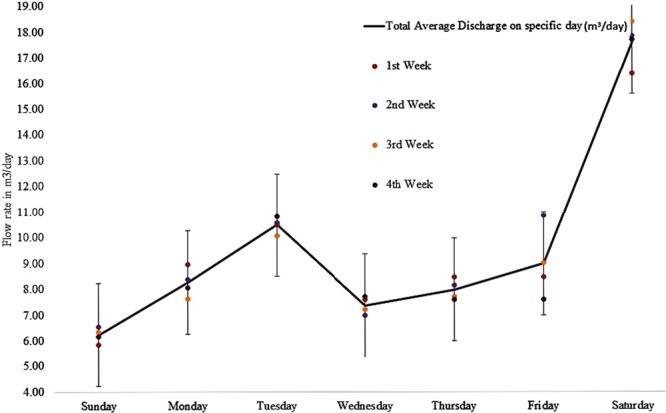
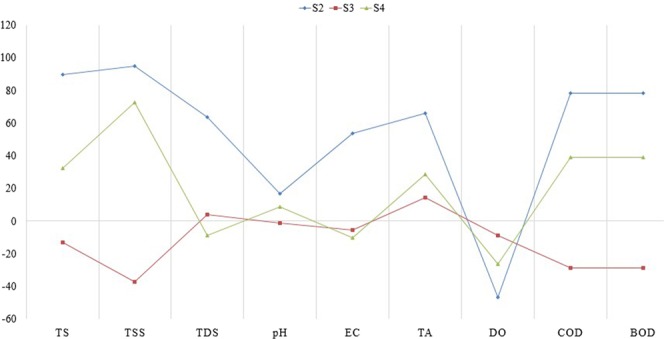
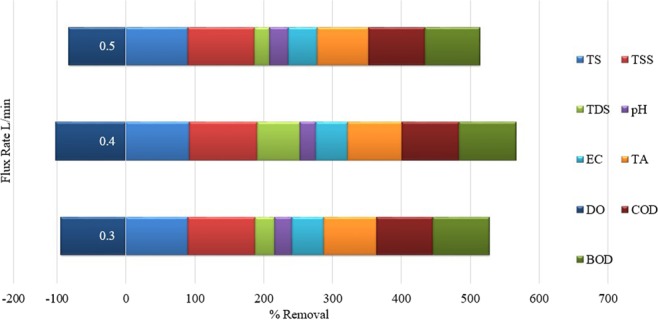
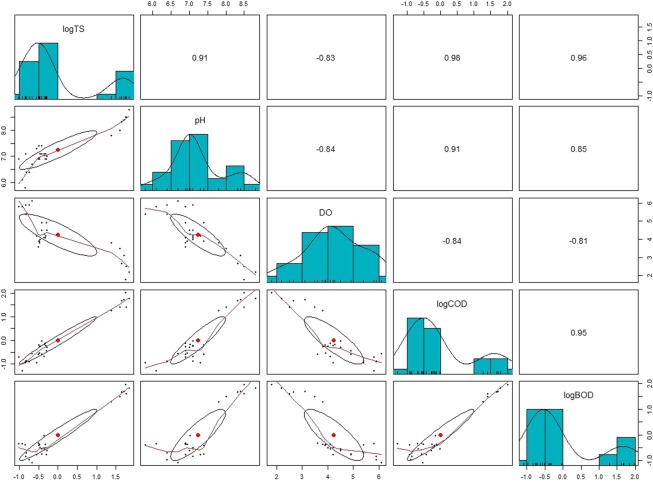
Numerous researchers have expressed concern over the emerging water scarcity issues around the globe. Economic water scarcity is severe in the developing countries; thus, the use of inexpensive wastewater treatment strategies can help minimize this issue. An abundant amount of laundry wastewater (LWW) is generated daily and various wastewater treatment researches have been performed to achieve suitable techniques. This study addressed this issue by considering the economic perspective of the treatment technique through the selection of easily available materials. The proposed technique is a combination of locally available absorbent materials such as sand, biochar, and teff straw in a media. Biochar was prepared from eucalyptus wood, teff straw was derived from teff stem, and sand was obtained from indigenous crushed stones. In this study, the range of laundry wastewater flow rate was calculated as 6.23–17.58 m 3/day; also studied were the efficiency of the media in terms of the removal percentage of contamination and the flux rate. The performances of biochar and teff straw were assessed based on the operation parameters and the percentage removal efficiency at different flux rates; the assessment showed 0.4 L/min flux rate to exhibit the maximum removal efficiency. Chemical oxygen demand, biological oxygen demand, and total alkalinity removal rate varied from 79% to ≥83%; total solids and total suspended solids showed 92% to ≥99% removal efficiency, while dissolved oxygen, total dissolved solids, pH, and electrical conductivity showed 22% to ≥62% removal efficiency. The optimum range of pH was evaluated between 5.8–7.1. The statistical analysis for finding the correlated matrix of laundry wastewater parameters showed the following correlations: COD (r = −0.84), TS (r = −0.83), and BOD (r = −0.81), while DO exhibited highest negative correlation. This study demonstrated the prospective of LWW treatment using inexpensive materials. The proposed treatment process involved low-cost materials and exhibited efficiency in the removal of contaminants; its operation is simple and can be reproduced in different scenarios.
Overview
The claims and statistics of this paper haven’t been checked yet.
Free: it reads the open-access text and checks the first 5 claims that cite a source we can check. Create a free account to check every claim.
Integrity signals
Registry
Cites
Statistics
Figures
Verification
Claims the paper makes
The claims and statistics of this paper haven’t been checked yet.
Free: it reads the open-access text and checks the first 5 claims that cite a source we can check. Create a free account to check every claim.
Claims other papers make about this one
Each is checked against this paper’s own text: does it say what the citing paper says it does?
The source backs part of the claim, not all of it — or backs it for a different population, condition or comparison.
In the citing paper
“Therefore, greywater is safer to manipulate and simpler to treat for reuse in non-potable purposes such as crop irrigation, garden watering, toilet flushing, and discharge into water bodies [8 -10].”
From Use of biochar-based column filtration systems for greywater treatment: A systematic literature review (2022) · cites this paper as [10]
Experimental — accuracy not yet measuredThe source backs part of the claim, not all of it — or backs it for a different population, condition or comparison.
In the citing paper
“Sand was among the most common filter material used probably due to its proven superior physicochemical properties to remove water pollutants [10].”
From Use of biochar-based column filtration systems for greywater treatment: A systematic literature review (2022) · cites this paper as [10]
Experimental — accuracy not yet measuredThe source backs part of the claim, not all of it — or backs it for a different population, condition or comparison.
In the citing paper
“Nevertheless, an increase in TDS was reported by Niwagaba et al. [8] and Yaseen et al. [10] possibly due to the lack of biochar rinsing to remove biochar dust from the filter before functioning or the release of particles from biochar natural degradation over time.”
From Use of biochar-based column filtration systems for greywater treatment: A systematic literature review (2022) · cites this paper as [10]
Experimental — accuracy not yet measured
Self-check
Percentages, sums and reported differences re-computed from the paper’s own numbers.
The self-check needs the paper’s full text.
Citations
Cites
Pearson Correlation Coefficient
Benesty, J., Chen, J., Huang, Y., & Cohen, I. (2009) · Springer Topics in Signal Processing · doi:10.1007/978-3-642-00296-0_5 · Cited by 3,059
Biological Wastewater Treatment
Grady Jr., C. P. L., Daigger, G. T., Love, N. G., & Filipe, C. D. M. (2011) · CRC Press eBooks · doi:10.1201/b13775 · Cited by 1,767
Support vector machine applications in the field of hydrology: A review
Raghavendra. N, S., & Deka, P. C. (2014) · Applied Soft Computing · doi:10.1016/j.asoc.2014.02.002 · Cited by 780
Desta, M. B. (2013) · Journal of Thermodynamics · doi:10.1155/2013/375830 · Cited by 447
Application of biological processes for the removal of arsenic from groundwaters
Katsoyiannis, I. A., & Zouboulis, A. I. (2004) · Water Research · doi:10.1016/j.watres.2003.09.011 · Cited by 384
Characteristics and treatment of greywater—a review
Ghaitidak, D. M., & Yadav, K. D. (2013) · Environmental Science and Pollution Research · doi:10.1007/s11356-013-1533-0 · Cited by 352
(1947) · Journal of the American Medical Association · doi:10.1001/jama.1947.02890120061030 · Cited by 274
Effect of treated grey water reuse in irrigation on soil and plants
Al-Hamaiedeh, H., & Bino, M. (2010) · Desalination · doi:10.1016/j.desal.2010.02.004 · Cited by 242
Amiri, N., Krzystek, P., Heurich, M., & Skidmore, A. (2019) · Remote Sensing · doi:10.3390/rs11222614 · Cited by 234
A Water Resources Threshold and Its Implications for Food Security
Yang, H., Reichert, P., Abbaspour, K. C., & Zehnder, A. J. B. (2003) · Environmental Science & Technology · doi:10.1021/es0263689 · Cited by 218
Characteristics of biochar produced from slow pyrolysis of Geodae-Uksae 1
Lee, Y., Eum, P.-R.-B., Ryu, C., Park, Y.-K., Jung, J.-H., & Hyun, S. (2013) · Bioresource Technology · doi:10.1016/j.biortech.2012.12.012 · Cited by 212
5 - Higher Education in Ethiopia: The Vision and Its Challenges
Saint, W. (2004) · Journal of Higher Education in Africa · doi:10.57054/jhea.v2i3.1667 · Cited by 206
Kearns, J. P., Wellborn, L. S., Summers, R. S., & Knappe, D. R. U. (2014) · Water Research · doi:10.1016/j.watres.2014.05.023 · Cited by 203
Kannel, P. R., Lee, S., Lee, Y.-S., Kanel, S. R., & Pelletier, G. J. (2007) · Ecological Modelling · doi:10.1016/j.ecolmodel.2006.12.033 · Cited by 175
Commercial Laundry Water Characterisation
Braga, J. K., & Varesche, M. B. A. (2014) · American Journal of Analytical Chemistry · doi:10.4236/ajac.2014.51002 · Cited by 170
Demonstration of a treatment system for purification and reuse of laundry wastewater
Ciabattia, I., Cesaro, F., Faralli, L., Fatarella, E., & Tognotti, F. (2009) · Desalination · doi:10.1016/j.desal.2009.02.008 · Cited by 153
Elsgaard, L., Petersen, S. O., & Debosz, K. (2001) · Environmental Toxicology and Chemistry · doi:10.1002/etc.5620200806 · Cited by 124
On the Verge of a New Water Scarcity: A Call for Good Governance and Human Ingenuity
Falkenmark, M., Berntell, A., gerskog, A. J., Lundqvist, J., Matz, M., & Tropp, H. (2007) · Digital Library Of The Commons Repository (Indiana University) · Cited by 117
Climate Variability and Farmers’ Perception in Southern Ethiopia
Esayas, B., Simane, B., Teferi, E., Ongoma, V., & Tefera, N. (2019) · Advances in Meteorology · doi:10.1155/2019/7341465 · Cited by 116
Димогло, А. С., Elibol, P. S., Dinç, Ö., Gökmen, K., & ERDOĞAN, H. (2019) · Journal of Water Process Engineering · doi:10.1016/j.jwpe.2019.100877 · Cited by 106
Surface water risk assessment of pesticides in Ethiopia
Teklu, B. M., Adriaanse, P. I., ter Horst, M. M. S., Deneer, J. W., & den Brink, P. J. V. (2014) · The Science of The Total Environment · doi:10.1016/j.scitotenv.2014.11.049 · Cited by 88
Yu, Z. L. T., Rahardianto, A., DeShazo, J. R., Stenstrom, M. K., & Cohen, Y. (2013) · Water Environment Research · doi:10.2175/106143013x13698672321580 · Cited by 88
Toxicity and genotoxicity of hospital laundry wastewaters treated with photocatalytic ozonation
Kern, D. I., Schwaickhardt, R. D. O., Mohr, G., Lobo, E. A., Kist, L. T., & Machado, Ê. L. (2012) · The Science of The Total Environment · doi:10.1016/j.scitotenv.2012.11.023 · Cited by 79
Tessema, K. A. (2009) · Higher Education Quarterly · doi:10.1111/j.1468-2273.2008.00408.x · Cited by 77
Nascimento, C. D. O. C., Veit, M. T., Palácio, S. M., Gonçalves, G. C., & Klen, M. R. F. (2019) · International Journal of Chemical Engineering · doi:10.1155/2019/8324710 · Cited by 70
Babaei, F., Ehrampoush, M. H., Eslami, H., Ghaneian, M. T., Fallahzadeh, H., Talebi, P., Fard, R. F., & Ebrahimi, A. A. (2019) · Journal of Cleaner Production · doi:10.1016/j.jclepro.2018.11.255 · Cited by 67
Recent Progress in Slow Sand and Alternative Biofiltration Processes
Gimbel, R., Graham, N. J. D., & Collins, M. R. (2015) · Water Intelligence Online · doi:10.2166/9781780402451 · Cited by 63
de Faria, C. V., Delforno, T. P., Okada, D. Y., & Varesche, M. B. A. (2017) · Environmental Technology · doi:10.1080/09593330.2017.1414317 · Cited by 61
Design of a modified low cost treatment system for the recycling and reuse of laundry waste water
Ahmad, J., & El-Dessouky, H. (2008) · Resources Conservation and Recycling · doi:10.1016/j.resconrec.2008.03.001 · Cited by 60
Wangkarn, S., Soisungnoen, P., Rayanakorn, M., & Grudpan, K. (2005) · Talanta · doi:10.1016/j.talanta.2005.03.011 · Cited by 60
On site experiments of the slanted soil treatment systems for domestic gray water
Itayama, T., Kiji, M., Suetsugu, A., Tanaka, N., Saito, T., Iwami, N., Mizuochi, M., & Inamori, Y. (2006) · Water Science and Technology · doi:10.2166/wst.2006.290 · Cited by 60
Assessment of Physical Water Scarcity in Africa Using GRACE and TRMM Satellite Data
Hasan, E., Tarhule, A., Hong, Y. E., & Moore, B. (2019) · Remote Sensing · doi:10.3390/rs11080904 · Cited by 60
Wassie, A. B., & Srivastava, V. C. (2016) · Journal of environmental chemical engineering · doi:10.1016/j.jece.2016.01.019 · Cited by 59
Ghunmi, L. A., Zeeman, G., Lier, J. V., & Fayyed, M. (2008) · Water Science and Technology · doi:10.2166/wst.2008.444 · Cited by 54
Evaluating Physical and Fiscal Water Leakage in Water Distribution System
Bhagat, S. K., Tiyasha, T., Welde, W., Tesfaye, O., Tung, T. M., Al-Ansari, N. A., Salih, S. Q., & Yaseen, Z. M. (2019) · Water · doi:10.3390/w11102091 · Cited by 54
Self-citationLuo, J., Zhang, Q., Wu, L., Feng, Q., Fang, F., Xue, Z., Li, C., & Cao, J. (2019) · Bioresource Technology · doi:10.1016/j.biortech.2019.03.046 · Cited by 52
Tadesse, B., Teju, E., & Megersa, N. (2014) · Desalination and Water Treatment · doi:10.1080/19443994.2014.968214 · Cited by 50
Synthesis of zeolite A using kaolin from Ethiopia and its application in detergents
Ayele, L., Pérez‐Pariente, J., Chebude, Y., & Díaz, I. (2016) · New Journal of Chemistry · doi:10.1039/c5nj03097h · Cited by 46
Efficiency ofMoringa oleiferaSeeds for Treatment of Laundry Wastewater
Al-Gheethi, A. A. S., Mohamed, R., Wurochekke, A. A., Nurulainee, N., Rahayu, J. M., & Hashim, M. A. (2017) · MATEC Web of Conferences · doi:10.1051/matecconf/201710306001 · Cited by 46
Private higher education in Ethiopia: risks, stakes and stocks
Tamrat, W., & Teferra, D. (2019) · Studies in Higher Education · doi:10.1080/03075079.2019.1582010 · Cited by 45
Abiye, T., Sulieman, H., & Ayalew, M. (2008) · Environmental Geology · doi:10.1007/s00254-008-1490-y · Cited by 38
Angassa, K., Leta, S., Mulat, W. L., Kloos, H., & Meers, E. (2019) · Nanotechnology for Environmental Engineering · doi:10.1007/s41204-018-0053-z · Cited by 31
Kearns, J. P., Knappe, D. R. U., & Summers, R. S. (2014) · Journal of Water Sanitation and Hygiene for Development · doi:10.2166/washdev.2014.073 · Cited by 24
Watiniasih, N. L., Purnama, I. G. H., Padmanabha, G., Merdana, I. M., & Antara, I. N. G. (2019) · IOP Conference Series Earth and Environmental Science · doi:10.1088/1755-1315/248/1/012084 · Cited by 21
Akyüz, M. (2002) · DergiPark · Cited by 20
Mungkung, R. T., Gheewala, S. H., Silalertruksa, T., & Dangsiri, S. (2019) · The International Journal of Life Cycle Assessment · doi:10.1007/s11367-019-01648-0 · Cited by 20
Motteran, F., Braga, J. K., Silva, E. L., & Varesche, M. B. A. (2016) · Journal of Environmental Science and Health Part A · doi:10.1080/10934529.2016.1215197 · Cited by 19
ECONOMICAL APPROACHES FOR THE TREATMENT ANDREUTILIZATION OF LAUNDRY WASTEWATER - A REVIEW
Bhagat, S. K., Tiyasha, T., & Bekele, D. (2018) · Journal of Industrial Pollution Control · Cited by 18
Self-citationKearns, J. P., Knappe, D. R. U., & Summers, R. S. (2015) · Environmental Engineering Science · doi:10.1089/ees.2015.0243 · Cited by 17
Bhagat, S. K., & Tiyasha, T. (2013) · International Journal of ChemTech Research · Cited by 15
Self-citationAgricultural water quality criteria : irrigation aspects.
George, P. R. (1983) · Cited by 12
Activated Carbons from Waste Wood in Wastewater Treatment To Remove Surfactants
Eremina, A. O., Головина, В. В., Угай, М. Ю., & Рудковский, А. В. (2004) · Russian Journal of Applied Chemistry · doi:10.1023/b:rjac.0000038810.83078.54 · Cited by 11
The Changing Regime of Indian Demographics and Scope of Reverse Mortgage Loan
Bhardwaj, G. (2020) · Shanlax International Journal of Management · doi:10.34293/management.v7i3.835 · Cited by 11
Chapter 6 Occurrence of surfactants in the environment
Petrović, M., & Barceló, . (2003) · Comprehensive analytical chemistry · doi:10.1016/s0166-526x(03)40009-3 · Cited by 8
Combined UMBAF ‐ MBAF process treating detergent wastewater
Gui-xia, J., Zhou, Y.-H., Zhou, B., Yun, Y., Chen, Z., & Liu, H. (2019) · Water Environment Research · doi:10.1002/wer.1091 · Cited by 7
Weber, L. P., & Lanno, R. P. (2001) · Environmental Toxicology and Chemistry · doi:10.1897/1551-5028(2001)020 · Cited by 5
Research works printed but not linked: 2
- Tchobanoglous G Burton FL Stensel HD Wastewater engineering Management 1991 7 1 4
- Ou ZQ Jia LQ He YW Sun TH Shang DS Extraction and HPLC determination of LAS in water and soil Chinese J. Ecol. 1996 15 67 71
Cited by
Yaseen, Z. M. (2021) · Chemosphere · doi:10.1016/j.chemosphere.2021.130126 · Cited by 320
Self-citationBhagat, S. K., Tiyasha, T., Awadh, S. M., Tung, T. M., Jawad, A. H., & Yaseen, Z. M. (2020) · Environmental Pollution · doi:10.1016/j.envpol.2020.115663 · Cited by 153
Self-citationOzonation treatment processes for the remediation of detergent wastewater: A comprehensive review
Joseph, C. G., Farm, Y. Y., Taufiq‐Yap, Y. H., Pang, C. K., Nga, J. L. H., & Puma, G. L. (2021) · Journal of environmental chemical engineering · doi:10.1016/j.jece.2021.106099 · Cited by 151
Bhagat, S. K., Tung, T. M., & Yaseen, Z. M. (2020) · Journal of Hazardous Materials · doi:10.1016/j.jhazmat.2020.123492 · Cited by 146
Self-citationTiyasha, T., Tung, T. M., Bhagat, S. K., Tan, M. L., Jawad, A. H., Mohtar, W. H. M. W., & Yaseen, Z. M. (2021) · Marine Pollution Bulletin · doi:10.1016/j.marpolbul.2021.112639 · Cited by 116
Self-citation
Metadata
- Authors
- Yaseen, Z. M., Zigale, T. T., Tiyasha, D., R. K., Salih, S. Q., Awasthi, S., Tung, T. M., Al-Ansari, N., & Bhagat, S. K.
- Affiliations
- Ambo University (ET)
- Sam Higginbottom Institute of Agriculture (IN)
- Duy Tan University (VN)
- Ton Duc Thang University (VN)
- Luleå University of Technology (SE)
- Corresponding author
- Bhagat, Suraj Kumar
- ORCID
- Venue
- Scientific Reports
- Published
- 2019-12-10
- Volume
- 9
- Issue
- 1
- Pages
- 18709-18709
- ISSN
- 2045-2322 (ISSN-L)
- PMC
- PMC6904576
- OpenAlex
- W2995260071
- Cited by
- 68
- References
- 55
- Citations by year
- 2026: 7 · 2025: 7 · 2024: 13 · 2023: 16 · 2022: 11 · 2021: 10 · 2020: 4
- FWCI
- 4.79
- Type
- journal article
- Language
- en
- Open access
- gold
- doi.org
- Licence
- cc-by
- creativecommons.org/licenses/by/4.0 (tdm)
- creativecommons.org/licenses/by/4.0 (vor)
- Locations
- Scientific Reports (publishedVersion, cc-by)
- PubMed Central (publishedVersion, cc-by)
- PubMed (publishedVersion)
- Epubl LTU (submittedVersion, other-oa)
- DOAJ (DOAJ: Directory of Open Access Journals) (submittedVersion)
- Greater South Information System
- Funders
- Ambo University
- Topics
- Physical Sciences › Environmental Science › Waste Management and Disposal › Wastewater Treatment and Reuse
- Physical Sciences › Environmental Science › Waste Management and Disposal › Constructed Wetlands for Wastewater Treatment
- Physical Sciences › Environmental Science › Environmental Engineering › Urban Stormwater Management Solutions
- Keywords
- laundry wastewater, low-cost wastewater treatment, sand filter, biochar, teff straw, eucalyptus wood, adsorbents, COD removal, BOD removal, total suspended solids removal, flux rate, water scarcity, low-cost treatment
About these checks
Registry, retraction, Cites and statistics results are computed, not judged, with one exception: a printed reference that no index lists is read once by a model before it counts as a citation error. Claims are extracted by a model and kept only when their quote appears verbatim in the text; each cited source is then checked, with a model’s help, for whether it says what the claim relies on. Those verdicts can be wrong — read the claim’s quote and the cited source before relying on one.
Statistics and arithmetic are recomputed, not judged.
Confidence bands are shown only for fields calibrated on our annotated test set. None is calibrated yet, so no band is shown.
What counts as a claim ›How we measure confidence ›How we check this ›
Are you an author, or do you see a problem with this page? Request a review
Data sources
Bibliographic data: Semantic Scholar, OpenAlex, Crossref.
Contains information from the Semantic Scholar Academic Graph Datasets, made available under the ODC Attribution License (ODC-BY 1.0).
Semantic Scholar’s data is described in: Kinney, R., et al. (2023). The Semantic Scholar Open Data Platform. arXiv:2301.10140.
