

Whole-Body Movement during Videogame Play Distinguishes Youth with Autism from Youth with Typical Development
Open accessThe DOI matches its Crossref record; 41 of the 42 references it cites were found in a registry or an index.
Abstract
Individuals with autism spectrum disorder struggle with motor difficulties throughout the life span, and these motor difficulties may affect independent living skills and quality of life. Yet, we know little about how whole-body movement may distinguish individuals with autism spectrum disorder from individuals with typical development. In this study, kinematic and postural sway data were collected during multiple sessions of videogame play in 39 youth with autism spectrum disorder and 23 age-matched youth with typical development (ages 7–17 years). The youth on the autism spectrum exhibited more variability and more entropy in their movements. Machine learning analysis of the youths’ motor patterns distinguished between the autism spectrum and typically developing groups with high aggregate accuracy (up to 89%), with no single region of the body seeming to drive group differences. Moreover, the machine learning results corresponded to individual differences in performance on standardized motor tasks and measures of autism symptom severity. The machine learning algorithm was also sensitive to age, suggesting that motor challenges in autism may be best characterized as a developmental motor delay rather than an autism-distinct motor profile. Overall, these results reveal that whole-body movement is a distinguishing feature in autism spectrum disorder and that movement atypicalities in autism are present across the body.
Overview
The claims and statistics of this paper haven’t been checked yet.
Free: it reads the open-access text and checks the first 5 claims that cite a source we can check. Create a free account to check every claim.
Integrity signals
Registry
Cites
Statistics
Figures
Verification
Claims the paper makes
The claims and statistics of this paper haven’t been checked yet.
Free: it reads the open-access text and checks the first 5 claims that cite a source we can check. Create a free account to check every claim.
Claims other papers make about this one
Each is checked against this paper’s own text: does it say what the citing paper says it does?
The source backs part of the claim, not all of it — or backs it for a different population, condition or comparison.
In the citing paper
“Ardalan et al. [28] and Graham et al. [33] found increased deficits, particularly under challenging conditions.”
From Static and dynamic balance in children and adolescents with autism spectrum disorder compared with typically developing peers: a systematic review and meta-analysis (2026) · cites this paper as [28]
Experimental — accuracy not yet measuredThe source backs part of the claim, not all of it — or backs it for a different population, condition or comparison.
In the citing paper
“Most studies reported deficits, particularly under multisensory or cognitively demanding conditions. [23–25, 28–33, 36]”
From Static and dynamic balance in children and adolescents with autism spectrum disorder compared with typically developing peers: a systematic review and meta-analysis (2026) · cites this paper as [28]
Experimental — accuracy not yet measuredThe cited source says what the claim attributes to it.
In the citing paper
“Twenty-nine studies used instrumental tools, [11, 12, 14, 24–48] while 11 employed observational assessments. [14, 26, 28, 32, 34, 38, 44, 49, 51–53]”
The cited source says what the claim attributes to it.
In the citing paper
“Nintendo Wii Balance Board studies [11, 28, 33, 43, 49, 51] reported greater postural instability and movement variability in youth with ASD versus TD peers.”
The cited source says what the claim attributes to it.
In the citing paper
“In BOT-2 studies, the ASD group scored significantly lower than in TD peers; Ardalan et al. [28] observed differences in percentiles, while Kaur et al. [35] and Martin-Diaz et al. [14] reported poorer gross and fine motor performance across various ages and functioning levels.”
3 more claims about this paper
Create a free account to see every claim other papers make about this one.
Self-check
Percentages, sums and reported differences re-computed from the paper’s own numbers.
The self-check needs the paper’s full text.
Citations
Cites
Breiman, L. (2001) · Machine Learning · doi:10.1023/a:1010933404324 · Cited by 133,538
Diagnostic and Statistical Manual of Mental Disorders
American Psychiatric Association (2013) · doi:10.1176/appi.books.9780890425596 · Cited by 116,369
Cohen, J. (1992) · Psychological Bulletin · doi:10.1037//0033-2909.112.1.155 · Cited by 8,771
Estimation of Relationships for Limited Dependent Variables
Tobin, J. (1958) · Econometrica · doi:10.2307/1907382 · Cited by 6,996
Baio, J., Wiggins, L., Christensen, D. L., Maenner, M. J., Daniels, J., Warren, Z., Kurzius-Spencer, M., Zahorodny, W., Robinson, C., Rosenberg, et al. (2018) · MMWR. Surveillance Summaries · doi:10.15585/mmwr.ss6706a1 · Cited by 6,078 · cited 1×
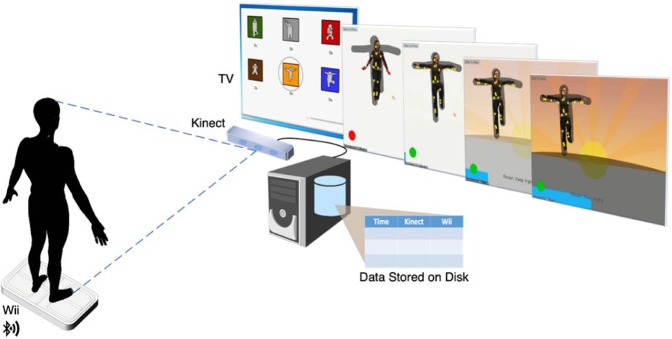
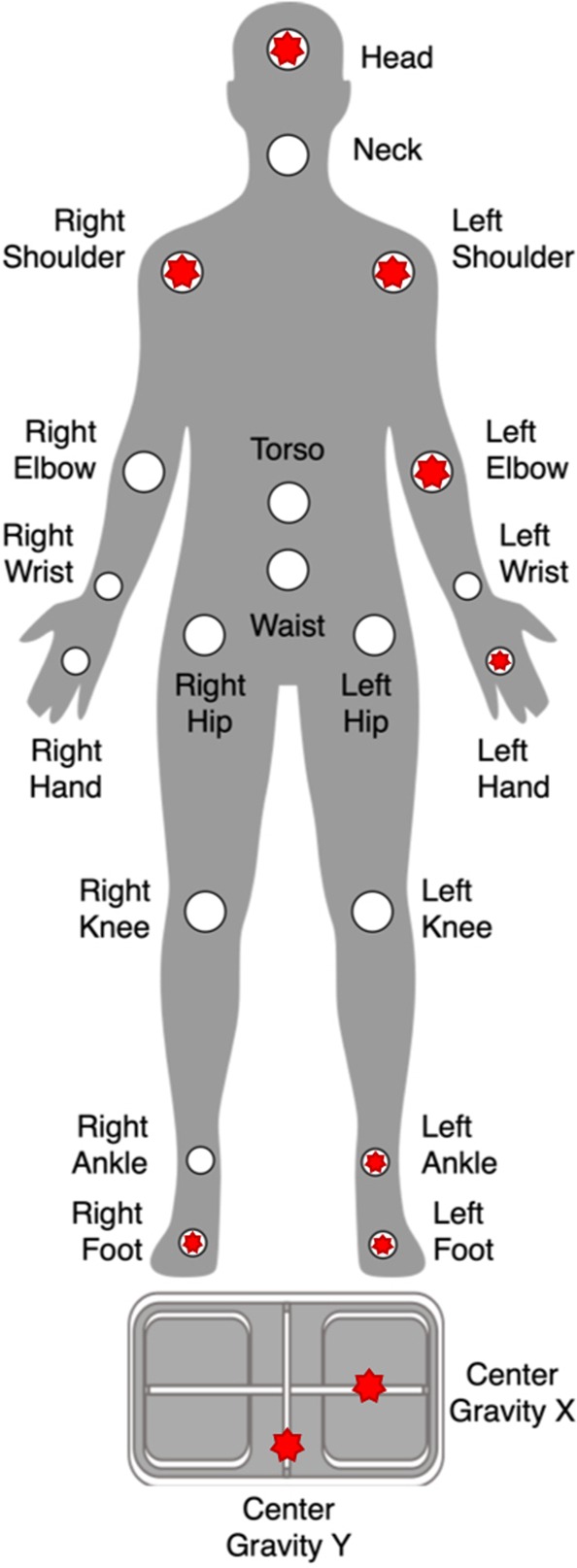
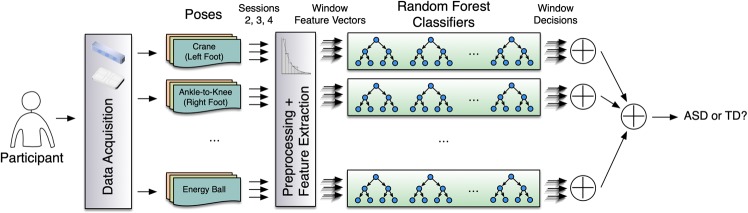
“Each data file had 62 dimensions that varied as a function of time: (1) 3D positions of 20 different joint dots on participant’s body captured by the Kinect Camera, and (2) 2D position of the participant’s center of gravity on the Wii Balance Board (Fig.”
MethodWechsler Abbreviated Scale of Intelligence
Dumont, R., Willis, J. O., Veizel, K., & Zibulsky, J. (2014) · Encyclopedia of Special Education · doi:10.1002/9781118660584.ese2519 · Cited by 5,521
Comparison of the predicted and observed secondary structure of T4 phage lysozyme
Matthews, B. W. (1975) · Biochimica et Biophysica Acta (BBA) - Protein Structure · doi:10.1016/0005-2795(75)90109-9 · Cited by 5,399
Ho, T. K. (2002) · Proceedings of 3rd International Conference on Document Analysis and Recognition · doi:10.1109/icdar.1995.598994 · Cited by 5,054
Varieties of Repetitive Behavior in Autism: Comparisons to Mental Retardation
Bodfish, J. W., Symons, F. J., Parker, D. E., & Lewis, M. H. (2000) · Journal of Autism and Developmental Disorders · doi:10.1023/a:1005596502855 · Cited by 1,223
Robertson, C. E., & Baron-Cohen, S. (2017) · Nature Reviews Neuroscience · doi:10.1038/nrn.2017.112 · Cited by 1,157
Research works printed but not linked: 3
- Hasan CZC Jailani R Tahir NM Yassin IM Rizman ZI Automated classification of autism spectrum disorders gait patterns using discriminant analysis based on kinematic and kinetic gait features J. Appl. Environ. Biol. Sci. 2017 7 150 156
- Constantino, J. N. & Gruber, C. P. Social responsiveness scale, second edition (SRS-2) [manual]. (Western Psychological Services, 2012).
- Lord, C. et al. Autism diagnostic observation schedule–2nd edition (ADOS-2). Los Angel. CA West. Psychol. Corp. (2012).
Cited by
Hocking, D. R., Ardalan, A., Abu‐Rayya, H. M., Farhat, H., Andoni, A., Lenroot, R., & Kachnowski, S. (2022) · Journal of NeuroEngineering and Rehabilitation · doi:10.1186/s12984-021-00978-1 · Cited by 100
“…study examining the effects of a biofeedback-based balance training intervention on improving balance in youth with ASD [37], with a clear demonstration that ML classifications of whole-body movement tracking (using a Kinect camera) were correlated with balance during one-footed standing [38].”
BackgroundSelf-citationDocumentary Analysis of the Scientific Literature on Autism and Technology in Web of Science
Carmona-Serrano, N., López-Belmonte, J., Gómez, J. L. C., & Moreno-Guerrero, A.-J. (2020) · Brain Sciences · doi:10.3390/brainsci10120985 · Cited by 60
Trends in Autism Research in the Field of Education in Web of Science: A Bibliometric Study
Carmona-Serrano, N., López-Belmonte, J., Núñez, J. A. L., & Moreno-Guerrero, A.-J. (2020) · Brain Sciences · doi:10.3390/brainsci10121018 · Cited by 61
“Similarly, people with ASD may face motor di ffi culties throughout their lives, which can have an impact on their quality of life and autonomy [14].”
Early detection of autism spectrum disorder: gait deviations and machine learning
Ganai, U. J., Ratne, A., Bhushan, B., & Venkatesh, K. S. (2025) · Scientific Reports · doi:10.1038/s41598-025-85348-w · Cited by 51
Human activity recognition of children with wearable devices using LightGBM machine learning
Csizmadia, G., Liszkai-Peres, K., Ferdinandy, B., Miklósi, Á., & Konok, V. (2022) · Scientific Reports · doi:10.1038/s41598-022-09521-1 · Cited by 44
“Therefore, the usage of motion sensor data with machine learning has the potential to predict developmental disorders at an earlier age than usual 22 .”
BackgroundReinhart, L., Bischops, A., Kerth, J.-L., Hagemeister, M., Heinrichs, B., Eickhoff, S. B., Dukart, J., Konrad, K., Mayatepek, E., & Meißner, T. (2024) · Intelligence-Based Medicine · doi:10.1016/j.ibmed.2024.100134 · Cited by 46
Doi, H., Iijima, N., Furui, A., Soh, Z., Yonei, R., Shinohara, K., Iriguchi, M., Shimatani, K., & Tsuji, T. (2022) · Scientific Reports · doi:10.1038/s41598-022-21308-y · Cited by 36
Carmona-Serrano, N., Moreno-Guerrero, A.-J., Marín, J. A. M., & López-Belmonte, J. (2021) · Brain Sciences · doi:10.3390/brainsci11010074 · Cited by 36
Minissi, M. E., Gómez-Zaragozá, L., Marín‐Morales, J., Mantovani, F., Sirera, M., Abad, L., Cervera‐Torres, S., Gómez-García, S., Giglioli, I. A. C., & Alcañíz, M. (2023) · Frontiers in Psychology · doi:10.3389/fpsyg.2023.1140731 · Cited by 33
“Therefore, the motor deficit in autistic individuals might be generalized, affecting the motor coordination of the entire body rather than localized on specific body parts (Ardalan et al., 2019; Zampella et al., 2021).”
BackgroundBiosignal comparison for autism assessment using machine learning models and virtual reality
Minissi, M. E., Altozano, A., Marín‐Morales, J., Giglioli, I. A. C., Mantovani, F., & Alcañíz, M. (2024) · Computers in Biology and Medicine · doi:10.1016/j.compbiomed.2024.108194 · Cited by 28
Kaplánová, A., Šišková, N., Grznárová, T., & Vanderka, M. (2022) · Sustainability · doi:10.3390/su15010028 · Cited by 14
Commercial Wearables for the Management of People with Autism Spectrum Disorder: A Review
Hernández-Capistrán, J., Alor‐Hernández, G., Marín‐Vega, H., Bustos-López, M., Sánchez-Morales, L. N., & Sánchez-Cervantes, J. L. (2024) · Biosensors · doi:10.3390/bios14110556 · Cited by 20
Shamhan, A. N. M., Qaraqe, M., & Al‐Thani, D. (2025) · IEEE Transactions on Cognitive and Developmental Systems · doi:10.1109/tcds.2025.3574145 · Cited by 17
“This implies that their movements may be characterized by repetitive or stereotyped behaviors, where certain motions are repeated excessively or in a simplified manner compared to the diverse and purposeful movements observed in TD children [95], [96].”
Henderson, B., Yogarajah, P., Gardiner, B., & McGinnity, T. M. (2023) · IEEE Access · doi:10.1109/access.2023.3336861 · Cited by 12
“The Kinect has additionally been used successfully to collect whole-body movement kinematic data during video game play for ASD classification [19].”
MethodFears, N. E., Templin, T. N., Sherrod, G., Bugnariu, N., Patterson, R. M., & Miller, H. L. (2022) · Journal of Autism and Developmental Disorders · doi:10.1007/s10803-022-05523-0 · Cited by 13
“In related work, researchers have begun using video games to distinguish between autistic and neurotypical children by examining body movement (Ardalan et al., 2019) and imitation (Tunçgenç et al.”
BackgroundSurgent, O., Dean, D. C., Alexander, A. L., Dadalko, O. I., Guerrero-Gonzalez, J., Taylor, D., Skaletski, E., & Travers, B. G. (2021) · Brain Communications · doi:10.1093/braincomms/fcab112 · Cited by 9
Self-citationDoi, H. (2020) · Artificial Life and Robotics · doi:10.1007/s10015-020-00614-6 · Cited by 8
Lewis, G. F., daSilva, E. B., Aghajani, M., Date, S. S., & Jaime, M. (2024) · Frontiers in Integrative Neuroscience · doi:10.3389/fnint.2024.1364249 · Cited by 11
Doi, H., Tsumura, N., Kanai, C., Masui, K., Mitsuhashi, R., & Nagasawa, T. (2021) · Frontiers in Psychiatry · doi:10.3389/fpsyt.2021.625978 · Cited by 8
“In these studies, behavioral features of people with ASD were captured by information technology, such as video analysis of facial movement by computer vision (9–11) and bodily movement analysis using cost-effective sensors [Kinect sensors and touch sensors implemented in tablet computers; (12, 13)].”
MethodSurgent, O. J., Guerrero-Gonzalez, J. M., Dean, D., Adluru, N., Kirk, G. R., Kecskemeti, S., Alexander, A. L., Li, J. J., & Travers, B. G. (2024) · Frontiers in Integrative Neuroscience · doi:10.3389/fnint.2024.1359099 · Cited by 7
Self-citationArdalan, A., Yamane, N., Rao, A. K., Montes, J., & Goldman, S. (2021) · Health Informatics Journal · doi:10.1177/14604582211055650 · Cited by 9
“…the Pediatric Balance Scale, 12 that rely on the clinician ’ s interpretive expertise, recent studies have utilized kinematic technologies, such as ground-reaction force plates, 13 – 15 the GAITRite ® system, 16,17 and the Wii Balance Board, 18,19 to propose more precise methods to measure balance.”
MethodSelf-citationChung, K., & Chung, E. (2020) · The Korean Journal of Clinical Psychology · doi:10.15842/kjcp.2020.39.4.006 · Cited by 6
Data-Driven Characterization of Individuals With Delayed Autism Diagnosis
Aizenberg, D., Shalev, I., Uzefovsky, F., & Eran, A. (2025) · Archives of Pediatrics and Adolescent Medicine · doi:10.1001/jamapediatrics.2024.6075 · Cited by 5
Surgent, O. J., Andrews, D. S., Lee, J. K., Boyle, J., Dakopolos, A., Miller, M., Ozonoff, S. J., Rogers, S. J., Solomon, M., Amaral, D. G., et al. (2025) · Biological Psychiatry · doi:10.1016/j.biopsych.2025.01.005 · Cited by 12
Self-citationMorningstar, M. A., Nault, D. R., Lundell-Creagh, R., & daSilva, E. B. (2025) · Affective Science · doi:10.1007/s42761-025-00316-x · Cited by 9
Jin, L., Cui, H., Zhang, P., & Cai, C. (2024) · European Journal of Pediatrics · doi:10.1007/s00431-024-05837-4 · Cited by 10
Kerth, J.-L., Bischops, A., Hagemeister, M., Reinhart, L., Konrad, K., Heinrichs, B., & Meißner, T. (2025) · Bundesgesundheitsblatt - Gesundheitsforschung - Gesundheitsschutz · doi:10.1007/s00103-025-04096-4 · Cited by 5
Araya, N., Gómez, J., & Montoro, G. (2024) · Entertainment Computing · doi:10.1016/j.entcom.2024.100861 · Cited by 4
Salvador-García, C., Esteve, T. V., Chiva-Bartoll, Ò., & Maravé-Vivas, M. (2022) · Developmental Neurorehabilitation · doi:10.1080/17518423.2022.2131922 · Cited by 8
“In addition, from a general perspective, targeting motor skills through PE programs could potentially remove barriers to independence and autonomy, since motor difficulties in ASD have been linked to poorer independent-living skills.(64) In fact,,65demonstrated that behavioral, autism-related features and physical con…”
BackgroundSmartphone Haptics Can Uncover Differences in Touch Interactions Between ASD and Neurotypicals
Monarca, I., Cibrian, F. L., Hurtado, I. L., & Tentori, M. E. (2024) · Proceedings of the ACM on Interactive Mobile Wearable and Ubiquitous Technologies · doi:10.1145/3699749 · Cited by 2
“A study by Ardalan et al. [10] found that children with ASD exhibit greater variability in their kinematic movements compared to NT children, with the head, shoulders, feet, and left elbow movements being the most useful in distinguishing children with ASD.”
Motor organisation of social play in children with autism
Clark, R., Lu, S., Anzulewicz, A., Sobota, K., Thompson, L. C., Hagberg, B., Thorsson, M., Tachtatzis, C., Andonović, I., McConnachie, A., et al. (2025) · Journal of The Royal Society Interface · doi:10.1098/rsif.2025.0302 · Cited by 2
“Previous studies of motor structure in autism have analysed the kinematic structure of single action units in serious game adaptations [24,27,28,38,39] and by using more traditional motor control paradigms [26,40–44].”
Evaluation of the gross motor abilities of autistic children with a computerised evaluation method
Liu, X., Chen, J., Wang, G., Zhang, K., Sun, J., Ma, P., & Zhang, R. (2023) · Behaviour and Information Technology · doi:10.1080/0144929x.2023.2275163 · Cited by 1
“Ardalan et al. (2019) used a Microsoft Kinect camera and balance board as tools to collect kinematic data from 39 autistic children and 23 typically developing children in a variety of video games.”
Doi, H., Iijima, N., Furui, A., Soh, Z., Shinohara, K., Iriguchi, M., Shimatani, K., & Tsuji, T. (2021) · medRxiv · doi:10.1101/2021.10.11.21264725 · Cited by 1
“A similar attempt was also reported by Ardalan et al. (2019) (for 252 a brief review, see Doi, 2020).”
BackgroundResultMartín-Díaz, P., Carratalá-Tejada, M., Navarro-López, V., Fernández-González, P., & Cuesta-Gómez, A. (2026) · European Journal of Pediatrics · doi:10.1007/s00431-026-06871-0
“[ 28, 32, 38] However, funnel plot asymmetry suggests publication or selection bias, warranting cautious interpretation.”
Influentialالاتجاهات المعاصرة فی تفسیر وتشخیص وعلاج اضطراب طیف التوحد ـ دراسة تحلیلیة للدراسات والبحوث الأجنبیة
رمضان, أ. د. ع. ا. أ. ع. (2021) · مجلة کلية التربية بدمياط · doi:10.21608/jsdu.2021.214690
Deep Learning Approaches for Analyzing Movement Patterns in Developing Children
Daniel Lazar, L., Naganna, M. S., Priyadarshini, S., Sreedev, S. A., Ramakrishnan, R., & Parasuraman, T. (2024) · doi:10.1109/icait61638.2024.10690707
“Consequently, there is hope for the early detection of developmental problems through the use of motion sensor data combined with machine learning [15].”
MethodTrindade, A. B., & Hounsell, M. D. S. (2025) · Anais do ... Simpósio Brasileiro de Informática na Educação/Anais do Simpósio Brasileiro de Informática na Educação · doi:10.5753/sbie.2025.11928
Sharma, N., & Khosla, A. (2026) · Entertainment Computing · doi:10.1016/j.entcom.2026.101239
Rachidi, I., & Rouhafzay, G. (2026) · Electronics · doi:10.3390/electronics15204722
Metadata
- Authors
- Ardalan, A., Assadi, A. H., Surgent, O. J., & Travers, B. G.
- Affiliations
- University of Wisconsin–Madison (US)
- Corresponding author
- Travers, Brittany G.
- Venue
- Scientific Reports
- Published
- 2019-12-27
- Volume
- 9
- Issue
- 1
- Pages
- 20094-20094
- ISSN
- 2045-2322 (ISSN-L)
- PMC
- PMC6934713
- OpenAlex
- W2997456783
- Cited by
- 40
- References
- 42
- Citations by year
- 2026: 3 · 2025: 8 · 2024: 9 · 2023: 3 · 2022: 6 · 2021: 6 · 2020: 5
- FWCI
- 2.47
- Type
- journal article
- Language
- en
- Open access
- gold
- doi.org
- Licence
- cc-by
- creativecommons.org/licenses/by/4.0 (tdm)
- creativecommons.org/licenses/by/4.0 (vor)
- Locations
- Scientific Reports (publishedVersion, cc-by)
- PubMed Central (publishedVersion, cc-by)
- PubMed (publishedVersion)
- DOAJ (DOAJ: Directory of Open Access Journals) (submittedVersion, cc-by-sa)
- Funders
- Brain and Behavior Research Foundation
- Hartwell Foundation
- Waisman Center (P30HD003352, U54 HD090256)
- National Alliance for Research on Schizophrenia and Depression
- WiSys Technology Foundation
- National Institutes of Health (HD003352)
- National Institute of General Medical Sciences (T32GM007507)
- National Institute of Child Health and Human Development (HD003352)
- Eunice Kennedy Shriver National Institute of Child Health and Human Development (U54HD090256, P30HD003352, HD003352, R01HD094715)
- Topics
- Life Sciences › Neuroscience › Cognitive Neuroscience › Autism Spectrum Disorder Research
- Social Sciences › Psychology › Developmental and Educational Psychology › Children's Physical and Motor Development
- Social Sciences › Psychology › Social Psychology › Action Observation and Synchronization
- Keywords
- autism spectrum disorder, motor difficulties, whole-body movement, kinematics, postural sway, movement variability, entropy (information theory), motor patterns, autism severity, youth
- MeSH terms
- Adolescent, Autistic Disorder, Child, Female, Humans, Male, Movement, Case-Control Studies, Video Games
About these checks
Registry, retraction, Cites and statistics results are computed, not judged, with one exception: a printed reference that no index lists is read once by a model before it counts as a citation error. Claims are extracted by a model and kept only when their quote appears verbatim in the text; each cited source is then checked, with a model’s help, for whether it says what the claim relies on. Those verdicts can be wrong — read the claim’s quote and the cited source before relying on one.
Statistics and arithmetic are recomputed, not judged.
Confidence bands are shown only for fields calibrated on our annotated test set. None is calibrated yet, so no band is shown.
What counts as a claim ›How we measure confidence ›How we check this ›
Are you an author, or do you see a problem with this page? Request a review
Data sources
Bibliographic data: Semantic Scholar, OpenAlex, Crossref.
Contains information from the Semantic Scholar Academic Graph Datasets, made available under the ODC Attribution License (ODC-BY 1.0).
Semantic Scholar’s data is described in: Kinney, R., et al. (2023). The Semantic Scholar Open Data Platform. arXiv:2301.10140.
