

Whole-Body Movement during Videogame Play Distinguishes Youth with Autism from Youth with Typical Development
Open accessThe DOI matches its Crossref record; 41 of the 42 references it cites were found in a registry or an index.
Abstract
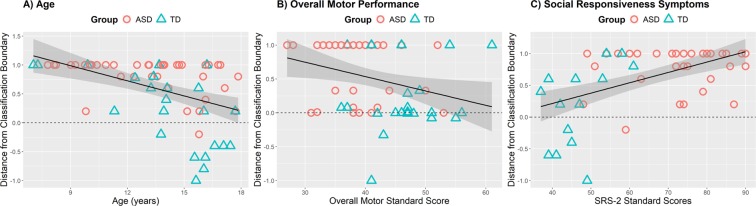
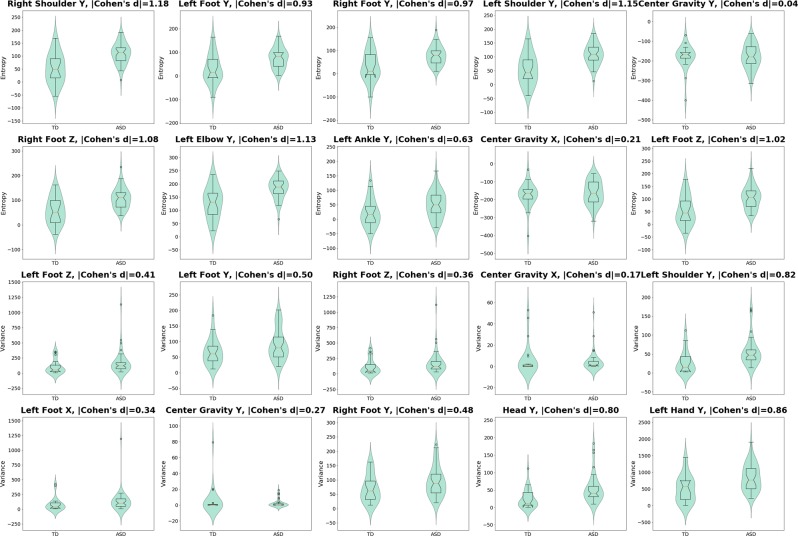
Individuals with autism spectrum disorder struggle with motor difficulties throughout the life span, and these motor difficulties may affect independent living skills and quality of life. Yet, we know little about how whole-body movement may distinguish individuals with autism spectrum disorder from individuals with typical development. In this study, kinematic and postural sway data were collected during multiple sessions of videogame play in 39 youth with autism spectrum disorder and 23 age-matched youth with typical development (ages 7–17 years). The youth on the autism spectrum exhibited more variability and more entropy in their movements. Machine learning analysis of the youths’ motor patterns distinguished between the autism spectrum and typically developing groups with high aggregate accuracy (up to 89%), with no single region of the body seeming to drive group differences. Moreover, the machine learning results corresponded to individual differences in performance on standardized motor tasks and measures of autism symptom severity. The machine learning algorithm was also sensitive to age, suggesting that motor challenges in autism may be best characterized as a developmental motor delay rather than an autism-distinct motor profile. Overall, these results reveal that whole-body movement is a distinguishing feature in autism spectrum disorder and that movement atypicalities in autism are present across the body.
Overview
The claims and statistics of this paper haven’t been checked yet.
Free: it reads the open-access text and checks the first 5 claims that cite a source we can check. Create a free account to check every claim.
Integrity signals
Registry
Cites
Statistics
Figures
Verification
Claims the paper makes
The claims and statistics of this paper haven’t been checked yet.
Free: it reads the open-access text and checks the first 5 claims that cite a source we can check. Create a free account to check every claim.
Claims other papers make about this one
Each is checked against this paper’s own text: does it say what the citing paper says it does?
The source backs part of the claim, not all of it — or backs it for a different population, condition or comparison.
In the citing paper
“Ardalan et al. [28] and Graham et al. [33] found increased deficits, particularly under challenging conditions.”
From Static and dynamic balance in children and adolescents with autism spectrum disorder compared with typically developing peers: a systematic review and meta-analysis (2026) · cites this paper as [28]
Experimental — accuracy not yet measuredThe source backs part of the claim, not all of it — or backs it for a different population, condition or comparison.
In the citing paper
“Most studies reported deficits, particularly under multisensory or cognitively demanding conditions. [23–25, 28–33, 36]”
From Static and dynamic balance in children and adolescents with autism spectrum disorder compared with typically developing peers: a systematic review and meta-analysis (2026) · cites this paper as [28]
Experimental — accuracy not yet measuredThe cited source says what the claim attributes to it.
In the citing paper
“Twenty-nine studies used instrumental tools, [11, 12, 14, 24–48] while 11 employed observational assessments. [14, 26, 28, 32, 34, 38, 44, 49, 51–53]”
The cited source says what the claim attributes to it.
In the citing paper
“Nintendo Wii Balance Board studies [11, 28, 33, 43, 49, 51] reported greater postural instability and movement variability in youth with ASD versus TD peers.”
The cited source says what the claim attributes to it.
In the citing paper
“In BOT-2 studies, the ASD group scored significantly lower than in TD peers; Ardalan et al. [28] observed differences in percentiles, while Kaur et al. [35] and Martin-Diaz et al. [14] reported poorer gross and fine motor performance across various ages and functioning levels.”
3 more claims about this paper
Create a free account to see every claim other papers make about this one.
Self-check
Percentages, sums and reported differences re-computed from the paper’s own numbers.
The self-check needs the paper’s full text.
Citations
Cites
Breiman, L. (2001) · Machine Learning · doi:10.1023/a:1010933404324 · Cited by 133,538
Diagnostic and Statistical Manual of Mental Disorders
American Psychiatric Association (2013) · doi:10.1176/appi.books.9780890425596 · Cited by 116,369
Cohen, J. (1992) · Psychological Bulletin · doi:10.1037//0033-2909.112.1.155 · Cited by 8,771
Estimation of Relationships for Limited Dependent Variables
Tobin, J. (1958) · Econometrica · doi:10.2307/1907382 · Cited by 6,996
Baio, J., Wiggins, L., Christensen, D. L., Maenner, M. J., Daniels, J., Warren, Z., Kurzius-Spencer, M., Zahorodny, W., Robinson, C., Rosenberg, et al. (2018) · MMWR. Surveillance Summaries · doi:10.15585/mmwr.ss6706a1 · Cited by 6,078 · cited 1×
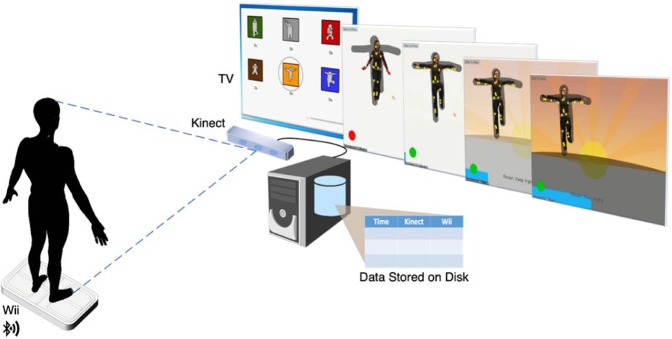
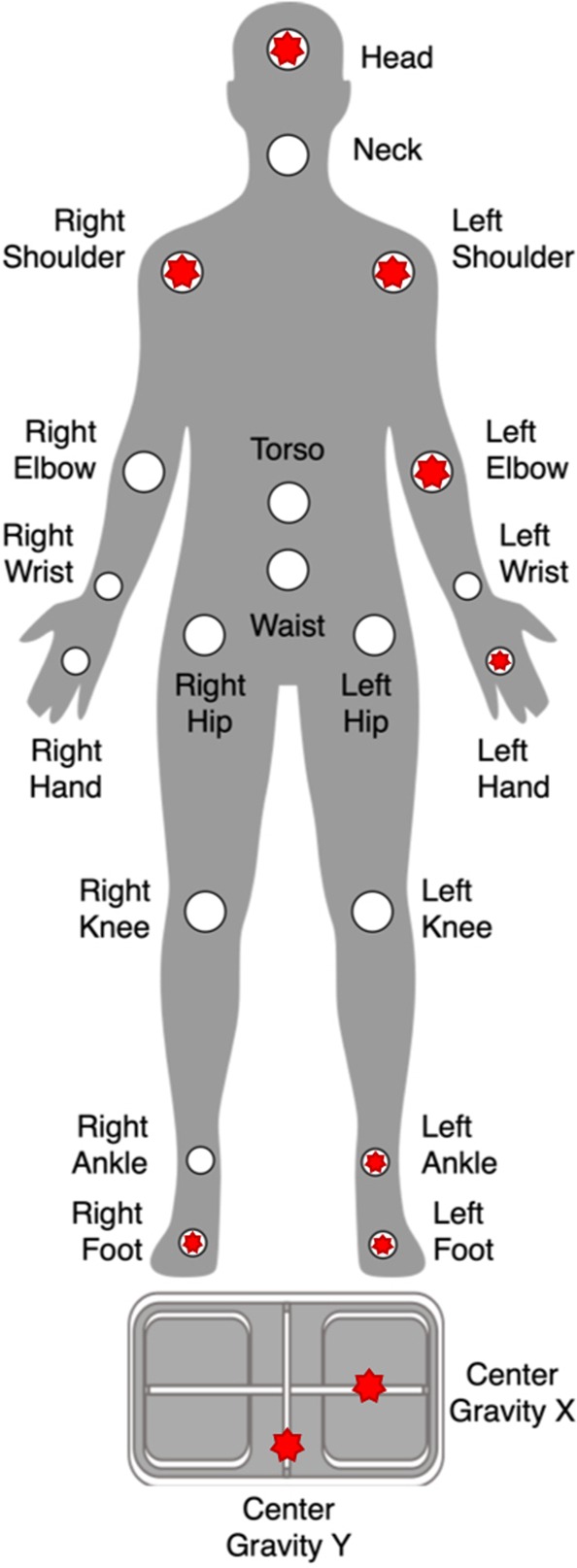
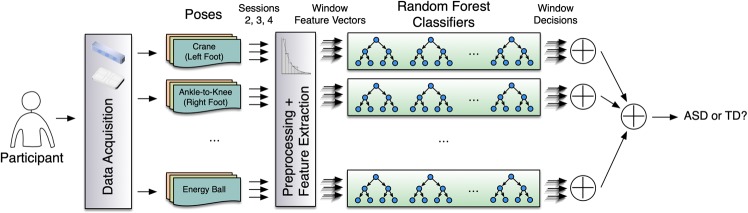
“Each data file had 62 dimensions that varied as a function of time: (1) 3D positions of 20 different joint dots on participant’s body captured by the Kinect Camera, and (2) 2D position of the participant’s center of gravity on the Wii Balance Board (Fig.”
MethodWechsler Abbreviated Scale of Intelligence
Dumont, R., Willis, J. O., Veizel, K., & Zibulsky, J. (2014) · Encyclopedia of Special Education · doi:10.1002/9781118660584.ese2519 · Cited by 5,521
Comparison of the predicted and observed secondary structure of T4 phage lysozyme
Matthews, B. W. (1975) · Biochimica et Biophysica Acta (BBA) - Protein Structure · doi:10.1016/0005-2795(75)90109-9 · Cited by 5,399
Ho, T. K. (2002) · Proceedings of 3rd International Conference on Document Analysis and Recognition · doi:10.1109/icdar.1995.598994 · Cited by 5,054
Varieties of Repetitive Behavior in Autism: Comparisons to Mental Retardation
Bodfish, J. W., Symons, F. J., Parker, D. E., & Lewis, M. H. (2000) · Journal of Autism and Developmental Disorders · doi:10.1023/a:1005596502855 · Cited by 1,223
Robertson, C. E., & Baron-Cohen, S. (2017) · Nature Reviews Neuroscience · doi:10.1038/nrn.2017.112 · Cited by 1,157
Wechsler Abbreviated Scale of Intelligence--Second Edition
Wechsler, D. (2018) · PsycTESTS Dataset · doi:10.1037/t15171-000 · Cited by 1,153
Lam, K. S. L., & Aman, M. G. (2007) · Journal of Autism and Developmental Disorders · doi:10.1007/s10803-006-0213-z · Cited by 793
Impairment in movement skills of children with autistic spectrum disorders
GREEN, D., CHARMAN, T., PICKLES, A., CHANDLER, S., LOUCAS, T., SIMONOFF, E., & BAIRD, G. (2009) · Developmental Medicine & Child Neurology · doi:10.1111/j.1469-8749.2008.03242.x · Cited by 742
Mining data with random forests: A survey and results of new tests
Verikas, A., Gelzinis, A., & Bacauskiene, M. (2011) · Pattern Recognition · doi:10.1016/j.patcog.2010.08.011 · Cited by 719
Test Review: Social Responsiveness Scale–Second Edition (SRS-2)
Bruni, T. P. (2014) · Journal of Psychoeducational Assessment · doi:10.1177/0734282913517525 · Cited by 701
Underdevelopment of the postural control system in autism
Minshew, N. J., Sung, K., Jones, B. L., & Furman, J. M. (2004) · Neurology · doi:10.1212/01.wnl.0000145771.98657.62 · Cited by 440
Brief Report: Forecasting the Economic Burden of Autism in 2015 and 2025 in the United States
Leigh, J. P., & Du, J. (2015) · Journal of Autism and Developmental Disorders · doi:10.1007/s10803-015-2521-7 · Cited by 422
Sensori-motor and Daily Living Skills of Preschool Children with Autism Spectrum Disorders
Jasmin, E., Couture, M., McKinley, P., Reid, G., Fombonne, E., & Gisel, E. (2009) · Journal of Autism and Developmental Disorders · doi:10.1007/s10803-008-0617-z · Cited by 399
Motor skills of toddlers with autism spectrum disorders
Lloyd, M., MacDonald, M., & Lord, C. (2013) · Autism · doi:10.1177/1362361311402230 · Cited by 392
IBIS network, Estes, A., Zwaigenbaum, L., Gu, H., St. John, T., Paterson, S., Elison, J. T., Hazlett, H., Botteron, K., Dager, S. R., et al. (2015) · Journal of Neurodevelopmental Disorders · doi:10.1186/s11689-015-9117-6 · Cited by 363
Relation between early motor delay and later communication delay in infants at risk for autism
Bhat, A. N., Galloway, J. C., & Landa, R. J. (2012) · Infant Behavior and Development · doi:10.1016/j.infbeh.2012.07.019 · Cited by 330
Bruininks-Oseretsky Test of Motor Proficiency, Second Edition
Bruininks, R. H., & Bruininks, B. D. (2012) · PsycTESTS Dataset · doi:10.1037/t14991-000 · Cited by 283
Classification and interaction in random forests
Denisko, D., & Hoffman, M. M. (2018) · Proceedings of the National Academy of Sciences · doi:10.1073/pnas.1800256115 · Cited by 278
Rinehart, N. J., Bradshaw, J. L., Brereton, A. V., & Tonge, B. J. (2001) · Journal of Autism and Developmental Disorders · doi:10.1023/a:1005617831035 · Cited by 247
Anzulewicz, A., Sobota, K., & Delafield-Butt, J. T. (2016) · Scientific Reports · doi:10.1038/srep31107 · Cited by 216
Rinehart, N. J., Bellgrove, M. A., Tonge, B. J., Brereton, A. V., Howells-Rankin, D., & Bradshaw, J. L. (2006) · Journal of Autism and Developmental Disorders · doi:10.1007/s10803-006-0118-x · Cited by 202
Limited Fine Motor and Grasping Skills in 6-Month-Old Infants at High Risk for Autism
Libertus, K., Sheperd, K. A., Ross, S. W., & Landa, R. J. (2014) · Child Development · doi:10.1111/cdev.12262 · Cited by 181
Lim, Y. H., Partridge, K., Girdler, S., & Morris, S. L. (2017) · Journal of Autism and Developmental Disorders · doi:10.1007/s10803-017-3144-y · Cited by 176
Motor Difficulties in Autism Spectrum Disorder: Linking Symptom Severity and Postural Stability
Travers, B. G., Powell, P. S., Klinger, L. G., & Klinger, M. R. (2013) · Journal of Autism and Developmental Disorders · doi:10.1007/s10803-012-1702-x · Cited by 173
Self-citationKopp, S., Beckung, E., & Gillberg, C. (2010) · Research in Developmental Disabilities · doi:10.1016/j.ridd.2009.09.017 · Cited by 168
Fine motor skill predicts expressive language in infant siblings of children with autism
LeBarton, E. S., & Iverson, J. M. (2013) · Developmental Science · doi:10.1111/desc.12069 · Cited by 161
Choi, B., Leech, K. A., Tager-Flusberg, H., & Nelson, C. A. (2018) · Journal of Neurodevelopmental Disorders · doi:10.1186/s11689-018-9231-3 · Cited by 144
High rates of parkinsonism in adults with autism
Starkstein, S., Gellar, S., Parlier, M., Payne, L., & Piven, J. (2015) · Journal of Neurodevelopmental Disorders · doi:10.1186/s11689-015-9125-6 · Cited by 110
Travers, B. G., Bigler, E. D., Duffield, T. C., Prigge, M. D. B., Froehlich, A. L., Lange, N., Alexander, A. L., & Lainhart, J. E. (2017) · Developmental Science · doi:10.1111/desc.12401 · Cited by 108
Self-citationDawson, G., Campbell, K. M., Hashemi, J., Lippmann, S., Smith, V. A., Carpenter, K. L. H., EGGER, H. L., Espinosa, S., Vermeer, S., Baker, J. P., et al. (2018) · Scientific Reports · doi:10.1038/s41598-018-35215-8 · Cited by 98
Radonovich, K. J., Fournier, K. A., & Hass, C. J. (2013) · Frontiers in Integrative Neuroscience · doi:10.3389/fnint.2013.00028 · Cited by 94
Abu-Dahab, S. M. N., Skidmore, E. R., Holm, M. B., Rogers, J. C., & Minshew, N. J. (2013) · Journal of Autism and Developmental Disorders · doi:10.1007/s10803-011-1439-y · Cited by 70
A Biomarker Characterizing Neurodevelopment with applications in Autism
Wu, D., José, J. V., Nürnberger, J. I., & Torres, E. B. (2018) · Scientific Reports · doi:10.1038/s41598-017-18902-w · Cited by 57
Handgrip Strength in Autism Spectrum Disorder Compared With Controls
Kern, J. K., Geier, D. A., Adams, J. B., Troutman, M. R., Davis, G., King, P. G., & Geier, M. R. (2012) · The Journal of Strength and Conditioning Research · doi:10.1519/jsc.0b013e31827de068 · Cited by 55
Travers, B. G., Bigler, E. D., Tromp, D. P. M., Adluru, N., Destiche, D., Samsin, D., Froehlich, A., Prigge, M. D. B., Duffield, T. C., Lange, N., et al. (2015) · Journal of Autism and Developmental Disorders · doi:10.1007/s10803-015-2467-9 · Cited by 51
Self-citationBiofeedback-Based, Videogame Balance Training in Autism
Travers, B. G., Mason, A. H., Mrotek, L. A., Ellertson, A., Dean, D. C., Engel, C., Gomez, A., Dadalko, O. I., & McLaughlin, K. (2018) · Journal of Autism and Developmental Disorders · doi:10.1007/s10803-017-3310-2 · Cited by 49
Self-citation
Research works printed but not linked: 3
- Hasan CZC Jailani R Tahir NM Yassin IM Rizman ZI Automated classification of autism spectrum disorders gait patterns using discriminant analysis based on kinematic and kinetic gait features J. Appl. Environ. Biol. Sci. 2017 7 150 156
- Constantino, J. N. & Gruber, C. P. Social responsiveness scale, second edition (SRS-2) [manual]. (Western Psychological Services, 2012).
- Lord, C. et al. Autism diagnostic observation schedule–2nd edition (ADOS-2). Los Angel. CA West. Psychol. Corp. (2012).
Cited by
Hocking, D. R., Ardalan, A., Abu‐Rayya, H. M., Farhat, H., Andoni, A., Lenroot, R., & Kachnowski, S. (2022) · Journal of NeuroEngineering and Rehabilitation · doi:10.1186/s12984-021-00978-1 · Cited by 100
“…study examining the effects of a biofeedback-based balance training intervention on improving balance in youth with ASD [37], with a clear demonstration that ML classifications of whole-body movement tracking (using a Kinect camera) were correlated with balance during one-footed standing [38].”
BackgroundSelf-citationDocumentary Analysis of the Scientific Literature on Autism and Technology in Web of Science
Carmona-Serrano, N., López-Belmonte, J., Gómez, J. L. C., & Moreno-Guerrero, A.-J. (2020) · Brain Sciences · doi:10.3390/brainsci10120985 · Cited by 60
Trends in Autism Research in the Field of Education in Web of Science: A Bibliometric Study
Carmona-Serrano, N., López-Belmonte, J., Núñez, J. A. L., & Moreno-Guerrero, A.-J. (2020) · Brain Sciences · doi:10.3390/brainsci10121018 · Cited by 61
“Similarly, people with ASD may face motor di ffi culties throughout their lives, which can have an impact on their quality of life and autonomy [14].”
Early detection of autism spectrum disorder: gait deviations and machine learning
Ganai, U. J., Ratne, A., Bhushan, B., & Venkatesh, K. S. (2025) · Scientific Reports · doi:10.1038/s41598-025-85348-w · Cited by 51
Human activity recognition of children with wearable devices using LightGBM machine learning
Csizmadia, G., Liszkai-Peres, K., Ferdinandy, B., Miklósi, Á., & Konok, V. (2022) · Scientific Reports · doi:10.1038/s41598-022-09521-1 · Cited by 44
“Therefore, the usage of motion sensor data with machine learning has the potential to predict developmental disorders at an earlier age than usual 22 .”
Background
Metadata
- Authors
- Ardalan, A., Assadi, A. H., Surgent, O. J., & Travers, B. G.
- Affiliations
- University of Wisconsin–Madison (US)
- Corresponding author
- Travers, Brittany G.
- Venue
- Scientific Reports
- Published
- 2019-12-27
- Volume
- 9
- Issue
- 1
- Pages
- 20094-20094
- ISSN
- 2045-2322 (ISSN-L)
- PMC
- PMC6934713
- OpenAlex
- W2997456783
- Cited by
- 40
- References
- 42
- Citations by year
- 2026: 3 · 2025: 8 · 2024: 9 · 2023: 3 · 2022: 6 · 2021: 6 · 2020: 5
- FWCI
- 2.47
- Type
- journal article
- Language
- en
- Open access
- gold
- doi.org
- Licence
- cc-by
- creativecommons.org/licenses/by/4.0 (tdm)
- creativecommons.org/licenses/by/4.0 (vor)
- Locations
- Scientific Reports (publishedVersion, cc-by)
- PubMed Central (publishedVersion, cc-by)
- PubMed (publishedVersion)
- DOAJ (DOAJ: Directory of Open Access Journals) (submittedVersion, cc-by-sa)
- Funders
- Brain and Behavior Research Foundation
- Hartwell Foundation
- Waisman Center (P30HD003352, U54 HD090256)
- National Alliance for Research on Schizophrenia and Depression
- WiSys Technology Foundation
- National Institutes of Health (HD003352)
- National Institute of General Medical Sciences (T32GM007507)
- National Institute of Child Health and Human Development (HD003352)
- Eunice Kennedy Shriver National Institute of Child Health and Human Development (U54HD090256, P30HD003352, HD003352, R01HD094715)
- Topics
- Life Sciences › Neuroscience › Cognitive Neuroscience › Autism Spectrum Disorder Research
- Social Sciences › Psychology › Developmental and Educational Psychology › Children's Physical and Motor Development
- Social Sciences › Psychology › Social Psychology › Action Observation and Synchronization
- Keywords
- autism spectrum disorder, motor difficulties, whole-body movement, kinematics, postural sway, movement variability, entropy (information theory), motor patterns, autism severity, youth
- MeSH terms
- Adolescent, Autistic Disorder, Child, Female, Humans, Male, Movement, Case-Control Studies, Video Games
About these checks
Registry, retraction, Cites and statistics results are computed, not judged, with one exception: a printed reference that no index lists is read once by a model before it counts as a citation error. Claims are extracted by a model and kept only when their quote appears verbatim in the text; each cited source is then checked, with a model’s help, for whether it says what the claim relies on. Those verdicts can be wrong — read the claim’s quote and the cited source before relying on one.
Statistics and arithmetic are recomputed, not judged.
Confidence bands are shown only for fields calibrated on our annotated test set. None is calibrated yet, so no band is shown.
What counts as a claim ›How we measure confidence ›How we check this ›
Are you an author, or do you see a problem with this page? Request a review
Data sources
Bibliographic data: Semantic Scholar, OpenAlex, Crossref.
Contains information from the Semantic Scholar Academic Graph Datasets, made available under the ODC Attribution License (ODC-BY 1.0).
Semantic Scholar’s data is described in: Kinney, R., et al. (2023). The Semantic Scholar Open Data Platform. arXiv:2301.10140.
