

Estradiol and high fat diet associate with changes in gut microbiota in female ob/ob mice
Open accessPublished version of a preprint
The DOI matches its Crossref record; 124 of the 124 references it cites were found in a registry or an index.
Abstract
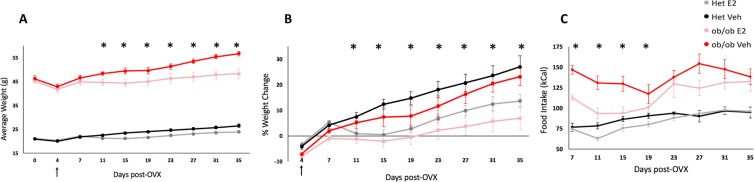
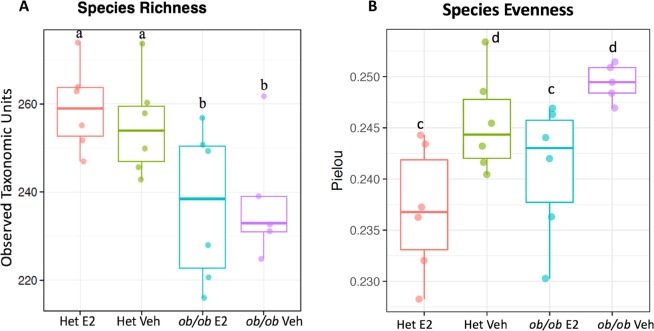
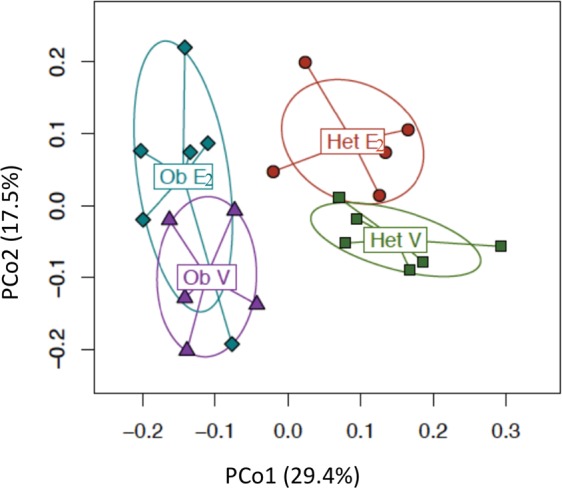
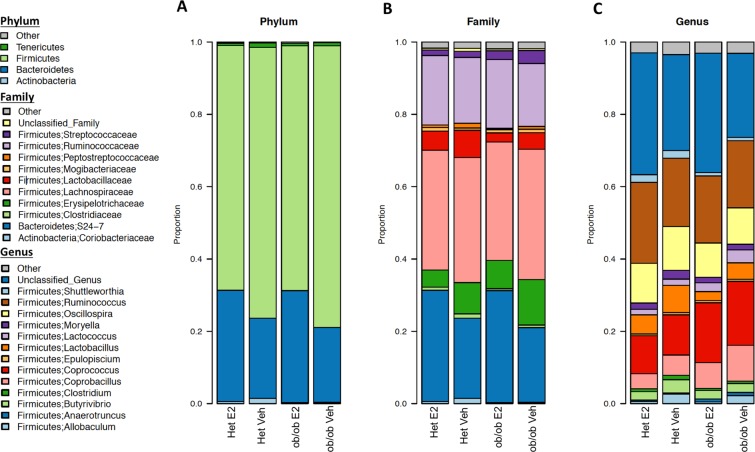
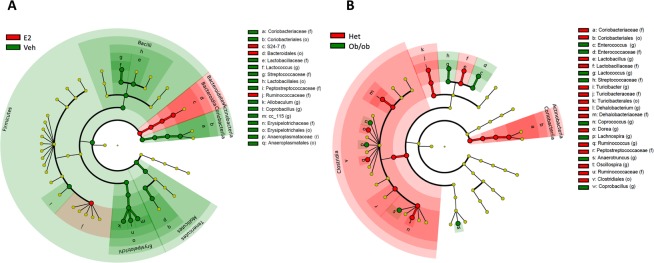
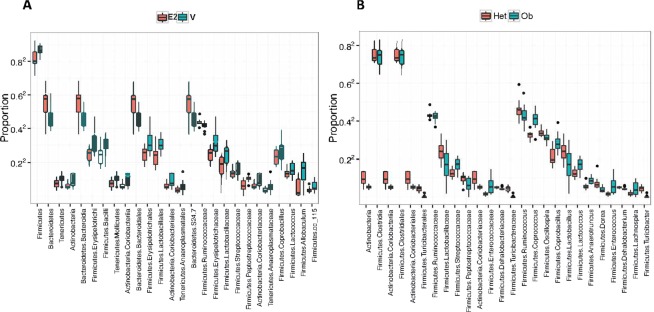
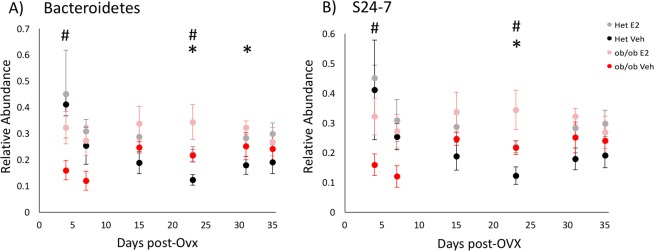
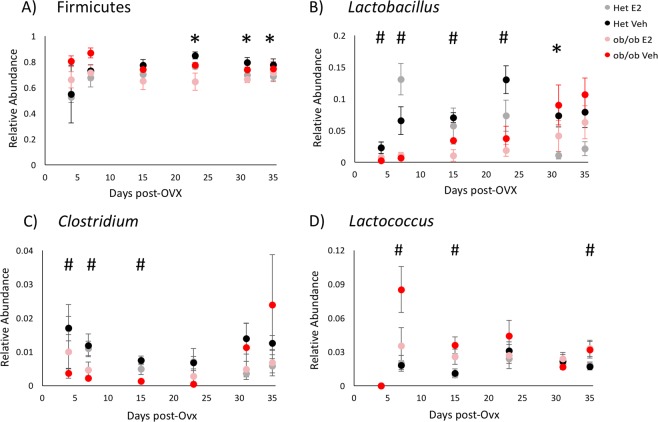
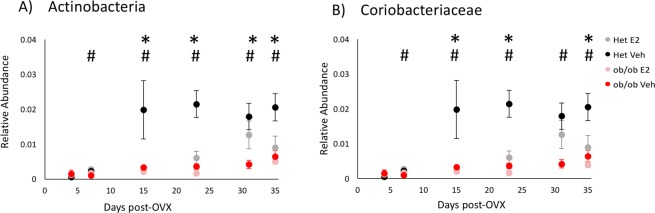
Estrogens protect against diet-induced obesity in women and female rodents. For example, a lack of estrogens in postmenopausal women is associated with an increased risk of weight gain, cardiovascular diseases, low-grade inflammation, and cancer. Estrogens act with leptin to regulate energy homeostasis in females. Leptin-deficient mice ( ob/ob ) exhibit morbid obesity and insulin resistance. The gut microbiome is also critical in regulating metabolism. The present study investigates whether estrogens and leptin modulate gut microbiota in ovariectomized ob/ob (obese) or heterozygote (lean) mice fed high-fat diet (HFD) that received either 17β-Estradiol (E2) or vehicle implants. E2 attenuated weight gain in both genotypes. Moreover, both obesity ( ob/ob mice) and E2 were associated with reduced gut microbial diversity. ob/ob mice exhibited lower species richness than control mice, while E2-treated mice had reduced evenness compared with vehicle mice. Regarding taxa, E2 was associated with an increased abundance of the S24-7 family, while leptin was associated with increases in Coriobacteriaceae, Clostridium and Lactobacillus . Some taxa were affected by both E2 and leptin, suggesting these hormones alter gut microbiota of HFD-fed female mice. Understanding the role of E2 and leptin in regulating gut microbiota will provide important insights into hormone-dependent metabolic disorders in women.
Overview
The claims and statistics of this paper haven’t been checked yet.
Free: it reads the open-access text and checks the first 5 claims that cite a source we can check. Create a free account to check every claim.
Integrity signals
Registry
Cites
Statistics
Figures
Verification
Claims the paper makes
The claims and statistics of this paper haven’t been checked yet.
Free: it reads the open-access text and checks the first 5 claims that cite a source we can check. Create a free account to check every claim.
Claims other papers make about this one
Each is checked against this paper’s own text: does it say what the citing paper says it does?
The cited source says what the claim attributes to it.
In the citing paper
“In addition, multiple studies on mice have found a direct association between sex hormones and the microbiota diversity and composition.(8-10)”
From Association Between Sex Hormone Levels and Gut Microbiota Composition and Diversity—A Systematic Review (2022) · cites this paper as [8]
Self-check
Percentages, sums and reported differences re-computed from the paper’s own numbers.
The self-check needs the paper’s full text.
Citations
Cites
Controlling the False Discovery Rate: A Practical and Powerful Approach to Multiple Testing
Benjamini, Y., & Hochberg, Y. (1995) · Journal of the Royal Statistical Society Series B: Statistical Methodology · doi:10.1111/j.2517-6161.1995.tb02031.x · Cited by 109,482
An obesity-associated gut microbiome with increased capacity for energy harvest
Turnbaugh, P. J., Ley, R. E., Mahowald, M. A., Magrini, V., Mardis, E. R., & Gordon, J. I. (2006) · Nature · doi:10.1038/nature05414 · Cited by 12,444
Global patterns of 16S rRNA diversity at a depth of millions of sequences per sample
Caporaso, J. G., Lauber, C. L., Walters, W. A., Berg-Lyons, D., Lozupone, C. A., Turnbaugh, P. J., Fierer, N., & Knight, R. (2011) · Proceedings of the National Academy of Sciences · doi:10.1073/pnas.1000080107 · Cited by 9,711
Human gut microbes associated with obesity
Ley, R. E., Turnbaugh, P. J., Klein, S., & Gordon, J. I. (2006) · Nature · doi:10.1038/4441022a · Cited by 8,785
A core gut microbiome in obese and lean twins
Turnbaugh, P. J., Hamady, M., Yatsunenko, T., Cantarel, B. L., Duncan, A., Ley, R. E., Sogin, M. L., Jones, W. J., Roe, B. A., Affourtit, J. P., et al. (2009) · Nature · doi:10.1038/nature07540 · Cited by 7,823
Metabolic Endotoxemia Initiates Obesity and Insulin Resistance
Cani, P. D., Amar, J., Iglesias, M. A., Poggi, M., Knauf, C., Bastelica, D., Neyrinck, A. M., Fava, F., Tuohy, K. M., Chabo, C., et al. (2007) · Diabetes · doi:10.2337/db06-1491 · Cited by 6,638
The gut microbiota as an environmental factor that regulates fat storage
Bäckhed, F., Ding, H., Wang, T., Hooper, L. V., Koh, G. Y., Nagy, A., Semenkovich, C. F., & Gordon, J. I. (2004) · Proceedings of the National Academy of Sciences · doi:10.1073/pnas.0407076101 · Cited by 6,245
Obesity alters gut microbial ecology
Ley, R. E., Bäckhed, F., Turnbaugh, P., Lozupone, C. A., Knight, R. D., & Gordon, J. I. (2005) · Proceedings of the National Academy of Sciences · doi:10.1073/pnas.0504978102 · Cited by 6,176
The measurement of diversity in different types of biological collections
Pielou, E. C. (1966) · Journal of Theoretical Biology · doi:10.1016/0022-5193(66)90013-0 · Cited by 5,903
FastTree: Computing Large Minimum Evolution Trees with Profiles instead of a Distance Matrix
Price, M. N., Dehal, P. S., & Arkin, A. P. (2009) · Molecular Biology and Evolution · doi:10.1093/molbev/msp077 · Cited by 5,602
Cited by
d’Afflitto, M., Upadhyaya, A., Green, A., & Peiris, M. (2022) · Journal of Clinical Gastroenterology · doi:10.1097/mcg.0000000000001676 · Cited by 142
Tokuhara, D. (2021) · Frontiers in Nutrition · doi:10.3389/fnut.2021.700058 · Cited by 113
Gut and vaginal microbiomes on steroids: implications for women’s health
Graham, M. E., Herbert, W. G., Song, S., Raman, H. N., Zhu, J. E., Gonzalez, P. E., Walther-Antonio, M. R. S., & Tetel, M. J. (2021) · Trends in Endocrinology and Metabolism · doi:10.1016/j.tem.2021.04.014 · Cited by 99
Self-citationBrettle, H., Tran, V., Drummond, G. R., Franks, A. E., Petrovski, S., Vinh, A., & Jelinic, M. (2022) · Frontiers in Immunology · doi:10.3389/fimmu.2022.971048 · Cited by 89
“increase in Firmicutes: Bacteroidetes ratio that is usually seen in high fat diet-fed mice (61).”
BackgroundMethodInfluentialIcariin and its metabolites regulate lipid metabolism: From effects to molecular mechanisms
Wang, M., Gao, H., Li, W., & Wu, B. (2020) · Biomedicine & Pharmacotherapy · doi:10.1016/j.biopha.2020.110675 · Cited by 67
Silamiķele, L., Silamiķelis, I., Ustinova, M., Kalniņa, Z., Elbere, I., Petrovska, R., Kalniņa, I., & Kloviņš, J. (2021) · Frontiers in Endocrinology · doi:10.3389/fendo.2021.626359 · Cited by 68
Associations Among Estrogens, the Gut Microbiome and Osteoporosis
Kverka, M., & Stepan, J. J. (2024) · Current Osteoporosis Reports · doi:10.1007/s11914-024-00896-w · Cited by 77
Gut microbiota and calcium balance
Wang, J., Wu, S., Zhang, Y., Jiao, Y., & Hu, Z. (2022) · Frontiers in Microbiology · doi:10.3389/fmicb.2022.1033933 · Cited by 68
“, 2019), because estradiol and testosterone can increase the abundance of Bacteroidetes while reducing the diversity of intestinal flora, and both have the effect of maintaining bone density and strength (Acharya et al., 2019).”
BackgroundSex as a Biological Variable in Nutrition Research: From Human Studies to Animal Models
Chen, Y., Kim, M., Paye, S. M., & Benayoun, B. A. (2022) · Annual Review of Nutrition · doi:10.1146/annurev-nutr-062220-105852 · Cited by 62
Mihajlovic, J., Leutner, M., Hausmann, B., Köhl, G., Schwarz, J., Röver, H., Stimakovits, N. M., Wolf, P. S., Maruszczak, K., Bastian, M., et al. (2021) · Environmental Microbiology · doi:10.1111/1462-2920.15517 · Cited by 63
“Although studies in mice have suggested that estradiol plays a role in shaping gut microbiota composition (Kaliannan et al., 2018; Acharya et al., 2019), we did not find significant differences in beta diversity between the control and the CHC group.”
BackgroundResultHigh-fat diet and estrogen modulate the gut microbiota in a sex-dependent manner in mice
Hases, L., Stepanauskaitė, L., Birgersson, M., Brusselaers, N., Schuppe‐Koistinen, I., Archer, A., Engstrand, L. G., & Williams, C. (2023) · Communications Biology · doi:10.1038/s42003-022-04406-5 · Cited by 62
Bernstein, S. R., Kelleher, C., & Khalil, R. A. (2023) · Biochemical Pharmacology · doi:10.1016/j.bcp.2023.115737 · Cited by 58
Gatward, L. F. D., Kennard, M. R., Smith, L. I. F., & King, A. (2021) · Diabetic Medicine · doi:10.1111/dme.14711 · Cited by 65
Zeibich, L., Koebele, S. V., Bernaud, V. E., Ilhan, Z. E., Dirks, B., Northup-Smith, S. N., Neeley, R., Maldonado, J., Nirmalkar, K., Files, J. A., et al. (2021) · Frontiers in Cellular and Infection Microbiology · doi:10.3389/fcimb.2021.702628 · Cited by 65
Sex, puberty, and the gut microbiome
Sisk-Hackworth, L., Kelley, S. T., & Thackray, V. G. (2023) · Reproduction · doi:10.1530/rep-22-0303 · Cited by 61
“Conversely, the microbes in the mammalian gut influence a broad range of host physiological parameters ranging from metabolism (Baars et al. 2018, Acharya et al. 2019, Colldén et al. 2019) to immunity (Markle et al. 2014, Candon et al. 2015, Vatanen et al. 2016), to the nervous system (Desbonnet et…”
BackgroundSharma, M., Arora, I., Stoll, M. L., Li, Y., Morrow, C. D., Barnes, S., Berryhill, T. F., Li, S., & Tollefsbol, T. O. (2020) · PLoS ONE · doi:10.1371/journal.pone.0234893 · Cited by 41
“They found that estradiol provided protection against HFD-induced weight gain with increased levels of the S24-7 bacterial family [77].”
Zhang, J., Liu, M., Ke, S., Huang, X., Fang, S., He, M., Fu, H., Chen, C., & Huang, L. (2021) · Frontiers in Microbiology · doi:10.3389/fmicb.2021.690091 · Cited by 43
Bone Homeostasis and Gut Microbial-Dependent Signaling Pathways
Zhong, X., Zhang, F., Yin, X., Cao, H., Wang, X., Liu, D., Chen, J., & Chen, X. (2021) · Journal of Microbiology and Biotechnology · doi:10.4014/jmb.2104.04016 · Cited by 36
Self-citationThe effect of testosterone on the gut microbiome in mice
Moadi, L., Turjeman, S., Asulin, N., & Koren, O. (2024) · Communications Biology · doi:10.1038/s42003-024-06470-5 · Cited by 41
“A recent study showed that the gut microbiome in women was characterized by a lowerabundanceofBacteroidetes 33 ,andanotherstudyshowedestradiolwas associated with an increased abundance of the S24-7 family, in mice 34 .”
BackgroundAcharya, K. D., Graham, M. E., Raman, H. N., Parakoyi, A. E. R., Corcoran, A., Belete, M. K., Ramaswamy, B., Koul, S., Sachar, I., Derendorf, K., et al. (2023) · Scientific Reports · doi:10.1038/s41598-023-31783-6 · Cited by 39
Self-citationGoyal, S. P., & Chakkaravarthi, S. (2023) · The Science of The Total Environment · doi:10.1016/j.scitotenv.2023.166889 · Cited by 32
Gut Steroids and Microbiota: Effect of Gonadectomy and Sex
Diviccaro, S., FitzGerald, J. A., Cioffi, L., Falvo, E., Crispie, F., Cotter, P. D., O’Mahony, S. M., Giatti, S., Caruso, D., & Melcangi, R. C. (2022) · Biomolecules · doi:10.3390/biom12060767 · Cited by 31
Golonka, R. M., & Vijay–Kumar, M. (2020) · Advances in cancer research · doi:10.1016/bs.acr.2020.10.004 · Cited by 29
Kang, J., Park, M. K., Oh, C., & Kim, T. (2023) · Psychiatry Research · doi:10.1016/j.psychres.2023.115412 · Cited by 31
Lee, J., Peesh, P., Quaicoe, V. A., Tan, C., Banerjee, A., Mooz, P., Ganesh, B. P., Petrosino, J. F., Bryan, R. M., McCullough, L. D., et al. (2023) · Gut Microbes · doi:10.1080/19490976.2023.2271629 · Cited by 31
“65,66 Estrogens regulate immune and epithelial cell responses by regulating the release of bacterial metabolites to dampen inflammation, and by blocking the activation of endotox-ins such as lipopolysaccharides.”
BackgroundLongitudinal analysis of the impact of oral contraceptive use on the gut microbiome
Hua, X., Cao, Y., Morgan, D. M., Miller, K. C., Chin, S. M., Bellavance, D. R., & Khalili, H. (2022) · Journal of Medical Microbiology · doi:10.1099/jmm.0.001512 · Cited by 28
“These findings have in part been corroborated by other groups that have demonstrated that subcutaneously implanted estradiol treatment has a significant impact on the gut microbiome of male and female mice [32, 33].”
ResultAcharya, K. D., Noh, H. L., Graham, M. E., Suk, S., Friedline, R. H., Gomez, C. C., Parakoyi, A. E. R., Chen, J., Kim, J. K., & Tetel, M. J. (2021) · Metabolites · doi:10.3390/metabo11080499 · Cited by 28
Self-citationZeng, Z., Zhou, Y., Xu, Y., Wang, S., Wang, B., Zeng, Z., Wang, Q., Ye, X., Lu, J., Yue, M., et al. (2022) · Food & Function · doi:10.1039/d1fo03170h · Cited by 24
Gum Arabic modifies anti-inflammatory cytokine in mice fed with high fat diet induced obesity
Ahmed, A. A., Essa, M. E. A., Mollica, A., Stefanucci, A., Zengin, G., & Ahmed, H. (2020) · Bioactive Carbohydrates and Dietary Fibre · doi:10.1016/j.bcdf.2020.100258 · Cited by 30
Mucuna pruriens treatment shows anti-obesity and intestinal health effects in obese rats
Tavares, R. L., de Vasconcelos, M. H. A., Dorand, V. A. M., Torres, E. U., Toscano, L. T., de Queiroz, R. T., Alves, A. F., Magnani, M., Guzmán‐Quevedo, O., & Aquino, J. D. S. (2021) · Food & Function · doi:10.1039/d0fo03261a · Cited by 26
The orchestra of human bacteriome by hormones
Luqman, A. (2023) · Microbial Pathogenesis · doi:10.1016/j.micpath.2023.106125 · Cited by 25
Wang, Z., Fu, H., Zhou, Y., Yan, M., Chen, D., Yang, M. J., Xiao, S., Chen, C., & Huang, L. (2020) · Microbial Biotechnology · doi:10.1111/1751-7915.13695 · Cited by 19
“Oestradiol profoundly altered the gut microbiota of female ob/ob mice fed a high-fat diet (Acharya et al., 2019).”
BackgroundSilva-Veiga, F. M., Marinho, T. D. S., Souza‐Mello, V., Águila, M. B., & Mandarim‐de‐Lacerda, C. A. (2024) · Life Sciences · doi:10.1016/j.lfs.2024.123310 · Cited by 21
Acharya, K. D., Friedline, R. H., Ward, D. V., Graham, M. E., TAUER, L. A., Zheng, D., Hu, X., de Vos, W. M., McCormick, B. A., Kim, J. K., et al. (2022) · Frontiers in Endocrinology · doi:10.3389/fendo.2022.1010806 · Cited by 17
“Mice were ovariectomized and silastic capsules filled with 17bestradiol (E2, 50 mg in 25 ml of 5% ethanol/sesame oil), or vehicle (Veh, 25 ml of 5% ethanol/sesame oil) were subcutaneously implanted as described previously (6, 7, 44, 47).”
BackgroundMethodSelf-citationSchieren, A., Koch, S., Pecht, T., & Simon, M. (2024) · Experimental and Clinical Endocrinology & Diabetes · doi:10.1055/a-2273-5602 · Cited by 28
“Studies in rodents have shown an influence of sex hormones on the gut microbiota [95], which might impact the state of health [95, 98], while results of human observational studies indicate that the β-diversity of the gut microbiota is not affected by hormonal contraceptives [99, 100].”
BackgroundThe beneficial roles and mechanisms of estrogens in immune health and infection disease
Chen, L., Xu, T., Lou, J., Zhang, T., Wu, S., Xu, J., & Xu, J. (2024) · Steroids · doi:10.1016/j.steroids.2024.109426 · Cited by 18
JACOB, T. K., Sindhu, S. T. A. K., Hasan, A., Malik, M. Z., Arefanian, H., Al‐Rashed, F., Nizam, R., Kochumon, S., Thomas, R., Bahman, F., et al. (2024) · Frontiers in Microbiology · doi:10.3389/fmicb.2024.1407258 · Cited by 16
The Importance of the Microbiota in Shaping Women’s Health—The Current State of Knowledge
Krupa-Kotara, K. H., Helisz, P., Gwioździk, W., & Grajek, M. K. (2022) · Applied Microbiology · doi:10.3390/applmicrobiol3010002 · Cited by 17
Rishabh, R., Bansal, S., Goel, A., Gupta, S., Malik, D., & Bansal, N. (2024) · Current Diabetes Reviews · doi:10.2174/0115733998275953231129094057 · Cited by 16
Zhao, H., Wang, Q., Hu, L., Xing, S., Gong, H., Liu, Z., Qin, P., Xu, J., Du, J., Ai, W., et al. (2022) · International Journal of Endocrinology · doi:10.1155/2022/6600158 · Cited by 19
“It was shown that E2 attenuated weight gain in high-fat diet-fed female mice [44].”
BackgroundInfluentialPhungviwatnikul, T., Alexander, C., Do, S., He, F., Suchodolski, J. S., de Godoy, M. R. C., & Swanson, K. S. (2021) · Journal of Animal Science · doi:10.1093/jas/skab225 · Cited by 13
Sex-Related Effects of Gut Microbiota in Metabolic Syndrome-Related Diabetic Retinopathy
García‐Llorca, A., & Kararigas, G. (2023) · Microorganisms · doi:10.3390/microorganisms11020447 · Cited by 11
Endocrine Disruption and the Gut Microbiome
Acharya, K. D., Parakoyi, A. E. R., & Tetel, M. J. (2021) · Elsevier eBooks · doi:10.1016/b978-0-12-821985-0.00015-3 · Cited by 12
“Estrogens alter gut microbiota in obese leptin-deficient (ob/ ob) female mice by reducing evenness and increasing S24-7 abundance [71].”
BackgroundSelf-citationOliva, L., Alemany, M., Fernández-López, J.-A., & Remesar, X. (2021) · British Journal Of Nutrition · doi:10.1017/s0007114521004505 · Cited by 13
“body fat(48), whereas the regulation of sex steroids in plasma via sex hormone binding globulin in humans seems solely limited (in practical terms) to testosterone(49), in a context fully disconnected from oestrogens.”
BackgroundMenopause-related changes in vascular signaling by sex hormones
Li, T., Thoen, Z. E., Applebaum, J. M., & Khalil, R. A. (2025) · Journal of Pharmacology and Experimental Therapeutics · doi:10.1016/j.jpet.2025.103526 · Cited by 13
Jeong, H., Kim, I. Y., Bae, E.-K., Jeon, C. H., Ahn, K., & Cha, H. (2021) · Scientific Reports · doi:10.1038/s41598-021-91320-1 · Cited by 12
Sau, L., Olmstead, C., Cui, L. J., Chen, A., Shah, R. S., Kelley, S. T., & Thackray, V. G. (2020) · Journal of the Endocrine Society · doi:10.1210/jendso/bvaa173 · Cited by 13
“Findings from an OVX + HFD + E2 replacement study in leptin mutant (ob/ob) mice also indicated that E2 treatment was associated with an increased abundance of S24-7 bacteria [43].”
BackgroundEstrogen receptor α activation modulates the gut microbiome and type 2 diabetes risk factors
Shiffler, J., Goerger, K., & Gorres, B. K. (2022) · Physiological Reports · doi:10.14814/phy2.15344 · Cited by 10
“E2 replacement decreased Firmicutes and increased Bacteroidetes (Acharya et al., 2019), which is in accordance with our data.”
ResultOliva, L., Alemany, M., Fernández López, J. A., & Remesar, X. (2021) · Dipòsit Digital de la Universitat de Barcelona (Universitat de Barcelona) · Cited by 9
Tamura, M., Watanabe, J., Noguchi, T., & Nishikawa, T. (2023) · Journal of Clinical Biochemistry and Nutrition · doi:10.3164/jcbn.23-35 · Cited by 10
“(33) In our study, diets for both the SC and NA groups contained processed soybeans containing isoflavones, which have weak estrogenic activity.”
BackgroundXu, L., Liu, W., Wu, X., Chen, T., Gao, Y., Huang, J., & Luo, Z. (2025) · Food & Function · doi:10.1039/d5fo03974f · Cited by 6
Desmond, L. W., Dawud, L. M., Kessler, L. R., Akonom, T. N., Hunter, E. A. H., Holbrook, E. M., Andersen, N. D., Sterrett, J. D., Boateng, D. A., Stuart, B. J., et al. (2024) · Brain Behavior and Immunity · doi:10.1016/j.bbi.2024.12.029 · Cited by 6
Dwaib, H. S., AlZaim, I., Ajouz, G., Eid, A. H., & EL‐Yazbi, A. F. (2021) · Molecular Pharmacology · doi:10.1124/molpharm.121.000338 · Cited by 5
Progress and Perspectives on the Estrogen–Microbiota–Brain Axis in Alzheimer’s Disease
Wang, M., Zeng, Y., Jin, Y., Wu, J., & Li, J. (2025) · Neurochemical Research · doi:10.1007/s11064-025-04613-6 · Cited by 5
Hernández-Quiroz, F., Murugesan, S., Velazquez-Martínez, C., Villalobos-Flores, L. E., Maya, O., Piña-Escobedo, A., García‐González, I., Ocadiz‐Delgado, R., Lambert, P. F., Gariglio, P., et al. (2021) · Microbial Pathogenesis · doi:10.1016/j.micpath.2021.104763 · Cited by 5
Wang, X., Lin, Y.-F., & Zhou, M. (2026) · Frontiers in Neuroendocrinology · doi:10.1016/j.yfrne.2026.101233 · Cited by 3
Lee, J., Wellenstein, K., Rahnavard, A., Nelson, A. T., Holter, M. M., Cummings, B. P., Yeliseyev, V., Castoldi, Â., Clish, C. B., Bry, L., et al. (2024) · Proceedings of the National Academy of Sciences · doi:10.1073/pnas.2318691121 · Cited by 8
“…beneficial PAHSA effects to improve insulin sensitivity in mice are transmissible by FMT. Donor feces from male mice resulted in increased insulin sensitivity in male, but not female, recipient mice, highlighting the importance of sex in mediating gut microbiome effects on host metabolism (41, 42).”
Zeng, B., Peng, X., Xiao, P., Nie, K., Zhang, G., & Xia, L. (2026) · Frontiers in Microbiology · doi:10.3389/fmicb.2025.1718782 · Cited by 3
Maternal and infant gut microbiome
Wang, H., Tin, F., Chen, H., Jiao, F., Wu, M., Sun, S., Lin, L., Li, D., Zheng, H., Niu, Z., et al. (2026) · iMeta · doi:10.1002/imt2.70151 · Cited by 3
Liu, D., Wang, X.-S., Zhong, X.-H., Cao, H., & Zhang, F. (2023) · The Journal of Steroid Biochemistry and Molecular Biology · doi:10.1016/j.jsbmb.2023.106451 · Cited by 2
Evaluation of fecal microbiota of late gestation sows in relation to pelvic organ prolapse risk
Kiefer, Z. E., Koester, L. R., Studer, J. M., Schmitz‐Esser, S., & Ross, J. W. (2024) · Frontiers in Microbiology · doi:10.3389/fmicb.2024.1384583 · Cited by 4
Ha, S. E., Singh, R., & Ro, S. (2026) · Sex- and Gender-Specific Biomedicine · doi:10.65400/sgbm.2026.1.1.35 · Cited by 1
Ha, P., Wang, Z., Huo, G., Sun, X., & Yu, K. (2026) · Frontiers in Immunology · doi:10.3389/fimmu.2026.1828297 · Cited by 2
“These pathways are highly interconnected, forming a complex regulatory network that sustains skeletal homeostasis (58, 122, 123).”
Estrogen-gut microbiota interactions and irritable bowel syndrome
Jiang, F.-R., Hang, L., Zhou, Y., Feng, Y., & Yuan, J. (2022) · World Chinese Journal of Digestology · doi:10.11569/wcjd.v30.i12.511 · Cited by 1
Beneficial metabolic effects of PAHSAs depend on the gut microbiota in diet-induced obese micePreprint
Lee, J., Wellenstein, K., Rahnavard, A., Nelson, A. T., Holter, M. M., Cummings, B. P., Yeliseyev, V., Castoldi, Â., Clish, C. B., Bry, L., et al. (2023) · bioRxiv (Cold Spring Harbor Laboratory) · doi:10.1101/2023.09.28.558803 · Cited by 1
“Donor feces from male mice resulted in increased insulin sensitivity in male, but not female, recipient mice, highlighting the importance of sex in mediating gut microbiome effects on host metabolism (41, 42).”
Backgroundde Souza, K. P., Pedro, S. D. S., Rocha, N. N., Marques, E. B., & Scaramello, C. B. V. (2021) · Journal of Developmental Origins of Health and Disease · doi:10.1017/s2040174420001312
Jeong, H., Kim, I. Y., Bae, E.-K., Jeon, C. H., Ahn, K., & Cha, H. (2020) · Research Square · doi:10.21203/rs.3.rs-108668/v1
Han, X., Yangnan, H., Su, G., Zhang, Z., qin, Z., guoqing, D., & xiaoping, L. (2025) · Research Square · doi:10.64898/2025.12.10.693599
“Akkermansia is renowned for mucin degradation and its crucial role in maintaining intestinal mucus layer thickness and integrity.”
InfluentialAcute Estradiol Bridges Gut Microbiome Composition With Cognition
Hodes, G. E., & Kropp, D. R. (2025) · Biological Psychiatry Global Open Science · doi:10.1016/j.bpsgos.2025.100662
Norfuad, F. A., Mokhtar, M. H., Zainuddin, A. A., Chew, K. T., Abu, M. A., & Azurah, A. G. N. (2026) · Best Practice & Research Clinical Obstetrics & Gynaecology · doi:10.1016/j.bpobgyn.2026.102718
Sridhar, A., Iyer, V. N., Orla, G., Flatt, P. R., Moffett, R. C., & Khan, D. (2026) · Exploration of Endocrine and Metabolic Diseases · doi:10.37349/eemd.2026.101475
Estrobolome in the Gut–Vagina Axis: A Microbial Endocrinology Perspective
Agoni, L., Martinelli, C. V., Candiani, M., & Seta, F. D. (2026) · Reproductive Medicine · doi:10.3390/reprodmed7030040
The cervicovaginal gut microbiota axis as a key determinant of systemic physiology
Rosenn, E. H., Zuniga, M., Lipshitz, M., Fox, E., Engel, M., & Pasinetti, G. M. (2026) · Gut Microbes · doi:10.1080/19490976.2026.2726648 · Cited by 1
Metadata
- Authors
- Acharya, K. D., Gao, X., Bless, E. P., Chen, J., & Tetel, M. J.
- Affiliations
- Wellesley College (US)
- Mayo Clinic (US)
- Corresponding author
- Acharya, Kalpana D.
- Venue
- Scientific Reports
- Published
- 2019-12-27
- Volume
- 9
- Issue
- 1
- Pages
- 20192-20192
- ISSN
- 2045-2322 (ISSN-L)
- PMC
- PMC6934844
- OpenAlex
- W2997216738
- Cited by
- 74
- References
- 124
- Citations by year
- 2026: 9 · 2025: 5 · 2024: 10 · 2023: 11 · 2022: 13 · 2021: 18 · 2020: 8
- FWCI
- 3.23
- Type
- journal article
- Language
- en
- Update notices
- correction (2021-04-12)
- Open access
- gold
- doi.org
- Licence
- cc-by
- creativecommons.org/licenses/by/4.0 (tdm)
- creativecommons.org/licenses/by/4.0 (vor)
- Locations
- Scientific Reports (publishedVersion, cc-by)
- bioRxiv (Cold Spring Harbor Laboratory) (acceptedVersion, cc-by-nd)
- PubMed Central (publishedVersion, cc-by)
- PubMed (publishedVersion)
- DOAJ (DOAJ: Directory of Open Access Journals) (submittedVersion)
- Funders
- NIDDK (Re-Entry Award (EPB))
- National Institutes of Health, United States (R01 DK61935 (MJT))
- Topics
- Life Sciences › Biochemistry, Genetics and Molecular Biology › Molecular Biology › Gut microbiota and health
- Health Sciences › Medicine › Endocrinology, Diabetes and Metabolism › Adipokines, Inflammation, and Metabolic Diseases
- Life Sciences › Neuroscience › Endocrine and Autonomic Systems › Regulation of Appetite and Obesity
- Keywords
- estradiol, leptin, gut microbiota, high-fat diet, diet-induced obesity, ob/ob mice, ovariectomy, female obesity, microbial diversity, Coriobacteriaceae, Clostridium, Lactobacillus, postmenopausal women
- MeSH terms
- Gastrointestinal Microbiome, Animals, Estradiol, Feeding Behavior, Female, Insulin Resistance, Mice, Obese, Weight Gain, Leptin, Mice, Diet, High-Fat
About these checks
Registry, retraction, Cites and statistics results are computed, not judged, with one exception: a printed reference that no index lists is read once by a model before it counts as a citation error. Claims are extracted by a model and kept only when their quote appears verbatim in the text; each cited source is then checked, with a model’s help, for whether it says what the claim relies on. Those verdicts can be wrong — read the claim’s quote and the cited source before relying on one.
Statistics and arithmetic are recomputed, not judged.
Confidence bands are shown only for fields calibrated on our annotated test set. None is calibrated yet, so no band is shown.
What counts as a claim ›How we measure confidence ›How we check this ›
Are you an author, or do you see a problem with this page? Request a review
Data sources
Bibliographic data: Semantic Scholar, OpenAlex, Crossref.
Contains information from the Semantic Scholar Academic Graph Datasets, made available under the ODC Attribution License (ODC-BY 1.0).
Semantic Scholar’s data is described in: Kinney, R., et al. (2023). The Semantic Scholar Open Data Platform. arXiv:2301.10140.
