

Immune gene signatures for predicting durable clinical benefit of anti-PD-1 immunotherapy in patients with non-small cell lung cancer
Open accessThe DOI matches its Crossref record; 51 of the 51 references it cites were found in a registry or an index.
Abstract
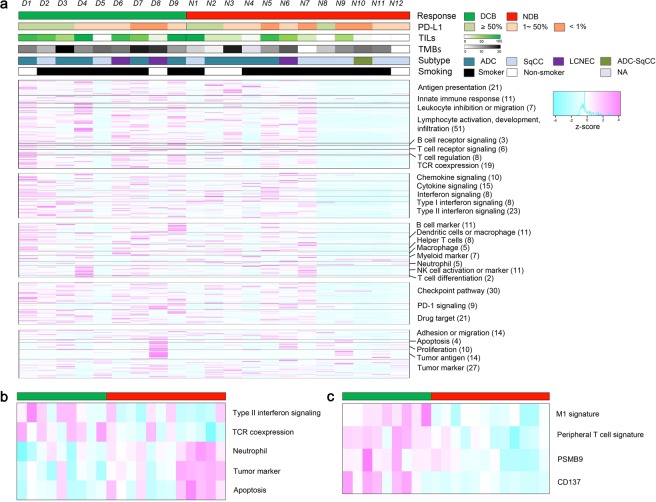
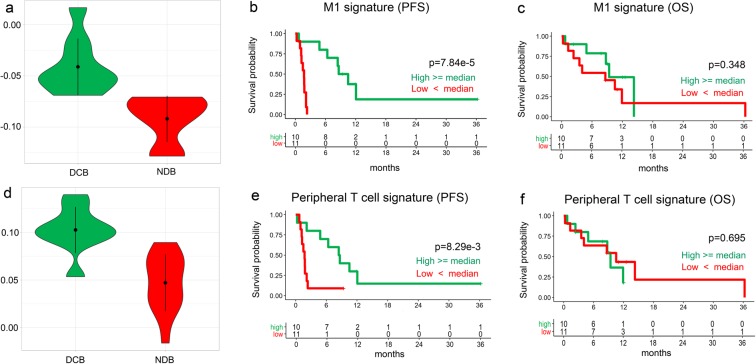
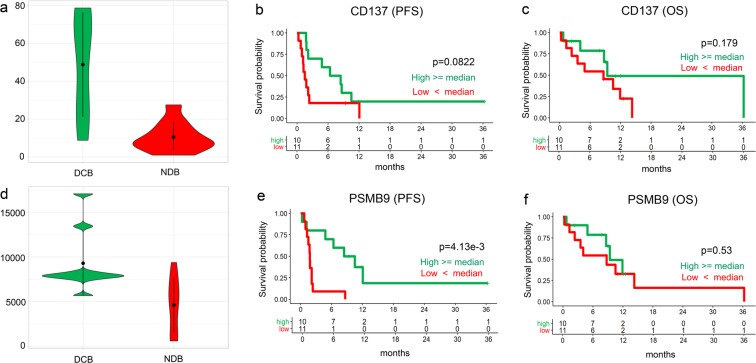
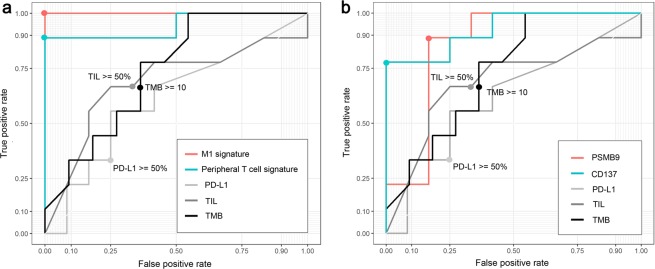
Immune checkpoint blockade is promising for treating non-small-cell lung cancer (NSCLC). We used multipanel markers to predict the response to immune checkpoint inhibitors (ICIs) by characterizing gene expression signatures or individual genes in patients who showed durable clinical benefit to ICIs. Twenty-one patients with NSCLC treated with single-agent anti-programmed cell death protein (PD)-1 antibody were analyzed and their clinicopathological characteristics and response to ICIs were characterized. Nine (43%) showed a durable clinical benefit (DCB), while the remaining 12 (57%) patients showed non-durable benefit (NDB). The M1 and peripheral T cell signatures showed the best performance for discriminating DCB from NDB (sensitivity, specificity, accuracy = 0.89, 1.0, 0.95, respectively). Progression-free survival (PFS) was significantly longer in patients with high M1 signature or high peripheral T cell signature scores. CD137 and PSMB9 mRNA expression was higher in the DCB group than in the NDB group. Patients with high PSMB9 expression showed longer PFS. M1 signature, peripheral T cell signature and high mRNA expression level of CD137 and PSMB9 showed better predictive performance than known biomarkers, such as PD-L1 immunohistochemistry, tumor mutation burden, or tumor-infiltrating lymphocytes.
Overview
The claims and statistics of this paper haven’t been checked yet.
Free: it reads the open-access text and checks the first 5 claims that cite a source we can check. Create a free account to check every claim.
Integrity signals
Registry
Cites
Statistics
Figures
Verification
Claims the paper makes
The claims and statistics of this paper haven’t been checked yet.
Free: it reads the open-access text and checks the first 5 claims that cite a source we can check. Create a free account to check every claim.
Claims other papers make about this one
Each is checked against this paper’s own text: does it say what the citing paper says it does?
The check wasn’t confident either way, so it gives no verdict — never disputed.
In the citing paper
“In addition to depleting favorable genera associated with survival (such as Ruminococcus) 41 , ATB use tends to deviate the gut microbiome composition towards harmful bacteria previously associated with proinflammatory or immunoregulatory pathways (such as E. coli, and Clostridium bolteae) 46 , supporting previous findings in renal cell carcinomas amenable to ICI 37 .”
From Intestinal Akkermansia muciniphila predicts clinical response to PD-1 blockade in patients with advanced non-small-cell lung cancer (2022) · cites this paper as [37]
Experimental — accuracy not yet measuredThe check wasn’t confident either way, so it gives no verdict — never disputed.
In the citing paper
“We used MCA-205 fibrosarcomas because it is normally -in SPF eubiotic mice-sensitive to anti-PD-1 Ab and has been used as a reference mouse model in our previous avatar experiments reported in 18 and 37 , both papers showing that results obtained with MCA-205 were recapitulated in orthotopic TC1 lung cancer or RENCA RENal CArcinoma models, respectively.”
From Intestinal Akkermansia muciniphila predicts clinical response to PD-1 blockade in patients with advanced non-small-cell lung cancer (2022) · cites this paper as [37]
Experimental — accuracy not yet measured
Self-check
Percentages, sums and reported differences re-computed from the paper’s own numbers.
The self-check needs the paper’s full text.
Citations
Cites
Gene Ontology: tool for the unification of biology
Ashburner, M., Ball, C. A., Blake, J. A., Botstein, D., Butler, H., Cherry, J. M., Davis, A. P., Dolinski, K., Dwight, S. S., Eppig, J. T., et al. (2000) · Nature Genetics · doi:10.1038/75556 · Cited by 43,206
PD-1 and PD-L1 Immune Checkpoint Blockade to Treat Breast Cancer
Hartkopf, A. D., Taran, F.-A., Wallwiener, M., Walter, C. B., Krämer, B., Grischke, E.-M., & Brucker, S. Y. (2016) · Breast Care · doi:10.1159/000453569 · Cited by 30,845
Classification and Regression by randomForest
Liaw, A. I., & Wiener, M. C. (2007) · Cited by 18,594
GSVA: gene set variation analysis for microarray and RNA-Seq data
Hänzelmann, S., Castelo, R., & Guinney, J. (2013) · BMC Bioinformatics · doi:10.1186/1471-2105-14-7 · Cited by 15,440
Adverse Renal Effects of Immune Checkpoint Inhibitors: A Narrative Review
Wanchoo, R., Karam, S., Uppal, N. N., Barta, V. S., Deray, G., Devoe, C., Launay-Vacher, V., Jhaveri, K. D., & on behalf of Cancer and Kidney International Network Workgroup on Immune Checkpoint Inhibitors (2017) · American Journal of Nephrology · doi:10.1159/000455014 · Cited by 15,256
Improved Survival with Ipilimumab in Patients with Metastatic Melanoma
Hodi, F. S., O'Day, S. J., McDermott, D. F., Weber, R. W., Sosman, J. A., Haanen, J. B., Gonzalez, R., Robert, C., Schadendorf, D., Hassel, J. C., et al. (2010) · New England Journal of Medicine · doi:10.1056/nejmoa1003466 · Cited by 15,155
The Molecular Signatures Database Hallmark Gene Set Collection
Liberzon, A., Birger, C., Thorvaldsdóttir, H., Ghandi, M., Mesirov, J. P., & Tamayo, P. (2015) · Cell Systems · doi:10.1016/j.cels.2015.12.004 · Cited by 13,807
Pembrolizumab versus Chemotherapy for PD-L1-Positive Non-Small-Cell Lung Cancer
Reck, M., Rodríguez-Abreu, D., Robinson, A. G., Hui, R., Csőszi, T., Fülöp, A., Gottfried, M., Peled, N., Tafreshi, A., Cuffe, S., et al. (2016) · New England Journal of Medicine · doi:10.1056/nejmoa1606774 · Cited by 10,089
Nivolumab versus docetaxel in advanced nonsquamous non-small-cell lung cancer
Borghaei, H., Paz-Ares, L., Horn, L., Spigel, D. R., Steins, M., Ready, N. E., Chow, L. Q., Vokes, E. E., Felip, E., Holgado, E., et al. (2015) · New England Journal of Medicine · doi:10.1056/nejmoa1507643 · Cited by 9,335
Modeling Survival Data: Extending the Cox Model
Therneau, T. M., & Grambsch, P. M. (2000) · Statistics for Biology and Health · doi:10.1007/978-1-4757-3294-8 · Cited by 8,674
Research works printed but not linked: 1
- Wickham, H. Elegant Graphics for Data Analysis. (Springer-Verlag 2016).
Cited by
Items 101–200 of 219
Ramos‐Paradas, J., Gómez-Sánchez, D., Rosado, A., Ucero, A. C., Ferrer, I., García‐Luján, R., Zugazagoitia, J., Carrizo, N., Enguita, A. B., Conde, E., et al. (2022) · Journal of Clinical Medicine · doi:10.3390/jcm11061500 · Cited by 11
“Expression of CD137 (TNFRSF9) and PSBM9 in NSCLC tumors was increased in immunotherapy responders [49], while an elevated expression of PSBM9 was associated with higher PFS.”
BackgroundResultGabryś, H. S., Basler, L., Burgermeister, S., Hogan, S. A., Ahmadsei, M., Pavic, M., Bogowicz, M., Vuong, D., Tanadini‐Lang, S., Forster, R. E., et al. (2022) · Frontiers in Oncology · doi:10.3389/fonc.2022.977822 · Cited by 11
Uhlik, M. T., Pointing, D., Iyer, S., Ausec, L., Štajdohar, M. R., Cvitkovič, R., Žganec, M., Culm, K., Santos, V. C., Pytowski, B., et al. (2023) · Frontiers in Oncology · doi:10.3389/fonc.2023.1158345 · Cited by 10
Cheng, Z., Wang, H., Yang, Z., Li, J., & Chen, X. (2023) · BMC Cancer · doi:10.1186/s12885-023-11639-y · Cited by 12
TCR Coexpression Signature Predicts Immunotherapy Resistance in NSCLC
Wang, Y., Liu, Y., Li, X., Li, W., Xue, Z., He, X., Xiong, W., He, L., & Bai, Y. (2022) · Frontiers in Pharmacology · doi:10.3389/fphar.2022.875149 · Cited by 11
“In the ICI-NSCLC cohort (GSE136961), compared with the low TCR coexpression group, the high group shows a significantly lower expression of immune checkpoint molecules, such as HAVCR2, LAG3, IDO1, CTLA4, TIGIT,PD-1, and PDCD1LG2 (Figure 4B).”
MethodInfluentialNovel Nuclear Medicine Imaging Applications in Immuno-Oncology
Frega, S., Maso, A. D., Pasello, G., Cuppari, L., Bonanno, L., Conte, P., & Evangelista, L. (2020) · Cancers · doi:10.3390/cancers12051303 · Cited by 10
“ICIs activity is influenced by several clinical features, tumor histology, and also tumor genes’ expression [93].”
BackgroundA Comprehensive Benchmark of Transcriptomic Biomarkers for Immune Checkpoint Blockades
Kang, H., Zhu, X., Cui, Y., Xiong, Z., Zong, W., Bào, Y., & Jia, P. (2023) · Cancers · doi:10.3390/cancers15164094 · Cited by 14
“Among these datasets, we excluded those that were generated using the NanoString panels [57,58] because such datasets had limited coverage of biomarker genes.”
MethodSelf-citationCha, J., Kim, C. G., Sim, N. S., Kim, G., Son, W., Kim, D., Jung, Y., Hong, H. J., Lee, H. B., Kim, J., et al. (2025) · Cell Reports Medicine · doi:10.1016/j.xcrm.2025.102408 · Cited by 19
Self-citationWojas‐Krawczyk, K., Paśnik, I., Kucharczyk, T., Wieleba, I., Krzyżanowska, N., Gil, M., Krawczyk, P. A., & Milanowski, J. (2021) · International Journal of Molecular Sciences · doi:10.3390/ijms22179133 · Cited by 9
“Moreover, this study also proved that significant efforts should be made to obtain the proper information about the following two branches of the immune response: non-specific (M1 signature) and specific (peripheral T cell signature) activity of the immune response [67].”
BackgroundImmunotherapy and NSCLC: The Long and Winding Road
Rossi, A. (2020) · Cancers · doi:10.3390/cancers12092512 · Cited by 11
“mAbs inhibiting these immune checkpoints promote antitumor immunity and can produce durable cancer regression [7].”
BackgroundChen, Y.-C., Chen, A., Hong, R., Huang, B. E., & Pirooznia, M. (2024) · Scientific Reports · doi:10.1038/s41598-024-82903-9 · Cited by 9
Personalized risk stratification in colorectal cancer via PIANOS system
Cai, D., Qi, H., Yang, Q., Li, H., Li, C., Hu, C., Gai, B., Zhang, X., Mao, Y., Gao, F., et al. (2025) · Nature Communications · doi:10.1038/s41467-025-61713-1 · Cited by 12
Mathematical Model for Delayed Responses in Immune Checkpoint Blockades
Zheng, C. Y., & Kim, P. (2021) · Bulletin of Mathematical Biology · doi:10.1007/s11538-021-00933-0 · Cited by 8
Liu, C., Dai, S., Geng, H., Jiang, Z., Teng, X., Liu, K., Tuo, Z., Peng, L., Yang, C., & Bi, L. (2023) · European journal of medical research · doi:10.1186/s40001-023-01277-2 · Cited by 8
Toral, K., Wuenschel, M. A., & Black, E. P. (2021) · PLoS ONE · doi:10.1371/journal.pone.0256416 · Cited by 8
“The dataset contained bulk tumor RNA-sequencing data and clinical response data for 21 NSCLC subjects treated with single agent anti-PD-1 therapy [14].”
InfluentialPezzana, S., Blaess, S., Kortendieck, J., Hemmer, N., Tako, B., Pietura, C., Ruoff, L., Riel, S., Schaller, M., González-Menéndez, I., et al. (2024) · Theranostics · doi:10.7150/thno.95173 · Cited by 8
Mogenet, A., Finetti, P., Denicolaï, E., Greillier, L., Boudou, P., Goldwasser, F., Lumet, G., Ceccarelli, M., Birnbaum, D., Bedognetti, D., et al. (2023) · Journal of Translational Medicine · doi:10.1186/s12967-023-04463-2 · Cited by 8
“We profiled our series of 44 tumor samples that we coupled with 118 profiled samples from four published public datasets [15, 23, 32, 33], obtaining a cohort of 162 advanced NSCLC patients treated with anti-PD1/PDL1 ICI.”
BackgroundMethodInfluentialZhang, Y., Mi, K., Li, Z., Qiang, L., Lv, M.-Y., Wu, Y., Yuan, L., & Jin, S. (2021) · Frontiers in Oncology · doi:10.3389/fonc.2021.705869 · Cited by 7
Qiu, S., Wang, Y., Hui, R., Que, Q., Wu, Y., Zhu, R., Feng, X., Chi, J., Lai, W., Sun, Y., et al. (2022) · European journal of medical research · doi:10.1186/s40001-022-00895-6 · Cited by 8
“evaluation In order to investigate the correlation between the 7-gene signature and clinical response, the sequencing and clinical data of patients with lung adenocarcinoma who received anti-PD-(L)1 immunotherapy in six different datasets [GSE190266 (n = 70) [38], GSE135222 (n = 27) [39], GSE136961 (n = 21) [40], GSE8…”
MethodIntegrated drivers of basal and acute immunity in diverse human populations
Souquette, A. H., Allen, E. K., Oshansky, C. M., Rampersaud, E., Walker, E. V., Tang, L., Wong, S., Jeevan, T., Shi, L., Pounds, S. B., et al. (2026) · Cell Reports Medicine · doi:10.1016/j.xcrm.2026.102690 · Cited by 10
The crosstalk between lung cancer and the bone marrow niche fuels emergency myelopoiesis
Calderon-Espinosa, E., Ridder, K. D., Benoot, T., Jansen, Y. J. L., Vanhonacker, D., Heestermans, R., Becker, A. D., Riet, I. V., Decoster, L., & Goyvaerts, C. (2024) · Frontiers in Immunology · doi:10.3389/fimmu.2024.1397469 · Cited by 9
Wang, Q., Li, S., Wu, Y., Yu, X., Dai, Y., Wang, Y., Li, L., Yang, M., Lin, K., Shao, W., et al. (2025) · Research · doi:10.34133/research.0915 · Cited by 9
Pan-cancer analysis of spatial transcriptomics reveals heterogeneous tumor spatial microenvironment
Li, J., Lin, P., Wang, H., Tang, Z., Yan, X., Chen, X., Yuan, J., Chen, W., & Hong, L. (2026) · Cell Reports Medicine · doi:10.1016/j.xcrm.2026.102751 · Cited by 12
Chi, P., Jiang, H., Li, D., Li, J., Wen, X., Ding, Q., Chen, L., Zhang, X., Huang, J., & Ding, Y. (2022) · Frontiers in Immunology · doi:10.3389/fimmu.2022.1012673 · Cited by 6
“A recent study found that peripheral T-cell and classically activated (M1) macrophage enrichment is associated with long-term clinical benefits of PD-1 mAb in NSCLC (32).”
BackgroundImmune gene signatures as prognostic criteria for cancer patients
Larionova, I., & Таширева, Л. А. (2023) · Therapeutic Advances in Medical Oncology · doi:10.1177/17588359231189436 · Cited by 7
Tseng, L., Huang, C., Tsai, Y., Chen, J., Chao, T., Lai, J., Lien, P., Lin, Y., Feng, C.-J., Chen, Y.-J., et al. (2023) · Translational Oncology · doi:10.1016/j.tranon.2023.101782 · Cited by 7
Liu, D., Wu, G., Wang, S., Zheng, X., & Che, X. (2024) · Pharmaceuticals · doi:10.3390/ph17050635 · Cited by 6
Zhou, M., Zhang, X., Li, T., & Chen, Y. (2021) · Journal of Clinical Laboratory Analysis · doi:10.1002/jcla.24086 · Cited by 5
Yin, G., Tian, T., Ji, X., Zheng, S., Zhu, Z., Li, Y., & Zhang, C. (2023) · Frontiers in Immunology · doi:10.3389/fimmu.2023.1107419 · Cited by 8
“Expression levels of PSMB9 were significantly up regulated in patients who continued to benefit from ICIs, suggesting that it could be a target for the assessment of therapeutic efficacy of ICIs, in agreement with our analysis (35).”
ResultThe complexities of PD-L1 expression as an indicator of immunotherapy outcomes
Needleman, R., & Thai, A. A. (2025) · Immunotherapy · doi:10.1080/1750743x.2025.2500908 · Cited by 4
Li, R., Xie, W., Chen, R., Wu, J., Wang, L., Sun, Y., Lin, X., Xie, X., Xie, Z., Liu, L., et al. (2025) · Lung Cancer · doi:10.1016/j.lungcan.2025.108698 · Cited by 4
Benard, B. A., Lalgudi, C. K., Ilerten, I., Wang, R. H., & Gentles, A. J. (2025) · Nucleic Acids Research · doi:10.1093/nar/gkaf1215 · Cited by 5
Chinchilla-Tábora, L. M., Montero, J. C., Corchete, L. A., Morais, I. G., del Barco, E., Olivares-Hernández, A., González, M. R., Sayagués, J. M., & de la Cruz, M. D. L. (2024) · International Journal of Molecular Sciences · doi:10.3390/ijms25042048 · Cited by 5
“Recently, Hwang et al. [25] reported that gene expression signatures—specifically of T cells and M1 macrophages—could accurately classify the metastatic NSCLC, without any prior treatment (n = 21), into durable responder and non-durable responder patients [25].”
BackgroundLi, H., Sunder, S. S., Jatwani, K., Bae, Y., Deng, L., Liu, Q., Dy, G. K., & Pokharel, S. (2024) · Cancers · doi:10.3390/cancers16040744 · Cited by 6
“In addition, TILs’ immune gene expression signatures are touted as predictors of durable benefits from ICIs [17].”
BackgroundBerry, L. K., Pullikuth, A., Stearns, K., Wang, Y., Wagner, C. J., Chou, J. W., Darby, J. P., Kelly, M. G., Mall, R., Leung, M. S., et al. (2024) · Journal of Translational Medicine · doi:10.1186/s12967-024-05846-9 · Cited by 4
Zhang, S., Liu, S., Liu, X., Liu, J., & Wu, W. (2021) · Annals of Translational Medicine · doi:10.21037/atm-21-2186 · Cited by 4
“Further analysis with external datasets GSE126044 and GSE136961 supported our hypothesis.”
InfluentialExploration of immune-related cells and ceRNA in squamous cell lung cancer
Wang, L., Wang, H., Xu, K., Xu, Y., Wang, Y., Wei, S., & Zhang, Z. (2021) · Medicine · doi:10.1097/md.0000000000027058 · Cited by 4
Mouritzen, M. T., Ladekarl, M. B., Hager, H., Mattesen, T. B., Lippert, J. B., Frank, M. S., Nøhr, A. K., Egendal, I. B., & Carus, A. (2023) · Cancers · doi:10.3390/cancers15184480 · Cited by 4
“No consensus on the DCB definition exists, and we defined DCB as PFS > 6 months to increase comparability with other GEP studies in NSCLC [42,43].”
BackgroundResultMa, X., Zhu, Q., Wu, Z., & Han, W. (2025) · Current Issues in Molecular Biology · doi:10.3390/cimb47090712 · Cited by 8
“A small group study found high PSMB9 levels related to durable clinical benefit after anti-PD1 treatment in non-small-cell lung cancers (NSCLCs) [11], suggesting that PSMB9 could serve as a predictive biomarker for identifying patients likely to benefit from immunotherapy.”
You, H., Fan, M., Yin, L., Na, F., & You, L. (2025) · Discover Oncology · doi:10.1007/s12672-025-03677-8 · Cited by 4
“Subtype-specific feature gene sets were utilized to compute enrichment scores within immunotherapy datasets, including GSE136961 [35].”
Koh, Y. W., Han, J.-H., Haam, S., & Lee, H. W. (2024) · Mechanisms of Ageing and Development · doi:10.1016/j.mad.2024.111999 · Cited by 4
Xia, D., Liu, Q., Jiao, W., Peng, L., Wang, Q., Tuo, Z., & Bi, L. (2022) · BMC Cancer · doi:10.1186/s12885-022-10278-z · Cited by 3
Rubio, Á. M., Oh, S., Roelandt, S., Stevens, D., Damme, E. V., Vermaelen, K. Y., Preter, K. D., & Everaert, C. (2024) · Scientific Reports · doi:10.1038/s41598-024-76982-x · Cited by 3
“The presence of a peripheral T cell gene expression signature in the TME of anti-PD-1-treated NSCLC patients was associated with a longer PFS, and showed a higher AUC value than PD-L1 expression, TMB and TILs 41 .”
Schmidt, F., Wu, K. X., Purwanti, Y. I., Tan, N. Y. Z., Carbajo, D., Bok, K. X., Wilm, A., Fehlings, M., MacLeod, D. T., Nardin, A., et al. (2025) · Frontiers in Oncology · doi:10.3389/fonc.2025.1629802 · Cited by 4
Xie, R., Zhai, K., Yu, J., & Zhao, M. (2025) · Frontiers in Immunology · doi:10.3389/fimmu.2025.1654573 · Cited by 3
Mai, V. H., Prasanpanich, M., Zungsontiporn, N., Korphaisarn, K., Sitthideatphaiboon, P., Aporntewan, C., Chantranuwat, P., Hirankarn, N., & Vinayanuwattikun, C. (2026) · Clinical & Translational Immunology · doi:10.1002/cti2.70076 · Cited by 3
The role of B cells in the development, progression, and treatment of lymphomas and solid tumors
Lue, J. K., Downs‐Canner, S., & Chaudhuri, J. (2022) · Advances in immunology · doi:10.1016/bs.ai.2022.07.002 · Cited by 4
Emerging Biomarkers for the Selection of Advanced NSCLC-Affected Immunotherapy Patients
Gravara, L. D., Battiloro, C., Letizia, A., Cantile, R., D’Agnano, V., Sica, G., & Rocco, D. (2021) · Journal of Molecular Pathology · doi:10.3390/jmp2020017 · Cited by 2
IRF4: A potential prognostic biomarker for immunotherapy in NSCLC
Zhao, Q., Li, B., Xu, Y., Li, X., Yu, J., & Wang, L. (2024) · International Immunopharmacology · doi:10.1016/j.intimp.2024.113411 · Cited by 3
Role of Immunotherapy in Ovarian Cancer: Advances, Challenges, and Future Perspectives
Garg, P., Singhal, G., Pareek, S., Khan, A., Tan, T., Wheeler, D. L., & Singhal, S. S. (2025) · Cancer treatment and research · doi:10.1007/978-3-031-97242-3_10 · Cited by 4
Weiss, A., Fomin, V., Feng, D., Tang, Z., Cai, J., John, B., & Pfister, N. T. (2025) · AI in Precision Oncology · doi:10.1177/2993091x251369852 · Cited by 2
“1 – 5 However, traditional methods to identify actionable biomarkers are time-consuming, expensive, mostly prognostic, and often fail to provide actionable insights.”
Advancing Cancer Immunotherapy Through Integrating Molecular and Computational Approaches
Elghaish, R. A., Alaswad, Z., Abdelhafeez, S. H., Salem, O., & Elserafy, M. (2023) · Springer eBooks · doi:10.1007/978-3-030-80962-1_316-1 · Cited by 1
Bi, W., Xu, Z., Liu, F., Xie, Z., Liu, H., Zhu, X., Zhong, W., Zhang, P., & Tang, X. (2024) · PLoS Genetics · doi:10.1371/journal.pgen.1011134 · Cited by 1
Bowen, S. R., Hippe, D. S., Thomas, H. M. T., Sasidharan, B., Lampe, P. D., Baik, C. S., Eaton, K. D., Lee, S. Y., Martins, R. G., Santana-Dávila, R., et al. (2021) · medRxiv · doi:10.1101/2021.02.22.21251919 · Cited by 1
Chen, H., Peng, Y., Li, Y., Zheng, Q., Zhao, Y., Liu, P., Wu, Z., Wo, Y., Hong, H., Sun, Y., et al. (2023) · bioRxiv (Cold Spring Harbor Laboratory) · doi:10.1101/2023.10.29.564580 · Cited by 1
Chin, W. L., Zemek, R. M., Tilsed, C. M., Forrest, A. R. R., Fear, V. S., Forbes, C. A., Boon, L., Bosco, A., Guo, B. B., Millward, M., et al. (2024) · Scientific Data · doi:10.1038/s41597-024-03294-0 · Cited by 1
“Previous datasets in the ICB literature have focused on genomic correlates with non-temporal transcriptional determinants 5,6 , fewer time points 7 or sparser sampling density with fewer biological replicates 8 .”
BackgroundPan-cancer tumor classification by a holistic tumor microenvironment atlasPreprint
Qin, S., Xiao, D., Li, J., Jiang, N., Diao, T., Bo, Y., Gao, Q., Zheng, L., Ling, X., Gao, Q., et al. (2025) · bioRxiv (Cold Spring Harbor Laboratory) · doi:10.64898/2025.12.27.696641 · Cited by 3
El tiempo en el arte. Un estudio sobre la expresión temporal en las artes figurativas
García, I. (1996) · Verdolay: Revista del Museo Arqueológico de Murcia
Xia, D., Liu, Q., Jiao, W., Wang, Q., Peng, L., Tuo, Z., & Bi, L. (2022) · Research Square · doi:10.21203/rs.3.rs-1634714/v1
Mouritzen, M. T. (2022) · VBN Forskningsportal (Aalborg Universitet) · doi:10.54337/aau515553116
Rocha, P., Zhang, J., Briviesca, R. L., Cruz‐Bermúdez, A., Bota‐Rabassedas, N., Sanchez-Espiridon, B., Yoshimura, K., Behrens, C., Lü, W., Tang, X., et al. (2023) · doi:10.1158/1078-0432.c.6532419
Data from Therapeutic Targeting of Macrophage Plasticity Remodels the Tumor-Immune Microenvironment
Jang, H.-J., Lee, H., Yu, W., Ramineni, M., Truong, C., Ramos, D., Splawn, T. G., Choi, J. M., Jung, S. Y., Lee, J., et al. (2023) · doi:10.1158/0008-5472.c.6514119.v1
Basler, L., Gabryś, H. S., Hogan, S. A., Pavic, M., Bogowicz, M., Vuong, D., Tanadini‐Lang, S., Forster, R. E., Kudura, K., Huellner, M. W., et al. (2023) · doi:10.1158/1078-0432.22478060.v1
Zhang, W., Gong, C., Peng, X., Bi, X., Sun, Y., Zhou, J., Wu, F., Zeng, H., Wang, Y., Zhou, H., et al. (2023) · doi:10.1158/1078-0432.22487621.v1
Data from An Immune-Related Gene Prognostic Index for Head and Neck Squamous Cell Carcinoma
Chen, Y., Li, Z.-Y., Zhou, G., & Sun, Y. (2023) · doi:10.1158/1078-0432.c.6530148
Basler, L., Gabryś, H. S., Hogan, S. A., Pavic, M., Bogowicz, M., Vuong, D., Tanadini‐Lang, S., Forster, R. E., Kudura, K., Huellner, M. W., et al. (2023) · doi:10.1158/1078-0432.c.6529838.v1
Zhang, W., Gong, C., Peng, X., Bi, X., Sun, Y., Zhou, J., Wu, F., Zeng, H., Wang, Y., Zhou, H., et al. (2023) · doi:10.1158/1078-0432.c.6532556.v1
Zhang, F., Luan, J., Suo, L., Cao, H., Yu, X., & Liu, B. (2023) · Research Square · doi:10.21203/rs.3.rs-2701269/v1
Hao, D., Han, G., Sinjab, A. F., Gomez-Bolanos, L. I., Lazcano, R., Serrano, A. G., Hernandez, S. D., Dai, E., Cao, X., Hu, J., et al. (2023) · doi:10.1158/2159-8290.22541784
Hao, D., Han, G., Sinjab, A. F., Gomez-Bolanos, L. I., Lazcano, R., Serrano, A. G., Hernandez, S. D., Dai, E., Cao, X., Hu, J., et al. (2023) · doi:10.1158/2159-8290.22541784.v1
Kawanabe-Matsuda, H., Takeda, K., Nakamura, M., Makino, S., Karasaki, T., Kakimi, K., Nishimukai, M., Ohno, T., Omi, J., Kano, K., et al. (2023) · doi:10.1158/2159-8290.c.6549610
Xu, Y., Jia, L.-H., Yu, W., & Yang, M. (2024) · Research Square · doi:10.21203/rs.3.rs-3977623/v1
Xia, D., Liu, Q., Jiao, W., Peng, L., Wang, Q., Tuo, Z., & Bi, L. (2022) · Figshare · doi:10.6084/m9.figshare.21510349
Qiu, S., Wang, Y., Rao, H., Que, Q., Wu, Y., Zhu, R., Feng, X., Chi, J., Lai, W., Sun, Y., et al. (2022) · Figshare · doi:10.6084/m9.figshare.21592624
Qiu, S., Wang, Y., Rao, H., Que, Q., Wu, Y., Zhu, R., Feng, X., Chi, J., Lai, W., Sun, Y., et al. (2022) · Figshare · doi:10.6084/m9.figshare.21592630
Xia, D., Liu, Q., Jiao, W., Peng, L., Wang, Q., Tuo, Z., & Bi, L. (2022) · Figshare · doi:10.6084/m9.figshare.21510355
Xia, D., Liu, Q., Jiao, W., Peng, L., Wang, Q., Tuo, Z., & Bi, L. (2022) · Figshare · doi:10.6084/m9.figshare.21510352
Łochowska, B., Stawiski, K., Kuna, K., Nowicka, Z., Łochowski, M. P., & Fijuth, J. (2024) · Nowotwory Journal of Oncology · doi:10.5603/njo.99179
“Other biomarkers, such as tumor mutational burden [6] and immune gene signatures [7], are also being investigated and may provide valuable insights into patient selection and treatment response.”
Sureka, N., Arora, S., Ish, P., & Khanna, G. (2025) · Monaldi Archives for Chest Disease · doi:10.4081/monaldi.2025.3288
Weiss, A. D., Fomin, V., Feng, D., Tang, Z., Cai, J., John, B., & Pfister, N. T. (2025) · medRxiv · doi:10.1101/2025.03.06.25323534 · Cited by 2
Dai, L., Huang, L., Li, L., Tang, L. M., Yao, J., Shi, Y., & Han, X. (2025) · BMC Cancer · doi:10.1186/s12885-025-14148-2
“For GSE136961 [29] dataset, Kaplan-Meier curve for progression free survival (PFS) based on CD14 expression was performed in the Biomarker Exploration of Solid Tumors (BEST) ( h t t p s : / / r o o k i e u t o p i a . h i p l o t . c o m . c n / a p p _ d i r e c t / B E S T /) website.”
Advancing Cancer Immunotherapy Through Integrating Molecular and Computational Approaches
Elghaish, R. A., Alaswad, Z., Abdelhafeez, S. H., Salem, O., & Elserafy, M. (2025) · Springer eBooks · doi:10.1007/978-3-032-00773-5_316
Lee, K., Kim, M., Lim, S. O., Shin, D.-J., Shin, Y., Choi, J.-J., Lee, J. W., Kang, H. J., Lee, J. W., & Lee, J. (2025) · Biofabrication · doi:10.1088/1758-5090/ae26cc · Cited by 2
“; Cho et al [60]; Jung et al [61]; Hwang et al [62]; Miao et al [63]; Phillips et al [64]; and IMvigor210 [65].”
Self-citationCheng, Z., Wang, H., Yang, Z., Li, J., & Chen, X. (2024) · Figshare · doi:10.6084/m9.figshare.24598033
Mei, J., Jiang, G., Chen, Y., Xu, Y., Wan, Y., Chen, R., Liu, F., Mao, W., Zheng, M., & Xu, J. (2022) · Figshare · doi:10.6084/m9.figshare.20252950
Ren, Y., Wu, R., Li, C., Liu, L., Li, L., Weng, S., Xu, H., Xing, Z., Zhang, Y., Wang, L., et al. (2024) · Figshare · doi:10.6084/m9.figshare.25464988
Liu, C., Dai, S., Geng, H., Jiang, Z., Teng, X., Liu, K., Tuo, Z., peng, L., Yang, C., & Bi, L. (2024) · Figshare · doi:10.6084/m9.figshare.26617024
Cheng, Z., Wang, H., Yang, Z., Li, J., & Chen, X. (2023) · Figshare · doi:10.6084/m9.figshare.24597764
Ren, Y., Wu, R., Li, C., Liu, L., Li, L., Weng, S., Xu, H., Xing, Z., Zhang, Y., Wang, L., et al. (2024) · Figshare · doi:10.6084/m9.figshare.26696745
Ren, Y., Wu, R., Li, C., Liu, L., Li, L., Weng, S., Xu, H., Xing, Z., Zhang, Y., Wang, L., et al. (2024) · Figshare · doi:10.6084/m9.figshare.26696736
Ren, Y., Wu, R., Li, C., Liu, L., Li, L., Weng, S., Xu, H., Xing, Z., Zhang, Y., Wang, L., et al. (2024) · Figshare · doi:10.6084/m9.figshare.26696754
Liu, C., Dai, S., Geng, H., Jiang, Z., Teng, X., Liu, K., Tuo, Z., Peng, L., Yang, C., & Bi, L. (2024) · Figshare · doi:10.6084/m9.figshare.26617021
Ren, Y., Wu, R., Li, C., Liu, L., Li, L., Weng, S., Xu, H., Xing, Z., Zhang, Y., Wang, L., et al. (2024) · Figshare · doi:10.6084/m9.figshare.26696730
Ren, Y., Wu, R., Li, C., Liu, L., Li, L., Weng, S., Xu, H., Xing, Z., Zhang, Y., Wang, L., et al. (2024) · Figshare · doi:10.6084/m9.figshare.26696742
Ren, Y., Wu, R., Li, C., Liu, L., Li, L., Weng, S., Xu, H., Xing, Z., Zhang, Y., Wang, L., et al. (2024) · Figshare · doi:10.6084/m9.figshare.26696757
Ren, Y., Wu, R., Li, C., Liu, L., Li, L., Weng, S., Xu, H., Xing, Z., Zhang, Y., Wang, L., et al. (2024) · Figshare · doi:10.6084/m9.figshare.26696739
Xia, D., Liu, Q., Jiao, W., peng, L., Wang, Q., Tuo, Z., & Bi, L. (2022) · Figshare · doi:10.6084/m9.figshare.21510346
Ren, Y., Wu, R., Li, C., Liu, L., Li, L., Weng, S., Xu, H., Xing, Z., Zhang, Y., Wang, L., et al. (2024) · Figshare · doi:10.6084/m9.figshare.26696751
Qiu, S., Wang, Y., Rao, H., Que, Q., Wu, Y., Zhu, R., Feng, X., Chi, J., Lai, W., Sun, Y., et al. (2022) · Figshare · doi:10.6084/m9.figshare.21592627
Metadata
- Authors
- Hwang, S., Kwon, A.-Y., Jeong, J.-Y., Kim, S., Kang, H., Park, J., Kim, J.-H., Han, O. J., Lim, S. M., & An, H. J.
- Affiliations
- CHA University Bundang Medical Center (KR)
- Corresponding author
- Lim, Sun Min
- An, Hee Jung
- Venue
- Scientific Reports
- Published
- 2020-01-20
- Volume
- 10
- Issue
- 1
- Pages
- 643-643
- ISSN
- 2045-2322 (ISSN-L)
- PMC
- PMC6971301
- OpenAlex
- W2999372945
- Semantic Scholar
- 00d750e3679bc3ea78b2a66218c5be3b8470fb86
- Cited by
- 215
- References
- 51
- Citations by year
- 2026: 10 · 2025: 26 · 2024: 47 · 2023: 39 · 2022: 41 · 2021: 32 · 2020: 19
- FWCI
- 12.28
- Type
- journal article
- Language
- en
- Open access
- gold
- doi.org
- Licence
- cc-by
- creativecommons.org/licenses/by/4.0 (tdm)
- creativecommons.org/licenses/by/4.0 (vor)
- Locations
- Scientific Reports (publishedVersion, cc-by)
- PubMed Central (publishedVersion, cc-by)
- PubMed (publishedVersion)
- DOAJ (DOAJ: Directory of Open Access Journals) (submittedVersion)
- Funders
- Korea Health Industry Development Institute (HI16C1559)
- Topics
- Health Sciences › Medicine › Oncology › Cancer Immunotherapy and Biomarkers
- Life Sciences › Biochemistry, Genetics and Molecular Biology › Cancer Research › Ferroptosis and cancer prognosis
- Health Sciences › Medicine › Oncology › Lung Cancer Research Studies
- Keywords
- non-small cell lung cancer, anti-PD-1 therapy, immune checkpoint inhibitors, immune-related gene signature, durable clinical benefit, predictive biomarkers, 4-1BB, PSMB9, progression-free survival, PD-L1 immunohistochemistry, tumor mutational burden, tumor-infiltrating lymphocytes
- MeSH terms
- Antineoplastic Agents, Immunological, Nivolumab, Aged, Carcinoma, Non-Small-Cell Lung, Cysteine Endopeptidases, Female, Forecasting, Humans, Immunotherapy, Lung Neoplasms, Male, Middle Aged, T-Lymphocytes, Gene Expression, Treatment Outcome, Tumor Necrosis Factor Receptor Superfamily, Member 9, B7-H1 Antigen, Programmed Cell Death 1 Receptor, Antibodies, Monoclonal, Humanized
About these checks
Registry, retraction, Cites and statistics results are computed, not judged, with one exception: a printed reference that no index lists is read once by a model before it counts as a citation error. Claims are extracted by a model and kept only when their quote appears verbatim in the text; each cited source is then checked, with a model’s help, for whether it says what the claim relies on. Those verdicts can be wrong — read the claim’s quote and the cited source before relying on one.
Statistics and arithmetic are recomputed, not judged.
Confidence bands are shown only for fields calibrated on our annotated test set. None is calibrated yet, so no band is shown.
What counts as a claim ›How we measure confidence ›How we check this ›
Are you an author, or do you see a problem with this page? Request a review
Data sources
Bibliographic data: Semantic Scholar, OpenAlex, Crossref.
Contains information from the Semantic Scholar Academic Graph Datasets, made available under the ODC Attribution License (ODC-BY 1.0).
Semantic Scholar’s data is described in: Kinney, R., et al. (2023). The Semantic Scholar Open Data Platform. arXiv:2301.10140.
