

Capsid-specific removal of circulating antibodies to adeno-associated virus vectors
Open accessThe DOI matches its Crossref record; 51 of the 51 references it cites were found in a registry or an index.
Abstract
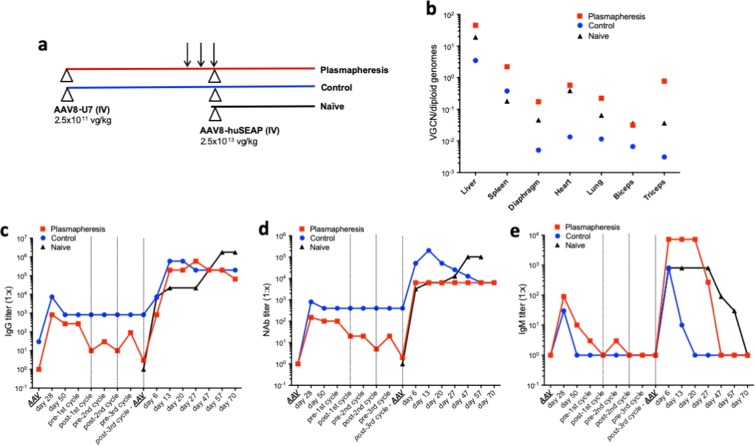
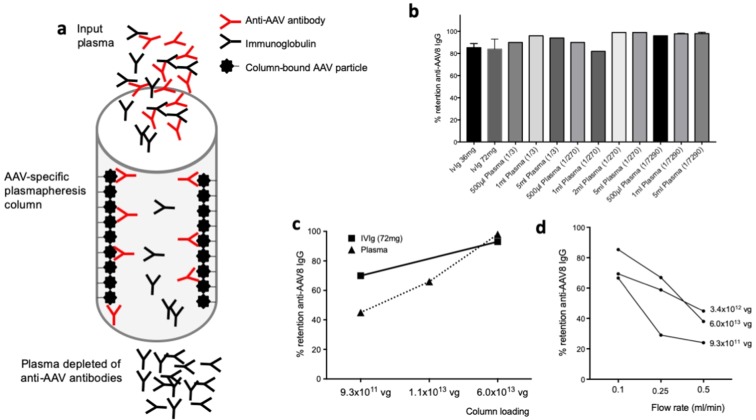
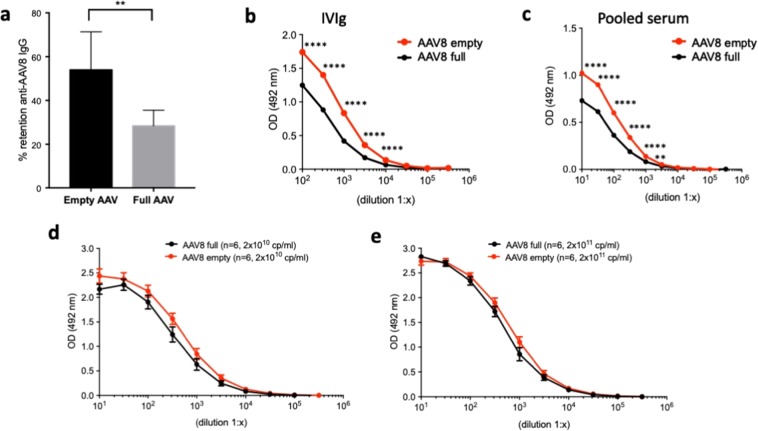
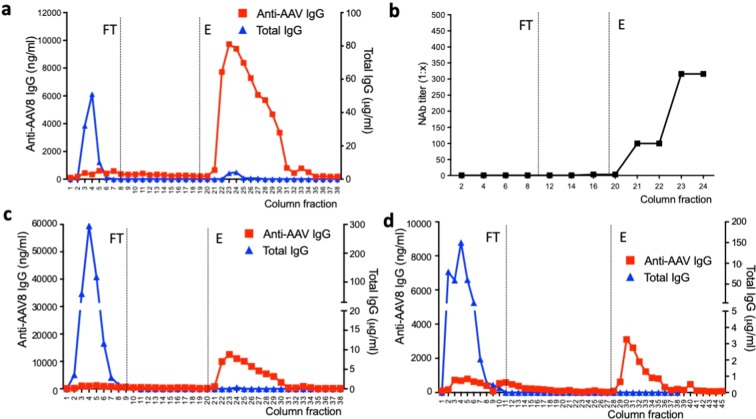
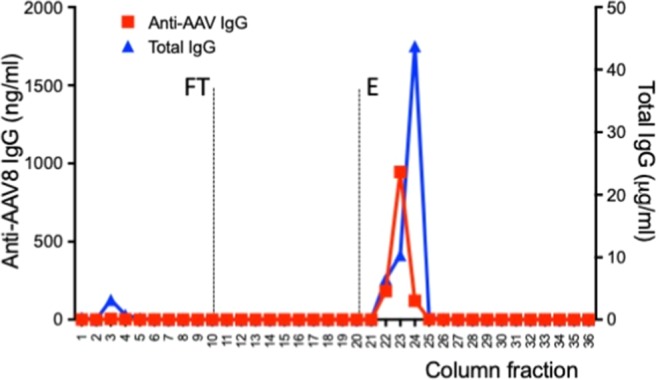
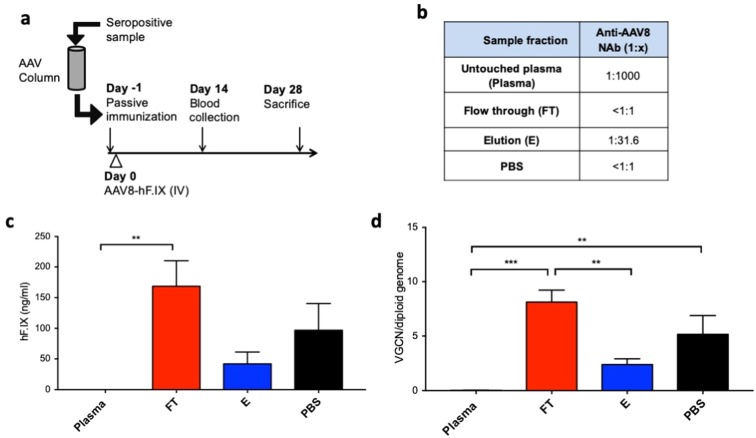
Neutralizing antibodies directed against adeno-associated virus (AAV) are commonly found in humans. In seropositive subjects, vector administration is not feasible as antibodies neutralize AAV vectors even at low titers. Consequently, a relatively large proportion of humans is excluded from enrollment in clinical trials and, similarly, vector redosing is not feasible because of development of high-titer antibodies following AAV vector administration. Plasmapheresis has been proposed as strategy to remove anti-AAV antibodies from the bloodstream. Although safe and relatively effective, the technology has some limitations mainly related to the nonspecific removal of all circulating IgG. Here we developed an AAV-specific plasmapheresis column which was shown to efficiently and selectively deplete anti-AAV antibodies without depleting the total immunoglobulin pool from plasma. We showed the nearly complete removal of anti-AAV antibodies from high titer purified human IgG pools and plasma samples, decreasing titers to levels that allow AAV vector administration in mice. These results provide proof-of-concept of a method for the AAV-specific depletion of neutralizing antibodies in the setting of in vivo gene transfer.
Overview
The claims and statistics of this paper haven’t been checked yet.
Free: it reads the open-access text and checks the first 5 claims that cite a source we can check. Create a free account to check every claim.
Integrity signals
Registry
Cites
Statistics
Figures
Verification
Claims the paper makes
The claims and statistics of this paper haven’t been checked yet.
Free: it reads the open-access text and checks the first 5 claims that cite a source we can check. Create a free account to check every claim.
Claims other papers make about this one
Each is checked against this paper’s own text: does it say what the citing paper says it does?
The source backs part of the claim, not all of it — or backs it for a different population, condition or comparison.
In the citing paper
“while some of these approaches showed impressive efficacy to lower NAb levels and allow transduction in pre-clinical models, none of them can completely and permanently eliminate all anti-AAV antibodies.”
From Pre-existing humoral immunity and complement pathway contribute to immunogenicity of adeno-associated virus (AAV) vector in human blood (2022) · cites this paper as [8]
Experimental — accuracy not yet measuredThe source backs part of the claim, not all of it — or backs it for a different population, condition or comparison.
In the citing paper
“AAV-speci fi c plasmapheresis column was used, enabling near-complete speci fi c removal of anti-AAV IgG and AAV readministration in mice (127), rats (128), and NHPs (129).”
From A versatile toolkit for overcoming AAV immunity (2022) · cites this paper as [127]
Experimental — accuracy not yet measuredThe source backs part of the claim, not all of it — or backs it for a different population, condition or comparison.
In the citing paper
“This has been demonstrated on patients-non-human primates [100,101] and rats [102]-who received systemic injections of gene therapy [103].”
From Immune responses to gene editing by viral and non-viral delivery vectors used in retinal gene therapy (2022) · cites this paper as [101]
Experimental — accuracy not yet measuredThe cited source says what the claim attributes to it.
In the citing paper
“To this end, previous studies developed a capsid-speci fi c plasmapheresis method using immunoadsorption (127 -129).”
From A versatile toolkit for overcoming AAV immunity (2022) · cites this paper as [127]
In the citing paper
“To overcome this obstacle, one study used an AAV-specific plasmapheresis column to deplete anti-AAV NAbs from the plasma in NHPs, without affecting total IgG levels [181].”
From Immunogenicity of Recombinant Adeno-Associated Virus (AAV) Vectors for Gene Transfer (2023) · cites this paper as [181]
Self-check
Percentages, sums and reported differences re-computed from the paper’s own numbers.
The self-check needs the paper’s full text.
Citations
Cites
Adeno-associated virus vector as a platform for gene therapy delivery
Wang, D., Tai, P. W. L., & Gao, G. (2019) · Nature Reviews Drug Discovery · doi:10.1038/s41573-019-0012-9 · Cited by 2,444
Single-Dose Gene-Replacement Therapy for Spinal Muscular Atrophy
Mendell, J. R., Al-Zaidy, S., Shell, R., Arnold, W. D., Rodino-Klapac, L. R., Prior, T. W., Lowes, L., Alfano, L., Berry, K., Church, K., et al. (2017) · New England Journal of Medicine · doi:10.1056/nejmoa1706198 · Cited by 2,381
Manno, C. S., Pierce, G. F., Arruda, V. R., Glader, B., Ragni, M., Rasko, J. J. E., Ozelo, M. C., Hoots, K., Blatt, P., Konkle, B., et al. (2006) · Nature Medicine · doi:10.1038/nm1358 · Cited by 2,163
Self-citationSafety and Efficacy of Gene Transfer for Leber's Congenital Amaurosis
Maguire, A. M., Simonelli, F., Pierce, E. A., Pugh, E. N., Mingozzi, F., Bennicelli, J., Banfi, S., Marshall, K. A., Testa, F., Surace, E. M., et al. (2008) · New England Journal of Medicine · doi:10.1056/nejmoa0802315 · Cited by 2,145
Self-citationNovel adeno-associated viruses from rhesus monkeys as vectors for human gene therapy
Gao, G.-P., Alvira, M. R., Wang, L., Calcedo, R., Johnston, J., & Wilson, J. M. (2002) · Proceedings of the National Academy of Sciences · doi:10.1073/pnas.182412299 · Cited by 1,520
Long-Term Safety and Efficacy of Factor IX Gene Therapy in Hemophilia B
Nathwani, A. C., Reiss, U. M., Tuddenham, E. G. D., Rosales, C., Chowdary, P., McIntosh, J., Della Peruta, M., Lheriteau, E., Patel, N., Raj, D., et al. (2014) · New England Journal of Medicine · doi:10.1056/nejmoa1407309 · Cited by 1,273
Self-citationBoutin, S., Monteilhet, V., Veron, P., Leborgne, C., Benveniste, O., Montus, M. F., & Masurier, C. (2010) · Human Gene Therapy · doi:10.1089/hum.2009.182 · Cited by 970
Self-citationTherapeutic in vivo gene transfer for genetic disease using AAV: Progress and challenges
Mingozzi, F., & High, K. A. (2011) · Nature Reviews Genetics · doi:10.1038/nrg2988 · Cited by 893
Self-citationEmerging issues in AAV-mediated in vivo gene therapy
Colella, P., Ronzitti, G., & Mingozzi, F. (2018) · Molecular Therapy - Methods & Clinical Development · doi:10.1016/j.omtm.2017.11.007 · Cited by 881
Self-citationHemophilia B Gene Therapy with a High-Specific-Activity Factor IX Variant
George, L. A., Sullivan, S. K., Giermasz, A., Rasko, J. E. J., Samelson-Jones, B. J., Ducore, J., Cuker, A., Sullivan, L. M., Majumdar, S., Teitel, J., et al. (2017) · New England Journal of Medicine · doi:10.1056/nejmoa1708538 · Cited by 762
Cited by
Viral vector platforms within the gene therapy landscape
Bulcha, J. T., Wang, Y., Ma, H., Tai, P. W. L., & Gao, G. (2021) · Signal Transduction and Targeted Therapy · doi:10.1038/s41392-021-00487-6 · Cited by 1,404
Overcoming innate immune barriers that impede AAV gene therapy vectors
Muhuri, M., Maeda, Y., Ma, H., Ram, S., Fitzgerald, K. A., Tai, P. W. L., & Gao, G. (2021) · Journal of Clinical Investigation · doi:10.1172/jci143780 · Cited by 212
“• AAV-specific plasmapheresis column was used to selectively and effectively deplete anti-AAV NAbs without affecting the total immunoglobulin pool from the plasma in NHPs (124).”
MethodInfluentialAnti-AAV Antibodies in AAV Gene Therapy: Current Challenges and Possible Solutions
Weber, T. (2021) · Frontiers in Immunology · doi:10.3389/fimmu.2021.658399 · Cited by 157
“Plasmapheresis to remove specifically antiAAV8 antibodies as well as other inhibitory factors (26, 27) is a promising alternative, and only clinical trials will ultimately answer the question, which of the currently available strategies to mitigate the negative effects of anti-AAV antibodies is best for any given ther…”
BackgroundImmunogenicity of Recombinant Adeno-Associated Virus (AAV) Vectors for Gene Transfer
Arjomandnejad, M., Dasgupta, I., Flotte, T. R., & Keeler, A. M. (2023) · BioDrugs · doi:10.1007/s40259-023-00585-7 · Cited by 159
“To overcome this obstacle, one study used an AAVspecific plasmapheresis column to deplete anti-AAV NAbs from the plasma in NHPs, without affecting total IgG levels [181].”
MethodSalabarria, S. M., Corti, M., Coleman, K. E., Wichman, M. B., Berthy, J. A., D’Souza, P., Tifft, C. J., Herzog, R. W., Elder, M. E., Shoemaker, L. R., et al. (2024) · Journal of Clinical Investigation · doi:10.1172/jci173510 · Cited by 159
Rescuing AAV gene transfer from neutralizing antibodies with an IgG-degrading enzyme
Elmore, Z. C., Oh, D. K., Simon, K. E., Fanous, M. M., & Asokan, A. (2020) · JCI Insight · doi:10.1172/jci.insight.139881 · Cited by 137
“…(18, 19), plasmapheresis or immunoad-sorption to reduce the overall levels of circulating antibodies in patient serum before AAV administration (20–23), use of capsid decoys (24), or immunosuppression to decrease the B cell population and consequently antibody levels in general (25, 26).”
Viral and non-viral vectors in gene therapy: current state and clinical perspectives
Geng, G., Xu, Y., Hu, Z., Wang, H., Chen, X., Yuan, W., & Shu, Y. (2025) · EBioMedicine · doi:10.1016/j.ebiom.2025.105834 · Cited by 150
“Plasmaphaeresis offers a viable method for removing anti-AAV antibodies from the bloodstream, 46 while pre-treatment with IgG-cleaving endopeptidases can nonspecifically reduce IgG antibodies in patients’ sera.”
Advances in gene therapy hold promise for treating hereditary hearing loss
Jiang, L., Wang, D., He, Y., & Shu, Y. (2023) · Molecular Therapy · doi:10.1016/j.ymthe.2023.02.001 · Cited by 134
Mendell, J. R., Connolly, A. M., Lehman, K. J., Griffin, D. A., Khan, S. Z., Dharia, S. D., Quintana-Gallardo, L., & Rodino-Klapac, L. R. (2022) · Molecular Therapy - Methods & Clinical Development · doi:10.1016/j.omtm.2022.02.011 · Cited by 124
“Because plasmapheresis nonspecifically removes all circulating IgG, more recent studies have used AAV-specific plasmapheresis.(70)”
Challenges Posed by Immune Responses to AAV Vectors: Addressing Root Causes
Hamilton, B. A., & Wright, J. F. (2021) · Frontiers in Immunology · doi:10.3389/fimmu.2021.675897 · Cited by 117
“Alternative approaches to transiently remove antibodies in subjects prior to vector administration include in vivo enzymatic digestion to degrade total IgG (22) and plasmapheresis (23, 24) to remove total (23) or capsid-specific (24) IgG.”
BackgroundMonahan, P. E., Négrier, C., Tarantino, M., Valentino, L. A., & Mingozzi, F. (2021) · Journal of Clinical Medicine · doi:10.3390/jcm10112471 · Cited by 85
Self-citationSmith, C. J., Ross, N., Kamal, A., Kim, K. Y., Kropf, E., Deschatelets, P., Francois, C., Quinn, W. J., Singh, I., Majowicz, A., et al. (2022) · Frontiers in Immunology · doi:10.3389/fimmu.2022.999021 · Cited by 86
Self-citationEvading and overcoming AAV neutralization in gene therapy
Earley, J., Piletska, E. V., Ronzitti, G., & Piletsky, S. A. (2022) · Trends in biotechnology · doi:10.1016/j.tibtech.2022.11.006 · Cited by 93
Chowdhury, E. A., Meno‐Tetang, G. M. L., Chang, H. Y., Wu, S., Huang, H. W., Jamier, T., Chandran, J. S., & Shah, D. K. (2021) · Advanced Drug Delivery Reviews · doi:10.1016/j.addr.2021.01.017 · Cited by 82
Gene therapy for liver diseases — progress and challenges
Zabaleta, N., Unzu, C., Weber, N. D., & González‐Aseguinolaza, G. (2023) · Nature Reviews Gastroenterology & Hepatology · doi:10.1038/s41575-022-00729-0 · Cited by 82
Adeno-Associated Viruses (AAV) and Host Immunity – A Race Between the Hare and the Hedgehog
Rapti, K., & Grimm, D. (2021) · Frontiers in Immunology · doi:10.3389/fimmu.2021.753467 · Cited by 79
“• nAb depletion [plasmapheresis (77), immunoadsorption (78), (IgG)-degrading enzymes (79)]”
BackgroundAAV-mediated gene therapy: Advancing cardiovascular disease treatment
Zhang, H., Qi, Z., Huang, B., Wang, Y., & Wang, X. (2022) · Frontiers in Cardiovascular Medicine · doi:10.3389/fcvm.2022.952755 · Cited by 82
“In non-human primate experiments, the transient removal of pre-existing AAV vector NAbs in vivo using plasmapheresis allowed the sustained expression of high levels of AAV-vectordelivered transgenes (44, 45).”
BackgroundEvolving AAV-delivered therapeutics towards ultimate cures
He, X., Urip, B. A., Zhang, Z., Ngan, C. C., & Feng, B. (2021) · Journal of Molecular Medicine · doi:10.1007/s00109-020-02034-2 · Cited by 73
López-Gordo, E., Chamberlain, K., Riyad, J. M., Kohlbrenner, E., & Weber, T. (2024) · Viruses · doi:10.3390/v16030442 · Cited by 72
“…the neutralization of capsids by circulating antibodies [7,214,345,346], such as by depleting anti-AAV antibodies through capsid-based apheresis [347,348] or using highly efficient bacteria-derived antibody-binding enzymes to block neutralizing antibodies (i.e. protein M) [349] or IgG-degrading…”
BackgroundGross, D., Tedesco, N., Leborgne, C., & Ronzitti, G. (2022) · Frontiers in Immunology · doi:10.3389/fimmu.2022.857276 · Cited by 66
Self-citationA versatile toolkit for overcoming AAV immunity
Li, X., Wei, X., Lin, J., & Ou, L. (2022) · Frontiers in Immunology · doi:10.3389/fimmu.2022.991832 · Cited by 57
“AAV-specific plasmapheresis column was used, enabling near-complete specific removal of anti-AAV IgG and AAV readministration in mice (127), rats (128), and NHPs (129).”
MethodGorovits, B., Azadeh, M., Buchlis, G., Harrison, T., Havert, M., Jawa, V., Long, B., McNally, J., Milton, M., Nelson, R., et al. (2021) · The AAPS Journal · doi:10.1208/s12248-021-00628-3 · Cited by 53
Kolesnik, V. V., Nurtdinov, R. F., Oloruntimehin, E. S., Karabelsky, A. V., & Malogolovkin, A. S. (2024) · Clinical and Translational Medicine · doi:10.1002/ctm2.1607 · Cited by 59
“179,180 Clinically relevant antibody thresholds (total Ab or only NAbs) and protocols for quantifications should be clearly defined to avoid adverse effects for newly developed AAV-based therapeutics.”
BackgroundHumoral immune responses to AAV gene therapy in the ocular compartment
Whitehead, M., Osborne, A., Yu‐Wai‐Man, P., & Martin, K. (2021) · Biological Reviews · doi:10.1111/brv.12718 · Cited by 52
Ren, D., Fisson, S., Dalkara, D., & Ail, D. (2022) · Pharmaceutics · doi:10.3390/pharmaceutics14091973 · Cited by 52
Optimization of AAV vectors to target persistent viral reservoirs
Colón-Thillet, R., Jerome, K. R., & Stone, D. (2021) · Virology Journal · doi:10.1186/s12985-021-01555-7 · Cited by 50
The curious case of AAV immunology
Keeler, A. M., Zhan, W., Ram, S., Fitzgerald, K. A., & Gao, G. (2025) · Molecular Therapy · doi:10.1016/j.ymthe.2025.03.037 · Cited by 53
Understanding and Tackling Immune Responses to Adeno-Associated Viral Vectors
Verdera, H. C., Unzu, C., Valeri, E., Adriouch, S., González‐Aseguinolaza, G., Mingozzi, F., & Kajaste‐Rudnitski, A. (2023) · Human Gene Therapy · doi:10.1089/hum.2023.119 · Cited by 47
Self-citationSmith, T. J., Elmore, Z. C., Fusco, R. M., Hull, J. A., Rosales, A., Martinez, M. L., Tarantal, A. F., & Asokan, A. (2024) · Molecular Therapy · doi:10.1016/j.ymthe.2024.05.004 · Cited by 45
Recent Advances in Gene Therapy for Hemophilia: Projecting the Perspectives
Chernyi, N., Gavrilova, D., Saruhanyan, M., Oloruntimehin, E. S., Karabelsky, A. V., Bezsonov, E. E., & Malogolovkin, A. S. (2024) · Biomolecules · doi:10.3390/biom14070854 · Cited by 49
“If gene therapy is prescribed but AAV serotype-specific antibodies are detected, several approaches (e.g., plasmapheresis and enzymatic IgG degradation) have been developed to circumvent this limitation [147,148].”
Therapeutic Strategies Targeting DUX4 in FSHD
Gall, L. L., Sidlauskaite, E., Mariot, V., & Dumonceaux, J. (2020) · Journal of Clinical Medicine · doi:10.3390/jcm9092886 · Cited by 41
“Many laboratories are working on these limitations and proposed solutions include the AAV-specific depletion of neutralizing antibodies using a plasmapheresis column [80], the administration of IgG-cleaving endopeptidases to decrease anti-AAV antibody titers [81], the chemical modification of the AO to improve its pha…”
BackgroundIlyinskii, P. O., Michaud, A. M., Rizzo, G. L., Roy, C. J., Leung, S. S., Elkins, S. L., Capela, T., Chowdhury, A., Li, L., Chandler, R. J., et al. (2021) · Molecular Therapy - Methods & Clinical Development · doi:10.1016/j.omtm.2021.06.015 · Cited by 39
Uncertainty in an era of transformative therapy for haemophilia: Addressing the unknowns
Pierce, G. F. (2020) · Haemophilia · doi:10.1111/hae.14023 · Cited by 39
Emmanuel, S. N., Smith, J. K., Hsi, J., Tseng, Y.-S., Kaplan, M., Mietzsch, M., Chipman, P. R., Asokan, A., McKenna, R., & Agbandje‐McKenna, M. (2021) · Journal of Virology · doi:10.1128/jvi.01251-21 · Cited by 36
“cific antibodies by plasmapheresis (53), (ii) the administration of immunosuppressive therapy (50), (iii) the use of antibody-cleaving endopeptidases (54), and (iv) the use of modified”
BackgroundXiang, Z., Kuranda, K., Quinn, W. J., Chekaoui, A., Ambrose, R., Hasanpourghadi, M., Novikov, M., Newman, D., Cole, C., Zhou, X., et al. (2022) · Human Gene Therapy · doi:10.1089/hum.2021.258 · Cited by 37
Self-citationDiversity structure of the microbial communities in the guts of four neotropical termite species
Vikram, S., Arneodo, J. D., Calcagno, J. A., Ortiz, M., Mon, M. L., Etcheverry, C., Cowan, D. A., & Talia, P. M. (2021) · PeerJ · doi:10.7717/peerj.10959 · Cited by 37
Zhan, W., Muhuri, M., Tai, P. W. L., & Gao, G. (2021) · Frontiers in Immunology · doi:10.3389/fimmu.2021.673699 · Cited by 37
Zhao, Z., Kim, J., Suja, V. C., Kapate, N., Gao, Y., Guo, J., Muzykantov, V. R., & Mitragotri, S. (2022) · Advanced Science · doi:10.1002/advs.202201293 · Cited by 36
Verma, S., Nwosu, S. N., Razdan, R., Upadhyayula, S. R., Phan, H. C., Koroma, A. A., Leguizamo, I., Correa, N. S., Kuipa, M., Lee, D., et al. (2023) · Human Gene Therapy · doi:10.1089/hum.2022.081 · Cited by 36
In vivo engineering of CAR-T cells: delivery strategies and clinical translation
Gao, Y., Hu, J., An, N., Wen, X., & Li, C. (2026) · Biomarker Research · doi:10.1186/s40364-026-00899-y · Cited by 30
Logan, G. J., Mietzsch, M., Khandekar, N., D’Silva, A., Anderson, D., Mandwie, M., Hsi, J., Nelson, A. R., Chipman, P. R., Jackson, J., et al. (2023) · Molecular Therapy · doi:10.1016/j.ymthe.2023.03.032 · Cited by 31
Neonatal gene therapy achieves sustained disease rescue of maple syrup urine disease in mice
Pontoizeau, C., Sola, M. S., Gaborit, C., Nguyen, V., Rotaru, I., Tual, N., Colella, P., Girard, M., Biferi, M. G., Arnoux, J., et al. (2022) · Nature Communications · doi:10.1038/s41467-022-30880-w · Cited by 26
Self-citationSabbata, G. D., Boisgérault, F., Guarnaccia, C., Iaconcig, A., Bortolussi, G., Collaud, F., Ronzitti, G., Sola, M. S., Vidal, P., Rouillon, J., et al. (2020) · Molecular Therapy — Methods & Clinical Development · doi:10.1016/j.omtm.2020.11.005 · Cited by 26
Self-citationAAV Vector-Mediated Antibody Delivery (A-MAD) in the Central Nervous System
Marino, M., & Holt, M. G. (2022) · Frontiers in Neurology · doi:10.3389/fneur.2022.870799 · Cited by 26
“To overcome this issue, plasmapheresis methods based on AAVspecific immune absorption columns are being tested for their ability to exclusively deplete anti-AAV antibodies in non-human primates; the safety and efficacy of such an approach is yet to be determined in humans (131).”
MethodRedosing Adeno-Associated Virus Gene Therapy to the Central Nervous System
McElroy, A. W., Sena‐Esteves, M., Arjomandnejad, M., Keeler, A. M., & Gray‐Edwards, H. L. (2022) · Human Gene Therapy · doi:10.1089/hum.2022.170 · Cited by 24
Westhaus, A., Cabanes‐Creus, M., Dilworth, K. L., Zhu, E., Gómez, D. S., Navarro, R. G., Amaya, A. K., Scott, S., Kwiatek, M., McCorkindale, A. L., et al. (2023) · Human Gene Therapy · doi:10.1089/hum.2022.188 · Cited by 25
Sellier, P., Vidal, P., Bertin, B., Gicquel, E., Bertil-Froidevaux, E., Georger, C., van Wittenberghe, L., Miranda, A., Danièle, N., Richard, I., et al. (2023) · Journal of Inherited Metabolic Disease · doi:10.1002/jimd.12625 · Cited by 25
“Recently, the use of IdeS 61 – 63 or AAV vector-specific plas-mapheresis 64,65 were proposed by different groups as clinically-relevant approaches to reduce circulating anti-AAV antibodies and allow for vector re-administration.”
Self-citationHoriuchi, M., Hinderer, C. J., Shankle, H. N., Hayashi, P. M., Chichester, J. A., Kissel, C. L., Bell, P. L., Dyer, C., & Wilson, J. M. (2023) · Human Gene Therapy · doi:10.1089/hum.2022.216 · Cited by 20
Ilyinskii, P. O., Roy, C. J., Michaud, A. M., Rizzo, G. L., Capela, T., Leung, S. S., & Kishimoto, T. (2023) · PNAS Nexus · doi:10.1093/pnasnexus/pgad394 · Cited by 22
“…– 15), immune tolerizing therapies (16, 17), IgG-specific proteases (18 – 20), and IgG depletion through plasmapheresis (21) or affinity absorption (22, 23), but vector re-dosing has been limited to moderate vector doses of less than 1E13 vg/kg. Overcoming the considerable challenge of mitigating…”
BackgroundCurrent avenues of gene therapy in Pompe disease
Leon‐Astudillo, C., Trivedi, P. D., Sun, R. C., Gentry, M. S., Fuller, D. D., Byrne, B. J., & Corti, M. (2023) · Current Opinion in Neurology · doi:10.1097/wco.0000000000001187 · Cited by 24
“Several strategies to prevent anti-AAV antibody production and to allow for redosing have been proposed including plasmapheresis or antibody cleavage [85,112].”
MethodViral Vectors in Gene Replacement Therapy
Minskaia, E., Galieva, A., Egorov, A. D., Ivanov, R. A., & Karabelsky, A. V. (2023) · Biochemistry (Moscow) · doi:10.1134/s0006297923120179 · Cited by 24
Development of Gene Therapy Vectors: Remaining Challenges
Gupta, V., Lourenço, S. P., & Hidalgo, I. J. (2020) · Journal of Pharmaceutical Sciences · doi:10.1016/j.xphs.2020.11.035 · Cited by 20
FSHD Therapeutic Strategies: What Will It Take to Get to Clinic?
Himeda, C. L., & Jones, P. L. (2022) · Journal of Personalized Medicine · doi:10.3390/jpm12060865 · Cited by 21
Macdonald, J., Marx, J., & Büning, H. (2021) · Human Gene Therapy · doi:10.1089/hum.2021.169 · Cited by 18
Gene Editing to Tackle Facioscapulohumeral Muscular Dystrophy
Mariot, V., & Dumonceaux, J. (2022) · Frontiers in Genome Editing · doi:10.3389/fgeed.2022.937879 · Cited by 17
“, 2020)] and several strategies are under development, such as the capsid specific removal of circulating Ab using plasmapheresis (Bertin et al., 2020) or the use of the use of an IgG-cleaving endopeptidase from Streptococcus pyogenes (IdeS) to cleave human IgG to decrease pre-existing AAV Ab (Leborgne et al.”
BackgroundMethodFakhiri, J., Landegger, L. D., & Grimm, D. (2020) · Hearing Research · doi:10.1016/j.heares.2020.108092 · Cited by 15
Choi, S. J., Yi, J. S., Lim, J., Tedder, T. F., Koeberl, D. D., Jeck, W. R., Desai, A. K., Rosenberg, A. S., Sun, B., & Kishnani, P. S. (2023) · The Journal of Gene Medicine · doi:10.1002/jgm.3509 · Cited by 14
Kistner, A., Chichester, J. A., Wang, L., Calcedo, R., Greig, J. A., Cardwell, L. N., Wright, M. C., Couthouis, J., Sethi, S., McIntosh, B. E., et al. (2023) · Gene Therapy · doi:10.1038/s41434-023-00423-z · Cited by 13
Wu, F., He, W., Xiao, Y., Wu, Q., Zhang, Q., Zhang, T., Xu, L., & Pang, X. (2025) · Advanced Science · doi:10.1002/advs.202408397 · Cited by 17
Mariot, V., Joubert, R., Marsollier, A.-C., Hourdé, C., Voït, T., & Dumonceaux, J. (2020) · Molecular Therapy — Nucleic Acids · doi:10.1016/j.omtn.2020.10.028 · Cited by 11
“Several hurdles will need to be overcome, including an efficient delivery in the body’s largest organ, an AAV pre-existing immunity,(39) and an immune response triggered by the AAV vectors,(40) but many laboratories are looking for solutions such as an AAV-specific plasmapheresis column or immunoglobulin G (IgG)-cleav…”
BackgroundStent-based delivery of AAV2 vectors encoding oxidation-resistant apoA1
Hooshdaran, B., Pressly, B. B., Alferiev, I. S., Smith, J. D., Zoltick, P. W., Tschabrunn, C. M., Wilensky, R. L., Gorman, R. C., Levy, R. J., & Fishbein, I. (2022) · Scientific Reports · doi:10.1038/s41598-022-09524-y · Cited by 11
Peripherally delivered Adeno-associated viral vectors for spinal cord injury repair
Sydney-Smith, J. D., Spejo, A. B., Warren, P. M., & Moon, L. D. F. (2021) · Experimental Neurology · doi:10.1016/j.expneurol.2021.113945 · Cited by 12
Benemei, S., Gatto, F., Marcucci, R., & Gresele, P. (2024) · Thrombosis and Haemostasis · doi:10.1055/a-2413-4345 · Cited by 11
Iroanya, G. I., Subramanyam, P. N., Wells, K. D., & Green, J. A. (2025) · Human Gene Therapy · doi:10.1177/10430342251378524 · Cited by 11
Promoting Oncolytic Vector Replication with Switches that Detect Ubiquitous Mutations
Renteln, M. (2023) · Current Cancer Therapy Reviews · doi:10.2174/1573394719666230502110244 · Cited by 5
Characteristics of BAY 2599023 in the Current Treatment Landscape of Hemophilia A Gene Therapy
Pipe, S. W., Arruda, V. R., Lange, C., Kitchen, S., Eichler, H., & Wadsworth, S. C. (2022) · Current Gene Therapy · doi:10.2174/1566523222666220914105729 · Cited by 9
Cryo EM structures map a post vaccination polyclonal antibody response to canine parvovirus
Hartmann, S. R., Charnesky, A. J., Früh, S. P., López-Astacio, R. A., Weichert, W. S., DiNunno, N. M., Cho, S. H., Bator, C. M., Parrish, C. R., & Hafenstein, S. L. (2023) · Communications Biology · doi:10.1038/s42003-023-05319-7 · Cited by 9
Kwak, G., Lee, D., & Suk, J. S. (2023) · Expert Opinion on Drug Delivery · doi:10.1080/17425247.2023.2282535 · Cited by 11
“The former strategy involves plasmapheresis [201,202], enzymatic antibody degradation [203,204], or gene editing-based inhibition of antibody production [205].”
BackgroundNonclinical strategies and considerations to enable the redosing of gene therapies
Moffit, J. S., Alatsis, K. R., Blanset, D. L., Buss, N. A. P. S., & Rana, P. (2025) · Molecular Therapy — Methods & Clinical Development · doi:10.1016/j.omtm.2025.101520 · Cited by 10
Use of CD19-targeted immune modulation to eradicate AAV-neutralizing antibodies
Doshi, B. S., Markmann, C., Novak, N. C., Rojas, S. J., Davidson, R. J., Chau, J. Q., Wang, W., Carrig, S., Rus, C. M., Samelson‐Jones, B. J., et al. (2025) · Molecular Therapy · doi:10.1016/j.ymthe.2025.03.003 · Cited by 9
Kasprzyk, T., Donnou, S., Long, B. R., Zoog, S. J., & Vettermann, C. (2022) · Molecular Therapy — Methods & Clinical Development · doi:10.1016/j.omtm.2022.01.004 · Cited by 8
Chandra, S. A. M., Long, B. R., Fonck, C., Melton, A. C., Arens, J., Woloszynek, J. R., & O’neill, C. A. (2023) · Toxicologic Pathology · doi:10.1177/01926233231202995 · Cited by 8
“3,19 The results reported here indicate that re-dosing or inadvertent dosing of an AAV5-based capsid vector at the dose levels administered in these NHPs with varying pre-existing antibody levels is safe, without any adverse consequences.”
BackgroundGene Therapy for Cardiac Transplantation
Mendiola, M., Chiang, Y., Roan, J., & Bowles, D. E. (2022) · IntechOpen eBooks · doi:10.5772/intechopen.102865 · Cited by 9
Clinical Pharmacology and Translational Considerations in the Development of CRISPR‐Based Therapies
Abdelhady, A. M., Phillips, J. A., Xu, Y., & Stroh, M. (2023) · Clinical Pharmacology & Therapeutics · doi:10.1002/cpt.3000 · Cited by 11
Tsaregorodtseva, T. S., Radyukhina, M. A., Ayupova, A. I., Solovyeva, V. V., Sufianov, A. A., Суфианова, Г. З., & Rizvanov, A. A. (2026) · International Journal of Molecular Sciences · doi:10.3390/ijms27114818 · Cited by 5
“Plasmapheresis has also been shown to reduce NAb titers to low levels in seropositive patients [169–171].”
Selective Anti-AAV Antibody Depletion by Hemapheresis and Immunoadsorption
Orlowski, A., & Weber, T. (2022) · Methods in molecular biology · doi:10.1007/978-1-0716-2707-5_18 · Cited by 5
AAV-based gene delivery of antimicrobial peptides to combat drug-resistant pathogens
Baindara, P., Dinata, R., Boosani, C. S., Mandal, S. M., & Green, J. A. (2025) · Applied and Environmental Microbiology · doi:10.1128/aem.01702-24 · Cited by 5
“Finding a suitable novel capsid or capsid engineering is one strategy to address NAbs-related issues (48).”
Targeting Age-Related Neurodegenerative Diseases by AAV-Mediated Gene Therapy
Cagin, U. (2021) · Advances in experimental medicine and biology · doi:10.1007/978-3-030-55035-6_15 · Cited by 5
Antepowicz, A., Habib, O., Kirsebom, F. C. M., Johansson, C., Gill, D. R., & Hyde, S. C. (2021) · Scientific Reports · doi:10.1038/s41598-021-95150-z · Cited by 6
Wang, H., Zhang, C., Dong, Z., Zhu, X., Zheng, X., Liu, Z., Zhou, J., Yu, S., Wu, X., & Dong, X. (2024) · Viruses · doi:10.3390/v16030400 · Cited by 5
“…NAbs could block AAV transduction and enhance the immunogenicity of AAV vectors; thus, many efforts including capsid engineering, concomitant with immunosuppressive agents, plasma dialysis, or imlifidase treatment to remove immunoglobulin have been made to avoid or prevent immune responses [19–21].”
BackgroundGene Therapy for Inherited Liver Disease: To Add or to Edit
Chen, Y., van Til, N. P., & Bosma, P. J. (2024) · International Journal of Molecular Sciences · doi:10.3390/ijms252312514 · Cited by 4
Liu, Y., Liang, F., Zhang, R., Tang, C., Li, X., Wang, Y., He, Z., & Liu, H. (2025) · Materials Horizons · doi:10.1039/d5mh00203f · Cited by 4
Muhuri, M., & Gao, G. (2021) · Human Gene Therapy · doi:10.1089/hum.2021.29189.mmu · Cited by 2
Evaluating Readministration of Adeno-Associated Virus for Gene Therapy
Arjomandnejad, M., & Keeler, A. M. (2022) · Human Gene Therapy · doi:10.1089/hum.2022.29204.mar · Cited by 2
Goodspeed, K., Armstrong, D. M., Boitnott, A., Dolce, A. M., Ling, Q., & Gray, S. J. (2024) · Oxford University Press eBooks · doi:10.1093/med/9780197549469.003.0076 · Cited by 1
Saxena, H., Domenis, R., Romano, G., Biasizzo, J., Ferro, M., Ferino, D., Vicidomini, A., Iaconcig, A., Bortolussi, G., Zentilin, L., et al. (2026) · Journal of Inherited Metabolic Disease · doi:10.1002/jimd.70188 · Cited by 1
“Several strategies are being tested to allow re-administration of the AAV vector, ranging from the use of immunosuppressors to removal of the neutralizing antibodies by plasmapheresis or by the use of IgG-cleaving endopeptidases [55–62].”
Immunogenicity of AAV Gene Therapy Products
Jawa, V., & Wu, B. (2024) · Wiley eBooks · doi:10.1002/9781119852810.ch5 · Cited by 1
Clark, R. D. E., Rabito, F., Munyonho, F. T., Remcho, T. P., & Kolls, J. K. (2024) · Molecular Therapy — Methods & Clinical Development · doi:10.1016/j.omtm.2024.101286 · Cited by 2
Silveria, M. (2022) · MOspace Institutional Repository (University of Missouri) · doi:10.32469/10355/94095
Vettermann, C., & Gorovits, B. (2024) · Wiley eBooks · doi:10.1002/9781119852810.ch6
Caractérisation et immunomodulation de la réponse cellulaire contre les produits de thérapie génique
Avenel, A. (2024) · theses.fr (ABES) · doi:10.70675/f4cd9ee5z09e6z4e26z8edazf0770a51f57c
Gene Therapy for Cerebrotendinous Xanthomatosis (CTX)
Hernández-Alcoceba, R., Molina, A., & González‐Aseguinolaza, G. (2025) · Springer eBooks · doi:10.1007/978-3-031-92526-9_22
Creisméas, A. (2022) · theses.fr (ABES) · doi:10.70675/7e452f5az22a1z433az83a8z1fe23089846a
Etude des réponses T CD8+ après transfert de gène par rAAV ciblant le muscle
Jeanpierre, L. (2024) · theses.fr (ABES) · doi:10.70675/430aceacz50d2z426bz907dz876c55d1e935
The role of gene therapy in neural injury repair
Liu, J., Yuan, A., Tang, Z.-L., & Ning, K. (2026) · Chinese Journal of Traumatology · doi:10.1016/j.cjtee.2025.11.003
Vicidomini, A., Boisgérault, F., Romano, G., Guarnaccia, C., Vidal, P., Collaud, F., Soria, L. R., Sabbata, G. D., Tedesco, N., Lisjak, M., et al. (2026) · Molecular Therapy Advances · doi:10.1016/j.omta.2026.201793
Self-citationKeen, S., Greenberg, B., & Desai, M. Y. (2026) · Med · doi:10.1016/j.medj.2026.101230
Li, K., Qi, H., 信瑶瑶, Qin, L., Cheng, Y., & Yao, X. (2026) · Frontiers in Pharmacology · doi:10.3389/fphar.2026.1930837
“…anti-AAV IgG on an affinity matrix while largely preserving total immunoglobulin and thereby limiting the infection risk of non-selective exchange (Bertin et al., 2020; Orlowski et al., 2020); in non-human primates this approach has enabled repeated hepatic delivery of the same serotype (Salas et…”
Saxena, H., Romano, G., Domenis, R., Biasizzo, J., Ferro, M., Ferino, D., Vicidomini, A., Colliva, A., Iaconcig, A., Bortolussi, G., et al. (2026) · Molecular Therapy Advances · doi:10.1016/j.omta.2026.201864
Metadata
- Authors
- Bertin, B., Veron, P., Leborgne, C., Deschamps, J.-Y., Moullec, S., Fromes, Y., Collaud, F., Boutin, S., Latournerie, V., van Wittenberghe, L., Delache, B., Le Grand, R., Dereuddre-Bosquet, N., Benveniste, O., Moullier, P., Masurier, C., Merten, O., & Mingozzi, F.
- Affiliations
- Inserm (FR)
- Oniris (FR)
- Corresponding author
- Mingozzi, Federico
- ORCID
- Venue
- Scientific Reports
- Published
- 2020-01-21
- Volume
- 10
- Issue
- 1
- Pages
- 864-864
- ISSN
- 2045-2322 (ISSN-L)
- PMC
- PMC6972890
- OpenAlex
- W3002082131
- Semantic Scholar
- b04d4849490b100cb76a743e6fa4ccd09e17a807
- Cited by
- 100
- References
- 51
- Citations by year
- 2026: 7 · 2025: 9 · 2024: 12 · 2023: 19 · 2022: 24 · 2021: 20 · 2020: 9
- FWCI
- 10.54
- Type
- journal article
- Language
- en
- Open access
- gold
- doi.org
- Licence
- cc-by
- creativecommons.org/licenses/by/4.0 (tdm)
- creativecommons.org/licenses/by/4.0 (vor)
- Locations
- Scientific Reports (publishedVersion, cc-by)
- Europe PMC (PubMed Central) (publishedVersion, cc-by)
- PubMed Central (publishedVersion, cc-by)
- PubMed (publishedVersion)
- HAL (submittedVersion)
- HAL (submittedVersion, cc-by)
- DOAJ (DOAJ: Directory of Open Access Journals) (submittedVersion)
- Funders
- Genethon
- Agence Nationale de la Recherche (ANR-10-EQPX-02-01)
- Topics
- Life Sciences › Biochemistry, Genetics and Molecular Biology › Genetics › Virus-based gene therapy research
- Life Sciences › Biochemistry, Genetics and Molecular Biology › Molecular Biology › RNA Interference and Gene Delivery
- Life Sciences › Immunology and Microbiology › Immunology › Monoclonal and Polyclonal Antibodies Research
- Keywords
- adeno-associated virus, neutralizing antibodies, plasmapheresis, antibody depletion, in vivo gene delivery, IgG, inclusion and exclusion criteria
- MeSH terms
- Dependovirus, Animals, Antibodies, Viral, Capsid, Genetic Vectors, Humans, Immunoglobulin G, Plasmapheresis, Gene Transfer Techniques, Mice, Antibodies, Neutralizing
About these checks
Registry, retraction, Cites and statistics results are computed, not judged, with one exception: a printed reference that no index lists is read once by a model before it counts as a citation error. Claims are extracted by a model and kept only when their quote appears verbatim in the text; each cited source is then checked, with a model’s help, for whether it says what the claim relies on. Those verdicts can be wrong — read the claim’s quote and the cited source before relying on one.
Statistics and arithmetic are recomputed, not judged.
Confidence bands are shown only for fields calibrated on our annotated test set. None is calibrated yet, so no band is shown.
What counts as a claim ›How we measure confidence ›How we check this ›
Are you an author, or do you see a problem with this page? Request a review
Data sources
Bibliographic data: Semantic Scholar, OpenAlex, Crossref.
Contains information from the Semantic Scholar Academic Graph Datasets, made available under the ODC Attribution License (ODC-BY 1.0).
Semantic Scholar’s data is described in: Kinney, R., et al. (2023). The Semantic Scholar Open Data Platform. arXiv:2301.10140.
