

Evidence of Cosmic Impact at Abu Hureyra, Syria at the Younger Dryas Onset (~12.8 ka): High-temperature melting at >2200 °C
Open accessThe DOI matches its Crossref record; 90 of the 91 references it cites were found in a registry or an index; 1 of the 45 sources its claims cite were checked for support.
Abstract
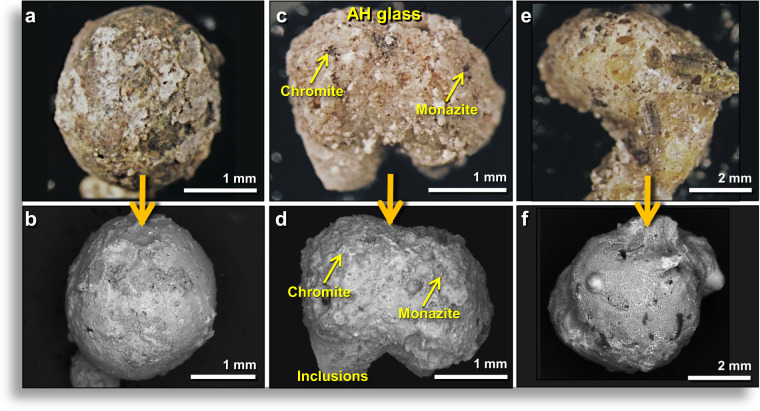
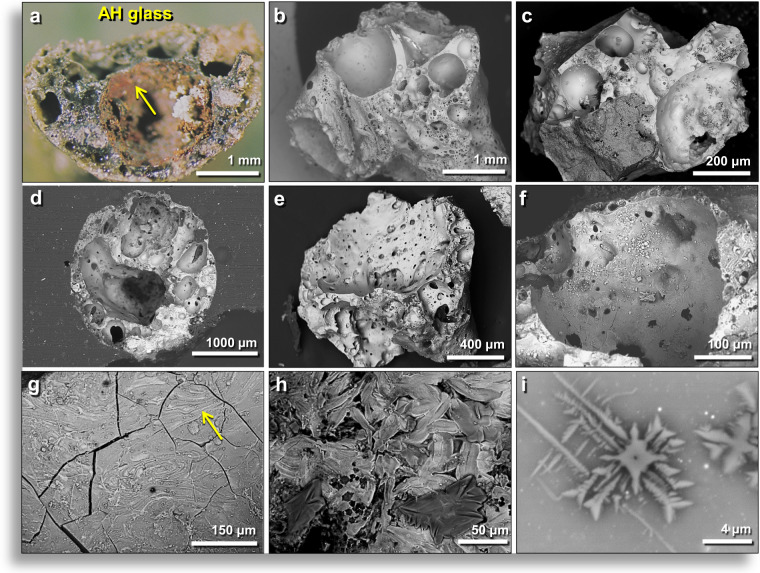
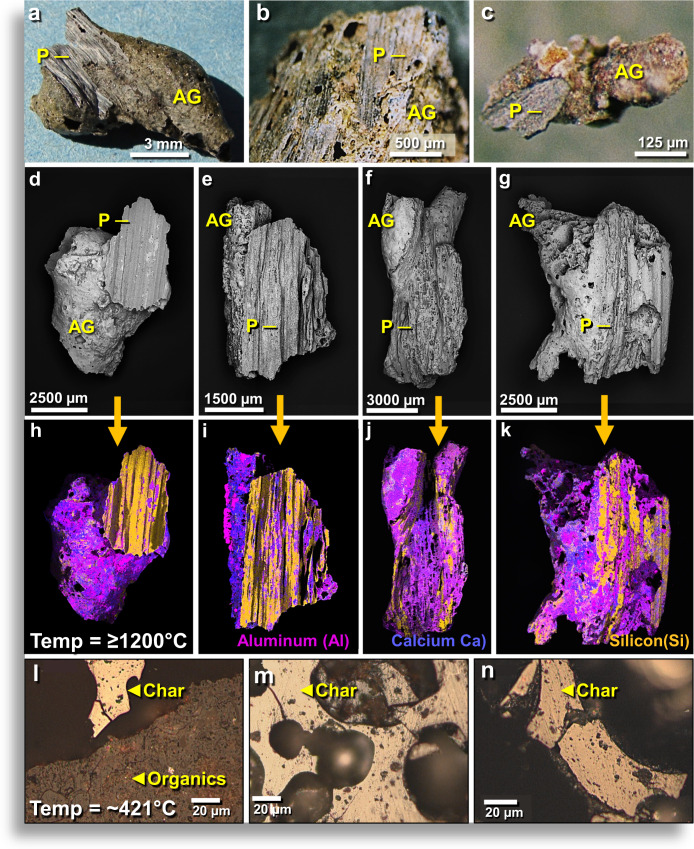
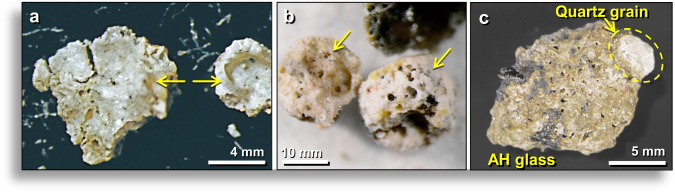
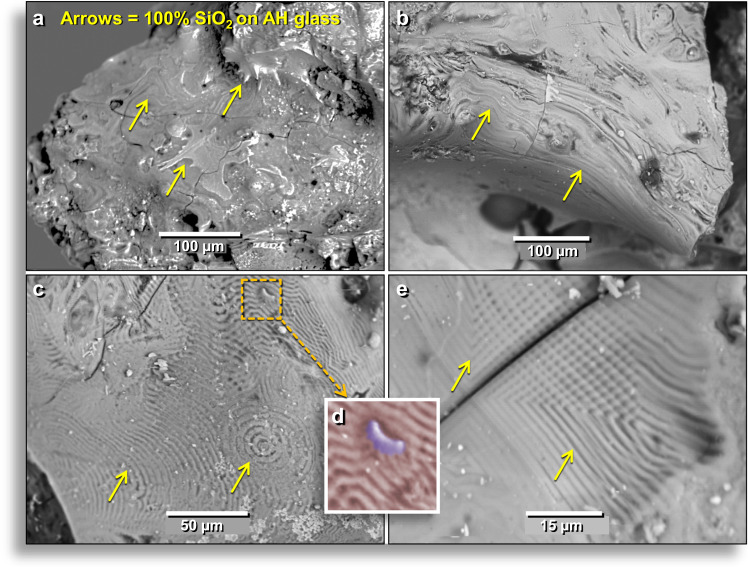
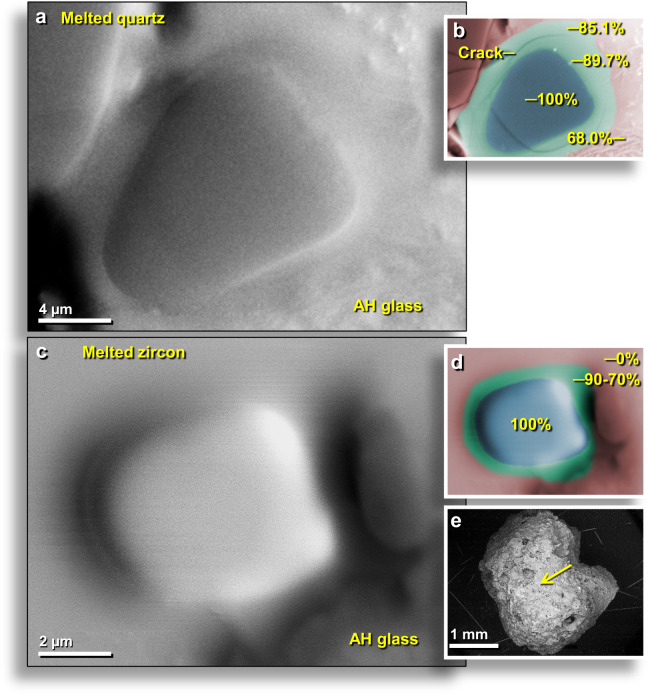
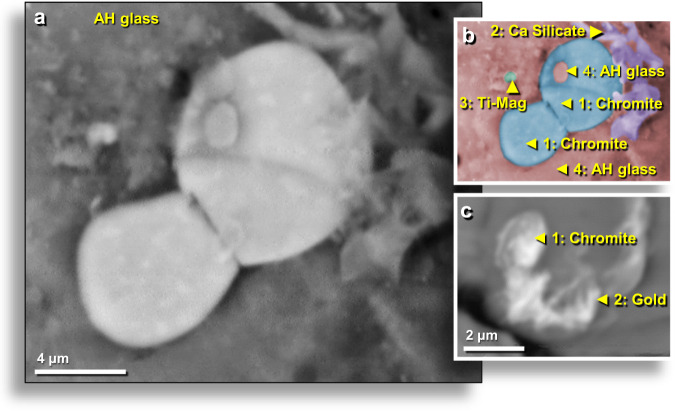
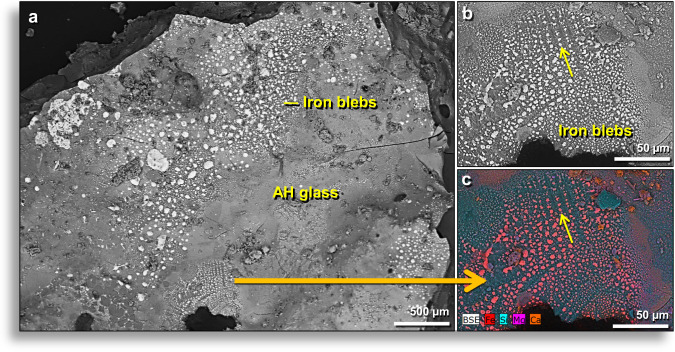
At Abu Hureyra (AH), Syria, the 12,800-year-old Younger Dryas boundary layer (YDB) contains peak abundances in meltglass, nanodiamonds, microspherules, and charcoal. AH meltglass comprises 1.6 wt.% of bulk sediment, and crossed polarizers indicate that the meltglass is isotropic. High YDB concentrations of iridium, platinum, nickel, and cobalt suggest mixing of melted local sediment with small quantities of meteoritic material. Approximately 40% of AH glass display carbon-infused, siliceous plant imprints that laboratory experiments show formed at a minimum of 1200°–1300 °C; however, reflectance-inferred temperatures for the encapsulated carbon were lower by up to 1000 °C. Alternately, melted grains of quartz, chromferide, and magnetite in AH glass suggest exposure to minimum temperatures of 1720 °C ranging to >2200 °C. This argues against formation of AH meltglass in thatched hut fires at 1100°–1200 °C, and low values of remanent magnetism indicate the meltglass was not created by lightning. Low meltglass water content (0.02–0.05% H 2 O) is consistent with a formation process similar to that of tektites and inconsistent with volcanism and anthropogenesis. The wide range of evidence supports the hypothesis that a cosmic event occurred at Abu Hureyra ~12,800 years ago, coeval with impacts that deposited high-temperature meltglass, melted microspherules, and/or platinum at other YDB sites on four continents.
Overview
CoChat Summary
TL;DR
At Abu Hureyra, Syria, the ~12,800-year-old Younger Dryas boundary layer contains meltglass, nanodiamonds, microspherules, and charcoal, with meltglass making up 1.6 wt.% of bulk sediment. The authors argue that high-temperature minerals, low water content, and low remanent magnetism indicate formation by a cosmic impact/airburst at >2200 °C, not by thatched hut fires, lightning, volcanism, or anthropogenesis.
Key findings
- The Abu Hureyra YDB layer has a Bayesian-modeled age of 12825 ± 55 cal BP; AH meltglass comprises 1.6 wt.% of bulk sediment, is isotropic, and ~40% of pieces display carbon-infused siliceous plant imprints. Laboratory heating shows these imprints formed at a minimum of 1200°–1300 °C, while reflectance-inferred temperatures for encapsulated carbon were lower by up to 1000 °C.
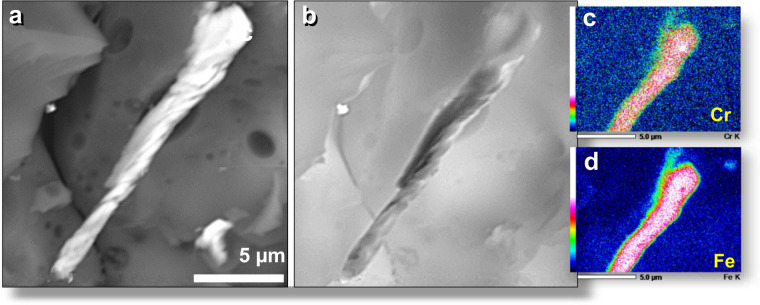
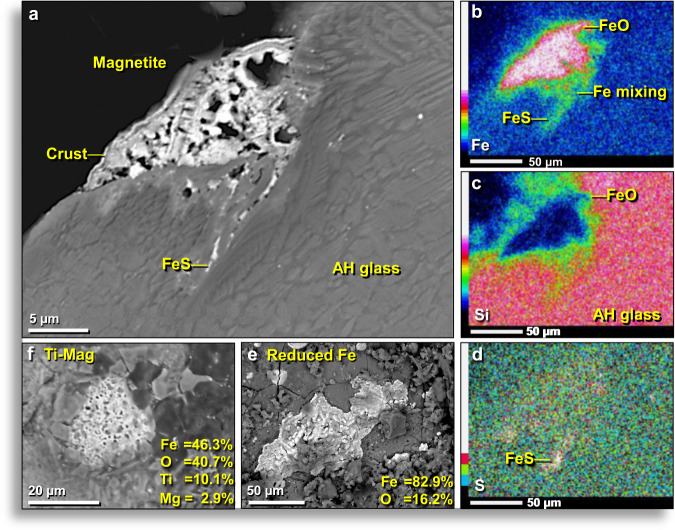
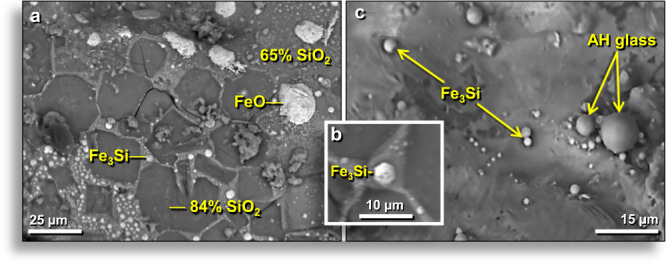
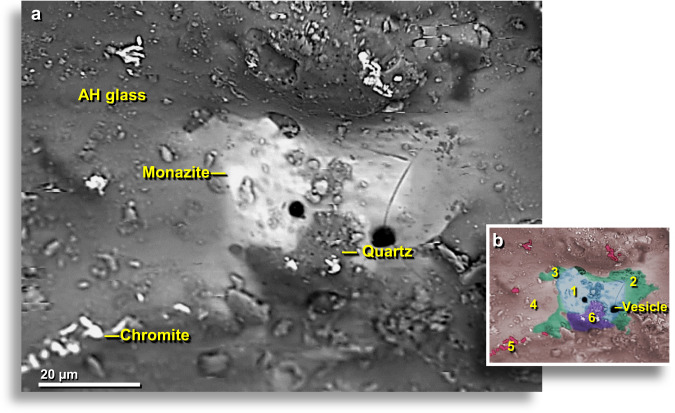
- Melted grains of quartz, chromferide, and magnetite in AH glass suggest exposure to minimum temperatures of 1720 °C ranging to >2200 °C; some quartz grains possibly reached boiling at ~2230 °C. Table 1 lists high-temperature minerals with equilibrium melting points from ~1410 °C to ~2265 °C.
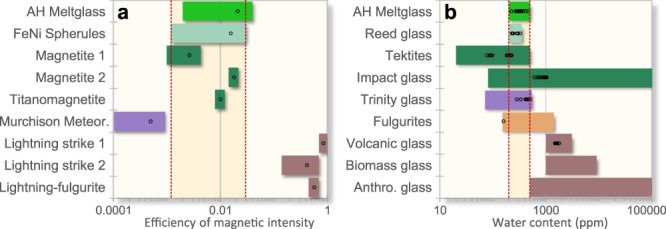
- Low meltglass water content (0.02–0.05% H2O; 222–460 ppm, n = 19) is consistent with tektites and inconsistent with volcanism and anthropogenesis. Low remanent magnetism indicates the meltglass was not created by lightning.
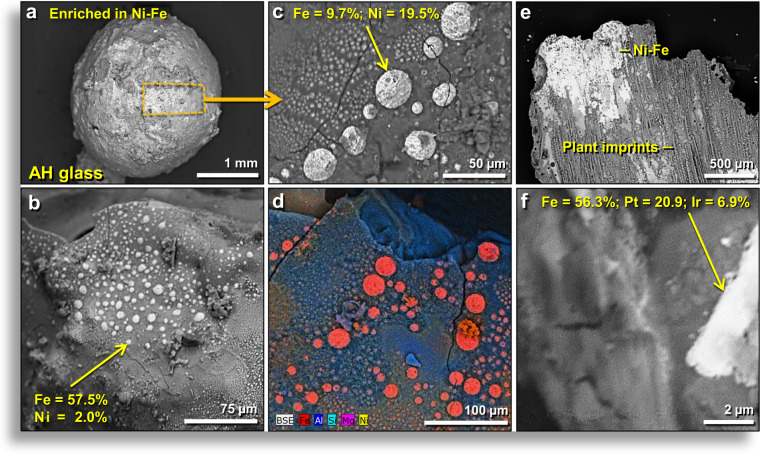
- The YDB magnetic fraction of sample E301 contains 300 ppm Ni, 68 ppm Co, and 3750 ppm Cr, compared with background ≤20 ppm Ni, ≤50 ppm Co, and <800 ppm Cr; Pt peaks at 6.2 ppb in bulk sediment and 8.1 ppb in the magnetic fraction, and a PGE-rich grain contains ~20.9 wt.% Pt, ~6.9 wt.% Ir, and ~56.3 wt.% Fe.
Methods
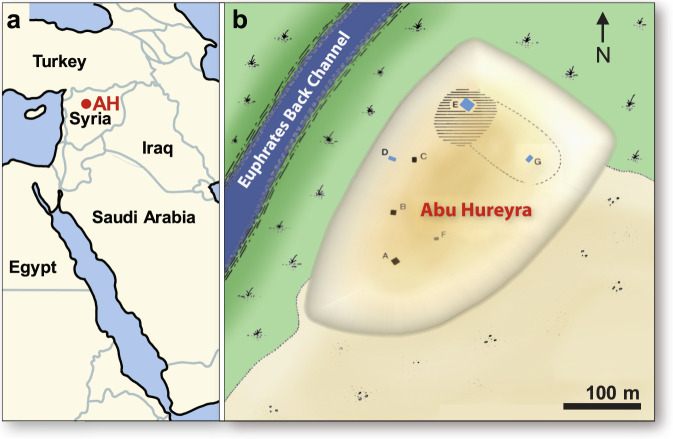
- Sediment samples came from Abu Hureyra excavation trenches D, E, and G, with key analyses focused on samples such as E301 at 405 cm and E313 at 413 cm depth; impact-related materials were observed in trenches separated by up to 175 m.
- Analyses used reflected-light microscopy, SEM-EDS, electron microprobe, reflectance, transmission FTIR, and superconducting magnetometer measurements of remanent magnetism. Heating experiments used furnaces at 1100°–1850 °C and spark plasma sintering at ~1850 °C.
- The study compared AH glass morphology, geochemistry, crystallinity, melting/boiling temperatures, carbon reflectance, remanent magnetism, and water content with known impact materials (tektites, impact glasses, trinitite) and non-impact materials (biomass slag, fulgurites, volcanic obsidian, anthropogenic glass).
Limitations
- Paper-stated: the magnetic signatures are complicated, and variable remanent magnetism in melts could indicate either lightning or a fireball depending on location during cooling. Reflectance-inferred temperatures for carbon were up to 1000 °C lower than laboratory melt temperatures, and the authors state charcoal reflectance is accurate for normal fires but inaccurate for highly transient, high-temperature cosmic impact events. Heating experiments reached a maximum of 1850 °C, below the inferred >2200 °C conditions.
- Evident from the text: some key measurements rely on small sample numbers (e.g., six Fe-rich spherules and three AH meltglass samples for remanent magnetism; 19 FTIR water measurements), and the impact interpretation remains contested by other studies cited in the introduction.
Model-written summary. Check it against the paper before relying on it.
Integrity signals
Registry
Cites
Statistics
Figures
Verification
Claims the paper makes
1 Valid · 3 Not valid · 30 Not checked · 194 Own results and interpretations
The sources with a verdict support this claim; the rest weren’t checked yet, have no full text we could read, or their verdicts aren’t rated yet.
In the paper
“Peak concentrations of AH meltglass8, magnetic spherules5, and nanodiamonds12 co-occur in and adjacent to the E301 sample at a depth below the surface of ~405 cm”
§ Evidence of Cosmic Impact at Abu Hureyra, Syria at the Younger Dryas Onset (~12.8 ka): High-temperature melting at >2200 °C > Results and Interpretations > Abu Hureyra meltglass
What the sources say
- Not checked yetcites [8] Bunch, T. E. et al. Very high-temperature impact melt products as evidence for cosmic airbursts and impacts 12,900 years ago. Proc Nat Acad Sci 109, E1903–E1912 (2012). 22711809 PMC3396500 source
A check is scheduled.
- Not checked yetcites [5] Wittke, J. H. et al. Evidence for deposition of 10 million tonnes of impact spherules across four continents 12,800 y ago. Proc Nat Acad Sci110, E2088-E2097 (2013). PMC3677428 23690611 source
A check is scheduled.
- Supportedcites [12] Kinzie, C. R. et al. Nanodiamond-rich layer across three continents consistent with major cosmic impact at 12,800 cal BP. J Geol 122, 475–506 (2014). source
The figure captions of our copy document the Abu Hureyra (AH) nanodiamond datum exactly as the citing sentence uses it: Figure 5 gives 'n-Diamonds from sediment (Sed) at Abu Hureyra, Syria (Younger Dryas Boundary [YDB]: 443 ppb at 405 cm below surface [cmbs])', i.e. a peak ND concentration at ~405 cmbs. The 'Abundance and Stratigraphic Distribution of NDs' section states that all sites, including the 22 sections whose stratigraphic ND abundances are listed in table D4, exhibit sharp ND abundance peaks at the YDB with very few NDs in the strata above and below, which supports calling that AH value a peak. The meltglass and magnetic-spherule peaks and the E301 sample label carry the sentence's other citations (8 and 5), and this paper states it 'focuses solely on nanodiamonds', so only the ND component is judged here; our copy does not use the sample designation E301. (LLM, conf=0.80)
plainstates an association- Asserted: passes — The authors put it forward as true.
- Checkable: passes — It can be checked against evidence.
- Load-bearing: passes — The paper’s conclusions depend on it.
- Based: passes — The paper gives a reason why it holds.
- Not checked yet
A result the paper reports from its own data — it cites no other source for it, so there is none to check. The quote shows it is in the paper.
In the paper
“Thirteen original fragments melted within a range of 1200°–1300 °C.”
§ Evidence of Cosmic Impact at Abu Hureyra, Syria at the Younger Dryas Onset (~12.8 ka): High-temperature melting at >2200 °C > Results and Interpretations > Furnace and torch heating experiments
plain- Asserted: passes — The authors put it forward as true.
- Checkable: passes — It can be checked against evidence.
- Load-bearing: unclear — It is unclear whether the paper’s conclusions depend on it.
- Based: passes — The paper gives a reason why it holds.
A result the paper reports from its own data — it cites no other source for it, so there is none to check. The quote shows it is in the paper.
In the paper
“that laboratory experiments show formed at a minimum of 1200°–1300 °C”
§ Evidence of Cosmic Impact at Abu Hureyra, Syria at the Younger Dryas Onset (~12.8 ka): High-temperature melting at >2200 °C > Abstract
plainstates a cause- Asserted: passes — The authors put it forward as true.
- Checkable: passes — It can be checked against evidence.
- Load-bearing: passes — The paper’s conclusions depend on it.
- Based: passes — The paper gives a reason why it holds.
A result the paper reports from its own data — it cites no other source for it, so there is none to check. The quote shows it is in the paper.
In the paper
“AH meltglass comprises 1.6 wt.% of bulk sediment”
- Also stated in: § Abu Hureyra meltglass · plain
“Meltglass fragments comprise 1.6 wt.% of bulk sediment”
§ Evidence of Cosmic Impact at Abu Hureyra, Syria at the Younger Dryas Onset (~12.8 ka): High-temperature melting at >2200 °C > Abstract
plain- Asserted: passes — The authors put it forward as true.
- Checkable: passes — It can be checked against evidence.
- Load-bearing: unclear — It is unclear whether the paper’s conclusions depend on it.
- Based: passes — The paper gives a reason why it holds.
- Also stated in: § Abu Hureyra meltglass · plain
A result the paper reports from its own data — it cites no other source for it, so there is none to check. The quote shows it is in the paper.
In the paper
“The composition of non-imprinted AH glass is distinctly different, mainly containing a mix of oxides of Si, Ca, Fe, Al, and Mg, with only a few weight percent of carbon.”
§ Evidence of Cosmic Impact at Abu Hureyra, Syria at the Younger Dryas Onset (~12.8 ka): High-temperature melting at >2200 °C > Results and Interpretations > AH meltglass with carbon-rich siliceous plant imprints
plain- Asserted: passes — The authors put it forward as true.
- Checkable: passes — It can be checked against evidence.
- Load-bearing: passes — The paper’s conclusions depend on it.
- Based: passes — The paper gives a reason why it holds.
128 more claims
Create a free account to see all 228 claims and to verify the 43 references still open.
- Probably not a substantial claim. 19
- It may state two separate claims as one. 81
- The quote only partly states this claim. 2
Claims other papers make about this one
Each is checked against this paper’s own text: does it say what the citing paper says it does?
In the citing paper
“The failure of Moore et al. (2020) is that they did not perform a comparative study of the younger scoria, only a study of alleged YDB samples (Table 4).”
From Comprehensive refutation of the Younger Dryas Impact Hypothesis (YDIH) (2023) · cites this paper as Moore et al., 2020
Self-check
Percentages, sums and reported differences re-computed from the paper’s own numbers.
Each contradiction between two passages listed here was confirmed by an independent check.
Rated minor: it would not touch a result — a value no result rests on, a p-value that stays on the same side of the significance level, or a conflict that is clerical, resolved elsewhere in the paper, or outside its own findings.
In the paper
§ Evidence of Cosmic Impact at Abu Hureyra, Syria at the Younger Dryas Onset (~12.8 ka): High-temperature melting at >2200 °C > Results and Interpretations > Abu Hureyra meltglass
“range in diameter from <200 μm to ~1.4 cm”
§ Evidence of Cosmic Impact at Abu Hureyra, Syria at the Younger Dryas Onset (~12.8 ka): High-temperature melting at >2200 °C > Results and Interpretations > Silicon-rich minerals as temperature indicators
“Rounded, vesicular, rough-textured, 21-mm-wide AH glass fragment”
Rated minor: it would not touch a result — a value no result rests on, a p-value that stays on the same side of the significance level, or a conflict that is clerical, resolved elsewhere in the paper, or outside its own findings.
In the paper
§ Evidence of Cosmic Impact at Abu Hureyra, Syria at the Younger Dryas Onset (~12.8 ka): High-temperature melting at >2200 °C > Results and Interpretations > Iron-rich minerals
“Fe = 24.5 atom% and Si = 75.5 atom%”
§ Evidence of Cosmic Impact at Abu Hureyra, Syria at the Younger Dryas Onset (~12.8 ka): High-temperature melting at >2200 °C > Results and Interpretations > Iron-rich minerals
“Si/(Si + Fe) = 24.5), consistent with Fe3Si.”
Citations
Cites
Santos, A. G., da Rocha, G. O., & de Andrade, J. B. (2019) · Scientific Reports · doi:10.1038/s41598-018-37186-2 · Cited by 8,495
(2018) · American Mineralogist · doi:10.2138/am-2019- · Cited by 3,453
Contrasting Computational Models of Mate Preference Integration Across 45 Countries
Conroy-Beam, D., Buss, D. M., Asao, K., Sorokowska, A., Sorokowski, P., Aavik, T., Akello, G., Alhabahba, M. M., Alm, C., Amjad, N., et al. (2019) · Scientific Reports · doi:10.1038/s41598-019-52748-8 · Cited by 1,770
Lunar and Planetary Science Conference
Peplow, M. (2006) · Nature · doi:10.1038/news060313-5 · Cited by 1,555
18th Lunar and planetary science conference
(1987) · COSPAR Information Bulletin · doi:10.1016/0045-8732(87)90007-6 · Cited by 1,083
The Effects of Nuclear Weapons
Glasstone, S., & Dolan, P. J. (1977) · doi:10.21236/ada087568 · Cited by 728
Wolfson, R., & Dalnoki-Veress, F. (2021) · The MIT Press eBooks · doi:10.7551/mitpress/11993.003.0017 · Cited by 720
Firestone, R. B., West, A., Kennett, J. P., Becker, L., Bunch, T. E., Revay, Z. S., Schultz, P. H., Belgya, T., Kennett, D. J., Erlandson, J. M., et al. (2007) · Proceedings of the National Academy of Sciences · doi:10.1073/pnas.0706977104 · Cited by 690
Self-citationFrom Monthly Notices of the Royal Astronomical Society
(2011) · The Scientific Papers of William Parsons, Third Earl of Rosse 1800–1867 · doi:10.1017/cbo9781139103848.005 · Cited by 653
Journal of Molecular Catalysis A Chemical 332 (2010) 128–137
Veerakumar, P., Lu, Z., Velayudham, M., Lu, K., & Rajagopal, S. (2015) · Cited by 544
Research works printed but not linked: 2
- Moore, A. & Kennett, D. Cosmic impact, the Younger Dryas, Abu Hureyra, and the inception of agriculture in Western Asia. Eurasian Prehist 10, 57–66 (2013).
- Hermes, R. E. & Strickfaden, W. B. J. A new look at trinitite. Nucl Weap J. 2, 2–7 (2005).
Cited by
Timing and structure of the Younger Dryas event and its underlying climate dynamics
Cheng, H., Zhang, H., Spötl, C., Baker, J., Sinha, A., Li, H., Bartolomé, M., Moreno, A., Kathayat, G., Zhao, J., et al. (2020) · Proceedings of the National Academy of Sciences · doi:10.1073/pnas.2007869117 · Cited by 295
Premature rejection in science: The case of the Younger Dryas Impact Hypothesis
Powell, J. L. (2022) · Science Progress · doi:10.1177/00368504211064272 · Cited by 60
The Younger Dryas impact hypothesis: Review of the impact evidence
Sweatman, M. B. (2021) · Earth-Science Reviews · doi:10.1016/j.earscirev.2021.103677 · Cited by 58
Comprehensive refutation of the Younger Dryas Impact Hypothesis (YDIH)
Holliday, V. T., Daulton, T. L., Bartlein, P. J., Boslough, M. B., Breslawski, R. P., Fisher, A. E., Jorgeson, I. A., Scott, A. C., Koeberl, C., Marlon, J. R., et al. (2023) · Earth-Science Reviews · doi:10.1016/j.earscirev.2023.104502 · Cited by 48
Nakagawa, T., Tarasov, P., Staff, R., Bronk Ramsey, C., Marshall, M., Schlolaut, G., Bryant, C., Brauer, A., Lamb, H., Haraguchi, T., et al. (2021) · Global and Planetary Change · doi:10.1016/j.gloplacha.2021.103493 · Cited by 45
Moore, C. R., Brooks, M. J., Goodyear, A. C., Ferguson, T. A., Perrotti, A. G., Mitra, S., Listecki, A. M., King, B. C., Mallinson, D. J., Lane, C. S., et al. (2019) · Scientific Reports · doi:10.1038/s41598-019-51552-8 · Cited by 30
Self-citationSmith, A., Oechsner, A., Rowley-Conwy, P. A., & Moore, A. M. T. (2022) · PLoS ONE · doi:10.1371/journal.pone.0272947 · Cited by 27
Self-citationMoore, A. M. T., Kennett, J. P., Napier, W. M., Bunch, T. E., Weaver, J. C., LeCompte, M. A., Adedeji, A. V., Kletetschka, G., Hermes, R. E., Wittke, J. H., et al. (2023) · Airbursts and Cratering Impacts · doi:10.14293/aci.2023.0002 · Cited by 14
Self-citationMoore, C. R., LeCompte, M. A., Kennett, J. P., Brooks, M. J., Firestone, R. B., Ivester, A. H., Ferguson, T. A., Lane, C. S., Duernberger, K. A., Feathers, J. K., et al. (2024) · Airbursts and Cratering Impacts · doi:10.14293/aci.2024.0003 · Cited by 21
Self-citationYoung, R. A., Gordon, L. M., Owen, L. A., Huot, S., & Zerfas, T. D. (2020) · Geosphere · doi:10.1130/ges02257.1 · Cited by 21
Moore, A. M. T., Kennett, J. P., LeCompte, M. A., Moore, C. R., Li, Y.-Q., Kletetschka, G., Langworthy, K. A., Razink, J. J., Brogden, V., Devener, B. V., et al. (2023) · Airbursts and Cratering Impacts · doi:10.14293/aci.2023.0003 · Cited by 21
Self-citationINITIAL HUMAN COLONIZATION OF THE AMERICAS, REDUX
Fiedel, S. J. (2022) · Radiocarbon · doi:10.1017/rdc.2021.103 · Cited by 19
Moore, A. M. T., Kennett, J. P., Napier, W. M., LeCompte, M. A., Moore, C. R., & West, A. (2023) · Airbursts and Cratering Impacts · doi:10.14293/aci.2023.0004 · Cited by 19
Self-citationWest, A., Young, M., Costa, L., Kennett, J. P., Moore, C. R., LeCompte, M. A., Kletetschka, G., & Hermes, R. E. (2024) · Airbursts and Cratering Impacts · doi:10.14293/aci.2024.0004 · Cited by 19
Self-citationNatural Iron Silicides: A Systematic Review
Rappenglück, M. A. (2022) · Minerals · doi:10.3390/min12020188 · Cited by 17
Ramos‐Vázquez, M. A., Verma, S. K., Armstrong-Altrin, J. S., & James, R. A. (2023) · Arabian Journal of Geosciences · doi:10.1007/s12517-023-11185-8 · Cited by 15
Sweatman, M. B. (2024) · Time and Mind · doi:10.1080/1751696x.2024.2373876 · Cited by 14
Moore, C. R., Brooks, M. J., Dunbar, J. S., Hemmings, C. A., Langworthy, K. A., West, A., LeCompte, M. A., Adedeji, V., Kennett, J. P., & Feathers, J. K. (2023) · Scientific Reports · doi:10.1038/s41598-023-50074-8 · Cited by 11
Self-citationEarth system science: quo vadis?—Odyssey of the Earth I
Wang, P. (2025) · Chinese Science Bulletin (Chinese Version) · doi:10.1360/csb-2025-0562 · Cited by 9
Rebuttal of Holliday et al.’s Comprehensive Gish Gallop of the Younger Dryas Impact Hypothesis
Sweatman, M. B., Powell, J. L., & West, A. (2024) · Airbursts and Cratering Impacts · doi:10.14293/aci.2024.0007 · Cited by 9
Self-citationInvestigating the origin and dynamics of Carolina Bays
Lundine, M. A., & Trembanis, A. C. (2024) · Marine Geology · doi:10.1016/j.margeo.2024.107449 · Cited by 8
Rejection of Holliday et al.'s alleged refutation of the Younger Dryas impact hypothesis
Sweatman, M. B., Powell, J. L., & West, A. (2024) · Earth-Science Reviews · doi:10.1016/j.earscirev.2024.104960 · Cited by 8
Self-citationUnawareness and Theorizing in Modern Geology: Two Examples Based on Citation Analysis
Ruban, D. A. (2020) · Earth · doi:10.3390/earth1010001 · Cited by 5
Refuting the sensational claim of a Hopewell-ending cosmic airburst
Nolan, K. C., Weiland, A. J., Lepper, B. T., Aultman, J., Murphy, L. R., Ruby, B. J., Schwarz, K. R., Davidson, M., Wymer, D., Everhart, T. D., et al. (2023) · Scientific Reports · doi:10.1038/s41598-023-39866-0 · Cited by 4
Mahaney, W. C., & Somelar, P. (2024) · Geologos · doi:10.14746/logos.2024.30.1.02 · Cited by 4
Two impact craters at Emmerting, Germany: field documentation and geophysics
Kalenda, P., Thinová, L., Tengler, R., Mělník, C. R., Procházka, V., Mizera, J., Martinec, P., Kletetschka, G., & Trojek, T. (2024) · GEODYNAMICS · doi:10.23939/jgd2024.02.027 · Cited by 4
Self-citationCourty, M. (2022) · Boletín de la Sociedad Geológica Mexicana · doi:10.18268/bsgm2022v74n3a060622 · Cited by 3
The Hopewell Cosmic Airburst Event: A review of the empirical evidence
Tankersley, K. B., Meyers, S. D., & Meyers, S. A. (2024) · Airbursts and Cratering Impacts · doi:10.14293/aci.2024.0001 · Cited by 3
Tankersley, K. B., & Meyers, S. A. (2023) · North American Archaeologist · doi:10.1177/01976931231195111 · Cited by 3
Main Belt asteroid as a Possible Younger Dryas impactor
Usatov, M. (2020) · Astronomische Nachrichten · doi:10.1002/asna.202013817 · Cited by 2
Moore, C. R., Tselmovich, V. A., LeCompte, M. A., West, A., Culver, S. J., Mallinson, D. J., Baalousha, M., Kennett, J. P., Napier, W. M., Bizimis, M., et al. (2026) · Airbursts and Cratering Impacts · doi:10.14293/aci.2026.0004 · Cited by 2
Self-citationBeech, M., Comte, M., & Coulson, I. (2020) · American Journal of Astronomy and Astrophysics · doi:10.11648/j.ajaa.20200804.11 · Cited by 1
Boslough, M. B., Brown, P. G. M., Bruno, A., Chodas, P. W., Collins, G. S., Daulton, T. L., Harris, A. W., Koeberl, C., Łosiak, A., Morrison, D., et al. (2026) · Meteoritics and Planetary Science · doi:10.1111/maps.70140 · Cited by 1
Moore, A. M. T. (2023) · Encyclopedia of earth sciences series/Encyclopedia of earth sciences · doi:10.1007/978-3-030-44600-0_242-1 · Cited by 1
Self-citationBindi, L., Kennett, J. P., LeCompte, M. A., Kletetschka, G., Moore, C. R., & West, A. (2025) · Mineralogical Magazine · doi:10.1180/mgm.2025.10130 · Cited by 1
Self-citationA New Proposal of the Term Meteoroid
Cordero, G., Covarrubias-Saavedra, M., & Maravilla, D. (2023) · Revista Mexicana de Astronomía y Astrofísica · doi:10.22201/ia.01851101p.2023.59.02.10 · Cited by 1
Pati, J. K., Singh, A. K., & Dwivedi, S. (2025) · Planetary and Space Science · doi:10.1016/j.pss.2025.106180 · Cited by 1
Nakagawa, T. (2022) · The Quaternary Research (Daiyonki-Kenkyu) · doi:10.4116/jaqua.62.2113
Montanari, A., Koeberl, C., Schulz, T., Smith, V., Molnár, M., & Tóth-Hubay, K. (2024) · Journal of Volcanology and Geothermal Research · doi:10.1016/j.jvolgeores.2024.108067
Moore, C. R., Larsson, S. A., Baalousha, M., Bizimis, M., Alam, M., West, A., LeCompte, M. A., Kennett, J. P., Kletetschka, G., Chouinard, J., et al. (2026) · ScienceOpen Research · doi:10.14293/s2199-1006.1.sor.2026.0004.v1
Self-citationBeyond Exchange: Obsidian Mobility and Human Migration in the Neolithic Near EastPreprint
Khadish, P. (2026) · SSRN Electronic Journal · doi:10.2139/ssrn.6108797
Moore, C. R., Gingerich, J. A. M., Childress, W. A., LeCompte, M. A., West, A., Baalousha, M., Bizimis, M., Ferguson, T. A., Mitra, S., Lane, C. S., et al. (2026) · ScienceOpen Research · doi:10.14293/s2199-1006.1.sor.2026.0003.v1
Self-citationIt Was Cold: Support for Ergotized Beer During the Neolithic TransitionPreprint
Carn, D. (2023) · SSRN Electronic Journal · doi:10.2139/ssrn.4587145
Moore, C. R., Larsson, S. A., Baalousha, M., Bizimis, M., Alam, M., West, A., LeCompte, M. A., Kennett, J. P., Kletetschka, G., Chouinard, J., et al. (2026) · doi:10.14293/pr2199.003441.v1
Self-citationMoore, C. R., Larsson, S. A., Baalousha, M., Bizimis, M., Alam, M., West, A., LeCompte, M. A., Kennett, J. P., Kletetschka, G., Chouinard, J., et al. (2026) · doi:10.14293/pr2199.003441.v2
Self-citationRodríguez, D. T. (2020) · University of Minnesota Digital Conservancy (University of Minnesota)
Siegel, U., & Müller, W. (2025) · Airbursts and Cratering Impacts · doi:10.14293/aci.2025.0005
Shelekhova, T. S., Лавров, О., & Rodionov, G. N. (2026) · Quaternary Science Reviews · doi:10.1016/j.quascirev.2026.110101
Models of Near Order of Tektites
Белашев, Б. З., Николаевич, О. Р., & Florensky, P. V. (2022) · Inorganic Materials Applied Research · doi:10.1134/s2075113322040037
Critical assessment of Jenny's soil forming equation in light of cosmic airbursts on the Viso Massif
Mahaney, W. C. (2023) · Geologos · doi:10.14746/logos.2023.29.3.18
Bronze Age impact events in light of the Alvarez and Agrest hypotheses
Kachkovskiy, S. S. (2025) · Международный научно-исследовательский журнал
From the Epipalaeolithic into the earliest Neolithic (PPNA) in the South Levant
Belfer-Cohen, A., & Goring-Morris, N. (2020) · Documenta Praehistorica · doi:10.4312/dp.47.3 · Cited by 26
Metadata
- Authors
- Moore, A. M. T., Kennett, J. P., Napier, W. M., Bunch, T. E., Weaver, J. C., LeCompte, M., Adedeji, A. V., Hackley, P., Kletetschka, G., Hermes, R. E., Wittke, J. H., Razink, J. J., Gaultois, M. W., & West, A.
- Affiliations
- Rochester Institute of Technology (US)
- University of California, Santa Barbara (US)
- Armagh Observatory & Planetarium (GB)
- Northern Arizona University (US)
- Harvard University (US)
- Elizabeth City State University (US)
- United States Geological Survey (US)
- University of Alaska Fairbanks (US)
- Los Alamos National Laboratory (US)
- University of Oregon (US)
- University of Liverpool (GB)
- Corresponding author
- West, Allen
- ORCID
- Venue
- Scientific Reports
- Published
- 2020-03-06
- Volume
- 10
- Issue
- 1
- Pages
- 4185-4185
- ISSN
- 2045-2322 (ISSN-L)
- PMC
- PMC7060197
- OpenAlex
- W3009973249
- Cited by
- 58
- References
- 91
- Citations by year
- 2026: 10 · 2025: 7 · 2024: 9 · 2023: 13 · 2022: 7 · 2021: 4 · 2020: 7
- FWCI
- 3.64
- Type
- journal article
- Language
- en
- Update notices
- correction (2025-11-19)
- Open access
- gold
- doi.org
- Licence
- cc-by
- creativecommons.org/licenses/by/4.0 (tdm)
- creativecommons.org/licenses/by/4.0 (vor)
- Locations
- Scientific Reports (publishedVersion, cc-by)
- PubMed Central (publishedVersion, cc-by)
- PubMed (publishedVersion)
- Funders
- Grantová Agentura České Republiky (RVO 67985831, GA20-08294S, 67985831, GF20-00892L)
- U.S. Geological Survey
- University of California, Santa Barbara
- University of California, Davis
- Topics
- Physical Sciences › Earth and Planetary Sciences › Space and Planetary Science › Astro and Planetary Science
- Physical Sciences › Earth and Planetary Sciences › Atmospheric Science › Geology and Paleoclimatology Research
- Social Sciences › Anthropology › Pleistocene-Era Hominins and Archaeology
- Keywords
- Younger Dryas boundary, high-temperature melting, microspherules, nanodiamonds, platinum, iridium, charcoal, chromite, magnetite, remanent magnetization, moisture content, Late Glacial
About these checks
Registry, retraction, Cites and statistics results are computed, not judged, with one exception: a printed reference that no index lists is read once by a model before it counts as a citation error. Claims are extracted by a model and kept only when their quote appears verbatim in the text; each cited source is then checked, with a model’s help, for whether it says what the claim relies on. Those verdicts can be wrong — read the claim’s quote and the cited source before relying on one.
A language model drew the claims from the paper on 2026-11-24, under version 3 of the claim definition (model deepseek-v4.1-flash, prompt extract-v3).
A second model labelled each claim on 2026-11-24 (model jev-1.13-20260917, definition revision gold-guideline-v0.2).
Cited sources are checked with a language model’s help (qwen3.8-omni-flash).
Statistics and arithmetic are recomputed, not judged.
Confidence bands are shown only for fields calibrated on our annotated test set. None is calibrated yet, so no band is shown.
What counts as a claim ›How we measure confidence ›How we check this ›
Are you an author, or do you see a problem with this page? Request a review
Data sources
Bibliographic data: Semantic Scholar, OpenAlex, Crossref.
Contains information from the Semantic Scholar Academic Graph Datasets, made available under the ODC Attribution License (ODC-BY 1.0).
Semantic Scholar’s data is described in: Kinney, R., et al. (2023). The Semantic Scholar Open Data Platform. arXiv:2301.10140.
