

Non-invasive identification of swallows via deep learning in high resolution cervical auscultation recordings
Open accessThe DOI matches its Crossref record; 55 of the 55 references it cites were found in a registry or an index; 1 of the 16 sources its claims cite were checked for support.
Abstract
High resolution cervical auscultation is a very promising noninvasive method for dysphagia screening and aspiration detection, as it does not involve the use of harmful ionizing radiation approaches. Automatic extraction of swallowing events in cervical auscultation is a key step for swallowing analysis to be clinically effective. Using time-varying spectral estimation of swallowing signals and deep feed forward neural networks, we propose an automatic segmentation algorithm for swallowing accelerometry and sounds that works directly on the raw swallowing signals in an online fashion. The algorithm was validated qualitatively and quantitatively using the swallowing data collected from 248 patients, yielding over 3000 swallows manually labeled by experienced speech language pathologists. With a detection accuracy that exceeded 95%, the algorithm has shown superior performance in comparison to the existing algorithms and demonstrated its generalizability when tested over 76 completely unseen swallows from a different population. The proposed method is not only of great importance to any subsequent swallowing signal analysis steps, but also provides an evidence that such signals can capture the physiological signature of the swallowing process.
Overview
CoChat Summary
TL;DR
The paper proposes an automatic swallowing-event segmentation algorithm for high-resolution cervical auscultation using spectrogram features and a deep feedforward neural network. It reports >95% window-level detection accuracy on 3,144 manually labeled swallows and promising generalization to 76 unseen swallows from a different population.
Key findings
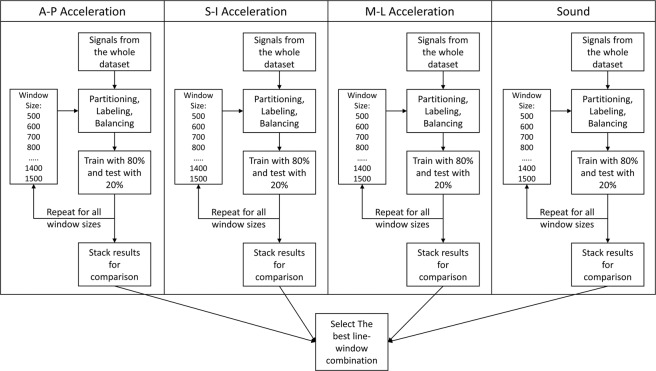
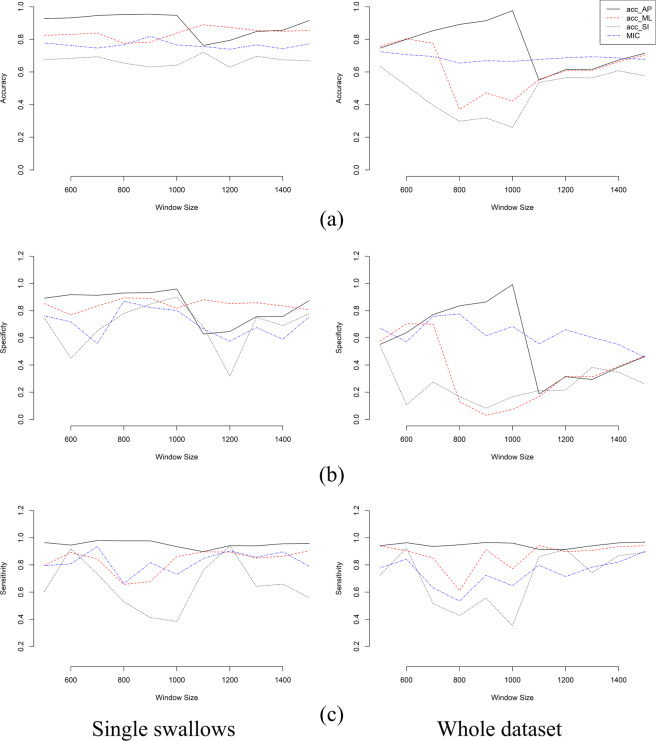
- The best-performing signal was the anterior-posterior (A-P) accelerometer axis, with best window sizes of 800–900 samples (200–225 msec); the algorithm achieved over 95% accuracy at the window level, with sensitivity and specificity also reported as similar.
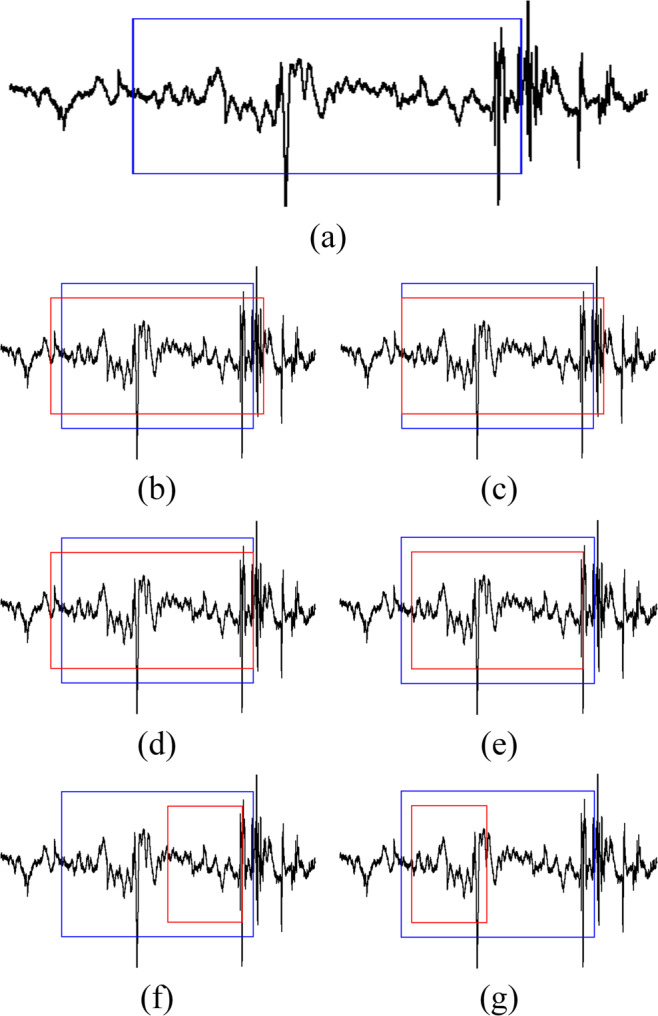
- On 3,144 swallows from 248 patients (average duration 862.6 ± 277 msec), detection exceeded 90% across single, multiple, and sequential swallows under several overlap criteria; for single swallows at 800 samples, detected swallows were 100% for 2 SD below average and 98.3% for 90% and 95% overlap.
- On 76 completely unseen swallows from a different population (average duration 1011 ± 216 msec), detection was 97.4% using a 2 SD below-average overlap, 84.2% using 1 SD below-average overlap, and 65.8% using 90% or greater overlap.
- Manual validation of more than 6,500 detected segments found the algorithm captured more than 94% of swallows and detected 353 swallows not captured/labeled in videos; false positives included hyoid bone movement (434), head and neck movement (266), coughing (134), reduced oral containment/premature spillage (38), and unexplained events (403).
Methods
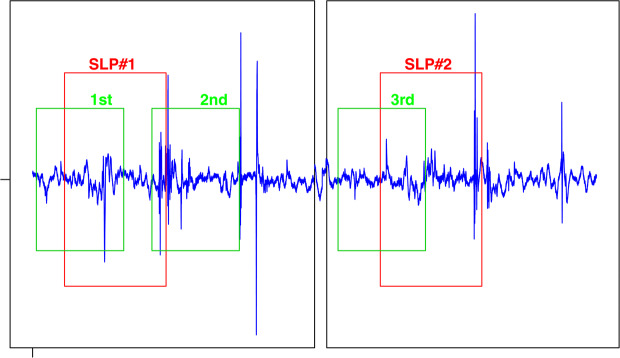
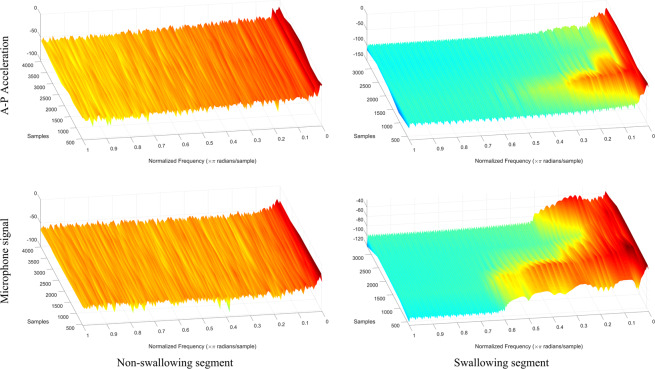
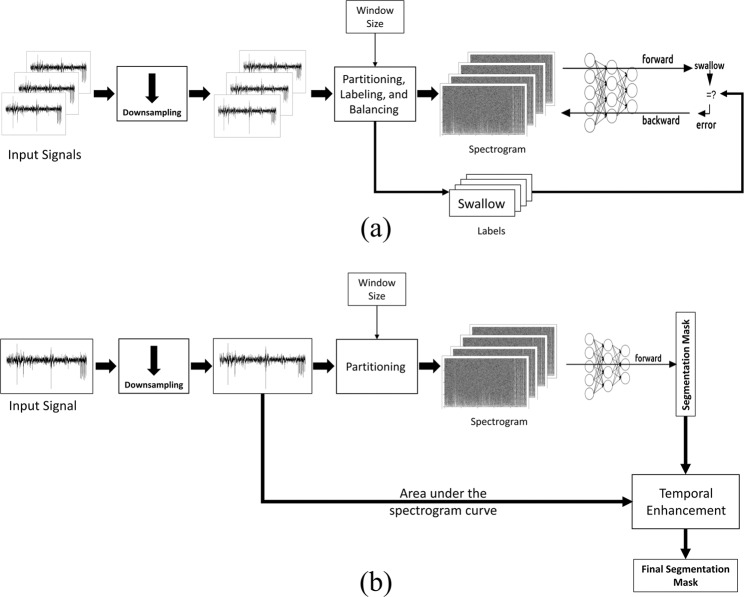
- Design: an online-style sliding-window segmentation framework that computes short-time Fourier transform spectrograms for each window and feeds the magnitude spectrogram into a deep feedforward neural network to classify swallow vs. non-swallow.
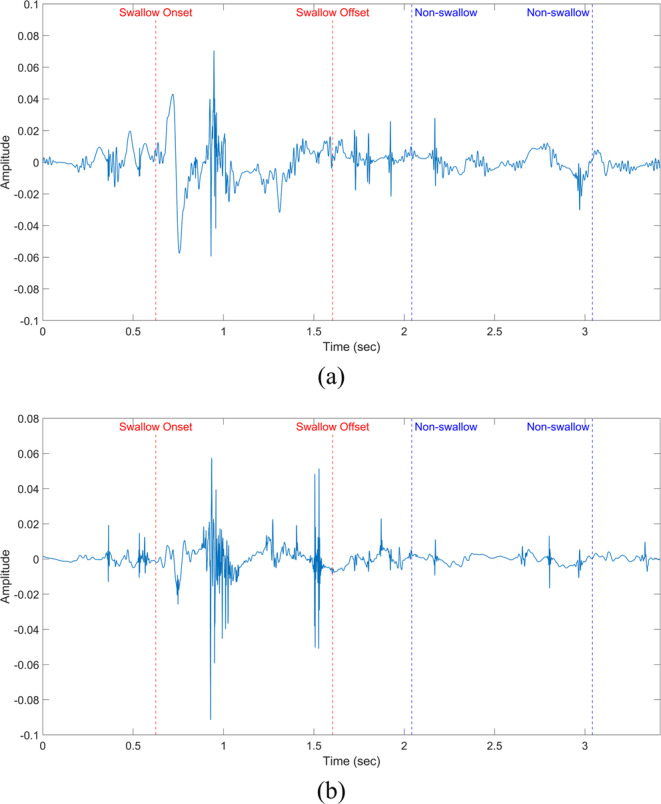
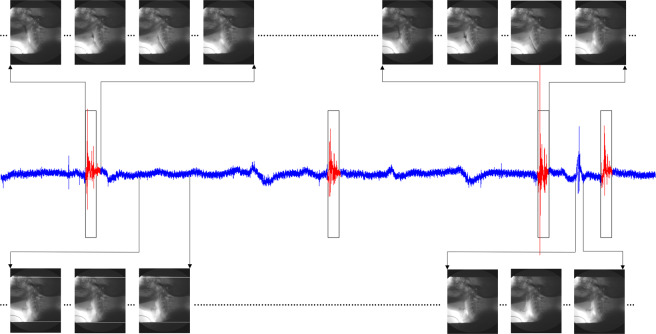
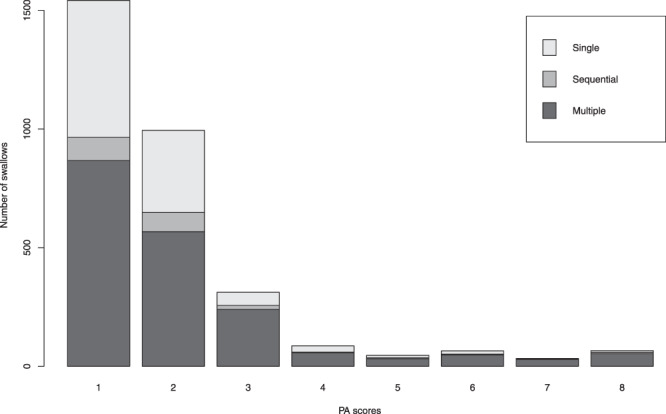
- Data: 248 patients (148 males, 100 females, age 63.8 ± 13.7) referred for videofluoroscopic swallowing assessment; 3,144 swallows (603 stroke, 2,541 other) manually labeled by speech-language pathologists; signals included microphone and tri-axial accelerometer (A-P, S-I, M-L), sampled at 20 kHz and downsampled to 4 kHz.
- Analysis: four signal streams were tested independently; window sizes 500–1500 samples with and without 50% overlap were evaluated; the best configuration was retrained with 10-fold cross-validation and tested on 76 unseen swallows from 20 healthy adults (9 males, 11 females, age 65.8 ± 11.4).
Limitations
- Stated: performance dropped on the unseen dataset, possibly because average swallow duration differed between datasets and because multiple swallows were included; false positives such as coughing and head movement remained, and future work was proposed to fuse signal lines and use recurrent neural networks.
- Stated: the dataset “might be available upon reasonable request” from the corresponding author and with permission from clinical collaborators, so it is not openly available.
- Evident from the text: manual validation of false positives and visually uncovered events was performed for a specific configuration (window size 900 and 90% overlap), and the paper notes that unlabeled swallows during video pause periods were treated as false positives, which may lower reported sensitivity/specificity.
Model-written summary. Check it against the paper before relying on it.
Integrity signals
Registry
Cites
Statistics
Figures
Verification
Claims the paper makes
1 Valid · 1 Not valid · 10 Not checked · 72 Own results and interpretations
A result the paper reports from its own data — it cites no other source for it, so there is none to check. The quote shows it is in the paper.
In the paper
“We stated that the whole set of collected swallows is on average of 862.6 ± 277 msec.”
- Also stated in: § Methods · plain
“A total of 3144 swallows (603 from stroke diagnosed patients and 2541 from other patients) were recorded with an average duration of 862.6 ± 277 msec.”
§ Non-invasive identification of swallows via deep learning in high resolution cervical auscultation recordings > Discussion
plain- Asserted: passes — The authors put it forward as true.
- Checkable: passes — It can be checked against evidence.
- Load-bearing: passes — The paper’s conclusions depend on it.
- Based: passes — The paper gives a reason why it holds.
- Also stated in: § Methods · plain
A result the paper reports from its own data — it cites no other source for it, so there is none to check. The quote shows it is in the paper.
In the paper
“Among the examined assessment criteria, we found that a 2 SD below average swallow duration criterion as the minimum overlap (431.89 msec ≈47% of average swallow duration) between the detected and manually segmented swallows, is very low considering the duration of the examined swallows, however it gives excellent detection results.”
§ Non-invasive identification of swallows via deep learning in high resolution cervical auscultation recordings > Discussion
plainstates a cause- Asserted: passes — The authors put it forward as true.
- Checkable: passes — It can be checked against evidence.
- Load-bearing: passes — The paper’s conclusions depend on it.
- Based: passes — The paper gives a reason why it holds.
A result the paper reports from its own data — it cites no other source for it, so there is none to check. The quote shows it is in the paper.
In the paper
“We can clearly see from Fig. 5 that training a DNN with the spectral estimate for the raw swallowing vibrations of a single channel can produce accuracies as low as 26.1% and up to 97.6% on window level over the whole dataset.”
§ Non-invasive identification of swallows via deep learning in high resolution cervical auscultation recordings > Discussion
boostedstates a cause- Asserted: passes — The authors put it forward as true.
- Checkable: passes — It can be checked against evidence.
- Load-bearing: unclear — It is unclear whether the paper’s conclusions depend on it.
- Based: passes — The paper gives a reason why it holds.
A result the paper states — it cites no source for it, so there is none to check. The quote shows it is in the paper.
In the paper
“The effect is almost the same with other components of acceleration and microphone signals.”
§ Non-invasive identification of swallows via deep learning in high resolution cervical auscultation recordings > Discussion
plain- Asserted: passes — The authors put it forward as true.
- Checkable: passes — It can be checked against evidence.
- Load-bearing: unclear — It is unclear whether the paper’s conclusions depend on it.
- Based: passes — The paper gives a reason why it holds.
A result the paper reports from its own data — it cites no other source for it, so there is none to check. The quote shows it is in the paper.
In the paper
“The algorithm also achieved 85.3 ± 12.5% sensitivity and 83.8 ± 9.5% specificity per each of the dataset records.”
§ Non-invasive identification of swallows via deep learning in high resolution cervical auscultation recordings > Results
plain- Asserted: passes — The authors put it forward as true.
- Checkable: passes — It can be checked against evidence.
- Load-bearing: passes — The paper’s conclusions depend on it.
- Based: passes — The paper gives a reason why it holds.
35 more claims
Create a free account to see all 84 claims and every source verdict.
- Probably not a substantial claim. 26
- It may state two separate claims as one. 27
Claims other papers make about this one
Each is checked against this paper’s own text: does it say what the citing paper says it does?
The source backs part of the claim, not all of it — or backs it for a different population, condition or comparison.
In the citing paper
“In research, the most addressed pathologies in adults were predominantly related to the neurological area, with stroke being highlighted in several studies(16,21,22,24,27,36,40,46,48-51).”
From Artificial intelligence in the diagnosis and management of dysphagia: a scoping review (2025) · cites this paper as [36]
Experimental — accuracy not yet measuredThe cited source says what the claim attributes to it.
In the citing paper
“with stroke being the most cited in 12 studies(16,18,21,22,27,32,36,40,46,48-51)”
From Artificial intelligence in the diagnosis and management of dysphagia: a scoping review (2025) · cites this paper as [36]
Self-check
Percentages, sums and reported differences re-computed from the paper’s own numbers.
Rated minor: it would not touch a result — a value no result rests on, a p-value that stays on the same side of the significance level, or a conflict that is clerical, resolved elsewhere in the paper, or outside its own findings.
In the paper
“We used sizes of 500 to 1500 (25 to 375 msec)”
§ Non-invasive identification of swallows via deep learning in high resolution cervical auscultation recordings > Results
Reported 25 · recomputed 125
Citations
Cites
A penetration-aspiration scale
Rosenbek, J. C., Robbins, J. A., Roecker, E. B., Coyle, J. L., & Wood, J. L. (1996) · Dysphagia · doi:10.1007/bf00417897 · Cited by 2,803 · cited 1×
“…event start (onset) and end (offset) times taken as gold standard for the experiment were obtained through manual segmentation of videofluoroscopy sequences by experienced SLPs in our Swallowing Research Lab along with the penetration aspiration (PA) scores 39 of the swallows as described in 40 .”
MethodSelf-citationIEEE Transactions on Signal Processing
(2023) · IEEE Transactions on Signal Processing · doi:10.1109/tsp.78 · Cited by 1,455
IEEE Transactions on Biomedical Engineering
(2025) · IEEE Transactions on Biomedical Engineering · doi:10.1109/tbme.10 · Cited by 1,400
The evaluation and treatment of swallowing disorders
Logemann, J. A. (1998) · Current Opinion in Otolaryngology & Head and Neck Surgery · doi:10.1097/00020840-199812000-00008 · Cited by 1,222
A survey on ambient-assisted living tools for older adults
Rashidi, P., & Mihailidis, A. (2013) · IEEE Journal of Biomedical and Health Informatics · doi:10.1109/jbhi.2012.2234129 · Cited by 1,128 · cited 1×
“=−∞ ∞ − X n x m w n m ( , ) [ ] [ ]exp (1) m j n”
Evaluation and Treatment of Swallowing Disorders
Logemann, J. (1984) · NSSLHA Journal · doi:10.1044/nsshla_12_38 · Cited by 994
Andreu-Perez, J., Poon, C. C. Y., Merrifield, R. D., Wong, S. T. C., & Yang, G.-Z. (2015) · IEEE Journal of Biomedical and Health Informatics · doi:10.1109/jbhi.2015.2450362 · Cited by 670
IEEE Transactions on Neural Systems and Rehabilitation Engineering
(2025) · IEEE Transactions on Neural Systems and Rehabilitation Engineering · doi:10.1109/tnsre.7333 · Cited by 569
IEEE Journal of Biomedical and Health Informatics
(2021) · IEEE Journal of Biomedical and Health Informatics · doi:10.1109/jbhi.2021.3126038 · Cited by 525
Engineering in Medicine and Biology Society, 2006.
Nambakhsh, Ahmadian, A., Ghavami, M., Dilmaghani, R., & Karimifard, S. (2006) · Cited by 458
Cited by
Kang, Y. J., Arafa, H., Yoo, J., Kantarcigil, Ç., Kim, J., Jeong, H., Yoo, S., Oh, S., Kim, J., Wu, C., et al. (2022) · npj Digital Medicine · doi:10.1038/s41746-022-00691-w · Cited by 102
Borbone, N., Piccialli, G., Roviello, G. N., & Oliviero, G. (2021) · Molecules · doi:10.3390/molecules26040986 · Cited by 81
Khalifa, Y., Mandic, D. P., & Sejdić, E. (2020) · Information Fusion · doi:10.1016/j.inffus.2020.11.008 · Cited by 88
“In swallowing, acceleration signals have been used for the detection of pharyngeal swallowing activity via maximum likelihood methods with minimum description length in [16] and using short time Fourier transform and neural networks in [14].”
MethodSelf-citationChest-Worn Inertial Sensors: A Survey of Applications and Methods
Rahmani, M. H., Berkvens, R., & Weyn, M. (2021) · Sensors · doi:10.3390/s21082875 · Cited by 62
“AdaBoost [61] ANN, MLP [33,62] [53] CNN [21] [77] Decision Tree [33,62] [72] DNN [71] GMM [78] k-NN [26] [32,33,61,64] [43] [44] LDA, PCA [28] [74] Naïve Bayes [33,62,67] [43] [72] [44] Regression Models [23,25,56] [11,67] [37,38] [68,69] [72] Random Forest [35,67] [51,53,76,77] SVM [33,61,62] [43] [47,72] [44,51,53]…”
BackgroundKhalifa, Y., Donohue, C., Coyle, J. L., & Sejdic, E. (2021) · IEEE Journal of Biomedical and Health Informatics · doi:10.1109/jbhi.2020.3000057 · Cited by 49
“lus propulsion during swallowing from the moment the bolus passes the mandible till the UES closes [33]–[36].”
BackgroundSelf-citationWGO Guidance for the Care of Patients With COVID-19 and Liver Disease
Hamid, S. S., Álvares‐da‐Silva, M. R., Burak, K. W., Chen, T., Drenth, J. P. H., Esmat, G., Gaspar, R., LaBrecque, D. R., Lee, A. R., Macedo, G., et al. (2020) · Journal of Clinical Gastroenterology · doi:10.1097/mcg.0000000000001459 · Cited by 52
Khalaf, M. M., El‐Lateef, H. M. A., Touny, A. H., et al. (2020) · Microchemical Journal · doi:10.1016/j.microc.2020.105901 · Cited by 39
Swallow Detection with Acoustics and Accelerometric-Based Wearable Technology: A Scoping Review
So, B. P.-H., Chan, T. T.-C., Liu, L., Yip, C. K., Lim, H.-J., Lam, W., Wong, D. W., Cheung, D. S. K., & Cheung, J. C. (2022) · International Journal of Environmental Research and Public Health · doi:10.3390/ijerph20010170 · Cited by 43
Artificial Intelligence in Medicine: Real Time Electronic Stethoscope for Heart Diseases Detection
Omarov, B. S., Saparkhojayev, N. P., Shekerbekova, S., Akhmetova, O. S., Sakypbekova, M., Kamalova, G., Alimzhanova, Z., Tukenova, L., & Akanova, Z. (2021) · Computers, materials & continua/Computers, materials & continua (Print) · doi:10.32604/cmc.2022.019246 · Cited by 44
Estimation of laryngeal closure duration during swallowing without invasive X-rays
Mao, S., Sabry, A., Khalifa, Y., Coyle, J. L., & Sejdic, E. (2021) · Future Generation Computer Systems · doi:10.1016/j.future.2020.09.040 · Cited by 33
“Our previous research verified that the on-neck sensor signals can effectively identify swallowing activity, track hoyid bone and segment upper esophageal sphincter opening with the help of deep learning[26, 27, 28].”
BackgroundSelf-citationFaheem, M., Khan, A. H., & El-Zahar, E. R. (2020) · Advances in Difference Equations · doi:10.1186/s13662-020-02965-7 · Cited by 33
Wearable, epidermal devices for assessment of swallowing function
Rafeedi, T., Abdal, A., Polat, B., Hutcheson, K. A., Shinn, E. H., & Lipomi, D. J. (2023) · npj Flexible Electronics · doi:10.1038/s41528-023-00286-9 · Cited by 44
“Speci fi cally, laryngeal microphones (laryngophones), have been applied to the assessment of dysphagia 161,162 .”
BackgroundAI-Assisted Disease Monitoring Using Stretchable Polymer-Based Sensors
Li, T., Wang, Q., Su, Y., Qiao, F., Pei, Q., Li, X., Tan, Y., & Zhou, Z. (2023) · ACS Applied Materials & Interfaces · doi:10.1021/acsami.3c01970 · Cited by 32
Post-stroke respiratory complications using machine learning with voice features from mobile devices
Park, H., Park, D., Kang, H. S., Kim, H.-B., Lee, S., & Im, S. (2022) · Scientific Reports · doi:10.1038/s41598-022-20348-8 · Cited by 21
“Recording with mobile devices eliminates the potential risk of bolus aspiration and does not require the use of special equipment, such as a sensor or accelerometer 39,40 .”
BackgroundKamyabi, M. A., & Jadali, S. (2021) · International Journal of Hydrogen Energy · doi:10.1016/j.ijhydene.2021.06.106 · Cited by 23
Donohue, C., Khalifa, Y., Perera, S., Sejdić, E., & Coyle, J. L. (2021) · Dysphagia · doi:10.1007/s00455-020-10191-2 · Cited by 23
Self-citationShu, K., Mao, S., Coyle, J. L., & Sejdić, E. (2021) · IEEE Journal of Biomedical and Health Informatics · doi:10.1109/jbhi.2021.3106565 · Cited by 22
Self-citationSaab, R., Balachandar, A., Mahdi, H., Nashnoush, E., Perri, L. X., Waldron, A., Sadeghian, A., Rubenfeld, G. D., Crowley, M., Boulos, M. I., et al. (2023) · Frontiers in Neuroscience · doi:10.3389/fnins.2023.1302132 · Cited by 18
Khalifa, Y., Donohue, C., Coyle, J. L., & Sejdić, E. (2022) · IEEE Journal of Biomedical and Health Informatics · doi:10.1109/jbhi.2022.3224323 · Cited by 19
“For that, we calculated the overlapping ratio between the predicted swallow segments (after discontinuity post-processing) and their ground truth counterparts [33].”
BackgroundMethodResultInfluentialSelf-citationBandini, A., Smaoui, S., & Steele, C. M. (2022) · Computer Methods and Programs in Biomedicine · doi:10.1016/j.cmpb.2022.107058 · Cited by 16
“Despite emerging evidence that wearable sensors may be able to detect key outcomes when VFSS is not available [25], [26], [30], VFSS still remains the most widely accepted imaging technique for assessing dysphagia [7].”
BackgroundAnalysis of electrophysiological and mechanical dimensions of swallowing by non-invasive biosignals
Roldán-Vasco, S., Restrepo-Uribe, J. P., Orozco‐Duque, A., Suárez-Escudero, J. C., & Orozco‐Arroyave, J. R. (2022) · Biomedical Signal Processing and Control · doi:10.1016/j.bspc.2022.104533 · Cited by 15
Pilot Study: Magnetic Motion Analysis for Swallowing Detection Using MEMS Cantilever Actuators
Hoffmann, J., Roldán-Vasco, S., Krüger, K., Niekiel, F., Hansen, C., Maetzler, W., Orozco‐Arroyave, J. R., & Schmidt, G. U. (2023) · Sensors · doi:10.3390/s23073594 · Cited by 12
Shu, K., Coyle, J. L., Perera, S., Khalifa, Y., Sabry, A., & Sejdić, E. (2021) · Physiological Measurement · doi:10.1088/1361-6579/abe7cb · Cited by 14
“The cardiac analogy hypothesis onwhichCA is based germanely suggests that CA acoustic signals are generated via vibrations caused by valve and pump systemswithin the upper aerodigestive tract during different swallowing events (Cichero andMurdoch 1998, Kurosu et al 2019, Khalifa et al 2020).”
BackgroundSelf-citationKonradi, J., Zajber, M., Betz, U., Drees, P., Gerken, A., & Meine, H. (2022) · Sensors · doi:10.3390/s22239468 · Cited by 14
Prediction of Larynx Function Using Multichannel Surface EMG Classification
McNulty, J., Jäger, H., Lancashire, H. T., Graveston, J., Birchall, M., & Vanhoestenberghe, A. (2021) · IEEE Transactions on Medical Robotics and Bionics · doi:10.1109/tmrb.2021.3122966 · Cited by 13
“Auscultation and accelerometery are further means by which swallows are commonly analysed [15], [16].”
BackgroundDonohue, C., Khalifa, Y., Perera, S., Sejdić, E., & Coyle, J. L. (2021) · Dysphagia · doi:10.1007/s00455-021-10368-3 · Cited by 14
“The methods for swallow segmentation have been described in previous publications [14, 33].”
Self-citationKhalifa, Y., Mahoney, A. S., Lucatorto, E., Coyle, J. L., & Sejdić, E. (2023) · IEEE Journal of Translational Engineering in Health and Medicine · doi:10.1109/jtehm.2023.3246919 · Cited by 14
“Swallowing vibrations were collected simultaneously with VFSS through a triaxial accelerometer (ADXL 327, Analog Devices, Norwood, Massachusetts) that was attached to the skin overlying the cricoid cartilage using an adhesive tape [15].”
BackgroundMethodSelf-citationRoldán-Vasco, S., Orozco‐Duque, A., & Orozco‐Arroyave, J. R. (2024) · Biomedical Signal Processing and Control · doi:10.1016/j.bspc.2024.107030 · Cited by 12
Machine learning in the evaluation of voice and swallowing in the head and neck cancer patient
Srinivasan, Y., Liu, A. Y., & Rameau, A. (2023) · Current Opinion in Otolaryngology & Head & Neck Surgery · doi:10.1097/moo.0000000000000948 · Cited by 10
Schwartz, R., Khalifa, Y., Lucatorto, E., Perera, S., Coyle, J. L., & Sejdić, E. (2021) · IEEE Journal of Translational Engineering in Health and Medicine · doi:10.1109/jtehm.2021.3134926 · Cited by 12
“lows and used the same hardware configuration described in in prior studies [28], [33].”
BackgroundMethodSelf-citationA review on intelligent aid diagnosis for dysphagia using swallowing sounds
Li, D., Wu, J., Jin, X., Li, Y., Tong, B., Zeng, W., Liu, P., Wang, W., & Shang, S. (2023) · Interdisciplinary Nursing Research · doi:10.1097/nr9.0000000000000040 · Cited by 8
“Based on a larger sample, Khalifa et al 84 developed an automatic segmentation algorithm to discriminate between swallowing and nonswallowing signals using time-varying spectral estimates of swallowing signals as input to a deep feed-forward neural network.”
MethodSwallowing Events Recognition Method Based on Complex Impedance Pharyngography and Nyquist Plots
Zhang, F., Yu, S., Chen, P., Li, C., Lin, H., Li, J., Wu, Y., & Yang, Y. (2022) · IEEE Sensors Journal · doi:10.1109/jsen.2022.3196033 · Cited by 7
“as dry swallowing, chewing, and drinking water [14].”
BackgroundMahoney, A. S., Khalifa, Y., Lucatorto, E., Sejdić, E., & Coyle, J. L. (2022) · Dysphagia · doi:10.1007/s00455-022-10414-8 · Cited by 9
Self-citationAnwar, A., Khalifa, Y., Lucatorto, E., Coyle, J. L., & Sejdić, E. (2024) · Artificial Intelligence in Medicine · doi:10.1016/j.artmed.2024.102921 · Cited by 10
Self-citationKimura, S., Emoto, T., Suzuki, Y., Shinkai, M., Shibagaki, A., & Shichijo, F. (2024) · Sensors · doi:10.3390/s24103057 · Cited by 7
“Advances in machine learning confer the possibility of further improvement of accuracy when detecting swallowing sounds [22–25].”
BackgroundKhalifa, Y., Donohue, C., Coyle, J. L., & Sejdić, E. (2021) · doi:10.1117/12.2588591 · Cited by 7
“This study used the same standard experimental setup for HRCA signal collection reported in previous work.(5,13) The HRCA sensors consisted of a tri-axial accelerometer and a contact microphone.”
MethodSelf-citation(2022) · International Journal of Computer Assisted Radiology and Surgery · doi:10.1007/s11548-022-02635-x · Cited by 6
Mravinec, M., Bajc, G., & Butala, M. (2021) · Journal of Virological Methods · doi:10.1016/j.jviromet.2021.114283 · Cited by 6
Artificial intelligence in the diagnosis and management of dysphagia: a scoping review
Silva, R. D. D., Almeida, S. B., Gonçalves, F. M., Zeigelboim, B. S., Stechman-Neto, J., Schroder, A. G. D., Nascimento, W. V., Santos, R. S., & Araujo, C. M. D. (2025) · CoDAS · doi:10.1590/2317-1782/e20240305en · Cited by 6
“Literature search flowchart and selection criteria cited in 12 studies (16,18,21,22,27,32,36,40,46,48-51) , neurodegenerative diseases like Parkinson’s were present in 3 studies (22,24,27) , and two studies mentioned esophageal alterations (42,52) .”
Toward a robust swallowing detection for an implantable active artificial larynx: a survey
Mialland, A., Atallah, I., & Bonvilain, A. (2023) · Medical & Biological Engineering & Computing · doi:10.1007/s11517-023-02772-8 · Cited by 6
Konradi, J., Zajber, M., Betz, U., et al. (2022) · Preprints.org · doi:10.20944/preprints202212.0051.v1 · Cited by 5
Rayneau, P., Bouteloup, R., Rouf, C.-É., Makris, P., & Morinière, S. (2021) · Dysphagia · doi:10.1007/s00455-020-10225-9 · Cited by 7
So, S., Tadj, T., Schwerin, B., Chang, A. B., & Frakking, T. T. (2025) · Dysphagia · doi:10.1007/s00455-025-10833-3 · Cited by 6
“This contrasts with previous studies, which due to limited amount of data, have employed shallower learning meth-ods, such as multilayer perceptrons [25], two hidden layer neural networks [26, 27] and support vector machines [25].”
InfluentialDigital health technologies in swallowing care from screening to rehabilitation: A narrative review
Alter, I. L., Dias, C. G., Briano, J. A., & Rameau, A. (2025) · Auris Nasus Larynx · doi:10.1016/j.anl.2025.05.002 · Cited by 6
Anwar, A., Khalifa, Y., Lucatorto, E., Coyle, J. L., & Sejdić, E. (2024) · Annual International Conference of the IEEE Engineering in Medicine and Biology Society (EMBC) · doi:10.1109/embc53108.2024.10782280 · Cited by 5
Self-citationsEMG-based automatic characterization of swallowed materials
Hassan, E. A., Khalifa, Y., & Morsy, A. A. (2024) · BioMedical Engineering OnLine · doi:10.1186/s12938-024-01241-z · Cited by 6
“Videofluoroscopy is a radiographic method that is not available outside custom clinical settings and exposes subjects to radiation [4, 6, 13].”
BackgroundSelf-citationKhodami, F., Mahoney, A. S., Coyle, J. L., & Sejdić, E. (2024) · IEEE Journal of Translational Engineering in Health and Medicine · doi:10.1109/jtehm.2024.3497895 · Cited by 4
Self-citation1D Convolutional Neural Network for Detecting Heart Diseases using Phonocardiograms
Baikuvekov, M., Tolep, A., Sultan, D., et al. (2023) · International Journal of Advanced Computer Science and Applications · doi:10.14569/ijacsa.2023.0140348 · Cited by 4
Digital Stethoscope for Early Detection of Heart Disease on Phonocardiography Data
Omarov, B. S., Tuimebayev, A., Abdrakhmanov, R., Yeskarayeva, B., Sultan, D., & Aidarov, K. (2023) · International Journal of Advanced Computer Science and Applications · doi:10.14569/ijacsa.2023.0140975 · Cited by 5
“With phonocardiographic data being inherently intricate, laden with auditory subtleties indicative of potential pathologies, ML's integration in this domain has emerged as a promising frontier [22].”
BackgroundHattori, S., Nozue, S., Ihara, Y., & Takahashi, K. (2022) · Scientific Reports · doi:10.1038/s41598-021-04624-7 · Cited by 3
Charry, F. B., Martínez, M. J. L., Rozo, L., Jurgensen, F., & Guerrero‐Henriquez, J. (2021) · Journal of Manual & Manipulative Therapy · doi:10.1080/10669817.2021.1950300 · Cited by 5
So, S., Tadj, T., Schwerin, B., Chang, A. B., Humphries, S., & Frakking, T. T. (2025) · Dysphagia · doi:10.1007/s00455-025-10879-3 · Cited by 5
“For the later, Khalifa and colleagues used segmented spectrograms as into to a Deep Neural Network (DNN), reporting 89% average accuracy on clean swallows and 76% across the whole dataset of accelerometer recordings on adult participants [ 37].”
Biometric Vibration Signal Detection Devices for Swallowing Activity Monitoring
Kang, Y. J. (2024) · Signals · doi:10.3390/signals5030028 · Cited by 2
Detection of Pharyngolaryngeal Activities in Real-World Settings Using Wearable Sensors
Gravellier, L., Coz, M. L., Farinas, J., & Pinquier, J. (2024) · Annual International Conference of the IEEE Engineering in Medicine and Biology Society (EMBC) · doi:10.1109/embc53108.2024.10782007 · Cited by 4
“Khalifa et al. [7] and Gong et al. [13] achieved the best results in swallowing detection for the patient population.”
Development of a Digital Stethoscopy System for Detection of Heart Diseases
Baikuvekov, M., Baikuvekova, A., & Sultan, D. (2024) · doi:10.1109/sist61555.2024.10629628 · Cited by 2
“The characteristics of heart sounds pertain to the distinct auditory patterns produced by the beating heart, which are typically captured and analyzed through phonocardiography [12].”
BackgroundMialland, A., Atallah, I., & Bonvilain, A. (2023) · IEEE Transactions on Medical Robotics and Bionics · doi:10.1109/tmrb.2023.3336960 · Cited by 3
“Specifically, the complexity of the swallowing process has given rise to multiple measurement methods to better access its sub-tleties [6], and the detection algorithms make it possible to consider advanced clinical methods to treat and follow patients, even in free-living conditions [7], [8].”
BackgroundLeung, W.-Z., Christensen, H., & Goetze, S. (2026) · Speech Communication · doi:10.1016/j.specom.2026.103379 · Cited by 2
Liu, Y., Wang, L., Wang, L., & Wei, X. (2026) · IEEE Transactions on Neural Systems and Rehabilitation Engineering · doi:10.1109/tnsre.2026.3674934 · Cited by 1
“Donohue et al. [10] applied deep learning to high-resolution cervical auscultation (HRCA) to distinguish neurodegenerative patients from healthy individuals, while Khalifa et al. [11] identified swallowing events in dysphagia patients.”
Sounding out Dysphagia: Using a Digital Stethoscope to Assess Audiometric Differences in Swallowing
Yousef, A., Moufarrej, S., Zeng, D., Luu, B. K., Xing, R., Crook, J. S., Luo, Y., Linnemeyer‐Risser, K., Rahman, T., & Weissbrod, P. A. (2025) · The Laryngoscope · doi:10.1002/lary.70012 · Cited by 2
“However, these studies have been limited by either being proof- of-concept designs with small sample sizes [26–29] or a lack of detailed acoustic analyses of each swallow [30].”
Anwar, A., Li, W., Mahoney, A. S., Khalifa, Y., Coyle, J. L., & Sejdić, E. (2025) · Journal of Healthcare Informatics Research · doi:10.1007/s41666-025-00201-z · Cited by 1
“Signalswererecordedusingatri-axialaccelerometer(ADXL327,Analog Devices,Norwood,Massachusetts),andacousticsignalswerecollectedusingacontact microphone(modelC411L,AKG,Vienna,Austria),butitwasneglectedinthisstudy accordingtorecommendationfromtheliterature[12,13,20].”
Self-citationAnwar, A., Khalifa, Y., Mahoney, A. S., Dousty, M., Coyle, J. L., & Sejdić, E. (2025) · IEEE Journal of Translational Engineering in Health and Medicine · doi:10.1109/jtehm.2025.3601988 · Cited by 1
Self-citationHaji, T., & Yamaguchi, Y. (2024) · Auris Nasus Larynx · doi:10.1016/j.anl.2024.11.003 · Cited by 1
Enhancing Intake Monitoring: Transfer Learning for Audio-Based Detection of Swallowing Events
Chen, X., & Kamavuako, E. N. (2024) · IEEE Mediterranean Electrotechnical Conference (MELECON) · doi:10.1109/melecon56669.2024.10608683 · Cited by 1
“Recent research [16] investigated both accelerometry signals and swallowing sounds from the neck area for swallowing detection.”
BackgroundMethodInfluentialMealcoach: Contact Microphone-Based Meal Supervision For Post-Stroke Dysphagia Patients
Gong, Y., Qiao, J., Huang, Y., Zhang, Q., & Dou, Z. (2023) · Annual International Conference of the IEEE Engineering in Medicine and Biology Society (EMBC) · doi:10.1109/embc40787.2023.10340832 · Cited by 4
“Olubanjo et al. [3] 0.80 0.68 No Constantinescu et al. [17] 0.92 0.84 Yes Khalifa et al. [18] 0.85 0.84 No Nakamura et al. [19] 0.86 of each class on the test set.”
BackgroundInfluentialQuantifying Healthy Aging in Older Veterans Using Computational Audio Analysis
Yin, Y., Hanes, D. W., Skiena, S., & Clouston, S. (2023) · The Journals of Gerontology Series A · doi:10.1093/gerona/glad154 · Cited by 2
Rengifo, J. P. B., Restrepo-Uribe, J. P., Pérez-Giraldo, E., & Orozco‐Duque, A. (2022) · Revista EIA · doi:10.24050/reia.v19i38.1579
Frakking, T. T., Humphries, S., Chang, A. B., Schwerin, B., David, M., Cron, A. C., Mahon, A., So, S., & collaborative, S. (2026) · Dysphagia · doi:10.1007/s00455-026-10981-0 · Cited by 1
Galdames, P., Petrović, B., Valencia, D., Milić, L., Kojić, S., Serandour, G., & Stojanović, G. M. (2026) · International Journal of Online and Biomedical Engineering (iJOE) · doi:10.3991/ijoe.v22i05.59009
Bordier, E., & Ortigoza, E. B. (2026) · Perspectives of the ASHA Special Interest Groups · doi:10.1044/2025_persp-25-00140
Zhu, S. N., Kwok, J., Ng, M. L., & Xiong, M. (2026) · Logopedics Phoniatrics Vocology · doi:10.1080/14015439.2026.2627396
CFSCNet: A Coarse-Fine Stream Conformer Neural Network for Swallow Segmentation
Liu, Y., Lin, C., Wang, L. Y., Li, X., Cui, N., & Dou, Z. (2026) · IEEE Journal of Biomedical and Health Informatics · doi:10.1109/jbhi.2025.3650133
“Recentstudieshave exploredtheuseofConvolutionalNeuralNetworks(CNNs)[31] andConvolutionalRecurrentNeuralNetworks(CRNNs)[32], [34],[39]forthispurpose.”
Minamide, A., Fujishima, S., Takahashi, C., Kyoda, K., & Tekemata, K. (2026) · Nippon Onkyo Gakkaishi/Acoustical science and technology/Nihon Onkyo Gakkaishi · doi:10.1250/ast.e26.58
Anwar, A., Khalifa, Y., Lucatorto, E., Coyle, J. L., & Sejdić, E. (2025) · Computers in Biology and Medicine · doi:10.1016/j.compbiomed.2025.110887
Self-citationZhang, Y., Li, J., Wang, P., Zhu, H., Wang, B., Luo, W., & Pan, Y. (2025) · IEEE Journal of Biomedical and Health Informatics · doi:10.1109/jbhi.2025.3590667
A swallowing assessment system based on dual-position multi-source sensing fusion *
Zhang, Y., Wang, P., Li, J., Zhu, H., Wang, B., Luo, W. F., & Pan, Y. (2025) · Annual International Conference of the IEEE Engineering in Medicine and Biology Society (EMBC) · doi:10.1109/embc58623.2025.11254497
“High resolution cervical auscultation (HRCA) technology [5], [6] offers new perspectives for swallow detection [5] and aspiration detection [6] by recording neck accelerometry signals and sounds.”
Gallois, Y., Souche, J., Lemaire, Y., Gravellier, L., Barone, P., Nicolini, L., Farinas, J., Gaillard, P., & Woisard, V. (2025) · Brain Organoid and Systems Neuroscience Journal · doi:10.1016/j.bosn.2025.04.002
Artificial intelligence in otolaryngology
Farrokhian, N., & Bur, A. M. (2024) · Elsevier eBooks · doi:10.1016/b978-0-443-10520-3.00005-8 · Cited by 1
da Costa, B. O. I., Dantas, A. M. X., Machado, L. D. S., da Silva, H. J., Pernambuco, L. D. A., & Lopes, L. W. (2022) · CoDAS · doi:10.1590/2317-1782/20212021278en · Cited by 2
“There are promising records of machine learning methods being used, such as Deep Neural Networks(20,23,24,27), Support Vector Machines(28), and Linear Discriminant Analysis(29).”
BackgroundMethodda Costa, B. O. I., Dantas, A. M. X., Machado, L. D. S., da Silva, H. J., Pernambuco, L. D. A., & Lopes, L. W. (2022) · CoDAS · doi:10.1590/2317-1782/20212021278pt · Cited by 1
Balaji, D., Niranjana, G., Dalvi, U., & Karthik, V. (2021) · Advances in intelligent systems and computing · doi:10.1007/978-981-16-1696-9_43
Metadata
- Authors
- Khalifa, Y., Coyle, J. L., & Sejdić, E.
- Affiliations
- University of Pittsburgh (US)
- Corresponding author
- Sejdić, Ervin
- Venue
- Scientific Reports
- Published
- 2020-05-26
- Volume
- 10
- Issue
- 1
- Pages
- 8704-8704
- ISSN
- 2045-2322 (ISSN-L)
- PMC
- PMC7251089
- OpenAlex
- W3030237993
- Cited by
- 82
- References
- 53
- Citations by year
- 2026: 10 · 2025: 11 · 2024: 13 · 2023: 13 · 2022: 14 · 2021: 14 · 2020: 7
- FWCI
- 17.05
- Type
- journal article
- Language
- en
- Open access
- gold
- doi.org
- Licence
- cc-by
- creativecommons.org/licenses/by/4.0 (tdm)
- creativecommons.org/licenses/by/4.0 (vor)
- Locations
- Scientific Reports (publishedVersion, cc-by)
- PubMed Central (publishedVersion, cc-by)
- PubMed (publishedVersion)
- Funders
- U.S. Department of Health & Human Services | NIH | Eunice Kennedy Shriver National Institute of Child Health and Human Development (R01HD074819, R01HD092239)
- Topics
- Health Sciences › Health Professions › Speech and Hearing › Dysphagia Assessment and Management
- Health Sciences › Medicine › Pulmonary and Respiratory Medicine › Phonocardiography and Auscultation Techniques
- Health Sciences › Health Professions › Speech and Hearing › Voice and Speech Disorders
- Keywords
- swallowing detection, cervical auscultation, dysphagia screening, aspiration detection, swallowing sounds, deep feedforward neural network, online detection
- MeSH terms
- Deep Learning, Aged, Auscultation, Deglutition, Deglutition Disorders, Female, Humans, Male, Middle Aged, Signal Processing, Computer-Assisted
About these checks
Registry, retraction, Cites and statistics results are computed, not judged, with one exception: a printed reference that no index lists is read once by a model before it counts as a citation error. Claims are extracted by a model and kept only when their quote appears verbatim in the text; each cited source is then checked, with a model’s help, for whether it says what the claim relies on. Those verdicts can be wrong — read the claim’s quote and the cited source before relying on one.
The claim verdicts this report counts are experimental: their accuracy is not yet measured.
A language model drew the claims from the paper on 2026-09-30, under version 3 of the claim definition (model deepseek-v4.1-flash, prompt extract-v3).
A second model labelled each claim on 2026-09-30 (model jev-1.13-20260917, definition revision gold-guideline-v0.2).
Statistics and arithmetic are recomputed, not judged.
Confidence bands are shown only for fields calibrated on our annotated test set. None is calibrated yet, so no band is shown.
What counts as a claim ›How we measure confidence ›How we check this ›
Are you an author, or do you see a problem with this page? Request a review
Data sources
Bibliographic data: Semantic Scholar, OpenAlex, Crossref.
Contains information from the Semantic Scholar Academic Graph Datasets, made available under the ODC Attribution License (ODC-BY 1.0).
Semantic Scholar’s data is described in: Kinney, R., et al. (2023). The Semantic Scholar Open Data Platform. arXiv:2301.10140.
