

The DOI matches its Crossref record; 97 of the 97 references it cites were found in a registry or an index.
Persistence of plastic debris and its colonization by bacterial communities after two decades on the abyssal seafloor
Open accessAbstract
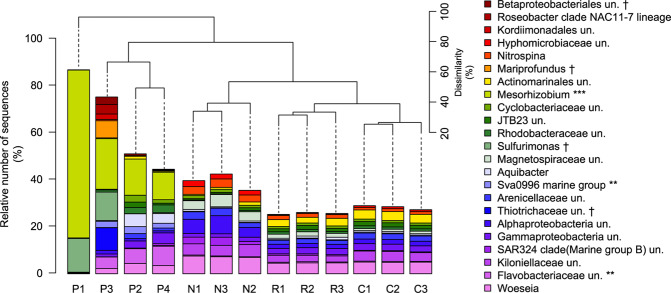
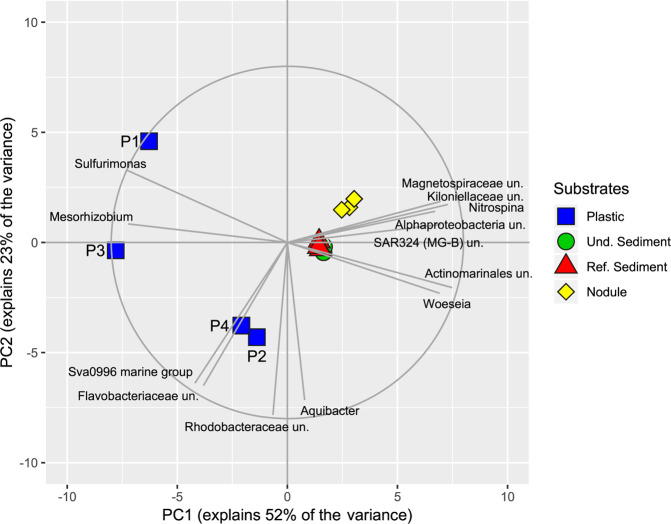
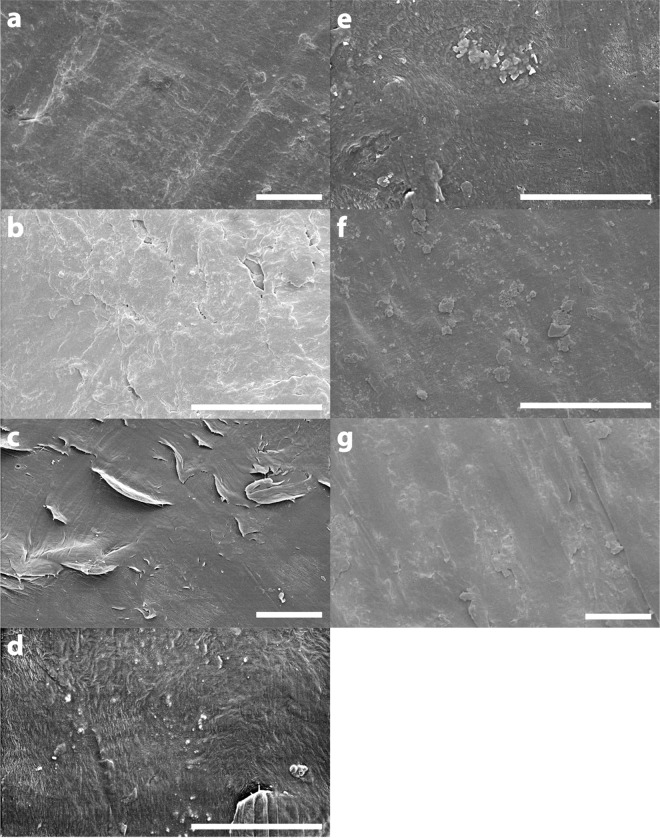
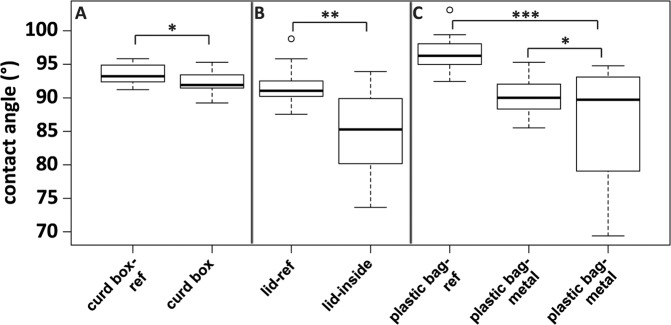
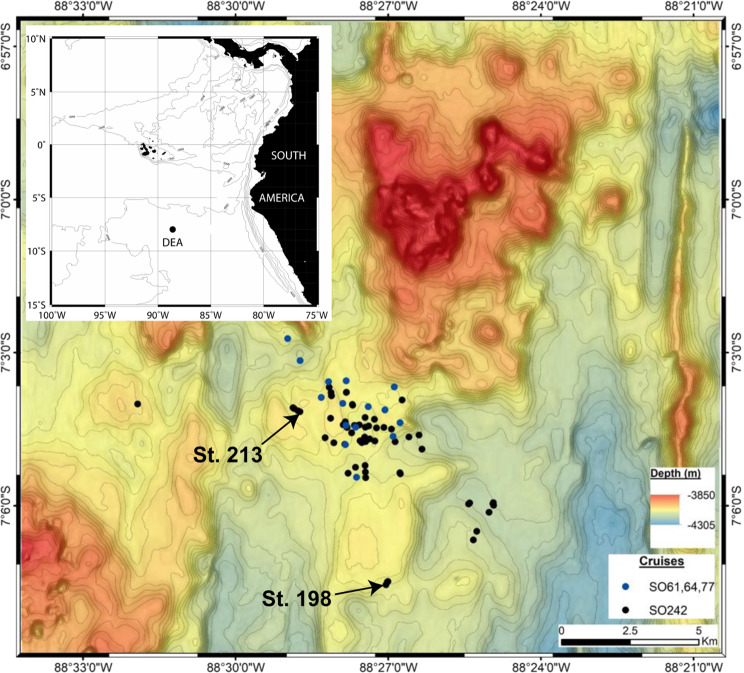
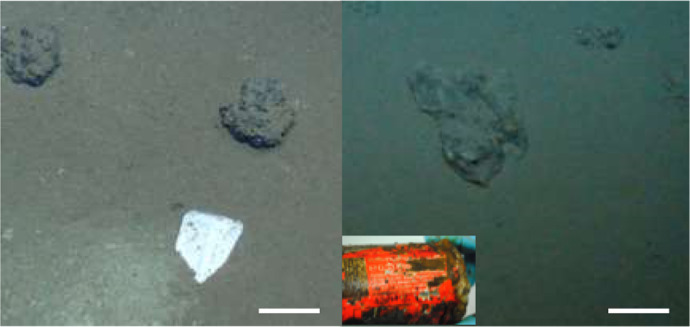
The fate of plastic debris entering the oceans is largely unconstrained. Currently, intensified research is devoted to the abiotic and microbial degradation of plastic floating near the ocean surface for an extended period of time. In contrast, the impacts of environmental conditions in the deep sea on polymer properties and rigidity are virtually unknown. Here, we present unique results of plastic items identified to have been introduced into deep-sea sediments at a water depth of 4150 m in the eastern equatorial Pacific Ocean more than two decades ago. The results, including optical, spectroscopic, physical and microbial analyses, clearly demonstrate that the bulk polymer materials show no apparent sign of physical or chemical degradation. Solely the polymer surface layers showed reduced hydrophobicity, presumably caused by microbial colonization. The bacterial community present on the plastic items differed significantly (p < 0.1%) from those of the adjacent natural environment by a dominant presence of groups requiring steep redox gradients (Mesorhizobium, Sulfurimonas) and a remarkable decrease in diversity. The establishment of chemical gradients across the polymer surfaces presumably caused these conditions. Our findings suggest that plastic is stable over extended times under deep-sea conditions and that prolonged deposition of polymer items at the seafloor may induce local oxygen depletion at the sediment-water interface.
Overview
The claims and statistics of this paper haven’t been checked yet.
Run the check — free, no account needed. It reads the open-access text and checks the sources it cites.
Integrity signals
Registry
Cites
Statistics
Figures
Verification
Claims the paper makes
The claims and statistics of this paper haven’t been checked yet.
Run the check — free, no account needed. It reads the open-access text and checks the sources it cites.
Claims other papers make about this one
Each is checked against this paper’s own text: does it say what the citing paper says it does?
In the citing paper
“Plastic material was found in the ocean that has apparently stayed intact in the marine environment for decades.125”
From The fate of plastic in the ocean environment – a minireview (2021) · cites this paper as [125]
In the citing paper
“Intact plastic material was oen found in environments that are conducive for organic matter preservation, e.g.cold 125 or anoxic habitats 126 (and to a lesser degree in warm and oxic environments).”
From The fate of plastic in the ocean environment – a minireview (2021) · cites this paper as [125]
Self-check
Percentages, sums and reported differences re-computed from the paper’s own numbers.
The self-check needs the paper’s full text.
Citations
Cites
1 retracted
Lewis, E. L. V., Duckett, R. A., Ward, I. M., Fairclough, J. P. A., & Ryan, A. J. (2003) · Polymer · doi:10.1016/s0032-3861(02)00933-3 · Cited by 26
RetractedR: A Language and Environment for Statistical Computing
R Core Team (2000) · doi:10.32614/r.manuals · Cited by 355,893
Trimmomatic: a flexible trimmer for Illumina sequence data
Bolger, A. M., Lohse, M., & Usadel, B. (2014) · Bioinformatics · doi:10.1093/bioinformatics/btu170 · Cited by 65,548
Cutadapt removes adapter sequences from high-throughput sequencing reads
Martin, M. (2011) · EMBnet.journal · doi:10.14806/ej.17.1.200 · Cited by 33,889
ggplot2: Elegant Graphics for Data Analysis
Wickham, H. (2009) · doi:10.1007/978-0-387-98141-3 · Cited by 14,447
The Proceedings of the National Academy of Sciences
Richards, J. W. (1915) · Science · doi:10.1126/science.42.1074.161 · Cited by 13,941
A new method for non-parametric multivariate analysis of variance
Anderson, M. J. (2001) · Austral Ecology · doi:10.1111/j.1442-9993.2001.01070.pp.x · Cited by 13,828
Plastic waste inputs from land into the ocean
Jambeck, J. R., Geyer, R., Wilcox, C., Siegler, T. R., Perryman, M., Andrady, A., Narayan, R., & Law, K. L. (2015) · Science · doi:10.1126/science.1260352 · Cited by 13,163
International Journal of Molecular Sciences
Soni, N., Ross, A., Nookaew, I., Scheers, N., Gabrielsson, B., & Sandberg, A.-S. (2024) · International Journal of Molecular Sciences · doi:10.3390/ijms · Cited by 10,136
Klindworth, A., Pruesse, E., Schweer, T., Peplies, J., Quast, C., Horn, M., & Glöckner, F. O. (2013) · Nucleic Acids Research · doi:10.1093/nar/gks808 · Cited by 8,850
Research works printed but not linked: 3
- Grassie, N. & Scott, G. Polymer degradation & stabilization. (Cambridge University Press, 1998).
- Wypych, G. Handbook of polymers. (Elsevier, 2016).
- Elhariry, H. M. Biofilm formation by endospore-forming bacilli on plastic surface under some food-related and environmental stress conditions. Global J Biotechnol Biochem 3, 69–78 (2008).
Cited by
Sorted by citations
Items 101–125 of 125
Ivanovich, N., Guo, X., Sobota, R. M., & Lauro, F. M. (2025) · Microbiology Spectrum · doi:10.1128/spectrum.01590-25 · Cited by 1
Differential biogeochemical cycling by plastisphere microorganisms in Pearl River estuary
Wang, Z., Sun, X., Lin, Z., Huang, D., Cao, Y., Huang, Y., Wang, Y., Amin, M. A. E. H., Zhang, H., & Sun, W. (2026) · Journal of Environmental Sciences · doi:10.1016/j.jes.2026.05.007 · Cited by 1
APPLICATIONS OF MACHINE LEARNING IN MICROBIAL FORENSICS
Ghannam, R. B. (2021) · Digital Commons - Michigan Tech (Michigan Technological University) · doi:10.37099/mtu.dc.etdr/1196
Cloux, S., Pérez-Pérez, P., de Pablo, H., & Pérez-Muñuzuri, V. (2023) · SSRN Electronic Journal · doi:10.2139/ssrn.4513629
Microplastics Provided Habitats for Benthic Microalgae in Fujian Coastal Waters of ChinaPreprint
Wang, K., Peng, C., Lin, H., Lin, H., Chen, B., & Gao, Y. (2024) · SSRN Electronic Journal · doi:10.2139/ssrn.5069281
Moncer, M., Hamza, A., & Trabelsi, L. (2025) · Journal of Sedimentary Environments · doi:10.1007/s43217-025-00223-y
Structure-dependent mechanisms for plastic degradation in the marine environment
Maciulis, N. A., Bingaman, J. M., & Scott, S. L. (2025) · Elsevier eBooks · doi:10.1016/b978-0-12-822324-6.00007-4
Microplastics primarily provide habitats for benthic microalgae in Fujian coastal waters of China
Wang, K., Peng, C., Lin, H., Lin, H., Chen, B., & Gao, Y. (2025) · iScience · doi:10.1016/j.isci.2025.113762
Song, X., Wei, X., Ji, X., Wang, X. E., Zhai, C., Yang, G., Feng, Z., & He, X. (2026) · Regional Studies in Marine Science · doi:10.1016/j.rsma.2026.104865
Ali, W., Kim, M.-S., Jeong, H., Kim, D., Monchy, S., Li, L. L., Hilal, M. G., Naz, D., Benali, S., Thery, J., et al. (2026) · Marine Pollution Bulletin · doi:10.1016/j.marpolbul.2026.119561
Khaleel, R., Weig, A. R., Wagenhofer, J., Rolf, M., Lu, Y., Laermanns, H., Nitsche, F., Lueders, T., Bässler, C., Laforsch, C., et al. (2026) · SSRN Electronic Journal · doi:10.2139/ssrn.6485405
Application of Fungi in Waste Water Treatment in Bioremediation of Plastics and Microplastics
Kumar, A., Kaur, S., Saroha, B., Dutt, N., Singh, P., Negi, D. S., & Bahadur, I. (2026) · Springer water · doi:10.1007/978-3-032-01955-4_4
Global ghost fishing characterization model for derelict bottom set gillnets
Vodopia, D., Verones, F., Askham, C., & Larsen, R. B. (2026) · Ecological Indicators · doi:10.1016/j.ecolind.2026.115408
Biofilms at the bottom of the ocean: Microbial diversity and resource potential
Zhang, W., Ding, W., Liu, Q., & Li, Y. (2026) · Elsevier eBooks · doi:10.1016/b978-0-443-27610-1.00011-9
Kefela, T., Li, D., Werfhorst, L. C. V. D., Reynolds, R. M., Behrens, R., Floyd, Y., Brown, J. L., Smith, J., O’Malley, M., & Holden, P. A. (2026) · Applied and Environmental Microbiology · doi:10.1128/aem.02490-25
Singh, P. K., Singh, N., Kumar, I., Kumar, U., Dwivedi, A., Singh, P., Mishra, S., Pal, K., Prajapati, A., & Sharma, R. K. (2026) · Aquatic Toxicology · doi:10.1016/j.aquatox.2026.107921 · Cited by 1
Biodegradability of Technical Textiles—A Review
Ikbal, M. S., Kaiser, T., & Uddin, M. A. (2026) · Sustainable textiles · doi:10.1007/978-3-032-29974-1_4
Transport and Fate of Microplastics in Ecosystems
Sudarvel, J., Velmurugan, R., Thirumalaisamy, R., Easwaran, P., Smruthymol, J., & Ganesh, K. S. (2026) · Springer eBooks · doi:10.1007/978-3-032-17658-5_6
Xu, Y., Li, M., He, J., & Chen, X. (2026) · Environmental Science Water Research & Technology · doi:10.1039/d6ew00537c
Metadata
- Authors
- Krause, S., Molari, M., Gorb, E. V., Gorb, S. N., Kossel, E., & Haeckel, M.
- Affiliations
- GEOMAR Helmholtz Centre for Ocean Research Kiel (DE)
- Max Planck Society (DE)
- Christian-Albrechts-Universität zu Kiel (DE)
- Corresponding author
- Krause, S.
- Venue
- Scientific Reports
- Published
- 2020-06-11
- Volume
- 10
- Issue
- 1
- Pages
- 9484-9484
- ISSN
- 2045-2322 (ISSN-L)
- PMC
- PMC7289819
- OpenAlex
- W3035237867
- Cited by
- 125
- References
- 97
- Citations by year
- 2026: 15 · 2025: 23 · 2024: 22 · 2023: 17 · 2022: 18 · 2021: 24 · 2020: 6
- FWCI
- 4.01
- Type
- journal article
- Language
- en
- Open access
- gold
- doi.org
- Locations
- Scientific Reports (publishedVersion, cc-by)
- PubMed Central (publishedVersion, cc-by)
- PubMed (publishedVersion)
- Helmholtz Centre for Ocean Research Kiel (GEOMAR) (submittedVersion)
- Helmholtz-Zentrum für Polar-und Meeresforschung (Alfred-Wegener-Institut) (submittedVersion)
- MPG.PuRe (Max Planck Society) (submittedVersion, other-oa)
- Funders
- Bundesministerium für Bildung und Forschung (03F0707A)
- Topics
- Physical Sciences › Environmental Science › Pollution › Microplastics and Plastic Pollution
- Physical Sciences › Earth and Planetary Sciences › Oceanography › Marine Biology and Ecology Research
- Physical Sciences › Environmental Science › Ecology › Microbial Community Ecology and Physiology
- Keywords
- plastic debris, deep-sea sediments, abyssal seafloor, microbial colonization of plastic, bacterial communities, polymer degradation, hydrophobicity, redox gradients, Sulfurimonas, Mesorhizobium, sediment-water interface, oxygen depletion
- MeSH terms
- Bacteria, Oceans and Seas, Pacific Ocean, Plastics, Seawater, Water Pollutants, Chemical, Geologic Sediments
About these checks
Registry, retraction, Cites and statistics results are computed, not judged, with one exception: a printed reference that no index lists is read once by a model before it counts as a citation error. Claims are extracted by a model and kept only when their quote appears verbatim in the text; each cited source is then checked, with a model’s help, for whether it says what the claim relies on. Those verdicts can be wrong — read the claim’s quote and the cited source before relying on one.
Statistics and arithmetic are recomputed, not judged.
Confidence bands are shown only for fields calibrated on our annotated test set. None is calibrated yet, so no band is shown.
What counts as a claim ›How we measure confidence ›How we check this ›
Are you an author, or do you see a problem with this page? Request a review
