

Glucocorticoid receptor complexes form cooperatively with the Hsp90 co-chaperones Pp5 and FKBPs
Open accessThe DOI matches its Crossref record; 89 of the 89 references it cites were found in a registry or an index.
Abstract
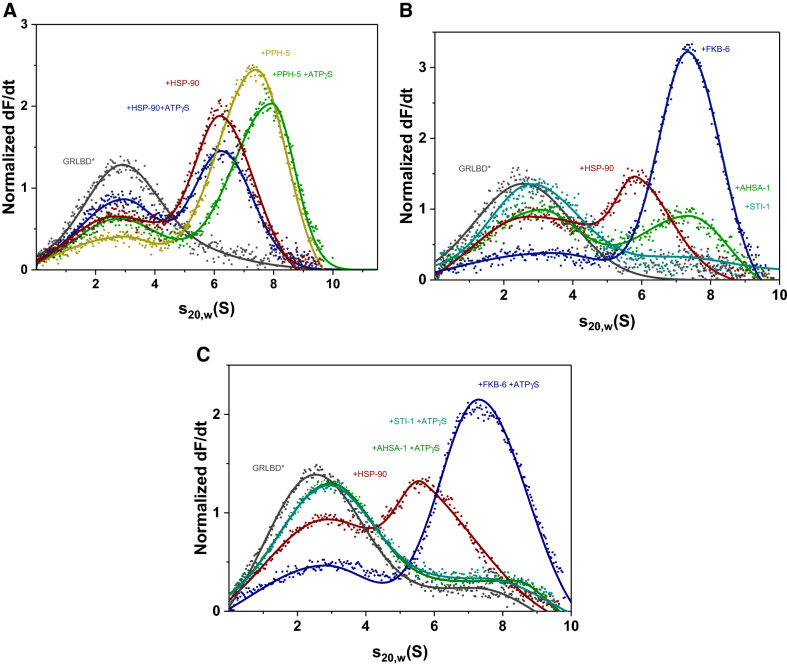
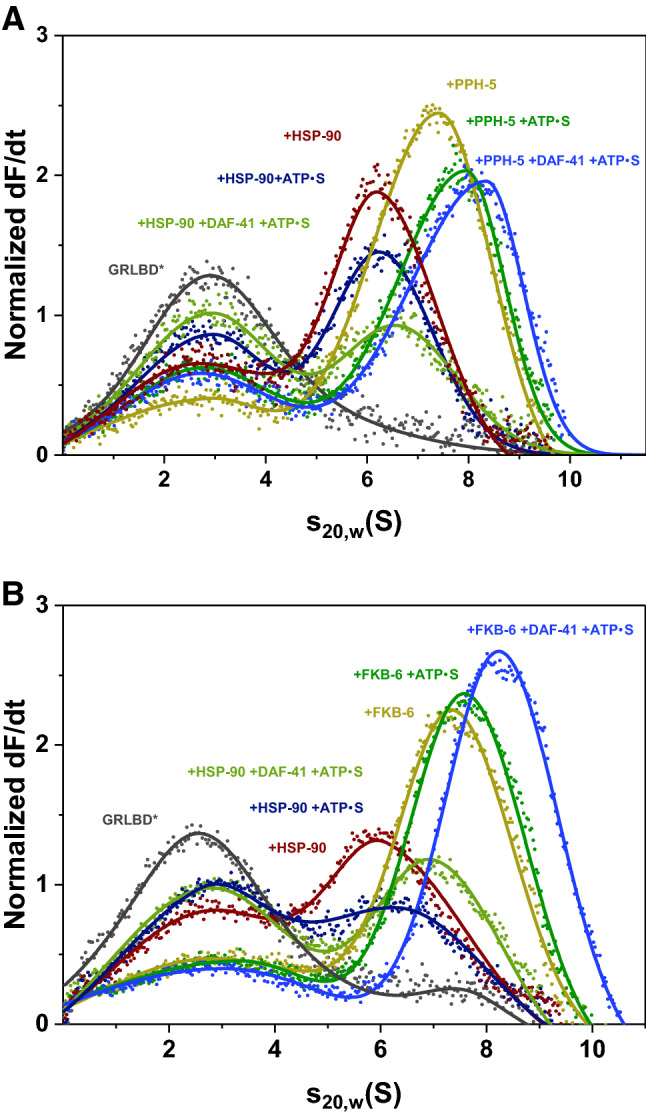
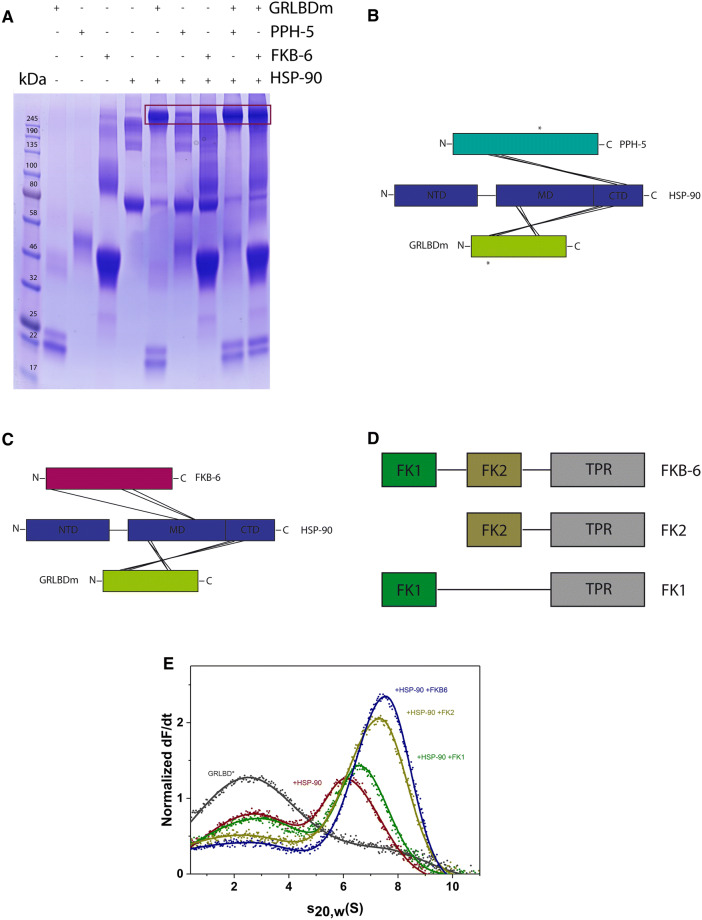
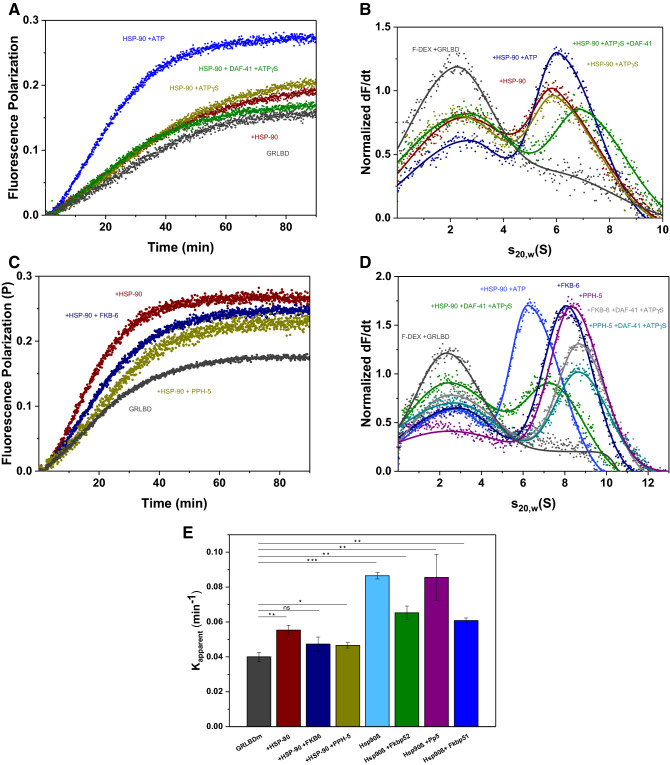
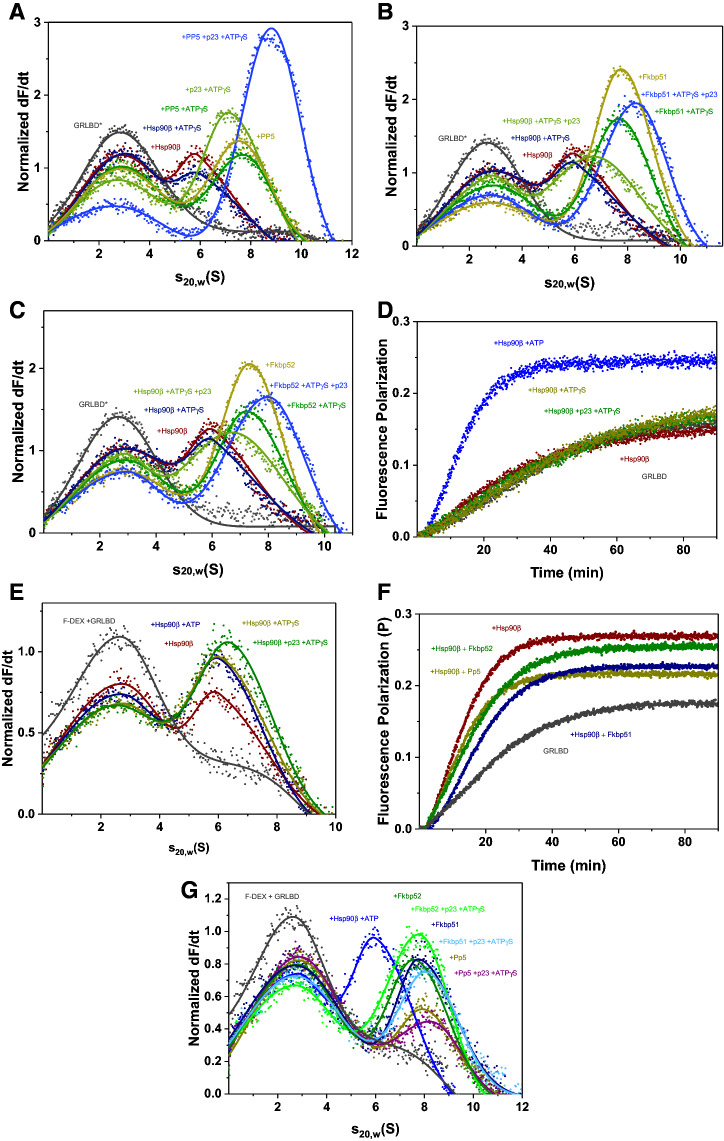
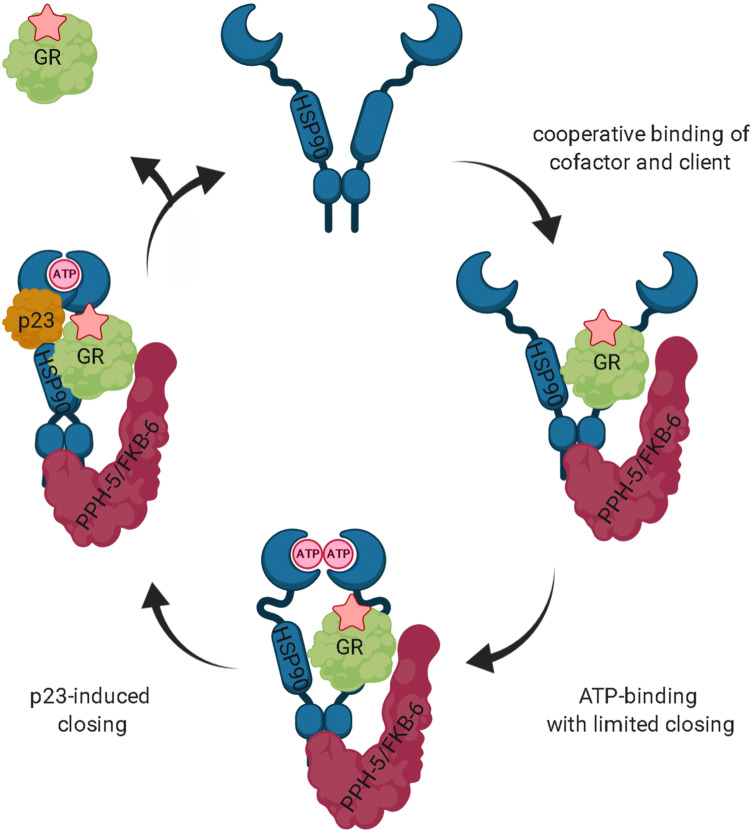
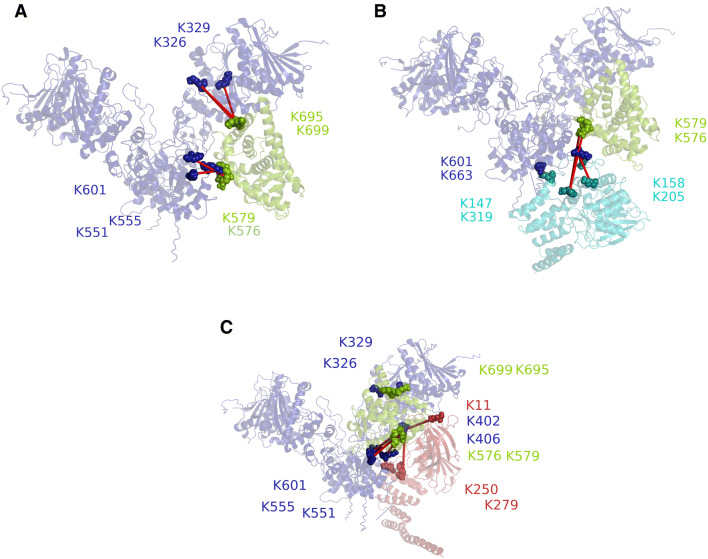
The function of steroid receptors in the cell depends on the chaperone machinery of Hsp90, as Hsp90 primes steroid receptors for hormone binding and transcriptional activation. Several conserved proteins are known to additionally participate in receptor chaperone assemblies, but the regulation of the process is not understood in detail. Also, it is unknown to what extent the contribution of these cofactors is conserved in other eukaryotes. We here examine the reconstituted C. elegans and human chaperone assemblies. We find that the nematode phosphatase PPH-5 and the prolyl isomerase FKB-6 facilitate the formation of glucocorticoid receptor (GR) complexes with Hsp90. Within these complexes, Hsp90 can perform its closing reaction more efficiently. By combining chemical crosslinking and mass spectrometry, we define contact sites within these assemblies. Compared to the nematode Hsp90 system, the human system shows less cooperative client interaction and a stricter requirement for the co-chaperone p23 to complete the closing reaction of GR·Hsp90·Pp5/Fkbp51/Fkbp52 complexes. In both systems, hormone binding to GR is accelerated by Hsp90 alone and in the presence of its cofactors. Our results show that cooperative complex formation and hormone binding patterns are, in many aspects, conserved between the nematode and human systems.
Overview
The claims and statistics of this paper haven’t been checked yet.
Free: it reads the open-access text and checks the first 5 claims that cite a source we can check. Create a free account to check every claim.
Integrity signals
Registry
Cites
Statistics
Figures
Verification
Claims the paper makes
The claims and statistics of this paper haven’t been checked yet.
Free: it reads the open-access text and checks the first 5 claims that cite a source we can check. Create a free account to check every claim.
Claims other papers make about this one
Each is checked against this paper’s own text: does it say what the citing paper says it does?
The source backs part of the claim, not all of it — or backs it for a different population, condition or comparison.
In the citing paper
“recent work identifies that Hsp90-GR client-bound complexes form the closed state cooperatively with the binding of FKBPs”
From The structure of an Hsp90-immunophilin complex reveals cochaperone recognition of the client maturation state (2021) · cites this paper as Kaziales et al., 2020
Experimental — accuracy not yet measured
Self-check
Percentages, sums and reported differences re-computed from the paper’s own numbers.
The self-check needs the paper’s full text.
Citations
Cites
UCSF Chimera—A visualization system for exploratory research and analysis
Pettersen, E. F., Goddard, T. D., Huang, C. C., Couch, G. S., Greenblatt, D. M., Meng, E. C., & Ferrin, T. E. (2004) · Journal of Computational Chemistry · doi:10.1002/jcc.20084 · Cited by 45,828
Cox, J., & Mann, M. (2008) · Nature Biotechnology · doi:10.1038/nbt.1511 · Cited by 14,855
Comparative Protein Structure Modeling Using Modeller
Eswar, N., Webb, B., Marti‐Renom, M. A., Madhusudhan, M. S., Eramian, D., Shen, M., Pieper, U., & Sali, A. (2006) · Current Protocols in Bioinformatics · doi:10.1002/0471250953.bi0506s15 · Cited by 4,478
HADDOCK: A Protein−Protein Docking Approach Based on Biochemical or Biophysical Information
Dominguez, C., Boelens, R., & Bonvin, A. M. J. J. (2003) · Journal of the American Chemical Society · doi:10.1021/ja026939x · Cited by 3,187
Comparative Protein Structure Modeling Using MODELLER
Eswar, N., Webb, B., Marti‐Renom, M. A., Madhusudhan, M. S., Eramian, D., Shen, M., Pieper, U., & Sali, A. (2007) · Current Protocols in Protein Science · doi:10.1002/0471140864.ps0209s50 · Cited by 2,846
The HADDOCK2.2 Web Server: User-Friendly Integrative Modeling of Biomolecular Complexes
van Zundert, G. C. P., Rodrigues, J. P. G. L. M., Trellet, M., Schmitz, C., Kastritis, P. L., Karaca, E., Melquiond, A. S. J., van Dijk, M., de Vries, S. J., & Bonvin, A. M. J. J. (2016) · Journal of Molecular Biology · doi:10.1016/j.jmb.2015.09.014 · Cited by 2,785
Structure of TPR Domain–Peptide Complexes
Scheufler, C., Brinker, A., Bourenkov, G., Pegoraro, S., Moroder, L., Bartunik, H., Hartl, F. U., & Moarefi, I. (2000) · Cell · doi:10.1016/s0092-8674(00)80830-2 · Cited by 1,188
Crystal structure of an Hsp90–nucleotide–p23/Sba1 closed chaperone complex
Ali, M. M. U., Roe, S. M., Vaughan, C. K., Meyer, P., Panaretou, B., Piper, P. W., Prodromou, C., & Pearl, L. H. (2006) · Nature · doi:10.1038/nature04716 · Cited by 962
Identification of cross-linked peptides from complex samples
Yang, B., Wu, Y.-J., Zhu, M., Fan, S.-B., Lin, J., Zhang, K., Li, S., Chi, H., Li, Y.-X., Chen, H.-F., et al. (2012) · Nature Methods · doi:10.1038/nmeth.2099 · Cited by 574
Activation of the ATPase Activity of Hsp90 by the Stress-Regulated Cochaperone Aha1
Panaretou, B., Siligardi, G., Meyer, P., Maloney, A., Sullivan, J. K., Singh, S., Millson, S. H., Clarke, P. A., Naaby-Hansen, S., Stein, R., et al. (2002) · Molecular Cell · doi:10.1016/s1097-2765(02)00785-2 · Cited by 542
Prodromou, C., Panaretou, B., Chohan, S., Siligardi, G., O'Brien, R., Ladbury, J. E., Roe, S. M., Piper, P. W., & Pearl, L. H. (2000) · The EMBO Journal · doi:10.1093/emboj/19.16.4383 · Cited by 492
Shiau, A. K., Harris, S. F., Southworth, D. R., & Agard, D. A. (2006) · Cell · doi:10.1016/j.cell.2006.09.027 · Cited by 455
Regulation of Hsp90 ATPase activity by tetratricopeptide repeat (TPR)-domain co-chaperones
Prodromou, C. (1999) · The EMBO Journal · doi:10.1093/emboj/18.3.754 · Cited by 425
Kirschke, E., Goswami, D., Southworth, D., Griffin, P. R., & Agard, D. A. (2014) · Cell · doi:10.1016/j.cell.2014.04.038 · Cited by 399
Dissection of the ATP-induced conformational cycle of the molecular chaperone Hsp90
Hessling, M., Richter, K., & Buchner, J. (2009) · Nature Structural & Molecular Biology · doi:10.1038/nsmb.1565 · Cited by 349
Self-citationSmith, D. F. (1993) · Molecular Endocrinology · doi:10.1210/me.7.11.1418 · Cited by 300
Structural basis for recruitment of the ATPase activator Aha1 to the Hsp90 chaperone machinery
Meyer, P. (2004) · The EMBO Journal · doi:10.1038/sj.emboj.7600141 · Cited by 291
Evolution and function of diverse Hsp90 homologs and cochaperone proteins
Johnson, J. L. (2012) · Biochimica et Biophysica Acta (BBA) - Molecular Cell Research · doi:10.1016/j.bbamcr.2011.09.020 · Cited by 289
Minakaki, G., Menges, S., Kittel, A., Emmanouilidou, E., Schaeffner, I., Barkovits, K., Bergmann, A., Rockenstein, E., Adame, A., Marxreiter, F., et al. (2018) · Autophagy · doi:10.1080/15548627.2017.1395992 · Cited by 272
Self-citationIdentification of a 60-kilodalton stress-related protein, p60, which interacts with hsp90 and hsp70.
Smith, D. F., Sullivan, W. P., Marion, T. N., Zaitsu, K., Madden, B., McCormick, D. J., & Toft, D. O. (1993) · Molecular and Cellular Biology · doi:10.1128/mcb.13.2.869 · Cited by 269
Silverstein, A. M., Galigniana, M. D., Chen, M.-S., Owens-Grillo, J. K., Chinkers, M., & Pratt, W. B. (1997) · Journal of Biological Chemistry · doi:10.1074/jbc.272.26.16224 · Cited by 257
Lotz, G. P., Lin, H., Harst, A., & Obermann, W. M. J. (2003) · Journal of Biological Chemistry · doi:10.1074/jbc.m212761200 · Cited by 236
Polypeptide release by Hsp90 involves ATP hydrolysis and is enhanced by the co-chaperone p23
Young, J. C. (2000) · The EMBO Journal · doi:10.1093/emboj/19.21.5930 · Cited by 232
Johnson, J. L., & Toft, D. O. (1994) · Journal of Biological Chemistry · doi:10.1016/s0021-9258(17)31487-4 · Cited by 229
The architecture of functional modules in the Hsp90 co‐chaperone Sti1/Hop
Schmid, A. B., Lagleder, S., Gräwert, M. A., Röhl, A., Hagn, F., Wandinger, S. K., Cox, M. B., Demmer, O., Richter, K., Groll, M., et al. (2012) · The EMBO Journal · doi:10.1038/emboj.2011.472 · Cited by 229
Self-citationGrenert, J. P., Johnson, B. D., & Toft, D. O. (1999) · Journal of Biological Chemistry · doi:10.1074/jbc.274.25.17525 · Cited by 225
Chen, M.-S., Silverstein, A. M., Pratt, W. B., & Chinkers, M. (1996) · Journal of Biological Chemistry · doi:10.1074/jbc.271.50.32315 · Cited by 221
Coordinated ATP Hydrolysis by the Hsp90 Dimer
Richter, K., Muschler, P., Hainzl, O., & Buchner, J. (2001) · Journal of Biological Chemistry · doi:10.1074/jbc.m103832200 · Cited by 209
Self-citationMolecular Chaperone Interactions with Steroid Receptors: an Update
Cheung, J. C. Y., & Smith, D. F. (2000) · Molecular Endocrinology · doi:10.1210/me.14.7.939 · Cited by 207
Co-chaperone regulation of conformational switching in the Hsp90 ATPase cycle
Siligardi, G., Hu, B., Panaretou, B., Piper, P. W., Pearl, L. H., & Prodromou, C. (2004) · Journal of Biological Chemistry · doi:10.1074/jbc.m410562200 · Cited by 207
Pratt, W. B., Morishima, Y., Peng, H.-M., & Osawa, Y. (2010) · Experimental Biology and Medicine · doi:10.1258/ebm.2009.009250 · Cited by 200
Barent, R. L., Nair, S. C., Carr, D. C., Ruan, Y., Rimerman, R. A., Fulton, J., Zhang, Y., & Smith, D. F. (1998) · Molecular Endocrinology · doi:10.1210/mend.12.3.0075 · Cited by 190
Chen, S., Sullivan, W. P., Toft, D. O., & Smith, D. F. (1998) · Cell Stress and Chaperones · doi:10.1379/1466-1268(1998)003<0256:ealocb>2.3.co;2 · Cited by 189
Chen, S., Sullivan, W. P., Toft, D. O., & Smith, D. F. (1998) · Cell Stress & Chaperones · doi:10.1379/1466-1268(1998)003<0118:diopat>2.3.co;2 · Cited by 188
Smith, D. F., Stensgard, B. A., Welch, W. J., & Toft, D. O. (1992) · Journal of Biological Chemistry · doi:10.1016/s0021-9258(18)48438-4 · Cited by 174
Hinds, T. D., & Sánchez, E. R. (2007) · The International Journal of Biochemistry & Cell Biology · doi:10.1016/j.biocel.2007.08.010 · Cited by 167
Tetratricopeptide repeat cochaperones in steroid receptor complexes
Smith, D. F. (2004) · Cell Stress and Chaperones · doi:10.1379/csc-31.1 · Cited by 166
Morishima, Y., Murphy, P. J. M., Li, D.-P., Sanchez, E. R., & Pratt, W. B. (2000) · Journal of Biological Chemistry · doi:10.1074/jbc.m000434200 · Cited by 166
Cadepond, F., Schweizer-Groyer, G., Segard-Maurel, I., Jibard, N., Hollenberg, S. M., Giguère, V, Evans, R. M., & Baulieu, E. E. (1991) · Journal of Biological Chemistry · doi:10.1016/s0021-9258(19)67673-8 · Cited by 163
Richter, K., Walter, S., & Buchner, J. (2004) · Journal of Molecular Biology · doi:10.1016/j.jmb.2004.07.064 · Cited by 159
Self-citationMixed Hsp90–cochaperone complexes are important for the progression of the reaction cycle
Li, J., Richter, K., & Buchner, J. (2011) · Nature Structural & Molecular Biology · doi:10.1038/nsmb.1965 · Cited by 155
Modulation of the Hsp90 Chaperone Cycle by a Stringent Client Protein
Lorenz, O. R., Freiburger, L., Rutz, D. A., Krause, M., Zierer, B. K., Alvira, S., Cuéllar, J., Valpuesta, J. M., Madl, T., Sattler, M., et al. (2014) · Molecular Cell · doi:10.1016/j.molcel.2014.02.003 · Cited by 151
Mapping the HSP90 binding region of the glucocorticoid receptor.
Howard, K. J., Holley, S. J., Yamamoto, K. R., & Distelhorst, C. W. (1990) · Journal of Biological Chemistry · doi:10.1016/s0021-9258(19)38489-3 · Cited by 145
Conserved Conformational Changes in the ATPase Cycle of Human Hsp90
Richter, K., Soroka, J., Skalniak, L., Leskovar, A., Hessling, M., Reinstein, J., & Buchner, J. (2008) · Journal of Biological Chemistry · doi:10.1074/jbc.m800540200 · Cited by 145
Self-citationATP-competitive inhibitors block protein kinase recruitment to the Hsp90-Cdc37 system
Polier, S., Samant, R. S., Clarke, P. A., Workman, P., Prodromou, C., & Pearl, L. H. (2013) · Nature Chemical Biology · doi:10.1038/nchembio.1212 · Cited by 145
Conformational Switching of the Molecular Chaperone Hsp90 via Regulated Phosphorylation
Soroka, J., Wandinger, S. K., Mäusbacher, N., Schreiber, T., Richter, K., Daub, H., & Buchner, J. (2012) · Molecular Cell · doi:10.1016/j.molcel.2011.12.031 · Cited by 139
Self-citationThe Plasticity of the Hsp90 Co-chaperone System
Sahasrabudhe, P., Rohrberg, J., Biebl, M. M., Rutz, D. A., & Buchner, J. (2017) · Molecular Cell · doi:10.1016/j.molcel.2017.08.004 · Cited by 136
Hutchison, K. A., Stancato, L. F., Owens-Grillo, J. K., Johnson, J. L., Krishna, P., Toft, D. O., & Pratt, W. B. (1995) · Journal of Biological Chemistry · doi:10.1074/jbc.270.32.18841 · Cited by 124
Chaperone functions of the heat shock proteins associated with steroid receptors
Pratt, W. B., & Welsh, M. J. (1994) · Seminars in Cell Biology · doi:10.1006/scel.1994.1012 · Cited by 124
HARST, A., LIN, H., & OBERMANN, W. M. J. (2005) · Biochemical Journal · doi:10.1042/bj20041283 · Cited by 123
Genest, O., Reidy, M., Street, T. O., Hoskins, J. R., Camberg, J. L., Agard, D. A., Masison, D. C., & Wickner, S. (2013) · Molecular Cell · doi:10.1016/j.molcel.2012.11.017 · Cited by 118
The Influence of ATP and p23 on the Conformation of hsp90
Sullivan, W. P., Owen, B. A. L., & Toft, D. O. (2002) · Journal of Biological Chemistry · doi:10.1074/jbc.m207754200 · Cited by 111
Ziemiecki, A., CATELLI, M. G., Joab, I., & Moncharmont, B. (1986) · Biochemical and Biophysical Research Communications · doi:10.1016/s0006-291x(86)80424-7 · Cited by 107
Two FKBP-related proteins are associated with progesterone receptor complexes.
Smith, D. F., Baggenstoss, B. A., Marion, T. N., & Rimerman, R. A. (1993) · Journal of Biological Chemistry · doi:10.1016/s0021-9258(17)46853-0 · Cited by 103
Hutchison, K. A., Dittmar, K. D., & Pratt, W. B. (1994) · Journal of Biological Chemistry · doi:10.1016/s0021-9258(18)46871-8 · Cited by 101
Structure and pro-toxic mechanism of the human Hsp90/PPIase/Tau complex
Oroz, J., Chang, B. J., Wysoczanski, P., Lee, C.-T., Pérez-Lara, Á., Chakraborty, P., Hofele, R. V., Baker, J. D., Blair, L. J., Biernat, J., et al. (2018) · Nature Communications · doi:10.1038/s41467-018-06880-0 · Cited by 100
Importance of cycle timing for the function of the molecular chaperone Hsp90
Zierer, B. K., Rübbelke, M., Tippel, F., Madl, T., Schopf, F. H., Rutz, D. A., Richter, K., Sattler, M., & Buchner, J. (2016) · Nature Structural & Molecular Biology · doi:10.1038/nsmb.3305 · Cited by 99
Self-citationHsp90 regulates the dynamics of its cochaperone Sti1 and the transfer of Hsp70 between modules
Röhl, A., Wengler, D., Madl, T., Lagleder, S., Tippel, F., Herrmann, M., Hendrix, J., Richter, K., Hack, G., Schmid, A. B., et al. (2015) · Nature Communications · doi:10.1038/ncomms7655 · Cited by 91
Self-citationNuclear Shuttling Precedes Dimerization in Mineralocorticoid Receptor Signaling
Großmann, C., Ruhs, S., Langenbruch, L. M., Mildenberger, S., Strätz, N., Schumann, K., & Gekle, M. (2012) · Chemistry & Biology · doi:10.1016/j.chembiol.2012.04.014 · Cited by 86
Bresnick, E. H., Dalman, F. C., & Pratt, W. B. (1990) · Biochemistry · doi:10.1021/bi00454a028 · Cited by 76
Stancato, L. F., Hutchison, K. A., Krishna, P., & Pratt, W. B. (1996) · Biochemistry · doi:10.1021/bi9511649 · Cited by 74
Reddy, R. K., Kurek, I., Silverstein, A. M., Chinkers, M., Breiman, A., & Krishna, P. (1998) · PLANT PHYSIOLOGY · doi:10.1104/pp.118.4.1395 · Cited by 71
Bracht, T., Schweinsberg, V., Trippler, M., Kohl, M., Ahrens, M., Padden, J., Naboulsi, W., Barkovits, K., Megger, D. A., Eisenacher, M., et al. (2015) · Journal of Proteome Research · doi:10.1021/acs.jproteome.5b00053 · Cited by 71
Self-citationSquirrel Monkey Immunophilin FKBP51 Is a Potent Inhibitor of Glucocorticoid Receptor Binding1
Denny, W. B., Valentine, D. L., Reynolds, P. D., Smith, D. F., & Scammell, J. G. (2000) · Endocrinology · doi:10.1210/en.141.11.4107 · Cited by 66
van Zundert, G. C. P., & Bonvin, A. M. J. J. (2015) · Bioinformatics · doi:10.1093/bioinformatics/btv333 · Cited by 66
Meng, X., Devin, J., Sullivan, W. P., Toft, D., Baulieu, E.-E., & Catelli, M.-G. (1996) · Journal of Cell Science · doi:10.1242/jcs.109.7.1677 · Cited by 65
Mutational analysis of hsp90 binding to the progesterone receptor.
Sullivan, W. P., & Toft, D. O. (1993) · Journal of Biological Chemistry · doi:10.1016/s0021-9258(20)80738-8 · Cited by 64
Hemmerling, M., Nilsson, S., Edman, K., Eirefelt, S., Russell, W., Hendrickx, R., Johnsson, E., Mårdh, C. K., Berger, M., Rehwinkel, H., et al. (2017) · Journal of Medicinal Chemistry · doi:10.1021/acs.jmedchem.7b01215 · Cited by 59
Regulation of the Hsp90 system
Sima, S., & Richter, K. (2018) · Biochimica et Biophysica Acta (BBA) - Molecular Cell Research · doi:10.1016/j.bbamcr.2018.03.008 · Cited by 59
Self-citationThe DisVis and PowerFit Web Servers: Explorative and Integrative Modeling of Biomolecular Complexes
van Zundert, G. C. P., Trellet, M., Schaarschmidt, J., Kurkcuoglu, Z., David, M., Verlato, M., Rosato, A., & Bonvin, A. M. J. J. (2017) · Journal of Molecular Biology · doi:10.1016/j.jmb.2016.11.032 · Cited by 57
Xu, M., Dittmar, K. D., Giannoukos, G., Pratt, W. B., & Simons, S. S. (1998) · Journal of Biological Chemistry · doi:10.1074/jbc.273.22.13918 · Cited by 55
Gaiser, A. M., Brandt, F., & Richter, K. (2009) · Journal of Molecular Biology · doi:10.1016/j.jmb.2009.06.051 · Cited by 55
Self-citationSeitz, T., Thoma, R., Schoch, G., Stihle, M., Benz, J., D’Arcy, B., Wiget, A., Ruf, A., Hennig, M., & Sterner, R. (2010) · Journal of Molecular Biology · doi:10.1016/j.jmb.2010.08.048 · Cited by 54
Thomanek, N., Arends, J., Lindemann, C., Barkovits, K., Meyer, H. E., Marcus, K., & Narberhaus, F. (2019) · Frontiers in Microbiology · doi:10.3389/fmicb.2018.03285 · Cited by 54
Self-citationEng, F. C. S., Lee, H. S., Ferrara, J. K., Willson, T. M., & White, J. H. (1997) · Molecular and Cellular Biology · doi:10.1128/mcb.17.8.4644 · Cited by 47
Plum, S., Helling, S., Theiss, C., Leite, R. E. P., May, C., Jacob-Filho, W., Eisenacher, M., Kuhlmann, K., Meyer, H. E., Riederer, P., et al. (2013) · Journal of Proteomics · doi:10.1016/j.jprot.2013.07.015 · Cited by 46
Self-citationKumar, R., Moche, M., Winblad, B., & Pavlov, P. F. (2017) · Scientific Reports · doi:10.1038/s41598-017-14731-z · Cited by 40
A switch point in the molecular chaperone Hsp90 responding to client interaction
Rutz, D. A., Luo, Q., Freiburger, L., Madl, T., Kaila, V. R. I., Sattler, M., & Buchner, J. (2018) · Nature Communications · doi:10.1038/s41467-018-03946-x · Cited by 37
Eckl, J. M., Rutz, D. A., Haslbeck, V., Zierer, B. K., Reinstein, J., & Richter, K. (2013) · Journal of Biological Chemistry · doi:10.1074/jbc.m112.439257 · Cited by 35
Self-citationSánchez, E. R., Meshinchi, S., Schlesinger, M. J., & Pratt, W. B. (1987) · Molecular Endocrinology · doi:10.1210/mend-1-12-908 · Cited by 35
Haslbeck, V., Eckl, J. M., Drazic, A., Rutz, D. A., Lorenz, O., Zimmermann, K., Kriehuber, T., Lindemann, C., Madl, T., & Richter, K. (2015) · Scientific Reports · doi:10.1038/srep17058 · Cited by 34
Self-citationShigeta, T., Zaizen, Y., Asami, T., Yoshida, S., Nakamura, Y. K., Okamoto, S., Matsuo, T., & Sugimoto, Y. (2013) · Plant Cell Reports · doi:10.1007/s00299-013-1550-y · Cited by 34
Glucocorticoid receptors: ATP-dependent cycling and hormone-dependent hyperphosphorylation
Bodwell, J. E., Hu, L.-M., Hu, J.-M., Ortí, E., & Munck, A. U. (1993) · The Journal of Steroid Biochemistry and Molecular Biology · doi:10.1016/0960-0760(93)90054-z · Cited by 31
Hutchison, K. A., Czar, M. J., & Pratt, W. B. (1992) · Journal of Biological Chemistry · doi:10.1016/s0021-9258(19)50714-1 · Cited by 26
Effect of the 90 kDa heat shock protein, HSP90, on glucocorticoid receptor binding to DNA-cellulose
Howard, K. J., & Distelhorst, C. W. (1988) · Biochemical and Biophysical Research Communications · doi:10.1016/s0006-291x(88)80497-2 · Cited by 26
Cadepond, F., Jibard, N., Binart, N., Schweizer-Groyer, G., Segard-Maurel, I., & Baulieu, E. E. (1994) · The Journal of Steroid Biochemistry and Molecular Biology · doi:10.1016/0960-0760(94)90076-0 · Cited by 25
Selective activators of protein phosphatase 5 target the auto-inhibitory mechanism
Haslbeck, V., Drazic, A., Eckl, J. M., Alte, F., Helmuth, M., Popowicz, G. M., Schmidt, W., Braun, F., Weiwad, M., Fischer, G. S., et al. (2015) · Bioscience Reports · doi:10.1042/bsr20150042 · Cited by 24
Self-citationDecreased adipogenesis and adipose tissue in mice with inactivated protein phosphatase 5
Jacob, W., Rosenzweig, D., Vázquez‐Martin, C., Duce, S., & Cohen, P. T. W. (2015) · Biochemical Journal · doi:10.1042/bj20140428 · Cited by 18
Eckl, J. M., Drazic, A., Rutz, D. A., & Richter, K. (2014) · Biochemistry · doi:10.1021/bi5000542 · Cited by 13
Self-citation
Research works printed but not linked: 1
- Sullivan WP Owen BAL Toft DO The influence of ATP and p23 on the conformation of hsp90 J. Biol. Chem. 2002 277 45942 45948 10.1074/jbc.M207754200 12324468 · DOI · Paper page
Cited by
Lee, K., Thwin, A. C., Nadel, C. M., Tse, E., Gates, S. N., Gestwicki, J. E., & Southworth, D. R. (2021) · Molecular Cell · doi:10.1016/j.molcel.2021.07.023 · Cited by 76
Cryo-EM reveals how Hsp90 and FKBP immunophilins co-regulate the glucocorticoid receptor
Noddings, C. M., Johnson, J. L., & Agard, D. A. (2023) · Nature Structural & Molecular Biology · doi:10.1038/s41594-023-01128-y · Cited by 75
“https://doi.org/10.1038/s41594-023-01128-y could be due to the inability of FKBP52 to sufficiently stabilize Hsp90 closure, as previously suggested 53 .”
BackgroundInfluentialBhattacharya, K., & Picard, D. (2021) · Cellular and Molecular Life Sciences · doi:10.1007/s00018-021-03962-z · Cited by 81
Merabet, N., Lucassen, P. J., Crielaard, L., Stronks, K., Quax, R., Sloot, P. M. A., la Fleur, S. E., & Nicolaou, M. (2021) · Frontiers in Neuroendocrinology · doi:10.1016/j.yfrne.2021.100972 · Cited by 87
Spies, L.-M. L., Verhoog, N. J. D., & Louw, A. (2021) · Cells · doi:10.3390/cells10102529 · Cited by 37
Metadata
- Authors
- Kaziales, A., Barkovits, K., Marcus, K., & Richter, K.
- Affiliations
- Center for Integrated Protein Science Munich (DE)
- Ruhr University Bochum (DE)
- Corresponding author
- Richter, Klaus
- Venue
- Scientific Reports
- Published
- 2020-07-01
- Volume
- 10
- Issue
- 1
- Pages
- 10733-10733
- ISSN
- 2045-2322 (ISSN-L)
- PMC
- PMC7329908
- OpenAlex
- W3038856900
- Cited by
- 24
- References
- 88
- Citations by year
- 2026: 3 · 2024: 1 · 2023: 3 · 2022: 6 · 2021: 11
- FWCI
- 1.62
- Type
- journal article
- Language
- en
- Open access
- gold
- doi.org
- Licence
- cc-by
- creativecommons.org/licenses/by/4.0 (tdm)
- creativecommons.org/licenses/by/4.0 (vor)
- Locations
- Scientific Reports (publishedVersion, cc-by)
- PubMed Central (publishedVersion, cc-by)
- PubMed (publishedVersion)
- mediaTUM (Technical University of Munich) (submittedVersion, other-oa)
- Funders
- PURE
- Deutsche Forschungsgemeinschaft (RI 1873/1-4)
- Topics
- Life Sciences › Biochemistry, Genetics and Molecular Biology › Molecular Biology › Heat shock proteins research
- Life Sciences › Biochemistry, Genetics and Molecular Biology › Molecular Biology › Genomics and Chromatin Dynamics
- Life Sciences › Biochemistry, Genetics and Molecular Biology › Molecular Biology › Receptor Mechanisms and Signaling
- Keywords
- glucocorticoid receptor, HSP90, FKBP51, FKBP52, p23, hormone binding, protein complex formation, Caenorhabditis elegans, chemical crosslinking
- MeSH terms
- Animals, Glycoproteins, Humans, Protein Binding, Receptors, Glucocorticoid, Caenorhabditis elegans, HSP90 Heat-Shock Proteins, Tacrolimus Binding Proteins, Caenorhabditis elegans Proteins, Protein Interaction Domains and Motifs
About these checks
Registry, retraction, Cites and statistics results are computed, not judged, with one exception: a printed reference that no index lists is read once by a model before it counts as a citation error. Claims are extracted by a model and kept only when their quote appears verbatim in the text; each cited source is then checked, with a model’s help, for whether it says what the claim relies on. Those verdicts can be wrong — read the claim’s quote and the cited source before relying on one.
Statistics and arithmetic are recomputed, not judged.
Confidence bands are shown only for fields calibrated on our annotated test set. None is calibrated yet, so no band is shown.
What counts as a claim ›How we measure confidence ›How we check this ›
Are you an author, or do you see a problem with this page? Request a review
Data sources
Bibliographic data: Semantic Scholar, OpenAlex, Crossref.
Contains information from the Semantic Scholar Academic Graph Datasets, made available under the ODC Attribution License (ODC-BY 1.0).
Semantic Scholar’s data is described in: Kinney, R., et al. (2023). The Semantic Scholar Open Data Platform. arXiv:2301.10140.
