

Comparing the tractability of young hand-raised wolves (Canis lupus) and dogs (Canis familiaris)
Open accessThe DOI matches its Crossref record; 52 of the 56 references it cites were found in a registry or an index.
Abstract
Dogs live in 45% of households, integrated into various human groups in various societies. This is certainly not true for wolves. We suggest that dogs' increased tractability (meant as individual dogs being easier to control, handle and direct by humans, in contrast to trainability defined as performance increase due to training) makes a crucial contribution to this fundamental difference. In this study, we assessed the development of tractability in hand-raised wolves and similarly raised dogs. We combined a variety of behavioural tests: fetching, calling, obeying a sit signal, hair brushing and walking in a muzzle. Wolf (N = 16) and dog (N = 11) pups were tested repeatedly, between the ages of 3-24 weeks. In addition to hand-raised wolves and dogs, we also tested mother-raised family dogs (N = 12) for fetching and calling. Our results show that despite intensive socialization, wolves remained less tractable than dogs, especially in contexts involving access to a resource. Dogs' tractability appeared to be less context dependent, as they followed human initiation of action in more contexts than wolves. We found no evidence that different rearing conditions (i.e. intensive socialization vs. mother rearing) would affect tractability in dogs. This suggests that during domestication dogs might have been selected for increased tractability, although based on the current data we cannot exclude that the differential speed of development of dogs and wolves or the earlier relocation of wolves to live as a group explains some of the differences we found.
Overview
The claims and statistics of this paper haven’t been checked yet.
Free: it reads the open-access text and checks the first 5 claims that cite a source we can check. Create a free account to check every claim.
Integrity signals
Registry
Cites
Statistics
Figures
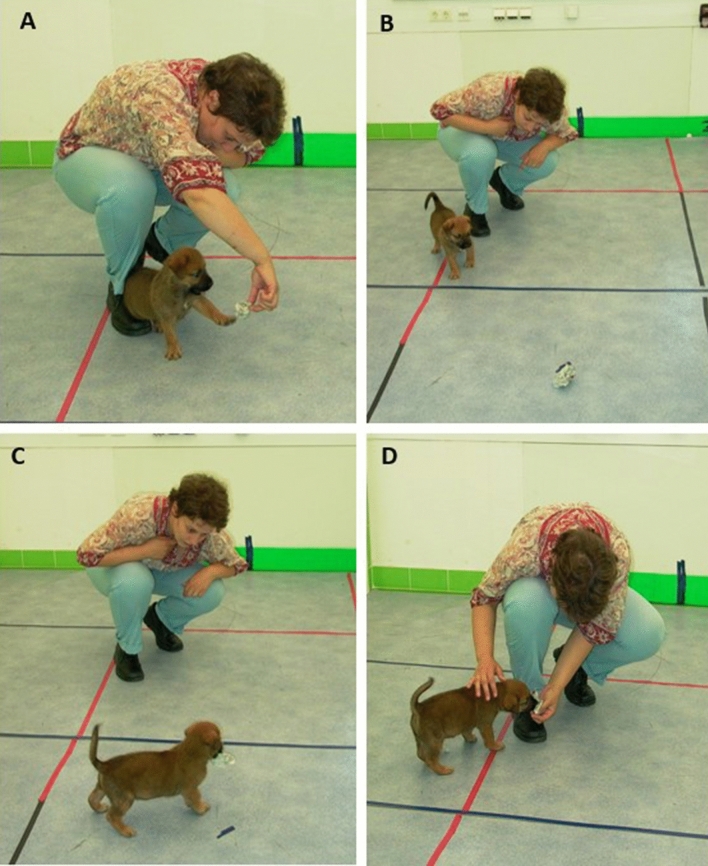
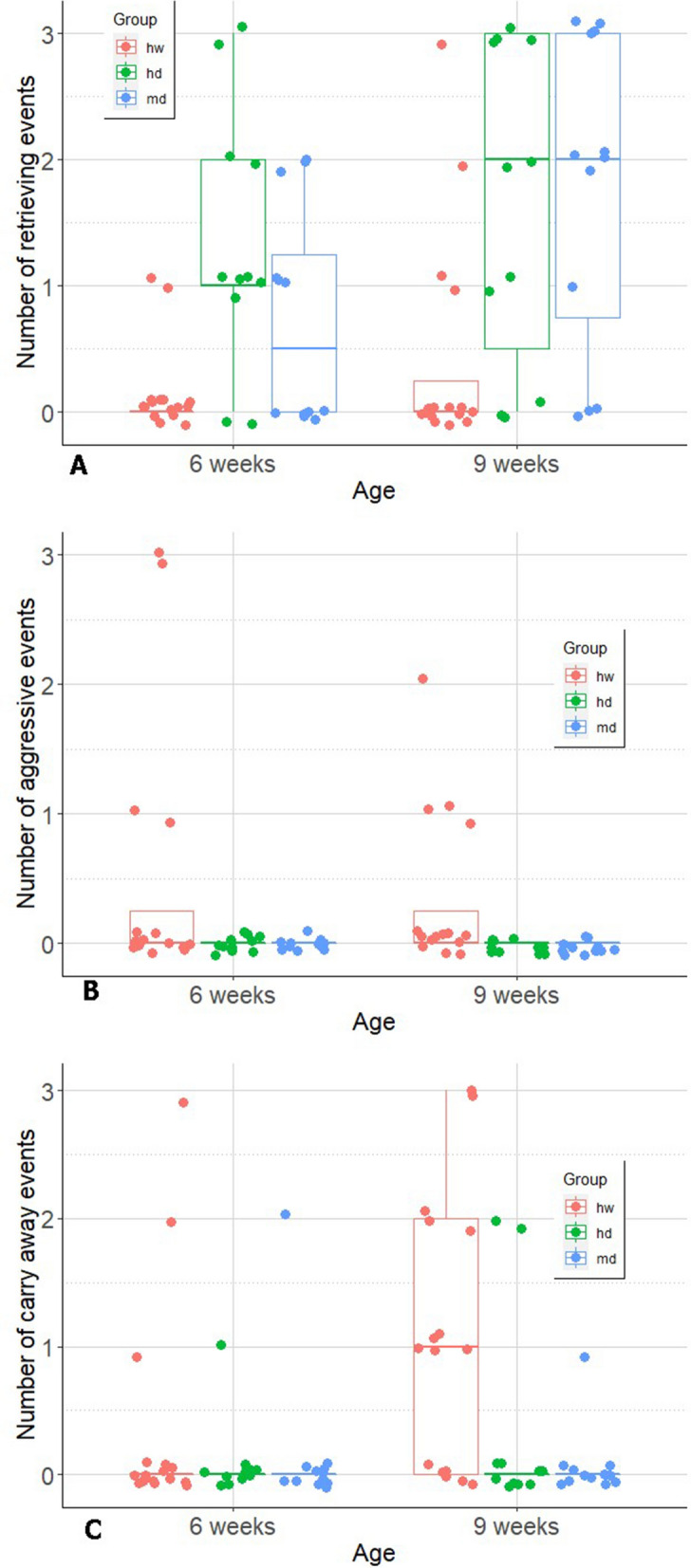
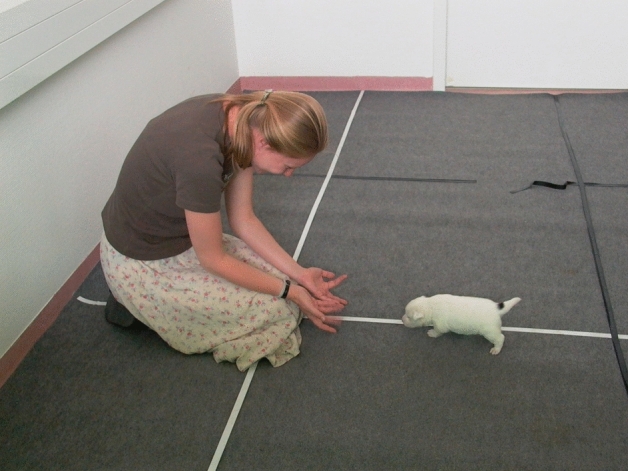
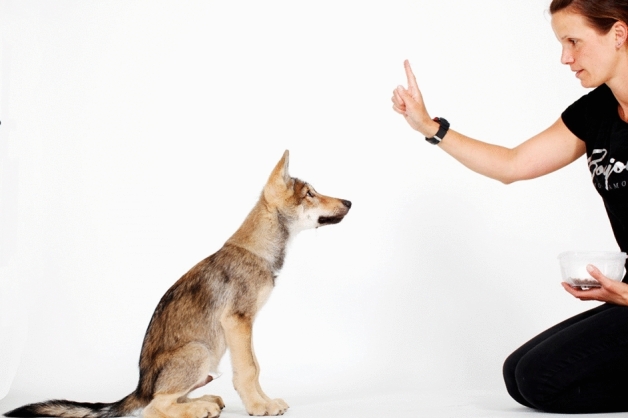
Verification
Claims the paper makes
The claims and statistics of this paper haven’t been checked yet.
Free: it reads the open-access text and checks the first 5 claims that cite a source we can check. Create a free account to check every claim.
Claims other papers make about this one
Each is checked against this paper’s own text: does it say what the citing paper says it does?
The cited source says what the claim attributes to it.
In the citing paper
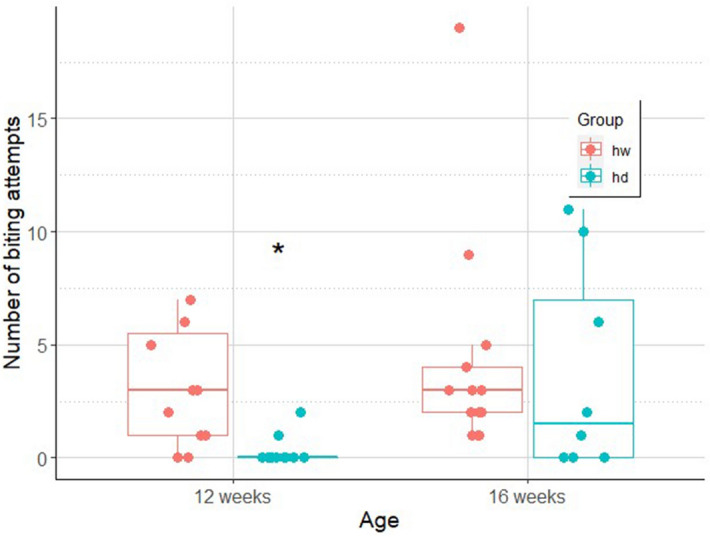
“A study testing physical restraint in wolf and dog puppies revealed that, while wolves tried to bite more often at 3 months of age (see also [64]), no differences in biting attempts appeared at later ages [42].”
From Comparing wolves and dogs: current status and implications for human ‘self-domestication’ (2022) · cites this paper as [42]
Self-check
Percentages, sums and reported differences re-computed from the paper’s own numbers.
The self-check needs the paper’s full text.
Citations
Cites
Fitting Linear Mixed-Effects Models Using lme4
Bates, D., Mächler, M., Bolker, B., & Walker, S. (2015) · Journal of Statistical Software · doi:10.18637/jss.v067.i01 · Cited by 86,835
Wickham, H. (2016) · Use R! · doi:10.1007/978-3-319-24277-4 · Cited by 33,115
ggplot2: Elegant Graphics for Data Analysis
Wickham, H. (2009) · doi:10.1007/978-0-387-98141-3 · Cited by 14,447
Least-Squares Means: The R Package lsmeans
Lenth, R. V. (2016) · Journal of Statistical Software · doi:10.18637/jss.v069.i01 · Cited by 5,075
An ERP study on L2 syntax processing: When do learners fail?
Meulman, N., Stowe, L. A., Sprenger, S. A., Bresser, M., & Schmid, M. S. (2014) · Frontiers in Psychology · doi:10.3389/fpsyg.2014.01072 · Cited by 1,001
Hsu, Y., & Serpell, J. A. (2003) · Journal of the American Veterinary Medical Association · doi:10.2460/javma.2003.223.1293 · Cited by 707
D’Angiulli, A., Runge, M., Faulkner, A., Zakizadeh, J., Chan, A., & Morcos, S. (2013) · Frontiers in Psychology · doi:10.3389/fpsyg.2013.00001 · Cited by 509
Parker, H. G., Dreger, D. L., Rimbault, M., Davis, B. W., Mullen, A. B., Carpintero-Ramirez, G., & Ostrander, E. A. (2017) · Cell Reports · doi:10.1016/j.celrep.2017.03.079 · Cited by 435
What does it take to become ‘best friends’? Evolutionary changes in canine social competence
Miklósi, Á., & Topál, J. (2013) · Trends in Cognitive Sciences · doi:10.1016/j.tics.2013.04.005 · Cited by 325
Self-citationTopál, J., Gácsi, M., Miklósi, Á., Virányi, Z., Kubinyi, E., & Csányi, V. (2005) · Animal Behaviour · doi:10.1016/j.anbehav.2005.03.025 · Cited by 290
Self-citationVirányi, Z., Gácsi, M., Kubinyi, E., Topál, J., Belényi, B., Ujfalussy, D., & Miklósi, Á. (2008) · Animal Cognition · doi:10.1007/s10071-007-0127-y · Cited by 287
Self-citationAn NMR Study of Biomimetic Fluorapatite – Gelatine Mesocrystals
Vyalikh, A., Simon, P., Rosseeva, E., Buder, J., Scheler, U., & Kniep, R. (2015) · Scientific Reports · doi:10.1038/srep15797 · Cited by 275
Ogilvie, S. P., Large, M. J., Fratta, G., Meloni, M., Canton-Vitoria, R., Tagmatarchis, N., Massuyeau, F., Ewels, C. P., King, A. A. K., & Dalton, A. B. (2017) · Scientific Reports · doi:10.1038/s41598-017-17123-5 · Cited by 270
Gácsi, M., Gyoöri, B., Virányi, Z., Kubinyi, E., Range, F., Belényi, B., & Miklósi, Á. (2009) · PLoS ONE · doi:10.1371/journal.pone.0006584 · Cited by 214
Self-citationGácsi, M., Győri, B., Miklósi, Á., Virányi, Z., Kubinyi, E., Topál, J., & Csányi, V. (2005) · Developmental Psychobiology · doi:10.1002/dev.20082 · Cited by 198
Self-citationTurcsán, B., Kubinyi, E., & Miklósi, Á. (2011) · Applied Animal Behaviour Science · doi:10.1016/j.applanim.2011.03.006 · Cited by 188
Self-citationPersonality Consistency in Dogs: A Meta-Analysis
Fratkin, J. L., Sinn, D. L., Patall, E. A., & Gosling, S. D. (2013) · PLoS ONE · doi:10.1371/journal.pone.0054907 · Cited by 176
Wavefunction Engineering of Type-I/Type-II Excitons of CdSe/CdS Core-Shell Quantum Dots
Nandan, Y., & Mehata, M. S. (2019) · Scientific Reports · doi:10.1038/s41598-018-37676-3 · Cited by 170
GODINHO, R., LLANEZA, L., BLANCO, J. C., LOPES, S., ÁLVARES, F., GARCÍA, E. J., PALACIOS, V., CORTÉS, Y., TALEGÓN, J., & FERRAND, N. (2011) · Molecular Ecology · doi:10.1111/j.1365-294x.2011.05345.x · Cited by 167
Effects of breed, sex, and neuter status on trainability in dogs
Serpell, J. A., & Hsu, Y. A. (2005) · Anthrozoös · doi:10.2752/089279305785594135 · Cited by 166
The effect of development and individual differences in pointing comprehension of dogs
Gácsi, M., Kara, E., Belényi, B., Topál, J., & Miklósi, Á. (2009) · Animal Cognition · doi:10.1007/s10071-008-0208-6 · Cited by 148
Self-citationOntogeny and phylogeny: both are essential to human-sensitive behaviour in the genus Canis
Udell, M. A. R., & Wynne, C. D. L. (2009) · Animal Behaviour · doi:10.1016/j.anbehav.2009.11.033 · Cited by 142
The Effect of Domestication on Inhibitory Control: Wolves and Dogs Compared
Marshall-Pescini, S., Virányi, Z., & Range, F. (2015) · PLOS ONE · doi:10.1371/journal.pone.0118469 · Cited by 132
Self-citationTracking the evolutionary origins of dog-human cooperation: the “Canine Cooperation Hypothesisâ€
Range, F., & Virányi, Z. (2015) · Frontiers in Psychology · doi:10.3389/fpsyg.2014.01582 · Cited by 131
Self-citationComparative Social Cognition: From wolf and dog to humans
Kubinyi, E. (2006) · Comparative Cognition & Behavior Reviews · doi:10.3819/ccbr.2008.20002 · Cited by 119
Self-citationMan and Wolf: Advances, Issues, and Problems in Captive Wolf Research.
Dewsbury, D. A. (1988) · Contemporary Psychology · doi:10.1037/026361 · Cited by 108
Comparison of problem-solving performance in six-week-old wolves and dogs
Frank, H., & Frank, M. G. (1982) · Animal Behaviour · doi:10.1016/s0003-3472(82)80241-8 · Cited by 108
Lord, K. (2013) · Ethology · doi:10.1111/eth.12044 · Cited by 100
Wolves lead and dogs follow, but they both cooperate with humans
Range, F., Marshall-Pescini, S., Kratz, C., & Virányi, Z. (2019) · Scientific Reports · doi:10.1038/s41598-019-40468-y · Cited by 92
Self-citationHeberlein, M. T. E., Turner, D. C., Range, F., & Virányi, Z. (2016) · Animal Behaviour · doi:10.1016/j.anbehav.2016.09.023 · Cited by 87
Self-citationMazzone, E. S., Coratti, G., Sormani, M. P., Messina, S., Pane, M., D’Amico, A., Colia, G., Fanelli, L., Berardinelli, A. L., Gardani, A., et al. (2016) · PLoS ONE · doi:10.1371/journal.pone.0151445 · Cited by 85
Social learning from humans or conspecifics: differences and similarities between wolves and dogs
Range, F., & Virányi, Z. (2013) · Frontiers in Psychology · doi:10.3389/fpsyg.2013.00868 · Cited by 84
Self-citationThe effects of domestication and ontogeny on cognition in dogs and wolves
Lampe, M. I., Bräuer, J., Kaminski, J., & Virányi, Z. (2017) · Scientific Reports · doi:10.1038/s41598-017-12055-6 · Cited by 79
Self-citationButtner, A. P. (2016) · Neuroscience & Biobehavioral Reviews · doi:10.1016/j.neubiorev.2016.08.029 · Cited by 78
Feuerbacher, E. N., & Wynne, C. D. L. (2012) · Journal of the Experimental Analysis of Behavior · doi:10.1901/jeab.2012.98-105 · Cited by 77
Ardalan, A., Klütsch, C. F. C., Zhang, A., Erdoğan, M., Uhlén, M., Houshmand, M., Tepeli, C., Ashtiani, S. R. M., & Savolainen, P. (2011) · Ecology and Evolution · doi:10.1002/ece3.35 · Cited by 73
Tonoike, A., Nagasawa, M., Mogi, K., Serpell, J. A., Ohtsuki, H., & Kikusui, T. (2015) · Scientific Reports · doi:10.1038/srep17710 · Cited by 65
Observations on the Behavioral Development of a Hand-Reared Male Timber Wolf
FENTRESS, J. C. (1967) · American Zoologist · doi:10.1093/icb/7.2.339 · Cited by 63
The Dingo Debate: Origins, Behaviour and Conservation
(2015) · CSIRO Publishing eBooks · doi:10.1071/9781486300303 · Cited by 61
Difference in quantity discrimination in dogs and wolves
Range, F., Jenikejew, J., Schröder, I., & Virányi, Z. (2014) · Frontiers in Psychology · doi:10.3389/fpsyg.2014.01299 · Cited by 57
Self-citationSocialization and management of wolves in captivity.
Klinghammer, E., & Goodmann, P. A. (1987) · Cited by 57
Dewclaws in wolves as evidence of admixed ancestry with dogs
Ciucci, P., Lucchini, V., Boitani, L., & Randi, E. (2003) · Canadian Journal of Zoology · doi:10.1139/z03-183 · Cited by 56
New, L., Bjerre, E. R., Millsap, B. A., Otto, M. C., & Runge, M. C. (2015) · PLoS ONE · doi:10.1371/journal.pone.0130978 · Cited by 55
Gácsi, M., Vas, J., Topál, J., & Miklósi, Á. (2013) · Applied Animal Behaviour Science · doi:10.1016/j.applanim.2013.02.007 · Cited by 50
Self-citationTraining Reduces Stress in Human-Socialised Wolves to the Same Degree as in Dogs
Vasconcellos, A. D. S., Virányi, Z., Range, F., Ades, C., Scheidegger, J. K., Möstl, E., & Kotrschal, K. (2016) · PLOS ONE · doi:10.1371/journal.pone.0162389 · Cited by 48
Self-citationMan and wolf : advances, issues, and problems in captive wolf research
Frank, H. A. (1987) · W. Junk eBooks · Cited by 46
Zeller, U., & Göttert, T. (2019) · Global Ecology and Conservation · doi:10.1016/j.gecco.2019.e00756 · Cited by 40
vonHoldt, B. M., Ji, S. S., Aardema, M. L., Stahler, D. R., Udell, M. A. R., & Sinsheimer, J. S. (2018) · Genome Biology and Evolution · doi:10.1093/gbe/evy112 · Cited by 31
Frank, H. (2011) · Behavior Genetics · doi:10.1007/s10519-011-9454-5 · Cited by 30
Dorey, N. R., Mehrkam, L. R., & Tacey, J. (2015) · Zoo Biology · doi:10.1002/zoo.21239 · Cited by 23
Inhibition training in wolves and dogs
Frank, H., & Frank, M. G. (1983) · Behavioural Processes · doi:10.1016/0376-6357(83)90024-4 · Cited by 23
The oxytocin receptor gene, an integral piece of the evolution of Canis familaris from Canis lupus
Oliva, J. L., Wong, Y. T., Rault, J., Appleton, B., & Lill, A. (2016) · Pet Behaviour Science · doi:10.21071/pbs.v0i2.4000 · Cited by 23
Smith, B. P., Browne, M., & Serpell, J. A. (2016) · Applied Animal Behaviour Science · doi:10.1016/j.applanim.2016.11.010 · Cited by 23
Wheat, C. H., & Temrin, H. (2020) · iScience · doi:10.1016/j.isci.2019.100811 · Cited by 22
River Courses in the Jura Mountains
de Margerie, E. (1894) · Science · doi:10.1126/science.ns-23.570.1 · Cited by 3
Smith, B. P. (2020) · Cited by 1
Research works printed but not linked: 1
- Mech DL The way of the wolf 1991 Minnesota Voyageur Press
Cited by
Comparing wolves and dogs: current status and implications for human ‘self-domestication’
Range, F., & Marshall-Pescini, S. (2022) · Trends in Cognitive Sciences · doi:10.1016/j.tics.2022.01.003 · Cited by 85
“dog pups readily allow humans to take resources away from them [42].”
BackgroundInfluentialCooperative Communication with Humans Evolved to Emerge Early in Domestic Dogs
Salomons, H., Smith, K. C. M., Callahan-Beckel, M., Callahan, M. K., Levy, K., Kennedy, B. S., Bray, E. E., Gnanadesikan, G. E., Horschler, D. J., Gruen, M. E., et al. (2021) · Current Biology · doi:10.1016/j.cub.2021.06.051 · Cited by 73
“And lastly, results from the temperament tests replicate similar findings (38-41) and support the idea that it is an unusual interest in humans that motivates the early emerging social skills of dogs.”
Spontaneous action matching in dog puppies, kittens and wolf pups
Fugazza, C., Temesi, A., Coronas, R., Uccheddu, S., Gácsi, M., & Pogány, Á. (2023) · Scientific Reports · doi:10.1038/s41598-023-28959-5 · Cited by 15
Self-citationHuman-directed sociability in the domestic dog: A Tinbergian approach
Boada, M., & Wirobski, G. (2024) · Neuroscience & Biobehavioral Reviews · doi:10.1016/j.neubiorev.2024.105947 · Cited by 17
Non-invasive sleep EEG measurement in hand raised wolves
Reicher, V., Bálint, A., Újváry, D., & Gácsi, M. (2022) · Scientific Reports · doi:10.1038/s41598-022-13643-x · Cited by 8
Self-citation
Metadata
- Authors
- Ujfalussy, D. J., Virányi, Z., Gácsi, M., Faragó, T., Pogány, Á., Bereczky, B. M., Miklósi, Á., & Kubinyi, E.
- Affiliations
- Eötvös Loránd University (HU)
- University of Veterinary Medicine Vienna (AT)
- Corresponding author
- Ujfalussy, Dorottya Júlia
- Venue
- Scientific Reports
- Published
- 2020-09-07
- Volume
- 10
- Issue
- 1
- Pages
- 14678-14678
- ISSN
- 2045-2322 (ISSN-L)
- PMC
- PMC7477132
- OpenAlex
- W3083619623
- Cited by
- 16
- References
- 56
- Citations by year
- 2026: 3 · 2025: 1 · 2024: 3 · 2023: 1 · 2022: 6 · 2021: 2
- FWCI
- 1.32
- Type
- journal article
- Language
- en
- Open access
- gold
- doi.org
- Licence
- cc-by
- creativecommons.org/licenses/by/4.0 (tdm)
- creativecommons.org/licenses/by/4.0 (vor)
- Locations
- Scientific Reports (publishedVersion, cc-by)
- PubMed Central (publishedVersion, cc-by)
- PubMed (publishedVersion)
- Repository of the Academy's Library (Library of the Hungarian Academy of Sciences) (acceptedVersion)
- ELTE Digital Institutional Repository (EDIT) (Eötvös Loránd University) (submittedVersion, other-oa)
- Topics
- Life Sciences › Agricultural and Biological Sciences › Animal Science and Zoology › Human-Animal Interaction Studies
- Life Sciences › Agricultural and Biological Sciences › Animal Science and Zoology › Animal Behavior and Welfare Studies
- Life Sciences › Agricultural and Biological Sciences › Ecology, Evolution, Behavior and Systematics › Primate Behavior and Ecology
- Keywords
- tractability, dogs, wolf, domestication, socialization, pup development, rearing conditions
- MeSH terms
- Domestication, Animals, Animal Communication, Animals, Domestic, Behavior, Animal, Human-Animal Bond, Dogs, Female, Male, Wolves
About these checks
Registry, retraction, Cites and statistics results are computed, not judged, with one exception: a printed reference that no index lists is read once by a model before it counts as a citation error. Claims are extracted by a model and kept only when their quote appears verbatim in the text; each cited source is then checked, with a model’s help, for whether it says what the claim relies on. Those verdicts can be wrong — read the claim’s quote and the cited source before relying on one.
Statistics and arithmetic are recomputed, not judged.
Confidence bands are shown only for fields calibrated on our annotated test set. None is calibrated yet, so no band is shown.
What counts as a claim ›How we measure confidence ›How we check this ›
Are you an author, or do you see a problem with this page? Request a review
Data sources
Bibliographic data: Semantic Scholar, OpenAlex, Crossref.
Contains information from the Semantic Scholar Academic Graph Datasets, made available under the ODC Attribution License (ODC-BY 1.0).
Semantic Scholar’s data is described in: Kinney, R., et al. (2023). The Semantic Scholar Open Data Platform. arXiv:2301.10140.
