

Solution structure of the Hop TPR2A domain and investigation of target druggability by NMR, biochemical and in silico approaches
Open accessThe DOI matches its Crossref record; 70 of the 70 references it cites were found in a registry or an index.
Abstract
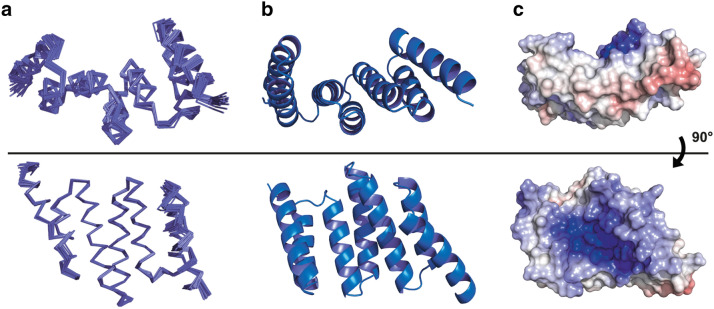
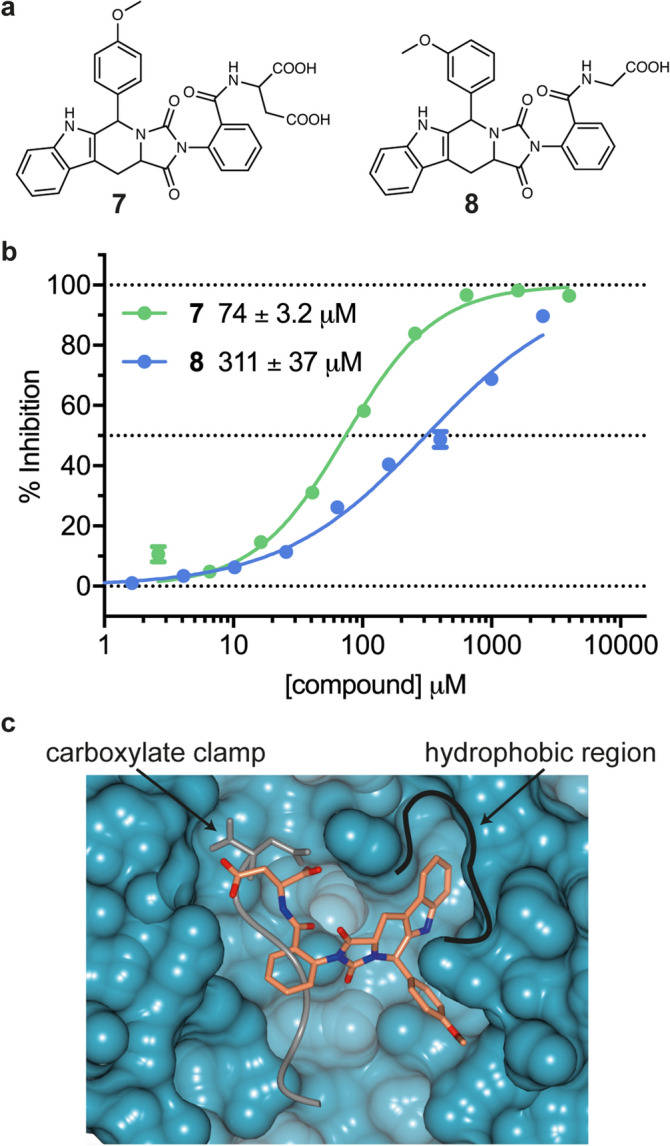
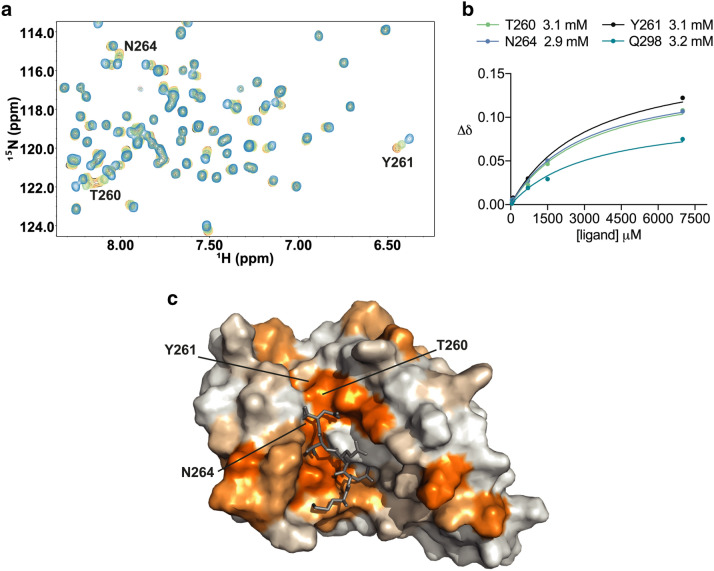
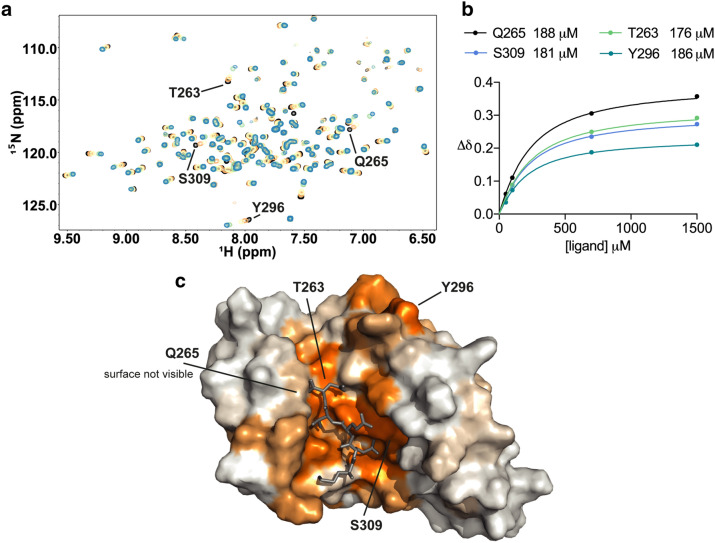
Heat shock protein 90 (Hsp90) is a molecular chaperone that plays an important role in tumour biology by promoting the stabilisation and activity of oncogenic ‘client’ proteins. Inhibition of Hsp90 by small-molecule drugs, acting via its ATP hydrolysis site, has shown promise as a molecularly targeted cancer therapy. Owing to the importance of Hop and other tetratricopeptide repeat (TPR)-containing cochaperones in regulating Hsp90 activity, the Hsp90-TPR domain interface is an alternative site for inhibitors, which could result in effects distinct from ATP site binders. The TPR binding site of Hsp90 cochaperones includes a shallow, positively charged groove that poses a significant challenge for druggability. Herein, we report the apo, solution-state structure of Hop TPR2A which enables this target for NMR-based screening approaches. We have designed prototype TPR ligands that mimic key native ‘carboxylate clamp’ interactions between Hsp90 and its TPR cochaperones and show that they block binding between Hop TPR2A and the Hsp90 C-terminal MEEVD peptide. We confirm direct TPR-binding of these ligands by mapping 1 H–15 N HSQC chemical shift perturbations to our new NMR structure. Our work provides a novel structure, a thorough assessment of druggability and robust screening approaches that may offer a potential route, albeit difficult, to address the chemically challenging nature of the Hop TPR2A target, with relevance to other TPR domain interactors.
Overview
The claims and statistics of this paper haven’t been checked yet.
Free: it reads the open-access text and checks the first 5 claims that cite a source we can check. Create a free account to check every claim.
Integrity signals
Registry
Cites
Statistics
Figures
Verification
Claims the paper makes
The claims and statistics of this paper haven’t been checked yet.
Free: it reads the open-access text and checks the first 5 claims that cite a source we can check. Create a free account to check every claim.
Claims other papers make about this one
Each is checked against this paper’s own text: does it say what the citing paper says it does?
The source backs part of the claim, not all of it — or backs it for a different population, condition or comparison.
In the citing paper
“The resulting completed models of HopTPR2A and HopTPR2B showed a high resemblance to their structures determined by NMR63 individually (Supplementary Fig. 5c, d).”
From Structure of Hsp90–Hsp70–Hop–GR reveals the Hsp90 client-loading mechanism (2022) · cites this paper as [63]
Experimental — accuracy not yet measured
Self-check
Percentages, sums and reported differences re-computed from the paper’s own numbers.
The self-check needs the paper’s full text.
Citations
Cites
NMRPipe: A multidimensional spectral processing system based on UNIX pipes
Delaglio, F., Grzesiek, S., Vuister, G., Zhu, G., Pfeifer, J., & Bax, A. (1995) · Journal of Biomolecular NMR · doi:10.1007/bf00197809 · Cited by 15,965
Friesner, R. A., Banks, J. L., Murphy, R. B., Halgren, T. A., Klicic, J. J., Mainz, D. T., Repasky, M. P., Knoll, E. H., Shelley, M., Perry, J. K., et al. (2004) · Journal of Medicinal Chemistry · doi:10.1021/jm0306430 · Cited by 10,057
Madhavi Sastry, G., Adzhigirey, M., Day, T., Annabhimoju, R., & Sherman, W. (2013) · Journal of Computer-Aided Molecular Design · doi:10.1007/s10822-013-9644-8 · Cited by 6,006
Shelley, J. C., Cholleti, A., Frye, L. L., Greenwood, J. R., Timlin, M. R., & Uchimaya, M. (2007) · Journal of Computer-Aided Molecular Design · doi:10.1007/s10822-007-9133-z · Cited by 2,045
Ligand efficiency: a useful metric for lead selection
Hopkins, A. L., Groom, C. R., & Alex, A. (2004) · Drug Discovery Today · doi:10.1016/s1359-6446(04)03069-7 · Cited by 1,846
HSP90 at the hub of protein homeostasis: emerging mechanistic insights
Taipale, M., Jarosz, D. F., & Lindquist, S. (2010) · Nature Reviews Molecular Cell Biology · doi:10.1038/nrm2918 · Cited by 1,818
Sattler, M. (1999) · Progress in Nuclear Magnetic Resonance Spectroscopy · doi:10.1016/s0079-6565(98)00025-9 · Cited by 1,722
Schopf, F. H., Biebl, M. M., & Buchner, J. (2017) · Nature Reviews Molecular Cell Biology · doi:10.1038/nrm.2017.20 · Cited by 1,540
Using chemical shift perturbation to characterise ligand binding
Williamson, M. P. (2013) · Progress in Nuclear Magnetic Resonance Spectroscopy · doi:10.1016/j.pnmrs.2013.02.001 · Cited by 1,460
Zhou, M., Diwu, Z., Panchuk-Voloshina, N., & Haugland, R. P. (1997) · Analytical Biochemistry · doi:10.1006/abio.1997.2391 · Cited by 1,396
Structure of TPR Domain–Peptide Complexes
Scheufler, C., Brinker, A., Bourenkov, G., Pegoraro, S., Moroder, L., Bartunik, H., Hartl, F. U., & Moarefi, I. (2000) · Cell · doi:10.1016/s0092-8674(00)80830-2 · Cited by 1,188
Chemistry: Chemical con artists foil drug discovery
Baell, J., & Walters, M. A. (2014) · Nature · doi:10.1038/513481a · Cited by 1,043
Hsp90 Molecular Chaperone Inhibitors: Are We There Yet?
Neckers, L., & Workman, P. (2012) · Clinical Cancer Research · doi:10.1158/1078-0432.ccr-11-1000 · Cited by 891
Self-citationFunctional group contributions to drug-receptor interactions
Andrews, P. R., Craik, D. J., & Martin, J. L. (1984) · Journal of Medicinal Chemistry · doi:10.1021/jm00378a021 · Cited by 535
Apparent activity in high-throughput screening: origins of compound-dependent assay interference
Thorne, N., Auld, D. S., & Inglese, J. (2010) · Current Opinion in Chemical Biology · doi:10.1016/j.cbpa.2010.03.020 · Cited by 430
Regulation of Hsp90 ATPase activity by tetratricopeptide repeat (TPR)-domain co-chaperones
Prodromou, C. (1999) · The EMBO Journal · doi:10.1093/emboj/18.3.754 · Cited by 425
Self-citationZhang, M., Windheim, M., Roe, S. M., Peggie, M., Cohen, P., Prodromou, C., & Pearl, L. H. (2005) · Molecular Cell · doi:10.1016/j.molcel.2005.09.023 · Cited by 420
Self-citationNMR methods for the determination of protein–ligand dissociation constants
FIELDING, L. (2007) · Progress in Nuclear Magnetic Resonance Spectroscopy · doi:10.1016/j.pnmrs.2007.04.001 · Cited by 397
Analysis of non-uniformly sampled spectra with multi-dimensional decomposition
Orekhov, V. Y., & Jaravine, V. A. (2011) · Progress in Nuclear Magnetic Resonance Spectroscopy · doi:10.1016/j.pnmrs.2011.02.002 · Cited by 363
Pervushin, K., Riek, R., Wider, G., & Wüthrich, K. (1998) · Journal of the American Chemical Society · doi:10.1021/ja980742g · Cited by 310
Dual Targeting of HSC70 and HSP72 Inhibits HSP90 Function and Induces Tumor-Specific Apoptosis
Powers, M. V., Clarke, P. A., & Workman, P. (2008) · Cancer Cell · doi:10.1016/j.ccr.2008.08.002 · Cited by 307
Self-citationProbing the Probes: Fitness Factors For Small Molecule Tools
Workman, P., & Collins, I. (2010) · Chemistry & Biology · doi:10.1016/j.chembiol.2010.05.013 · Cited by 299
Self-citationEvolution and function of diverse Hsp90 homologs and cochaperone proteins
Johnson, J. L. (2012) · Biochimica et Biophysica Acta (BBA) - Molecular Cell Research · doi:10.1016/j.bbamcr.2011.09.020 · Cited by 289
Silverstein, A. M., Galigniana, M. D., Chen, M.-S., Owens-Grillo, J. K., Chinkers, M., & Pratt, W. B. (1997) · Journal of Biological Chemistry · doi:10.1074/jbc.272.26.16224 · Cited by 257
The architecture of functional modules in the Hsp90 co‐chaperone Sti1/Hop
Schmid, A. B., Lagleder, S., Gräwert, M. A., Röhl, A., Hagn, F., Wandinger, S. K., Cox, M. B., Demmer, O., Richter, K., Groll, M., et al. (2012) · The EMBO Journal · doi:10.1038/emboj.2011.472 · Cited by 229
Ligand Discrimination by TPR Domains
Brinker, A., Scheufler, C., von der Mülbe, F., Fleckenstein, B., Herrmann, C., Jung, G., Moarefi, I., & Hartl, F. U. (2002) · Journal of Biological Chemistry · doi:10.1074/jbc.m109002200 · Cited by 226
Acidic and Basic Drugs in Medicinal Chemistry: A Perspective
Charifson, P. S., & Walters, W. P. (2014) · Journal of Medicinal Chemistry · doi:10.1021/jm501000a · Cited by 208
Maximizing the Therapeutic Potential of HSP90 Inhibitors
Butler, L. M., Ferraldeschi, R., Armstrong, H. K., Centenera, M. M., & Workman, P. (2015) · Molecular Cancer Research · doi:10.1158/1541-7786.mcr-15-0234 · Cited by 208
Self-citationPirkl, F., & Buchner, J. (2001) · Journal of Molecular Biology · doi:10.1006/jmbi.2001.4595 · Cited by 179
Heat shock protein 90 inhibitors in the treatment of cancer: current status and future directions
Jhaveri, K., Ochiana, S. O., Dunphy, M. P., Gerecitano, J. F., Corben, A. D., Peter, R. I., Janjigian, Y. Y., Gomes-DaGama, E. M., Koren, J., Modi, S., et al. (2014) · Expert Opinion on Investigational Drugs · doi:10.1517/13543784.2014.902442 · Cited by 172
Objective assessment of cancer genes for drug discovery
Patel, M. N., Halling‐Brown, M., Tym, J. E., Workman, P., & Al‐Lazikani, B. (2012) · Nature Reviews Drug Discovery · doi:10.1038/nrd3913 · Cited by 149
Self-citationAnticancer Inhibitors of Hsp90 Function
(2016) · Advances in Cancer Research · doi:10.1016/bs.acr.2015.12.001 · Cited by 146
Southworth, D. R., & Agard, D. A. (2011) · Molecular Cell · doi:10.1016/j.molcel.2011.04.023 · Cited by 143
canSAR: an updated cancer research and drug discovery knowledgebase
Tym, J. E., Mitsopoulos, C., Coker, E. A., Razaz, P., Schierz, A. C., Antolin, A. A., & Al-Lazikani, B. (2016) · Nucleic Acids Research · doi:10.1093/nar/gkv1030 · Cited by 140
Self-citationNeckers, L., Blagg, B., Haystead, T., Trepel, J. B., Whitesell, L., & Picard, D. (2018) · Cell Stress and Chaperones · doi:10.1007/s12192-018-0877-2 · Cited by 120
canSAR: update to the cancer translational research and drug discovery knowledgebase
Coker, E. A., Mitsopoulos, C., Tym, J. E., Komianou, A., Kannas, C., Di Micco, P., Villasclaras Fernandez, E., Ozer, B., Antolin, A. A., Workman, P., et al. (2019) · Nucleic Acids Research · doi:10.1093/nar/gky1129 · Cited by 120
Self-citation(1953) · AIBS Bulletin · doi:10.1093/aibsbulletin/3.3.12 · Cited by 119
A Novel Class of Small Molecule Inhibitors of Hsp90
Yi, F., & Regan, L. (2008) · ACS Chemical Biology · doi:10.1021/cb800162x · Cited by 115
Carrello, A., Ingley, E., Minchin, R. F., Tsai, S., & Ratajczak, T. (1999) · Journal of Biological Chemistry · doi:10.1074/jbc.274.5.2682 · Cited by 113
On the origin of the toxicity of toxoflavin
Latuasan, H. E., & Berends, W. (1961) · Biochimica et Biophysica Acta · doi:10.1016/0006-3002(61)90408-5 · Cited by 111
HSP90 inhibition: two-pronged exploitation of cancer dependencies
Travers, J., Sharp, S. Y., & Workman, P. (2011) · Drug Discovery Today · doi:10.1016/j.drudis.2011.12.021 · Cited by 110
Self-citationDynamics of the regulation of Hsp90 by the co‐chaperone Sti1
Lee, C., Graf, C., Mayer, F. J., Richter, S. M., & Mayer, M. P. (2012) · The EMBO Journal · doi:10.1038/emboj.2012.37 · Cited by 105
RNAi knockdown of Hop (Hsp70/Hsp90 organising protein) decreases invasion via MMP-2 down regulation
Walsh, N., Larkin, A., Swan, N., Conlon, K., Dowling, P., McDermott, R., & CLYNES, M. M. (2011) · Cancer Letters · doi:10.1016/j.canlet.2011.03.004 · Cited by 99
Molecular Recognition via Coupled Folding and Binding in a TPR Domain
Cliff, M. J., Williams, M. A., Brooke-Smith, J., Barford, D., & Ladbury, J. E. (2004) · Journal of Molecular Biology · doi:10.1016/j.jmb.2004.12.017 · Cited by 93
Binding Site Identification and Structure Determination of Protein–Ligand Complexes by NMR
Ziarek, J. J., Peterson, F. C., Lytle, B. L., & Volkman, B. F. (2011) · Methods in enzymology on CD-ROM/Methods in enzymology · doi:10.1016/b978-0-12-381274-2.00010-8 · Cited by 88
A New Model of Weak Acid Permeation through Membranes Revisited: Does Overton Still Rule?
Saparov, S. M., Antonenko, Y. N., & Pohl, P. (2006) · Biophysical Journal · doi:10.1529/biophysj.106.084343 · Cited by 88
canSAR: updated cancer research and drug discovery knowledgebase
Bulusu, K. C., Tym, J. E., Coker, E. A., Schierz, A. C., & Al-Lazikani, B. (2014) · Nucleic Acids Research · doi:10.1093/nar/gkt1182 · Cited by 72
Self-citationWainberg, Z. A., Anghel, A., Rogers, A. M., Desai, A. J., Kalous, O., Conklin, D. F., Ayala, R., O’Brien, N. A., Quadt, C., Akimov, M., et al. (2013) · Molecular Cancer Therapeutics · doi:10.1158/1535-7163.mct-12-0507 · Cited by 70
Macrocycles That Inhibit the Binding between Heat Shock Protein 90 and TPR-Containing Proteins
Ardi, V. C., Alexander, L. D., Johnson, V. A., & McAlpine, S. R. (2011) · ACS Chemical Biology · doi:10.1021/cb200203m · Cited by 68
Cheeseman, M. D., Chessum, N. E. A., Rye, C. S., Pasqua, E., Tucker, M. J., Wilding, B., Evans, L. E., Lepri, S., Richards, M., Sharp, S. Y., et al. (2016) · Journal of Medicinal Chemistry · doi:10.1021/acs.jmedchem.6b01055 · Cited by 67
Self-citationInhibiting protein-protein interactions of Hsp90 as a novel approach for targeting cancer
Dutta Gupta, S., Bommaka, M. K., & Banerjee, A. (2019) · European Journal of Medicinal Chemistry · doi:10.1016/j.ejmech.2019.05.073 · Cited by 67
An AlphaScreen™-Based High-Throughput Screen to Identify Inhibitors of Hsp90-Cochaperone Interaction
Yi, F., Zhu, P., Southall, N. T., Inglese, J., Austin, C. P., Zheng, W., & Regan, L. (2009) · SLAS DISCOVERY · doi:10.1177/1087057108330114 · Cited by 55
Electrostatic Interactions of Hsp-organizing Protein Tetratricopeptide Domains with Hsp70 and Hsp90
Kajander, T., Sachs, J. N., Goldman, A., & Regan, L. (2009) · Journal of Biological Chemistry · doi:10.1074/jbc.m109.033894 · Cited by 52
Regulation of Vascular Endothelial Cell Polarization and Migration by Hsp70/Hsp90-Organizing Protein
Li, J., Sun, X., Wang, Z., Chen, L., Li, D., Zhou, J., & Liu, M. (2012) · PLoS ONE · doi:10.1371/journal.pone.0036389 · Cited by 40
de Billy, E., Powers, M. V., Smith, J. R., & Workman, P. (2009) · Cell Cycle · doi:10.4161/cc.8.23.10423 · Cited by 37
Self-citationExploiting Protein Conformational Change to Optimize Adenosine-Derived Inhibitors of HSP70
Cheeseman, M. D., Westwood, I. M., Barbeau, O. R., Rowlands, M., Dobson, S. E., Jones, A. M., Jeganathan, F., Burke, R., Kadi, N., Workman, P., et al. (2016) · Journal of Medicinal Chemistry · doi:10.1021/acs.jmedchem.5b02001 · Cited by 37
Self-citationWang, L., Jiang, J., Zhang, L., Zhang, Q., Zhou, J., Li, L., Xu, X., & You, Q. (2020) · Journal of Medicinal Chemistry · doi:10.1021/acs.jmedchem.9b01659 · Cited by 37
Horibe, T., Torisawa, A., Kohno, M., & Kawakami, K. (2012) · Molecular Cancer · doi:10.1186/1476-4598-11-59 · Cited by 35
Marchant, J., Sawmynaden, K., Saouros, S., Simpson, P. J., & Matthews, S. (2008) · Biomolecular NMR Assignments · doi:10.1007/s12104-008-9100-1 · Cited by 34
Self-citationImproved pulse sequences for sequence specific assignment of aromatic proton resonances in proteins
Löhr, F., Hänsel‐Hertsch, R., Rogov, V. V., & Dötsch, V. (2007) · Journal of Biomolecular NMR · doi:10.1007/s10858-006-9128-4 · Cited by 32
Buckton, L. K., Wahyudi, H., & McAlpine, S. R. (2015) · Chemical Communications · doi:10.1039/c5cc03245h · Cited by 31
Rahimi, M. N., Buckton, L. K., Zaiter, S. S., Kho, J., Chan, V., Guo, A., Konesan, J., Kwon, S., Lam, L. K. O., Lawler, M. F., et al. (2017) · ACS Medicinal Chemistry Letters · doi:10.1021/acsmedchemlett.7b00310 · Cited by 26
Wang, W., Liu, Y., Zhao, Z., Xie, C., Xu, Y., Hu, Y., Quan, H., & Lou, L. (2016) · Cancer Science · doi:10.1111/cas.12934 · Cited by 24
Reflections and Outlook on Targeting HSP90, HSP70 and HSF1 in Cancer: A Personal Perspective
Workman, P. (2020) · Advances in experimental medicine and biology · doi:10.1007/978-3-030-40204-4_11 · Cited by 24
Self-citationDual Roles for Yeast Sti1/Hop in Regulating the Hsp90 Chaperone Cycle
Reidy, M., Kumar, S., Anderson, D. E., & Masison, D. C. (2018) · Genetics · doi:10.1534/genetics.118.301178 · Cited by 22
Biomarkers That Predict Sensitivity to Heat Shock Protein 90 Inhibitors
Jhaveri, K. L., Chandarlapaty, S., Iyengar, N. M., Morris, P. G., Corben, A. D., Patil, S. N., Akram, M. M., Towers, R., Sakr, R. A., King, T. A., et al. (2015) · Clinical Breast Cancer · doi:10.1016/j.clbc.2015.11.004 · Cited by 14
Hop depletion reduces HSF1 levels and activity and coincides with reduced stress resilience
Chakraborty, A., & Edkins, A. L. (2020) · Biochemical and Biophysical Research Communications · doi:10.1016/j.bbrc.2020.04.072 · Cited by 12
Auld, D., Simeonov, A. M., Lea, W., & Thomas, C. J. (2010) · Assay and Drug Development Technologies · doi:10.1089/adt.2010.0805.lr · Cited by 4
Auld, D., Simeonov, A. M., & Thomas, C. J. (2008) · Assay and Drug Development Technologies · doi:10.1089/adt.2008.9986 · Cited by 3
Workman, P. (2020) · Advances in experimental medicine and biology · doi:10.1007/978-3-030-40204-4_12 · Cited by 1
Self-citation
Cited by
Structure of Hsp90–Hsp70–Hop–GR reveals the Hsp90 client-loading mechanism
Wang, R. Y.-R., Noddings, C. M., Kirschke, E., Myasnikov, A. G., Johnson, J. L., & Agard, D. A. (2022) · Nature · doi:10.1038/s41586-021-04252-1 · Cited by 220
Bhattacharya, K., & Picard, D. (2021) · Cellular and Molecular Life Sciences · doi:10.1007/s00018-021-03962-z · Cited by 81
Perspectives on Nuclear Magnetic Resonance Spectroscopy in Drug Discovery Research
Caceres‐Cortes, J., Falk, B. T., Mueller, L., & Dhar, T. G. M. (2024) · Journal of Medicinal Chemistry · doi:10.1021/acs.jmedchem.3c02389 · Cited by 43
Recent advances in computational and experimental protein-ligand affinity determination techniques
Kairys, V., Baranauskienė, L., Kazlauskiene, M., Zubrienė, A., Petrauskas, V., Matulis, D., & Kazlauskas, E. (2024) · Expert Opinion on Drug Discovery · doi:10.1080/17460441.2024.2349169 · Cited by 36
Wang, L., Bergkvist, L., Kumar, R., Winblad, B. G., & Pavlov, P. F. (2021) · Cells · doi:10.3390/cells10102596 · Cited by 25
Metadata
- Authors
- Darby, J. F., Vidler, L. R., Simpson, P. J., Al-Lazikani, B., Matthews, S. J., Sharp, S. Y., Pearl, L. H., Hoelder, S., & Workman, P.
- Affiliations
- Institute of Cancer Research (GB)
- Bruker (United Kingdom) (GB)
- Imperial College London (GB)
- Corresponding author
- Workman, Paul
- ORCID
- Venue
- Scientific Reports
- Published
- 2020-09-29
- Volume
- 10
- Issue
- 1
- Pages
- 16000-16000
- ISSN
- 2045-2322 (ISSN-L)
- PMC
- PMC7524759
- OpenAlex
- W3090160046
- Cited by
- 17
- References
- 70
- Citations by year
- 2026: 1 · 2025: 3 · 2024: 6 · 2023: 1 · 2022: 2 · 2021: 4
- FWCI
- 0.57
- Type
- journal article
- Language
- en
- Open access
- gold
- doi.org
- Licence
- cc-by
- creativecommons.org/licenses/by/4.0 (tdm)
- creativecommons.org/licenses/by/4.0 (vor)
- Locations
- Scientific Reports (publishedVersion, cc-by)
- PubMed (publishedVersion)
- White Rose Research Online (University of Leeds, The University of Sheffield, University of York) (acceptedVersion)
- Funders
- Wellcome Trust (087370/Z/08/Z)
- Cancer Research UK (C309/A11369, C309/A11566)
- Topics
- Life Sciences › Biochemistry, Genetics and Molecular Biology › Molecular Biology › Heat shock proteins research
- Life Sciences › Biochemistry, Genetics and Molecular Biology › Molecular Biology › Protein Structure and Dynamics
- Physical Sciences › Chemistry › Spectroscopy › Advanced NMR Techniques and Applications
- Keywords
- HSP90, tetratricopeptide repeat domain, co-chaperones, druggability, NMR structure, chemical shift perturbation, cancer therapy, targeted therapy
- MeSH terms
- Protein Domains, Computer Simulation, Heat-Shock Proteins, Humans, Ligands, Models, Molecular, Protein Binding, Protein Conformation, Nuclear Magnetic Resonance, Biomolecular, Catalytic Domain, Small Molecule Libraries
About these checks
Registry, retraction, Cites and statistics results are computed, not judged, with one exception: a printed reference that no index lists is read once by a model before it counts as a citation error. Claims are extracted by a model and kept only when their quote appears verbatim in the text; each cited source is then checked, with a model’s help, for whether it says what the claim relies on. Those verdicts can be wrong — read the claim’s quote and the cited source before relying on one.
Statistics and arithmetic are recomputed, not judged.
Confidence bands are shown only for fields calibrated on our annotated test set. None is calibrated yet, so no band is shown.
What counts as a claim ›How we measure confidence ›How we check this ›
Are you an author, or do you see a problem with this page? Request a review
Data sources
Bibliographic data: Semantic Scholar, OpenAlex, Crossref.
Contains information from the Semantic Scholar Academic Graph Datasets, made available under the ODC Attribution License (ODC-BY 1.0).
Semantic Scholar’s data is described in: Kinney, R., et al. (2023). The Semantic Scholar Open Data Platform. arXiv:2301.10140.
