

Cilia interactome with predicted protein-protein interactions reveals connections to Alzheimer’s disease, aging and other neuropsychiatric processes
Open accessThe DOI matches its Crossref record; 101 of the 101 references it cites were found in a registry or an index.
Abstract
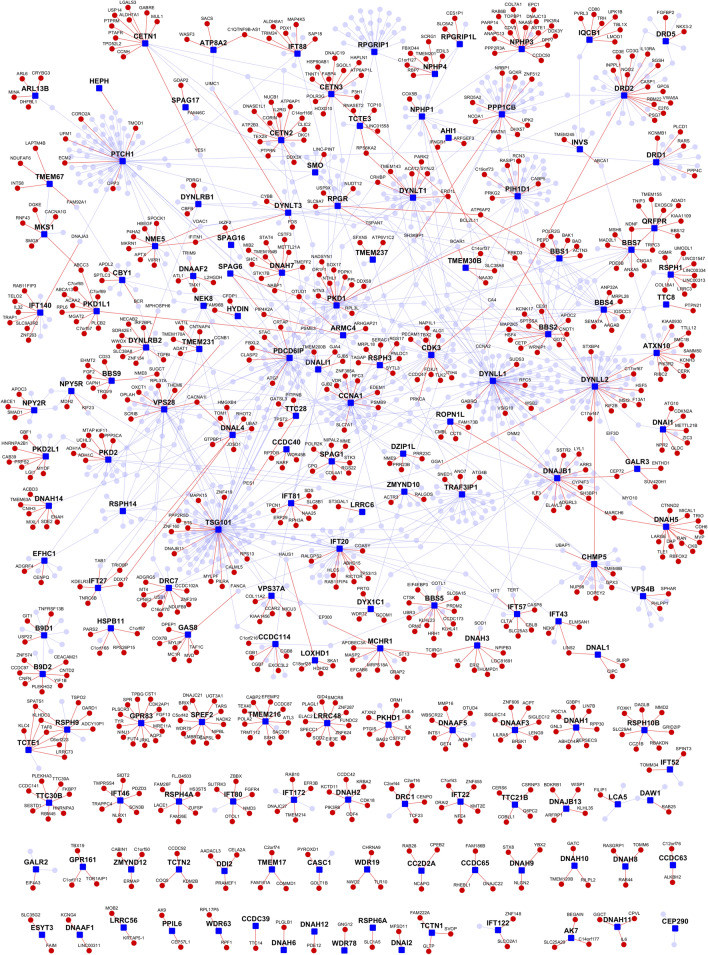
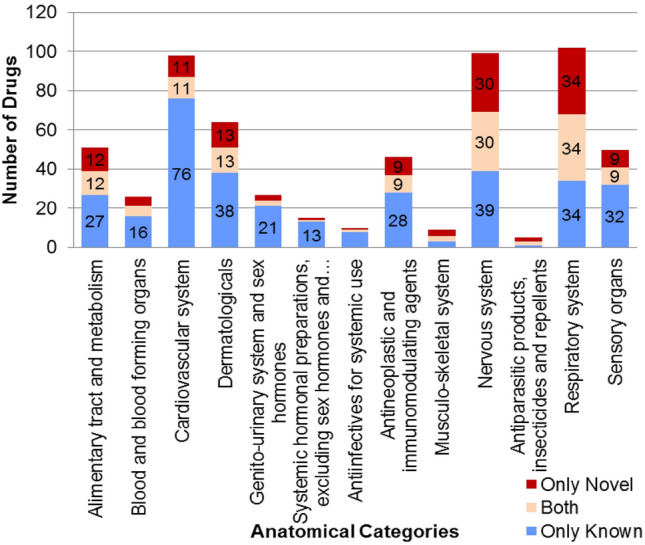
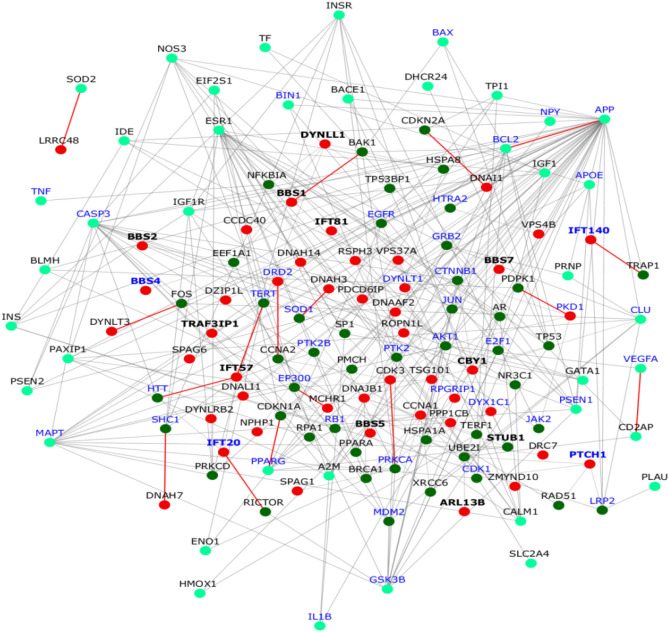
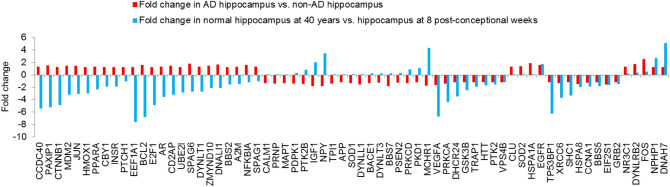
Cilia are dynamic microtubule-based organelles present on the surface of many eukaryotic cell types and can be motile or non-motile primary cilia. Cilia defects underlie a growing list of human disorders, collectively called ciliopathies, with overlapping phenotypes such as developmental delays and cognitive and memory deficits. Consistent with this, cilia play an important role in brain development, particularly in neurogenesis and neuronal migration. These findings suggest that a deeper systems-level understanding of how ciliary proteins function together may provide new mechanistic insights into the molecular etiologies of nervous system defects. Towards this end, we performed a protein–protein interaction (PPI) network analysis of known intraflagellar transport, BBSome, transition zone, ciliary membrane and motile cilia proteins. Known PPIs of ciliary proteins were assembled from online databases. Novel PPIs were predicted for each ciliary protein using a computational method we developed, called High-precision PPI Prediction (HiPPIP) model. The resulting cilia “interactome” consists of 165 ciliary proteins, 1,011 known PPIs, and 765 novel PPIs. The cilia interactome revealed interconnections between ciliary proteins, and their relation to several pathways related to neuropsychiatric processes, and to drug targets. Approximately 184 genes in the cilia interactome are targeted by 548 currently approved drugs, of which 103 are used to treat various diseases of nervous system origin. Taken together, the cilia interactome presented here provides novel insights into the relationship between ciliary protein dysfunction and neuropsychiatric disorders, for e.g. interconnections of Alzheimer’s disease, aging and cilia genes. These results provide the framework for the rational design of new therapeutic agents for treatment of ciliopathies and neuropsychiatric disorders.
Overview
The claims and statistics of this paper haven’t been checked yet.
Free: it reads the open-access text and checks the first 5 claims that cite a source we can check. Create a free account to check every claim.
Integrity signals
Registry
Cites
Statistics
Figures
Verification
Claims the paper makes
The claims and statistics of this paper haven’t been checked yet.
Free: it reads the open-access text and checks the first 5 claims that cite a source we can check. Create a free account to check every claim.
Claims other papers make about this one
Each is checked against this paper’s own text: does it say what the citing paper says it does?
The source backs part of the claim, not all of it — or backs it for a different population, condition or comparison.
In the citing paper
“In addition, there are distinct linkages between AD, PD, HD, and the dysfunction of primary cilia (PC), as well as two forms of intercellular transport, including tunneling nanotubes (TNTs), and exosomes [6,7,8,9].”
From The Impact of Neurotoxin Proteins Trafficked by Primary Cilia and Extracellular Vesicles in Neurodegenerative Diseases (2025) · cites this paper as [7]
Experimental — accuracy not yet measured
Self-check
Percentages, sums and reported differences re-computed from the paper’s own numbers.
The self-check needs the paper’s full text.
Citations
Cites
The Genotype-Tissue Expression (GTEx) pilot analysis: Multitissue gene regulation in humans
The GTEx Consortium, Ardlie, K. G., Deluca, D. S., Segrè, A. V., Sullivan, T. J., Young, T. R., Gelfand, E. T., Trowbridge, C. A., Maller, J. B., Tukiainen, T., et al. (2015) · Science · doi:10.1126/science.1262110 · Cited by 5,062
Meta-Analysis of 74,046 Individuals Identifies 11 New Susceptibility Loci for Alzheimer’s Disease
(EADI), E. A. D. I., Lambert, J.-C., (GERAD), G. A. E. R. I. A. D., Alzheimer's Disease Genetic Consortium (ADGC), (CHARGE), C. F. H. A. A. R. I. G. E., Ibrahim-Verbaas, C. A., Harold, D., Naj, A. C., Sims, R., Bellenguez, C., et al. (2013) · Nature Genetics · doi:10.1038/ng.2802 · Cited by 4,336
Maere, S., Heymans, K., & Kuiper, M. (2005) · Bioinformatics · doi:10.1093/bioinformatics/bti551 · Cited by 4,155
BioGRID: a general repository for interaction datasets
Stark, C. (2006) · Nucleic Acids Research · doi:10.1093/nar/gkj109 · Cited by 3,960
Human Protein Reference Database--2009 update
Keshava Prasad, T. S., Goel, R., Kandasamy, K., Keerthikumar, S., Kumar, S., Mathivanan, S., Telikicherla, D., Raju, R., Shafreen, B., Venugopal, A., et al. (2009) · Nucleic Acids Research · doi:10.1093/nar/gkn892 · Cited by 3,234
Schizophrenia genes, gene expression, and neuropathology: on the matter of their convergence
Harrison, P. J., & Weinberger, D. R. (2005) · Molecular Psychiatry · doi:10.1038/sj.mp.4001558 · Cited by 2,020
Masters, C. L., Bateman, R., Blennow, K., Rowe, C. C., Sperling, R. A., & Cummings, J. L. (2015) · Nature Reviews Disease Primers · doi:10.1038/nrdp.2015.56 · Cited by 1,853
DrugBank 3.0: a comprehensive resource for 'Omics' research on drugs
Knox, C., Law, V., Jewison, T., Liu, P., Ly, S., Frolkis, A., Pon, A., Banco, K., Mak, C., Neveu, V., et al. (2011) · Nucleic Acids Research · doi:10.1093/nar/gkq1126 · Cited by 1,831
Multiple dopamine functions at different time courses
Schultz, W. (2007) · Annual Review of Neuroscience · doi:10.1146/annurev.neuro.28.061604.135722 · Cited by 1,415
DisGeNET: a discovery platform for the dynamical exploration of human diseases and their genes
Pinero, J., Queralt-Rosinach, N., Bravo, A., Deu-Pons, J., Bauer-Mehren, A., Baron, M., Sanz, F., & Furlong, L. I. (2015) · Database · doi:10.1093/database/bav028 · Cited by 1,124
Research works printed but not linked: 4
- Sang, L. et al. Mapping the NPHP-JBTS-MKS protein network reveals ciliopathy disease genes and pathways. Cell 145, 513-528 (2011). · DOI · Paper page
- Keshava Prasad, T. et al. Human protein reference database-2009 update. Nucleic Acids Res. 37, D767-D772 (2008). · DOI · Paper page
- Stark, C. et al. BioGRID: a general repository for interaction datasets. Nucleic Acids Res. 34, D535-D539 (2006). · DOI · Paper page
- Luck, K. et al. A reference map of the human protein interactome. bioRxiv, 605451 (2019).
Cited by
Composition, organization and mechanisms of the transition zone, a gate for the cilium
Park, K., & Leroux, M. R. (2022) · EMBO Reports · doi:10.15252/embr.202255420 · Cited by 93
“…to other ciliary proteins not specifically localized to the TZ (Chih et al , 2011; Remans et al , 2014; Gupta et al , 2015; Dean et al , 2016; see also review articles and meta-analyses: Roepman & Wolfrum, 2007; Gonc¸alves & Pelletier, 2017; Arslanhan et al , 2020; Karunakaran et al , 2020).”
Tereshko, L., Gao, Y., Cary, B. A., Turrigiano, G. G., & Sengupta, P. (2021) · eLife · doi:10.7554/elife.65427 · Cited by 60
(2020) · doi:10.1101/2020.12.10.419507 · Cited by 60
Intrinsic heterogeneity of primary cilia revealed through spatial proteomics
Hansen, J. N., Sun, H., Kahnert, K., Westenius, E., Johannesson, A., Villegas, C., Le, T. H., Tzavlaki, K., Winsnes, C. F., Pohjanen, E., et al. (2025) · Cell · doi:10.1016/j.cell.2025.08.039 · Cited by 58
Faro, V. L., Bhattacharya, A., Zhou, W., Zhou, D., Wang, Y., Läll, K., Kanai, M., Lopera-Maya, E. A., Straub, P., Pawar, P. P., et al. (2024) · Cell Reports Medicine · doi:10.1016/j.xcrm.2024.101430 · Cited by 45
Wang, L., Guo, Q., Acharya, S., Zheng, X., Huynh, V., Whitmore, B., Yimit, A., Malhotra, M., Chatterji, S., Rosin, N., et al. (2024) · Nature Neuroscience · doi:10.1038/s41593-024-01726-z · Cited by 33
Tereshko, L., Turrigiano, G. G., & Sengupta, P. (2022) · Current Opinion in Neurobiology · doi:10.1016/j.conb.2022.102533 · Cited by 29
Limitations and opportunities in the pharmacotherapy of ciliopathies
Phu, M. D., Bross, S., Burkhalter, M. D., & Philipp, M. (2021) · Pharmacology & Therapeutics · doi:10.1016/j.pharmthera.2021.107841 · Cited by 26
Karunakaran, K. B., Balakrishnan, N., & Ganapathiraju, M. K. (2022) · Frontiers in Systems Biology · doi:10.3389/fsysb.2022.815237 · Cited by 22
“For this, we studied its overlap with an interactome of 165 ciliary proteins that we constructed in a similar manner (Karunakaran et al., 2020).”
BackgroundSelf-citationMulti-Omics Characterization of Early- and Adult-Onset Major Depressive Disorder
Grant, C. W., Barreto, E. F., Kumar, R., Kaddurah‐Daouk, R., Skime, M. K., Mayes, T. L., Carmody, T. J., Biernacka, J. M., Wang, L., Weinshilboum, R. M., et al. (2022) · Journal of Personalized Medicine · doi:10.3390/jpm12030412 · Cited by 21
“cilia interactome, defined as interactions between ciliary proteins, also demonstrates ex‐ tensive overlap with neuropsychiatric disease interactomes and genes differentially ex‐ pressed in neuropsychiatric diseases, including MDD, schizophrenia, bipolar disorder, Alzheimer’s disease, ADHD, autism spectrum disorder, a…”
BackgroundKong, H., Chan, Z., Yan, S.-W., Lo, P.-Y., Wong, W., Wong, K., & Lo, C.-L. (2022) · Food Research International · doi:10.1016/j.foodres.2022.111670 · Cited by 22
“…different cell types, including ciliated stratified epithelial cells in salivary ducts of lingual apparatus of avian species (Jerber et al., 2014, Karunakaran et al., 2020, Onoufriadis et al., 2013, Triantafyllou et al., 2018, Zur Lage et al., 2019), so it was suspected that the expansion of…”
Self-citationYao, J., Zhang, L., Zhang, C., Chen, X., Bao, K., Hou, S., Yin, Y., Liu, K., Wen, Q., Huang, X., et al. (2024) · Brain Behavior and Immunity · doi:10.1016/j.bbi.2024.07.022 · Cited by 20
The Role of Cilia and the Complex Genetics of Congenital Heart Disease
Gabriel, G. C., Ganapathiraju, M. K., & Lo, C. W. (2024) · Annual Review of Genomics and Human Genetics · doi:10.1146/annurev-genom-121222-105345 · Cited by 19
Self-citationFlow blockage disrupts cilia-driven fluid transport in the epileptic brain
Faubel, R., Canellas, V. S. S., Gaesser, J. M., Beluk, N., Feinstein, T. N., Wang, Y., Yankova, M. P., Karunakaran, K. B., King, S. M., Ganapathiraju, M. K., et al. (2022) · Acta Neuropathologica · doi:10.1007/s00401-022-02463-y · Cited by 16
“5 from the model were treated as novel computationally predicted PPIs; this threshold indicated high-confidence PPIs according to thorough computational evaluations [15] and experimental validations [15, 20, 21].”
BackgroundSelf-citationThe Rat Brain Transcriptome: From Infancy to Aging and Sporadic Alzheimer’s Disease-like Pathology
Stefanova, N. A., & Kolosova, N. G. (2023) · International Journal of Molecular Sciences · doi:10.3390/ijms24021462 · Cited by 16
“Recently, evidence emerged indicating a relation between ciliary protein dysfunction and AD [36].”
BackgroundMethodInfluentialVu, T.-D., Ito, N., Oshima, K., Maruko, A., Nishi, A., Mizoguchi, K., Odaguchi, H., Kobayashi, Y., & Okada, N. (2022) · Gene · doi:10.1016/j.gene.2022.146496 · Cited by 15
Israel, L. L., Braubach, O., Shatalova, E. S., Chepurna, O. M., Sharma, S., Klymyshyn, D., Galstyan, A., Chiechi, A., Cox, A., Herman, D. A., et al. (2023) · Neurobiology of Disease · doi:10.1016/j.nbd.2023.106307 · Cited by 14
“5550 Cilia abnormalities in AD pathology have recently been reported (Karunakaran et al., 2020; Hu et al., 2017).”
BackgroundGao, Y., Felsky, D., Reyes‐Dumeyer, D., Sariya, S., Rentería, M. A., Ma, Y., Klein, H., Cosentino, S., Jager, P. L. D., Bennett, D. A., et al. (2021) · Alzheimer s & Dementia · doi:10.1002/alz.12524 · Cited by 12
Mohieldin, A. M., Alachkar, A., Yates, J., & Nauli, S. M. (2021) · Communicative & Integrative Biology · doi:10.1080/19420889.2021.2017099 · Cited by 11
“These novel findings support previous reports on the cross-talk between ciliary proteins and AD and the involvement in neurodegenerative mechanisms [7,10].”
BackgroundResultThe primary cilium as a multifunctional organelle: emerging roles and unanswered questions
Corbeil, D., Thamm, K., Karbanová, J., Fargeas, C. A., & Jászai, J. (2025) · Cell Communication and Signaling · doi:10.1186/s12964-025-02403-9 · Cited by 10
Xia, P., Chen, J., Bai, X., Li, M., Wang, L., & Lu, Z. (2022) · BMC Neurology · doi:10.1186/s12883-022-02724-z · Cited by 9
“Cilia related defects underlie a growing list of human disorders, collectively called ciliopathies, with overlapping phenotypes such as developmental delays and cognitive and memory deficits [16].”
BackgroundKarunakaran, K. B., Jain, S., Brahmachari, S. K., Balakrishnan, N., & Ganapathiraju, M. K. (2024) · Schizophrenia · doi:10.1038/s41537-024-00439-3 · Cited by 9
“We used the framework of the protein-protein interaction (PPI) network or the ‘ interactome ’ to explore the higher-order relationships in the genetic structures of PD and SZ 25 – 29 .”
MethodSelf-citationMitochondrial control of ciliary gene expression and structure in striatal neurons
Ülgen, D. H., Chioino, A., Zanoletti, O., Quintana, A., Sanz, E., & Sandi, C. (2025) · The Journal of Physiology · doi:10.1113/jp287948 · Cited by 9
Primary cilia as architects of the neocortex: Roles in brain development, function, and microcephaly
Thomsen, O. K., Fialová, J. L., Doğanlı, C., Herrera-Cid, C., Møllgård, K., Benmerah, A., Larsen, L. A., & Christensen, S. (2025) · Developmental Cell · doi:10.1016/j.devcel.2025.11.002 · Cited by 7
Repurposing crizotinib to target RIPK1-dependent cell death
Yu, Y., Li, M., Fu, S., He, X., Hu, X., Zhu, G., Wang, J., You, X., Mou, Y., Ye, Z., et al. (2022) · International Immunology · doi:10.1093/intimm/dxac061 · Cited by 7
A high-resolution spatial map of cilia-associated proteins in the human fallopian tube
Hikmet, F., Digre, A., Hansen, J. N., Schon, S. B., Lundberg, E. K., Olovsson, M., Uhlén, M., Méar, L., & Lindskog, C. (2026) · Nature Communications · doi:10.1038/s41467-026-71692-6 · Cited by 7
“The Karunakaran list is based on bioinformati-cally predicting interaction partners for known ciliary genes 30 (Sup-plementaryFig.4A).”
Bao, Q., Yu, X., & Qi, X. (2023) · Environmental Toxicology · doi:10.1002/tox.23921 · Cited by 7
Singh, H. N., Swarup, V., Dubey, N. K., Jha, N. K., Singh, A. K., Lo, W., & Kumar, S. (2022) · Biomedicines · doi:10.3390/biomedicines10030611 · Cited by 8
“indicated that ciliary motility responsible for brain development, particularly neurogenesis and neuronal migration, could be regulated by axonemal dynein motors [60].”
BackgroundKarunakaran, K. B., Gabriel, G. C., Balakrishnan, N., Lo, C. W. Y., & Ganapathiraju, M. K. (2022) · Genes · doi:10.3390/genes13040627 · Cited by 6
“To examine for possible ciliary connection to HLHS, we computed the overlap of the HLHS interactome with the interactome of ciliary proteins containing a total of 1665 proteins and 1776 PPIs [56].”
MethodSelf-citationLusk, R., Hoffman, P. L., Mahaffey, S. B., Rosean, S., Smith, H., Šilhavý, J., Pravenec, M., Tabakoff, B., & Saba, L. M. (2022) · Frontiers in Genetics · doi:10.3389/fgene.2022.821026 · Cited by 7
“Furthermore, cilia, which are neurites, play an important role in brain development including neurogenesis and neuronal migration (Karunakaran et al., 2020).”
BackgroundWei, C., Zhang, H., Fu, M., Ye, J., & Yao, B. (2024) · Frontiers in Pediatrics · doi:10.3389/fped.2024.1305754 · Cited by 5
Dovrolis, N., Nikou, M., Gkrouzoudi, A., Dimitriadis, N., & Maroulakou, I. G. (2022) · Biomolecules · doi:10.3390/biom12020263 · Cited by 5
“Several other formational processes outlined in our results, such as the cilium assembly [72] and cell adhesion via Rho GTPases [73], are correlated to the hallmarks of AD, Aβ accumulation and Tau misfolding, and their dysfunction can possibly lead to memory impairment.”
Proximity proteomics of primary cilia in human hypothalamic neuronsPreprint
Macarelli, V., Sroka, T. J., Hansen, J. N., Axelsson, U., Mick, D. U., & Merkle, F. T. (2025) · bioRxiv (Cold Spring Harbor Laboratory) · doi:10.1101/2025.05.11.653368 · Cited by 5
“MYOF, a Ca 2+ -triggered vesicle fusion protein (H.-J. C. Chen et al. 2023; Leclère and Dulon 2023), and EPB41L2, erythrocyte membrane protein band 4.1 like 2, have previously been reported as localised to cilia (Aslanyan et al. 2023; Ishikawa et al. 2012; Karunakaran et al. 2020).”
InfluentialEmerging roles of the ciliary-mitochondrial axis in cellular homeostasis and neuroprotection
Miller, E., Bambakidis, P., Templin, P., Paul, B. D., & Pieper, A. A. (2025) · Molecular Neurodegeneration Advances · doi:10.1186/s44477-025-00005-w · Cited by 4
“Increasing evidence implicates adult-onset ciliary dysfunction in age-related neurodegeneration, with genomic studies reporting dysregulation of ciliary genes in human Alzheimer’s disease (AD) [100, 101] and preclinical models of Parkinson’s disease (PD) [102].”
Aging Associates with Cilium Elongation and Dysfunction in Kidney and Pancreas
Adametz, F., Müller, A., Stilgenbauer, S., Burkhalter, M. D., & Philipp, M. (2023) · Advanced Biology · doi:10.1002/adbi.202300194 · Cited by 4
Circadian cilia transcriptome in mouse brain across physiological and pathological states
Chen, K., Ashtiani, K. C., Monfared, R. V., Baldi, P., & Alachkar, A. (2024) · Molecular Brain · doi:10.1186/s13041-024-01143-0 · Cited by 5
“…also established the connection between primary cilia to the pathobiology of major psychiatric disorders, demonstrating differential expression of cilia-associated genes in conditions like schizophrenia, autism spectrum disorder (ASD), bipolar disorder, depression, and Alzheimer’s disease [39–43].”
BackgroundSota, R. E. D., Berghuis, B. A., Khoury, S., Zhuang, J., Rissman, R. A., Brewer, J. B., Quake, S. R., Sninsky, J. J., & Toden, S. (2025) · Alzheimer s & Dementia Translational Research & Clinical Interventions · doi:10.1002/trc2.70152 · Cited by 4
“Mann–Whitney Wilcoxon tests showed that central ner-RESEARCH”
Ckb and Ybx2 interact with Ribc2 and are necessary for the ciliary beating of multi-cilia
Kwon, K. Y., Jeong, H., Jang, D. G., Kwon, T., & Park, T. J. (2022) · Genes & Genomics · doi:10.1007/s13258-022-01350-w · Cited by 4
Karachanak-Yankova, S., Serbezov, D., Antov, G., Stancheva, M., Mihaylova, M., Hadjidekova, S. P., Toncheva, D. I., Pashov, A. D., Belejanska, D., Zhelev, Y., et al. (2024) · Genes · doi:10.3390/genes15060753 · Cited by 3
Danna, R., Kondle, S., Amar, O., Mabourakh, M., Chen, G., Fadol, W. B., & Mohieldin, A. M. (2025) · Biology · doi:10.3390/biology14121787 · Cited by 2
Deciphering vesicle-assisted transport mechanisms in cytoplasm to cilium trafficking
Tingey, M., Ruba, A., Jiang, Z., & Yang, W. (2024) · Frontiers in Cellular Neuroscience · doi:10.3389/fncel.2024.1379976 · Cited by 2
“…Bardet-Biedl Syndrome, Meckel-Gruber syndrome 10.3389/fncel.2024.1379976 alongside an emerging role in neurodegenerative diseases such as Alzheimer’s Disease and Parkinson’s Disease (Karunakaran et al., 2020; Shamseldin et al., 2020; Ki et al., 2021; Mohieldin et al., 2021a; Ma et al., 2022).”
BackgroundInfluentialProtein–protein interactions: Interaction mechanism, binding forces, measuring, and overall features
Patra, A., Wijekumar, P., Ahmed, N., Rout, S., Panda, P. K., & Taha, A. (2025) · Elsevier eBooks · doi:10.1016/b978-0-443-24044-7.00012-2 · Cited by 2
Doke, M., Tamizhselvi, R., Sundar, V., McLaughlin, J. P., & Samikkannu, T. (2021) · Brain Sciences · doi:10.3390/brainsci11111438 · Cited by 2
“Previous studies have demonstrated the major role of altered DYNLL1 protein in dementia, Alzheimer’s disease, aging, and other neuropsychiatric processes [37,38].”
BackgroundAmyloid beta oligomers modulate neuronal autophagy through the primary ciliumPreprint
Pampliega, O., Soria, F. N., Pineda-Ramírez, N., & Bézard, E. (2021) · bioRxiv (Cold Spring Harbor Laboratory) · doi:10.1101/2021.06.02.446758 · Cited by 2
Raaz, C. V., Bruce, L., Ganapathiraju, M. K., Klein‐Seetharaman, J., Liu, L., Dinu, V., Chapi, M., Kim, E., Kim, Y., White, T., et al. (2026) · Case Reports in Genetics · doi:10.1155/crig/9927839 · Cited by 1
Self-citationRezi, C. K., Doğanlı, C., Aslanyan, M. G., Chamlali, M., Mary, B., Callesen, N. L., Abu-Khesha, R. R. K., Diwan, G. D., Russell, R. B., Lorentzen, E., et al. (2026) · Frontiers in Cell and Developmental Biology · doi:10.3389/fcell.2026.1805468 · Cited by 1
Oligodendroglial primary cilium heterogeneity during development and demyelination/remyelination
Delfino, G., Bénardais, K., Graff, J., Samama, B., Antal, M. C., Ghandour, M. S., & Boehm, N. (2022) · Frontiers in Cellular Neuroscience · doi:10.3389/fncel.2022.1049468 · Cited by 1
“Recently, several studies showed PC dysfunctions in the pathogenesis of neurodegenerative (Karunakaran et al., 2020) and psychiatric diseases (Muñoz-Estrada et al.”
BackgroundMethods to study primary cilia and autophagy in the brain
Heras-García, L. D. L., Zabalegui, I., & Pampliega, O. (2023) · Methods in cell biology · doi:10.1016/bs.mcb.2023.01.010 · Cited by 2
Xia, P., Chen, J., Bai, X., Li, M., Wang, L., & Lu, Z. (2021) · Research Square · doi:10.21203/rs.3.rs-997410/v1 · Cited by 1
GPX4-associated Sedaghatian Type Spondylometaphyseal Dysplasia: A Protein Interactome PerspectivePreprint
Karunakaran, K. B., Balakrishnan, N., & Ganapathiraju, M. K. (2022) · bioRxiv (Cold Spring Harbor Laboratory) · doi:10.1101/2022.02.17.479371 · Cited by 1
Self-citationAstrocyte Autophagy Response Upon Neuronal Cilia Loss in the Aging BrainPreprint
Heras-García, L. D. L., & Pampliega, O. (2022) · bioRxiv (Cold Spring Harbor Laboratory) · doi:10.1101/2022.06.14.496086 · Cited by 1
“Although the precise role of primary cilia in the adult brain remains unknown, increasing evidence point to a key role of this organelle in brain diseases, including NDD, mood disorders or aging [10; 11; 12].”
BackgroundИванович, Ц. И. (2012) · Vestnik Volzhskogo universiteta im V N Tatishcheva
Xia, P., Chen, J. W., Bai, X., Li, M., Wang, L., & Lu, Z. (2022) · Figshare · doi:10.6084/m9.figshare.19933005
Xia, P., Chen, J. W., Bai, X., Li, M., Wang, L., & Lu, Z. (2022) · Figshare · doi:10.6084/m9.figshare.19932978
Xia, P., Chen, J. W., Bai, X., Li, M., Wang, L., & Lu, Z. (2022) · Figshare · doi:10.6084/m9.figshare.19933002
Xia, P., Chen, J. W., Bai, X., Li, M., Wang, L., & Lu, Z. (2022) · Figshare · doi:10.6084/m9.figshare.19932999
Xia, P., Chen, J. W., Bai, X., Li, M., Wang, L., & Lu, Z. (2022) · Figshare · doi:10.6084/m9.figshare.19932993
Xia, P., Chen, J. W., Bai, X., Li, M., Wang, L., & Lu, Z. (2022) · Figshare · doi:10.6084/m9.figshare.19932996
Ahmad, H. A., Zaidi, S. F., Safi, A. J. S. J., Rehmat, S. U., Ullah, S., & Kumar, S. (2024) · Innovative Research in Applied Biological and Chemical Sciences · doi:10.62497/irabcs.2024.37
Characterisation of primary cilia in human hypothalamic neurons
Macarelli, V. (2024) · Apollo (University of Cambridge) · doi:10.17863/cam.114179
Xia, P., Chen, J., Bai, X., Li, M., Wang, L., & Lu, Z. (2022) · Figshare · doi:10.6084/m9.figshare.19932990
Chen, K., Ashtiani, K. C., Monfared, R. V., Baldi, P., & Alachkar, A. (2024) · Figshare · doi:10.6084/m9.figshare.27078810
Chen, K., Ashtiani, K. C., Monfared, R. V., Baldi, P., & Alachkar, A. (2024) · Figshare · doi:10.6084/m9.figshare.27078804
Xia, P., Chen, J., Bai, X., Li, M., Wang, L., & Lu, Z. (2022) · Figshare · doi:10.6084/m9.figshare.19932984
Chen, K., Ashtiani, K. C., Monfared, R. V., Baldi, P., & Alachkar, A. (2024) · Figshare · doi:10.6084/m9.figshare.27078813
Xia, P., Chen, J., Bai, X., Li, M., Wang, L., & Lu, Z. (2022) · Figshare · doi:10.6084/m9.figshare.19932981
Chen, K., Ashtiani, K. C., Monfared, R. V., Baldi, P., & Alachkar, A. (2024) · Figshare · doi:10.6084/m9.figshare.27078807
Xia, P., Chen, J., Bai, X., Li, M., Wang, L., & Lu, Z. (2022) · Figshare · doi:10.6084/m9.figshare.19932987
Carbon monoxide modulation of glial cells on cytoprotection
Pedroso, D. P. M. D. (2021) · Portuguese National Funding Agency for Science, Research and Technology (RCAAP Project by FCT)
Alhassen, W. (2023) · eScholarship (California Digital Library)
Yin, J., Zhong, Z., Zhang, M., Li, D., Wang, A., Huang, Q., Zhang, Q., Ni, B., & He, W. (2026) · International Journal of Biological Sciences · doi:10.7150/ijbs.137355
“…by interactome studies, suggests that DNMT3L and ASXL2 may interact with broader signaling cascades beyond the CEP162–Rab1a axis, potentially influencing cytoskeletal dynamics through interconnected pathways involving histone modifications, transcriptional regulation, and metabolic sensing[57].”
Logan, S., Unnikrishnan, A., Baier, M. P., Kurup, K., Drevets, D. A., Díaz‐García, C. M., Jung, W., Oh, T., Ding, K., & Sonntag, W. E. (2026) · bioRxiv (Cold Spring Harbor Laboratory) · doi:10.64898/2026.10.23.761367
Lusk, R., Hoffman, P. L., Mahaffey, S., Rosean, S., Smith, H., Silhavy, J., Pravenec, M., Tabakoff, B., & Saba, L. M. (2022) · doi:10.3389/fgene.2022.821026.s003
Karunakaran, K. B., Balakrishnan, N., & Ganapathiraju, M. K. (2022) · doi:10.3389/fsysb.2022.815237.s004
Self-citation
Metadata
- Authors
- Karunakaran, K. B., Chaparala, S., Lo, C. W., & Ganapathiraju, M. K.
- Affiliations
- Indian Institute of Science Bangalore (IN)
- University of Pittsburgh (US)
- Corresponding author
- Ganapathiraju, Madhavi K.
- Venue
- Scientific Reports
- Published
- 2020-09-24
- Volume
- 10
- Issue
- 1
- Pages
- 15629-15629
- ISSN
- 2045-2322 (ISSN-L)
- PMC
- PMC7515907
- OpenAlex
- W3088412737
- Cited by
- 56
- References
- 100
- Citations by year
- 2026: 3 · 2025: 9 · 2024: 10 · 2023: 5 · 2022: 21 · 2021: 7
- FWCI
- 5.71
- Type
- journal article
- Language
- en
- Open access
- gold
- doi.org
- Licence
- cc-by
- creativecommons.org/licenses/by/4.0 (tdm)
- creativecommons.org/licenses/by/4.0 (vor)
- Locations
- Scientific Reports (publishedVersion, cc-by)
- PubMed Central (publishedVersion, cc-by)
- PubMed (publishedVersion)
- NOT FOUND REPOSITORY (Indian Institute of Science Bangalore) (acceptedVersion)
- Funders
- National Institute of Mental Health (R01MH094564)
- Topics
- Life Sciences › Biochemistry, Genetics and Molecular Biology › Genetics › Genetic and Kidney Cyst Diseases
- Health Sciences › Medicine › Pulmonary and Respiratory Medicine › Cystic Fibrosis Research Advances
- Life Sciences › Biochemistry, Genetics and Molecular Biology › Molecular Biology › Bioinformatics and Genomic Networks
- Keywords
- protein-protein interaction, ciliopathies, primary cilia, motile cilia, intraflagellar transport, BBSome, ciliary membrane proteins, transition zone, Alzheimer's disease, aging, neuropsychiatric disorders, therapeutic target, network analysis, neurogenesis, neuronal migration
- MeSH terms
- Ciliopathies, Aging, Alzheimer Disease, Cilia, Humans, Nervous System Diseases, Computational Biology, Protein Transport, Protein Interaction Maps
About these checks
Registry, retraction, Cites and statistics results are computed, not judged, with one exception: a printed reference that no index lists is read once by a model before it counts as a citation error. Claims are extracted by a model and kept only when their quote appears verbatim in the text; each cited source is then checked, with a model’s help, for whether it says what the claim relies on. Those verdicts can be wrong — read the claim’s quote and the cited source before relying on one.
Statistics and arithmetic are recomputed, not judged.
Confidence bands are shown only for fields calibrated on our annotated test set. None is calibrated yet, so no band is shown.
What counts as a claim ›How we measure confidence ›How we check this ›
Are you an author, or do you see a problem with this page? Request a review
Data sources
Bibliographic data: Semantic Scholar, OpenAlex, Crossref.
Contains information from the Semantic Scholar Academic Graph Datasets, made available under the ODC Attribution License (ODC-BY 1.0).
Semantic Scholar’s data is described in: Kinney, R., et al. (2023). The Semantic Scholar Open Data Platform. arXiv:2301.10140.
