

Dose-response-relationship of stabilisation exercises in patients with chronic non-specific low back pain: a systematic review with meta-regression
Open accessThe DOI matches its Crossref record; 77 of the 77 references it cites were found in a registry or an index; 4 of the 28 sources its claims cite were checked for support.
Abstract
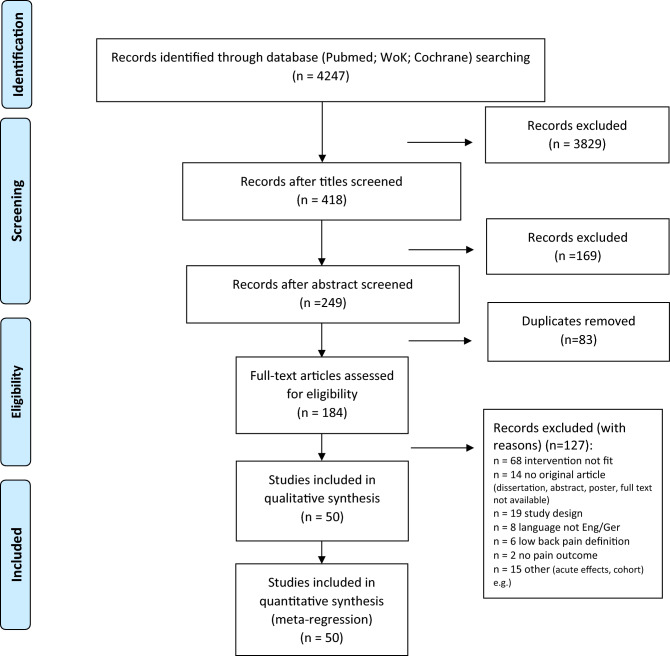
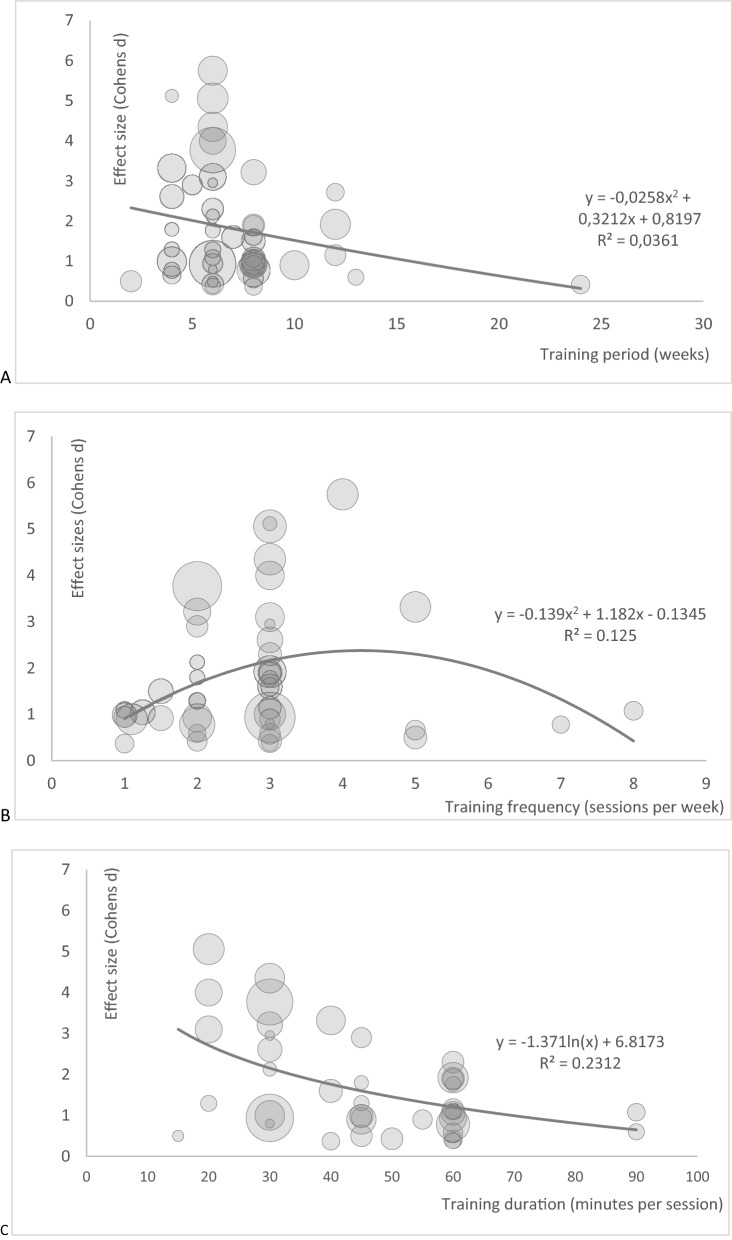
Stabilization exercise (SE) is evident for the management of chronic non-specific low back pain (LBP). The optimal dose-response-relationship for the utmost treatment success is, thus, still unknown. The purpose is to systematically review the dose-response-relationship of stabilisation exercises on pain and disability in patients with chronic non-specific LBP. A systematic review with meta-regression was conducted (Pubmed, Web of Knowledge, Cochrane). Eligibility criteria were RCTs on patients with chronic non-specific LBP, written in English/German and adopting a longitudinal core-specific/stabilising/motor control exercise intervention with at least one outcome for pain intensity and/or disability. Meta-regressions (dependent variable = effect sizes (Cohens d) of the interventions (for pain and for disability), independent variable = training characteristics (duration, frequency, time per session)), and controlled for (low) study quality (PEDro) and (low) sample sizes (n) were conducted to reveal the optimal dose required for therapy success. From the 3,415 studies initially selected, 50 studies (n = 2,786 LBP patients) were included. N = 1,239 patients received SE. Training duration was 7.0 ± 3.3 weeks, training frequency was 3.1 ± 1.8 sessions per week with a mean training time of 44.6 ± 18.0 min per session. The meta-regressions’ mean effect size was d = 1.80 (pain) and d = 1.70 (disability). Total R 2 was 0.445 and 0.17. Moderate quality evidence (R 2 = 0.231) revealed that a training duration of 20 to 30 min elicited the largest effect (both in pain and disability, logarithmic association). Low quality evidence (R 2 = 0.125) revealed that training 3 to 5 times per week led to the largest effect of SE in patients with chronic non-specific LBP (inverted U-shaped association). In patients with non-specific chronic LBP, stabilization exercise with a training frequency of 3 to 5 times per week (Grade C) and a training time of 20 to 30 min per session (Grade A) elicited the largest effect on pain and disability.
Overview
CoChat Summary
TL;DR
This systematic review with meta-regression found that, in chronic non-specific low back pain, stabilisation exercise appears most effective when sessions last 20–30 minutes and are performed 3–5 times per week. The evidence was moderate for session duration and low for weekly frequency, and no systematic effect of intervention length in weeks on pain intensity was found.
Key findings
- Fifty studies were included, comprising 2,786 participants overall, including 1,239 stabilisation exercise participants.
- The meta-regressions’ mean effect sizes were d = 1.80 for pain and d = 1.70 for disability; total variance explained was 44% for pain and 15% for disability.
- Moderate quality evidence indicated that a training duration of 20 to 30 min per session elicited the largest effect on both pain and disability.
- Low quality evidence indicated that training 3 to 5 times per week led to the largest effect; the paper reports an inverted U-shaped association for frequency and says no systematic impact of intervention duration in weeks on pain intensity was found.
Methods
- Systematic review with meta-regression conducted according to PRISMA.
- Searched PubMed (Medline), Web of Knowledge, and the Cochrane Library; included RCTs on patients with chronic non-specific low back pain, published in English or German and available in full text up to 30 March 2020.
- Extracted pre-to-post effect sizes for pain and disability and used inverse-variance weighted regression models with random intercepts; analyses controlled for study quality (PEDro) and sample size.
Limitations
- The paper states that a common limitation in exercise trials is the limited possibility to blind participants, and that this is increased by the use of self-reported pain and function outcomes.
- The review was limited to three databases; the authors say adding others (e.g., EMBASE, PEDro, CINAHL, AMED, CENTRAL) might have found more studies.
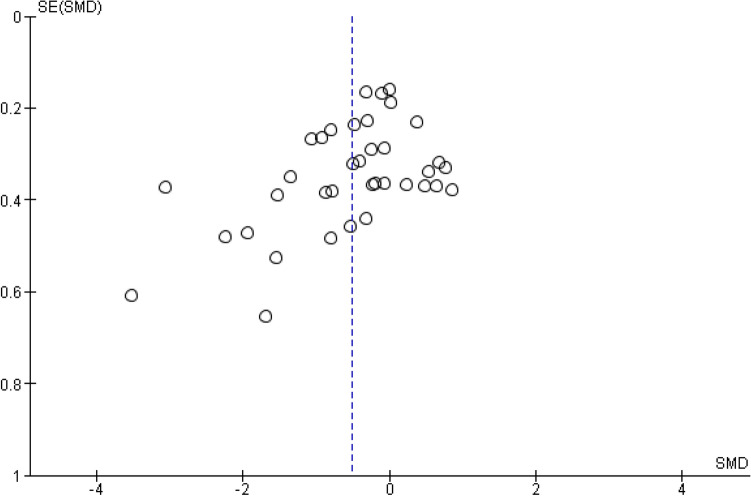
- The authors note that the findings come from a retrospective meta-regression and say they should be confirmed prospectively, ideally with a prospective meta-analysis.
Model-written summary. Check it against the paper before relying on it.
Integrity signals
Registry
Cites
Statistics
Figures
Verification
Claims the paper makes
3 Valid · 0 Not valid · 16 Not checked · 48 Own results and interpretations
The sources with a verdict support this claim; the rest weren’t checked yet, have no full text we could read, or their verdicts aren’t rated yet.
In the paper
“The meta-analyses on the effects of these training forms2–4,8,9 have not pointed out training characteristics (period, duration, frequency, intensity, etc.) for the likely largest effect.”
§ Dose-response-relationship of stabilisation exercises in patients with chronic non-specific low back pain: a systematic review with meta-regression > Introduction Exercise is evident for the management of chronic, non-specific low back pain in therapy and rehabilitation1–4. In general, strength/resistance and coordination/stabilisation exercise programmes appear to be superior to other interventions in the treatment of chronic low back pain5. Specifically, the effects of motor control exercise therapies on the reduction of pain and disability, as well as on improvements in functional performance, are highlighted in numerous meta-analyses on chronic, non-specific low back pain, as an acute, long term2, and sustainable treatment6. These types of sensorimotor/stabilisation training are the most established therapy forms in low back pain treatment which aim to improve neuromuscular deficits2,5. The use of the following interventions indicate the sensorimotor training principles in the context of chronic, low back pain treatment: motor control, sensorimotor, perturbation, neuromuscular, core stability, stabilisation, Pilates-based stabilisation and instability training. The superordinate principle, musculoskeletal control by afferent sensory/proprioceptive input, central nervous system integration of the afferences and optimal stabilisation to ensure functional dynamic joint stability during perturbative situations, are key components of all the above mentioned training forms7. The meta-analyses on the effects of these training forms2–4,8,9 have not pointed out training characteristics (period, duration, frequency, intensity, etc.) for the likely largest effect. The optimal dose for the maximal treatment success-response relationship is, thus, still unknown1,10. It is evident that the success of exercise interventions in the therapy of musculoskeletal disease (including non-specific low back pain) is dependent on the high adherence of the patients to their therapy plan. Regarding the therapy of chronic, non-specific low back pain, the dose-response relationship between stabilisation exercise interventions and pain reduction is of great interest to policy makers, clinicians and individuals. van Tulder et al.4 reported in their systematic review that a high training dosage (≥ 20 h) is more effective in exercise interventions to improve pain and function in chronic, non-specific low back pain patients. More information on the period, duration, frequency and intensity were not presented. Saragiotto et al.2 reported a wide range in the duration of the applied motor control intervention programmes in the studies included in their meta-analysis of 20 days to 12 weeks. The number of treatment sessions per week ranged from one to five sessions. Consequently, as a result of, inter alia, this variance in training scheduling, a large heterogenity was found in the meta-analyses highlighted above. Decreasing this heterogeneity would, on the one hand, increase the level of evidence of the stabilisation exercises’ effects on low back pain patients. On the other hand, with a much higher impact on clinical and scientific practice, the determination of an optimal dose-response relationship with the thereof derived recommendations on how an intervention needs to be structured in terms of training type, duration, frequency and intensity, is of great relevance. As an impact of a high risk of bias11 and a low sample size12 of the studies included into meta-analyses is known, these potential confounders should be considered in dose-response-analyses, likewise. The purpose of this systematic review with meta-regressions was to (1) delineate the dose-response-relationship of stabilisation exercises and (2) derive recommendations for the stabilisation exercises’ training specifics that could maximise the reduction of pain and disability in chronic, non-specific low back pain patients.
What the sources say
- Not checked yetcites [2] Saragiotto BT Motor control exercise for chronic non-specific low-back pain Cochrane Database Syst. Rev 2016 1 CD012004 PMC8761501 26742533
- Supportedcites [3] Wang X-Q A meta-analysis of core stability exercise versus general exercise for chronic low back pain PLoS ONE 2012 7 e52082 10.1371/journal.pone.0052082 23284879 PMC3524111 source
Table 1 lists the included studies’ exercise schedules, but the Methods and Results analyze core stability versus general exercise and outcomes at follow-up, not which training period, frequency, duration, or intensity produces the largest effect. The Discussion’s Implications for Research calls for further comparisons of different core stability exercises rather than identifying an optimal regimen. (LLM, conf=0.85)
- Not checked yetcites [4] van Tulder M Chapter 3. European guidelines for the management of acute nonspecific low back pain in primary care Eur. Spine J. 2006 15 Suppl 2 S169 S191 10.1007/s00586-006-1071-2 16550447 PMC3454540 source
- Not checked yetcites [8] Gomes-Neto M Stabilization exercise compared to general exercises or manual therapy for the management of low back pain: a systematic review and meta-analysis Phys. Therapy Sport 2017 23 136 142 10.1016/j.ptsp.2016.08.004 27707631 source
- Not checked yetcites [9] Lim ECW Poh RLC Low AY Wong WP Effects of pilates-based exercises on pain and disability in individuals with persistent nonspecific low back pain: a systematic review with meta-analysis J. Orthop. Sports Phys. Ther. 2011 41 70 80 10.2519/jospt.2011.3393 20972339 source
plain- Asserted: passes — The authors put it forward as true.
- Checkable: passes — It can be checked against evidence.
- Load-bearing: passes — The paper’s conclusions depend on it.
- Based: passes — The paper gives a reason why it holds.
The cited sources support only part of this claim — read each source’s verdict below.
In the paper
“The optimal dose-response-relationship for the utmost treatment success is, thus, still unknown.”
- Also stated in: § Introduction Exercise is evident for the management of chronic, non-specific low back pain in therapy and rehabilitation1–4. In general, strength/resistance and coordination/stabilisation exercise programmes appear to be superior to other interventions in the treatment of chronic low back pain5. Specifically, the effects of motor control exercise therapies on the reduction of pain and disability, as well as on improvements in functional performance, are highlighted in numerous meta-analyses on chronic, non-specific low back pain, as an acute, long term2, and sustainable treatment6. These types of sensorimotor/stabilisation training are the most established therapy forms in low back pain treatment which aim to improve neuromuscular deficits2,5. The use of the following interventions indicate the sensorimotor training principles in the context of chronic, low back pain treatment: motor control, sensorimotor, perturbation, neuromuscular, core stability, stabilisation, Pilates-based stabilisation and instability training. The superordinate principle, musculoskeletal control by afferent sensory/proprioceptive input, central nervous system integration of the afferences and optimal stabilisation to ensure functional dynamic joint stability during perturbative situations, are key components of all the above mentioned training forms7. The meta-analyses on the effects of these training forms2–4,8,9 have not pointed out training characteristics (period, duration, frequency, intensity, etc.) for the likely largest effect. The optimal dose for the maximal treatment success-response relationship is, thus, still unknown1,10. It is evident that the success of exercise interventions in the therapy of musculoskeletal disease (including non-specific low back pain) is dependent on the high adherence of the patients to their therapy plan. Regarding the therapy of chronic, non-specific low back pain, the dose-response relationship between stabilisation exercise interventions and pain reduction is of great interest to policy makers, clinicians and individuals. van Tulder et al.4 reported in their systematic review that a high training dosage (≥ 20 h) is more effective in exercise interventions to improve pain and function in chronic, non-specific low back pain patients. More information on the period, duration, frequency and intensity were not presented. Saragiotto et al.2 reported a wide range in the duration of the applied motor control intervention programmes in the studies included in their meta-analysis of 20 days to 12 weeks. The number of treatment sessions per week ranged from one to five sessions. Consequently, as a result of, inter alia, this variance in training scheduling, a large heterogenity was found in the meta-analyses highlighted above. Decreasing this heterogeneity would, on the one hand, increase the level of evidence of the stabilisation exercises’ effects on low back pain patients. On the other hand, with a much higher impact on clinical and scientific practice, the determination of an optimal dose-response relationship with the thereof derived recommendations on how an intervention needs to be structured in terms of training type, duration, frequency and intensity, is of great relevance. As an impact of a high risk of bias11 and a low sample size12 of the studies included into meta-analyses is known, these potential confounders should be considered in dose-response-analyses, likewise. The purpose of this systematic review with meta-regressions was to (1) delineate the dose-response-relationship of stabilisation exercises and (2) derive recommendations for the stabilisation exercises’ training specifics that could maximise the reduction of pain and disability in chronic, non-specific low back pain patients. · plain
“The optimal dose for the maximal treatment success-response relationship is, thus, still unknown1,10.”
§ Dose-response-relationship of stabilisation exercises in patients with chronic non-specific low back pain: a systematic review with meta-regression > Abstract Stabilization exercise (SE) is evident for the management of chronic non-specific low back pain (LBP). The optimal dose-response-relationship for the utmost treatment success is, thus, still unknown. The purpose is to systematically review the dose-response-relationship of stabilisation exercises on pain and disability in patients with chronic non-specific LBP. A systematic review with meta-regression was conducted (Pubmed, Web of Knowledge, Cochrane). Eligibility criteria were RCTs on patients with chronic non-specific LBP, written in English/German and adopting a longitudinal core-specific/stabilising/motor control exercise intervention with at least one outcome for pain intensity and/or disability. Meta-regressions (dependent variable = effect sizes (Cohens d) of the interventions (for pain and for disability), independent variable = training characteristics (duration, frequency, time per session)), and controlled for (low) study quality (PEDro) and (low) sample sizes (n) were conducted to reveal the optimal dose required for therapy success. From the 3,415 studies initially selected, 50 studies (n = 2,786 LBP patients) were included. N = 1,239 patients received SE. Training duration was 7.0 ± 3.3 weeks, training frequency was 3.1 ± 1.8 sessions per week with a mean training time of 44.6 ± 18.0 min per session. The meta-regressions’ mean effect size was d = 1.80 (pain) and d = 1.70 (disability). Total R2 was 0.445 and 0.17. Moderate quality evidence (R2 = 0.231) revealed that a training duration of 20 to 30 min elicited the largest effect (both in pain and disability, logarithmic association). Low quality evidence (R2 = 0.125) revealed that training 3 to 5 times per week led to the largest effect of SE in patients with chronic non-specific LBP (inverted U-shaped association). In patients with non-specific chronic LBP, stabilization exercise with a training frequency of 3 to 5 times per week (Grade C) and a training time of 20 to 30 min per session (Grade A) elicited the largest effect on pain and disability.
What the sources say
- Partly supportedcites [1] Choi BK Verbeek JH Tam WW-S Jiang JY Exercises for prevention of recurrences of low-back pain Cochrane Database Syst. Rev. 2010 10.1002/14651858.CD006555.pub2 20091596 PMC8078403 sourceExperimental — accuracy not yet measured
The review never states a 'dose-response relationship' or an optimal dose. What our copy does say is adjacent: the Discussion (Authors' conclusions, Implications for practice) holds that 'The content of such a programme is difficult to specify because the contents varied and did not relate to the outcomes', and the Discussion ('2. Details of exercise intervention') records a 'wide variation in the rate and number of recurrences between studies that we could not explain and that might be due to differences in measurement, biomechanical exposure or low exercise levels'. These support the idea that the review could not pin down which exercise prescription/exercise level yields the best recurrence outcome, but the claim's specific framing as an unknown optimal dose-response relationship is not stated, and the review's Tables describe heterogeneous protocols (session number, duration, frequency) without analysing dose. (LLM, conf=0.68)
- Not checked yetcites [10] Hicks GE Fritz JM Delitto A McGill SM Preliminary development of a clinical prediction rule for determining which patients with low back pain will respond to a stabilization exercise program Arch. Phys. Med. Rehabil. 2005 86 1753 1762 10.1016/j.apmr.2005.03.033 16181938 source
plain- Asserted: passes — The authors put it forward as true.
- Checkable: passes — It can be checked against evidence.
- Load-bearing: passes — The paper’s conclusions depend on it.
- Based: passes — The paper gives a reason why it holds.
- Also stated in: § Introduction Exercise is evident for the management of chronic, non-specific low back pain in therapy and rehabilitation1–4. In general, strength/resistance and coordination/stabilisation exercise programmes appear to be superior to other interventions in the treatment of chronic low back pain5. Specifically, the effects of motor control exercise therapies on the reduction of pain and disability, as well as on improvements in functional performance, are highlighted in numerous meta-analyses on chronic, non-specific low back pain, as an acute, long term2, and sustainable treatment6. These types of sensorimotor/stabilisation training are the most established therapy forms in low back pain treatment which aim to improve neuromuscular deficits2,5. The use of the following interventions indicate the sensorimotor training principles in the context of chronic, low back pain treatment: motor control, sensorimotor, perturbation, neuromuscular, core stability, stabilisation, Pilates-based stabilisation and instability training. The superordinate principle, musculoskeletal control by afferent sensory/proprioceptive input, central nervous system integration of the afferences and optimal stabilisation to ensure functional dynamic joint stability during perturbative situations, are key components of all the above mentioned training forms7. The meta-analyses on the effects of these training forms2–4,8,9 have not pointed out training characteristics (period, duration, frequency, intensity, etc.) for the likely largest effect. The optimal dose for the maximal treatment success-response relationship is, thus, still unknown1,10. It is evident that the success of exercise interventions in the therapy of musculoskeletal disease (including non-specific low back pain) is dependent on the high adherence of the patients to their therapy plan. Regarding the therapy of chronic, non-specific low back pain, the dose-response relationship between stabilisation exercise interventions and pain reduction is of great interest to policy makers, clinicians and individuals. van Tulder et al.4 reported in their systematic review that a high training dosage (≥ 20 h) is more effective in exercise interventions to improve pain and function in chronic, non-specific low back pain patients. More information on the period, duration, frequency and intensity were not presented. Saragiotto et al.2 reported a wide range in the duration of the applied motor control intervention programmes in the studies included in their meta-analysis of 20 days to 12 weeks. The number of treatment sessions per week ranged from one to five sessions. Consequently, as a result of, inter alia, this variance in training scheduling, a large heterogenity was found in the meta-analyses highlighted above. Decreasing this heterogeneity would, on the one hand, increase the level of evidence of the stabilisation exercises’ effects on low back pain patients. On the other hand, with a much higher impact on clinical and scientific practice, the determination of an optimal dose-response relationship with the thereof derived recommendations on how an intervention needs to be structured in terms of training type, duration, frequency and intensity, is of great relevance. As an impact of a high risk of bias11 and a low sample size12 of the studies included into meta-analyses is known, these potential confounders should be considered in dose-response-analyses, likewise. The purpose of this systematic review with meta-regressions was to (1) delineate the dose-response-relationship of stabilisation exercises and (2) derive recommendations for the stabilisation exercises’ training specifics that could maximise the reduction of pain and disability in chronic, non-specific low back pain patients. · plain
A result the paper reports from its own data — it cites no other source for it, so there is none to check. The quote shows it is in the paper.
In the paper
“Total R2 was 0.445 and 0.17.”
§ Dose-response-relationship of stabilisation exercises in patients with chronic non-specific low back pain: a systematic review with meta-regression > Abstract Stabilization exercise (SE) is evident for the management of chronic non-specific low back pain (LBP). The optimal dose-response-relationship for the utmost treatment success is, thus, still unknown. The purpose is to systematically review the dose-response-relationship of stabilisation exercises on pain and disability in patients with chronic non-specific LBP. A systematic review with meta-regression was conducted (Pubmed, Web of Knowledge, Cochrane). Eligibility criteria were RCTs on patients with chronic non-specific LBP, written in English/German and adopting a longitudinal core-specific/stabilising/motor control exercise intervention with at least one outcome for pain intensity and/or disability. Meta-regressions (dependent variable = effect sizes (Cohens d) of the interventions (for pain and for disability), independent variable = training characteristics (duration, frequency, time per session)), and controlled for (low) study quality (PEDro) and (low) sample sizes (n) were conducted to reveal the optimal dose required for therapy success. From the 3,415 studies initially selected, 50 studies (n = 2,786 LBP patients) were included. N = 1,239 patients received SE. Training duration was 7.0 ± 3.3 weeks, training frequency was 3.1 ± 1.8 sessions per week with a mean training time of 44.6 ± 18.0 min per session. The meta-regressions’ mean effect size was d = 1.80 (pain) and d = 1.70 (disability). Total R2 was 0.445 and 0.17. Moderate quality evidence (R2 = 0.231) revealed that a training duration of 20 to 30 min elicited the largest effect (both in pain and disability, logarithmic association). Low quality evidence (R2 = 0.125) revealed that training 3 to 5 times per week led to the largest effect of SE in patients with chronic non-specific LBP (inverted U-shaped association). In patients with non-specific chronic LBP, stabilization exercise with a training frequency of 3 to 5 times per week (Grade C) and a training time of 20 to 30 min per session (Grade A) elicited the largest effect on pain and disability.
plainn = 2,786- Asserted: passes — The authors put it forward as true.
- Checkable: passes — It can be checked against evidence.
- Load-bearing: unclear — It is unclear whether the paper’s conclusions depend on it.
- Based: passes — The paper gives a reason why it holds.
A result the paper reports from its own data — it cites no other source for it, so there is none to check. The quote shows it is in the paper.
In the paper
“When all the other predictors were partialized, moderate quality evidence revealed that a training duration of 20 to 30 min elicits the largest impact on the effect sizes (both in pain and disability) of stabilisation exercise training in low back pain patients.”
§ Dose-response-relationship of stabilisation exercises in patients with chronic non-specific low back pain: a systematic review with meta-regression > Results > Meta-regression analysis
plainstates a cause- Asserted: passes — The authors put it forward as true.
- Checkable: passes — It can be checked against evidence.
- Load-bearing: passes — The paper’s conclusions depend on it.
- Based: passes — The paper gives a reason why it holds.
A result the paper reports from its own data — it cites no other source for it, so there is none to check. The quote shows it is in the paper.
In the paper
“Moderate quality evidence (R2 = 0.231) revealed that a training duration of 20 to 30 min elicited the largest effect (both in pain and disability, logarithmic association).”
§ Dose-response-relationship of stabilisation exercises in patients with chronic non-specific low back pain: a systematic review with meta-regression > Abstract Stabilization exercise (SE) is evident for the management of chronic non-specific low back pain (LBP). The optimal dose-response-relationship for the utmost treatment success is, thus, still unknown. The purpose is to systematically review the dose-response-relationship of stabilisation exercises on pain and disability in patients with chronic non-specific LBP. A systematic review with meta-regression was conducted (Pubmed, Web of Knowledge, Cochrane). Eligibility criteria were RCTs on patients with chronic non-specific LBP, written in English/German and adopting a longitudinal core-specific/stabilising/motor control exercise intervention with at least one outcome for pain intensity and/or disability. Meta-regressions (dependent variable = effect sizes (Cohens d) of the interventions (for pain and for disability), independent variable = training characteristics (duration, frequency, time per session)), and controlled for (low) study quality (PEDro) and (low) sample sizes (n) were conducted to reveal the optimal dose required for therapy success. From the 3,415 studies initially selected, 50 studies (n = 2,786 LBP patients) were included. N = 1,239 patients received SE. Training duration was 7.0 ± 3.3 weeks, training frequency was 3.1 ± 1.8 sessions per week with a mean training time of 44.6 ± 18.0 min per session. The meta-regressions’ mean effect size was d = 1.80 (pain) and d = 1.70 (disability). Total R2 was 0.445 and 0.17. Moderate quality evidence (R2 = 0.231) revealed that a training duration of 20 to 30 min elicited the largest effect (both in pain and disability, logarithmic association). Low quality evidence (R2 = 0.125) revealed that training 3 to 5 times per week led to the largest effect of SE in patients with chronic non-specific LBP (inverted U-shaped association). In patients with non-specific chronic LBP, stabilization exercise with a training frequency of 3 to 5 times per week (Grade C) and a training time of 20 to 30 min per session (Grade A) elicited the largest effect on pain and disability.
plain- Asserted: passes — The authors put it forward as true.
- Checkable: passes — It can be checked against evidence.
- Load-bearing: passes — The paper’s conclusions depend on it.
- Based: passes — The paper gives a reason why it holds.
21 more claims
Create a free account to see all 67 claims and to verify the 24 references still open.
- Probably not a substantial claim. 27
- It may state two separate claims as one. 19
Citations
Cites
RoB 2: a revised tool for assessing risk of bias in randomised trials
Sterne, J. A. C., Savović, J., Page, M. J., Elbers, R. G., Blencowe, N. S., Boutron, I., Cates, C. J., Cheng, H.-Y., Corbett, M. S., Eldridge, S. M., et al. (2019) · BMJ · doi:10.1136/bmj.l4898 · Cited by 34,787
The Cochrane Collaboration's tool for assessing risk of bias in randomised trials
Higgins, J. P. T., Altman, D. G., Gotzsche, P. C., Juni, P., Moher, D., Oxman, A. D., Savovic, J., Schulz, K. F., Weeks, L., Sterne, J. A. C., et al. (2011) · BMJ · doi:10.1136/bmj.d5928 · Cited by 33,817
Liberati, A., Altman, D. G., Tetzlaff, J., Mulrow, C., Gøtzsche, P. C., Ioannidis, J. P. A., Clarke, M., Devereaux, P. J., Kleijnen, J., & Moher, D. (2009) · PLoS Medicine · doi:10.1371/journal.pmed.1000100 · Cited by 28,164
Liberati, A., Altman, D. G., Tetzlaff, J., Mulrow, C., Gøtzsche, P. C., Ioannidis, J. P. A., Clarke, M., Devereaux, P. J., Kleijnen, J., & Moher, D. (2009) · Annals of Internal Medicine · doi:10.7326/0003-4819-151-4-200908180-00136 · Cited by 10,349
Grading quality of evidence and strength of recommendations
(2004) · BMJ · doi:10.1136/bmj.328.7454.1490 · Cited by 8,477
de Morton, N. A. (2009) · Australian Journal of Physiotherapy · doi:10.1016/s0004-9514(09)70043-1 · Cited by 2,201
Going from evidence to recommendations
Guyatt, G. H., Oxman, A. D., Kunz, R., Falck-Ytter, Y., Vist, G. E., Liberati, A., & Schünemann, H. J. (2008) · BMJ · doi:10.1136/bmj.39493.646875.ae · Cited by 1,810
The sensorimotor system, part I: the physiologic basis of functional joint stability.
Riemann, B. L., & Lephart, S. M. (2002) · Europe PMC (PubMed Central) · Cited by 1,397
Variance imputation for overviews of clinical trials with continuous response
Follmann, D., Elliott, P., Suh, I., & Cutler, J. (1992) · Journal of Clinical Epidemiology · doi:10.1016/0895-4356(92)90054-q · Cited by 1,385
Chapter 3 European guidelines for the management of acute nonspecific low back pain in primary care
van Tulder, M., Becker, A., Bekkering, T., Breen, A., del Real, M. T. G., Hutchinson, A., Koes, B., Laerum, E., Malmivaara, A., & On behalf of the COST B13 Working Group on Guidelines for the Management of Acute Low Back Pain in Primary Care (2006) · European Spine Journal · doi:10.1007/s00586-006-1071-2 · Cited by 1,258
Clinical guidelines: Developing guidelines
Shekelle, P. G., Woolf, S. H., Eccles, M., & Grimshaw, J. (1999) · BMJ · doi:10.1136/bmj.318.7183.593 · Cited by 1,222
Hicks, G. E., Fritz, J. M., Delitto, A., & McGill, S. M. (2005) · Archives of Physical Medicine and Rehabilitation · doi:10.1016/j.apmr.2005.03.033 · Cited by 621
Searle, A., Spink, M., Ho, A., & Chuter, V. (2015) · Clinical Rehabilitation · doi:10.1177/0269215515570379 · Cited by 555
Ferreira, M. L., Ferreira, P. H., Latimer, J., Herbert, R. D., Hodges, P. W., Jennings, M. D., Maher, C. G., & Refshauge, K. M. (2007) · Pain · doi:10.1016/j.pain.2006.12.008 · Cited by 450
Motor control exercise for chronic non-specific low-back pain
Saragiotto, B. T., Maher, C. G., Yamato, T. P., Costa, L. O., Menezes Costa, L. C., Ostelo, R. W., & Macedo, L. G. (2016) · Cochrane Database of Systematic Reviews · doi:10.1002/14651858.cd012004 · Cited by 433
Kühberger, A., Fritz, A., & Scherndl, T. (2014) · PLoS ONE · doi:10.1371/journal.pone.0105825 · Cited by 399
A meta-analysis of core stability exercise versus general exercise for chronic low back pain
Wang, X.-Q., Zheng, J.-J., Yu, Z.-W., Bi, X., Lou, S.-J., Liu, J., Cai, B., Hua, Y.-H., Wu, M., Wei, M.-L., et al. (2012) · PLoS ONE · doi:10.1371/journal.pone.0052082 · Cited by 299
Quantifying the risk of error when interpreting funnel plots
Simmonds, M. (2015) · Systematic Reviews · doi:10.1186/s13643-015-0004-8 · Cited by 250
Macedo, L. G., Latimer, J., Maher, C. G., Hodges, P. W., McAuley, J. H., Nicholas, M. K., Tonkin, L., Stanton, C. J., Stanton, T. R., & Stafford, R. (2012) · Physical Therapy · doi:10.2522/ptj.20110290 · Cited by 233
Exercises for prevention of recurrences of low-back pain
Choi, B. K., Verbeek, J. H., Tam, W. W.-S., & Jiang, J. Y. (2010) · Cochrane Database of Systematic Reviews · doi:10.1002/14651858.cd006555.pub2 · Cited by 207
Critchley, D. J., Ratcliffe, J., Noonan, S., Jones, R. H., & Hurley, M. V. (2007) · Spine · doi:10.1097/brs.0b013e318067dc26 · Cited by 188 · cited 5×
“…0 1 0 1 1 0 1 1 1 1 1 8 Unknown High High Low Low Unknown Unknown Chung, 2018 1 1 0 1 0 0 0 1 0 1 1 5 Unknown High High High Unknown Unknown Unknown Critchley, 2007 1 1 1 1 0 0 1 0 1 1 1 7 Low Low High Low High Low Unknown Da Luz, 2019 1 1 1 1 0 0 1 1 1 1 1 8 Low Low High Low Low Low Low Demirel,…”
InfluentialStabilizing training compared with manual treatment in sub-acute and chronic low-back pain
Rasmussen-Barr, E., Nilsson-Wikmar, L., & Arvidsson, I. (2003) · Manual Therapy · doi:10.1016/s1356-689x(03)00053-5 · Cited by 165
França, F. R., Burke, T. N., Caffaro, R. R., Ramos, L. A., & Marques, A. P. (2012) · Journal of Manipulative and Physiological Therapeutics · doi:10.1016/j.jmpt.2012.04.012 · Cited by 163 · cited 18×
“…Low Demirel, 2019 0 1 1 1 0 0 0 1 0 1 1 6 Low Low High High Unknown Low Unknown Ferreira 2007 1 1 1 1 0 0 1 1 1 1 1 8 Low Low High Low Low Low Low Franca 2012 1 1 1 1 0 0 1 1 1 1 1 8 Unknown Low High Low Low Low Low Ghorbanpour, 2018 0 1 0 1 0 0 0 1 0 1 1 5 Low High High High Unknown Low…”
MethodInfluentialGomes-Neto, M., Lopes, J. M., Conceição, C. S., Araujo, A., Brasileiro, A., Sousa, C., Carvalho, V. O., & Arcanjo, F. L. (2017) · Physical Therapy in Sport · doi:10.1016/j.ptsp.2016.08.004 · Cited by 156
Unsgaard-Tøndel, M., Fladmark, A. M., Salvesen, Ø., & Vasseljen, O. (2010) · Physical Therapy · doi:10.2522/ptj.20090421 · Cited by 149
Lim, E. C. W., Poh, R. L. C., Low, A. Y., & Wong, W. P. (2011) · Journal of Orthopaedic & Sports Physical Therapy · doi:10.2519/jospt.2011.3393 · Cited by 148
Moon, H. J., Choi, K. H., Kim, D. H., Kim, H. J., Cho, Y. K., Lee, K. H., Kim, J. H., & Choi, Y. J. (2013) · Annals of Rehabilitation Medicine · doi:10.5535/arm.2013.37.1.110 · Cited by 137
Michaleff, Z. A., Costa, L. O. P., Moseley, A. M., Maher, C. G., Elkins, M. R., Herbert, R. D., & Sherrington, C. (2011) · Physical Therapy · doi:10.2522/ptj.20100116 · Cited by 108
Mannion, A. F., Helbling, D., Pulkovski, N., & Sprott, H. (2009) · European Spine Journal · doi:10.1007/s00586-009-1093-7 · Cited by 107
Rabin, A., Shashua, A., Pizem, K., Dickstein, R., & Dar, G. (2014) · Journal of Orthopaedic & Sports Physical Therapy · doi:10.2519/jospt.2014.4888 · Cited by 105
Jing, L., Yeung, A., Xiao, T., Tian, X., Kong, Z., Zou, L., & Wang, X. (2019) · International Journal of Environmental Research and Public Health · doi:10.3390/ijerph16030517 · Cited by 105
Rasmussen-Barr, E., Äng, B., Arvidsson, I., & Nilsson-Wikmar, L. (2009) · Spine · doi:10.1097/brs.0b013e318191e7cb · Cited by 103
Shaughnessy, M., & Caulfield, B. (2004) · International Journal of Rehabilitation Research · doi:10.1097/00004356-200412000-00007 · Cited by 98
Hosseinifar, M., Akbari, M., Behtash, H., Amiri, M., & Sarrafzadeh, J. (2013) · Journal of Physical Therapy Science · doi:10.1589/jpts.25.1541 · Cited by 98
Ulger, O., Demirel, A., Oz, M., & Tamer, S. (2017) · Journal of Back and Musculoskeletal Rehabilitation · doi:10.3233/bmr-169673 · Cited by 87
Inani, S. B., & Selkar, S. P. (2013) · Journal of Back and Musculoskeletal Rehabilitation · doi:10.3233/bmr-2012-0348 · Cited by 85 · cited 6×
“…Unknown Hwang, 2013 1 1 0 1 0 0 0 0 0 1 1 4 Unknown High High High High Low High Ibrahim, 2018 1 1 1 1 0 0 1 1 1 1 1 8 Low Low High Low Low Low Low Inani, 2013 1 1 0 1 0 0 0 1 0 1 1 5 Unknown High High High Unknown Unknown High Khodadad, 2019 1 1 1 1 0 0 1 1 1 1 1 8 Low Low High Low Low Low…”
BackgroundInfluentialMoseley, A. M., Sherrington, C., Elkins, M. R., Herbert, R. D., & Maher, C. G. (2009) · Physiotherapy · doi:10.1016/j.physio.2009.01.006 · Cited by 82
Niederer, D., & Mueller, J. (2020) · PLOS ONE · doi:10.1371/journal.pone.0227423 · Cited by 80
Self-citationKofotolis, N., Kellis, E., Vlachopoulos, S. P., Gouitas, I., & Theodorakis, Y. (2016) · Journal of Back and Musculoskeletal Rehabilitation · doi:10.3233/bmr-160665 · Cited by 73
Noormohammadpour, P., Kordi, M., Mansournia, M. A., Akbari-Fakhrabadi, M., & Kordi, R. (2018) · Asian Spine Journal · doi:10.4184/asj.2018.12.3.490 · Cited by 73
Marshall, P. W. M., Kennedy, S., Brooks, C., & Lonsdale, C. (2013) · Spine · doi:10.1097/brs.0b013e318297c1e5 · Cited by 70
Miller, E. R., Schenk, R. J., Karnes, J. L., & Rousselle, J. G. (2005) · Journal of Manual & Manipulative Therapy · doi:10.1179/106698105790824996 · Cited by 66 · cited 18×
“(1234567890) Scientific RepoRtS | (2020) 10:16921 | https://doi.org/10.1038/s41598-020-73954-9 Study information Population Assessments Outcomes First author, year Citation number Study design, no of study arms Main inclusion criterion LBP (time, other) N (Total, per grop) (SE, C, C2…)) Age Mean ± SD (years) Sex (f/m)…”
BackgroundInfluentialLee, C.-W., Hwangbo, K., & Lee, I.-S. (2014) · Journal of Physical Therapy Science · doi:10.1589/jpts.26.93 · Cited by 64
Brooks, C., Kennedy, S., & Marshall, P. W. M. (2012) · Spine · doi:10.1097/brs.0b013e31826feac0 · Cited by 62
Slobogean, G. P., Verma, A., Giustini, D., Slobogean, B. L., & Mulpuri, K. (2009) · Journal of Clinical Epidemiology · doi:10.1016/j.jclinepi.2009.01.013 · Cited by 62
Hwang, J. A., Bae, S.-H., Kim, G. D., & Kim, K. Y. (2013) · Journal of Physical Therapy Science · doi:10.1589/jpts.25.1189 · Cited by 59
Young, K. J., Je, C. W., & Hwa, S. T. (2015) · Journal of Physical Therapy Science · doi:10.1589/jpts.27.3237 · Cited by 52
Shamsi, M. B., Sarrafzadeh, J., Jamshidi, A., Arjmand, N., & Ghezelbash, F. (2017) · Clinical Biomechanics · doi:10.1016/j.clinbiomech.2017.07.006 · Cited by 52
Department of Physical Therapy, S. O. I. M., Areeudomwong, P., Buttagat, V., & Department of Physical Therapy, S. O. I. M. (2019) · Malaysian Journal of Medical Sciences · doi:10.21315/mjms2019.26.6.8 · Cited by 52
Alrwaily, M., Schneider, M., Sowa, G., Timko, M. G., Whitney, S. L., & Delitto, A. (2018) · Brazilian Journal of Physical Therapy · doi:10.1016/j.bjpt.2018.10.003 · Cited by 51
Ko, K.-J., Ha, G.-C., Yook, Y.-S., & Kang, S.-J. (2018) · Journal of Physical Therapy Science · doi:10.1589/jpts.30.18 · Cited by 50
Khodadad, B., Letafatkar, A., Hadadnezhad, M., & Shojaedin, S. (2020) · Sports Health: A Multidisciplinary Approach · doi:10.1177/1941738119886854 · Cited by 49
Rhee, H. S., Kim, Y. H., & Sung, P. S. (2012) · Medical Science Monitor · doi:10.12659/msm.882522 · Cited by 47
Ibrahim, A. A., Akindele, M. O., & Ganiyu, S. O. (2018) · Journal of Exercise Rehabilitation · doi:10.12965/jer.1836348.174 · Cited by 46
Arampatzis, A., Schroll, A., Catalá, M. M., Laube, G., Schüler, S., & Dreinhöfer, K. (2017) · European Journal of Applied Physiology · doi:10.1007/s00421-017-3742-6 · Cited by 45
Bae, C.-R., Jin, Y., Yoon, B., Kim, N., Park, K. W., & Lee, S. (2018) · Journal of Back and Musculoskeletal Rehabilitation · doi:10.3233/bmr-170997 · Cited by 45
Sung, P. S. (2013) · Medical Science Monitor · doi:10.12659/msm.883735 · Cited by 44
Demirel, A., Öz, M., Aslıyüce, Y. Ö., Çetin, H., & Ülger, Ö. (2019) · Complementary Therapies in Clinical Practice · doi:10.1016/j.ctcp.2019.02.004 · Cited by 38
Niederer, D., Vogt, L., Wippert, P., Puschmann, A.-K., Pfeifer, A.-C., Schiltenwolf, M., Banzer, W. B., & Mayer, F. (2016) · Trials · doi:10.1186/s13063-016-1645-1 · Cited by 34
Self-citationGhorbanpour, A., Azghani, M., Taghipour, M., Salahzadeh, Z., Ghaderi, F., & Oskouei, A. E. (2018) · Journal of Physical Therapy Science · doi:10.1589/jpts.30.481 · Cited by 32
Waseem, M., Karimi, H., Gilani, S. A., & Hassan, D. (2019) · Journal of Back and Musculoskeletal Rehabilitation · doi:10.3233/bmr-171114 · Cited by 32
Salamat, S., Talebian, S., Bagheri, H., Maroufi, N., Yazdi, M. J. S., Kalbassi, G., & O’Sullivan, K. (2017) · Journal of Bodywork and Movement Therapies · doi:10.1016/j.jbmt.2017.02.005 · Cited by 30
Lomond, K. V., Jacobs, J. V., Hitt, J. R., DeSarno, M. J., Bunn, J. Y., & Henry, S. M. (2015) · The Spine Journal · doi:10.1016/j.spinee.2014.10.020 · Cited by 28
Efficacy of the Multifidus Retraining Program in Computer Professionals with Chronic Low Back Pain
Soundararajan, L. R. A., & Thankappan, S. M. (2016) · Asian Spine Journal · doi:10.4184/asj.2016.10.3.450 · Cited by 28
Kim, T., Lee, J., Oh, S., Kim, S., & Yoon, B. (2020) · Journal of Sport Rehabilitation · doi:10.1123/jsr.2018-0252 · Cited by 27
Andrusaitis, S. F., Brech, G. C., FallerVitale, G., & Greve, J. M. D. A. (2011) · Clinics · doi:10.1590/s1807-59322011000900024 · Cited by 25
Letafatkar, A., Nazarzadeh, M., Hadadnezhad, M., & Farivar, N. (2017) · Journal of Back and Musculoskeletal Rehabilitation · doi:10.3233/bmr-150404 · Cited by 25
Bauer, C. M., Kankaanpää, M. J., Meichtry, A., Rissanen, S. M., & Suni, J. H. (2019) · Journal of Electromyography and Kinesiology · doi:10.1016/j.jelekin.2019.06.008 · Cited by 24 · cited 10×
“…2019 1 1 1 1 0 0 1 1 1 1 1 8 Low Low High Low Low Low Unknown Bae, 2018 1 1 0 1 0 0 0 1 0 1 1 5 Unknown High High High Unknown Low Low Bauer, 2019 1 1 1 1 0 0 1 0 1 1 1 7 Low Low High Low High Low Low Brooks 2012 0 1 0 1 1 0 1 1 1 1 1 8 Unknown High High Low Low Unknown…”
BackgroundInfluentialChung, S. H., You, Y. Y., Lee, H. J., & Sim, S. H. (2018) · Journal of Physical Therapy Science · doi:10.1589/jpts.30.400 · Cited by 20
Kim, D.-H., & Kim, T.-H. (2018) · Journal of Exercise Rehabilitation · doi:10.12965/jer.1836438.219 · Cited by 20
A comparison of pain level and entropy changes following core stability exercise intervention
Lee, T.-R., Kim, Y. H., & Sung, P. S. (2011) · Medical Science Monitor · doi:10.12659/msm.881846 · Cited by 19
Alp, A., Mengi, G., Avsaroglu, A. H., Mert, M., & Sığırlı, D. (2014) · Türkiye Fiziksel Tıp ve Rehabilitasyon Dergisi · doi:10.5152/tftrd.2014.26817 · Cited by 19
Seo, H.-R., & Kim, T.-H. (2019) · Journal of Exercise Rehabilitation · doi:10.12965/jer.1836512.256 · Cited by 18
da Luz, R. D., Santos, M. P. C., Evaldt, A. S., Matos, L. D. S., Daitx, R. B., & Döhnert, M. B. (2019) · Muscles Ligaments and Tendons Journal · doi:10.32098/mltj.03.2019.20 · Cited by 18
Faggion, C. M., Wu, Y., Scheidgen, M., & Tu, Y. (2015) · PLoS ONE · doi:10.1371/journal.pone.0139030 · Cited by 14
Woo, S.-D., & Kim, T.-H. (2016) · Journal of Physical Therapy Science · doi:10.1589/jpts.28.680 · Cited by 14 · cited 3×
“…11/19 5/10, 6/9 VAS (0–10), 3.8 ± 0.83, 3.73 ± 1.06 2: 0; 2 VAS (0–10)SE: 0.5 ODI SE: 0.9 Waseem, 2018 54 RCT, 2 SE Ctrl LBP ≥ 12 weeks 108, 53, 55 Range 20–60, 46.39 ± 7.43, 45.5 ± 6.61 37/71, 18/35, 19/36 N.A 4: 0; 2; 4; 6 N.A ODISE: 1.8 Woo, 2016 55 RCT, 2 SE I SE II LBP ≥ 12 weeks 30, 15,…”
Influential-, V. G. (2015) · International Journal of Physiotherapy · doi:10.15621/ijphy/2015/v2i3/67029 · Cited by 12
Cited by
Efficacy of Core Stability in Non-Specific Chronic Low Back Pain
Frizziero, A., Pellizzon, G., Vittadini, F., Bigliardi, D., & Costantino, C. (2021) · Journal of Functional Morphology and Kinesiology · doi:10.3390/jfmk6020037 · Cited by 111
“achieved, as a recent review examined the dose–response-relationship of stabilization exercise interventions in non-specific cLBP patients recommending 20–30 min time per session (Grade A), three to five times a week (Grade C), while no impact of the duration of intervention in weeks on the pain intensity was demonstr…”
BackgroundPharmacological and non-pharmacological treatment approaches to chronic lumbar back pain
Ketenci, A., & Zure, M. (2021) · Turkish Journal of Physical Medicine and Rehabilitation · doi:10.5606/tftrd.2021.8216 · Cited by 68
Gilligan, C. J., Volschenk, W., Russo, M. A., Green, M., Gilmore, C. A., Mehta, V., Deckers, K., Smedt, K. D., Latif, U., Georgius, P., et al. (2022) · Neuromodulation Technology at the Neural Interface · doi:10.1016/j.neurom.2021.10.011 · Cited by 63
Cui, D., Janela, D., Costa, F., Molinos, M., Areias, A. C., Moulder, R. G., Scheer, J. K., Bento, V., Cohen, S. P., Yanamadala, V., et al. (2023) · npj Digital Medicine · doi:10.1038/s41746-023-00870-3 · Cited by 60
Weise, H., Zenner, B. P., Schmiedchen, B., Benning, L., Bulitta, M., Schmitz, D., & Weise, K. (2022) · Journal of Medical Internet Research · doi:10.2196/41899 · Cited by 58
Metadata
- Authors
- Mueller, J., & Niederer, D.
- Affiliations
- Trier University of Applied Sciences (DE)
- Goethe University Frankfurt (DE)
- Corresponding author
- Niederer, Daniel
- Venue
- Scientific Reports
- Published
- 2020-10-09
- Volume
- 10
- Issue
- 1
- Pages
- 16921-16921
- ISSN
- 2045-2322 (ISSN-L)
- PMC
- PMC7547082
- OpenAlex
- W3092088135
- Cited by
- 72
- References
- 77
- Citations by year
- 2026: 6 · 2025: 14 · 2024: 11 · 2023: 19 · 2022: 15 · 2021: 7
- FWCI
- 1.34
- Type
- journal article
- Language
- en
- Open access
- gold
- doi.org
- Licence
- cc-by
- creativecommons.org/licenses/by/4.0 (tdm)
- creativecommons.org/licenses/by/4.0 (vor)
- Locations
- Scientific Reports (publishedVersion, cc-by)
- PubMed Central (publishedVersion, cc-by)
- PubMed (publishedVersion)
- Publication Server of Goethe University Frankfurt am Main (Goethe University Frankfurt) (submittedVersion, cc-by)
- Funders
- Projekt DEAL
- Topics
- Health Sciences › Health Professions › Physical Therapy, Sports Therapy and Rehabilitation › Musculoskeletal pain and rehabilitation
- Health Sciences › Medicine › Orthopedics and Sports Medicine › Spine and Intervertebral Disc Pathology
- Health Sciences › Medicine › Obstetrics and Gynecology › Pregnancy-related medical research
- Keywords
- chronic non-specific low back pain, dose-response relationship, training duration, exercise frequency, pain intensity, disability, motor control exercises, exercise therapy
- MeSH terms
- Exercise Therapy, Humans, Exercise, Low Back Pain, Chronic Pain
About these checks
Registry, retraction, Cites and statistics results are computed, not judged, with one exception: a printed reference that no index lists is read once by a model before it counts as a citation error. Claims are extracted by a model and kept only when their quote appears verbatim in the text; each cited source is then checked, with a model’s help, for whether it says what the claim relies on. Those verdicts can be wrong — read the claim’s quote and the cited source before relying on one.
The claim verdicts this report counts are experimental: their accuracy is not yet measured.
A language model drew the claims from the paper on 2026-10-11, under version 3 of the claim definition (model deepseek-v4.1-flash, prompt extract-v3).
A second model labelled each claim on 2026-10-11 (model jev-1.13-20260917, definition revision gold-guideline-v0.2).
Cited sources are checked with a language model’s help (gpt-6-sol and qwen3.8-omni-flash).
Statistics and arithmetic are recomputed, not judged.
Confidence bands are shown only for fields calibrated on our annotated test set. None is calibrated yet, so no band is shown.
What counts as a claim ›How we measure confidence ›How we check this ›
Are you an author, or do you see a problem with this page? Request a review
Data sources
Bibliographic data: Semantic Scholar, OpenAlex, Crossref.
Contains information from the Semantic Scholar Academic Graph Datasets, made available under the ODC Attribution License (ODC-BY 1.0).
Semantic Scholar’s data is described in: Kinney, R., et al. (2023). The Semantic Scholar Open Data Platform. arXiv:2301.10140.
