

The DOI matches its Crossref record; 54 of the 57 references it cites were found in a registry or an index.
Multimodal deep learning models for early detection of Alzheimer’s disease stage
Open accessAbstract
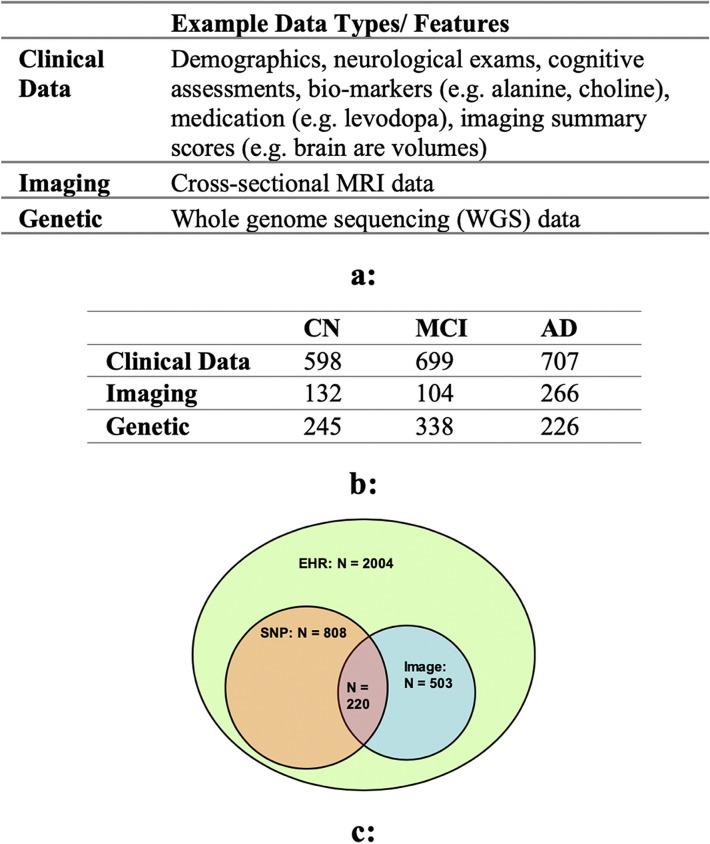
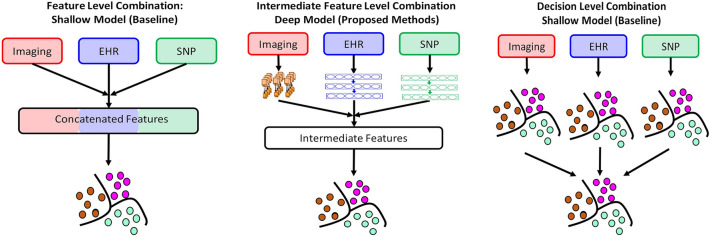
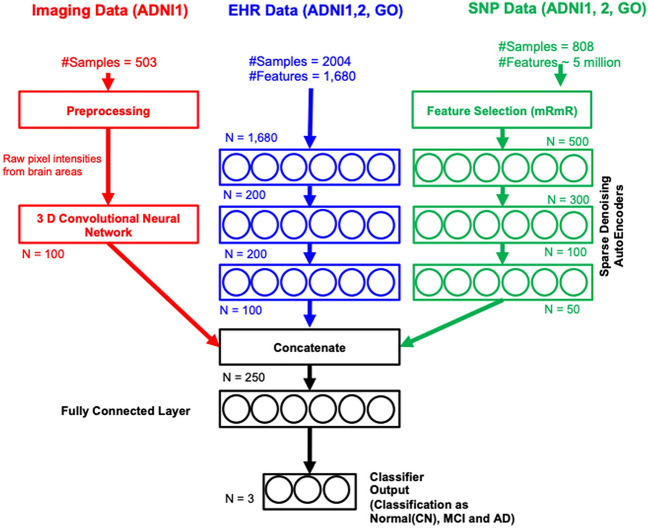
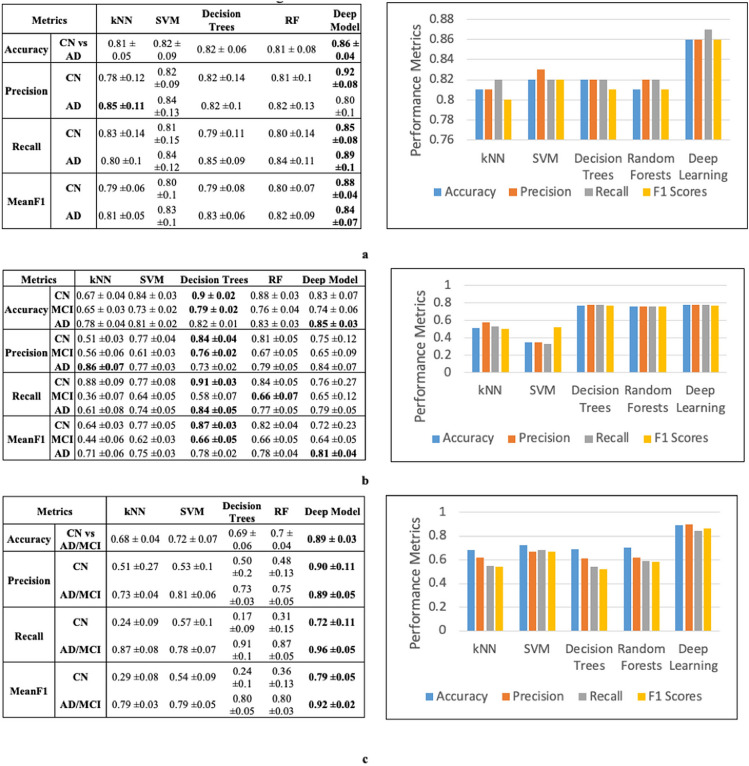
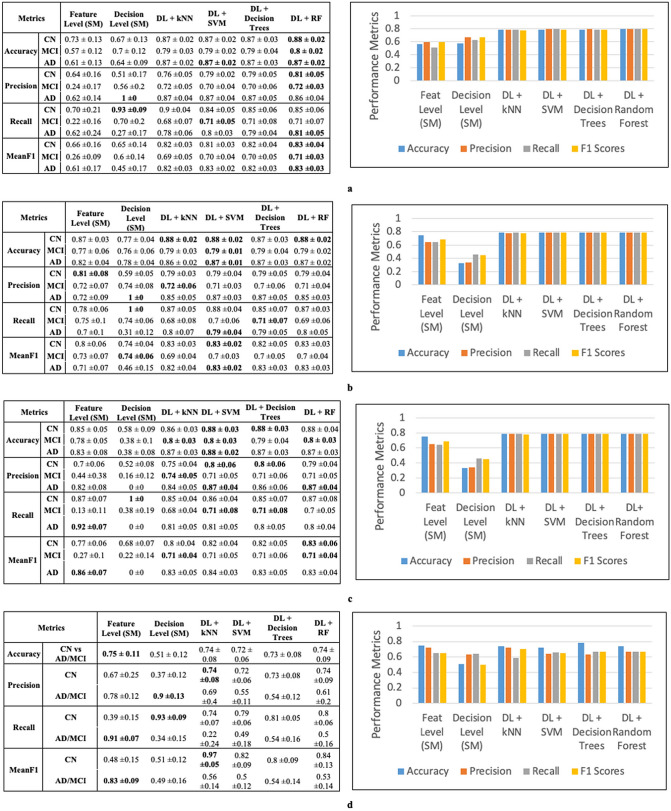
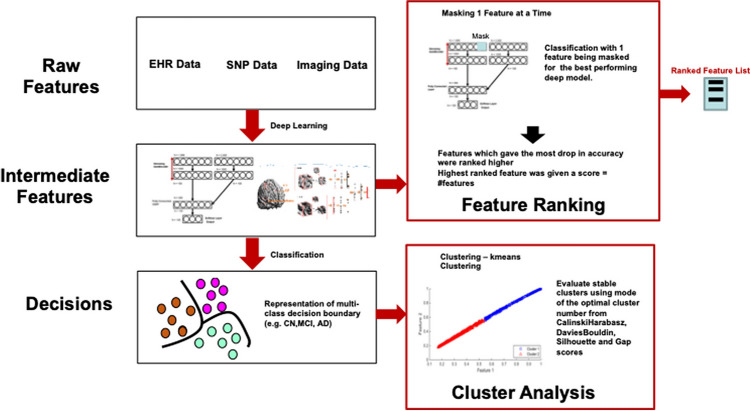
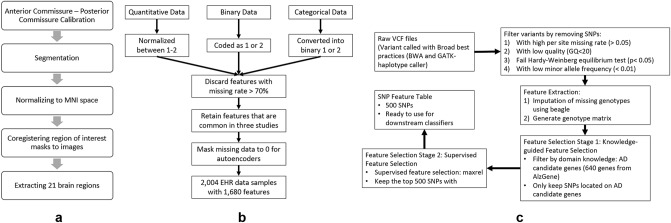
Most current Alzheimer's disease (AD) and mild cognitive disorders (MCI) studies use single data modality to make predictions such as AD stages. The fusion of multiple data modalities can provide a holistic view of AD staging analysis. Thus, we use deep learning (DL) to integrally analyze imaging (magnetic resonance imaging (MRI)), genetic (single nucleotide polymorphisms (SNPs)), and clinical test data to classify patients into AD, MCI, and controls (CN). We use stacked denoising auto-encoders to extract features from clinical and genetic data, and use 3D-convolutional neural networks (CNNs) for imaging data. We also develop a novel data interpretation method to identify top-performing features learned by the deep-models with clustering and perturbation analysis. Using Alzheimer's disease neuroimaging initiative (ADNI) dataset, we demonstrate that deep models outperform shallow models, including support vector machines, decision trees, random forests, and k-nearest neighbors. In addition, we demonstrate that integrating multi-modality data outperforms single modality models in terms of accuracy, precision, recall, and meanF1 scores. Our models have identified hippocampus, amygdala brain areas, and the Rey Auditory Verbal Learning Test (RAVLT) as top distinguished features, which are consistent with the known AD literature.
Overview
The claims and statistics of this paper haven’t been checked yet.
Run the check — free, no account needed. It reads the open-access text and checks the sources it cites.
Integrity signals
Registry
Cites
Statistics
Figures
Verification
Claims the paper makes
The claims and statistics of this paper haven’t been checked yet.
Run the check — free, no account needed. It reads the open-access text and checks the sources it cites.
Claims other papers make about this one
Each is checked against this paper’s own text: does it say what the citing paper says it does?
The cited source says what the claim attributes to it.
In the citing paper
“For instance, MRI and clinical data can be fused for AD prediction [72] or MRI, clinical and genomic modalities can be fused for AD stage detection [69]. Also, latent representations of multiple imaging modalities and clinical data can be fused for risk assessment of liver transplantation for hepatocellular cancer [71].”
From Multimodal deep learning for biomedical data fusion: a review (2022) · cites this paper as [69]
Self-check
Percentages, sums and reported differences re-computed from the paper’s own numbers.
The self-check needs the paper’s full text.
Citations
Cites
Batch Normalization: Accelerating Deep Network Training by Reducing Internal Covariate ShiftPreprint
Ioffe, S. (2024) · arXiv (Cornell University) · doi:10.57702/o9raffed · Cited by 15,273
Dermatologist-level classification of skin cancer with deep neural networks
Esteva, A., Kuprel, B., Novoa, R. A., Ko, J., Swetter, S. M., Blau, H. M., & Thrun, S. (2017) · Nature · doi:10.1038/nature21056 · Cited by 14,362
Peng, H., Long, F., & Ding, C. (2005) · IEEE Transactions on Pattern Analysis and Machine Intelligence · doi:10.1109/tpami.2005.159 · Cited by 10,818
Gulshan, V., Peng, L., Coram, M., Stumpe, M. C., Wu, D., Narayanaswamy, A., Venugopalan, S., Widner, K., Madams, T., Cuadros, J., et al. (2016) · JAMA · doi:10.1001/jama.2016.17216 · Cited by 7,697
Proceedings of the 25th international conference on Machine learning - ICML '08
(2008) · doi:10.1145/1390156 · Cited by 6,865
Shin, H.-C., Roth, H. R., Gao, M., Lu, L., Xu, Z., Nogues, I., Yao, J., Mollura, D., & Summers, R. M. (2016) · IEEE Transactions on Medical Imaging · doi:10.1109/tmi.2016.2528162 · Cited by 5,759
2016 Alzheimer's disease facts and figures
Alzheimer's Association (2016) · Alzheimer's & Dementia · doi:10.1016/j.jalz.2016.03.001 · Cited by 5,069
A new SPM toolbox for combining probabilistic cytoarchitectonic maps and functional imaging data
Eickhoff, S. B., Stephan, K. E., Mohlberg, H., Grefkes, C., Fink, G. R., Amunts, K., & Zilles, K. (2005) · NeuroImage · doi:10.1016/j.neuroimage.2004.12.034 · Cited by 4,033
2013 Alzheimer's disease facts and figures
Thies, W. H., & Bleiler, L. (2013) · Alzheimer s & Dementia · doi:10.1016/j.jalz.2013.02.003 · Cited by 3,372
Advancing research diagnostic criteria for Alzheimer's disease: the IWG-2 criteria
Dubois, B., Feldman, H. H., Jacova, C., Hampel, H., Molinuevo, J. L., Blennow, K., DeKosky, S. T., Gauthier, S., Selkoe, D., Bateman, R., et al. (2014) · The Lancet Neurology · doi:10.1016/s1474-4422(14)70090-0 · Cited by 3,321
MINIMUM REDUNDANCY FEATURE SELECTION FROM MICROARRAY GENE EXPRESSION DATA
Ding, C. H. Q., & PENG, H. (2005) · Journal of Bioinformatics and Computational Biology · doi:10.1142/s0219720005001004 · Cited by 2,775
(2011) · Cited by 2,752
Ting, D. S. W., Cheung, C. Y.-L., Lim, G., Tan, G. S. W., Quang, N. D., Gan, A., Hamzah, H., Garcia-Franco, R., San Yeo, I. Y., Lee, S. Y., et al. (2017) · JAMA · doi:10.1001/jama.2017.18152 · Cited by 2,402
Predicting effects of noncoding variants with deep learning–based sequence model
Zhou, J., & Troyanskaya, O. G. (2015) · Nature Methods · doi:10.1038/nmeth.3547 · Cited by 2,338
Miotto, R., Li, L., Kidd, B. A., & Dudley, J. T. (2016) · Scientific Reports · doi:10.1038/srep26094 · Cited by 1,710
Multimodal classification of Alzheimer's disease and mild cognitive impairment
Zhang, D., Wang, Y., Zhou, L., Yuan, H., & Shen, D. G. (2011) · NeuroImage · doi:10.1016/j.neuroimage.2011.01.008 · Cited by 1,340
Mueller, S. G., Weiner, M. W., Thal, L. J., Petersen, R. C., Jack, C. R., Jagust, W., Trojanowski, J. Q., Toga, A. W., & Beckett, L. (2005) · Alzheimer's & Dementia · doi:10.1016/j.jalz.2005.06.003 · Cited by 1,233
Methods of integrating data to uncover genotype-phenotype interactions
Ritchie, M. D., Holzinger, E. R., Li, R., Pendergrass, S. A., & Kim, D. (2015) · Nature Reviews Genetics · doi:10.1038/nrg3868 · Cited by 1,085
Hierarchical Feature Representation and Multimodal Fusion with Deep Learning for AD/MCI Diagnosis
Suk, H.-I., Lee, S.-W., & Shen, D. (2014) · NeuroImage · doi:10.1016/j.neuroimage.2014.06.077 · Cited by 968
Doctor AI: Predicting Clinical Events via Recurrent Neural Networks
Choi, E., Bahadori, M. T., Schuetz, A., Stewart, W. F., & Sun, J. (2015) · Europe PMC (PubMed Central) · doi:10.48550/arxiv.1511.05942 · Cited by 873
Multimodal techniques for diagnosis and prognosis of Alzheimer's disease
Perrin, R. J., Fagan, A. M., & Holtzman, D. M. (2009) · Nature · doi:10.1038/nature08538 · Cited by 702
Multimodal Neuroimaging Feature Learning for Multiclass Diagnosis of Alzheimer's Disease
Liu, S., Liu, S., Cai, W., Che, H., Pujol, S., Kikinis, R., Feng, D., Fulham, M. J., & ADNI (2015) · IEEE Transactions on Biomedical Engineering · doi:10.1109/tbme.2014.2372011 · Cited by 637
(2016) · PubMed · Cited by 576
Clinical utility of cerebrospinal fluid biomarkers in the diagnosis of early Alzheimer's disease
Blennow, K., Dubois, B., Fagan, A. M., Lewczuk, P., de Leon, M. J., & Hampel, H. J. (2014) · Alzheimer s & Dementia · doi:10.1016/j.jalz.2014.02.004 · Cited by 473
Random forest-based similarity measures for multi-modal classification of Alzheimer's disease
Gray, K. R., Aljabar, P., Heckemann, R. A., Hammers, A., & Rueckert, D. (2012) · NeuroImage · doi:10.1016/j.neuroimage.2012.09.065 · Cited by 469
Deep Learning-Based Feature Representation for AD/MCI Classification
Suk, H., & Shen, D. G. (2013) · Lecture notes in computer science · doi:10.1007/978-3-642-40763-5_72 · Cited by 463
Blood-Based Protein Biomarkers for Diagnosis of Alzheimer Disease
Doecke, J. D. (2012) · Archives of Neurology · doi:10.1001/archneurol.2012.1282 · Cited by 422
Predicting alzheimer’s disease progression using multi-modal deep learning approach
Lee, G., Nho, K., Kang, B., Sohn, K.-A., Kim, D., Initiative, F. A. D. N., Weiner, M. W., Aisen, P., Petersen, R., Jack, C. R., et al. (2019) · Scientific Reports · doi:10.1038/s41598-018-37769-z · Cited by 406
Dai, Z., Yan, C., Wang, Z., Wang, J., Xia, M., Li, K., & Yong He, A. (2011) · NeuroImage · doi:10.1016/j.neuroimage.2011.10.003 · Cited by 294
Shaffer, J. L., Petrella, J. R., Sheldon, F. C., Choudhury, K. R., Calhoun, V. D., Coleman, R. E., Doraiswamy, P. M., & Initiative, A. D. N. (2012) · Radiology · doi:10.1148/radiol.12120010 · Cited by 266
RNN-based longitudinal analysis for diagnosis of Alzheimer’s disease
Cui, R., & Liu, M. (2019) · Computerized Medical Imaging and Graphics · doi:10.1016/j.compmedimag.2019.01.005 · Cited by 257
Medical Image Computing and Computer Assisted Intervention – MICCAI 2022
Selvan, R., Bhagwat, N., Anthony, L. F. W., Kanding, B., & Dam, E. B. (2022) · Lecture notes in computer science · doi:10.1007/978-3-031-16443-9 · Cited by 253
Bogale, B., Mørkrid, K., O’Donnell, B., Ghanem, B., Abu Ward, I., Abu Khader, K., Isbeih, M., Frost, M., Baniode, M., Hijaz, T., et al. (2020) · BMC Medical Informatics and Decision Making · doi:10.1186/s12911-019-1002-x · Cited by 234
Zhao, J., Feng, Q., Wu, P., Lupu, R. A., Wilke, R. A., Wells, Q. S., Denny, J. C., & Wei, W. (2019) · Scientific Reports · doi:10.1038/s41598-018-36745-x · Cited by 223
Dyrba, M., Grothe, M. J., Kirste, T., & Teipel, S. J. (2015) · Human Brain Mapping · doi:10.1002/hbm.22759 · Cited by 188
Genetic analysis of quantitative phenotypes in AD and MCI: imaging, cognition and biomarkers
Initiative, A. D. N., Shen, L., Thompson, P. M., Potkin, S. G., Bertram, L., Farrer, L. A., Foroud, T., Green, R. C., Hu, X., Huentelman, M. J., et al. (2013) · Brain Imaging and Behavior · doi:10.1007/s11682-013-9262-z · Cited by 176
Deep sparse multi-task learning for feature selection in Alzheimer’s disease diagnosis
Initiative, T. A. D. N., Suk, H., Lee, S., & Shen, D. G. (2015) · Brain Structure and Function · doi:10.1007/s00429-015-1059-y · Cited by 164
Li, T., Mitchel, J., Chatlin, K., & Wang, M. D. (2020) · BMC Medical Informatics and Decision Making · doi:10.1186/s12911-020-01225-8 · Cited by 159
Self-citationWang, H., Nie, F., Huang, H., Risacher, S. L., Saykin, A. J., Shen, L., & Initiative, A. D. N. (2012) · Bioinformatics · doi:10.1093/bioinformatics/bts228 · Cited by 157
Self-gated Radial MRI for Respiratory Motion Compensation on Hybrid PET/MR Systems
Grimm, R., Fürst, S., Dregely, I., Forman, C., Hutter, J. M., Ziegler, S. I., Nekolla, S. G., Kiefer, B., Schwaiger, M., Joachim Hornegger, A., et al. (2013) · Lecture notes in computer science · doi:10.1007/978-3-642-40760-4_3 · Cited by 156
Leandrou, S., Petroudi, S., Kyriacou, P. A., Reyes‐Aldasoro, C. C., & Pattichis, C. S. (2018) · IEEE Reviews in Biomedical Engineering · doi:10.1109/rbme.2018.2796598 · Cited by 142
Structural imaging biomarkers of Alzheimer's disease: predicting disease progression
Eskildsen, S. F., Coupé, P., Fonov, V., Pruessner, J. C., & Collins, D. L. (2014) · Neurobiology of Aging · doi:10.1016/j.neurobiolaging.2014.04.034 · Cited by 129
Hampson, R. E., Song, D. B., Opriș, I. C., Santos, L. M., Shin, D. C., Gerhardt, G. A., Marmarelis, V. Z., Berger, T. W., & Deadwyler, S. A. (2013) · Journal of Neural Engineering · doi:10.1088/1741-2560/10/6/066013 · Cited by 117
Weng, S., Xu, X., Li, J., & Wong, S. T. C. (2017) · Journal of Biomedical Optics · doi:10.1117/1.jbo.22.10.106017 · Cited by 104
Dyrba, M., Barkhof, F., Fellgiebel, A., Filippi, M., Hausner, L., Hauenstein, K., Kirste, T., Teipel, S. J., & the EDSD study group (2015) · Journal of Neuroimaging · doi:10.1111/jon.12214 · Cited by 99
Alzheimer's disease markers, hypertension, and gray matter damage in normal elderly
Glodzik, L., Mosconi, L., Tsui, W., Santi, S. D., Zinkowski, R. P., Pirraglia, E., Rich, K. E., McHugh, P. F., Li, Y., Williams, S., et al. (2011) · Neurobiology of Aging · doi:10.1016/j.neurobiolaging.2011.02.012 · Cited by 79
Barnes, J., Carmichael, O. T., Leung, K. K., Schwarz, C. G., Ridgway, G. R., Bartlett, J. W., Malone, I. B., Schott, J. M., Rossor, M. N., Biessels, G. J., et al. (2013) · Neurobiology of Aging · doi:10.1016/j.neurobiolaging.2013.02.003 · Cited by 70
Qiu, H., Luo, L. K., Su, Z., Zhou, L., Wang, L., & Chen, Y. (2020) · BMC Medical Informatics and Decision Making · doi:10.1186/s12911-020-1101-8 · Cited by 66
Grimmer, T., Wutz, C., Alexopoulos, P., Drzezga, A. E., Förster, S., Förstl, H., Goldhardt, O., Ortner, M., Sorg, C., & Kurz, A. (2015) · Journal of Nuclear Medicine · doi:10.2967/jnumed.115.163717 · Cited by 58
Li, T., Wu, H., & Wang, M. D. (2020) · Methods · doi:10.1016/j.ymeth.2020.07.008 · Cited by 55
Self-citationBrain properties predict proximity to symptom onset in sporadic Alzheimer’s disease
Vogel, J. W., Vachon‐Presseau, É., Binette, A. P., Tam, A., Orban, P., Joie, R. L., Savard, M., Picard, C., Poirier, J., Bellec, P., et al. (2018) · Brain · doi:10.1093/brain/awy093 · Cited by 52
Functional genomics and proteomics in the clinical neurosciences: data mining and bioinformatics
Phan, J. H., Quo, C. F., & Wang, M. D. (2006) · Progress in brain research · doi:10.1016/s0079-6123(06)58004-5 · Cited by 33
Self-citationLorenzi, M., Simpson, I., Mendelson, A., Vos, S. B., Cardoso, M. J., Marc Modat, A., Schott, J. M., & Sebastien Ourselin, A. (2016) · Scientific Reports · doi:10.1038/srep22161 · Cited by 24
11C-PIB PET image analysis for Alzheimer's diagnosis using weighted voting ensembles
Wu, W., Venugopalan, J., & Wang, M. D. (2017) · Annual International Conference of the IEEE Engineering in Medicine and Biology Society (EMBC) · doi:10.1109/embc.2017.8037712 · Cited by 11
Self-citation
Research works printed but not linked: 5
- Schulam, P., Wigley, F. & Saria, S. In AAAI, 2956–2964 (2015).
- Suk, H.-I. & Shen, D. In International Conference on Medical Image Computing and Computer-Assisted Intervention, 583–590 (Springer, New York, 2013).
- Mhaskar, H., Liao, Q. & Poggio, T. Learning functions: when is deep better than shallow. arXiv preprint arXiv:1603.00988 (2016). · arXiv
- Che, Z., Purushotham, S., Khemani, R. & Liu, Y. Distilling knowledge from deep networks with applications to healthcare domain. arXiv preprint arXiv:1512.03542 (2015). · arXiv
- Kingma, D. & Ba, J. Adam: A method for stochastic optimization. arXiv preprint arXiv:1412.6980 (2014). · arXiv
Cited by
Sorted by citations
Multimodal deep learning for biomedical data fusion: a review
Stahlschmidt, S. R., Ulfenborg, B., & Synnergren, J. (2022) · Briefings in Bioinformatics · doi:10.1093/bib/bbab569 · Cited by 766
Multimodal machine learning in precision health: A scoping review
Kline, A., Wang, H., Li, Y., Dennis, S., Hutch, M., Xu, Z., Wang, F., Cheng, F., & Luo, Y. (2022) · npj Digital Medicine · doi:10.1038/s41746-022-00712-8 · Cited by 528
Zhao, F., Zhang, C., & Geng, B. (2024) · ACM Computing Surveys · doi:10.1145/3649447 · Cited by 480
Multimodal data fusion for cancer biomarker discovery with deep learning
Steyaert, S., Pizurica, M., Nagaraj, D., Khandelwal, P., Hernandez-Boussard, T., Gentles, A. J., & Gevaert, O. (2023) · Nature Machine Intelligence · doi:10.1038/s42256-023-00633-5 · Cited by 402
Chen, H., Gomez, C., Huang, C.-M., & Unberath, M. (2022) · npj Digital Medicine · doi:10.1038/s41746-022-00699-2 · Cited by 300
Metadata
- Authors
- Venugopalan, J., Tong, L., Hassanzadeh, H. R., & Wang, M. D.
- Affiliations
- Georgia Institute of Technology (US)
- Corresponding author
- Wang, May D.
- Venue
- Scientific Reports
- Published
- 2021-02-05
- Volume
- 11
- Issue
- 1
- Pages
- 3254-3254
- ISSN
- 2045-2322 (ISSN-L)
- PMC
- PMC7864942
- OpenAlex
- W3127597934
- Cited by
- 732
- References
- 57
- Citations by year
- 2026: 113 · 2025: 181 · 2024: 162 · 2023: 141 · 2022: 108 · 2021: 27
- FWCI
- 78.57
- Type
- journal article
- Language
- en
- Open access
- gold
- doi.org
- Locations
- Scientific Reports (publishedVersion, cc-by)
- Europe PMC (PubMed Central) (publishedVersion, other-oa)
- PubMed Central (publishedVersion, cc-by)
- PubMed (publishedVersion)
- DOAJ (DOAJ: Directory of Open Access Journals) (submittedVersion, cc-by-sa)
- Funders
- U.S. Department of Health & Human Services | NIH | National Center for Advancing Translational Sciences (UL1TR000454)
- Microsoft Research
- Hewlett Packard | HP Labs
- U.S. Department of Health & Human Services | NIH | Center for Information Technology (UL1TR000454)
- Topics
- Health Sciences › Medicine › Psychiatry and Mental health › Dementia and Cognitive Impairment Research
- Life Sciences › Neuroscience › Cellular and Molecular Neuroscience › Alzheimer's disease research and treatments
- Health Sciences › Health Professions › Health Information Management › Artificial Intelligence in Healthcare
- Keywords
- Alzheimer's disease, mild cognitive impairment, disease staging, multimodal fusion, magnetic resonance imaging, single nucleotide polymorphisms, genetic data, stacked denoising autoencoder, 3D convolutional neural networks, feature interpretation, hippocampus, amygdala, Rey Auditory Verbal Learning Test, ADNI
- MeSH terms
- Deep Learning, Alzheimer Disease, Diagnosis, Computer-Assisted, Humans, Early Diagnosis, Data Mining
About these checks
Registry, retraction, Cites and statistics results are computed, not judged, with one exception: a printed reference that no index lists is read once by a model before it counts as a citation error. Claims are extracted by a model and kept only when their quote appears verbatim in the text; each cited source is then checked, with a model’s help, for whether it says what the claim relies on. Those verdicts can be wrong — read the claim’s quote and the cited source before relying on one.
Statistics and arithmetic are recomputed, not judged.
Confidence bands are shown only for fields calibrated on our annotated test set. None is calibrated yet, so no band is shown.
What counts as a claim ›How we measure confidence ›How we check this ›
Are you an author, or do you see a problem with this page? Request a review
