

Adsorption capability of brewed tea waste in waters containing toxic lead(II), cadmium (II), nickel (II), and zinc(II) heavy metal ions
Open accessThe DOI matches its Crossref record; 56 of the 58 references it cites were found in a registry or an index; none of the 4 sources its claims cite is checked for support yet.
Abstract
Recently, the search for low-cost eco-friendly adsorbents has become one of the main objectives of researchers. The aim of this study was to test the removal of four heavy metals, namely lead (Pb), zinc (Zn), nickel (Ni) and cadmium (Cd), from a simulated watery solution using brewed tea waste as a potentially suitable adsorbent. The effects of pH levels (2.0–6.0), adsorbent amount (0.1–5.0 g), contact times (1–150 min.) were examined throughout the adsorption process. The results of the experiments showed that the heavy metals elimination yields had an inverse relationship with pH and a linear relationship between the other parameters. The optimum pH for the removal of the heavy metals was between 4.0 and 5.0 in the case of the brewed tea waste. Equilibrium times of 2, 10, 30 and 5 min were required for the adsorption of Pb, Zn, Ni, Cd onto Camellia sinensis , respectively. Based on the results of this study it can be said that brewed tea waste has a high potential to remove heavy metals from aqueous solutions. The maximum adsorption capacities were calculated as 1.197, 1.457, 1.163 and 2.468 mg/g, for Pb, Zn, Ni and Cd, respectively, by fitting the equilibrium data to the Langmuir isotherm model.
Overview
CoChat Summary
TL;DR
Brewed tea waste (BTW) was tested as a low-cost adsorbent for Pb, Cd, Ni, and Zn in synthetic aqueous solutions, with removal strongly dependent on pH, adsorbent dose, and contact time. The data fit the Langmuir isotherm and pseudo-second-order kinetics, with maximum Langmuir capacities of 1.197 mg/g Pb, 1.457 mg/g Ni, 1.163 mg/g Cd, and 2.468 mg/g Zn.
Key findings
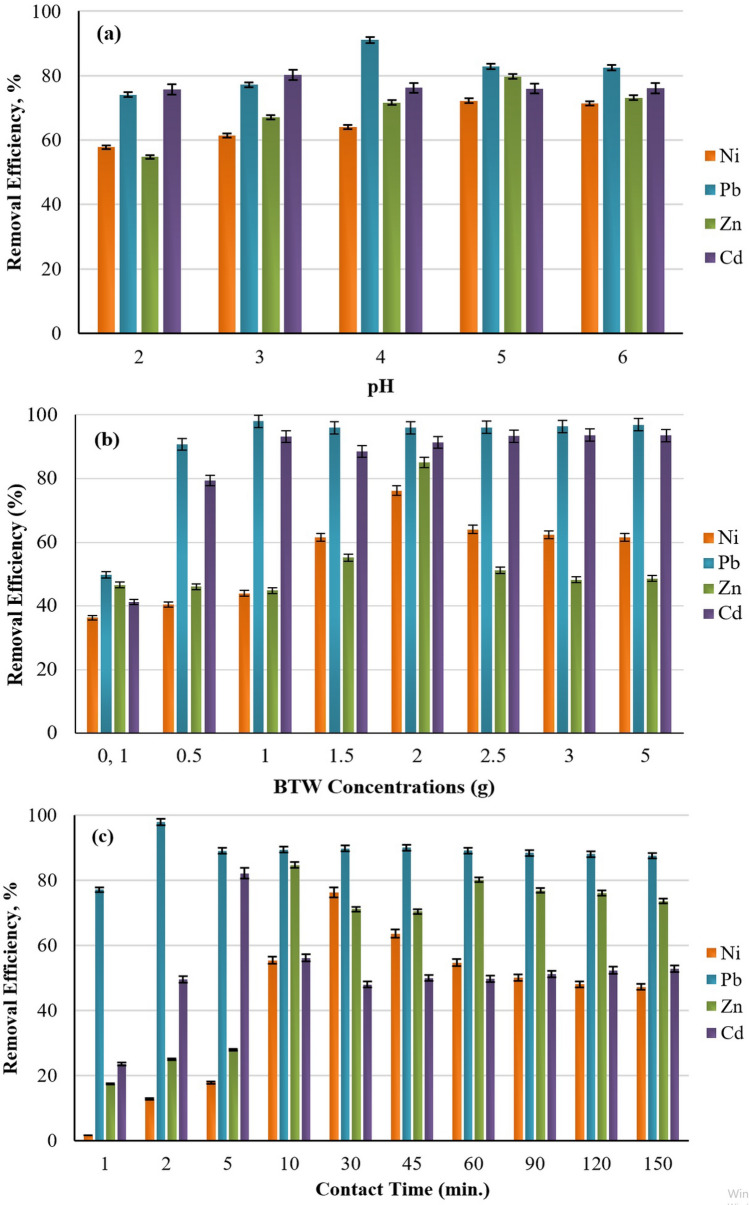
- Optimum pH was 4 for Pb and Cd and 5 for Ni and Zn; equilibrium times were 2 min for Pb, 10 min for Zn, 30 min for Ni, and 5 min for Cd.
- At the tested conditions, removal percentages were Pb 97.97%, Cd 84.74%, Ni 82%, and Zn 76% (Table 5).
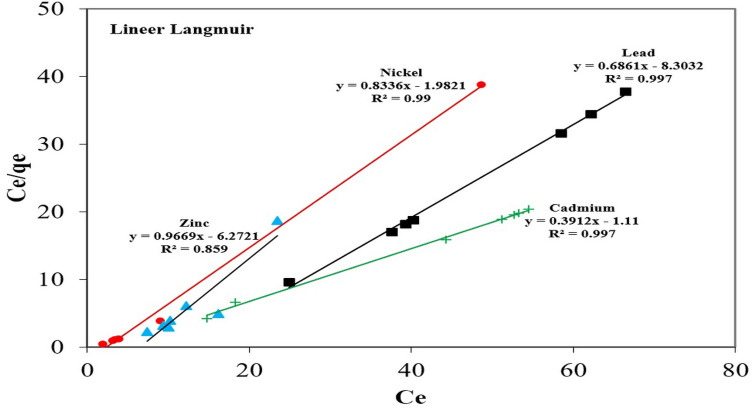
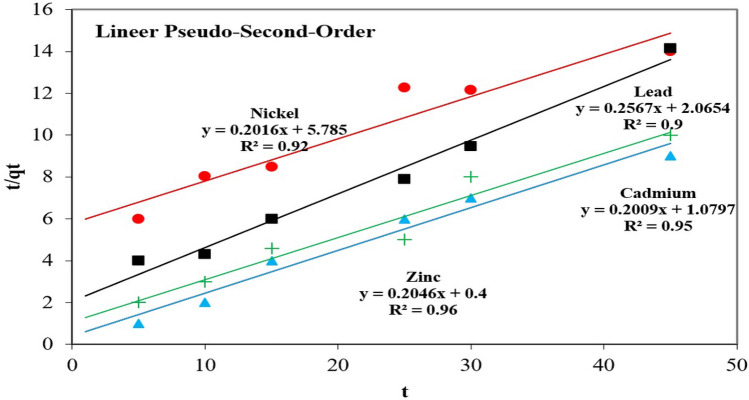
- Langmuir maximum adsorption capacities were Pb 1.197 mg/g, Ni 1.457 mg/g, Cd 1.163 mg/g, and Zn 2.468 mg/g; the Langmuir model fit best, with HYBRID error function giving the best result.
- Pseudo-second-order kinetics best described adsorption (R² = 0.99), suggesting chemisorption; BTW had a negative zeta potential (−20.58 mV) and pHZPC of 2.45.
Methods
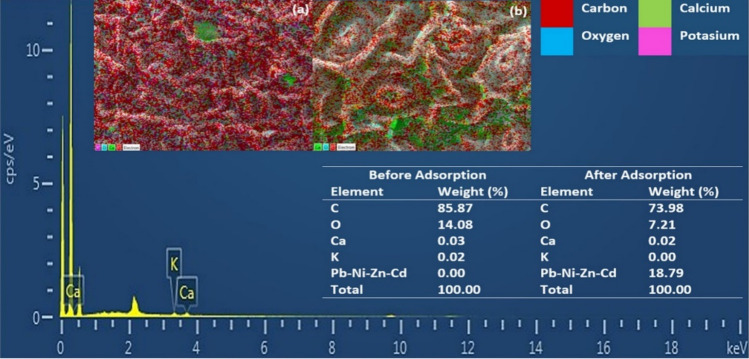
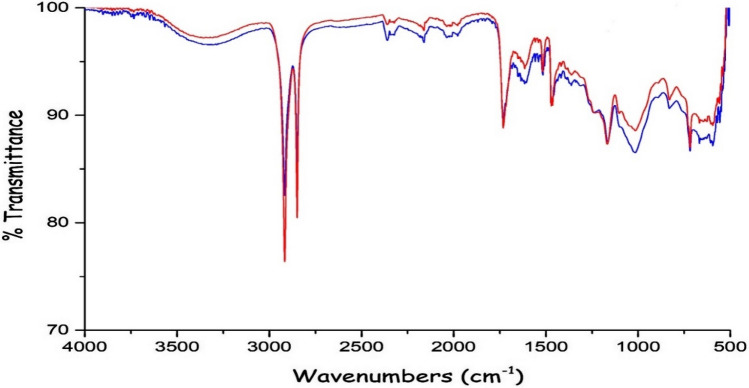
- BTW was collected from food units at Aksaray University, washed, boiled, dried, pulverized, and sieved; it was characterized by FTIR, SEM/EDS, BET surface area, elemental analysis, proximate analysis, and zeta potential.
- Batch experiments used 100 mg BTW in 250 mL flasks with 100 mL individual metal solutions, initial concentrations around 100 mg/L, pH 2.0–6.0, shaken at 150 rpm for 24 h at 20 °C, and analyzed by ICP-OES.
- Langmuir, Freundlich, Temkin, and Dubinin-Radushkevich isotherms and PFO, PSO, Elovich, and intraparticle diffusion kinetics were fitted; one-way ANOVA with Duncan test was applied at p < 0.01.
Limitations
- The paper states BTW’s surface structure was not sufficiently developed and adsorption may be limited to the outer surface; it also notes temperature-change data were not shown.
- Evident from the text: experiments used synthetic single-metal solutions at ~100 mg/L, not real multi-metal industrial or natural waters, and the pH range was restricted to 2–6.
- Evident from the text: reported removal/capacity orderings are inconsistent in places (e.g., abstract vs. Table 4/Table 5), and no regeneration, reuse, or cost analysis is reported.
Model-written summary. Check it against the paper before relying on it.
Integrity signals
Registry
Cites
Statistics
Figures
Verification
Claims the paper makes
0 Valid · 2 Not valid · 4 Not checked · 42 Own results and interpretations
A result the paper reports from its own data — it cites no other source for it, so there is none to check. The quote shows it is in the paper.
In the paper
“As a result of the calculations, it was determined that the HYBRID error function gave the best result.”
§ Adsorption capability of brewed tea waste in waters containing toxic lead(II), cadmium (II), nickel (II), and zinc(II) heavy metal ions > Results > Adsorption isotherm and kinetic models
plain- Asserted: passes — The authors put it forward as true.
- Checkable: passes — It can be checked against evidence.
- Load-bearing: unclear — It is unclear whether the paper’s conclusions depend on it.
- Based: passes — The paper gives a reason why it holds.
A result the paper reports from its own data — it cites no other source for it, so there is none to check. The quote shows it is in the paper.
In the paper
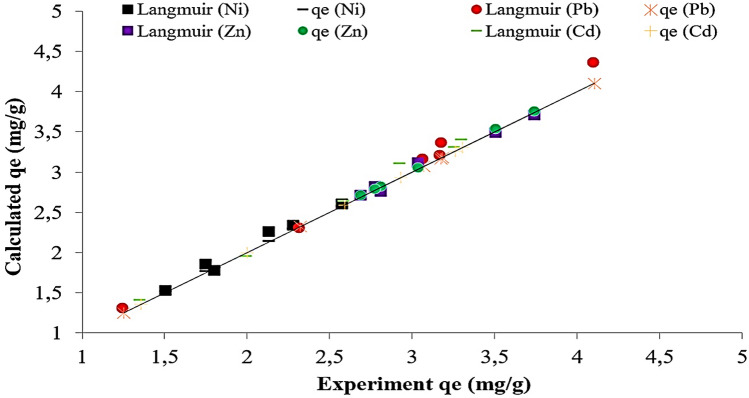
“As can be observed from Table 3, the equilibrium adsorption data were better defined when the Langmuir isotherm model was used.”
§ Adsorption capability of brewed tea waste in waters containing toxic lead(II), cadmium (II), nickel (II), and zinc(II) heavy metal ions > Results > Adsorption isotherm and kinetic models
plainstates an association- Asserted: passes — The authors put it forward as true.
- Checkable: passes — It can be checked against evidence.
- Load-bearing: passes — The paper’s conclusions depend on it.
- Based: passes — The paper gives a reason why it holds.
A result the paper reports from its own data — it cites no other source for it, so there is none to check. The quote shows it is in the paper.
In the paper
“The order of appropriateness of the isotherm models was as follows: Langmuir > Temkin > Freundlich > Dubinin-Radukevich (Fig. 4).”
§ Adsorption capability of brewed tea waste in waters containing toxic lead(II), cadmium (II), nickel (II), and zinc(II) heavy metal ions > Results > Adsorption isotherm and kinetic models
plainstates an association- Asserted: passes — The authors put it forward as true.
- Checkable: passes — It can be checked against evidence.
- Load-bearing: passes — The paper’s conclusions depend on it.
- Based: passes — The paper gives a reason why it holds.
A result the paper states — it cites no source for it, so there is none to check. The quote shows it is in the paper.
In the paper
“As can be seen from Fig. 3c the percentage of metal removal was initially higher (2 min—97.97%, 5 min—82%, 30 min—76%, 10 min—84.74%).”
§ Adsorption capability of brewed tea waste in waters containing toxic lead(II), cadmium (II), nickel (II), and zinc(II) heavy metal ions > Results > Effect of contact time and temperature
plainstates an association- Asserted: passes — The authors put it forward as true.
- Checkable: passes — It can be checked against evidence.
- Load-bearing: unclear — It is unclear whether the paper’s conclusions depend on it.
- Based: passes — The paper gives a reason why it holds.
A result the paper reports from its own data — it cites no other source for it, so there is none to check. The quote shows it is in the paper.
In the paper
“As a result of adsorption studies, the Langmuir isotherm was found to be the most suitable for the heavy metals according to the R2 value.”
§ Adsorption capability of brewed tea waste in waters containing toxic lead(II), cadmium (II), nickel (II), and zinc(II) heavy metal ions > Results > Adsorption isotherm and kinetic models
plainstates an association- Asserted: passes — The authors put it forward as true.
- Checkable: passes — It can be checked against evidence.
- Load-bearing: passes — The paper’s conclusions depend on it.
- Based: passes — The paper gives a reason why it holds.
24 more claims
Create a free account to see all 48 claims and to verify the 1 reference still open.
- It may state two separate claims as one. 16
- The quote only partly states this claim. 1
- Probably not a substantial claim. 5
Self-check
Percentages, sums and reported differences re-computed from the paper’s own numbers.
Each contradiction between two passages listed here was confirmed by an independent check.
Rated major: it would touch a result — a value a result rests on, reported and recomputed p-values on opposite sides of the significance level, two passages that conflict with no sign which is right, or a cited work retracted before this paper was published.
In the paper
§ Adsorption capability of brewed tea waste in waters containing toxic lead(II), cadmium (II), nickel (II), and zinc(II) heavy metal ions > Abstract
“The results of the experiments showed that the heavy metals elimination yields had an inverse relationship with pH and a linear relationship between the other parameters.”
§ Adsorption capability of brewed tea waste in waters containing toxic lead(II), cadmium (II), nickel (II), and zinc(II) heavy metal ions > Results > Effect of pH
“It was noted that when pH was 4, the removal percentage of the Pb and Cd ions increased significantly from 74.09 to 91.06% for Pb, 54.73% to 79.71% for Zn and 74% to 82% for Cd, respectively.”
Rated major: it would touch a result — a value a result rests on, reported and recomputed p-values on opposite sides of the significance level, two passages that conflict with no sign which is right, or a cited work retracted before this paper was published.
In the paper
§ Adsorption capability of brewed tea waste in waters containing toxic lead(II), cadmium (II), nickel (II), and zinc(II) heavy metal ions > Results > Effect of contact time and temperature
“The adsorption of the Pb, Ni, Zn, Cd ions was gauged at certain contact times for the initial Pb, Ni, Zn, Cd concentrations of 96.71, 104.30, 98.70 and 108 mg/L, respectively. The removal efficiencies of the Pb, Ni, Zn, Cd ions increased up to 60 min and then remained almost constant (Fig. 3c). As can be seen from Fig. 3c the percentage of metal removal was initially higher (2 min—97.97%, 5 min—82%, 30 min—76%, 10 min—84.74%).”
§ Adsorption capability of brewed tea waste in waters containing toxic lead(II), cadmium (II), nickel (II), and zinc(II) heavy metal ions > Results > Adsorption isotherm and kinetic models
“| BTW | Cd+2 | 1.0 | 4.0 | 100 | 5 | 20 | 84.74 | Langm/PSO | 1.163 | In This Study | | BTW | Ni+2 | 2.0 | 5.0 | 100 | 30 | 20 | 82 | Langm/PSO | 1.457 | In This Study | | BTW | Zn+2 | 2.0 | 5.0 | 100 | 10 | 20 | 76 | Langm/PSO | 2.468 | In This Study |”
Rated minor: it would not touch a result — a value no result rests on, a p-value that stays on the same side of the significance level, or a conflict that is clerical, resolved elsewhere in the paper, or outside its own findings.
In the paper
“| 2916.62 | 2916.42 | + 20 | Aliphatic C–H group | | 2849.35 | 2849.23 | + 12 | Aliphatic C–H group |”
§ Adsorption capability of brewed tea waste in waters containing toxic lead(II), cadmium (II), nickel (II), and zinc(II) heavy metal ions > Results > BTW characterization
Reported 20 · recomputed 0.2
Rated minor: it would not touch a result — a value no result rests on, a p-value that stays on the same side of the significance level, or a conflict that is clerical, resolved elsewhere in the paper, or outside its own findings.
In the paper
§ Adsorption capability of brewed tea waste in waters containing toxic lead(II), cadmium (II), nickel (II), and zinc(II) heavy metal ions > Results > BTW characterization
“The zeta potential of the BTW was always negative in the tested pH range of 2–10, indicating that the BTW was effective in attracting cations.”
§ Adsorption capability of brewed tea waste in waters containing toxic lead(II), cadmium (II), nickel (II), and zinc(II) heavy metal ions > Results > BTW characterization
“The zeta potential and the pHZPC (pH at point of zero charge) of the tea waste was − 20.58 mV and pH 2.45, respectively.”
Rated minor: it would not touch a result — a value no result rests on, a p-value that stays on the same side of the significance level, or a conflict that is clerical, resolved elsewhere in the paper, or outside its own findings.
In the paper
§ Adsorption capability of brewed tea waste in waters containing toxic lead(II), cadmium (II), nickel (II), and zinc(II) heavy metal ions > Results > Effect of pH
“it was found that the highest removal percentage for Ni and Zn was achieved at pH 5, and for Cd at pH 3 (p < 0.01).”
§ Adsorption capability of brewed tea waste in waters containing toxic lead(II), cadmium (II), nickel (II), and zinc(II) heavy metal ions > Conclusion
“The maximum adsorption of Pb and Cd was achieved at pH 4, while for Ni and Zn it was achieved at pH 5.”
4 more findings
Create a free account to see every finding of this check.
Citations
Cites
Pseudo-second order model for sorption processes
Ho, Y. S., & McKay, G. (1999) · Process Biochemistry · doi:10.1016/s0032-9592(98)00112-5 · Cited by 17,497
THE CONSTITUTION AND FUNDAMENTAL PROPERTIES OF SOLIDS AND LIQUIDS. PART I. SOLIDS.
Langmuir, I. (1916) · Journal of the American Chemical Society · doi:10.1021/ja02268a002 · Cited by 9,997
Über die adsorption in lösungen
Freundlich, H. (1907) · Zeitschrift für Physikalische Chemie · doi:10.1515/zpch-1907-5723 · Cited by 9,001
The constitution and fundamental properties of solids and liquids
Langmuir, I. (1917) · Journal of the Franklin Institute · doi:10.1016/s0016-0032(17)90938-x · Cited by 3,778
Pore- and Solid-Diffusion Kinetics in Fixed-Bed Adsorption under Constant-Pattern Conditions
Hall, K. R., Eagleton, L. C., Acrivos, A., & Vermeulen, T. (1966) · Industrial & Engineering Chemistry Fundamentals · doi:10.1021/i160018a011 · Cited by 2,819
The Equation of the Characteristic Curve of Activated Charcoal
Dubinin, M. M. (1947) · Доклады Академии наук · Cited by 2,108
Burakov, A. E., Galunin, E. V., Burakova, I. V., Kucherova, A. E., Agarwal, S., Tkachev, A. G., & Gupta, V. K. (2018) · Ecotoxicology and Environmental Safety · doi:10.1016/j.ecoenv.2017.11.034 · Cited by 1,612
Recent modifications to Langmuir isotherms
Temkin, M. J., & Pyzhev, V. (1940) · Cited by 1,057
Vareda, J. P., Valente, A. J. M., & Durães, L. (2019) · Journal of Environmental Management · doi:10.1016/j.jenvman.2019.05.126 · Cited by 1,010
Water Purification by Using Adsorbents: A Review
Singh, N. B., Nagpal, G., Agrawal, S., & Rachna (2018) · Environmental Technology & Innovation · doi:10.1016/j.eti.2018.05.006 · Cited by 962
Research works printed but not linked: 2
- Takeno N Atlas of Eh-pH diagrams (Intercomparison of thermodynamic databases) Geol. Surv. Jpn. 2005 419 1 287
- Draman SFS Mohd N Hafiza N Wahab I Zulkfli NS Fatin N Adsorption of lead (II) ions in aqueous solution using selected agro-waste ARPN J. Eng. Appl. Sci. 2015 10 297 300
Cited by
Ezeonuegbu, B. A., Machido, D. A., Whong, C. M. Z., Japhet, W. S., Alexiou, A., Elazab, S. T., Qusty, N., Yaro, C. A., & Batiha, G. E.-S. (2021) · Biotechnology Reports · doi:10.1016/j.btre.2021.e00614 · Cited by 241
Potential and sustainable utilization of tea waste: A review on present status and future trends
Debnath, B., Haldar, D., & Purkait, M. K. (2021) · Journal of Environmental Chemical Engineering · doi:10.1016/j.jece.2021.106179 · Cited by 211
Kaur, J., Sengupta, P., & Mukhopadhyay, S. (2022) · Industrial & Engineering Chemistry Research · doi:10.1021/acs.iecr.1c04583 · Cited by 167
Hossain, M. T., Khandaker, S., Bashar, M. M., Islam, A., Ahmed, M., Akter, R., Alsukaibi, A. K. D., Hasan, M. M., Alshammari, H. M., Kuba, T., et al. (2022) · Journal of Molecular Liquids · doi:10.1016/j.molliq.2022.120810 · Cited by 120
Advances in bioconversion of spent tea leaves to value-added products
Negi, T., Kumar, Y., Sirohi, R., Singh, S., Tarafdar, A., Pareek, S., Kumar Awasthi, M., & Alok Sagar, N. (2022) · Bioresource Technology · doi:10.1016/j.biortech.2021.126409 · Cited by 95
Ngeno, E. C., Mbuci, K. E., Ncibi, M. C., Shikuku, V. O., Olisah, C., Ongulu, R., Matovu, H., Ssebugere, P., Abushaban, A. M. J., & Sillanpää, M. E. T. (2022) · Environmental Advances · doi:10.1016/j.envadv.2022.100282 · Cited by 103
Ungureanu, E. L., Mocanu, A. L., Stroe, C. A., Panciu, C. M., Berca, L., Sionel, R. M., & Mustăţea, G. (2023) · Sustainability · doi:10.3390/su15075999 · Cited by 102
Bayuo, J., Rwiza, M. J., & Mtei, K. (2022) · RSC Advances · doi:10.1039/d2ra00796g · Cited by 83
Debnath, B., Haldar, D., & Purkait, M. K. (2022) · Chemosphere · doi:10.1016/j.chemosphere.2022.134480 · Cited by 75
Hussain, M. K., Khatoon, S., Nizami, G., Fatma, U. K., Ali, M., Singh, B., Quraishi, A., Assiri, M. A., Ahamad, S., & Saquib, M. (2024) · Journal of Water Process Engineering · doi:10.1016/j.jwpe.2024.105705 · Cited by 77
Nnaji, C. C., Agim, A. E., Mama, C. N., Emenike, P. C., & Ogarekpe, N. M. (2021) · Scientific Reports · doi:10.1038/s41598-021-86932-6 · Cited by 73
Moukadiri, H., Noukrati, H., Youcef, H. B., Iraola‐Arregui, I., Trabadelo, V., Oukarroum, A., Malka, G., & Barroug, A. (2023) · International Journal of Environmental Science and Technology · doi:10.1007/s13762-023-05275-z · Cited by 71
“Then, the retention process was slow until it reached the equilibrium after 60 min (Çelebi et al. 2020).”
Elbehiry, F., Darweesh, M., Al-Anany, F. S., Khalifa, A. M., Almashad, A. A., El-Ramady, H. R., El-Banna, A., Rajput, V. D., Jatav, H. S., & Elbasiouny, H. (2022) · Sustainability · doi:10.3390/su141610118 · Cited by 59
Pb(II) adsorption mechanism and capability from aqueous solution using red mud modified by chitosan
Luu, T., Dinh, V., Hưng, N. Q., Tran, N.-Q., Nguyen, D., Ho, T.-H., Nguyen, V.-D., Xuan, T. D., & Kiet, H. A. T. (2021) · Chemosphere · doi:10.1016/j.chemosphere.2021.132279 · Cited by 61
Katha, P. S., Ahmed, Z., Alam, R., Saha, B., Acharjee, A., & Rahman, M. S. (2021) · South African Journal of Chemical Engineering · doi:10.1016/j.sajce.2021.06.001 · Cited by 65
Rouibah, K., Ferkous, H., Delimi, A., Himeur, T., Benamira, M., Zighed, M., Darwish, A. S., Lemaoui, T., Yadav, K. K., Bhutto, J. K., et al. (2022) · Journal of Environmental Management · doi:10.1016/j.jenvman.2022.116742 · Cited by 58
Maged, A., El-Fattah, H. A., Kamel, R. M., Kharbish, S., & Elgarahy, A. M. (2023) · Environmental Monitoring and Assessment · doi:10.1007/s10661-023-11303-9 · Cited by 70
Velarde, L., Nikjoo, D., Escalera, E., & Akhtar, F. (2024) · Heliyon · doi:10.1016/j.heliyon.2024.e24006 · Cited by 59
“Also, the results agree with the cadmium Pourbaix diagram, where it shows that with pH values lower than 7 the dominant species is Cd 2 + , and at higher pH values, Cd starts to precipitate and appear in the form of Cd(OH) 2 [55 – 58] .”
ResultPraipipat, P., Ngamsurach, P., & Pratumkaew, K. (2023) · Arabian Journal of Chemistry · doi:10.1016/j.arabjc.2023.104640 · Cited by 52
Chaudhary, H., Dinakaran, J., Notup, T., Vikram, K., & Rao, K. S. (2023) · Environmental Management · doi:10.1007/s00267-023-01866-1 · Cited by 52
“Among the pollutants, heavy metal ions, mainly Pb, Cu, Cr, and Cd pose the greatest threat to human health even at very low concentrations (Çelebi et al. 2020; Mahesh et al. 2022; Li et al. 2023).”
Bhardwaj, M., Tewari, S., Kumari, N., Bhardwaj, A., Misra, N., Shukla̽, S., Dwivedi, J., & Sharma, S. K. (2024) · Inorganic Chemistry Communications · doi:10.1016/j.inoche.2024.112464 · Cited by 42
Central Composite Design for Adsorption of Pb(II) and Zn(II) Metals on PKM‑2 Moringa oleifera Leaves
Jayan, N., Bhatlu, M. L. D., & Akbar, S. T. (2021) · ACS Omega · doi:10.1021/acsomega.1c03069 · Cited by 47
Dawoud, M. M. A., Hegazi, M. M., Saleh, H. M., & Elhelew, W. (2022) · International Journal of Environmental Science and Technology · doi:10.1007/s13762-022-04073-3 · Cited by 43
Modified alginate-chitosan-TiO2 composites for adsorptive removal of Ni(II) ions from aqueous medium
Shehzad, H., Ahmed, E., Sharif, A., Farooqi, Z. H., Din, M. I., Begum, R., Liu, Z., Zhou, L., Ouyang, J., Irfan, A., et al. (2021) · International Journal of Biological Macromolecules · doi:10.1016/j.ijbiomac.2021.11.140 · Cited by 42
Tee, W. T., Loh, N. Y. L., Hiew, B. Y. Z., et al. (2022) · Biochemical Engineering Journal · doi:10.1016/j.bej.2022.108629 · Cited by 39
Sasidharan, V., Sachan, D., Chauhan, D., Talreja, N., & Ashfaq, M. (2021) · Scientific Reports · doi:10.1038/s41598-021-86661-w · Cited by 40
“(1) It provides stability to the Cu-NS against leach out or rapid dissolution from PMC material, (2) Facilitate antibacterial activity or removal of biological contaminants from water, and (3) Enhance the sorption capacity of the Cr(VI) and CR-dye from water.”
BackgroundInfluentialApplication of Pineapple Waste to the Removal of Toxic Contaminants: A Review
Fouda-Mbanga, B. G., & Tywabi-Ngeva, Z. (2022) · Toxics · doi:10.3390/toxics10100561 · Cited by 49
“Agro-wastes and other plant wastes have recently gained attention as sorbents for toxic metals in aqueous systems due to their ability to adsorb toxic metals from aqueous systems [23,24].”
BackgroundBharadwaj, P., Kiran, G. R., & Acharyya, S. G. (2023) · Applied Surface Science · doi:10.1016/j.apsusc.2023.157238 · Cited by 37
Mariah, M. A. A., Rovina, K., Vonnie, J. M., & Erna, K. H. (2023) · South African Journal of Chemical Engineering · doi:10.1016/j.sajce.2023.01.007 · Cited by 47
Madadgar, S., Ardejani, F. D., Boroumand, Z., Sadeghpour, H., Taherdangkoo, R., & Butscher, C. (2023) · Minerals · doi:10.3390/min13010106 · Cited by 41
Sustainable environmental practices of tea waste—a comprehensive review
Seth, D., Athparia, M., Singh, A., Rathore, D., Venkatramanan, V., Channashettar, V. A., Prasad, S., Maddirala, S., Sevda, S., & Kataki, R. (2023) · Environmental Science and Pollution Research · doi:10.1007/s11356-023-30848-3 · Cited by 43
“Çelebi et al. (2020) investigated the removal of Cr6 + using tea waste under different pH (2–7), stirring speed (50–300 rpm), adsorbent quantity (0.5–5.0 g/100 mL), and contact time (5–120 min).”
InfluentialTonk, S., Aradi, L. E., Kovács, G., Turza, A., & Rápó, E. (2022) · Water · doi:10.3390/w14030279 · Cited by 44
Malti, W. E., Hijazi, A., Khalil, Z. A., Yaghi, Z., Medlej, M. K., & Reda, M. (2022) · RSC Advances · doi:10.1039/d1ra08997h · Cited by 36
Kayranlı, B., Gök, O., Yılmaz, T., Gök, G., Çelebi, H., Seçkin, İ., & Mesutoğlu, Ö. Ç. (2021) · International Journal of Environmental Science and Technology · doi:10.1007/s13762-021-03653-z · Cited by 40
Self-citationKumar, A., Indhur, R., Sheik, A. G., Krishna, S. B. N., Kumari, S., & Bux, F. (2024) · Environmental Technology Reviews · doi:10.1080/21622515.2024.2377801 · Cited by 36
“Fly Ash (FA) is a strong and cost-effective adsorbent for dyes and heavy metal elimination as a result of its morphology, charge and surface structure [55].”
Adsorptive removal of heavy metals from wastewater using Cobalt-diphenylamine (Co-DPA) complex
Yimer, M., Ansari, S. N., Berehe, B. A., Gudimella, K. K., Gedda, G., Girma, W. M., Hasan, N., & Tasneem, S. (2024) · BMC Chemistry · doi:10.1186/s13065-024-01128-z · Cited by 45
“…reportedly been accomplished using commercial activated carbon [15, 29, 30], zeolites, and biomass-derived adsorbents like peanut shells [31– 33], banana peel [34, 35], dry tree leaves [36], rice husk [37], tea and coffee waste [38], coconut shell powder [39], papaya seed [40], and eggshell [41].”
MethodRemoval of Lead from Wastewater Using Synthesized Polyethyleneimine-Grafted Graphene Oxide
Al‐Yaari, M., & Saleh, T. A. (2023) · Nanomaterials · doi:10.3390/nano13061078 · Cited by 34
Zakaria, A. F., Kamaruzaman, S., Rahman, N. A., & Yahaya, N. (2022) · Polymers · doi:10.3390/polym14245524 · Cited by 37
“In addi‐ tion, the authors also mentioned that the prepared alginate had poor potential to regener‐ ate because the desorption after the second cycle was significantly reduced [91].”
BackgroundInfluentialRecycling and re-usage of oilfield produced water – A review
Patni, H., & Ragunathan, B. (2022) · Materials Today Proceedings · doi:10.1016/j.matpr.2022.11.372 · Cited by 41
Claude, N. J., Shanshan, L., Khan, J., Wu, Y., dongxu, H., & Liu, X. (2022) · Scientific Reports · doi:10.1038/s41598-022-07475-y · Cited by 38
Kumar, V., Bhat, S. A., Kumar, S., Verma, P., Badruddin, I. A., Américo‐Pinheiro, J. H. P., Sathyamurthy, R., & Atabani, A. E. (2023) · Fuel · doi:10.1016/j.fuel.2023.128811 · Cited by 37
Influential biosorption of lead from aquatic solution using Escherichia coli/carbon nanofibers
Rind, I. K., Sarı, A., Tüzen, M., Lanjwani, M. F., Karaman, İ., & Saleh, T. A. (2022) · Environmental Nanotechnology Monitoring & Management · doi:10.1016/j.enmm.2022.100776 · Cited by 33
Tonk, S., & Rápó, E. (2022) · International Journal of Molecular Sciences · doi:10.3390/ijms231911827 · Cited by 36
“(determined for 16 initial concentrations in the range 5 to 1000 mg/L), indicating favorable adsorption [47,48].”
BackgroundZakaria, A. F., Kamaruzaman, S., & Rahman, N. A. (2021) · Polymers · doi:10.3390/polym13203590 · Cited by 33
PAAO cryogels from amidoximated P(acrylic acid-co-acrylonitrile) for the adsorption of lead ion
Chen, J., Liao, C., Guo, X., Hou, S.-C., & He, W. (2022) · European Polymer Journal · doi:10.1016/j.eurpolymj.2022.111192 · Cited by 30
Al-Najar, B. T., Modwi, A. K., Shaikh, M. N., Bououdina, M., Albuflasa, H., & Hankins, N. P. (2024) · Journal of Alloys and Compounds · doi:10.1016/j.jallcom.2023.173297 · Cited by 28
Porphyrin-Based Conjugated Microporous Polymers for Highly Efficient Adsorption of Metal Ions
Hasi, Q., Han, Z., Guo, Y., Yu, J., Xiao, C., Zhang, Y., & Chen, L. (2022) · Langmuir · doi:10.1021/acs.langmuir.2c00681 · Cited by 28
Batch and continuous packed bed column studies on biosorption of nickel (II) by sugarcane bagasse
Kulkarni, R. M., Dhanyashree, J. K., Varma, E., et al. (2022) · Results in Chemistry · doi:10.1016/j.rechem.2022.100328 · Cited by 25
Musah, B. I., Wan, P., Xu, Y., Liang, C., & Peng, L. (2022) · Journal of environmental chemical engineering · doi:10.1016/j.jece.2022.108422 · Cited by 29
Esfandyari, M., Khodadadi, M., Ghadirli, R. N., & Jafari, D. (2022) · Desalination and Water Treatment · doi:10.5004/dwt.2022.28254 · Cited by 26
Altunkaynak, Y. (2022) · Journal of the Iranian Chemical Society · doi:10.1007/s13738-022-02529-4 · Cited by 25
Zhou, X., Yang, Y., Yin, Q., Zhang, X., & Li, M. (2021) · Environmental Technology & Innovation · doi:10.1016/j.eti.2021.101626 · Cited by 24
Chander, S., Yadav, S., Gupta, A., & Luhach, N. (2023) · Environmental Science and Pollution Research · doi:10.1007/s11356-023-30318-w · Cited by 25
“When pH ≥ 7, metals [Ni (II), Pb (II), and Zn (II)] in the solution combine with hydroxy ions (OH − ) and form hazardous hydroxides, like Ni(OH) 2 , Pb(OH) 2 , and Zn(OH) 2 (Wang et al. 2021; Asadi et al. 2020; Çelebi et al ., 2020; Andelescu et al. 2018).”
BackgroundBlack Tea Waste as Green Adsorbent for Nitrate Removal from Aqueous Solutions
Bondarev, A., Popovici, D. R., Călin, C., et al. (2023) · Materials · doi:10.3390/ma16124285 · Cited by 22
Kaur, M., & Pal, J. (2023) · Carbohydrate Polymer Technologies and Applications · doi:10.1016/j.carpta.2023.100350 · Cited by 31
Nordin, A. H., Ngadi, N., Ilyas, R. A., Latif, N. A. F. A., Nordin, M. L., Syukri, M. S. M., Nabgan, W., & Paiman, S. H. (2023) · Environmental Science and Pollution Research · doi:10.1007/s11356-023-25816-w · Cited by 22
“(Çelebi et al. 2020).”
Sadiku, O. O., & Rodríguez-Seijo, A. (2022) · Archives of Industrial Hygiene and Toxicology · doi:10.2478/aiht-2022-73-3669 · Cited by 34
“Pb is highly toxic (4, 97, 98), especially for the nervous system development in children.”
BackgroundOptimized Removal of Cr (VI) and Ni (II) From Wastewater Using Corncob-Derived Activated Carbon
Kamel, M., Bastaweesy, A. M., & Hefny, R. A. (2025) · Water Air & Soil Pollution · doi:10.1007/s11270-024-07711-3 · Cited by 23
Mousavi, S. H., Yaghoobi, M., & Asjadi, F. (2024) · Scientific Reports · doi:10.1038/s41598-024-69432-1 · Cited by 27
El-Sharkawy, R. M., Khairy, M., Abbas, M., Zaki, M. E. A., & El‐Hadary, A. E. (2024) · Frontiers in Microbiology · doi:10.3389/fmicb.2024.1384639 · Cited by 27
Nagy, H., Fawzy, M., Hafez, E. S. E., et al. (2023) · Environmental Science and Pollution Research · doi:10.1007/s11356-023-27137-4 · Cited by 19
“Even it is better than reported by Çelebi et al. (2020) who found the maximum biosorption capacity derived from Langmuir model as 2.468 mg g −1 for Cd(II), 1.457 mg g −1 for Zn(II), and 1.197 mg g −1 for Pb(II) as well as Mahmoud et al. (2021d) and Ligarda-Samanez et al. (2022).”
InfluentialOnursal, N., Altunkaynak, Y., Baran, A., & Dal, M. C. (2023) · Environmental Progress & Sustainable Energy · doi:10.1002/ep.14150 · Cited by 19
González-Fernández, L. A., Medellín-Castillo, N. A., Navarro-Frómeta, A. E., Ramos, V. C., Sánchez‐Polo, M., & Carrasco-Marín, F. (2024) · Environmental Research · doi:10.1016/j.envres.2024.119651 · Cited by 24
Fatma, U. K., Nizami, G., Ahamad, S., Saquib, M., & Hussain, M. K. (2024) · Journal of Water Process Engineering · doi:10.1016/j.jwpe.2024.105048 · Cited by 23
Nanoceria-loaded tea waste as bio-sorbent for Cr(VI) removal
Sahu, U. K., Zhang, Y., Huang, W., Ma, H., Mandal, S., Sahu, S., Sahu, M. K., Patel, R. K., & Pu, S. (2022) · Materials Chemistry and Physics · doi:10.1016/j.matchemphys.2022.126563 · Cited by 19
The use of raw shrimp shells in the adsorption of highly polluted waters with Co2+
Gök, G., Koçyiğit, H., Gök, O., et al. (2022) · Process Safety and Environmental Protection · doi:10.1016/j.cherd.2022.07.041 · Cited by 18
Self-citationBiosorption of Copper(II) and Iron(II) using Spent Mushroom Compost as Biosorbent
(2021) · Biointerface Research in Applied Chemistry · doi:10.33263/briac126.77757786 · Cited by 19
Hummadi, K. K. (2021) · Iraqi Journal of Chemical and Petroleum Engineering · doi:10.31699/ijcpe.2021.2.4 · Cited by 22
Zhang, X., Liu, H., Yang, J., Zhang, L., Cao, B., Liu, L., & Gong, W. (2021) · REVIEWS ON ADVANCED MATERIALS SCIENCE · doi:10.1515/rams-2021-0035 · Cited by 20
Kumar, M., Kumar, S., & Lovish (2024) · Chemosphere · doi:10.1016/j.chemosphere.2024.142990 · Cited by 17
Nthwane, Y. B., Fouda-Mbanga, B. G., Thwala, M., & Pillay, K. (2023) · ACS Omega · doi:10.1021/acsomega.2c05765 · Cited by 17
Application of Electrocoagulation for the Removal of Transition Metals in Water
Aguiar, T. D., Baumann, L., Albuquerque, A., Teixeira, L. C. G. M., Gil, E. D. S., & Scalize, P. S. (2023) · Sustainability · doi:10.3390/su15021492 · Cited by 20
Janani, R., Baskar, G., Sivakumar, K., et al. (2024) · Desalination and Water Treatment · doi:10.1016/j.dwt.2024.100463 · Cited by 16
Heavy Metal Remediation from Water/Wastewater Using Bioadsorbents - A Review
Tewari, A., Bhutada, D. S., & Wadgaonkar, V. S. (2023) · Nature Environment and Pollution Technology · doi:10.46488/nept.2023.v22i04.029 · Cited by 23
Lemessa, G., Gabbiye, N., & Alemayehu, E. (2023) · Water Practice & Technology · doi:10.2166/wpt.2023.011 · Cited by 19
Rahman, Z., Vijayaraghavan, J., & Thivya, J. (2021) · Biomass Conversion and Biorefinery · doi:10.1007/s13399-021-01822-1 · Cited by 20
Rahman, A. (2025) · Toxics · doi:10.3390/toxics13090768 · Cited by 21
“…[97,98], orange peel [23,99], lemon peel [100], watermelon rind [101], potato peel [98], sunflower biomass [102], sugarcane bagasse [103], coconut shell [104], waste tea leaves [105], marine algal biomass [106], water hyacinth [107], moringa seeds [108], shrimp shells [20,21], charcoal [109], etc.”
Narzari, R., Poddar, M. K., Bordoloi, N., Sarmah, A. K., & Kataki, R. (2021) · Biomass Conversion and Biorefinery · doi:10.1007/s13399-021-01448-3 · Cited by 14
Sathiyan, G., Venkatesan, G., & Benjamin, M. (2025) · Coordination Chemistry Reviews · doi:10.1016/j.ccr.2025.217384 · Cited by 19
Bhat, M. Y., Khan, F., Ayoub, Z., Jain, A., & Gull, S. (2025) · Journal of Power Sources · doi:10.1016/j.jpowsour.2025.237969 · Cited by 17
Schlösser, L. M. D. L., Simões, C. T., Sarturi, J. A., et al. (2023) · Mycotoxin Research · doi:10.1007/s12550-023-00508-z · Cited by 14
“…R L equilibrium parameter, which allows the prediction of the shape of the adsorption isotherm, indicating whether the adsorption process is favorable (0 < R L < 1), unfavorable ( R L > 1), linear ( R L = 1), or irreversible ( R L = 0) (Çelebi et al. 2020), calculated by the following equation (Eq.”
Bahadır, T., Şimşek, İ., Tulun, Ş., & Çelebi, H. (2023) · Environmental Science and Pollution Research · doi:10.1007/s11356-023-29745-6 · Cited by 17
“O, and C = O/C = C stretching and asymmetric –CH 2 functional groups were especially effective in heavy metal adsorption (Çelebi et al. 2020).”
BackgroundSelf-citationAhmed, M., & Nasar, A. (2023) · Arabian Journal for Science and Engineering · doi:10.1007/s13369-023-07673-4 · Cited by 14
“And hence, many agricultural wastes, such as garden grass [26], egg shells [27], potato peels[28], jackfruit peel [29], pine tree leaves [30], passion fruit peel [31], sugarcane bagasse [32], tea leaves [33, 34], coffee [35, 36], wood apple [37], have successfully been used for the decontamination of polluted water.”
BackgroundPang, C. Y., Issabayeva, G., Pang, Y. L., & Wong, M. C. (2022) · Journal of Water Process Engineering · doi:10.1016/j.jwpe.2022.103149 · Cited by 14
Khoshkroodi, S. R. G., Lalinia, M., Moosavian, M. A., & Sillanpää, M. E. T. (2022) · Colloids and Surfaces A Physicochemical and Engineering Aspects · doi:10.1016/j.colsurfa.2022.128537 · Cited by 14
Allahkarami, E., Maleki, S., Azadmehr, A., Aghayan, S., & Allahkarami, E. (2024) · Separation and Purification Technology · doi:10.1016/j.seppur.2024.129152 · Cited by 16
Syarifuddin, S., Heryanto, H., Suryani, S., & Tahir, D. (2024) · Desalination and Water Treatment · doi:10.1016/j.dwt.2024.100089 · Cited by 17
Musah, B. I., Xu, Y., Liang, C., & Peng, L. (2022) · Environmental Science and Pollution Research · doi:10.1007/s11356-022-19725-7 · Cited by 16
Liu, C., Liu, X., Wu, Y., Chen, Z., Wu, Z., Wang, S., Han, H., Xie, Z., Wang, Y., & Ko, T.-H. (2021) · Bioinorganic Chemistry and Applications · doi:10.1155/2021/5285625 · Cited by 15
Advances in adsorbent materials for heavy metals remediation: a roadmap for sustainability
Nono, M. M., Mahmoud, A. E. D., Adamu, S., Tanimu, G., Salami, B. A., Gambo, Y., Sultan, N. S., & Somogyi, V. (2025) · Environmental Monitoring and Assessment · doi:10.1007/s10661-025-14289-8 · Cited by 16
Alharbi, K. N., Alsulami, R. A., Alhakami, M., Baata, M., Alotaibi, M. F., Alshehri, S. M., Alzahrani, S. M., Alwafi, A. M., Jufareen, M. A. A., Albarqi, M. M., et al. (2025) · Journal of Radioanalytical and Nuclear Chemistry · doi:10.1007/s10967-025-10031-3 · Cited by 13
“The isotherm constants b and k T can be determined by (17) plotting ln( q e ) against ln( C e ) and obtaining the slope and intercept of the lines, respectively [68, 76, 79, 100].”
Waste to wealth strategies for removal of Pb2+ ions from aqueous solution
Goswami, M., Devi, B., Baruah, N. P., Rabha, S., Bharatwaj, A., Sarma, H. P., & Devi, A. (2024) · Inorganic Chemistry Communications · doi:10.1016/j.inoche.2024.112097 · Cited by 11
Interpretation of the adsorption process of toxic Cd 2+ removal by modified sweet potato residue
Gao, Y., Yi, Z., Wang, J., Ding, F., Yang, F., Du, A., Jiang, Y., Zhao, H. L., & Jin, Y. (2024) · RSC Advances · doi:10.1039/d3ra06855b · Cited by 16
“…other agricultural wastes, such as okra waste (14.80 mg g − 1 ), 49 cinnamon woodchips biochar (5.31 mg g − 1 ), 50 green longan hull (4.19 mg g − 1 ), and brewed tea waste (2.47 mg g − 1 ), 51,52 which to some extent showed its advantages over many other agricultural wastes for Cd 2+ adsorption.”
BackgroundInfluentialShigidi, I., Harharah, R. H., Abdalla, G. M. T., Elkhaleefa, A. M., Alsaiari, N. S., Harharah, H. N., Amari, A., & Hassan, M. (2022) · Membranes · doi:10.3390/membranes12111163 · Cited by 13
Jafarnejad, M., Asli, M. D., Taromi, F. A., & Manoochehri, M. (2021) · Research on Chemical Intermediates · doi:10.1007/s11164-021-04582-9 · Cited by 11
Wang, N., He, Y., Zhang, X., Wang, Y., Peng, H., Zhang, J., Zhao, X., Chen, A., Qi, R., Wan, D., et al. (2025) · Journal of Hazardous Materials · doi:10.1016/j.jhazmat.2025.138347 · Cited by 14
Elimination of nickel ions in a packed column using clamshell waste as an adsorbent
Baskar, S., Sidhaarth, K. R. A., Mangaleshwaran, L., Lakkaboyana, S. K., Trilaksana, H., Kalla, R. M. N., Lee, J., Atanase, L. I., Kazi, M., & Praveenkumar, S. (2025) · Scientific Reports · doi:10.1038/s41598-024-82267-0 · Cited by 14
Sivalingam, S., & Sowmiya, A. (2024) · Environmental Science Advances · doi:10.1039/d3va00314k · Cited by 17
Abed, K., Ahmed, E., Shehzad, H., Sharif, A., Farooqi, Z. H., Liu, Z., Zhou, L., Ouyang, J., Begum, R., Irfan, A., et al. (2023) · International Journal of Biological Macromolecules · doi:10.1016/j.ijbiomac.2023.125327 · Cited by 11
Chand, M., Barthwal, S., Rawat, A. S., Khanuja, M., & Rawat, S. (2023) · ACS Omega · doi:10.1021/acsomega.3c00955 · Cited by 13
Metadata
- Authors
- Çelebi, H., Gök, G., & Gök, O.
- Affiliations
- Aksaray University (TR)
- Corresponding author
- Çelebi, Hakan
- Venue
- Scientific Reports
- Published
- 2020-10-16
- Volume
- 10
- Issue
- 1
- Pages
- 17570-17570
- ISSN
- 2045-2322 (ISSN-L)
- PMC
- PMC7567786
- OpenAlex
- W3093235599
- Semantic Scholar
- 347ed367e13a3ff1a6bca8e922b04f7a07b58051
- Cited by
- 245
- References
- 58
- Citations by year
- 2026: 28 · 2025: 35 · 2024: 47 · 2023: 45 · 2022: 56 · 2021: 34
- FWCI
- 10.35
- Type
- journal article
- Language
- en
- Open access
- gold
- doi.org
- Licence
- cc-by
- creativecommons.org/licenses/by/4.0 (tdm)
- creativecommons.org/licenses/by/4.0 (vor)
- Locations
- Scientific Reports (publishedVersion, cc-by)
- PubMed Central (publishedVersion, cc-by)
- PubMed (publishedVersion)
- Funders
- Aksaray Üniversitesi
- Topics
- Physical Sciences › Environmental Science › Water Science and Technology › Adsorption and biosorption for pollutant removal
- Physical Sciences › Environmental Science › Water Science and Technology › Heavy Metal Pollution Remediation
- Physical Sciences › Environmental Science › Environmental Engineering › Environmental remediation with nanomaterials
- Keywords
- heavy metal adsorption, lead removal, cadmium removal, nickel removal, zinc removal, Camellia sinensis, low-cost biosorbent, pH effect on adsorption, Langmuir isotherm, adsorption capacity, water treatment
About these checks
Registry, retraction, Cites and statistics results are computed, not judged, with one exception: a printed reference that no index lists is read once by a model before it counts as a citation error. Claims are extracted by a model and kept only when their quote appears verbatim in the text; each cited source is then checked, with a model’s help, for whether it says what the claim relies on. Those verdicts can be wrong — read the claim’s quote and the cited source before relying on one.
A language model drew the claims from the paper on 2026-10-10, under version 3 of the claim definition (model deepseek-v4.1-flash, prompt extract-v3).
A second model labelled each claim on 2026-10-10 (model jev-1.13-20260917, definition revision gold-guideline-v0.2).
Statistics and arithmetic are recomputed, not judged.
Confidence bands are shown only for fields calibrated on our annotated test set. None is calibrated yet, so no band is shown.
What counts as a claim ›How we measure confidence ›How we check this ›
Are you an author, or do you see a problem with this page? Request a review
Data sources
Bibliographic data: Semantic Scholar, OpenAlex, Crossref.
Contains information from the Semantic Scholar Academic Graph Datasets, made available under the ODC Attribution License (ODC-BY 1.0).
Semantic Scholar’s data is described in: Kinney, R., et al. (2023). The Semantic Scholar Open Data Platform. arXiv:2301.10140.
